Historical Bottles and Jugs

Antique ceramics and glass vessels from different cultures and eras, featuring intricate designs and traditional crafting.

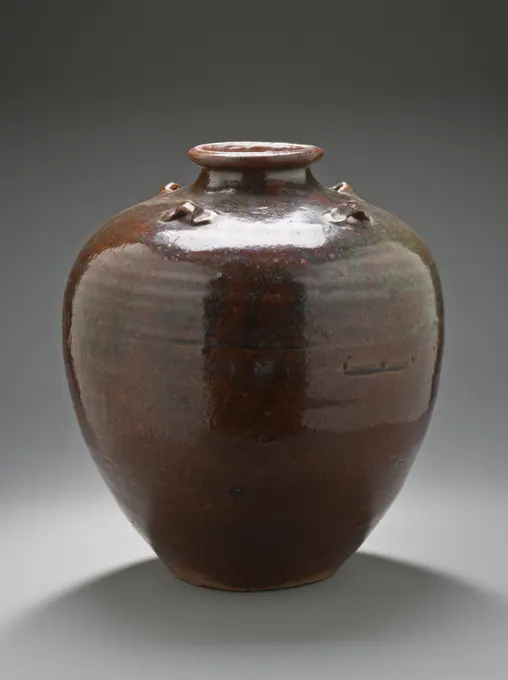
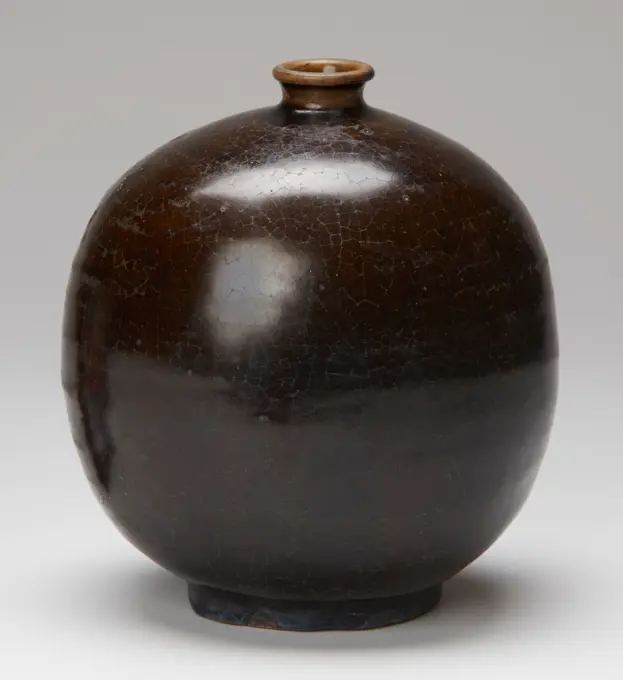
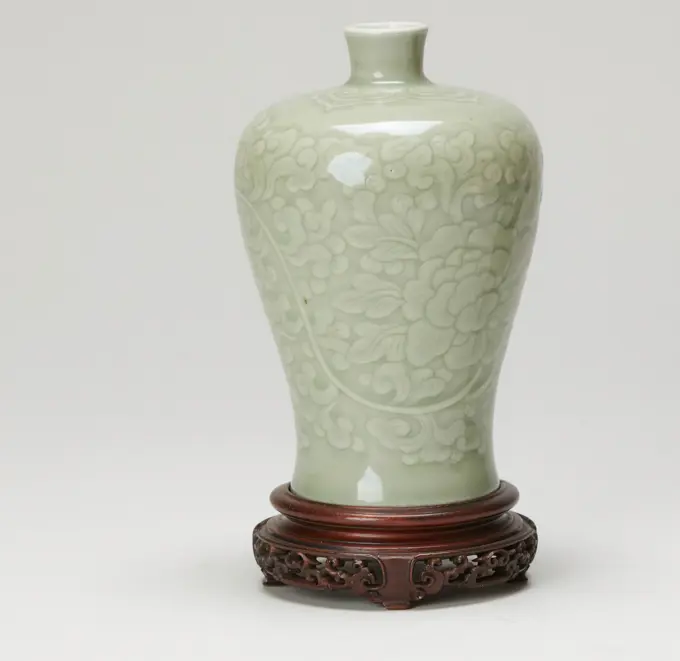
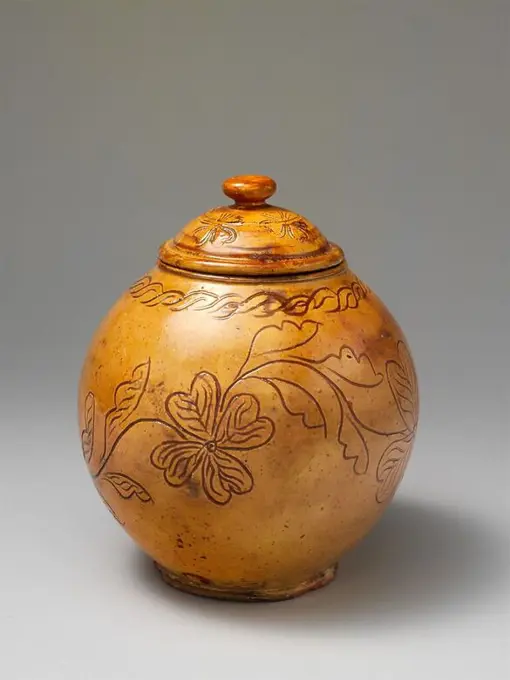
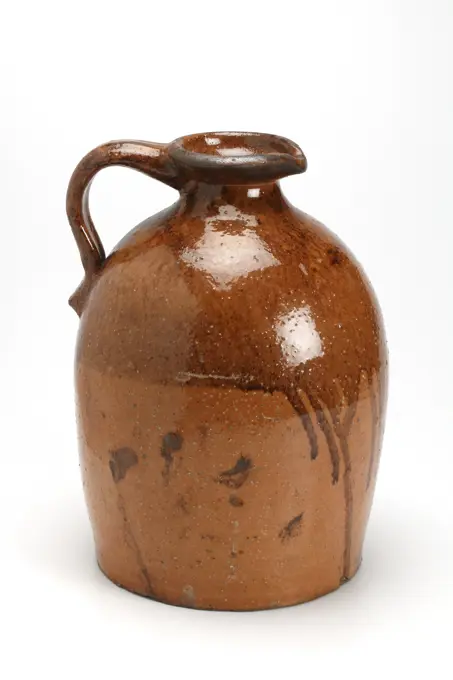
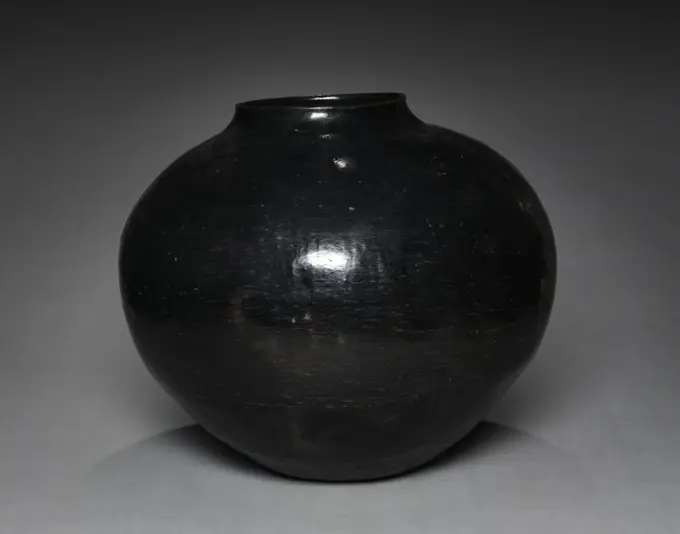
Water Jar, Khmer, 12th-13th century, 9 5/8 x 6 3/8 in. (24.45 x 16.19 cm), Stoneware with incised decor under brown glaze, Cambodia or Thailand, 12th-13th century
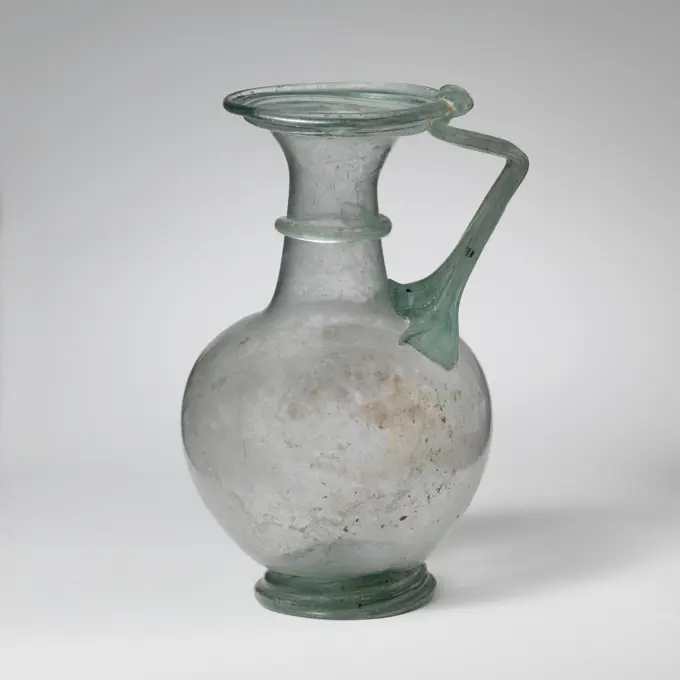
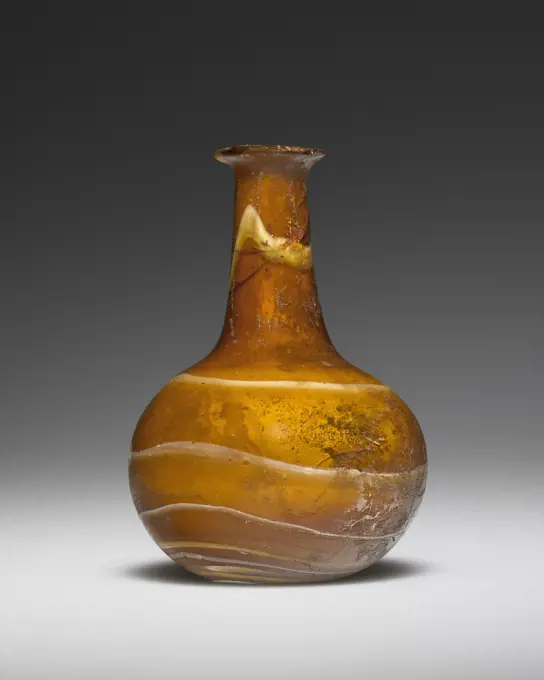
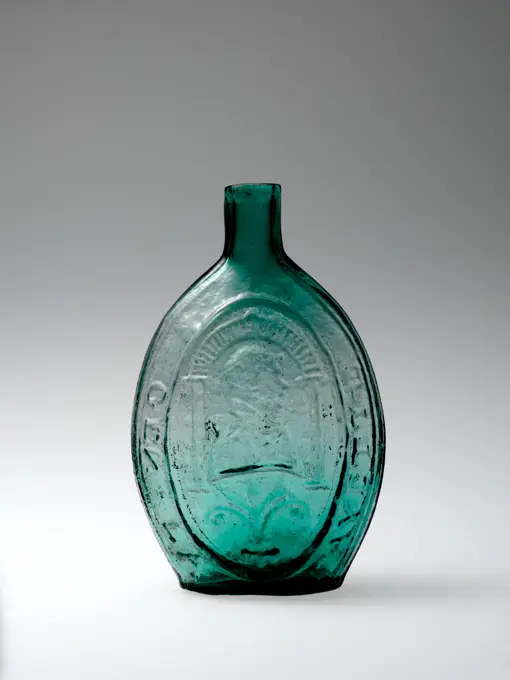
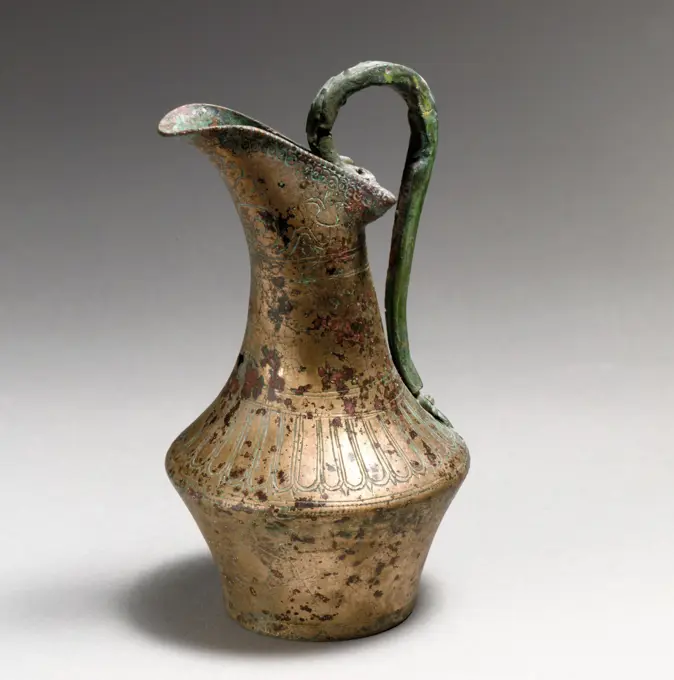
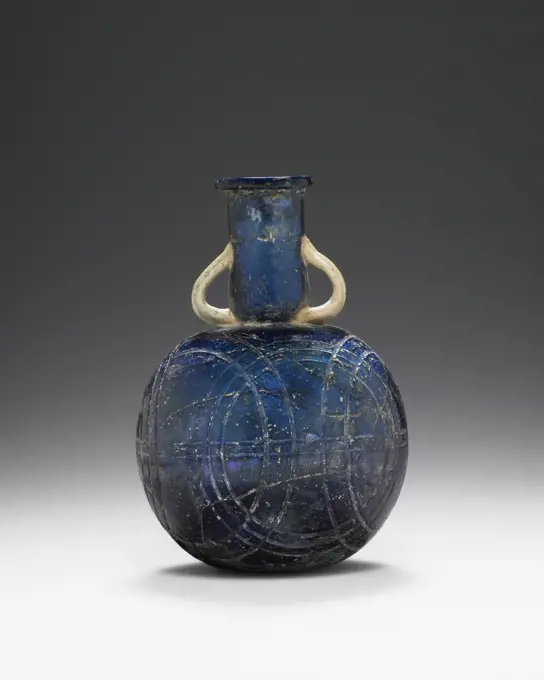
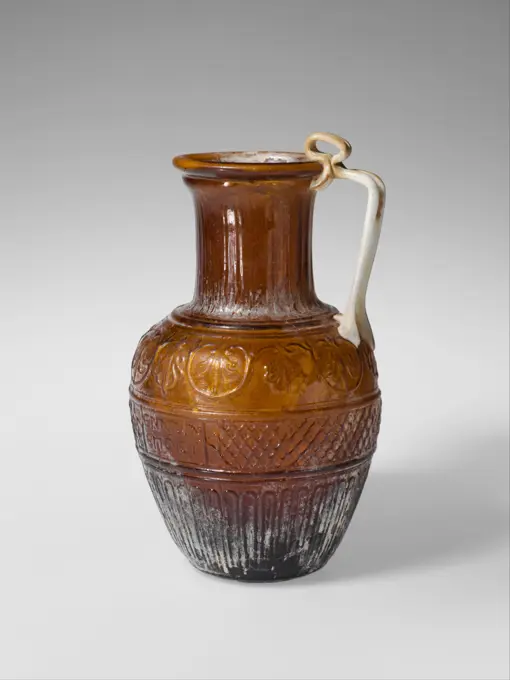
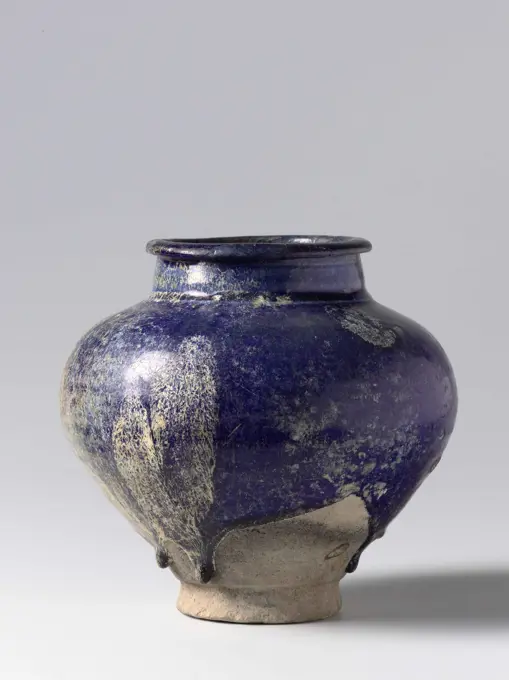
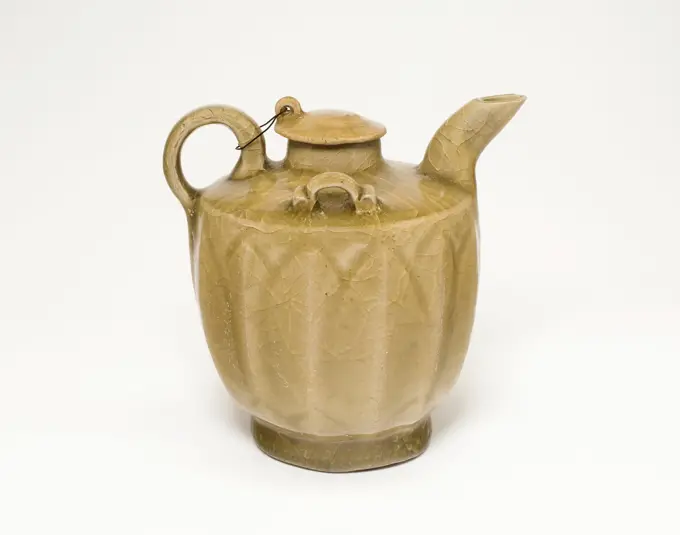
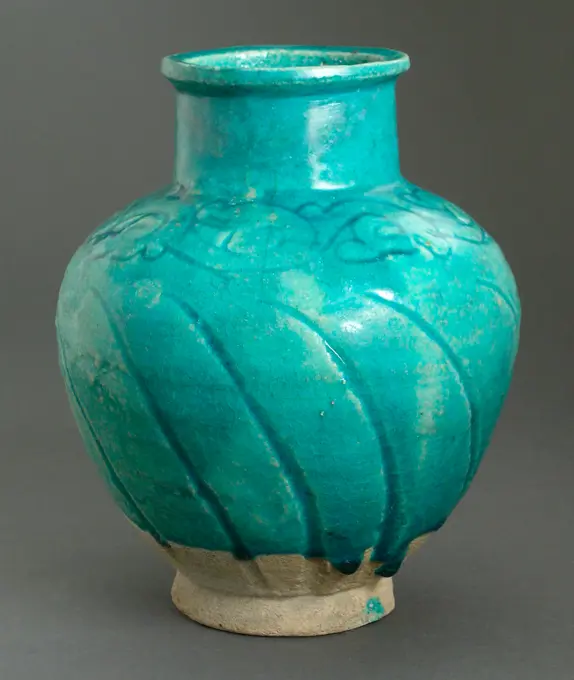
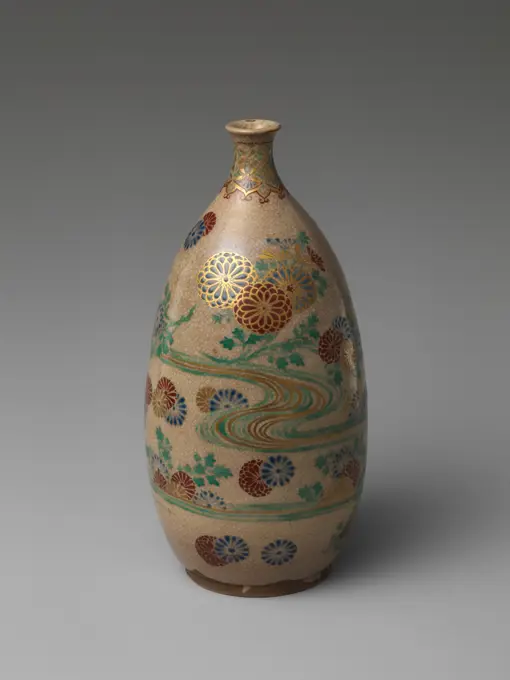
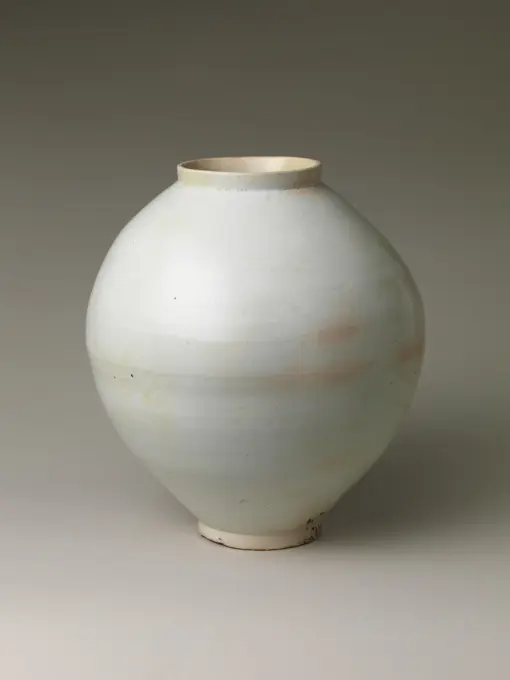
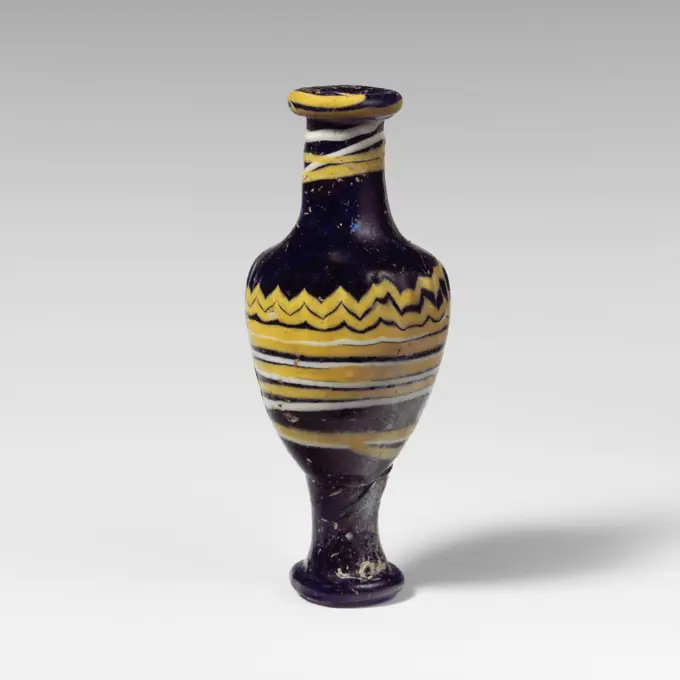
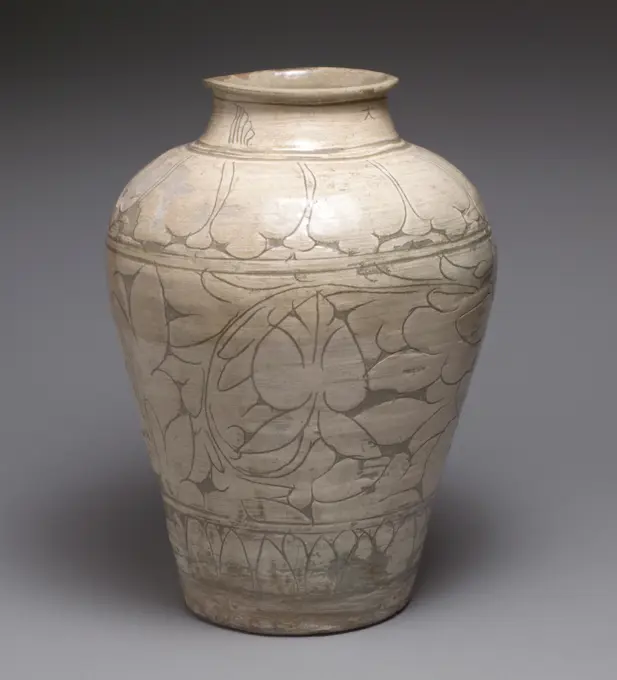
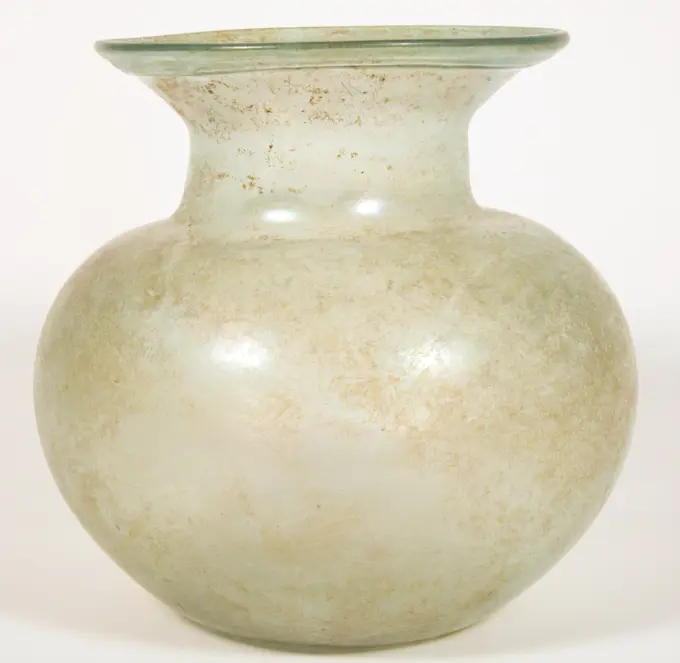
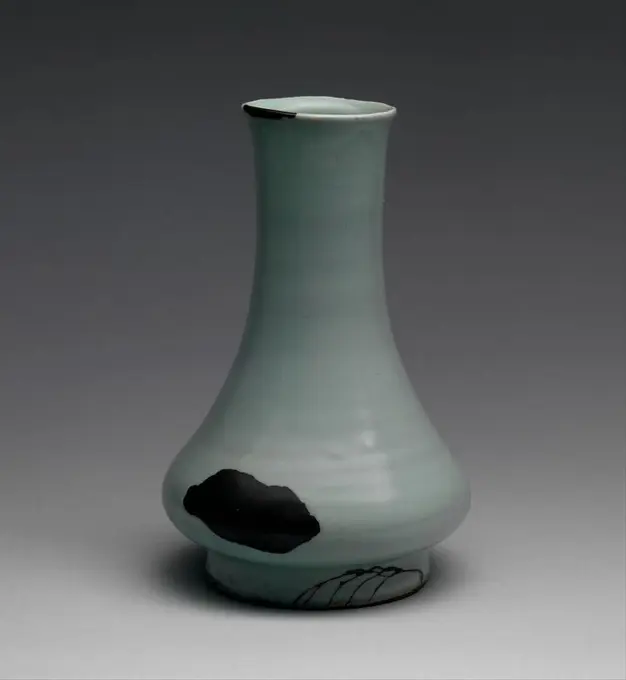
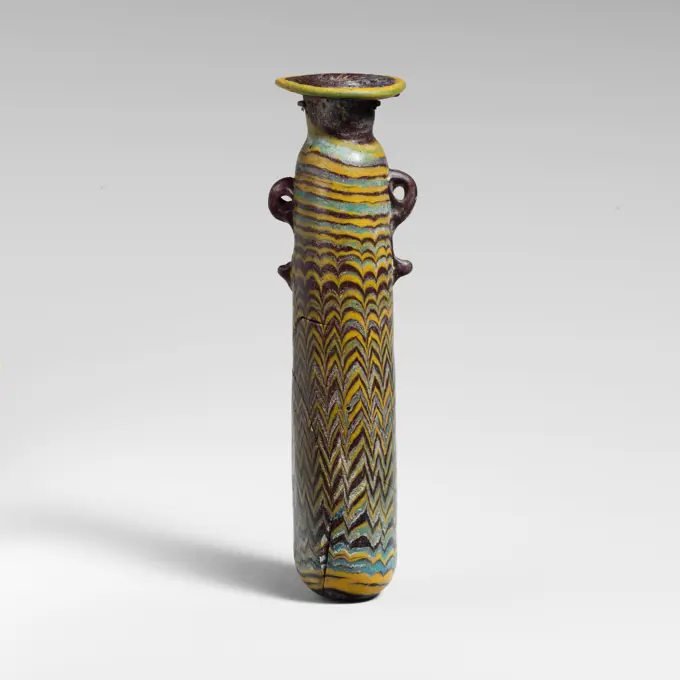
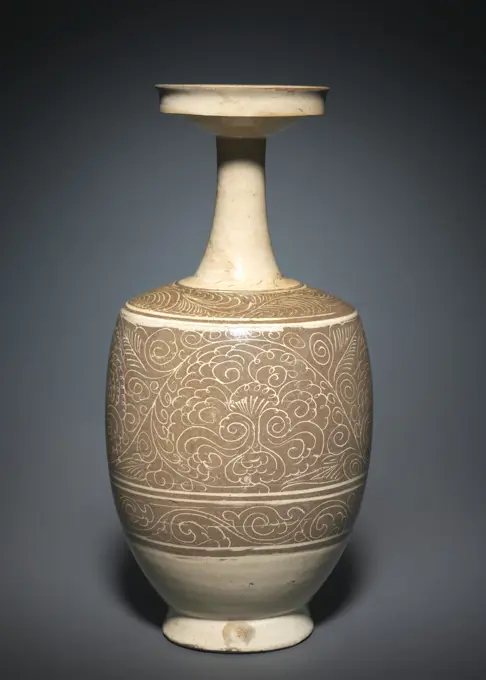
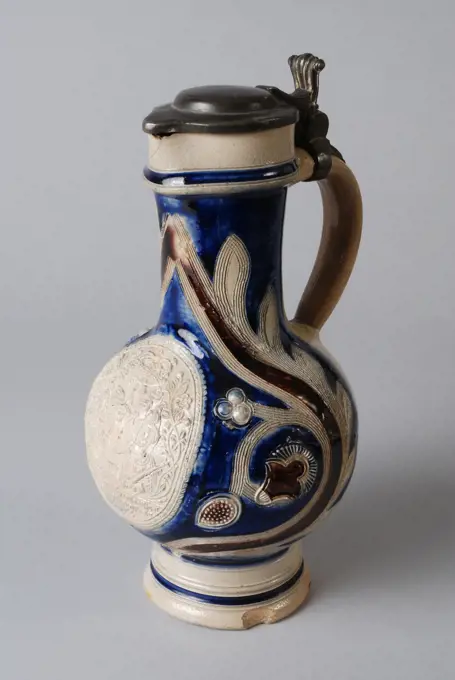
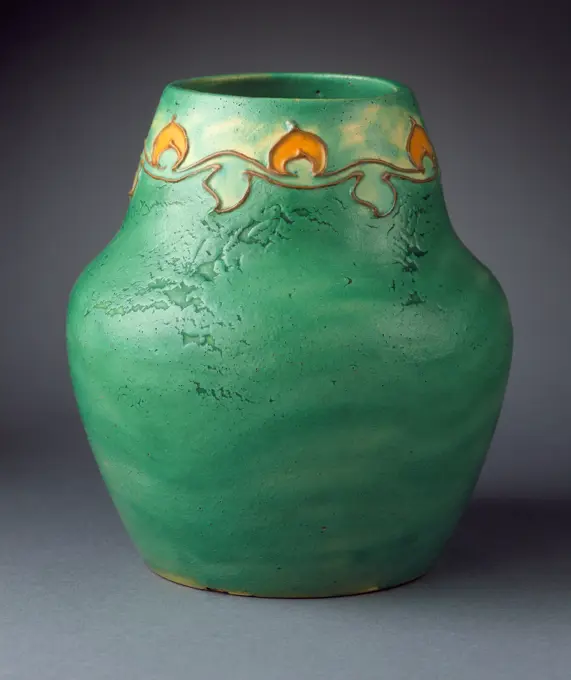
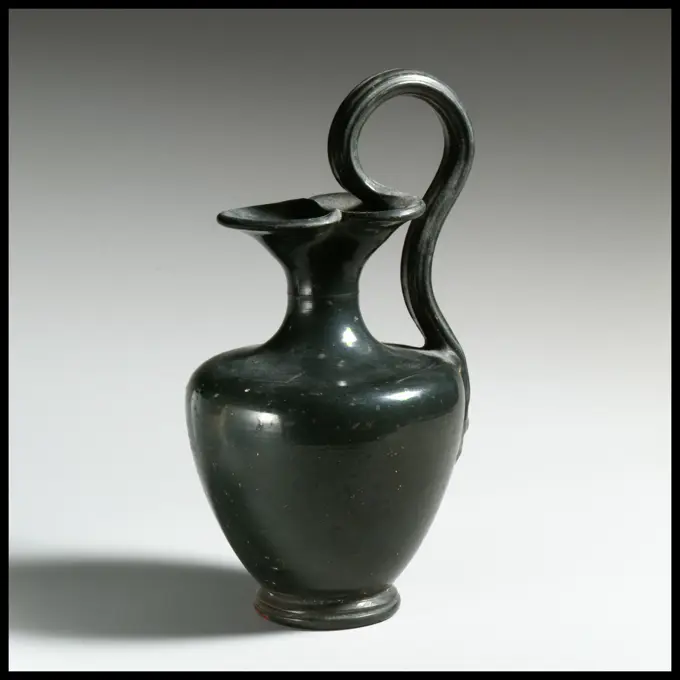
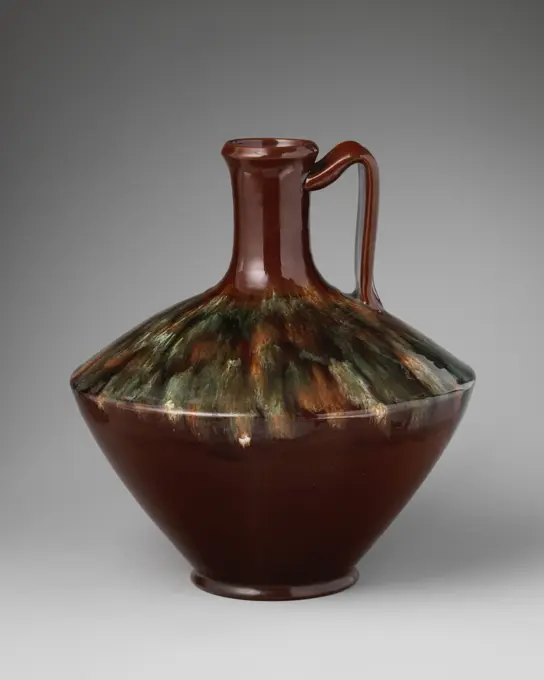
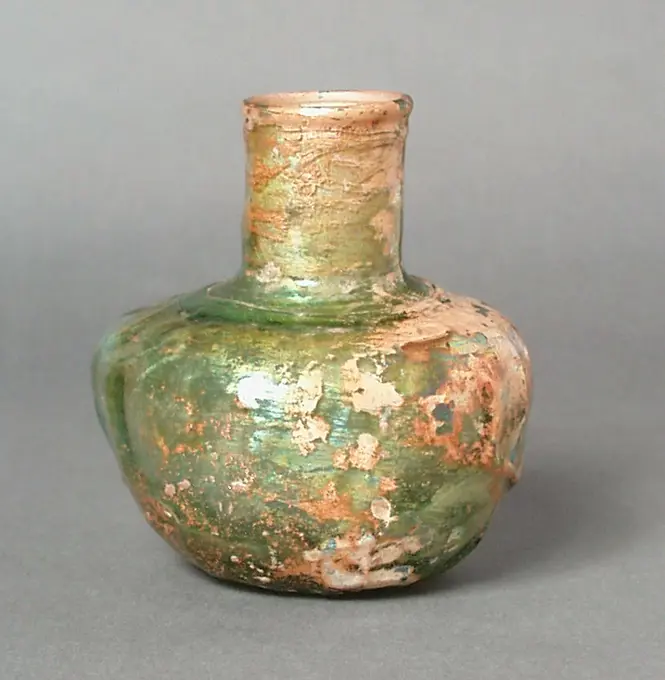
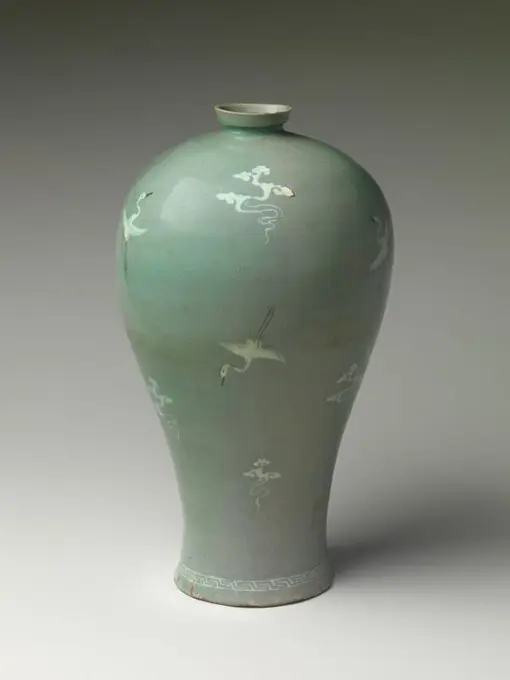
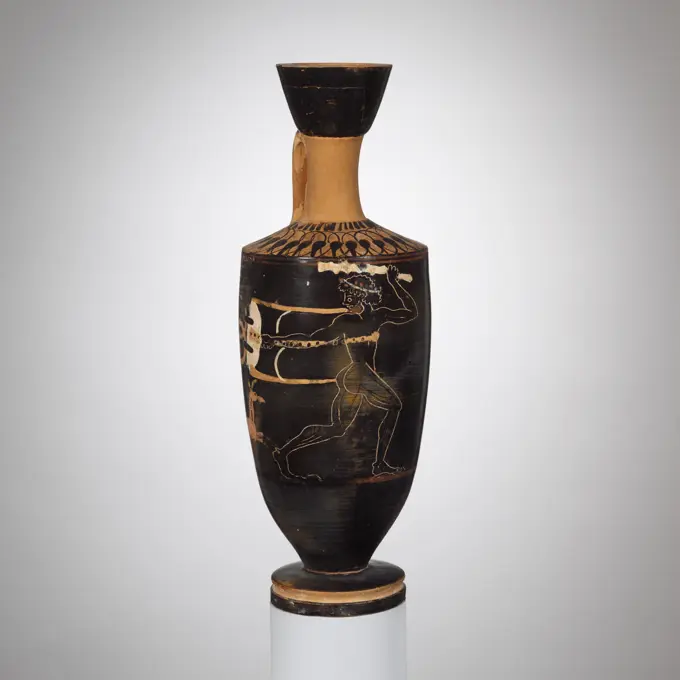
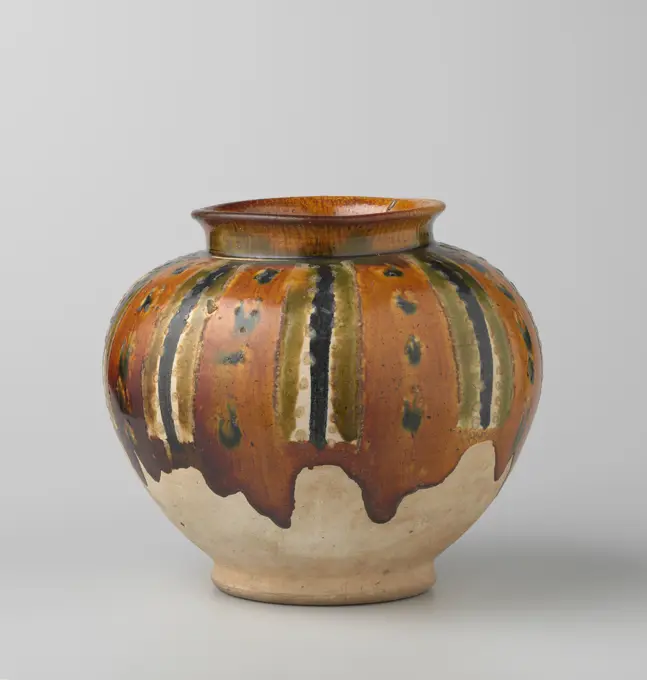
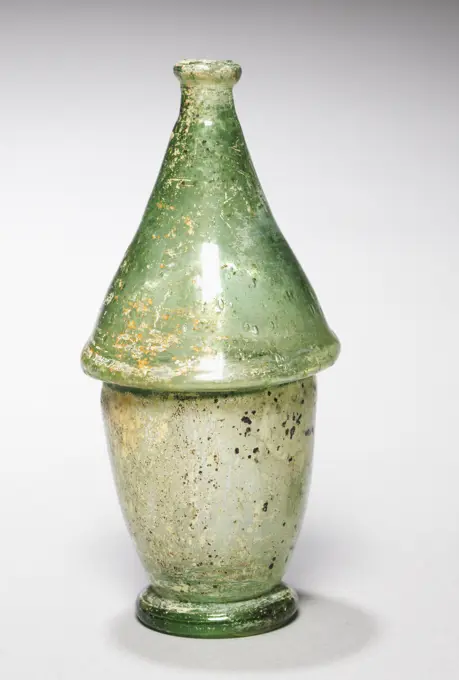
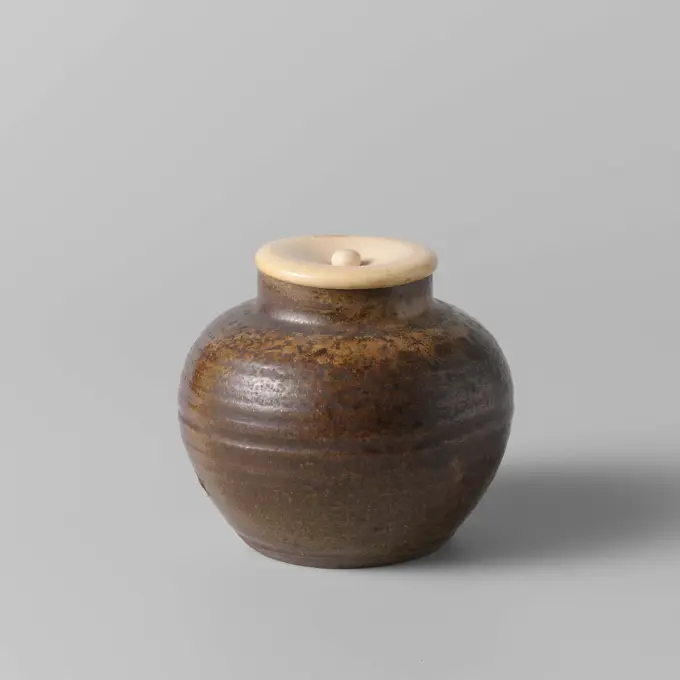
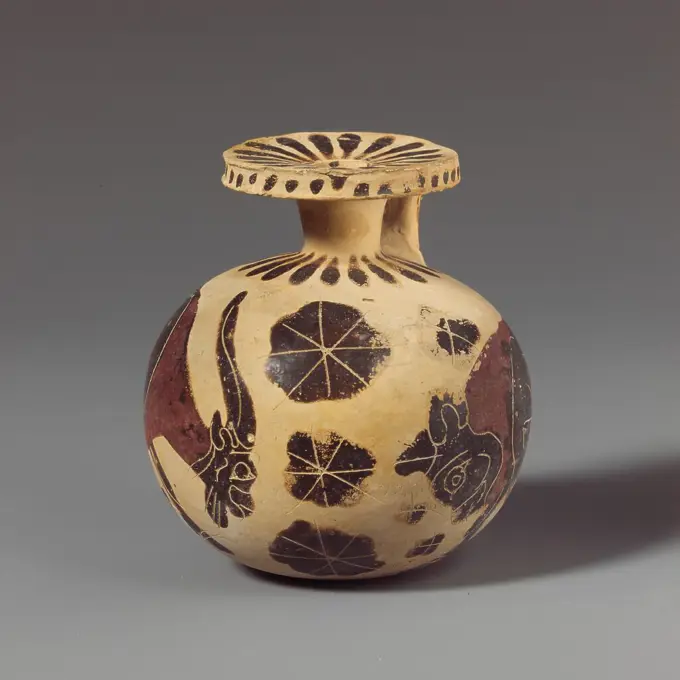
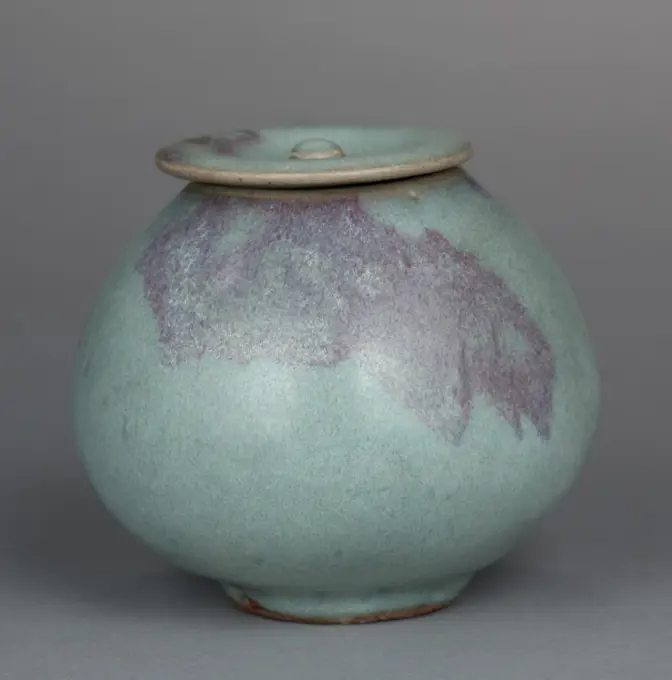
Sake Bottle. Japan, Edo period, late 18th century. Ceramics. Shōdai ware; stoneware with iron, wood ash and rice straw ash glazes; wood stopperWater Jar, Khmer, 12th-13th century, 9 5/8 x 6 3/8 in. (24.45 x 16.19 cm), Stoneware with incised decor under brown glaze, Cambodia or Thailand, 12th-13th centuryGlass jug 3rd-4th century A.D. Roman Translucent pale bluish green; handle and trails in same color.Rounded tubular rim to broad flaring mouth; funnel-shaped neck; sloping shoulder, slightly indented below handle; globular body; applied thick coil base ring; slightly pushed in bottom with thick, sharp, central pontil mark; strap handle applied to shoulder in an uneven, slanting pad, drawn out in a straight line, then in at an acute angle, and trailed on to underside of mouth over trail and up above lip of rim.One trail applied slightly over one time around underside of mouth; another trail, applied as a large pad drawn out slightly over one time around center of neck.Broken and repaired, with cracks in one side of body and small hole; many bubbles; black impurities in handle and base; dulling, faint iridescence, and one patch of weathering on inside of body.. Glass jug 239721Flask; Eastern Mediterranean; 1st century; Glass; 6.1 x 4.3 cm (2 3,8 x 1 11,16 in.)Oinochoe. UnknownFigured flask ca. 1824 Probably Knox and McKee (Virginia Green Glass Works). Figured flask. American. ca. 1824. Blown-molded glass. Made in Wheeling, West Virginia, United StatesGlass jug. Culture: Roman. Dimensions: 6 1/8 in. (15.6 cm)Other: 3 3/4 in. (9.6 cm)Diam. of rim: 2 9/16 in. (6.5 cm)Diam. of foot: 2 1/4 in. (5.7 cm). Date: 3rd-4th century A.D..Translucent pale bluish green; handle and trails in same color.Rounded tubular rim to broad flaring mouth; funnel-shaped neck; sloping shoulder, slightly indented below handle; globular body; applied thick coil base ring; slightly pushed in bottom with thick, sharp, central pontil mark; strap handle applied to shoulder in an uneven, slanting pad, drawn out in a straight line, then in at an acute angle, and trailed on to underside of mouth over trail and up above lip of rim.One trail applied slightly over one time around underside of mouth; another trail, applied as a large pad drawn out slightly over one time around center of neck.Broken and repaired, with cracks in one side of body and small hole; many bubbles; black impurities in handle and base; dulling, faint iridescence, and one patch of weathering Tea Leaf Storage Jar with Four Lugs. Japan or China, circa 16th-18th century. Ceramics. Stoneware with iron glazeBronze beaked oinochoe (jug) late 6th century B.C. Etruscan Sharply pronounced shoulder and beak spout with decoration on the neck and shoulder.. Bronze beaked oinochoe (jug). Etruscan. late 6th century B.C.. Bronze. Archaic. BronzesStorage jar, 18th century, Unknown Japanese, 16 1/8 × 13 3/8 × 13 1/2 in. (40.96 × 33.97 × 34.29 cm), Tanba ware; stoneware with ash glaze, Japan, 18th century, 波 Tanba wareFlask. UnknownTwo-handled Flask; Eastern Mediterranean; 3rd - 4th century; Glass; 9.5 x 6.9 cm (3 3,4 x 2 11,16 in.)Glass mosaic bottle. Culture: Roman. Dimensions: H.: 3 9/16in. (9cm). Date: 1st half of 1st century A.D..Colorless, translucent cobalt blue, translucent honey brown, opaque light blue, opaque white, and opaque yellow.Outsplayed rim with a closed, cut-out tubular ledge below an uneven, vertical lip; tall cylindrical neck, with slight indent around base; conical body with slightly concave sides; uneven, slightly pushed-in bottom.Striped mosaic pattern formed from a single pre-formed cane comprising lengths arranged in repeated groups of different colors. Intact, except for minor, weathering chips to rim; deep pitting, iridescence, and patches of creamy white weathering.Globular "color-band" perfume bottle. Museum: Metropolitan Museum of Art, New York, USA.Ovoid Vase, Unknown Korean, 7 1/16 × 6 7/16 × 5 1/2 in. (17.94 × 16.35 × 13.97 cm), Stoneware, iron-black ware, KoreaSake Bottle with Spiral Line Design. Japan, 19th century. Ceramics. Tanba ware; stoneware with brown glaze and white slip decorationGlass jug 1st half of 1st century A.D. Ennion Translucent deep honey brown; handle in opaque white.Outsplayed rim, folded up and in, forming collar on inside of mouth; cylindrical neck with short vertical projecting ridge at top; sloping shoulder; piriform body, tapering downwards; flat bottom; handle with two prominent ribs attached to shoulder, drawn up and outwards, then turned in at a right angle, folded up to form loop above rim and then dropped onto rim and top of neck.Decoration comprises four registers on neck and body, divided by ridges and raised horizontal lines: on neck, vertical flutes rounded at both ends; in frieze on shoulder and upper body, continuous floral spray with upturned spikes, forming circular frames for six downturned palmettes with outward facing leaves, alternating with six downturned palmettes with inward facing leaves; around middle section of body, frieze filled with net pattern, broken on one side by a tabula ansata containing a Greek inscription; on loGlass bottle. Culture: Roman, Syrian. Dimensions: H.: 7 3/8 in. (18.7 cm). Date: 5th century A.D..Translucent yellow green; handles and trail in translucent turquoise blue.Outsplayed rim, folded over and in, with beveled outer edge; cylindrical neck, tooled in at base; elongated, slender piriform body; tubular base ring made by folding; pushed-in bottom with thick pontil scar; two rod handles applied as long trails on sides of body, drawn up to just below junction with neck, then drawn out, up, and in as loops, and pressed onto lower part of neck over trail.The handle trails are decorated with numerous, irregular, tooled notches; a single trail applied under bottom of one handle and wound up in a spiral almost seven times around neck, ending on rim.Intact, except for sections of trail around neck; some pinprick bubbles and prominent blowing striations; patches of thick creamy brown weathering and iridescence.With applied threads. Museum: Metropolitan Museum of Art, New York, USA.Glass perfume bottle. Culture: Roman. Dimensions: 2 1/16 x 1 1/2in. (5.2 x 3.8cm)Diam. of rim: 11/16 in. (1.8 cm). Date: 1st century A.D..Small perfume bottleTranslucent cobalt blue. Lopsided, splayed rim with rounded lower edge and beveled top; cylindrical neck, with some tooling ridges; squat, piriform body; small, slightly flattened bottom.Intact, except for minor chip in rim; pinprick bubbles and blowing striations; dulling, heavy pitting and weathering with patches of brilliant iridescence. Museum: Metropolitan Museum of Art, New York, USA.Eight-faceted Bottle, 1800s-1900s. Korea, Joseon dynasty (1392-1910). Stoneware; overall: 23.2 cm (9 1/8 in.).Glass perfume bottle. Culture: Roman. Dimensions: Overall: 2 3/4in. (7cm)Diam.: 1 5/8 x 7/8 in. (4.1 x 2.2 cm). Date: 1st century A.D..Translucent pale blue green.Rim folded out, over, and in, with beveled upper surface; short cylindrical neck, with tooling marks around base; ovoid body; slightly concave bottom.Complete, but with cracks in neck; pinprick bubbles and blowing striations; deep pitting, brilliant iridescence, and patches of creamy weathering. Museum: Metropolitan Museum of Art, New York, USA.Flask; Eastern Mediterranean; 1st century A.D; Glass; 7.2 × 6.2 cm (2 13,16 × 2 7,16 in.)Glass bottle shaped like a bunch of grapes. Culture: Roman. Dimensions: H.: 3 3/8 in. (8.6 cm). Date: 2nd-3rd century A.D..Translucent blue green, with same color handle.Rim folded out, down, round, and in; flaring mouth; misshapen cylindrical neck with concave sides; lentoid body; round bottom; rod handle attached to edge of shoulder in a pad, drawn up vertically, turned in, and folded onto underside of mouth and rim. Raised mold mark visible only at base of neck on one side, but one continuous mold seam must run around body.Body molded into the shape of a tri-lobed bunch of grapes with a single, large, five-pointed grape leaf hanging over grapes on each side.One third of rim and one handle missing, with hole in shoulder where it was once attached; some bubbles; dulling, thick ring of encrustation around bottom on exterior, soil encrustation, weathering, and brilliant iridescence on interior. Museum: Metropolitan Museum of Art, New York, USA.Wine Flask, c. 1300. Japan, Kamakura period (1185-1333). Stoneware with ash glaze and underglaze stamped and incised decoration (Seto ware); diameter: 17 cm (6 11/16 in.); overall: 25.3 cm (9 15/16 in.). This wine flask (heishi) was produced in Seto, in present-day Aichi prefecture near the city of Nagoya. Seto ware was made in imitation of Chinese Song dynasty prototypes, and was unique among Japanese ceramics for being glazed at the initial time of its production in the late 1200s. Such wares were later prized for display in tea practice.Bottle, late 1200s-1300s. Siam, Sawankhalok ware, late 13th-14th Century. Stoneware; overall: 7 cm (2 3/4 in.).Glass ribbed perfume bottle Roman 1st century CE Colorless.Everted, slanting rim; cylindrical, slightly funnel-shaped neck; squat piriform body; slightly concave bottom.On body, eight irregularly spaced and shaped ribs with projecting rounded edges.Intact, except for small chip in rim; many bubbles; pitting, thick creamy weathering, and brilliant iridescence, with soil encrustation on interior. View more. Glass ribbed perfume bottle. Roman. 1st century CE. Glass; blown and tooled. Early Imperial. GlassGlass jar Roman 3rd-4th century CE Colorless with purple tinge.Rim folded out, round, and in, and pressed into side of broad, flaring mouth; short neck, expanding downwards; broad, rounded shoulder; convex curving side, tapering downwards; kick in bottom.Complete, but one crack around bottom; many pinprick bubbles; dulling, brilliant iridescence, and weathering on exterior, soil encrustation on interior. View more. Glass jar. Roman. 3rd-4th century CE. Glass; blown. Late Imperial. Glass. Pot of quartz Fritgoed largely covered with a monochrome blue alkalilation.Covered Ewer with Upright Lotus Petals 960 CE-1279 China. Stoneware with underglaze molded, carved, and applied decoration .Vase. Egypt or Syria, 12th century. Ceramics. Fritware, incised and glazedGlass perfume bottle 1st century A.D. Roman Translucent cobalt blue.Lopsided, everted rim, folded over and in, and flattened on top; cylindrical neck, with irregular horizontal tooling indents around base; conical body, curving in to small, flat bottom.Complete, but cracked on one side of body; pinprick bubbles; dulling and patches of iridescent weathering, with some encrustation on interior.. Glass perfume bottle. Roman. 1st century A.D.. Glass; blown. Early Imperial. GlassNinsei-style Sake Bottle with Floral Patterning mid-18th century Japan. Ninsei-style Sake Bottle with Floral Patterning 45482Roemer with four rows smooth balls. Large roemer with inserted soil on concave, spun feet from a wire. The convex, vertically ribbed chalice and the closed tribe are blown separately. The strain occupies smooth, convex buttons with four rows. The transition from chalice to stem indicated by a ribbed wireFlask; Roman Empire; 1st century A.D; Glass; 8.8 × 4.5 cm (3 7,16 × 1 3,4 in.)Glass jug. Culture: Roman, Rhenish. Dimensions: H.: 4 1/4 in. (10.8 cm). Date: 3rd-4th century A.D..Translucent deep cobalt blue; handle, trail, and base ring colorless with green tinge.Rim partially folded over and in, partially rounded; flaring mouth; cylindrical neck, with concave profile; sloping shoulder; piriform body, tapering to applied base ring, flattened on bottom edge; small, pushed-in bottom with pontil scar; two-ribbed strap handle attached with downward fins to shoulder, drawn up and outwards in a curve, then turned in and trailed onto underside of mouth over trail decoration and lip of rim, with a hollow loop above as thumb-rest.Thick trail wound horizontally 1½ times around underside of mouth, then dropped in a fine trail down neck, and then wound 1½ times around neck.Intact, but one internal crack in rim and neck; many bubbles and a few inclusions; dulling, iridescence, creamy weathering, and some soil encrustation.Opaque blue with yellow handle and plastic threaMaker Unknown , American, Pocket Bottle, c. 1800-30, olive-green glass.BottleBottle 101 CE-400 CE Syria. Glass, blown technique . Ancient RomanAnonymous, Jarre (username), 0618. CERUNUSCHI Museum, Museum of Arts in Asia in the city of Paris.Bottle, 1736-1799, 5 3/4in. (14.6cm), Porcelain, China, 18th centuryJar. UnknownMoon jar second half of the 18th century Korea A distinctive type of porcelain from the late Joseon period, the moon jar (Korean: dalhangari)so called because of its evocative formwas usually made by joining two hemispherical halves. The peach hue of the glaze, unintentionally acquired during firing, adds to the charm of this jar. Listen to experts illuminate this artwork's story Listen Play or pause #8506. Moon Jar Supported by Bloomberg Philanthropies We're sorry, the transcript for this audio track is not available at this time. We are working to make it available as soon as possible.. Moon jar. Korea. second half of the 18th century. Porcelain. Joseon dynasty (1392-1910). CeramicsBottle, 18th century, 4 5/8 x 4 x 4in. (11.7 x 10.2 x 10.2cm), Glass, Switzerland, 18th centuryBulbous bottle, belly bottle bottle holder soil find glass, free blown and shaped glass application Circular bottle in clear green glass. Pontil mark underneath, bottom. Body with almost straight up wall to convex shoulders and rejuvenated (dm 4.5 - 2.6 cm) neck with imposed all-round sharp glass thread with small chip and flattened lip archeology packagingStoneware jug with blue cross on the front, on squeeze foot, jug crockery holder soil find ceramic stoneware glaze salt glaze cobalt, hand turned glazed baked Stoneware jug with blue cross on the front Bol model slowly narrowing to small foot Pinch neck Narrow cylindrical neck with profile rings and blue band Long and wide bandoor between the middle of the neck and the shoulder. Completely glazed. Draairillen Kruik may have contained spring water or was emptied empty as packaging archeology Rotterdam Heliport grounds indigenous pottery import source water packaging store transport drink Soil discovery: Heliport site Rotterdam June 1978.Mei Ping with stand, 1723-1735, 5 5/8in. (14.3cm), Porcelain, China, 18th centuryCovered jar. Culture: American. Dimensions: H. 8 1/2 in. (21.6 cm). Maker: Attributed to Jacob Scholl (1781-1851). Date: ca. 1830-40.This jar is coated with cream-colored slip and bears a sgraffito design of flowers and leaves. Sgraffito hollow ware is rare, and the incised flowers here are of exceptional artistic merit. The jar is said to have descended in the family of the potter. Museum: Metropolitan Museum of Art, New York, USA.Glass unguentarium (perfume bottle) late 3rd-early 2nd century B.C. Greek, Eastern Mediterranean Translucent cobalt blue with some brown red streaks; trails in opaque white and opaque pale yellow.Thick, uneven horizontal rim-disk with rounded edge; tall cylindrical neck, expanding downwards; sloping shoulder; ovoid body, tapering downwards to point; tall outsplayed foot, with rounded edge and uneven tooled bottom.A white trail attached at underside of rim-disk, drawn back in opposite direction, wound once round top of neck as a hoizontal line, then spirally over neck and shoulder; a yellow trail attached at edge of mouth and wound round rim-disk, then spirally down neck and shoulder over white trail; both tooled into a narrow zigzag band with close-set vertical indents around top of body, then wound almost horizontally around middle of body, drawn down spirally, and ending in another almost horizontal line on lower body.Intact, except for large vertical crack with chipped edges down siJug -Vase with peacocks and leaves, company Wed. N.S.A. Brantjes and Co., 1895 - 1904 Vase with polychrome painting of three peacocks and leaves on green and yellow stock. Marked with: Klomp, NB, C. (), Faience de Purmerende Hollande, Dec: A and 1075 and Monogram kr. Purmerend stoneware Vase with polychrome painting of three peacocks and leaves on green and yellow stock. Marked with: Klomp, NB, C. (), Faience de Purmerende Hollande, Dec: A and 1075 and Monogram kr. Purmerend stonewareGlass jar. Culture: Roman. Dimensions: Overall: 3 7/16 in. (8.8 cm)Diam.: 2 7/16 x 2 1/8 in. (6.2 x 5.4 cm). Date: late 3rd to mid-4th century A.D..Translucent blue green, with trail in same color.Plain, rounded rim, with bevelled inner lip; flaring neck; conical body, rounded at base; deep pushed-in bottom with pontil scar at center.Single horizontal trail wound around top of body, then spiral up to end on neck; on lower body extending onto bottom, nine irregular short ribs.Intact; pinprick bubbles and larger bubbles; patches of dulling, pitting, and faint iridescent weathering. Museum: Metropolitan Museum of Art, New York, USA.Flask. UnknownSnuff Bottle, 1644-1911. China, Qing dynasty (1644-1911). Glass; overall: 6.4 cm (2 1/2 in.).Small pitcher. unknown, craftsmanVase. Culture: China. Dimensions: H. 2 1/2 in. (6.4 cm). Date: 19th century. Museum: Metropolitan Museum of Art, New York, USA.Large jar decorated with peonies late 15th century Korea The boldly rendered peony flowers and leaves on this jar capture the essence of the exuberant plant, which symbolizes wealth and prestige. The technique of incising the designs outlines and carving away part of the background through the white slip is characteristic of buncheong vessels produced in Jeolla Province, in the southwestern region of the Korean peninsula.. Large jar decorated with peonies 42309Covered jar, 1st century BCE - 1st century CE, 5 13/16 x 6 x 6 in. (14.76 x 15.24 x 15.24 cm), Glazed ceramic, Thailand, 1st century BCE - 1st century CEJar 101 CE-300 CE Syria. Glass, blown technique . Ancient RomanVase;  after 1920 (1920-00-00-1930-00-00);Jug with PalmGarlandsCovered jar with fluted sides, anonymous, c. 1300 - c. 1400 Stone -good lid jar with a ribbed wall, covered with a translucent green, crawling glaze. The lid has a wavy edge with a flower -shaped lid button. Lid probably not belonging to the pot. Celadon (Longquan). China stoneware. glaze vitrification Stone -good lid jar with a ribbed wall, covered with a translucent green, crawling glaze. The lid has a wavy edge with a flower -shaped lid button. Lid probably not belonging to the pot. Celadon (Longquan). China stoneware. glaze vitrificationVase 1678-88 China. Vase. China. 1678-88. Porcelain with moonlight glaze (Jingdezhen ware). Qing dynasty (1644-1911), Kangxi mark and period (1662-1722). CeramicsGlass aryballos (oil bottle). Culture: Roman, Eastern Mediterranean. Dimensions: H.: 3 1/16 in. (7.8 cm). Date: 1st-3rd century A.D..Translucent pale green; handles in same color.Collared rim folded out, down, round, and up, and flattened on top, with projecting outer flange; short cylindrical neck; globular body; rounded bottom; two small handles applied to top of body in round pads, drawn up, and trailed on to neck and underside of rim.Intact; some bubbles and a few black impurities, with pitted and scratched surface on bottom; one patch of pitting on body, and faint iridescent weathering. Museum: Metropolitan Museum of Art, New York, USA.Ewer with landscapes in panels and floral scrolls. Can of porcelain with ball-shaped body, C-shaped ear and small, triangular spout from the edge, painted in underglaze blue. The belly is covered with 'Karakusa' tanks containing three scalloped cartouches in it. The middle cat shower with two men in a landscape, one with a parasol and a range, the other with a collapsed parasol and a dog. Left of this a cartouche with cranes in a landscape with trees and rocks. The third cartouche with different birds in a landscape with a pavilion, mountains and a pond. The neck and the ear with flower drinks. A hole in the top of the ear. Arita, blue-white.Bottle Vase With Light Brown And Flower Sprays. Bottle-shaped vase of porcelain with a round body and baluster-shaped neck, painted in underglaze blue and with café-au-lait glaze. The body is partly covered with a light brown café-au-lait-colored glaze above which a bond with a thick cream-colored glaze; On the shoulder napkin interspersed with cartouches with flour; On the neck a band with flower drinks, above flower branches with butterflies. Monochrome brown with blue and white.Vase. Turquoise blue covered sandstone animated with dark blue drips. Paris, Cernuschi museum. 78840-5 Asian art, container, vaseOinochoe. UnknownGlass jar 4th century A.D. Roman Translucent light blue green; trail in same color.Uneven horizontal rim, partially tubular, folded up and in; broad, outsplayed mouth; short, concave neck; sloping shoulder; squat, bulbous body; deep kick in bottom with pontil scar at center.Trail wound round from left to right in zigzag between outer edge of shoulder and rim, forming openwork collar, with one indent in shoulder where lower end of zigzag was applied too firmly.Body complete, but cracked, and about half of trial missing; many pinprick bubbles; dulling, pitting, patches of limy soil encrustation, whitish weathering, and brilliant iridescence.. Glass jar 245331Vase. Culture: China. Dimensions: H. 8 3/8 in. (21.3 cm). Date: 12th century.When needed, the Longquan kilns, known primarily for ceramics with olive or gray glazes, also produced high-quality wares for the court in Hangzhou, particularly in the twelfth century, when demand for such wares peaked. Both the blue color of this glaze and the slight cracking or crazing on the surface illustrate the ability of potters working at Longquan to make works that conformed to court taste. Museum: Metropolitan Museum of Art, New York, USA.Vase of earthenware, polychrome painted with the decor Tulips, Theo Colenbrander, c. 1922 Vase of earthenware, polychrome painted with the decor tulips. Arnhem earthenware Vase of earthenware, polychrome painted with the decor tulips. Arnhem earthenwareStorage Jar, Half- Fanega Size, 1880. Southwest, Pueblo, Santa Clara, Post- Contact Period, 19th century. Reduction-fired (blackware); overall: 40.6 x 45.7 cm (16 x 18 in.).Glass alabastron (perfume bottle) 5th century B.C. Greek, Eastern Mediterranean Opaque dark red brown, with handles in same color; trails in opaque yellow and opaque turquoise blue.Broad slightly uneven horizontal rim-disk; cylindrical neck; rounded shoulder; straight-sided cylindrical body with slight upward taper; convex bottom; two vertical ring handles with knobbed tails, applied over trail decoration.Intermingled yellow and turquoise blue trails attached at edge of rim-disk; a yellow trail applied to bottom of neck and a turquoise blue trail applied to top of body and overlaid on the yellow; both wound in a spiral around top of body, then tooled first into an inverted festoon and lower down into a close-set zigzag pattern; the yellow trail continuing in a spiral around bottom.Broken and repaired, with several holes and chips in body; dulling, pitting, and faint iridescent weathering.During the fifth century B.C., the colors of Mediterranean Group I vessels expanded from blue or opFlask 201 CE-400 CE Syria. Glass, blown technique . Ancient LevantineDecanter 1825-92 Boston & Sandwich Glass Company. Decanter 3078Vase with Floral Scrolls, 900s-1000s. China, Henan province, Northern Song dynasty (960-1127). Glazed stoneware with incised and slip-inlaid decoration, Cizhou ware; diameter of mouth: 12.7 cm (5 in.); overall: 41.3 cm (16 1/4 in.).Stoneware jug stand with long, slender neck and sneb, tin lid, large portrait medallion, jug crockery holder soil find ceramic stoneware glaze salt glaze tin metal, hand twisted stamped molded sgraffito glazed baked Stoneware can be used on stand with slim neck. Enghalskanne Neck rim with sneb tin lid. Sgraffito blue and purple decor. Appliqué button and flower motifs Large portrait medallion with caption in which Dutch stadholder with wife and child Overseed tin lid marked medallion: fishes hollansse Tuÿn Soo Bloos and oranie Appellen and Roosen and date 16.9.1 archeology indigenous pottery import drink serve serve wine beer Dutch garden Oranjehuis Orange apple rose remembranceVase. Arequipa Pottery (United States, California, Fairfax, 1911-1918)Frederick Hurten Rhead (England, active United States, 1880-1942). United States, 1911-1913. Furnishings; Accessories. EarthenwareTerracotta oinochoe (jug) 4th-3rd century B.C. Attributed to the Group of Vienna O.565 The vertical handle ends in a satyr's head.. Terracotta oinochoe (jug) 247269Flask 201 CE-400 CE Syria. The iridescent sheen on this flask, an artificially created effect sought after by 19th-century glassmaking innovators such as Louis Comfort Tiffany, was not actually intended by or known to their makers. Because of their association with luxury and precious oils and perfumes, these vessels were often buried with their owners in tombs, the chemical conditions of which, over time, have caused the surfaces to deteriorate, resulting in the shimmering, often opalescent, hues that appeal to the modern eye.. Glass, blown technique . Ancient RomanJar with c-shaped ear; Belly decorated with diamond pattern, neck with geometric figures and faces .. spherical jug of stoneware, with a cylindrical neck and a C-shaped ear. The belly is in relief decorated with a diamond pattern and the neck in relief with geometric figures and faces.Jug ca. 1880 Christopher Dresser The bold form and rich glaze of this jug are characteristic of Christopher Dresser's designs at Linthorpe Pottery Works, where he served as director from 1879 to 1882. The form is probably based on Minoan or Cycladic pottery, as were many of Dresser's designs for Linthorpe. However, Asian, Mexican, Peruvian, and Fijian pottery, as well as prehistoric artifacts found in Yorkshire were also sources of inspiration, indicating Dresser's penchant for adapting motifs from diverse cultures. At Linthrope, vessels were potted by hand and then finished in a wood mold. The richly mottled glaze emulates Japanese Raku teawares.. Jug. British. ca. 1880. Glazed earthenware. Ceramics-PotteryFlask; Eastern Mediterranean; 1st century A.D; Glass; 6.8 × 5.8 cm (2 11,16 × 2 5,16 in.)35mm originalGlass beaker 2nd-3rd century A.D. Roman Translucent blue greenFlaring rim with thickened, rounded lip; sides tapering downward, turned out at bottom to form low base ring; slightly convex bottom with uneven tooled surface.Fourteen vertical indents in body of irregular length and depth.Intact; some pinprick and larger bubbles; dulling, pitting, and iridescence, with patches of creamy brown weathering.. Glass beaker 239857Bottle 4th century B.C. Greek, South Italian, Apulian. Bottle 246729Maker Unknown, Cologne Bottle or Cruet, c. 1820-c. 1840, cobalt blue glass.Snuff Bottle, 17th-19th century, 2 1/2 x 1 3/4in. (6.4 x 4.4cm), White stone, red coral, China, 17th-19th centuryMaebyeong decorated with cranes and clouds. Culture: Korea. Dimensions: H. 13 1/4 in. (33.7 cm); Diam. 7 1/2 in. (19.1 cm). Date: second half of the 12th century.The cranes and clouds, popular motifs on Goryeo celadon, are delicately yet expressively rendered. Set against the green color of the glaze, they appear to be floating in the sky. Museum: Metropolitan Museum of Art, New York, USA.Terracotta lekythos (oil flask) ca. 500 B.C. Greek, Attic Herakles with the Delphic tripodThe subject of Herakles and the tripod that he stole from the temple of Apollo at Delphi was particularly popular at the end of the sixth century B.C. Even when the hero was depicted without his adversary, the subject was evident.. Terracotta lekythos (oil flask). Greek, Attic. ca. 500 B.C.. Terracotta; Six's technique. Archaic. VasesVase (USA); Produced by Tiffany Glass and Decorating Company; Design Director: Louis Comfort Tiffany (American, 1848-1933); mold-blown favrile glassBottle 201 CE-600 CE Mediterranean Region. Glass, blown technique . Ancient RomanPot with sancai glaze, anonymous, 618 - 960  China stoneware. earthenware. vitrification  China stoneware. earthenware. vitrificationDouble-Conical Bottle, c. 1500. Germany, late 15th-early 16th century. Green glass; overall: 17.2 cm (6 3/4 in.).Bottle ca. 1860-70 Minton(s) Minton was the most important ceramics factory during the Victorian period and began exhibiting products at the first Great Exhibition of 1851. Founded in 1793 by Thomas Minton at Stoke-on-Trent, the firm initially specialized in transferware pottery before expanding under the ownership of Thomass son Herbert Minton, beginning in 1836. Under the ownership of Colin Minton Campbell, who succeeded his uncle in 1858, the factory became recognized as a specialist producer of Aesthetics movement porcelain, which were inspired by a rich array of exotic and eclectic decorative motifs.. Bottle. British, Stoke-on-Trent, Staffordshire. ca. 1860-70. Bone china. Ceramics-PorcelainPocket bottle. Culture: American. Dimensions: H. 5 7/16 in. (13.8 cm). Date: 1815-45. Museum: Metropolitan Museum of Art, New York, USA.Pocket bottle 1815-45 American. Pocket bottle 6620. Stoneware dust tea bus in Tanetsubo shape with an ivory lid, partly covered with a brown glaze. The lower part of the bus is unglazed. Old label on the inside with 'shape tanetsub / shigaraki / 18th'; Old label on the bottom with 'W592'. Shigaraki.Vase - bottle. unknown, craftsmanTerracotta aryballos (oil flask). Culture: Greek, Corinthian. Dimensions: H. 2 13/16 in. (7.1 cm). Date: ca. 620-590 B.C..Goat and bull confronted. Museum: Metropolitan Museum of Art, New York, USA.Pitcher ca. 1880 Christopher Dresser This pitcher is an example of the Peruvian-inspired ceramics designed by Christopher Dresser for Linthorpe. A related pitcher (2016.178.7) is also in the Museum's collection.. Pitcher. British. ca. 1880. Glazed earthenware. Ceramics-PotteryJar with Cover, 1100s. China, Henan province, Yuxian, Northern Song dynasty (960-1127) or Jin dynasty (1115-1234). Porcelaneous stoneware with blue glaze and splashes of purple, Jun ware; diameter: 12.1 cm (4 3/4 in.); overall: 9.5 cm (3 3/4 in.). The beauty of Jun ware lies in its spectacular glaze effects, which provide immediate visual appeal. The glaze that is thickly applied onto the heavily potted body also lends the vessel a sense of volume. As shown here, its glaze colors range from soft milky-blue to rose-purple. The purple suffusions are created by splashing or brushing copper-rich pigments onto the glaze before firing. The merging of purple splashes with opalescent blue glaze displays rich tonal variations, resembling purplish glows at sunset.