Historical Ceramics

Black and white images showcasing ancient pottery, vases, and urns from various cultural backgrounds, focusing on their unique features.
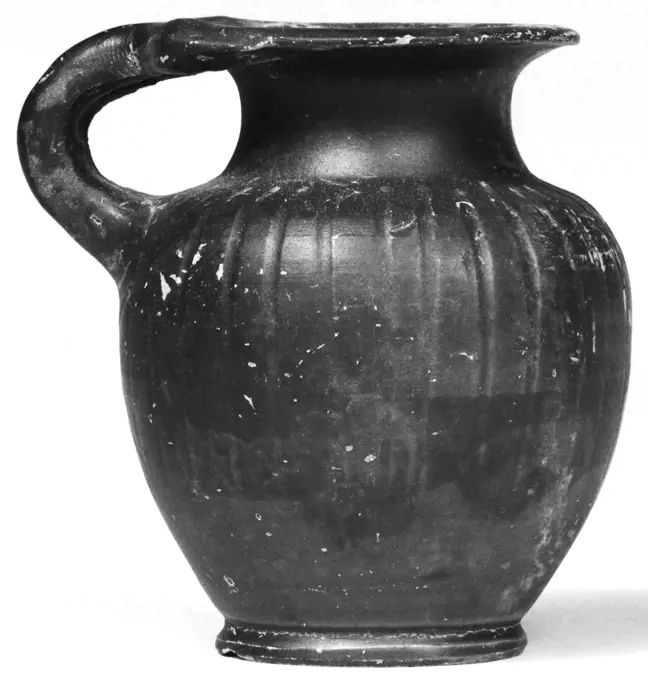
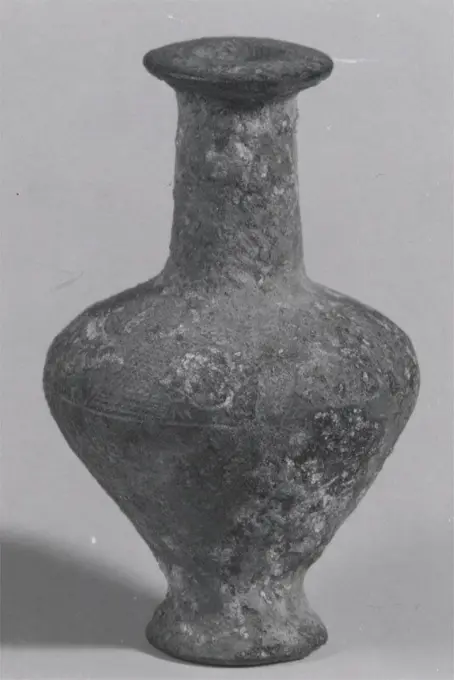
Campanian Black Juglet; Campania, South Italy, Europe; 325 - 146 B.C; Terracotta; 7.5 cm (2 15,16 in.)
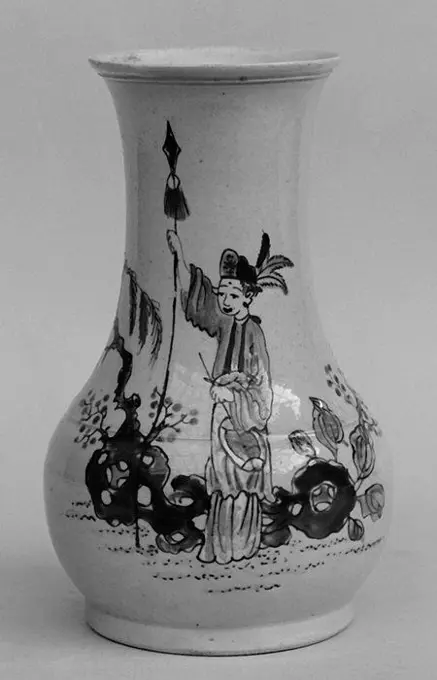
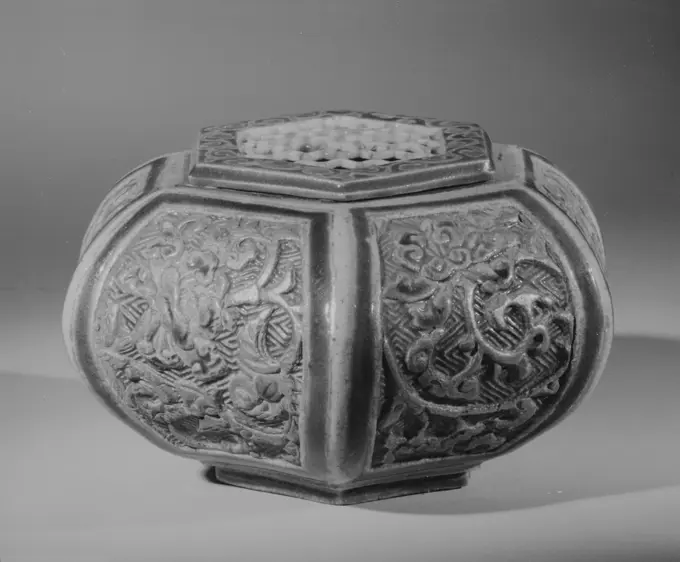
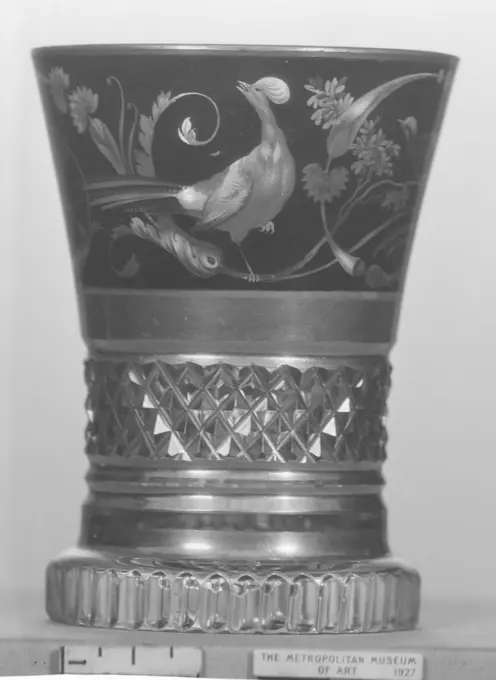
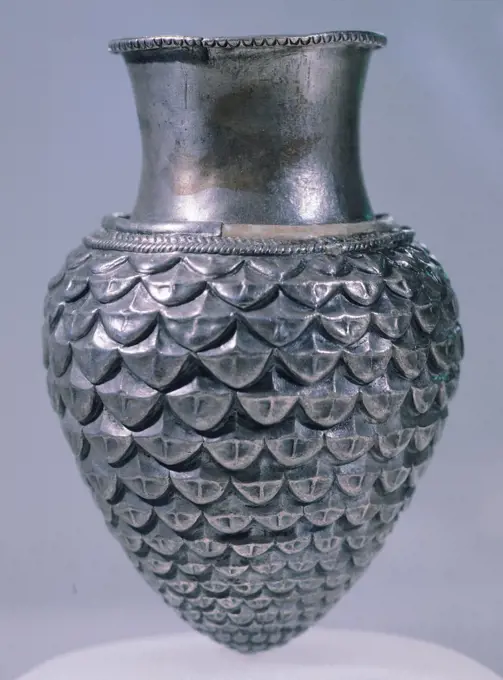
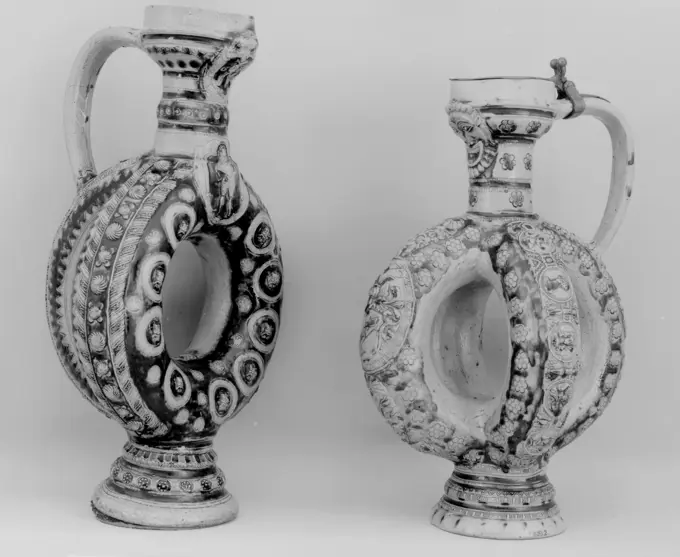
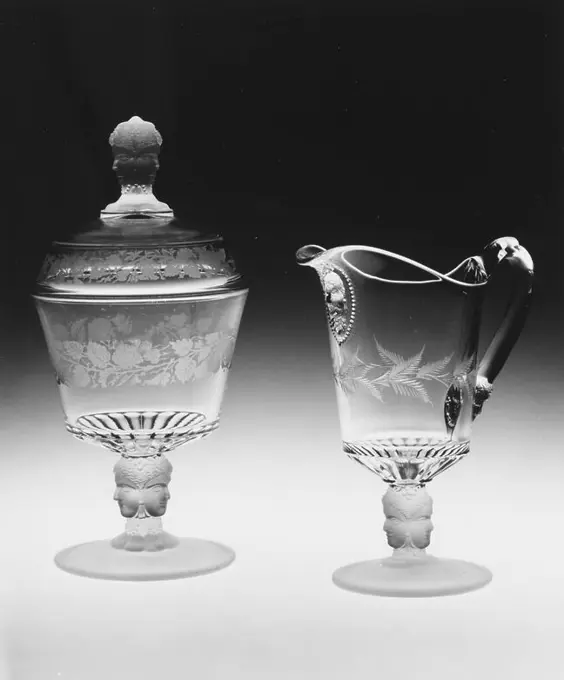
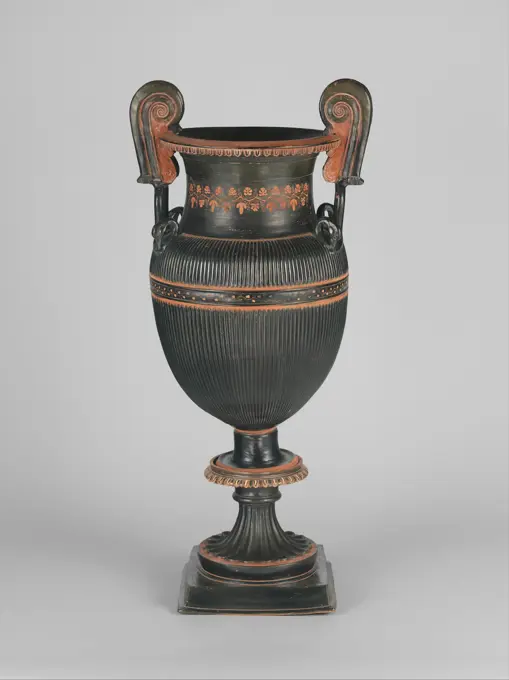
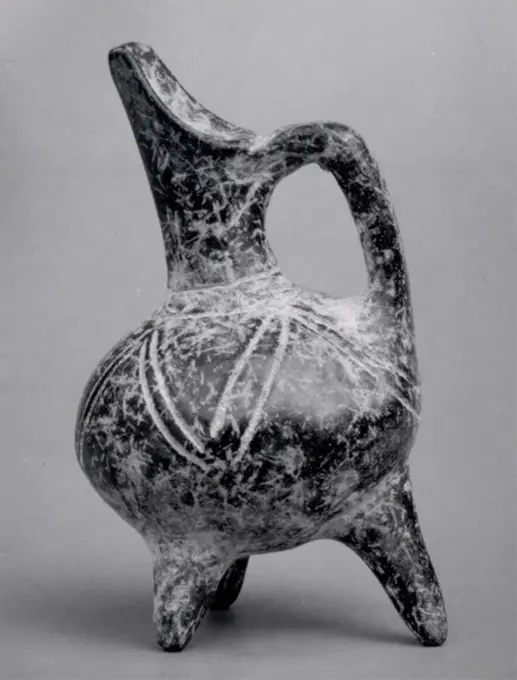
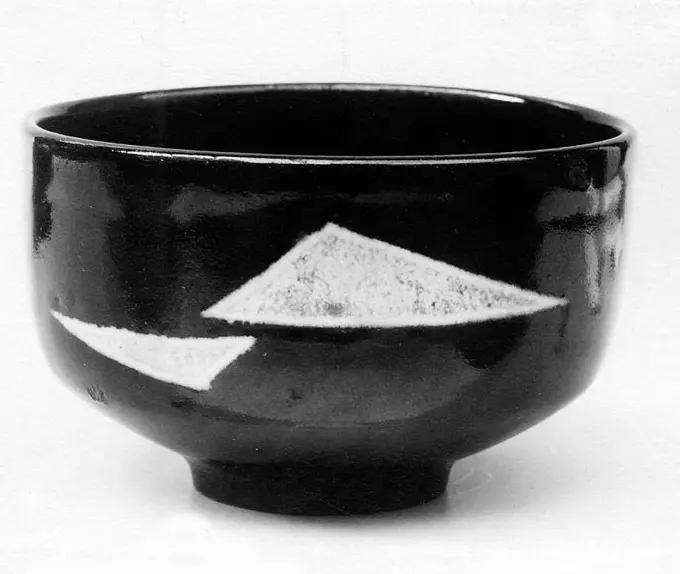
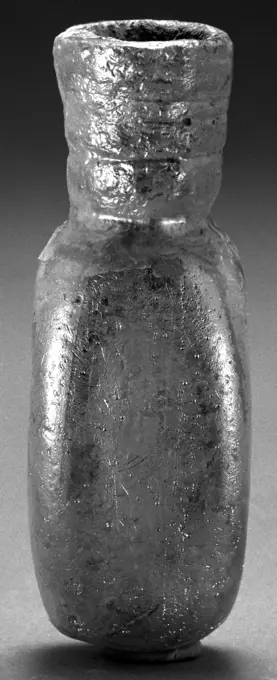
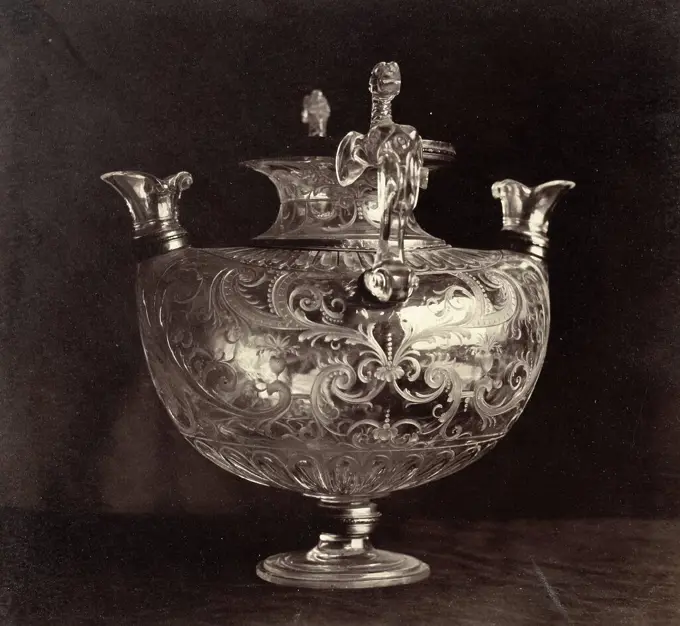
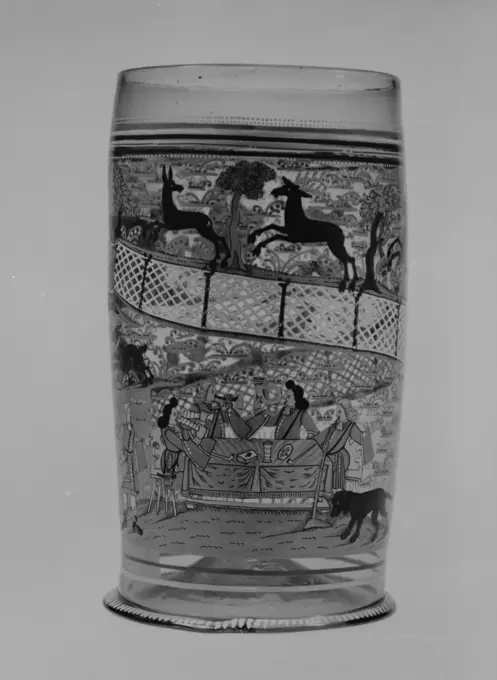
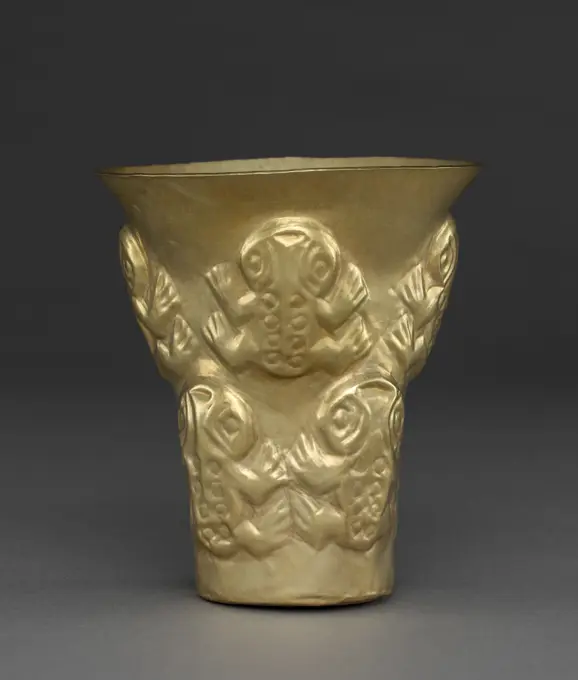
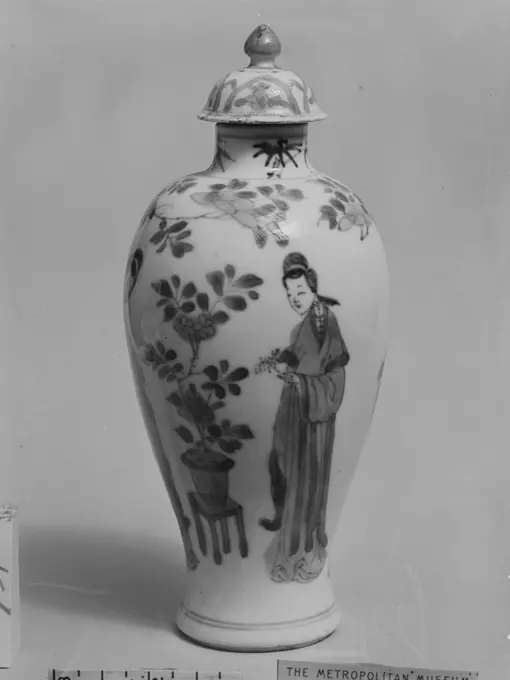
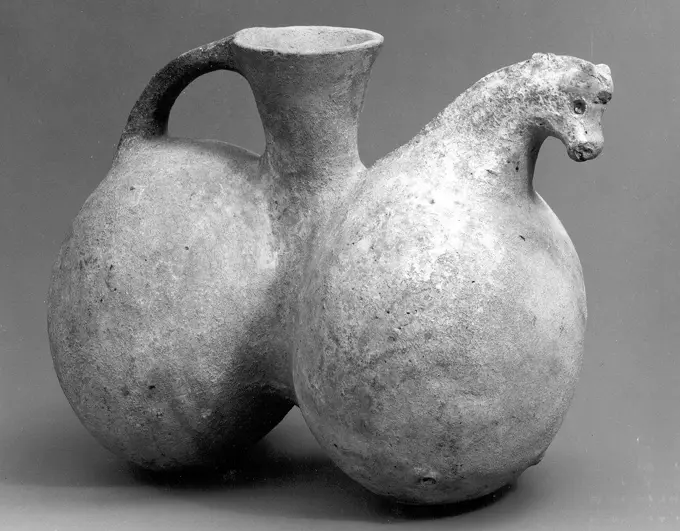
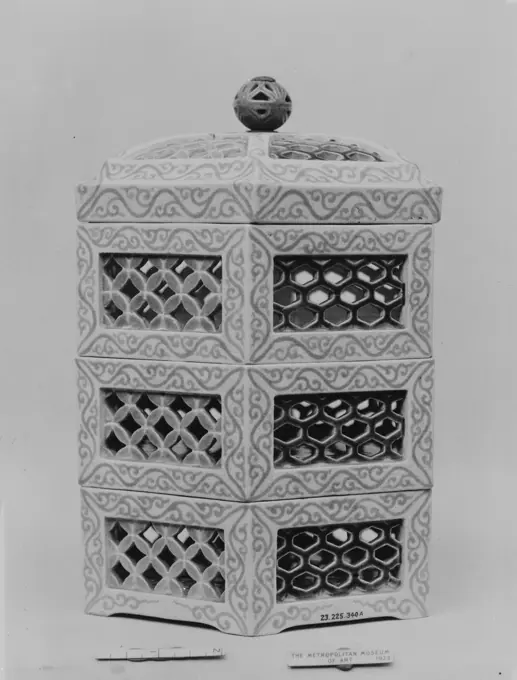
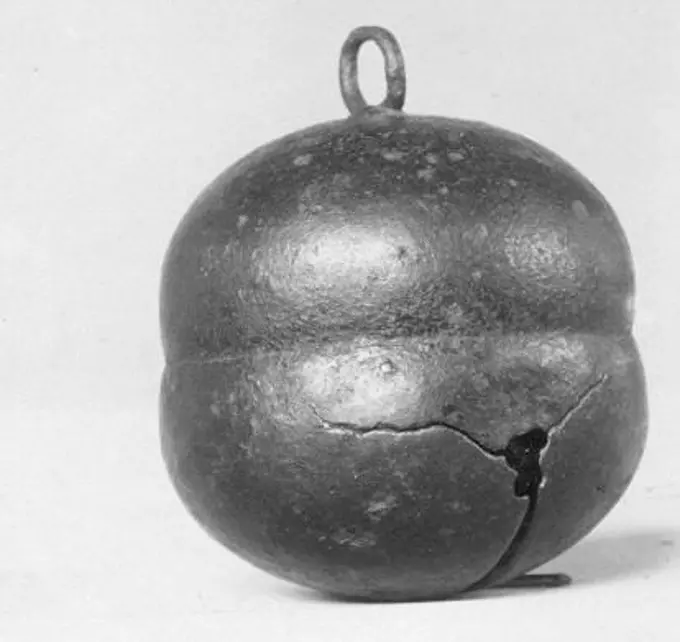
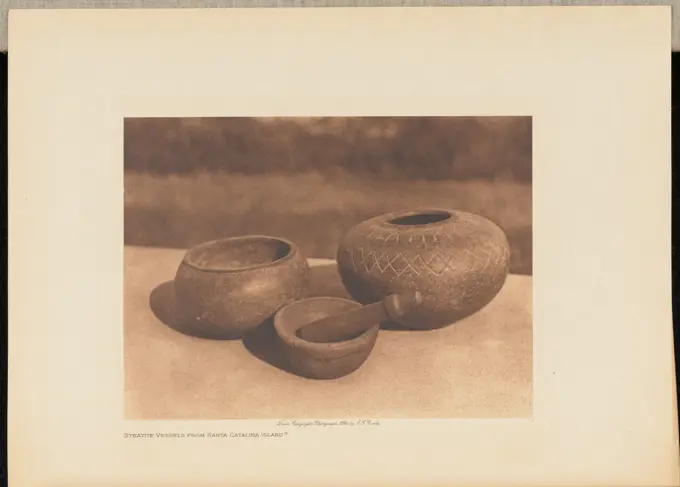
Covered Tripod China. Covered Tripod. China. Bronze, malachite, copper, silver. Ming dynasty (1368-1644). MetalworkSpill vase ca. 1750 British, Staffordshire. Spill vase 199579Cosmetic container ca. late 3rd-early 2nd millennium B.C. Bactria-Margiana Archaeological Complex. Cosmetic container 326791Incense Burner ca. 1790 Japan. Incense Burner. Japan. ca. 1790. Openwork cover; panels covered with enamels and containing decorations in relief, in colored enamels (Awata ware). Edo period (1615-1868). CeramicsSítula de una sola lámina de bronce doblada, decorada con una escena de caza. Sobre la decoración vegetal, baño de plata. Bueña, Teruel. S. V-VI d. C. Altura: 15,5 cm. Diámetro base: 13 cm. Diámetro boca: 23,5 cm. Museum: MUSEO ARQUEOLOGICO, MADRID, SPAIN.Beaker (Ranftbecher) ca. 1830 Decoration in the manner of Anton Kothgasser Austrian Acanthus ornament and birds in bright transparent enamels decorate a black ground, above silver-stained and gilded cut lozenge facets.. Beaker (Ranftbecher). Austrian, Vienna. ca. 1830. Glass, cut, enameled, and gilt. GlassSilver vase in the shape of a pine cone, from Tomb 2 in the Mogilanska Mogila burial mound, Mihailovgrad Region, Bulgaria. Thracian Civilization, 4th Century BC.Pouring vessel early 17th century Japan. Pouring vessel 52212Vase with birds and flowers late 17th-early 18th century China. Vase with birds and flowers. China. late 17th-early 18th century. Porcelain painted in overglaze polychrome enamels (Jingdezhen ware). Qing dynasty (1644-1911), Kangxi period (1662-1722). CeramicsLazio Viterbo Viterbo Museo Civico53. Hutzel, Max 1960-1990 Views of paintings (Middle Ages through 18th c.), frescoes, a tabernacle, coffin, sculpture reliefs, portal fragments, busts, sculpture, tapestry found in the Pinacoteca, Second floor gallery and Second floor cloister sequences. Antiquities: Many views of Etruscan and Roman fragments, sculpture, sarcophagi, pottery, masks, jewelry and other objects found in the Storeroom sequence (inventory numbers on back of prints), and the Cloister, Second floor Cloister, Valle Giulia, Sala Romana and Sala Etrusca sequences. General Notes: There are eight separate numerical sequences for this location. The cloister as an architectural structure, rather than museum site, is documented in the record and file for S. Maria della Verita, Cloister, all views of which are stored in Medieval core collection. Five views from the Museo Civico Second floor cloister sequence are stored in Medieval. German-born photographer and scholar Max Hutzel (1911-Annular jug 17th century German, Westerwald. Annular jug 191730Cream Pitcher. Culture: American. Dimensions: 6 3/4 x 5 3/8 in. (17.1 x 13.7 cm). Maker: George Duncan and Sons (1874-1891). Date: ca. 1878-90. Museum: Metropolitan Museum of Art, New York, USA.Pair of terracotta volute-kraters (vases for mixing wine and water) with stands 3rd quarter of the 4th century B.C. Greek, South Italian, Apulian Although these volute-kraters may have been modeled after examples of bronze, they are imposing works in their own right. South Italian vases are often interpretedas having been made for the tomb. Regardless of their final disposition, black-glazed pieces with no evident funerary reference probably first served in life.. Pair of terracotta volute-kraters (vases for mixing wine and water) with stands 256210Hobnail Creamer after 1886 Probably Hobbs, Brockunier and Company. Hobnail Creamer. American. after 1886. Pressed cranberry and colorless glass. Made in Wheeling, West Virginia, United StatesSpouted tripod vessel with incised linear patterns ca. 2700-2400 B.C. Yortan. Spouted tripod vessel with incised linear patterns 325071Stem cup 7th-8th century China. Stem cup 49564Teabowl ca. 1680 Japan. Teabowl 63181Basket 19th century Japan. Basket 62174Teapot (part of a service) 1809-19 Marc Jacquart This tea and coffee service (38.12.1-.5) is distinguished both by the enormous scale of its pieces and the high quality of the cast and applied decoration. While its sugar bowl is missing, the service is an unusually grand survivor of silver from the Napoleonic period. The mother-of-pearl handles add to the impression of luxury but also serve a functional purpose, as they do not conduct the heat generated by the hot liquids that the vessels contained.. Teapot (part of a service) 198021Creamer. Culture: British. Dimensions: H. 3 1/2 in. (8.9 cm). Date: ca. 1825. Museum: Metropolitan Museum of Art, New York, USA.Urne funéraire , Urns, Antiquities. Nicholas Catsimpoolas CollectionBell 1st century A.D. Italian or German. Bell 501735Two vases decorated with floral motifs and birds, c. 1875 - c. 1900 photograph   cardboard. photographic support albumen print container of ceramics: jar, jug, pot, vase. ornamental birds. ornamenting, decorating ~ applied arts. flowers ~ ornamentRed -and -white bowl with Eros and M women;  3. W. 4th century BC (-350-00-00--326-00-00);12/31/1949. Talavera - 18th century - Osma museum.Flask. UnknownLazio Roma Rome SS. Giovanni e Paolo, Museum68. Hutzel, Max 1960-1990 Medieval: Ceramic fragments, sculptural fragments, fresco fragments, inscribed tomb markers. Houses one of the best collections of Malagan medieval ceramics for casting wall monuments, copies of which are housed in campanile. Specific Location: Museum Antiquities: Ceramic fragments, sculptural fragments, architectural fragments Object Notes: Basilica has separate record and is filed separately. German-born photographer and scholar Max Hutzel (1911-1988) photographed in Italy from the early 1960s until his death. The result of this project, referred to by Hutzel as Foto Arte Minore, is thorough documentation of art historical development in Italy up to the 18th century, including objects of the Etruscans and the Romans, as well as early Medieval, Romanesque, Gothic, Renaissance and Baroque monuments. Images are organized by geographic region in Italy, then by province, city, site complex and monument.Engraved crystal jug from the Louvre, Charles Thurston Thompson, c. 1866 - c. 1890.Paestan Vase with Lid (Perhaps from Another Vase). Close to Asteas (Greek (Paestan), active about 350 - 320 B.C.)Whistling Jar 200 B.C.-1534 A.D. Peruvian. Whistling Jar. Peruvian. 200 B.C.-1534 A.D.. Pottery. Pre-Columbian. Coastal Region, Peru or Ecuador. Aerophone-Blow Hole-vessel fluteCovered vase in shape of an owl. Culture: China. Dimensions: H. 8 1/4 in. (21 cm); W. 4 1/2 in. (11.4 cm); D. 2 1/2 in. ( 6.4 cm). Date: 18th century. Museum: Metropolitan Museum of Art, New York, USA.Beaker (Humpen) 1692 German, Franconia or Thuringia. Beaker (Humpen). German, Franconia or Thuringia. 1692. Glass, enameled. GlassDescription: Cyprus Antiquities Location: Cyprus Date: 1876-1942 mediterranean, mediterraneanthroughalensKohl Jar ca. 1850-1775 B.C. Middle Kingdom. Kohl Jar. ca. 1850-1775 B.C.. Travertine (Egyptian alabaster). Middle Kingdom. From Egypt. Dynasty 12, late - early 13Czar (1613-1645) which Piotr and give it Buturlin, formerly in the collections of the National Museum in Warsaw - general view;  19th/20th century (not after February 16, 1924) (1890-00-00-1924-00-00);Gallipot China. Gallipot. China. Porcelain with black glaze. Ming dynasty (1368-1644). CeramicsVase. Culture: Japan. Dimensions: H. 6 3/4 in. (17.1 cm). Date: 20th century. Museum: Metropolitan Museum of Art, New York, USA.Tureen andCoverBeaker with Frogs, 900-1100. Central Andes (Peru), Lambayeque (Sicán) people, 10th century-12th century. Gold, hammered; overall: 13.7 x 12.1 cm (5 3/8 x 4 3/4 in.). This beaker was created by an artist of the Lambayeque culture of Peru's north coast. High-relief frogs grace the surface, which has a dramatically flaring rim as well as a silvery color, the result of silver in the alloy. If such beakers were used in lifethat is, not created exclusively for the lavish tombs in which they have been found in quantitiesthey may have figured in feasting events that were central to late pre-Hispanic political, social, and religious life.Gourd-shaped Bottle 19th century Japan. Gourd-shaped Bottle 62691Fragmentary Attic Black-Figure Little Master Cup. Xenokles (Greek, active late 5th - early 4th century B.C.)Mug. Culture: American. Dimensions: H. 5 13/16 in. (14.8 cm). Maker: Thomas Danforth Boardman (1784-1873); Sherman Boardman (1787-1861). Date: 1810-50. Museum: Metropolitan Museum of Art, New York, USA.Bottle 17th century French, Catalonia (Roussillon). Bottle. French, Catalonia (Roussillon). 17th century. Glass. GlassCreamerBreastplate late 16th century North German, possibly Brunswick. Breastplate 22997Jar with Cover China. Jar with Cover. China. Porcelain decorated in underglaze blue. Qing dynasty (1644-1911), Kangxi period (1662-1722). CeramicsGlazed pottery vases for the Boston Public Schools , Vases. The Massachusetts WPA Federal Art Project Photograph CollectionVessel ca. 2700-2600 B.C.. Vessel 324124Attic Red-Figure Cup Type B; Sabouroff Painter; Athens, Greece; about 460 B.C; Terracotta; 9 × 29.5 × 22.5 cm (3 9,16 × 11 5,8 × 8 7,8 in.)Silver bowl with swinging handles. Culture: Greek, South Italian. Dimensions: H.: 4 5/8 in. (11.7 cm). Date: late 4th century B.C..In 1895 the tomb of a Gallic warrior was excavated in a necropolis at Montefortino, about thirty miles west of Ancona in central Italy. The cemetery is that of Gauls who in the fourth century B.C. began to invade central Italy and to stage raids as far south as Apulia. The tomb contained iron weapons, bronze and terracotta vessels, and also a gold ring and five silver vessels that must have been brought as loot from another part of Italy. The hoard includes a silver jug (08.258.51), a silver bowl with swinging handles (08.258.50), a pair of stemless silver cups decorated on the inside with a complex floral pattern (08.258.52-.53), and a silver kyathos (cup-shaped ladle) with a handle that terminates in a duck's head (08.258.54). Museum: Metropolitan Museum of Art, New York, USA.Amphora (Storage Jar) 460 BCE-450 BCE Athens. This vase has a distinctive shape characterized by an elongated ovoid body on a thick disk foot, an offset flaring neck, an inverted lip with grooves for a lid, and handles that rise from the shoulder and curve below the height of the mouth to join the neck. The type is called a Nolan amphora, after Nola, Italy, the site where the first examples of this shape were discovered and where this example was also found. It probably contained wine, olives, or oil. Nolan amphorae are small, usually less than fifteen inches high. Figures are drawn between the handles on the front and back. Below, a length of meander pattern provides a ground line.. terracotta, decorated in the red-figure technique . Achilles PainterVase. Culture: China. Dimensions: H. 16 1/2 in. (41.9 cm); Diam. 8 in. (20.3 cm); Diam. of rim 4 1/8 in. (10.5 cm); Diam. of foot 5 1/4 in. (13.3 cm). Museum: Metropolitan Museum of Art, New York, USA.Snuff Bottle 19th century China. Snuff Bottle 41763Twin-spouted vessel ca. late 1st millennium B.C. Parthian. Twin-spouted vessel 327357Incense Burner 19th century Japan. Incense Burner 51109Pill box. Culture: China. Dimensions: H. 1 3/16 in. (3 cm); Diam. 2 1/16 in. (5.2 cm). Date: late 19th century. Museum: Metropolitan Museum of Art, New York, USA.Teapot 18th century (porcelain ca. 1730; decorated ca. 1730) Meissen Manufactory German. Teapot 206013ARTE PRECOLOMBINO. INCA. CULTURA CHANCAY. Vaso antropomorfo (altura 20cm). Cultura localizada en la costa central del Perú, se desarrolló entre los siglos XIV y XV. Su cerámica es algo tosca y la más característica es la del tipo "el negro sobre blanco". Museo Arqueológico. Cuzco. Perú.Lazio Viterbo Viterbo Museo Civico91. Hutzel, Max 1960-1990 Views of paintings (Middle Ages through 18th c.), frescoes, a tabernacle, coffin, sculpture reliefs, portal fragments, busts, sculpture, tapestry found in the Pinacoteca, Second floor gallery and Second floor cloister sequences. Antiquities: Many views of Etruscan and Roman fragments, sculpture, sarcophagi, pottery, masks, jewelry and other objects found in the Storeroom sequence (inventory numbers on back of prints), and the Cloister, Second floor Cloister, Valle Giulia, Sala Romana and Sala Etrusca sequences. General Notes: There are eight separate numerical sequences for this location. The cloister as an architectural structure, rather than museum site, is documented in the record and file for S. Maria della Verita, Cloister, all views of which are stored in Medieval core collection. Five views from the Museo Civico Second floor cloister sequence are stored in Medieval. German-born photographer and scholar Max Hutzel (1911-Campania Caserta Capua Museo Campano069. Hutzel, Max 1960-1990 Medieval: Byzantine architectural fragments; parchment fragments with miniatures (12th century) from Montecassino; painted wooden crucifix (13th century); Carolingian crucifixes; Bishop's miter (11th century) of gold and silver damask; fresco (13th century). Post-medieval: Architecture (15th century). Formerly the Palazzo Antignano. Unusual Catalan/Moorish-style portal; Paintings on panel and canvas (15th-18th centuries); marble intarsia (16th century); marble sculpture: busts of Christ and Mary (17th century); sculpture of saints in marble and in wood (15th century); painted and gilded sculpture in wood; marble grave sculpture (16th century); sarcophagus with allegorical carvings; gold reliquary "Rosa d'Oro"; crucifix made of elephant tusk Specific Location: Pianterreno Antiquities: Italic sculpture (seated women holding babies); inscription. Photo campaign #1: 533 photos. Roman relief and sculpture; cinerary urns; Greek aLazio Latina Sezze Antiquarium Comunale36. Hutzel, Max 1960-1990 German-born photographer and scholar Max Hutzel (1911-1988) photographed in Italy from the early 1960s until his death. The result of this project, referred to by Hutzel as Foto Arte Minore, is thorough documentation of art historical development in Italy up to the 18th century, including objects of the Etruscans and the Romans, as well as early Medieval, Romanesque, Gothic, Renaissance and Baroque monuments. Images are organized by geographic region in Italy, then by province, city, site complex and monument.Cup and saucer 1793 Imperial Porcelain Manufactory. Cup and saucer 199124Vase Icon, Flower Vase Icon Vector Art IllustrationCake Box in Three Tiers 1830 Japan. Cake Box in Three Tiers. Japan. 1830. Faience, the sides pierced (Raku ware). Edo period (1615-1868). CeramicsAttic Red-Figure Cup.Inner Coffin of Itamun, inscribed for Nesiamun ca. 1070-1000 B.C. Third Intermediate Period The coffin set of the General's Charioteer, Itamun (an outer coffin (26.3.1a, b), this inner coffin, and a mummy board (26.3.3)) was found in a reused tomb in a valley south of Deir el-Bahari. Itamun's outer coffin was not completely closed, as this coffin, made originally for a priest and copper engraver of the temple named Nesiamun, was slightly too large.The layout and decoration of the lid is similar to that of the outer coffin, with the deceased in a tripartite wig with floral fillet, elegant features and large ears, and hands fisted over the chest. A winged figure of Nut again divides the upper and lower parts of the lid. In this case, the space above contains a djed pillar flanked by deities in human form; the lower part is divided by bands of inscription into 10 symmetrical sections containing illustrations from Egyptian mythology. Additional illustrations adorn the sides of the box. In The Loan Collection, South Kensington Museum: vase designed by Baron Triqueti, 1868. Bronze and ivory vase by Henri-Joseph-François Triqueti. From "Illustrated London News", 1868.Bell late 19th century Chinese. Bell 502133Maling (Horse Bell) 19th century Japanese. Maling (Horse Bell) 5006961865, Mexique, 1865, Mexique, 1865, Falconnet, Louis, 1864-ca. 1867, by Louis Falconnet, an officer in the French army, from documentation he created or gathered while on his tour of duty in Mexico (1864-1866) at the time of the French intervention.Glass; indefinite steelworks, Weissbach (glassworks; 1617-1754); XVII/18th century (1680-00-00-1710-00-00);Steatite Vessels from Santa Catalina Island. Edward S. Curtis (American, 1868 - 1952)Red -support peliquea;  5th century BC (-500-00-00--401-00-00);Hellenistic glass receptacles, antiquity, Roman-Hellenistic ornament, Nicolini, PompeiiGroovy abstract organic vase silhouettes art. Matisse elements in trendy retro 60s 70s style. Groovy abstract organic vase silhouettes art. Matisse elements in trendy retro 60s 70s style.