Historical Clothing and Accessories

Artifacts including a vintage doll, knitted hat, court train, and antique shoes, highlighting historical fashion styles and materials.

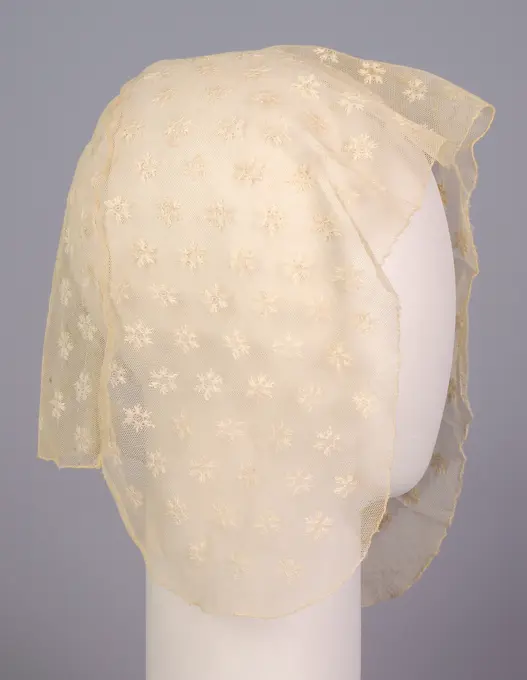
Knitted hat of white cotton with a spray pattern and jersey stitch with cover with ajour and zigzag edge; marked in pink cross stitch: VG6, Anonymous, c. 1840 - c. 1850 Three white cotton babymuts. Netherlands cotton (textile) knitting Three white cotton babymuts. Netherlands cotton (textile) knitting
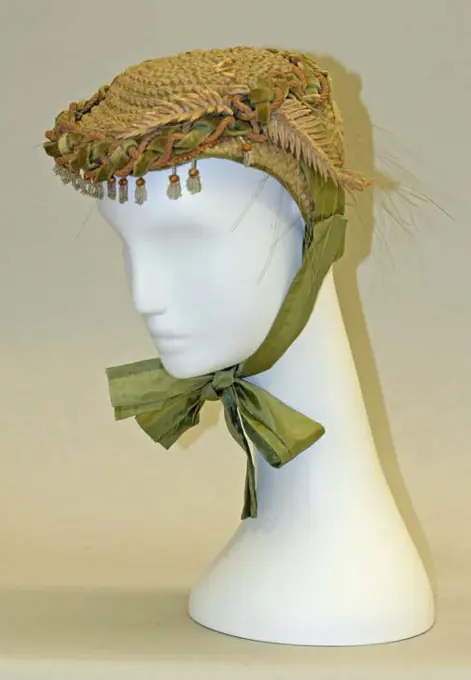
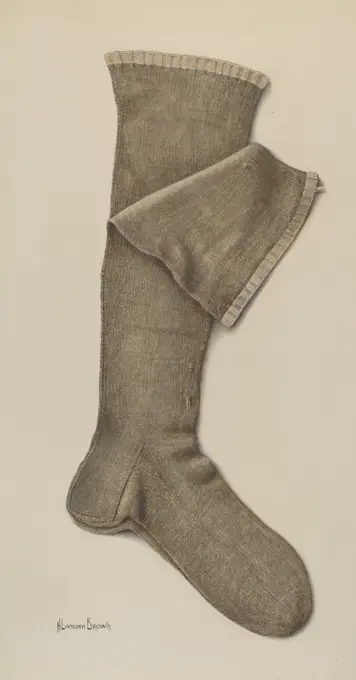
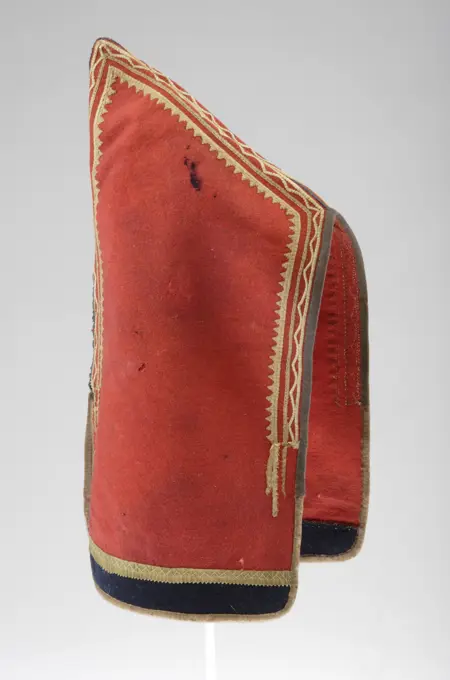
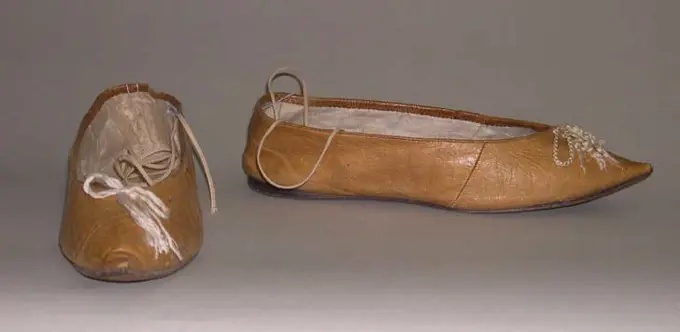
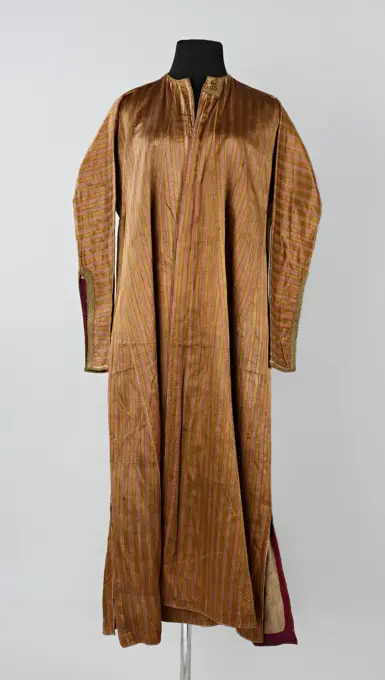
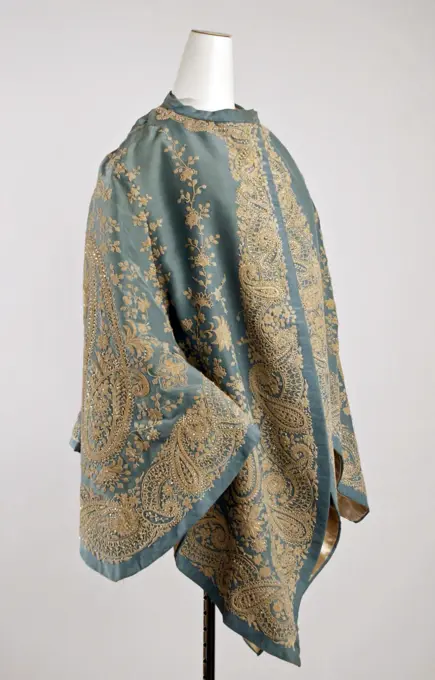
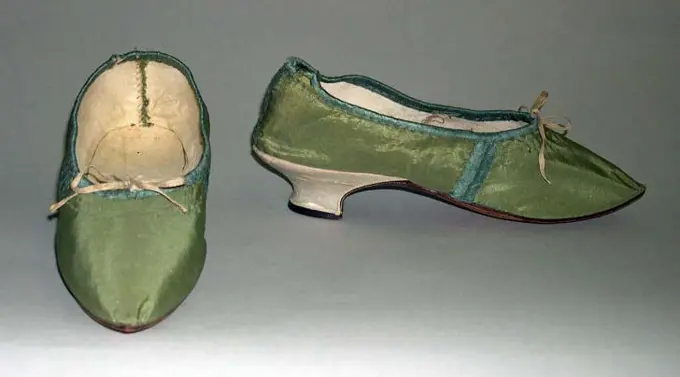
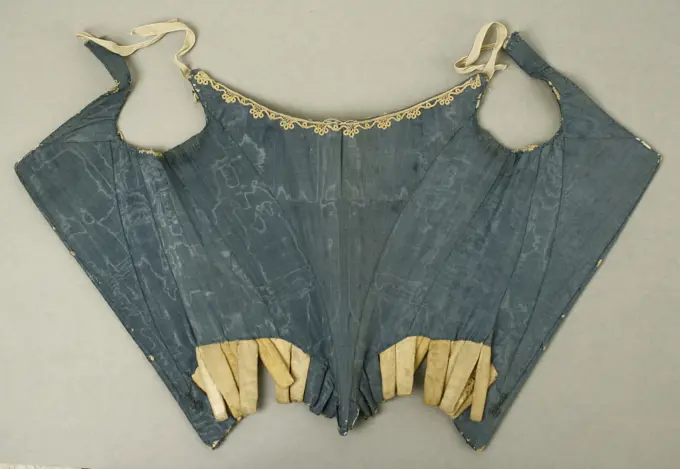
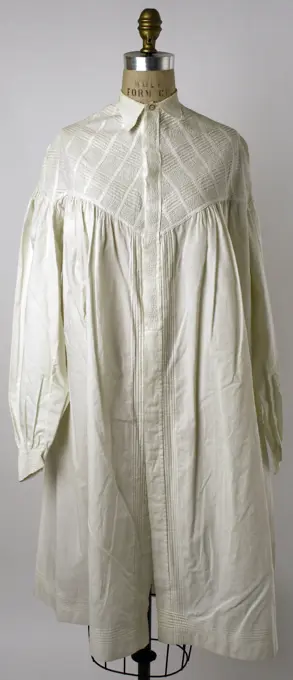
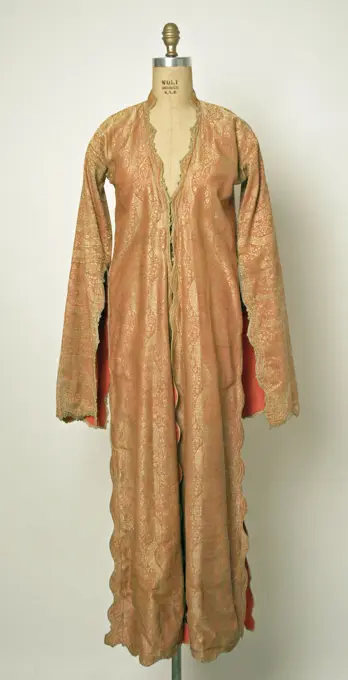
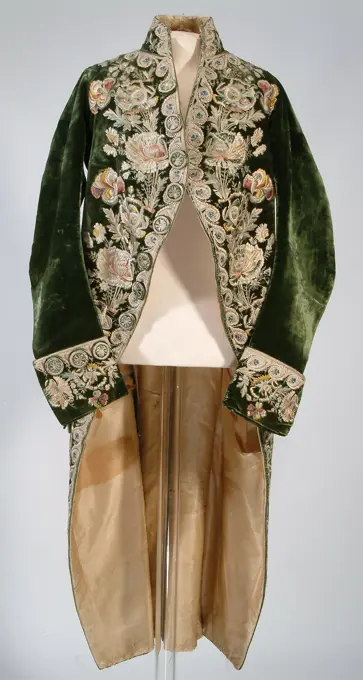
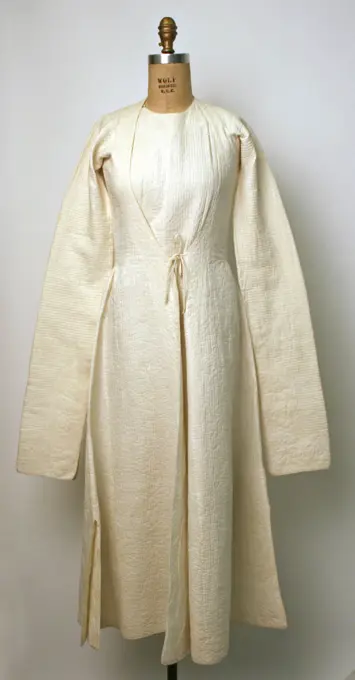
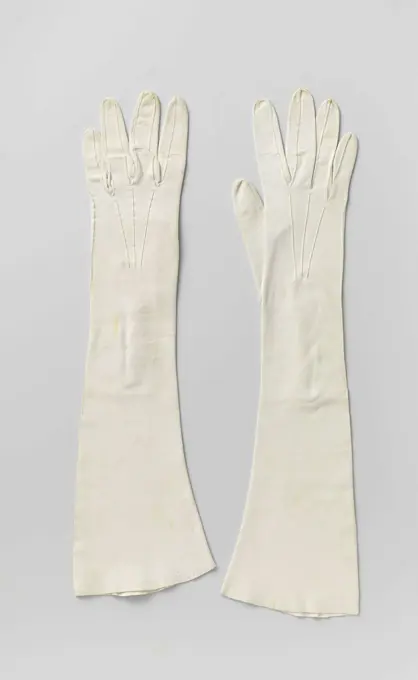
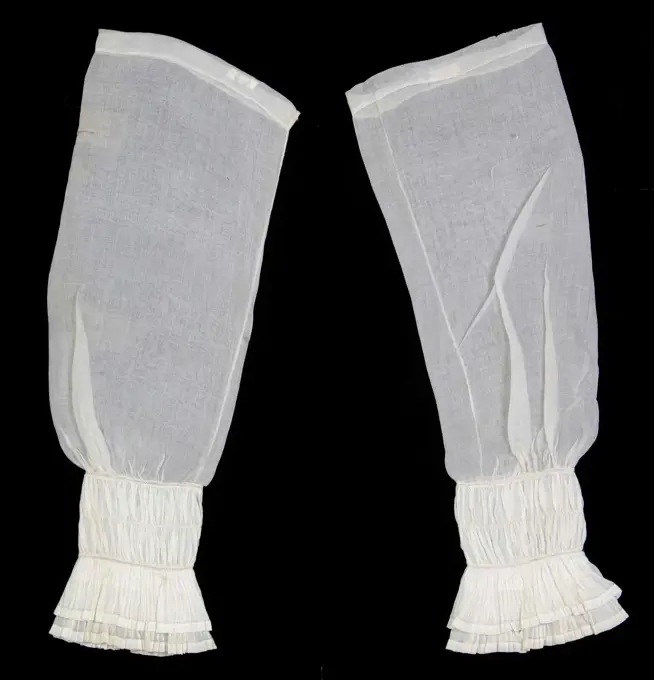
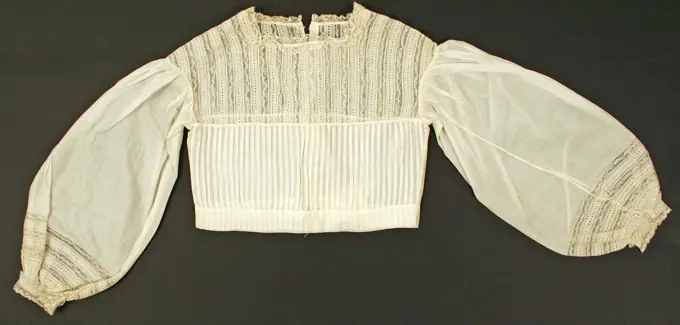
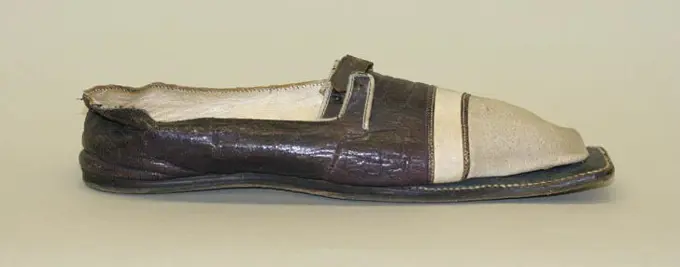
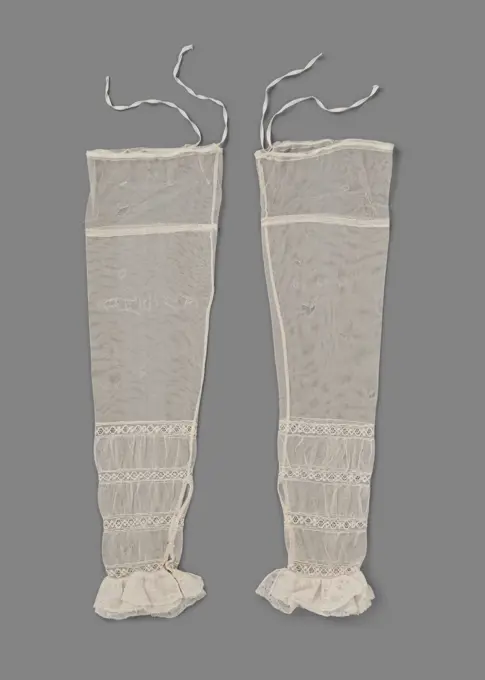
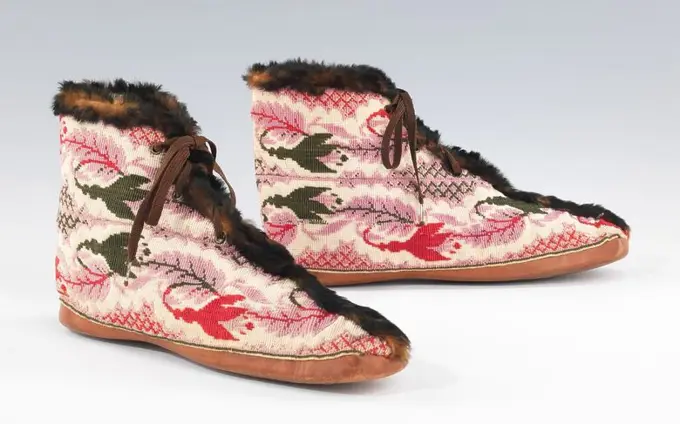
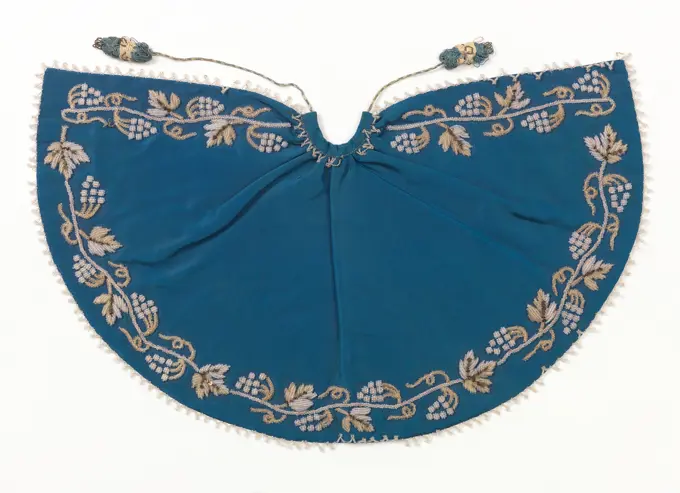
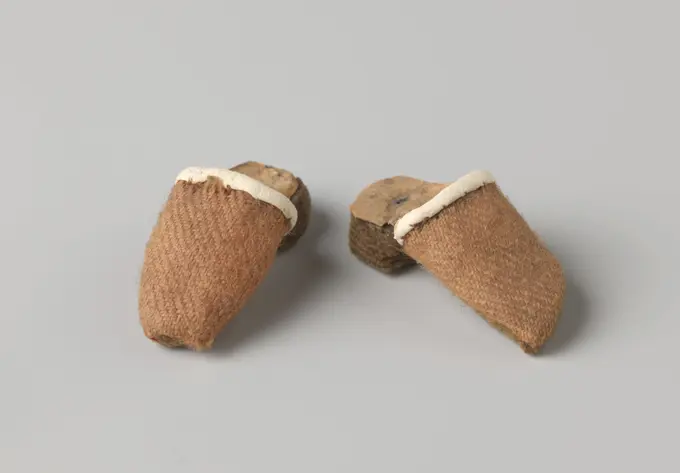
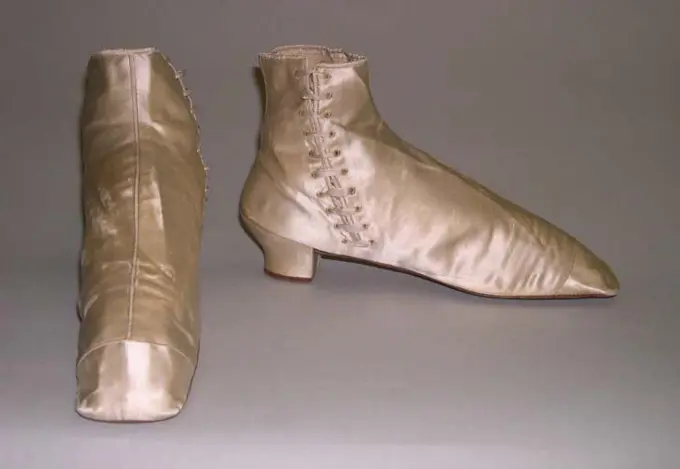
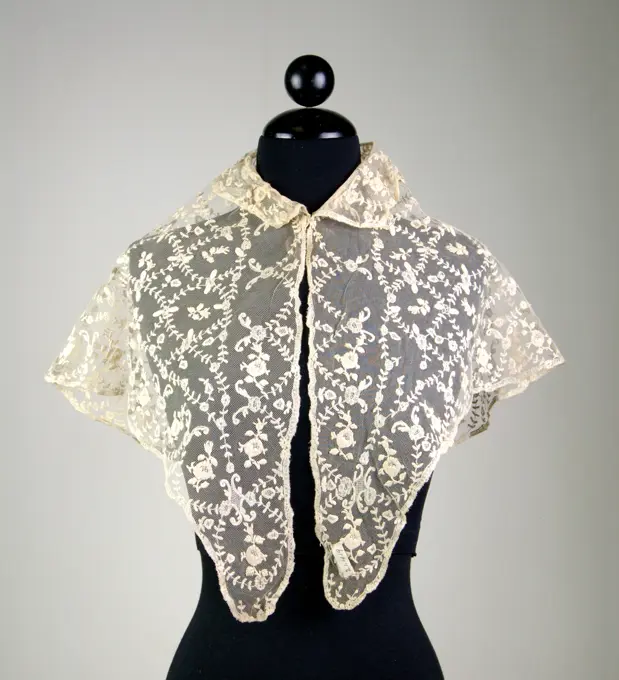
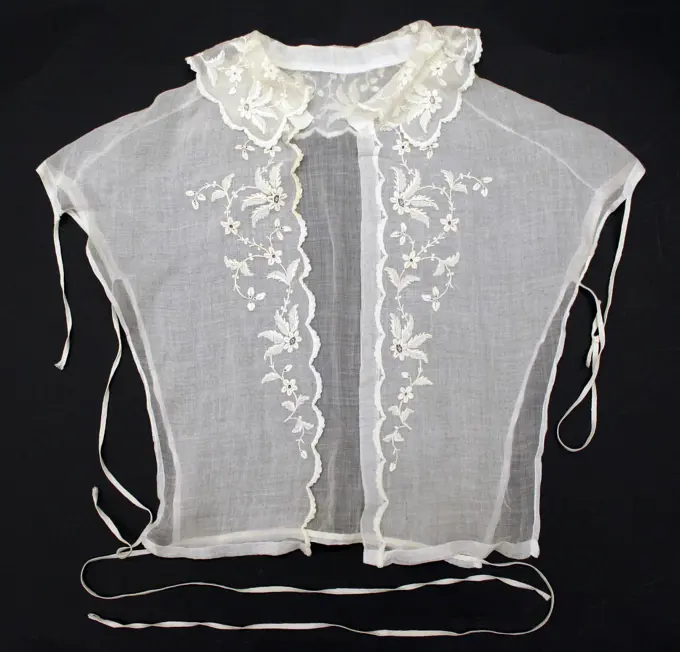
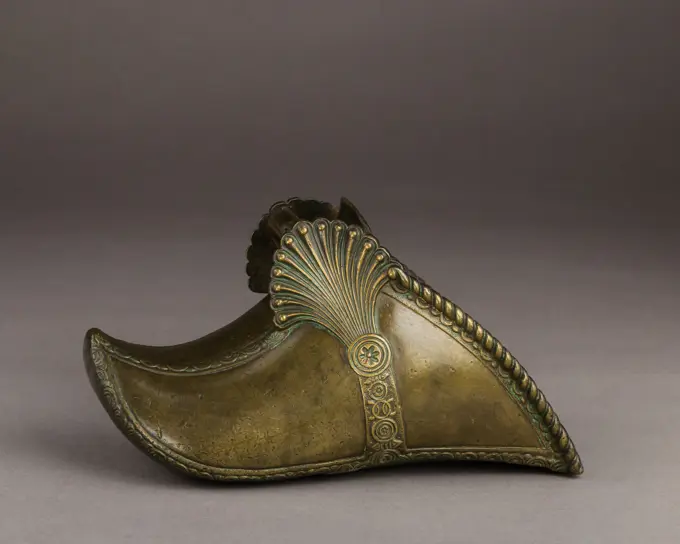
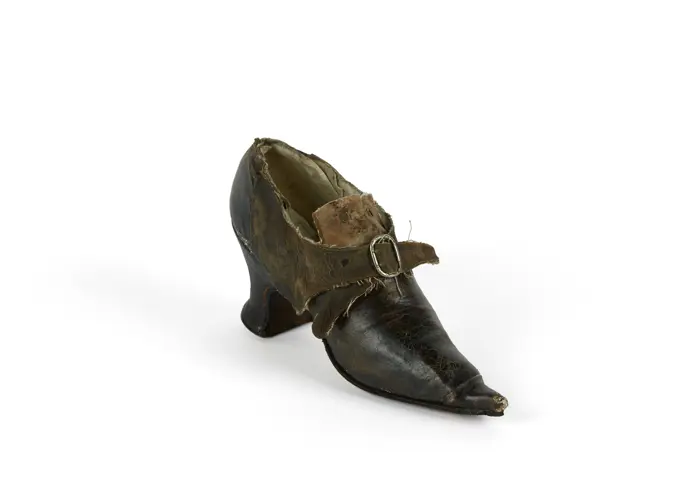
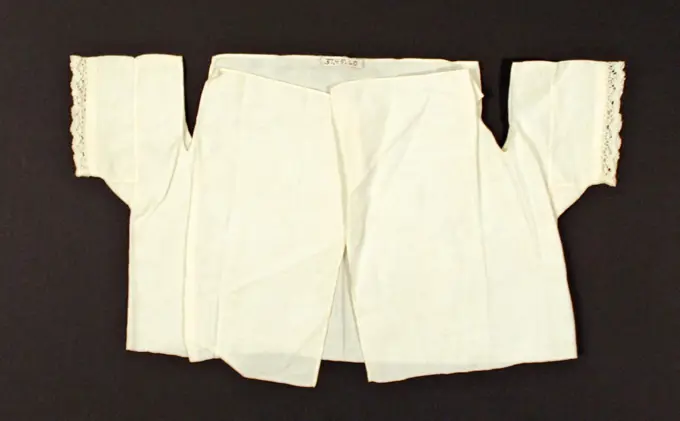
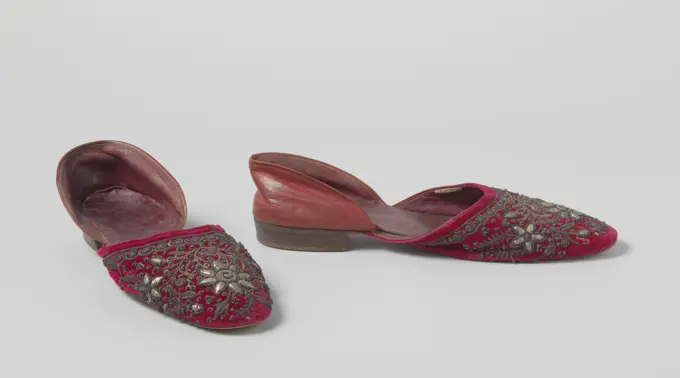
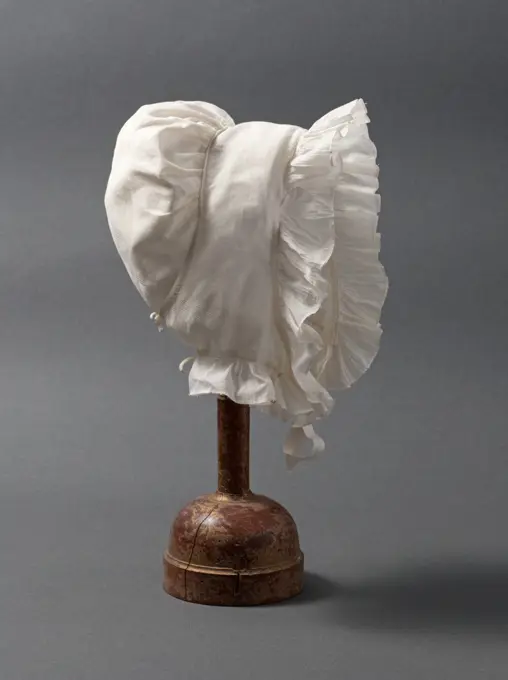
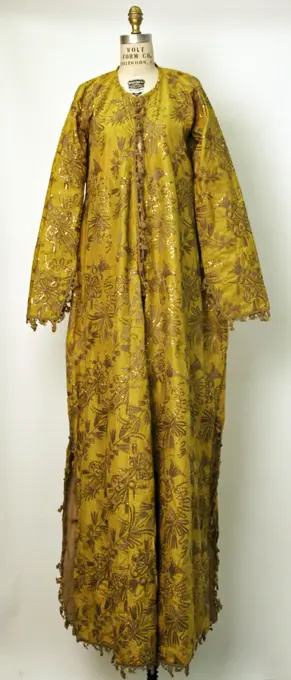
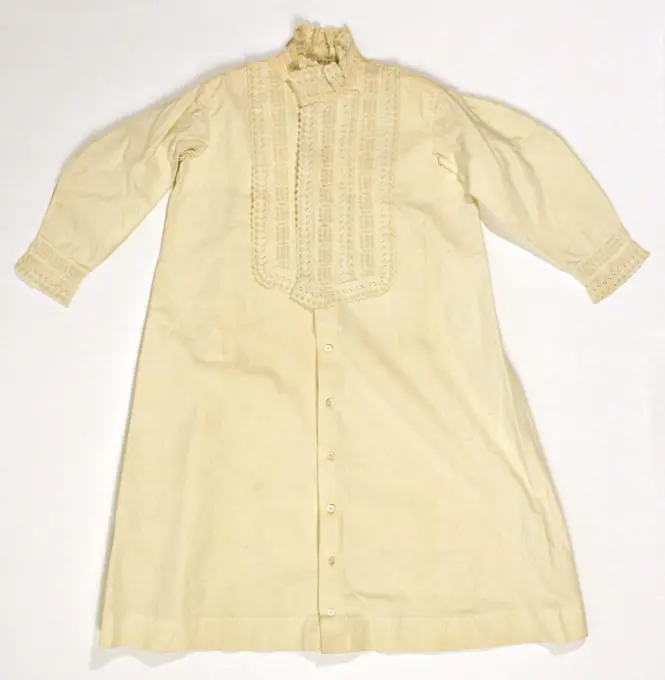
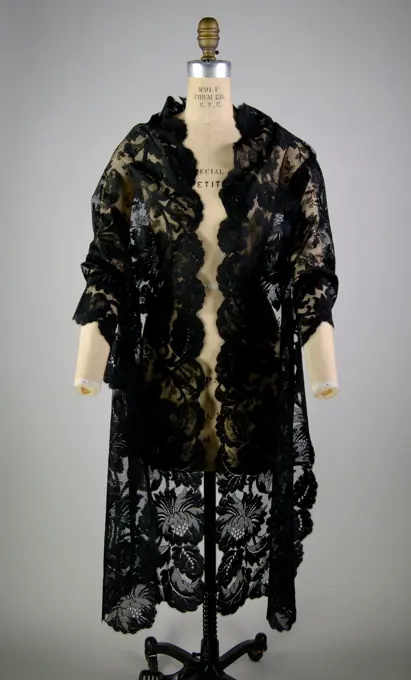
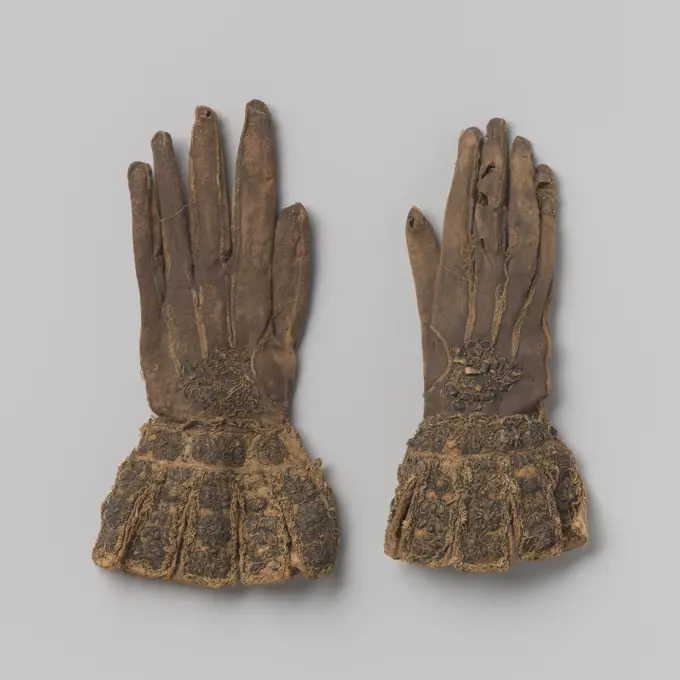
Doll 1800-15 American. Doll 17769Knitted hat of white cotton with a spray pattern and jersey stitch with cover with ajour and zigzag edge; marked in pink cross stitch: VG6, Anonymous, c. 1840 - c. 1850 Three white cotton babymuts. Netherlands cotton (textile) knitting Three white cotton babymuts. Netherlands cotton (textile) knittingCourt train 1809 French. Court train 108154A pair of men's shoesH Langden Brown, Stockings, c 1938 StockingsStockings (England); cottonCap 1840-60 American. Cap 169863Peaked cap -Underskirt ca. 1865 American. Underskirt 95012Mules first quarter 17th century British By the sixteenth century, embroidery had become a highly developed art form in England and on the Continent. The proliferation of printed materials, particularly books of embroidery designs, supplied a wealth of motifs for both the amateur and professional embroiderer. The superb workmanship found on this pair of early-seventeenth-century mules suggests professional design and manufacture.. Mules 82036Slippers 1790-1800 probably American. Slippers 112672Undersleeves third quarter 19th century American. Undersleeves 169691Sarafan unknownMantle 1880s probably French. Mantle 107814Fragment silk pattern with leopard pattern, anonymous, 1500 - 1599 Fragment silk fluble (5 pieces set together) with leopard pattern. Italy, 16th century. Italy silk velvet (fabric weave) Fragment silk fluble (5 pieces set together) with leopard pattern. Italy, 16th century. Italy silk velvet (fabric weave)Child's jacket, 20th century, 24 1/2 x 32 1/2in. (62.2 x 82.6cm), Cotton, China, 20th centuryGlove of white wax leather, with scalloped caps with gold side, tires with acorns and silk, embroidered with multicolored silk, gold thread and canetille and gilded sequins, anonymous, c. 1622 Right bridal glove of white wax leather, richly embroidered caps. Cap with lobed edge. Closed with three pairs of pink lace bands, on which a gold button is pushed. Symmetrical pattern of, among other things, two handed hands in brown contour under one with arrows pierced the heart of gems and two birds twisted. Rich pattern in different colors, embroidery, pearls and sequins. Around Gold Passification from Kloskant. Netherlands whole:. Embroidery: Silk. embroidery:. whole: embroidering / bobbin lace Right bridal glove of white wax leather, richly embroidered caps. Cap with lobed edge. Closed with three pairs of pink lace bands, on which a gold button is pushed. Symmetrical pattern of, among other things, two handed hands in brown contour under one with arrows pierced the heart of gems and two biCape unknownDrawers ca. 1890 French. Drawers 107563Shoes 1770-89 European. Shoes 101664Galiigaskins unknownStockings ca. 1870 American. Stockings. American. ca. 1870. SilkSandal of white embroidered rips side, c. 1735 - c. 1755 Sandal of white rips side, with chenille embroidery of flowers and tendrils in blazing colors, plain green omboard. No left/right difference (except for the buckle). Very flat heels with cerise leather exaggerated. The wide forefoot ends slightly pointed, and has cruciate straps, buckle closure with metal buckle. West-Europa Sole: Leather. whole: Silk. buckle: Metal embroidering Sandal of white rips side, with chenille embroidery of flowers and tendrils in blazing colors, plain green omboard. No left/right difference (except for the buckle). Very flat heels with cerise leather exaggerated. The wide forefoot ends slightly pointed, and has cruciate straps, buckle closure with metal buckle. West-Europa Sole: Leather. whole: Silk. buckle: Metal embroideringSandal of white ripszijde, with chenille embroidery of flowers and tendrils in blurring colors, plain -green omboard, c. 1735 - c. 1755 Sandal of white rips side, with chenille embroidery of flowers and tendrils in blazing colors, plain green omboard. No left/right difference. Very flat heels with cerise leather exaggerated. The wide forefoot ends slightly pointed, and has cruciate straps, buckle closure with metal buckle. Netherlands (possibly) Sole: Leather. whole: Silk. Buckle: Metal. embroidering Sandal of white rips side, with chenille embroidery of flowers and tendrils in blazing colors, plain green omboard. No left/right difference. Very flat heels with cerise leather exaggerated. The wide forefoot ends slightly pointed, and has cruciate straps, buckle closure with metal buckle. Netherlands (possibly) Sole: Leather. whole: Silk. Buckle: Metal. embroideringEvening slippers ca. 1815 Despa. Evening slippers 168929Stays late 18th century British. Stays 84360These shoes did not have a specific fit for right or left. The shoes would mould themselves to the feet whilebeing worn. In the early 19th century, shoes began to be labelled for which foot they were meant: stamped on the insoles are the words droit (right) and gauche (left).Czechman. unknown, authorEvening slippers 1825-35 Borsley. Evening slippers 168916Shoes third quarter 18th century French. Shoes 168370Dressing jacket 1863-66 American. Dressing jacket 100024Overshoe -Ucetek Entari late 19th century. Ucetek Entari 126657Shirt early 19th century American. Shirt 103773Chemisette ca. 1860 American. Chemisette 170438Man's Stock. John S. Kimball (United States, Massachusetts, Boston, 19th century). United States, Massachusetts, Boston, circa 1830. Costumes; Accessories. Silk satin, metalTail-coat;  beginning of the 19th century (1800-00-00-1810-00-00);State Art Collections (Warsaw - 1922-1939) - collections, Warsaw government theaters (Warsaw - 1810-1915), Warsaw government theaters (Warsaw - 1810-1915) - collection, cornflower, bells (flowers), flowers (ornament), flowers field, message (provenance), chamomile, roses, theaterVest ca. 1860 American or European. Vest 91068Flat shoe from black silk with ribbon, anonymous, c. 1850 - c. 1930  Europe silk. leather  Europe silk. leatherTwo leather tricks with wooden soles and leather strap over the toes, shoe footwear clothing soil find leather wood, w 10.5, tanned cut Two wooden treads with wide leather strap over the toes. And wooden sole with fairly high heel and cut out under the instepAngarkha 18th century. Angarkha 86167Priest's vestment, 18th century, 56 in. (142.24 cm), Brocade, Iran, 18th centuryWaistcoat. unknown, authorLeft glove from white clotheskin, at the wrist a split beated with white leather and three mother-of-pearl buttons. Signature: M. Laimböck, from (illegible) court supplier, Amsterdam.Cape;  2. PO. 19th century (1850-00-00-1900-00-00);Oske, Stanisława (Fl. Ca 1965) - collection, flower ornaments, plant ornaments, purchase (provenance)Piece. Culture: French. Dimensions: 47 x 34 1/2 inches (119.4 x 87.6 cm). Date: 1730s. Museum: Metropolitan Museum of Art, New York, USA.Boots 1899-1900 American. Boots 90429Ladies shoe of ivory white satin with tie with multiple loops and in the middle glass beads, c. 1890 Ladies shoe from ivory white satin. Model: rounded nose, one cover sheet and one back leaf. The front of the heel runs straight down. The side and back of the heel are fitted and covered with ivory white satin. The heel has a dark brown edge leather from the behind lip. Learning behind with eight nails stuck to the heel and leather sole. Rear leaf lined with ivory white leather, cover page lined with beige linen. The insole is of ivory white leather. Decoration: in the middle for the cutting on the for shoe. Decorated with bow of ivory white satin. The bow has six loops of different sizes on both sides. Two rows of glass beads are attached in the middle of the bow. Schachtrand pissed off with ivory white rip band. No left/right difference. England Shoe: Silk. Beads: Glass. Strik: Silk. band:. Hak: Silk. Rest lining: Leather. Fore tray: Linen (Material). insole: Leather. sole:. behind LaShoes. Culture: European. Date: late 18th century.While the lovingly embroidered baby caps and christening gowns and adorably diminutive booties of infants are preserved in great quantity, garments for older children seldom survive in a good state or preservation. This scarce pair of 18th century child's shoes incorporates the pointed toe and tongue found in fashionable women's styles, combined with the flat heel suitable for a child. It is not clear from the cut whether these shoes would have been worn by a boy or a girl, but the bright color is more suggestive of feminine dress. Museum: Metropolitan Museum of Art, New York, USA.Bliżej Kultury unknownBag Made 1830-1835 United States. Cotton, plain weave; beaded with glass and metal beads; lined with silk, plain weave; edged with silk and cotton cording; two ribbons silk and cotton, plain weave; drawstrings silk, plain weave .Cape; silk, metallic thread; Bequest of Richard Cranch Greenleaf in memory of his mother, Adeline Emma Greenleaf; 1962-56-59Pair of Woman's Shoes. England, circa 1785. Costumes; Accessories. Silk twill with metallic-thread supplementary-weft patterning and leatherUndersleeves ca. 1825 French. Undersleeves 170222Chemisette 1860-69 American. Chemisette 104170Bliżej Kultury unknownShoes 1830s American. Shoes 112738Pair of gloves with scalloped broder, c. 1920 - c. 1925 Right gloves from Glacéleer, trimmed with a border of green leather. Small hood. On the hand three tires consisting of black -stitched lines. The natural -colored leather ends with the hood in sculptures and points. The sculpts are each perforated with one hole. Address (in the left glove a stamp): "Prima Donna" / Exp ..... / Maison de Bonneterie / Amsterdam The Hague, (a stamp in the right glove): 7. Netherlands (possibly) whole:. Leather Right gloves from Glacéleer, trimmed with a border of green leather. Small hood. On the hand three tires consisting of black -stitched lines. The natural -colored leather ends with the hood in sculptures and points. The sculpts are each perforated with one hole. Address (in the left glove a stamp): "Prima Donna" / Exp ..... / Maison de Bonneterie / Amsterdam The Hague, (a stamp in the right glove): 7. Netherlands (possibly) whole:. LeatherShoes 1798 British. Shoes 112673Shoes early 19th century Italian. Shoes 98399Mantle ca. 1900 House of Worth French. Mantle 106547Drawers 1860s American or European. Drawers 108982Tulle sleeve with four intermediate sinks and a double rough of Mechelse side, anonymous, c. 1815 - c. 1820 Sleeve made of machine -made tulle with four intermediate sorts of tulle extensions and a double ruffle from Mechelse side as a cuff with a pattern of symmetrical volute leaves interspersed by a rosette between stems around a rasterveld. The sleeve has a long slender cut and can be strung from above with a strap. Netherlands Ruch:. Intermediate session:. hook: Metal Mechlin (lace) Sleeve made of machine -made tulle with four intermediate sorts of tulle extensions and a double ruffle from Mechelse side as a cuff with a pattern of symmetrical volute leaves interspersed by a rosette between stems around a rasterveld. The sleeve has a long slender cut and can be strung from above with a strap. Netherlands Ruch:. Intermediate session:. hook: Metal Mechlin (lace)Carriage boots. Culture: American. Date: 1870-1890.Carriage boots were worn to protect the feet during chilly carriage rides. Worn over delicate evening shoes, they were often fur lined or trimmed, and featured a slit front which allowed them to be donned and doffed with ease. This pair is unusually ornate and visually appealing by virtue of the colorful and boldly patterned uppers. The fabric is in fact a wide ribbon, most likely upholstery trim, which has been pieced together at the center. Seeing as they came from a collection of quotidian American garments, this use of serviceable but idiosyncratic material is not overly surprising. Museum: Metropolitan Museum of Art, New York, USA.Cape For An Ecclesiastical Figurine (France); silk, glass beadsBlack straw hat, decorated with moirélint and ostriches, anonymous, c. 1900 - c. 1910 Hat of black straw and ostrich. Wide edge, somewhat stored from behind, cylindrical sphere, as from a canotier. At the rear the ball is decorated with a large piece of moirélint. From here, two long ostrich feathers have been laid on the edge and a short plume stands up. Netherlands whole:. Decoration:. Decoration: Ribbon (Material) braiding  Amsterdam Hat of black straw and ostrich. Wide edge, somewhat stored from behind, cylindrical sphere, as from a canotier. At the rear the ball is decorated with a large piece of moirélint. From here, two long ostrich feathers have been laid on the edge and a short plume stands up. Netherlands whole:. Decoration:. Decoration: Ribbon (Material) braiding  AmsterdamPair of mouths, red, anonymous, c. 1740 - c. 1760 A few slippers consisting of a red nose of ran woolen fabric sheet on the instep lined with white leather (); Sole and heel made of layers of brown sheet and covered with paper on top. Amsterdam (possibly) wool. leather. paper A few slippers consisting of a red nose of ran woolen fabric sheet on the instep lined with white leather (); Sole and heel made of layers of brown sheet and covered with paper on top. Amsterdam (possibly) wool. leather. paperA pair of satin slippers unknownEnsemble 19th century. Ensemble 86243Boots 1860s American. Boots 112791Pelerine third quarter 19th century Irish. Pelerine 168297Vestee 1850-69 probably American. Vestee 119316Stirrup probably 19th century Peruvian This slipper stirrup, cast in bronze, mimics in metal the shape and decoration of a traditional leather boot. The rope design on the edge copies the sewing of the inside leather lining found on some other examples. The high quality of the metal casting is a direct inheritance of the metalworking skills displayed by Peruvian native populations before the conquest. Introduced to South America by the Spaniards in the 16th century, horses soon became an important element in the lives of many local populations, of both colonial and native origin. As a horse would be highly valued by its owner, the latter would likely cover it with beautiful and elaborated tack, especially during festivals or other celebrations. Closed stirrups, or regular stirrups covered with a leather hood called a tapadero, are still regularly used in South America, as they protect the riders feet when riding in the bushes.. Stirrup. Peruvian. probably 19th century. Copper alloy. ECape unknownAnonymous, shoe, 1700. Brown leather, white leather, steel buckle. Palais Galliera, fashion museum of the city of Paris.Orange ribbon. In a bow knitted orange ribbon with medallion portraits of Wilhelmina (left) and Willem V surround by blossom branches that are held together at the bottom by a ribbon. At the ends three crowned coats of arms (Prussian eagle, England, Dutch lion), connected by a ribbon with a bow.Shirt 1781 American. Shirt 103759Sock - Inconnu / UnknownSlipper of red leather and red velvet with silver wire embroidered, c. 1820 - c. 1850 Slip of red leather and red velvet with silver wire embroidered. No difference between left and right. Model: Round nose, a loose cover and a loose back leaf. Small straight heel of leather and leather sole. Fully lined with red leather. Decoration: The red velor is completely embroidered with silver wire and with palettes. In a pattern of flowers and branches. Turkey whole: Leather. whole: Silk. Decoration: Silver thread embroidering Slip of red leather and red velvet with silver wire embroidered. No difference between left and right. Model: Round nose, a loose cover and a loose back leaf. Small straight heel of leather and leather sole. Fully lined with red leather. Decoration: The red velor is completely embroidered with silver wire and with palettes. In a pattern of flowers and branches. Turkey whole: Leather. whole: Silk. Decoration: Silver thread embroideringCap in white cotton canvas bordered by a pleated Linon end steering wheel. White cotton canvas, white linon. Around 1820. Galliera, fashion museum of the city of Paris. White, cap cap, frow, linon, cotton canvas, steering wheelStudy of white knitted cotton, ajour fantasy pattern on Klink and rubbed, anonymous, c. 1850 - c. 1900 Pair of stockings of white knitted cotton. Fantasy pattern on leg and rubbed. With seam and square heel. On the board some narrow, round tires. Under the board to the right of the seam with Red Cross stitches marked: RVG. Coming from the Van Geuns family in Amsterdam: Rebekka Anna van Geuns (1839-1909) or Regina Christina van Geuns (1848-). Netherlands whole: Cotton (textile) knitting / embroidering Pair of stockings of white knitted cotton. Fantasy pattern on leg and rubbed. With seam and square heel. On the board some narrow, round tires. Under the board to the right of the seam with Red Cross stitches marked: RVG. Coming from the Van Geuns family in Amsterdam: Rebekka Anna van Geuns (1839-1909) or Regina Christina van Geuns (1848-). Netherlands whole: Cotton (textile) knitting / embroideringBonnet 1853-54 American. Bonnet 113211Left gloves of natural chamois leather, anonymous, c. 1900 - c. 1925 Left gloves of natural chamois leather, three -radiating cords on the back. Netherlands whole: Chamois (Animal Material) Left gloves of natural chamois leather, three -radiating cords on the back. Netherlands whole: Chamois (Animal Material)Ucetek Entari 18th-19th century. Ucetek Entari 86571Collar unknownHat. Culture: French. Date: ca. 1806. Museum: Metropolitan Museum of Art, New York, USA.Pair of pattens, or overshoes, anonymous, c. 1700 - c. 1760 Overshoe or "patijn" made of white wood with a dichotomy cover sheet of light blue silk damask. Model: Sole of white wood with rounded nose. From the nose the wood runs down in a rounded curve. After a plateau on the floor, the wood runs in a rounded curve towards the Geleng. The front of the heel runs straight down. The side and back of the heel run down in a rounded curve. The two parts of the cover sheet are stuck in the wood with three nails per side. The cover starts halfway through the forefoot and are connected in a straight line. The cover is running at the instep in a round bend towards the yellowl where it is secured in the wooden sole. The cover is lined with beige linen. Decoration: Floral shapes can be seen in the drawing of the damask. The two parts of the cover sheet both have two metal lace holes. Due to the lace holes, an ivory silk ribbon has been strung that holds the two parts of the cover leaf together. BiKesa Made 1870-1900 Japan. Wool, warp-float faced 4 1 satin weave; embroidered with silk, in satin and paper-padded satin stiches; laidwork and couching; lined with silk, 4 1 satin damask .Slippers. Culture: American. Date: 1835-49.Throughout the Victorian era, middle and upper class women were expected to exhibit their domestic and needleworking skills in the making of useful and attractive items. In a style typical of the period, these slippers include and appealing garland border and bouquet design, probably embroidered by family member of the man who wore them. The maker has taken special care to execute the central floral pattern in mirror image. The embroidered pieces were then taken to a professional cobbler to be made up into finished shoes. Museum: Metropolitan Museum of Art, New York, USA.Jean Peszel, Child's Shoe, 1935 1942 Child's ShoeNightgown ca. 1880 American. Nightgown 104351Cap 1730-49 American or European. Cap 116218Woman's Shoes. probably England, circa 1820. Costumes; Accessories. Leather with silk plain weave ribbonStole fourth quarter 19th century Spanish. Stole 168704Slippers 1845-65 J. Whitney. Slippers 168478Glove of brown leather with an embroidery of silk and silver wire, anonymous, c. 1600 - c. 1699 Left glove made of brown wax leather, with scalloped silk hood. On the hood and back embroidered with flowers in metal wire, and lovers. Very perished. West-Europa whole: Leather. Hood: Silk. Embroidery: Silver thread embroidering Left glove made of brown wax leather, with scalloped silk hood. On the hood and back embroidered with flowers in metal wire, and lovers. Very perished. West-Europa whole: Leather. Hood: Silk. Embroidery: Silver thread embroideringBliżej Kultury unknownGloves. Culture: American. Date: 1880-84. Museum: Metropolitan Museum of Art, New York, USA.Bonnet 1864-67 probably American. Bonnet 113374Mitaine of white knitted cotton, c. 1750 - c. 1800 Mitaine made of white knitted cotton with pattern in staggered windows and thumb -knitted thumb. Zaanstreek whole: Cotton (textile) knitting Mitaine made of white knitted cotton with pattern in staggered windows and thumb -knitted thumb. Zaanstreek whole: Cotton (textile) knitting