Historical Cutlery

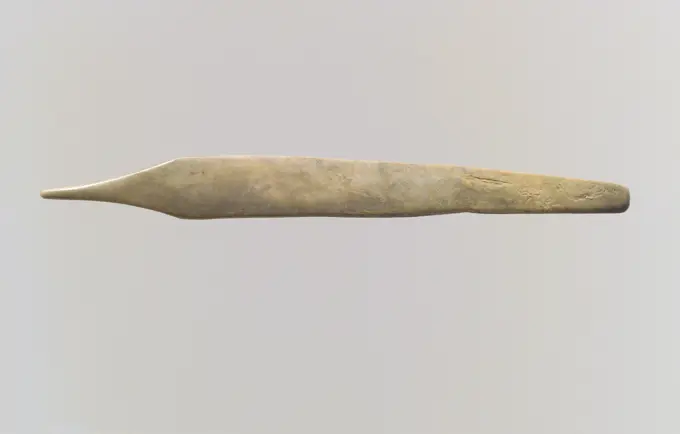
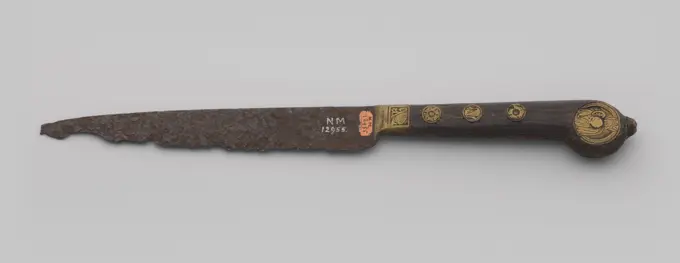
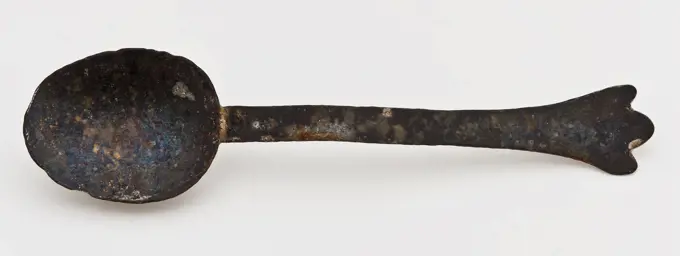
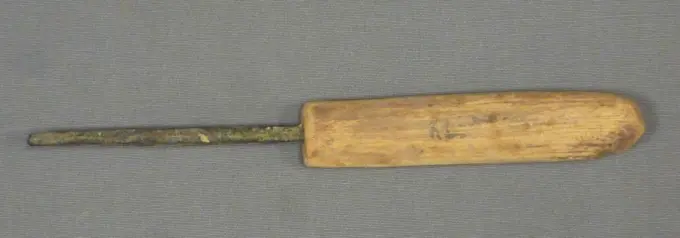
Collection of old knives and tools, including iron and brass materials, showcasing unique designs and historical significance in ancient craftsmanship.
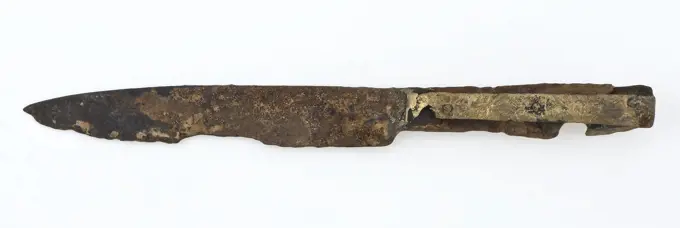
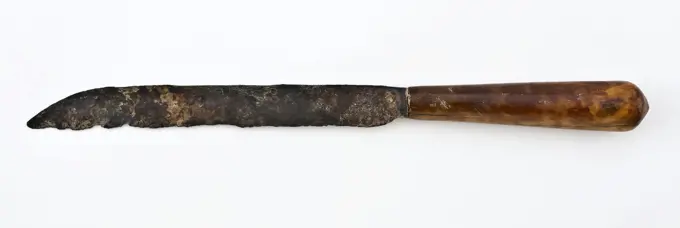
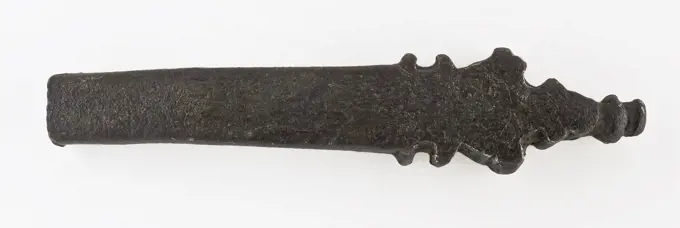
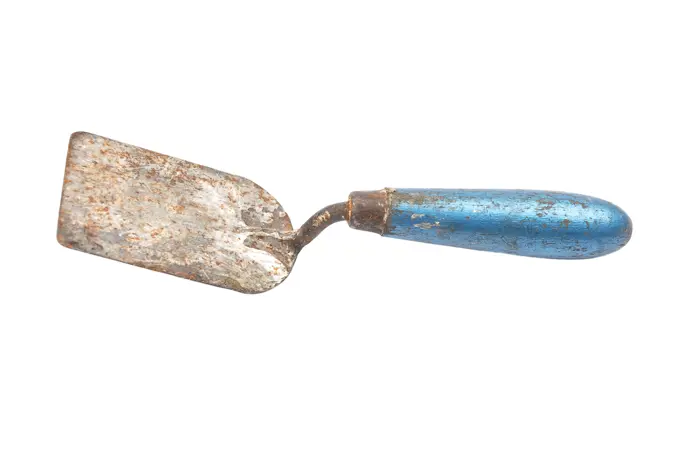
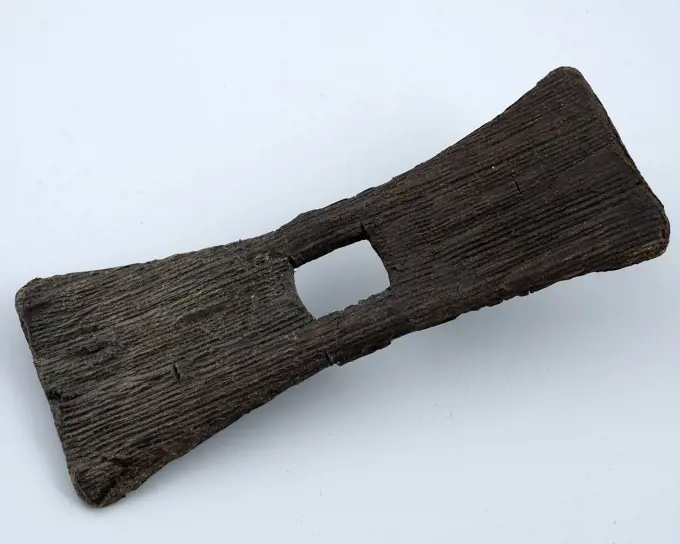
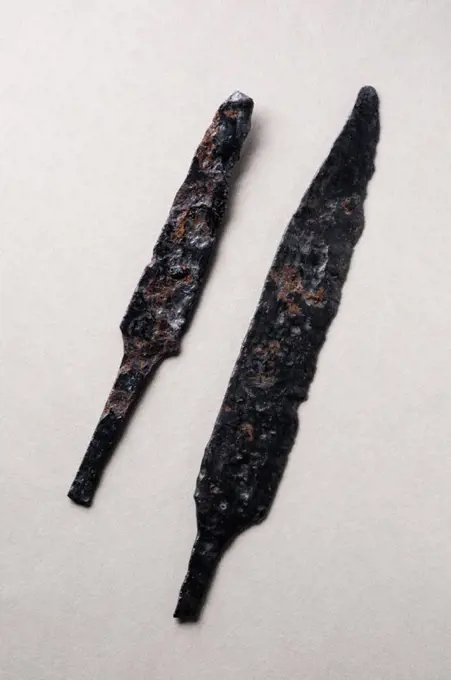
Small iron knife with decorated, driven handle, knife cutlery soil find iron copper brass metal, forged driven riveted Small iron knife. Lifting on which two strips of brass remain on which driven decoration Probably floral decors with tulip at the base. Slightly curved blade with pointed end Riveted covering has archeology Rotterdam City center Stadsdriehoek Oudehaven Newport cutting food writing Soil discovery Oude or Nieuwe Haven Rotterdam.
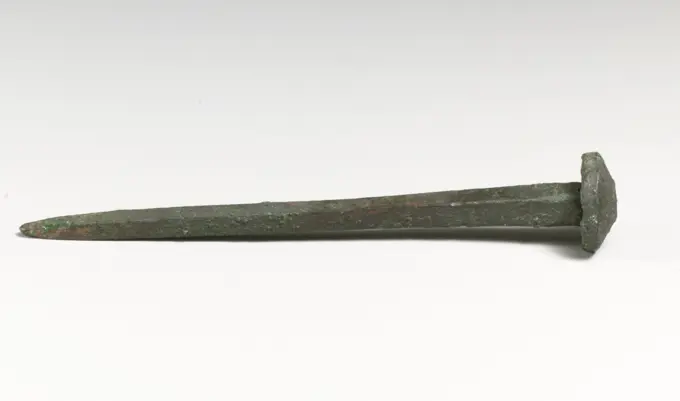
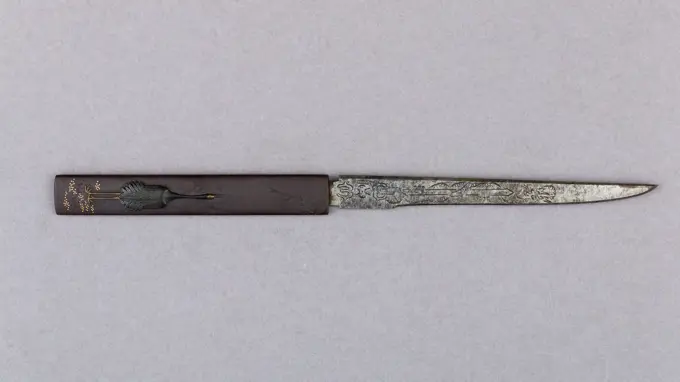
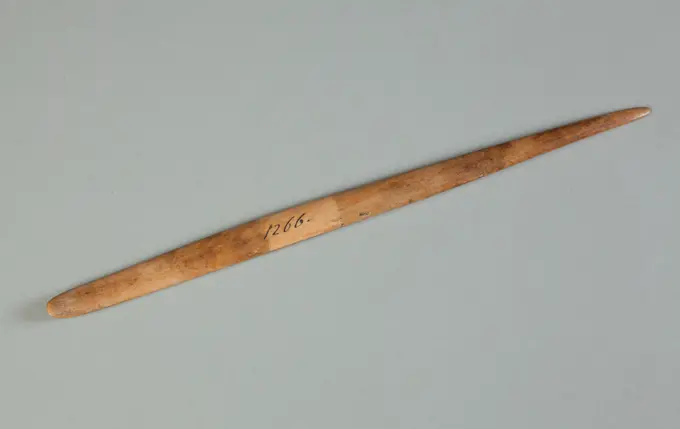
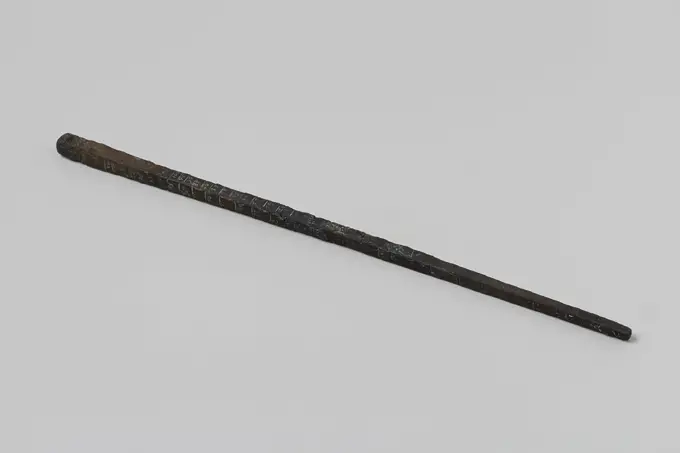
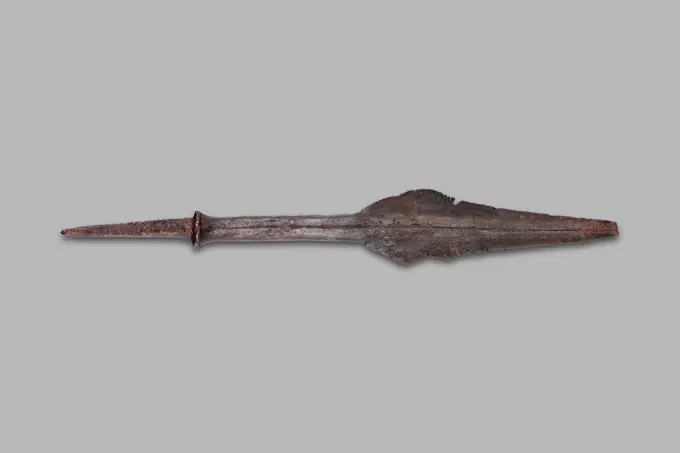
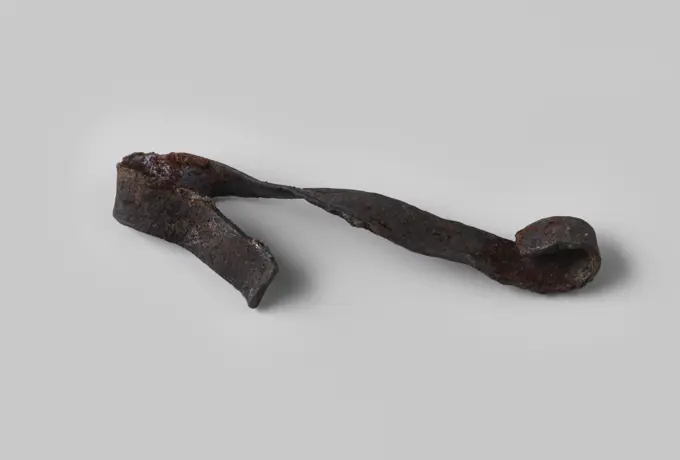
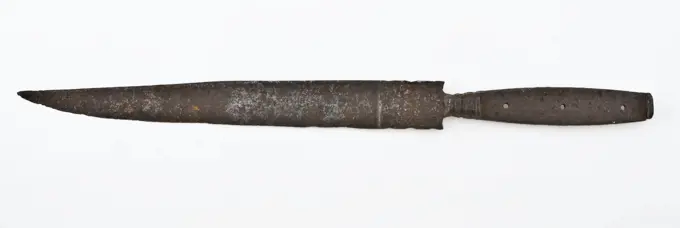
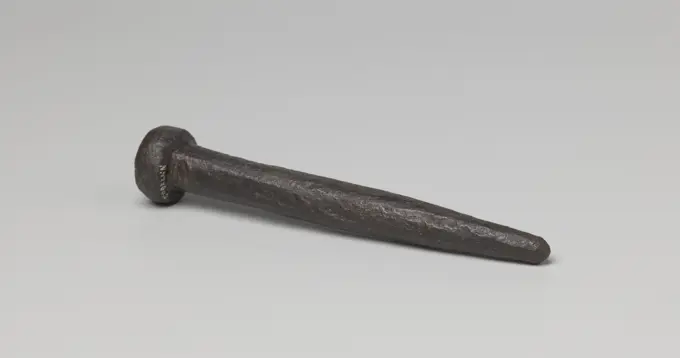
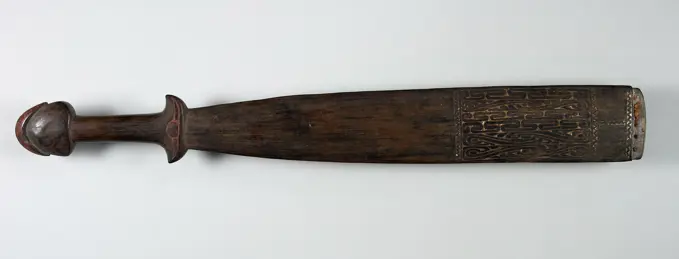
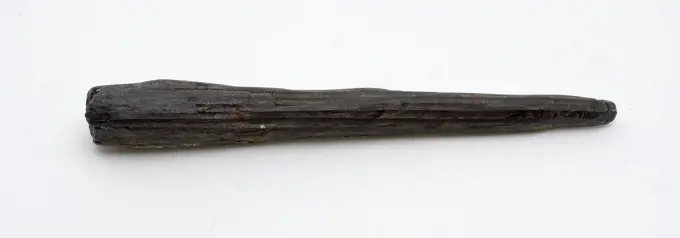
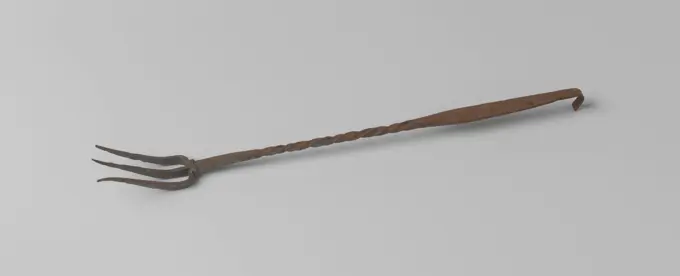
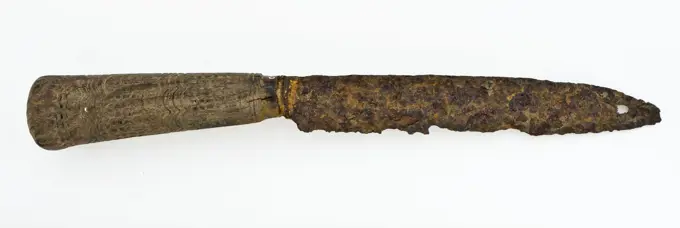
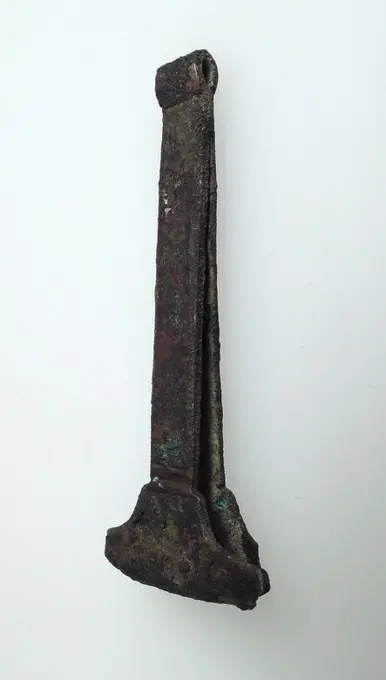
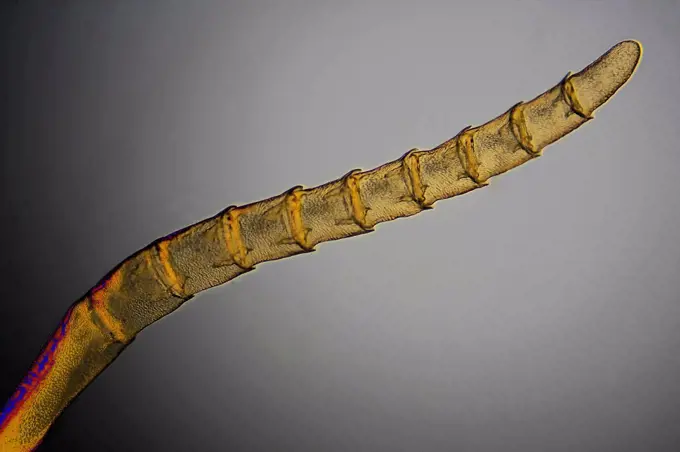
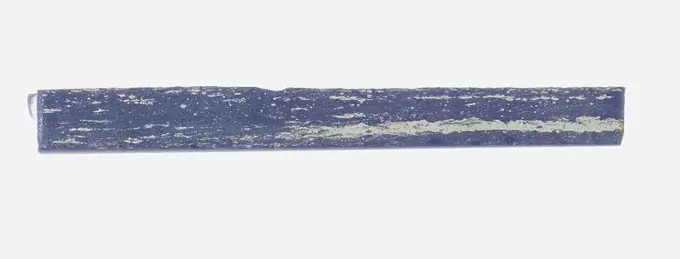
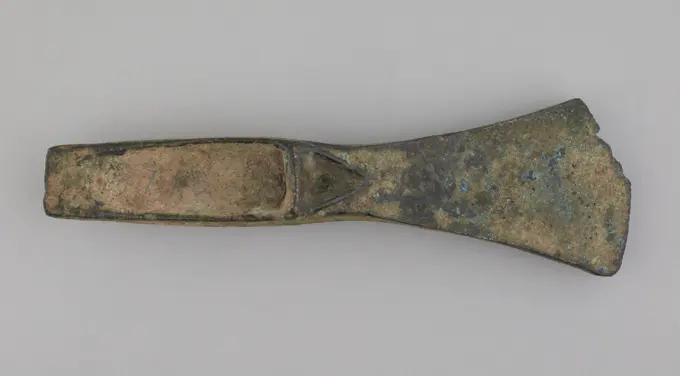
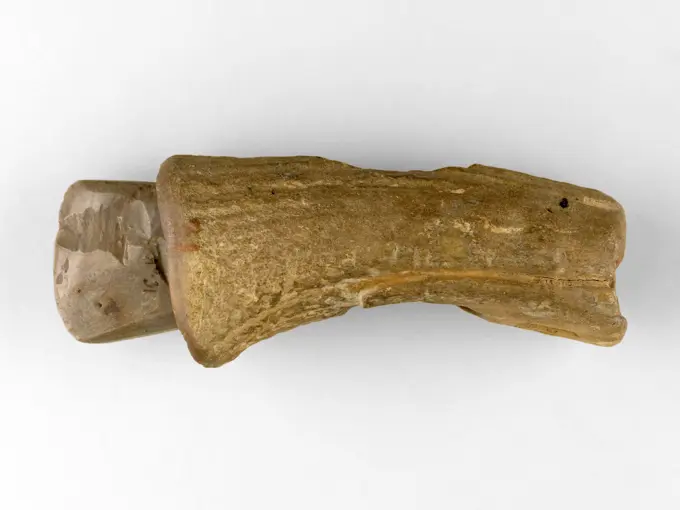
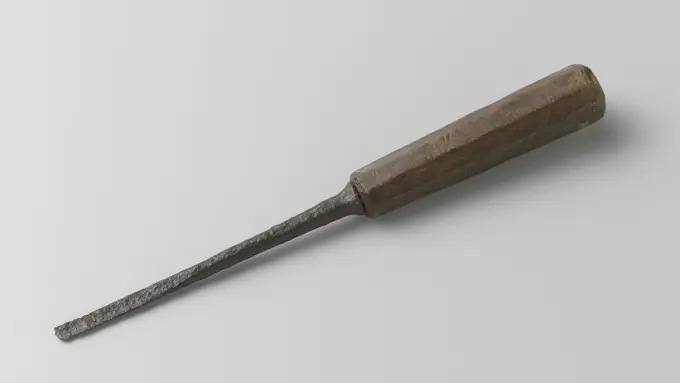
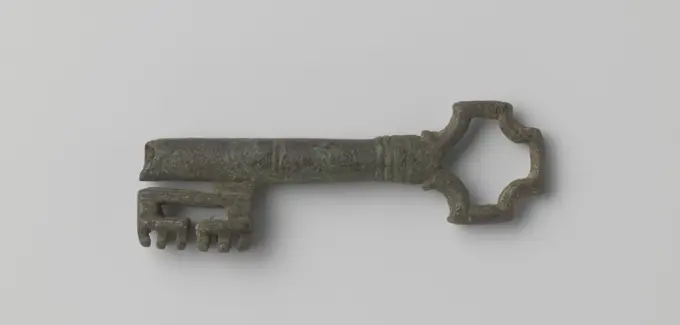
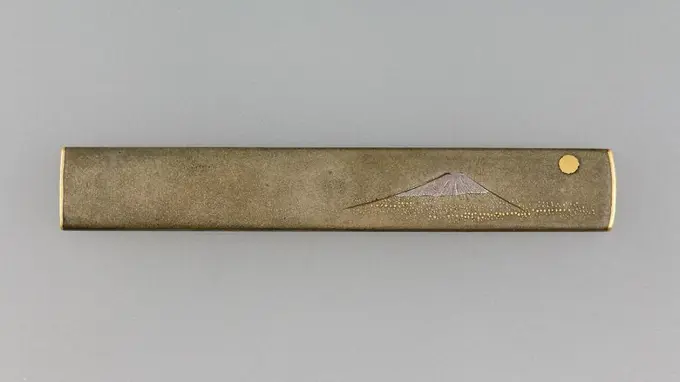
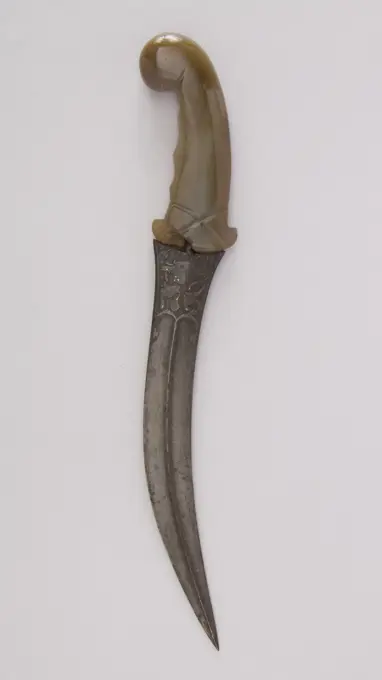
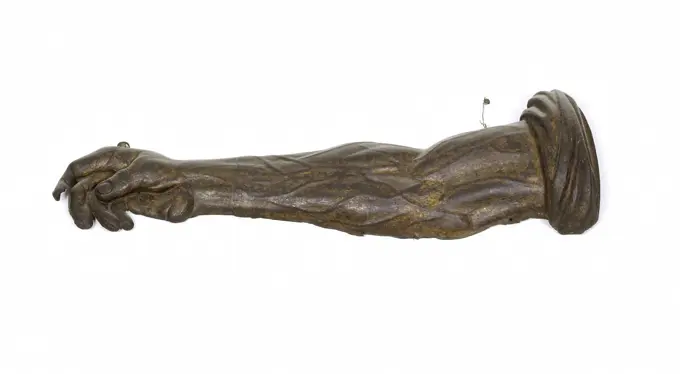
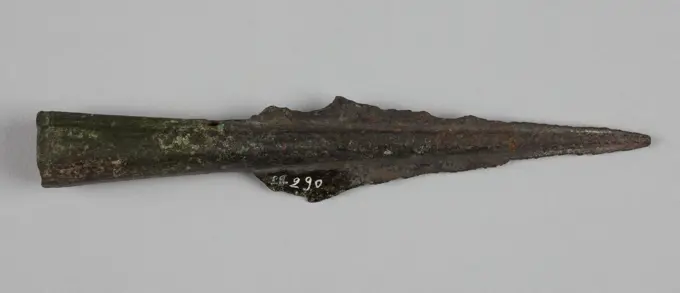
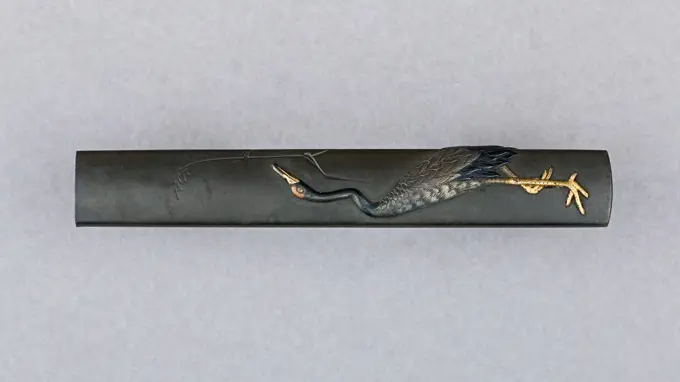
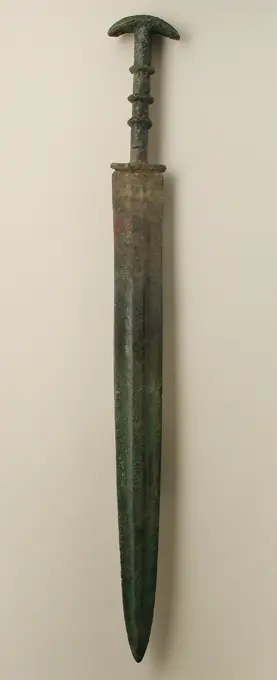
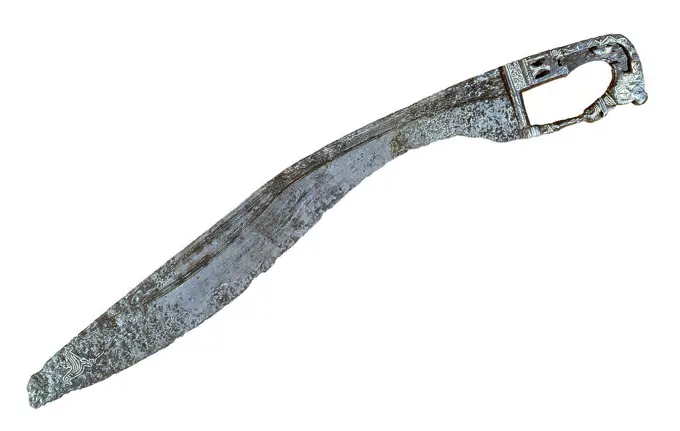
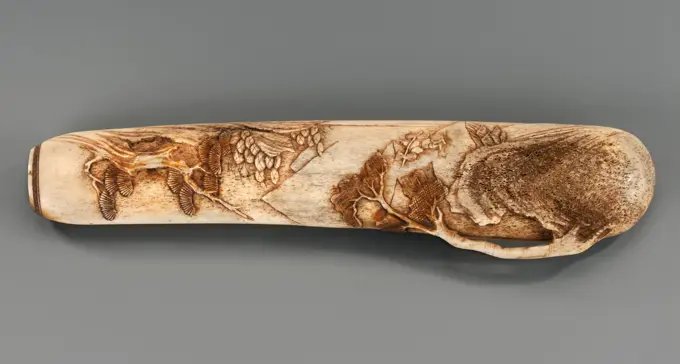
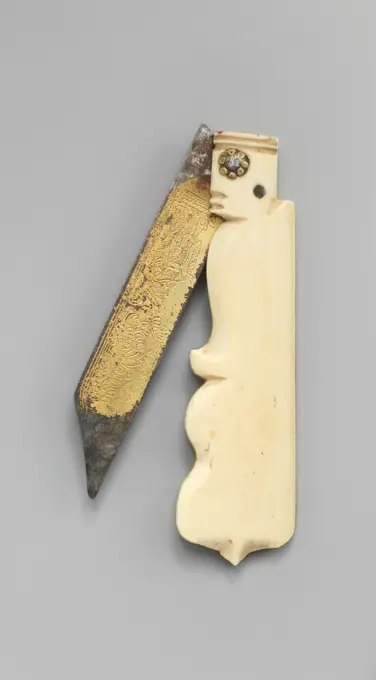
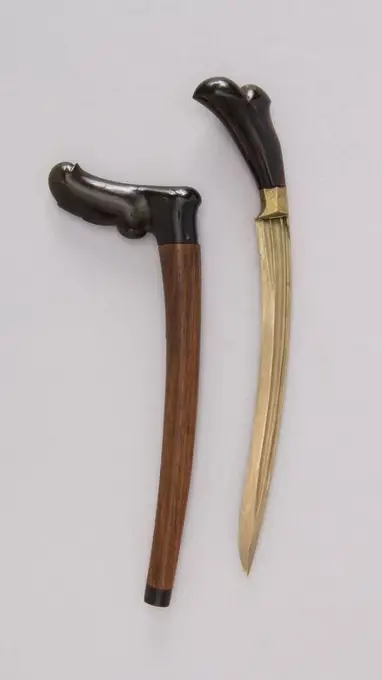
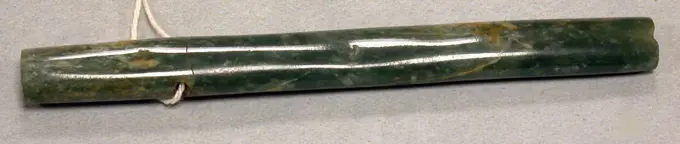
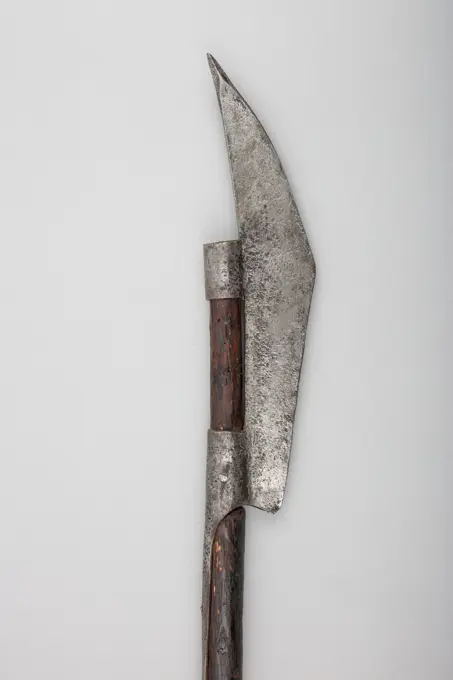
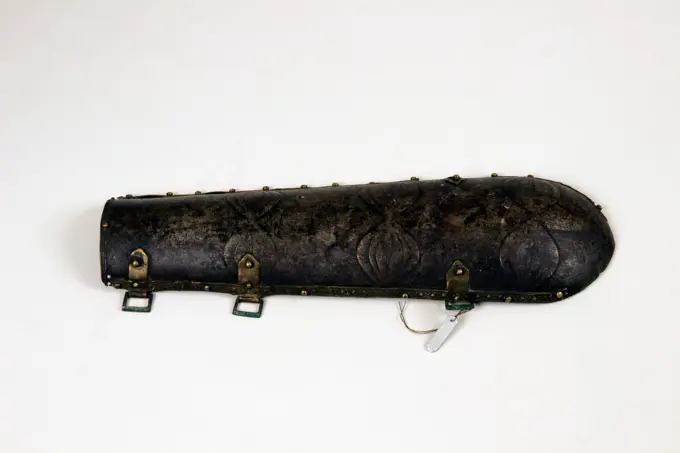
Small iron knife with decorated, driven handle, knife cutlery soil find iron copper brass metal, forged driven riveted Small iron knife. Lifting on which two strips of brass remain on which driven decoration Probably floral decors with tulip at the base. Slightly curved blade with pointed end Riveted covering has archeology Rotterdam City center Stadsdriehoek Oudehaven Newport cutting food writing Soil discovery Oude or Nieuwe Haven Rotterdam.Carpenter patch. Carpenter patch, one leg hinges in the other leg. The legs are slightly bent close to the hinge.Nail. Nail 244259Knife with narrow elongated blade and tapered handle with oval cross-section, knife cutlery soil find wood iron metal, archeologyKnife Handle (Kozuka) with Blade ca. 1615-1868 Japanese A kozuka is a handle of a by-knife that is part of a sword mounting. It is kept in a slot on the reverse of a katana scabbard, often with a matching kōgai (hairdressing tool).. Knife Handle (Kozuka) with Blade 25801Modula Patula in Clay Sculptural Tool Teofila LenartowiczSpear-spike, holdfast. Spear-spike, holdfast 244249Pipe from the wreck of the East Indians' t Vliegend Hart, 1700 - 1735 pipe Earthen Goudse Pijp. Intact. Letters: from and Develd. Has a heel brand. Gray -blue color.  pipe clayBlade of dagger with double-edged blade, kidney dagger dagger knife stab weapon weapon fragment soil finding iron metal, forged blade The blade is double-edged and flat diamond-shaped at the heel at the side faces flattened. Kling suitable for general carving and suitable as shock weapon archeology dagger decoration status symbol personal equipment defense clothing accessoryCounterable stick from v.o.c.-ship the 'white lion'. Counterable stick from v.o.c.-ship the 'white lion'. All four sides of the size stick are divided into stripes with numbers in different ways. The size stick was used by the Constapel to calculate the required powder load.Excerpt of copper from the wreck of the East Indians Hollandia, 1700 - in or before 1743 fragment Varied parts or fragments; unidentified and miscellaneous parts or fragments; strip, flat, straight, one straight pierced end, tapering towards forked end with a V-shaped notch. Netherlands copper (metal)   SecondGrot włóczni. unknown, authorExcerpt of copper from the wreck of the East Indians Hollandia, 1700 - in or before 1743 fragment Varied parts or fragments, strips and strip-shaped fragments; fragm. Netherlands copper (metal)   SecondBatik Tool, from a set of eight, 4 9/16 x 1 9/16 x 1/2 in. (11.59 x 3.97 x 1.27 cm), Metal, bamboo, string, ChinaIron blade with elongated, pointed blade and plate guide, Knife cutlery found in iron metal, archeologyBoutdrevel with one pointed end and a round button, anonymous, c. 1590 - c. 1596  Boutdrevel, iron pin, one end of which is pointed and the other has a round button.  iron (metal) forging  Nova Zembla. Saving HuysPin ca. 1780-1580 B.C.. Pin. ca. 1780-1580 B.C.. Bronze. Dynasty 15-17, 2nd Intermediate Period, Hyksos. Levant, Lachish (modern Tell ed-Duweir)Iron ash or spindle of grindstone, anonymous, c. 1590 - c. 1596  Iron ash or spindle of grindstone; Parts of the complete sharpening stone with water bowl in the Archangelsk collection.  iron (metal) forging  Nova Zembla. Saving HuysSliced leg of a packaging from the wreck of the East India Hollandia. Container, leg, revised; ID. NG 1980-27H3056, are. Put.Pin 5th-3rd millennium B.C. Iran This copper pin, which was likely used to fasten clothing, was excavated in 1937 at a prehistoric site in the vicinity of Nishapur in northeastern Iran. While Nishapur itself was founded by the Sasanian king Shapur I (reigned ca. A.D. 241-272), this pin shows that human habitation there goes back to the prehistoric period. Furthermore, the prehistoric pottery from Nishapur has close affinities with ceramic materials from Central Asia rather than with contemporary sites in Iran, meaning that in this period its inhabitants were likely culturally linked to their neighbors to the east. At the same time, Nishapurs location on what later became known as the Great Khorasan Road suggests that it was part of the trade network that facilitated the import of precious stones such as lapis lazuli, carnelian and turquoise from Central Asia to Mesopotamia.. Pin. Iran. 5th-3rd millennium B.C.. Copper. Chalcolithic-Early Bronze Age. Iran, NishapurSpatula Roman. Spatula 250611 Roman, Spatula, Bronze, Other: 6 7/8 in. (17.5 cm). The Metropolitan Museum of Art, New York. Rogers Fund, 1917 (17.230.78)Ceremonial Club, 19th-20th century, 26 5/16 x 3 3/8 x 1 1/4 in. (66.83 x 8.57 x 3.18 cm), Wood, plant fibers, Papua New Guinea, 19th-20th centuryBatter, c. 1400 - c. 1950   iron (metal)   iron (metal)Wooden pen, pointed, pen construction material soil finds timber, sawn cut Wood pin made of pine wood. Conical in shape and pointed probably used in wooden construction pen and hole connection archeology Poortugaal Albrandswaard building in indigenous woodwork construction archaeological find in the soil: Poortugaal Terp I from mottegracht.Fork with twisted steel, anonymous, c. 1400 - c. 1950 An iron roasting fork with three teeth and a twisted handle.  iron (metal) An iron roasting fork with three teeth and a twisted handle.  iron (metal)Club, before 1930. Melanesia, New Guinea, Massim Area, Trobriand Islands, 20th century. Wood; overall: 143.5 cm (56 1/2 in.). Craftsmen from the Trobriand Islands (off the coast of eastern New Guinea) decorated both utilitarian and ceremonial objects with elegant incised patterns. Usually these wooden objects were red or deep black in color. The engraved designs, depicting stylized frigate birds or human faces and figures, are infilled with lime. Drums, dance wands, shields, and canoe ornaments, together with spells and incantations, were part of the hereditary wealth of local Massim chiefs.Scissors 15th or 16th century Western European Shears and scissors, common implements in the MIddle Ages, were made in a variety of materials and sizes according to their use. Because of its small size, this pair was probably used for household work, perhaps needlework.. Scissors. Western European. 15th or 16th century. Iron. Metalwork-IronDagger blade 2nd millennium B.C.. Dagger blade 324307Chotonka-Chanta-Ki-Yapi 19th century Native American (Sioux or Dakota). Chotonka-Chanta-Ki-Yapi 501193Knife with iron blade and wooden handle with round cross-section, tapered and decorated with engraved corrugated lines and grid pattern, knife cutlery soil find iron wood metal, archeologyMiniature knife -Pistol with side plate from the wreck of the Dutch East Indiaman Hollandia, anonymous, 1700 - in or before 1743 pistol Pistol, stock with fitting; fragm, wood stock, trigger, barrel and lock missing; butt cap id. NG 1980-27H3473, side plate id. NG 1980-27H3472, trigger guardid. NG 1978-54H1651. Netherlands wood (plant material). copper (metal)   SecondSweight spearhead. Bronze Age. Copper alloy, cast iron. Coming from: Lit de la Seine. Paris, Carnavalet museum. Bronze age, copper alloy, weapon, cast iron, socket lance, tip, protohistory, protohistoricBone Saw from a Hunting Trousse 1501-1600 France. Steel, brass, and fruitwood .Push-on lift, ending in flat turret with point, has knife cutlery soil find copper metal, Sliding lift in the style of De wy: downwards narrowed end flat turret with tip engraved on the narrow side: E archeology Rotterdam rail tunnel cutting food Soil discovery Rotterdam tunnel trajectory.Letter I - alphabet in coffeeMetal candle holder or hook with animal beak on the trunk, candleholder lighting means hook soil find iron tin lead metal, cast Metal candle holder in the shape of pointed hook on conical trunk. From the point on the trunk an open beak can be seen that swallows the shaft. Above this surrounding ridge with rope decor archeology Rotterdam rail tunnel lighting evening night candle Soil discovery: pour rail tunnel.Messenheft from the wreck of the East Indians Hollandia, Anonymous, 1700 - in Or Before 1743  Knife-handle, straight-sided: tapering; eroded, rectangular in section, tapering, flat upper end, edges ribbed, ferrule. Netherlands bone (material). brass (alloy)   SecondTweezers. Culture: Frankish. Dimensions: Overall: 2 11/16 x 1 1/4 x 5/16 in. (6.8 x 3.1 x 0.8 cm). Date: 7th century. Museum: Metropolitan Museum of Art, New York, USA.Antenna HornetAx. Dimensions: L. of axe: 54.5 cm (21 7/16 in); L. of axe blade: 14.4 cm (5 11/16 in). Dynasty: Dynasty 17-Early Dynasty 18. Date: ca. 1635-1458 B.C..The blade of this battle ax is among the earliest examples of its kind. It was found in the coffin of "the overseer Khay," presumably a military official. The handle was made from a branch or tree trunk chosen for its curvature. The flared end is a separate piece of wood, mounted with its grain direction perpendicular to that of the shaft. This method of construction would have preserved precious raw materials and cut down on labor. It is unclear how the two surviving pieces were originally joined and whether the modern, intermediate element was added to replace a component that did not survive or to compensate for disproportionate shrinkage of the wood shaft and terminal during burial. The leather lashing attaching the blade to the handle had disintegrated and was restored based on other, better preserved examples. Museum: MetropolitanShaft-hole Axehead. Iran, Luristan, circa 2600-2350 B.C.. Arms and Armor; axes. Bronze, castSword (Kris), Before 1918. Philippines. overall: 61 cm (24 in.); blade: 49 cm (19 5/16 in.).Spoon with fig-shaped container and hexagonal handle, spoon cutlery soil find tin metal, cast Figs bowl short rat tail hexagonal straight stem end trumpet shaped. Tin mark in the blade for the attachment of the handle Front bake brand entered: crowned rose flanked by two letters R and T archeology Rotterdam rail tunnel food Soil discovery: rail tunnel Rotterdam.Scandinavia. Hunting. Middle Ages. Arrows for larger animals. These were affixed to the shaft with a half or a socket. Norway. Historical Museum. Oslo. Norway.Pipe key, c. 1400 - c. 1600 Pipe key from a piece forged with wide shaft and bean -shaped eye.  iron (metal) Pipe key from a piece forged with wide shaft and bean -shaped eye.  iron (metal)Rod of Opaque Blue Glass. Dimensions: l. 4.8 cm (1 7/8 in). Dynasty: Dynasty 18. Reign: reign of Amenhotep III. Date: ca. 1390-1353 B.C.. Museum: Metropolitan Museum of Art, New York, USA.Talon ax (common name). Bronze. Carnavalet museum, history of Paris. Heel ax. The cutting edge is arched. On the median part at the heel level, a triangular pattern inserting a Norman type globuleKnife with a Hand Holding an Orb probably 3rd century Late Roman The handles of common tools were often embellished with sculpted figures. The design of this piece may have symbolic importance or may simply reflect its use as a fruit knife.. Knife with a Hand Holding an Orb 465323Chopped. Neolithic. Direct size, polishing and assembly. Coming from: Port Saint-Bernard, 1874. Paris, Carnavalet museum. AGA POLIE, assembly, weapon, ax, neolithic, tool, polishing, prehistory, prehistoric, direct sizeStab chisel with octogonal handle, anonymous, c. 1590 - c. 1596  Stick chisel with octogonal handle made of wood. Intact.  iron (metal). wood (plant material) forging / cutting  Nova Zembla. Saving HuysKnife (Golok) with Sheath. Culture: Malayan. Dimensions: L. with sheath 9 1/2 in. (24.1 cm); L. without sheath 8 13/16 in. (22.4 cm); L. of blade 6 in. (15.2 cm); W. 7/8 in. (2.2 cm); Wt. 2.1 oz. (59.5 g); Wt. of sheath 1.3 oz. (36.9 g). Date: 18th-19th century. Museum: Metropolitan Museum of Art, New York, USA.Stylus or weaving tool ca. 9th-7th century B.C. Assyrian This small worked piece of bone tapers to a sharp point at one end and to a more gradual blunted point at the other. It may have been used as a weaving tool. Previously, it was also thought that this object may have been a stylus, used to write on clay tablets or wax writing boards (for the latter see 54.117.12a, b). However, wear patterns on the tip suggest that it was more likely to have been used in weaving. A similar object in the Museums collection was excavated at the site of Nippur to the south (59.41.66). Built by the Assyrian king Ashurnasirpal II, the palaces and storerooms of Nimrud housed thousands of pieces of carved ivory. Most of the ivories served as furniture inlays or small precious objects such as boxes. While some of them were carved in the same style as the large Assyrian reliefs lining the walls of the Northwest Palace, the majority of the ivories display images and styles related to the arts of North SyriaBuddhist copy;  19th century () (1801-00-00-1900-00-00);Zaleski, Władysław (1852-1925) - collection, gift (provenance), Syngalek, South Asian (culture), Ceylon artBlade, via profiled section becoming narrowed sting, blade knife cutlery soil find iron metal, archeology foodPennant, anonymous, c. 1750 - c. 1830 flag Long yellow pennant, rectangular triangle with truncated point, with an (originally blue) circle at the pants. Indonesian Archipelago linen (material). cotton (textile)  flag, colours (as symbol of the state, etc.) Dutch East Indies, TheKnife with a wooden handle decorated with copper, anonymous, 1500 - 1600 Knife with iron blade. The wooden handle is decorated with three copper plates on either side with a rosette or an object. On the transition from blade to lifts, two square copper plates are decorated with bander rolls. The end of the handle has been awarded a copper rosette. On the wide part two round copper plates with bander rolls decorated on one side. The other side has a portrait of Sint Catharina with a wheel. Southern Netherlands heft: wood (plant material). heft: copper (metal). lemmet: iron (metal) Knife with iron blade. The wooden handle is decorated with three copper plates on either side with a rosette or an object. On the transition from blade to lifts, two square copper plates are decorated with bander rolls. The end of the handle has been awarded a copper rosette. On the wide part two round copper plates with bander rolls decorated on one side. The other side has a portrait of Sint Catharina with aSmall sized spoon with light oval bowl and flat handle, teaspoon table spoon equipment soil find copper silver metal, Small spoon. Possible buyer or silver-plated buyer Oval bowl with soldered rat tail. Flat stem ending in three lobes archeologyHair Comb with Wig, 16 1/2 x 2 in. (41.91 x 5.08 cm) (a and b only), Wood, fibers, human hair, ChinaModel Chisel from the Foundation Deposit for Hatshepsut's Tomb ca. 1479-1458 B.C. New Kingdom. Model Chisel from the Foundation Deposit for Hatshepsut's Tomb. ca. 1479-1458 B.C.. Bronze or copper alloy, wood. New Kingdom. From Egypt, Upper Egypt, Thebes, Valley of the Kings, Tomb of Hatshepsut (KV 20), Foundation deposit, Davis/Carter excavations, 1903-04. Dynasty 18Bracelet ca. 6th-8th century A.D. Sasanian or Islamic. Bracelet 322934Foam blade tool (common name), -276. Copper alloy. Carnavalet museum, history of Paris.Steel from fork or spoon from the wreck of the East Indiesman Hollandia. Cutlery, fragment: voice or fork or spoon; Fragm, ID. NG 1980-27H67.Kelle - Trowel on white Kelle - Trowel on white Copyright: xZoonar.com/lantapixx 7042850Pipe key, c. 1200 - c. 1300 Bronze pipe key, ring on the corners around bent, pipe with engraved rings decorated, beard from the front and on the sides "fur", moreover from below and incised from the front. France bronze (metal) engraving Bronze pipe key, ring on the corners around bent, pipe with engraved rings decorated, beard from the front and on the sides "fur", moreover from below and incised from the front. France bronze (metal) engravingKnife Handle (Kozuka). Culture: Japanese. Dimensions: L. 3 13/16 in. (9.7 cm); W. 9/16 in. (1.4 cm); thickness 3/16 in. (0.5 cm); Wt. 1.2 oz. (34 g). Date: 1789-1876. Museum: Metropolitan Museum of Art, New York, USA.Dagger (Jambiya) 18th-19th century Persian. Dagger (Jambiya) 31830Butterfly-shaped wooden fragment with rectangular hole in the middle, artifact soil find wood, sawn inserted Wood fragment or part with rectangular hole in the middle Butterfly shaped Clear wood grain in the longitudinal direction of the object. Function unknown archeology Rotterdam Stadscentrum Stadsdriehoek Groenendaal underground pit building close Soil discovery Rotterdam underground pit Groenendaal from 15th century dirt day 1975-09-26.Pellet Crossbow Made 1570-1600 France. Steel, iron, gold, cherrywood, and hemp .Miniature knife -CarvingKnife. Designer Dean Pollock, American, 1897-1971 Manufacturer: Gerber Legendary Blades, American, founded 1939Gilded arm At the golden arm. Stretched iron, repulsed and gilded. Eighteenth century.Saber. Culture: Javanese. Dimensions: L. 23 1/4 in. (59.1 cm); L. of blade 18 5/8 in. (47.3 cm); W. 2 3/4 in. (7 cm); Wt. 11.7 oz. (331.7 g). Date: 16th-19th century. Museum: Metropolitan Museum of Art, New York, USA.Pipe Bowl and Stem ca. 1840 Great Lakes or Plains. Pipe Bowl and Stem 319112Slightly curved handle of small clasp with thickening at the end, has knife cutlery soil find brass iron metal, archeology underground pit Rotterdam City center Stadsdriehoek Oostplein Soil discovery: underground pit Oostplein 14061976Knife with Seal. Cambodia, circa 12th century. Arms and Armor; knives. Copper alloyLancer point (title awarded). Bronze. Carnavalet museum, history of Paris.Knife Handle (Kozuka) ca. 1615-1868 Japanese A kozuka is a handle of a by-knife that is part of a sword mounting. It is kept in a slot on the reverse of a katana scabbard, often with a matching kōgai (hairdressing tool).. Knife Handle (Kozuka) 25784Copper narrow strip, machined, fixing hole, part artifact soil found copper metal, cast hammered sawn engraved Narrow strip of yellow copper. Rudimentary decorated with few stabbed lines. In one end round hole on the other side shows deepened notch. Function unknown archeologyFragment stitch passer from the wreck of the East Indians Hollandia, Anonymous, 1700 - in Or Before 1743  Divider; fragment, leg, id. NG 1980-27H1171. Netherlands copper (metal)   SecondPanel 8th century. Panel 448932Large work knife for cutting food with curved end of the sting, work knife knife kitchenware soil find iron metal, Large light thin blade with long convex cutting edge and straight back with flat sharpening archeologyArrowheads, needles, hooks and harpoons. Culture: Japan. Dimensions: W. 5/8 in. (1.6 cm); L. 3 in. (7.6 cm). Museum: Metropolitan Museum of Art, New York, USA.Sword. Iran, Luristan, 1000 B.C.-A.D. 100. Arms and Armor; swords. BronzeSword Scabbard 19th century Persian. Sword Scabbard 30941FALCATA IBERICA - SIGLOS IV-III AC - PROCEDENTE DE ALMEDINILLA (CORDOBA). Location: MUSEO ARQUEOLOGICO NACIONAL-COLECCION. MADRID. SPANIEN.Tweezers. UnknownPIECE Right ; Iron knife . Length 17, 8 cms Width 2 ,4 cm Thickness 0,3 cms.( 5 th - 8 th Ce ) - Visigoth period, from " El Espartal " - Archaeological site of Complutum in Alcalá de Henares ( Madrid ). SPAIN.Person wearing a work glove and holding a hammerPlayer on a pipe (kiseruzutsu) type Otoshi-Zutsu;  19th/20th century (1891-00-00-1910-00-00);Glezmer, Stanisław (1853-1916) - collection, gift (provenance), Japanese (culture), landscape motif, handles, Japanese artFolding Knife 17th-18th century probably Italian. Folding Knife. probably Italian. 17th-18th century. Steel, partly gilded; ivory. Metalwork-SteelMessenheft from the wreck of the East Indians Hollandia, 1700 - in or before 1743  Knife, handle, cylindrical: tapering; id. NG 1979-403H, ferrules, id. NG 1980-27H426. Netherlands wood (plant material). copper (metal)   SecondDagger. Iran, circa 900-800 B.C.. Arms and Armor; daggers. BronzeKnife (Bade-bade) with Sheath. Culture: Indonesian, Sulawesi. Dimensions: H. with sheath 12 in. (30.5 cm); H. without sheath 10 5/8 in. (27 cm); H. of blade 7 3/4 in. (19.7 cm); W. 1 13/16 in. (4.6 cm); Wt. 5.5 oz. (155.9 g); Wt. of sheath 1.9 oz. (53.9 g). Date: 18th-19th century. Museum: Metropolitan Museum of Art, New York, USA.Roman Hispania. Mining. Ploughshare. Iron. 2nd-3rd century. Torreperogil. National Archaeological Museum, Madrid. Spain.Tubular Stone Bead before 16th century Costa Rica (). Tubular Stone Bead 317361Halberd ca. 1400 Swiss The halberd is the signature weapon of Switzerland, a real and symbolic manifestation of Swiss independence, which was safeguarded in the late medieval and early Renaissance periods by the ability of non-noble infantry armed with such weapons to successfully confront outside armies that relied on traditional heavy cavalry comprised mostly of noblemen. This halberd is rare and important for its early date, indicated by its form and construction; for retaining its original shaft, possibly the earliest original shaft to survive and a feature that is seldom found intact and unaltered on staff weapons predating the sixteenth century; and for the fact that the shaft is round in cross section, another early feature that was superseded in the fifteenth century by the much more typical quadrangular section one sees on the hafts of most staff weapons. Also an early feature is the presence of two eyes,” through which the top of the shaft is inserted. This form of constructArm Guard 18th century Turkish. Arm Guard 31951baculum, late neolithic, 4000-3000 BC, Evora Museum, Evora, Alentejo, Portugal, Europe.Ladle 500 B.C.-A.D. 300 Vietnam (North). Ladle. Vietnam (North). 500 B.C.-A.D. 300. Bronze. Bronze and Iron Age period. Metalwork