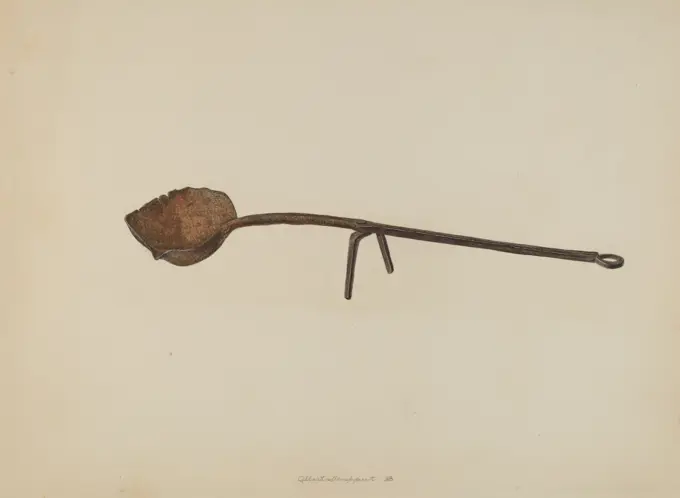
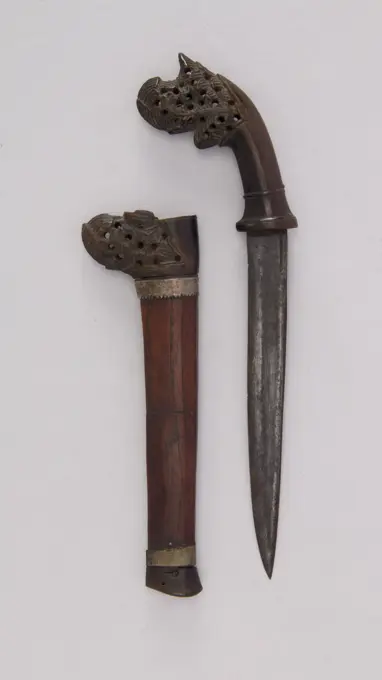
Historical Cutlery

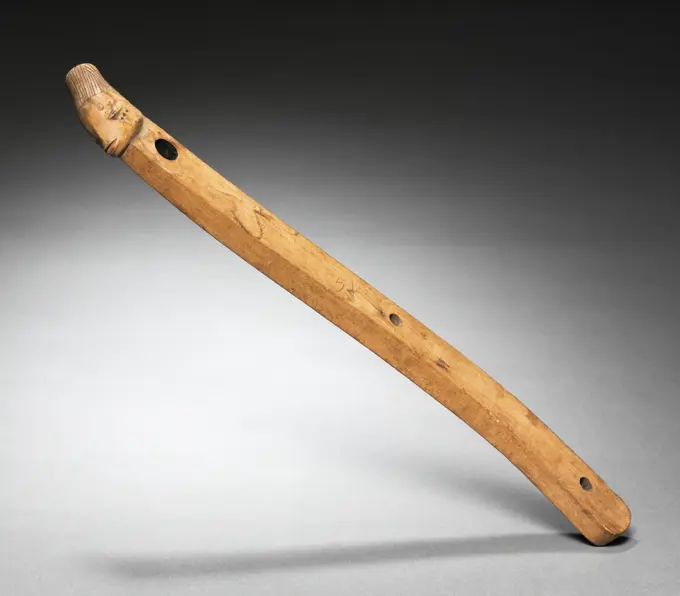
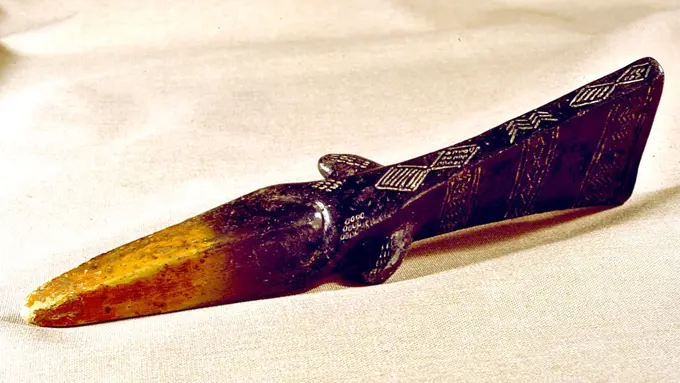
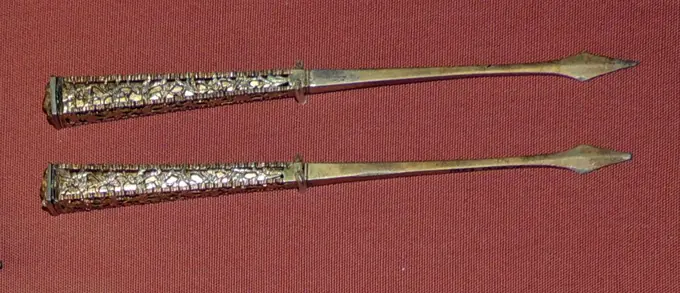
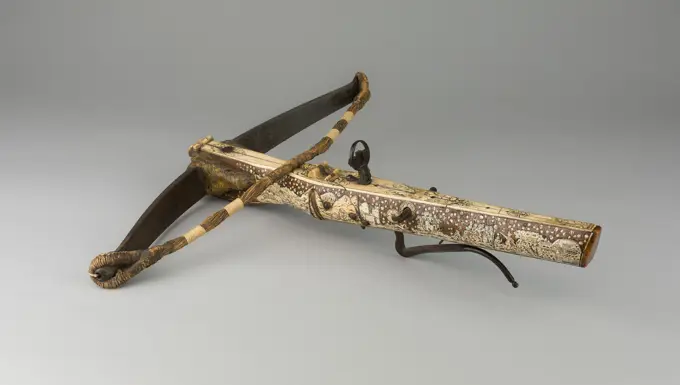
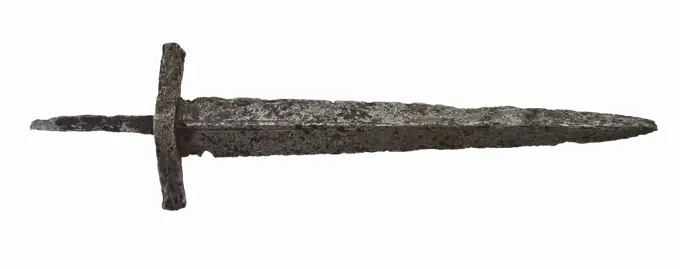
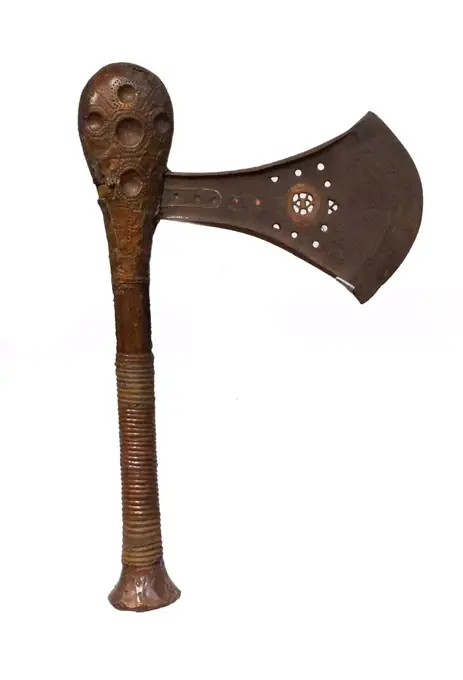
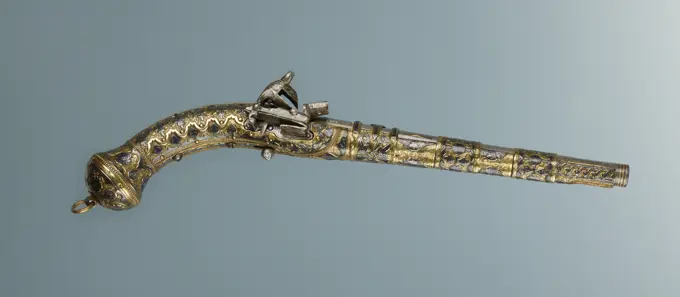
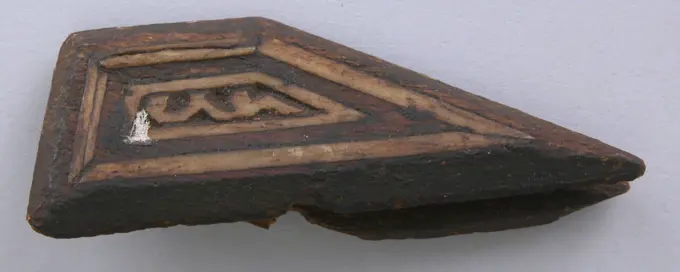
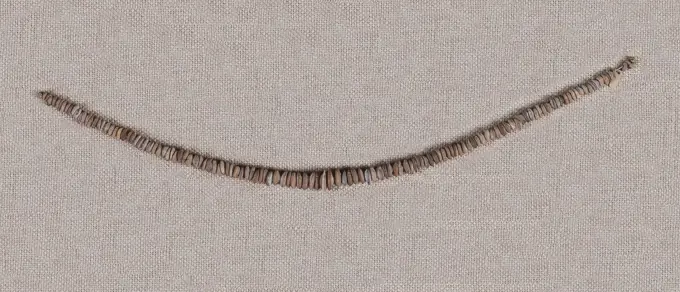
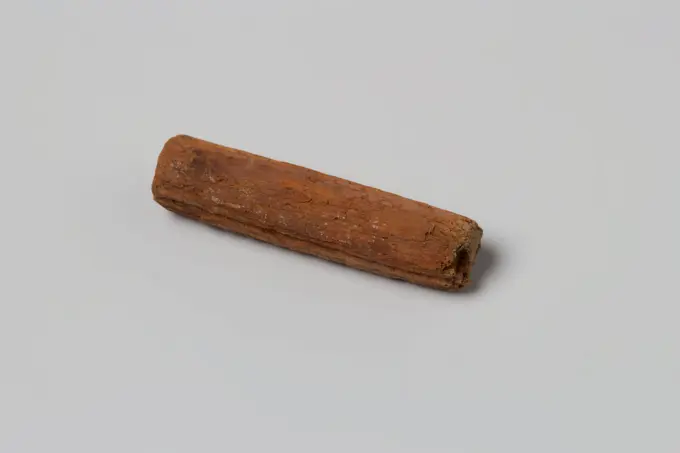
Collection of old knives and tools, including iron and brass materials, showcasing unique designs and historical significance in ancient craftsmanship.
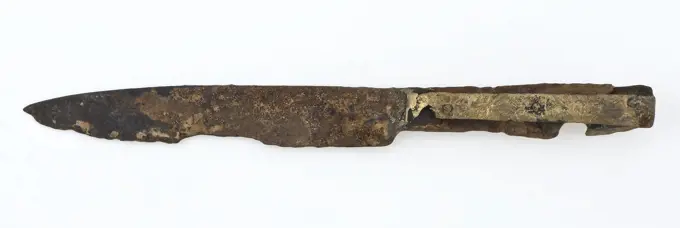
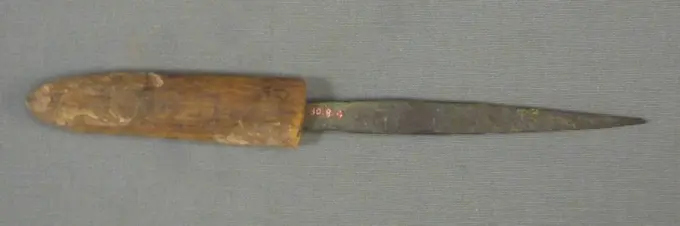
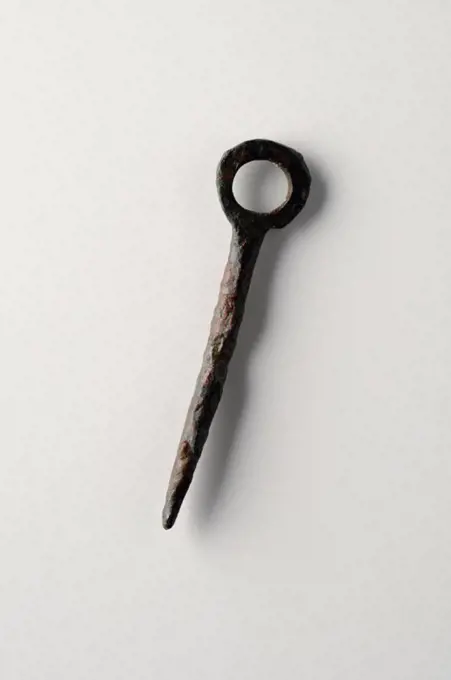
Small iron knife with decorated, driven handle, knife cutlery soil find iron copper brass metal, forged driven riveted Small iron knife. Lifting on which two strips of brass remain on which driven decoration Probably floral decors with tulip at the base. Slightly curved blade with pointed end Riveted covering has archeology Rotterdam City center Stadsdriehoek Oudehaven Newport cutting food writing Soil discovery Oude or Nieuwe Haven Rotterdam.
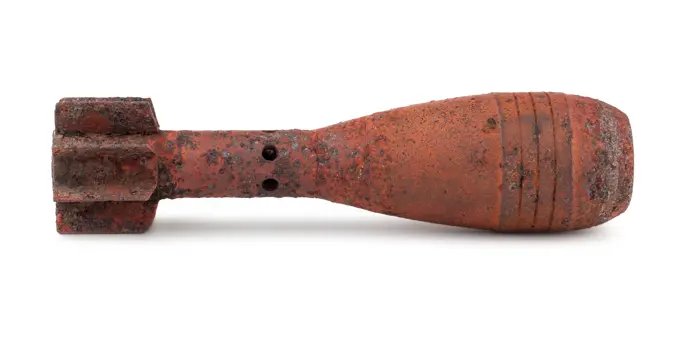
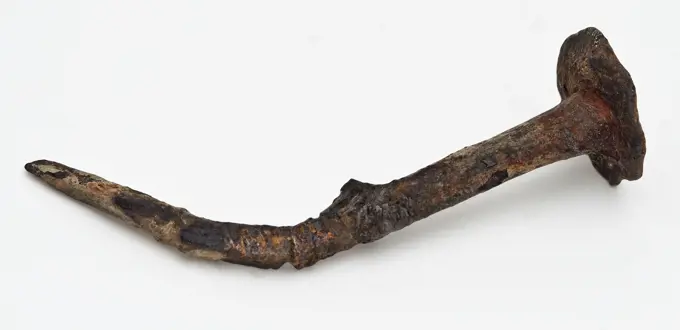
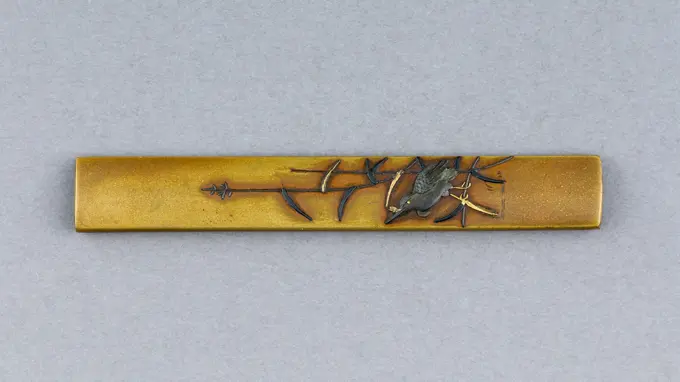
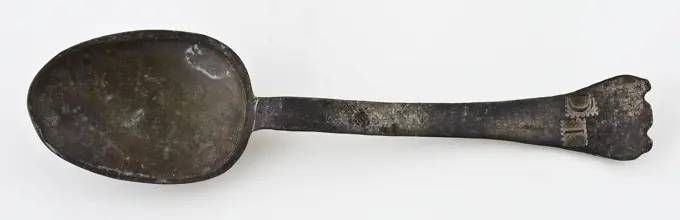
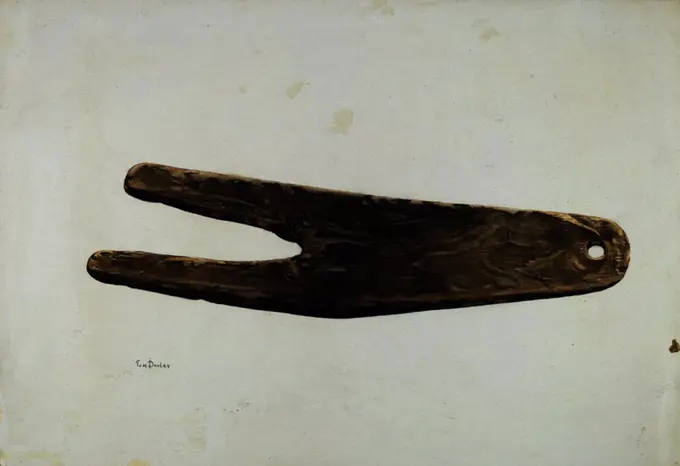
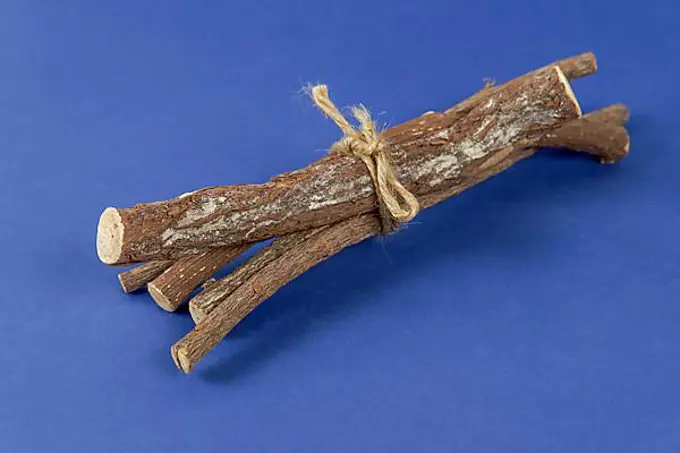
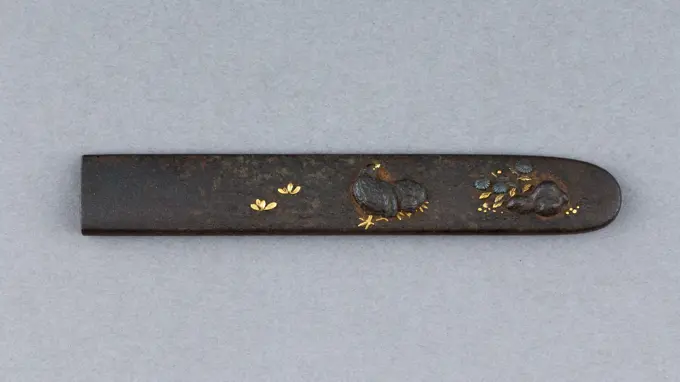
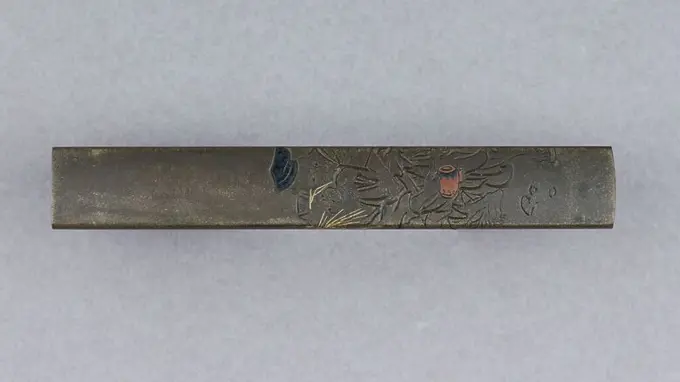
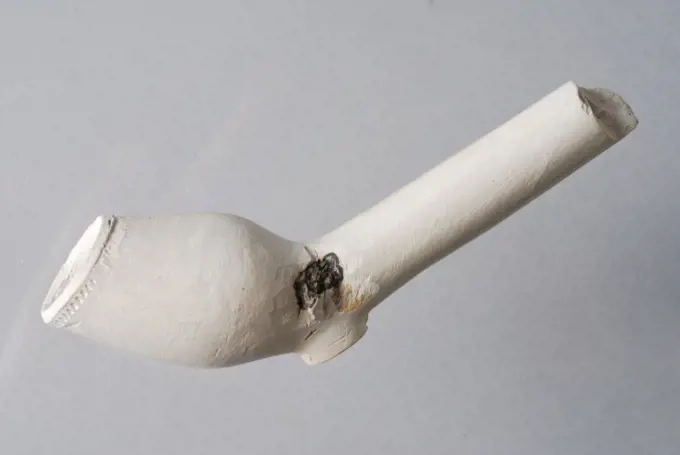
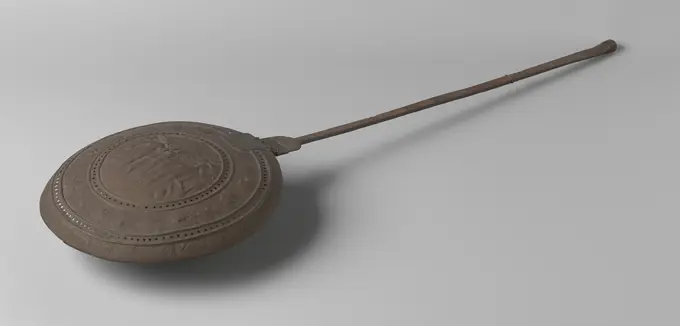
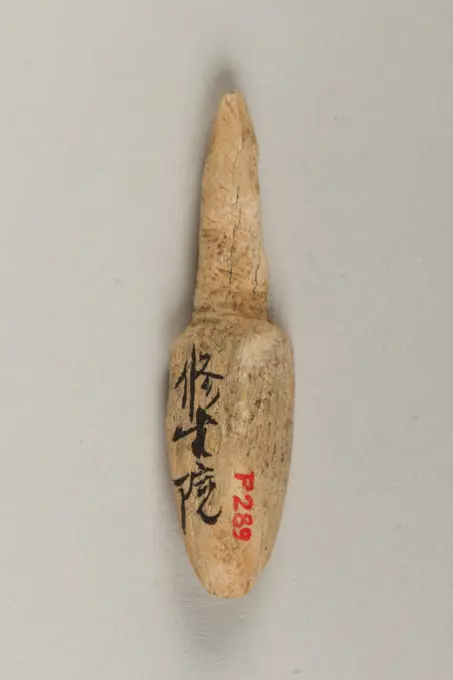
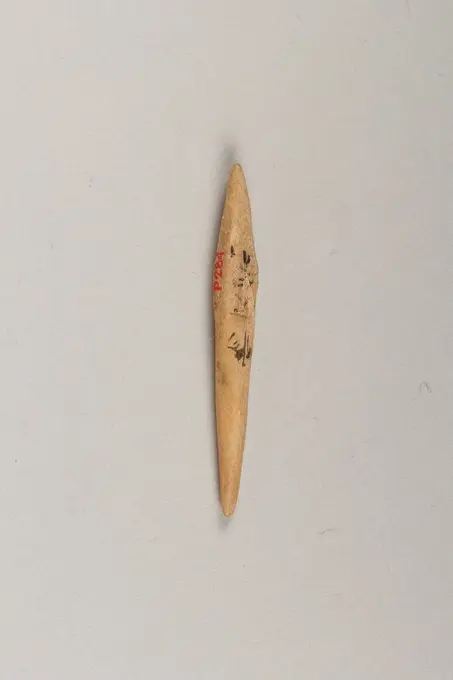
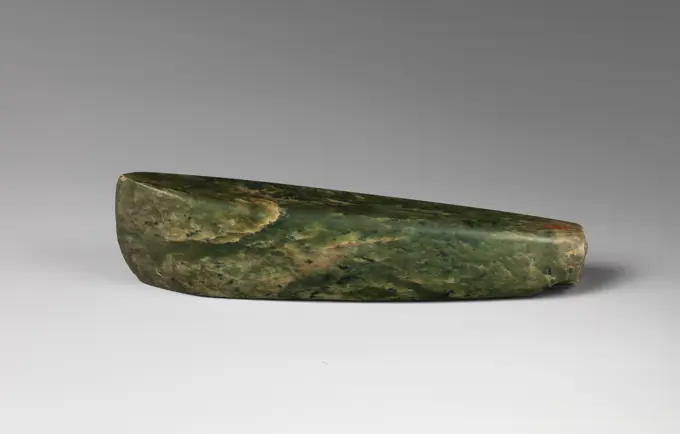
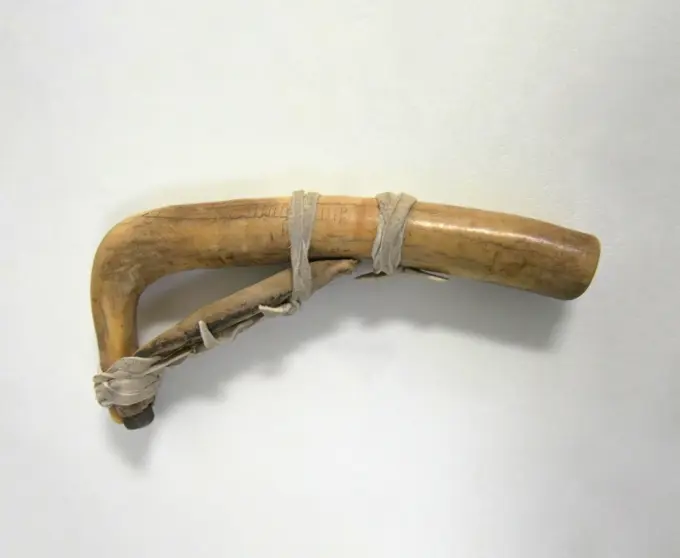
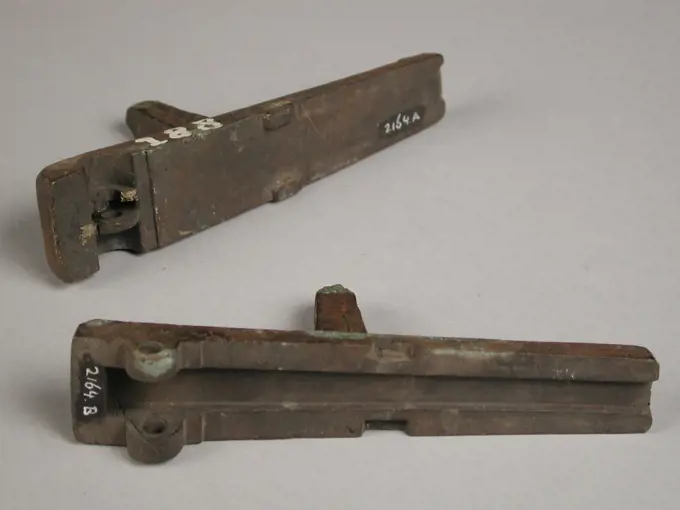
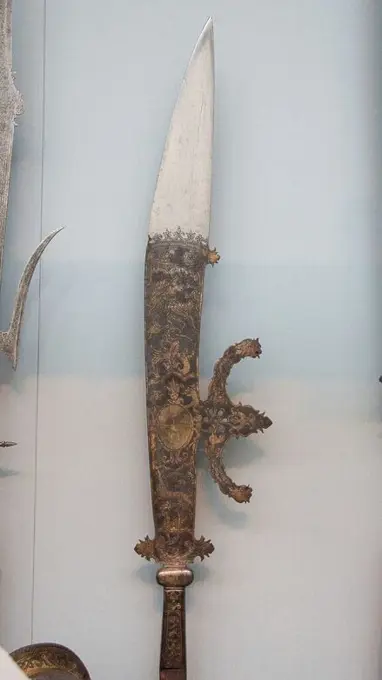
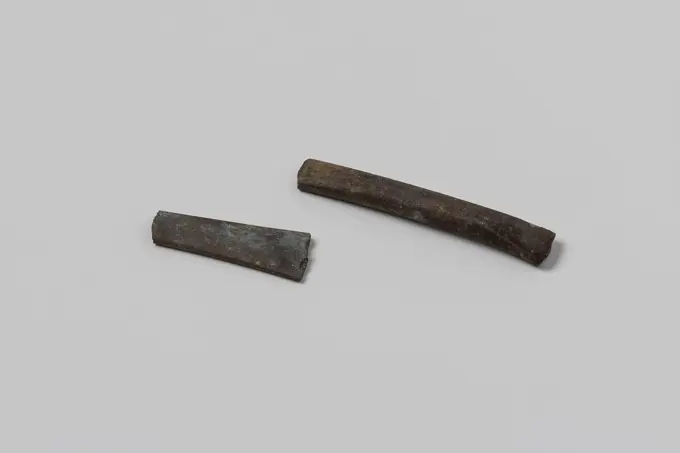
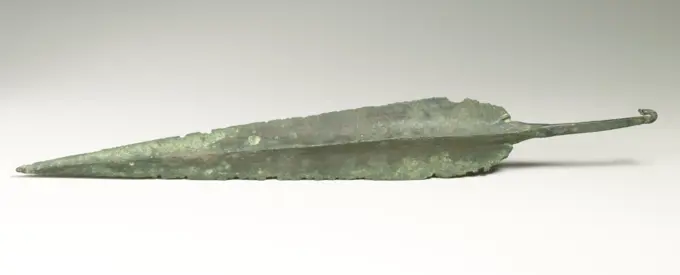
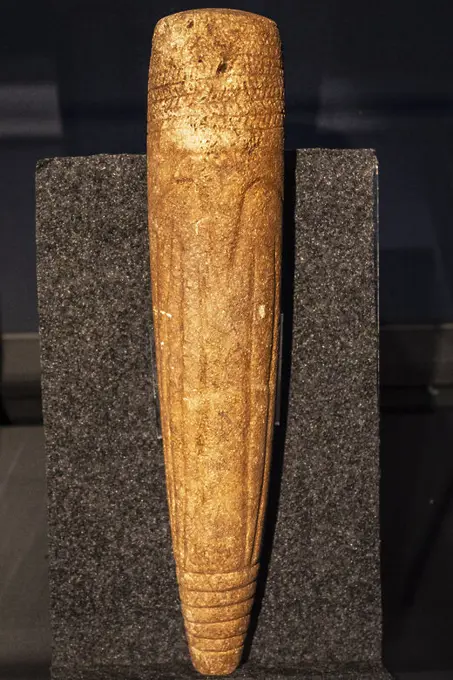
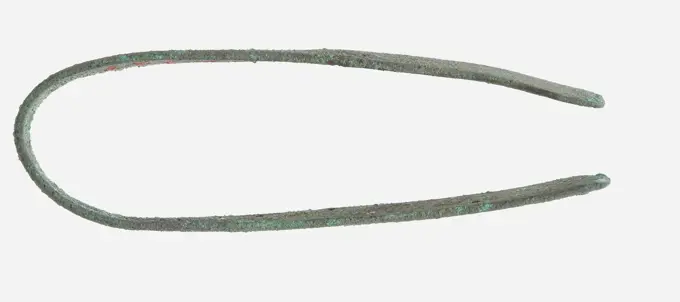
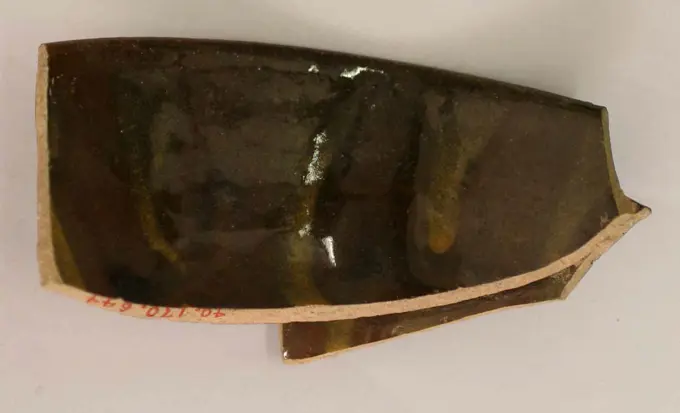
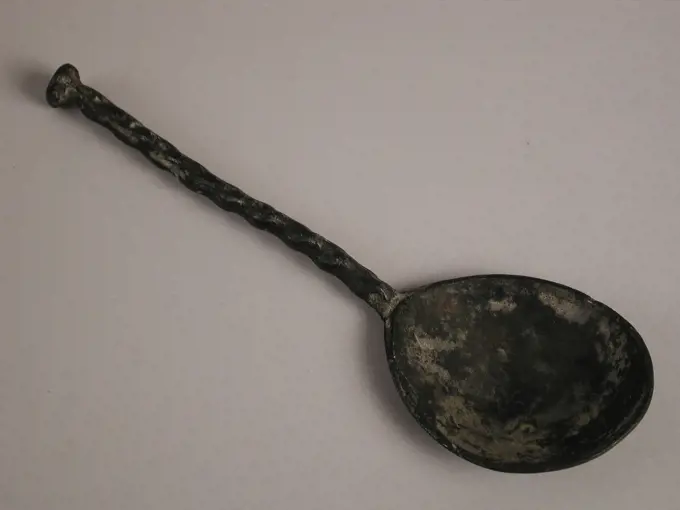
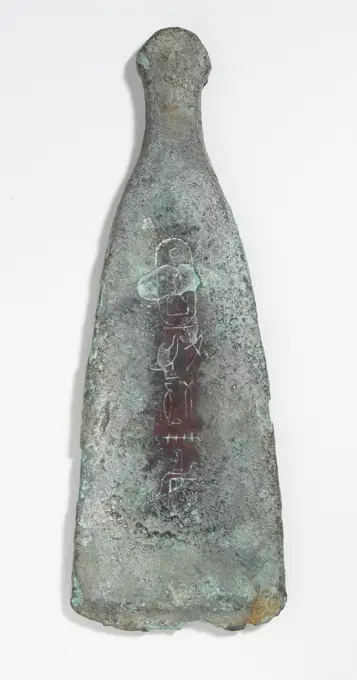
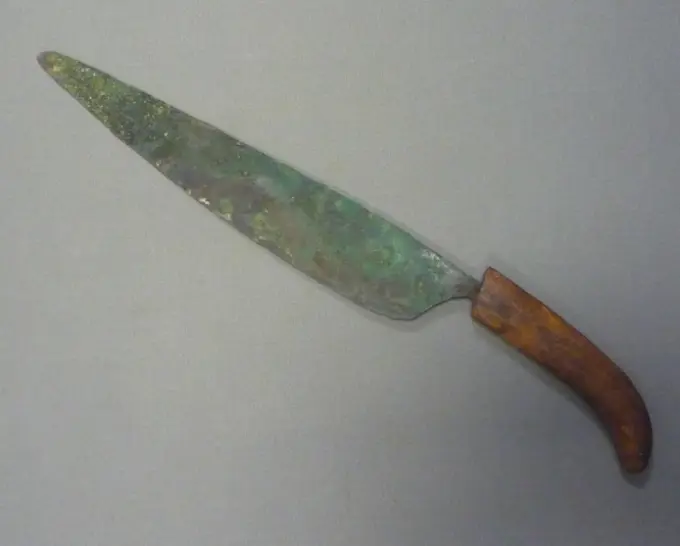
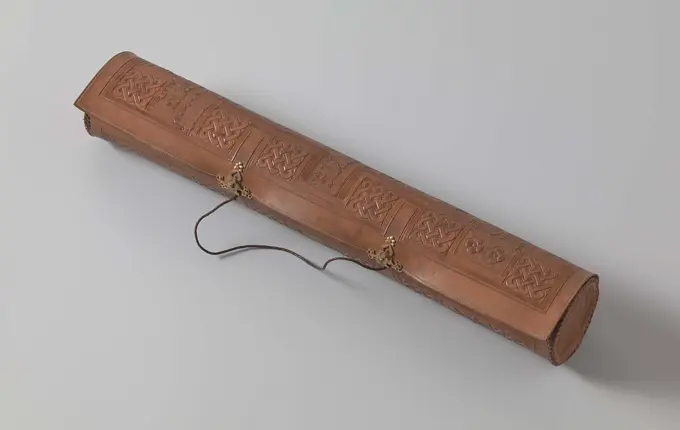
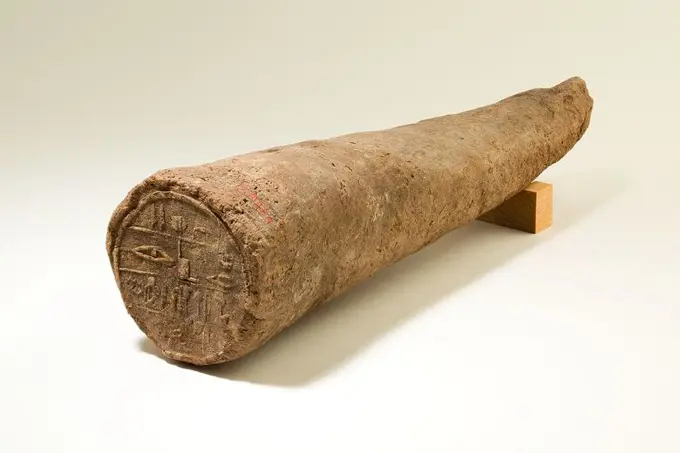
Messenheft from the wreck of the East Indians Hollandia, Anonymous, 1700 - in Or Before 1743  Knife-handle, straight-sided: tapering; hexagonal faceted, oval in section, 2 sides ribbed, flat upper end. Netherlands bone (material)   SecondRaised relief fragment 664-610 B.C. Late Period, Saite see 23.3.468. Raised relief fragment. 664-610 B.C.. Limestone. Late Period, Saite. From Egypt, Upper Egypt, Thebes, Deir el-Bahri, Tomb of Nespekashuty (TT 312, MMA 509), 1st chamber N. door; E. jamb, MMA excavations, 1922-23. Dynasty 26Carved ivory handle, woman with anchor: 'Hope', has bottom section of ivory, cut Ivory blade in which woman with large anchor has been cut out. The clothes of the woman are detailed. She is wearing hat millstone collar yak belt and skirt archeology Rotterdam City Triangle underground pit Blaak food knife cutting heap Soil discovery Rotterdam Metro works in the neighborhood of Blaak 1963.07.17.Dagger blade. Dagger blade 244181Black and White Illustration of an Anglo Saxon forkOld rusty mortar bomb Old rusty mortar bomb isolated on white background Copyright: xZoonar.com/AndreyxEreminx 7975769Musket size without leather bottom and without a cap, anonymous, c. 1590 - c. 1596  Musket size without leather bottom and without a cap. The leather is torn.  brass (alloy). leather striking (metalworking)  Nova Zembla. Saving HuysTest piece with Balein, c. 1400 - c. 1950 reception piece Test piece with Balein; One of the short sides is serrated.  baleen   Zeeuwsche UytkyckForged nail with large head and square, nail fastener soil find iron metal, forged Hand forged iron nail or nail Large round head conical pin with square cross section archeology Rotterdam City triangle railway tunnel Hoogstraat Soil discovery: Willemsspoor Sluis Hoogstraat Oostwand.Model Chisel from the Foundation Deposit for Hatshepsut's Tomb ca. 1479-1458 B.C. New Kingdom. Model Chisel from the Foundation Deposit for Hatshepsut's Tomb. ca. 1479-1458 B.C.. Bronze or copper alloy, wood. New Kingdom. From Egypt, Upper Egypt, Thebes, Valley of the Kings, Tomb of Hatshepsut (KV 20), Foundation deposit, Davis/Carter excavations, 1903-04. Dynasty 18Fishing rod -Arm Guard. Culture: Indian. Dimensions: L. 13 7/8 in. (35.2 cm); W. 4 in. (10.2 cm); Wt. 1 lb. 9.8 oz. (731.4 g). Date: 17th-18th century. Museum: Metropolitan Museum of Art, New York, USA.Pin ca. 1st century B.C.-1st century A.D. Parthian These two bronze pins have round heads and bent shafts. They were excavated at Shahr-i Qumis in northern Iran, which has been identified as the ancient city of Hecatompylos, established by the Parthians as their capital by about 200 B.C. In Greek Hecatompylos means a hundred gates,’ suggesting that the city was quite large. Indeed, the modern archaeological site includes several mounds, only a few of which have been excavated, and a vast area covered with potsherds. These pins were found in a large building at Site V, which has been tentatively identified as an elite residence. This building was completely filled with dirt sometime in the late 1st century B.C. or early 1st century A.D., perhaps when the Parthian capital was moved elsewhere and the city’s elite residents left with it. In all likelihood the pins were used to fasten clothing.The excavations at Shahr-i Qumis by the British Institute of Persian Studies in 1967 were co-sponGeorge C Brown, Wrought Iron Hammer, c 1938 Wrought Iron HammerKnife (England); Probably Bow Porcelain Manufactory (England, GB, United Kingdom); Manufactured by Chelsea Porcelain Manufactory (United Kingdom); steel, porcelain, silver; L x W: 27.7 x 2.3 cm (10 7/8 x 7/8 in.); The Robert L. Metzenberg Collection, gift of Eleanor L. Metzenberg; 1985-103-202rusty key ancient rusty key on vintage cardboard background Copyright: xZoonar.com/YuryxZapx 12437798Knife Handle (Kozuka) ca. 1615-1868 Japanese A kozuka is a handle of a by-knife that is part of a sword mounting. It is kept in a slot on the reverse of a katana scabbard, often with a matching kōgai (hairdressing tool).. Knife Handle (Kozuka) 34705The tip of the lance of St. Maurice with the nail from the cross of Christ, oldest piece of the relics of the then Roman Empire of the German Nation, Historical, digitally restored reproduction from a 19th century originalFíbula romana de bronce. Can Serra Museu de Mataró.Arrowhead. Arrowhead 243867Fragment Pijp from the wreck of the East Indians Hollandia, Anonymous, 1700 - in Or Before 1743 pipe Pipe, bowl, heelmark: coat of arms of the province of Gelderland; fragm, no hsm. Netherlands pipe clay   SecondBread knife late 16th century Italian or French. Bread knife. Italian or French. late 16th century. Steel, gilt bronze, mother-of-pearl, bronze. Metalwork-SteelPewter spoon with oval bowl, rat tail with beak, flat handle, pied the biche handle end, spoon cutlery soil find tin metal, I in serrated rectangle archeology Rotterdam rail tunnel food Soil discovery: rail tunnel Rotterdam.Nail 15th-16th century European. Nail. European. 15th-16th century. Iron. Metalwork-IronTongue hawk (common name). Bronze. Carnavalet museum, history of Paris. Faucille blade. The piece is curved in the form of a question mark.Dagger with a scabbardBootjack. Dated: c. 1939. Dimensions: overall: 28 x 40.6 cm (11 x 16 in.) Original IAD Object: 19" long; 1" thick; 7" wide. Medium: watercolor and graphite on paperboard. Museum: National Gallery of Art, Washington DC. Author: Thomas Dooley.Percussion Gun.Percussion transformed flint gun, front loader with smooth loop. The loop has five flat sides in the room, a chimney, and is decorated with crossed anchors and carries a date stamp 1818; There is a visor when connecting the tail piece. The lock is a converted flint slot, the flint rooster replaced by a percussion rooster, the pan sawed off, pandeschel and panzing removed. The gun has a leather strap; The loading stick is missing. There is an unclear red wax seal on the flask. With bayonet.Bottle 1 CE-100 CE Syria. Glass, blown technique . Ancient RomanMessen Lifts from the wreck of the East Indians Hollandia, Anonymous, 1700 - in Or Before 1743  Knife, handle, cylindrical: tapering; id. NG 1979-403H, ferrule, id. NG 1980-27H426. Netherlands wood (plant material). copper (metal)   SecondFragments sheet metal from the wreck of the East Indians Hollandia, 1700 - in Or Before 1743  Parts of artefacts; eroded fragments: materials; copper. Netherlands copper (metal)   SecondEarly Bronze IV age, Egyptian Copper metalwork, was the main metal of this period, but the principles of alloying for strength and hardness were well established, and most of the artefacts show the deliberate addition of arsenic or antimony.Dagger (Katar) with Sheath. Culture: Indian. Dimensions: L. with sheath 16 7/8 in. (42.9 cm); L. without sheath 15 3/4 in. (40 cm); L. of blade 8 1/16 in. (20.5 cm); W. 4 in. (10.2 cm); D. 3/4 in. (1.9 cm); Wt. 1 lb. 11.7 oz. (785.3 g); Wt. of sheath 1.1 oz (31.2 g). Date: 19th century. Museum: Metropolitan Museum of Art, New York, USA.Dagger-Axe 10th-9th century B.C. China. Dagger-Axe. China. 10th-9th century B.C.. Bronze. Western Zhou dynasty (1046-771 B.C.). MetalworkBent copper wire from the wreck of the East Indians Hollandia, Anonymous, 1700 - in or Before 1743  Varied parts or fragments, wire; fragm, eroded, squashed, circular in section, inside cylindrical casing. Netherlands copper (metal)   SecondPile of licorice roots tied with a rope isolated on a blue backgroundBronze needle from arc fibula . Length 3, 9 cm Thickness 0, 4 cm Diameter circle 0, 9 cm Weight 2, 4 grams ( 1 st - 3 rd CE ) - Roman period, from the " House of Hyppolytus "- Archaeological site of Complutum in Alcalá de Henares ( Madrid ). SPAIN.Trowel ca. 2124-1504 B.C. Middle Kingdom-Early New Kingdom The excavator interpreted this length of hard wood as a mason's trowel, probably used for laying bricks. It is lightly spatulate at one end and was found encrusted with mud and straw.. Trowel. ca. 2124-1504 B.C.. Wood. Middle Kingdom-Early New Kingdom. From Egypt, Upper Egypt, Thebes, Deir el-Bahri, Tomb MMA 116, MMA excavations, 1926-27. Dynasty 11-18object on white - tool Axe close upTop view of natural dried treats for dogs. Dried esophagus for dogsKnife Handle (Kozuka) ca. 1615-1868 Japanese A kozuka is a handle of a by-knife that is part of a sword mounting. It is kept in a slot on the reverse of a katana scabbard, often with a matching kōgai (hairdressing tool).. Knife Handle (Kozuka) 34652Knife Handle (Kozuka). Culture: Japanese. Dimensions: L. 3 13/16 in. (9.7 cm); W. 9/16 in. (1.4 cm); thickness 3/16 in. (0.5 cm); Wt. 1.1 oz. (31.2 g). Date: 18th century. Museum: Metropolitan Museum of Art, New York, USA.Bottle 1 CE-200 CE Mediterranean Region. Initially affordable only among the wealthy, glass was used in ancient Rome as containers for oils, perfume, and tablewares. The variety of glass-making techniques reveals the changing tastes and fashions over the centuries. During the 1st century CE, cast glass was a novel form that was a luxury for the Roman household, but by the end of the century, the innovation of blown glass allowed for less labor-intensive and less expensive production, which meant people of lesser means could afford it. Blown glass became so popular it nearly supplanted ceramic and even bronze wares in the home.. Glass, blown technique . Ancient MediterraneanHendrick Jansz., Clay pipe from the waste from Rotterdam pipe making, clay pipe smoking equipment smoke floor earthenware ceramic pottery h 2,9, pressed finished baked clay pipe from the waste of Rotterdam pipe making. Heel mark Misbaksel; fragment has jumped out of the cauldron during baking due to contamination of the pipe earth heel mark: HI in bead border archeology Rotterdam Hillegersberg-Schiebroek Hillegersberg Noord Hillegersberg Zuid Rechter Rottekade indigenous pottery craft workshop smoking tobacco Hendrick Jansz archaeological find in the soil: Judge Rottekade Rotterdam at number 71 in 1976 .Spear Point. Western Iran, circa 1000-825 B.C.. Arms and Armor; spears. BronzeBeddenpan met Adam en Eva in het paradijs.The object consists of four parts: the iron stem with a ring on which the copper bin is riveted, the headren hinge, the headren lid. In the convex lid, which has the center point in the middle, a representation and decorations are punched and engraved using a stamp shape and two rows of holes are arranged in concentric circles. In the middle Adam and Eve in Paradise (Genesis 3, 1-8), a leaf drink and a stylized edge. The edge of the lid is ventured with iron wire. The wooden handle at the end of the handle is missing.Rabbet Plane. Dated: c. 1938. Dimensions: overall: 27.9 x 35.6 cm (11 x 14 in.) Original IAD Object: 11 1/16" long, 7" high; 1 1/2" thick. Medium: watercolor, gouache, heightening, pen and ink, andcolored pencil on paperboard. Museum: National Gallery of Art, Washington DC. Author: Samuel Faigin.True vanilla, pods, spiced vanilla (Vanilla planifolia), vanilla pods, vanilla beanSickle Blade, 1980-1801 BC. Egypt, Middle Kingdom, Dynasty 12. Flint; overall: 5 cm (1 15/16 in.).Arrowhead Japan The Jōmon period is the earliest period in Japanese history, lasting from roughly 14,000 to 300 BCE. The Jōmon people were primarily hunter-gatherers, using arrowheads such as this one to hunt a variety of land animals. Archaeological evidence indicates that the Jōmon hunted over 60 species of mammal throughout the Japanese archipelago, including tanuki (Japanese raccoon dogs) and monkeys, both of which would likely be considered unpalatable in contemporary Japanese society.. Arrowhead 62270Arrowheads, needles, hooks and harpoons. Culture: Japan. Dimensions: W. 1/8 in. (.3 cm); L. 1 5/8 in. (4.1 cm). Museum: Metropolitan Museum of Art, New York, USA.Knife with Sheath. Culture: Malayan. Dimensions: L. with sheath 12 15/16 in. (32.9 cm); L. without sheath 11 5/16 in. (28.7 cm); W. 2 1/2 in. (6.4 cm); Wt. 4 oz. (113.4 g); Wt. of sheath 1.8 oz. (51 g). Date: 18th-19th century. Museum: Metropolitan Museum of Art, New York, USA.Powder Measure 18th century Turkish. Powder Measure. Turkish. 18th century. Iron, silver. Firearms AccessoriesSerpentine axehead ca. 2000-1600 B.C. Anatolian A few stone implements of this time period bring to mind the time before the people of the Mediterranean had discovered copper and bronze, when all work had to be done with stone, bone or wood tools.. Serpentine axehead 253519 Anatolian, Serpentine axehead, ca. 20001600 B.C., Serpentine, H. 8 5/8 in. (21.9 cm). The Metropolitan Museum of Art, New York. Anonymous Gift, 1936 (36.122)vintage chef kitchen knife isolated over white, clipping pathcloseup of sample of natural mineral from geological collection - unpolished transparent Gypsum rock isolated on white background. unpolished transparent Gypsum rock isolatedHide Scraper, from a Three-Piece Hide Tanning Set, 10 7/8 x 5 1/4 x 1 3/4 in. (27.62 x 13.34 x 4.45 cm), Deer() antler, metal, animal hide, United StatesTwo-piece bronze mold for two-pivot hinge, cast molding tool tools base metal bronze, cast Two-piece bronze mold for casting two-ply hinge with long lip for jug top, Rotterdam tingieterij tinnegieter tin Meeuws Druy craft Forms originate from the originally 18th century Rotterdam tinnegieter J Druy. The large molds that were not signed or dated were the property of the tinker guild and were rented to the small tin caster.Glaive. Culture: Italian. Dimensions: L. 101 3/4 in. (258.45 cm); L. of head (excluding straps) 34 1/8 in. (86.66 cm); greatest W. 6 1/2 in. (16.51 cm); Wt. 7 lb. 4 oz. (3289 g). Date: ca. 1600-1650. Museum: Metropolitan Museum of Art, New York, USA.Fragments fork or spoon from the wreck of the East Indiesman Hollandia. Cutlery, fragment: voice or fork or spoon; Fragm, Sim. NG 1980-27H536A.Part of a chair, 1900s. Africa, Central Africa, Democratic Republic of Congo, Mangbetu, 20th century. Wood; overall: 49.9 x 2.6 x 4.6 cm (19 5/8 x 1 x 1 13/16 in.).Powder horn -Slim oval flat bottle of green glass, spafles, bottle holder soil find glass, free blown and shaped Flat bottle in clear brown glass. Body oval with pontilemark Long slim round neck flattened at the end Thick sturdy glass archeology packaging transport storePottery dagger, Incised Red-and-Black Polished Ware, Early Bronze Age, 2000 BC. from CyprusSpoon with Fish-Tail Design, 918-1392. Korea, Goryeo period (918-1392). Silver bronze; overall: 28.7 cm (11 5/16 in.).Copper alloy spearhead ca. 2500-2000 B.C. Cypriot Leaf-shaped blade with a hooked tang.. Copper alloy spearhead 244161Left punch: Mihel's right profile -Ange saidPair of Tortoiseshell Hair Pins 12th Century. Sri Lanka.Four iron spearheads ca. 550 B.C. Etruscan Iron utensils from Monteleone di Spoleto, found with the Chariot (03.23.1). Four iron spearheads 247019Sporting or Target Crossbow for a Youth Made 1570-1630 Germany. Steel, fruitwood, staghorn, and cord .Staff of Lady Djabwet ca. 2124-1504 B.C. Middle Kingdom-Early New Kingdom. Staff of Lady Djabwet. ca. 2124-1504 B.C.. Wood. Middle Kingdom-Early New Kingdom. From Egypt, Upper Egypt, Thebes, Asasif, Tomb MMA 700 Group, MMA excavations, 1912-13. Dynasty 11-18Karte von Panama auf rostigem Metall - Map of Panama on rusty metal Karte von Panama auf rostigem Metall - Map of Panama on rusty metal Copyright: xZoonar.com/lantapixx 10114637Old rusty pliers isolated on a white backgroundModel gothic military dagger with double-edged blade, military dagger dagger knife stab weapon weapon fragment founding iron bronze metal, forged Kling of model gothic military dagger Straight - in combination with the rest of the dagger - cruciform crossbar without decoration. Two small bronze markings are placed on the blade at 4.5 centimeters from the heel on the right in front of the comb. The blade is double-edged and flat diamond-shaped. The blade is suitable for carving and two little marks in the blade archeology dagger decoration status symbol personal equipment defense clothing accessory militaria gothicHorse Shoer's Knife. Dated: c. 1940. Dimensions: overall: 25.2 x 45.9 cm (9 15/16 x 18 1/16 in.). Medium: watercolor, graphite, and colored pencil on paperboard. Museum: National Gallery of Art, Washington DC. Author: George C. Brown.Weapons of Leadership, Kuba axe, from Democratic Republic of Congo.Pistol with a rock castlePanel 14th-15th century. Panel 445126Necklace ca. 1981-1295 B.C. Middle Kingdom-Early New Kingdom. Necklace. ca. 1981-1295 B.C.. Clay, bone. Middle Kingdom-Early New Kingdom. From Egypt, Memphite Region, Lisht North, Cemetery, debris, MMA excavations. Dynasty 12-18Excerpt of a pin with unknown function from the wreck of the East Indies' t Vliegend Hart, 1700 - 1735 in 1735  The red -brown softwood fragment has a round diameter and is elongated. The surface is smooth.  softwoodcylinder idol, limestone, 3000-2500 BC, Alcalar, Portimao (Faro), Portugal, Huelva Museum, Huelva, Andalusia, Spain.Tweezers ca. 1390-1353 B.C. New Kingdom. Tweezers. ca. 1390-1353 B.C.. Bronze. New Kingdom. From Egypt, Upper Egypt, Thebes, Malqata, Palace of Amenhotep III, MMA excavations, 1911-12. Dynasty 18Fish Ornament 11th-12th century Peru; central coast (). Fish Ornament 308836Double-Sided Comb 7th century Frankish. Double-Sided Comb 465561 Frankish, Double-Sided Comb, 7th century, Bone, iron pins, Overall: 4 13/16 x 1 5/8 x 1/2 in. (12.3 x 4.1 x 1.2 cm). The Metropolitan Museum of Art, New York. Gift of J. Pierpont Morgan, 1917 (17.193.238)Egyptian bronze fish hooks and harpoon 2000 BC-1800 BCeyed betyl idol, marble, 2500-2300 BC, marble, Perdigoes, Reguengos de Monsaraz, Évora, Portugal, Huelva Museum, Huelva, Andalusia, Spain.Waster of Three Bowls Attached Together 16th-17th century This object was found in 1937 at a kiln on the "New Road to the west of the city" of Nishapur. It is composed of fragments of three bowls adhered together during firing, resulting in a waster that was unlikely to be sold at the market but that could have an alternative use at the ceramic workshop. The shape of the bowls and their green glazed decoration, with yellow stripes, point to a date in the early modern period. While this may be slight evidence of the continuity in the urban life of Nishapur well after the arrival of the Mongols in the 13th century, recent surveys by Iranian archaeologists have documented many traces of the multi-period occupation of the area.. Waster of Three Bowls Attached Together 450305G.A.H., Pewter spoon, marked, straight stem with lumps and small flat at the end, spoon cutlery tin metal, w 5.1 poured beaten Pewter spoon with bowl. Recessed tin mark Straight stem square with nodules over the entire length. Oval flat at the end of the stem Marked at the bottom next to the rat tail 'Turret spoon'. tin mark: rosary with the initials serving GAH foodAdze with Modern () Inscription. Egypt, Old Kingdom - New Kingdom (2513 - 1080 BCE). Arms and Armor; adzes. Bronzeswag, wood, painted, late 18th-early 19th century, Decorative Arts, swagKnife () ca. 1479-1458 B.C. New Kingdom. Knife (). ca. 1479-1458 B.C.. Wood, bronze or copper alloy. New Kingdom. From Egypt, Upper Egypt, Thebes, Deir el-Bahri, Temple of Hatshepsut, forecourt, Foundation Deposit 4 (D), MMA excavations, 1923-24. Dynasty 18Vanilla bean with sugar as background. Vanilla bean with sugar as background.Foedraal.Leather case for storing a certificate. Text: Anno 1894; Rijkschool for arts and crafts; To Dr. P.J.H. Cuypers; Rijksnormal School for Care Models. Two gold colored clasps and a handle of leather. On the inside coated with red fabric. Note: Without a certificate.Giant Crab Spider (Sparassidae) camouflaged on branch, Udzungwa Mountains National Park, TanzaniaDagger (Jambiya). Culture: Persian. Dimensions: H. 17 3/8 in. (44.1 cm); W. 2 1/4 in. (5.7 cm); Wt. 11 oz. (311.8 g). Date: 19th century. Museum: Metropolitan Museum of Art, New York, USA.Funerary Cone of the Inspector of Scribes Ineni. Dimensions: L. 28.2 cm (11 1/8 in); diam. 7.8 cm (3 1/16 in). Dynasty: Dynasty 18. Date: ca. 1550-1295 B.C.. Museum: Metropolitan Museum of Art, New York, USA.Albert Geuppert, Metal Ladle, c 1938 Metal LadleDagger with Sheath 18th-19th century Malayan. Dagger with Sheath 31642Traditional wooden pocket knife on a black background. Traditional wooden pocket knife on black background