Historical Cutlery

Collection of old knives and tools, including iron and brass materials, showcasing unique designs and historical significance in ancient craftsmanship.
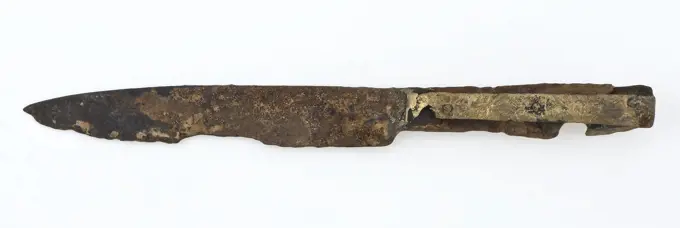
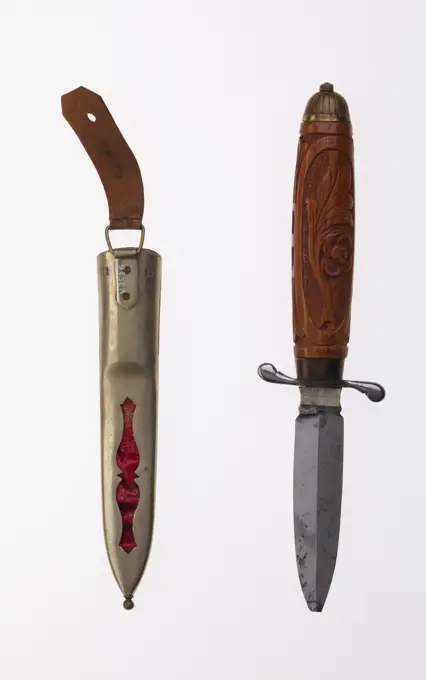
Small iron knife with decorated, driven handle, knife cutlery soil find iron copper brass metal, forged driven riveted Small iron knife. Lifting on which two strips of brass remain on which driven decoration Probably floral decors with tulip at the base. Slightly curved blade with pointed end Riveted covering has archeology Rotterdam City center Stadsdriehoek Oudehaven Newport cutting food writing Soil discovery Oude or Nieuwe Haven Rotterdam.
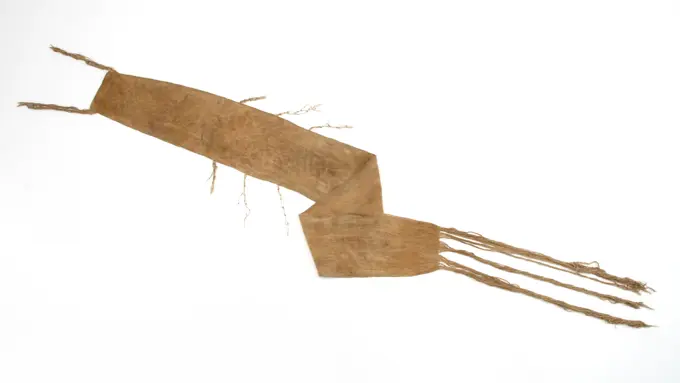
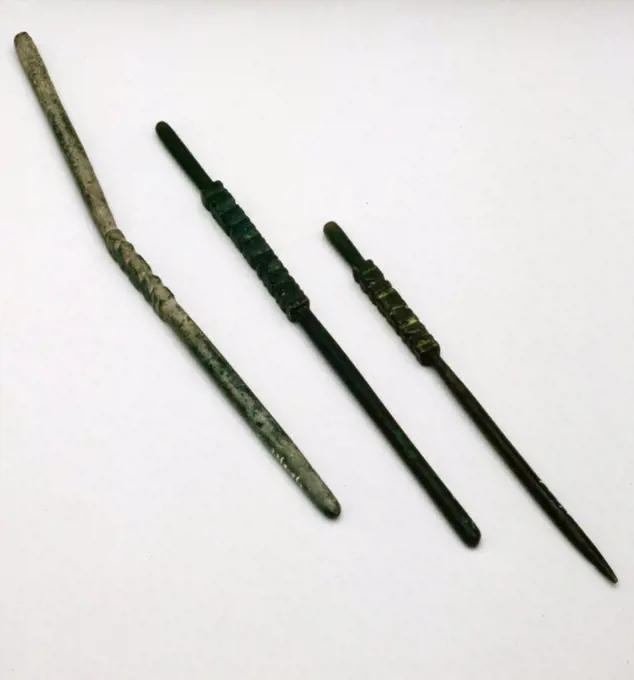
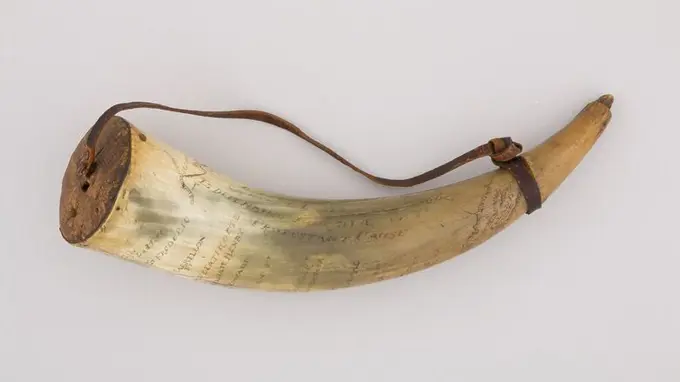
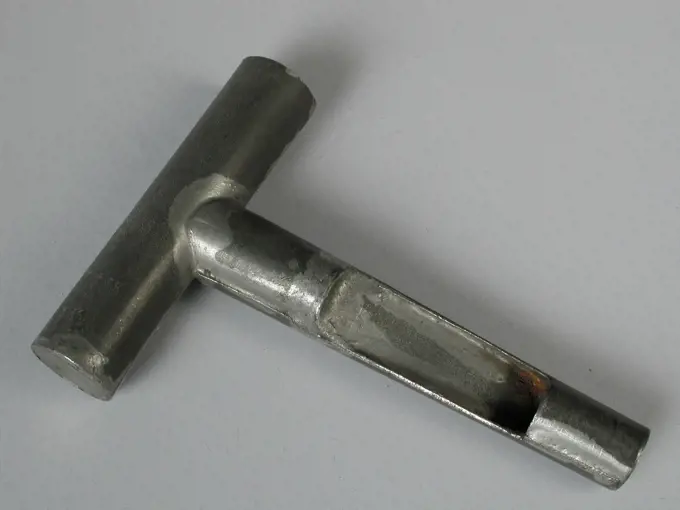
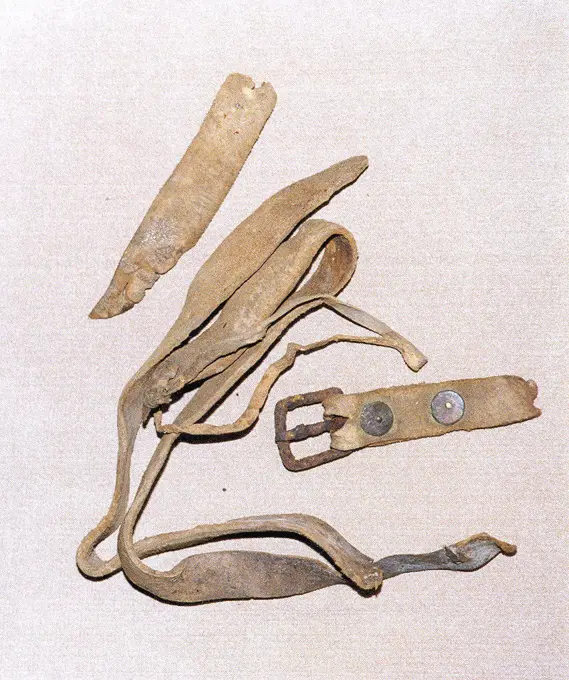
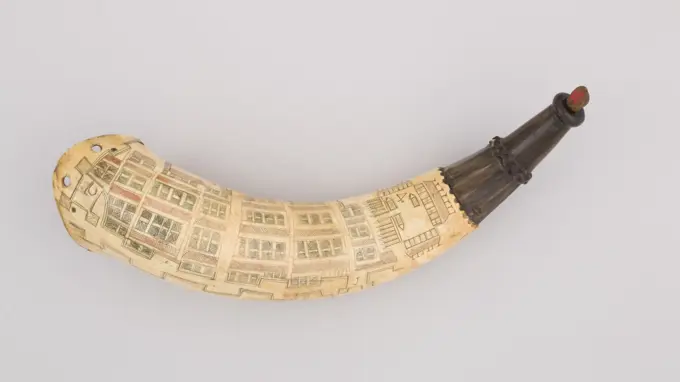
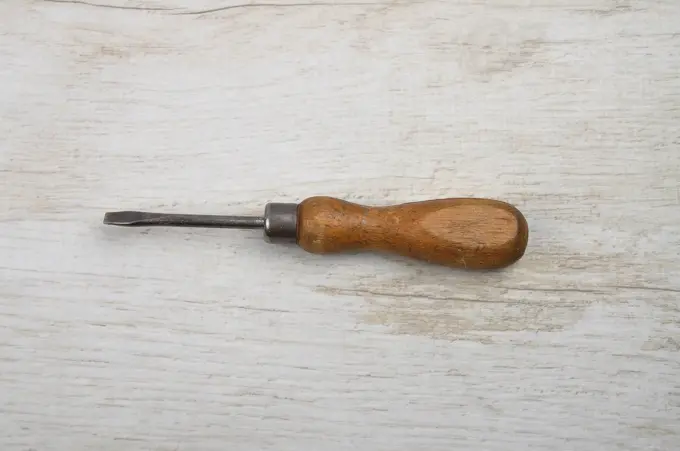
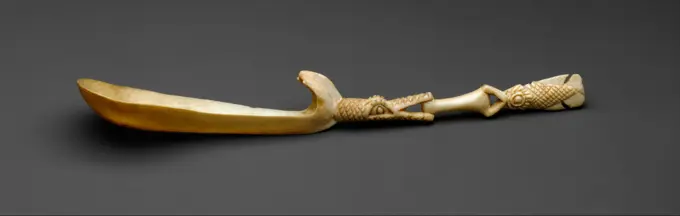
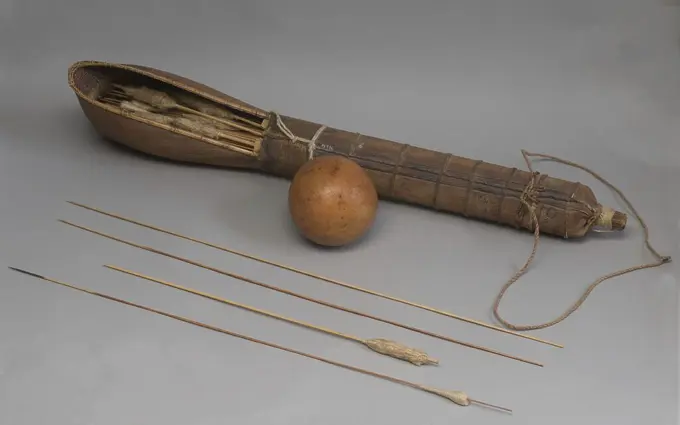
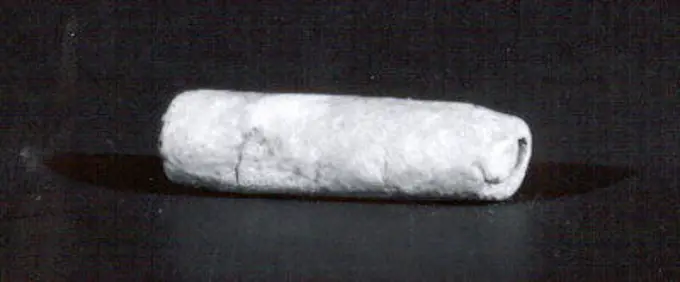
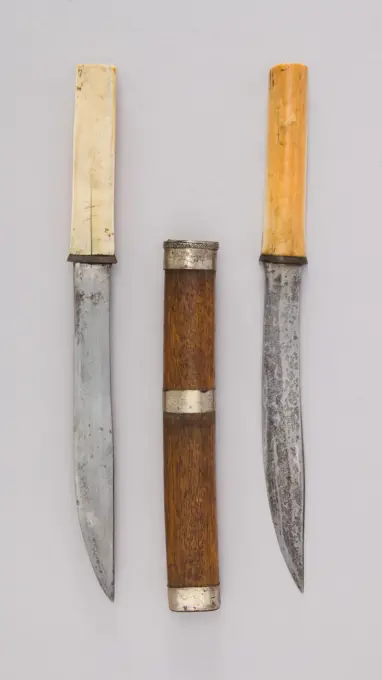
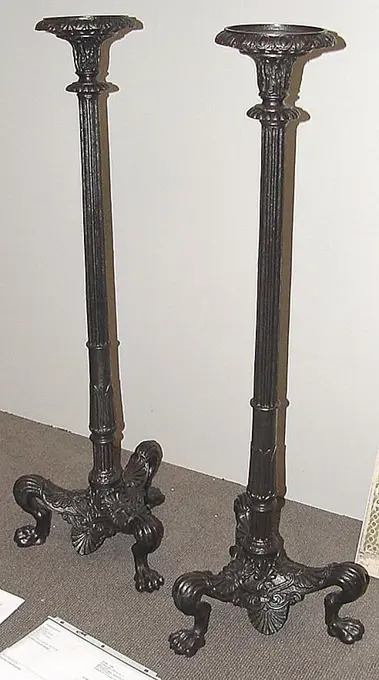
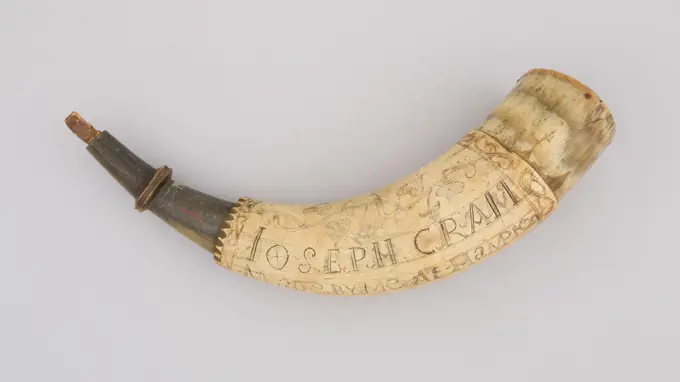
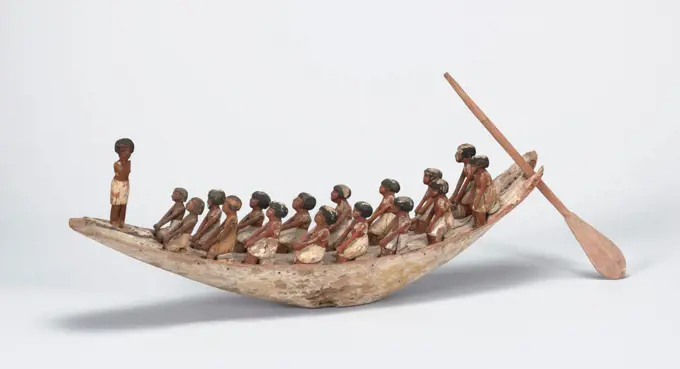
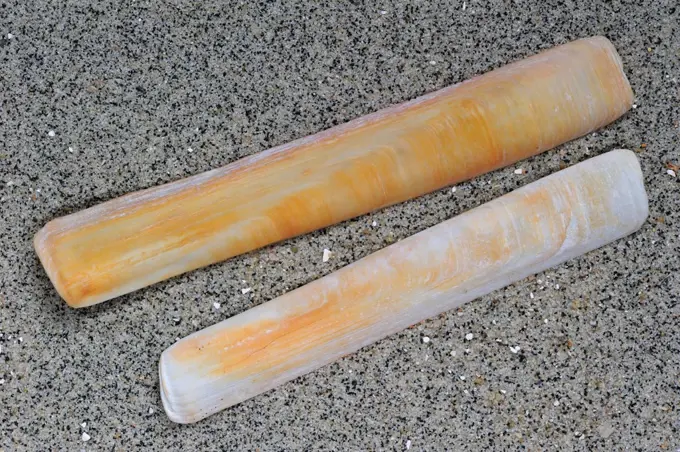
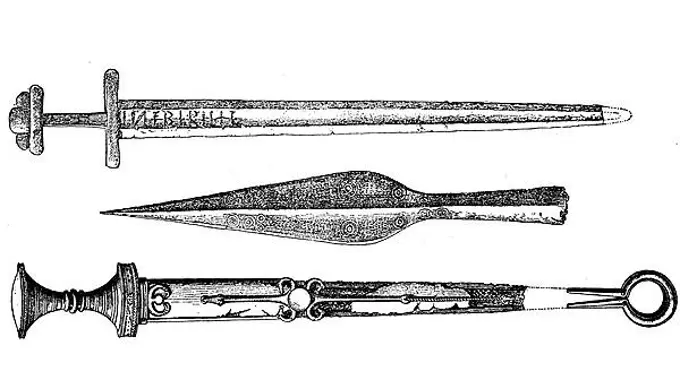
Germanic weapons, iron sword, iron lance tip and sword with runic inscription, digitally restored reproduction of an original 19th century patternBelt -Crossbow. German. Date: 1440-1510. Dimensions: 14 × 78.1 × 76.8 cm (5 1/2 × 30 3/4 × 30 1/4 in.). Steel, iron, horn, bone, staghorn, birch bark, cherrywood, and hemp fiber. Origin: Europe. Museum: The Chicago Art Institute, Chicago, USA.Black stone caught between two pieces of wood that are attached to each other with iron pens. In the pieces of wood, space has been saved so that a hole is created where the stone is retracted, so that a flat side is still exposed on either side. Inscription; On label: 29.SURGICAL INSTRUMENTS. MUSLIM MEDICINE (EXHIBITION THE SCIENTIFIC LEGACY OF AL-ANDALUS) (LOCATION: NATIONAL ARCHEOLOGICAL MUSEUM).Powder Horn. Culture: American. Dimensions: L. 12 in. (30.5 cm); Diam. 3 1/4 in. (8.3 cm); Wt. 5.1 oz. (144.6 g). Date: 18th century.This powder horn is engraved with a map of the Hudson River Valley and the royal arms of Great Britain. Museum: Metropolitan Museum of Art, New York, USA.Dagger (Choora) with Sheath 19th century Indian, Khyber, Mahsud Tribe. Dagger (Choora) with Sheath. Indian, Khyber, Mahsud Tribe. 19th century. Steel, horn, brass, wood, leather. KnivesFragment of a cord / rope from the wreck of the East Indies' t Vliegend Hart, c. 1700 - c. 1735 lanyards The brown cord fragment is partly included in an iron concretion.  ropeCachalot.metal worker: Gresnich, Tin miniature apple drill, apple drill kitchenware miniature toy relaxant model metal, curved soldered tinplate tin T-shaped cylindrical grip conical drill 1868 Sibilla van Embden play food prepare kitchenLeather belt strap with buckle ca. 7th-9th century A.D. Alanic. Leather belt strap with buckle 327549Painted letterFragment. Culture: European or Middle Eastern. Dimensions: L. 3 1/4 in. (8.3 cm). Date: ca. 1150-ca. 1250. Museum: Metropolitan Museum of Art, New York, USA.Sickle Blade, 1980-1801 BC. Egypt, Middle Kingdom, Dynasty 12. Flint; overall: 5 cm (1 15/16 in.).Photo collection Government information service. Roing hook and driving hook, tool for cutting reeds and rises respectively. undatedwooden amulet necklace isolated on white backgroundPlow. Dated: c. 1941. Dimensions: overall: 24.4 x 35.7 cm (9 5/8 x 14 1/16 in.). Medium: watercolor and graphite on paper. Museum: National Gallery of Art, Washington DC. Author: Cornelius Christoffels.Planes for wood. Roman period. GERMANY.Zumalacarregui telescope. Madrid, Army Museum. Location: ALCAZAR / MUSEO DEL EJERCITO-COLECCIÓN. Toledo. SPAIN.Powder Horn dated 1770 American, Charleston, South Carolina A powder horn is a container usually made from an animal horn, and it is used for carrying gunpowder. This example is engraved with a rendition of the walled city of Charles Town, South Carolina (the name was changed to Charleston in 1783). In the recesses of the engraving some of the black and vermillion coloring is still preserved. This powder horn was acquired along with a shoulder belt (acc. no. 39.87b) in 1939. The belt is currently displayed with a different powder horn (37.131.16a).. Powder Horn 24670Gypsum twin spearheadPowder Horn 1757 Colonial American. Powder Horn. Colonial American. 1757. Horn (cow), wood. Firearms Accessories-Powder Hornsfurrier s knife on sheepskin furrier s knife on blue painted sheepskin Copyright: xZoonar.com/ValeryxVoennyyx 5455419Schraubendreher - Screwdriver on wood Schraubendreher - Screwdriver on wood Copyright: xZoonar.com/lantapixx 7438774Key. Gravity type. Iron. Spain. Archaeological and History Museum (San Anton Castle). A Corua, Galicia, Spain.Spoon 15th-16th century Edo peoples, Bini-Portuguese. Spoon 316611Spiral Pin. Northeastern Europe, Hallstatt period, circa 700-500 B.C.. Jewelry and Adornments; pins. Bronze, hammeredTwo images left out of the original order in 2011 L numbers 3800-3810 2011. UPWT Test 1998 Continuous Data Sonic Boom Test. Sonic Boom Hardware Mounted in the Langley Unitary Plan wind Tunnel(UPWT). Conical survey probes, wedge probe, and wind tunnel wall boundary layer rake. Rectangular box with wedge front end is a transducer box to that held pressure transducer for the conical probes.Tinsel and metal thread 17th-18th century French. Tinsel and metal thread 214197For OstrogCity of Enkhuizen, a lead with no. 7, Anonymous, 1833  One -sided, rod -shaped lead with rectangular recesses in both ends. Front: Coat of arms with the left year, on the right -hand number 7. Downside: Blanco Enkhuizen brass (alloy) striking (metalworking)  EnkhuizenFragment. Culture: European or Middle Eastern. Dimensions: L. 2 1/8 in. (5.4 cm). Date: ca. 1150-ca. 1250. Museum: Metropolitan Museum of Art, New York, USA.polierte Axt polished axe, Dima, Arkeologi Museoa, museo aqueologico, Bilbao, Bizkaia, Pais Vasco, Spain Copyright: xZoonar.com/Tolox 22845376Harp String Gauge 1829 Érard. Harp String Gauge 504046Double Sword with Scabbard 19th century Chinese. Double Sword with Scabbard. Chinese. 19th century. Steel, wood, brass, leather. SwordsHair tie -INSTRUMENTOS DE CAZA Y PESCA - CARCAJ, DARDOS Y CALABAZA - ESTILO ORINOCO - SIGLO XX. Location: MUSEO DE AMERICA-COLECCION. MADRID. SPAIN.Ornament ca. late 3rd millennium B.C.. Ornament. ca. late 3rd millennium B.C.. Faience. Early Bronze Age. Mesopotamia, Tell TayaDD-ST-85-01249. Country: UnknownPair of Knives (Dha) with Sheath 19th century Burmese. Pair of Knives (Dha) with Sheath 31617Oliphant. An ivory Hunting Horn called Oliphant because of its ivory nature. It bears the arms and badges of Ferdinand and Isabella of Portugal and is supposed to have been carved by people living on the West Coast of Africa.Knife lift from the wreck of the East India Hollandia. Knife, handle deformed: Unclassifiable; Fragm, Sim. NG 1980-27H1678.Spiral notebook, color pencil and a dry leaf a brown backgroundFinnish knife for dressing fish, with a scabbard and a thongKatana blade of a shortened tachi in 20th-century mount with World War II officer sword handle, 14th century, Unknown Japanese, 10 x 1 1/2 in. (25.4 x 3.81 cm) (b), Wood, lacquer, sharkskin, silk, metal, Japan, 14th centuryKnife Handle (Kozuka) ca. 1615-1868 Japanese A kozuka is a handle of a by-knife that is part of a sword mounting. It is kept in a slot on the reverse of a katana scabbard, often with a matching kōgai (hairdressing tool).. Knife Handle (Kozuka) 34680Strip bobbin with green crowded card or poked edge pattern, anonymous, c. 1800 - c. 1899 Strip of natural -colored bobbin side - Parisian side - with accompanying pattern in the form of a green crowded card. It is a strip that has been held by a so -called 'front worker', so an example or 'lace model'. The pattern consists of a split twig and a C-shaped twig on the center line of the strip and a succession of comparable branches along the underside of the strip. The motifs are connected by a grid, a Parisian soil. The motifs are made in linen battle, with thicker and shiny contour threads. The top and bottom are straight finished, with the bottom with picots. The loose threads along the short sides are braided for finishing. Belgium Side: Linen (Material). Protection card/pattern: cardboard bobbin lace / Paris lace Strip of natural -colored bobbin side - Parisian side - with accompanying pattern in the form of a green crowded card. It is a strip that has been held by a so -called 'fronGold spiral. Culture: Cypriot. Dimensions: Length: 1 in. (2.5 cm). Date: ca. 1600-1100 B.C..Of plain wire with two turns. Museum: Metropolitan Museum of Art, New York, USA.Steilwand mit Haken steep face with metal hook and chain Copyright: xZoonar.com/angetax 12244478Eydhafushi Island, in Baa Atoll (South Maalhosmadulu Atoll), was once renowned for its feyli or sarong weavers. Eydhafushi is the capital of Baa Atoll. Asia's smallest and least-known nation, the Republic of Maldives, lies scattered from north to south across a 750-kilometre sweep of the Indian Ocean 500 kilometres south-west of Sri Lanka. More than 1000 islands, together with innumerable banks and reefs, are grouped in a chain of nineteen atolls which extends from a point due west of Colombo to just south of the equator.polished axe, Dima, Arkeologi Museoa, museo aqueologico, Bilbao, Bizkaia, Pais Vasco, Spain.Fork and knife, Meissen Porcelain Manufactory, Meissen, Saxony, Germany, founded 1710, Glazed earthenware, steel, Knife (a): Straight-backed steel blade with rounded, upcurved tip. Pistol grip porcelain handle painted with blue, green and yellow flowers and scrolls out-lined with manganese; fork (b): three prong steel tines and pistol-grip handle painted in blue, green and yellow flowers and foliage within manganesse outlines., probably France, mid-18th century, cutlery, Decorative Arts, Fork and knifeHammered Silver Pin (tupu) 8th-mid-16th century Peru; north coast (). Hammered Silver Pin (tupu) 309144CassavaBracelet probably 14th-15th century The earliest known examples of this type of seamless mosaic glass bracelet are from the late thirteenth century; it continued to be produced well into the nineteenth century at Hebron, in Palestine. This bracelet, together with thirty-three others in the collection, comes from UpperEgypt and was probably made during the Mamluk period.. Bracelet 446042Pair of torchères ca. 1820-30 Possibly after a design by Karl Friedrich Schinkel German. Pair of torchères. German, Berlin. ca. 1820-30. Cast iron. Metalwork-IronTwo Bullets Collide Midair from the dardanelles warPowder Horn 1764 Joseph Cram. Powder Horn 29564Model of a River Boat, wood, paint, Boat (a) with upward curving bow and stern, and flat-bottomed center. Eight pairs of oarsmen, dressed in white loin cloths, seated on square blocks. Pilot standing in bow. Helmsman and mast missing. Separate, long steering oar (b) with blade rounded at end; undecorated., Egypt, 2000-1700 BC, models and prototypes, Decorative Arts, funerary art, funerary artEuropean razor clam / Grooved razor shell (Solen marginatus) on beach, Brittany, FranceBurned match indicating temperature on a scale as a thermometer. Global warming and temperature rising concept