Historical Cutting Tools

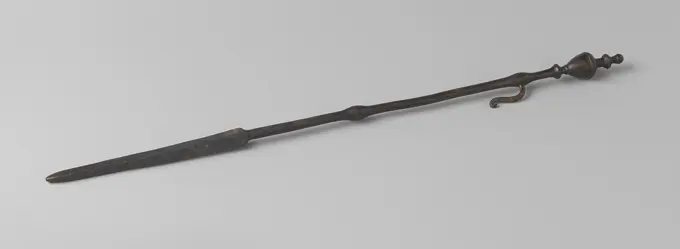
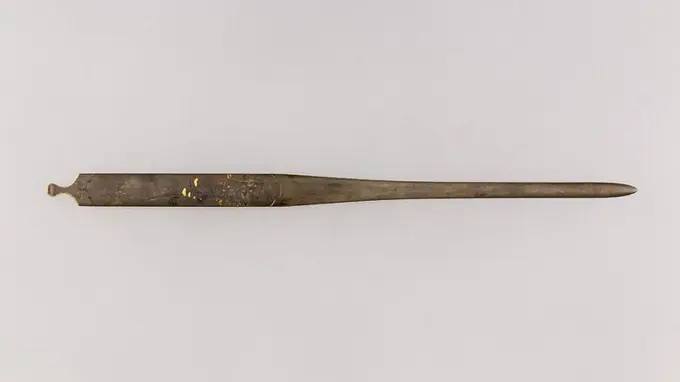
A variety of ancient cutting tools including a knife, a cigar holder, and various archaeological artifacts made from metal and bone, showcasing unique designs.

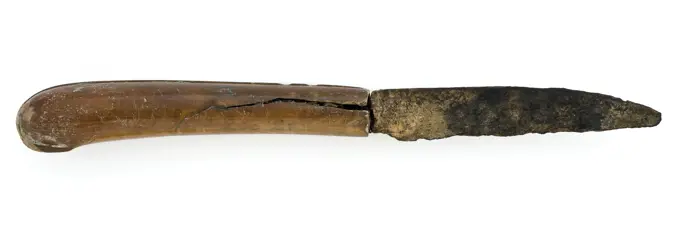
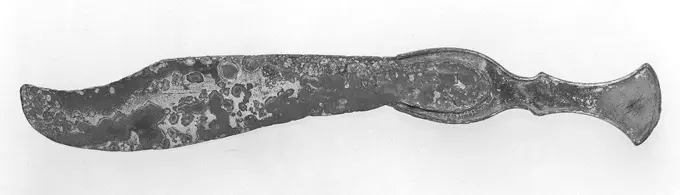
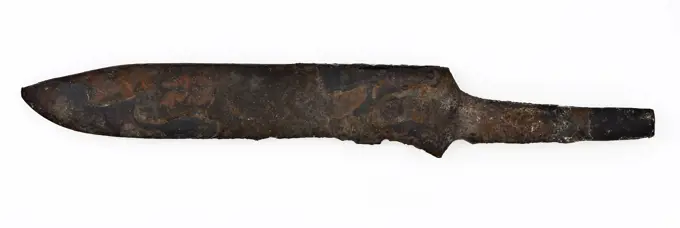
Knife with elongated narrow blade and legs decorated with hexagonal surfaces, knife cutlery soil find bone iron metal, archeology
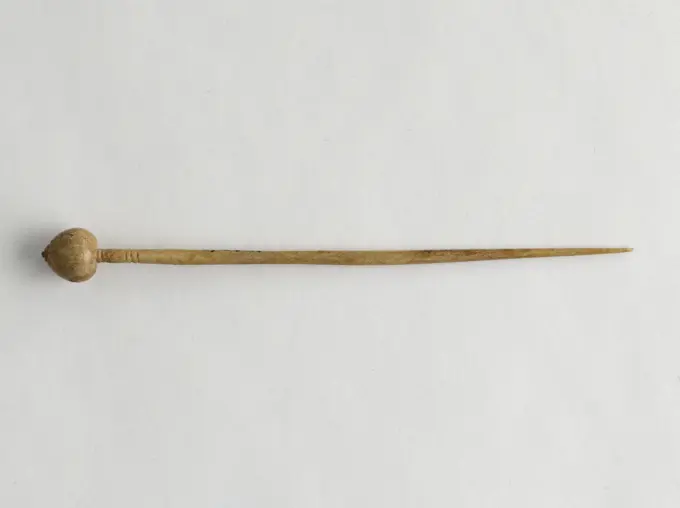
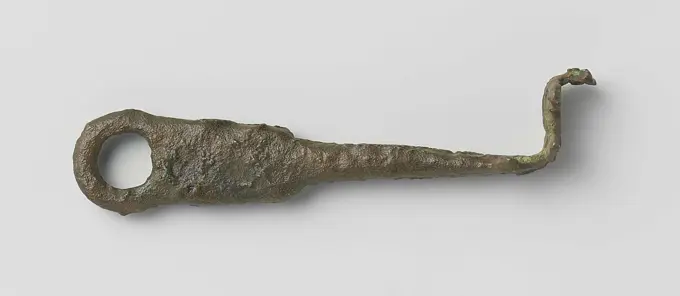
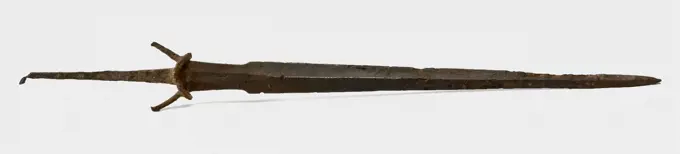
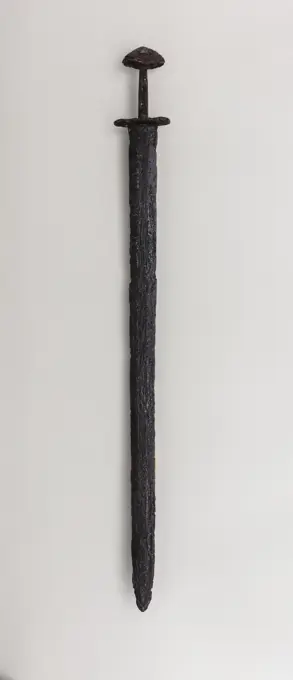
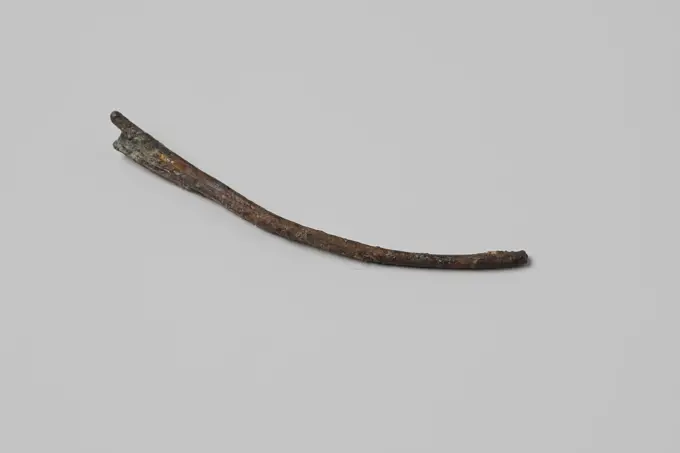
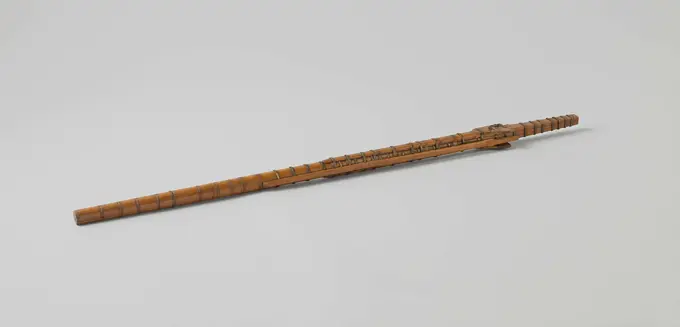
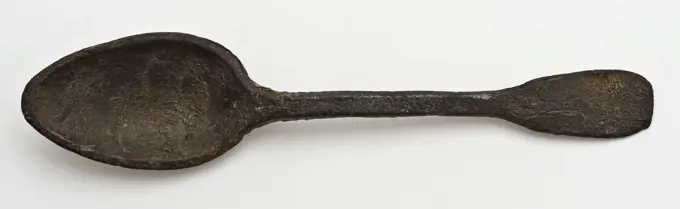
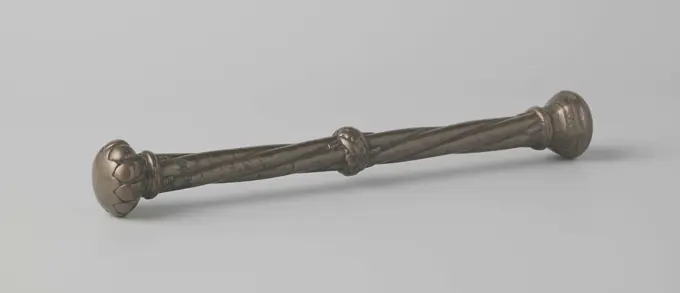
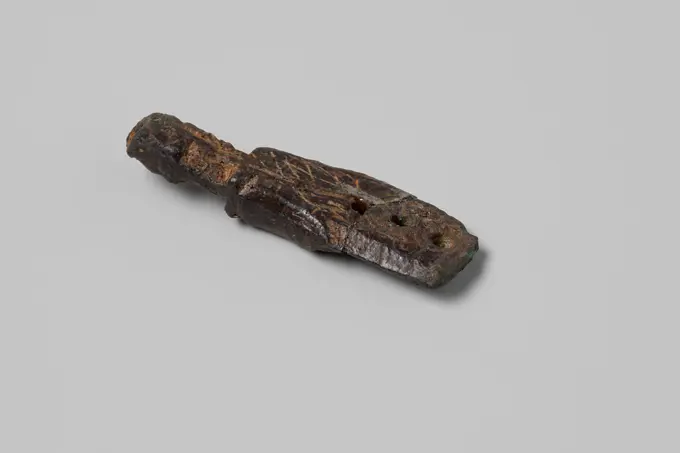
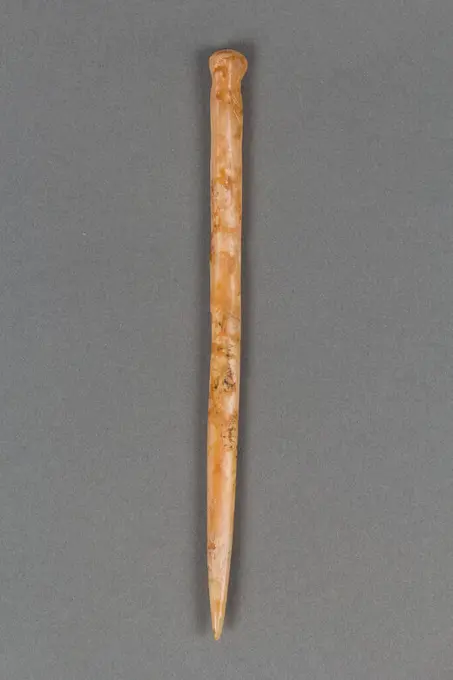
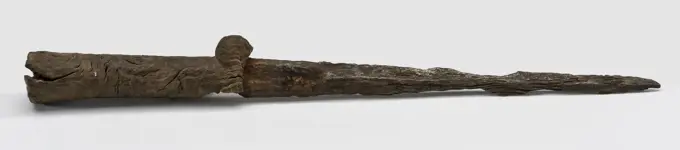
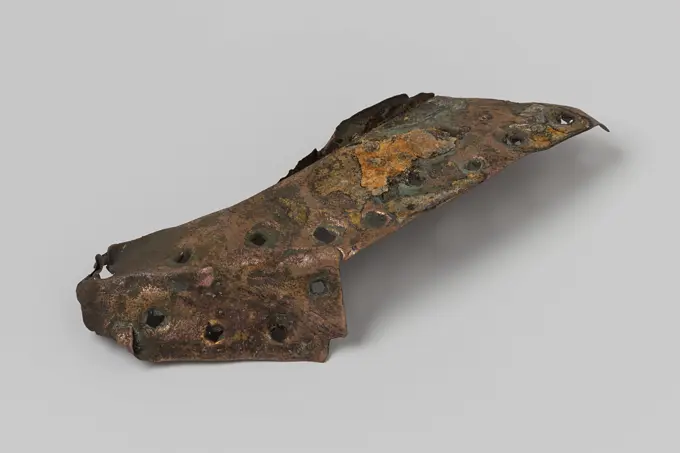
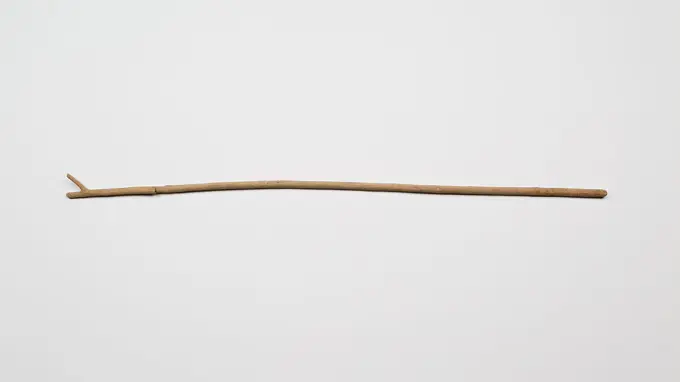
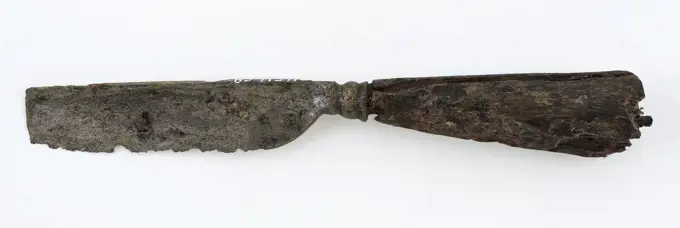
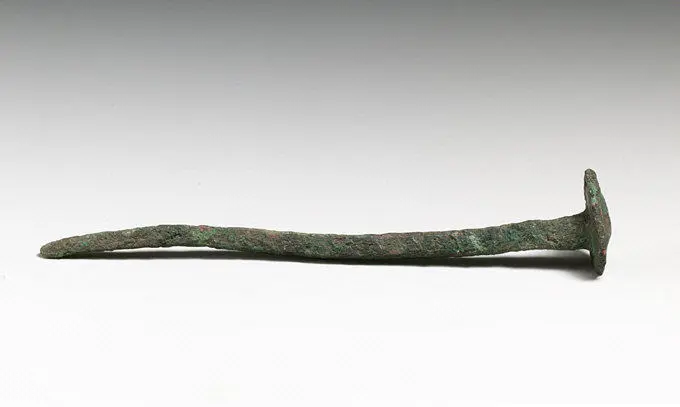
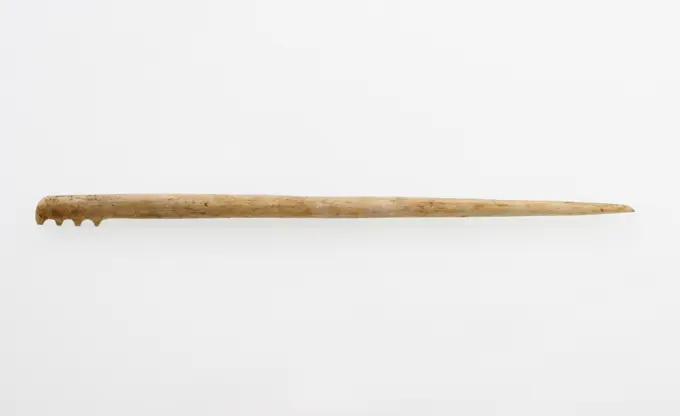
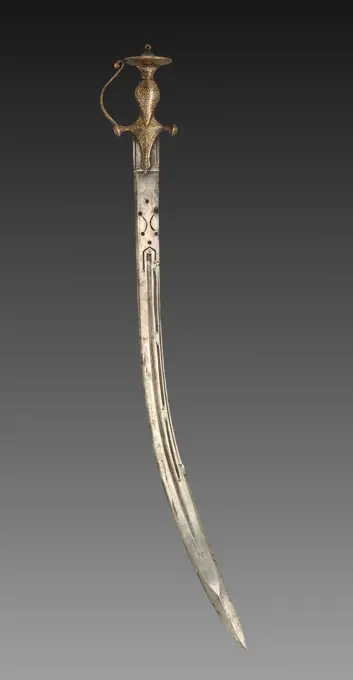
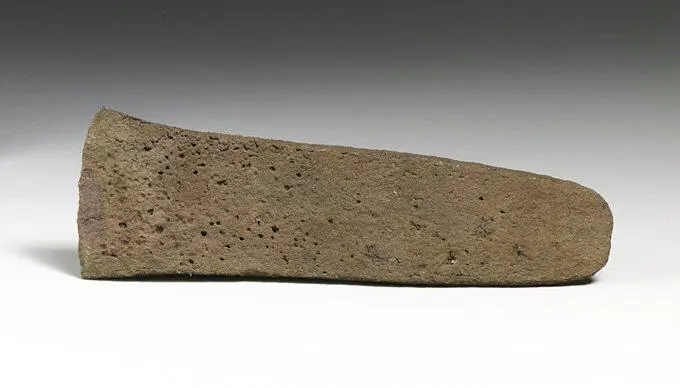
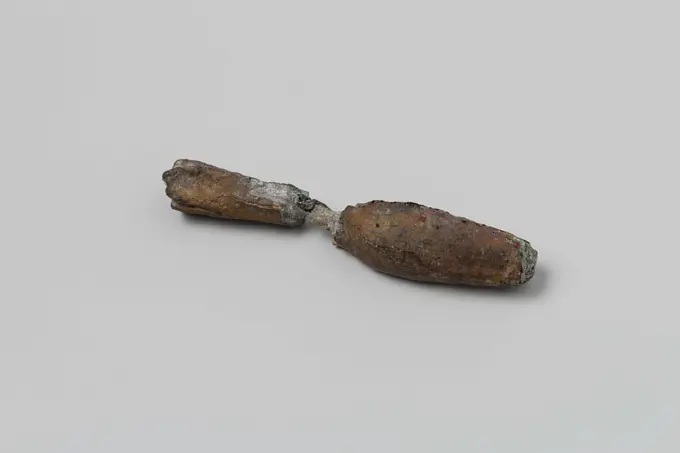
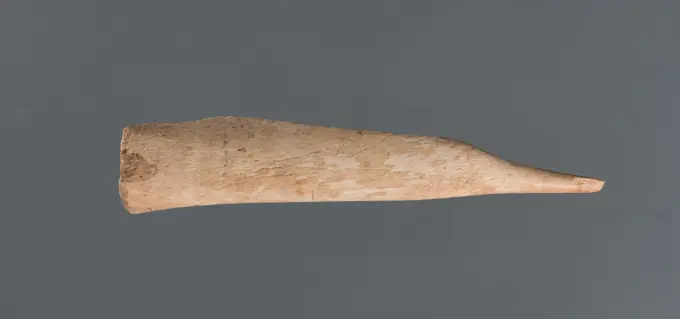
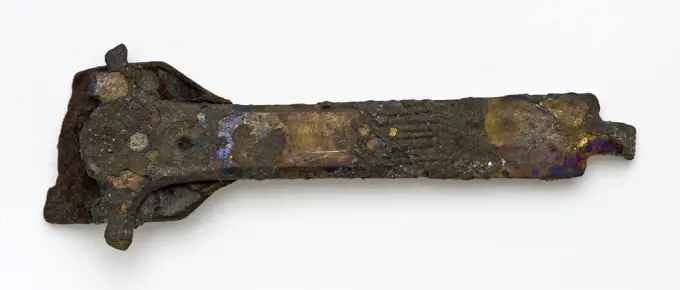
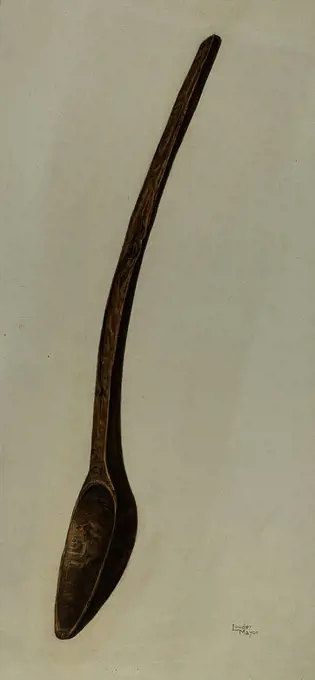
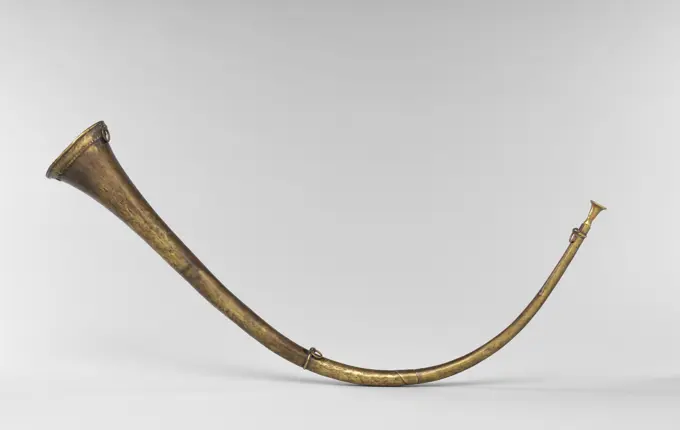
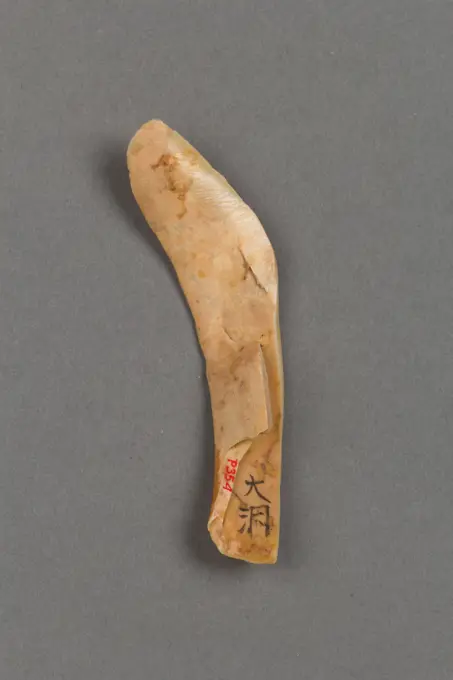
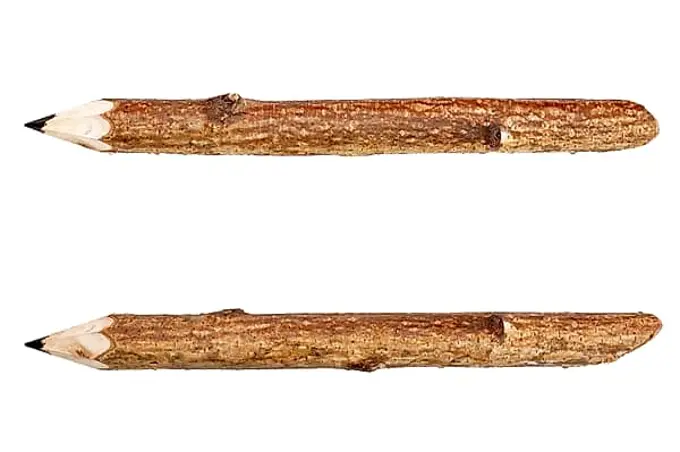
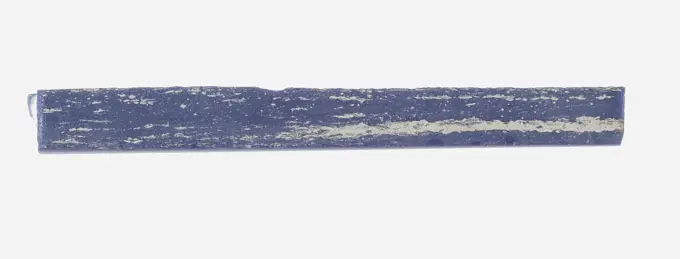
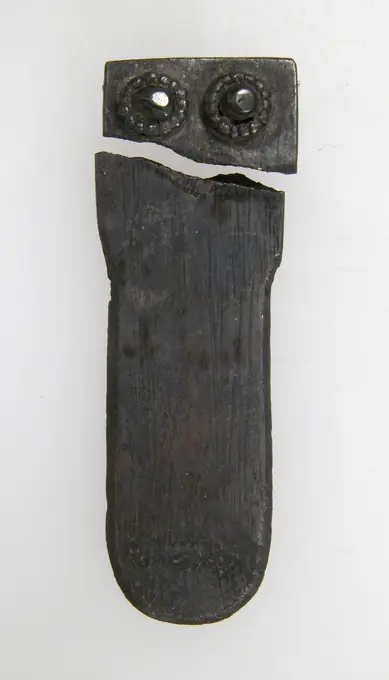
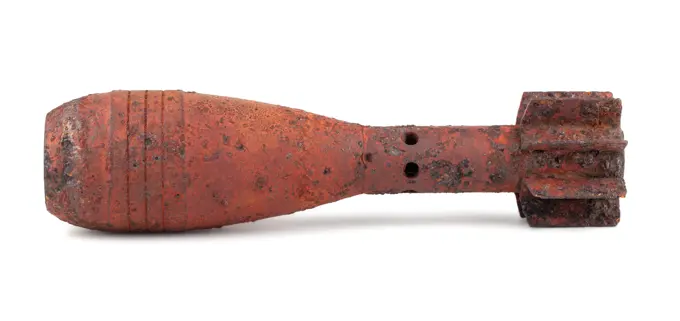
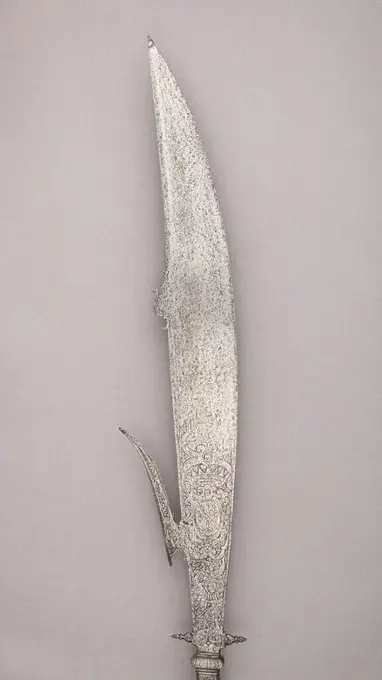
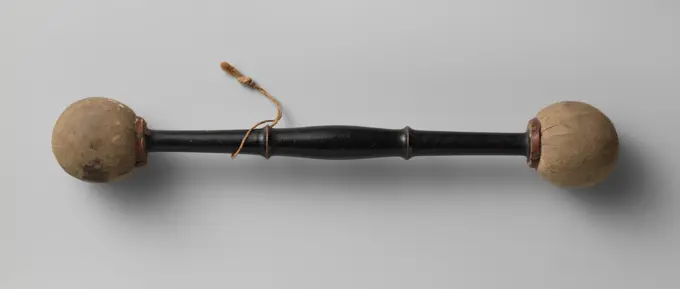
Knife with elongated narrow blade and legs decorated with hexagonal surfaces, knife cutlery soil find bone iron metal, archeologyCigar holderUpper part of the Lans of St. Joris. Upper part of the LANS from St. Joris, may not be original.Hair pin. Gallo-Roman. Bone. Paris, Carnavalet museum. Archaeoligical vestige, bone, hair emper, Gallo-Roman, Gallo-Roman, Gallo-Roman, Hairpin, Object, Objet, Outfit, Period, Archeological vestige, ToiletThe Amsterdam apothecary and art collector Emmanuel Vita Israël. He donated his collection, comprising keys dating from Roman antiquity to the 19th century, to the Koninklijk Oudheidkundig Genootschap (Royal Antiquarian Society) in 1937. Vita Israël claimed that his key collection had grown more or less by accident: being one of the few collectors of keys, dealers automatically made their way to him.Blade and baffle plate of kidney dagger with double-edged blade, kidney dagger dagger knife stab weapon weapon fragment founding iron metal, forged Knife with round metal baffle at the blade. The angels with which the iron baffle is anchored to the wooden handle are still present. The blade is facetted from the heel to about 3.5 cm with flat sides then double-edged and diamond-shaped in cross-section. The blade is especially suitable with the weapon to the heel more the ability to cut The forging shows great precision and craftsmanship. The steel is good quality archeology cave hunter whirlpool dagger cave dagger ball person decoration status symbol personal equipment defense clothing accessory militariaIron sword, anonymous, c. 1000 - c. 1100 sword Iron sword, double -edged. The handle, which lacks the length, has a flat semic circular button and a short straight pare rod. Half is present for par a bar. Blood channel over almost the entire length of the blade.  iron (metal)   NetherlandsBaki's Razor-Knife New Kingdom ca. 1504-1447 B.C. View more. Baki's Razor-Knife. ca. 1504-1447 B.C.. Bronze or copper alloy. New Kingdom. From Egypt, Upper Egypt, Thebes, Asasif, Tomb of Neferkhawet (MMA 729), east chamber, Burial of Baki (III), in coffin, bundle by feet, MMA excavations, 1935-36. Dynasty 18, earlySword 8th century Carolingian. Sword. Carolingian. 8th century. Steel, gold, silver. SwordsBronze ligula (ear pick) ca. 3rd-4th century A.D. Roman Spoon, miniature.. Bronze ligula (ear pick). Roman. ca. 3rd-4th century A.D.. Bronze. BronzesNeedle from the wreck of the East Indieschief Hollandia. Tools And Instruments, Sewing and Sailmaking, Sailmaker's Needle; Fragm, Bent, eroded, thin rod with fragm or 4 splayed strips on one end.White clay pipe, marked, smooth handle, clay pipe smoking equipment smoke floor earthenware ceramics pottery, hand molded baked White clay pipe marked smooth steel Heel mark. This pipe is first stamped and further finished part of brand has been lost heel mark: anchor archeology smoking tobaccoModel of a Made mast. Round mast with square top, homer with ears, driving bed, rotary bowl and sideshows. The mast itself consists of an octagonal mast king surrounded by eight cheeks; The mast top is composed of the cheeks. The parts are held together by tub tires. A number of short shelves around the mast forms a bribe (missing) and behind a flat. The sideshanges, composed of two long parts, have been extended as a back piece of the ears; The ears themselves are attached to this with brass tires. A tray is applied to the mast and continues under the bribe.Kohl stick ca. 1295-1070 B.C. New Kingdom, Ramesside. Kohl stick 568376Tweezers. Tweezers 252416 Tweezers, Bronze, Other: 5/8 x 4 1/4 x 1/4 in. (1.6 x 10.8 x 0.6 cm). The Metropolitan Museum of Art, New York. Bequest of Richard B. Seager, 1926 (26.31.496)Small pewter spoon with elongated bowl, spatula-shaped handle end, teaspoon table spoon equipment soil find tin metal, cast Flat round lip under the tray on the attachment with the handle. Steel with wider spatula-shaped end archeology Rotterdam Kralingen-Crooswijk Kralingsche Bos Kralingse Plas Soil discovery: in 1972 at the Kralingse Plas from sprayed dredge collected metal detector finds and sight finds.Lance Point; wrought steelStamper waarvan de steel uit vier getordeerde ribben is opgebouwd.The cast pestle has a stem constructed from four ribs, a knot formed in the middle, formed from smooth ribs and pearl edges, which appears to be fixed on the stem with four twisted ends. The round thickening at the bottom is to steal octagonal and profiled and also seems to be fixed with four short turned ends. The round thickening at the top has native decorations and a profiled rib. This part also makes the impression with four ends.Pin from the wreck of the East Indiesman Hollandia. Tools and Instruments, Sewing and Sailmaking, PIN; Fragm or Shaft with Blade-Mount, 3 Rivet-Holes, ID. NG 1980-27H3265.Tranching fork of iron with two teeth, c. 1550 - c. 1650 The forged, iron trancheing fork has two teeth, which are decorated with engraving on the lifting side. The transition from teeth to handle is spherical. The lift is decorated on the sides with engraving. The front and rear sides are made of Hertshoorn. Low Countries iron (metal). horn (animal material) forging / engraving The forged, iron trancheing fork has two teeth, which are decorated with engraving on the lifting side. The transition from teeth to handle is spherical. The lift is decorated on the sides with engraving. The front and rear sides are made of Hertshoorn. Low Countries iron (metal). horn (animal material) forging / engravingArrowheads, needles, hooks and harpoons. Culture: Japan. Dimensions: W. 3/8 in. (1 cm); L. 5 5/8 in. (14.3 cm). Museum: Metropolitan Museum of Art, New York, USA.PUÑAL DE BRONCE IBERICO-PROCEDE DE LA RIA DE HUELVA. Location: MUSEO ARQUEOLOGICO NACIONAL-COLECCION. MADRID. SPAIN.Ice strainer -Extreme of Hallebarde round. Bronze, China, IV-IIe s. av. Paris, Cernuschi museum. Asian art, Chinese art, bronze, Asian civilization, Chinese civilizationRemainder of small table knife with legs handle, knife cutlery soil find iron bone metal, archeology Rotterdam Kralingen-Crooswijk Struisenburg's Gravenweg Oostmaaslaan Soilage site Oostmaaslaan and de's Gravenweg for longer period.Pendant 3rd century-second half of the 8th century Indonesia (Java). Pendant 50115Kidney dagger with double-edged blade, kidney dagger dagger knife stabbing weapon weapon soil find wood iron metal, forged Knife with characteristic shape of the baffle plate in the form of two balls on circular running base. The blade is facetted from the heel to 4.0 cm on both sides with flat edges for general carving. Then the blade is up to the point diamond-shaped double-edged and especially suitable as shocking weapon. Archeology klotendolk kloot dagger kliodolk ball dagger decoration status symbol personal equipment defense clothing accessory militariaGrace;  20th century (1901-00-00-2000-00-00);Bronisław Krystall. Testament (Warsaw - exhibition - 2015/2016), Krystall, Bronisław (1887-1983) - collection, men's fashion, testamentary record (provenance)Blood bag pin -Gore Melanesian (Aoba Island, Vanuatuan) late 19th centuryBronze kyathos (ladle) with duck-head terminal ca. 400 B.C. Etruscan Deep, oval bowl with long, four-sided handle curved at upper end terminating in the head of a duck.. Bronze kyathos (ladle) with duck-head terminal 256654Spoon, bronze, Elongated subtly pointed shallow oval bowl, the long curving stem incised with four lines below the terminal., Korea, 6th century, cutlery, Decorative Arts, SpoonBoat-Shaped Vessel. UnknownFragment of musketmaat for musket walker. Musketmaat for musketalkier, fragment consisting of brass sleeve, loose bottom and one ear. Leather upholstery is missing. Default description musketmaat: brass with leather covered. Equipped with two eyelets on the side to by doing a cord with which the lid was held and the size was hung on the bone core. A muskettle walker had twelve powder buds and a bag with bullets. The powder buds contain a carefully disposed amount of gunpowder for one shot.Bone Weaving Bobbin 8th-mid-16th century Peru; north coast (). Bone Weaving Bobbin 309262Iron poker. A poker with a hook.Forged metal pipe, funnel model with heel and rather short handle, pipe smoke-making equipment soil find bronze copper metal, forged Forged metal pipe with heel and rather short handle. The boiler is slightly tilted forward in relation to the stalk archeology smoking tobaccoMusketmaat, fragment consisting of leather bottom with ears and remnant of powder., Anonymous, c. 1590 - c. 1596  Musketmaat fragment consisting of leather bottom with ears and remnant of powder. The remainder of the powder is paved.  brass (alloy). leather. rope striking (metalworking)  Nova Zembla. Saving HuysHair Dressing Tool (Kogai). Culture: Japanese. Dimensions: L. 8 3/8 in. (21.3 cm); W. 1/2 in. (1.3 cm); thickness 1/8 in. (0.3 cm); Wt. 1.3 oz. (36.9 g). Date: 1785-1876. Museum: Metropolitan Museum of Art, New York, USA.Red Copper elongated piece of fittings from the wreck of the East Indied Flying Heart. Red copper elongated piece of batter with square holes that indicate a hemisphere disappeared attachment point. Sheet fragments.Staff of Amenhotep. Dimensions: L. 77 cm (30 5/16 in.); Diam. at butt 1.25 cm (1/2 in.); Diam. at forked end 0.75 cm (5/16 in.); W. at fork 3.6 cm (1 7/16 in.). Dynasty: Dynasty 18. Reign: Joint reign of Hatshepsut and Thutmose III. Date: ca. 1479-1458 B.C..Sometime in the early joint reign of Hatshepsut and Thutmose III, a twelve-year-old boy named Amenhotep was buried on the hillside below the tomb chapel of Hatshepsut's well-known official, Senenmut (36.3.252). Although still a child, Amenhotep was well provided for. On top of his wooden coffin lay a forked staff (shown here) and a necklace of lentoid faience beads (36.3.154). Beside the coffin were food offerings of bread and beer (36.3.161), and a variety of fruits including raisins, dates, dom palm nuts, sycamore figs, and a pomegranate. A beautiful stone shabti figure (see 19.3.206) had been laid next to the coffin. Its inscription identified it as a gift from Amenhotep's brother, Senu. This shabti is now in the Egyptian Museum,Fragment foot from a candlestick from the wreck of the East Indiesman Hollandia. Candlestick, Foot; Fragm or Molded Rim, SIM. NG 1980-27H2812.Body ornament Japan By the Middle Jōmon period, the food supply in Japan had stabilized enough that the Jōmon people could focus their activities more on crafts and spiritual life. This led to the development of a wide variety of body ornaments, including necklaces and hairpins, some of which feature very elaborate designs. It is speculated that body ornamentation may have served a religious or spiritual purpose, but it may also have represented social rank and status.. Body ornament 62277Bone , Archaeological assemblages, Charles F. Walcott Archaleogical CollectionGrasp of an hilt from the wreck of the East Indians Hollandia, Anonymous, 1700 - in Or Before 1743  Hilt, grip; eroded, squashed; circular in section, bulbous centre part, relieved decoration of shell and scroll motifs and a central scene with a human figure on two sides between twisted bands of lines, spool-shaped moulding on one end, pommel or tang button broken off, rectangular tang bore. Netherlands silver (metal)   SecondBlade with attached handle protector and narrowed stern, with tapered handle, knife cutlery soil find iron wood metal, Blade with forged profiled handle guard narrowed angel. Tapered end of archeology Rotterdam rail tunnel cutting food Soil discovery: rail tunnel Rotterdam.Totals pen. Totals pen.Nail. Nail 244251Tabakspijp., anonymous, c. 1400 - c. 1950 Tobacco pipe with IAB stamp. Old brand B.  earthenware. pipe clay Tobacco pipe with IAB stamp. Old brand B.  earthenware. pipe clayPin 1st millennium B.C. Iran. Pin 322881Blood bag pin -Pin ca. 8th-7th century B.C. Iran. Pin. Iran. ca. 8th-7th century B.C.. Iron. Iron Age. Western IranPinCassavaTulwar sword, before 1919. India. Iron with gold inlay; steel blade; overall: 81.3 cm (32 in.); blade: 70.5 cm (27 3/4 in.).Knife. Culture: Philippine, Sulu. Dimensions: L. 14 11/16 in. (37.3 cm); W. 1 3/4 in. (4.5 cm); Wt. 7.4 oz. (209.8 g). Date: 18th-19th century. Museum: Metropolitan Museum of Art, New York, USA.Part of a pipe pipes pipe with two star -shaped flowers, anonymous, c. 1400 - c. 1950 Part of a pipe pipes with two star -shaped flowers.  earthenware. pipe clay Part of a pipe pipes with two star -shaped flowers.  earthenware. pipe clayCrocodile figure ca. 1295-1070 B.C. New Kingdom, Ramesside. Crocodile figure 551967Axehead ca. 3200-2000 B.C. Cypriot. Axehead 244277REJA DE ARADO DE IZANA. EDAD DEL HIERRO CULTURA CELTICA. ZONA DEL MONCAYO. (DEPOSITO: MUSEO ARQUEOLOGICO NACIONAL).Fragment stem from fork or spoon from the wreck of the East Indiesman Hollandia. Cutlery, fragment: voice or fork or spoon; Fragm, Heavily Corroded.Toggle -EVENTAIL. "Young man picking pears, woman sitting at the foot of the tree; love carrying a basket of flowers". Aquarelle gouache on skin, ivory frame carved and painted, mother -of -pearl and metal on the pivot. Paris, Carnavalet museum. 100087-26 Fashion accessory, EventailExcerpt of copper from the wreck of the East Indians Hollandia, 1700 - in or before 1743  Parts of artefacts; eroded fragments: materials; copper. Netherlands copper (metal)   SecondDagger 1st millennium B.C.. Dagger 327440Flat-nose pliers on a white background Flat-nose pliers on a white background Copyright: xZoonar.com/AlexanderxStrelax 3891328Vessel Fragment 4th-7th century Coptic. Vessel Fragment 478503Szydło. unknown, authorMessenheft from the wreck of the East Indians Hollandia, Anonymous, 1700 - in Or Before 1743  Knife, handle, cylindrical: tapering; id. NG 1979-403H. Netherlands wood (plant material)   SecondAmulet -Copper book fittings with leather fragment, decorated, decorative fittings fittings closure soil find copper brass metal, cast punched riveted engraved Copper strip with leather fragment part of book fittings Beveled sides protruding and edited end with two double curls. Decorated with transverse grooves and engraved beams archeology Rotterdam rail tunnel book protect close close transport Soil discovery: trajectory rail tunnel Rotterdam.Iron anchor, broken shaft, flat wrought iron, anchor ship's equipment equipment ground find iron metal, forged Small iron anchor Flat wrought iron with outward blades Triangular blades archeology shipping transport inland fishingCopper oblong strip with engraving and text, artifact soil found brass metal, engraved Flat rod ending in point at the front: two crossed swords archeology Rotterdam railroad tunnel Jesus Christ religion Soil discovery: Willemspoor behind St. Laurenskerk.Mixing Spoon. Dated: c. 1941. Dimensions: overall: 53.3 x 28.2 cm (21 x 11 1/8 in.) Original IAD Object: 22 3/8" long; 3 1/2" wide. Medium: watercolor and graphite on paperboard. Museum: National Gallery of Art, Washington DC. Author: John Lindermayer.Demilune horn "grand cor" early 17th century Cretien workshop, Vernon (c.1620 - ca. 1690) The poetic name "demilune" describes the profile of this instrument, which is one of the earliest forms of the hunting horn. Its crescent shape echoes instruments made of natural materials such as animal horn and elephant tusk. The brass body of this horn appears to have been formed from a single sheet that was shaped and joined with a longitudinal seam that is tabbed in the area of the bell before becoming a butt join along the remaining length of the instrument. The makers hand is visible in burnishing and hammer marks on the instruments surface. The bell interior bears traces of black pigment. The body of the instrument bears three brass rings, two mounted on ferrules encircling the body tubing and one mounted on the bell garland, for attachment to a baldric or carrying strap. An intricately crenelated garland adorns and strengthens the bell. It is stamped with a repeating pattern of flowers Fragment of legs pointed or harpoon with three barbs, pointed harpoon soil found bone, sawn cut cut Late stone age archeology Maglemose culture Rotterdam Maasvlakte prehistoric stone age late stone age fish fishing nutrition Soil discovery Maasvlakte Maglemose culture.Arrowheads, needles, hooks and harpoons Japan These implementsan arrowhead, fishhooks, needle, and harpoonwere skillfully carved from bone, a material worked by Japanese artisans since Paleolithic times. They were found in the Obara Shell Mound at Ofunato Bay in Iwate Prefecture. According to information gleaned from shell mounds, or middens, the people of the J?mon period relied on a variety of strategies to obtain food. The large number of fishhooks, fashioned with and without barbs, together with the rich array of marine remains found in these rubbish heaps since very early times indicate that some fifty species of fish and shellfish constituted an essential dietary staple. Toggle-head harpoons, a later innovation, facilitated the hunting of sea mammals. Attaching a line to the toggle allowed the hunter to draw in his prey once the toggle had broken away from the harpoon shaft. Further evidence gathered from these refuse dumps suggests that the J?mon people also relied heavily on Bronze kyathos (ladle) with animal-head terminals. Culture: Etruscan. Dimensions: Other: 11 3/8 x 3 1/8 in. (28.9 x 7.9 cm). Date: late 5th century B.C..Upper end of handle bifurcated, each part terminating in animal head. Museum: Metropolitan Museum of Art, New York, USA.Two pencils of aspen is isolated on a white backgroundHalf of narrow lever closure with transfer eye, fitting, fitting fitting batter soil found copper brass metal, struck Half of narrow lever lock with transfer eye At the other end eye of hinged part. Possible part of book fittings archeology Rotterdam City center Stadsdriehoek Oostplein Close newport close Soil discovery: Oostplein end Nieuwe Haven 1985.Rod of Opaque Blue Glass ca. 1390-1353 B.C. New Kingdom. Rod of Opaque Blue Glass. ca. 1390-1353 B.C.. Glass. New Kingdom. From Egypt, Upper Egypt, Thebes, Malqata, Palace of Amenhotep III, factories, MMA excavations, 1911-12. Dynasty 18Messenheft from the wreck of the East Indians Hollandia, Anonymous, 1700 - in Or Before 1743  Knife, handle, cylindrical: tapering; id. NG 1979-403H, ferrules, id. NG 1980-27H426. Netherlands wood (plant material). copper (metal)   SecondFerret 6th-7th century Frankish. Ferret 464879 Frankish, Ferret, 6th7th century, Silver, Overall: 1 3/4 x 9/16 x 3/16 in. (4.4 x 1.5 x 0.5 cm). The Metropolitan Museum of Art, New York. Gift of J. Pierpont Morgan, 1917 (17.191.183a, b)Rusty old mine Rusty mortar shell isolated on white background Copyright: xZoonar.com/AndreyxEreminx 5654077Excerpt of copper from the wreck of the East Indians Hollandia, 1700 - in or before 1743  Parts of artefacts; eroded fragments: materials; copper. Netherlands copper (metal)   SecondSteel from fork or spoon from the wreck of the East Indiesman Hollandia. Cutlery, fragment: voice or fork or spoon; Fragm, end, eroded, sim. NG 1980-27H1220.Fauchard. Culture: probably Italian. Dimensions: L. 91 3/4 in. (233 cm); L. of head 35 5/16 in. (89.7 cm); W. 6 in. (15.3 cm); Wt. 5 lbs. 13 oz. (2636.5 g). Date: 1976. Museum: Metropolitan Museum of Art, New York, USA.Drum stick. Drum stick of wood and leatherSkewer -Blade with pointed end and narrowed sting, knife cutlery soil find iron metal, archeology foodDecorative batter from the wreck of the East Indies Hollandia, Anonymous, 1700 - in or Before 1743  Fitting, decorative fitting or fragment; tapering peg with flower-head on upper end. Netherlands tin (metal)   SecondFragment (lure her); (possibly) belonging to the retable of Soest, c. 1475 - c. 1499   wood (plant material)   wood (plant material)Fourteen ToiletInstrumentsAppliqué for a funeral couch. UnknownSpear head (mao) 6th-4th century B.C. China. Spear head (mao) 49498Panel 14th-15th century. Panel 445142Woodcarving knife -Rolling pin. Poller with long handles made from native wood.Loden role from the wreck of the East Indiesman 't flying heart. To tube rolled lead plate. Black-gray in color. The cavity filled with rust or residues of rope. Roll or lead.Female Figure (Stargazer); Anatolia (present-day Turkey); 4500-3500 B.C; Marble; 14.3 × 5.4 × 3.6 cm (5 5,8 × 2 1,8 × 1 7,16 in.)