Historical Daggers and Weapons

A selection of ornate daggers and weaponry from various cultures and time periods, highlighting decorative elements and craftsmanship.

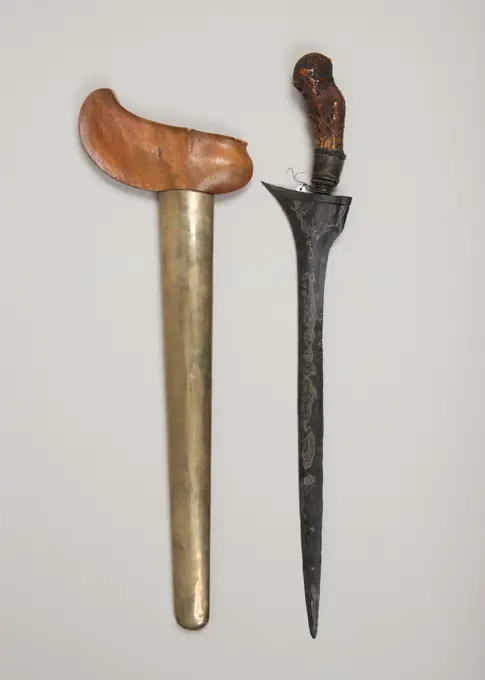
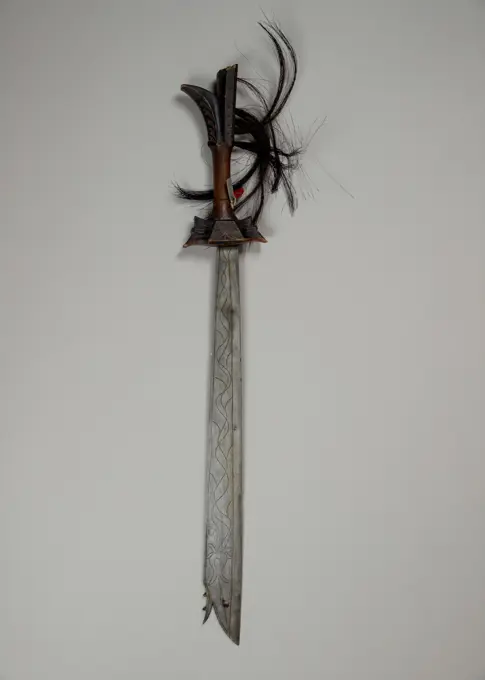
Kris of a high-ranking dignitary, anonymous, 1700 - 1800 Sumatran kris with a corrugated blade adorned by the pamor technique and with gold. The Javanese blade has thirteen waves. The Suasa Steelring (Mendak) is inlaid with diamonds. The ivory grip (Ukiran) has the shape of a bird bent forward, also described as a Garuda-like bird man. The Schedemond (Wrangka) has the shape of a ship. Javaivory Carver: Palembang kling: iron (metal). kling: nickel (metal). kling, schede: gold (metal). greep: ivory. mendak: diamond (mineral). mendak:. schede: wood (plant material) Sumatran kris with a corrugated blade adorned by the pamor technique and with gold. The Javanese blade has thirteen waves. The Suasa Steelring (Mendak) is inlaid with diamonds. The ivory grip (Ukiran) has the shape of a bird bent forward, also described as a Garuda-like bird man. The Schedemond (Wrangka) has the shape of a ship. Javaivory Carver: Palembang kling: iron (metal). kling: nickel (metal). kling, schede: gold (metal).
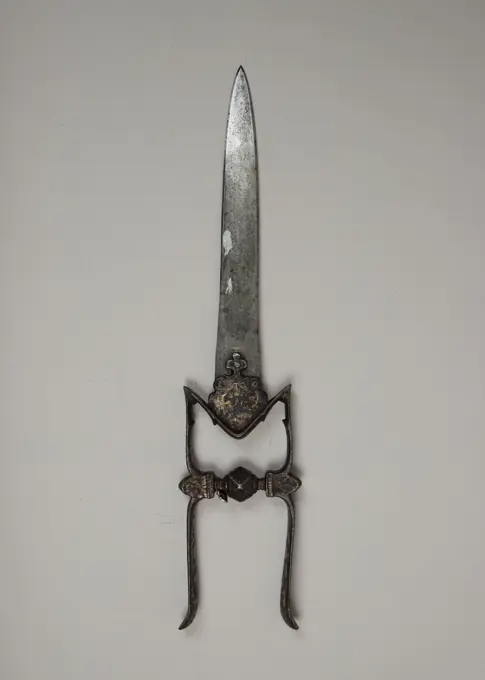
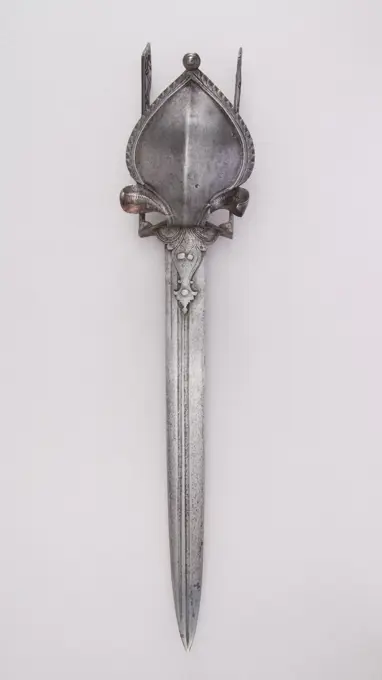
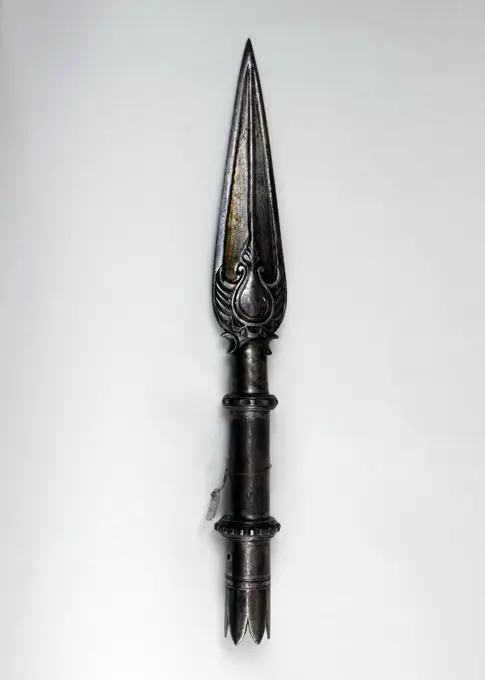
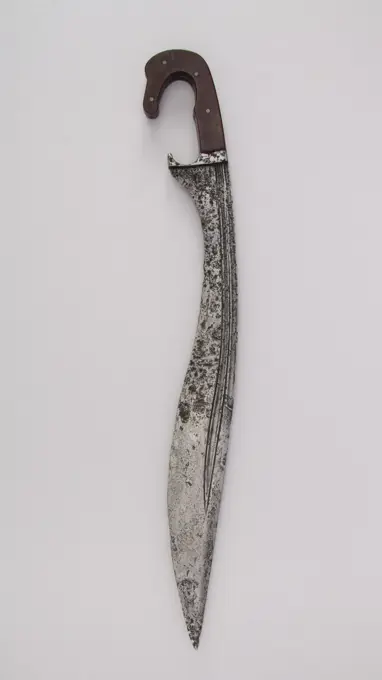
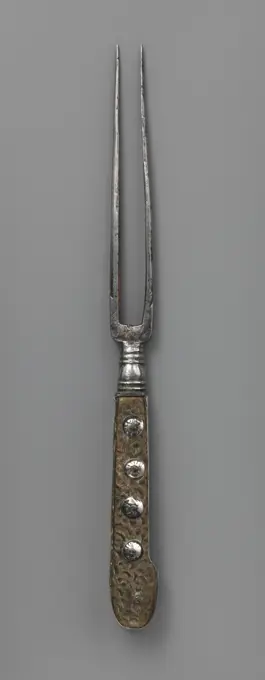
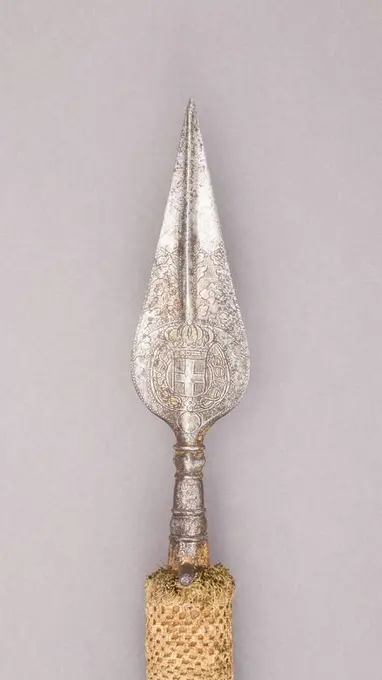
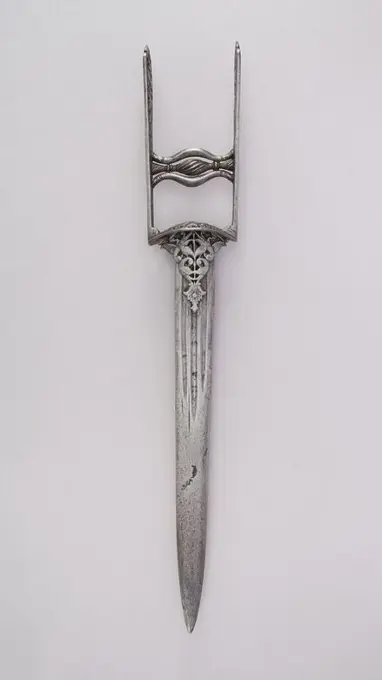
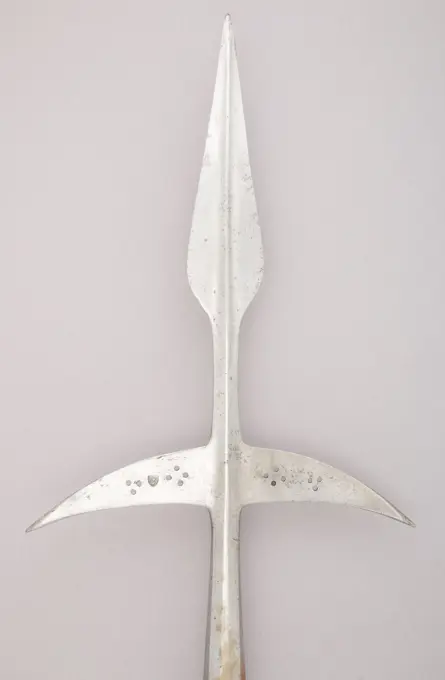
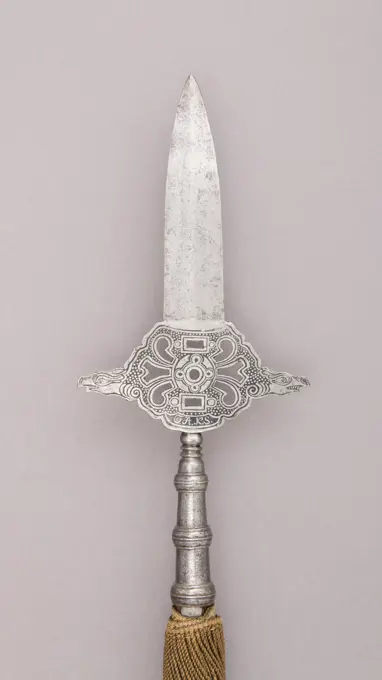
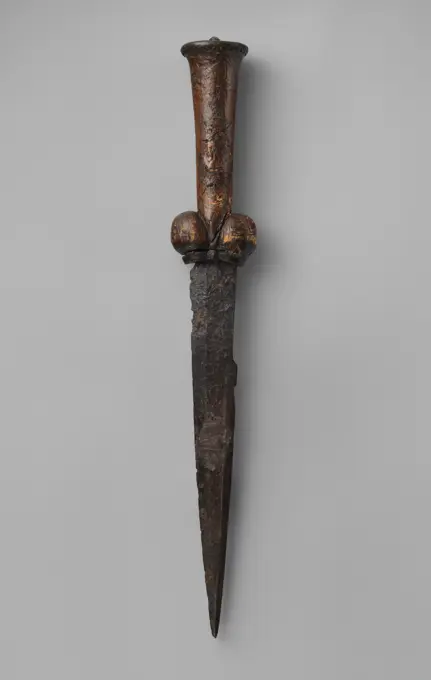
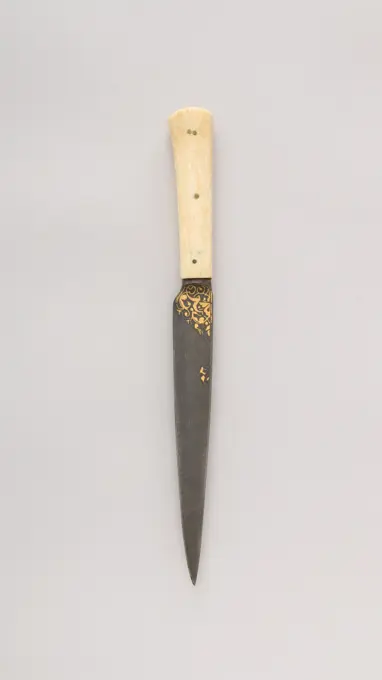
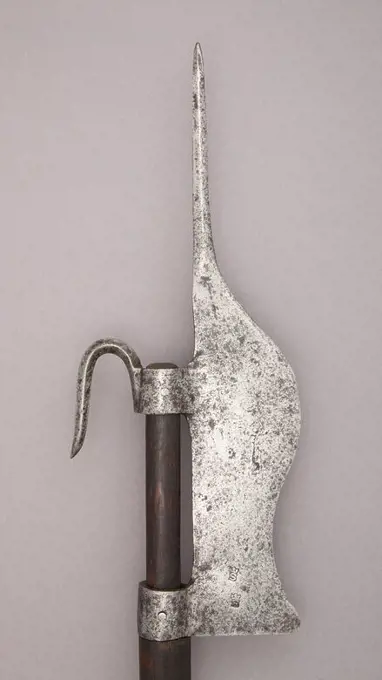
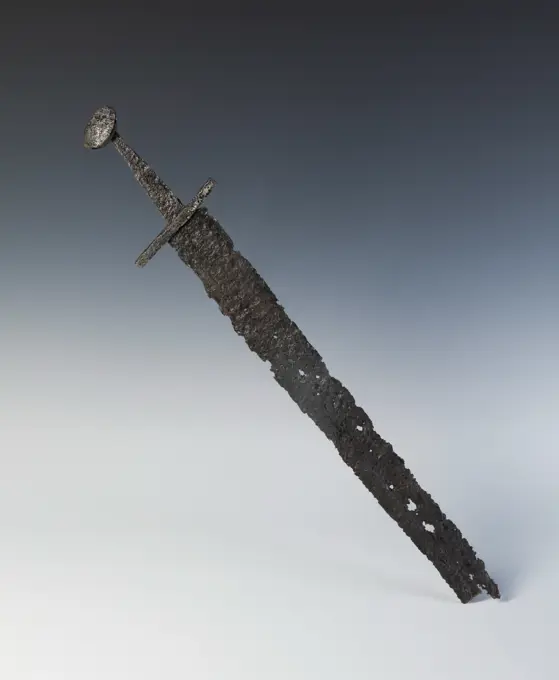
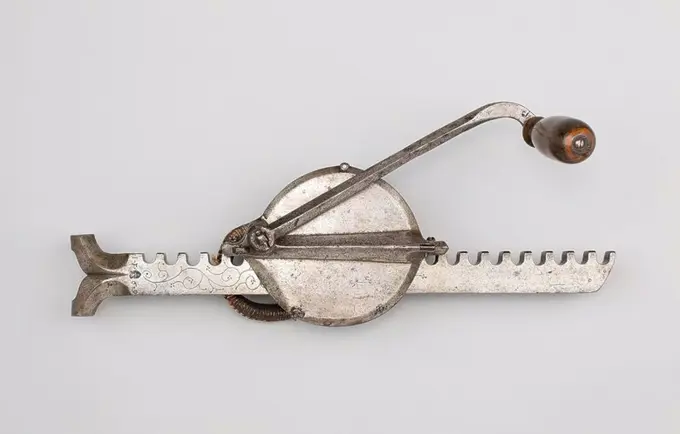
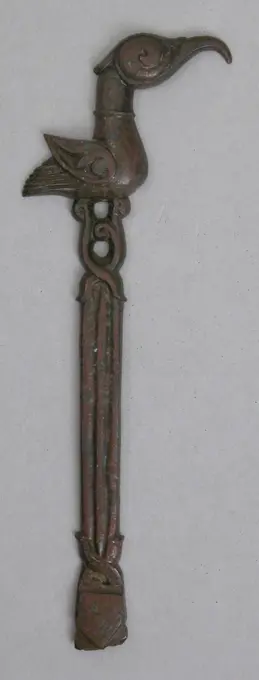
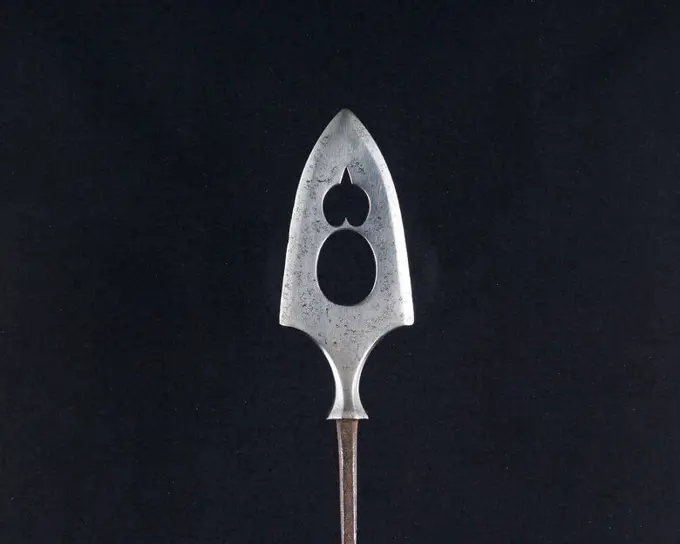
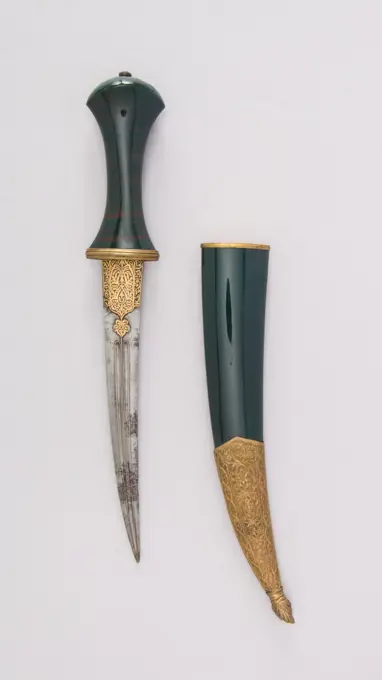
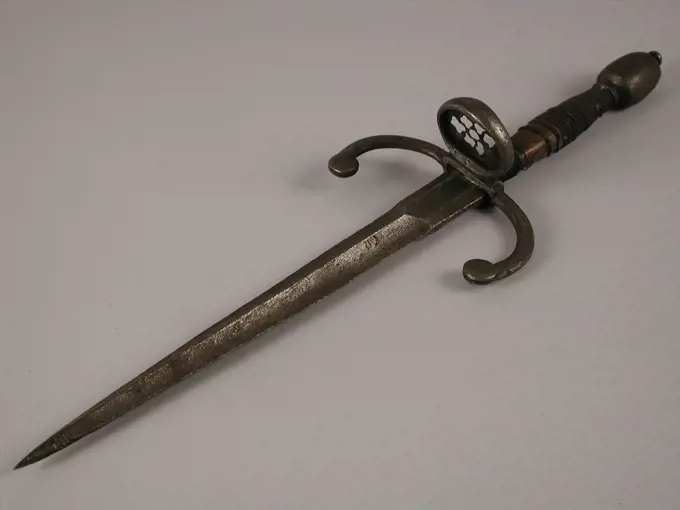
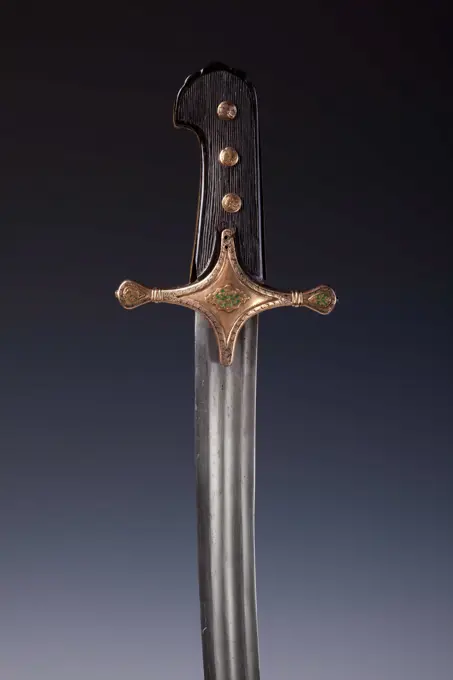
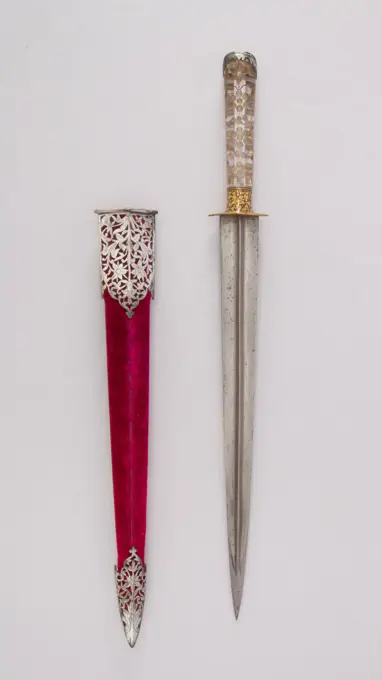
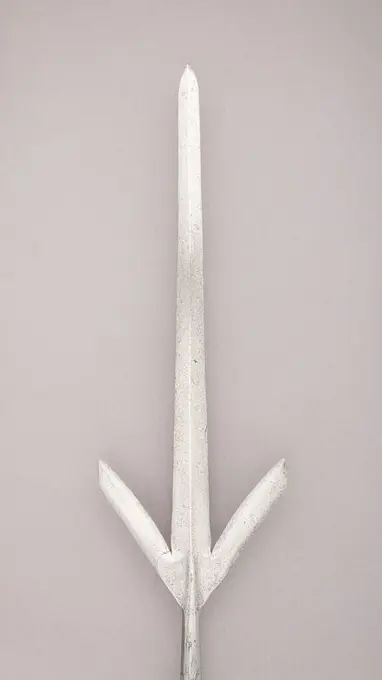
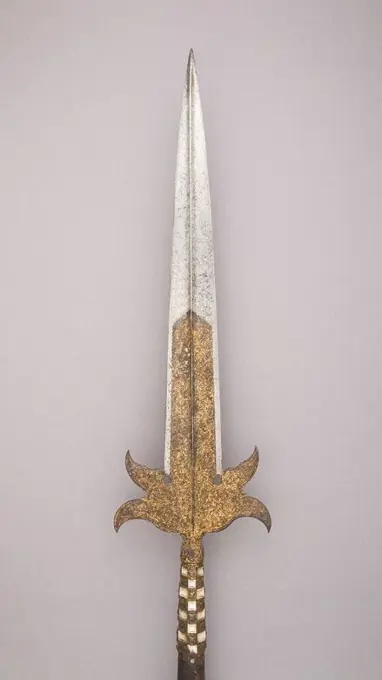
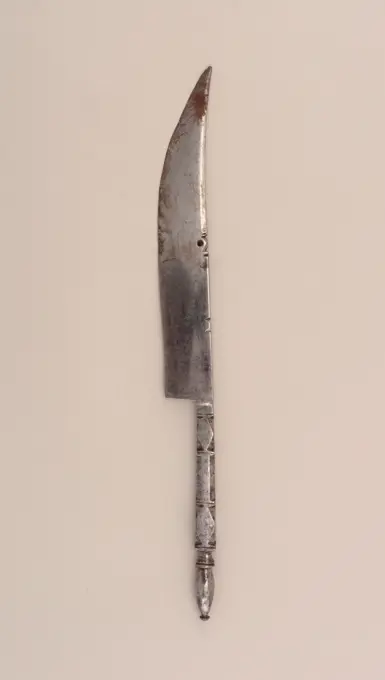
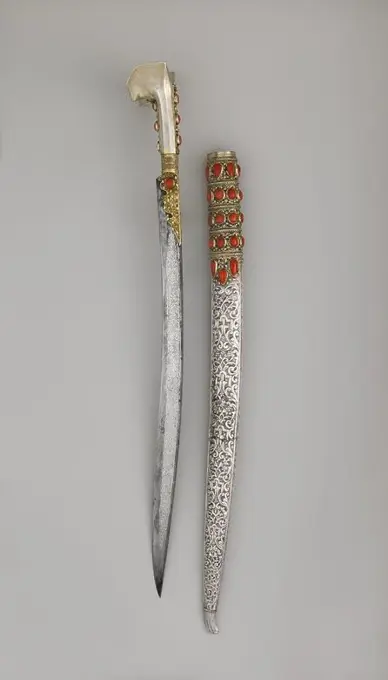
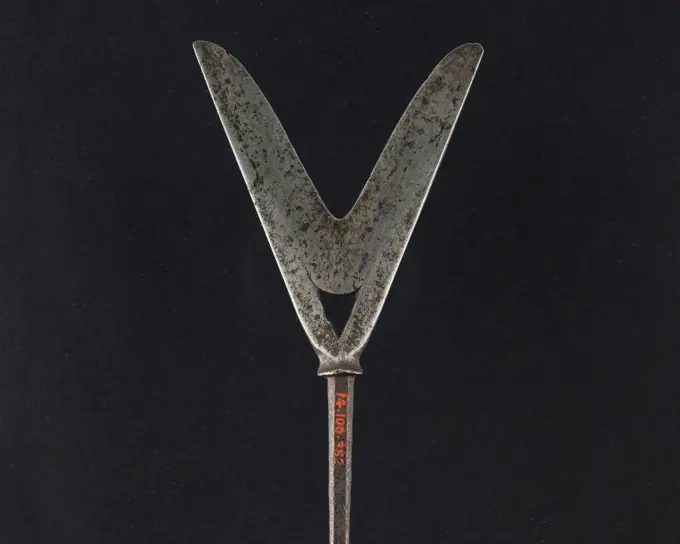
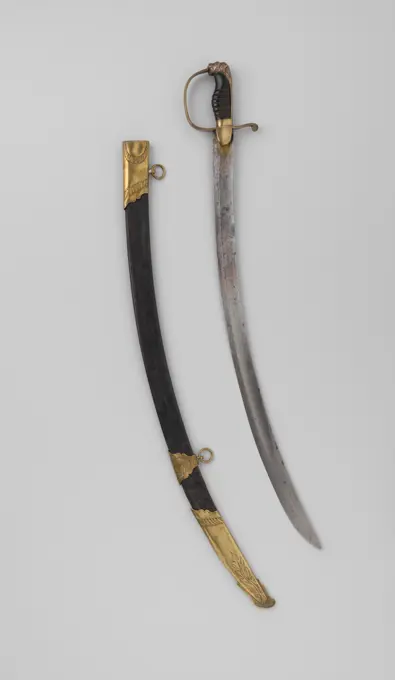
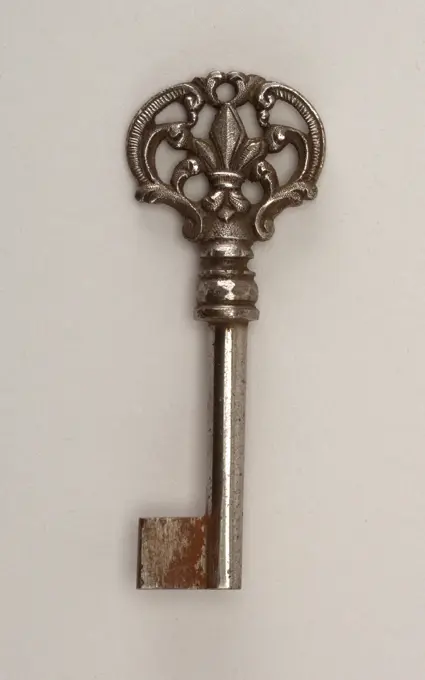
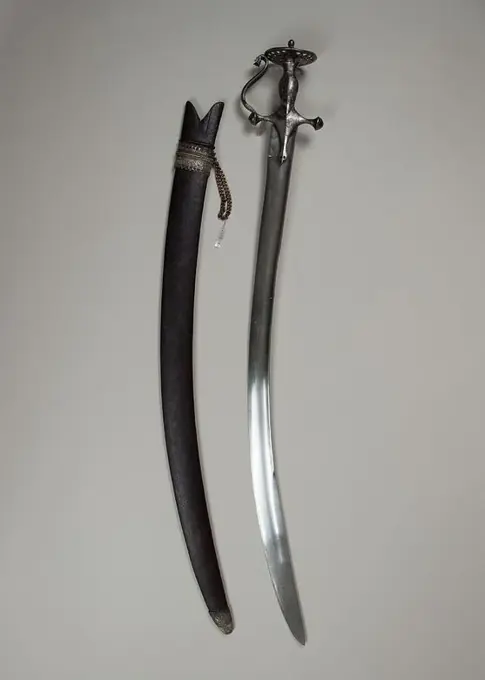
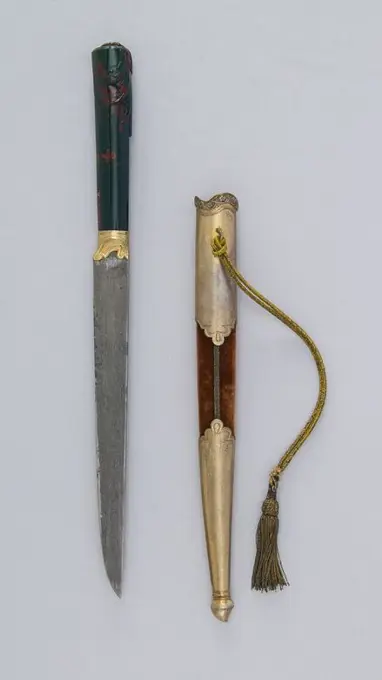
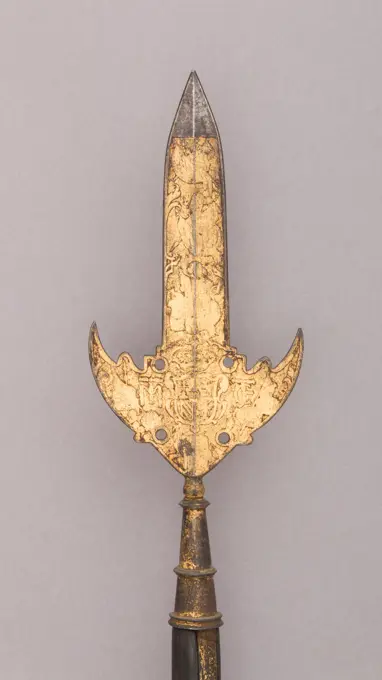
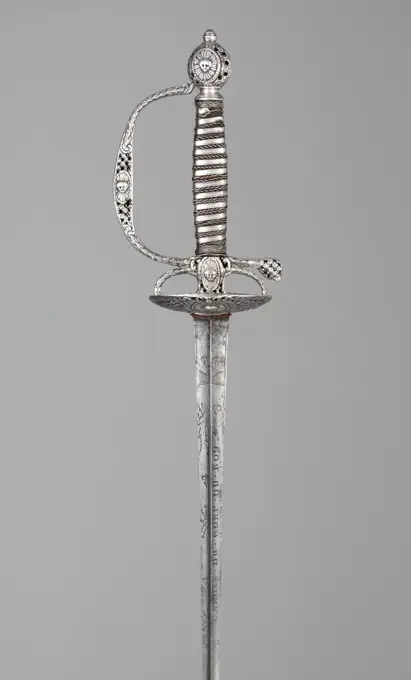
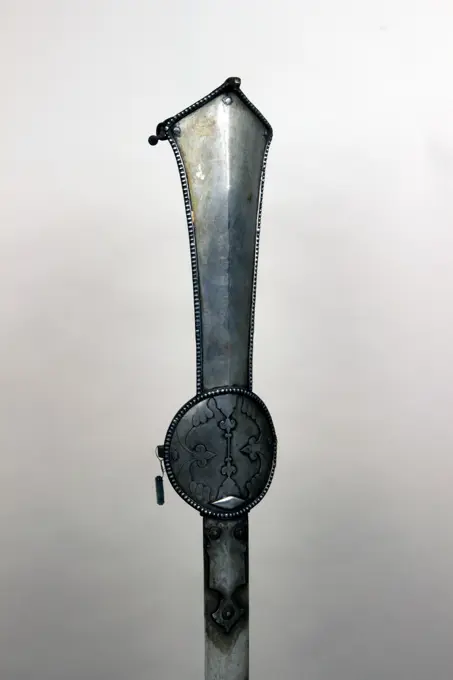
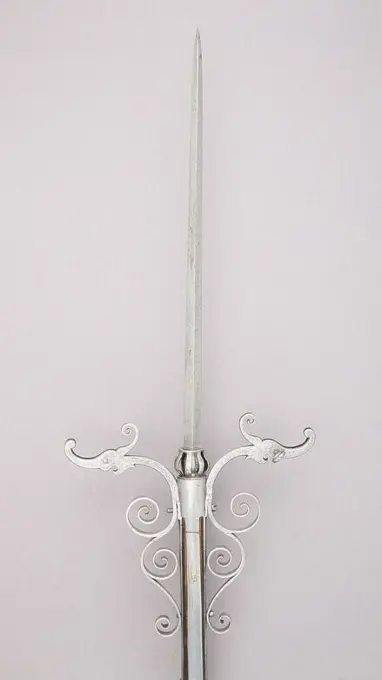
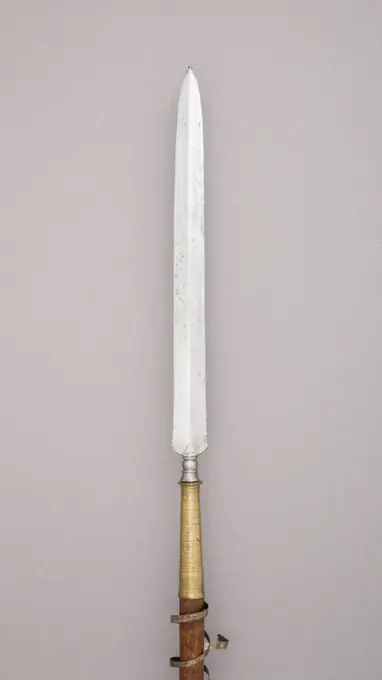
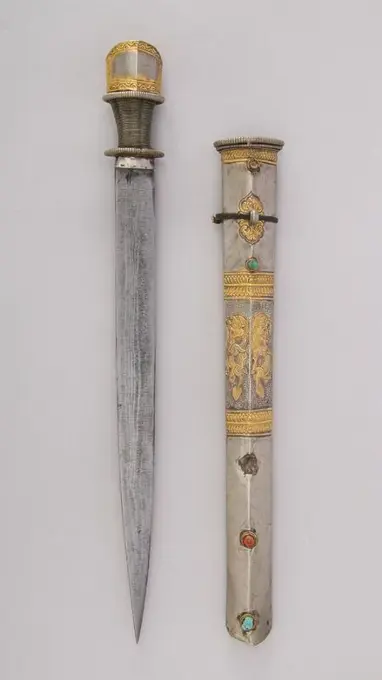
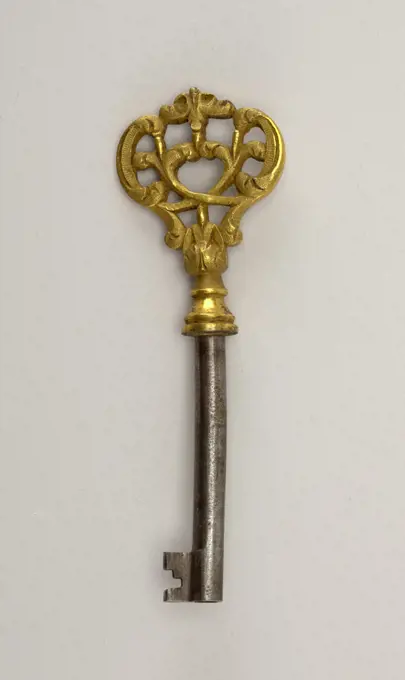
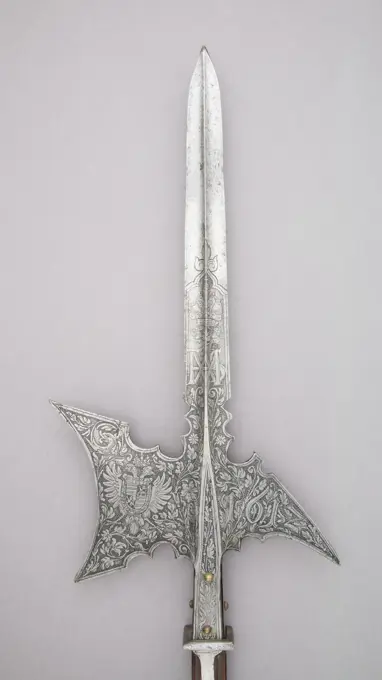
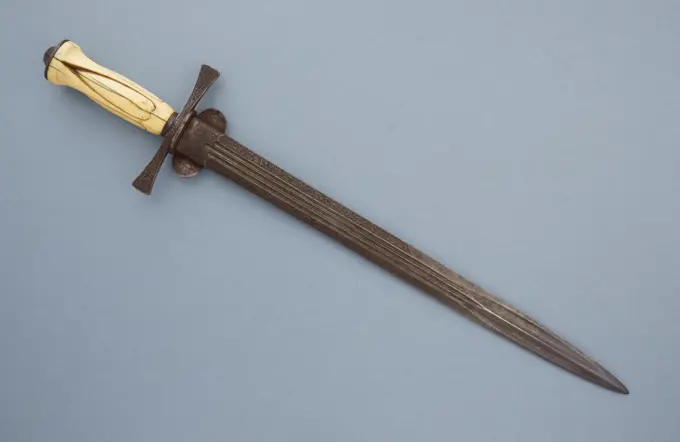
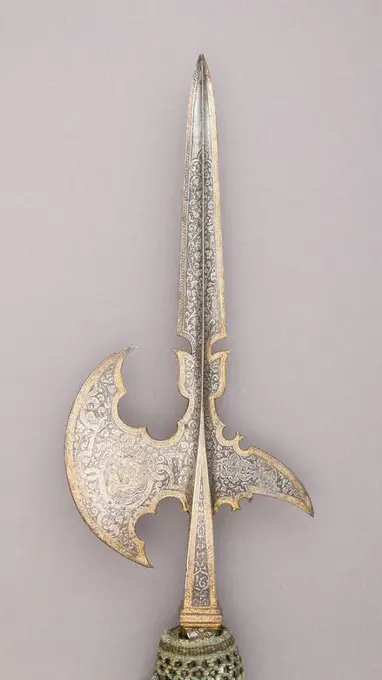
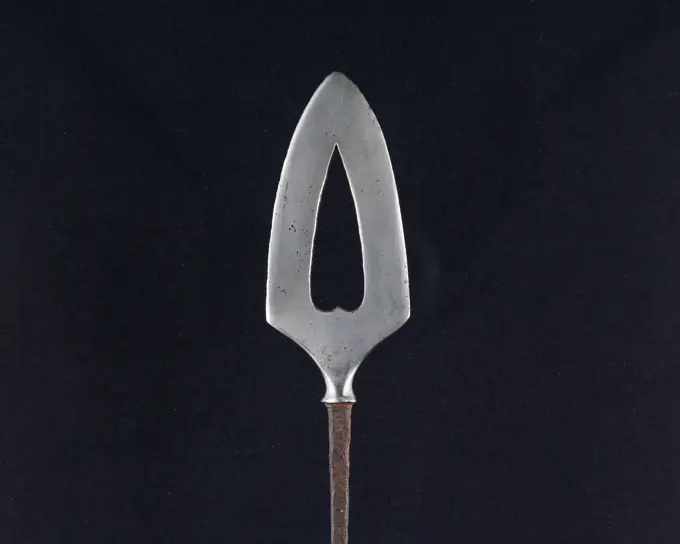
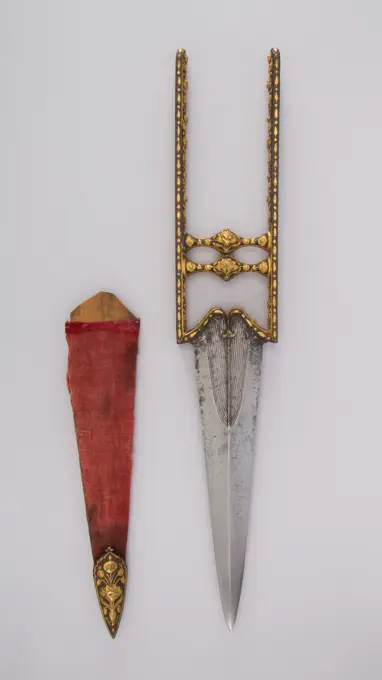
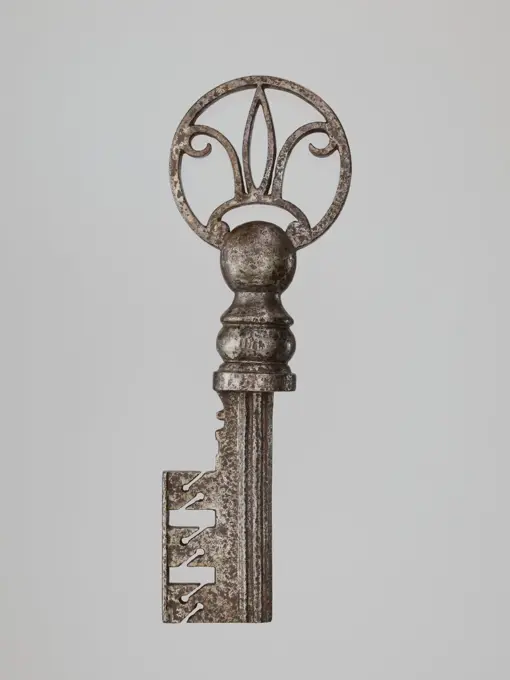
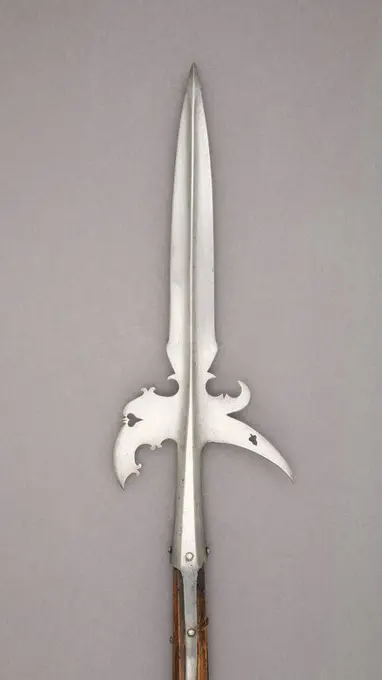
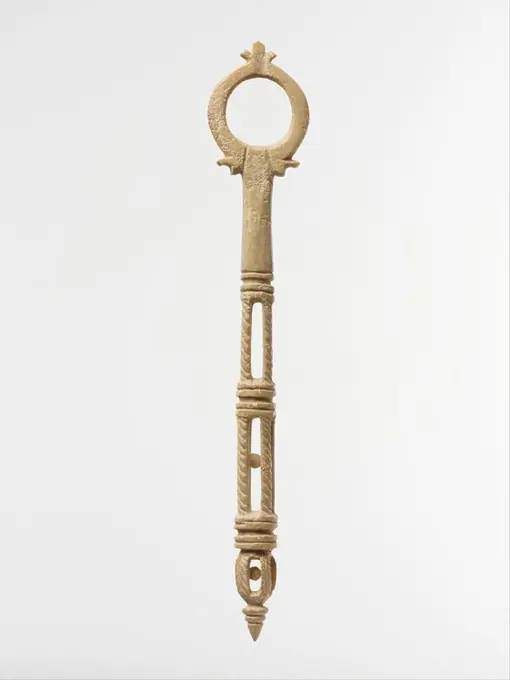
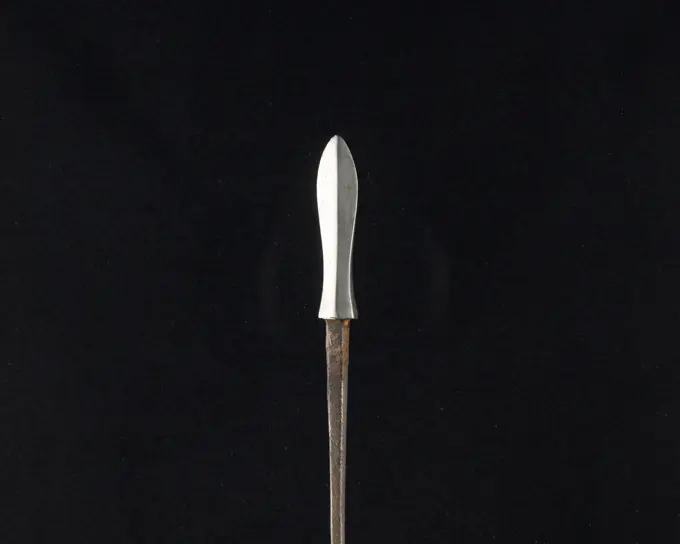
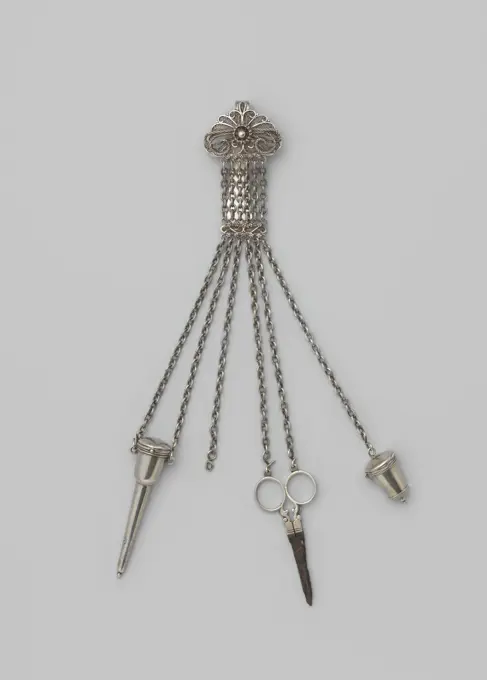
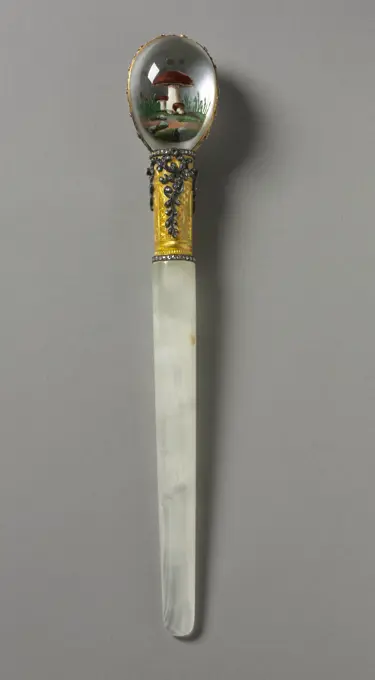
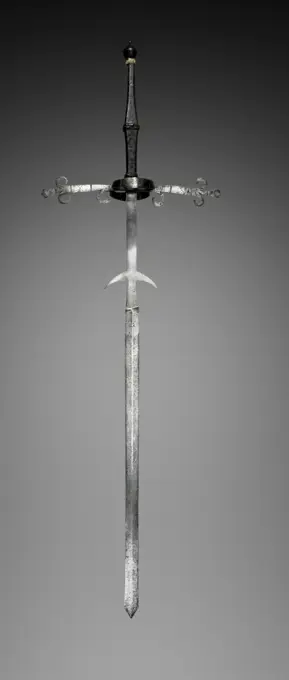
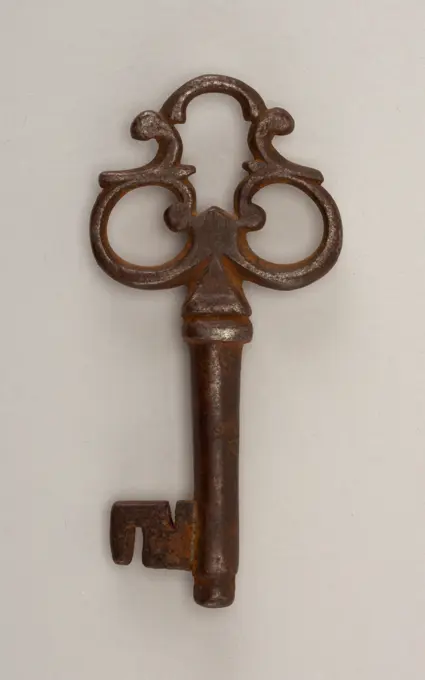
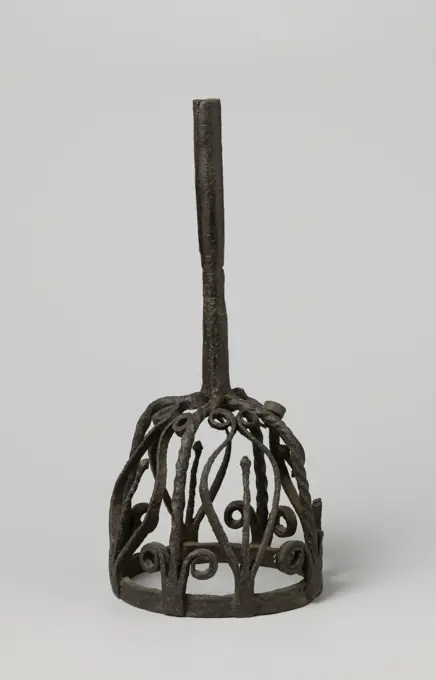
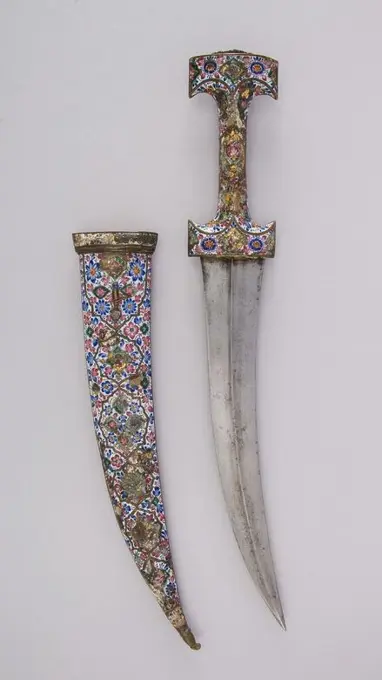
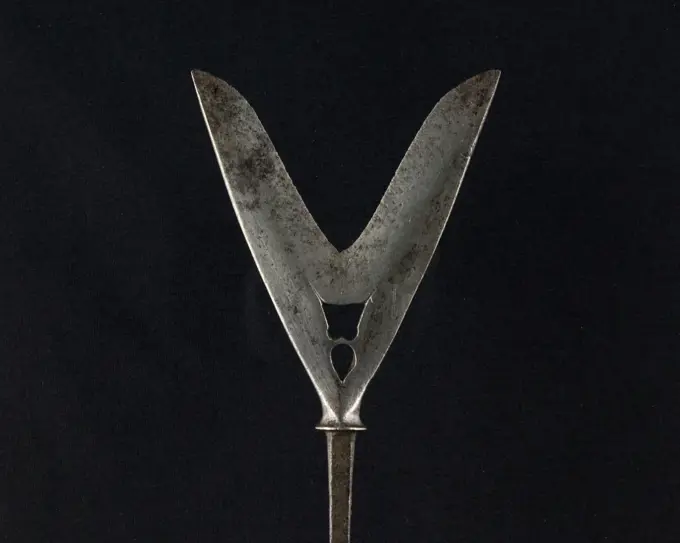
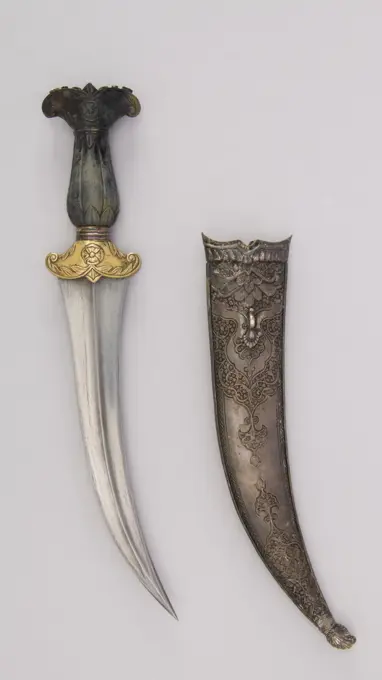
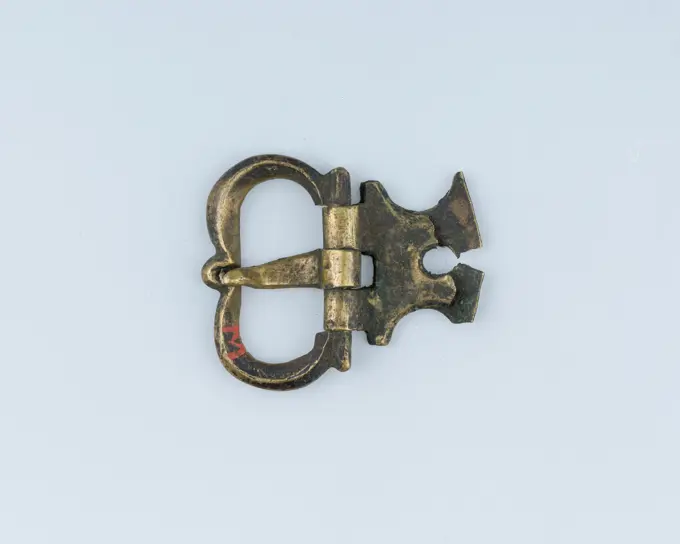
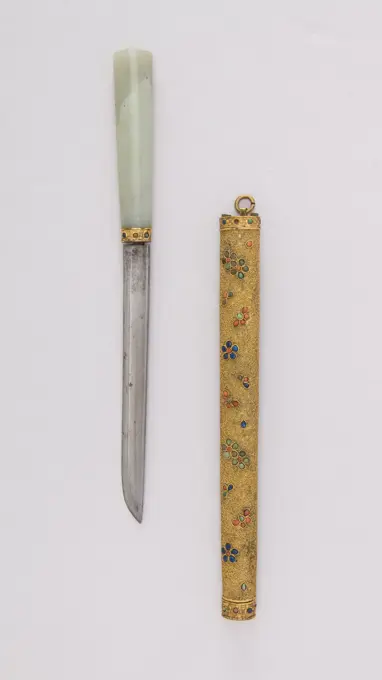
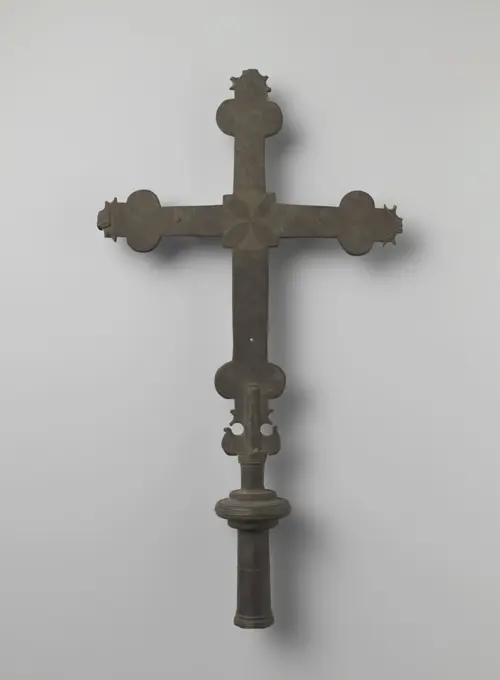
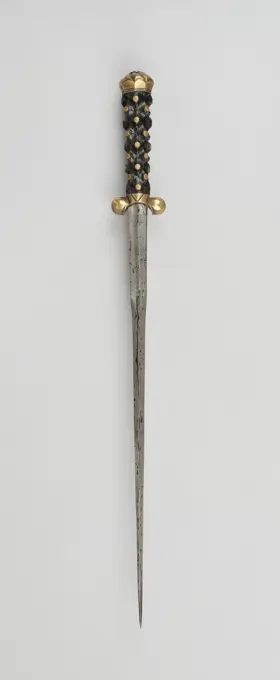
Ballock Dagger 1500-1533 Bourgogne. Wood and brass .Dagger (Katar) 19th century Indian; blade, European. Dagger (Katar) 31510Guarded Dagger (Katar) 17th century Indian, Thanjavur; blade, European. Guarded Dagger (Katar) 31411Kris of a high-ranking dignitary, anonymous, 1700 - 1800 Sumatran kris with a corrugated blade adorned by the pamor technique and with gold. The Javanese blade has thirteen waves. The Suasa Steelring (Mendak) is inlaid with diamonds. The ivory grip (Ukiran) has the shape of a bird bent forward, also described as a Garuda-like bird man. The Schedemond (Wrangka) has the shape of a ship. Javaivory Carver: Palembang kling: iron (metal). kling: nickel (metal). kling, schede: gold (metal). greep: ivory. mendak: diamond (mineral). mendak:. schede: wood (plant material) Sumatran kris with a corrugated blade adorned by the pamor technique and with gold. The Javanese blade has thirteen waves. The Suasa Steelring (Mendak) is inlaid with diamonds. The ivory grip (Ukiran) has the shape of a bird bent forward, also described as a Garuda-like bird man. The Schedemond (Wrangka) has the shape of a ship. Javaivory Carver: Palembang kling: iron (metal). kling: nickel (metal). kling, schede: gold (metal).Spearhead 17th century Indian, south India, Tanjore. Spearhead. Indian, south India, Tanjore. 17th century. Steel. Shafted WeaponsArrowhead (Yanone) Japanese 18th century Although today Japanese warriors are renowned most for their swordsmanship, archery, especially from horseback, has been an essential part of samurai warfare and culture for centuries. Arrows were fitted with heads of varying shape according to their intended use in war, the hunt, or target practice. Arrowheads made for use on the battlefield incorporated different designs intended for specialized purposes such as the piercing of armor or to cause maximum damage to horses and unarmored personnel.Large arrowheads, pierced and elaborately chiseled with landscapes, birds, flowers, dragons, and Buddhist divinities, were created to be admired for the beauty of their metalwork and design rather than for use in archery. Such highly elaborate examples may have been made for presentation or as a votive offerings to a shrine. View more. Arrowhead (Yanone). Japanese. 18th century. Steel. Archery Equipment-ArrowheadsKris with Sheath 16th-19th century Javanese. Kris with Sheath. Javanese. 16th-19th century. Horn (stag), brass, tortoise shell. Java. KrissesSword (Falcata) 5th-1st century B.C. Iberian The falcata was a popular type of sword in the Iberian Peninsula from the fifth to the first century B.C. Closely related in form to slashing weapons found in Greece, it is distinguished by the fact that its blade is double-edged for about half of its length, whereas Greek specimens normally have a single cutting edge.Although its old patina was removed and an inaccurate modern wood grip was added sometime before it was acquired, The Metropolitan Museum's falcata occupies an important place among the examples known to survive because of the otherwise fine state of preservation of its blade, which is structurally intact and only superficially corroded.. Sword (Falcata). Iberian. 5th-1st century B.C.. Iron alloy. SwordsTable fork ca. 1787 possibly Swiss. Table fork. possibly Swiss. ca. 1787. Steel, buckshorn, silver. Metalwork-SteelSpontoon. Culture: Italian, Savoy. Dimensions: L. 92 3/4 in. (235.7 cm); L. of head 10 in. (25.4 cm); W. 2 3/8 in. (6 cm); Wt. 3 lbs. (1360.8 g). Date: early 18th century. Museum: Metropolitan Museum of Art, New York, USA.Dagger (Khanjar) 19th century Indian, Mughal. Dagger (Khanjar). Indian, Mughal. 19th century. Steel, jade, gold, ruby, emerald, beryl, rock crystal, turquoise. DaggersDagger (Katar). Culture: Indian, Thanjavur; blade, Spanish. Dimensions: L. 21 9/16in. (54.8 cm); W. 3 7/16 in. (8.7 cm); Wt. 1 lb. 9 oz. (708.7 g). Date: 17th century. Museum: Metropolitan Museum of Art, New York, USA.Spear 15th century Italian. Spear. Italian. 15th century. Steel, wood. Shafted WeaponsHalberd of the Guard of the Electors of Saxony ca. 1620 German, Saxony. Halberd of the Guard of the Electors of Saxony. German, Saxony. ca. 1620. Steel, wood, gold, textile, metallic thread. Saxony. Shafted WeaponsKris with Sheath 16th-19th century Javanese. Kris with Sheath 31248Hairstyle ornament (common name). Cernuschi Museum, Asia Museum of Asia in the city of Paris.Partisan 18th century German. Partisan 34308Spoon, Brass, Circular bowl surmounted by thin cylindrical shaft with circular seal top., England, 1600-1650, cutlery, Decorative Arts, SpoonSaber  TalwarBallock Knife possibly French late 14th century The ballock knife, also sometimes called a kidney dagger, was a very popular form of dagger worn by men throughout northern Europe in the 15th and 16th centuries. It served as an eating utensil, tool, and weapon. View more. Ballock Knife. possibly French. late 14th century. Steel, wood. DaggersAl-Zahrawi's Surgical Tools for Bone Surgery.Knife (Kard) early 19th century Persian, Qajar. Knife (Kard). Persian, Qajar. early 19th century. Steel, ivory (walrus), gold. Kris StandTwo-Handed Sword Made 1590-1610 Germany, East. Steel, wood, and leather .MONTANTE DE SEVERO QUIÑONES. Location: ALCAZAR / MUSEO DEL EJERCITO-COLECCIÓN. Toledo. SPANIEN.Spear 16th-19th century Javanese. Spear 30691Candle holder, Anonymous, 1700 - 1800 The object is composed of the following individual parts: the baluster, the arm, the fat catcher, the candle holder. The profiled baluster is at the bottom of a thread of thread and has a smooth top, on which the arm is stabbed. This is bent twice and decorated with curls, which reminds us somewhat of rococo ornament. In the thickened end, the profiled Cylindrian candle holder is screwed with the round fat catcher. The thread on the top of the baluster as well as the button is missing. Netherlands brass (alloy) casting The object is composed of the following individual parts: the baluster, the arm, the fat catcher, the candle holder. The profiled baluster is at the bottom of a thread of thread and has a smooth top, on which the arm is stabbed. This is bent twice and decorated with curls, which reminds us somewhat of rococo ornament. In the thickened end, the profiled Cylindrian candle holder is screwed with the round fat catcher. The thread on the Staff Weapon. Culture: Italian. Dimensions: L. 94 1/8 in. (238.9 cm); L. of head 20 1/2 in. (52 cm); W. 8 in. (20.3 cm); Wt. 7 lb. 2 oz. (3230 g). Date: 15th century. Museum: Metropolitan Museum of Art, New York, USA.Sword (fragment)Sword (Peidao) with Scabbard mounting, ca. 1750-1800 blade, Japanese; mounting, Chinese. Sword (Peidao) with Scabbard 23387Cranequin (Winder) for a Crossbow. German. Date: 1550-1600. Dimensions: L. 50.8 cm (20 in.). Steel, wood, and cord. Origin: Germany. Museum: The Chicago Art Institute, Chicago, USA.Sword (Barong), Before 1916. Philippines. overall: 64.2 cm (25 1/4 in.); blade: 42 cm (16 9/16 in.).Arrowhead (Yanone). Culture: Japanese. Dimensions: L. 10 1/4 in. (26 cm); L. of head 4 in. (10.2 cm); W. 2 in. (5.1 cm); Wt. 2.5 oz. (70.9 g). Date: 18th century. Museum: Metropolitan Museum of Art, New York, USA.Finial 12th century. Finial 452416Arrowhead (Yanone). Culture: Japanese. Dimensions: L. 7 1/4 in. (18.5 cm); L. of head 3 in. (7.6 cm); W. 1 5/16 in. (3.3 cm); Wt. 1.1 oz. (31.2 g). Date: 18th century. Museum: Metropolitan Museum of Art, New York, USA.Baton 1855 German. Baton 505634Dagger with Sheath 18th-19th century Persian or Turkish, Ottoman. Dagger with Sheath 31402Left hand dagger with wooden hilt, brass braiding, dagger weapon iron brass wood metal, w 11.5 forged carved pulled Left hand dagger or main gauche Dagger with forward curled rifles hand guard intended to be used together with saber in fight Wooden handle with fine brass braiding weapon war weaponry stabbing wardAnchor. This anchor was unearthed at Capelle in the province of Noord Brabant in 1822. It comes from a single-masted ship deployed during the siege and blockade of the nearby town of Geertruidenberg in 1593. The siege, under the command of Prince Maurice of Orange, lasted two months until the town surrendered. The Prince isolated Geertruidenberg from the outside world by constructing earthen ramparts, while warships blocked access to the town over water.Karabela sabre with scabbardSmallsword Italian, Venice ca. 1600 By the early seventeenth century, the rapier, a long slender thrusting sword, began to dominate as the gentlemans weapon of choice. During the course of the century, however, as civilian fencing techniques became more specialized and refined, the rapier developed into a lighter, trimmed-down weapon known by about 1700 as the smallsword. Smallswords, often richly decorated, remained an integral part of a gentlemans wardrobe until the wearing of swords in civilian settings went out of fashion at the end of the eighteenth century, at which time pistols were replacing swords as arms most frequently used in personal duels. The majority of smallsword hilts are made of silver or steel, but many also employ a wide variety of luxurious materials, such as gold, porcelain, and enamel. At their best, smallswords combine the crafts of swordsmith, cutler, and jeweler to create an elegant weapon that was also a wearable work of art. View more. Smallsword. Italian, Flywhisk Handle (tahiri ra'a). Austral Islands, French Polynesia, circa 1890. Tools and Equipment; handles. WoodRapier German, Saxony 1600 The rapier was the principal civilian sidearm throughout the sixteenth and seventeenth centuries. Designed for cut-and-thrust fencing of progressively complex techniques, the rapier is characterized by a double-edged blade with an acute point and an elaborate guard for the hand. The guards, usually of iron or steel, were subject to a variety of embellishment. They were engraved, chiseled, gilded, damascened, and encrusted in gold and silver in keeping with fashionable styles. Unless otherwise noted, the materials, attributions, and dating given here refer to the hilts. Rapier blades, invariably of steel, bear a variety of makers marks denoting their origin in the two principal centers of blademaking, Toledo in Spain and Solingen in Germany. View more. Rapier. German, Saxony. 1600. Steel, wood. Saxony. SwordsDagger with Sheath 18th-19th century Indian. Dagger with Sheath 31430Runka. Culture: Italian. Dimensions: L. 8 ft. 5 1/4 in. (257.2 cm); L. of head 29 3/4 in. (75.4 cm); W. 9 in. (22.8 cm); Wt. 4 lbs. 12 oz. (2154.6 g). Date: ca. 1500. Museum: Metropolitan Museum of Art, New York, USA.Partisan. Culture: Italian. Dimensions: L. 97 in. (246.4 cm); L. of head 29 1/8 in. (74 cm); W. 7 9/16 in. (19.2 cm); Wt. 5 lbs. 10.2 oz. (2557.1 g). Date: ca. 1570. Museum: Metropolitan Museum of Art, New York, USA.Knife (possibly Algeria); steel; L x W: 24.8 x 2.2 cm (9 3/4 x 7/8 in.); The Robert L. Metzenberg Collection, gift of Eleanor L. Metzenberg; 1985-103-23Yatagan with Scabbard. Culture: Anatolian or Balkan. Dimensions: L. with scabbard 31 1/8 in. (79 cm); L. without scabbard 29 in. (73.7 cm); L. of blade 23 1/8 in. (58.7 cm); W. 2 1/4 in. (5.7 cm); Wt. 1 lb. 14 oz. (850 g); Wt. of scabbard 1 lb. 10 oz. (737.1 g). Date: dated 1802-3.The yatagan was popular throughout the Ottoman Empire. It is distinguished by a single-edged blade that curves slightly inward and by a hilt with no guard and two flared wings at the pommel. Museum: Metropolitan Museum of Art, New York, USA.Arrowhead (Yanone) 13th-18th century Japanese Although today Japanese warriors are renowned most for their swordsmanship, archery, especially from horseback, has been an essential part of samurai warfare and culture for centuries. Arrows were fitted with heads of varying shape according to their intended use in war, the hunt, or target practice. Arrowheads made for use on the battlefield incorporated different designs intended for specialized purposes such as the piercing of armor or to cause maximum damage to horses and unarmored personnel.Large arrowheads, pierced and elaborately chiseled with landscapes, birds, flowers, dragons, and Buddhist divinities, were created to be admired for the beauty of their metalwork and design rather than for use in archery. Such highly elaborate examples may have been made for presentation or as a votive offerings to a shrine.. Arrowhead (Yanone). Japanese. 13th-18th century. Steel. Archery Equipment-ArrowheadsSabel with Schede, Anonymous, c. 1700 - c. 1900 sabre Sabel with hilt with lion's head and black wooden handle. With black leather sheath with copper batter and two copper rings.  iron (metal). copper (metal). wood (plant material). leatherHistorical Surgical ToolsDagger (Qama) with sheath. Culture: Transcaucasian, Georgian. Dimensions: L. with sheath 24 1/8 in. (61.3 cm); L. without sheath 23 1/16 in. (58.6 cm); W. 2 1/4 in. (5.7 cm); Wt. 1 lb. 2.2 oz. (516 g); Wt. of sheath 8.8 oz. (249.5 g). Date: 19th century. Museum: Metropolitan Museum of Art, New York, USA.Dagger (Pesh-Kabz) with Sheath 19th century Persian. Dagger (Pesh-Kabz) with Sheath 31456Key; 1909-2-262Sword (Talwar) with Scabbard. Culture: Indian. Dimensions: H. with scabbard 35 in. (88.9 cm); H. without scabbard 34 15/16 in. (88.7 cm); W. 4 7/8 in. (12.4 cm); Wt. 2 lb. 5.1 oz. (1051.8 g); Wt. of scabbard 6.1 oz. (172.9 g). Date: 18th century. Museum: Metropolitan Museum of Art, New York, USA.Knife (Kard) with Sheath. Culture: Turkish. Dimensions: L. with sheath 12 3/8 in. (31.4 cm); L. without sheath 11 1/4 in. (28.6 cm); L. of blade 7 in. (17.8 cm); W. 1 3/16 in. (3 cm); Wt. 3.5 oz. (99.2 g); Wt. of sheath 2.1 oz. (59.5 g). Date: 18th-19th century. Museum: Metropolitan Museum of Art, New York, USA.Partisan ca. 1735 Austrian. Partisan. Austrian. ca. 1735. Steel, wood, gold. Shafted WeaponsOboe d'Amore in A ca. 1725 Johann Poerschman. Oboe d'Amore in A 502346Smallsword carried by the Gardes du Corps 1769 Guilmin By the early seventeenth century, the rapier, a long slender thrusting sword, began to dominate as the gentlemans weapon of choice. During the course of the century, however, as civilian fencing techniques became more specialized and refined, the rapier developed into a lighter, trimmed-down weapon known by about 1700 as the smallsword. Smallswords, often richly decorated, remained an integral part of a gentlemans wardrobe until the wearing of swords in civilian settings went out of fashion at the end of the eighteenth century, at which time pistols were replacing swords as arms most frequently used in personal duels. The majority of smallsword hilts are made of silver or steel, but many also employ a wide variety of luxurious materials, such as gold, porcelain, and enamel. At their best, smallswords combine the crafts of swordsmith, cutler, and jeweler to create an elegant weapon that was also a wearable work of art.. SmallswordGauntlet Sword (Pata) 18th century Indian, South Indian. Gauntlet Sword (Pata) 30997Linstock. Culture: Swiss. Dimensions: L. 92 in. (233.6 cm); L. of head 18 1/8 in. (46 cm); W. 9 1/2 in. (24.1 cm); Wt. 3 lbs. 13 oz. (1730 g). Date: ca. 1590. Museum: Metropolitan Museum of Art, New York, USA.Spear 16th-19th century Javanese. Spear 30687Spoon (possibly Mexico); silver; L x W x D: 11.9 x 2.3 x 1.7 cm (4 11/16 x 7/8 x 11/16 in.)Cup-Hilted Rapier Made 1640-1680 Italy. Steel .Dagger with Sheath. Culture: Bhutanese or Sikkimese. Dimensions: L. with sheath 15 9/16 in. (39.5 cm); L. without sheath 15 1/8 in. (38.4 cm); L. of blade 12 in. (30.5 cm); W. 1 9/16 in. (4 cm); D. 1 3/16 in. (3 cm); Wt. 8.8 oz. (249.5 g); Wt. of sheath 4.5 oz. (127.6 g). Date: 19th century. Museum: Metropolitan Museum of Art, New York, USA.Key, Iron, gilt bronze, Below is a foot; upper part consists of twigs and, laterally, two scrolls. Between them on top is a hanging plant palmette., 1725-75, metalwork, Decorative Arts, KeyFork (possibly Germany); steel, enamel, brass; L x W: 13.5 x 1.4 cm (5 5/16 x 9/16 in.); The Robert L. Metzenberg Collection, gift of Eleanor L. Metzenberg; 1985-103-72Halberd dated 1612 Austrian. Halberd. Austrian. dated 1612. Steel, wood, brass. Shafted WeaponsSnaffle Bit late 16th - early 17th century German This full-cheek bit has simple articulated canons, arched for giving more comfort to the tongue. The snaffle bit is the simplest type of horse bit, and has an effect on the bars (part of the horses jaw without teeth) and the corners of the lips. The rings on the sides would serve to hang the bit on the headstall and attach the reins. The cheekpieces press on the side of the mouth when a rein is pulled, helping indicating the direction to the horse and keeping the rings from pulling through the horse's mouth.According to contemporary equestrian manuals, this bit was probably used as a racing bit. It is virtually identical to some bit used until today.. Snaffle Bit. German. late 16th - early 17th century. Iron alloy. Equestrian Equipment-BitsPartisan of Wolfgang Wilhelm of Bavaria, Count Palatine of the Rhine dated 1615 German, Bavaria. Partisan of Wolfgang Wilhelm of Bavaria, Count Palatine of the Rhine. German, Bavaria. dated 1615. Steel, wood, textile. Bavaria. Shafted WeaponsCommemorative cordlas JavaletHalberd with the Arms of William V, Duke of Bavaria. Culture: German. Dimensions: L. 86 1/2 in. (219.7 cm); L. of head 19 3/4 in. (50.2 cm); W. 8 3/4 in. (22.3 cm); Wt. 5 lbs. 1 oz. (2300 g). Date: dated 1582. Museum: Metropolitan Museum of Art, New York, USA.Key;  XVII century (1601-00-00-1700-00-00);Arrowhead (Yanone) 18th century Japanese Although today Japanese warriors are renowned most for their swordsmanship, archery, especially from horseback, has been an essential part of samurai warfare and culture for centuries. Arrows were fitted with heads of varying shape according to their intended use in war, the hunt, or target practice. Arrowheads made for use on the battlefield incorporated different designs intended for specialized purposes such as the piercing of armor or to cause maximum damage to horses and unarmored personnel.Large arrowheads, pierced and elaborately chiseled with landscapes, birds, flowers, dragons, and Buddhist divinities, were created to be admired for the beauty of their metalwork and design rather than for use in archery. Such highly elaborate examples may have been made for presentation or as a votive offerings to a shrine.. Arrowhead (Yanone). Japanese. 18th century. Steel. Archery Equipment-ArrowheadsCommemorative badge of the Greater Poland army Nowodworski, HenrykCup-Hilted Rapier Spanish 17th century The rapier was the principal civilian sidearm throughout the sixteenth and seventeenth centuries. Designed for cut-and-thrust fencing of progressively complex techniques, the rapier is characterized by a double-edged blade with an acute point and an elaborate guard for the hand. The guards, usually of iron or steel, were subject to a variety of embellishment. They were engraved, chiseled, gilded, damascened, and encrusted in gold and silver in keeping with fashionable styles. Unless otherwise noted, the materials, attributions, and dating given here refer to the hilts. Rapier blades, invariably of steel, bear a variety of makers marks denoting their origin in the two principal centers of blademaking, Toledo in Spain and Solingen in Germany. View more. Cup-Hilted Rapier. Spanish. 17th century. Steel. SwordsCommemorative badge of the anniversary of the Constitution of May 3Dagger (Katar) with Sheath 17th century Indian, Mughal. Dagger (Katar) with Sheath 31861Partisan ca. 1650 Italian. Partisan 26671Key;  XVII century (1601-00-00-1700-00-00);Halberd. Culture: Flemish. Dimensions: L. 83 1/4 in. (211.5 g); L. of head 19 11/16 in. (50 cm); W. 7 1/4 in. (18.5 cm); Wt. 4 lbs. 7 oz. (2012.8 g). Date: ca. 1620. Museum: Metropolitan Museum of Art, New York, USA.Bone implement. Culture: Roman. Dimensions: H.: 6 11/16 in. (17 cm). Date: 2nd-3rd century A.D..The object, although it has the same basic shape as stirring rods in bronze and glass, is unlikely to have been used for stirring, mixing, or applying cosmetics and ointments. A more likely interpretation is that it was a baby's rattle. Museum: Metropolitan Museum of Art, New York, USA.Sword (Campilan) 18th-19th century Indonesian, Sulaweis Utara (North Celebes). Sword (Campilan) 31125Arrowhead (Yanone) Japanese 18th century Although today Japanese warriors are renowned most for their swordsmanship, archery, especially from horseback, has been an essential part of samurai warfare and culture for centuries. Arrows were fitted with heads of varying shape according to their intended use in war, the hunt, or target practice. Arrowheads made for use on the battlefield incorporated different designs intended for specialized purposes such as the piercing of armor or to cause maximum damage to horses and unarmored personnel.Large arrowheads, pierced and elaborately chiseled with landscapes, birds, flowers, dragons, and Buddhist divinities, were created to be admired for the beauty of their metalwork and design rather than for use in archery. Such highly elaborate examples may have been made for presentation or as a votive offerings to a shrine. View more. Arrowhead (Yanone). Japanese. 18th century. Steel. Archery Equipment-ArrowheadsLog Loading Hook. Dated: 1939. Dimensions: overall: 35.6 x 24.4 cm (14 x 9 5/8 in.). Medium: watercolor, colored pencil, and graphite on paperboard. Museum: National Gallery of Art, Washington DC. Author: Harold Ballerd.Chatelaine with scissors, needle cooker and fox hat, David de Put, 1780 The chatelaine consists of a belt hook with an ornament composed in Filigrein technique, composed with a knob of a pearl edge, to which six switch chains are attached, which are interrupted by a filigin intermediate strip and to which with S-shaped connecting pieces the Needle sleeve, the thimble house and the scissors hanging. There is nothing on one of the chains. The chains consist of oval, ribbed links. The needle tube consists of a conical part with a profiled upper edge and a hinged lid, including a long, peaked part, ending in a dollar. The foxglove house, which is very related to the upper part of the needle tube, has a convex, profiled underside under which two decreasing balls are attached in size. The scissors have iron legs. Amsterdam whole: Silver (Metal). Iron (Metal) filigree The chatelaine consists of a belt hook with an ornament composed in Filigrein technique, composed with a knob of a pearl edge,Paper Knife, c. 1860 . Russia, Saint Petersburg, 19th century. Blade: agate; collar: transparent yellow enamel on an engine-turned ground mounted in gold set with diamonds, and the ovoid finial of two pieces of rock crystal carved on flat surfaces; diameter: 3.2 cm (1 1/4 in.); overall: 20.4 cm (8 1/16 in.).Two-Handed Sword, 1550-1600. Germany, second half 16th Century. Steel, leather and wood grip, bronze pommel; overall: 170.5 cm (67 1/8 in.); blade: 125.6 cm (49 7/16 in.); quillions: 53.7 cm (21 1/8 in.); grip: 43.2 cm (17 in.); ricasso: 34.7 cm (13 11/16 in.). The two-handed sword, originally a weapon of war for specialist infantry, is so named because two hands were required to wield it. By the late 1600s, these enormous swords assumed a largely ceremonial or bodyguard function.Key; 1909-2-253Dagger (Jambiya) with Sheath. Culture: Turkish. Dimensions: H. with sheath 15 1/16 in. (38.3 cm); H. without sheath 13 3/16 in. (33.5 cm); H. of blade 8 3/4 in. (22.2 cm); W. 2 7/16 in. (6.2 cm); D. 7/8 in. (2.2 cm); Wt. 11.8 oz. (334.5 g); Wt. 4.7 oz. (133.2 g). Date: 18th-19th century. Museum: Metropolitan Museum of Art, New York, USA.Standard for a fire pot without a foot, 1600 - 1699   iron (metal)   iron (metal)Dagger (Jambiya) with Sheath. Culture: Persian, Qajar. Dimensions: H. with sheath 19 5/16 in. (49.1 cm); H. without sheath 17 13/16 in. (45 cm); H. of blade 11 1/2 in. (29.2 cm); W. 2 11/16 in. (6.8 cm); Wt. 1 lb. 3 oz. (538.6 g); Wt. of sheath 11.6 oz. (328.9 g). Date: early 19th century. Museum: Metropolitan Museum of Art, New York, USA.Key 16th century German The decoration of Gothic iron locks and keys was often elaborate and of the highest standard of workmanship. The motifs were frequently drawn from Gothic architecture, reproducing on a miniature scale complicated tracery patterns and even tiny statuettes. A number of these tiny locks were compound, with some of the mechanisms concealed from view, and required two or even three keys used in sequence to open them. It has been suggested that the greatly expanded use of locks on doors, or coffrets and other types of storage chests was a result of the increasing urbanization of life and the new emphasis on material wealth and private ownership which developed in the late Middle Ages.. Key 463372Arrowhead (Yanone) 18th century Japanese Although today Japanese warriors are renowned most for their swordsmanship, archery, especially from horseback, has been an essential part of samurai warfare and culture for centuries. Arrows were fitted with heads of varying shape according to their intended use in war, the hunt, or target practice. Arrowheads made for use on the battlefield incorporated different designs intended for specialized purposes such as the piercing of armor or to cause maximum damage to horses and unarmored personnel.Large arrowheads, pierced and elaborately chiseled with landscapes, birds, flowers, dragons, and Buddhist divinities, were created to be admired for the beauty of their metalwork and design rather than for use in archery. Such highly elaborate examples may have been made for presentation or as a votive offerings to a shrine.. Arrowhead (Yanone). Japanese. 18th century. Steel. Archery Equipment-ArrowheadsDagger (Jambiya) with Sheath 18th-19th century Turkish. Dagger (Jambiya) with Sheath 31833Sword (Kilij) with Scabbard. Culture: Turkish. Dimensions: H. with scabbard 37 in. (94 cm); H. of blade 33 1/4 in. (84.5 cm); W. 5 1/2 in. (14 cm); Wt. with scabbard 3 lb. 7.6 oz. (1576.2 g). Date: 19th century. Museum: Metropolitan Museum of Art, New York, USA.Needle cooker to commemorate the battle on the Doggersbank, Isaac Lingenaar, c. 1781  The round, tapered tube has a screw -up cap with an excellent, octagonal top that serves as a seal. It has been completely edited in Stampwerktechniek. The wall of the cap is decorated with a circular representation of two sailing ships, representing the Battle of Doggersbank. The part below is decorated with the bust of the schout-by-night Arnold Zoutman, above which the name Zoutman. Under each medallion there is a trophy of an anchor, a hellaard, a bundle of arrows, flags, cannons and cannonballs on a roughened ground. Two garlands are hanging from this. A sailing ship is depicted below. The stamp is engraved with a palm tree accompanied by the letters E (above) C (bottom left) fall together (bottom right) in a rounded shield within a cartouche. The seal is surrounded by a ribbed edge. Amsterdam silver (metal)   DoggersbankDagger (Bichuwa) 17th century Indian, Thanjavur. Dagger (Bichuwa) 31759Buckle dated 1500 French. Buckle. French. dated 1500. Brass. Miscellaneous-Buckles & OrnamentKnife with Sheath 18th-19th century Chinese. Knife with Sheath. Chinese. 18th-19th century. Steel, jade, gold, turquoise, coral, lapis lazuli. KnivesProcess cross, Anonymous, c. 1600 - c. 1699 The object is composed of the following two parts: the cross and the lower part with the profiled nodus to place it on a staff. The cross has two reinforcements at the foot on the front and back, is equipped with a engraved aureool at the intersection, while the ends marked by round widening probably ended in now missing French lilies. The Christ figure is missing. Southern Netherlands brass (alloy) casting / engraving The object is composed of the following two parts: the cross and the lower part with the profiled nodus to place it on a staff. The cross has two reinforcements at the foot on the front and back, is equipped with a engraved aureool at the intersection, while the ends marked by round widening probably ended in now missing French lilies. The Christ figure is missing. Southern Netherlands brass (alloy) casting / engraving