Historical Daggers and Weapons

A selection of ornate daggers and weaponry from various cultures and time periods, highlighting decorative elements and craftsmanship.

Kris of a high-ranking dignitary, anonymous, 1700 - 1800 Sumatran kris with a corrugated blade adorned by the pamor technique and with gold. The Javanese blade has thirteen waves. The Suasa Steelring (Mendak) is inlaid with diamonds. The ivory grip (Ukiran) has the shape of a bird bent forward, also described as a Garuda-like bird man. The Schedemond (Wrangka) has the shape of a ship. Javaivory Carver: Palembang kling: iron (metal). kling: nickel (metal). kling, schede: gold (metal). greep: ivory. mendak: diamond (mineral). mendak:. schede: wood (plant material) Sumatran kris with a corrugated blade adorned by the pamor technique and with gold. The Javanese blade has thirteen waves. The Suasa Steelring (Mendak) is inlaid with diamonds. The ivory grip (Ukiran) has the shape of a bird bent forward, also described as a Garuda-like bird man. The Schedemond (Wrangka) has the shape of a ship. Javaivory Carver: Palembang kling: iron (metal). kling: nickel (metal). kling, schede: gold (metal).
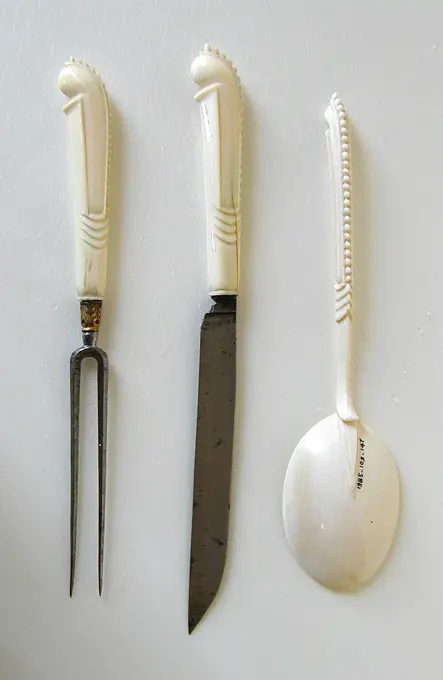
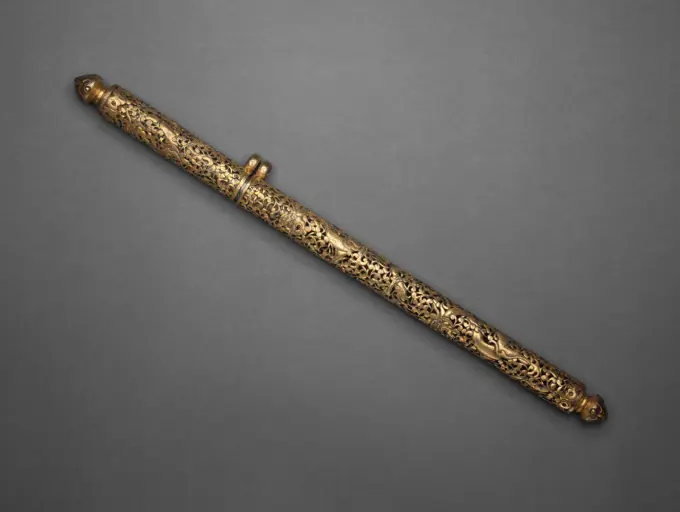
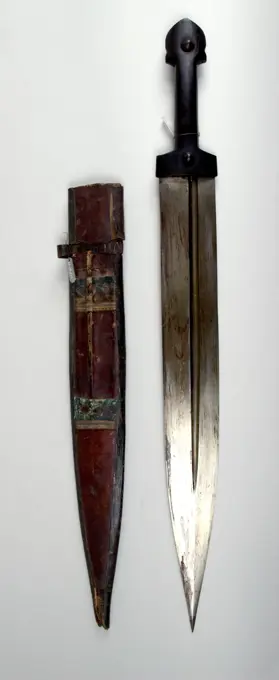
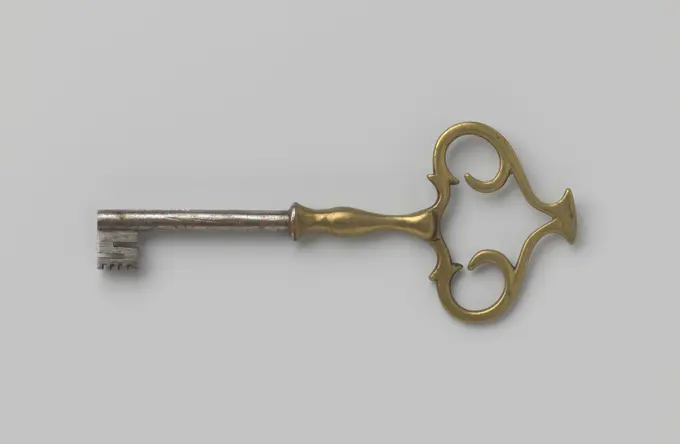
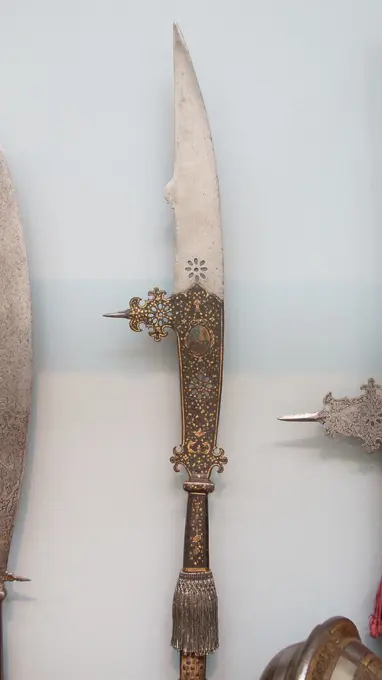
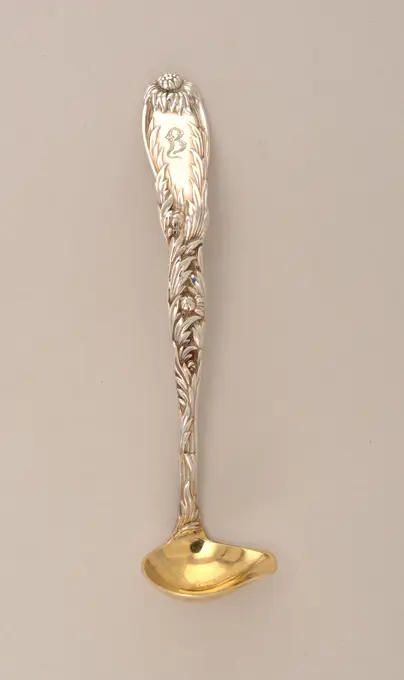
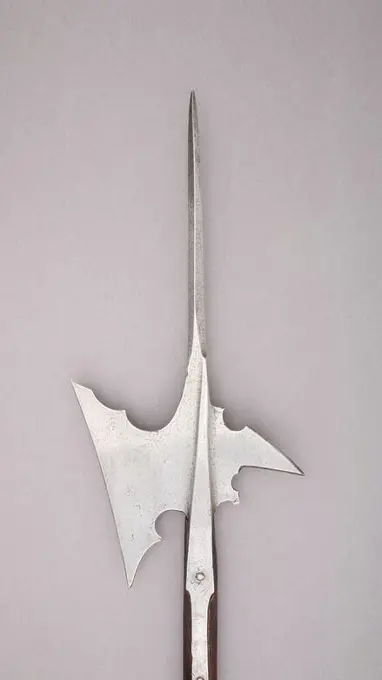
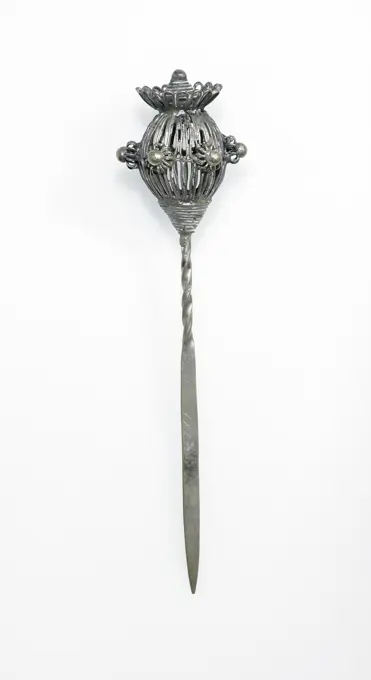
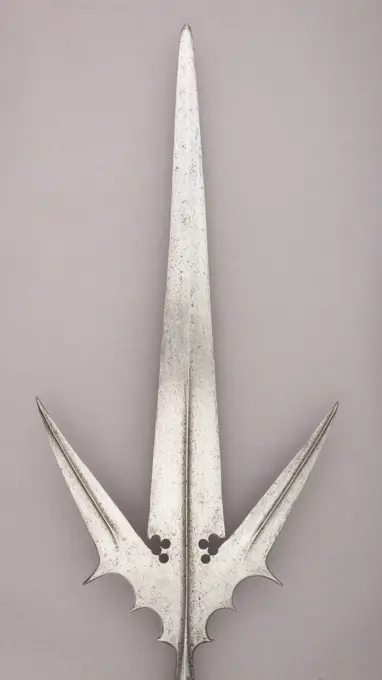
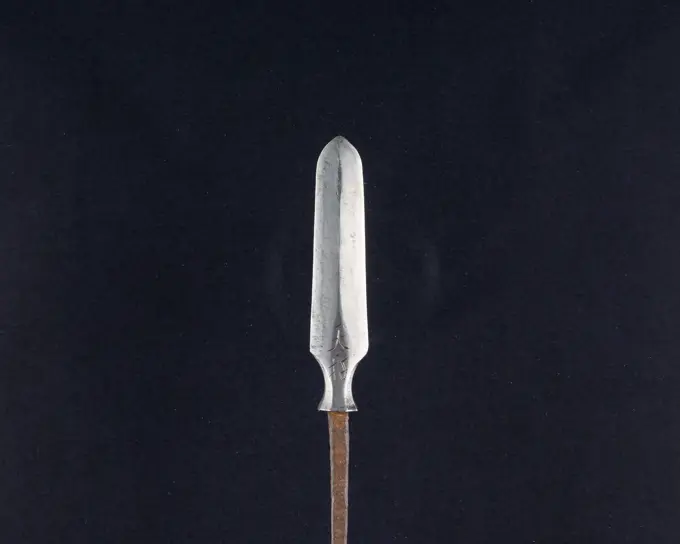
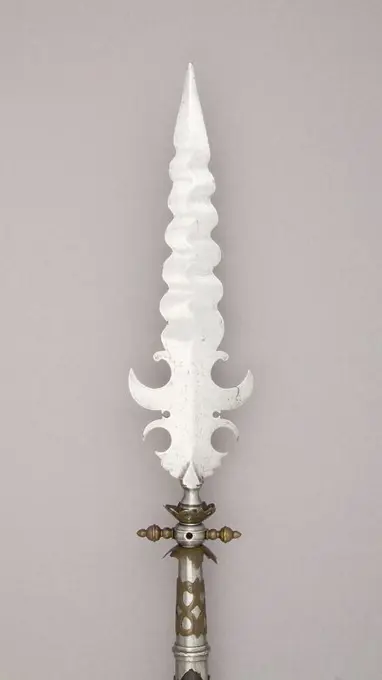
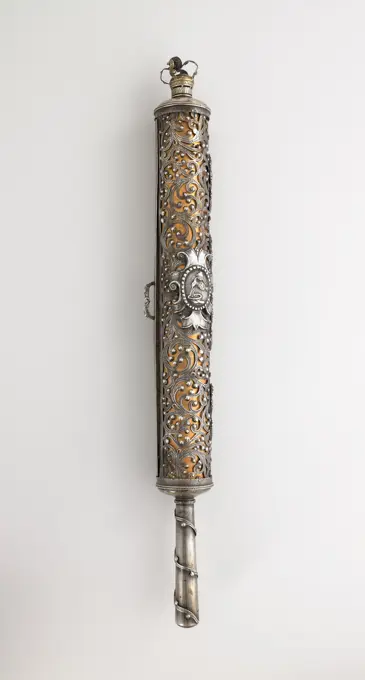
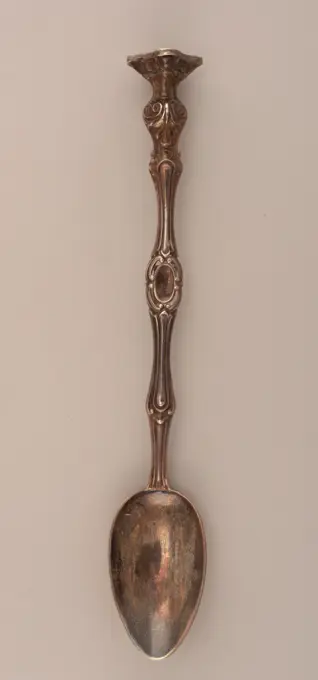
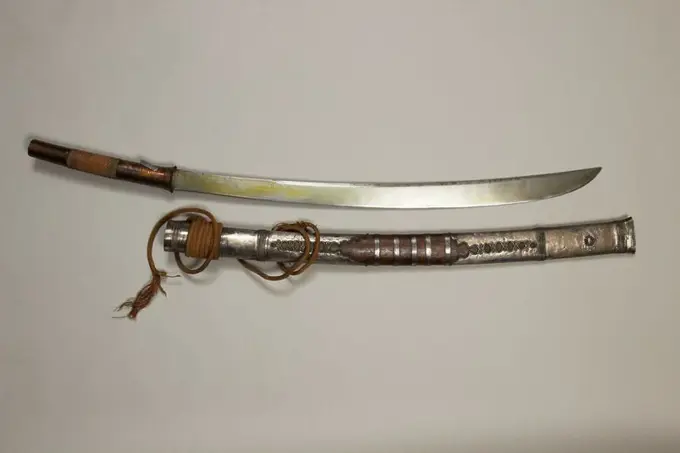
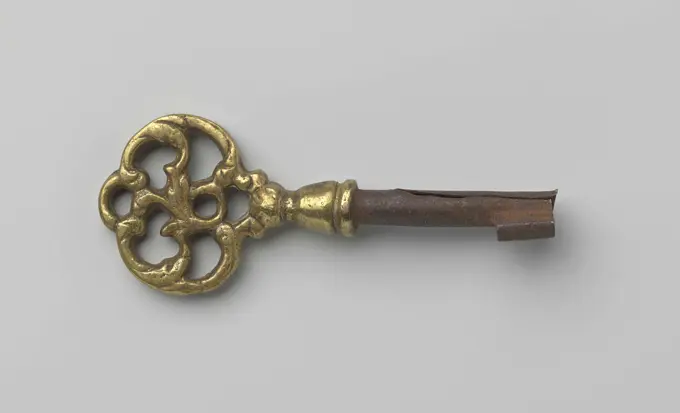
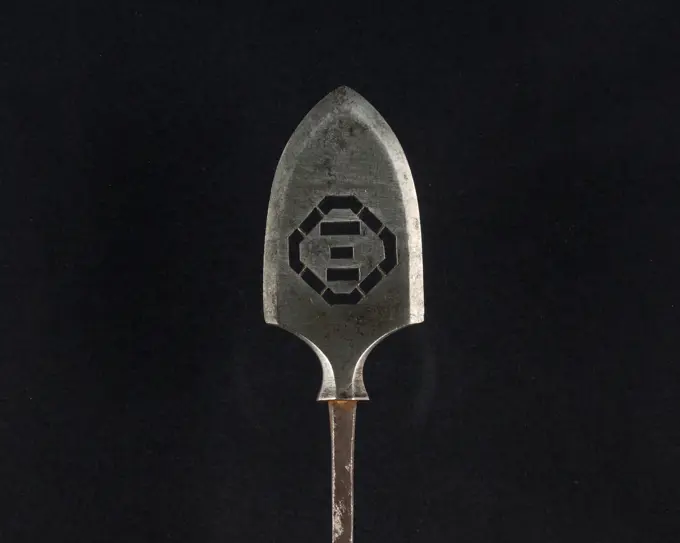
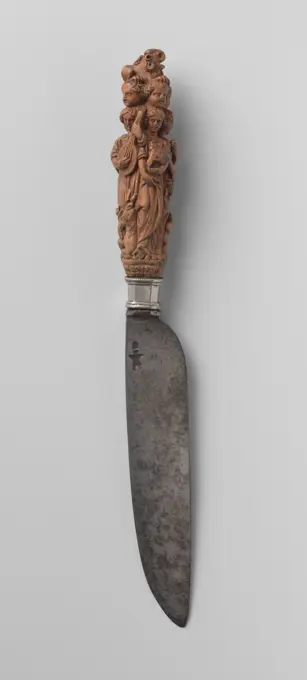
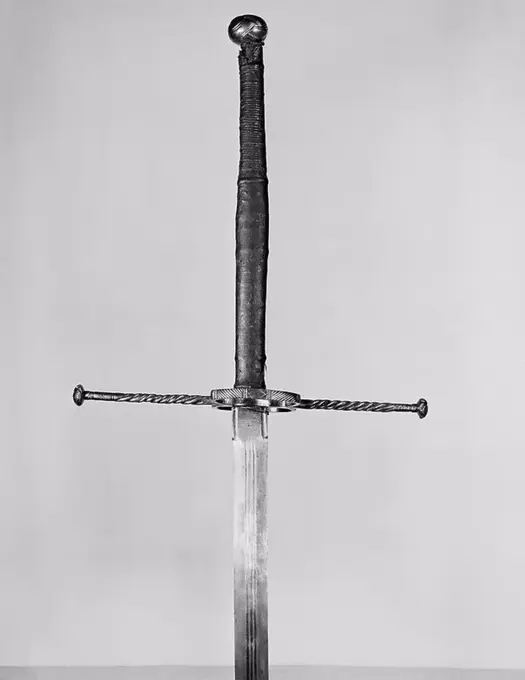
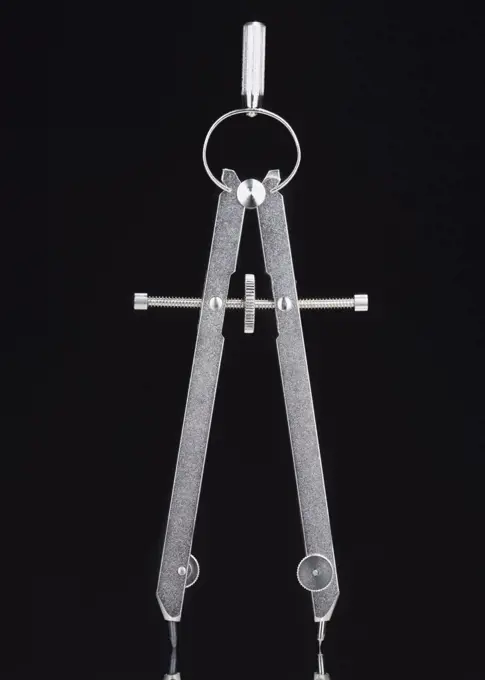
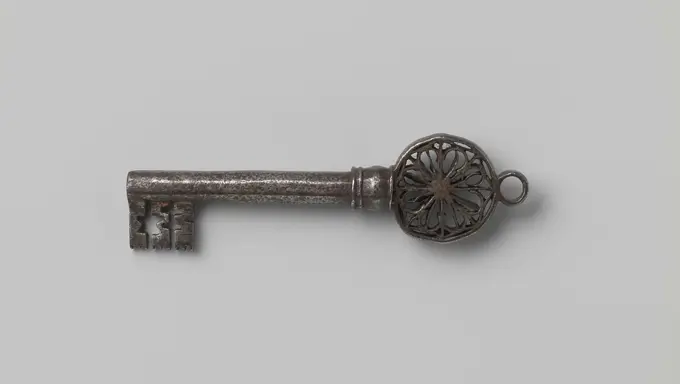
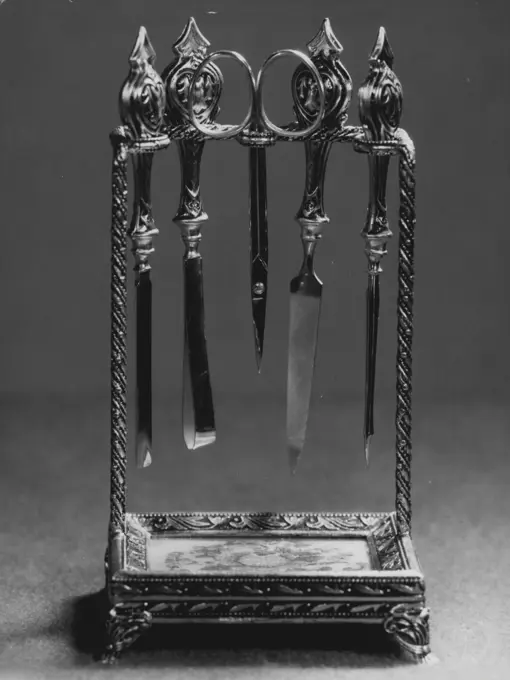
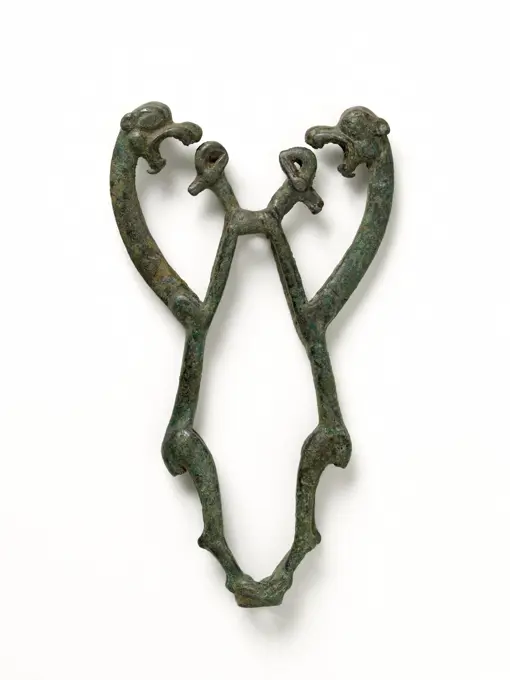
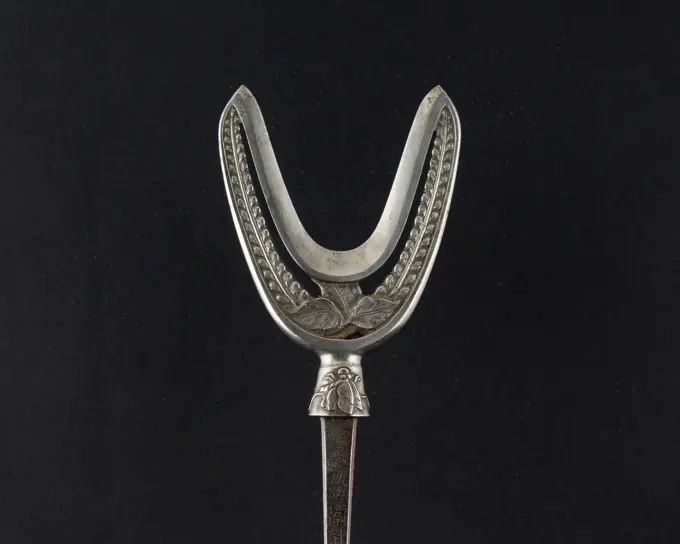
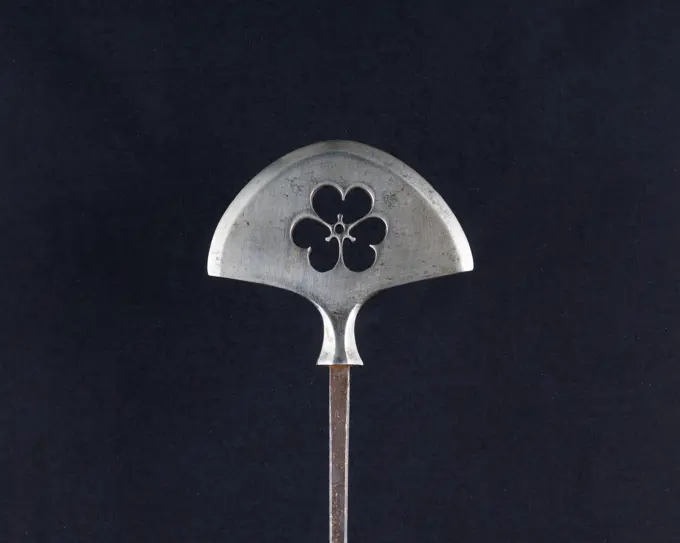
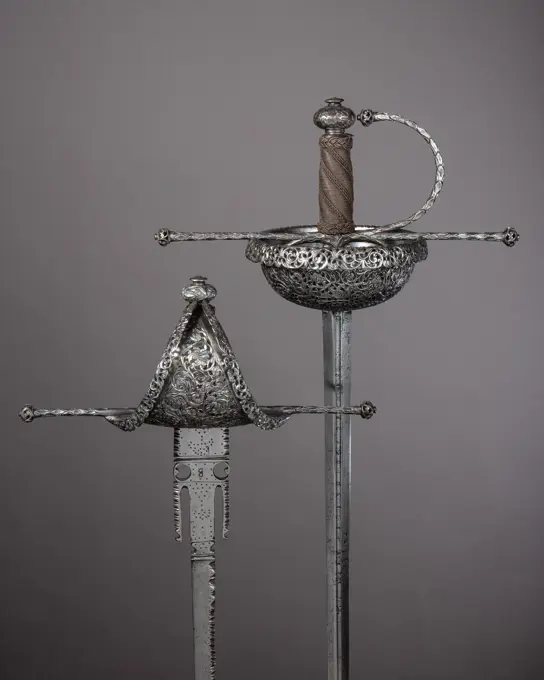
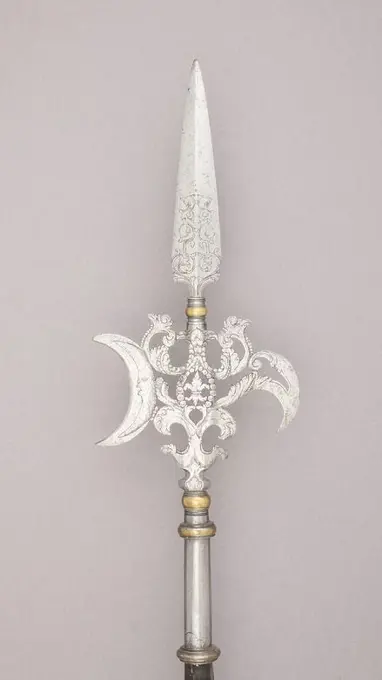
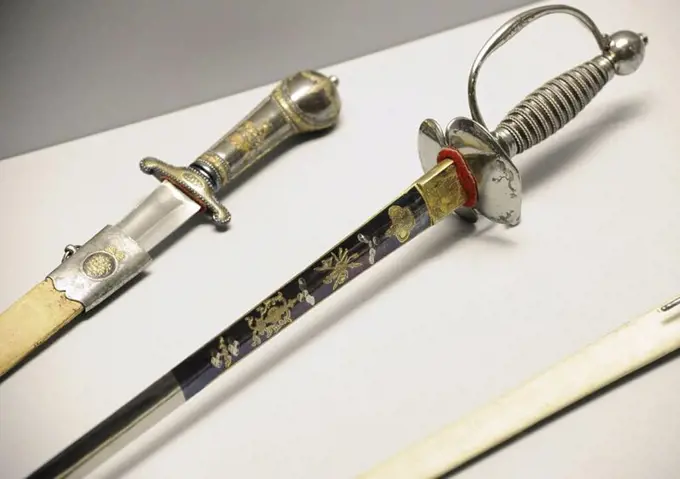
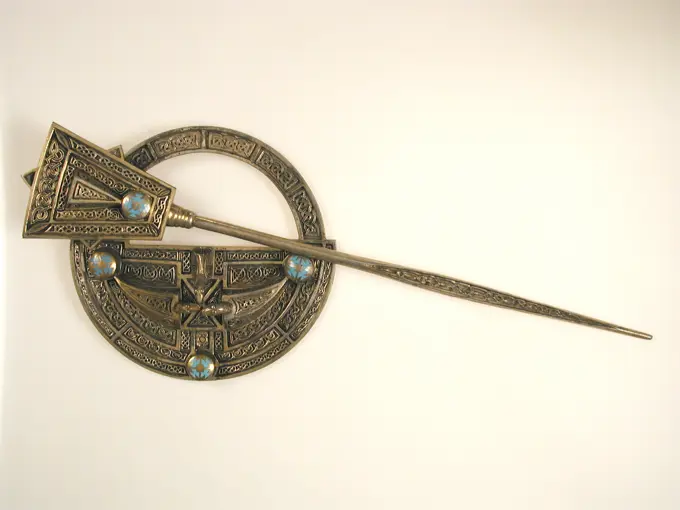
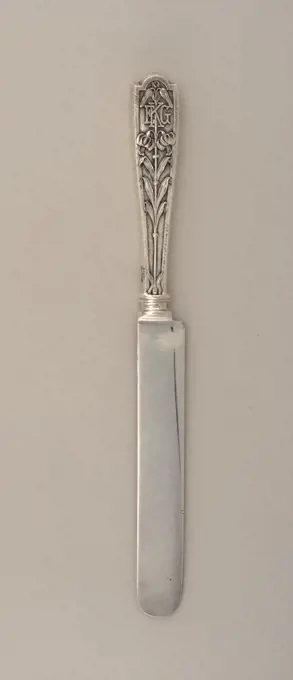
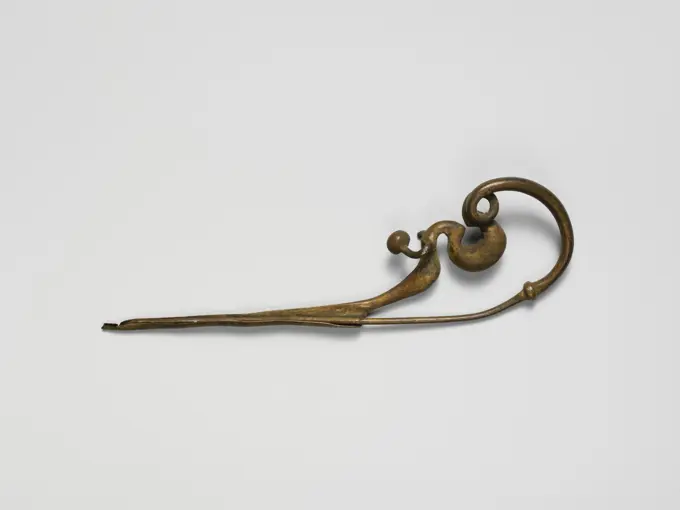
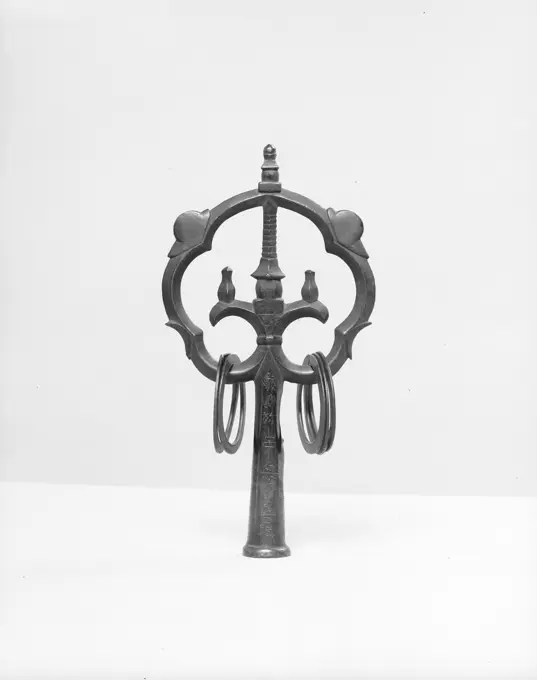
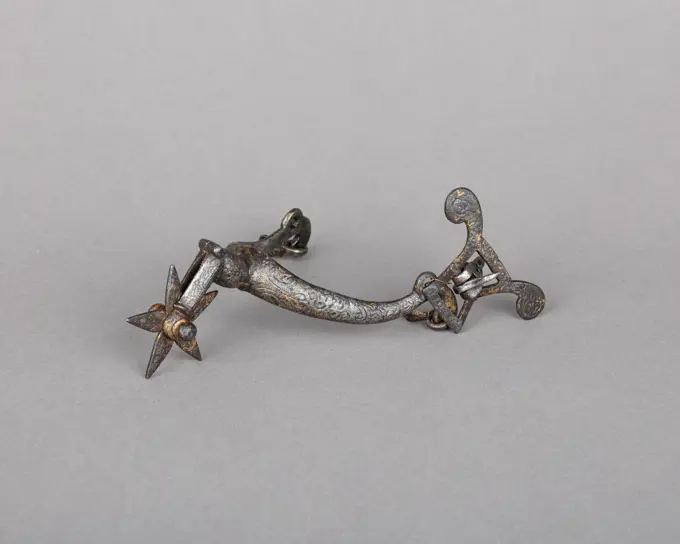
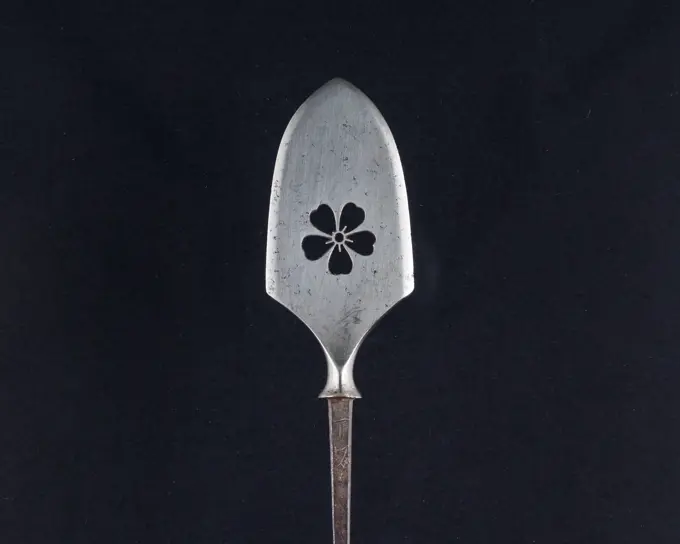
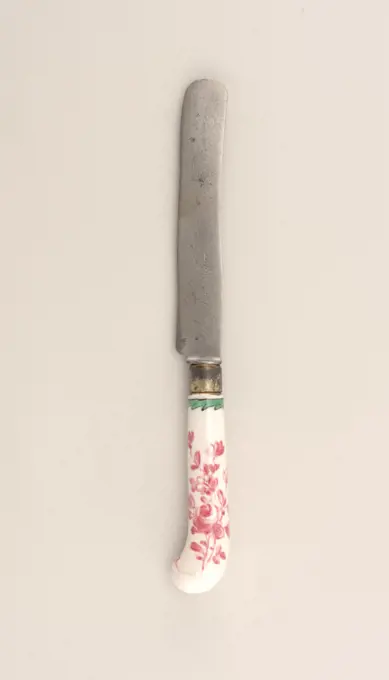
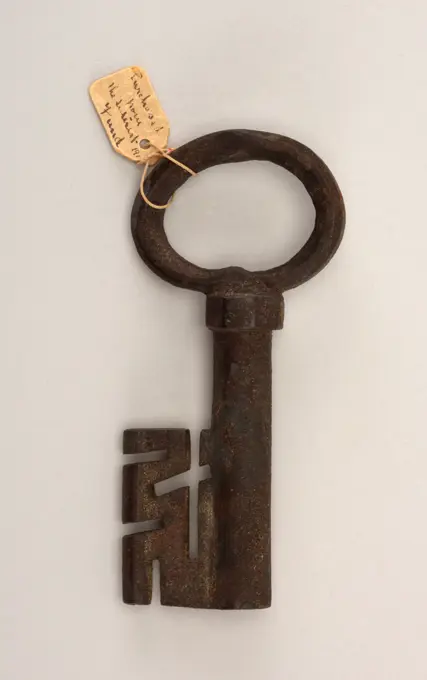
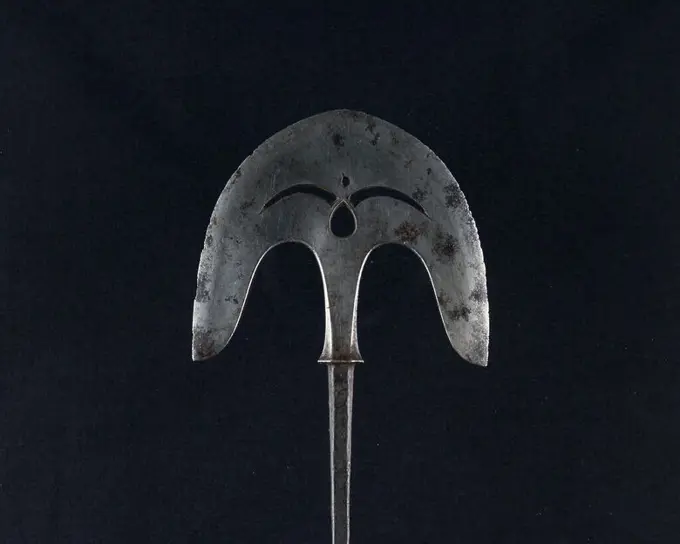
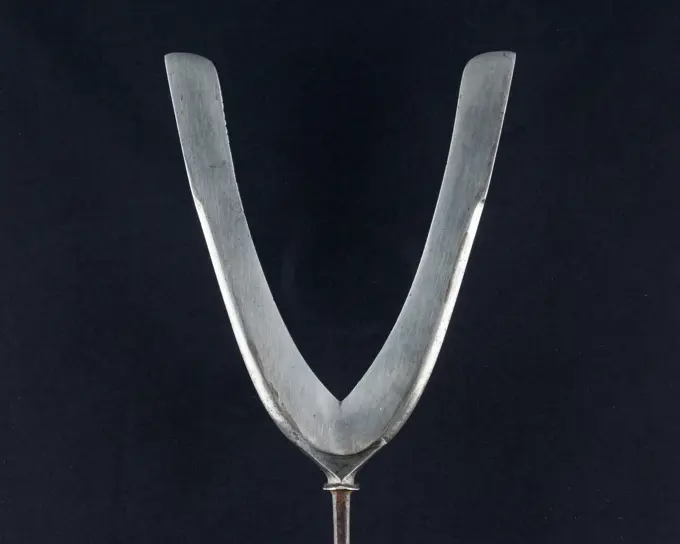
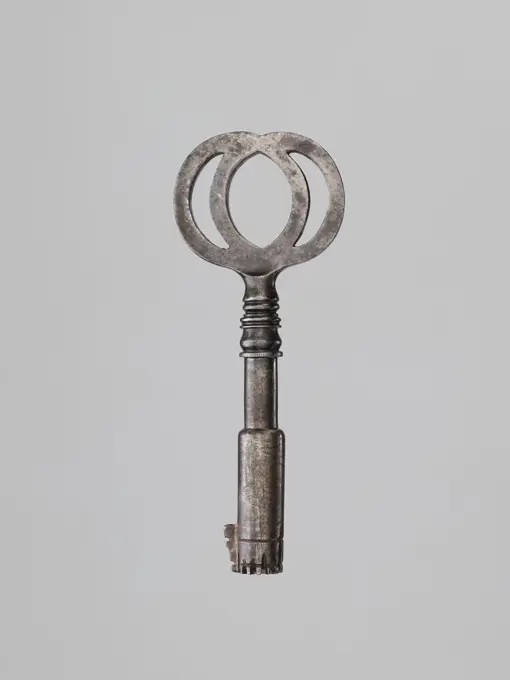
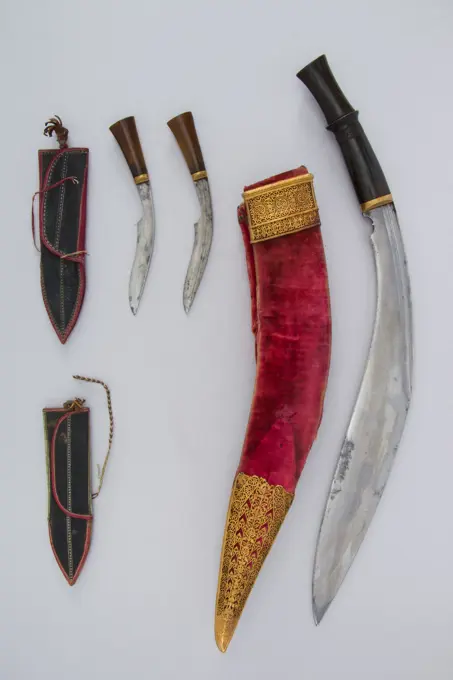
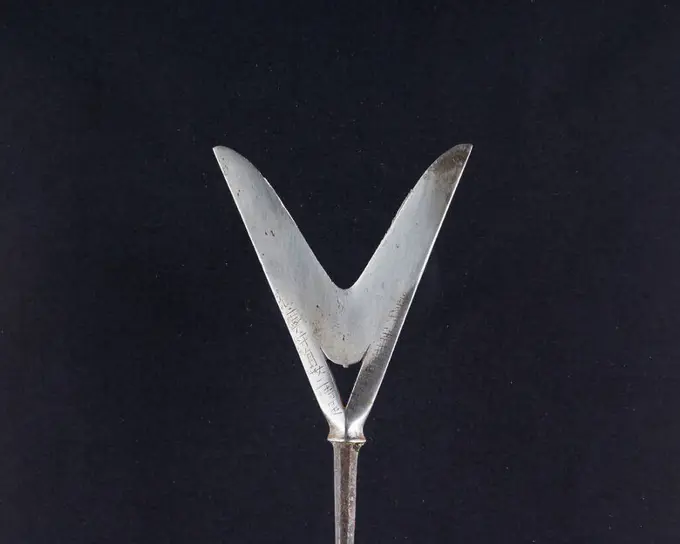
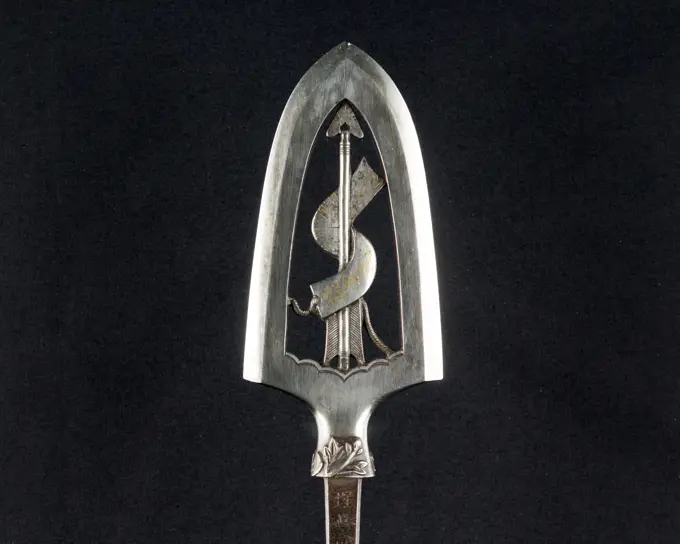
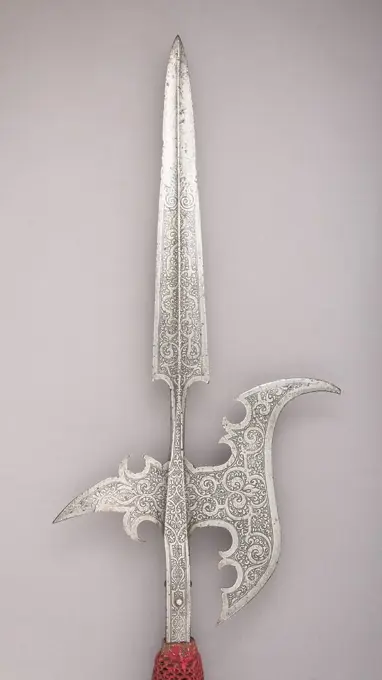
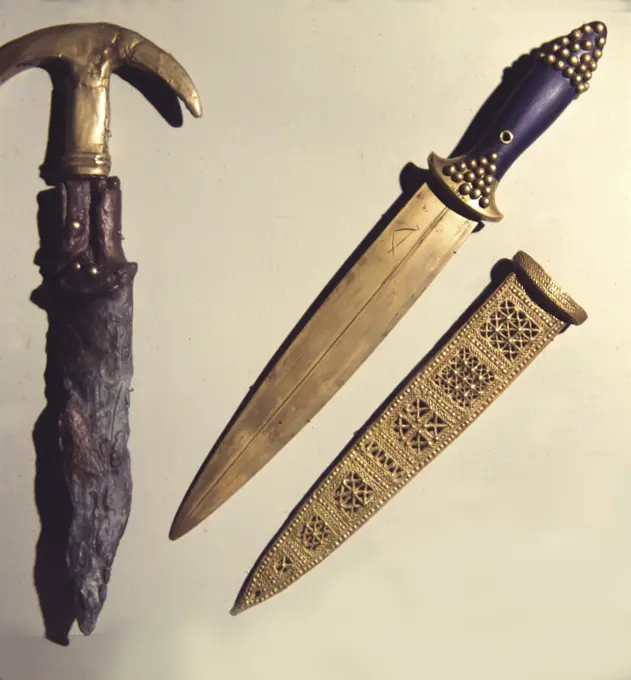
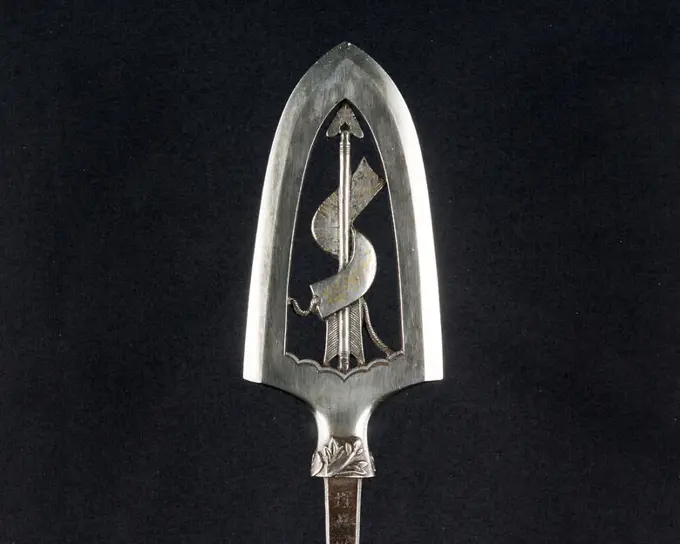
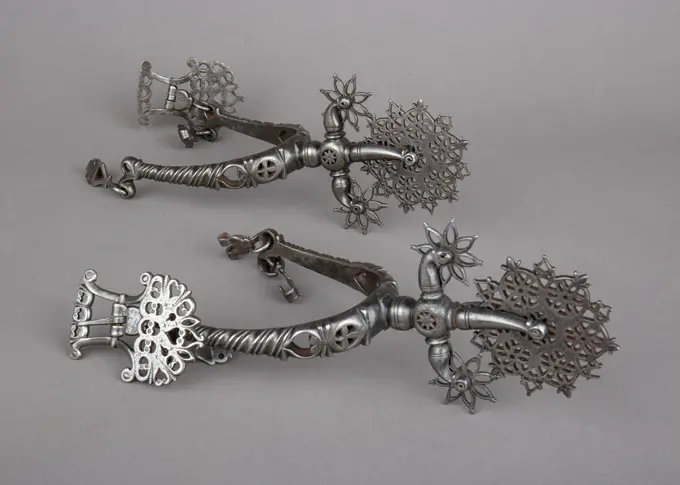
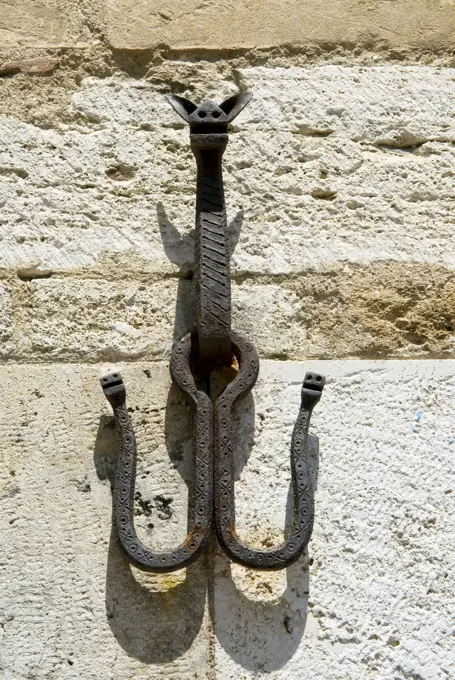
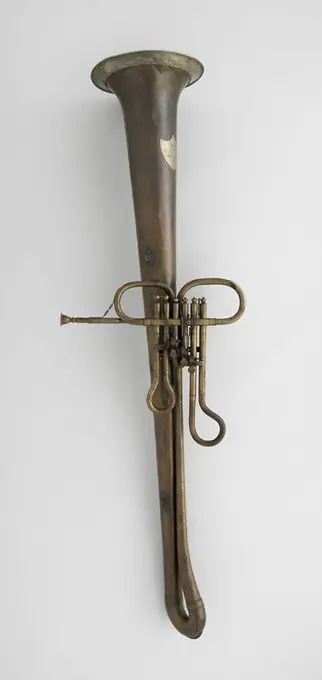
Coffer or chest key 16th century Italian. Coffer or chest key. Italian. 16th century. Wrought iron. Metalwork-IronKey, 1700 - 1725 Key whose round grip is formed from rank ornament. The shaft is baluster -shaped and scanned and runs past the beard and ends in a flat button.  copper (metal) Key whose round grip is formed from rank ornament. The shaft is baluster -shaped and scanned and runs past the beard and ends in a flat button.  copper (metal)Pipe key, c. 1700 Pipe key whose upper half of the shaft is stretched vase -shaped. From this to both sides, two small volutes, each of whom wear an inside-in C-Volute, covered by a saddle. Handle and the vase -shaped part of the shaft and beard of iron.  iron (metal) Pipe key whose upper half of the shaft is stretched vase -shaped. From this to both sides, two small volutes, each of whom wear an inside-in C-Volute, covered by a saddle. Handle and the vase -shaped part of the shaft and beard of iron.  iron (metal)Glaive of the Bodyguard of the Tiepolo Family. Culture: Italian. Dimensions: L. of head (including side straps) 44 3/4 in. (113.67 cm). Date: ca. 1600. Museum: Metropolitan Museum of Art, New York, USA.Chrysanthemum Mustard Spoon; Manufactured by Tiffany and Co. (United States); USA; silver; L x W x D: 12.5 x 3 x 2.2 cm (4 15/16 x 1 3/16 x 7/8 in.)Knife with carved handle in the form of Apollo late 18th century Dutch or British. Knife with carved handle in the form of Apollo. Dutch or British. late 18th century. Steel, ivory. Metalwork-SteelKnife (France); porcelain, steel, silver; L x W: 21.4 x 2.1 cm (8 7/16 x 13/16 in.); The Robert L. Metzenberg Collection, gift of Eleanor L. Metzenberg; 1985-103-227Torenkruis, anonymous, c. 1400 - c. 1950 Tower cross of iron. Gothic. unknown iron (metal) Tower cross of iron. Gothic. unknown iron (metal)Halberd. Culture: probably German. Dimensions: L. 63 1/2 in. (161.3 cm); L. of head 20 in. (50.8 cm); W. 9 1/2 in. (24.1 cm); Wt. 4 lbs. 15.4 oz. (2251 g). Date: 1525-50. Museum: Metropolitan Museum of Art, New York, USA.Hunting Cleaver (Waidpraxe) of Ernst August II Konstantin, Duke of Saxe-Weimar-Eisenach Made 1755-1758 Germany. This 18th-century Waidpraxe or chopper belonged to Ernst August II, Duke of Saxe- Weimar-Eisenach. The base of the sheath depicts a hunter who holds a chopper in one hand while presenting a severed boar head to the goddess of the hunt, Diana, with the other.Etiquette strictly regulated who was allowed to dress the game and present the head or cut the heart. Offenders (men or women) who violated the rules were subjected to the embarrassment of ìblading,î whereby the offender was made to bend over the deer carcass and receive three blows on the rear from the flat of the broad-bladed chopper.. Steel, bronze, gilding, horn, wood, leather, and silk .Arrowhead (Yanone). Culture: Japanese. Dimensions: L. 9 1/8 in. (23.2 cm); L. of head 2 1/2 in. (6.4 cm); W. 1 3/8 in. (3.5 cm); Wt. 1 oz. (28.3 g). Date: 18th century. Museum: Metropolitan Museum of Art, New York, USA.Hair Pin, 6 3/16 x 1 1/2 x 1 1/2 in. (15.72 x 3.81 x 3.81 cm), Silver, ChinaBattleaxe and pistol, 16th century. The Arts of the Middle Ages and at the Period of the Renaissance by Paul Lacroix, 1874Staff Weapon (Coresca) early 16th century Italian. Staff Weapon (Coresca). Italian. early 16th century. Steel, wood (ash). Shafted WeaponsPewter tongue, belt hook with twisted leaf motif on the disk and hook in shape of male figure, belt clothing accessory clothing soil find tin metal, archeology Rotterdam rail tunnel Gothic Soil discovery: pour rail tunnel.Arrowhead (Yanone) 18th century Japanese Although today Japanese warriors are renowned most for their swordsmanship, archery, especially from horseback, has been an essential part of samurai warfare and culture for centuries. Arrows were fitted with heads of varying shape according to their intended use in war, the hunt, or target practice. Arrowheads made for use on the battlefield incorporated different designs intended for specialized purposes such as the piercing of armor or to cause maximum damage to horses and unarmored personnel.Large arrowheads, pierced and elaborately chiseled with landscapes, birds, flowers, dragons, and Buddhist divinities, were created to be admired for the beauty of their metalwork and design rather than for use in archery. Such highly elaborate examples may have been made for presentation or as a votive offerings to a shrine.. Arrowhead (Yanone). Japanese. 18th century. Steel. Archery Equipment-ArrowheadsSpoon (possibly Germany); brass, enamel; L x W: 16.1 x 3.4 cm (6 5/16 x 1 5/16 in.); The Robert L. Metzenberg Collection, gift of Eleanor L. Metzenberg; 1985-103-71Partisan. Culture: French. Dimensions: L. 87 1/4 in. (221.6 cm); L. of head 18 1/2 in. (47.1 cm); W. 4 3/4 in. (12.1 cm); Wt. 2 lbs. 6 oz. (1077.3 g). Date: ca. 1690. Museum: Metropolitan Museum of Art, New York, USA.Arrowhead (Yanone). Culture: Japanese. Dimensions: L. 10 in. (25.4 cm); L. of head 4 1/2 in. (11.4 cm); W. 2 3/4 in. (7 cm); Wt. 2.4 oz. (68 g). Date: 18th century. Museum: Metropolitan Museum of Art, New York, USA.Megillah (scroll of Esther) with case, c. 1885-1890, 21-3/8 x 2-3/16 x 2-3/16 in. (54.3 x 5.6 x 5.6 cm), Silver, painted metal, paper scroll, Poland (probably), 19th-20th centurySpoon (France); silver; L x W x D: 18.2 x 3 x 1.9 cm (7 3/16 x 1 3/16 x 3/4 in.)Sword (Dha) with Scabbard and Baldric. Culture: Burmese. Dimensions: H. with scabbard 32 5/16 in. (82.1 cm); H. without scabbard 30 5/16 in. (77 cm); W. 1 7/8 in. (4.8 cm); Wt. 1 lb. 6.4 oz. (635 g); Wt. of scabbard 14.9 oz. (422.4 g). Date: 19th century. Museum: Metropolitan Museum of Art, New York, USA.Pijpsleutel.Pipe key with a round handle, consisting of leaf RINSES CIRCUE. Handle and capital of copper; Shaft and beard of iron.Arrowhead (Yanone) 18th century Japanese Although today Japanese warriors are renowned most for their swordsmanship, archery, especially from horseback, has been an essential part of samurai warfare and culture for centuries. Arrows were fitted with heads of varying shape according to their intended use in war, the hunt, or target practice. Arrowheads made for use on the battlefield incorporated different designs intended for specialized purposes such as the piercing of armor or to cause maximum damage to horses and unarmored personnel.Large arrowheads, pierced and elaborately chiseled with landscapes, birds, flowers, dragons, and Buddhist divinities, were created to be admired for the beauty of their metalwork and design rather than for use in archery. Such highly elaborate examples may have been made for presentation or as a votive offerings to a shrine.. Arrowhead (Yanone). Japanese. 18th century. Steel. Archery Equipment-ArrowheadsMilitary Dress Sword Owned by Baron Friedrich Wilhelm vonSteuben.   Maker: John Bennett I, British, 1708/09-1774Messenheft met de vijf zintuigen.The rafter consists of five women's figures placed in a circle. There are four cobblestones on their heads, on which a lion is sitting. The women present the five senses: wife, who persists with her right hand to himself; In her left hand a fruit, her feet is a monkey (the taste). Woman, holding a bird on her arm, tapping her finger; To her feet a turtle (the feeling). Woman playing on a lute; There is a deer (the hearing) to her feet. Woman with a hand mirror; An eagle is on her feet (the face). Woman, wearing an incense barrel: she holds a flower in her right hand; A dog jumps into her (the smell).Two-Handed Sword. German. Date: 1525-1575. Dimensions: Overall L. 167.6 cm (66 in.). Steel, leather, and buckram. Origin: Germany. Museum: The Chicago Art Institute, Chicago, USA.Close-up of a geometric compassNāgasvaram Indian (south) late 19th century Although found in classical ensembles, this South Indian double-reed instrument, like its northern counterpart the Śahnāī, most often accompanies dances and processions at outdoor weddings and festivals. The reed is mounted on a staple that fits into the wood body. Extra reeds hang at the side, along with wooden needles which are used in fine-tuning by inserting wax plugs in the five unfingered holes at the base of the tube.Ritual Weapons, early 1400s. Sino-Tibetan, Derge School, Yongle period (1403-1427). Iron alloy with gold and silver inlay; overall: 40.4 cm (15 7/8 in.). Ceremonial weaponry was used in tantric rituals to combat obstacles to enlightenment, such as ignorance, delusions, and selfishness. In 1407 a high-ranking Tibetan monastic patriarch visited the emperor of the Ming dynasty, known as Yongle. The Yongle emperor presented him with a number of gifts, of which these implements were probably a component, since the axe bears his identifying inscription in a cartouche. Imperial Chinese workmanship is noted in the lush rendering of the lion heads from which the blades emerge, the calligraphic serpentine forms, and the cloud motifs.Defense for the Left Arm ca. 1510-20 Italian, probably Milan. Defense for the Left Arm 26547Sleutel.Key presumably used as a sign. The round openwork handle is formed from leaf raft that the letters A.B. and insert the year 1688 below. It is crowned by an eye. The shaft is screw-shaped to the disc-shaped key brick and then goes over in a smooth portion.Cup-Hilted Rapier, c. 1650. Spain, Toledo, 17th century. Pierced and chiseled steel; ; overall: 122.9 cm (48 3/8 in.); quillions: 26.7 cm (10 1/2 in.). For parrying, rapiers were often made with accompanying daggers as a matched set, although the dagger shown in this image (1916.699) doesn't belong with this rapier. The aristocracy's taste for rich and intricate styles of decoration led to extravagant gilding, chiseling, piercing, enameling, and silvering. The more costly or unusual these weapons appeared, the more they were desired by the gentlemanly clientele who commissioned them, not only for dueling but also as the ultimate accessory.Jatagan with the vaginaFacade anchor from home in Hattem, 1600 - 1699 A facade anchor of a demolished 17th century house in Hattem. Hattem cast iron   Hattem A facade anchor of a demolished 17th century house in Hattem. Hattem cast iron   HattemKnife (Germany); ivory, steel; L x W: 18.3 x 1.6 cm (7 3/16 x 5/8 in.); The Robert L. Metzenberg Collection, gift of Eleanor L. Metzenberg; 1985-103-148Pen Case with Dragons and Foliate Design Made 1401-1600 Tibet. Gilt iron .Dagger (Kindjal) with Sheath 18th-19th century Caucasian. Dagger (Kindjal) with Sheath. Caucasian. 18th-19th century. Steel, wood, horn, leather, gold. DaggersArrowhead (Yanone) 18th century Japanese Although today Japanese warriors are renowned most for their swordsmanship, archery, especially from horseback, has been an essential part of samurai warfare and culture for centuries. Arrows were fitted with heads of varying shape according to their intended use in war, the hunt, or target practice. Arrowheads made for use on the battlefield incorporated different designs intended for specialized purposes such as the piercing of armor or to cause maximum damage to horses and unarmored personnel.Large arrowheads, pierced and elaborately chiseled with landscapes, birds, flowers, dragons, and Buddhist divinities, were created to be admired for the beauty of their metalwork and design rather than for use in archery. Such highly elaborate examples may have been made for presentation or as a votive offerings to a shrine.. Arrowhead (Yanone). Japanese. 18th century. Steel. Archery Equipment-ArrowheadsKey. Key with a travel and flue garnish in the round handle; O.A. Pipe stampper, scraper, corkscrew etc. The shaft is profiled.command mace, 19th century, Africa, Álava Armory Museum, Vitoria, Basque Country, Spain.Ancient sabre Ancient sabre. A smart variant of the fighting weapon Copyright: xZoonar.com/ValeryxxSibrikovx 5607824Pair of Rowel Spurs 17th century German The points of the rowels of this pair of spurs alternate birds heads and fleurons, while their bodies are chiseled with zigzags motifs in relief.. Pair of Rowel Spurs. German. 17th century. Iron alloy, gold. Equestrian Equipment-SpursPijpsleutel.Steel pipe key, a smaller second ring stuffed to the tracing. A capital-shaped thickening at the top of the octagonal pipe. In the pipe a pen, inched the beard of below and from the front.Manicure set & tray. May 4, 1955.Windmill cup. By blowing into the pipe attached to the windmill, the drinker set the sails in motion. On the back of the windmill is a dial with twelve numbers. The rules of play for using this cup are not known. Did the drinker have to drain the cup before the sails stopped spinning And did the dial indicate whose turn it was nextplastic fishing lure isolated on white backgroundFurniture lock key;  k. 18th century (11770-00-00-1800-00-00);Taught. Two animals faced in front of two heads of ibex. LURISTAN. 1000-750 BC. J-C. Paris, Cernuschi museum. 35175-2 Confront, iron age, bouquetin, bronze, sign, head, animalAncient Ring Close-up of an antique ring for tying horses Copyright: xZoonar.com/NicoxBernierix 9490548Arrowhead (Yanone) dated 1645 Japanese Although today Japanese warriors are renowned most for their swordsmanship, archery, especially from horseback, has been an essential part of samurai warfare and culture for centuries. Arrows were fitted with heads of varying shape according to their intended use in war, the hunt, or target practice. Arrowheads made for use on the battlefield incorporated different designs intended for specialized purposes such as the piercing of armor or to cause maximum damage to horses and unarmored personnel.Large arrowheads, pierced and elaborately chiseled with landscapes, birds, flowers, dragons, and Buddhist divinities, were created to be admired for the beauty of their metalwork and design rather than for use in archery. Such highly elaborate examples may have been made for presentation or as a votive offerings to a shrine.. Arrowhead (Yanone). Japanese. dated 1645. Steel. Archery Equipment-ArrowheadsArrowhead (Yanone) 18th century Japanese Although today Japanese warriors are renowned most for their swordsmanship, archery, especially from horseback, has been an essential part of samurai warfare and culture for centuries. Arrows were fitted with heads of varying shape according to their intended use in war, the hunt, or target practice. Arrowheads made for use on the battlefield incorporated different designs intended for specialized purposes such as the piercing of armor or to cause maximum damage to horses and unarmored personnel.Large arrowheads, pierced and elaborately chiseled with landscapes, birds, flowers, dragons, and Buddhist divinities, were created to be admired for the beauty of their metalwork and design rather than for use in archery. Such highly elaborate examples may have been made for presentation or as a votive offerings to a shrine.. Arrowhead (Yanone). Japanese. 18th century. Steel. Archery Equipment-ArrowheadsCup-Hilted Rapier and Matching Parrying Dagger ca. 1650-75 Italian, possibly Naples From the early sixteenth century onward, the practice of wearing a sword or rapier with civilian dress made duels between unarmored opponents more common. Lacking the armor or shield worn in battle, combatants had to block or parry an attack by other means. Methods of defense included the use of a dagger or a buckler (small shield) held in the left hand and an increased reliance on parries made with the rapier itself. During the sixteenth and seventeenth centuries, distinct schools of fencing developed rapidly in Italy, France, Germany, and Spain. Instruction in the art and science of fencing became an indispensable part of a noblemans education. Consequently, accomplished fencing masters were hired to teach at the principal courts and universities of Europe. From about 1525 to about 1625, the rapier was worn regularly in tandem with a parrying dagger. They were sometimes made and decorated as a set. BArrowhead (Yanone). Culture: Japanese. Dimensions: L. 10 1/2 in. (26.7 cm); L. of head 2 3/4 in. (7 cm); W. 2 in. (5.1 cm); Wt. 1.5 oz. (42.5 g). Date: 18th century. Museum: Metropolitan Museum of Art, New York, USA.Halberd. Culture: French. Dimensions: L. 90 in. (228.6 cm); L. of head 18 1/8 in. (46 cm); W. 6 5/16 in. (16 cm); Wt. 3 lbs. 12.7 oz. (1720.8 g). Date: ca. 1630. Museum: Metropolitan Museum of Art, New York, USA.Hunting dirk. Steel, wood, leather. Ceremonial sword. Steel, wood. From Tula, Russia. Ca. 1775. The State Hermitage Museum. Saint Petersburg. Russia.ka; Hafner, Michael (Fl. 1665-1700); 18th century (1700-00-00-1800-00-00);Crown-top spoon (one of three) 16th century Swedish. Crown-top spoon (one of three). Swedish. 16th century. Silver, parcel-gilt. Metalwork-SilverKey 16th century European. Key 201701Powder Flask with Spanner, Primer, and Bullet Compartment late 16th century German, Augsburg or Nuremberg The relief decoration on the front includes hunting scenes. The engraving on the back shows the coat of arms of the Bavarian nobleman Hans Albrecht von Closen.. Powder Flask with Spanner, Primer, and Bullet Compartment. German, Augsburg or Nuremberg. late 16th century. Bronze, gold. Augsburg or Nuremberg. Firearms Accessories-Powder HornsAncient sabre. A smart variant of the fighting weaponArdagh Brooch early 20th century (original dated 11th century) Irish. Ardagh Brooch. Irish. early 20th century (original dated 11th century). Bronze gilt. Reproductions-MetalworkAikuchi with engraved scene, 20th century, Japan, Álava Armory Museum, Vitoria, Basque Country, Spain.Rockledge Silver Service, George Washington Maher, American, 1864-1926, Ernest L. and Grace King, Gorham Manufacturing Company, Providence, Rhode Island, USA, founded 1818, Silver, Of 'Martelé' silver, the handle decorated with a native lily motif and initials 'E.K.G.' conjoined., 1911-12, cutlery, Decorative Arts, Place knife, Place knifeSweden, Blekinge, Blekinge, Karlskrona, Karlskrona, external marina (depicted, town).Sweden, Blekinge, Blekinge, Karlskrona, Karlskrona, External War Gogs (depicted, City)Tower cross whose cross arms end in lilies. Wind vane in form of sea monster, 1400 - 1500 A cross of a spire or church roof, the cross arm ending in a lily of forged iron. With wind vane, in the form of a sea monster, and two rings for confirmation on the ridge striker.  iron (metal) A cross of a spire or church roof, the cross arm ending in a lily of forged iron. With wind vane, in the form of a sea monster, and two rings for confirmation on the ridge striker.  iron (metal)Bronze dragon-type fibula (safety pin) ca. 700-650 B.C. Late Villanovan or Early Etruscan The pronounced elongation of pin and clasp indicates a relatively late date for this type of fibula, which was popular with men. Similar but less elongated versions have been found in Tarquinia, in the so-called Tomb of the Warrior of about 700 B.C. This tomb, discovered in 1869, contained the skeleton of a man of about seventy years. He was equipped with elaborate armor, weapons, jewelry, and a great deal of pottery.. Bronze dragon-type fibula (safety pin) 246367War 1939-1945. Flag Pointe of the Association of National Socialist Veterans (Fahnenspitze). Metal. 1944-1945. General Leclerc Museum of Hauteclocque and the Liberation of Paris, Jean Moulin Museum. Association of veterans, flag, war 1939-1945, war 39-45, Second World WarFinial of a Buddhist Monks Staff (Shakuj?) Japan Jiz? Bosatsu (bodhisattva) is usually represented as a gentle, boyish monk holding a wish-granting jewel (mani) in his left hand, and in his right a (shakuj?), or monks staff with six jangling rings to indicate his travels to succor creatures in need. Mendicant monks observed a rule of silence; they carried such a staff to announce their approach and to frighten away insects and animals lest they inadvertently tread on them. The six rings symbolize the Six Realms of Existence where Jiz? is active and the Six Perfections that lead to nirvana: generosity, morality, patience, vigor, concentration, and wisdom. This shakuj? finial bears an inscription that commemorates its dedication to a shrine or temple on the sacred mountain at Itsukushima. It has been displayed with this statue since early in the twentieth century.. Finial of a Buddhist Monks Staff (Shakuj?). Japan. Bronze. Edo period (1615-1868). MetalworkHalberd ca. 1450 Swiss. Halberd 25899Silver price pen with the coat of arms of the city of Haarlem. Potas of silver in the form of a goose feather with the cast crowned arms of the city of Haarlem.Rowel Spur (Right) ca. 1630-1660 German This spur is decorated overall with stamped floral designs originally entirely gilded. In the first half of the 17th century, the fashion trend for gentlemen was to wear boots and spurs even non-riding circumstances, including for dancing or walking around at court. Spurs became then more than equestrian tools, but pieces of male jewelry often enriched by the same goldsmiths also working on armor and weapons. Their decoration was sometimes intended to match the sword hilt and the general outfit and horse tack of their owner. These trendy accessories were also a significant mark of status for gentlemen, sometimes nonetheless copied by the bourgeoisie. This fashion progressively disappeared after the mid-17th century.. Rowel Spur (Right). German. ca. 1630-1660. Iron, gold. Equestrian Equipment-SpursSmart dagger Smart dagger of the medieval soldier. It was used for hunting Copyright: xZoonar.com/VALERY-SIBRIKOVx 20020692Spoon (Netherlands); silver; L x W x D: 8.4 x 2 x 1 cm (3 5/16 x 13/16 x 3/8 in.)dagger Souvenir medieval dagger. An exact copy made of modern materials Copyright: xZoonar.com/ValeryxxSibrikovx 2421202Arrowhead (Yanone) 18th century Japanese Although today Japanese warriors are renowned most for their swordsmanship, archery, especially from horseback, has been an essential part of samurai warfare and culture for centuries. Arrows were fitted with heads of varying shape according to their intended use in war, the hunt, or target practice. Arrowheads made for use on the battlefield incorporated different designs intended for specialized purposes such as the piercing of armor or to cause maximum damage to horses and unarmored personnel.Large arrowheads, pierced and elaborately chiseled with landscapes, birds, flowers, dragons, and Buddhist divinities, were created to be admired for the beauty of their metalwork and design rather than for use in archery. Such highly elaborate examples may have been made for presentation or as a votive offerings to a shrine.. Arrowhead (Yanone). Japanese. 18th century. Steel. Archery Equipment-ArrowheadsKnife, steel, tin-glazed earthenware (faience), brass, Straight-sided blade with a rounded point. Plain baluster, brass () ferrule, round in section. White pistol-shaped handle with pink flower sprays and green wreath of leaves close to the ferrule., Rouen, France, 19th century, cutlery, Decorative Arts, KnifeKeyArrowhead (Yanone). Culture: Japanese. Dimensions: L. 10 1/8 in. (25.7 cm); L. of head 2 1/2 in. (6.4 cm); W. 2 7/8 in. (7.3 cm); Wt. 1.9 oz. (53.4 g). Date: 18th century. Museum: Metropolitan Museum of Art, New York, USA.Arrowhead (Yanone) 18th century Japanese Although today Japanese warriors are renowned most for their swordsmanship, archery, especially from horseback, has been an essential part of samurai warfare and culture for centuries. Arrows were fitted with heads of varying shape according to their intended use in war, the hunt, or target practice. Arrowheads made for use on the battlefield incorporated different designs intended for specialized purposes such as the piercing of armor or to cause maximum damage to horses and unarmored personnel.Large arrowheads, pierced and elaborately chiseled with landscapes, birds, flowers, dragons, and Buddhist divinities, were created to be admired for the beauty of their metalwork and design rather than for use in archery. Such highly elaborate examples may have been made for presentation or as a votive offerings to a shrine.. Arrowhead (Yanone). Japanese. 18th century. Steel. Archery Equipment-ArrowheadsKey;  19th century (1801-00-00-1900-00-00);Sword. Culture: hilt, Sumatran, Achen; blade, British. Dimensions: H. 37 in. (94 cm); W. 4 in. (10.2 cm); D. 3 1/2 in. (8.9 cm); Wt. 1 lb. 13.5 oz. (836.3 g). Date: hilt, 19th century; blade, 17th-18th century. Museum: Metropolitan Museum of Art, New York, USA.Knife (Kukri) with Two Sheaths, Two Small Knives, and Two Sharpening Pouches 18th-19th century Indian or Nepalese, Gurkha. Knife (Kukri) with Two Sheaths, Two Small Knives, and Two Sharpening Pouches. Indian or Nepalese, Gurkha. 18th-19th century. Steel, horn, gold, leather, velvet. DaggersFire Guard Congress BadgeArrowhead (Yanone). Culture: Japanese. Dimensions: L. 9 in. (22.9 cm); L. of head 2 15/16 in. (7.5 cm); W. 2 9/16 in. (6.5 cm); Wt. 1.2 oz. (34 g). Date: 18th century. Museum: Metropolitan Museum of Art, New York, USA.Dagger with Two Awls and Sheath for the Bodyguard of the Elector of Saxony. Silver mounts marked by Wolf Paller Paller (German, died 1583); Dresden. Date: 1575-1585. Dimensions: L. 36.8 cm (14 1/2 in.) Blade L. 26 cm (10 1/4 in.)Wt. 12 oz.Scabbard L. 29.2 cm (11 1/2 in.) Scabbard Wt. 12 oz. Steel, silver, wood, and leather. Origin: Dresden. Museum: The Chicago Art Institute, Chicago, USA.Ceremonial Arrowhead (Yanone) dated 1645 Umetada Motoshige Japanese Large arrowheads, pierced and elaborately chiseled with landscapes, birds, flowers, dragons, and Buddhist divinities, were created to be admired for the beauty of their metalwork and design rather than for use in archery. This arrowhead is dated 1645 and signed by Umetada Motoshige (died 1675), a member of the Umetada school of swordsmiths, tsuba makers, and iron chiselers. It belongs to a group of more than thirty similarly signed and dated pieces in the Metropolitan Museum's collection (including acc. nos. 32.75.318, .321, .327, .330, .334, .337, .339-.340, .398-.399, .403, .406) that may have been made for presentation or as a votive offering to a shrine. The design is an arrow entwined with a paper on which a poem is written.. Ceremonial Arrowhead (Yanone). Japanese. dated 1645. Steel. Archery Equipment-ArrowheadsHalberd. Culture: German. Dimensions: L. 99 in. (251.3 cm); L. of head 33 in. (83.8 cm); W. 16 in. (40.6 cm); Wt. 6 lbs. 8 oz. (2950 g). Date: early 17th century. Museum: Metropolitan Museum of Art, New York, USA.Image of cold weapon on black backgroundHalabardaCase, ivory, steel, Elaborately carved ivory sheath for two implements. On front a crowned man (King David) playing a harp, on the back a nude female warrior (Minerva) with a helmet and a spear. Sheath is decorated with carved foliage, scrolls and faces on front and back. Two small ribbed tubes on the sides to attach a cord., Flanders, France, early 17th century, cutlery, Decorative Arts, CaseGold dagger and sheath from royal graves at Ur, 2500 BC. Sumerian. Mesopotamia.Ceremonial Arrowhead (Yanone). Culture: Japanese. Dimensions: L. 10 5/8 in. (27 cm); L. of head 4 1/16 in. (10.3 cm); W. 1 7/8 in. (4.8 cm); Wt. 3.8 oz. (107.7 g). Steel-chiseler: Umetada Motoshige (Japanese, Edo period, died 1675). Date: dated 1645.Large arrowheads, pierced and elaborately chiseled with landscapes, birds, flowers, dragons, and Buddhist divinities, were created to be admired for the beauty of their metalwork and design rather than for use in archery. This arrowhead is dated 1645 and signed by Umetada Motoshige (died 1675), a member of the Umetada school of swordsmiths, tsuba makers, and iron chiselers. It belongs to a group of more than thirty similarly signed and dated pieces in the Metropolitan Museum's collection (including acc. nos. 32.75.318, .321, .327, .330, .334, .337, .339-.340, .398-.399, .403, .406) that may have been made for presentation or as a votive offering to a shrine. The design is an arrow entwined with a paper on which a poem is written. MuDagger with Sheath 18th-19th century Syrian. Dagger with Sheath 31771Pair of Rowel Spurs 17th century Spanish This very large and ornamental pair of spurs is chiseled and pierced with vegetal and geometrical motifs, and each object features three pierced rowels, adorned with rosettes. This decoration is inspired from contemporary German examples, but the intricate lacework-like pierced effect on the main rowel is typically Spanish.The width of the branches suggests they were worn over large cavalry boots.Some types of spurs with several rowels were sometimes used in the 17th century with particularly difficult horses. However, on this pair, worn like a piece of jewelry, it seems to be more an extravagant ornamental luxurious feature, rather than a truly equestrian improvement. The largest rowel is actually designed to set the two smaller ones in motion when rolled against the horses flanks. Such examples of multi-rowel spurs are known in Germany since the mid-16th century.. Pair of Rowel Spurs. Spanish. 17th century. Iron alloy. Equestrian Equipment-SpMedieval iron dragon used in order to tie the horses, San Gimignano, UNESCO World Heritage Site, Siena, Tuscany, Italy, EuropeHat, 20 x 13 x 13 in. (50.8 x 33.02 x 33.02 cm) (with chain hanging), Silver, ChinaBronze strigil used to cleanse the body, handle decoration with dancing Satyr from PompeiiContrabass Valve Ophicleide in D. Culture: Austrian. Dimensions: 59 1/2 × 18 1/2 × 11 3/8 in., 10 lb. (151.1 × 47 × 28.9 cm, 4535.97g)Diameter (Of bell): 11 1/4 in. (28.6 cm). Maker: Leopold Uhlmann (Austrian, 1806-1878). Date: ca. 1840.Uhlmann developed this type in 1835, first as a bass and then in the contrabass version on display. Also in 1835, August Guichard in Paris developed a different valved ophicleide and Wilhelm Wieprecht in Berlin invented the tuba, which finally became the prevailing valve bass. Museum: Metropolitan Museum of Art, New York, USA.old rusty keys isolated on white