Historical Daggers and Weapons

A selection of ornate daggers and weaponry from various cultures and time periods, highlighting decorative elements and craftsmanship.

Kris of a high-ranking dignitary, anonymous, 1700 - 1800 Sumatran kris with a corrugated blade adorned by the pamor technique and with gold. The Javanese blade has thirteen waves. The Suasa Steelring (Mendak) is inlaid with diamonds. The ivory grip (Ukiran) has the shape of a bird bent forward, also described as a Garuda-like bird man. The Schedemond (Wrangka) has the shape of a ship. Javaivory Carver: Palembang kling: iron (metal). kling: nickel (metal). kling, schede: gold (metal). greep: ivory. mendak: diamond (mineral). mendak:. schede: wood (plant material) Sumatran kris with a corrugated blade adorned by the pamor technique and with gold. The Javanese blade has thirteen waves. The Suasa Steelring (Mendak) is inlaid with diamonds. The ivory grip (Ukiran) has the shape of a bird bent forward, also described as a Garuda-like bird man. The Schedemond (Wrangka) has the shape of a ship. Javaivory Carver: Palembang kling: iron (metal). kling: nickel (metal). kling, schede: gold (metal).
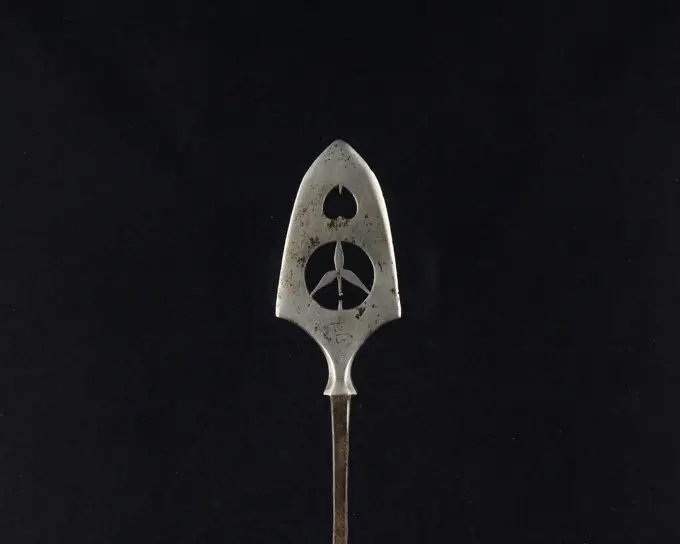
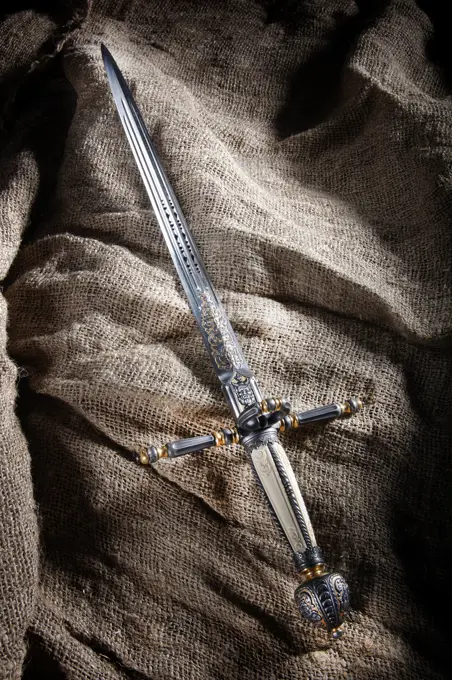
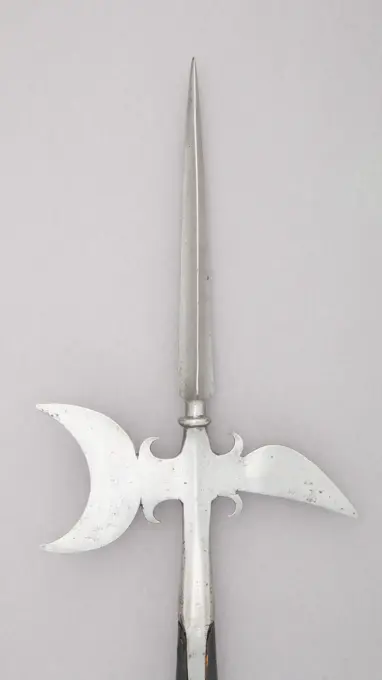
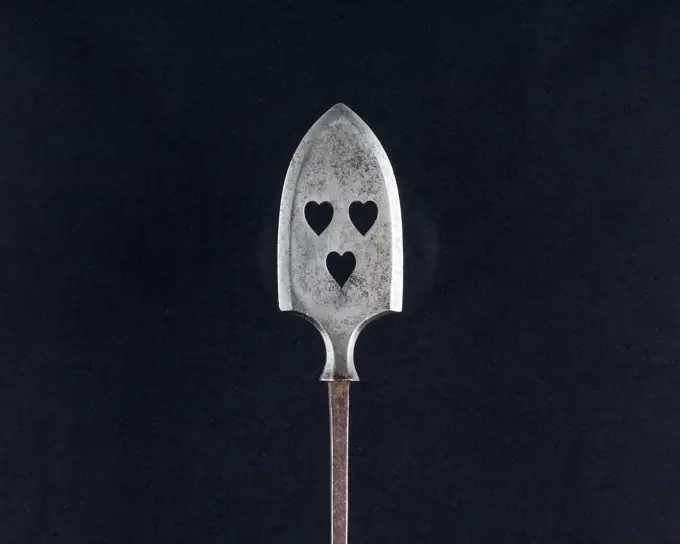
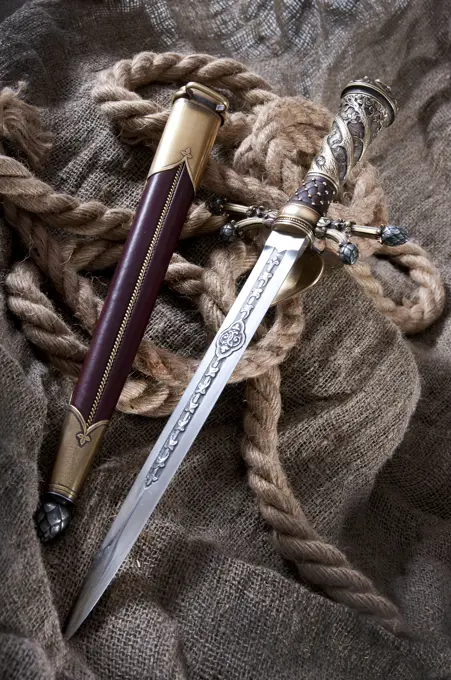
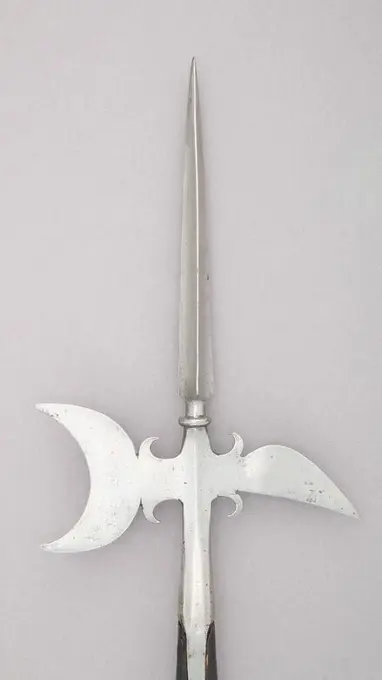
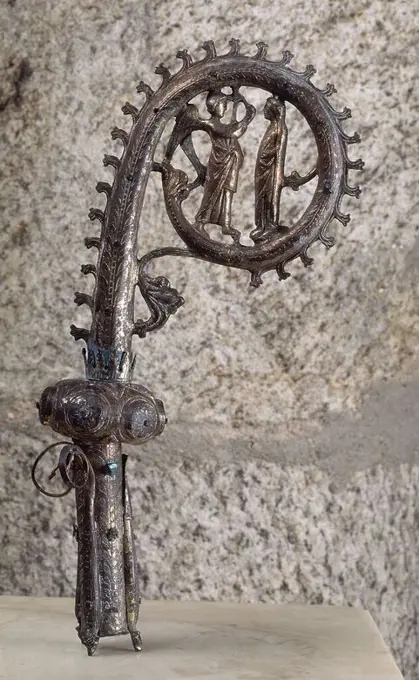
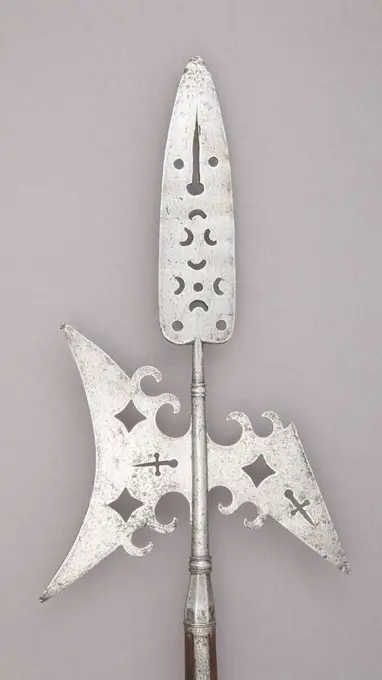
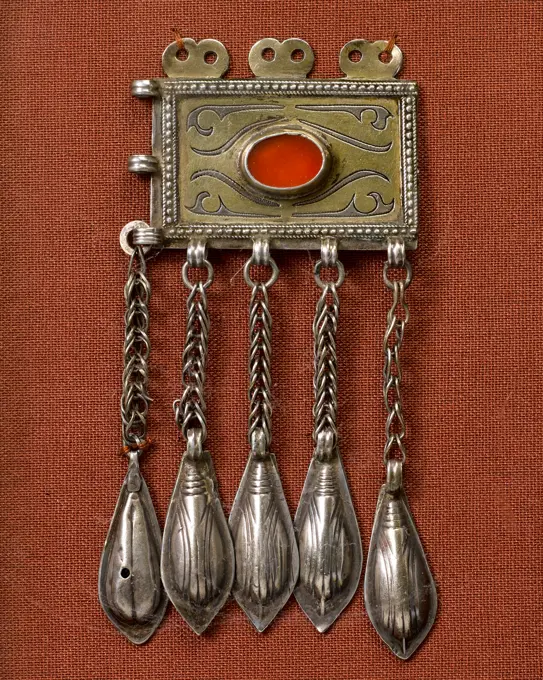
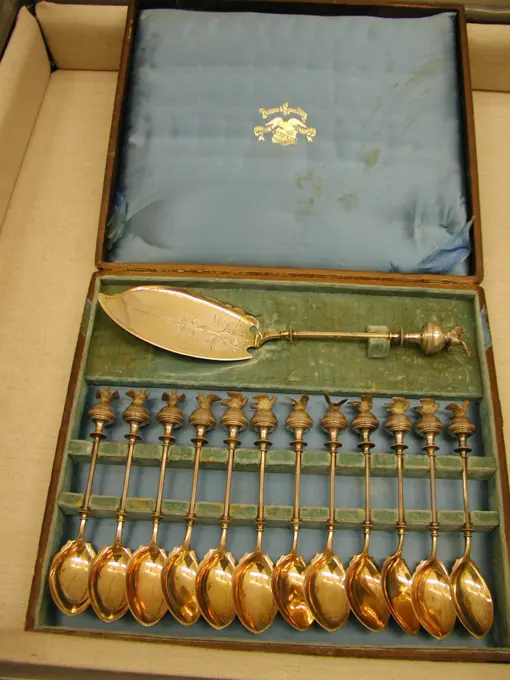
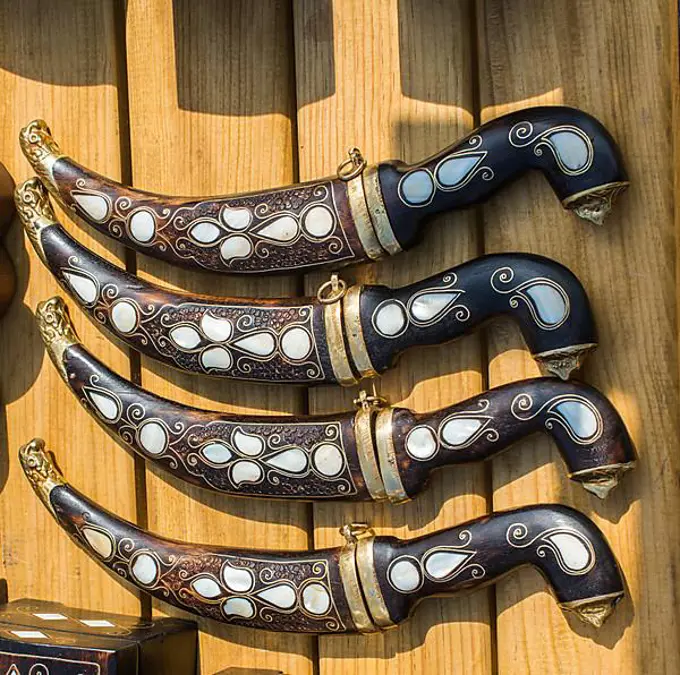
Electrotype copy of a gold ceremonial dagger with sheath. Sumerian, Early Dynastic III period, c.2600-2500 BC, from Ur Iraq, (grave PG 580)spoon with mayonnaise isolated on white backgroundAncient sabre Ancient sabre. A smart variant of the fighting weapon Copyright: xZoonar.com/ValeryxxSibrikovx 2424002Arrowhead (Yanone) 18th century Japanese Although today Japanese warriors are renowned most for their swordsmanship, archery, especially from horseback, has been an essential part of samurai warfare and culture for centuries. Arrows were fitted with heads of varying shape according to their intended use in war, the hunt, or target practice. Arrowheads made for use on the battlefield incorporated different designs intended for specialized purposes such as the piercing of armor or to cause maximum damage to horses and unarmored personnel.Large arrowheads, pierced and elaborately chiseled with landscapes, birds, flowers, dragons, and Buddhist divinities, were created to be admired for the beauty of their metalwork and design rather than for use in archery. Such highly elaborate examples may have been made for presentation or as a votive offerings to a shrine.. Arrowhead (Yanone). Japanese. 18th century. Steel. Archery Equipment-ArrowheadsSmart dagger Smart dagger of the medieval soldier. It was used for hunting Copyright: xZoonar.com/VALERY-SIBRIKOVx 20007484Toy dinner knife - Inconnu / UnknownHalberd 18th century German. Halberd 25840Arrowhead (Yanone) 18th century Japanese Although today Japanese warriors are renowned most for their swordsmanship, archery, especially from horseback, has been an essential part of samurai warfare and culture for centuries. Arrows were fitted with heads of varying shape according to their intended use in war, the hunt, or target practice. Arrowheads made for use on the battlefield incorporated different designs intended for specialized purposes such as the piercing of armor or to cause maximum damage to horses and unarmored personnel.Large arrowheads, pierced and elaborately chiseled with landscapes, birds, flowers, dragons, and Buddhist divinities, were created to be admired for the beauty of their metalwork and design rather than for use in archery. Such highly elaborate examples may have been made for presentation or as a votive offerings to a shrine.. Arrowhead (Yanone). Japanese. 18th century. Steel. Watayama. Archery Equipment-ArrowheadsPowder Flask. German, Saxony. Date: 1610-1640. Dimensions: H. 23.5 cm (9 1/4 in.). Walnut, mother-of-pearl, and iron, with gilding. Origin: Germany. Museum: The Chicago Art Institute, Chicago, USA.Djambiya with scabbard and belt, Yemen, 18th century, Castle of San Carlos, seventeenth century, Palma, Mallorca, Spain.Stick favor with a leaf of sixteen goose springs and a handle of Hoorn, Anonymous, c. 1900 - c. 1925 Holder with a leaf of sixteen goose springs and a handle of Hoorn. The springs are held together by a bent, metal pin. Halfway through the handle a red surface with one at the front the letter 'B' and at the back of the fan a Chinese characters. Dutch East Indies, The sheet:. frame: Horn (Animal Material). Pin: Metal cutting Holder with a leaf of sixteen goose springs and a handle of Hoorn. The springs are held together by a bent, metal pin. Halfway through the handle a red surface with one at the front the letter 'B' and at the back of the fan a Chinese characters. Dutch East Indies, The sheet:. frame: Horn (Animal Material). Pin: Metal cuttingSpanish sword collection detail, sigle XVIDayton Brown, Iron Cross, 1936 Iron Crosssmart dagger smart dagger of the medieval soldier. It was used for hunting Copyright: xZoonar.com/ValeryxxSibrikovx 6670504Halberd. Culture: German. Dimensions: L. 75 3/8 in. (191.5 cm); L. of head 15 3/8 in. (39.1 cm); W. 9 in. (22.8 cm); Wt. 2 lbs. 14 oz. (1304.1 g). Date: 18th century. Museum: Metropolitan Museum of Art, New York, USA.Ancient style daggers in Bazaar  of TbilisiSouvenir spoon with view of west face of a cathedral European late 19th century View more. Souvenir spoon with view of west face of a cathedral. European. late 19th century. Gilt and enamel. Metalwork-SilverBACULO - SIGLO XV - COBRE. Location: CATEDRAL VIEJA. Plasencia. CACERES. SPAIN.Halberd. Culture: American. Dimensions: L. 77 1/4 in. (196.2 cm); L. of head 17 1/4 in. (43.8 cm); W. 9 1/2 in. (24.1 cm); Wt. 2 lbs. 14.4 oz. (1315.4 g). Date: late 18th century. Museum: Metropolitan Museum of Art, New York, USA.Element of female headdress set (common name), 1880. Golden silver, cornals. Cernuschi Museum, Asia Museum of Asia in the city of Paris.Halberd of Archduke Ernst of Austria (1553-1605). Culture: German. Dimensions: L. 94 3/4 in. (240.7 cm); L. of head 24 1/2 in. (62.2 cm); W. 11 in. (27.9 cm). Date: dated 1593. Museum: Metropolitan Museum of Art, New York, USA.Ice cream set (serving knife and 12 spoons incase). Maker, possibly by: Browne and Spalding, c.1880Ottoman Turkish style daggers with mother of pearl inlays