Historical Decorative Artifacts

An array of antique decorative items like sashes, knife handles, and embroidered bands, highlighting intricate craftsmanship from various historical periods.

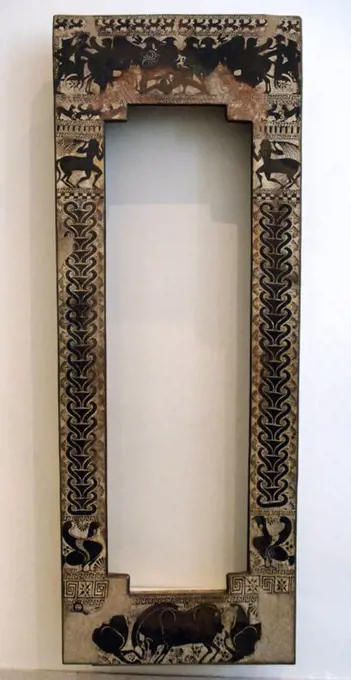
Cutlery Case (Germany); wood, parchment
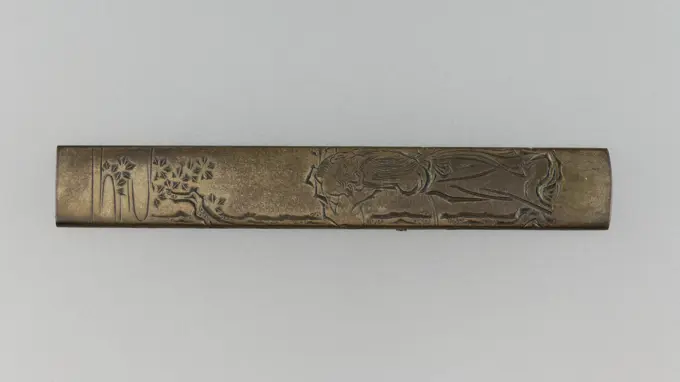
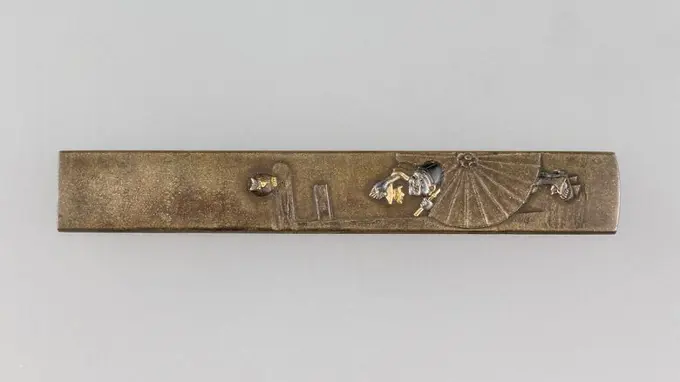
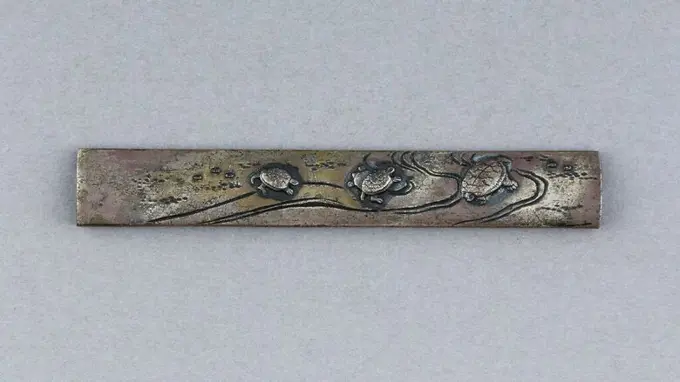
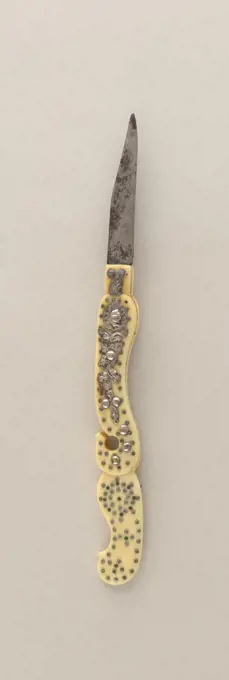
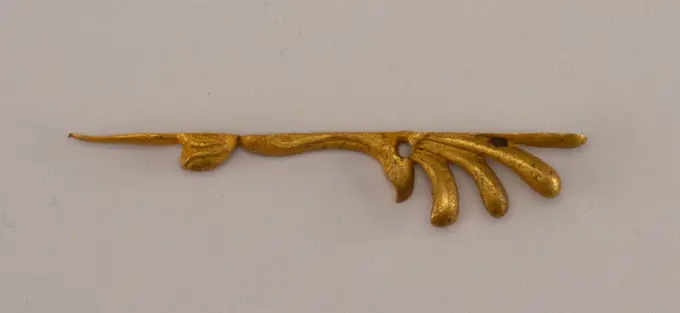
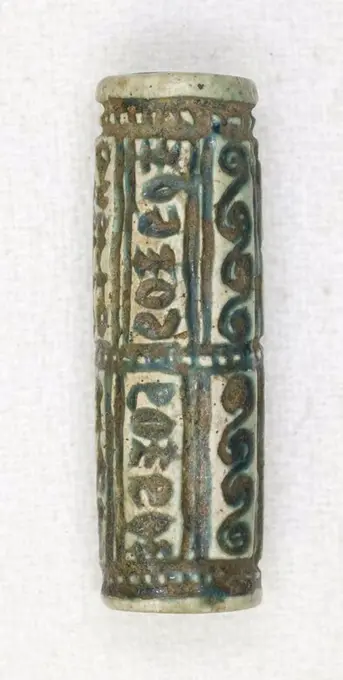
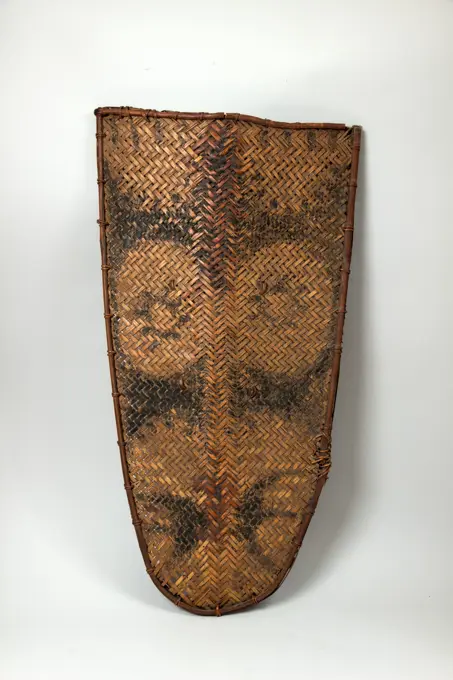
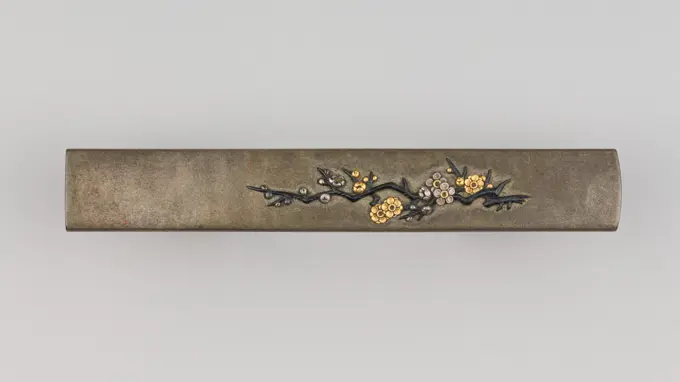
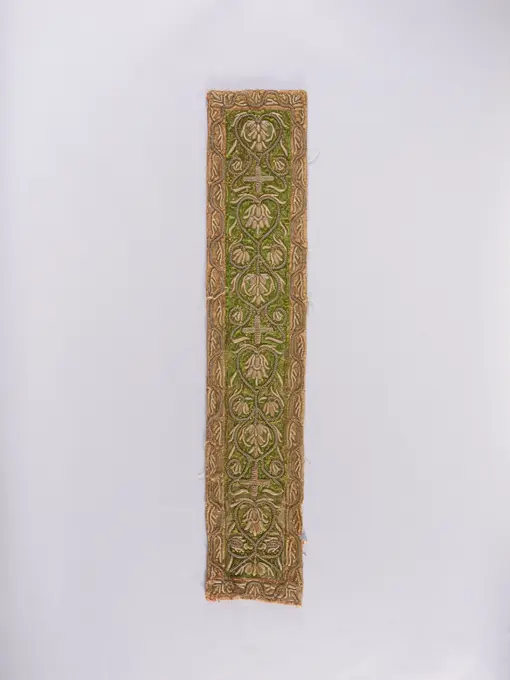
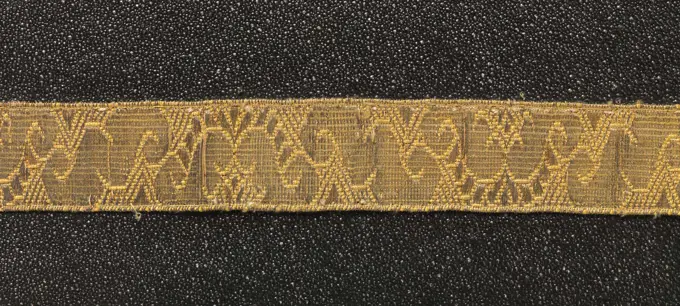
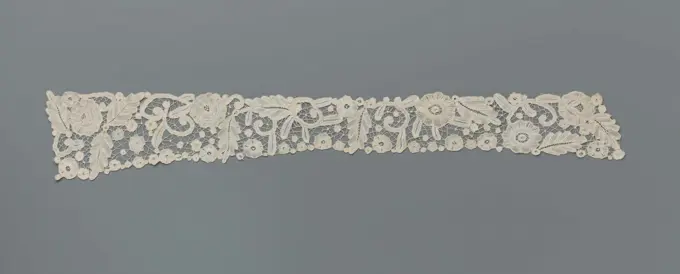
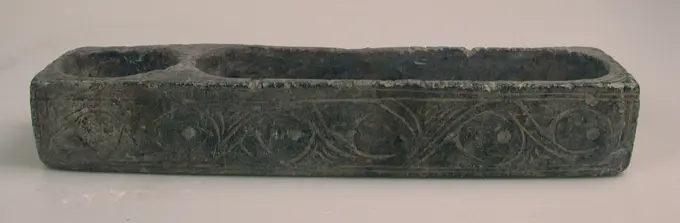
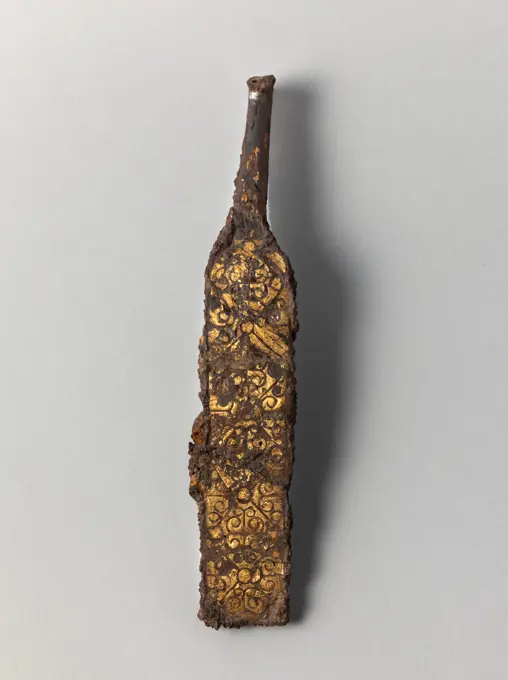
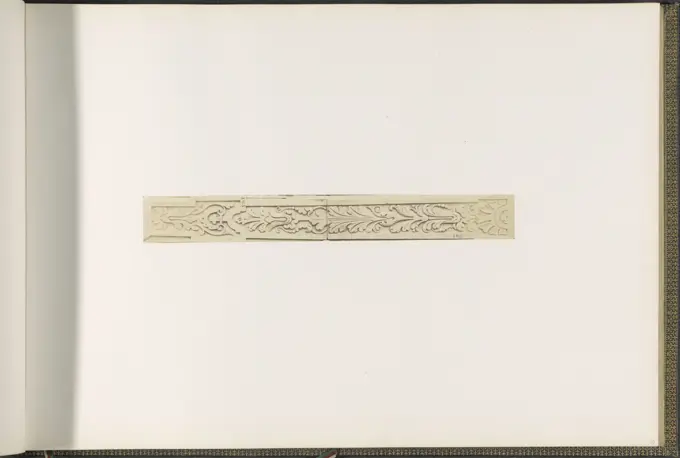
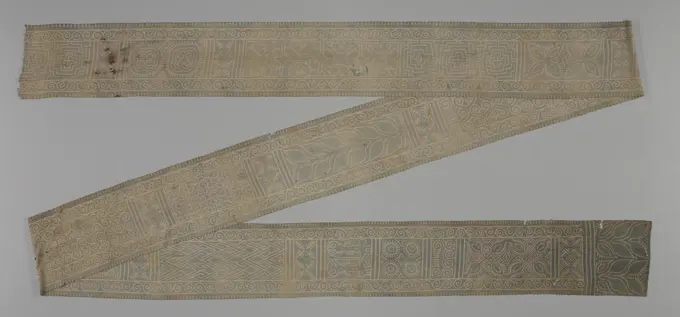
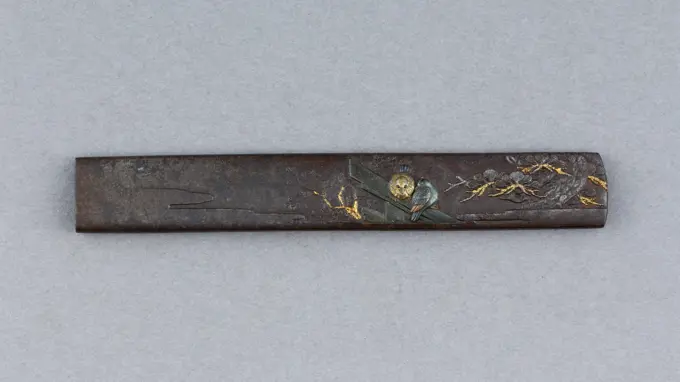
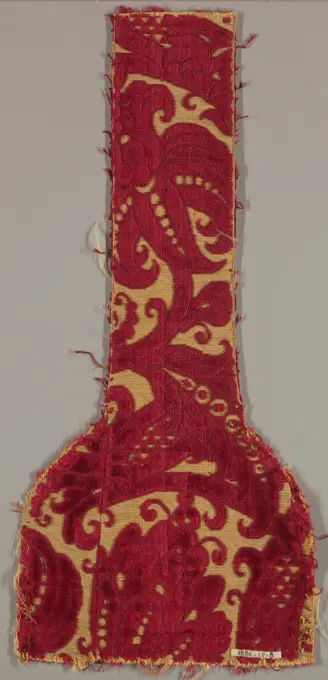
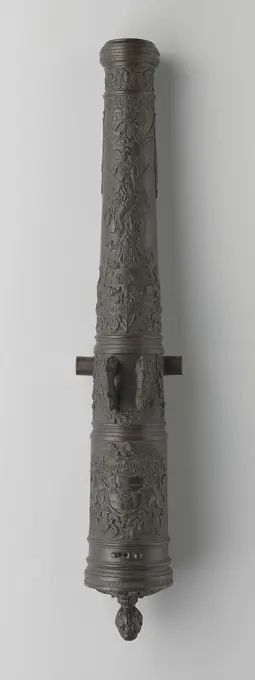
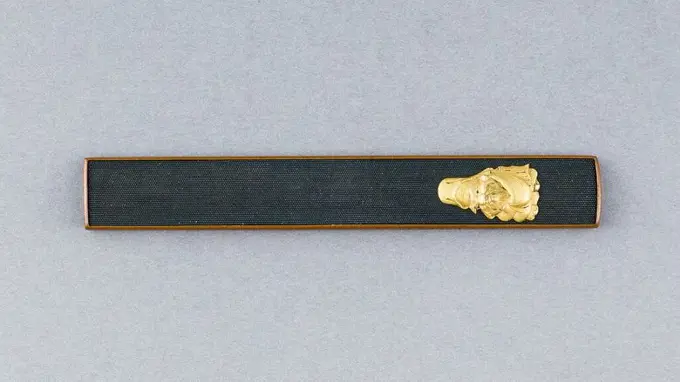
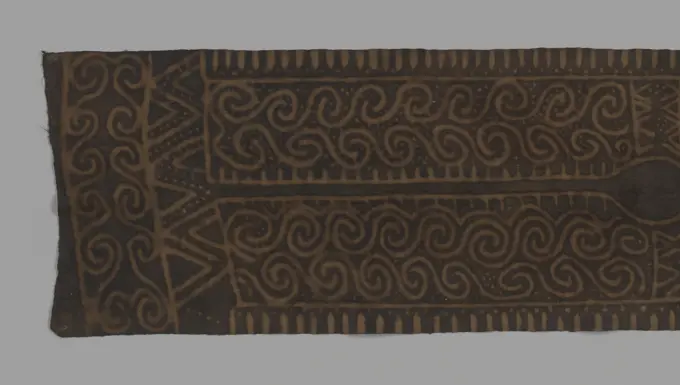
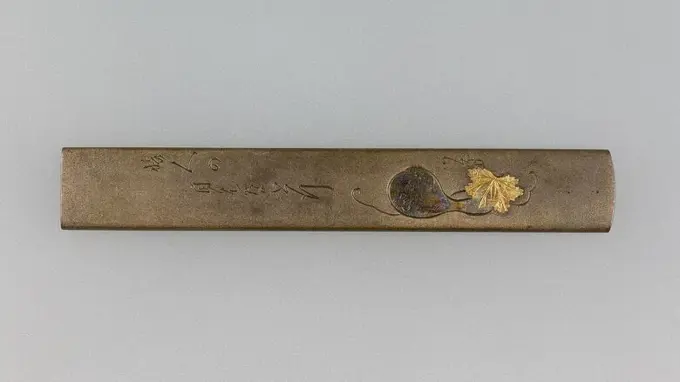
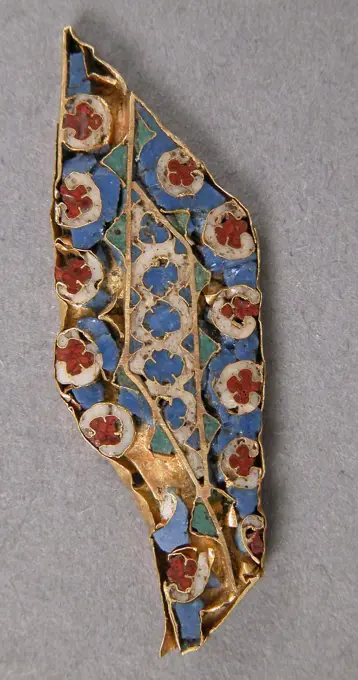
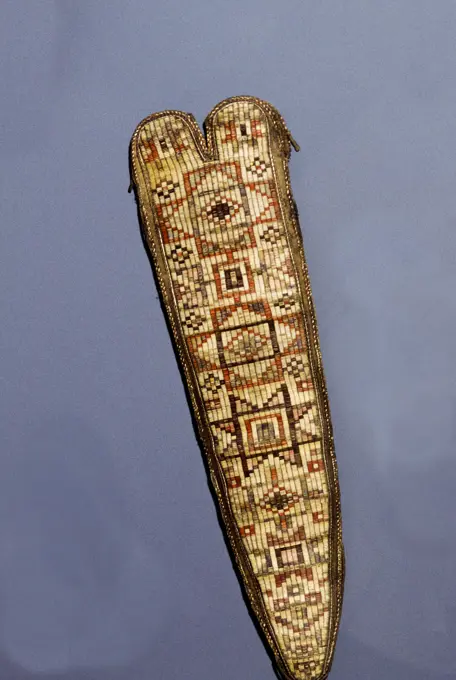
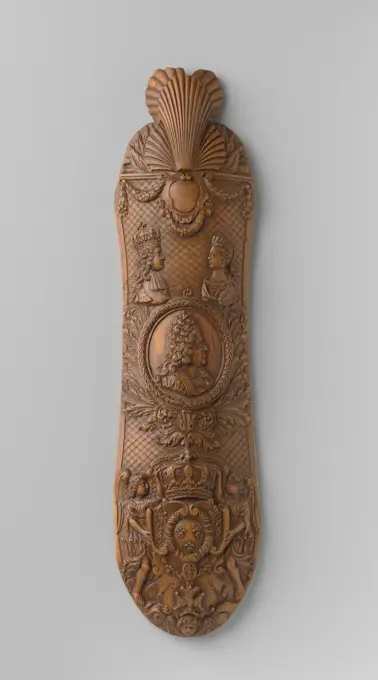
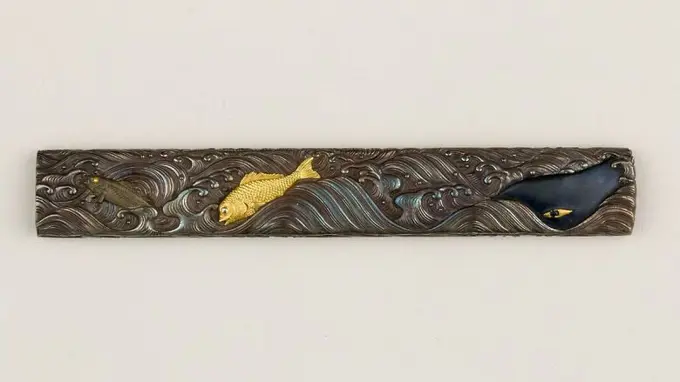
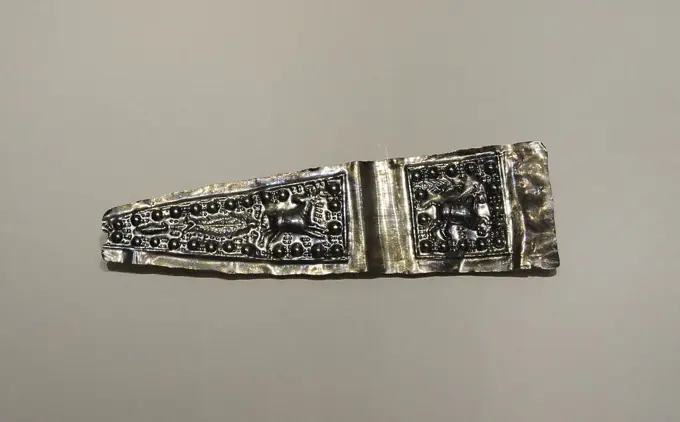
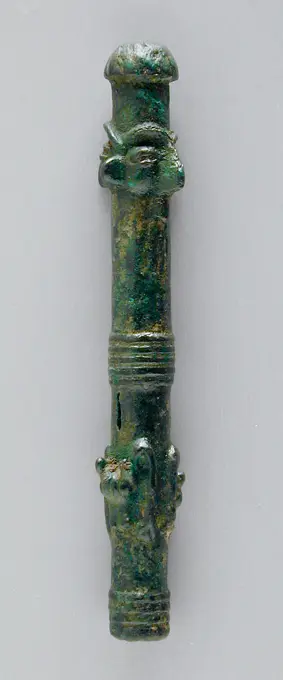
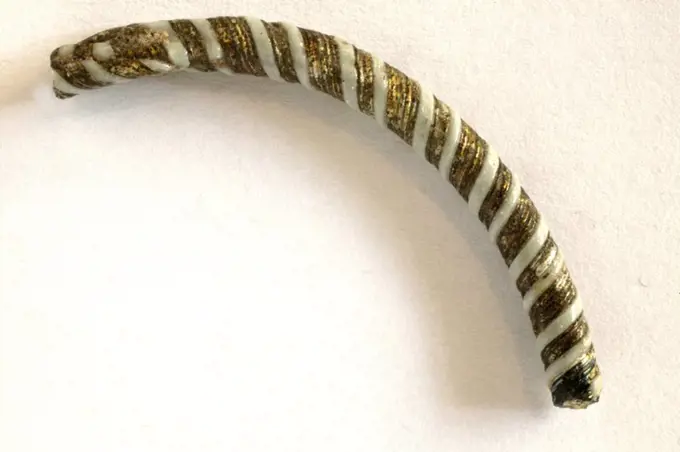
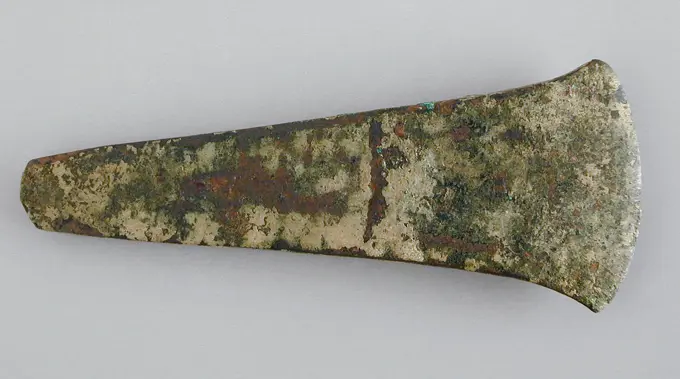
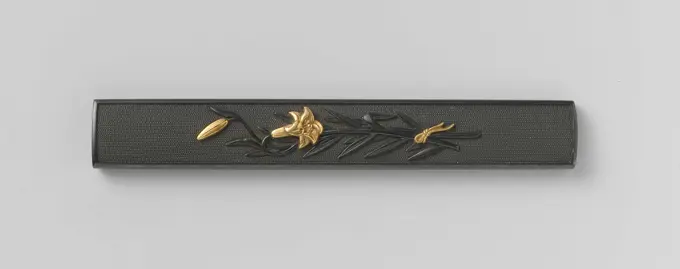
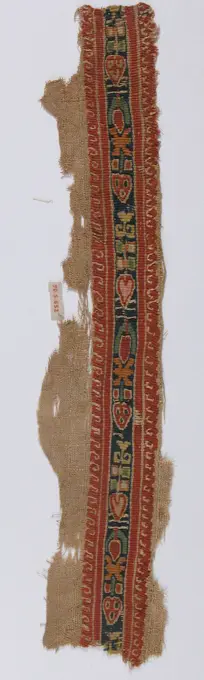
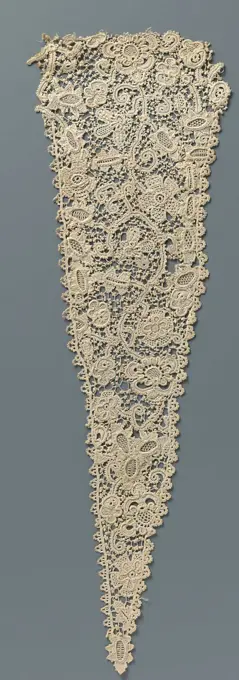
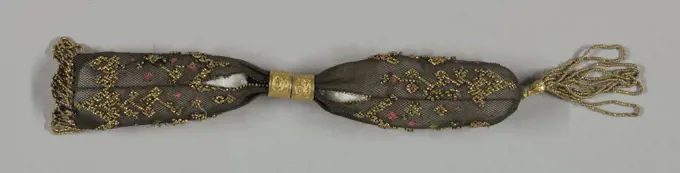
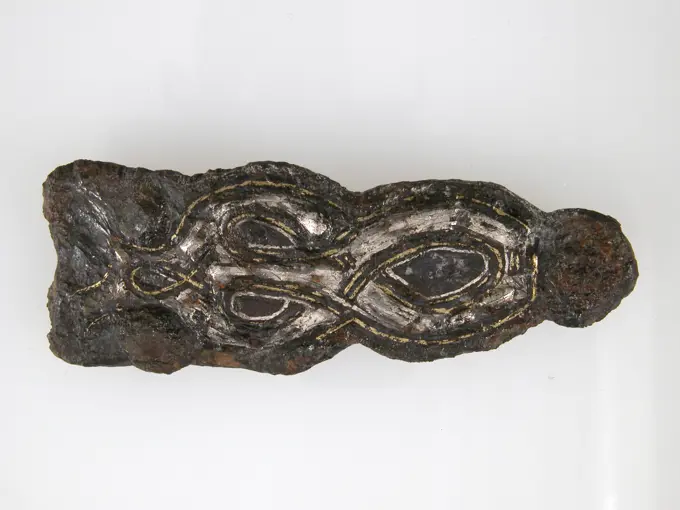
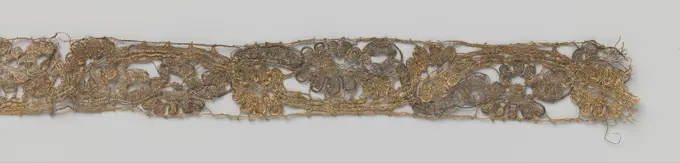
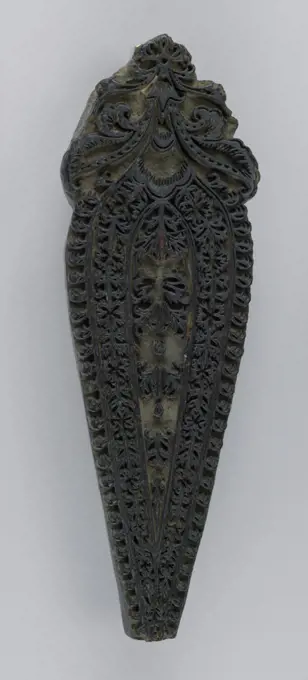
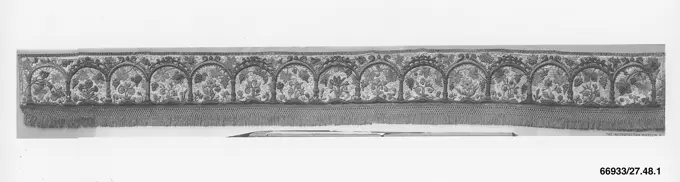
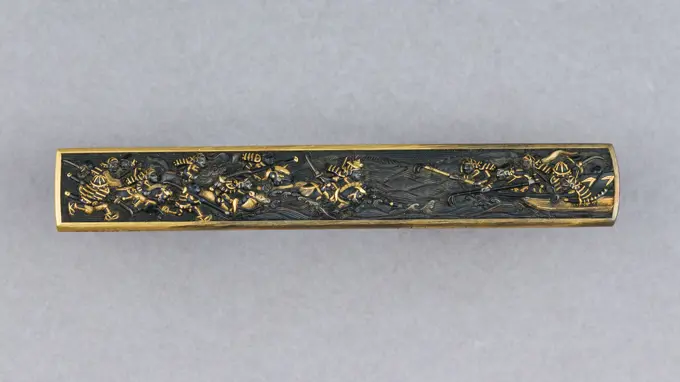
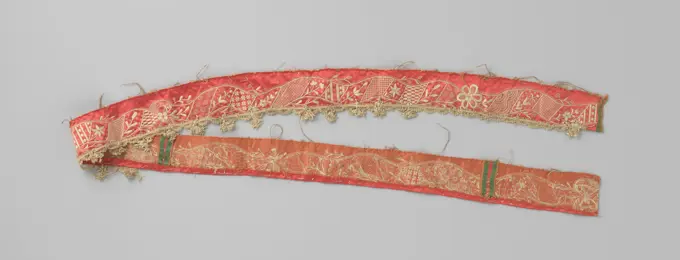
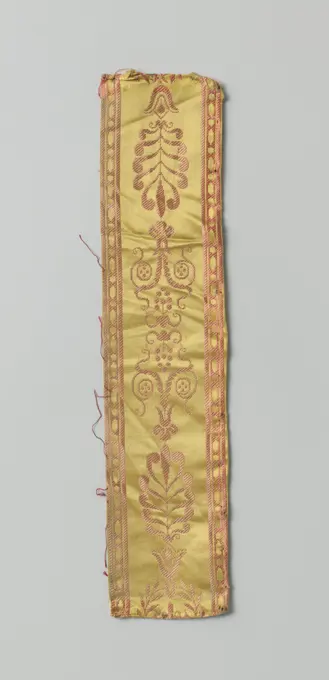
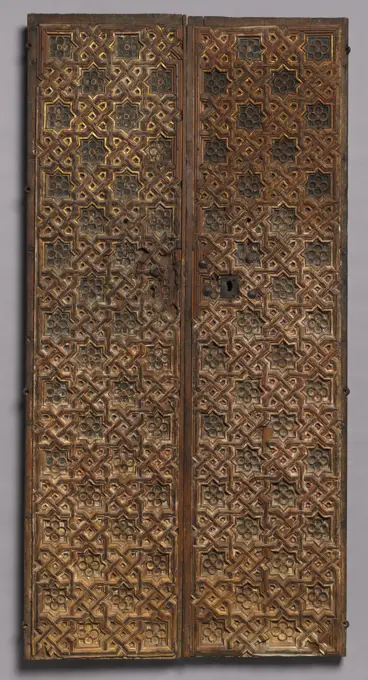
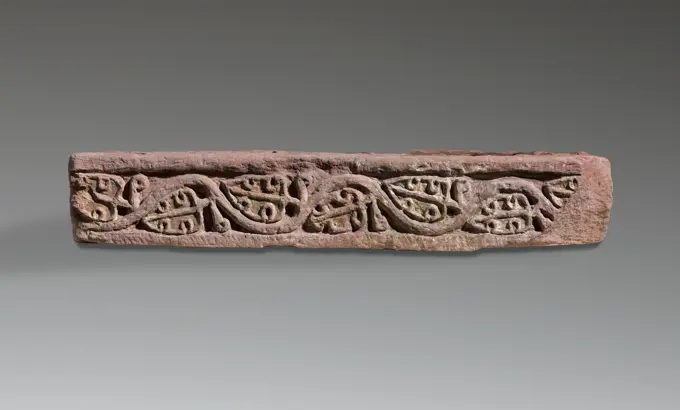
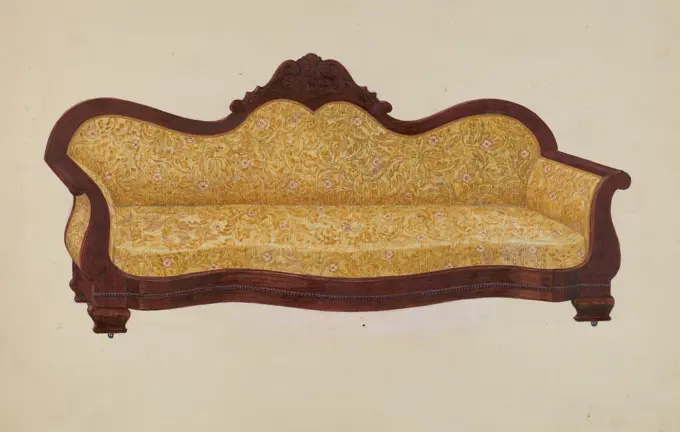
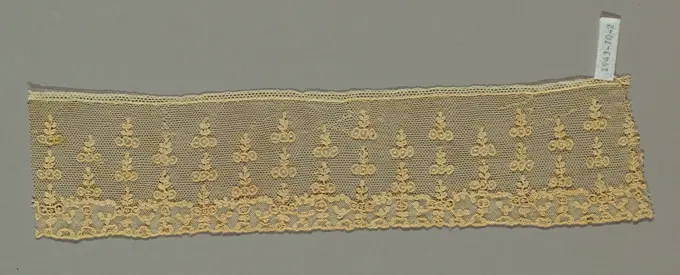
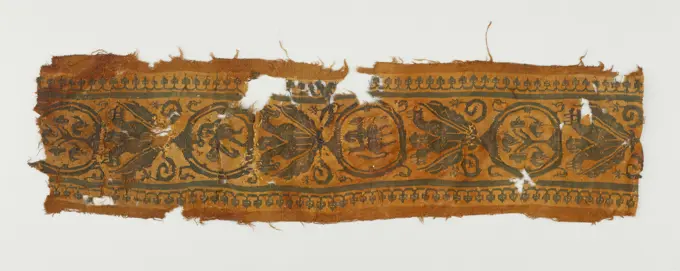
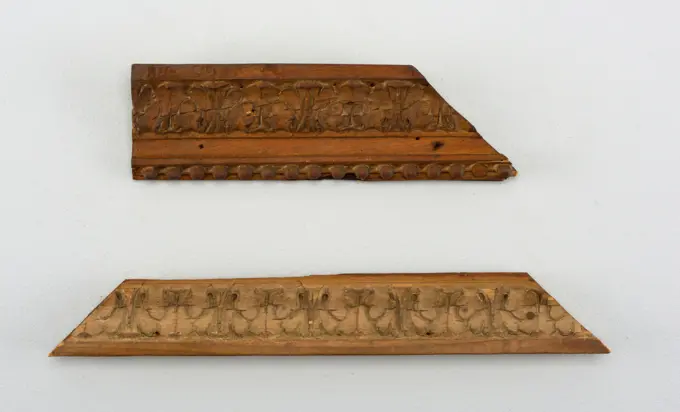
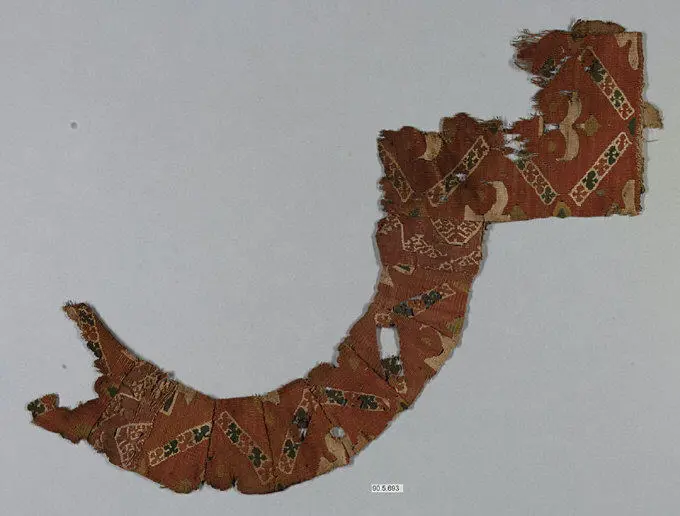
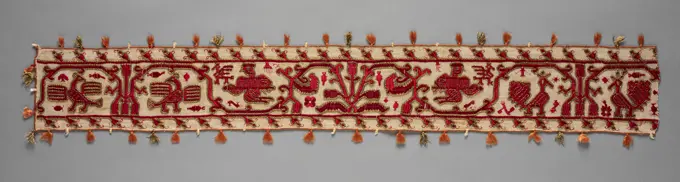
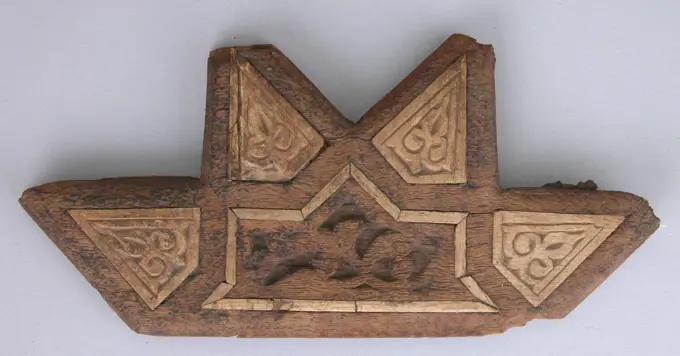
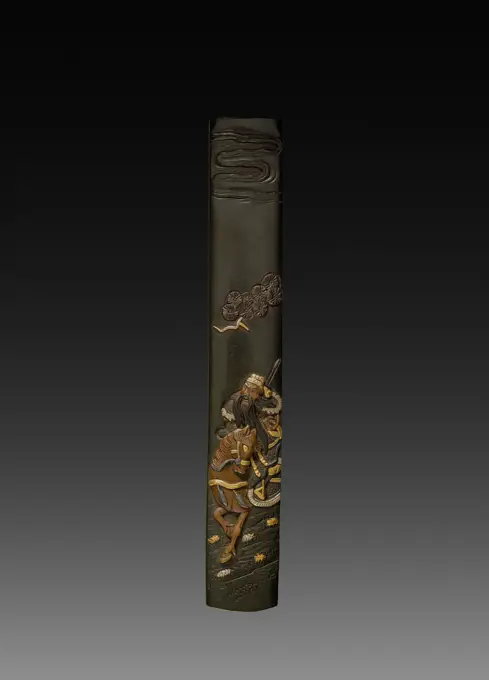
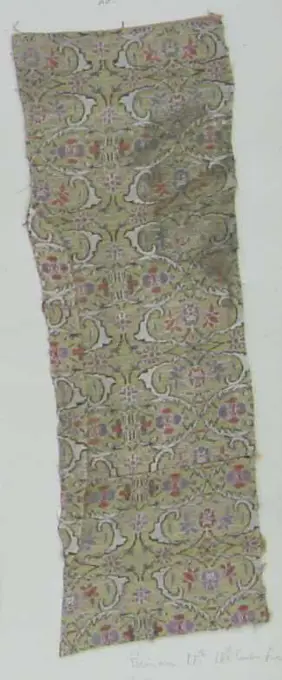
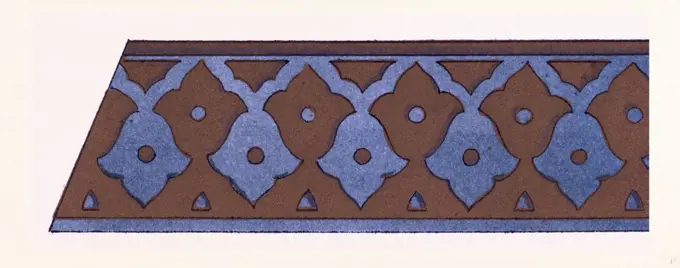
Fragment of a Kontusz sash/belt. Manufaktura Paschalisa Jakubowicza (Warszawa ; wytwórnia pasów ; 1788-1794), manufactureCutlery Case (Germany); wood, parchmentKnife Handle (Kozuka) dated 1828 Iwama Masayoshi A kozuka is a handle of a by-knife that is part of a sword mounting. It is kept in a slot on the reverse of a katana scabbard, often with a matching kgai (hairdressing tool).. Knife Handle (Kozuka). Japanese. dated 1828. Copper-silver alloy (shibuichi), gold, copper-gold alloy (shakud). Sword Furniture-KozukaKnife Handle (Kozuka) late 17th-mid-18th century Japanese A kozuka is a handle of a by-knife that is part of a sword mounting. It is kept in a slot on the reverse of a katana scabbard, often with a matching kgai (hairdressing tool).. Knife Handle (Kozuka). Japanese. late 17th-mid-18th century. Copper-silver alloy (shibuichi), copper-gold alloy (shakud), gold. Sword Furniture-KozukaBand, Medium: silk, metal-wrapped threads Technique: embroidered on velvet, Narrow red band embroidered with stylized floral forms., Europe, 17th-18th century, embroidery & stitching, BandGallon;  2. PO. 18th century (1751-00-00-1800-00-00);Knife Handle (Kozuka). Culture: Japanese. Dimensions: L. 3 13/16 in. (9.7 cm); W. 9/16 in. (1.4 cm); thickness 3/16 in. (0.5 cm); Wt. 1.2 oz. (34 g). Maker: Hamano Toshihiro (Japanese, died 1861). Date: 19th century. Museum: Metropolitan Museum of Art, New York, USA.MountClyde L Cheney, Walking Stick, 1935 1942 Walking StickBand 5th-6th century. Band 445688Choose box with lid, from thick paper, placed on the outside with sit paper with diamond pattern.choose box with member, from thick paper, fits side with sit paper with diamond pattern. Inside Unstroked.Strip mixed side with three wave tops, anonymous, c. 1690 - c. 1699 Strip of natural -colored mixed side: Venetian ribbon side or mezzo punto. Pattern with over the full width of the strip a volute libel, on a hexagonal mesh ground with twisted feston stitches. On the Rank palm flowers and leaves, repetitive motif. The contours of the pattern are formed by a woven ribbon. Within the contours different decorative land with feston stitches. Halfway through the strip a seam. The original finish on the top is probably a straight edge, but due to damage is not clearly visible. The underside is about half, until the seam, finished with a straight border bobbin with arcs, in the other half without arcs. Venice (possibly) linen (material) Venetian tape lace (mixed lace) Strip of natural -colored mixed side: Venetian ribbon side or mezzo punto. Pattern with over the full width of the strip a volute libel, on a hexagonal mesh ground with twisted feston stitches. On the Rank palm flowers and leavStrip colored lace plunger with vine leaf, anonymous, c. 1585 - c. 1599 Strip colored lace plunger: Burato side. On a sling wire tissue of light brown side and linen, a edge pattern has been applied with silk wire in the colors blue, green, yellow and cream. The pattern consists of an angular running slender, with a sluine -light wingerd leaf. Frame by a row of triangular leaves () On a stem. Italy silk. linen (material) gauze Strip colored lace plunger: Burato side. On a sling wire tissue of light brown side and linen, a edge pattern has been applied with silk wire in the colors blue, green, yellow and cream. The pattern consists of an angular running slender, with a sluine -light wingerd leaf. Frame by a row of triangular leaves () On a stem. Italy silk. linen (material) gauzeFragment, Medium: silk, metallic yarns Technique: Compound weave in 8-harness satin with floats of of the foundation weft and continuous and discontinuous supplementary weft patterning bound plain weave by a supplementary warp. l, Fragment of russet silk satin brocaded in gold, and ivory and green silk, showing incomplete symmetrical pattern of foliage and lattice. One selvage present., France, late 17th-early 18th century, woven textiles, FragmentFragment (probably from a Chasuble) Made 1601-1700 Italy. Silk; flat and raised couching (old card) .Knife Handle (Kozuka). Culture: Japanese. Dimensions: L. 3 13/16 in. (9.7 cm); W. 9/16 in. (1.4 cm); thickness 1/4 in. (0.6 cm); Wt. 1 oz. (28.3 g). Date: ca. 1615-1868. Museum: Metropolitan Museum of Art, New York, USA.Velvet Fragment, 1650-1699. Italy, 2nd half of 17th century. Velvet; overall: 60.5 x 25 cm (23 13/16 x 9 13/16 in.).Folding pocket knife, Ivory, silver, steel, brass, enamel, Small blade has straight lower side, straight upper side tapering sharply towards the point. Ivory handle has curved shape, decorated on front and back with small silver floral appliques and inlaid brass dots. Steel on the side has decorative indentions. Blade folds into handle., France or England, ca. 1695-1700, cutlery, Decorative Arts, Folding pocket knifeMountCylinder with Geometric Designs and Hieroglyphs. Egyptian. Date: 1650 BC-1550 BC. Dimensions: L. 2.9 cm (1 1/8 in.); diam. 1 cm (3/8 in.). Glazed steatite. Origin: Egypt. Museum: The Chicago Art Institute, Chicago, USA. Author: Ancient Egyptian.Shield 19th century Indian, Assam. Shield. Indian, Assam. 19th century. Cane, bamboo, polychromy. Assam. ShieldsKnife Handle (Kozuka) 18th century Japanese A kozuka is a handle of a by-knife that is part of a sword mounting. It is kept in a slot on the reverse of a katana scabbard, often with a matching kgai (hairdressing tool).. Knife Handle (Kozuka). Japanese. 18th century. Copper-silver alloy (shibuichi), copper-gold alloy (shakud), gold, silver. Sword Furniture-KozukaSash Fragment 7th century Nasca. Sash Fragment 308019Chasuble column;  XVII/18th century (1690-00-00-1710-00-00);Strook passement met gouddraad.Strip passing of gold thread.Waaierdug made of thick paper, covered with a side of a honey wire pattern in which red swastikas, c. 1850 - c. 1890 Waaierdug of cardboard covered with silk, on which a honey wire pattern with red swastikas. The inside has a recess in the shape of the closed fan and is covered with red paper and taft side. The lid is connected to the box along one side by means of the silk fabric. Canton whole: Paper. Inside: Paper. Inside: Silk Waaierdug of cardboard covered with silk, on which a honey wire pattern with red swastikas. The inside has a recess in the shape of the closed fan and is covered with red paper and taft side. The lid is connected to the box along one side by means of the silk fabric. Canton whole: Paper. Inside: Paper. Inside: SilkSierstuk voor een avondmantel van gemengde kant met rozenhaag.Decorative piece for an evening casing of natural-colored mixed side - climbing side in combination with coniferous lace - Brussels Duchesse. In a widely spread braid soil there are roses that usually support two leaves. An intermediate ornament consists of a few and double voluntaries and many small flowers.Fibula, era of the tène (attributed title). Bronze. Carnavalet museum, history of Paris.Penbox with Inkwell 9th-11th century The importance of calligraphy in Islamic art is reflected in the large number of elaborately detailed scribal accoutrements rendered in a number of materials including metalwork, ceramics, and, as in the case with this penbox, even stone. The pen box of gray 'Mashhad' stone has one circular well and one long slot for pens and brushes. The exterior of the box is incised with a scrolling pattern with punch marks at the center of each scroll.. Penbox with Inkwell. 9th-11th century. Steatite; carved, incised. Attributed to Iran, Nishapur. Excavated in Iran, Nishapur. StoneFragment (France); silk and metallic thread; 1907-30-1Clip. Bronze. China, Han dynasty, 3rd century. Paris, Cernuschi museum. 75290-2 Staple, Asian art, Chinese art, extreme-East art, bronze dore, fixation, fixing, metalFragment, Frame (for Tapestry) (France), mid-18th century; beechwood, carved, painted, gildedBorder Fragment; linen, silk, metal-wrapped silkPlaster model for decorations on the librix Impériale of the Palais du Louvre, c. 1855 - c. 1857 photograph Part of Réunion des Tuileries au Louvre 1852-1857, album 4. Paris paper. photographic support salted paper print permanent exhibition, museum. ornamenting, decorating ~ applied arts Palais du Louvre. Tuilerieënpaleis. Louvre Museum. ParisTweezers 7th century Frankish. Tweezers 465586 Frankish, Tweezers, 7th century, Copper alloy, Overall: 1 1/2 x 1/2 x 3/16 in. (3.8 x 1.2 x 0.4 cm) with wire: 1 1/2 x 9/16 x 3/16 in. (3.8 x 1.4 x 0.4 cm). The Metropolitan Museum of Art, New York. Gift of J. Pierpont Morgan, 1917 (17.193.260)Banner; Head or Waist-Wrapper(Sarita)Knife Handle (Kozuka) 1845 Japanese A kozuka is a handle of a by-knife that is part of a sword mounting. It is kept in a slot on the reverse of a katana scabbard, often with a matching kgai (hairdressing tool).. Knife Handle (Kozuka). Japanese. 1845. Iron, gold, copper-silver alloy (shibuichi). Sword Furniture-KozukaAmulet, sheet gold, bracelet. Dimensions: ca. 11.5 cm long. Dynasty: Dynasty 26-29. Date: 664-380 B.C.. Museum: Metropolitan Museum of Art, New York, USA.Mount (USA); gilded pressed copperFragment; silk and metallic threadKanon van familie Reygersberg.Richly decorated cannon of cast bronze. For the Zundgat on the groundpiece The arm of the Reygersberg family with two lions as shield holders; Below four swimming swans and an eagle above. The ears in the form of dolphins surrounded by flowers; The Langeveld provided with large lowering trophy from Dead Herons and hunting gland, including a cartouche formed by four hunting dogs, deer and a hoggace in which: Semper Ditt. At the head a band of Alabetien. The grape is richly decorated.Knife Handle (Kozuka). Culture: Japanese. Dimensions: L. 3 3/4 in. (9.5 cm); W. 9/16 in. (1.4 cm); thickness 1/4 in. (0.6 cm); Wt. 1 oz. (28.3 g). Date: ca. 1615-1868. Museum: Metropolitan Museum of Art, New York, USA.Butt cap for spear haft, 5th-4th century BCE, 4 5/8 × 1 5/16 × 1 in., 0.2 lb. (11.75 × 3.3 × 2.5 cm, 0.1 kg), Chin-tsun style Bronze inlaid with silver, China, 5th-4th century BCEBanner; Head or Waist-Wrapper(Sarita)Knife Handle (Kozuka). Culture: Japanese. Dimensions: L. 3 13/16 in. (9.7 cm); W. 9/16 in. (1.4 cm); thickness 3/16 in. (0.5 cm); Wt. 1 oz. (28.3 g). Date: 1789-1876. Museum: Metropolitan Museum of Art, New York, USA.Element of a Border for an Icon Frame 10th century Byzantine. Element of a Border for an Icon Frame 464526 Byzantine, Element of a Border for an Icon Frame, 10th century, Cloisonn enamel, gold, Overall: 3/8 x 1 1/4 x 1/16 in. (1 x 3.1 x 0.2 cm). The Metropolitan Museum of Art, New York. Gift of J. Pierpont Morgan, 1917 (17.190.655)Strip of bobbin with the lengthwise set palm flower, anonymous, c. 1740 - c. 1760 Strip irregularly brown-colored, bobbin, binche side. The repeating and continuous pattern consists of a palm flower placed in the longitudinal direction, on a curved stalk with a small curved leaf and larger curved leaf. From the top of the flower, two flowers with large leaves spring, the largest leaf curls around the top of the strip, the flour with the smaller leaf bends the other way and touches the underside of the strip. The motifs are connected by an irregular decorative land, a snowflake land. The motifs are made in linen battle and mains with openwork edges. The top of the strip is finished with a separate strap. The underside of the strip is straight finished and provided with picots. Southern Netherlands linen (material) Bobbi Lace / Binche Lace Strip irregularly brown-colored, bobbin, binche side. The repeating and continuous pattern consists of a palm flower placed in the longitudinal directCree woven from dyed porcupine quill work beautifies this knife sheath. ca 1830Rasp van palmhout met medaillonportret.Grater of Palmout. The back side in low embossed with a medallion portrait of Louis XIV () Parable profile portraits from a juvenile cauldown couple. Down the French king arm surrounded by chains of the Order of St. Michel and from St. Esprit held by two angels. In the chains the letters h.r.s.l. At the top of a cartouche with flower and leaf-garlands. Above a shell-shaped Palmmet motif by Trophete. The iron grater is surrounded by a leaf edge with two degenerated birds on the top; At the bottom of the arm of a bastard branch of bourbons.Knife Handle (Kozuka). Culture: Japanese. Dimensions: L. 3 13/16 in. (9.7 cm); W. 9/16 in. (1.4 cm); thickness 3/16 in. (0.5 cm); Wt. 1.2 oz. (34 g). Date: 18th century. Museum: Metropolitan Museum of Art, New York, USA.Headband, Medium: wool Technique: doublecloth, Man's headband with geometrical motifs in tan on black background, red border. On each end, pompom pendant on attached cords., Alta Vista, Nayarit, Mexico, probably 19th century, woven textiles, HeadbandKoto (Zither), early 1600s. Japan, Edo period (1615-1868). Gold, silver, and black lacquer on wood; overall: 152.4 cm (60 in.).Sock late 18th century. Sock. late 18th century. Silk, metal. Attributed to Iran. Textiles-CostumesMogon I Hoard. Dagger scabbard decorated with scenes of animals (horse, deer, birds and fish) surrounded by a frame of ovum. 3rd-1st centuries BC. Silver. Hill of Los Castellanos-Mogon, Villacarrillo (Jaen province, Andalusia, Spain). National Archaeological Museum. Madrid. Spain.Cover of a Palm-Leaf Manuscript, 1600s. Ceylon. Ivory; overall: 20 cm (7 7/8 in.).Macehead. Iran, Luristan, Luristan bronzes, 800-650 B.C.. Arms and Armor; maces. Bronze, castKnife Handle (Kozuka). Culture: Japanese. Dimensions: L. 3 13/16 in. (9.7 cm); W. 9/16 in. (1.4 cm); thickness 1/4 in. (0.6 cm); Wt. 1.3 oz. (36.9 g). Date: 19th century. Museum: Metropolitan Museum of Art, New York, USA.Knife with Sint Catharina and man with sword, anonymous, 1550 - 1600 Knife with fragment of iron blade. The copper Lakes is decorated with a windscreen pattern in which flowers are applied. The crown on one side shows Sint Catharina, the other side a man with raised sword and a lion at his feet. Southern Netherlands copper (metal) engraving Knife with fragment of iron blade. The copper Lakes is decorated with a windscreen pattern in which flowers are applied. The crown on one side shows Sint Catharina, the other side a man with raised sword and a lion at his feet. Southern Netherlands copper (metal) engravingPIEZA DE JOYERIA, PULSERA DE VIDRIO SOGUEADA CON DOS HILOS BLANCOS (EN EL MUSEO DE SANTA CRUZ).Axe-Head. Cyprus, 2400-1350 B.C.. Arms and Armor; axes. BronzeDecoration with a lily of relief; In gold are shown a flowering and closed lily and a thread around the branch. Black background and border.Belt Plaque with Three Ibex. Culture: Northwest China. Dimensions: H. 2 5/8 in. (6.7 cm); W. 5 1/2 in. (13.9 cm). Date: 2nd-1st century B.C.. Museum: Metropolitan Museum of Art, New York, USA.Textile Fragment 5th century. Textile Fragment 444131Strap chain with one decorated terminal preserved. Dimensions: L. 44.5 cm (17 1/2 in); W. 3 cm (1 3/16 in). Date: 332-30 B.C..'Straps' consist of two or more loop-in-loop chains fastened side-by-side. This one consists of fourteen chains held together by linking wires at regular intervals.The terminal is decorated with the scene of an offering royal sphinx in an Egyptian shrine above a lotiform design, the scene elaborated in filigree using flattened wire and with small pieces of hammered sheet. The orientation of the scene suggests the terminal was made to hang vertically. Museum: Metropolitan Museum of Art, New York, USA.Bracelet A. J. Hedges & Co. American 1879-90 Nineteenth-century Newark, New Jersey, was home to some of Americas most accomplished jewelry manufacturers. Beginning in 1801 with the establishment of the first jewelry production workshop in America, the Newark industry flourished and prospered until its demise with the stock market crash of 1929. The citys two hundred or more factories manufactured everything from gold collar buttons to diamond brooches, coupling exquisite workmanship with technological innovation and supplying clients worldwide. The industrys success was bolstered by the introduction of steam-powered machinery to American factories, the discovery of gold in California in 1849, and the growth of the transcontinental railroad, which transported bars of gold directly to Newark from the California mines. In this unusual design for a link bracelet, the firm of A.J. Hedges & Co. utilized their patented process for mottling yellow, white, red and green gold, a technique insOplegstuk van gehaakte kant imitatie grove Venetiaanse naaldkant imiteert.V-shaped image of natural-colored Irish crochet side, imitation coarse Venetian needle side. The long sides of the V are finished with a copied bow edge. The short side is not finished.Greek art. Turkey. Edge of the lid of a sarcophagus. Terracotta. Late 6th century B.C. It comes from the necropolis of Clazomene (now Turkey). At the top is depicted a battle scene and in the lower two lions attacking a boar. Metropolitan Museum of Art. New York. United States.Miser's purse, Medium: silk, metal Technique: crocheted, Crocheted black silk embroidered with minute red and green squares and ornamented with gold beads in floral pattern. Two gold rings control side closing; gold beads form a tassel at one end, a fringe at the other., France, early 19th century, costume & accessories, Miser's purseFragment of an ornament strip of ciselé velvet, anonymous, c. 1550 - c. 1650 An ornament strip. Green -gray velvet on gray -white soil, with silver wire pierced, shows a symmetrical Renaissance ornament in the middle track and current tanglas in the narrow side courses. NOTE: MEERSHIP; 1.3 cm keper (3 colors ships). Italy silk Velvet chiseled An ornament strip. Green -gray velvet on gray -white soil, with silver wire pierced, shows a symmetrical Renaissance ornament in the middle track and current tanglas in the narrow side courses. NOTE: MEERSHIP; 1.3 cm keper (3 colors ships). Italy silk Velvet chiseledBelt Plate 7th century Frankish. Belt Plate 465058 Frankish, Belt Plate, 7th century, Iron, silver and brass inlay, Overall: 2 13/16 x 1 x 1/4 in. (7.2 x 2.6 x 0.6 cm). The Metropolitan Museum of Art, New York. Gift of J. Pierpont Morgan, 1917 (17.191.341)Strip of gold side and silver side with overcuting tendrils, anonymous, c. 1700 - c. 1799 Strip Curded gold and silver side. The pattern consists of a continuous wavy slender with a flower with seven lobes made in gold thread before and after every wave top. This golden rank is cut by a wavy silver slender, with a succession of a circular, a lobed and a more or less oval -shaped motif. A gold -colored oval center and an angular silver -colored center have been made alternately in the center of the lobed motif. The motifs are mainly made in shape and in linen battle, with thicker contour threads and braided contour lines. Top and bottom of the strip are straight finished, with few picots. France silver thread. silk bobbin lace Strip Curded gold and silver side. The pattern consists of a continuous wavy slender with a flower with seven lobes made in gold thread before and after every wave top. This golden rank is cut by a wavy silver slender, with a succession of a circular, a lobed and Bliżej Kultury unknownPrinting block, Medium: wood Technique: carved in relief, Block for printing textiles. Elongated triangular shape. Contemporary picture hangers attached., India, 19th century, appliances & tools, Printing blockValance early 17th century British. Valance 222072Knife Handle (Kozuka) 17th century Japanese A kozuka is a handle of a by-knife that is part of a sword mounting. It is kept in a slot on the reverse of a katana scabbard, often with a matching kōgai (hairdressing tool).. Knife Handle (Kozuka) 35056Embroidered Interior Textile, anonymous, c. 1750 - c. 1760  France (possibly) silk. braid embroidering  France (possibly) silk. braid embroideringFragment silk tissue of a seat cover., C. 1805 Fragment yellow silk tissue, from a seat cover. The pattern has pink palmets and arabesks on a yellow ground. The fragment is part of thirteen fragments with invnr. BK-1992-18-A to BK-1992-18-M. France silk Fragment yellow silk tissue, from a seat cover. The pattern has pink palmets and arabesks on a yellow ground. The fragment is part of thirteen fragments with invnr. BK-1992-18-A to BK-1992-18-M. France silkGypsum Model for a Vault Decoration of the Richelieu Pavillon in the Louvre Palace. Share of meeting of the Tuileries at the Louvre 1852-1857, album 4.Prehistory, Italy, Bronze Age. Castelluccio culture. Bone carved in the shape of a snake. From Sicily Region.Ornament of farm wagon, with cut bundle of grain, hat and sickle, ornament part wood carving sculpture sculpture wood paint, Wooden ornament of farm wagon with carved bundle grain hat and scythe flanked by oak and laurel leaves adorn driving status peasant harvestPair of Doors, early 1400s. Spain, early 15th century. Gilded and painted wood (pine); overall: 170.2 x 86.4 cm (67 x 34 in.).A fragment of a hairstyle from apse and cathedral, a block of hairstyle from apse and cathedral; Unknown Nubian workshop; 1. W. VII century (601-00-00-625-00-00), 2. PO. VII century (651-00-00-700-00-00);Faras (Sudan), Florous decorations, relief decorations, frieze, Nubian art, Nubian crafts, vine, Polish excavations in Faras (Sudan)Edward A Darby, Mahogany Sofa, 1935 1942 Mahogany SofaBorder (France); linenFragment of Coptic fabric unknownUpper outer foot valence. UnknownShoulder Band Fragment 6th-8th century. Shoulder Band Fragment. 6th-8th century. Linen, wool; tapestry weave. Attributed to Egypt. TextilesMolding; wood, carvedFragment multicolored, striped silk mexicaine, anonymous, c. 1750 - c. 1800 Fragment light, dark green and purple striped silk tissue on which a winding flower lidge and loose flower branches. France silk Fragment light, dark green and purple striped silk tissue on which a winding flower lidge and loose flower branches. France silkPlaque 4th-7th century Coptic. Plaque 475136Lower proper right valence. UnknownTextile Fragment, undetermined Paracas. , 200-600 C.E. Cotton, camelid fiber, 15 3/4 x 3 1/8 in. (40.0 x 8.0 cm).   Arts of the Americas 200-600 C.E.Panel 14th-15th century. Panel 445139Textile Fragment 6th century. Textile Fragment 444172Band, 1600s. Greece, Cyclades Islands, Southern Group, Melos , 17th century. Embroidery; silk and gold filé on linen; overall: 11.5 x 78.8 cm (4 1/2 x 31 in.).Panel 14th-15th century. Panel 445092Knife Handle (Kozuka), c 1800s. Japan, Edo period (1615-1868). Inlaid bronze; overall: 1.4 cm (9/16 in.).Textile Fragment 17th-18th century. Textile Fragment 454484Diamond-Shaped Plaque 16th century or later Tibet. Diamond-Shaped Plaque. Tibet. 16th century or later. Bone. BoneTurkish ornament