Historical Decorative Artifacts

An array of antique decorative items like sashes, knife handles, and embroidered bands, highlighting intricate craftsmanship from various historical periods.

Cutlery Case (Germany); wood, parchment
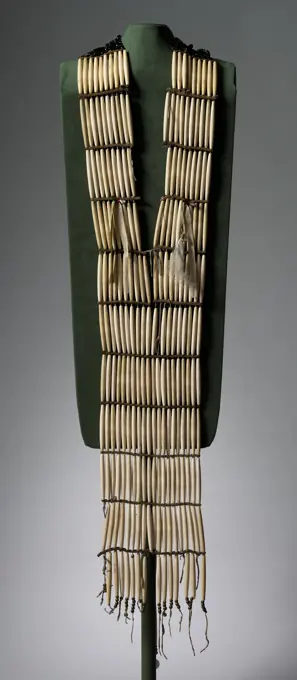
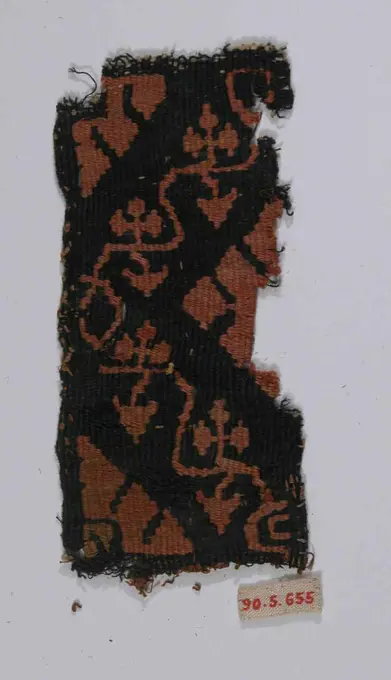
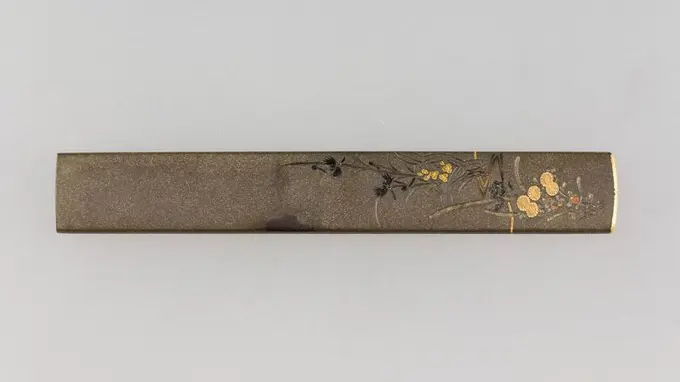
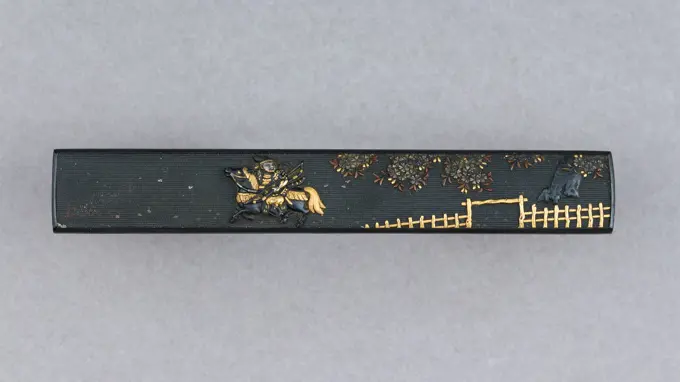
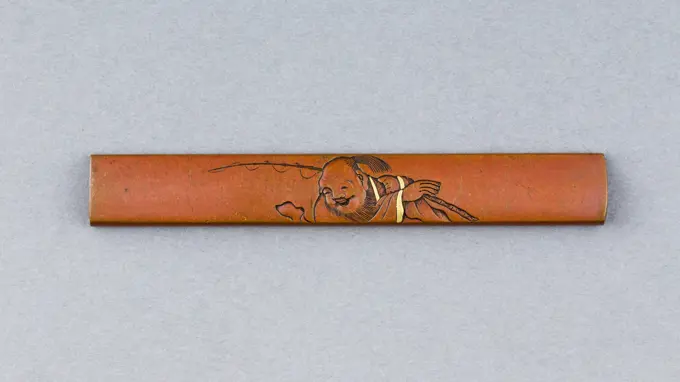
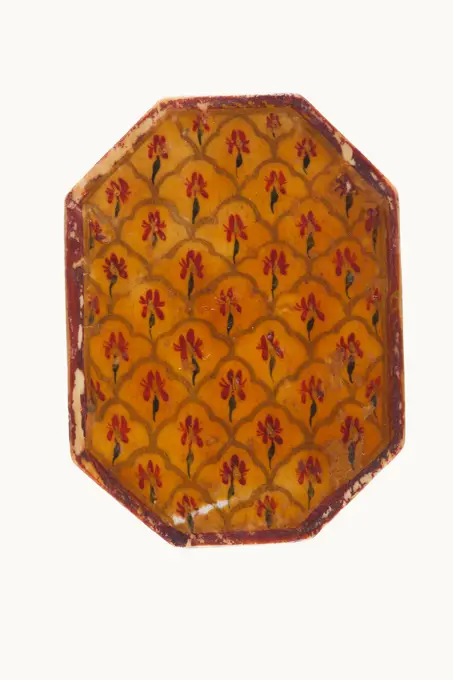
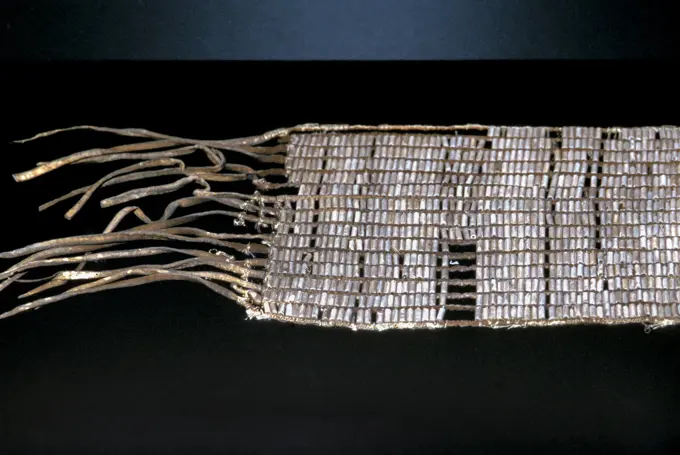
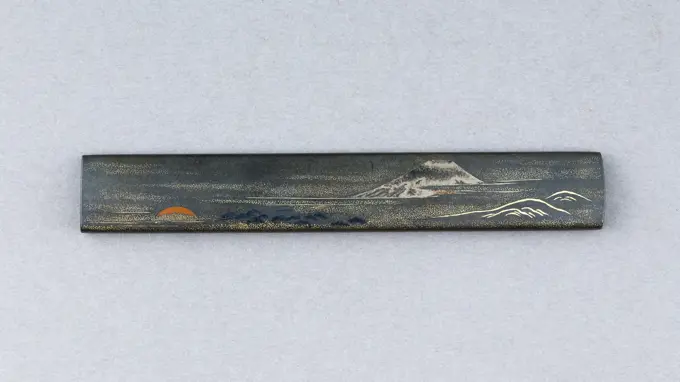
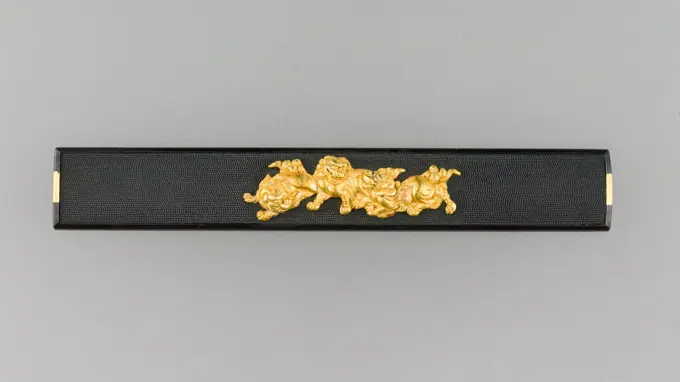
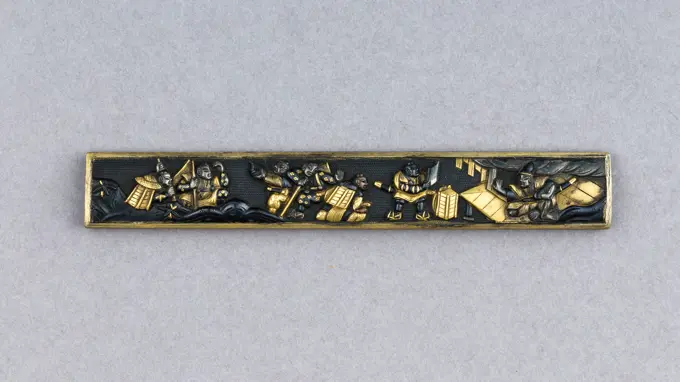
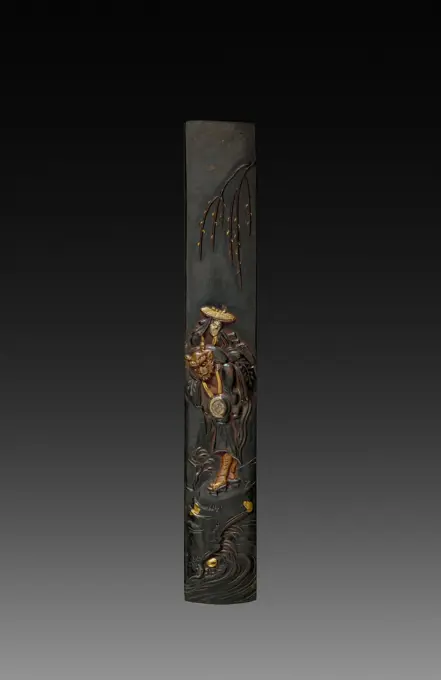
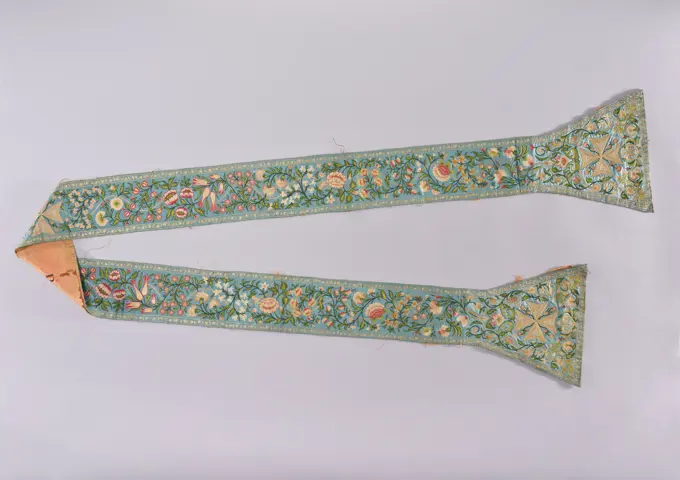
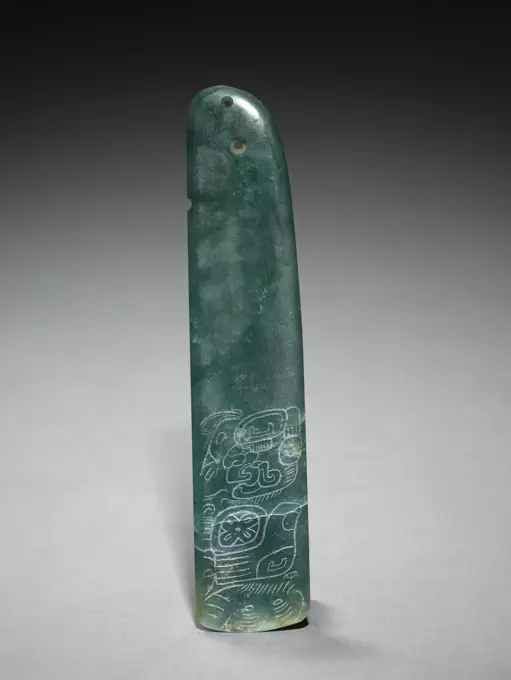
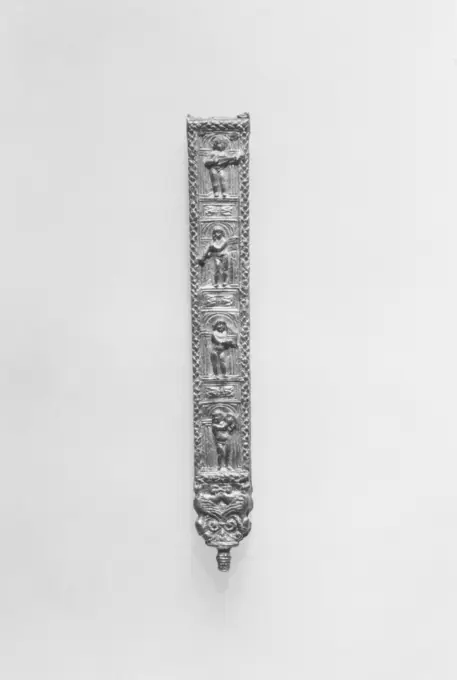
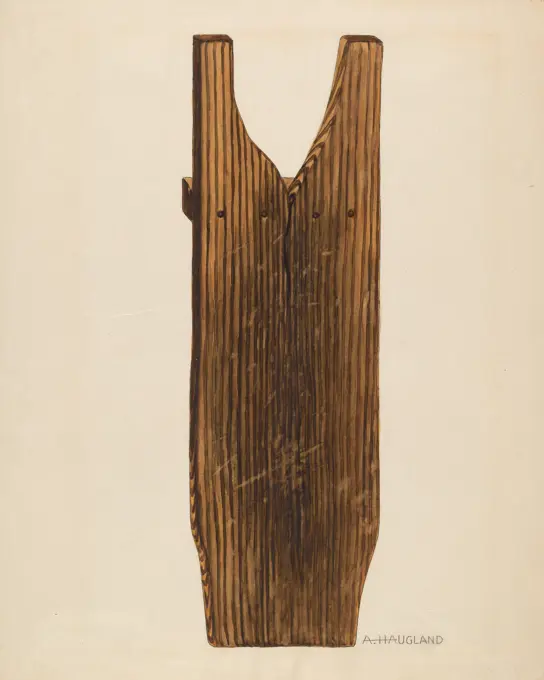
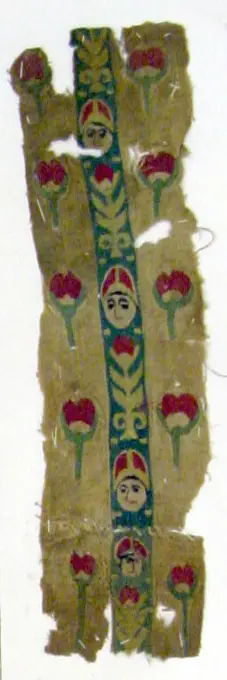
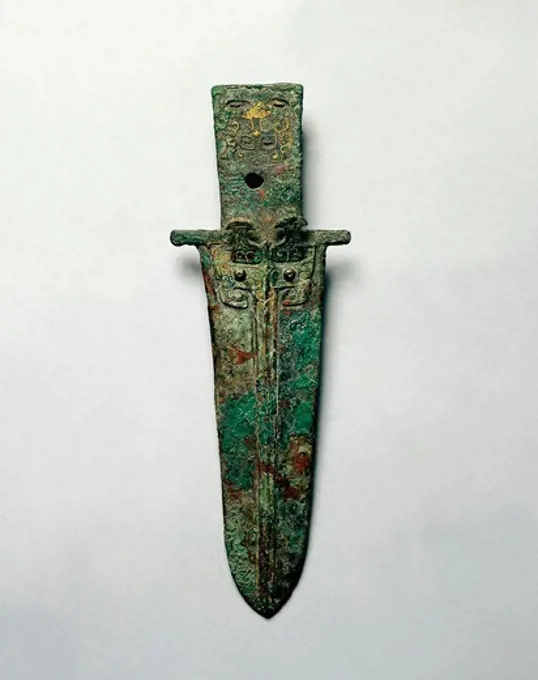
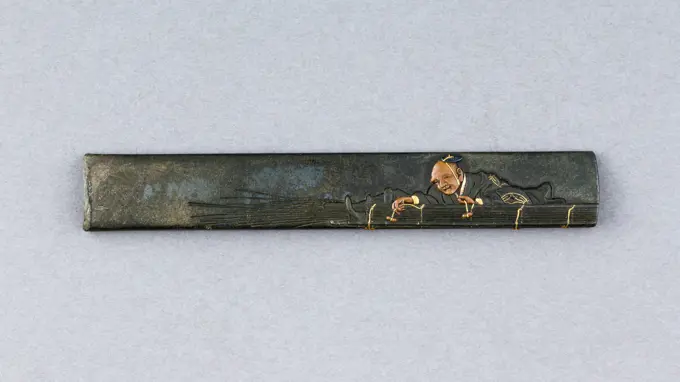
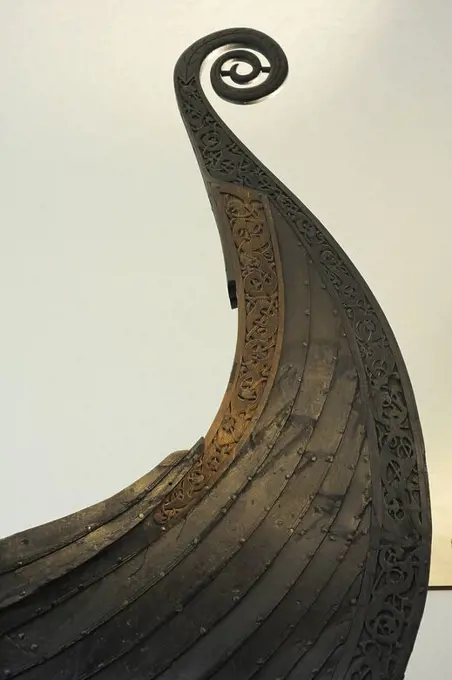
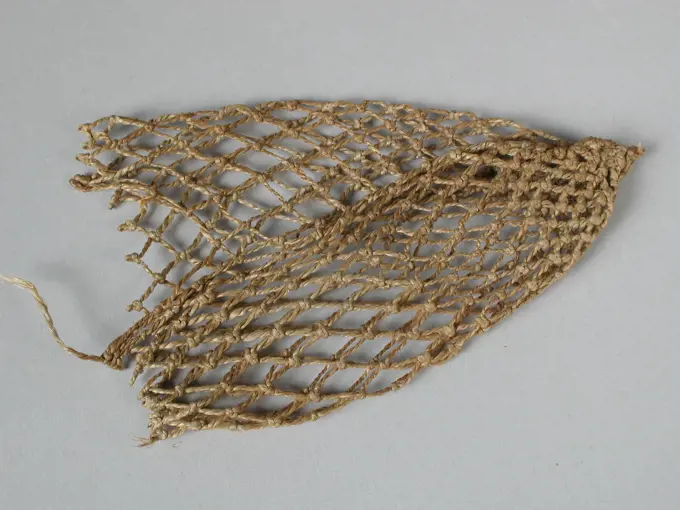
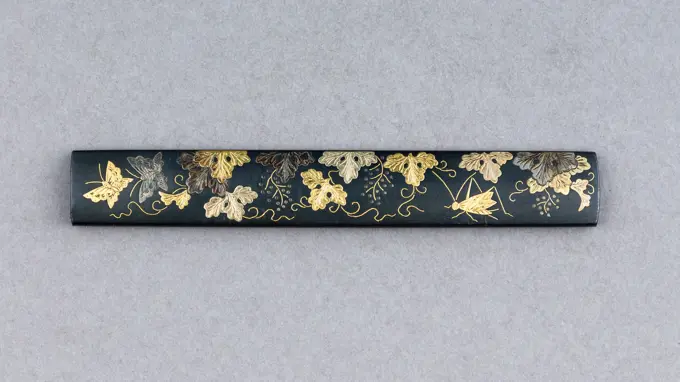
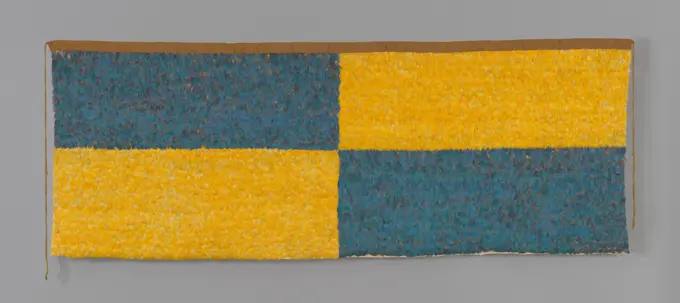
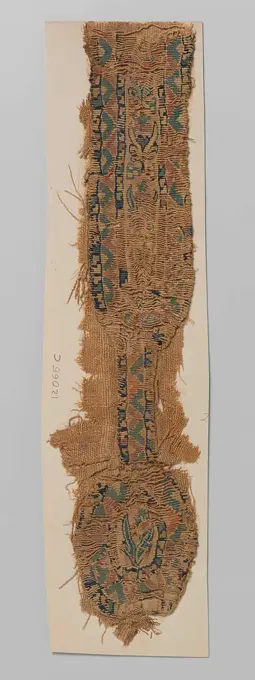
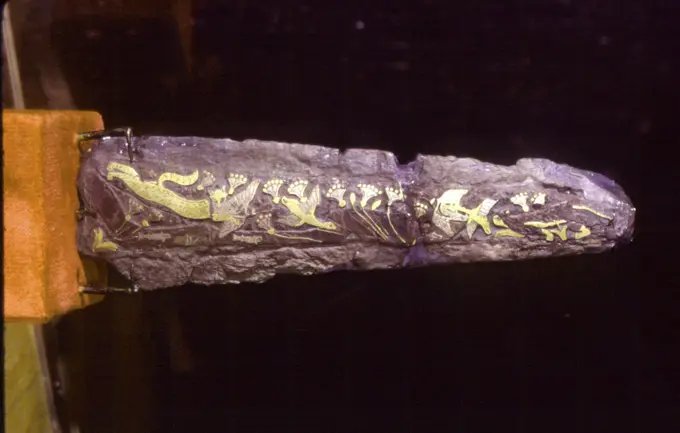
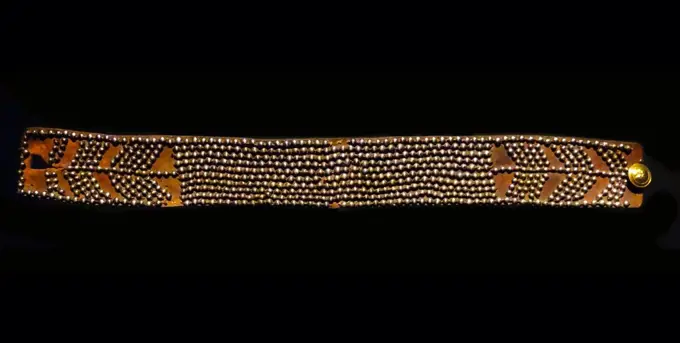
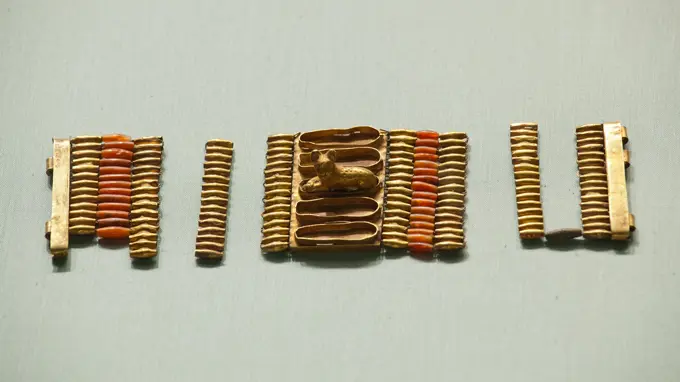
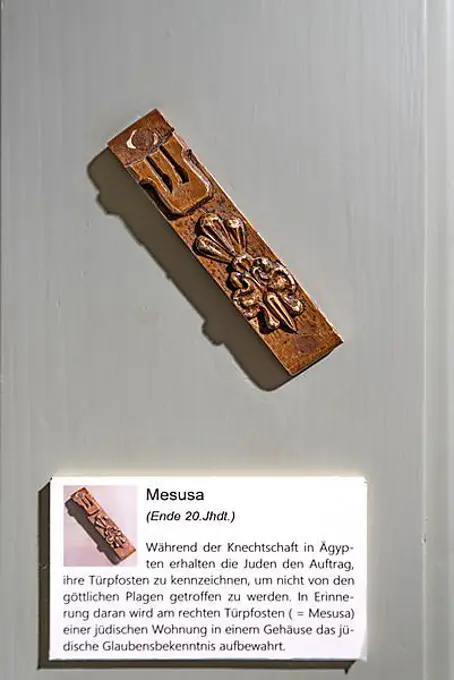
CUERNO DE CAZA CON RELIEVES DE ADAN Y EVA EN EL PARAISO Y CAZADOR. Location: MUSEO DEL PUEBLO ESPAÑOL. MADRID. SPAIN.Hair-Pipe Necklace, early 1900s. America, Native North American, Plains, Nakota (Yankton Sioux) people, early 20th century. Cow bone beads, glass beads, brass beads, silk ribbon, metal coin, native-tanned hide or rawhide stringing, vegetable-tanned hide separators ; overall: 236.2 cm (93 in.). White travelers referred to tubular beads like those in this womans necklace as “hair pipes.” This may be because Plains people wore similar pipe-shaped beads in their hair. This example was made after 1880, when natives began to use European pipe-shaped beads made by machine from cow bones.Textile Fragment 5th-6th century. Textile Fragment 444134Border Made 1690-1710 France. Linen, needle lace .Knife Handle (Kozuka). Culture: Japanese. Dimensions: L. 3 13/16 in. (9.7 cm); W. 9/16 in. (1.4 cm); thickness 3/16 in. (0.5 cm); Wt. 1 oz. (28.3 g). Date: 1785-1876. Museum: Metropolitan Museum of Art, New York, USA.Knife Handle (Kozuka) 19th century Genshosai Masaharu Japanese A kozuka is a handle of a by-knife that is part of a sword mounting. It is kept in a slot on the reverse of a katana scabbard, often with a matching kgai (hairdressing tool).. Knife Handle (Kozuka). Japanese. 19th century. Copper-silver alloy (shibuichi), gold, copper. Sword Furniture-KozukaKnife Handle (Kozuka) ca. 1615-1868 Japanese A kozuka is a handle of a by-knife that is part of a sword mounting. It is kept in a slot on the reverse of a katana scabbard, often with a matching kōgai (hairdressing tool).. Knife Handle (Kozuka) 34564Knife Handle (Kozuka) 19th century Japanese A kozuka is a handle of a by-knife that is part of a sword mounting. It is kept in a slot on the reverse of a katana scabbard, often with a matching kōgai (hairdressing tool).. Knife Handle (Kozuka) 35054Knife Handle (Kozuka). Culture: Japanese. Dimensions: L. 3 3/4 in. (9.5 cm); W. 9/16 in. (1.4 cm); thickness 3/16 in. (0.5 cm); Wt. 1.1 oz. (31.2 g). Date: ca. 1615-1868. Museum: Metropolitan Museum of Art, New York, USA.Molding; wood, gildedKnife Handle (Kozuka) ca. 1615-1868 Japanese A kozuka is a handle of a by-knife that is part of a sword mounting. It is kept in a slot on the reverse of a katana scabbard, often with a matching kōgai (hairdressing tool).. Knife Handle (Kozuka) 34584Playing Card. India, late 18th-19th century. Lacquer. Osseous material (bone, horn, or ivory), lacquerHat -slip (barbe) from Brussels bobbin, anonymous, c. 1715 - c. 1725 Capslip (Barbe) from Brussels bobbin. The shape is tapered to straight bottom corners. The sides have a picot edge. The decoration consists of garden vases. Brussels . Brussels bobbin lace Capslip (Barbe) from Brussels bobbin. The shape is tapered to straight bottom corners. The sides have a picot edge. The decoration consists of garden vases. Brussels . Brussels bobbin laceSrebrna and urban from the nineteenth century in the collections of the National Museum in Warsaw - a general view in the front;  around 1920-1922 (1918-00-00-1922-00-00);Powder Flask ca. 1700 Norwegian. Powder Flask 27940Belt, 20th century, 42 7/16 x 4 9/16 in. (107.8 x 11.6 cm), Silk, metal, leather; needlework, Peru, 20th centuryFibula łukowata. unknown, authorAmphora (Storage Jar) 200 BCE-1 BCE Egypt. Glass . Ancient EgyptianCane handle, Wood, inlaid silver, Small round knob, slightly flattened, set on short stem; wood inlaid in silver in completely conventionalized design; formed of small lines, dots in circular pattern or perpendicular pattern on stem., India, possibly Morocco, 19th century, metalwork, Decorative Arts, Cane handleKnife Handle (Kozuka). Culture: Japanese. Dimensions: L. 3 13/16 in. (9.7 cm); W. 9/16 in. (1.4 cm); thickness 3/16 in. (0.5 cm); Wt. 1 oz. (28.3 g). Date: ca. 1615-1868. Museum: Metropolitan Museum of Art, New York, USA.Double-Sided Comb 7th century Frankish. Double-Sided Comb 465545 Frankish, Double-Sided Comb, 7th century, Bone, iron pins, Overall: 5 5/16 x 1 5/8 x 1/2 in. (13.5 x 4.2 x 1.3 cm). The Metropolitan Museum of Art, New York. Gift of J. Pierpont Morgan, 1917 (17.193.224)Cushion Cover, 1700s. China, Qing dynasty (1644-1911). Silk, metallic thread; overall: 5.4 x 43.2 cm (2 1/8 x 17 in.).Tray;  End of the 19th century (1870-00-00-1890-00-00);Fragment 14th century. Fragment 447377Oplegstuk van gehaakte kant imitatie grove Venetiaanse naaldkant imiteert.V-shaped image of natural-colored Irish crochet side, imitation coarse Venetian needle side. The long sides of the V are finished with a copied bow edge. The short side is not finished.Wooden Comb with Arabic Inscription. Egypt, 10th - 14th century. Tools and Equipment; combs. WoodFragment; silkWoman's Belt Hanger (Zone), c. 725-675 BC. Greece, Geometric period (900- 700 BC). Bronze; overall: 32.5 cm (12 13/16 in.).Fragment, 1100s - 1300s. India, 12th-14th century. Plain cloth, hand painted; cotton; overall: 10.5 x 13.1 cm (4 1/8 x 5 3/16 in.).EMPUÑADURA DE LA ESPADA DE ALIATAR (SUEGRO DE BOABDIL) CON LA QUE MURIO COMBATIENDO EN LA BATALLA DE IZNAJAR - SIGLO XV. Location: ALCAZAR / MUSEO DEL EJERCITO-COLECCIÓN. Toledo. SPAIN.Wampum beads are made from quahog clam shells and are used as ornaments and money. The beads would be woven using string and leather to make belts and sashes by the Northeastern tribes such as the Shawnee.Pilgrim's Badge 14th-16th century French. Pilgrim's Badge. French. 14th-16th century. Lead. Metalwork-LeadKnife Handle (Kozuka) ca. 1615-1868 Japanese A kozuka is a handle of a by-knife that is part of a sword mounting. It is kept in a slot on the reverse of a katana scabbard, often with a matching kōgai (hairdressing tool).. Knife Handle (Kozuka) 34630Fragments (France); linenFragment of a Bowl 9th-10th century. Fragment of a Bowl. 9th-10th century. Earthenware; red body, white slip with manganese brown, red and yellow-black decoration under glaze. Excavated in Iran, Nishapur. CeramicsFragments, Medium: linen, wool Technique: float patterned, Fragments from a maniple. Ground divided into lozenges each containing a six-petaled flower., Spain, 17th century, woven textiles, FragmentsVestment. Culture: Russian. Dimensions: 36 x 14 in. (91.4 x 35.6 cm). Date: 1675-1725.This object is from the collection of Natalia de Shabelsky (1841-1905), a Russian noblewoman compelled to preserve what she perceived as the vanishing folk art traditions of her native country. Traveling extensively throughout Great Russia, she collected many fine examples of textile art of the wealthy peasant class. From the 1870s until moving to France in 1902, Shabelsky amassed a large collection of intricately embroidered hand-woven household textiles and opulent festival garments with rich decoration and elaborate motifs. The Brooklyn Museum holdings include many fine examples including the majority of the garments. Portions of Shabelsky's collection are also housed at the Museum of Fine Arts, Boston, the Cleveland Art Museum, and the Russian Museum of Ethnography in St. Petersburg.The use of gold and pearls indicate that this panel was quite costly. Though it dates from the late-17th to early Knife Handle (Kozuka) mid-15th-early 16th century Japanese A kozuka is a handle of a by-knife that is part of a sword mounting. It is kept in a slot on the reverse of a katana scabbard, often with a matching kgai (hairdressing tool).. Knife Handle (Kozuka). Japanese. mid-15th-early 16th century. Copper-gold alloy (shakud), gold. Sword Furniture-KozukaModel of a door of oak. Model of an oak door with simple carvingKnife Handle (Kozuka) ca. 1615-1868 Japanese A kozuka is a handle of a by-knife that is part of a sword mounting. It is kept in a slot on the reverse of a katana scabbard, often with a matching kōgai (hairdressing tool).. Knife Handle (Kozuka) 34520Fragment of Tapestry with Design of Crosses in a Row Wool, Cotton, 3 3/8 x 7 1/2 in. (8.6 x 19.1 cm).   Arts of the AmericasKnife Handle (Kozuka), early to mid-1800s. Japan, Edo period (1615-1868). Inlaid bronze; overall: 1.4 cm (9/16 in.).Stole;  XVIII/19th century (1790-00-00-1810-00-00);Knife Handle (Kozuka). Culture: Japanese. Dimensions: L. 3 13/16 in. (9.7 cm); W. 9/16 in. (1.4 cm); thickness 1/4 in. (0.6 cm); Wt. 1.4 oz. (39.7 g). Date: ca. 1615-1868. Museum: Metropolitan Museum of Art, New York, USA.Ornament, AD 250-550. Mexico or Central America, Maya style (250-900). Jadeite; overall: 14.9 x 3.2 cm (5 7/8 x 1 1/4 in.).Comb. Egypt, Coptic Period (500 - 1000 CE) or later. Jewelry and Adornments; combs. WoodGlass Fragment 15th century European. Glass Fragment. European. 15th century. Pot metal glass. Glass-StainedOrnament third quarter 15th century Italian, possibly Padua The tiny musical figures are strongly reminiscent of the bronze musical angels by Donatello that adorn the high altar of the church of Sant'Antonio in Padua. This ornament was probably attached to the end of a girdle or belt.. Ornament 207710Augustine Haugland, Bootjack, c 1937 BootjackTextile Fragment 5th century Coptic. Textile Fragment 475272Fringe Spanish or Italian 18th-19th centuryNecklace -Bronze dagger, Shang dynastyKnife Handle (Kozuka) ca. 1615-1868 Japanese A kozuka is a handle of a by-knife that is part of a sword mounting. It is kept in a slot on the reverse of a katana scabbard, often with a matching kgai (hairdressing tool).. Knife Handle (Kozuka). Japanese. ca. 1615-1868. Copper-silver aloy (shibuichi), copper, gold, copper-gold alloy (shakud). Sword Furniture-KozukaOseberg Ship. Made in oak wood. 9th century. Detail. Viking Ship Museum. Oslo. Norway.Large Vase 1700 Japan. Large Vase 48747Plaque. Mongolia or southern Siberia, 3rd-2nd century B.C.. Sculpture; plaques. Bronze, castFragment of Shoulder Band 6th-7th century. Fragment of Shoulder Band 444056Miniature egg net, egg net miniature toy relaxant model rope, knotted rhomboid mesh of brown rope knotted with cord close-fitting 1868 Sibilla van Embden packing kitchenWoman's Gloves (Spain); kid leatherKnife Handle (Kozuka) ca. 1615-1868 Japanese A kozuka is a handle of a by-knife that is part of a sword mounting. It is kept in a slot on the reverse of a katana scabbard, often with a matching kōgai (hairdressing tool).. Knife Handle (Kozuka) 34560Perfume Flask with Swirled Blue, Black, White, Turquoise, and Gold Ribbons; Eastern Mediterranean or Italy; end of 1st century B.C. - beginning of 1st century A.D; Glass; 13 cm (5 1,8 in.)Djambiya with scabbard and belt, Arabia Saudi, 20th century,Castle of San Carlos, seventeenth century, Palma, Mallorca, Spain.Pair of gold earring or barcelets with decoration on either side. Etruscan, c. 650 BC. Tarquinia, Italy. British Museum. London. UK.Military belt ca. 1890 American. Military belt 173489Gold diadem. Culture: Cypriot. Dimensions: Other: 8 3/16 in. (20.8 cm). Date: 4th century B.C..The diadem was made for funerary use. Museum: Metropolitan Museum of Art, New York, USA.Oranjelint.Orange ribbon with the inscription in embroidered letters. Sides deposited with embroidery (line motives). Inscription: Vivat p.w.v. ORANGE.Buckle, 1900s. China, 20th century. Jade; overall: 6.9 cm (2 11/16 in.).Sidewall And Border (possibly USA); block-printed on paper; 25 x 16.5 cm (9 13/16 x 6 1/2 in.); 1971-46-1-a,bFeathered Panel A.D. 600-900 Wari The discovery of an ancient burial or ceremonial site in the upriver region of the Churunga Valley, in far south Peru, received little attention in the turbulent world of 1943. Decades later, it would take two generations of Andean scholars to painstakingly piece together the puzzling story of this discovery, which included the largest and most spectacular find of Precolumbian Peruvian feather work to date.Protected from decay by being rolled, placed into large ceramic jars, and buried in the arid soil, the cache included an estimated ninety-six panels, each densely covered with tens of thousands of small glossy macaw body feathers, primarily from the blue and yellow macaw (Ara ararauna). Although these panels were found in the dry western foothills of the Andes, the birds home is the Amazonian rainforest, far to the east. The effort required to secure such a mind-bogglingly large supply of either feathers or live birds suggests that colorful feathersDrawing, Design for a bracelet; ItalySplendor dagger, 18. centuryKnife Handle (Kozuka). Culture: Japanese. Dimensions: L. 3 13/16 in. (9.7 cm); W. 9/16 in. (1.4 cm); thickness 1/4 in. (0.6 cm); Wt. 1.2 oz. (34 g). Date: ca. 1615-1868. Museum: Metropolitan Museum of Art, New York, USA.Comb, 19th-20th century, 2 1/2 x 3 5/8 x 7/16 in. (6.35 x 9.21 x 1.11 cm), Wood, lacquer, Taiwan, 19th-20th centuryDouble -sided gingerbread form A: Post We will give Page B: Post bachelor;  19th century (1801-00-00-1900-00-00);Weefselfragment met clavus en sigillum.Natural linen tissue fragment with sewned clavus and sigillum, decorated with flower and leaf motifs and surrounded by a border with geometric decoration in green, red, light and dark blue and yellow.Djambiya with scabbard and belt, Arabia Saudi, 20th century,Castle of San Carlos, seventeenth century, Palma, Mallorca, Spain.Treaty of Calais Chest Description: Chest made to hold the Treaty of Calais, signed between Edward III of England and John II of France. Edward agreed to give up his claim to the throne of France in exchange for the territory of Aquitaine. Date: 1360 england, france, heraldry, chest, shield, treaty, exchequer, hundredyearswarShieldFringe European 19th centuryBronze and gold inlaid dagger. Cat hunting birds. 1500 BC. Mycenae Shaft Grave artefact. Mycenaean. Bronze Age. GREECE.Necklace. Decorative item of jewellery, probably from Mexico and worn in ceremonies and important events.Knife Handle (Kozuka). Culture: Japanese. Dimensions: L. 3 13/16 in. (9.7 cm); W. 9/16 in. (1.4 cm); thickness 1/4 in. (0.6 cm); Wt. 1.1 oz. (31.2 g). Date: ca. 1615-1868. Museum: Metropolitan Museum of Art, New York, USA.Cuff Bracelet with Lion Cub Amulets ca. 1479-1425 B.C. New Kingdom Listen to experts illuminate this artwork's story Listen Play or pause #3405. The Three Wives of Thutmose III - Everyday Jewelry Supported by Bloomberg Philanthropies We're sorry, the transcript for this audio track is not available at this time. We are working to make it available as soon as possible.. Cuff Bracelet with Lion Cub Amulets 548683Mezuzah on the door to the former synagogue, Franconian Switzerland Museum, Tuechersfeld, Upper Franconia, Bavaria, Germany, EuropeStatuette 17th century China. Statuette 61582. Tile of quartz frying goods with an embossed inscription, height in blue, further painted in blue, green-blue and luster with saved leaf refines.