Historical Decorative Items

An assortment of ornate candlesticks and ceremonial objects, showcasing intricate designs and materials from various historical periods, including gold and silver.

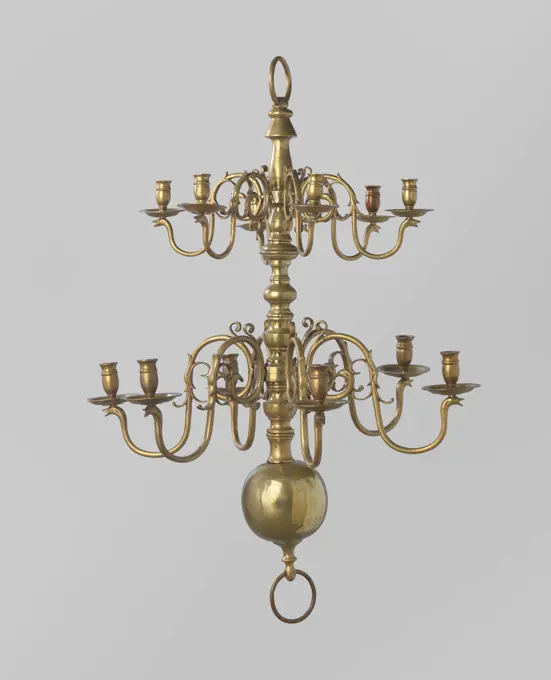
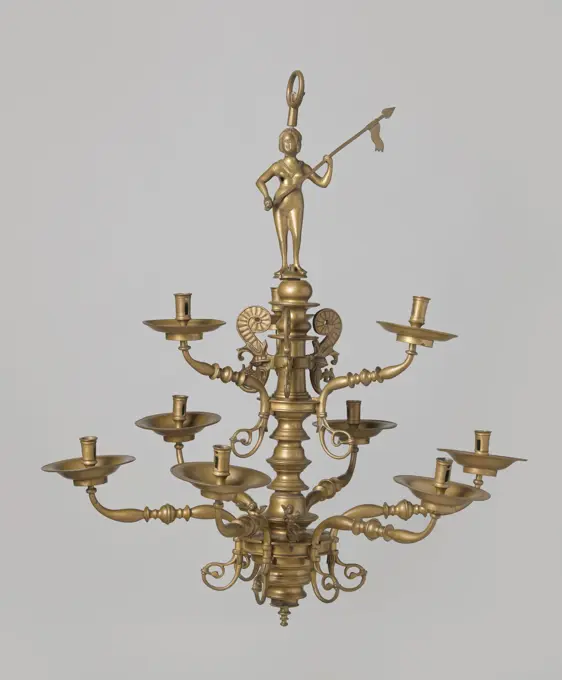
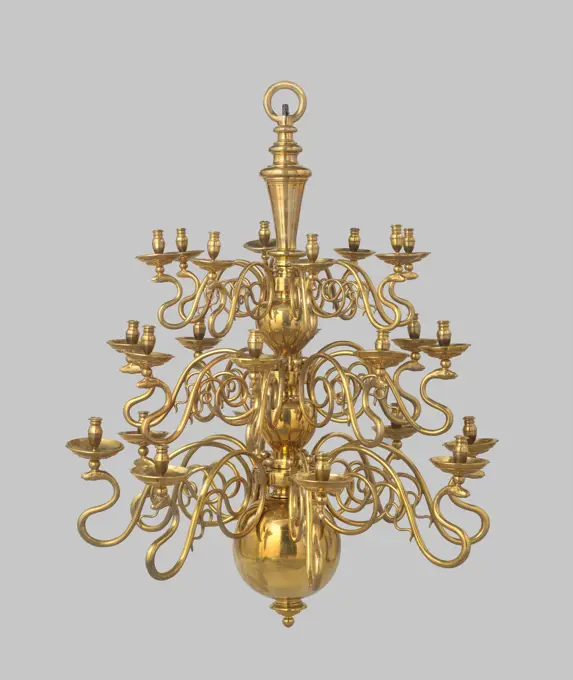
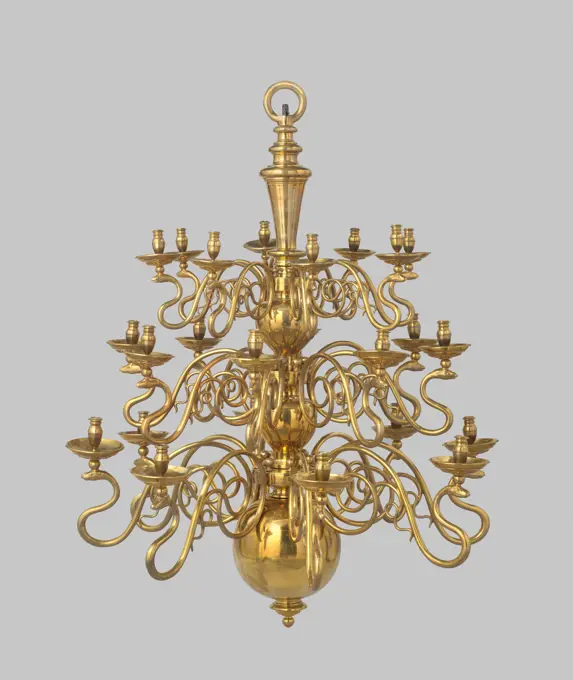
Arm of a candle crown, anonymous, 1700 - 1800 The S-shaped arm runs towards the trunk in a stylized dolphin head and outside in a thickening, in which the screw hole is applied. The round -profiled and grooved -rings -decorated candle holder was screwed with the fat -lined fat catcher with grooved rings. The arm, the fat catcher and the candle holder are cast using the same models as the other arms, fat catchers and candle holders. This is the third arm of the middle stand ring, marked on the ridge with three points. Northern Netherlands brass (alloy) casting The S-shaped arm runs towards the trunk in a stylized dolphin head and outside in a thickening, in which the screw hole is applied. The round -profiled and grooved -rings -decorated candle holder was screwed with the fat -lined fat catcher with grooved rings. The arm, the fat catcher and the candle holder are cast using the same models as the other arms, fat catchers and candle holders. This is the third arm of the middle stand ri
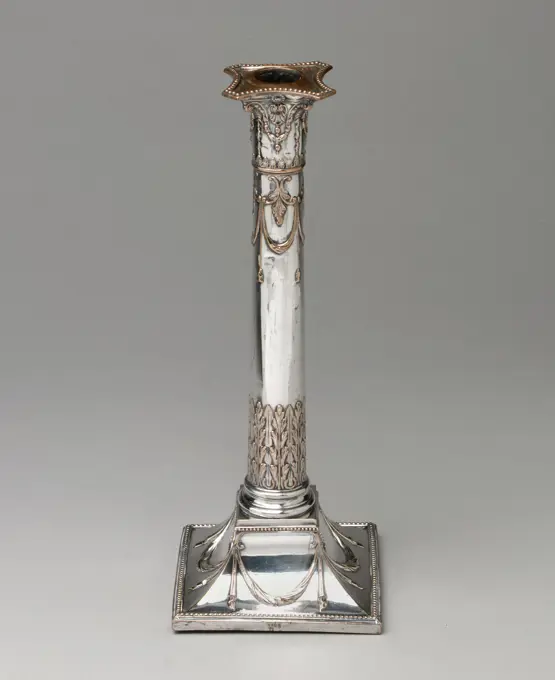
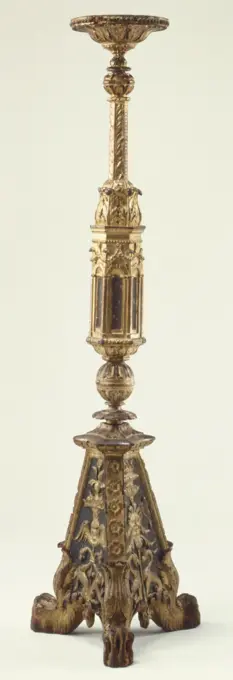
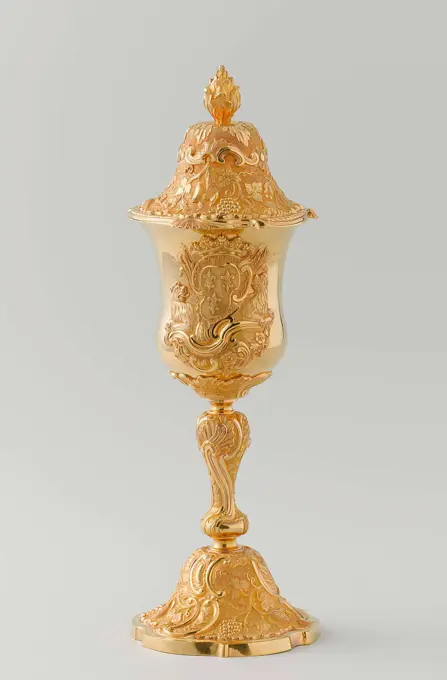
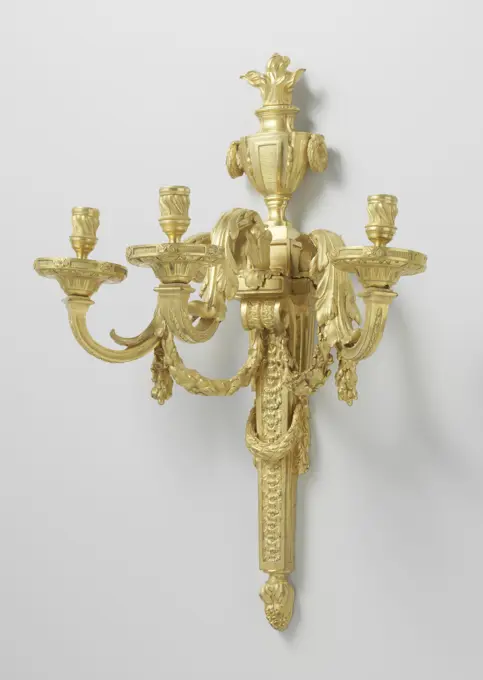
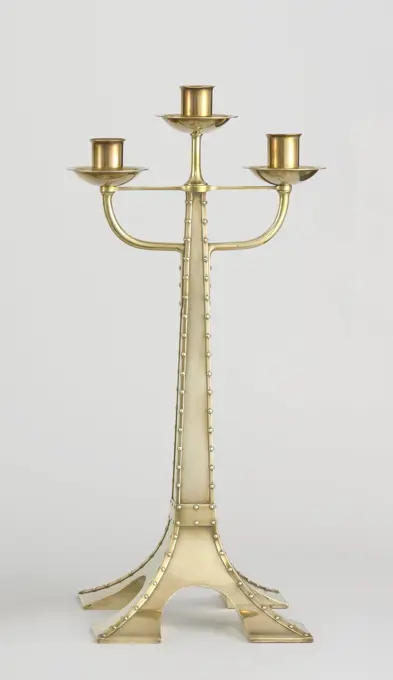
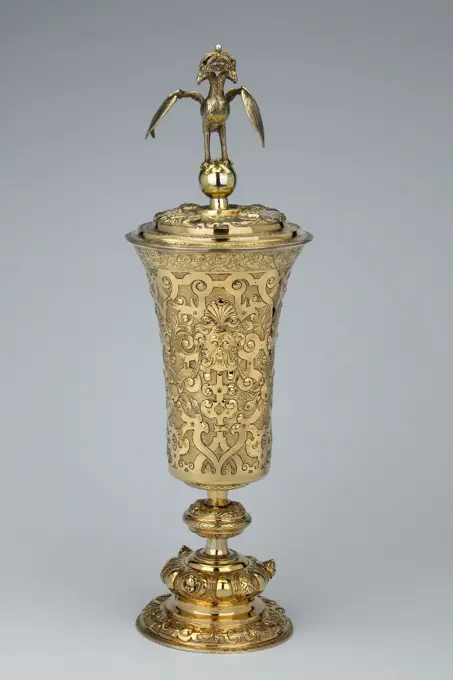
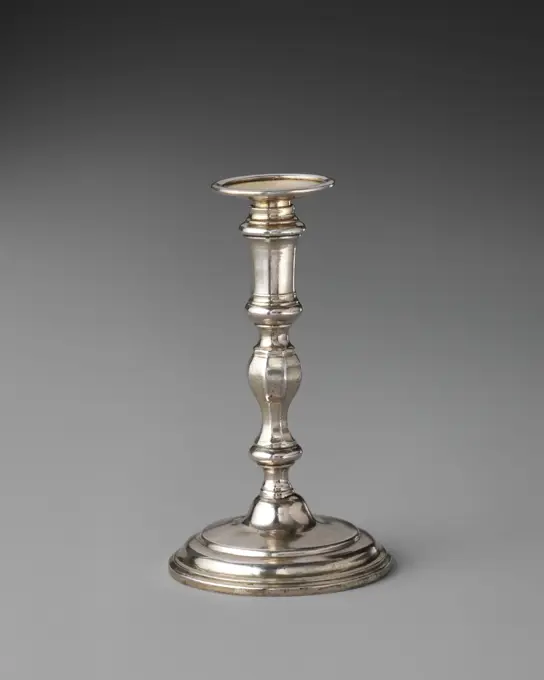
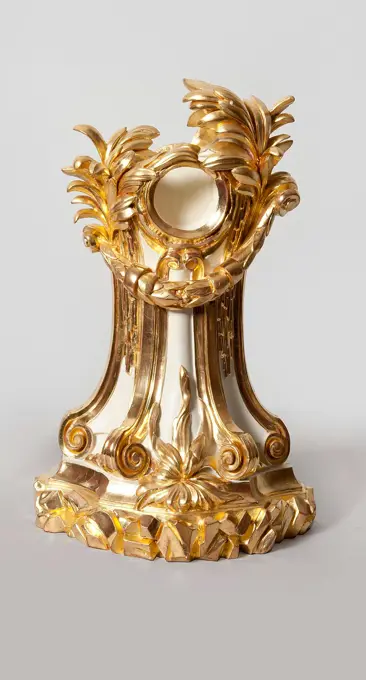
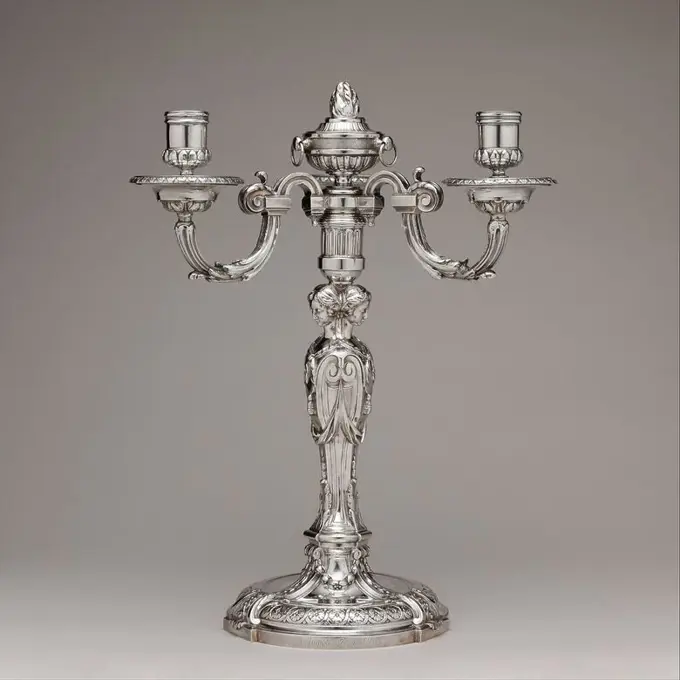
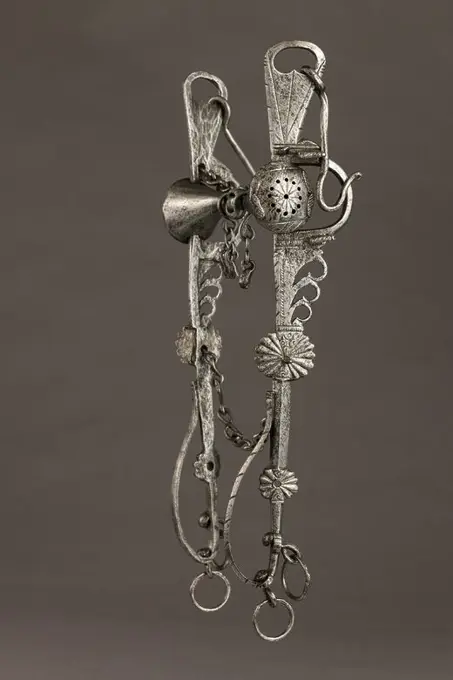
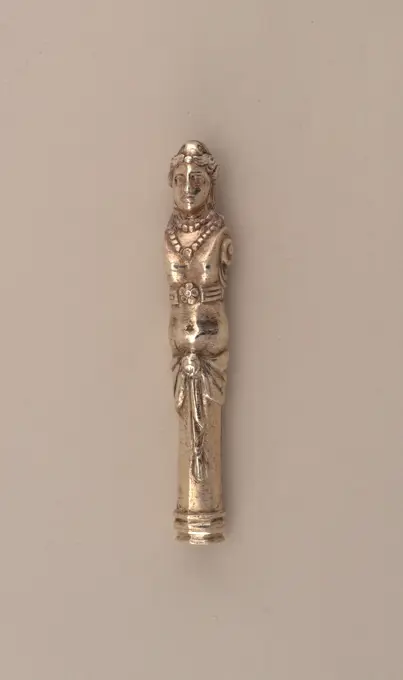
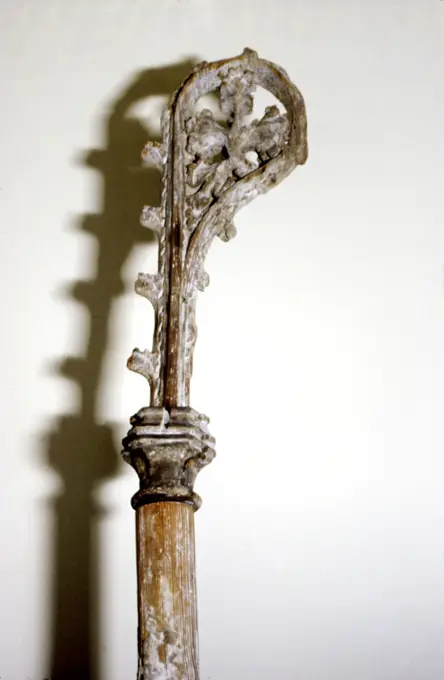
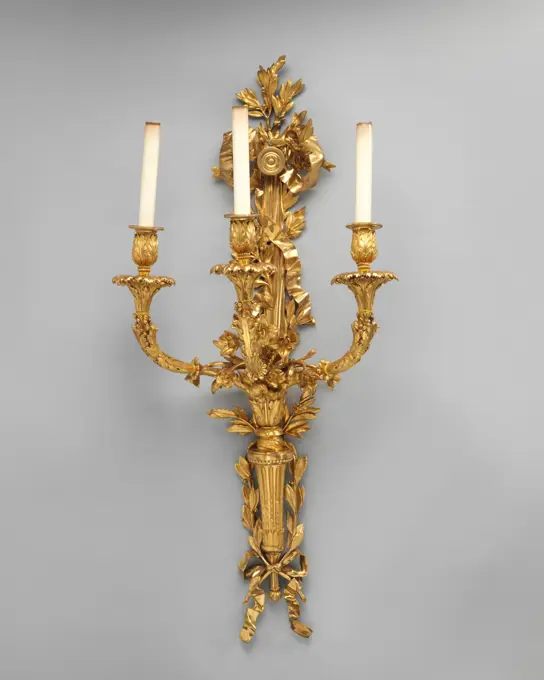
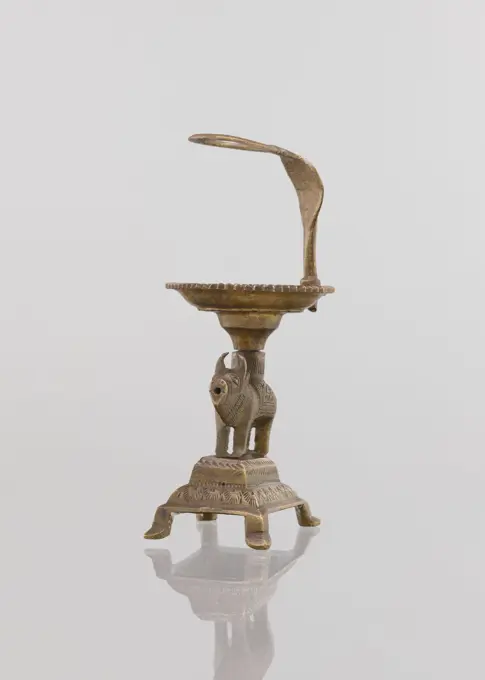
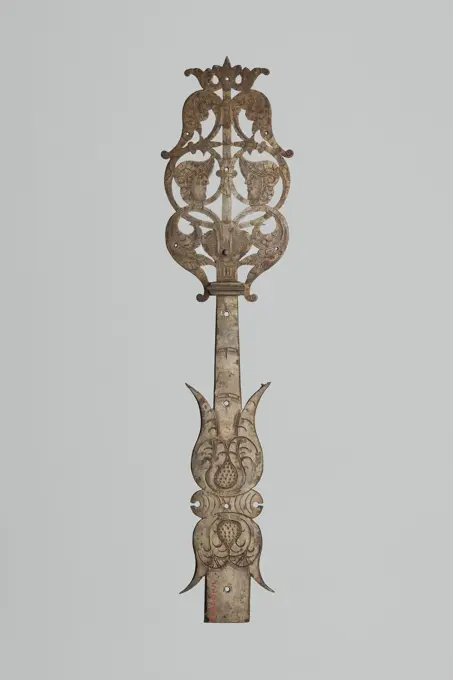
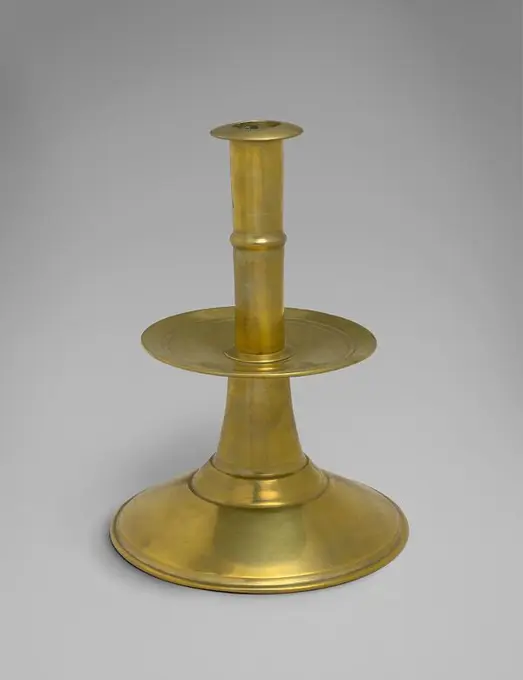
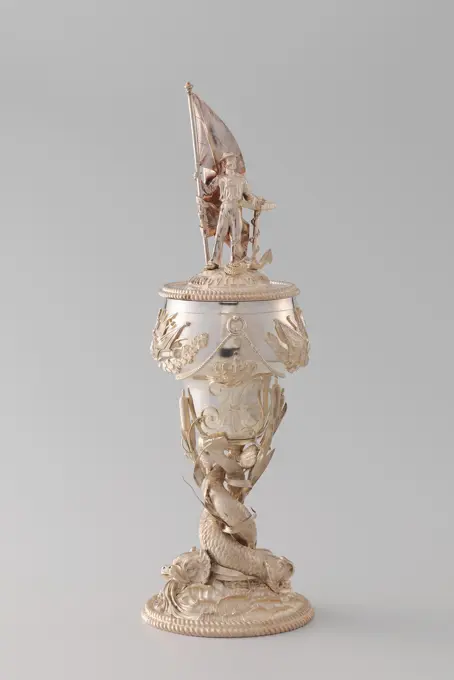
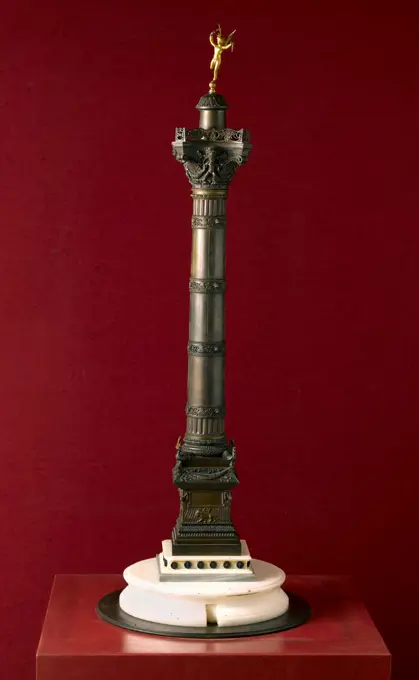
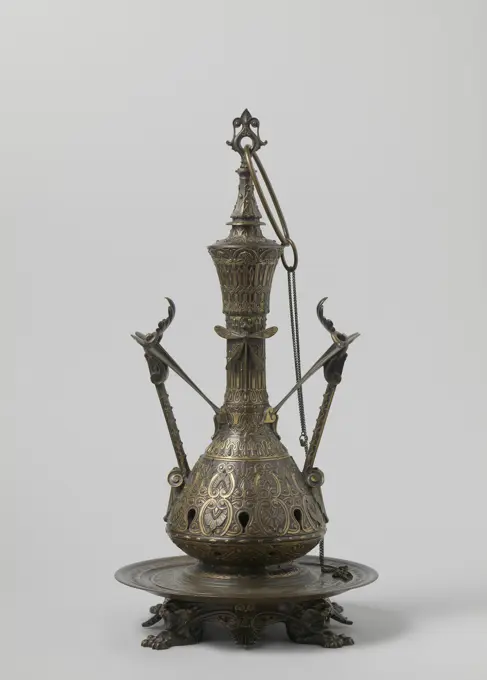
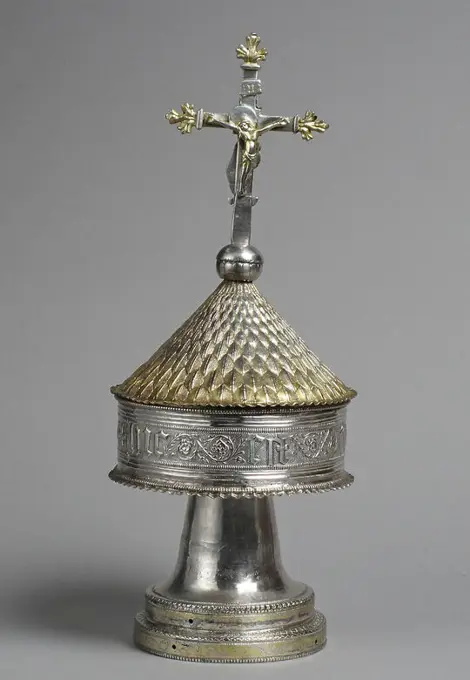
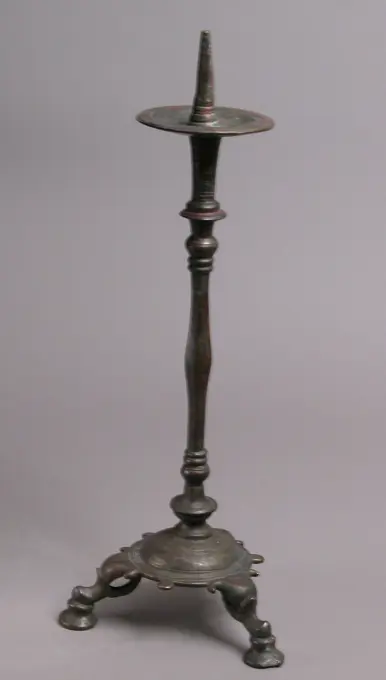
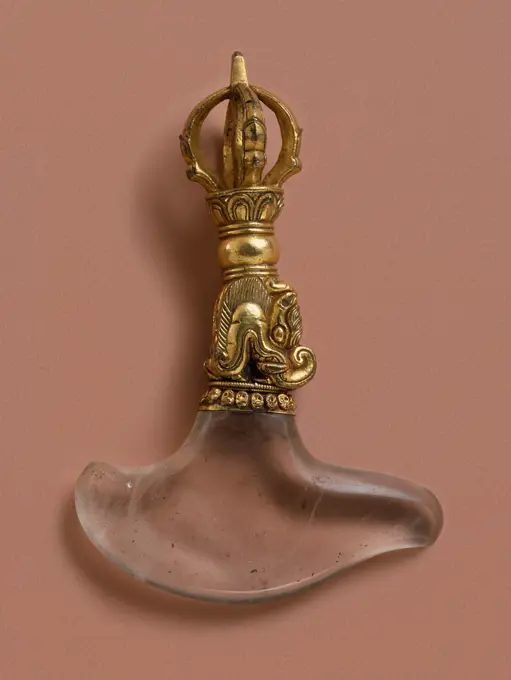
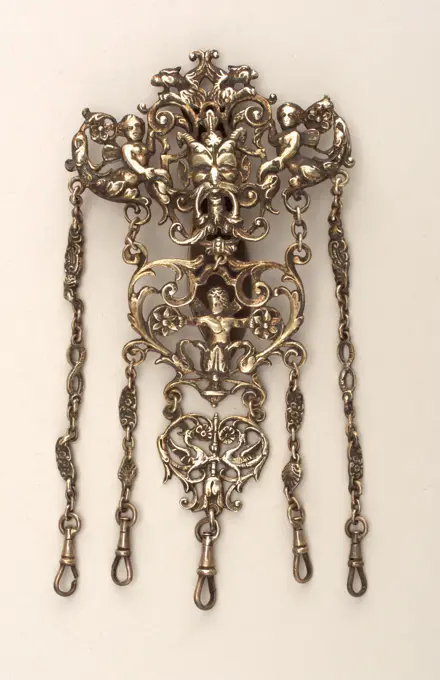
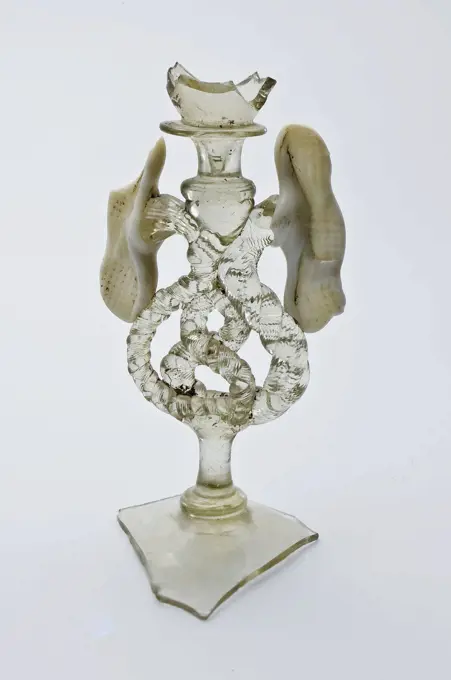
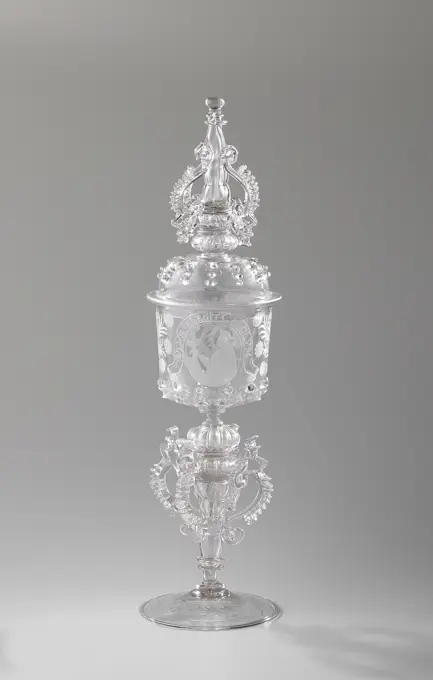
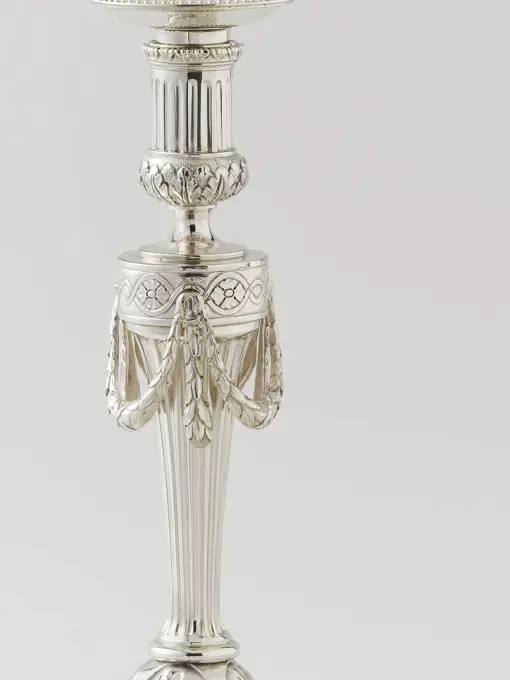
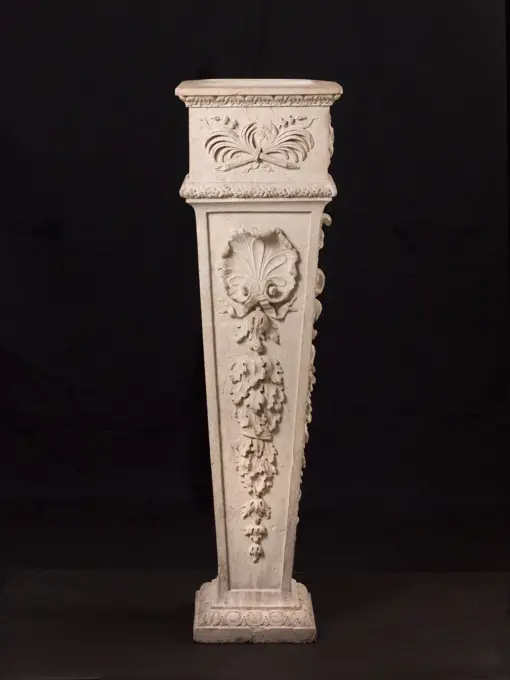
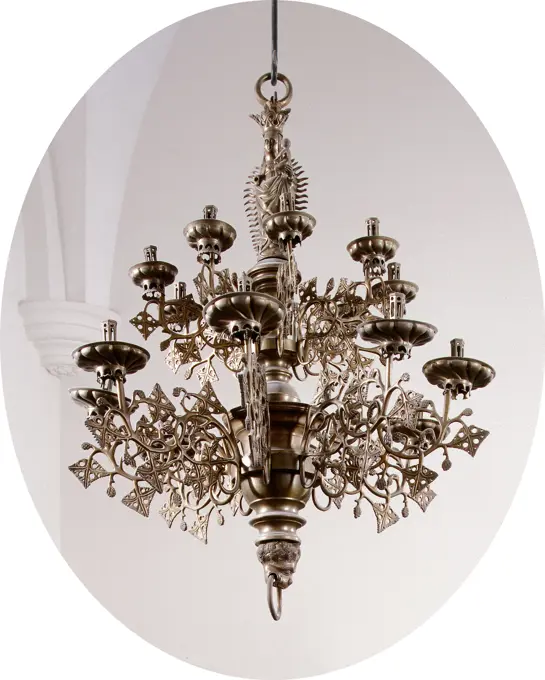
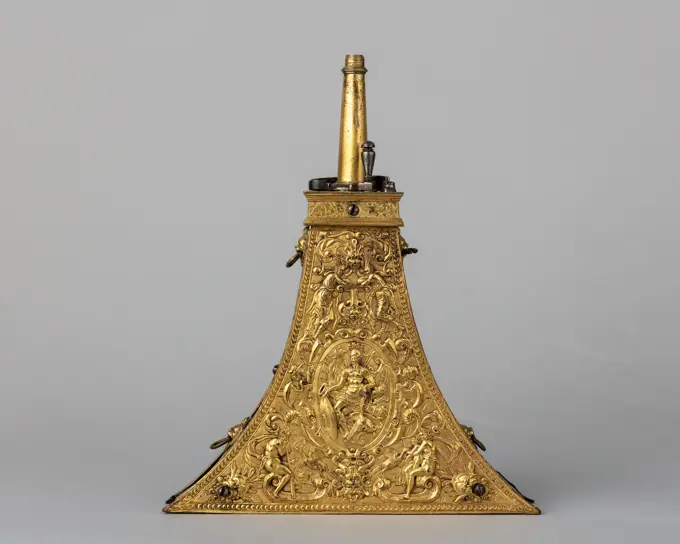
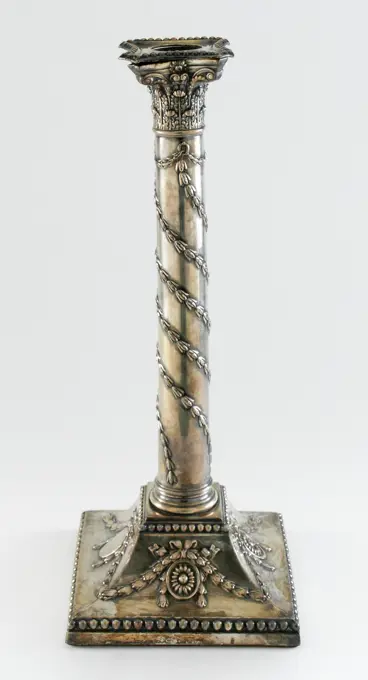
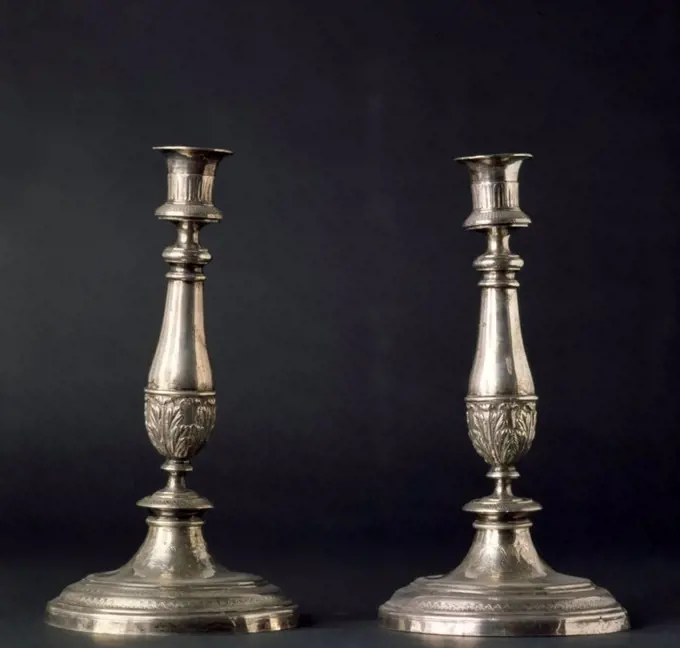
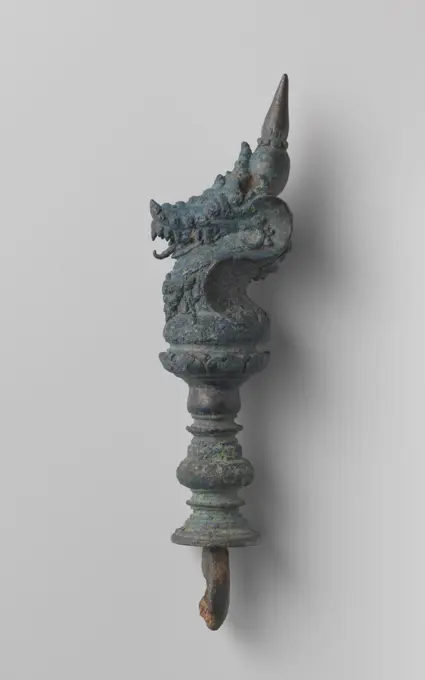
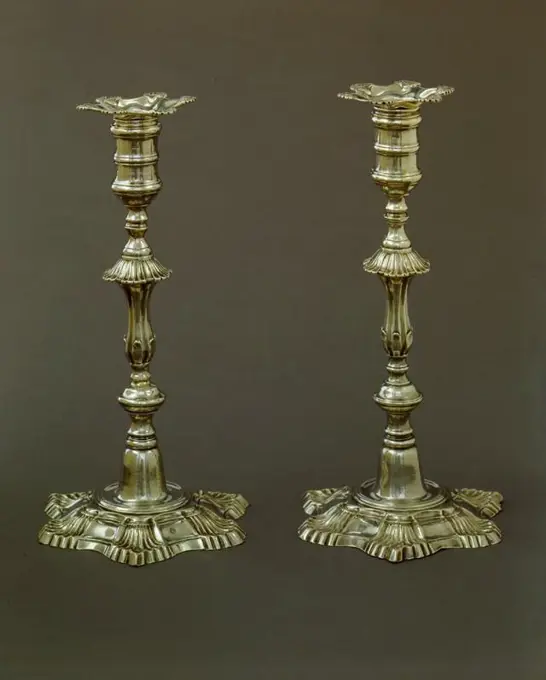
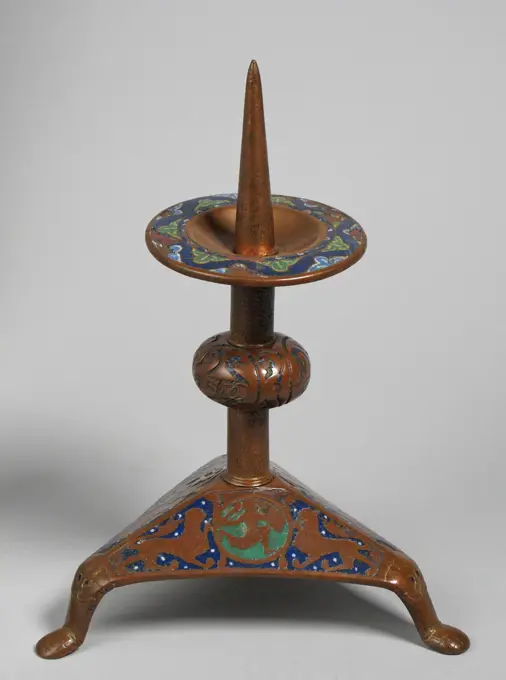
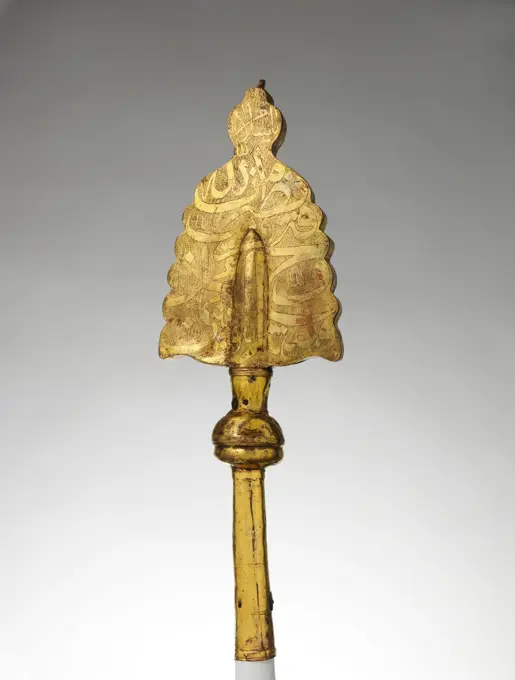
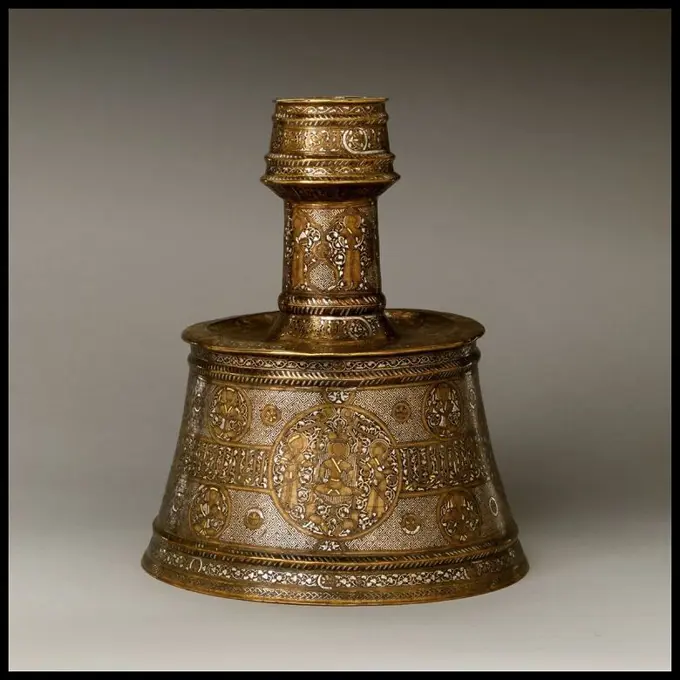
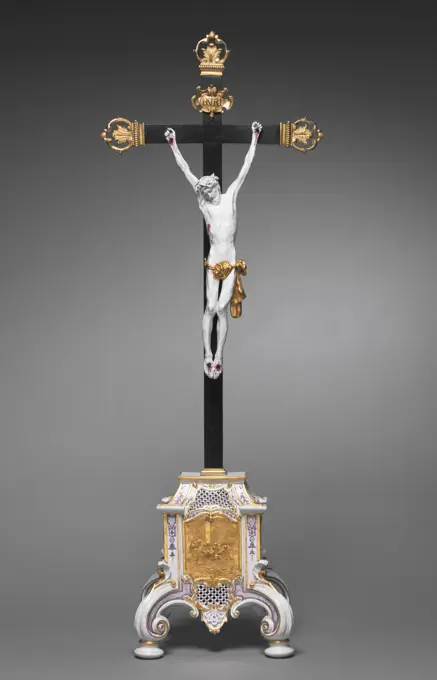
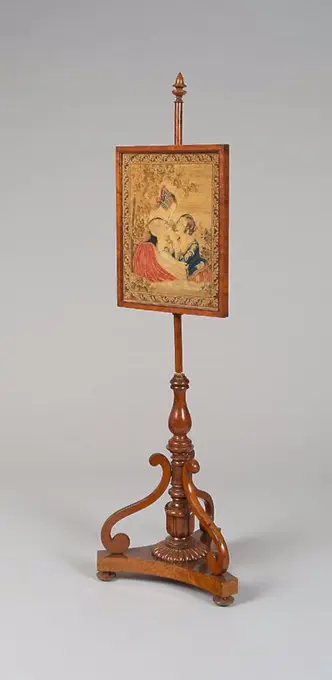
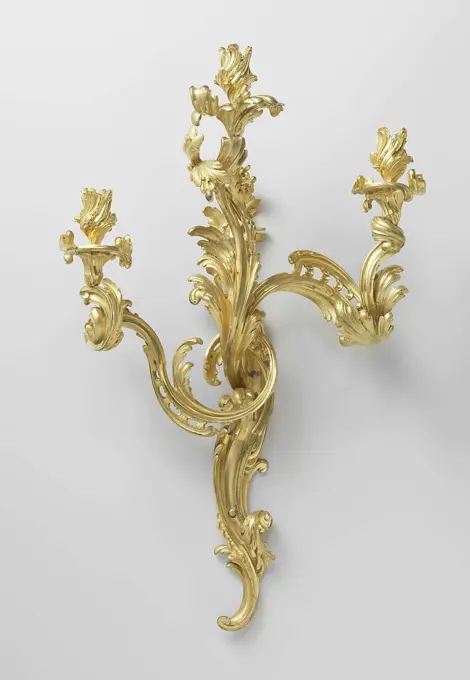
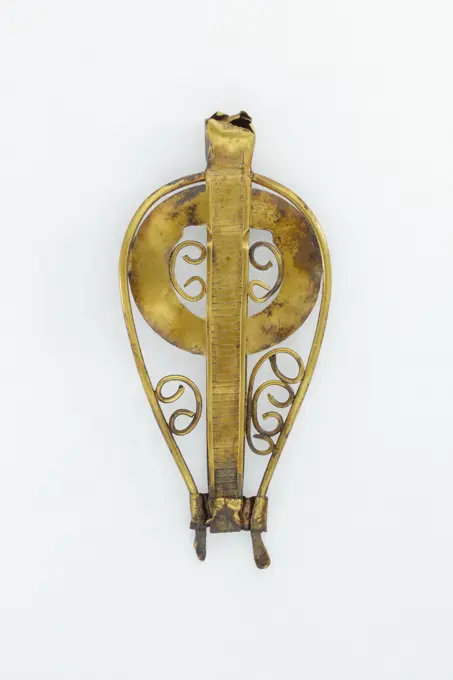
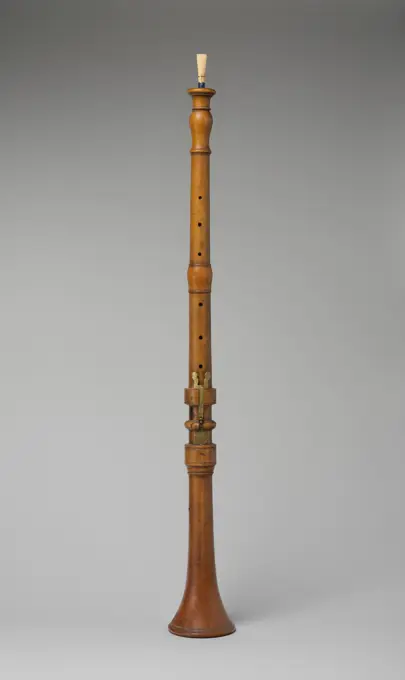
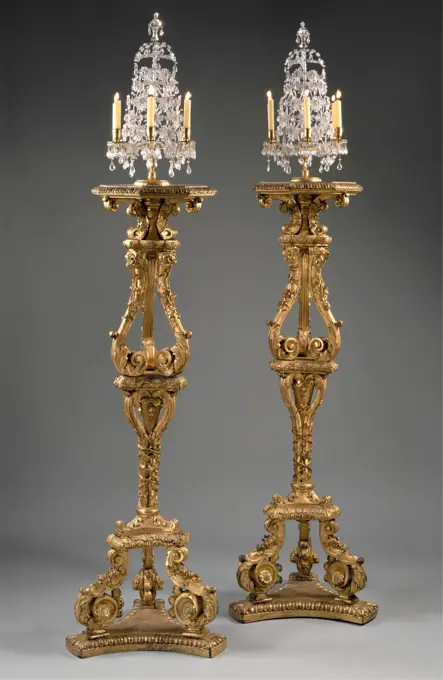
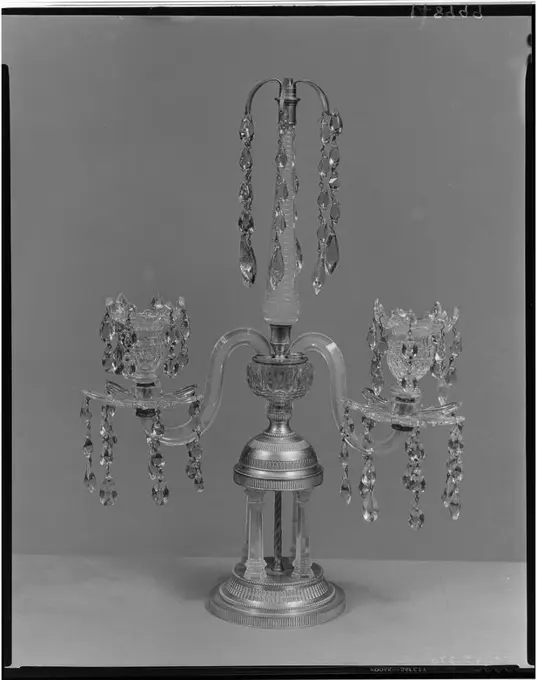
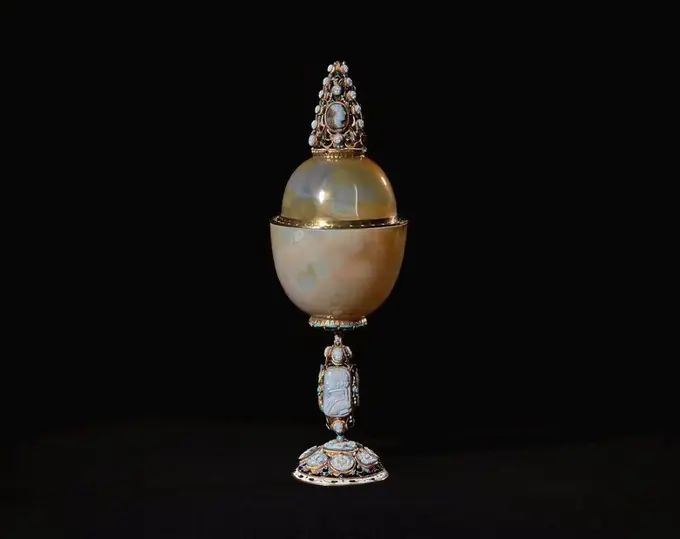
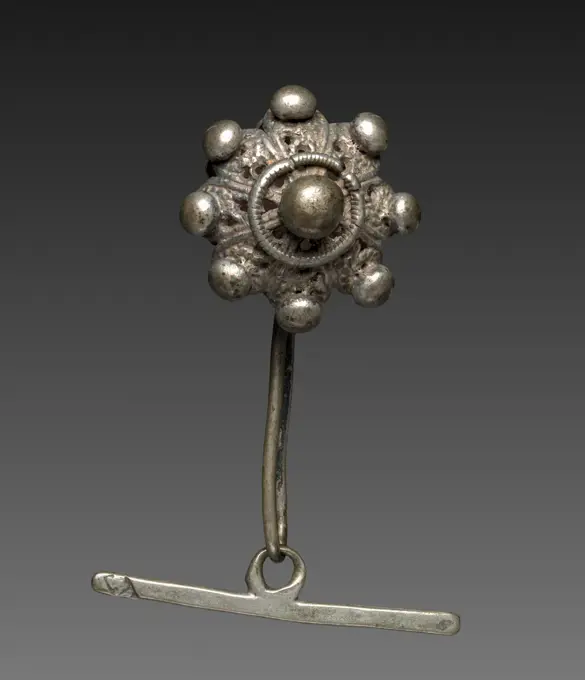
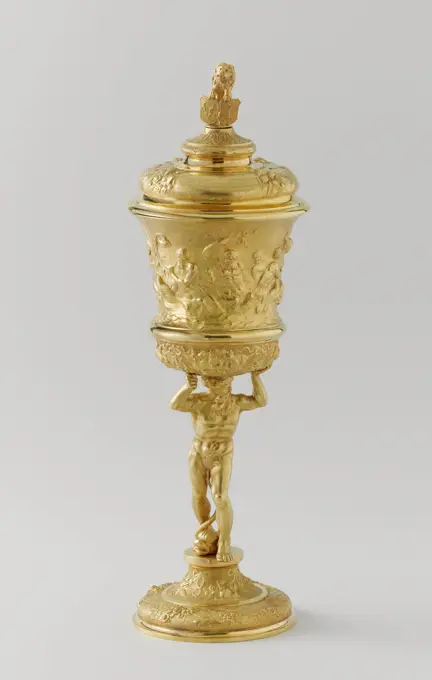
Goblet for Henricus Gradpiece, Alger Mensma (attributed to), 1729 goblet Cup with gold lid. On the round pedestal is a sea god with raised arms on which the chalice -shaped cuppa rests. The cup was a gift to Hendrik Swaerdencroon because of his merits in the East Indies. Amsterdam gold (metal)  Sea Thiasos, Neptune's Sea RetinueThree-pronged Vajra Pestle (Sankosho), early 1300s. Japan, Kamakura period (1185-1333). Gilt bronze; overall: 17.5 x 5 cm (6 7/8 x 1 15/16 in.).Candlestick;  19th century (1801-00-00-1900-00-00);Candlestick (one of a pair) ca. 1775-80 British. Candlestick (one of a pair). British. ca. 1775-80. Sheffield plate. Metalwork-SilverplateAltar candlestick last quarter 15th century Italian, Florence The slender architecturally conceived form is influenced by contemporary goldsmiths' designs, which are also reflected in the contrast of the gilding and the paint-a bright blue that has turned almost black-in imitation of gilt silver and blue enamel.. Altar candlestick 192365Candlestick (France); fire-gilt bronzeCandlestick - Inconnu / UnknownPricket candlestick (one of a pair). Artist: Workshop of Vincenzo Grandi (mentioned 1507-1577/78); and Gian Gerolamo Grandi (1508-1560). Culture: Italian, Trent or Padua. Dimensions: Overall (confirmed): 36 1/2 × 12 1/2 × 13 in. (92.7 × 31.8 × 33 cm). Date: ca. 1545-50.Analogies of texture and composition (figures from which a Byzantine stiffness has not altogether disappeared) between these and three flagpole stands by Alessandro Leopardi in Piazza S. Marco, Venice, permit an attribution of the candlesticks at least to Leopardi's sphere of influence. The candlesticks were part of a set of six for an altar. Two with reliefs of Saints Matthew and Luke are in the Pierpont Morgan Library, and two with Saints Mark and John are in the Victoria and Albert Museum. Museum: Metropolitan Museum of Art, New York, USA.Bokaal with lid, of gold, with the weapon dedel. On the asymmetrical scalloped underreach and the fond of the Cuppa after the jar is completely covered with finely scilated decorations against a roughened surface. At the bell-shaped base, the decorations consist of foam edges, vines and fruits. Three pairs of glossy against the roughened foot-distracting, upwards, raised volts granting structure and movement to the bkeque. They are prosecuted in the baluster-shaped strain, where they are interspersed by flower drinks. The asymmetrical weapon DEDel is appliqued on the smooth bell-shaped cuppa.Arm of a candle crown, anonymous, 1700 - 1800 The S-shaped arm runs towards the trunk in a stylized dolphin head and outside in a thickening, in which the screw hole is applied. The round -profiled and grooved -rings -decorated candle holder was screwed with the fat -lined fat catcher with grooved rings. The arm, the fat catcher and the candle holder are cast using the same models as the other arms, fat catchers and candle holders. This is the third arm of the middle stand ring, marked on the ridge with three points. Northern Netherlands brass (alloy) casting The S-shaped arm runs towards the trunk in a stylized dolphin head and outside in a thickening, in which the screw hole is applied. The round -profiled and grooved -rings -decorated candle holder was screwed with the fat -lined fat catcher with grooved rings. The arm, the fat catcher and the candle holder are cast using the same models as the other arms, fat catchers and candle holders. This is the third arm of the middle stand riArm of a candle crown in two heights, Anonymous, 1890 - 1910 The arm has an S-shape, ending out in a snake head and on the other end in bird heads. The arm is decorated with curls there. Screws have been applied in the protrusion on the candle holder, the arm or at the end of the connecting rod. This is the fifth arm of the upper position ring, numbered with the number 5. Netherlands brass (alloy) casting The arm has an S-shape, ending out in a snake head and on the other end in bird heads. The arm is decorated with curls there. Screws have been applied in the protrusion on the candle holder, the arm or at the end of the connecting rod. This is the fifth arm of the upper position ring, numbered with the number 5. Netherlands brass (alloy) castingSilversmith's Art, England, 19th century. Gilded silver crater, decorated in George III style. London, 1808.Decorative elements of a candle crown in two heights in the form of volutes and angels, 1525 - 1575 Three volute -shaped decorative elements with a nodus in the middle. At the bottom the volutes end in a rank motif. The elements are numbered with one, two or no triangular markings. The unmarked piece differs slightly in color and may be a later addition. Two decorative elements in the form of angels sit on a sphere, one of them blows on a trumpet. Under the ball a thread, with which the elements can be fixed to the lower armring ring. The angel with the trumpet is convenient with three triangles. The other angel has no markings and may be a later addition. The remaining four angels are missing. Southern Netherlands brass (alloy) casting Three volute -shaped decorative elements with a nodus in the middle. At the bottom the volutes end in a rank motif. The elements are numbered with one, two or no triangular markings. The unmarked piece differs slightly in color and may be a later additiCandle crown of two heights with six and three arms, Anonymous, c. 1525 - c. 1575 The object consists of two iron rods, two copper spikes and the following parts of yellow copper: the hanging ring, the figure of a naked woman with spear and penny, three decorative elements, two angels, the trunk, the button, six and three arms with The associated fat catchers and holders. The round hanging ring turns into an eight -fold tube. The standing naked female figure stands on a ground with a hole in the middle (in order to be able to attach a key in the iron rod) and a notch on the edge. She holds a spear with a penny. She wears a chain around her neck (). The hair is draped around her head. A short iron rod is applied to the head, on which the hanging ring fits. The trunk is carefully profiled with a stand ring with notches for the three decorative pieces at the top, then a stand ring with notches for the three upper arms, then a stand ring with notches for the lower six arms and with six holSconce. unknown, authorTwo wall lights, anonymous, c. 1765 - c. 1770 Gilt bronze wall arm, with three arms. The square trunk in diameter rejuvenates downwards and shows rosette -shaped leaf motifs and a festen at the front; To crown, an urn with two ears, from which a flame comes. The S-shaped arms are largely covered with an acanthus leaf; The front cannelure is filled with decorations. A Festoen connects the two outer arms with the trunk. The candle holders decorated with flam motif rest on a scale -shaped base with rosettes. BK-16899-B. Paris bronze (metal). gilding (material) gilding Gilt bronze wall arm, with three arms. The square trunk in diameter rejuvenates downwards and shows rosette -shaped leaf motifs and a festen at the front; To crown, an urn with two ears, from which a flame comes. The S-shaped arms are largely covered with an acanthus leaf; The front cannelure is filled with decorations. A Festoen connects the two outer arms with the trunk. The candle holders decorated with flam motif rest onMantle clock with two candelabra, Hendrik Petrus Berlage (possibly), c. 1900 Kandelaber made of brass, equipped with three round candle holders on round fat catchers. This is on four swiveling feet, has a square rejuvenating tribe. The foot section is closed above by a horizontal connecting piece. Against the trunk, two arms are riveted up and right. These are provided with thread on top, to confirm the holders to the fat catchers. The arms are at the top with a connecting piece in relation to the top of the tribe. The vertical arm part was then placed on which holder and fat catcher are confirmed in a corresponding manner. The Kandelaber is also finished with sheet metal at the bottom. Amsterdam brass (alloy) striking (metalworking) / soldering Kandelaber made of brass, equipped with three round candle holders on round fat catchers. This is on four swiveling feet, has a square rejuvenating tribe. The foot section is closed above by a horizontal connecting piece. Against the trunk, twoButton, 1800s. Balkans, 19th century. Silver; average: 8.3 cm (3 1/4 in.).Renaissance cup of Emperor Rudolph II. Hocke, Hans (fl. 1577-1611), goldsmithMiniature candlestick 1719-20 Josiah Daniel British. Miniature candlestick. British, London. 1719-20. Silver. Metalwork-Silver-MiniaturePocket watch stand. unknown, authorCandelabrum (one of a pair). Culture: French, Paris. Dimensions: Overall (confirmed): 14 3/4 x 10 1/2 x 10 1/2 in., 80.167oz. (37.5 x 26.7 x 26.7 cm, 2272.7g). Maker: Robert Joseph Auguste (French, 1723-1805, master 1757). Date: 1767-68.Robert-Joseph Auguste was one of the leading Parisian silversmiths working in the Neoclassical style in the latter half of the eighteenth century. In 1778, he received the title of Silversmith to the King, and in 1784 was granted lodgings in the Louvre, a privilege bestowed upon only the most favored craftsmen. He gained an international clientele, providing silver to the courts of Portugal, Denmark, Russia, Sweden, and England.These candelabra (see also 48.187.390a, b) date to an early point in Auguste's career, and they reflect a robust and architectural Neoclassicism in their style. The Neoclassicism of the last two decades of the eighteenth century was often characterized by a highly refined and restrained elegance, with spare decoration. The emerCurb Bit. Culture: German. Dimensions: H. 13 1/2 in. (34.3 cm); W. 6 in. (15.2 cm); Wt. 1 lb. 12 oz. (793.8 g). Date: early 17th century.This was considered as a gentle bit for starting young horses with the curb bit (bit with a leverage effect). Indeed, according to contemporary equestrian manuals, the long straight shanks (the levers on the sides of the bit to which the reins were attached) and the jointed mouthpiece with simple canons made for the most gentle combination in a curb bit. If the long shanks look impressive, their length in fact reduces their reaction time and would actually have been blocked at some point by the horse's chest. Curb bits were also at this time used with a very light hand, the well-trained horses responding by anticipation to the slightest move of the reins. The elegant pierced decoration is typical of East German spur maker's workshops during the 16th and 17th centuries. Despite their name, spur makers made not only making spurs, but also small equesCandlestick, Pewter, Gadrooned spreading foot, baluster stem and rimless candle socket., Karlsbad, Bohemia, 1850-1900, metalwork, Decorative Arts, CandlestickKandelaar, Jan Bonket, 1781 Golden, tormented, round candlestick on a vaulted foot. The edge of the foot is sculpted. The trunk is baluster -shaped. The candle holder is smooth and the fat catcher has the shape of a six -leaf flower. The candlestick is marked: stk. = Amsterdam, Jrl. = W (1781) and Mt. = Jan Bonket. Amsterdam gold (metal) Golden, tormented, round candlestick on a vaulted foot. The edge of the foot is sculpted. The trunk is baluster -shaped. The candle holder is smooth and the fat catcher has the shape of a six -leaf flower. The candlestick is marked: stk. = Amsterdam, Jrl. = W (1781) and Mt. = Jan Bonket. Amsterdam gold (metal)Crozier Head early 20th century (original dated 13th century) French. Crozier Head 463083. Large arm of candle wreath.. Candle wreath with two heights with eight arms, from brass and iron.LAMPARA-CANDELABRO-EN CRISTAL Y BRONCE DORADO-S XVIII. Location: OSTERLEY PARK. LONDON. ENGLAND.Six-branch chandelier (one of a pair) ca. 1725 British. Six-branch chandelier (one of a pair). British. ca. 1725. Gilded wood, gesso, gilt-bronze candle sockets. Woodwork-FurnitureGuéridon and Candelabrum, anonymous, 1700 - 1749 Gueridon of teak, standing on three s-shaped bent, decorated in claws with leaf work. The multiple articulated and profiled trunk is made up of baluster forms, some of which are faceted, and a ribbed button. The round leaf has a profiled edge and a stepped bottom. Indonesia teak (wood) Gueridon of teak, standing on three s-shaped bent, decorated in claws with leaf work. The multiple articulated and profiled trunk is made up of baluster forms, some of which are faceted, and a ribbed button. The round leaf has a profiled edge and a stepped bottom. Indonesia teak (wood)Arm of a candle crown in three heights, Anonymous, 1625 - 1650 The arm is provided with a ridge on the tribe side, in which a hole is applied to secure them with a pin in the stand rings. The S-shaped arm has the shape of a hose with a tail-wrinkled tail and outside a lifted head with a round button on it, in which the hole provided with a thread is applied to confirm the candle holders with the fat catchers. The arm is cast using the same model as the other arms of the wreath. The round candle holder is vase -shaped with a profiled rib. At the top she has two holid profile, and a protruding edge and at the bottom of a foot consisting of two holy -round profiles. The foot runs out in a rejuvenating screw end with a center hole. The convex fat catcher is smooth at the top and has fish bladder -like godrons and a rib at the bottom. The fat catcher is cast using the same model as the other fat catchers of the wreath. The pins are decorated with convex buttons. This is the second arm of thArm of a candle crown in three heights, Anonymous, 1625 - 1650 The arm is provided with a ridge on the tribe side, in which a hole is applied to secure them with a pin in the stand rings. The S-shaped arm has the shape of a hose with a tail-wrinkled tail and outside a lifted head with a round button on it, in which the hole provided with a thread is applied to confirm the candle holders with the fat catchers. The arm is cast using the same model as the other arms of the wreath. The round candle holder is vase -shaped with a profiled rib. At the top she has two holid profile, and a protruding edge and at the bottom of a foot consisting of two holy -round profiles. The foot runs out in a rejuvenating screw end with a center hole. The convex fat catcher is smooth at the top and has fish bladder -like godrons and a rib at the bottom. The fat catcher is cast using the same model as the other fat catchers of the wreath. The pins are decorated with convex buttons. This is the eighth arm of thHandle (probably Italy); silver; L x W: 8 x 1.4 cm (3 1/8 x 9/16 in.); The Robert L. Metzenberg Collection, gift of Eleanor L. Metzenberg; 1985-103-254-hPastoral staff, 1442-1446. ENGLAND.Arm of a candle crown in three heights, Anonymous, 1717 chandelier The S-shaped arm is equipped with a ridge on the tribe side to secure it with a pin in the stand ring. At the trunk, the arm is decorated at the end and to the center with two stylized dolphin heads and with curls, the shape of which is derived from the lobe ornament. To the outside, the arm ends in a thickening, in which a hole provided with a thread is applied to attach the candle holder to the fat catcher. The arm is cast using the same model as the other arms of the wreath. The candle holder is cylinder -shaped with profiled excellent edge and with a baluster foot, which turns into a threaded end, in which the center hole at the bottom. The fat catcher is deepened twice at the top towards the center. At the bottom it is profiled around the hole in the somewhat spherical center and the edge is ribbed. The fat catcher has been cast using the same model as the other fat catchers of this wreath. The pin is equipped withGueridon decorated with marqueterie. Shaft with a putto that supports a pillow with a pillow, Anonymous, 1700 A gueridone decorated with marquetery of rosewood, satin, olijvehout and other types of wood, partially gilded and painted black. The trunk consists of a Herm -shaped shaft decorated with stabbed leaves, above which a putto that supports a pillow carried on the head. Rest on the pillow, on a pear -shaped intermediate piece, an octagonal leaf with stabbed leaf edge and with butterfly and flowers decorated. The octagonal pedestal has flower decoration in Marqueterie. Pendant: BK-16076-A. Northern Netherlands (possibly)Netherlands (possibly) wood (plant material). rosewood (wood). satinwood (wood). olive (wood). gilding (material) gilding A gueridone decorated with marquetery of rosewood, satin, olijvehout and other types of wood, partially gilded and painted black. The trunk consists of a Herm -shaped shaft decorated with stabbed leaves, above which a putto that supports a pillowNine-light chandelier. Culture: French. Dimensions: Height: 36 5/8 in. (93 cm). Date: ca. 1785. Museum: Metropolitan Museum of Art, New York, USA.Microscope, c. 1745- 1765. France, mid-18th century. Gilt bronze mounts; overall: 28.6 x 15.4 x 11.5 cm (11 1/4 x 6 1/16 x 4 1/2 in.).Candle Bracket (1 of 2), c. 1765-1775. France, Transitional Style, Louis XV to Louis XVI, 18th century. Gilded wood; overall: 54.5 x 37.2 x 22.6 cm (21 7/16 x 14 5/8 x 8 7/8 in.).Three-branch wall light (one of a pair) (bras de lumière) ca. 1785 French, Paris Functional and exceedingly decorative bronzes dameublement, the so-called furnishing bronzes - wall lights, candelabra, and other types of lighting, firedogs, hearth furnishings, and clocks - were an important aspect of the eighteenth-century décor. Well-known artists and sculptors designed them closely following the latest styles. An elaborate guild system regulated the process of their creation and maintained high standards of craftsmanship. Consisting of many different steps, the manufacture of gilt-bronze objects was principally in the hands of the bronze workers, who were divided in eighteenth-century France in two guilds: that of the fondeurs-ciseleurs, or casters and chasers, and that of the ciseleurs-doreurs, or chasers and gilders.These wall lights, consisting of a set of six [see also 1979.172.11-.14, are made of chased and gilded bronze and epitomize the neo-classical style prevalent at the tiPocket watch stand;  1770-1785 (1770-00-00-1785-00-00);Pair Of Torchères (Italy); wrought and partially gilded ironCiborium with round, vaulted lid, crowned by a cross, anonymous, c. 1500 - c. 1600 The object consists of foot, trunk, box and lid. The box, the lid, the leaf of the foot and perhaps the hollow nodus were beaten and then ciseled. The foottop consists of two pieces. The part around the trunk is riveted on the rest and is constantly reinforced at the bottom. The lid is attached with a hinge and is equipped with a pen closure. The object is gilded, also at the bottom of the foot and on the inside of the box and lid. The cross on the lid may have been renewed. The closing pen is missing. Germany brass (alloy) gilding The object consists of foot, trunk, box and lid. The box, the lid, the leaf of the foot and perhaps the hollow nodus were beaten and then ciseled. The foottop consists of two pieces. The part around the trunk is riveted on the rest and is constantly reinforced at the bottom. The lid is attached with a hinge and is equipped with a pen closure. The object is gilded, also at the Candlestick;  19th century (1801-00-00-1900-00-00);Openwork fitting from the chest;  1st half XVII W (1601-00-00-1700-00-00);Candlestick. Dimensions: H. 8 1/2 in. (21.6 cm); Diam. 6 1/8 in. (15.6 cm). Date: 1670-1700.A typical household in seventeenth-century New England owned several metal or ceramic candlesticks. Wax candles were an expensive rarity--most colonists made their own candles from tallow (animal fat). Museum: Metropolitan Museum of Art, New York, USA.Silver Birthday Cup for Lieutenant Admiral Engelbert Lucas, J.M. Van Kempen & Son, 1865 cup Silver jar, the chalice with war and navy attributes on both sides, a crowned H and inscription. The shaft consists of two entangled water -spit fantasies and reeds, the foot has a relief like water and the edges cable. Marked with Mastert signs from Van Kempen, annual letter F (= 1865), miner -pack and quality marks. Voorschoten silver (metal) casting / striking (metalworking) / soldering / gildingColumn of July, 1840 Model of the column of July, 1840. Bronze and marble.Table piece, Hessenberg & Co, 1885 Table piece of partially gilded silver, with three female figures on triangular basement, the industry, chemistry and the arts respectively. Between these figures cartouches with lion masks in which the names of three and Profil displayed portraits on a round stage on the Basement, all with the family name Lucius. On stage a scanned colonnet, crowned by winged female figure with two shields with the weapon of Frankfurt and Mainz. Four dancing children's figures with flowers. Frankfurt am Main silver (metal). gilding (material) gilding Table piece of partially gilded silver, with three female figures on triangular basement, the industry, chemistry and the arts respectively. Between these figures cartouches with lion masks in which the names of three and Profil displayed portraits on a round stage on the Basement, all with the family name Lucius. On stage a scanned colonnet, crowned by winged female figure with two shields with the weapon of Frankfurt aIncense burner, Ferdinand Barbedienne, c. 1855 - c. 1865 Perfume burner of patinated and partially gilded bronze. The main shape of the object is Islamic, as well as several edge decorations, in particular Greek vesiering elements have been used, such as the lion's legs, the palm trips and the angular with raised palmets. These forms are combined with naturalistic decorations whose dragonfly catches the eye. Paris bronze (metal). gilding (material) gilding Perfume burner of patinated and partially gilded bronze. The main shape of the object is Islamic, as well as several edge decorations, in particular Greek vesiering elements have been used, such as the lion's legs, the palm trips and the angular with raised palmets. These forms are combined with naturalistic decorations whose dragonfly catches the eye. Paris bronze (metal). gilding (material) gildingPyx. Culture: Spanish (). Dimensions: Overall: H: 9 1/2 x Diam: 3 3/4 in. (24.1 x 9.5 cm). Date: 15th century. Museum: Metropolitan Museum of Art, New York, USA.Lamp stand 6th century Byzantine. Lamp stand 468206Ritual Flaying Knife. Eastern Tibet, Kham region, Derge, Eastern Derge or China, 17th century or earlier. Arms and Armor; knives. Gilt copper alloy and rock crystalChatelaine (England); silverFragment of foot, stem and calyx of wing glass, wine glass drinking glass drinking utensils tableware holder soil find glass, free blown and formed glass application Fragment of foot trunk and very small part of chalice of wing glass in clear colorless and white-opaque glass. Pontil mark under concave ascending foot of which only part remains Flat knot and massive short trunk to flat knot. Twisted glass wire in pretzel on both sides ascending continuously to short solid trunk to flat knot and attachment of calyx. Glass wire twisted into waffles on both sides in white-opaque glass of which small part is missing. Small part of rushing cup (flute) Archeology Valckensteyn Poortugaal Albrandswaard Soil discovery Valckensteyn.Rose water bottle of silver, driven with flower and leaf vines, anonymous, 1700 - 1799 Rose water bottle of silver on a profiled base with pear -shaped body and screw -up elongated neck end in a flower -shaped peak. There are holes between the stamens of the flowers. The entire vial is decorated with flower and leaf vines. Above the nodus -shaped widening at the underside of the neck we see a decoration of pointed scaly -placed leaves (pineapple). India or Sri Lanka, 18th century. India (possibly) silver (metal) Rose water bottle of silver on a profiled base with pear -shaped body and screw -up elongated neck end in a flower -shaped peak. There are holes between the stamens of the flowers. The entire vial is decorated with flower and leaf vines. Above the nodus -shaped widening at the underside of the neck we see a decoration of pointed scaly -placed leaves (pineapple). India or Sri Lanka, 18th century. India (possibly) silver (metal)Bellows of partially plated walnut with embossed O.A. Simson that open the lion's muil. Bellows of partially plated walnut. The embossed upper top shows two dawn lions holding a rolling cartouche with in the middle Simson that opened the mouth of the lion; Below a women's figure, from below ending in leaf volutes. There are two putti on the rolling volutes at the top; A putto with bird on the handle. The red velor of the backleaf is lost with gold-plated copper nails with lion masks. The articulated blowpipe shows various figures and masks.Offering Box (Arca) and Key. UnknownCandlestick (one of a pair) third quarter 18th century François II Lacassaigne. Candlestick (one of a pair) 838974CandelabraJar with lid, made on the occasion of the coronation of Emperor Charles VI, Anonymous, c. 1711 Conical foot with turned around. Holle Stam, composed of a double flat knot, three four -lobe knots and two ribbed buttons between double flat knots. Four C-shaped wings, each with a tang-shaped ornament on the shoulder, crowned by another tang-shaped ornament. Cylindrical chalice. The shape of the lid is the mirror image of the trunk and the underside of the chalice. On the chalice, in an oval medallion between two flower branches, a priest with aureool for an altar with a crucifix under a hanging banderolle with the text: Deus Elegit Carolum. On the other side is a crowned two -headed eagle with an oval shield surrounded by the insignia of the Golden Fleece, the imperial weapon. The eagle keeps a scepter in his right -hand claw, in the other claw he holds a sword. Above the eagle a hanging banderolle with the text: Natali Iohannis Die Carolus Fit Imperator. A stylized leaf branch on the fooHandle; bronze (gilt)Covered Standing Cup. Marcus Heiden (German, active by 1618 until at least 1664)Reliquary with relics of St Laurentius, Lower Rhine around 1420 ()Hat pin of Persian Maskeradekostuum, Anonymous, 1913 Hat pin of gold -colored metal (copper) With poppy ornament on needle with pointed point. The open ball is filled with wool. The Hague (possibly) whole: Metal forging / painting  Delft Hat pin of gold -colored metal (copper) With poppy ornament on needle with pointed point. The open ball is filled with wool. The Hague (possibly) whole: Metal forging / painting  DelftButton, 1800s. Balkans, 19th century. Silver; average: 8.3 cm (3 1/4 in.).Candlestick, Cornelis Knuysting (possibly), 1789 - 1791 Silver candlestick, in Louis XIV style. The channeled trunk runs out wider upwards and is closed by a rosette list on which three garlands hang. Rotterdam silver (metal) Silver candlestick, in Louis XIV style. The channeled trunk runs out wider upwards and is closed by a rosette list on which three garlands hang. Rotterdam silver (metal)Anonymous. "Curpeted sheath with four sides". Limestone. Eighteenth century. Paris, Cognacq-Jay museum. 77948-6 Allegory, limestone, foliage, allegorical figure, sculpted sheath, four sides, 18th 18th 18th 18th 18th 18th 18 century. Candle arm belonging to a candle wreath of two heights with maria figure at the top. The arm is bent twice and is decorated with four grape fees and five winger leaves. The round fat catcher is decorated at the bottom with fishing blozen motifs and has a downward edge of cross flowers in the middle, which masks the placement on the arm. The candle holder is sixted, opened, placed on three vertical styles, overtreen in a thread protrusion. This is the seventh arm of the upper ring, numbered with 7 round points. The candle holder is unnumbered.. Candle arm belonging to a candle wreath of two heights with maria figure at the top. The arm is bent twice and is decorated with four grape fees and five winger leaves. The round fat catcher is decorated at the bottom with fishing blozen motifs and has a downward edge of cross flowers in the middle, which masks the placement on the arm. The candle holder is sixted, opened, placed on three vertical styles, overtreen in a thread protrusion. This is the fifth arm of the upper ring, numbered with 5 round points. The candle holder is numbered with 5 horizontal notches.Offering Box (Arca). UnknownPartizan 1725-1814 Saxony. Steel, wood (red oak), and thread .Caster c 1760-1775 United States. Silver . John GardinerStanding cup with cover 17th century Bohemian, Prague The form of the cup and the crystal cutting are characteristic of the mid-17th century style of the Prague Imperial Court Workshop.. Standing cup with cover 197092Powder Flask ca. 1560-80 French or Flemish The decoration of the front panel combines motifs from French and Flemish ornament prints. The figure in the central oval represents Mars or another personification of war.. Powder Flask. French or Flemish. ca. 1560-80. Bronze, gold, wood, steel. Firearms Accessories-Flasks & PrimersCandlestick. England, circa 1770 - 1780. Furnishings; Lighting. Sheffield plateCandelabro del siglo XIX. Museum: MUSEO ARQUEOLOGICO NACIONAL. Author: JACINT CARRERAS.Flemish 16th Century, Table Bell, 16th century Table BellOrnament with snake head ,, 1200 - 1300 Reward in sde form of a snake head. Perhaps this snake head is the crowning of a crack throne. Java bronze (metal) Reward in sde form of a snake head. Perhaps this snake head is the crowning of a crack throne. Java bronze (metal)Pair ofCandlesticks.   Maker: Myer Myers, American, 1723-1795Pricket Candlestick (one of a pair) ca. 1180 French. Pricket Candlestick (one of a pair). French. ca. 1180. Copper: engraved, scraped, stippled, and gilt; champlevé enamel: dark, medium, and light blue; green, yellow, red, and white on bronze. Made in Limoges, France. Enamels-ChamplevéCandle crown of two heights, each with six arms, anonymous, c. 1800 - c. 1875 The object consists of a round rang of cast iron, an iron split pin and the following parts of yellow opridge: the hanging ring, a strain in mushroom shape, a stand ring, a tribe part in the baluster shape, a stand ring, a hollow -round intermediate piece, the ball, the button, two Turn six arms with the accompanying fat catchers, candle holders and pins. Both stand rings have openings to confirm the six arms, which are unnoticed or marked with one to five dots. The button forged on the rod and ends wide and ends in a button. The whole round rod has a narrow crack for the split pin at the top. The arms are S-shaped and turn outside into the flat mounting part for the holder with the fat catcher, have stylized dolphin heads and curls in the middle and curls at the end to the trunk, a dolphin head and a ridge to put a pin to be secured in the stand ring. There they are unnoticed, or marked with one to five poinBanner Staff Head ca. 1675-1700 Turkish This standard head formerly surmounted a long wood shaft carrying an Ottoman banner. The palmetto-shaped head, which is hollow, is engraved on each side with a motto proclaiming: There is no god but God, and Muhammad is the messenger of God.”. Banner Staff Head. Turkish. ca. 1675-1700. Copper, gold, iron, wood. BannersCandlestick. Dimensions: H. 12 7/16 in. (31.6 cm)Diam. 10 5/8 in. (27 cm). Date: late 13th-first half 14th century.In the medallions decorating this candlestick sits a ruler on a lion-throne with harpies and attendants, and figures holding a crescent personifying the Moon. Arabic inscriptions around the base and neck wish the owner well and list his princely titles, reinforcing the themes of royal authority and prosperity conveyed in the imagery. Museum: Metropolitan Museum of Art, New York, USA.The Crucifixion, c. 1730. Du Paquier Porcelain Manufactory (Austrian, active 1719-1864). Porcelain, ebonized wood cross with gilt bronze mounts; overall: 100 x 36.5 cm (39 3/8 x 14 3/8 in.). The second oldest European porcelain factory after that at Meissen (in Germany) was set up in Vienna in 1716. During its early years, the Vienna factory was privately owned by a court official, Claudius Innocentius Du Paquier, and its early wares-made before 1744-carry his name. They are characterized by energetic shapes, strong colors, and the use of gold for surface decoration. This is the only Du Paquier crucifix known today. The figure of Christ closely resembles the work of Vienna's most famous sculptor, Georg Raphael Donner (1693-1741), and was probably created by one of his followers especially to be used on this crucifix. The anatomical accuracy and precise detail of the figure, along with the abundance of gold decoration, indicate that the piece was probably a special commission intended Fire Screen. American; Boston, Massachusetts. Date: 1821-1840. Dimensions: 128.2 × 40 × 35.6 cm (50 1/2 × 15 3/4 × 14 in.). Bird's eye maple and New England white pine. Origin: Boston. Museum: The Chicago Art Institute, Chicago, USA.. Wall lights with candles were an important source of illumination in French interiors. They were always hung in pairs, often flanking a mirror that reflected the candlelight. The gilt bronze (ormolu) was in keeping with the gilded carving found on the walls of many rooms.Pendant in the Shape of an Uraeus 2030-1650 B.C. Middle Kingdom The uraeus was a royal symbol of protection, as the representation of a rearing cobra could magically spit fire at the enemies of Egypt from its perch on the king's forehead. During the late Old Kingdom, as private people became identified with Osiris and thus with the king after death, some royal iconography, including the uraeus, was adapted for use by the elite. During the Middle Kingdom, the period from which this object dates, uraei are found in funerary contexts, seen most often in object friezes on rectangular coffins or gracing the foreheads of masks and anthropoid coffins.This particular uraeus, made in an elegant filigreed style, is one of a handful of similar pieces. Here the head is missing, as is the lower part. Based on other examples, this might have taken the shape of a stylized basket, the hieroglyph for neb, meaning "lord," or "lady." The uraeus represented the tutelary goddess of Lower Egypt (the north),Candelabra (pair with .1385) 19th century, in late cinquecento Venetian style Italian, Venice (). Candelabra (pair with .1385) 461379Grand oboe ca. 1650 This instrument is a unique example of a transitional stage inthe development of the oboe. It is probably identical with the grand hoboy àune clef that is mentioned in a source of 1650 in which it is pictured. It waspitched like the later oboe damore in b-natural and had a key for a, but not yettwinned finger holes.. Grand oboe 503466Pair of candlestands ca. 1710 French, Paris The inventory of the Palace of Versailles during the reign of Louis XIV recorded over four hundred stands of the gueridon type. Depending on their height, they supported platters of foods and candle stands or, if more than five foot tall, decorative vases or candelabra. The early forms of such stands were probably based on the human figure supporting a tray. By the late 17th century, the gueridon was primarily a candle stand. The stem occasionally included human figures but more commonly consisted of non-naturalistic elements with stylized ornamental carving. This kind of ornament is epitomized in the Museums pair of candle stands, dated to about 1710. The upper stems are formed by three graceful freestanding scrolls carved with trailing flowers while grapevines bind three scrolls to the lower part of the stand. The bases were originally probably supported on short bun or paw-shaped feet.. Pair of candlestands 189467 French, Pair of candlesObelisk (Netherlands); Petrus van Marum; glazed earthenware; 31 x 11 x 11 cm (12 3/16 x 4 5/16 x 4 5/16 in.); Bequest of Walter Phelps Warren; 1986-61-29Candelabrum. Culture: British. Dimensions: H. 19 3/4 in. (50.2 cm). Date: 1800-1830. Museum: Metropolitan Museum of Art, New York, USA.Bust van Biscuit, representing Napoleon Bonaparte, with accompanying column, Manufacture Impériale de Sèvres, 1805 BostePortret in Biscuit De Porcelaine representing Napoleon Bonaparte on a pedestal of dark blue glazed porcelain with golden piping, in which the brand: Manufacture Imperiale de Sevres chopped in red letters above the glaze. Above is a round copper closing plate. Under the pedestal a profiled square copper base. This whole stands on a column of veneered mahogany, standing on a large square base, above which a profiled base ring of solid mahogany; The shaft has gilded widded wide bronze rings at the top and bottom end and above a convex quarter round copper closing a square solid mahogany abaleus. Napoleon is bare -headed and looks straight ahead. He wears the well -known military clothing with epaulettes and three order. On the back, with few well -groomed letters, MRE has been engraved. Imple de Sevres. Bust official the Napoleon Empereur 1805. Sèvres porcelain. copper (Scenes of the Passion second half 17th century German. Scenes of the Passion. German. second half 17th century. Boxwood. Sculpture-MiniatureHans Kobenhaupt / 'Egg-shaped agate vessel with cameos on the foot, stem and finial'. 1600 - 1630. Agate, Chalcedony, Cowry, Enamel, Gold, Silver-gilt. Museum: Museo del Prado, Madrid, España.Button, 1800s. Sardinia, 19th century. Silver; overall: 8.3 cm (3 1/4 in.).Furniture key;  XVIII W (1701-00-00-1800-00-00);Greek Colonial vase. Southern Italy. 4th c. BC.