Historical Decorative Items

Antique decorative pieces including a smallsword, brooch, and matchsafe, showcasing intricate designs and rich historical contexts from various eras.
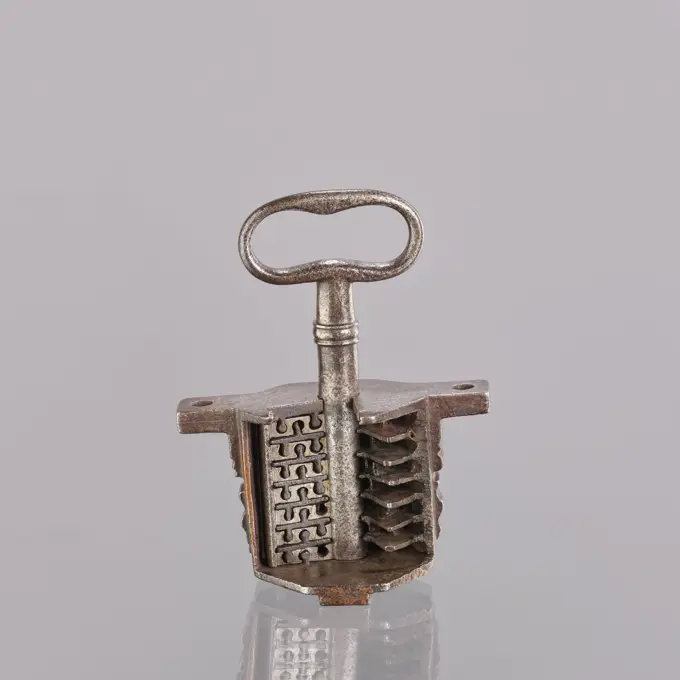
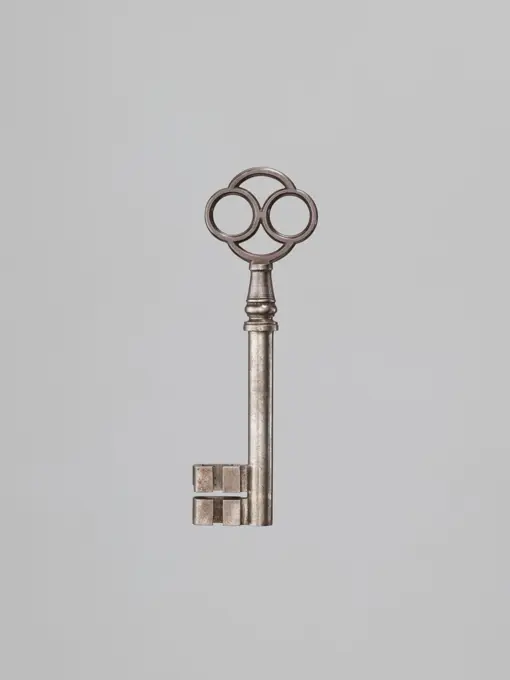
Castle register with a key;  XVIII-19th century (1701-00-00-1850-00-00);
Castle register with a key; XVIII-19th century (1701-00-00-1850-00-00);
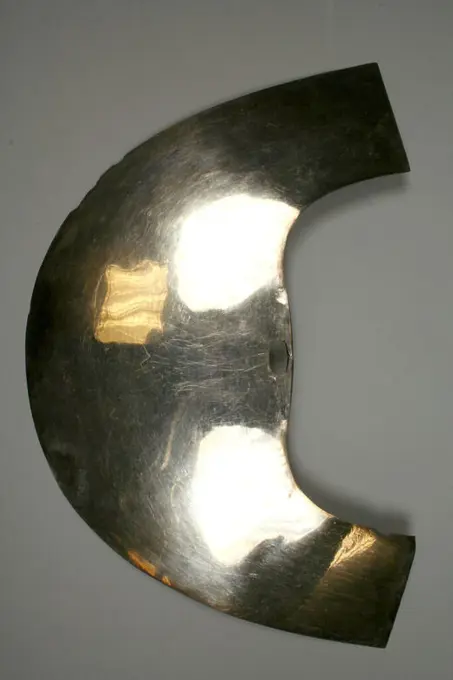
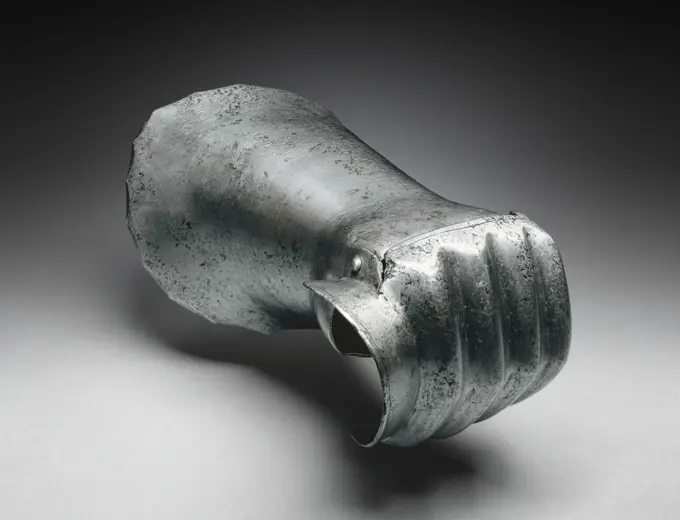
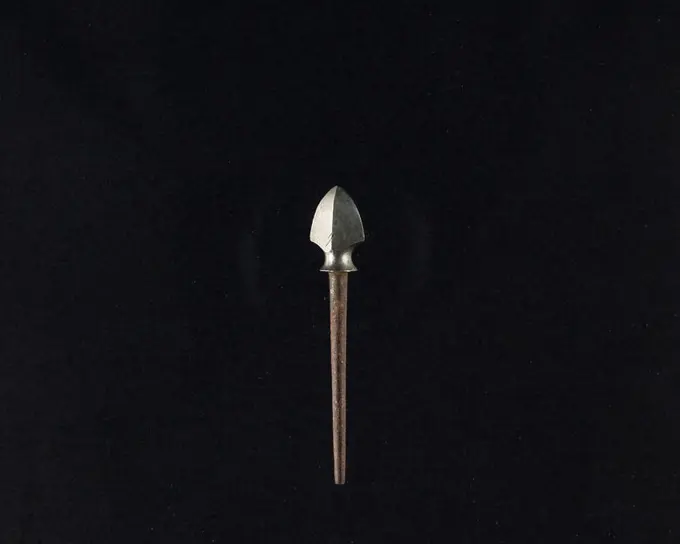
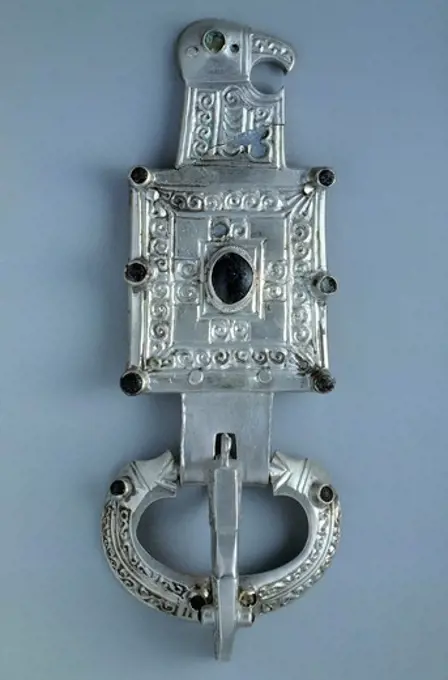
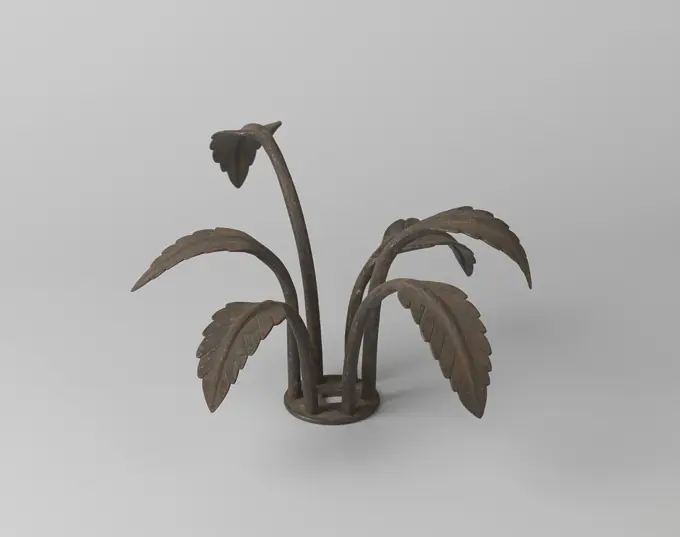
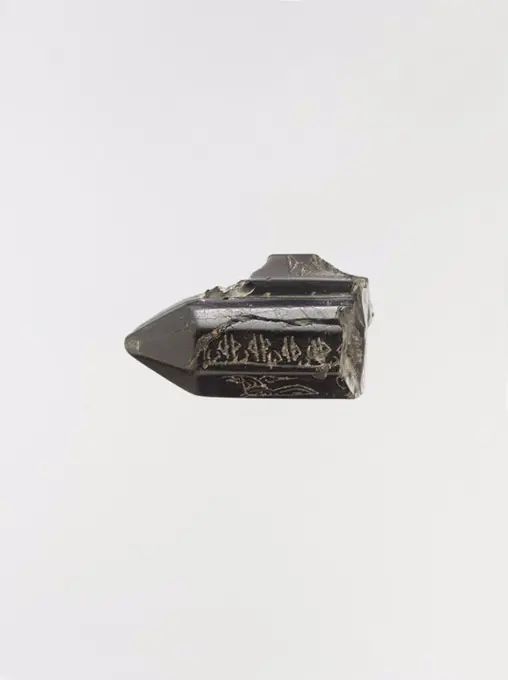
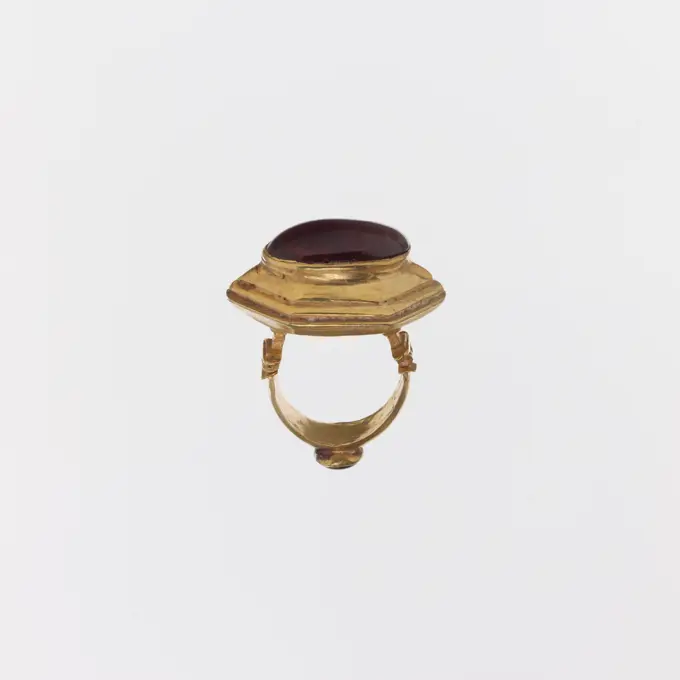
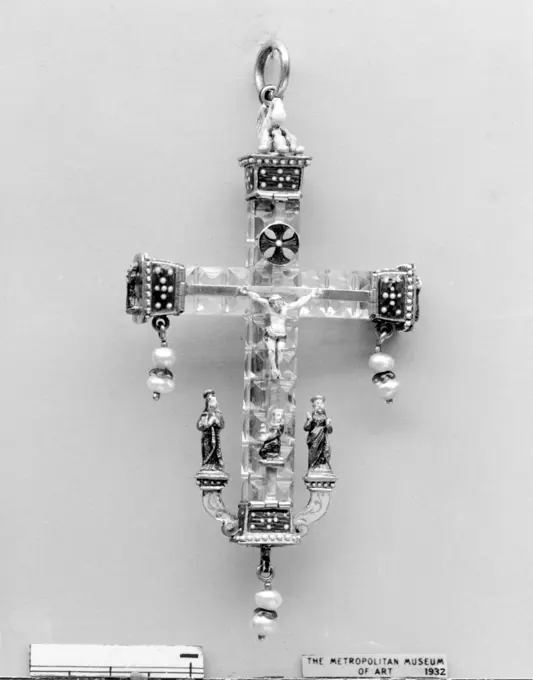
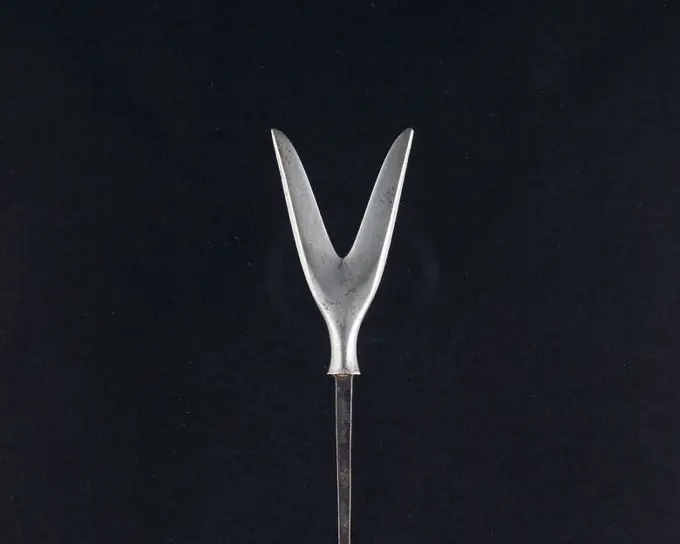
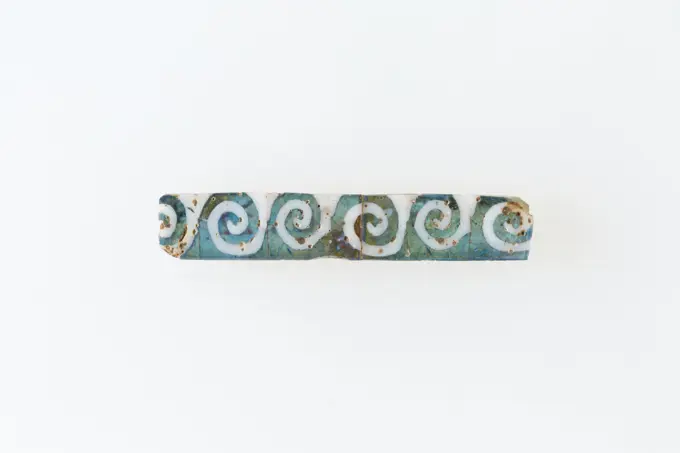
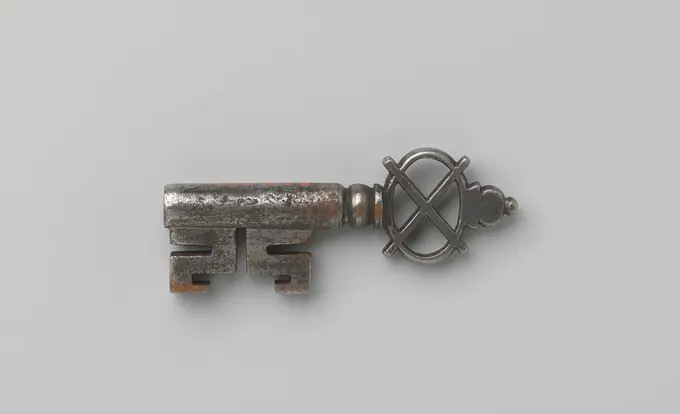
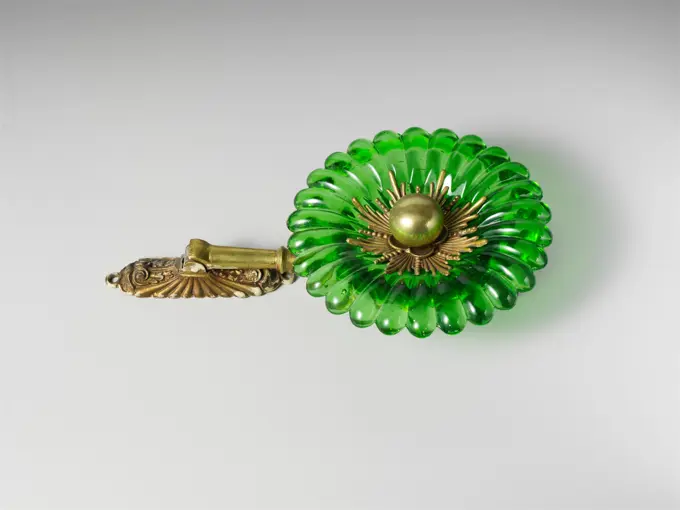
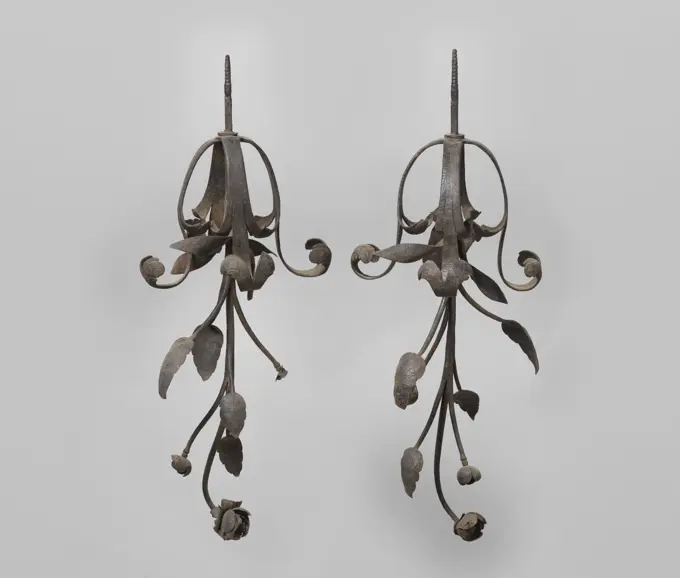
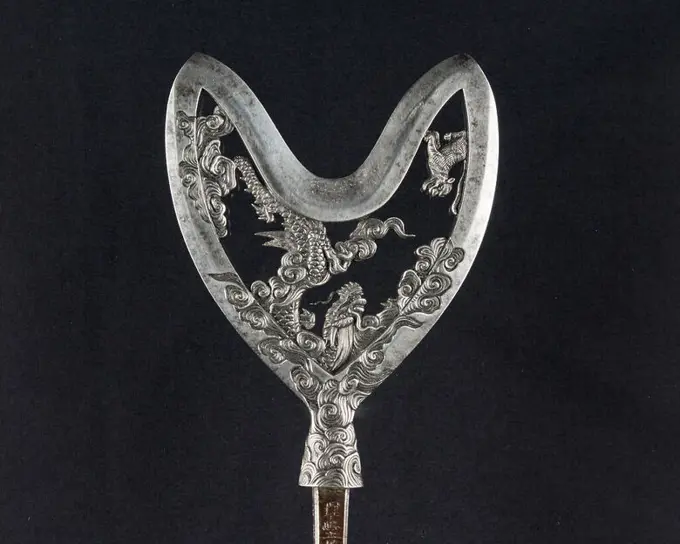
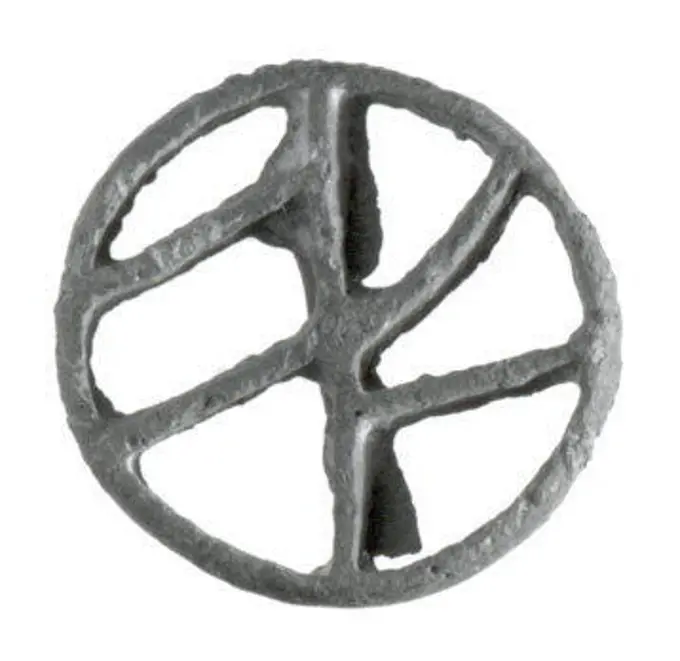
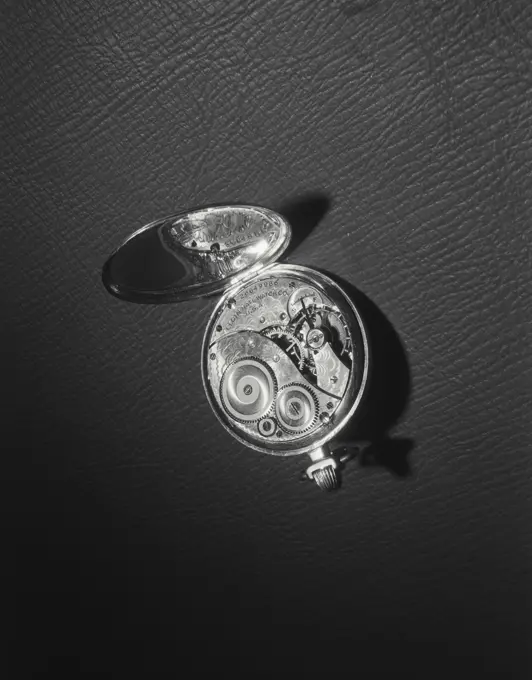
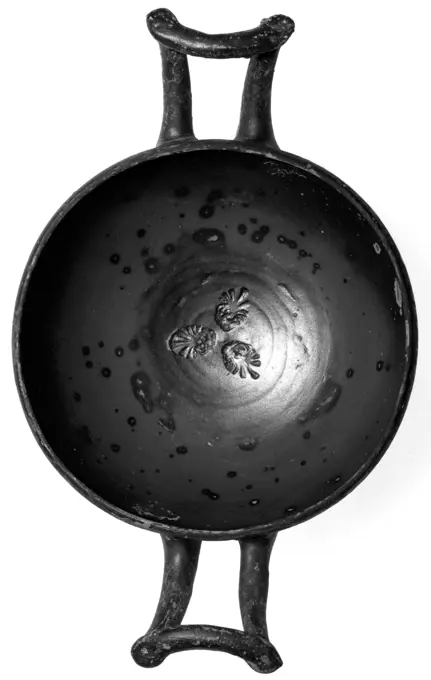
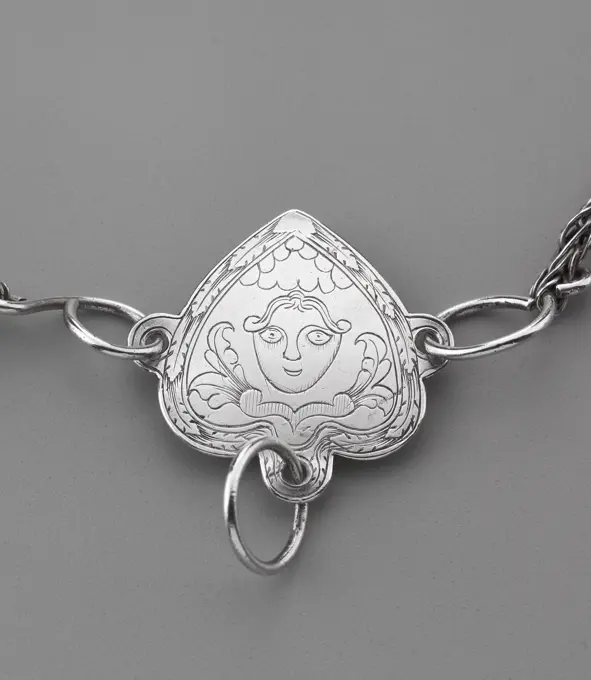
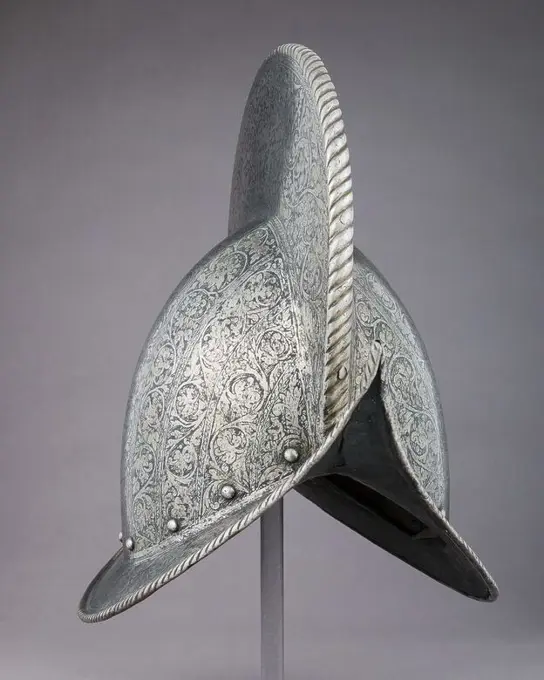
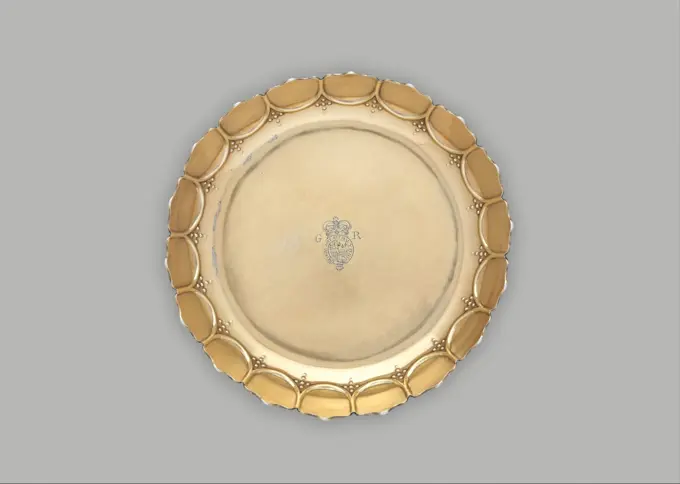
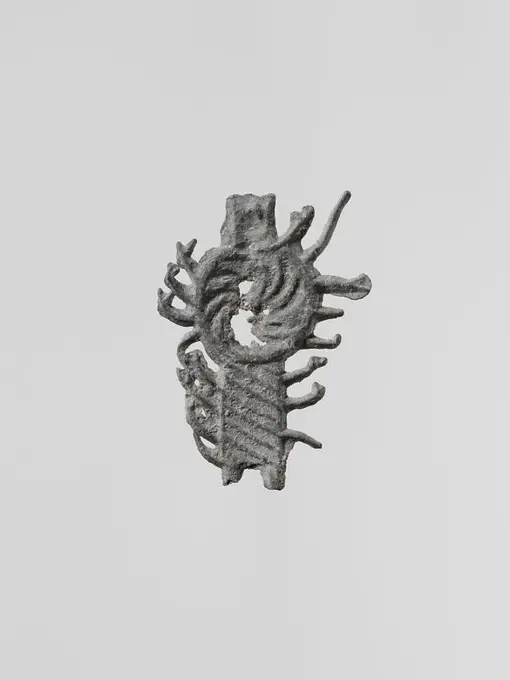
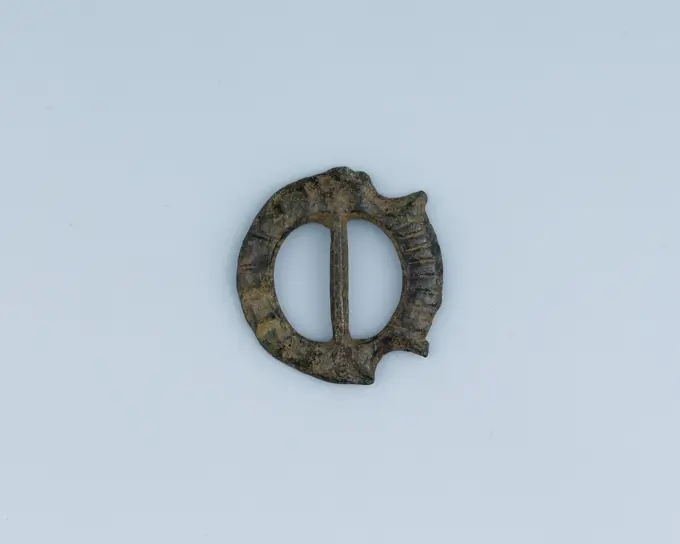
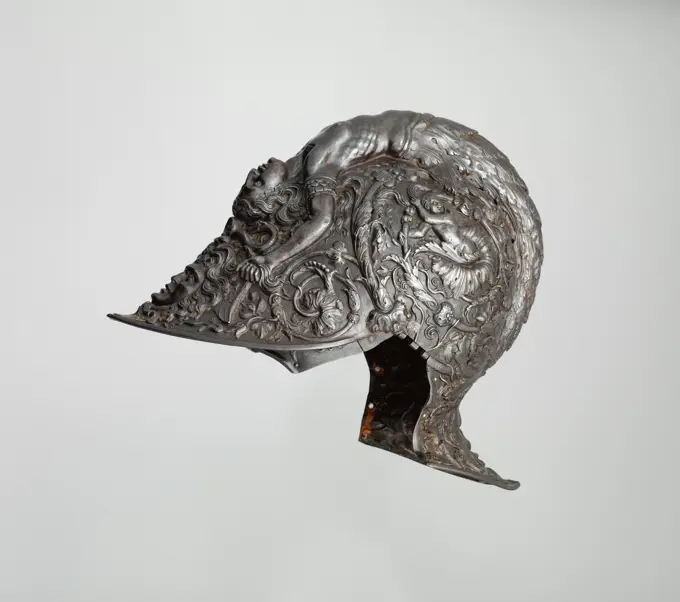
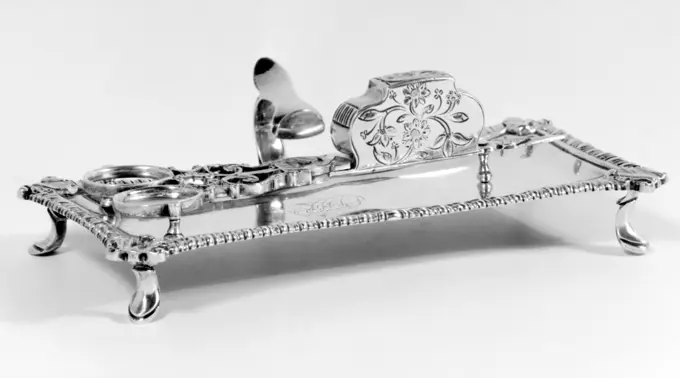
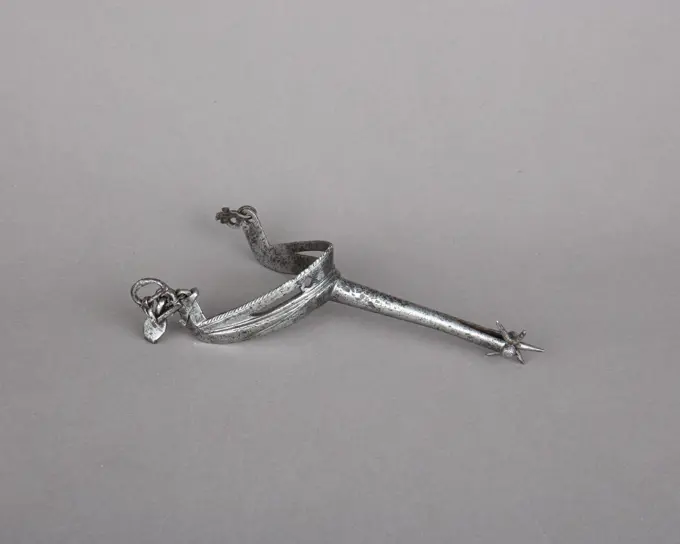
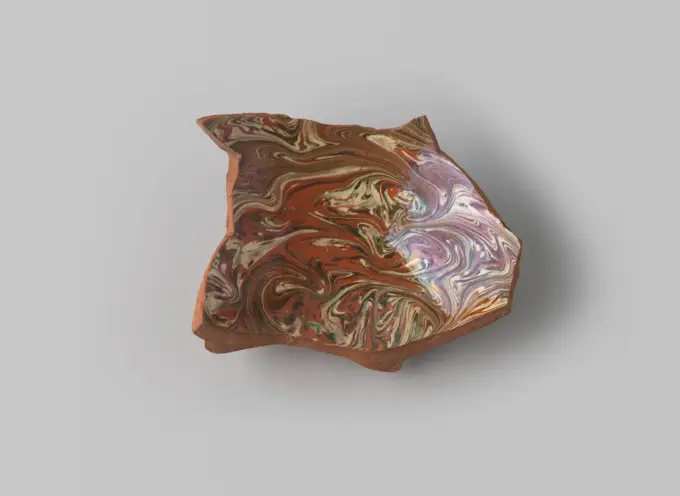
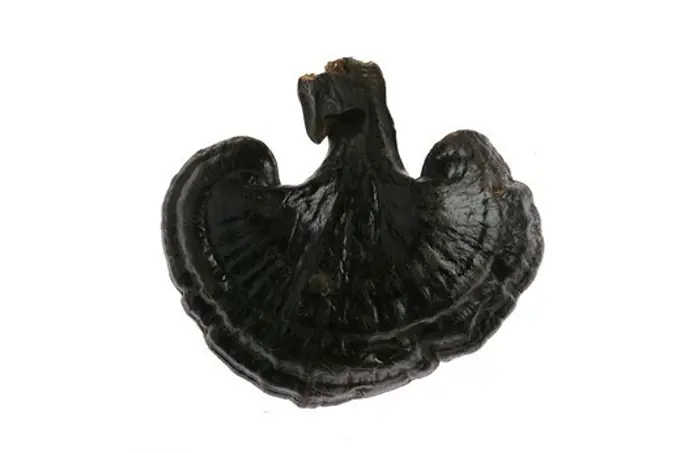
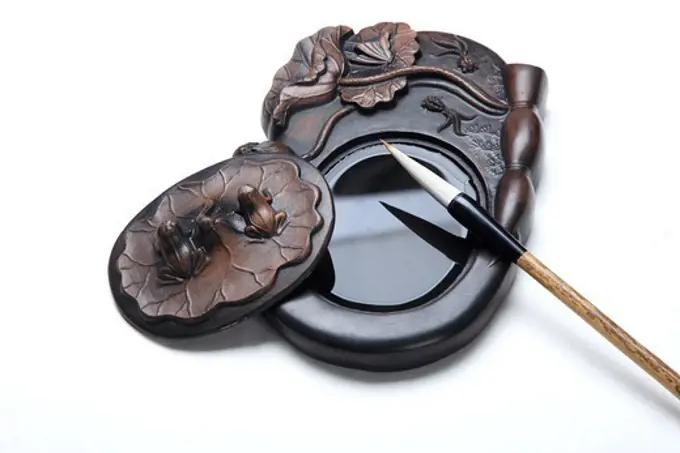
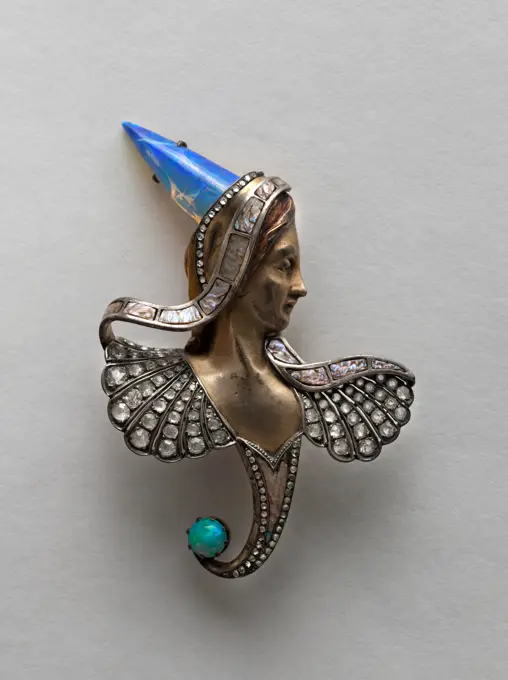
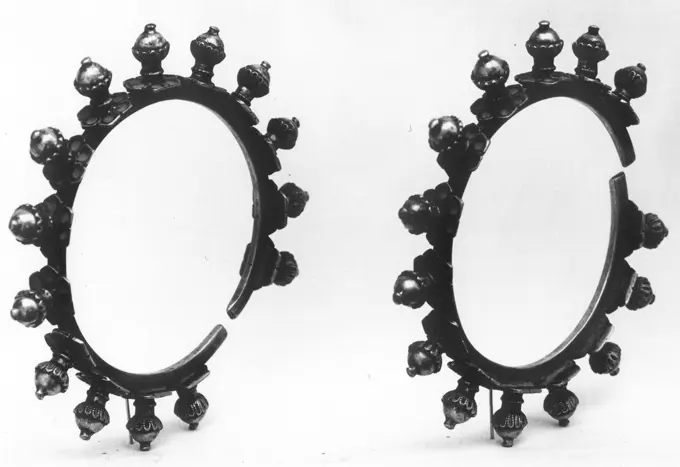
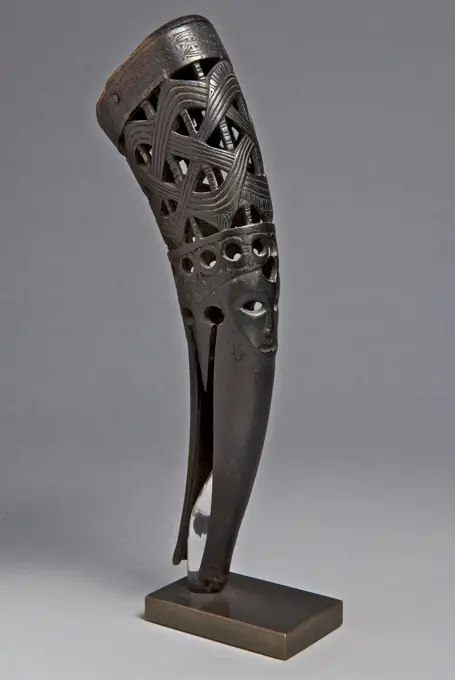
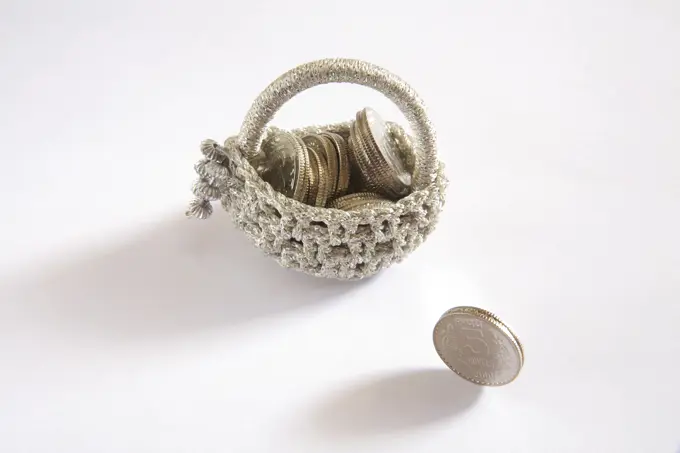
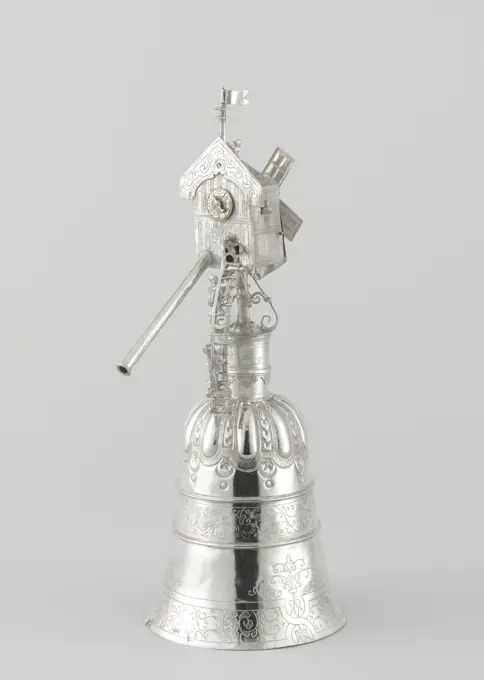
Figures in Lotus-Shaped Reserve Matchsafe; China; silver; 4.3 x 3.2 x 1.2 cm (1 11/16 x 1 1/4 x 1/2 in. )Vase before ca. 1860 China. Vase 42326Nose ornament. Culture: Moche (Loma Negra). Dimensions: H. 5 9/16 x W. 8 5/8 x D. 7/8 in. (14.1 x 21.9 x 2.2 cm)Weight: 0.0697lb. (0.0316kg). Date: 390-450. Museum: Metropolitan Museum of Art, New York, USA.Jousting Glove (Main-de-Fer Gauntlet), c.1530-60. South Germany, 16th century. Steel; overall: 33 x 16.8 cm (13 x 6 5/8 in.). This armor was developed for the joust--a sporting combat between two mounted contestants. Although all of the elements of this armor date from the same period, they are not all from the same suit. This armor is thus called "composed." It also shows the asymmetry of jousting armor. The participants rode along a wall-like barrier known as a "tilt" with their left sides facing one another. Consequently, armor on that side of the body had to be thicker. Note the large plate (grandguard) over the left shoulder for extra protection. Also, the breathing holes in the helmet were placed on the right side (farthest from an opponent's lance) to avoid injuries from splinters. The bracket attached to the right breastplate is called the lance-rest, a shock-absorbing support designed to accommodate the lance when "couched" under the right armpit.Silversmith: Michiel de Bruck, Silver tray, tray top holder silver, cast Square leaf with brace-shaped bevelled corners on four smooth legs bottom bottom (debossed) servingArrowhead (Yanone). Culture: Japanese. Dimensions: L. 2 3/4 in. (7 cm); L. of head 3/4 in. (1.9 cm); W. 1/2 in. (1.3 cm); Wt. 0.3 oz. (8.5 g). Date: 18th century. Museum: Metropolitan Museum of Art, New York, USA.Buckle with plaque in the form of eagle head, Crimea. Gotho-Alanic Civilization, 4th-9th Century.Bloemguirlande. An iron flowerguirland.Wrist bracelet in the form of a coiled snake. Unknown 225-175 B.C. One of pair (with 92.AM.8.7.1), intended to be worn at the wrist. The bracelet is formed of two snakes. The uppermmost coil forms the back end of the snake and the second coil represents the forepart. The snakes are depicted as coiled to strike, conferring great energy to the design of the bracelets. The pin-and-hinge construction is the same as used on the armlets (92.AM.8.6.1-.2): closure was effected by aligning attached loops and passing a pin through them, the final result imitating a length of bead-and-spool wire in order to disguise its function.Lead ornament, possibly imitating jewelry. Culture: Greek, Laconian. Dimensions: Height: 15/16 in. (2.5 cm). Date: 6th-5th century B.C..Small flat votive figurines of cast lead have been found in great quantities at the ancient sanctuaries of Laconia; over one hundred thousand, dating from the seventh century B.C. to the Classical period, were dedicated to the goddess Artemis Orthia in Sparta. Museum: Metropolitan Museum of Art, New York, USA.An Old key isolated on white background Cylindrical Pendant with Magical Writing. Dimensions: H. 7/8 in. (2.3 cm)L. 1 11/16 in. (4.3 cm). Date: 9th-10th century.This cylindrical stone pendant (now broken) is carved with lines of magic symbols on two facets, and the image of a quadruped on one facet. Rather than forming actual words, the writing appears to represent a magical alphabet. The inscription remains undeciphered, and exactly what such a pendant was meant to protect against remains a mystery. Museum: Metropolitan Museum of Art, New York, USA.Flower-Shaped Clothing Plaque. Culture: China (Xinjiang Autonomous Region, Central Asia). Dimensions: Diam. 1 1/4 in. (3.2 cm). Date: 7th-9th century.The nomadic communities of Central Asia used such plaques to embellish clothing and horse trappings. As these nomadic cultures herded animals and were constantly moving, their artistic production was expressed in portable objects that marked the wearer's status and wealth. The outstanding preservation of these fragile ornaments suggests they were used in conjunction with burials, where the body was aggrandized with valuable textiles and augmented with gold. Although it is difficult to date and place these objects geographically, their presence in Central Asia and has a long, established history. Museum: Metropolitan Museum of Art, New York, USA.bracteate heller. Świdnica, issuerGold and cabochon garnet ring 2nd-1st century B.C. Greek The size of the hexagonal bezel, set with a plain but impressively large oval garnet, combined with the fact that another smaller garnet is set in a circular bezel at the center of the hoop at rear, suggests that one was meant to wear this ring on the thumb. This interpretation is confirmed by the presence of the hinge mechanism on the hoop, which allowed the ring to be fitted securely onto the thumb below the knuckle. The piece is a striking example of the extravagant and ostentatious lifestyle of the rich in the Hellenistic world.. Gold and cabochon garnet ring. Greek. 2nd-1st century B.C.. Gold and cabochon garnet. Hellenistic. Gold and Silver. Nutcracker of brown purple tinted hardwood; Steel in the form of two TAM tams, with the drum side against each other; Kraakheel in the form of a clenched hand in which a note that is open to the thumb side. The handle can be turned into the fist. In the shape of the pipe is made of wood, covered with red leather, the inside on one side coated with green silk, on the other side with faded coarse green sheet.Pendant possibly 16th century European. Pendant 197148Arrowhead (Yanone). Culture: Japanese. Dimensions: L. 7 3/4 in. (19.7 cm); L. of head 2 1/2 in. (6.4 cm); W. 1 3/8 in. (3.5 cm); Wt. 0.7 oz. (19.8 g). Date: 18th century. Museum: Metropolitan Museum of Art, New York, USA.Brooch -Inlay, running spirals 200 BC-100 AD Ptolemaic Period-Roman Period A mosaic glass technique allowed multiples of an image to be created: a figural or design composition was made by bundling colored glass canes, which were then drawn out into a long bar. The bar was then sectioned at right angles, probably by striking the bar with appropriate tools, to produce small inlay tiles. The tile would then be smoothed and polished on the face intended to appear outwards.Such elements could also be used side by side to create repeating patterns.. Inlay, running spirals. 200 BC-100 AD. Glass. Ptolemaic Period-Roman Period. From Egyptold concrete wall and frame made in 3D graphicsAnonymous / 'Case for small rock crystal ewer without a handle or lip'. 1650 - 1711. Leather, Wood, Metal, Velvet. Museum: Museo del Prado, Madrid, España.Creamer, from a Miniature Tea Set, porcelain, gold, Austria, 1830-1860, ceramics, Decorative Arts, creamer, creamerVintage golden skeleton key isolated on white backgroundPair of kneebucklesRattle, Pieter Verschuyl, 1772 The golden rattle has a mother -of -pearl. It ends in a whistle, in which a heart -shaped opening has been saved at the top. A ring with a chain is attached to the bottom of this. Just under the other end, in which the flat square lifts, which continues the widening form of the frame. The frame is decorated with flower baskets and volutes on a punched surface. Smooth tires run over the entire length on both flat sides; In two places these are crossed by profiled edges. Amsterdam gold (metal). mother of pearl engraving The golden rattle has a mother -of -pearl. It ends in a whistle, in which a heart -shaped opening has been saved at the top. A ring with a chain is attached to the bottom of this. Just under the other end, in which the flat square lifts, which continues the widening form of the frame. The frame is decorated with flower baskets and volutes on a punched surface. Smooth tires run over the entire length on both flat sides; In two places these arPijpsleutel.Pipe key with St. Andrieskruis in the oval handle. Above the handle is a crown-shaped increase, ending in a button. Short shaft.Tieback ca. 1860 American. Tieback 8493Commemorative badge of the Music Society in WarsawWooden table photo frame, side view, on white reflective background.Lluís Masriera i Rosés / Bandeja. Barcelona, hacia 1907. Plata reposada. 44 x 36 cm.Bloemtak, c. 1400 - c. 1950 A forged iron branch with flowers.  iron (metal) forging A forged iron branch with flowers.  iron (metal) forgingRetro cartoon with texture. Isolated on White.18th century (1701-00-00-1800-00-00);Ceremonial Arrowhead (Yanone). Culture: Japanese. Dimensions: L. 11 1/4 in. (28.6 cm); L. of head 4 3/8 in. (11.1 cm); W. 3 3/8 in. (8.6 cm); Wt. 5.7 oz. (161.6 g). Steel-chiseler: Umetada Motoshige (Japanese, Edo period, died 1675). Date: dated 1645.Large arrowheads, pierced and elaborately chiseled with landscapes, birds, flowers, dragons, and Buddhist divinities, were created to be admired for the beauty of their metalwork and design rather than for use in archery. This arrowhead is dated 1645 and signed by Umetada Motoshige (died 1675), a member of the Umetada school of swordsmiths, tsuba makers, and iron chiselers. It belongs to a group of more than thirty similarly signed and dated pieces in the Metropolitan Museum's collection (including acc. nos. 32.75.318, .321, .327, .330, .334, .337, .339-.340, .398, .403, .406, .409) that may have been made for presentation or as a votive offering to a shrine. Museum: Metropolitan Museum of Art, New York, USA.Silversmith: Cornelis Knuijsting, Silver candlestick in the form of corinthian column with capital on square foot decorated with garlands and blaasquins, candlestick candlestick holder silver, molded appliqued Square curved base stem and candle holder in the form of corinthian column with capital flat gripper with profiled outer edge lower edge inside foot (debossed) illuminationCompartmented stamp seal ca. late 3rd-early 2nd millennium B.C. Bactria-Margiana Archaeological Complex. Compartmented stamp seal 326659Denar - Brakteat; approx. 1327/1328-OK. 1337/1338 (1327-00-00-1338-00-00);Pendant 18th century Portuguese. Pendant 206842Medallion with sliced representation of a Roman soldier, anonymous, c. 1400 - c. 1950 locket Blood coral medallion with sliced representation of a Roman soldier. In copper with cut rococo ornaments. The medallion hangs on a black ribbon. unknown red coral (material). copper (metal)a single dry clutch driven plate, auto spare partHexagonal dish. Culture: Hungarian, Transylvania. Dimensions: Diameter: 9 9/16 in. (24.3 cm). Date: 1696.The center of each dish in this set (acc. nos. 2010.110.42-49) bears an engraved laurel wreath encircling a coat of arms. Small differences in these arms could be the result of different masters working quickly to complete what was probably a much larger set for a wedding that was fast approaching. The bold blossoms in the six corners symbolize both the wish for abundance throughout marriage and the transitory glories of earthly existence. Salgo acquired two of these dishes at a later date from the others, but all eight pieces belonged to the same set of fourteen dishes that were once part of the Andrssy treasury.LiteratureEuropean Silver. Sale cat., Sotheby's, Geneva, November 15, 1983, p. 19, no. 53.European Silver. Sale cat., Sotheby's, Geneva, November 14, 1984, n.p., no. 34.Judit H. Kolba. Hungarian Silver: The Nicolas M. Salgo Collection. London, 199Vintage Photograph. Elgin National Watch Company pocket watch on leather surface, with open back view showing movement of the watchScarier, c. 1400 - c. 1950   iron (metal)   iron (metal)Handel basket of silver, Spitsovaal. Wand and handle work with squares, Wiener Werkstätte, after Josef Hoffmann, c. 1905 Spitsovale handle basket of silver. The right -wing basket has a loop -shaped handle. Both the walls of the basket and the handle are completely collected with a pattern of squares. Vienna silver (metal). glass Spitsovale handle basket of silver. The right -wing basket has a loop -shaped handle. Both the walls of the basket and the handle are completely collected with a pattern of squares. Vienna silver (metal). glassFars that coin is coin, 10 ,Button in the form of a deer's head, loose copy, from a turtle lid (series from 28 pieces A to FF), Anonymous, 1700 - 1799 Silver button in the form of a deer's head, loose copy, from a lid of turtle (28 pieces: A to FF) Indonesia silver (metal) Silver button in the form of a deer's head, loose copy, from a lid of turtle (28 pieces: A to FF) Indonesia silver (metal)Patchbox. Maker, attributed to: Edward Webb, American, 1666-1718Sashbuckle.   Maker: William B. Kerr and Company, American, 1855-1927Campanian Black Kylix (Stemless). UnknownThree Appliqé Ornaments Last quarter of the 10th-last quarter of the 15th century Indonesia (Java). Three Appliqé Ornaments 49692Silver 'sea horse' brooch, c. 1930 - c. 1940  Netherlands silver (metal) hammering  Netherlands silver (metal) hammeringGun-Lock Hammer, c. 1800-1825. England, early 19th century. overall: 6.4 x 3.8 cm (2 1/2 x 1 1/2 in.).Pendant withChains.  Maker: Samuel Parmelee, American, 1737-1803Tongs. John Murdock; American, 1748-1786; Philadelphia, Pennsylvania. Date: 1779-1786. Dimensions: 2 × 15.9 × 6.7 cm (13/16 × 6 1/4 × 2 5/8 in.). Silver. Origin: Philadelphia. Museum: The Chicago Art Institute, Chicago, USA.Morion. Culture: French. Dimensions: H. 13 1/16 in. (33.2 cm); W. 9 11/16 in. (24.6 cm); D. 13 1/2 in. (34.3 cm); Wt. 3 lb. 15 oz. (1773 g). Date: ca. 1575. Museum: Metropolitan Museum of Art, New York, USA.Hammam Shoes 19th century. Hammam Shoes 162816Livreiknoop of silver with weapon Teding van Berkhout, Hendricus & Zn. Really, c. 1853 - c. 1866 Livreiknoop of silver with weapon teding from Berkhout. Bolle front in which the weapon is beaten. The weapon of Berkhout (1815): in gold seven red bugs, a standing silver crane in a blue release. Equipped with a copper eye at the back. Utrecht whole: Silver (Metal). Eye: Copper (Metal) forging Livreiknoop of silver with weapon teding from Berkhout. Bolle front in which the weapon is beaten. The weapon of Berkhout (1815): in gold seven red bugs, a standing silver crane in a blue release. Equipped with a copper eye at the back. Utrecht whole: Silver (Metal). Eye: Copper (Metal) forgingDiobol; Pantikapaion; 2. W. 5th century BC (-475-00-00--451-00-00);Nadczarzyorze, Protassowicki, Rafał (1894-1957), Protassowicki, Rafał (1894-1957)-collections, depressed square (numism.), Lions, lion scalp (iconogr.), Purchase (provenance), animalsMolenbeker of driven silver, Reynier Hendriksz. Van Hassel, 1662 Molenbeker of driven silver. The mill rests on the inverted bell -shaped Cuppa. There is a man and a child on the stairs, the miller is standing in front of the door. Delft silver (metal) Molenbeker of driven silver. The mill rests on the inverted bell -shaped Cuppa. There is a man and a child on the stairs, the miller is standing in front of the door. Delft silver (metal)Dish (one of a pair) (part of a set) 1714/15 Lewis Mettayer British When Sir Paul Methuen embarked on his ambassadorial mission to Spain in 1714, he ordered a set of seventeen fruit dishes, of which these five survive (68.141.288-.292). They were used during the dessert service, when they were piled high with candied fruits, sweetmeats, and pastries and arranged in a perfectly symmetrical pattern on the table.. Dish (one of a pair) (part of a set) 238333Lead figure of a goddess with shield, spear, and aegis, probably Athena. Culture: Greek, Laconian. Dimensions: Height: 1 1/4 in. (3.2 cm). Date: 6th-5th century B.C..Small flat votive figurines of cast lead have been found in great quantities at the ancient sanctuaries of Laconia; over one hundred thousand, dating from the seventh century B.C. to the Classical period, were dedicated to the goddess Artemis Orthia in Sparta. Museum: Metropolitan Museum of Art, New York, USA.Netsuke of Demon with His Head in a Box 18th century Japan. Netsuke of Demon with His Head in a Box. Japan. 18th century. Wood. Edo period (1615-1868). NetsukeRosette chalcedony bead 2nd millennium B.C. Minoan. Rosette chalcedony bead 322550Cast Iron plate for the conversion of the fireplace, with palm branches and a wreath, anonymous, 1675 - 1725 Plate of cast iron, part of the fireplace construction. The opening is bordered with an egg list. The pilasters are decorated with flower stabs and volutes at the top. The whole is crowned with two palm branches stabbed by a wreath. Germany (possibly) iron (metal) casting Plate of cast iron, part of the fireplace construction. The opening is bordered with an egg list. The pilasters are decorated with flower stabs and volutes at the top. The whole is crowned with two palm branches stabbed by a wreath. Germany (possibly) iron (metal) castingBuckle 15th-16th century European. Buckle. European. 15th-16th century. Bronze. Miscellaneous-Buckles & OrnamentPolyhedral Cup with Decoration of Knotted Cord 1688-1704 Japan. Polyhedral Cup with Decoration of Knotted Cord 49414Collar level emblem branch of service, guard regiment grenadiers. In use from 1963.Bead in the form of a rosette. Bead in the form of a rosette. Silver, gold. Gold and SilverFalse coin, crown penny, Ladislaus III of Varna (1434 1444)Stirrups. Artist: ShigenagaBox, from a child's knife and fork set, 1833, John Bettridge, British (Birmingham), English, H.5/8 x W.4-7/8 x D.1-1/2 in., sterling silver, England, 19th centuryAmulet - serce ib. unknown, authorBurgonet dated 1543 Filippo Negroli Italian This masterpiece of Renaissance metalwork is signed on the browplate by Filippo Negroli, whose embossed armor was praised by sixteenth-century writers as "miraculous" and deserving "immortal merit." Formed of one plate of steel and patinated to look like bronze, the bowl is raised in high relief with motifs inspired by classical art. The graceful mermaid-like siren forming the helmet's comb holds a grimacing head of Medusa by the hair. The sides of the helmet are covered with acanthus scrolls inhabited by putti, a motif ultimately derived from ancient Roman sculpture and wall paintings. Listen to experts illuminate this artwork's story Listen Play or pause #4407. Burgonet Supported by Bloomberg Philanthropies We're sorry, the transcript for this audio track is not available at this time. We are working to make it available as soon as possible.. Burgonet. Italian, Milan. dated 1543. Steel, gold, textile. Milan. HelmetsSnuffers tray 1765-66 W. T., London. Snuffers tray 199700Rowel Spur (Left) 15th century Bohemian In the 15th century, rowel spurs with very long necks were of common use in Western Europe. At this period, the elevated war saddles and the very specific riding style, with long stirrup leathers and legs extended forward, had the consequence of taking away the riders feet from the horses flank. Thus, these long necks gave them easier access without having to disturb the riders position. As a knights status was closely related to his horse, spurs became one of the symbols of chivalry, and one of the tokens given to him during his knighting.. Rowel Spur (Left). Bohemian. 15th century. Iron alloy. Equestrian Equipment-SpursModel or aaintop. Model of a large march, rounded at the front, supported by longitudinal expenses and three wicks. The mars floor is closed.Handmade necklace made of resin and olive treesBliżej Kultury unknownSharp of red -baking earthenware, on the inside and outside with marbled glaze in brown, beige and terra, anonymous, 1600 - 1650  Northern Netherlands earthenware. glaze majolica  Northern Netherlands earthenware. glaze majolicaGanoderma lucidum (Lingzhi),bracket fungus,close-upInk stone and brush penThe illustration here shows an ancient Greek couch with table and candelabrum.The illustration dates to 1882.Henri-Ernest Dabault. "The magician brooch". Golden money, opal and rhinestones. Around 1900. Museum of Fine Arts of the city of Paris, Petit Palais. 74618-26 Silver Dore, Art Nouveau, Pin, La Magicienne, opale, rhinestonesKey;  19th century (1801-00-00-1900-00-00);Ring A.D. 1st millennium (). Ring 325114Tasty texture of cosmetic gel on a golden background. Tasty texture of cosmetic gel on a golden background. Copyright: xZoonar.com/MAREVGENNAx 22807195Bracelet, One of a Pair 19th century. Bracelet, One of a Pair 446711Rectangular tea caddy with a crucifixion scene, anonymous, c. 1780 Rectangular porcelain tea lease with slightly thickened, round shoulder and lid, painted on the glaze in black and gold. On the outside twice a representation of the crucifixion with the two Maria's; The neck and lid edge with a band with a decorative pattern. Lid button in the form of a peach. Underside unglazed. Part of a tea set. European performance in Encre de Chine. China porcelain. glaze. gold (metal) painting / gilding / vitrification Rectangular porcelain tea lease with slightly thickened, round shoulder and lid, painted on the glaze in black and gold. On the outside twice a representation of the crucifixion with the two Maria's; The neck and lid edge with a band with a decorative pattern. Lid button in the form of a peach. Underside unglazed. Part of a tea set. European performance in Encre de Chine. China porcelain. glaze. gold (metal) painting / gilding / vitrificationPair of Stirrups mid-17th century German or Netherlandish These stirrups are made of several elements screwed together, easing their manufacture by not welding them. The swivel suspension eye allowed the stirrup leather to stay flat against the horses flank when the stirrup is used, but it is also more fragile than regular non-rotating systems.. Pair of Stirrups. German or Netherlandish. mid-17th century. Iron, copper. Equestrian Equipment-StirrupsOrnate key on a white background3d rendering of a decorative sphere ornament pattern isolated in white 3d rendering of a decorative sphere ornament pattern isolated in white background Copyright: xZoonar.com/HugoxKurkx 14546371Suicide rope with knot on black background. Sorrow, psychological problems objects concept.. Suicide rope with knot on black backgroundPair of Sword-Grip Ornaments (Menuki). Culture: Japanese. Dimensions: L. of each 1 1/8 in. (2.9 cm); Wt. of each 0.3 oz. (8.5 g). Date: 18th century. Museum: Metropolitan Museum of Art, New York, USA.Bullet Case (ParuParu)Notebook with pearly tie with ornaments imposed. A notebook in a pearl band with imposed, copper or silver ornaments. With a pearly pencil holder.Concept, growth Indian currency lot of coins of five rupees in basket India Copyright: xNirmalaxMishra/DinodiaxPhotoxUmbrella-shapedOrnamentWindmill cup, anonymous, c. 1594 - c. 1595 Molenbeker of silver with partially driven and partially engraved gilded dial with two millers and an amor on the stairs. Marked. Antwerp silver (metal). gilding (material) gilding Molenbeker of silver with partially driven and partially engraved gilded dial with two millers and an amor on the stairs. Marked. Antwerp silver (metal). gilding (material) gildingTorque, 12 x 10 1/2 x 1 5/8 in. (30.48 x 26.67 x 4.13 cm), Silver, China