Historical Firearms

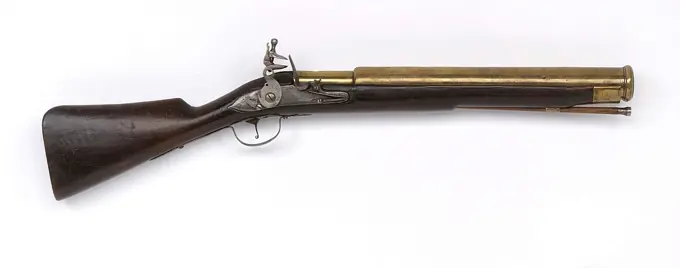
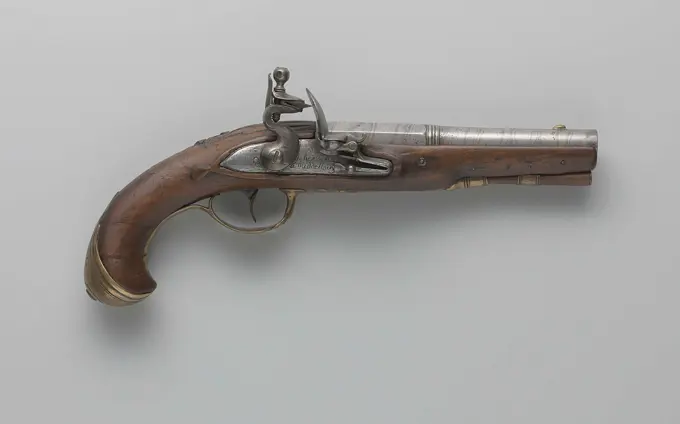
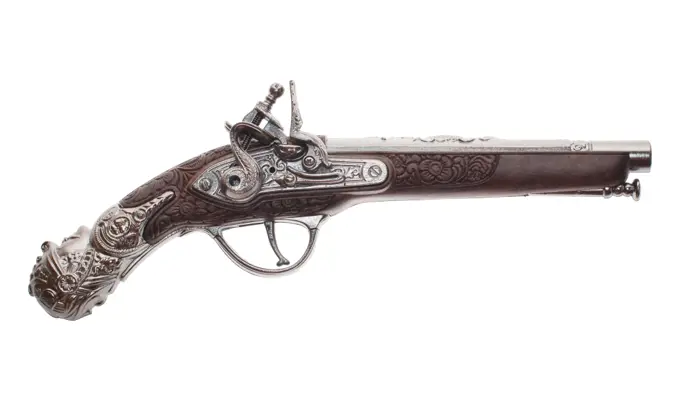
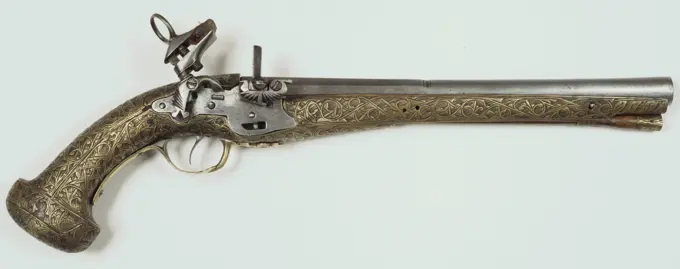
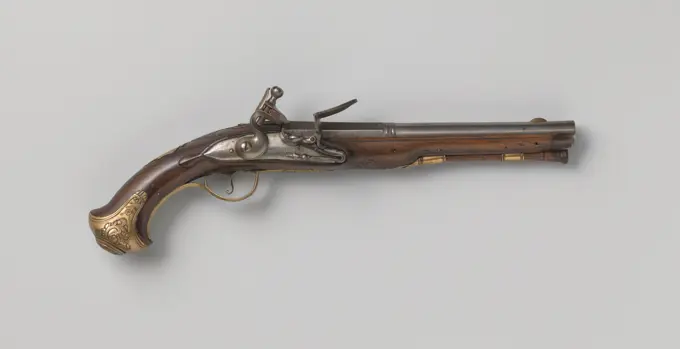
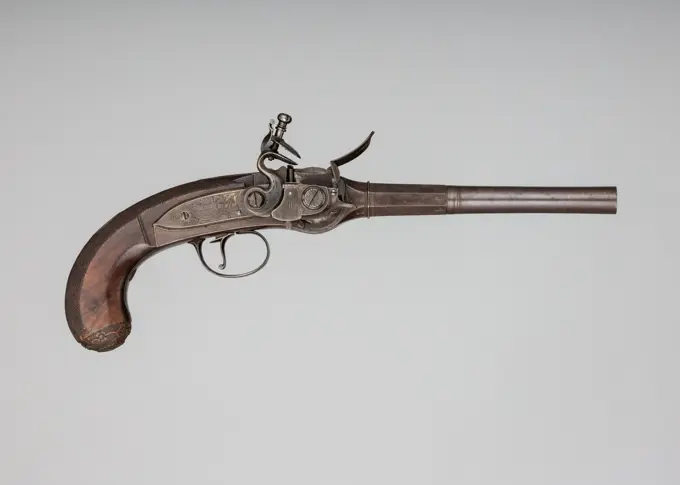
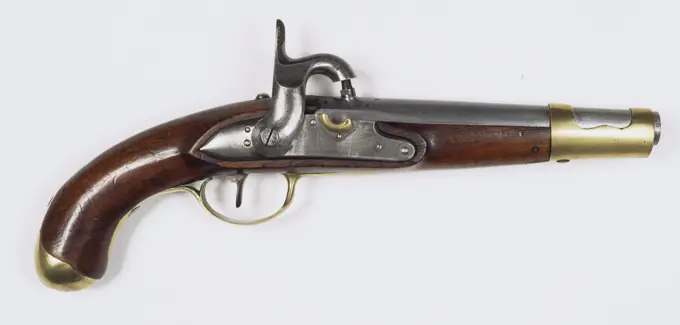
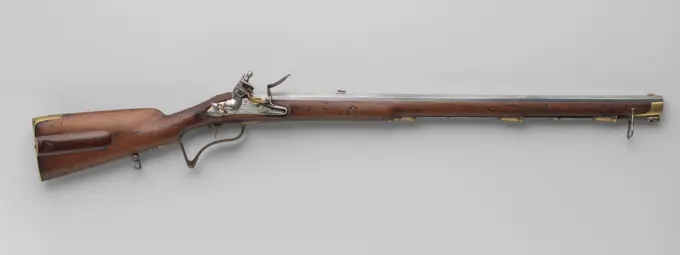
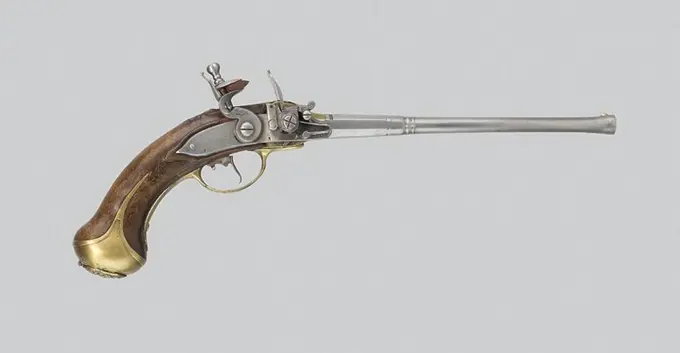
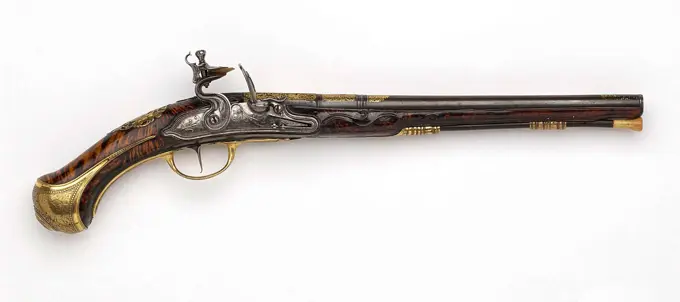
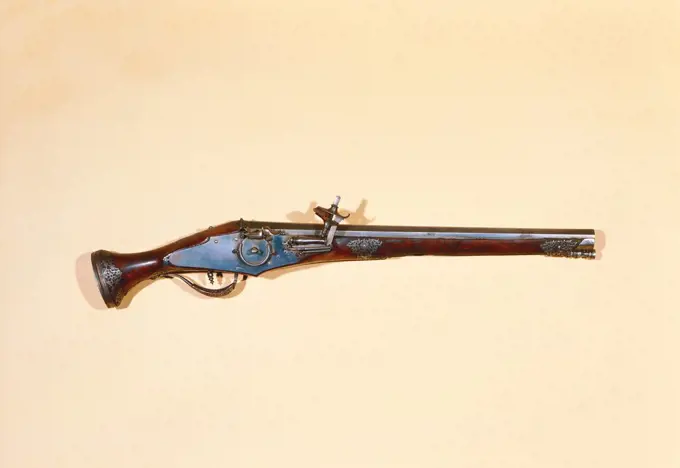
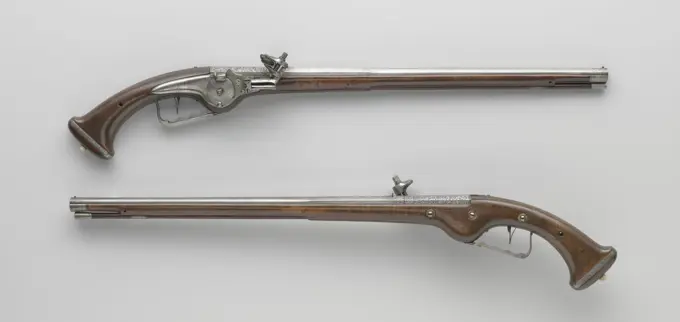
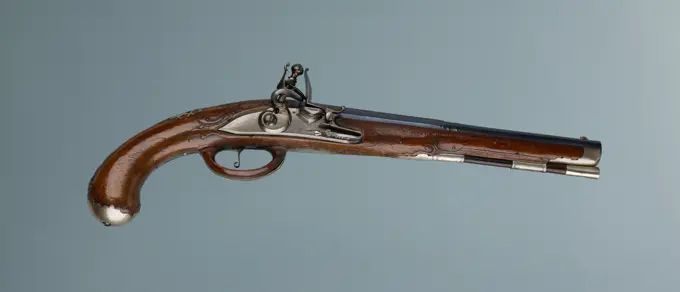
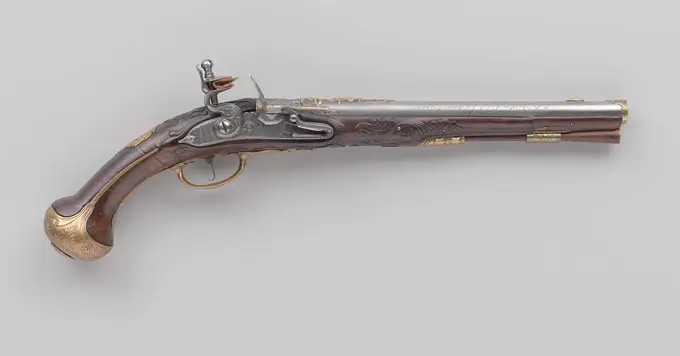
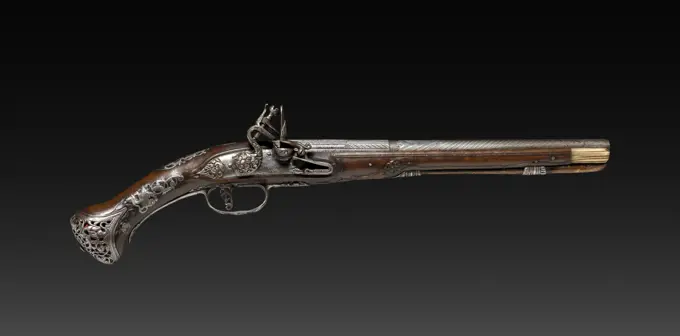
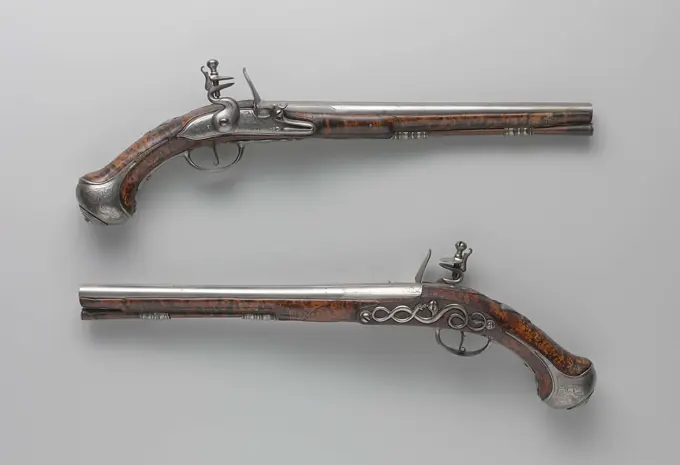
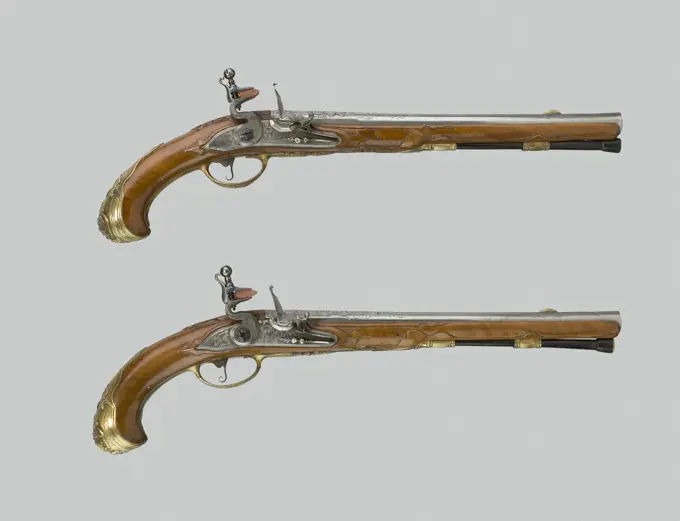
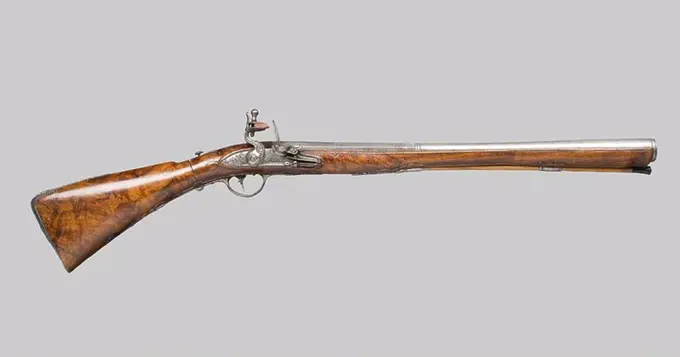
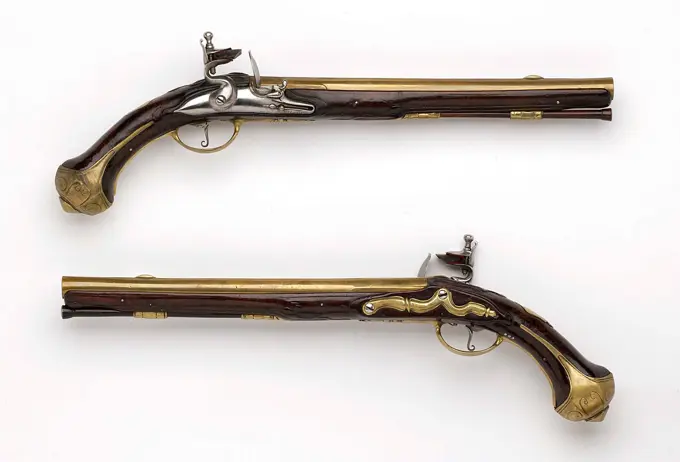
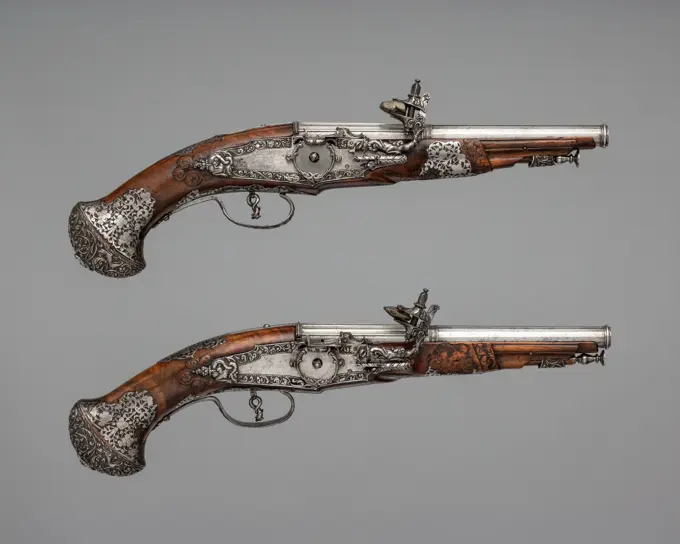
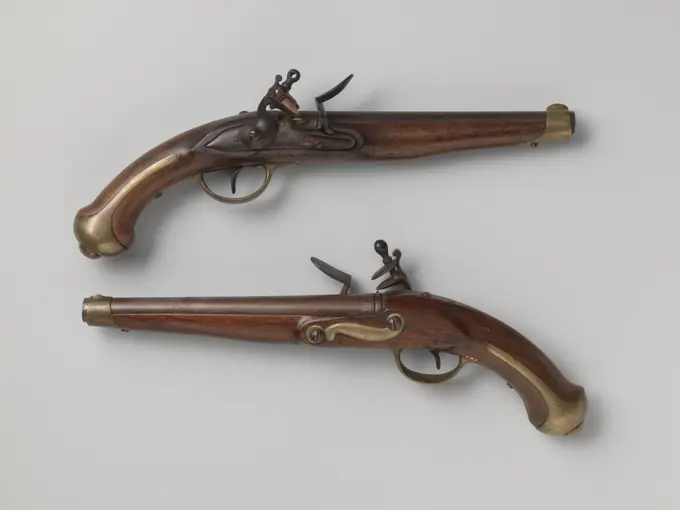
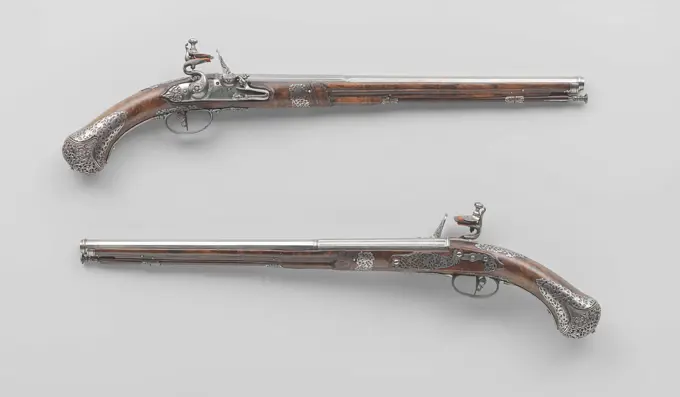
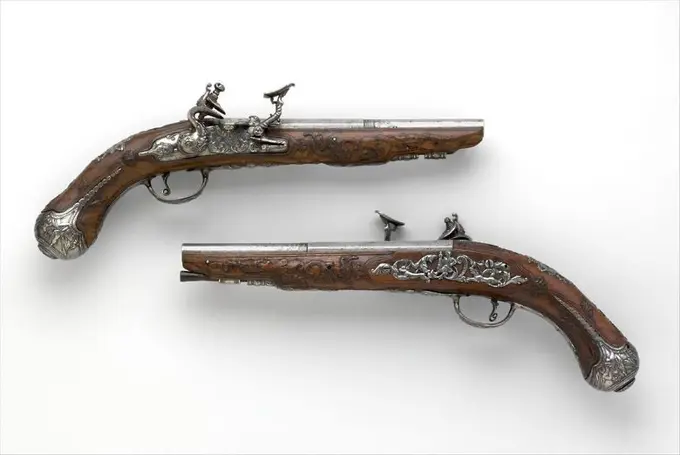
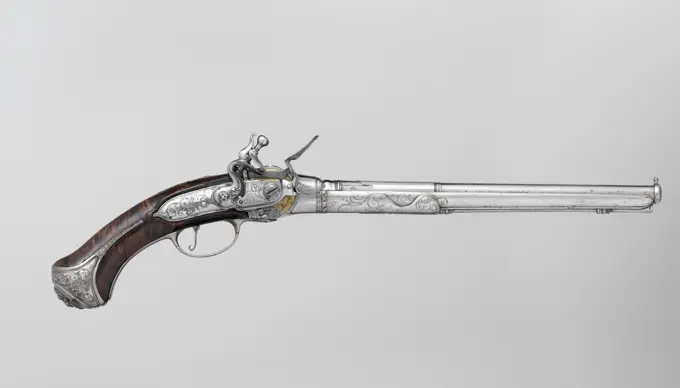
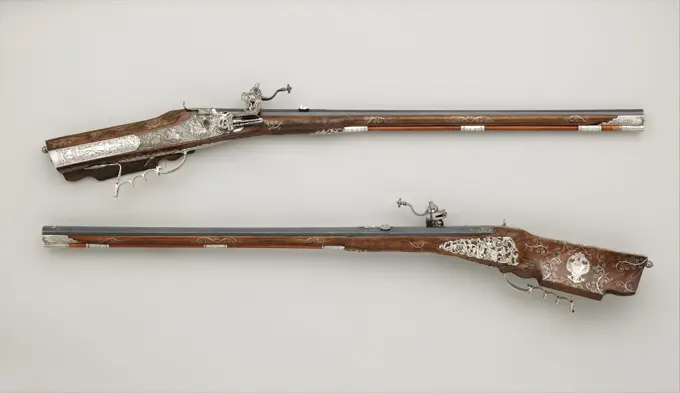
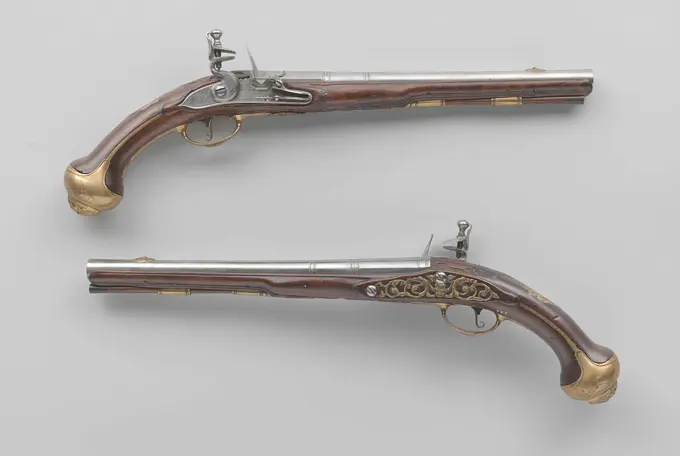
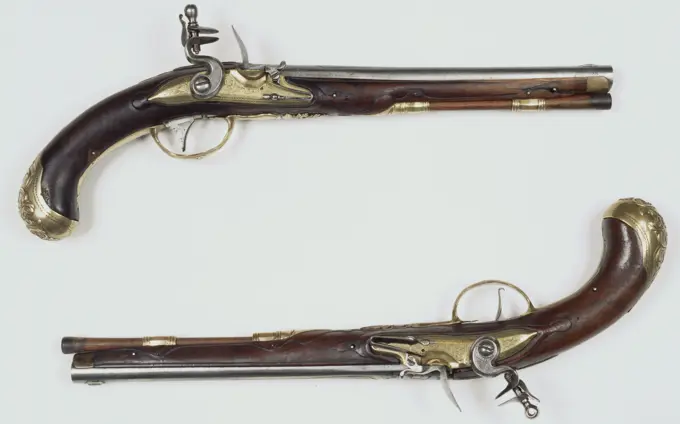
Display of vintage firearms such as flintlock pistols from various eras, showing intricate designs and materials, highlighting historical craftsmanship.

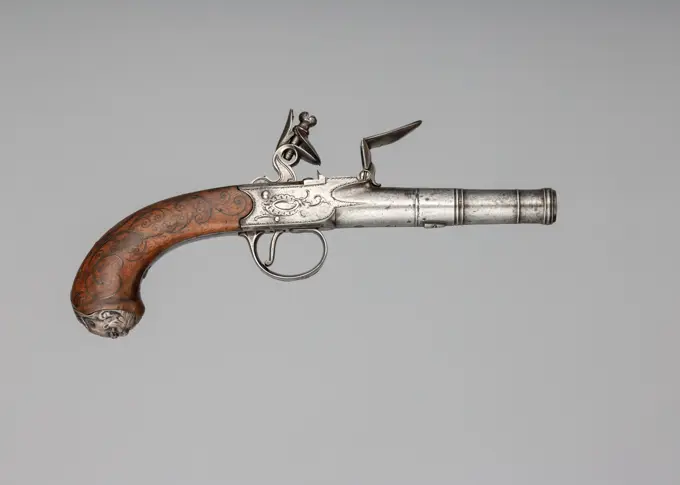
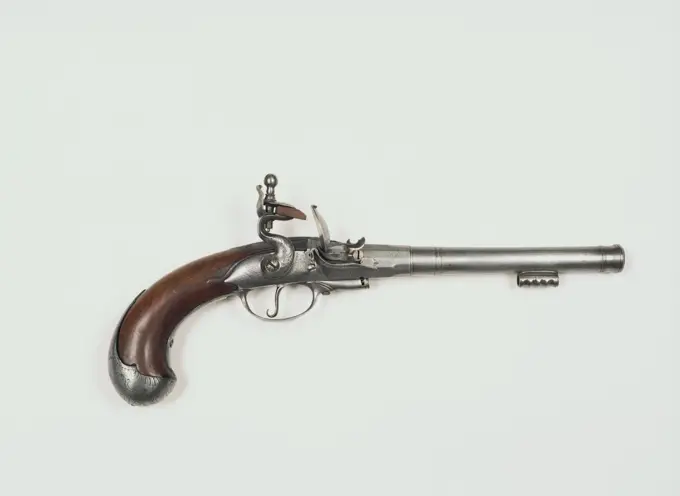
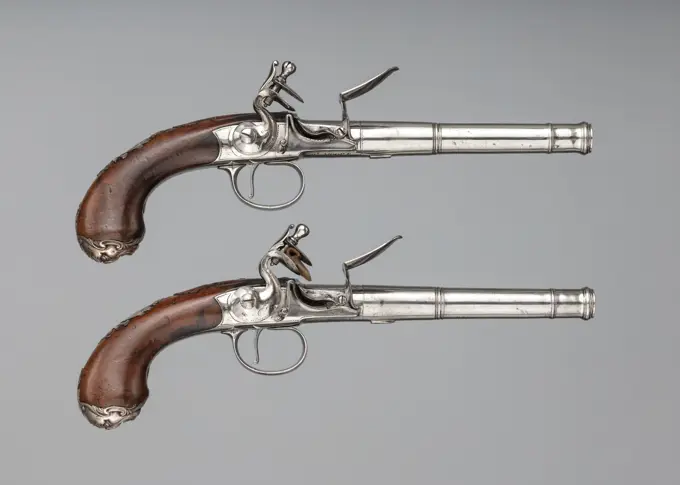
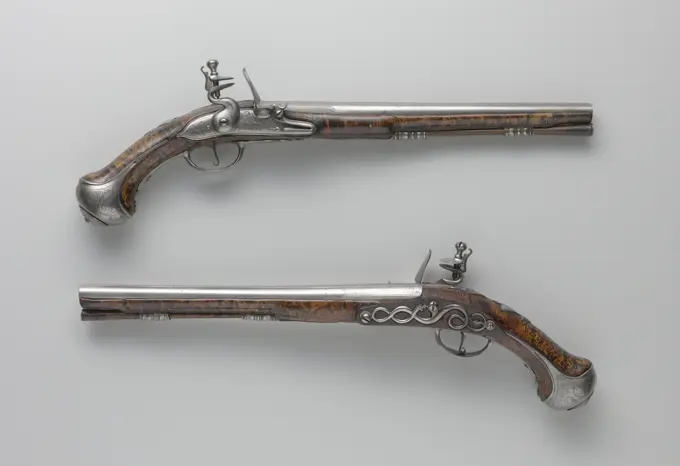
Flint gun for stacked drawer, Wijert Swartt (Possible), c. 1720 flintlock pistol The lock is decorated with relief and engraved animals, a mask, praise, ajour work and on the final plate the letters W.S.; The lock has a special construction with two pans above each other. The loop is stamped on the bottom with the letters WT and provided with a yellow grain and a visorkeep on the tail of the loop. The flask has simple cutting work. The iron batter includes a screw plate with leaf vines and the flask decorated flask. Amsterdam iron (metal). brass (alloy) engraving / cutting
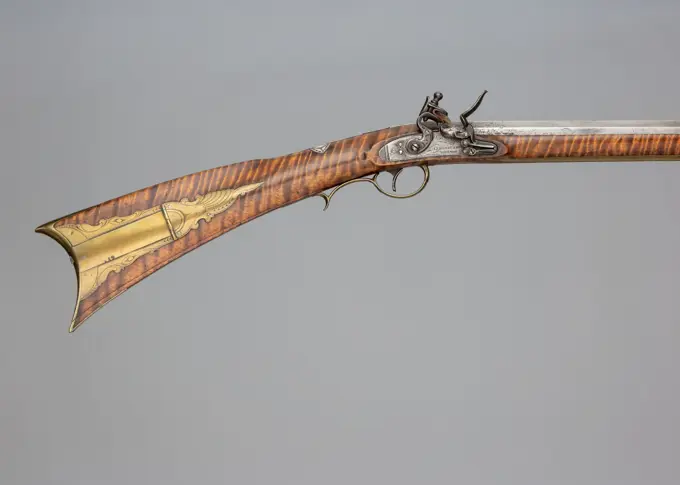
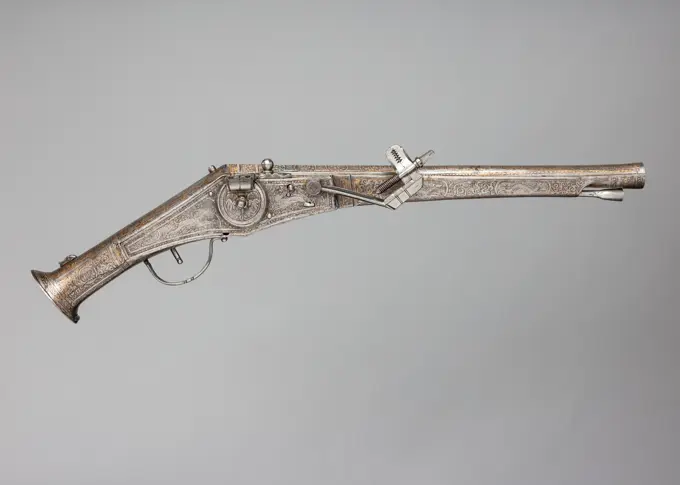
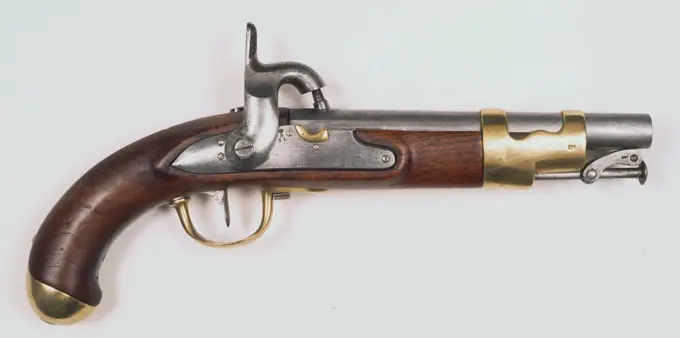
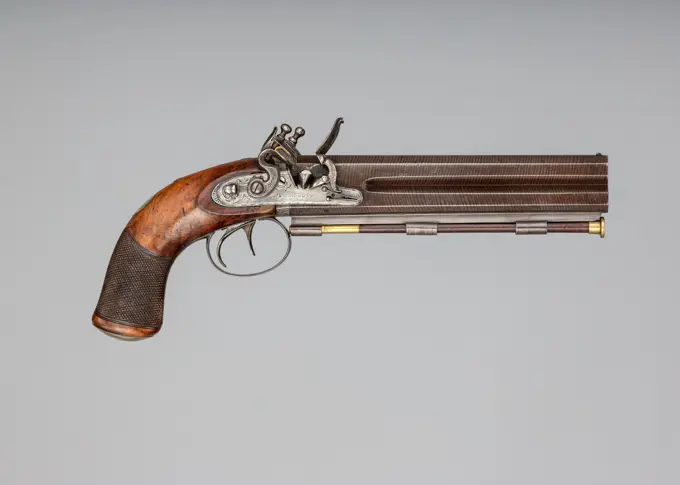
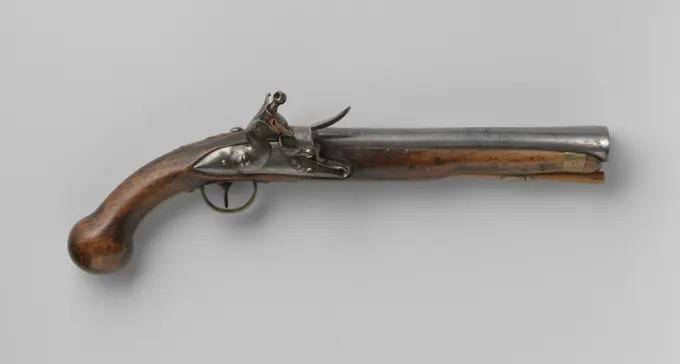
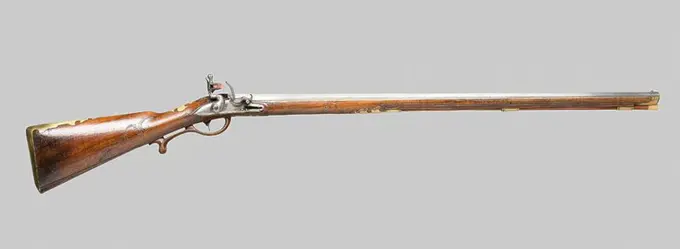
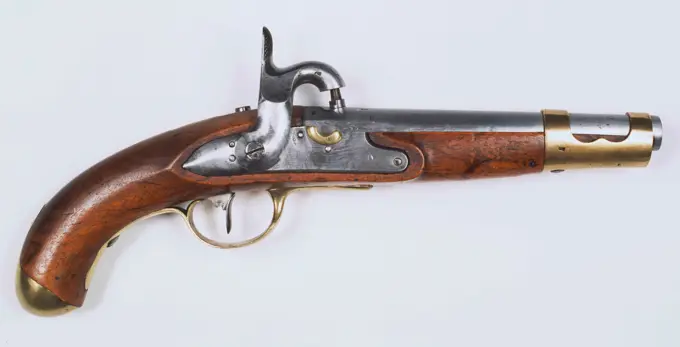
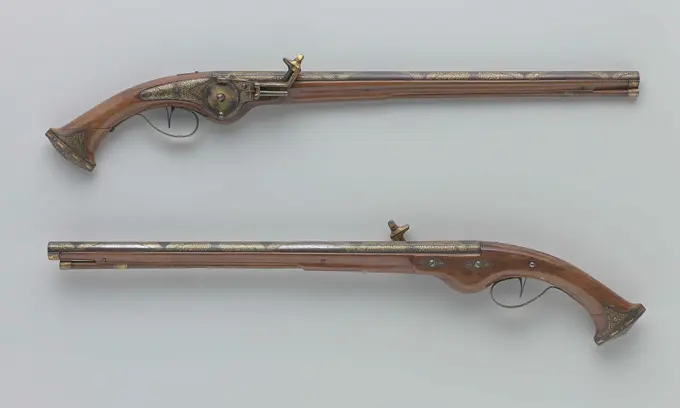
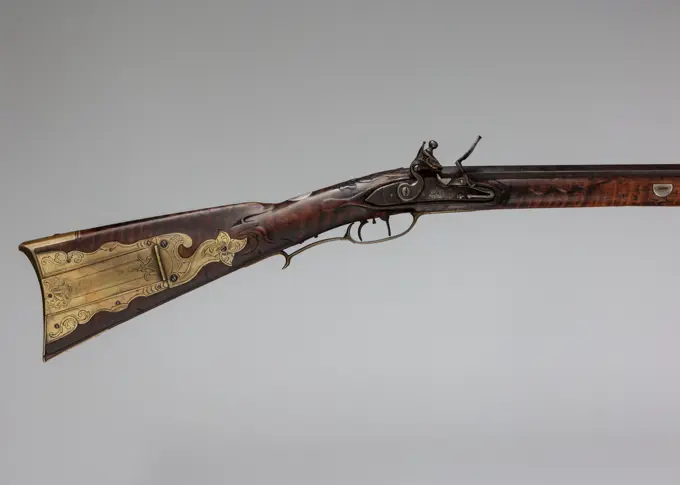
Carabiner, anonymous, c. 1699 - c. 1799 flintlock gun Carbine with, presumably 18th century, stone lock; Cut flask; Copper seizure on drawer copper batter with image of cannons, among other things.  Loop, lock: Iron (Metal). Drawer, Kolf: Wood (Plant Material). Batter: Copper (Metal)Radslotgeweer.Radlot rifle; octagonal drawn course; elongated brass visor grain; Vizier keep by adjusting screw; Brand taken in room: Joseph Michlin Passau; RAD Inside; Flat lock plate with illustration of trees and two women, whose right hand with glass, a fox, two dogs and rider, mountains and village in background; ornaments on rooster; Pan with hinged plate on the outside; walnut german flask; wide trigger bracket; precision tractor; brass attachment; Loading stick from Hoorn.Percussion army pistool model M 1820.Percussion Army pistool Model M 1820. With smooth, round loop, which passes the room in a five-sided section. The top of the room a trashed percussion chance. Iron lock plate with an inched 's' with a crown above and the brought digit '23'. A large ring on the top of the rooster. The flask is made of walnut and has a brass kolf cap with an iron screw at the end. The drawer is made of walnut and has an open-worked sleeve at the front. Tractor bracket of brass with an iron trigger.Flint gun for stacked drawer, Wijert Swartt (Possible), c. 1720 flintlock pistol The lock is decorated with relief and engraved animals, a mask, praise, ajour work and on the final plate the letters W.S.; The lock has a special construction with two pans above each other. The loop is stamped on the bottom with the letters WT and provided with a yellow grain and a visorkeep on the tail of the loop. The flask has simple cutting work. The iron batter includes a screw plate with leaf vines and the flask decorated flask. Amsterdam iron (metal). brass (alloy) engraving / cuttingFlint gun, c. 1770 - c. 1790 flintlock pistol Flint gun, round smooth run with engraved decoration. Loop is interrupted by a profile band and runs in the octagonal. Wooden drawer with a wooden chest of drawers underneath. Iron lock. Kolf is made of wood and has a bronze flask hood. Bronze batter on the other side of the slot. Tractor bracket is made of iron and is surrounded by a bronze tractor bracket that runs into the flask. A bronze visor grain at the end of the loop. Netherlands Kolf hood, tractor bracket: copper (metal). Charging sticker: Copper (Metal). Loop, lock, tractor: Iron (metal). Drawer, Kolf: Wood (Plant Material) engraving  NetherlandsFIIntlock pistol from a pair unknown scruxVuursteenpistool voor gestapelde lade.The lock is decorated with embossed and engraved animals, a mask, praise, ajourwerk and on the lock plate the letters W.; The lock has a special construction with two pans above the other. The loop is stamped at the bottom with the letters WT and equipped with a glass grain and a visor to the tail of the loop. The flask has simple carving. The iron attachment includes a screw plate with leaves and the tangle-decorated flask plate.Radslotpistool, anonymous, c. 1620  Radslot gun; Looks like NG-2002-23-84, but the performance is easier. The lock has an openwork hook to the left of the wheel instead of a stoodle. The loop is equipped with an iron visor grain and stamped on top with a brand in the form of a hunting horn. The flask is simply cut with grooves and has round screw plates of Koehoorn under the lock bolts. The iron batter consists of, among other things, a chest of drawers and a loading sticker with vertical grooves; The chest of drawers has an iron roof.  iron (metal). horn (animal material) cuttingFlint Gordelstool, Lambertus Michaelis Thone, c. 1780 flintlock pistol This belt polish is probably a unique one: there are few small weapons familiar with the monogram of the VOC. The lock is the same as NG-2002-23-173; The lock plate carries a signature and is stamped on the inside with JD. The loop is equipped with three incised tires and a yellow -held visor grain; Stamped on the back with the VOC monogram and on the bottom with Hi or IH. The flask is simply cut. The previously gilt, brass batter consists of two cylindrical loading stokkers and a rounded tractor bracket; The belt hook is made up; The loading stick is made of steel. Amsterdam brass (alloy). gilding (material). steel (alloy) cutting / gilding / filingPercussion army pistool Model M 1815, Anonymous, c. 1815  Percussion army pistool Model M 1815. Smooth, round loop, which turns into the room in a five -sided part. A percussion was taken into the top of the room. On the course the brand: is, (crown above it). Slot: Originally flint battery lock, later adjusted for percussion. The brass powder pan is cut off. Wood: walnut. Batter: brass. At the front of the drawer is an openwork tube, which serves to confirm the loop; Tegenlotplaat; tractor bracket; Kolf hood. West-Europa Lads, bat: Walnut (Hardwood). Batting, tractor bracket, pan: brass (alloy). cock, walk, tractor: Iron (metal)Flint gun, Johan le Forme, c. 1760 flintlock pistol The lock is unadversely except for a signature. The loop has two tires with rings, the front narrower than the rear; yielding visor grain; Stamped at the bottom with a brand that cannot be deciphered. The flask is cut with, among other things, curls and masks; On the frontade you can find half a hose/half bird on either side. The previously gilded, broneloper batter with after -frowning relief decoration includes a triangular screw plate with a mask flanked by classic war trophies, a crowned thumb plate with a classic war trophy against a granular surface and a mask straw and a flask A small mask; The loading stick has a hood of cow horn. Maastricht brass (alloy). gilding (material). horn (animal material). wood (plant material). iron (metal) engraving / cutting / gilding / granulationPyrotechnische bus voor maritieme doeleinden.Pyrotechnic bus or thunderbus for maritime purposes. The lock has an Ajour processed rooster. The course of cast Geelchoper is stamped with the coat of arms of Rotterdam and two crossed anchors in a sunken circle. The flask is not cut; The preloading has a groove for the loading stick. The batter consists of a glass of charging bokeer and drawer cap and an iron trigger bracket; The loading stick is equipped with an iron hood.Flight gun. The slot is unfinished on a signature and a stamp on the lock plate. The course of damask steel is gray and has a glass grain; On top of it is a stamp with the weapon of Middelburg. The flask is relieved with a bunch of roses and inlaid with silver thread around a cartouche on the handle. The batter is made of gold-plated geelkoper and includes a kolf cap that is engraved with edges, tendrils with leaves and a getting trophy.The ancient pistol isolated on white backgroundFlint Gordelpistool, Lambertus Michaelis Thone, 1800 flintlock pistol Belt polish. The final plate is engraved with the name of the maker, the inside is stamped with an emblem consisting of two serrated lines. The loop is stamped on top with the weapon of Amsterdam and on the bottom with MT and GE (); Panny grain of yellow buyer. The flask is simply cut and stamped with LC. The yellow -leaking batter consists of a drawer, a loading sticker, a thumb plate engraved with Marine A = 1800, and the tractor bracket; The tractor plate and the belt hook are made of iron; The loading stick is made of wood. Amsterdam brass (alloy). wood (plant material). iron (metal) engraving / cuttingFlint gun with battery lock, anonymous, c. 1650 flintlock pistol Loop: the front round part of the loop is separated from the five -sided rear part by a profile edge. Traces of a signature in the room () Slot: Spanish battery lock with flat irregularly shaped lock plate. Under the pan is a spring -oriented spring for the pledge lid. The tensioning spring of the rooster is on the outside of the lock plate. The right side of the pan and the support for the rooster spindle are decorated with wedge -shaped notches. The screw before clamping the flint has a ring at the top. A chosen brand at the front of the assessment surface. The lock is attached with two bolts. Wood: ash wood, completely covered with ciseled and engraved brass plates. Stylized leaf vine motif on shaded surface. Flattened flask. Baadstok. Batter: brass: (see above); The loading stick forms one whole with the plate, which covers the drawer; The tractor bracket is made up of various geometric shapes such as oval, trapezium Flint gun, Jacobus van Solingen, c. 1770 flintlock pistol The lock is engraved with the name of the maker; rainproof pan; inside lock plate stamped with J: P. The loop is slightly engraved with praise, on top in rococo style; The sight grain is made of yellow; Stamped on the back with the Wapen van Amsterdam and a brand in the form of a globe with a cross. The flask is simply cut with a leaf; The frontade is equipped with a hood of cow horn. The previously gilt, yellow -copied batter, partly with fitted relief decoration, includes a screw plate in two parts, each consisting of partially ajour -edited leaf vines, a tractor bracket with the same decoration and still fruit garlands and flowers, a thumb plate framed by a border in relief with a three -leaf flower at the top and a leaf at the bottom, and a flask hood decorated in the same way as the tractor bracket with still engraved flowers; Baadstok with a hood of cow horn. The batter is the same as that of NG-2002-23-170. Amsterdam brasGotter pistol with a rock castle and a shotgun. unknown scruxFlint Gordelstool, Marine or Army, Laurens Constant, 1780 - 1784 flintlock pistol Flint beltstolool or thunder wooden tool for navy or army; From set of four belt fistoles. The hat screw of the lock is pierced and provided with a crack; The final plate is unprocessed apart from a signature. The barrel starts straight and around to narrow a little towards the middle and then to become wider and oval towards the tromp; The barrel is stamped on top with the letters LC under a crown and RD, and on the bottom with an A. The flask is easily cut and ends in a solid wooden pump button; Opposite the lock, the number 1500 is probably stamped; An iron spring is attached in the running hollow to prevent the steel cheer from falling out. In addition to the iron belt hook, the fittings are of a buyer and consists of a front loading tape and a loading sticker. Rotterdam wood (plant material). iron (metal). brass (alloy). steel (alloy) engraving / cuttingFlintlock Repeating Pistol with Lorenzoni Action ca. 1783-1800 Harvey Walklate Mortimer Harvey Walklate Mortimer, gunmaker to George III (1738-1820), took special interest in the repeating mechanism thought to have been invented by gunmaker Michele Lorenzoni (d. 1733) in Florence over one hundred years earlier. Complex internally, the Lorenzoni system allowed for up to ten successive shots, feeding from a magazine concealed inside the grip. A half-turn of the lever forward and back reloaded, primed, and cocked the pistol. Mortimers Lorenzoni-type firearms, meticulously constructed, reflect his desire to update and refine a successful design he admired from the past.. Flintlock Repeating Pistol with Lorenzoni Action. British, London. ca. 1783-1800. Steel, wood (walnut), silver. London. Firearms-Pistols-FlintlockPercussion army pistool Model M 1815, Anonymous, c. 1815  Percussion army pistool Model M 1815. Smooth, round loop, which turns into the room in a five -sided part. A percussion was taken into the top of the room. On the course the brand: 1815, gb and is, (crown above it). Slot: Originally flint battery lock, later adjusted for percussion. The brass powder pan is cut off. Marked d (crown above it). Wood: walnut. Batter: brass: at the front of the drawer is an openwork tube, which serves to confirm the loop; Tegenlotplaat; tractor bracket; Kolf hood. Netherlands Lads, bat: Walnut (Hardwood). Batting, Pan: Brass (Alloy). cock, tractor, walk, closing plate: Iron (metal)Percussion army pistool Model M 1815, Anonymous, c. 1815 - c. 1816  Percussion army pistool Model M 1815. Smooth, round loop, which turns into the room in a five -sided part. A percussion was taken into the top of the room. Marked on the course: 1816, is (crown above) and pb. Slot: percussion lock. Marked on the final plate: l (crown above). Wood: walnut. Smashed around stamp, in which: G.H. Delft- 1848. Batter: brass: at the front of the drawer is an openwork sleeve, which serves to confirm the loop; Tegenlotplaat; tractor bracket; Kolf hood. Netherlands Lads, bat: Walnut (Hardwood). Leadband, Tractor Breeding: Brass (Alloy). Batting hood: Brass (Alloy). Walk, lock, tractor: Iron (Metal)Flint Gordel gun.Belt gun. The lock plate is engraved with the name of the maker, the inside is stamped with an emblem consisting of two serrated lines. The loop is stamped on top with the coat of arms of Amsterdam and at the bottom with MT and GE (); Vizier grain from Geelkoper. The flask is easily cut and stamped with LC. The glass batter consists of a drawer strap, a loading cooker, a thumb plate engraved with marine a = 1800, and the trigger bracket; the trigger plate and belt hook are iron; The loading stick is made of wood.Flint gun for the Light Cavalry, Dutch Armee, Model 1815, Anonymous, 1815 flintlock pistol Cavaleriepistool Light Cavalry M.1815 Dutch Armee. The lock has a rooster with a heart -shaped recess; pan of yellow; The inside of the lock plate is marked with HP and 41. The barrel is marked at the bottom with LR and and left on the top stamped at the top with the year 1815; The tail of the loop is marked with A 54 (scratched) and engraved with M.1815. The flask has a curved hold; branded with a large, round arsenal stamp, a W with a text that is not deciphered around it and the year 1815. The yellow-oriented batter includes a tread around the tromp with two strips and a sight grain, an L-shaped screw plate, a wide tractor bracket and a pump hood marked with A 54 18 (A 54 scratched); No provision for a chest of drawers.  brass (alloy). wood (plant material). iron (metal). engravingPistol with a rock castle unknown scruxVuursteenjagerbus, State Army M. 1798, Lambertus Michaelis Thone, c. 1800 flintlock gun Flint hunter bus or Batavian hunter bus; to the State Army M. 1798; is derived from the French model 1777 in terms of lock. The final plate is engraved with the name of the maker and is stamped on the inside with a series of capital letters. The loop is heavy from conststruction and equipped with a bass -culencing Kulas and attached to the flask with three sliders; The soul has been drawn with 7 grooves; On top of an unreadable brand is stamped, at the bottom of the capital letters ND; The rearvizier is wing -shaped and the visor grain is made of yellow. The flask is simply cut and has a pump box on the right. The tractor plate, the bunch of hinged brackets and the running sliders are made of iron; The rest of the batter is yellow buyer and includes three loading stokkers and the tractor bracket with ends in the form of a leaf and a sharp curve as support for the fingers; The loading stick is made oFlight gun. Flint gun with brass loop, marked with a shield and a crown. Walk in relief with a few tires. Brass vizier grain and no keep. Flat lock plate, on which the name 'c.j.c. Rut. Amsterdam'. Crafted tray, brass attachment. Reliefwerk, wooden loading stick. Kolfkap in the form of sample head.Flintlock Magazine Pistol (Lorenzoni System). August Wetschgin; German, active 18th century. Date: 1670-1690. Dimensions: Overall L.: 48.3 cm (19 in.). Walnut, steel, and brass. Origin: Germany. Museum: The Chicago Art Institute, Chicago, USA.Flint gun. The slot is decorated with praise, both chiseled embossed and engraved, including a trident or lily, and carries a signature. The loop is divided by three rings, one of which is trunk; no visor layout; The loop is blued and decorated on top with gold-infused arabes around the seated god Mars and yacht scenes; Mounted with mic. The root nutshell flask is easily cut. The gold-plated glass seizure consists of two charging bokekers, a screw plate of ajour machined curls with a yacht scene, an incredible thumb plate supported by two winged women with ajour processed curls, a trigger bracket with praive in relief and a kolf hood engraved with classic warriors and getting trophies, just like the flask plate; The rod of balein has a hood of yellow cow horn.Flintlock pistol, by Unknown, 18th Century, Unknow. Italy, Piemonte, Turin, Royal Armory. Whole artwork. Firearm barrel wheel trigger.American Longrifle ca. 1820-30 Nicholas Hawk Although unsigned, this rifle can be identified as the work of Nicholas Hawk, a gunsmith active in the eastern part of Northampton (later Monroe) County. Less elaborate than some rifles made by Hawk, it still displays the chief hallmarks of his individual style, including a long and narrow patch box with a spiky head piece, simple but effective decorative engraving on the brass fittings, and the dramatically elongated contour of its slender gunstock, made of curly maple with dark diagonal striping on a light-brown background.. American Longrifle. American, Gilbert, Northampton County (now Monroe County), Pennsylvania. ca. 1820-30. Steel, wood (curly maple, ash), brass, silver. Gilbert, Pennsylvania. Firearms-Guns-FlintlockWheellock Pistol ca. 1575 German. Wheellock Pistol. German. ca. 1575. Steel, gold. Firearms-Pistols-WheellockTublous pistol with a rock castle unknown scruxPercussion army pistool Model M 1815, Anonymous, c. 1815 - c. 1816  Percussion army pistool Model M 1815. Walk: smooth, round loop, which turns into the room into a five -sided part. A percussion was taken into the top of the room. On the course the brand: 1816, GP and is (crown above it). Slot: Originally flint battery lock. The brass powder pan is cut off. The lock is marked: 5, B and Kroon on top of each other, and W (crown above it). Wood: walnut. Batter: brass. At the front of the drawer is an openwork tube, which serves to confirm the loop; Tegenlotplaat; tractor bracket; Kolf hood. Netherlands Lads, bat: Walnut (Hardwood). Batting, tractor bracket, pan: brass (alloy). cock, lock plate, walking, tractor: Iron (metal)Caplock pistol Bauduin (Fl. Ca 1790), Lazaro LazarinoFlint Donderbuspistool with Klapbajonet, Nicolas Tomson, 1785 - 1802 flintlock pistol The lock is unadversely except for the signature; Equipped with a sliding safety. The damaged run becomes wider towards the oval tromp; On top is a so -called Klapbayonet that is operated by a spring. The walnut flask is cut into relief with, among other things, leaf work; The handle is grooved crosswise; Inlaid here and there with silver wire. The iron batter consists of, among other things, a tractor bracket engraved at the rear with a trophy of arrows above praise; The loading stick is made of wood. Rotterdam walnut (hardwood). silver thread. iron (metal). wood (plant material) engraving / cutting / inlay (process)Percussion army pistool model 1820.Percussion army pistool model 1820. Loop: smooth, round loop, which passes the room in a five-sided section. A percussion fireplace is closed at the top of the room. On the tail of the loop: M.1820. Signed on the course: S (crown above). CD and PB. At the mouth of the loop, at the bottom an eye for the (missing) loading rod structure cf. above o.. NM-4862. Slot: Original flint battery lock, the brass powder pan was sawn off. Percussion rooster. The lock is marked: 21, s and crown above each other. Wood: walnut. Batter: brass. On the front of the drawer is an open-worked sleeve, which serves to confirm the loop, on the left, this sleeve is connected to the front final bolt; counterplate; trigger bracket; Kolfkap. An iron band at the top and bottom of the kolfhals.Percussion Army pistool Model M 1815. Percussion Army pistool Model M 1815. Smooth, round loop, which passes the room in a five-sided section. A percussion fireplace is closed at the top of the room. On the tailpiece of the loop: M 1815. Mounted on the loop: T (crown above) and yes (crown above). Slot: Percussion slot. Original flint battery lock, later adapted for percussion. The brass Kruitpan has been sawn off. Percussion rooster. Signed on the lock plate: D (crown above). Wood: walnut. Batter: brass. On the front of the tray is an open-worked sleeve, which serves to confirm the loop; counterplate; trigger bracket; Kolfkap.Musketoon, anonymous, anonymous, 1850 - 1880 flintlock weapon Flint Donderbus, front loader, incomplete. The brass running are not held on the drawers with brackets, but have small eyes on the bottom, so pens are stabbed, which also go straight through the drawer. Similar to NG-MC-1334-A. The walking is of a slightly different creation with small differences in ornaments, and one of them has a tail piece of iron instead of brass. One bus has an English lock, signed Tower and marked with a crowned monogram VR; The Haan is missing from this slot. The other slot is unnoticed and the pandel and upper jaw of De Haan are missing. One bus has an iron cargo. The thunder buses are probably from Borneo's Maksel. United Kingdom iron (metal). brass (alloy). wood (plant material)Over-and-Under Flintlock Pistol 1841-48 George Sturman This large pistol is of good quality, and with its plain, functional stock, sparsely engraved mounts, and finely finished barrels, it is quintessentially English in style. It was made by George Sturman between the years 1841-48, when he was at the address 25 East Road, City Road, in London. Unusually late for a flintlock, a mechanism which by the 1840s had long been superseded by percussion ignition-it may have been sold to a conservative client or assembled from older parts.. Over-and-Under Flintlock Pistol. British, London. 1841-48. Steel, wood (walnut), platinum, brass. London. Firearms-Pistols-FlintlockVuursteen donderbus gordelpistool met embleem van de Admiraliteit Enkhuizen.Only flint of the belt gun. The lock plate is engraved with a signature and marked on the inside with TB or Jr. The loop starts around and straight to narrow a little to the middle and to dilate the trump and to become oval; The loop is stamped with the coat of arms of Amsterdam and a sign consisting of two crossed anchors with the letters A and E, the emblem of Admiralty Enkhuizen. The flask is easily cut and runs out in an unprocessed, solid wooden flask. The belt hook is made of iron; Furthermore, the batter is selector and includes a lord and a loading cooker; The loading stick is made of wood.Flintlock Fowling Gun. Lock: Karl Starek; Austria, Vienna, active 1764-85; Barrel: Giovanni Battista Iocussi. Pistoia. Date: 1760-1780. Dimensions: . Walnut and brass. Origin: Germany. Museum: The Chicago Art Institute, Chicago, USA.Flintlock Box-Lock Turn-Off Pistol ca. 1770-80 Ketland Turn-off pistols first appeared around the 1640s and gained particular popularity in England in the 18th century. The barrels of turn-off pistols unscrew ahead of the chamber, allowing for the ball to be set directly into place, rather than loaded through the muzzle. A ball loaded via the turn-off system could be slightly larger than a muzzle-loaded ball as it was not necessary to make it a size that would pass easily through the barrel during loading. It could fit in the bore more tightly, and thus achieve increased velocity and accuracy when fired. This box-lock pistol exhibits typical formal features of English turn-off pistols of the mid- to late 18th century, including: a smoothbore barrel resembling a cannon in appearance; a box-lock forged together with the breech; a short, swollen butt; and a silver mask butt cap. The grip is inlaid with silver wire scrollwork. Pistols of this type are often referred to as Queen Anne pistolWheel-lock pistol, by Unknown, 17th Century, Unknow. Italy, Piemonte, Turin, Royal Armory. Whole artwork. Firearm barrel wheel trigger butt handle.Bridle pistool with brown wooden flask, on which iron plates with engraved ornament, Laborde, 1699 - 1899 flintlock pistol Ruitpistool with iron smooth round loop, two profile tires each with two rings and a profile band with a single ring that separates the round loop from the octagonal part of the loop. The final plate is entirely of iron with carved acanthus leaves and has the text "Laborde A Paris" on the right. The flask is made of wood and was carved at the top with a decoration. The flask hood is made of iron and has a decoration showing a weapon trophy, a drum with banners with helmet and plume. Such ornaments are engraved at the end of the final plate. The iron tractor bracket is also equipped with a weapon trophy at the bottom. On the rooster and the fire steel engraved praise. At the bottom an iron loading sticker that is interrupted by four tires. Paris Kolf: Wood (Plant Material). flint:. Loop, Slotplaat: Iron (Metal)Radslotpistool, Adolf Bosch, c. 1650  Part of a couple. The lock is unadorned; The wheel has a hook on the bottom. The loop is chiseled in relief with praise, flowers and animals that belong to hunting; Stamped on top with a crowned morore head and further on the adjacent surfaces with the letters A and B; Iron rearvizier and visor grain. The flask has an ivory button on the bottom; The handle is pierced for a carrying strap, circled by a crotch flower marked with dots; The round screw plates for the three lock bolts are made of cow horn. The iron fittings consists of a chest of drawers, a loading sticker, a strap around the flask button, and a fold -out straight tractor bracket formed for the fingers; The Beechhouten Laadstok has an iron roof. the Bosch iron (metal). ivory. horn (animal material). beech (wood)Vuursteenpistool.The lock is engraved with flour rinks, as well as the Ajour processed rooster. The loop is stamped at the bottom with a brand in the form of a leaf. The ebony flask is grooved at the front; The handle runs into a separate ivory flask, decorated with petals and partially blackened. The silver fittings is driven with cross flowers, the trigger bracket is made of iron; The ebony loading stick has a silver hood, decorated and suite.Flight gun. Part of a couple. The lock plate and the rooster are embossed with wavy edges and engraved with prainmesh with a bird, a grotesk mask and around the cockroot with a flower; Equipped with an inscription. The round loop has flattened surfaces, the upper engraved with a signature, which is justified with tendrils that end in snake heads; The tail of the loop is engraved with vary branches and a grotesk mask and continues in the rear part of the loop; Stamped at the bottom with an illegible brand. The flask is easily cut. The iron batter consists of two loading boos, a screw plate in the form of a hose ending in leaves, an incredible trigger bracket with a shoot-shaped end, a crowned, drip-shaped thumb plate engraved with the claw of an eagle, framed by leaf drinks, and the kolf hood engraved with A grotesque mask framed by leaves, with long traces, around a border and suite with the lock plate and below a cap with a button; The loading stick has a hood of Koehoorn.Pair of Flintlock Holster Pistols. Austrian, Vienna. Date: 1700-1725. Dimensions: L. 53.3 cm (21 in.)Barrel L.35.3 cm (13 7/8 in.)Wt. 2 lb. 14 oz.Caliber .58. Steel, brass, gilding, walnut, and horn. Origin: Vienna. Museum: The Chicago Art Institute, Chicago, USA.Flight gun. Part of a couple. The lock plate is engraved with a schietshine and a man with a banner (the images on both pistols differ slightly), and a signature. The loop is on the back of a ring and a second as a transition to the round portion; In the back engraved with some praise and a mask; Wing-shaped back forizing, iron visor grain. The flask is cut into relief at the loading stick opening on both side with an eagle that attacks a snake-like monster and behind the loop with prainmesheet and a warway; The kolf hood has a silver thread contour. The batter of poured and punctured silver consists of two faceted loading bokekers, a tractor bracket decorated with tires and a tip in the shape of a leaf, an S-shaped screw plate with leaves along the edges and curl work with leaves, a white thumb plate framed by praise, and a kolf cap with a mask in the midst of leaf of brords; The root nutshell appliance is equipped with a silver hood.Wheel-lock pistol, by Unknown, 17th Century, Unknow. Italy, Piemonte, Turin, Royal Armory. Whole artwork. Firearm barrel wheel trigger.Percussion army pistool model M 1815.Percussion army pistool model M 1815. Loop: smooth, round loop, which passes the room in a five-sided section. A percussion fireplace is closed at the top of the room. On the course the brand: 1816, GP and is (crown above). Slot: Original flint battery lock. The brass Kruitpan has been sawn off. The lock is marked: 5, B and crown above each other, and w (crown above). Wood: walnut. Batter: brass. At the front of the tray is an open-worked tube, which serves to confirm the loop; counterplate; trigger bracket; Kolfkap.Hunting Dubeltówka with Spanish capshable castlesPair of Flintlock Turn-Off Pistols ca. 1760-80 Daniel Moore Turn-off pistols first appeared around the 1640s and gained particular popularity in England in the 18th century. The barrels of turn-off pistols unscrew ahead of the chamber, allowing for the ball to be set directly into place, rather than loaded through the muzzle. A ball loaded via the turn-off system could be slightly larger than a muzzle-loaded ball as it was not necessary to make it a size that would pass easily through the barrel during loading. It could fit in the bore more tightly, and thus achieve increased velocity and accuracy when fired. This pair of pistols exhibits many of the typical formal features of English turn-off pistols of the early to mid- 18th century, including: a smoothbore barrel resembling a cannon in appearance; a lock forged together with the breech, with the lock plate thus forming an extension of the barrel; a decorative side-plate that served no practical function, the lock being secured to thDonderbus, anonymous, c. 1700 - c. 1900  Donderbus with ornamented loop and cut flask. On the lock an image of a crown with letters around it: r c g r, and inscription: tower.  iron (metal). wood (plant material). copper (metal)Pistol with a rock castleChildren's toy  a capitza double.Radslotpistool.Part of a couple. The external wheel has a hook at the bottom; The lock is blued and partially plated; The lock plate is dammed with golden arabes around silver rosettes. The round loop is equipped with a vizier rib flanked by two flat surfaces marked by two short ribs on the back of the loop; Decorated with three panels in the same way as the lock plate, back, in the middle and with the trump; Stamped at the bottom with Hi. The flask has a grooved vain sauce and is flattened in front of the lock; Before the protrusion for the lock, 18 is stamped. Apart from the incredible veiled and loading cooker, the iron fittings is blued, gold-plated and decorated in the same way as the lock and the loop; Consists of two diamond-shaped screw plates for the lock bolts, a trigger bracket in the form of a loop and a flask with triangular traces; The loading stick has a cap made of gold-plated iron.Military flint gun, Frans Delahaye, 1705 - 1710 flintlock pistol Military gun; Part of a couple. The outside of the locking plate carries a signature, the inside is stamped with IG. The course of gilded yellow buyer has a rib on the top, a yellow-held visor grain and a rearvizier consisting of two yellow-copying plates in a V-shaped angle on the tail of the barrel. The flask is simply cut. The gold-plated yellow-lugging fittings with a fitted relief decoration includes a battery screw plate, an unadorned, rectangular thumb plate with rounded top and ends that run into acanthus leaves on the top and top, and a faceted dumping hood with long tracks and decorated with two curls on each flat and a small, octagonal flask cover plate with a point; The loading stick has a yellow cap. Maastricht brass (alloy). gilding (material). wood (plant material). iron (metal) engraving / gilding / cuttingPercussion army pistool Model M 1815, Anonymous, c. 1815  Percussion army pistool Model M 1815. Smooth, round loop, which turns into the room in a five -sided part. A percussion was taken into the top of the room. On the tail piece of the loop: M 1815; Marked on the course: t (crown above), s (crown above it) and yes (crown above). Slot: percussion lock. Marked on the final plate: s (crown above). Wood: walnut. Batter: brass: at the front of the drawer is an openwork sleeve, which serves to confirm the loop; Tegenlotplaat; tractor bracket; Kolf hood. Netherlands Lads, bat: Walnut (Hardwood). Leadband, batting hood: brass (alloy). Tractor Breeding: Brass (Alloy). Walk, lock, tractor: Iron (Metal)Flight gun with flattened tromblon. Fire gun with flattened tromblon, round loop that is interrupted by a profile tape after which the loop ends octagonal. Wooden drawer with three iron pins. The lock case is entirely made of iron, fire steel is mounted separately. The flask is made of wood and has an iron kolf cap. The trigger bracket is completely made of iron and has the shape of a gang at the end. Under the drawer a wooden loading stick in an iron charging bokeer.Vuursteenpistool met batterijslot.Flint gun with battery lock, round walk from blank language. At the mouth of the loop a decoration is imposed and engraved with acanthus leaf motifs, brass. Elongated Vizier Grain of Brass. At the top of the room are decorations in brass and steel, consisting of a warning war, who holds a spear in the right hand and the left hand hanging on a bone core, sword, sword. He wears a headdress with feathers. Above this figure is an acanthus bladder motif of brass. Under this figure is a bar, interrupted by a half moon; Below a sample head with acanthus leaf-shaped ornament. Acanthus leaf-shaped motifs, cut into steel, in the chamber at the tailpiece, mark of Utrecht. Is engraved on the course; "Le Bon became Mouller, the Son Temps L'Espoir" "and Culbulature L'Ennemi" "Nous Procura La Gloire" "et Sauva Sa Patrie" "1709 Eugène." Slot: Flint battery lock with flat lock plate. Decoration of volutely twisted leaf and rank ornaments, in low embossed between the roFlint gun, Cornelis Coster, 1660 - 1665 flintlock pistol The lock is engraved with leaf vines and animals and a signature. The loop is equipped with two rings, one of which around the tromp. The flask is simply cut. The iron batter consists of a chest of towel and a boat -shaped pump hood, engraved around the screw in the middle with a flower challenge and the short tracks with praise; The loading stick is provided with an iron roof. Utrecht Walk, lock, flask hood: Iron (metal). Drawer, Kolf, Laadstok: Wood (Plant Material) engraving / cuttingFlintlock Pistol, 1788. Italy, Brescia, 18th century. Steel, walnut and bone stock; overall: 48.3 cm (19 in.); barrel: 31.5 cm (12 3/8 in.); bore: 1.9 cm (3/4 in.).Flight gun. Part of a couple. Made in Liège, but very Dutch. The lock is engraved with brords, a branch and a signature. A rib runs over the course; The rear part is engraved with leaf drinks and a hunter in a justaucorps to 17th century fashion and armed with a straight heart catcher; Mounted with three buttons in a triangle; No visor device. The root nutshell flask is easily cut. The iron attachment consists of two loading bokekokers, a trigger bracket with edges, a special screw plate in the form of a sea hose with the twists in guilloche, an incredible thumb plate in the form of a heart; a kolf hood engraved with branched praise and a stepped flask plate; The loading stick of carrot nut wood is equipped with an iron hood.Pair of flintlock pistols, Oger Leblan, c. 1730 flintlock pistol The decoration of this gun is of high quality. Part of a couple. The lock is engraved with, among other things, leaf vines and a signature; A groove runs over the tail of the lock plate; internal. The loop Kulas is confirmed from below; On the top runs a rib, interrupted by chiseled acanthus leaves; engraved with the same signature as the lock and praise; Each plane of the barrel is stamped in a brand buyer with a brand in the form of a two -headed eagle within a shield; The same brand is on the bottom; The sight grain is made of a loader. The flask is cut with, among other things, acanthus leaves. The yellow -leaking batter is decorated in relief with fitted praise and classic warriors and consists of an ajour processed screw plate of asymmetrical curls on both sides of a mask, an ajour processed thumb plate with a men's head with a long wig, and a trigger bracket and flask covered with browse ranks round A grotesque masRear load flint gun. Flint gun or cavalry gun; Part of a couple. The lock is chiseled and engraved with praise, a bird and a signature decorated with tendrils. The loop can be partially screwed off and has been engraved on top with praise and lowered with the letters CMLI, a crowned rose, the letter L and the LOVROV signature; The trump has the shape of a tulip such as a gun and has a collar. The kolf cap is captured with gold-plated copper, the rest of the gun with iron and consists of a forked trigger bracket with three iron buttons and a kolf cap with a gold-plated copper cap that awakens an ajour.Pair of Flintlock Pistols 1720-1735 Germany. Walnut, steel, and cast and chased brass . J. J. BehrPistol with a rock castleFlintlock Blunderbuss Carbine Made 1500-1525 Spain. Walnut, silver, and gold .Flint gun, Jan Krans Jr., 1705 - 1710 flintlock pistol Part of a couple. The yellow -cut lock plate is engraved with war trophies and a signature; The pan is rainproof. The barrel is provided on top of a yellow -cut ridges engraved with praise, the head of a monster, a signature and a crowned oval shield blazed with three sickles with the open side to the left; On the back the yellow -lying side surfaces are engraved with acanthus leaves; The tail of the loop is covered with a loader and grooved for a rear visor; The sight grain is also made of yellow; marked at the bottom with IC and a rosette or star. The flask is easily cut with, among other things, praise. The cast and fitted batter of yellow buyer is partially engraved with praise work and consists of a tractor bracket that ends in a leaf, a crowned, oval thumb plate with a men's bust on it frame by praise, an ajour processed screw plate consisting of praise and tire work around two grabs on both sides of a shield with a men's busFlintlock Blunderbuss with a Folding Butt. Nicola Duna, Locksmith; Italian, Brescia(). Date: 1775. Dimensions: L. 87.7 cm (34 1/2 in.)Barrel L. 54 cm (21 1/4 in.)Wt. 5 lb. 6 oz. Walnut, ash, horn, iron, and steel. Origin: Brescia. Museum: The Chicago Art Institute, Chicago, USA.Radslotpistool, anonymous, c. 1645  Part of a couple. The lock is equipped with a rooster in accordance with the shape of the lock plate; indoor wheel; The final plate is engraved with two grotesque men's figures with short axes and a blossom branch; The pandel is opened with a pressure pen engraved like a flower challenge, just like the head of the pivot around which the rooster turns. The round run is flattened on the back and sides and marked with TP or tr. The flask has a bulge under the lock as a support for the tractor bracket; The handle runs into a black -painted bottom cut into relief like a crucifix with a small ivory button in the middle. The iron fittings consists of a drawer hood, two loading stickers, the almost straight tractor bracket and the tire around the flask hood; The black -painted chest of drawers has an iron roof. Netherlands ivory. iron (metal) engraving / cuttingFlint gun, anonymous, c. 1700 - c. 1800 pistol Flint gun with iron smooth round loop that is interrupted by a brass profile tire, at the end of the loop a low round -shaped visoring visor grain, a batter of brass, ribbed brass motifs on the length of brass. Brass lock plate with iron rooster, iron fire steel and iron steel spring, the pan is made of brass. On the final plate various engraved motifs, at the bottom of the final plate the name "A. Croissant". Lade is made of walnut and has leaf motif at the bottom. The flask is also made of walnut with a brass hood from brass in the form of various leaf motifs. On the Kolfhals a brass volute in which the head of a man can be seen, in the wood above the volute a leaf motif. On the other side of the drawer a batter of brass that has been made in such a way that it appears to be in it. Trekker bracket of brass which has a leaf motif at the end, iron tractor. Under the drawer a chest of drawers that are worn by two brass tubes. West-Europa KoFlint gun, anonymous, c. 1650 flintlock pistol Part of couple. The final plate is chiseled in relief with a monster head and a cavalryman with men in a landscape with buildings; The neck of De Haan represents a wrinkled monster; This lock and the slot of 269-B show small differences in the decoration. The rear half of the loop is chiseled on top with a performance and on the lock under a grotesque lion's head; The separation between the different panels consists of praise, flowers and small rosettes in silver; The CMAL brand is stamped at the bottom. The flask is completed. The iron fittings consists of a loading sticker, a tractor bracket with a pecker chiseled with a city in the background, and a flask button with six areas, inlaid in the same way as the loop. Maastricht silver (metal). iron (metal). wood (plant material).Flint gun, anonymous, c. 1650 flintlock pistol Part of couple. The final plate is chiseled in relief with a monster head and a cavalryman with men in a landscape with buildings; The neck of De Haan represents a wrinkled monster; This lock and the end of 269-A show small differences in the decoration. The rear half of the loop is chiseled on top with a performance and on the lock under a grotesque lion's head; The separation between the different panels consists of praise, flowers and small rosettes in silver; The CMAL brand is stamped at the bottom. The flask is completed. The iron fittings consists of a loading sticker, a tractor bracket with a piekier chiseled with a city in the background, and a flask button with six areas, inlaid in the same way as the loop. Maastricht silver (metal). iron (metal). wood (plant material).Military flint gun. Military gun; Part of a couple. The outside of the lock plate carries a signature, the inside is stamped with IG. The loop of gold-plated geelkoper has a rib overlooking, a glass of sight grain and a rear-container consisting of two glasses of plates in a V-shaped angle on the tail of the loop. The flask is easily cut. The gold-plated geelkoper seizure with naming relief decoration includes a braco-shaped screw plate, an incredible, rectangular thumb plate with rounded top and ends that emanate in acanthus leaves at the top and top, and a faceted kolf cap with long traces and decorated with two curls on each flat and a small, octagonal flask plate with a point; The loading stick is equipped with a glass cap.Miquelet Pistol. Culture: Spanish, Barcelona. Dimensions: Caliber, .665 in, (16.89 mm)Weight, 1 lb. 12 oz. (800 g)Length, 14 11/16 in. (37.31 cm)Length of barrel, 8 13/16 in. (22.38 cm). Gunsmith: Llorens Torrens (Spanish, Catalonia, active 1793-1824); Jacinto Jaumeandreu (Spanish, Catalonia, active about 1750-1807). Date: ca. 1790-1807.This is a rare example of a Spanish firearm with Neoclassical decoration. Especially noteworthy is the cock shaped as a fluted column and the mounts of brightly polished steel decorated with faceted steel beads and raised gold ornament. Museum: Metropolitan Museum of Art, New York, USA.Pair of Wheellock Pistols 1650-1700 Italian, Brescia Brescian firearms are renowned for the quality and beauty of their chiseled ornament, the elegance of their line, and the excellence of their barrels. This pair of wheellock pistols is exceptional for having nearly the exact same measurements - usually there are minor differences between a pair - and nearly exactly the same weights.. Pair of Wheellock Pistols. Italian, Brescia. 1650-1700. Steel, wood. Brescia. Firearms-Pistols-WheellockFlining brick carabine, Van Gellecum, 1725 - 1750 flintlock pistol The lock is unadorned. The soul of the loop has been drawn with 14 alternating narrow and wide grooves; The large rearvizier and the visor grain are made of iron; The loop is signed on top. The flask is simply cut; Large white numbers are painted behind the barrel. The batter is made of iron; Probably there used to be a thumb plate on it; There is no facility for a chest of drawers. Utrecht iron (metal). paint (coating) engraving / cutting / painting / striking (metalworking)Flint Cavaleriepistool Staatse Army, Royal rifle factory Culemborg, 1785 - 1795 flintlock pistol Cavaleriepistool for the State Army, following Russian example; Made in the National gun factory in Culemborg; Part of a couple. The lock is blewy; The final plate is stamped with Kulenborg under a crown. The loop is stamped on the back with the Culemborg weapon; Confirmed to the flask by means of two vertical screws, one at the tail of the loop, the other through the tire at the Tromp. The flask has a tapered frontade without groove in front of the chest of drawers; Stamped with PF, NC and F. The unadorned, brass batter includes a strap around the tromp with visoring grain, an S-shaped screw plate and a flask hood with a button on the bottom; No provision for a chest of drawers. Culemborg brass (alloy). wood (plant material). iron (metal)Flint Cavaleriepistool Staatse Army, Royal rifle factory Culemborg, 1785 - 1795 flintlock pistol Cavaleriepistool for the State Army, following Russian example; Made in the National gun factory in Culemborg; Part of a couple. The lock is blewy; The final plate is stamped with Kulenborg under a crown. The loop is stamped on the back with the Culemborg weapon; Confirmed to the flask by means of two vertical screws, one at the tail of the loop, the other through the tire at the Tromp. The flask has a tapered frontade without groove in front of the chest of drawers; Stamped with PF, NC and IG. The unadorned, brass batter consists of, among other things, a strap around the tromp with visor grain, an S-shaped screw plate and a pump hood with a button on the bottom; No provision for a chest of drawers. Culemborg wood (plant material). brass (alloy). iron (metal)Flint gun, G. de Trois Fontaines, 1680 - 1690 flintlock pistol Part of a couple. Made in Liège, but very Dutch. The lock is engraved with leaf vines, a branch and a signature. A rib runs over the barrel; The rear part is engraved with leaf vines and a hunter in a Justaucorps to 17th century fashion and armed with a straight heart catcher; marked at the bottom with three buttons in a triangle; No visoring device. The carrot -knotwood flask is simply cut. The iron batter consists of two loading stokkers, a tractor bracket with edges, a special screw plate in the shape of a sea snake with the twists in Guilloche, an unadorned thumb plate in the shape of a heart; a pump hood engraved with branched praise and a stepped pump cover; The cargo of imitation root nut wood has an iron roof. Blégny iron (metal). wood (plant material) engraving / cuttingFlint gun, Jan Flock, c. 1685 flintlock pistol Part of a couple. The lock is engraved with fauning, flower and leaf vines and a signature. The loop is divided by two pairs of rings; On the back marked with the weapon of Amsterdam, on the bottom with an eight -pointed star. The flask is easily cut with edges and praise. The previously gilt, brass batter consists of two loading stickers, a round tractor bracket, a symmetrical screw plate consisting of two winding sea snakes, a white, oval thumb plate with a grotesque mask on top and framed by breathranks, and an unprocessed flask with long spores; The loading stick has a yellow cap. Amsterdam brass (alloy). gilding (material) engraving / cutting / gildingCaplock pistolVuursteenpistool van Tromp.Brescian pistol, part of torque, with flint battery lock with convex lock plate and rooster. Walnut tray with à jour worked iron batter. The lock plate is signed Fraco: GERATTO BA. The loop is signed at the top: Lazarino Cominzo. At the bottom is a brand FG.Pair of Snaphaunce Pistols. Culture: Italian (Brescian). Dimensions: 52.208.2; L. 14 1/2 in. (36.8 cm); L. of barrel 8 3/8 in. (21.3 cm); Cal.46 in. (11.7 mm); Wt. 1 lb. 9 oz. (708.7 g); 52.208.3; L. 14 in. (35.6 cm); L. of barrel 8 3/8 in. (21.3 cm); Cal.47 in. (11.9 mm); Wt. 1 lb. 8 oz. (680.4 g). Date: 1675. Museum: Metropolitan Museum of Art, New York, USA.Pair of Flintlock Pistols 1690-1710 Flanders. Walnut, steel, and iron ( ) .A shotgun with a rock lock with a special lock design Lichtenberg, Nicolaus (Fl. 1670 1680)Pocket pistol with a rock castleFlintlock Longrifle ca. 1795 George Schreyer, Sr. George Schreyer Sr. was an important member of the first generation of Pennsylvania gunsmiths who created a uniquely American style of decorated firearms. This rifle beautifully displays some of the major strengths of Schreyer's work, notably the quality, originality, and extent of the relief-carved decoration on its curly maple stock and the fine form and engraving of its brass mounts. Schreyer was a prime proponent of the York School, which influenced the style of generations of gunsmiths in neighborging Pennsylvania counties as well as parts of Maryland and Virginia.. Flintlock Longrifle. American, Pennsylvania, York County. ca. 1795. Wood (maple), steel, iron, brass, silver. Pennsylvania. Firearms-GunsRepeating Flintlock Pistol ca. 1690-1700 Michele Lorenzoni This pistol is a rare, early example of the Lorenzoni system, a popular breech-loading repeating mechanism developed for flintlock guns in the third quarter of the seventeenth century. In addition to its quality, fine decoration, and early date, the pistol is significant for being one of the few surviving examples signed by the eponymous Florentine gunmaker Michele Lorenzoni, the probable inventor of the system that bears his name.Originally from Siena, Lorenzoni appears to have spent his entire career in Florence where he enjoyed the employ of the Medici court, competing with the gunmaker Matteo Cecchi, called Acquafresca (1651-1738), for favor. The earliest reference to Lorenzonis work is the mention of a repeating gun purchased from him in 1684 by Elector Johann Georg III of Saxony (1647-1691).The Museums pistol is signed "Lorenzoni" on the right side of the action housing ahead of the drum, and "Firenze" on the brass breeFlint gun, anonymous, c. 1780 - c. 1790 flintlock pistol Dutch flint gun with bronze loop decorated in relief, without visor grain and Keep. Round iron lock plate on which `P.A. De Haas, Dordrecht 'is engraved. The drawer is processed with silver wire ornaments. The gun is equipped with a bronze flask hood, the flask is decorated with tangled motifs. Under the drawer an iron chest of drawers whose end of Berlin's silver is made. Netherlands Charging stake: German Silver. Kolf hood, loop, tractor bracket: Bronze (metal). Slotplaat, Haan, Tractor: Iron (Metal). Drawer: Silver thread. Drawer, Kolf: Wood (Plant Material)   NetherlandsZakpistool, anonymous, 1814 - 1866  Pocket gun, percussie dial tool with loop and lock plate of brass, iron rooster, tractor and bracket and wooden flask. The loop is octagonal and drawn from the inside. The final plate has some praise on both sides. The flask is made of wood and is attached to the lock plate with a two iron pins. At the bottom of the final plate is the song '430', 'NF' and an oval containing 'Elg'. Shutter Loop, Slotplaat: Brass (Alloy). Haan, tractor: Iron (Metal). Kolf: Wood (Plant Material) engraving  NetherlandsPair of flintlock pistols. Over the course of the 17th century Maastricht became an important production centre for luxury firearms, rivalling Utrecht and Amsterdam. The gunmakers shops in the Spilstraat were the best place to acquire an exclusive firearm until well into the 18th century. Oger Leblan had his premises there. The rather exuberant style of these weapons reflects the influence of nearby France, and particularly the city of Liège.Pair of Wheellock Rifles Made for Emperor Leopold I (1640-1705) ca. 1670-80 Caspar Neireiter Bohemian Because most rifles fired only one charge and then had to be reloaded, wealthy hunters often ordered matched sets of two or more guns that would allow them a quick second shot.Leopold I (1640-1705) was Holy Roman Emperor, King of Hungary and King of Bohemia. He was a descendant of both the Austrian and Spanish branches of the powerful Habsburg dynasty.. Pair of Wheellock Rifles Made for Emperor Leopold I (1640-1705) 24815Flight gun. Part of a couple. The slot is engraved with edges, leaflets and a signature of the maker. The loop is equipped with three tires with rings and a gold-plated, selector vizier grain in the form of a grotesque mask in relief; On top of the coat of arms of Utrecht and at the bottom twice with a crowned heart. The flask is easily cut with acanthus leaves. The previously gold-plated, selector batter with punctured relief decorations, except the two octagonal loading boomers, consists of a trigger bracket with a mask on top, a symmetrical screw plate of Ajour processed leaflets around a mask, a crowned thumb plate with birds on either side and a mask underneath, and one Kolfkap with a mask at the bottom; The loading stick has a hood of Koehoorn.Flint gun, c. 1720 - c. 1740 flintlock pistol Flint gun with iron round -stapled loop whose rear part is engraved with a decorative pattern, with a silver sight grain at the end. The drawer is made of wood and has patterns in the bottom. The lock cabinet is made of bronze in which leaf and floral motifs are engraved, the name "Il. Behr" on the underside of the lock cabinet. Iron rooster whose edge is decorated, end of the steel spring is a round head with a point on it. The flask is completely made of wood, the head of the flask is of bronze in which the head of a monster is engraved. Another side of the final plate is invested with bronze in the form of floral motifs. Under the drawer is a wooden chest of chest in a tube of copper. Liège Drawer: Silver (Metal). Vizier grain: copper (metal). Slotplaat, Kolf hood: Bronze (Metal). drawer, flask, chest of drawers: Wood (plant material). Loop, Haan, Fire Steel: Iron (Metal) engraving  NetherlandsPistol with a capither castle PIRMET, THE CLOCC, Miko AJ (FL. Ca 1780 1830)Radslotpistool, anonymous, 1645 - 1650  Part of a couple. The lock is unadorned; The outer wheel has a hook on the underside and is engraved with a small o. The round run is stamped on the back with two brands: a crown under a star and the capital H in a cartouche of palm branches under a star; At the bottom is a non-deciphering (assembly) brand and on 96-B probably a T. The unadorned flask is made of rosewood. Apart from the loop -shaped tractor bracket, the batter is of silver and consists of a chest of drawers and a round loading sticker, both engraved with cross flowers, and the tire around the flask button engraved with flower vines; The drawer is equipped with a silver roof. Maastricht rosewood (wood). silver (metal) engraving