Historical Firearms

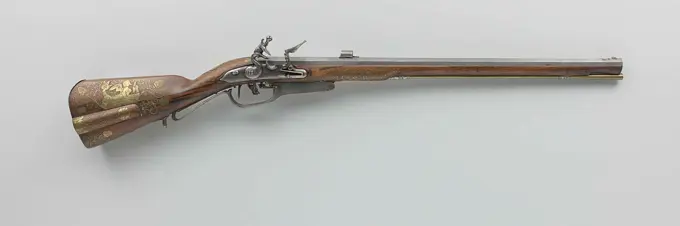
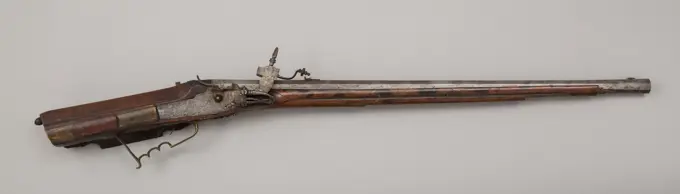
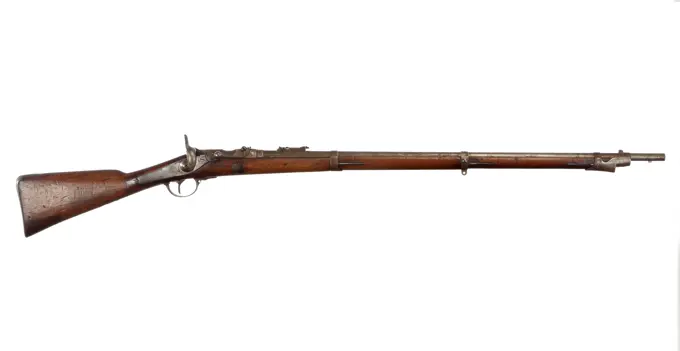
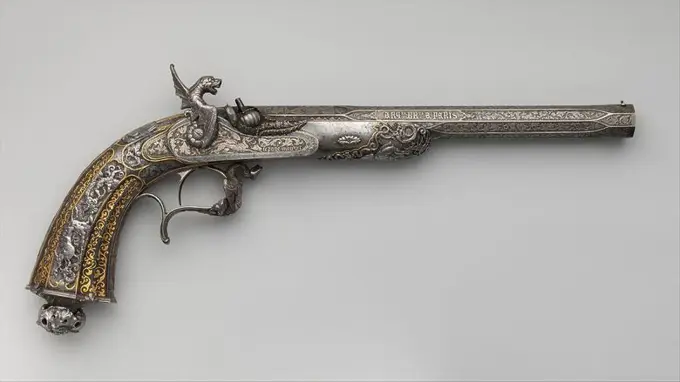
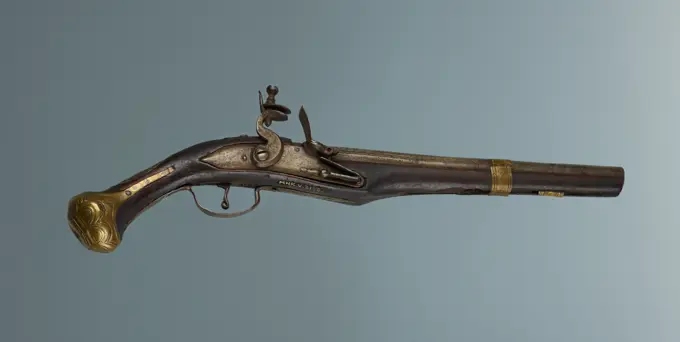
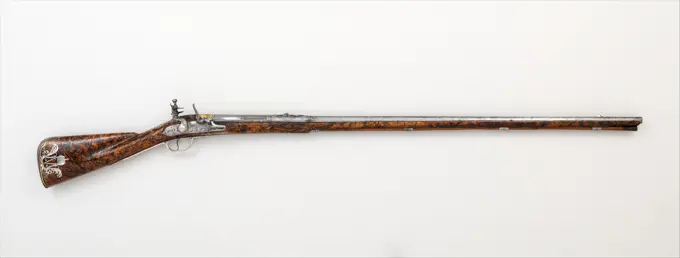
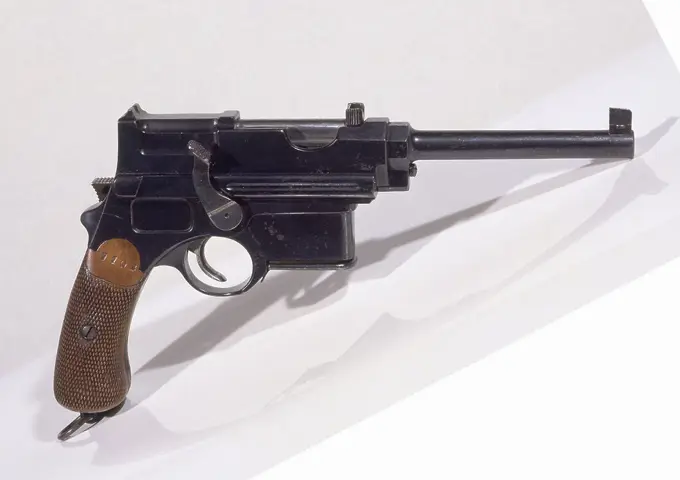
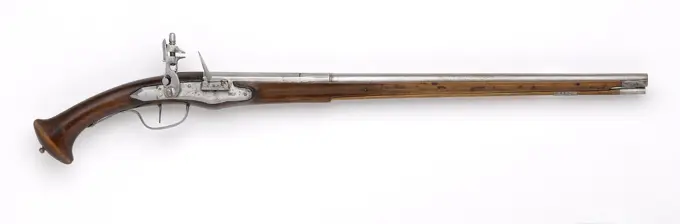
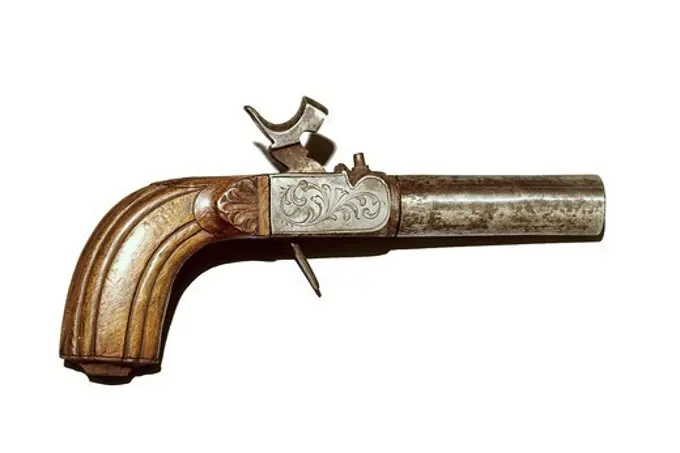
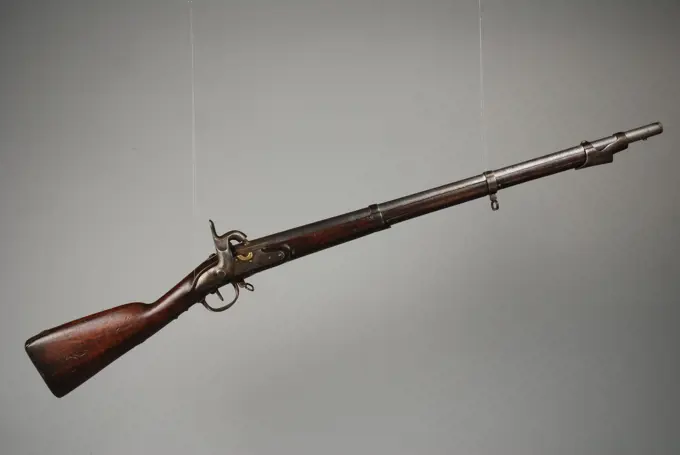
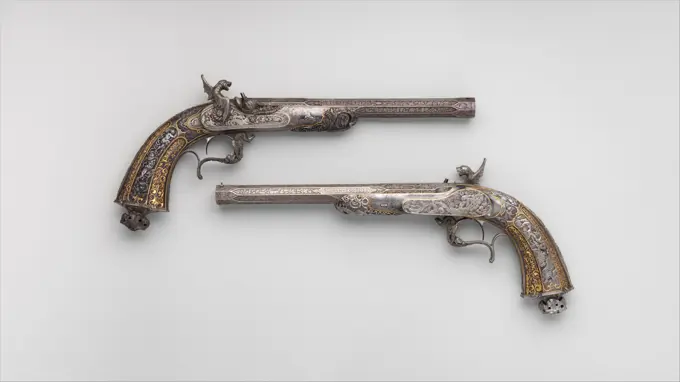
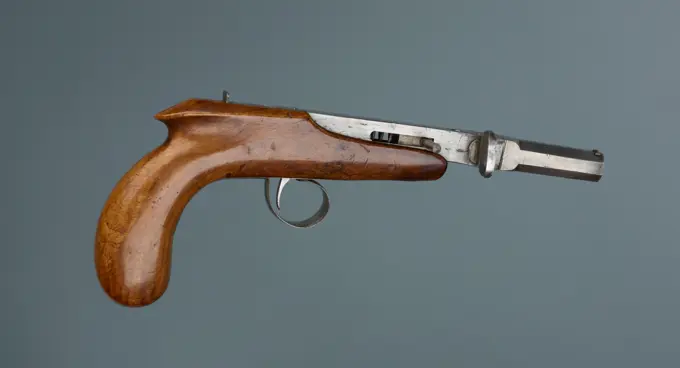
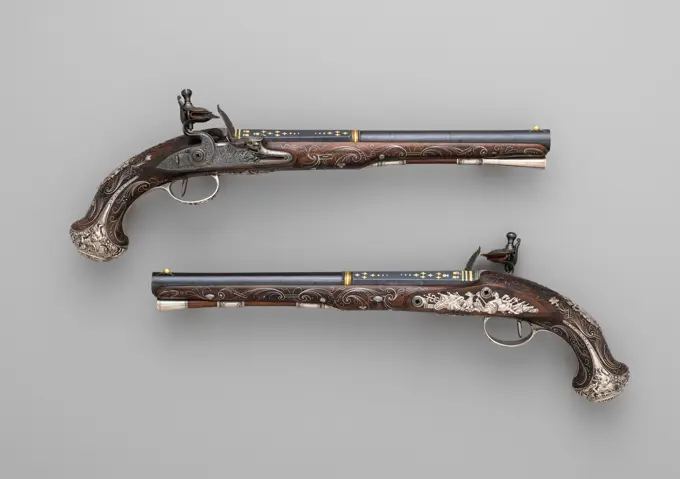
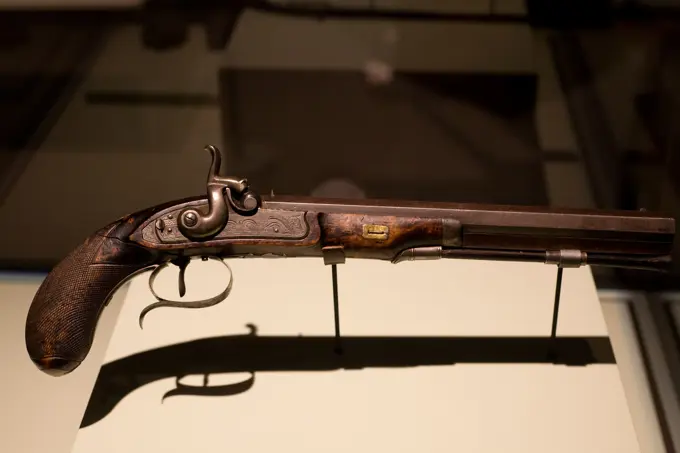
Display of vintage firearms such as flintlock pistols from various eras, showing intricate designs and materials, highlighting historical craftsmanship.

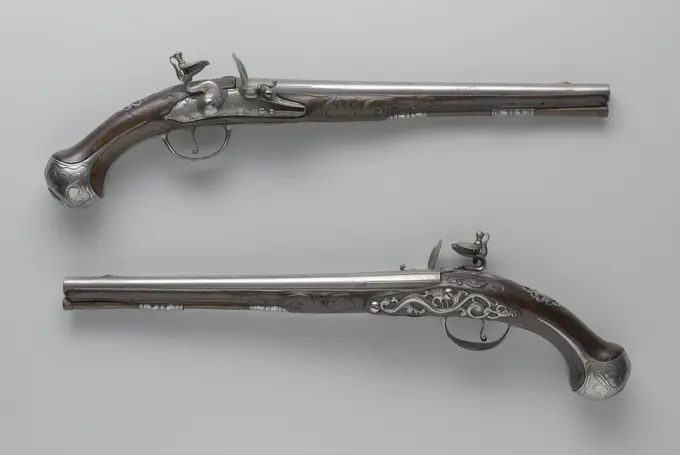
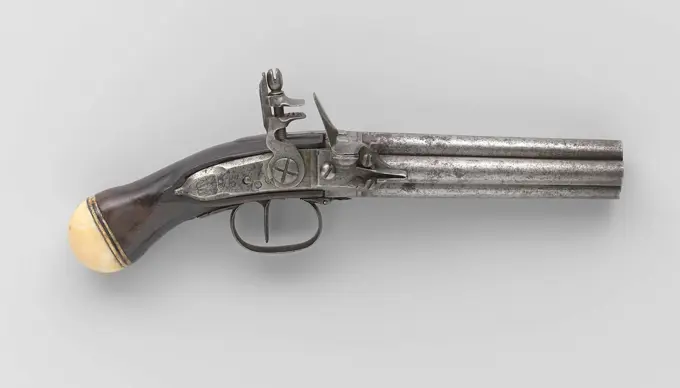
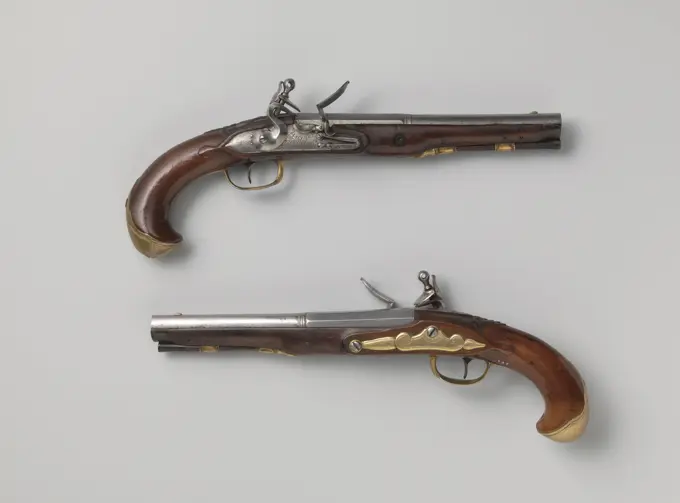
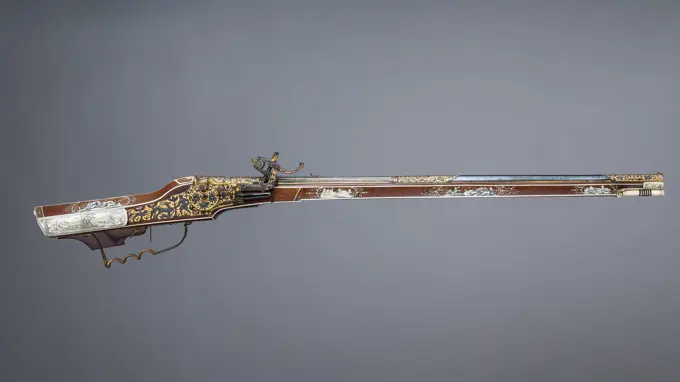
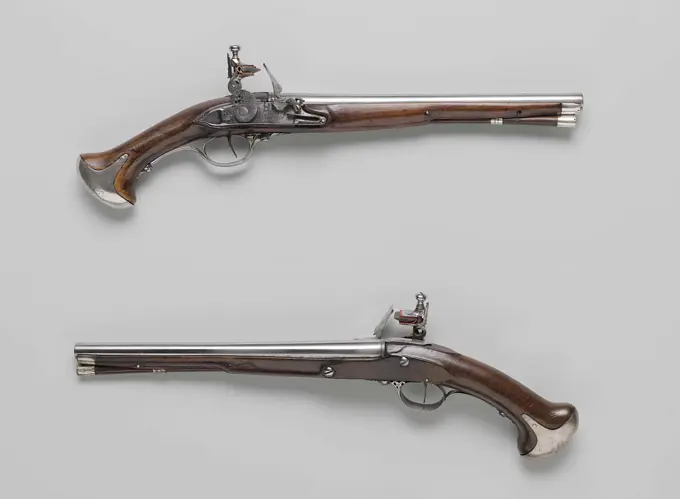
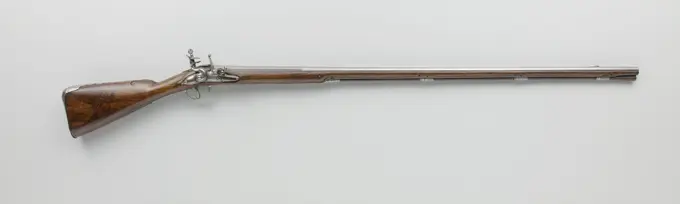
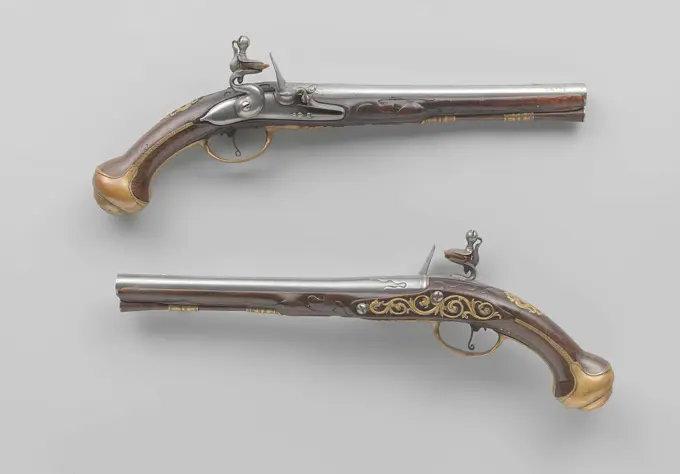
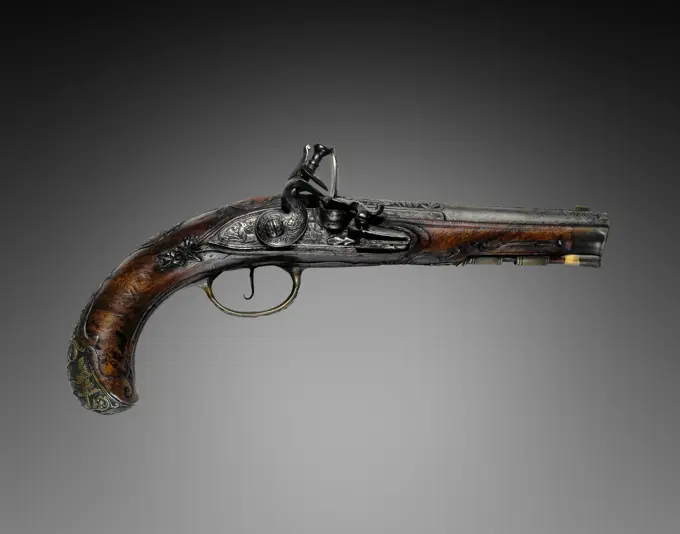
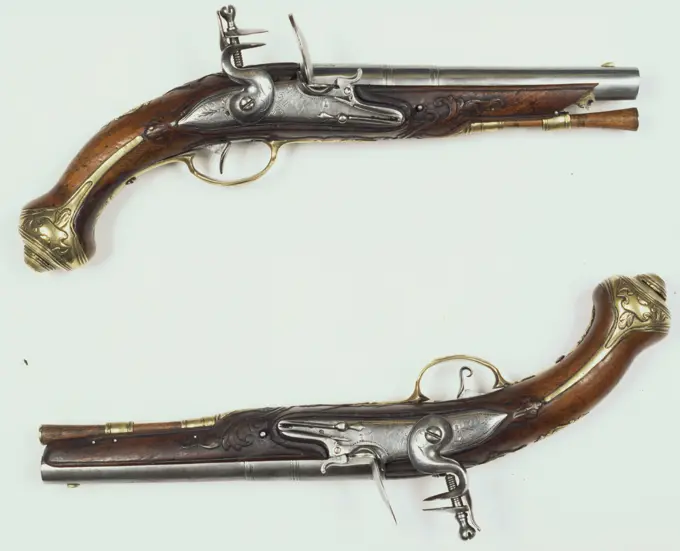
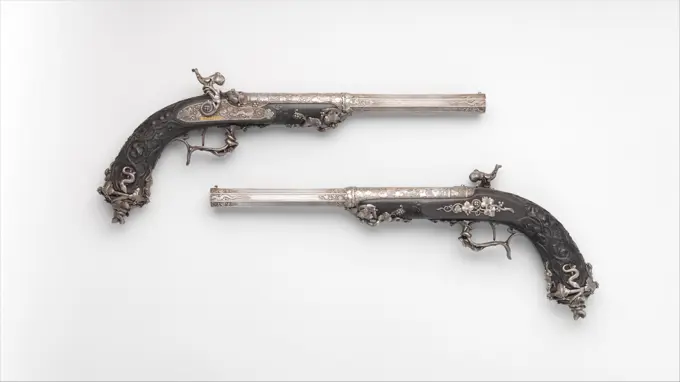
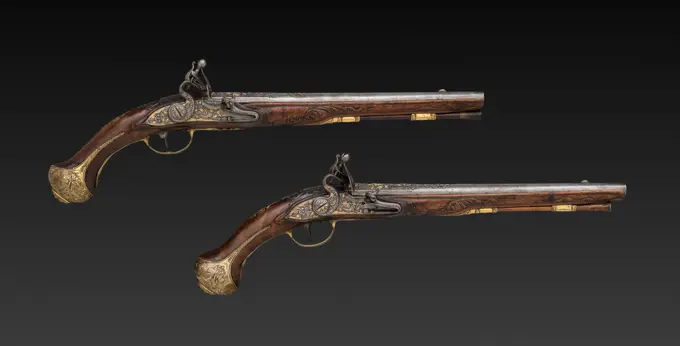
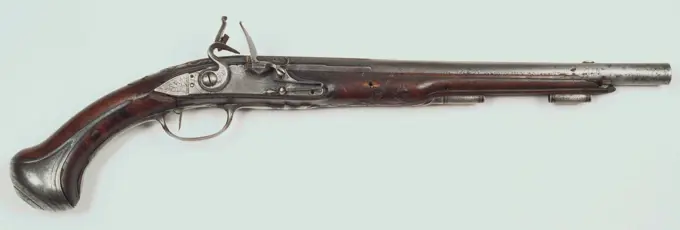
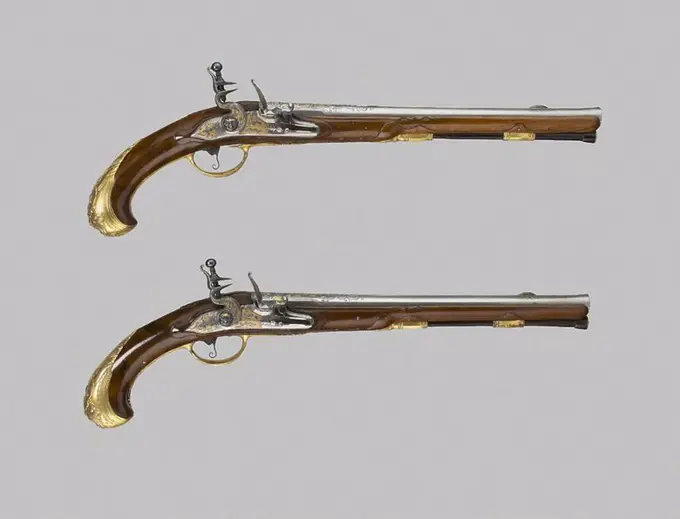
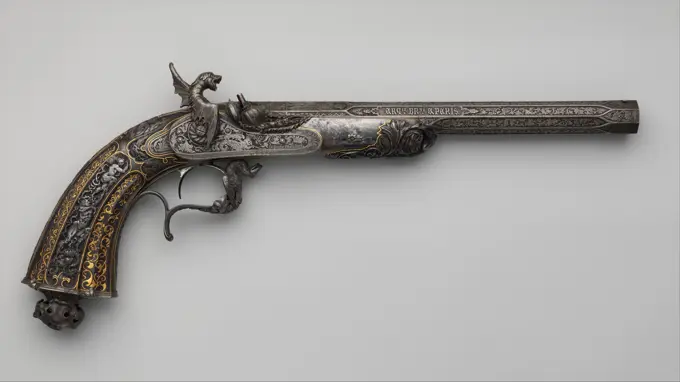
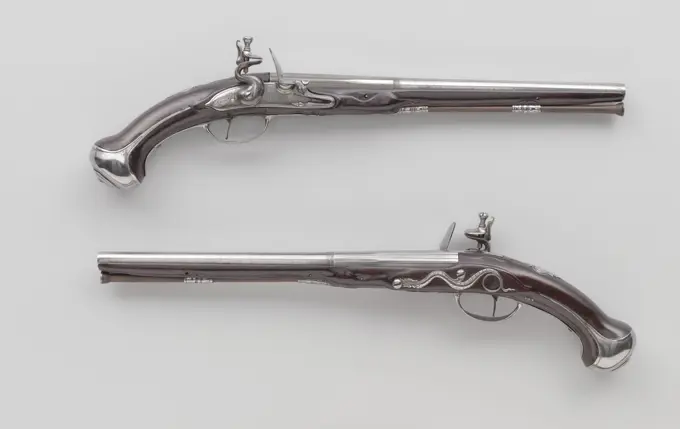
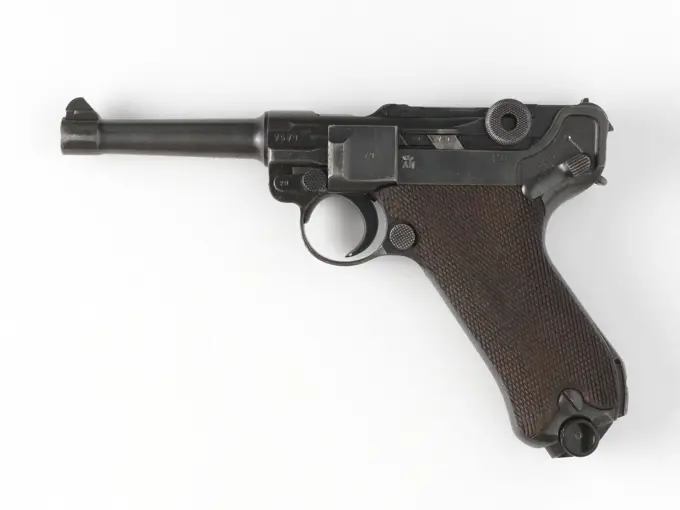
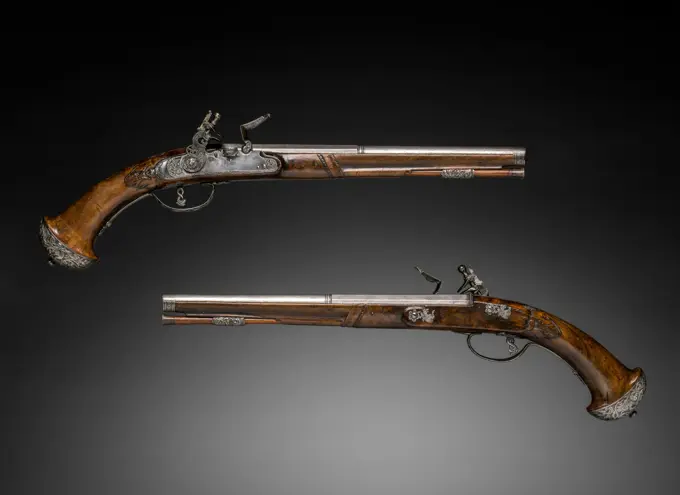
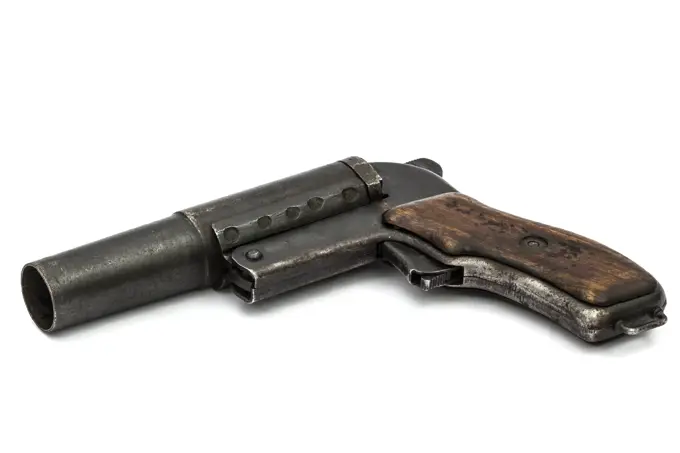
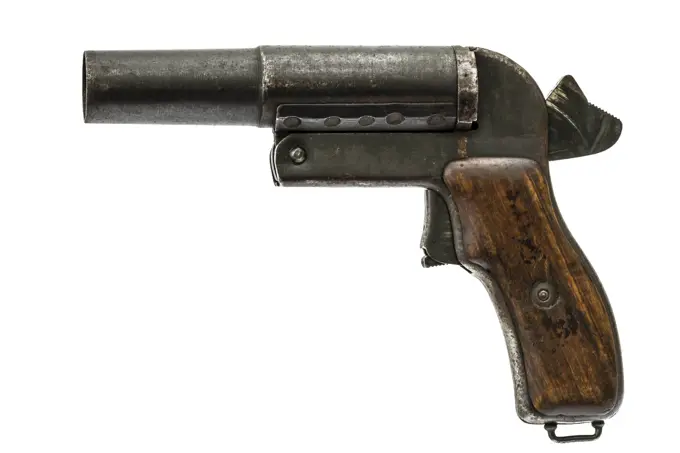
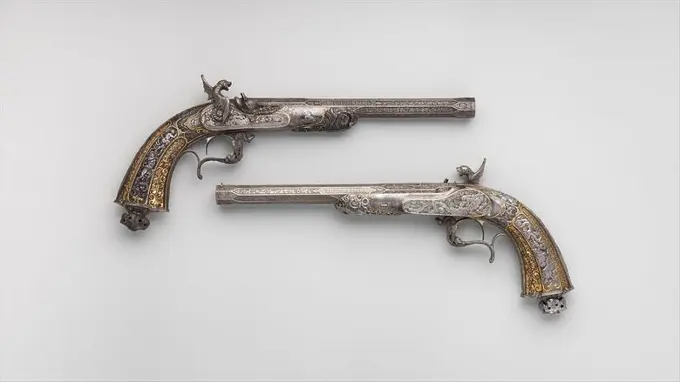
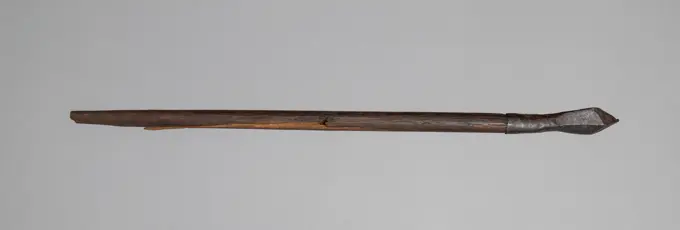
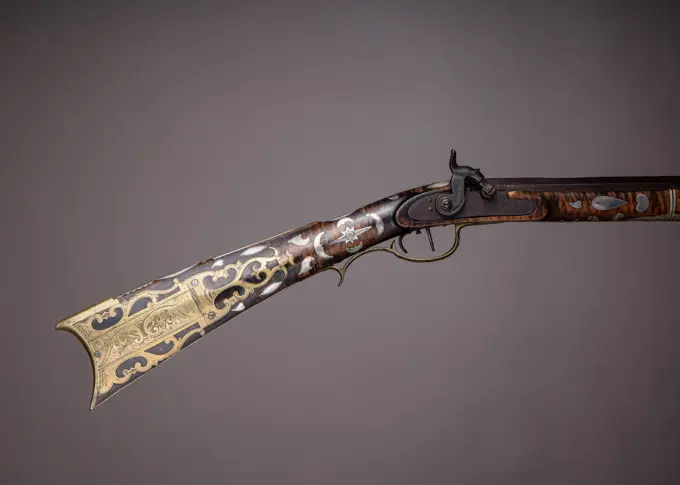
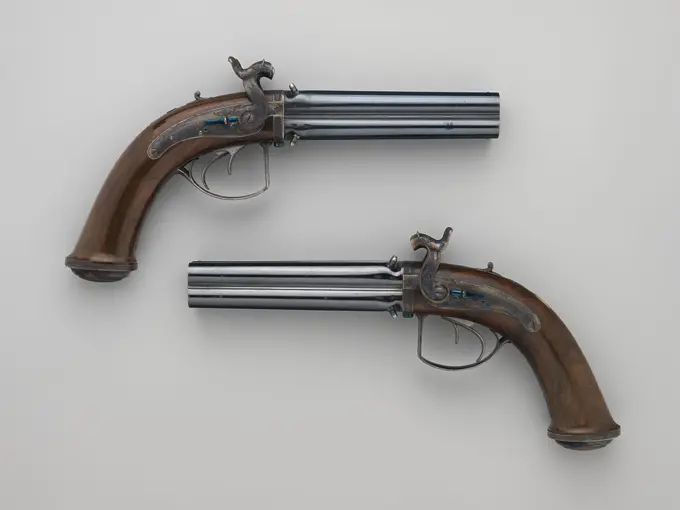
Flint gun for stacked drawer, Wijert Swartt (Possible), c. 1720 flintlock pistol The lock is decorated with relief and engraved animals, a mask, praise, ajour work and on the final plate the letters W.S.; The lock has a special construction with two pans above each other. The loop is stamped on the bottom with the letters WT and provided with a yellow grain and a visorkeep on the tail of the loop. The flask has simple cutting work. The iron batter includes a screw plate with leaf vines and the flask decorated flask. Amsterdam iron (metal). brass (alloy) engraving / cutting
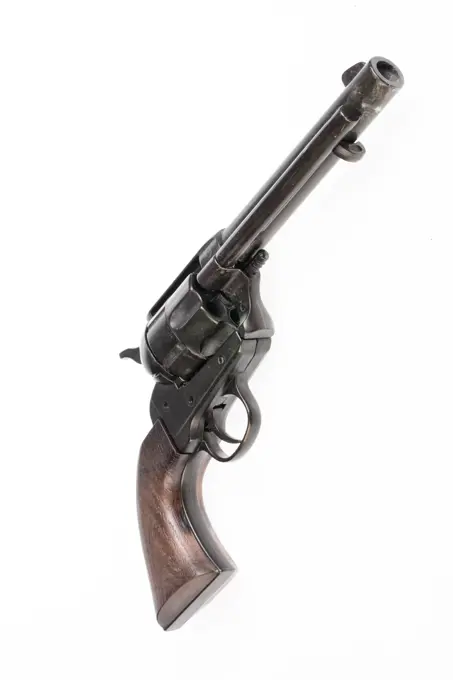
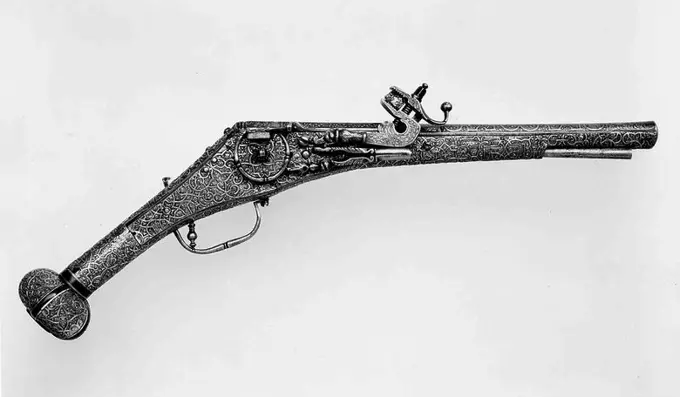
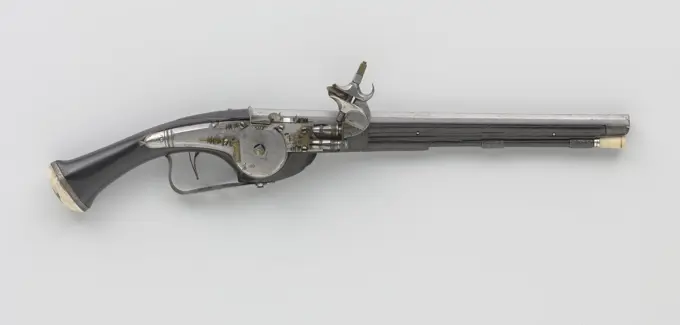
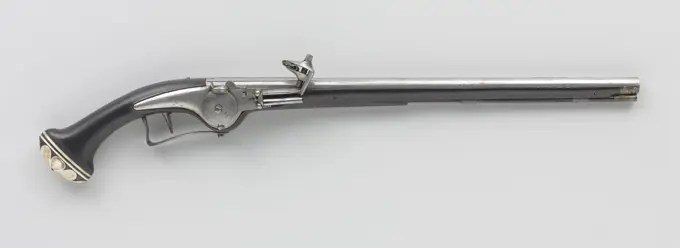
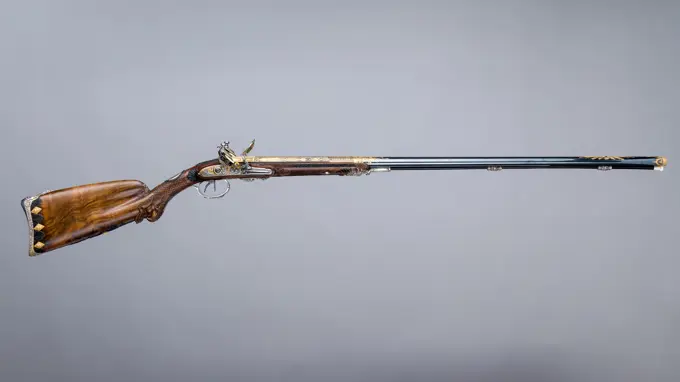
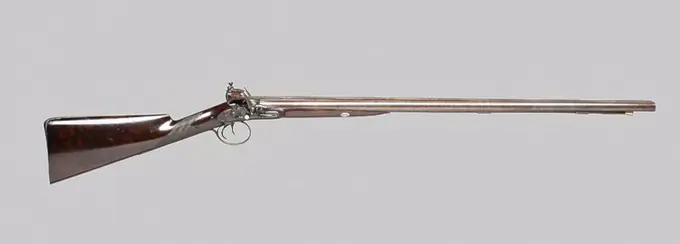
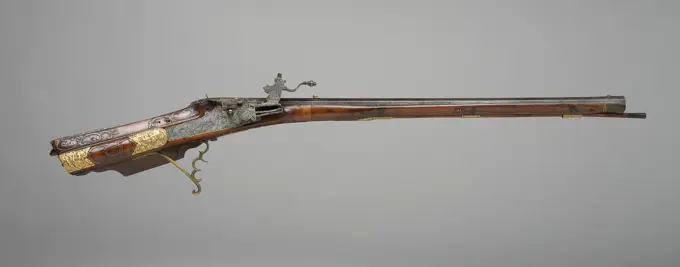
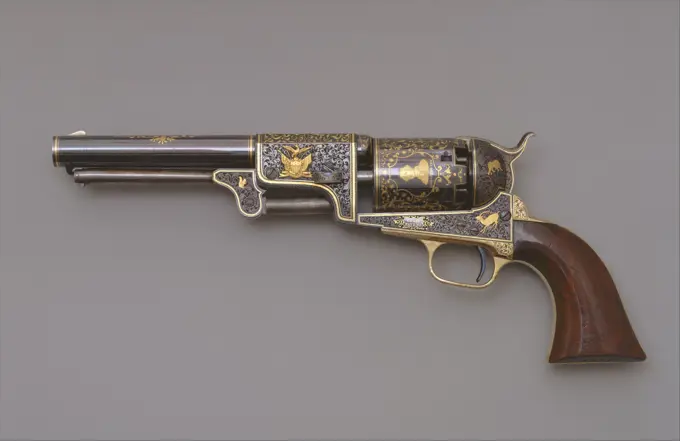
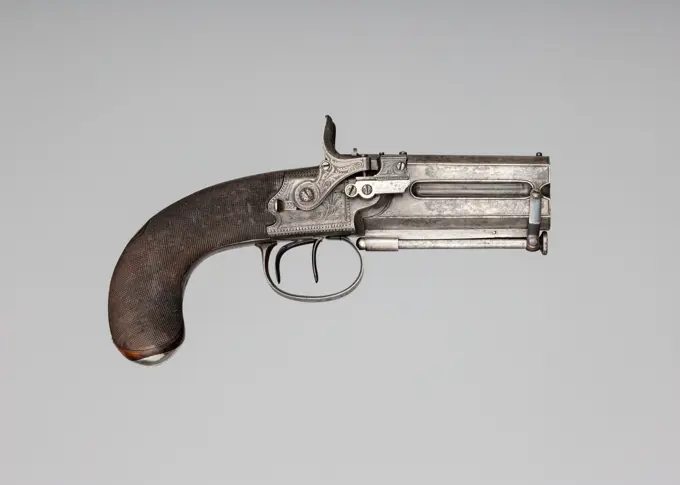
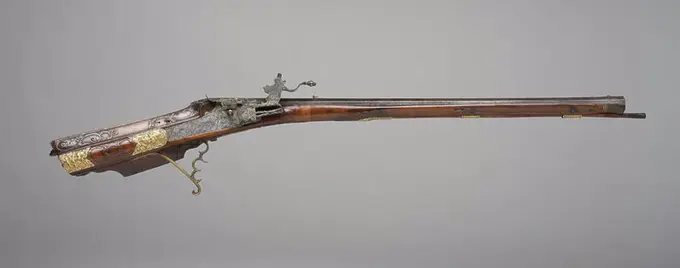
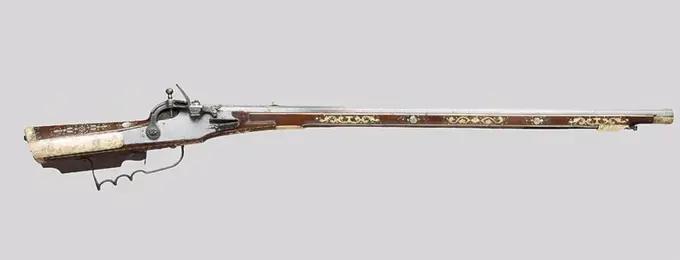
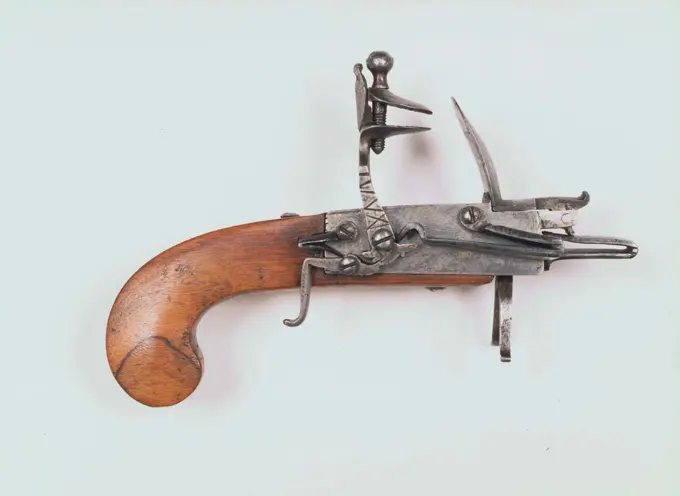
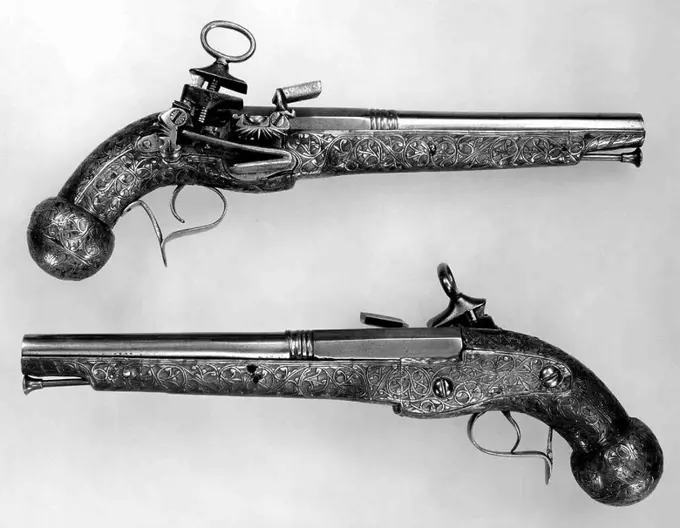
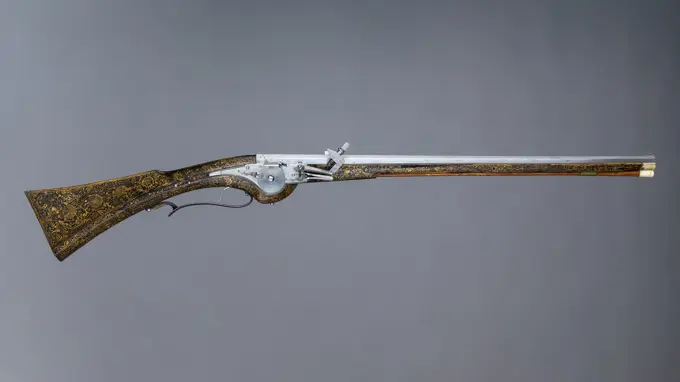
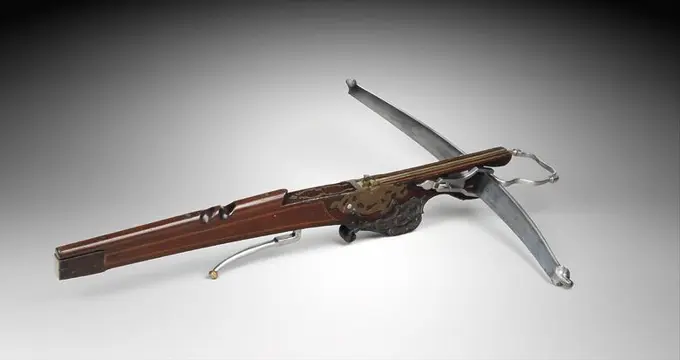
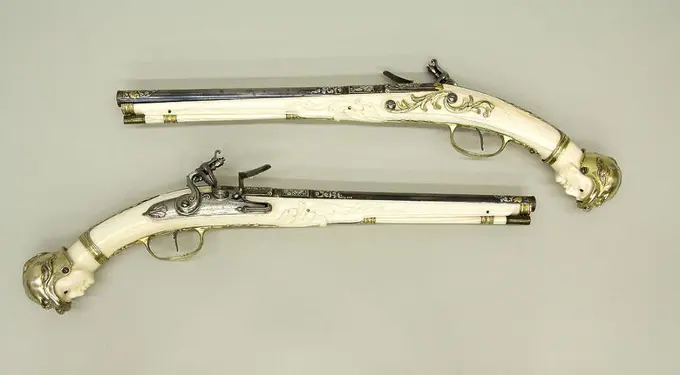
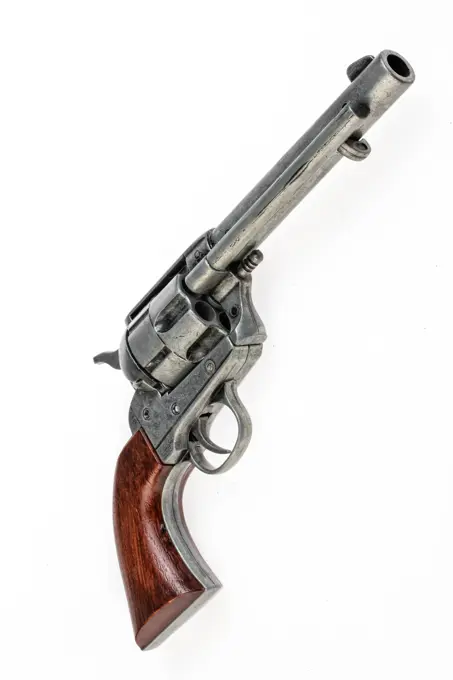
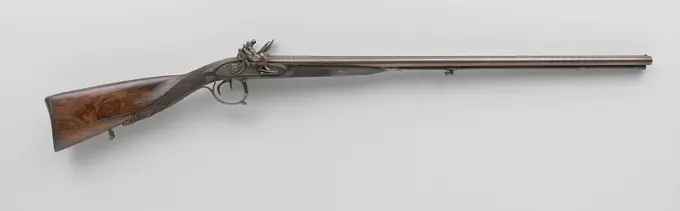
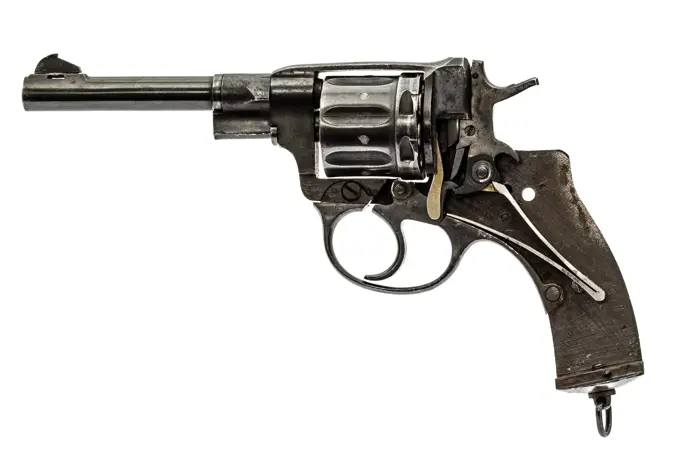
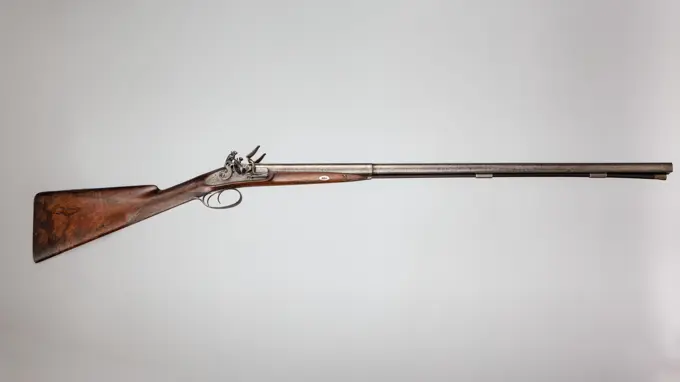
Double-Barreled Side-by-Side Flintlock Shotgun ca. 1837 Joseph Manton & Son, British, London 1834-1838 This is one of the last flintlock shotguns made by Joseph Mantons (1766-1835) firm. It bears the serial number 10,530. By ca. 1837 the flintlock had long been superseded by more advanced percussion mechanisms, suggesting that this gun may have been purchased by a conservative client. One of the most influential and esteemed gunmakers in London in the late 18th-early 19th century, Joseph Manton died in 1835, passing his business to his son John Augustus Manton (1809-1852), who continued to trade under the name Joseph Manton & Son.. Double-Barreled Side-by-Side Flintlock Shotgun. British, London. ca. 1837. Steel, wood (walnut), brass, platinum, silver. London. Firearms-Guns-FlintlockOld Revolver On Isolated Background Old revolver on an isolated studio background Copyright: xZoonar.com/AndreyxSkatx 9656317Wheellock Pistol. Culture: German, Augsburg. Dimensions: L. 20 3/8 in. (51.7 cm); L. of barrel 13 7/16 in. (34.1 cm); Cal.492 in. (12.5 mm); Wt. 4 lb. 4 oz. (1928 g). Date: ca. 1560-70.The sheathing of the stock in plaques of gilt copper with raised strapwork ornament is highly unusal but recalls clock cases, powder flasks, and other decorative metal objects made in Augsburg. Museum: Metropolitan Museum of Art, New York, USA.Ancient iron and wooden pistol Close-up photo of the ancient pirate pistol on a white background Copyright: xZoonar.com/ArmanxZhenikeyevx 3364176Wheellock pistol, anonymous, c. 1630  The lock has an outer wheel, engraved twice with an S; On the outside, and engraved here and there with curls, decorated with chiseling on the inside; Equipped with different yellow parts, such as the hook on the left side of the wheel. The loop is stamped twice on top with the Wapen van Maastricht. The ebony flask is simply cut with grooves and ends in a hexagonal flask button; There is a round mother -of -pearl screw plate under two of the three lock bolts; The ivory flask hood is secured with an engraved silver crucifix. Apart from the unprocessed tractor bracket with sawn -out, ajour edited decoration, the iron batter is engraved with leaf vines and consists of a chest of drawers, two loading stokkokers and a band around the flask button; The ebbenhoute loading stick is equipped with an ivory roof and a silver collar. Maastricht brass (alloy). ebony (wood). mother of pearl. ivory. silver (metal). iron (metal) engraving / sawing  MaastrichtRadslotpistool, eat Kitzen, c. 1640  The lock is unadorned; The outer wheel is provided with a hook on the underside; The powder pan can be opened by means of a pressure pen. The round loop is equipped with a rib on the top, flanked on the back by two shorter ribs; On top of either side of the rib stamped with I and K and a stamp that is not to be defined above the i, on the bottom with a brand in the shape of a circle and pen. The ebbenhouten flask has a flat right opposite the lock and a grooved frontade; The flask button is inlaid with two narrow tires of ivory on either side of an ebony band; The bottom of the flask button is formed by a piece of solid ivory cut into relief as a flower against a puffy background. Apart from the angled iron tractor bracket, the batter of silver, engraved with cross flowers, consists of a chest of drawers and a round loading sticker; The loading stick is made of flexible black material (horn or balein) and has a hood and suite with the frontade. MaasFlint gun, Michel Delahaye, c. 1680 flintlock pistol Part of a couple. The lock plate is decorated on the edges with wavy curls in relief; The fire steel is chiseled in relief like a three -leaf; provided with a signature. The round loop has flattened surfaces on the back and a rib on top to the iron visor grain; provided with signature; On top of the tail of the loop is the tieched rearvizier. The flask is easily cut with edges and praise. The iron batter consists of the flask hood and tractor bracket decorated and suite with the lock plate, the flask hood also with a lily, an ajour processed thumb plate and screw plate as a hose with shoots in the form of praise and a dragon head, and two loading stokokers; The chest of drawers has an iron roof. Maastricht iron (metal) engraving / cuttingDubbelloops PercussiePistolool from Mr B.F. Baron van Heemstra from from from from and Eibersburen, c. 1813  Percussiepistool, part of a couple. Two walking above each other, in the mid -19th century. Running round pulled. Brass visor grain, not a keep. Engraved with iron fittings. Smooth drawer with checkered handle. Button with carrying ring and storage place for battle hats. Iron nails -shaped chest of drawers, salvaged aside of the weapon. Liège Batting hood: Brass (Alloy). Final plate, tractor, walk: Iron (metal). LADE, BAV: WOOD (PLANT MATERIAL) engraving / cutting  NetherlandsVierloops vuursteendraailoopzakpistooltje.Flint pocket gun with four walking. A tulip is engraved on the tail of the lock plate, on the rooster painting; The lock plate is signed. The four round walking must be turned by hand; Hardly soldered at the core and struck on a round iron plate. The flask consists of a short selection that runs into the flask whose half of ivory is. The batter consists of a unprocessed tractor bracket that must be pulled back to unblock the draine mechanism; No facility for a loading stick.Flint gun, Royal Rifle Factory Culemborg, c. 1790 flintlock pistol Probably officer trolley, made by the National Factory in Culemborg; Part of a couple. The lock is unadversely except for the inscription Fabrique in Culemborg. The loop is equipped with a wide band with rings and a stretcher of sight, and stamped with the Culemborg weapon. The flask has a curved hold and is cut into relief with flowers behind the loop, among other things; The frontade is equipped with a hood of cow horn. The previously gilt, brass batter consists of, among other things, a screw plate engraved with edges and praise that follow the shape of the screw plate, a tractor bracket with an asymmetrical brower on it, and a pump hood with the same decoration; The loading stick has a hood of cow horn. Culemborg horn (animal material). brass (alloy). gilding (material). iron (metal). wood (plant material) engraving / cutting / gildingFlint gun, Formez, c. 1770 - c. 1780 flintlock pistol Pistool with flint lock, part of couple. Round Loop. A few tires in relief work. Brass visor grain, not a keep. Round lock plate on which: Formez, Mastricht. Drawer somewhat edited. Brass batter. Silver relief decoration. On the flask button marked B.F. owner. Maastricht Kolf hood, tractor bracket: Brass (Alloy). Loop, lock: Iron (Metal). Kolf, Drawer, Laadstok: Wood (Plant Material)   NetherlandsWheellock Rifle ca. 1610-30 Daniel Sadeler German The dukes of Bavaria were enthusiastic collectors who assembled exotic objects and works of art in a special gallery called a Kunstkammer. In the capital city of Munich, they established various workshops where the most skillful artists and craftsmen produced art objects for the princely collection or for presentation to foreign dignitaries. Among the artists employed by the Munich court were the steel-chiselers Emanuel Sadeler (active 1594-1610), his brother Daniel (recorded 1602-32), and Caspar Spät (about 1611-1691). Unlike other artists decorating steel, the Munich masters did not depend on gold to produce stunning effect but used it mainly as a background to emphasize the ornament in blued steel chiseled in high relief. The subjects and patterns of decoration were usually inspired by mannerist designs produced by Flemish and French artists of the second half of the sixteenth century. Masters of carving and engraving on wood, ivory,Double-Barreled Flintlock Shotgun dated 1801 Nicolas Noël Boutet French This is one of the most restrained but sophisticated examples of Boutet's work. The Classical ornament on the barrels and silver mounts is in the Empire style, whereas the bright steel locks, chiseled in relief with a gilt background, recall an earlier eighteenth-century tradition of firearms ornament. The walnut stock, sparingly decorated, is inlaid with ebony and gilt mounts, as also was found on French Empire furniture.. Double-Barreled Flintlock Shotgun. French, Versailles. dated 1801. Steel, wood (walnut, ebony), gold, silver. Versailles. FirearmsFlint gun, Barend Penterman, 1710 - 1715 flintlock pistol Part of a couple. The lock plate is engraved with a jumping lion and a signature. The barrel is engraved and chiseled in relief with, among other things, a goose; A rib runs upstairs; Hand marked on the back with the Wapen van Utrecht. The flask is cut with, among other things, praise. The iron batter consists of, among other things, an ajour processed thumb plate, a symmetrical screw plate of curls in the form of a hose on either side of a mask, and a flask with a grotesque mask on the bottom with a small mask on the chin; The chest of drawers has an iron roof. Utrecht iron (metal) engraving / cuttingDouble-Barreled Flintlock Fowling Piece. Joseph Manton; English, London, 1766-1835. Date: 1810-1830. Dimensions: L. 120.6 cm (47 1/2 in.)Barrel L. 81 cm (31 7/8 in.)Caliber .68Wt. 6 lbs. 10 oz. Steel, iron, walnut, and platinum. Origin: England. Museum: The Chicago Art Institute, Chicago, USA.Flint gun from Cornelis Tromp. Utrecht flint gun from Cornelis Tromp, part of couple. Flint battery lock with flat lock plate and rooster. The walnut tray carries a silver kolf cap with the engraved weapon of trump. Silver loading stick carrier. The lock plate is signed.Flint gun with copper fittings and fixed cheers, anonymous, c. 1800 - c. 1850 flintlock pistol English rider or hunting gun. Round smooth run with English brands. No grain and no keep. Walk in drawer with markers. Flat lock. Haan with oval opening. Iron pan with a fire screen. Slotplaat marked 'G.R.' Under Kroon and 'Tower'. Brass side plate and fittings. Baadstok with bracket. Smooth drawer with half brass tire at the mouth. Brass batter plate for the chest of drawers is probably from a later date. Tower of London wood (plant material). copper (metal). brass (alloy)   NetherlandsPistol with a rock castle unknownflint gun, Jan Bijlaard, 1700 - 1708 flintlock pistol Part of a couple. The tail of the lock plate is kicked; Non -decorated except for a engraved strict beads under the pan and the signature. The round run is flattened on top and is wider at the Tromp; On the back of a ring with a deep keep for the rearvizier that extends to the tail of the loop; Iron visor grain; In contrast to 142-A, 142-B on the bottom is not stamped with a brand in the form of a chair under a crown. The flask made of gust of walnut is easily cut. The previously gilt, yellow -headed batter consists of two loading stokkers in relief, the tractor bracket, a symmetrical screw plate of leaf vines with fetched relief decoration on either side of a mask, a white, oval thumb plate framed by acanthus vranks and an unpaved and an acanthus leaf on the bottom, and an acanthus leaf on the bottom with stepped tracks and an octagonal pump cover with a ball on it; The loading stick has a hood of cow horn. Rotterdam iron (metal). Wheellock Rifle 1715-1735 Vienna. Walnut, gold, brass, iron, and horn .Pair of flintlock pistols, anonymous, 1645 - 1650 flintlock pistol Part of a couple. The rooster of the lock is chiseled in relief in the form of a wrinkled dragon; The final plate is decorated with bacchic scenes in high relief, at 106-a slightly different than at 106-B. The loop is chiseled on the back with two panels with mythological scenes and a surface with diamond -cut pattern for that. The flask is made of gush walnut wood. The iron fittings includes a drawer of chap, a tractor bracket with also diamond -cut pattern, and a pump hood chopped in relief with four classic, acclaimed heads in oval medal gons around the rose on the bottom; The ebbenhoute cheststick has an iron roof.  walnut (hardwood). iron (metal). ebony (wood) grindingFlintlock hunting gun.Flight yacht rifle from the Jaeger type with extra impact hammer mechanism and nineteenth-century adjustments. The slot is decorated with engraved leaflets and chisel work; The lock plate is provided with a signature. The loop is completely octagonal and becomes slightly wider towards the trump; drawn with six grooves; grain of geelkoper, awareness consisting of a picture and a pipe vizier; Stamped at the bottom with a large brand IG K. The flask is easily cut and inlaid with curls of brass wire and iron ornamental studies; The handle has a chimney plate and a folk box, and is inlaid with engraved, yellow figures. Apart from the two iron loading bokekers, the batter of selector and consists of a screw plate embossed in the form of curls partially combined with the inserted curl work of the flask, a round thumb plate engraved with a grotesque face, and a flat flask plate; The loading stick is from Geelkoper.Hunting shotgun with a circular lock unknown labelPair of Flintlock Pistols 1700-1730 Germany. Walnut, brass, and gold . J. J. BehrPocket gun with closet lock of General Baron Chassé. Flight gun with octagonal copper loop from which the end is profiled. Under the loop a folding bayonet. The flask is grooved. Pistol has an internal lock, iron rooster, pan and fire steel are on the lock. Sides of the tray are shell-shaped from wood. The trigger bracket is made of iron with an insured star at the bottom. On the left of the loop an oval with a Liège quality mark ELG in engraved. Pistol belonging to Baron D.H. Chassé, Lieutenant General Supreme Commander of the Antwerp Citadel.Percussion rifle - Enfield  EnfieldFlight gun. Part of a couple. The lock plate is engraved with a jumping lion and a signature. The loop is engraved and embossed with a goose, among other things; Above over runs a rib; Below labeled with the coat of arms of Utrecht. The flask has been cut with, among other things, praise. The iron attachment includes a symmetrical screw plate from curls in the form of a hose on either side of a mask under the rear lock bolt, and a flask with a grotesk mask with a small mask at either side with a small mask; The loading stick is equipped with an iron hood.Radslot gun, Jan Moonen (attributed to), 1655 - 1660  Part of a couple. The interior wheel of the lock is engraved with panels with grotesque animals, human figures and praise; The pan must be operated by hand. The loop is engraved on the back with praise; The stamp GI of 89-B is missing. The ebbenhouten flask with grooved frontade is cut in high relief with the head of a monster in front of the lock and an acanthus leaf behind the barrel. The batter consists of an iron loading sticker engraved with praise, a silver tractor bracket in relief decorated with Judith holding the head of Holofernes, a flask hood of gilded, poured in high -relief with a rider in classic equipment and with a Radslot gun in the right on the right A prancing horse above a defeated enemy; The ebbenhoute cheststick has an iron roof. Amsterdam ebony (wood). iron (metal). silver (metal). gilding (material). brass (alloy) engraving / cutting / gilding / castingFireproof; Pistol tinder box with flint slot. Tinder box with iron rectangular tray that can be opened sideways and wooden smooth flask ending in a point, it is also cut into various surfaces. The rooster is made of iron and has a round pin that can be tightened to be able to clamp the flint properly, the fire is made of iron and hangs above a round opening where the tonel was placed in. The pedestal of the tinder box is made of iron and has two curled legs where the tinder box can rest. The trigger is made of iron and has a small bow so that the finger has a better grip, it is also placed adjacent to the rectangular iron tray.Percussion Exhibition Pistol. Barrelsmith: Barrel by Léopold Bernard (French, Paris, active 1832-70). Culture: French. Decorator: Decorated by Antoine Vechte (French, 1799-1868). Dimensions: L. 15 7/8 in. (40.3 cm); L. of barrel 10 1/4 in. (26.0 cm); Cal.46 in. (11.7 mm). Gunsmith: Signed by Gilles Michel Louis Moutier-Le Page (French, 1810-1887). Date: dated 1851.Commissioned by the renowned Paris gunmaking firm of Le Page, these are the only known pistols executed by Antoine Vechte (1799-1868), a virtuoso silversmith, sculptor, and chiseler, who was famous in his day as the "nineteenth-century Cellini" in reference to the accomplished Renaissance artist Benvenuto Cellini. The pistols are unique in their all-steel construction and in the variety of highly original Renaissance-inspired figural ornament. Probably not finished when the companion pistol (acc. no. 2013.514.1) was shown at the French Industry Exhibition in Paris in 1849, this pistol appears to have been completed by VechteFlint hunt rifle, Anonymous, 1695 - 1705 flintlock gun The gun is very Dutch in the combination of simplicity and top quality. The lock is easily chiseled and equipped with a rainproof pan. The loop has a visorkeep and an iron grain; At the bottom is a stamp that is difficult to identify, perhaps a P. The flask has simple carving. The iron batter includes four facets equipped with loading stokkers, a screw plate consisting of sea snakes and leaf vines, and the flask hood. unknown iron (metal). wood (plant material) cutting / striking (metalworking)  NetherlandsPercussion Revolver, A. Francotte, c. 1852 - c. 1870 revolver Deane-Adams Revolver, drawn six-piece percussion. The Revolver is made of blewy steel with an iron cylinder, rooster and tractor. He has an eight -sided run. The patterns must be applied to the cylinder, whereby they can be tamped by a pestle on a lever along the barrel. The battle hats are applied to chimneys on the back of the cylinder. manufacturer: Liègepatentee: London iron (metal). wood (plant material)Old hunter rifle isolated on whiteMusket met lont, anonymous, 1600 - 1650 matchlock rifle Lontslot rifle (musket) with round, somewhat trumpet -shaped run, in room is octagonal; marker -shaped visor grain; Vizierkeeep with tail piece; To the barrel mounted powder pan with screen and pandel that turn around vertical axis; On top of the running brand of Utrecht, under brand (from N. van Nuremberg); flat rectangular lock plate, rooster with notch and wing bolt; Cut out on the left side of the drawer in Notenhout's weapon of Utrecht; Brass tire, flask plate and loading button. Lont still present. Utrecht Loop, lock, tractor bracket: Iron (metal). Kolf, Kolfhals, drawer: Wood (Plant Material). Batter: copper (metal). Lont: Rope   UtrechtPercussion army pistool model M 1815.Percussion army pistool model M 1815. Loop: smooth, round loop, which passes the room in a five-sided section. A percussion fireplace is closed at the top of the room. On the tail of the loop: M.1815. Marked in the Chamber: 1816 and Pb. Slot: Original flint battery lock, the brass powder pan was sawn off. The lock is marked: 26, s and crown above each other. (Slot corrected). Wood: walnut. Batter. Brass: On the front of the drawer is an open-worked tube, which serves to confirm the loop; counterplate; trigger bracket; Kolfkap.Flint gun by Cornelis Tromp, G. van Eyll, c. 1675 flintlock pistol One of a torque Nijmegen flint pistols with flint battery lock with convex lock plate and rooster. Nuthout drawer with iron batter. The final plate is signed: G. van Eyll, Nijmegen. NijmegenFlight gun. Part of a couple. The slot is easily engraved with edges, a row buttons and a signature. A rib runs over the course; The visor grain is made of iron; Under top stamped with a brand in the shape of a chair () With a crown above it. The flask is relieved with curls, among other things. The glass, previously gold-plated attachment consists of an asymmetrical screw plate consisting of brords, a thumb plate of Ajour processed leaflets, branches and dolphins, and a flask with a mask below; The loading stick has a hood of Koehoorn.Colt Third Model Dragoon Percussion Revolver, serial no. 12406 ca. 1853 Samuel Colt American Samuel Colt (1814-1862) was one of the most famous and successful American inventors and entrepreneurs of the early industrial age. By patenting the first mass-produced multishot revolving firearms, Colt achieved worldwide fame and a vast personal fortune. His introduction of precise machine-made weapons and his promotion of the interchangeability of parts were innovations that transformed the arms industry. Colt actively promoted sales through advertising and displays at international fairs, and by presenting deluxe arms to men of influence. His precise and reliable standard-model revolvers were highly valued by soldiers and frontiersmen. His more elaborately embellished exhibition and presentation arms appealed as functional objects of beauty.Early American arms usually were plain, serviceable weapons intended for hunting and self-defense. By the mid-nineteenth century, however, the increasinPercussion rifle - Enfield EnfieldForsyth Patent Second Model Sliding Primer Over-and-Under Pistol with Case and Accessories ca. 1824 Alexander John Forsyth The Reverend Alexander Forsyth, a Scottish clergyman and exceptionally creative gunmaker and amateur chemist, invented and patented the first percussion lock in 1807. The most consequential firearm invention since the flintlock, the percussion system was a forerunner to the modern center-fire cartridge. As a means of ignition, percussion mechanisms utilized a highly combustible chemical compound called fulminate, which burns more rapidly than gunpowder when struck with force. This example features a priming reservoir that slides on a track over the pan when the hammer is cocked, depositing loose fulminate powder into the pan and covering it, snapping forward out of the way when the trigger is pulled.Firearms technology advanced at an extraordinary pace in Europe in the early nineteenth century. Londons elite gunmakers, intensely focused on optimizing accuracy, hanFlintlock Pistol, c. 1750. Johann Andreas Kuchenreuter (German, 1716-1795). Steel, walnut stock, brass mounts, barrel inlaid with gold, brass, and silver; overall: 25.7 cm (10 1/8 in.); barrel: 14.5 cm (5 11/16 in.); bore: 1.2 cm (1/2 in.).REVOLVER DE PERCUSION. Location: ALCAZAR / MUSEO DEL EJERCITO-COLECCIÓN. Toledo. SPANIEN.Flint gun, Before 1880 flintlock pistol Flint gun, part of couple, with a round slippery loop, interrupted by three profile tires with a brass visor grain at the end of the loop and the name 'London' engraved at the beginning. Wooden drawer with frightened leaf motifs. Iron round lock plate with engraved representations of banners and leaves, on the left on the lock plate the letters 'L.G.E' are engraved. Wooden flask with bred leaf motifs and a brass plate of brass in which leaves are engraved. Brass seizure on the left side of the drawer. Tractor bracket is made of brass whose ends have the shape of a leaf. Iron tractor. The loading stick is made of wood with a head of brass. London Vizier grain: Brass (Alloy). Batter: Bronze (Metal). Laadstok, flask, drawer: Wood (Plant Material). Slotplaat, Loop: Iron (Metal) engraving  NetherlandsPistola con cañón de hierro. Este tipo de pistola es lo más característico de la producción catalana cualificada "de Ripoll". Museu d'Història de Catalunya.Pistol with a rock castlePair of Percussion Target Pistols Made for Display at the Crystal Palace Exhibition in London, 1851 dated 1851 Signed by Alfred Gauvain French Made by the Parisian gunsmith Alfred Gauvain (1801-1889) for display at the Great Exhibition of the Industry of All Nations in London in 1851, these pistols are masterpieces of iron chiseling in the Renaissance Revival style that was popular in mid-nineteenth-century design. Designed by the sculptor and ornemanist Michel Liénard (1810-1870), they were praised at the time as works of modern art that rivaled in beauty of execution many older firearms preserved in national museums. The inspiration for the lizards, snakes, and frogs amid vine branches was perhaps provided by Renaissance goldsmith's works (silver by Wenzel Jamnitzer of Nuremberg) and ceramics (French Palissy ware).. Pair of Percussion Target Pistols Made for Display at the Crystal Palace Exhibition in London, 1851 26981Flintlock Sporting Gun of Empress Margarita Teresa of Spain (1651-1673) ca. 1670-73 Jacques Lamarre French This flintlock sporting gun was made in Vienna for Empress Margarita Teresa (reigned 1666-73), Infante of Spain and wife of Holy Roman Emperor Leopold I (reigned 1658-1705). The empress's crowned monogram in silver is inlaid on each side of the butt, and her arms, an imperial double-headed eagle bearing the shields of Austria and Spain, are engraved on the silver escutcheon on the grip of the stock. The gun's august ownership is matched by the quality of manufacture. It is a work by Jacques (Jacob) Lamarre, a Parisian gunmaker who sought his forture at the imperial court about 1670.This superb weapon is probably one of Lamarre's earliest Viennese works. It still retains a French character, notably the barrel, with its changing faceted and round sections; the lock, with its chiseled, pierced, and engraved ornament; a burlwood stock with distinctive marbled grain; and a classically PISTOLA AUTOMATICA MALINCHER DE 7,66 mm. FABRICADA EN AUSTRIA. Location: ALCAZAR / MUSEO DEL EJERCITO-COLECCIÓN. Toledo. SPAIN.Flight gun. High quality military gun; Part of a couple. The lock plate carries a signature. A rib over the top of the course runs towards the trump in width; On the tail of the loop is a visor kick; The visor grain is made of iron. The flask is sliced with praise, among other things; The handle is narrower to be used up with a sharp corner in the flask. The iron attachment includes a flat screw plate, the surface of which coincides with the surface of the flask, in the form of curls with an oval shield between the two screw bolts, an oval thumb plate with a diamond pattern and a long traces and a kolf cap. flask plate with the same decoration as the thumb plate on an octagonal base; The loading stick is equipped with an iron hood.Pocket gun with cupboard lock by General Baron Chassé, 1765 - 1850 flintlock pistol Flint gun with octagonal copper run from which end is profiled. A folding bayonet under the loop. The flask is diamond -shaped grooved. Pistool has an internal lock, iron rooster, pan and fire sample are located on the lock. Sides of the drawer are shell -shaped cut from wood. The tractor bracket is made of iron with a carved star at the bottom. On the left of the loop an oval with Liège quality mark ELG engraved in. Pistool belonged to Baron D.H. Chassé, Lieutenant General Supreme Commander of the Citadel of Antwerp. Shutter Kolf: Wood (Plant Material). Bajonet, Haan, fire steel: Iron (Metal). Loop, drawer: Copper (Metal)   AntwerpFlint gun, Anonymous, 1640 - 1645 flintlock pistol Soberly designed flint gun, probably of Dutch origin. The lock has highly beveled edges; De Haan has been edited Ajour. The loop is unadorned and unnoticed. The flask is grooved at the front; The flask button is separated from the handle by means of a Palmhout tire and screwed in the middle. The iron fittings consists of a chest of drawers, a round loading sticker and a tractor bracket with beveled edges, the front of which is screwed to the flask; The chest of drawers has an iron roof.  wood (plant material). iron (metal) cuttingEnglish gun with unscrewable cannon. SPAIN. BASQUE COUNTRY. ALAVA. Vitoria. Museum of the Armera (armoury).Sapper's gun M1815 or percussion gun with ramrod and bayonet, used by the boys of the Gereformeerde Weeshuis, Rotterdam, rifle rifle percussion rifle gun firearm weapon iron steel wood walnut metal, w 6.5 h 21.0 (bottom of the flask to the top of the cock) Sappurs rifle M1815 with transformed fireproof lock to percussion; frontloader ankle loops with smooth barrel loose ramrod and large bayonet fittings iron. Cupped flask of crumbled flames hammered in on 38 and 1830 on panrudiment, crown on cockerel screw loose from each other crown and K on tail engraved 1815 on loop engraved in room 18 .. unreadable and crowned GF chamfered G front cordon bracket debossed oval mark unreadable above front stringer ring debossed 30 on rear cordon bracket debossed loose V on slot counterplate debossed L on slot counterpart screw for debossed loose V and L on slot backwheel screw behind debossed loose L on flask circular burnt mark in the middle unreadable upper edge ..FT lower edge 1843 at the same loFlight gun. Part of a couple. The lock plate carries a signature. The loop is decorated with arabesque, the arm of the Hees van Berkel family and two small engravings, an influened in gold; Stamped left behind with the coat of arms of Amsterdam and at the bottom with an uninstallable stamp; The grain is made of silver. The flask is cut into high relief with praise and inlaid with silver thread. Except on the loading cooker, the silver fittings is engraved and consists of a drawer tape, the driven and punctured screw plate with a medaljon with, among other things, a flower celk, the trigger bracket with decorated thumb plate, the kolf hood with a warrix, the flask plate with a flower celk and the loading stick with a silver hood.Two Percussion Exhibition Pistols dated 1849 and 1851 Signed by Gilles Michel Louis Moutier-Le Page French Commissioned by the renowned Paris gunmaking firm of Le Page, these are the only known pistols executed by Antoine Vechte (1799-1868), a virtuoso silversmith, sculptor, and chiseler, who was famous in his day as the "nineteenth-century Cellini" in reference to the accomplished Renaissance artist Benvenuto Cellini. The pistols are unique in their all-steel construction and in the variety of highly original Renaissance-inspired figural ornament. One of the pistols (acc. no. 2013.514.2) was probably not finished when its companion (acc. no. 2013.514.1) was shown at the French Industry Exhibition in Paris in 1849. Instead, it appears to have been completed by Vechte in London, to which he had emigrated. It certainly was featured at the Great Exhibition of the Works of Industry of All Nations in London in 1851, where Vechte received a prize medal for his collective achievements.. Two POdet disc pistol with a Capida lock SmugglingPair of Flintlock Pistols ca. 1765 Henry Hadley This pair of pistols ranks among the most refined and elaborately decorated firearms made in England in the third quarter of the eighteenth century. It stands as one of Henry Hadleys greatest achievements, representing a remarkable unification of separate crafts, including engraving, wood carving, inlay, silversmithing, lock making, and barrel forging. Hadley, a London gunmaker who catered to the upper echelons of British society, including the royal family, made the pistols for a member of either the Clerk family of Penicuik or the Clerk family of Comrie Castle, both in Scotland.First recorded in 1734 working in East London, Hadley went on to work as a contracted setter-up for the Board of Ordnance and later lead a successful workshop in the posh Charing Cross area of London for over twenty years. He may have been directly responsible for the manufacture of certain parts of these pistols and their decorations. However, as the master of Pair of Flintlock Pistols, early 1700s. Franco-Flemish, Liège, early 18th century. Steel with gold inlay, gilt-brass mounts; walnut burl stock; chiseled high-relief decoration; overall: 49.5 cm (19 1/2 in.); barrel: 32.1 cm (12 5/8 in.); bore: 1.5 cm (9/16 in.). Works of exquisite craftsmanship, this pair of pistols, on view in the museums armor court, feature an array of decorative elements, including carved walnut, gold inlay, and chiseled, engraved, and gilded figural designs. The barrel is signed G. MASSIN, the name of a gunsmith working in eastern France or French-speaking Flanders, possibly the city of Liège.Vuursteenpistool met batterijslot.Loop: Round loop; At the top is a flat tire, which runs from tail to the visor grain. On both sides of the room is a flat, running rib. On the front part of the loop is an elongated vizor grain of brass. The, originally broken, walk in the visor grain and in the room a decoration of gold-plated arabes in low relief and wears the signature: La Chaise a Paris. At the bottom of the loop is a branded brand: NP. Slot: Flint battery lock with flat lock plate and rooster. The pan with a pan saddle has facets. Engraving of war attributes, dotted lines and Arabesken. The lock carries the signature: La Chaise a Paris. Wood: walnut; Cutting of leaf motifs behind the loading stick carrier and at the tail piece of the loop. Batter: iron: flat counter lock with gravering of war-attributes, dotted lines and geometric motifs; Round loading stick carriers, closed by profile edges and engraved with dotted lines; trigger bracket, which ends on the front in an acanthus blFlint gun with ivory drawer, Jan Hermans, 1660 - 1665 flintlock pistol Part of a couple. The lock is engraved with flower vines and a signature. The loop is engraved in bass relief with leaf vines and grotesque masks and a bird on a branch; A ring runs around the tromp, marked from below with C.Mil. The solid ivory flask has simple cutting work; There are three tires of ivory and ebony between the handle and the flask button; The flask button is circumcised all around like a male head with a mustache and a helmet with stored helmet valve from the front, the same valve on the back and on the sides grotesque heads; The eyes are inlaid with ebony. The iron batter consists of, among other things, a battery -shaped screw plate whose rear part is engraved as a hose. Maastricht ivory. ebony (wood). iron (metal) cutting / inlay (process) / striking (metalworking) / engravingFlintlock Holster Pistol (One of a pair). Johann Jacob Behr (Flemish, active 1690-1745); Liège. Date: 1720-1730. Dimensions: L. 50.8 cm (20 in.)Barrel L. 34.2 cm (13 1/2 in.)Caliber .60Wt. 2 lb. 10 oz. each. Steel, brass, gilding, and walnut. Origin: Liège. Museum: The Chicago Art Institute, Chicago, USA. Author: J. J. Behr.Wheel-Lock pistol. Germany, Augsburg, about 1580. Wrought iron, partly embossed, coloured beech-tree encrusted with bone, carved. Unrifled, calibre 12 mm. National Museum of Krakow, Poland.Pair of Pistols with Flintlocks a la moda. Culture: Spanish, Madrid. Dimensions: L. of each 19 in. (48.3 cm). Gunsmith: Gabriel de Algora (Spanish, Madrid, documented 1733-died 1761). Date: ca. 1735-40.Algora was named gunmaker to King Fernando VI (1713-1759) in 1749, but hemay have worked for the royal family in Madrid for several years prior to this. Museum: Metropolitan Museum of Art, New York, USA.Percussion Exhibition Pistol dated 1849 Signed by Gilles Michel Louis Moutier-Le Page French Commissioned by the renowned Paris gunmaking firm of Le Page, these are the only known pistols executed by Antoine Vechte (1799-1868), a virtuoso silversmith, sculptor, and chiseler, who was famous in his day as the "nineteenth-century Cellini" in reference to the accomplished Renaissance artist Benvenuto Cellini. The pistols are unique in their all-steel construction and in the variety of highly original Renaissance-inspired figural ornament. This pistol was exhibited at the French Industry Exhibition in Paris in 1849 and perhaps shown again, along with the other, at the Great Exhibition of the Works of Industry of All Nations in London in 1851.. Percussion Exhibition Pistol 35866Shotgun with outside spring. 'Antonio Larra-aga en Eibar' (19th c.). SPAIN. BASQUE COUNTRY. ALAVA. Vitoria. Museum of the Armera (armoury).Carbine with Flintlock alla Fiorentina. Barrelsmith: Giovanni Lazzarino Cominazzo (Italian, Brescia, active mid-17th century). Culture: Italian, Brescia. Dimensions: L. 37 3/4 in. (95.9 cm). Steel-chiseler: Carlo Bottarelli (Italian, Brescia, active ca. 1660-90). Date: ca. 1660-70.Bottarelli's firearms are notable for the sculptural quality of their chiseled parts. Museum: Metropolitan Museum of Art, New York, USA.Flint battery lock army pistool Model M 1815, Goswin Père et fils, c. 1815 - c. 1816  Flint battery lock army pistool Model M 1815, with a smooth round loop, which turns into a five -sided part in the room. On the tail piece of the loop marked: M1815. Marked: 1816, l and gb. Slot: Flint battery lock, brass powder pan, marked: 16, SF and Kroon on top of each other. Wood: walnut. Rounded around stamp: GH-Delft-1841. Seizure; brass, an openwork sleeve at the front of the drawer, which serves for confirmation of the loop; Tegenlotplaat; tractor bracket; Kolf hood. Liège walnut (hardwood). brass (alloy)Bridle pistool with flint lock, Johan George Erel, c. 1760 - c. 1780 flintlock pistol The bridle pistool has a round smooth run with elevations. Vizier grain with raised keep, a weapon on the loop. Flat lock plate, engraved 'J.G. Ertell Amsterdam '. Iron pan with a fire screen. Swan neck. Processed iron side plate and processed iron batter and drawer. Wooden chest with an end of Hoorn. Amsterdam Walk, lock, flask hood: Iron (metal). drawer, flask, chest of drawers: Wood (plant material). Charging stake: Horn (Animal Material) engraving  NetherlandsThe gun has two locks, left and right, and two tractors, the front for the right lock; Each slot is engraved with brords and carries a signature. The two runs are mounted above each other. The root nutshell flask has easy carving and the loading stick on the right. The iron attachment consists of, among other things, the trigger bracket with a partial ajour processed thumb plate and a kollabar engraved with birds of prey and a chiseled mask. The loading stick has a glass cap.Flintlock Longrifle ca. 1800-1820 Henry Young Henry Young, the maker of this longrifle, belonged to the third generation of a family that included at least five gunsmiths who were active over four generations or more. While many longrifles of the period succeed or fail as works of art based on the merits of their raised or incised carving, Henry Youngs rifles have little carving or none at all, instead being distinguished by their creatively shaped and delicately engraved brass fittings, and in particular by their eccentric, often asymmetrical patch boxes. The patch box of this rifle, an inspired Rococo fantasy, demonstrates the main characteristics of his style well. The first Henry Young, grandfather of the maker of this rifle, and his son John, were the first and second generation gunsmiths of the family. They lived and worked in Easton Township, Northampton County, Pennsylvania, where they may have trained, or at least inspired, other highly accomplished gunsmiths from the region,Flint gun, Jan Knoop, Before 1689 flintlock pistol Part of a couple. The rooster of the lock is engraved with a snake head, the lock plate with a dog and a hunting bird, with the signature accompanied by an emblem with a jumping deer. The barrel is stamped on top with * Lazarino * Cominazzo * and on the bottom with ZC under a star. The flask made of gust of nuts is easily cut. The iron batter includes a screw plate in the form of a sea snake with a curled tail, a crowned, heart -shaped thumb plate with an unidthentified heraldic weapon and an unadorned pump hood with long pump hood tracks and a concentric killed pump plate; The chest of drawers has an iron roof. Utrecht wood (plant material). iron (metal) engraving / cuttingArmed. German semi-automatic pistol Lüger p.08 n ° 7579 F, neutralized St Etienne. Bronzé metal, wood, Bakelite, 1942. General Leclerc Museum of Hauteclocque and the Liberation of Paris, Jean Moulin Museum. 78980-4 Firearm, German army, armament, weapon, military equipment, 1939-1945 war, war 39-45, Luger brand, pistol, Second World WarFlint gun, Westerhof, 1720 - 1740 flintlock pistol Part of a couple. The lock is unadorned except for a signature and a brand. The loop is etched at the top with arabesks in relief; equipped with an inscription and stamped on the left with Het Wapen van Utrecht; The sight grain has silver relief decoration in the form of a grotesque mask. The flask is cut with, among other things, praise. The batter is of yellow -picker, previously gilded, with accorded ornaments on a granular surface, the two loading stokkers excepted, and consists of: on the screw plate on either side of a human figure, one of which runs into a dragon's head; an angular tractor bracket with acanthus decoration; a thumb plate framed by praise with a mask at the bottom; The Kolfkap with a Lion's head decorated with Acanthusranken as a central flask cover plate; The loading stick is equipped with a gilded, yellow cap. Utrecht wood (plant material). brass (alloy). gilding (material). silver (metal) cutting / striking (meARCABUZ DE CAZA DE ISABEL DE FARNESIO-1714/1726-NºINV K-136. Author: BIS NICOLAS. Location: PALACIO REAL-REAL ARMERIA DE MADRID. MADRID. SPAIN.Flint gun, c. 1599 - c. 1699 flintlock pistol Pistool with flint lock, part of couple. Walk around in part, partly octagonal, internally smooth. Iron visor grain. No keep. Round lock plate. Iron side plate. Drawer with any silver thread inlaid. Iron batter. Side plate with belt hook. Wooden chest. Haan probably renewed. West-Europa Loop, lock plate, Haan: Iron (Metal). Silver Thread. Drawer, Kolf: Wood (Plant Material) inlay (process)  NetherlandsFlint pocket gun, Johan George Ertel, 1765 - 1775 flintlock pistol Pocket gun with flint lock; Part of a couple. The loop and the lock form one whole. The lock is like an open cupboard lock and is easily engraved with, among other things, a signature; Rain -tight pan. The tapered run is engraved on the back with Rococo Lofwerk; Equipped with different rings, among other things at the Tromp as if it were a cannon. The curved flask is largely decorated with asymmetrical curls of inlaid silver thread. The iron tractor bracket, engraved with Rococo leaf vines, can be pushed forward to block the tractor; The rest of the batter is made of cast silver with a fitted relief decoration and consists of an ajour processed screw plate consisting of a trophic collection of weapons, musical instruments, the course of a cannon and a barrel of cannon balls, and a pump hood with a grotesk mask; There is no facility for a chest of drawers. Amsterdam walnut (hardwood). silver thread. iron (metal). silver Pair of Flintlock Pistols, c. 1690-1700. Gio Borgognone (Italian), Lazarino Cominazzo (Italian). Steel, chiseled steel with walnut stock; overall: 49.5 cm (19 1/2 in.); barrel: 30.9 cm (12 3/16 in.); bore: 1.3 cm (1/2 in.).Hunting rifleOld signal pistol, flare gun, isolated on white background Old signal pistol, flare gun, isolated on white background Copyright: xZoonar.com/OleksandrxKostiuchenkox 8897084Dubbelloops Flint turning gun, Jan van Solingen I, 1700 - 1725 flintlock pistol Heavy gun. The lock is easily engraved with Arabesken and a signature; The pans are rainproof. The two runs are mounted one above the other and provided with a silver visor grain driven in the form of a grotesque mask. The flask consists of two parts: a grooved frontade with the wicker in one of the grooves, and a narrower grip. The gold -plated, brass batter includes a angled tractor bracket with deblokkering plary for the turning mechanism and engraved with the number 15, a screw plate of ajour processed leaf vines with a mermaid, and a pump hood with leaf vines in relief and a grotesk masker; The candid wooden chest of the chest is equipped with an iron roof. Amsterdam silver (metal). brass (alloy). gilding (material). wood (plant material). iron (metal) engraving / cutting / gildingOld signal pistol, flare gun with the hammer cocked, isolated on white Old signal pistol, flare gun with the hammer cocked, isolated on white background Copyright: xZoonar.com/OleksandrxKostiuchenkox 8897014A brief to measure the gunpowder with a rock castle unknown scruxHussar pistol with a rock castle, wz. 1742 Fabryka Broni W Poczdamie (Royal Prussian Rifle Fabrique)Vuursteen donderbus.The loop has a round diameter and becomes wider to the mouth; The coat of arms of Amsterdam is on top. The flask has been marked with a 5. The glass batter includes the front trigger bracket with traces of gilding at the front.Turhi (trumpet) Indian or Nepal late 19th centuryTwo Percussion Exhibition Pistols. Barrelsmith: Barrels by Léopold Bernard (French, Paris, active 1832-70). Culture: French. Decorator: Decorated by Antoine Vechte (French, 1799-1868). Dimensions: 2013.514.1: L. 16 in. (40.7 cm); L. of barrel 10 1/4 in. (26.1 cm); Cal.45 in. (11.4 mm); 2013.514.2: L. 15 7/8 in. (40.3 cm); L. of barrel 10 1/4 in. (26.0 cm); Cal.46 in. (11.7 mm). Gunsmith: Signed by Gilles Michel Louis Moutier-Le Page (French, 1810-1887). Date: dated 1849 and 1851.Commissioned by the renowned Paris gunmaking firm of Le Page, these are the only known pistols executed by Antoine Vechte (1799-1868), a virtuoso silversmith, sculptor, and chiseler, who was famous in his day as the "nineteenth-century Cellini" in reference to the accomplished Renaissance artist Benvenuto Cellini. The pistols are unique in their all-steel construction and in the variety of highly original Renaissance-inspired figural ornament. One of the pistols (acc. no. 2013.514.2) was probably not finished Crossbow Bolt, 1500s-1600s. Germany, 16th-17th century. Wood, leather, steel; average: 37.2 cm (14 5/8 in.).Percussion Longrifle ca. 1845-50 Benjamin J. Kough This is one of the finest, if not the finest, example of a longrifle made in Huntingdon County, Pennsylvania during the late stages of the American longrifle, or Kentucky rifle, tradition, which lasted from about 1770 to 1850. It displays all the major characteristics of a Huntingdon rifle: slim architecture, particularly the shoulder stock, which is small, thin, and has straight lines top and bottom; a deeply engraved brass patch box with a recessed hinge; an absence of either incised or relief carving; a large number of engraved silver inlays; a straight trigger that resembles a small, lathe-turned post; and a heavy barrel.This rifle is outstanding for several reasons. Chief among these is the artistic conception, design, and execution of its silver inlays. The inlays on Huntingdon County rifles are often random in both shape and placement, whereas on this rifle not only are they attractively designed but they are also arranged acrosWheellock Rifle. Johann Casper Rudolph; Austrian, active 1705--1720. Date: 1715-1735. Dimensions: L. 115.3 cm (45 3/8 in.)Barrel L. 82.6 cm (32 1/2 in.)Caliber .60Wt. 10 lbs. 7 oz. Walnut, gold, brass, iron, and horn. Origin: Vienna. Museum: The Chicago Art Institute, Chicago, USA.Baltic Snaplock Rifle. Polish and Swedish. Date: 1610-1650. Dimensions: L. 112 cm (44 1/8 in.)Barrel L. 85.8 cm (33 3/4 in.)Wt. 6 lb. 13 oz.Caliber .50. Steel, brass, iron, wood, horn, and mother-of-pearl. Origin: Poland. Museum: The Chicago Art Institute, Chicago, USA.Pistol tinder box with flint slot. Tinder box with square iron portion, a bowl for the mushroom and lid with stop surface and spring. On the left side of the bowl a tube for the wick. On the right side of the square portion, the tension spring for the rooster, which is turned on the right, turned to the left and thus stands with the flint in the center of the top; Tractor with trigger feather. An iron fork for support at the front. Whole white. Walnut flask from English gun wave model. Mechanically functioning.Pair of Miquelet Flintlock Pistols. Culture: Spanish, Catalonia. Dimensions: L. of each 12 5/8 in. (32.1 cm); L. of each barrel 8 7/8 in. (22.5 cm); Cal. of each .55 in. (14.0 mm); Wt. of each 1 lb. 11 oz. (765 g). Date: dated 1687.This uniquely Catalan style of pistol is associated with the town of Ripoll, where there was a thriving gunmaking industry from the seventeenth century until the 1830s. Museum: Metropolitan Museum of Art, New York, USA.Wheellock Carbine ca. 1610-15 French Painted decoration on gunstocks was not a common form of firearms decoration. Very few examples survive today, and this is possibly the finest. The size of this gun suggests it may have been made for Louis XIII when he was a young boy. It is from the French Royal Arms Collection, inventory number 52.. Wheellock Carbine. French. ca. 1610-15. Steel, wood (beech), brass, gold, pigment, staghorn. Firearms-GunsTarget Crossbow with Windlass. Culture: probably Belgian or Dutch. Dimensions: crossbow, L. 42 7/16 in. (107.8 cm); W. 31 9/16 in. (81.2 cm); Wt. 17 lb. 7 oz. (7,912 g); windlass, L. upper part only, overall 20 3/8 in. (51.7 cm); W. 16 in. (40.6 cm); Wt. 6 lb. 1 oz. (2,744 g). Date: tiller of crossbow, mid-18th century; bow, probably 19th century; windlass, ca. 1600-1750. Museum: Metropolitan Museum of Art, New York, USA.Pair of Flintlock Pistols. Culture: Southern Netherlandish, Aachen. Dimensions: L. of each 19 3/8 in. (49.2 cm); L. of each barrel 12 3/16 in. (30.9 cm); Cal. of each barrel .52 in. (13.2 mm); Wt. of each 2 lb. 3 oz. (992 g). Gunsmith: Leonardus Graeff (Aachen (now Germany), active ca. 1670-80). Date: ca. 1675-85.Although Dutch in overall style, these pistols are unusual because they were made in Aachen rather than Maastricht and because the helmets on the pistol butts are separately made in gilt silver rather than carved in ivory. Museum: Metropolitan Museum of Art, New York, USA.Old Revolver On Isolated Background Old revolver on an isolated studio background Copyright: xZoonar.com/AndreyxSkatx 12328330Pair of Four-Barreled Turnover Percussion Pistols with Pair of Box-Lock Turn-Off Pocket Pistols, Case, and Accessories. Culture: British, London. Dimensions: Pistols (35.41.1, .2); L. of each 12 1/4 in. (31.1 cm); L. of barrels 6 in. (15.2 cm); Cal. of barrels .54 in (13.7 mm); Wt. of each 2 lb. 9 oz. (1162.3 g); pocket pistols; (35.41.3, .4); L. of each 5 1/8 in. (13 cm); L. of barrels 1 1/2 in. (3.8 cm); Cal. of barrels .39 in (9.9 mm); Wt. of each 5 oz. (141.7 g); mallet (35.41.5); L. 8 1/16 in. (20.5 cm); Wt. 2.9 oz. (82.2 g); ramrod (35.41.6); L. 6 3/4 in. (17.1 cm); Wt. 1.5 oz. (42.5 g); cleaning rod (35.41.7a); L. 6 1/2 in. (16.5 cm); Wt. 0.9 oz. (25.5 g); cleaning tip (35.41.7b); L. 1 5/8 in. (4.1 cm); cleaning tip (35.41.7c); L. 1 1/4 in. (3.2 cm); powder flask (35.41.8); H. 4 1/2 in. (11.4 cm); W. 1 3/4 in. (4.5 cm); Wt. 3.2 oz. (90.7 g); bullet mold (35.41.9); L. 4 7/8 in. (12.4 cm); Wt. 2.2 oz. (62.4 g); bullet mold (35.41.10); L. 6 in. (15.2 cm); Wt. 3.5 oz. (99.2 g); nippCanadian Dueling Pistol. Pistol used in the last Canadian duel held in Montreal late in the 19th Century.Dubbelloops vuursteenjachtgeweer.The two blued locks are mounted left and right; light engraved with leaves and signature in an oval; with gold padded pan. The two tanned and dammed runs are connected to each other by hollow ribs and on the back and bottom adorned with two narrow tires engraved with praise; The visor grain is from gold-plated geelkoper, the right run has been lowered with HL under a dot and ha and l, the left walk with an identical brand ha and the numeral 4; basulating loop; The tail of the loop is engraved with flowers and praise; Two blued iron loading bokekokers are attached to the bottom of which the rear with a hinged bracket. Half preloading with high-pistol handle whose lower part protrudes under the flask in the form of a boar that bites in it; The chimney plate runs out in an embossed flower; For the lock and on the kolfhals, crosslings are sliced. The batter of blued iron and silver consists of three loading bokekokers, two under the run, the rear at the flaDisassembled revolver, pistol mechanism, isolated on white background Disassembled revolver, pistol mechanism, isolated on white background Copyright: xZoonar.com/OleksandrxKostiuchenkox 8903376