Historical Firearms

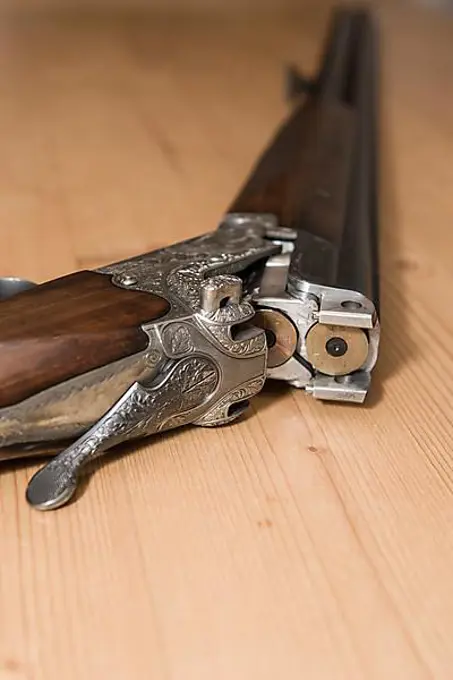
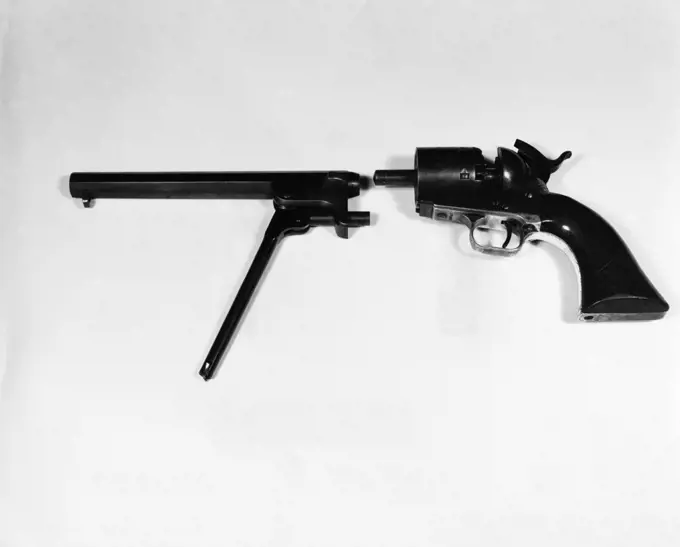
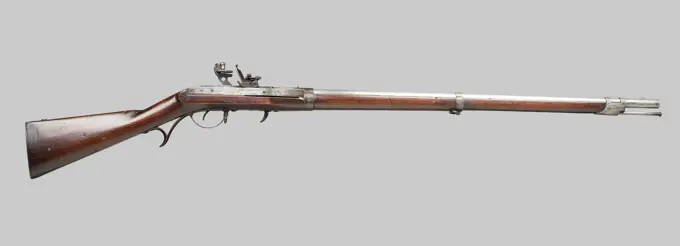
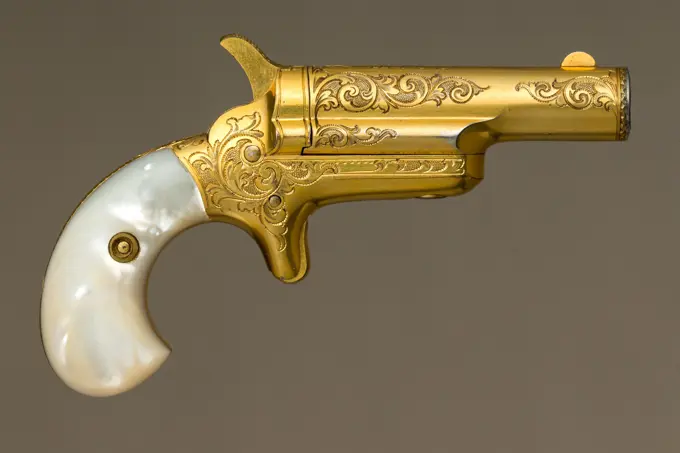
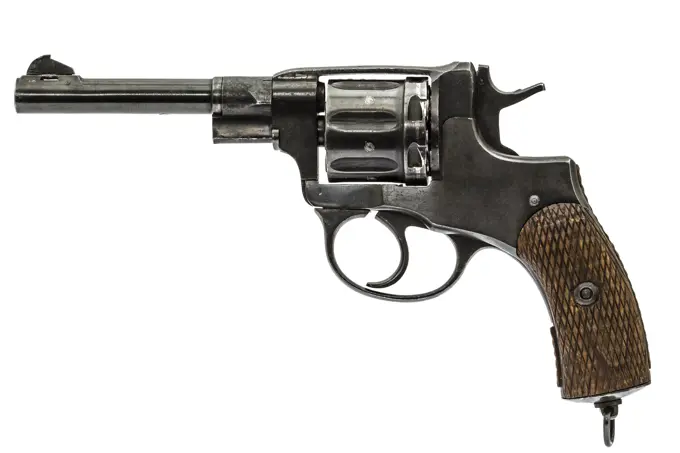
Display of vintage firearms such as flintlock pistols from various eras, showing intricate designs and materials, highlighting historical craftsmanship.

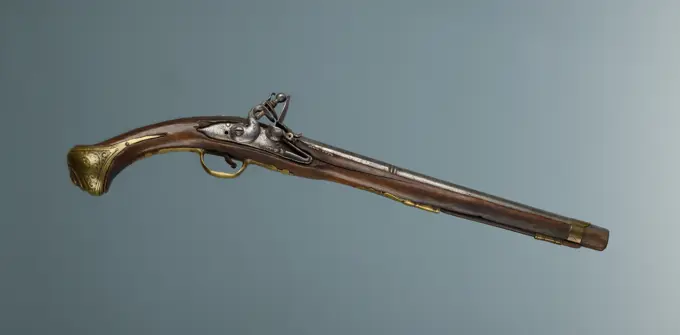
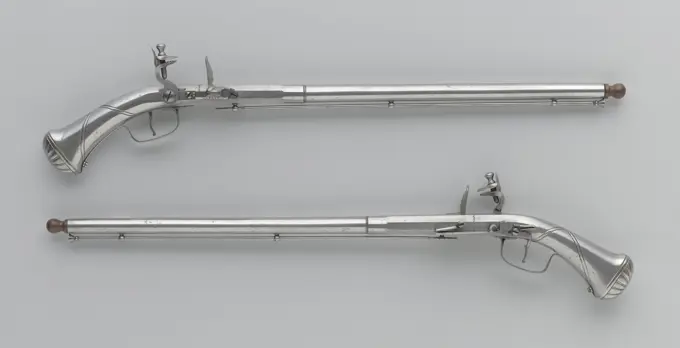
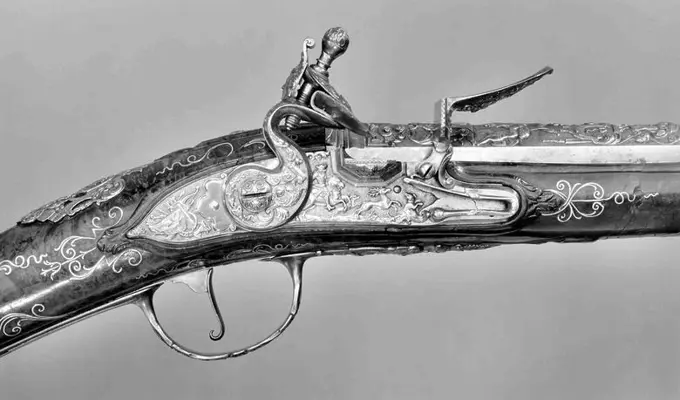
Flint gun for stacked drawer, Wijert Swartt (Possible), c. 1720 flintlock pistol The lock is decorated with relief and engraved animals, a mask, praise, ajour work and on the final plate the letters W.S.; The lock has a special construction with two pans above each other. The loop is stamped on the bottom with the letters WT and provided with a yellow grain and a visorkeep on the tail of the loop. The flask has simple cutting work. The iron batter includes a screw plate with leaf vines and the flask decorated flask. Amsterdam iron (metal). brass (alloy) engraving / cutting
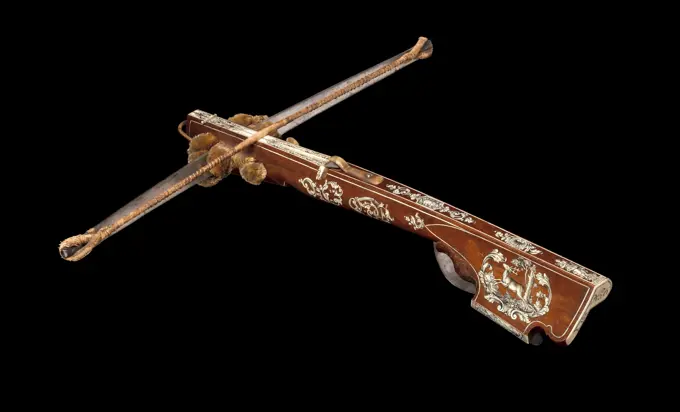
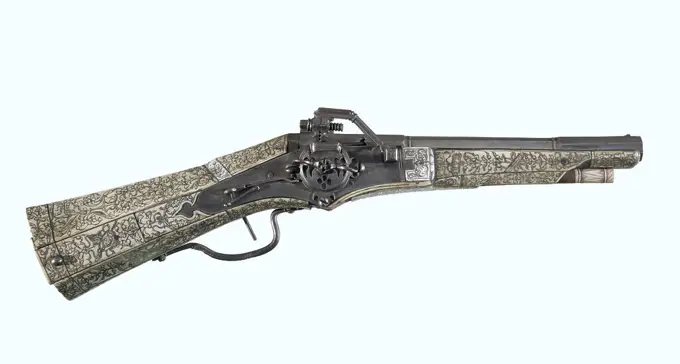
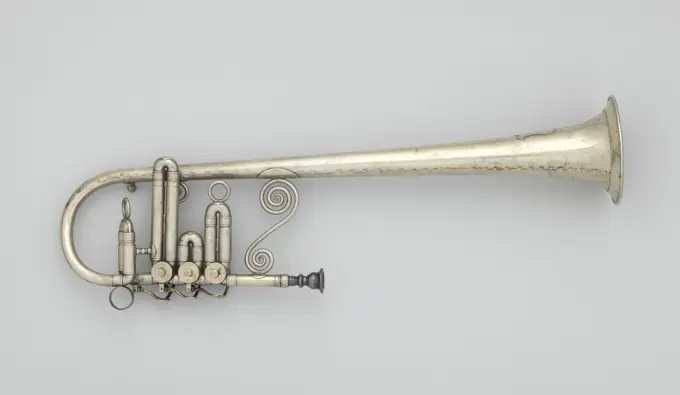
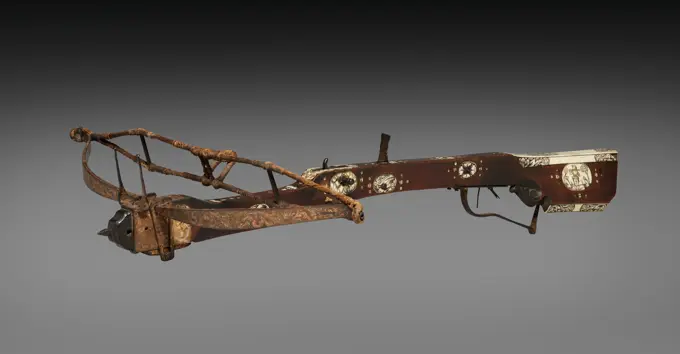
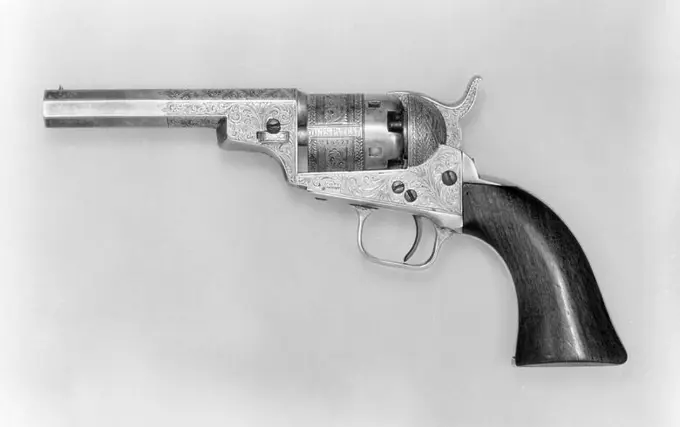
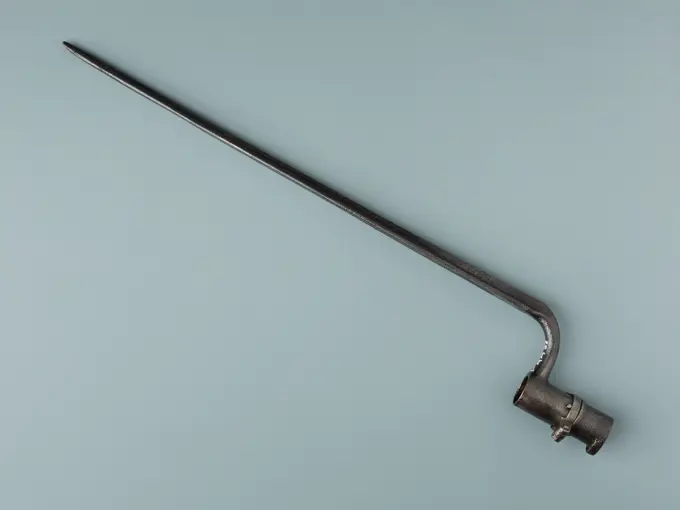
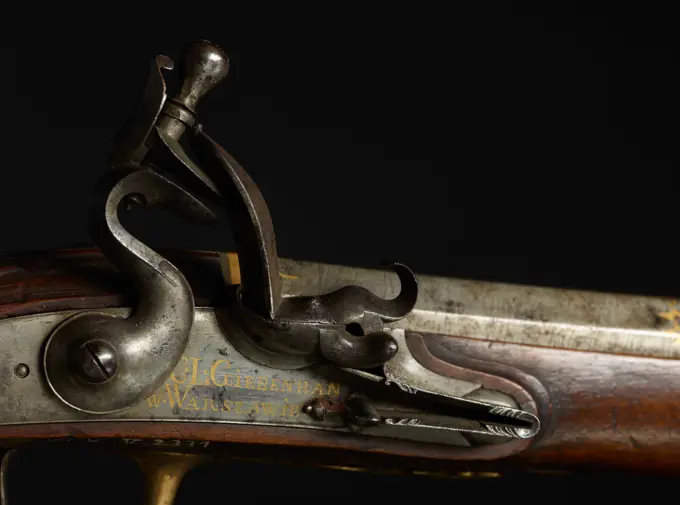
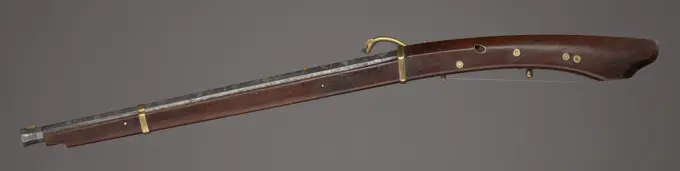
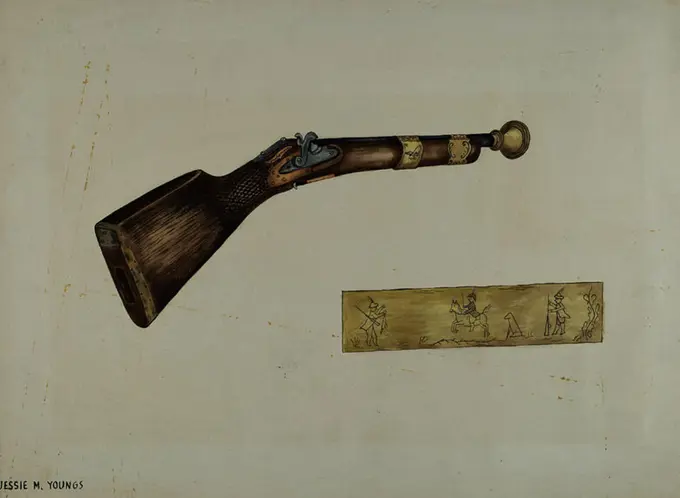
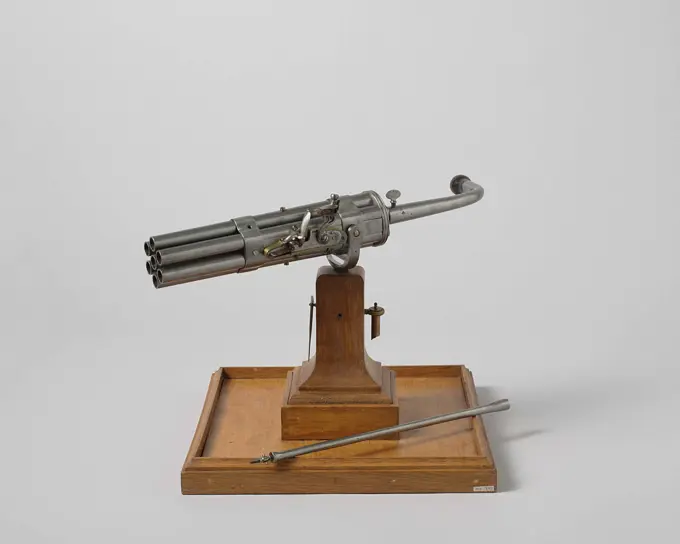
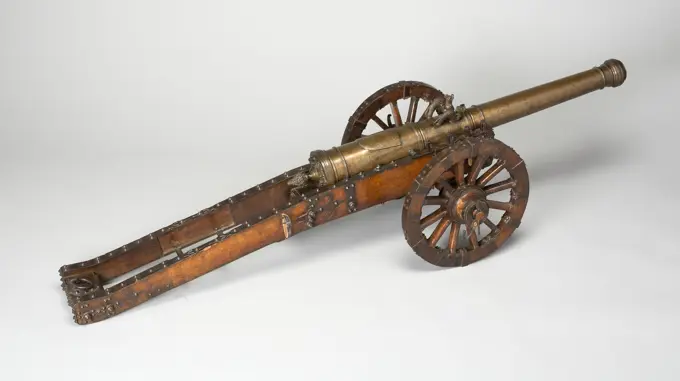
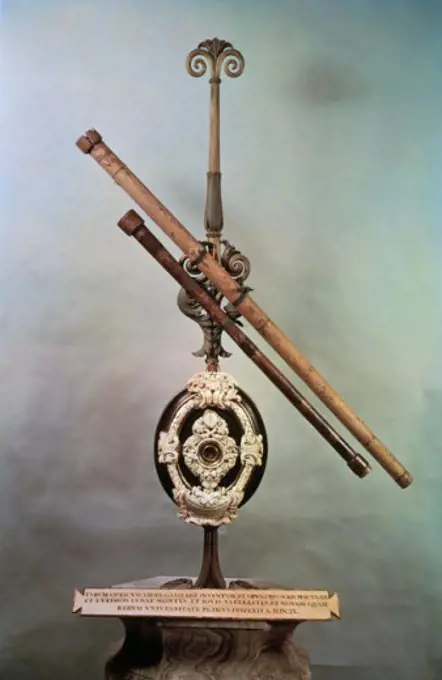
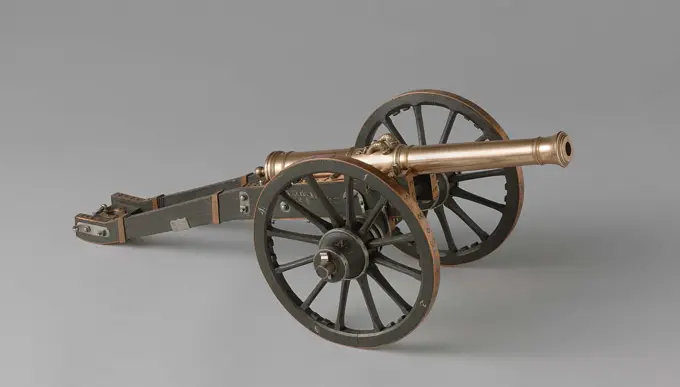
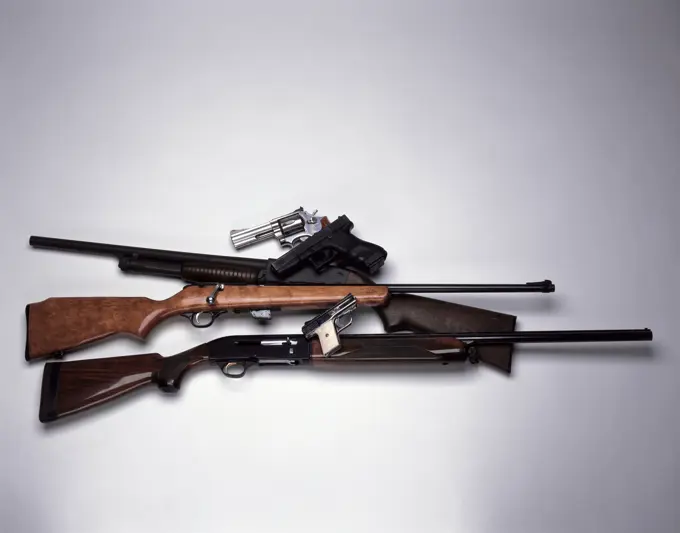
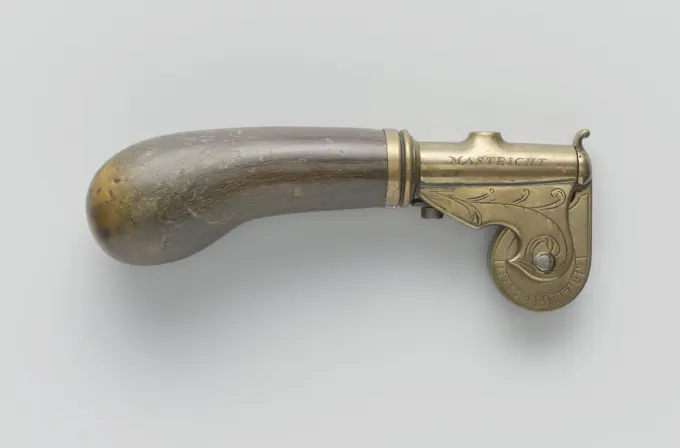
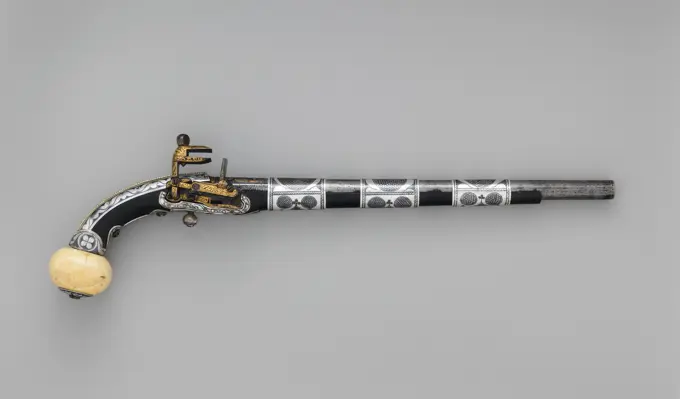
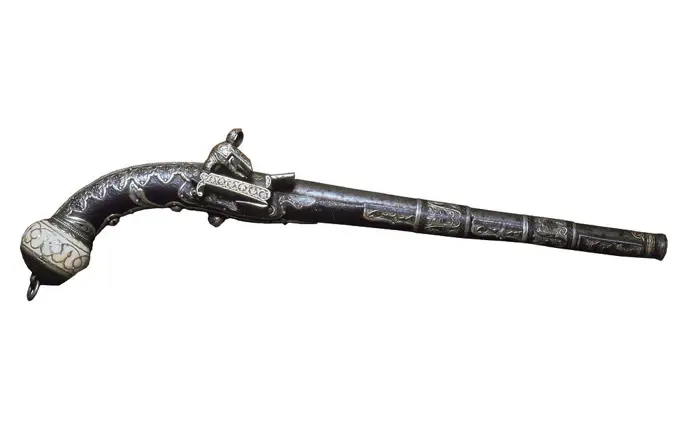
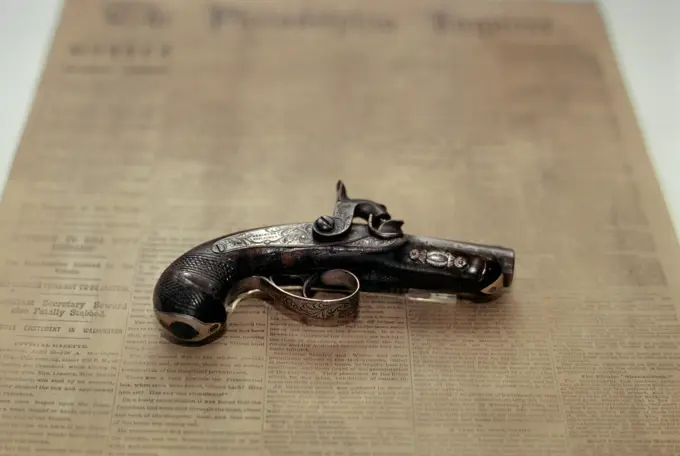
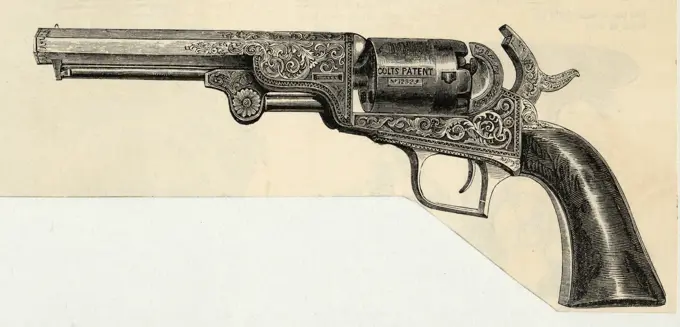
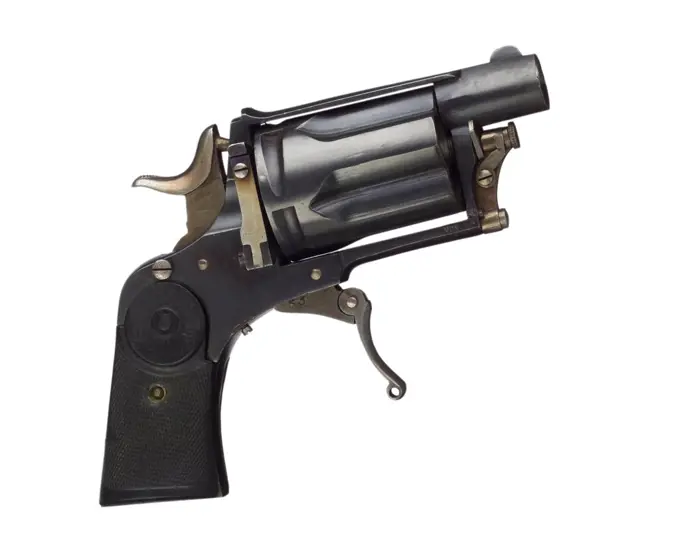
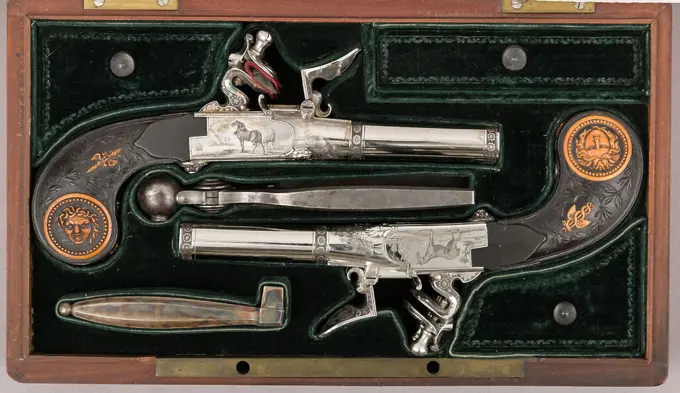
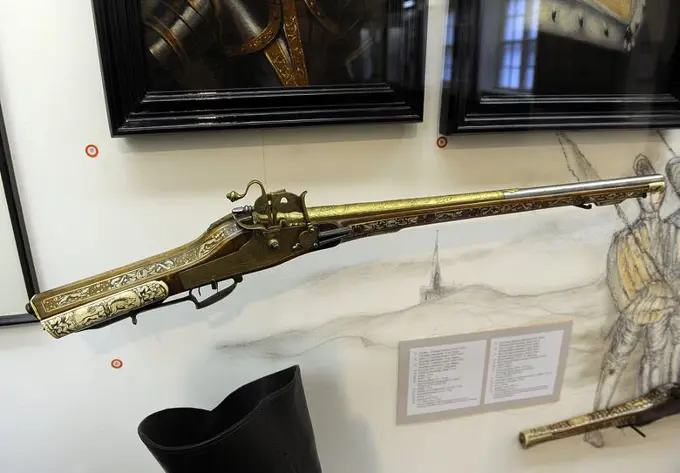
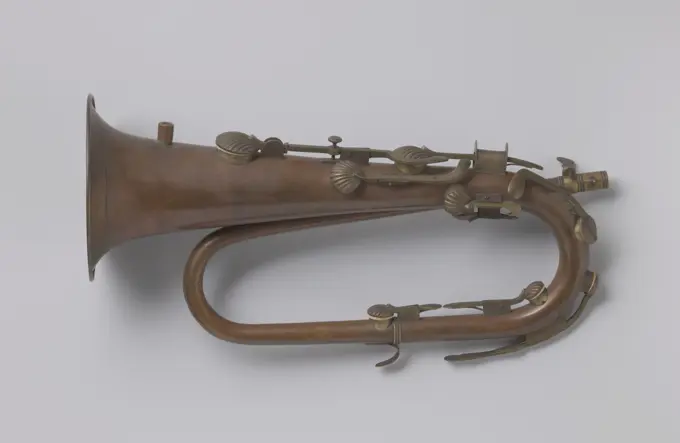
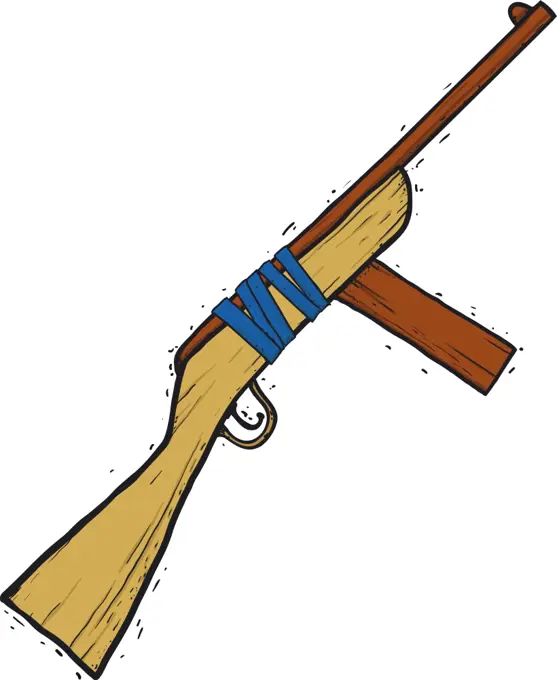
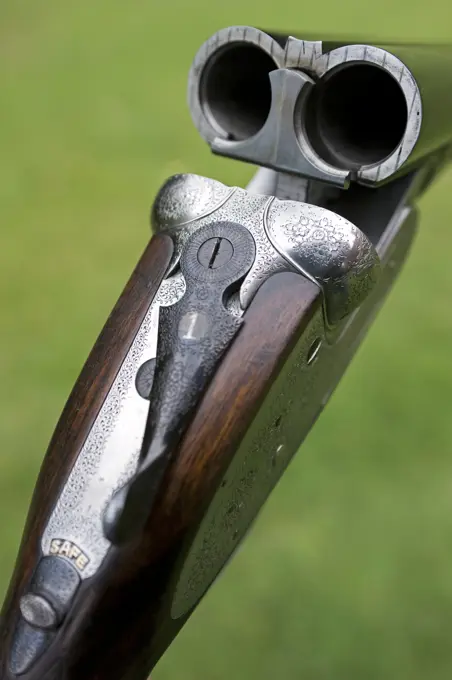
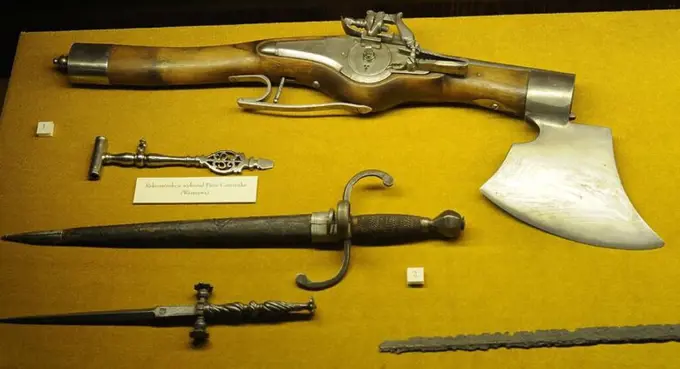
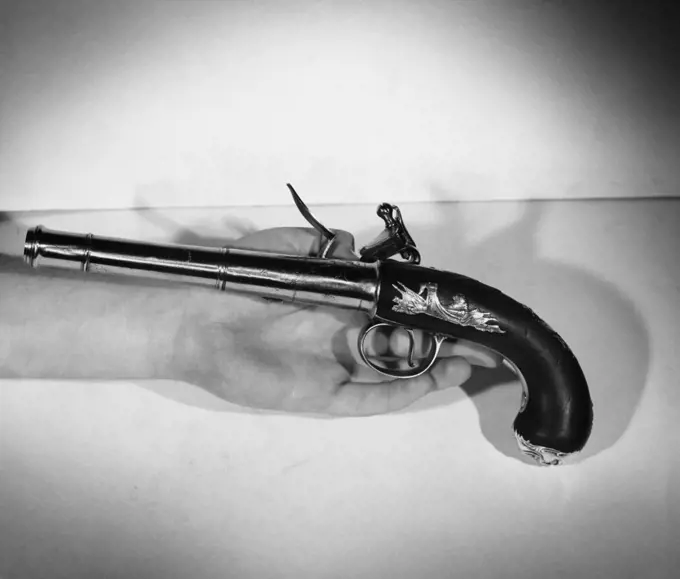
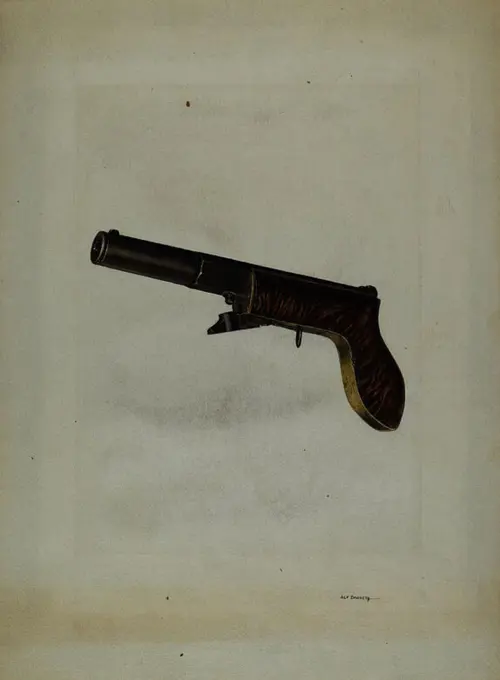
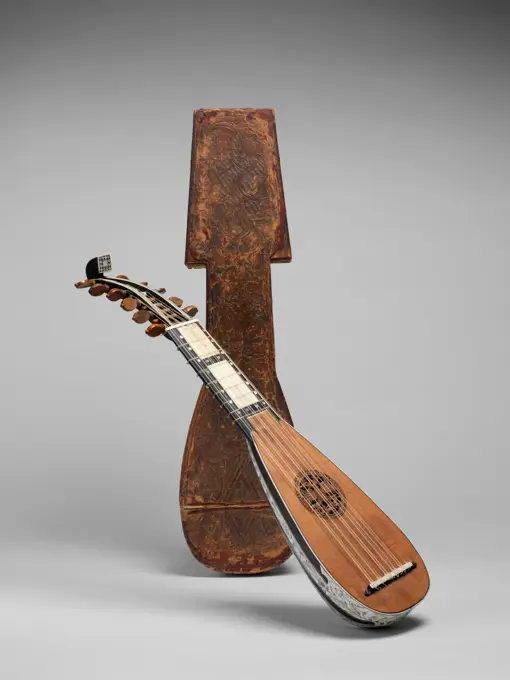
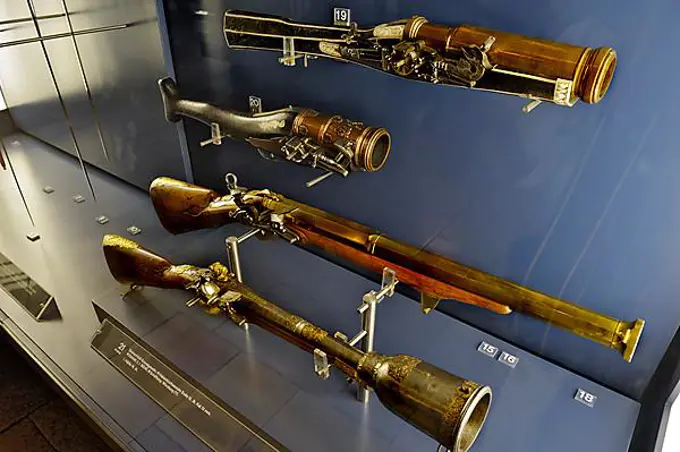
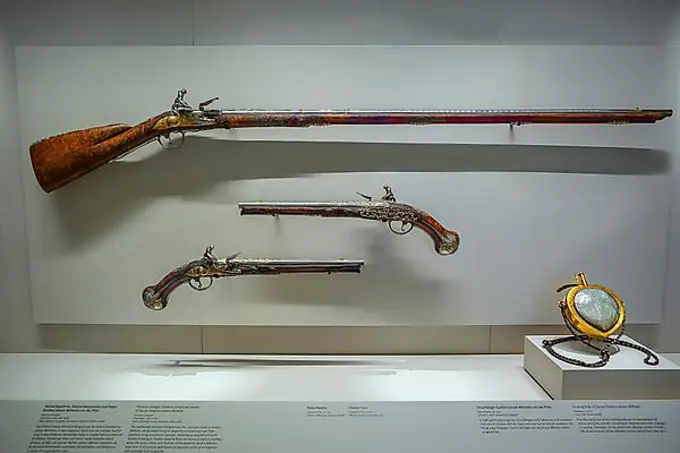
europe old in  italy  antique close brown door and rusty lock  closeupPercussions cap muzzle loader of the 19. th century 14mmLight Crossbow (Schnepper) from the Armory of Sedlitz Palace dated 1733 Johann Gottfried Hänisch the Elder German This light crossbow belongs to a series of nearly identical weapons--once numbering 24--from Sedlitz Palace near Dresden, a residence of the dukes of Saxony. Duke Friedrich August I "the Strong" (1670-1733) and his son Friedrich Augustus II (1696-1763) also ruled as Kings of Poland from 1697 to 1763. Shooting competitions with guns and crossbows took place during congregations of the Polish chivalric Order of the White Eagle, which had its official seat at the palace. Made by the ducal court crossbow-maker in Dresden, the elaborate decoration of this weapon reflects the high esteem in which the art of crossbow-making was held at thee court during the eighteenth century.. Light Crossbow (Schnepper) from the Armory of Sedlitz Palace 35684Dubbelloops flint gun, anonymous, c. 1665 flintlock pistol The two locks are attached to the left and right; De Haan is easily chiseled; The final plate has a long tail; There are two tractors. The walking is mounted above each other and have a long kulas; The tromp runs out; The upper loop has an iron visor grain. The frontade of the flask is grooved, the wicker is on the right; Equipped with a support bobbin as with a goal gun. The drawer hood is yellow buyer, just like the batter of the four loading stickers, the tractor bracket fords at the rear is made of iron, the brass plate made of copper; The chest of drawers is equipped with a yellow cap and an iron ring.  iron (metal). brass (alloy). copper (metal) cuttingModel of a Made Mast, anonymous, c. 1780 - c. 1840 demonstration model Round mast of an inland vessel, with top mast and batter. The mast itself consists of six parts: the mast king has thick cheeks against the sides and back, connected to welding inside, and two thin cheeks on the front that run to three -quarters of length. The parts are held together by Kuipbands. The Hommerpieces have two small ears for the longitudering; Above that the mast is round again and has a large and four small eyes at the rear, and a disc in the top; The utmost top is square and part of a top mast is hung in two stenes. Netherlands wood (plant material). brass (alloy). paint (coating)Still life of revolver.PISTOLA CUBIERTA DE MARFIL DE CARLOS V - SIGLO XVI. Location: PALACIO REAL-REAL ARMERIA DE MADRID. MADRID. SPAIN.Over-the-Shoulder Soprano Horn in E-flat ca. 1880 John F. Stratton American This is a typical late model over-the-shoulder horn with string action rotary valves. The instruments were used in military bands that were positioned in front of marching soldiers. The bells pointed backwards so the soldiers following the band could hear them. The instruments were common during the Civil War and were advertised by musical instrument manufacturers as late as the 1880s.. Over-the-Shoulder Soprano Horn in E-flat. American. ca. 1880. Nickel-silver. New York, New York, United States. Aerophone-Lip Vibrated-hornPellet Crossbow, 1600s. South Germany (), 17th century. Wood, inlaid with stag horn; flax cord; steel with traces of paint and gilding; overall: 82.6 cm (32 1/2 in.); bow: 59.4 cm (23 3/8 in.); butt: 9.5 cm (3 3/4 in.). This ornate pellet crossbow is designed to fire molded clay pellets or small rocks, giving it the name stonebow. The bow is hand drawn and used for hunting small game."Wells Fargo" Colt Revolver. Culture: American. Dimensions: L. 8 3/4 in. (22.2 cm); L. of barrel 4 in. (10.2 cm); Cal.31 in. (7.9 mm); Wt. 1 lb. 5.8 oz. (618 g). Date: ca. 1851. Museum: Metropolitan Museum of Art, New York, USA.Spike bayonet to a rifle, model AN IXDM-ST-86-07443. Country: UnknownAMETRALLADORA MAXIN SOVIETICA 7,62 mm. ESTE EJEMPLAR CARECE DEL CARACTERISTICO ESCUDO PROTECTOR DE LA PIEZA. Location: ALCAZAR / MUSEO DEL EJERCITO-COLECCIÓN. Toledo. SPAIN.Musket, anonymous, 1625 - 1650  Musket with partially octagonal loop (back) and partly round run. Trump something funnel -shaped. Vizier and grain. Lontslot. Flat, narrow and rectangular lock plate, fixed with two lock screws. Drawer is tormented. Two dense brass drawer bands. Flask with copper flask. Inventory form W.S. December 1986 Netherlands walnut (hardwood). iron (metal). brass (alloy) cutting / forging / striking (metalworking)Skałkowa Shotgun Giebenhan, Karol LudwikModel of a 24-Pounder Gun on a Carriage, anonymous, anonymous, 1800 demonstration model Model of a cannon of 24 pounds on coastal deput, incomplete. The 57.5 cm long run has a caliber of 33 mm. The inscriptions are engraved on the barrel, along with crossed anchors and palm branches. The role horse consists of two Parellelle cheeks with four staircases and an ellipse -shaped crop at the bottom, which are connected by the calf and the sole plate. The front axle body is attached to the cheeks with brackets, which can be removed. At the rear the model does not have a ash bow or wheels: the cheeks do have a recess for an axle with levers and a ridge under the sole plate, to eliminate the role horse on the back. This axis is missing. The wooden wheels for two round discs. The loop is a piece from a series with the same type of inscription. France wood (plant material). brass (alloy). bronze (metal)Rifle - Colts ColtsMolding; wood, carved; 1917-12-24Wheellock Double Barrel, Double Lock Pistol ca. 1580 German, Augsburg. Wheellock Double Barrel, Double Lock Pistol. German, Augsburg. ca. 1580. Iron, brass, velvet. Augsburg. Firearms-Pistols-WheellockModel of a 3-Pounder Gun on a Slide for a Launch, Rijkswerf Amsterdam, 1855 demonstration model Model of a cannon on a sliding sled for sloops. The tromp is tulip -shaped and finished with a jewel ring ring. The 28 cm long run has a caliber of 14 mm and two jewelry tires; Two simple dolphins were cast on the tapping piece. There is a grape on the Kulas. The Affuit is a thick rectangular board, rounded at the front, and on which two cheeks connected by a brass rod. The cheeks have ellipse -shaped holes at the bottom for the brushing and the taps are covered with brass. The Aftfuit has a vertebout that sails in the trench of the sledge, an eleve screw that can be put in two positions, one for Houwisser and one by a cannon, and a baking sucket. The sledge is a long frame with a trench in the middle and is rounded off at both ends with an eye for a pivot bolt. Eye bolts have been mounted on the corners of the sled and the counts. Scale 1: 5 (scale on model). Amsterdam wood (plant material)antike Duell Pistole antike Duell Pistole Copyright: xZoonar.com/Dr.xNorbertxLangex 14573417Snaphance Pistol, 1600s. Spain, Ripoll, 17th century. Steel, ebony with silver inlay; overall: 29.5 cm (11 5/8 in.); barrel: 20 cm (7 7/8 in.); bore: 1.5 cm (9/16 in.).Shovel (Batillum). UnknownRock pistolHandguns 1895: Swiss rifle M89, digitally restored reproduction of an original from the 19th century, original date unknownA collection of rifles on a wallTriple-Barrel Breechloading Flintlock Pistol Made 1810-1830 England. Steel and brass .Kalashnikov AK-105 trigger Kalashnikov AK-105 trigger isolated on the white background Copyright: xZoonar.com/OlgaxPopovax 3989509Patula;  I-III century (1-00-00-300-00-00);Double-Barreled, Double-Wheellock Pistol. Culture: German, Augsburg. Dimensions: L. 25 3/8 in. (64.4 cm); L. of barrel 17 1/8 in. (43.5 cm); Cal.358 in. (9.1 mm); Wt. 4 lb. 4 oz. (1928 g). Date: ca. 1580.Although most sixteenth-century firearms were single-shot, gunmakers sometimes experimented with various multishot weapons. This example gave two shots, each barrel having its own wheellock. The metal stock, providing extra support for the double mechanism, is etched with hunting scenes. Museum: Metropolitan Museum of Art, New York, USA.Przeszo Przyszoci unknownFIIntlock pistolShotgun made with pencilsWheellock Rifle of Archduke Charles of Styria. Hans Paumgartner; Austrian, Graz, active 1556-1582. Date: 1571. Dimensions: L. 112 cm (44 1/8 in.) Barrel L. 86 cm (33 7/8 in.) Wt. 8 lb. 6 oz.Caliber .55. Steel, fruitwood, and staghorn. Origin: Graz. Museum: The Chicago Art Institute, Chicago, USA.Still life of a Colt handgun.Blunderbuss. Dated: c. 1940. Dimensions: overall: 30.4 x 40.9 cm (11 15/16 x 16 1/8 in.). Medium: watercolor, pen and ink, and graphite on paper. Museum: National Gallery of Art, Washington DC. Author: Jessie M. Youngs.Flintlock Belt Pistol Made 1690-1710 Scotland. Steel, silver, leather, and flint .Decorated hunting weapons with ammunition, hunting license and gun ownership card and, Hesse, Germany, EuropeRifle - Mauser MauserClose-up of a revolver, American Civil War Era Weaponescopeta marca Jabali, fabricada por Eduardo Schilling, españa, europa.Flint gun with iron flask, anonymous, 1645 - 1650 flintlock pistol All iron flint gun; Part of a couple. The lock mechanism is located entirely on the outside; The pan and the spring are hidden behind a housing engraved with a blossom branch. The three upper surfaces of the barrel are engraved on the back with tulips. The flask consists only of an iron grip that forms an extension of the loop; The handle is deeply cut with two pairs of slanted lines that cross each other, and at the bottom with two blossom branches; The flask button is decorated with a pattern of radiating ribs. The iron batter consists of three eye -solded eyes in the form of buttons such as loading stickers, and a flat tractor bracket engraved with a rose; The loading stick is made of steel.  iron (metal). steel (alloy) engraving / solderingPadlock 17th century possibly German. Padlock. possibly German. 17th century. Iron. Metalwork-IronBreech Loading Flintlock Musket 1838 United States. Wood and steel . John Hancock Hall (Designer)Colt Percussion Pistol ca. 1870 American In 1835 and 1836, the American inventor and industrialist Samuel Colt (1814-1862) patented a revolutionary type of multishot pistol that is still used today. Colt's revolvers had a rotating cylinder that could be loaded with several rounds and fired quickly by cocking and releasing the hammer or, in later models, by simply pulling the trigger. Early Colt firearms used percussion ignition and had to be loaded with powder, bullets, and ignition caps in separate operations. After 1870, Colt models were produced for self-contained cartridges that are much like modern pistol ammunition.First manufactured by Colt's factory in Peterson, New Jersey (1836-42), from 1847, the revolvers were made at a much larger plant in Hartford, Connecticut. A special workshop at the Hartford factory employed highly skilled decorators and artisans, many of German origin. Their ornamental motifs, still popular in American gunmaking, centered on fine scrollwork. Animal anspark gun, england, 1790, Castle of San Carlos, seventeenth century, Palma, Mallorca, Spain.Historical short rifleOld pistol, Isolated on white background Old pistol, Isolated on white background Copyright: xZoonar.com/OleksandrxKostiuchenkox 8905851old retro flintlock pistol vector illustration isolated on white backgroundToy pistolTinder Lighter, anonymous, c. 1850 - c. 1900  Tander box with copper rectangular drawer and wooden window -taught flask. The rooster is made of iron and has a round pin on the head that can be tightened to be able to clamp the flint well, the fire steel is made of iron and hangs above a round opening where the tinder was placed. The pedestal of the tinder box is made of iron and has two legs on which the tinder box can rest, the pedestal has a round hole with three smaller holes above it. The tractor is made of iron and has a small bow so that the finger has a better grip. West-Europa Slot: Copper (Metal). Haan, fire steel: Iron (metal). Drawer: Bronze (Metal). Kolf: Wood (Plant Material) cutting  NetherlandsPistol, anonymous, c. 1700 - c. 1850 Richly decorated in gold and silver with Tokugawa-Mon, a dragon and arabesks. Japan iron (metal). gold (metal). silver (metal). wood (plant material). lacquer (coating) Richly decorated in gold and silver with Tokugawa-Mon, a dragon and arabesks. Japan iron (metal). gold (metal). silver (metal). wood (plant material). lacquer (coating)Model or a 12-pounder gun on a carriage. Model of a 12 pound gun on rolling horse. The 41.4 cm long loop has a 19 mm caliber. The cheeks of the rolling horse, with three stages and an arc-shaped cut down, are further apart from each other than before and are connected by the calf, the chest piece, the soleplate, the front asal and three bolts across the cheeks. The Stelwig and the elevation plateau are missing. The wheels are made of wood, the front wheels are larger than the rear wheels; The rear wheels are placed under the sole plate between the cheeks. Scale 1: 6 (presumably).Colt 'Frontier' revolver. Also known as the Colt 'Peacemaker'. After Mexican War of 1846-1848, was adopted by the US Army. Engraving, c 1890.Repeating Swivel Gun. Septom aquated flint gun on a mik on a base board, with prime, powder size and iron loading stick. The running, caliber 14.8 mm, are in a bundle of six outdoor runs to combine a middle environment by brass tires and mounted with bolts on the back on a baffle plate. A guide bracket is mounted in the center of the bump plate. The flint slot, signed haslett, is applied to the left and is fired with a tractor rope. The spark goes into the first loop via the pan and is passed on to the other via connection channels in a central distribution plate. It works further according to the principle of the Roman Candle: Seven consecutive loads have been placed in every course, the bullets of which are pierced to pass through the spark to the rear. For example, 49 bullets are fired in a salvo, whereby the bullets of each goal are fired successively by passing the spark through the bullet through the ball. The iron loading stick has a bowl on the side that indicates the correct pModel Field Cannon with Carriage 1660-1700 Austria. Bronze .Close-up of a Galileo's TelescopeBronzen model van een lange 6-ponder op affuit.Bronze model of a long 6-ponder on affuit. A 3 lb labeled on the left and right cheek. M.l. And it's 1/6. The charging tool and the target means are missing.From Top: .357 Magnum, Glock 9 mm, .12-Gauge Shotgun, .22-Cal. Pistol, 20-Gauge ShotgunPistol with a rock castlePocket gun with flint lock, anonymous, 1814 - 1866 flintlock pistol Pocket gun with flint lock, all of iron, round smooth run, after a profile band, turns octagonally into the built -in lock. Iron flask with floral motifs engraved on all sides. On both sides of the locking plate praise and the name 'London'. Underside of the iron bracket engraved praise, straight iron tractor. London whole: Iron (metal) engraving  NetherlandsTwo basset horns around 1780, National Museum, Munich, Upper Bavaria, Bavaria, Germany, EuropeLantaka, anonymous, c. 1750 - c. 1850 lilla Bronze front loader on Mik. The round loop has a trumpet -shaped mouth and the rear section is thicker. Hollow tail for a wooden bideline. On either side of the Zundgat a square button for a Zundgat cover. A diamond -shaped ornament before the Zundgat. The eyes of the mik are completely forged around the taps, so that the piece cannot be lifted out of the mik. Indonesian Archipelago (possibly) bronze (metal)ARMA ANTIGUA - SIGLO XVII/XVIII. Location: PRIVATE COLLECTION. MADRID. SPANIEN.Flintlock Gun. Culture: German. Designer: Decoration follows closely designs of the engraver De Lacollombe (French, Paris, active ca. 1702-ca. 1736). Dimensions: L. 56 3/8 in. (143.2 cm); L. of barrel 41 1/16 in. (104.3 cm); L. of lockplate 5 7/8 in. (14.9 cm), Cal.62 in. (15.8 mm); Wt. 6 lb. 10 oz. (3005 g). Date: ca. 1730-40.Though unsigned, this beautifully crafted hunting gun appears to have been made by a German craftsman copying designs from firearms pattern books published in Paris in the early to mid-eighteenth century. Museum: Metropolitan Museum of Art, New York, USA.Kruittester, Paulus van Walsen (attributed to), 1668 - 1715  Kruittester in pocket format. The handle is Van Koehoorn; At the front is a yellow -held ring. The short course of the test mechanism is from previously gilded yellow runner and mounted on a ringed plate that has been soldered on the handle; The Zundgat is on top; The loop is signed; A mounting plate is soldered under the barrel, engraved with a leaf drink; A wheel is fitted with the numbers 1 to 9, which runs into the valve for the tromp. Maastricht horn (animal material). brass (alloy) soldering / engraving  MaastrichtMiquelet Pistol dated A.H. 1263/A.D. 1846-47 Caucasian, possibly Georgia or Circassia The barrel is signed in both Russian and Arabic, suggesting that the pistol was made in Tbilisi in Georgia or Circassia, which were then under Russian control. Kubachi, the other major armsmaking center in the Caucasus, did not fall under Russian domination until the 1860s.. Miquelet Pistol 24496PISTOLA DE PEDERNAL. Location: PRIVATE COLLECTION. MADRID. SPANIEN.GUN USED BY JOHN WILKES BOOTH TO ASSASSINATE ABRAHAM LINCOLNZakpistool met percussieslot, anonymous, c. 1830  Pocket gun with percussieslot, part of couple. Round smooth run with some engraving work. Walk marked leg in oval. Hidden tractor. Hood with storage place for battle hats. Berlin's silver thumb plate. Without a bracket button. Scottish model. Scotland (Possible) Kolf: German Silver. Slotplaat, Loop: Iron (Metal). Kolf: Wood (Plant Material) engraving  Netherlands Colt's revolving pistol         Date: 1853Bronze Lilla, Anonymous, 1850 - 1851 lilla. cannon Bronze cannon with an inscription on a round plaque on the Kulas on the Kulas. The text is mentioned in the year of manufacture (1267, which stands for 1850/1851). One of the tap -fits has been broken down. Star form on the taps.  bronze (metal)Revolver against white background, close upCased Pair of Double-Barreled Turn-Off Flintlock Pistols. Culture: French, Paris. Dimensions: L. of each pistol 8 in. (20.3 cm); L. of each barrel 3 7/8 in. (9.8 cm); Cal. of each .46 in. (11.7 mm); Wt. of each pistol 1 lb. 5 oz. (600 g); bullet mould (28.196.6a); L. 5 3/4 in. (14.6 cm); Wt. 4.3 oz. (121.9 g); wrench (28.196.6b); L. 3 7/8 in. (9.8 cm); Wt. 2.6 oz. (73.7 g); case (28.196.6c); H. 3 7/16 in. (8.7 cm); W. 11 1/2 in. (29.2 cm); D. 6 7/8 in. (17.5 cm); Wt. 2 lb. 15 oz. (1332.4 g). Engraver: Possibly Fleury Montagny (French, born St. Étienne, February 4, 1760-died 1836, Marseilles). Gunsmith: Jean Lepage (French, Paris, 1746-1834). Date: ca. 1800.One pistol is inscribed "Gravé par Montangy" (engraved by Montagny). It is very rare for engraving on firearms to be signed by the artist. A family of engravers named Montagny worked in Saint-Étienne, a city famous for firearms production. Fleury Montagny, perhaps the author of the exceptionally fine engraving on these pistols, is alPocket gun with flint lock, anonymous, c. 1775 - c. 1825 flintlock pistol Pocket gun with flint lock, iron round smooth run with iron lock plate and wooden flask. Bottom of the flask is smooth with a frightened star and praise. The ribbed flask is decorated with star motifs. The lock plate is attached to the flask with an iron screw, a Cupido figure is engraved in the plate. Other side Gvan The lock plate is flat with praise on the edges. At the bottom of the loop is the name 'F.B. Heuseux engraved. The straight iron tractor can be folded. West-Europa loop, slot: iron (metal). kolf: wood (plant material). kolf: silver (metal) engraving / inlay (process) / casting / forging  Netherlandsdisassembled gun  isolated on a white backgroundShotgun. 17th century. Museum of History and Navigation. Riga. Latvia.Model of an 80-Pounder Shell Gun on a Pivot on a Ship Deck, Rijkswerf Vlissingen, 1839 demonstration model Model of a bomb cannon of 80 pounds on rotators, painted black. The wooden loop is 55 cm long, has a caliber of 44 mm and fittings for a visor at the tromp and at the tap tire; Zundgat with locking, grape as a brush ring. The upper slide, a bit narrower forward, has two cheeks with three stairs, the tops of which are with the plans of solid brass. The cheeks are connected by a slanted calf, a crossbar in the middle and the axle bodies; The sole is on the crossbar and the rear ash. The axle fives do not have wheels, but slide over the sheds covered with brass. Small wheels have been applied to the front of the cheeks, on which the upper slide only supports when the jack with wheels is brought up behind. Around the ends of the rear axle shift are applied brackets that grab an outstanding edge of the shelves of the sub -sled: these brackets protect Upperlede, but can also be hit, so Zakpistool met percussieslot, H.G. Delvigne, 1814 - 1866  Pocket gun with percussion lock, part of torque, iron with wood, octagonal iron loop with wooden flask and iron with praise engraved flask hood. The lock is built into the gun. The rooster is made of iron and is engraved on the side with some praise. Bracket is engraved with praise on the bottom. Iron visor grain. At the top of the course of the name of the manufacturer Invon Delvigne. West-Europa Loop, bracket, tractor: Iron (metal). Haan: Iron (Metal). Kolf: Wood (Plant Material) engraving  NetherlandsKeyed bugle, 1830 - 1850 Kleppenbugel in C with nine valves, the bottom of which is open with clamping screw. The valves in the VROM of Bolle, ribbed shells are mounted in saddles and close to tubes around the holes. The sixth valve tinkle was later replaced by a flat, round lid. With support saddle for the middle finger of the right hand. The test of the third valve runs below. Also support hook for the little finger of the left hand. Mouthpiece is missing. Germany copper (metal) Kleppenbugel in C with nine valves, the bottom of which is open with clamping screw. The valves in the VROM of Bolle, ribbed shells are mounted in saddles and close to tubes around the holes. The sixth valve tinkle was later replaced by a flat, round lid. With support saddle for the middle finger of the right hand. The test of the third valve runs below. Also support hook for the little finger of the left hand. Mouthpiece is missing. Germany copper (metal)Carelessly painted wooden baby gun isolated on white background. Child Wooden GunEngland; A fine side-by-side 12 bore shotgun made by premier English gunsmiths James Purdey and SonsShowcase with different weapons. Pistols and daggers. 17th-18th centuries. Historical Museum of the City of Gdansk. Poland.Gun. Dated: 1935/1942. Dimensions: overall: 23.9 x 35.3 cm (9 7/16 x 13 7/8 in.). Medium: watercolor, graphite, and gouache on paper. Museum: National Gallery of Art, Washington DC. Author: Majel G. Claflin.Shotgun, Close-UpModel of a wooden baby. Model of a wooden baby.Model or A 60-pounder Gun on Slide and Pivot.model of a long gun of 60 pounds on a swivel piece on a base board, incomplete. The loop, long 36 cm and with a 20 mm caliber, has a pairing ring with a separate piece, a visor behind (the mounting rod is missing), one at the taps and a front, and a percussion lock that strikes at an angle; The grape is flat. The upper suit, from the front narrower than behind, consists of two cheeks with four stages, connected by an oblique calf, the axis and two bolts that go through the two cheeks; Sole plate and Stelwig are missing. Metal shafts run through the axles, where the wheels are arranged at the ends. The wheels only serve to transport the comb next to the slide, but can also be mounted under the carriage. In a position, the upper suit rests with the axle attire on the slide's shelves. At the back two small wheels have been applied, which can rotate a hinge the back of the oxfuit, making it rest for two small wheels and easy to get board. The toClose-up of a man's hand holding a flintlock pistolMuzzle Loading Pistol. Dated: c. 1940. Dimensions: overall: 34.7 x 24.5 cm (13 11/16 x 9 5/8 in.). Medium: watercolor, graphite, and pen and ink on paper. Museum: National Gallery of Art, Washington DC. Author: Alf Bruseth.revolver avispero, Cast Steel, USA, 19th, Castle of San Carlos, seventeenth century, Palma, Mallorca, Spain.Mandolino ca. 1710 Italian This typical Roman mandolin, with six double courses of gut strings, thirteen alternating ribs of ebony and ivory with floral engravings, and a sickle-shaped peg box, is shown with its carrying box. It is the type of mandolin for which Antonio Vivaldi wrote his numerous mandolin concerti. The double eagle in the rose is most likely refers to the German Tieffenbruckers in Venice and Padua. Magno Tieffenbrucker (1500-1560) used this type of eagle to mark his lutes in Venice, where he owned a house called L’aquila nera.” The instrument was probably not made by a member of the famed Tieffenbrucker family, but by a maker following the tradition of their lute production, removed from their centers of Venice and Padua. Indicating a long playing life, the fingerboard was widened in the eighteenth century in order to accomodate its current six courses from its original construction with five courses. The instrument is similar to mandolins by Giovanni Francesco SmorsoFlintlock rifles from 1700, Bavarian National Museum, Prinzregentenstrasse 3, Munich, Bavaria, Germany, EuropeGun isolated white background.Model Field Cannon 1800-1900 France. Bronze, iron, and wood .Erwin Schwabe, Revolving Pistol, c 1936 Revolving PistolFlintlock Pistol and Rifle of Elector Johann Wilhelm von der Pfalz, c. 1690, National Museum, Munich, Upper Bavaria, Bavaria, Germany, EuropeRock pistolARCABUZ DE JUAN DE AUSTRIA - SIGLO XVI. Location: PALACIO REAL-REAL ARMERIA DE MADRID. MADRID. SPANIEN.ESCOPETAS DE JUGUETE. Location: PALACIO REAL-INTERIOR. Aranjuez. MADRID. SPAIN.