Historical Footwear Collection

An assortment of vintage shoes including ballet flats, oxfords, and slippers from various eras, showcasing unique materials and designs, demonstrating the evolution of footwear.
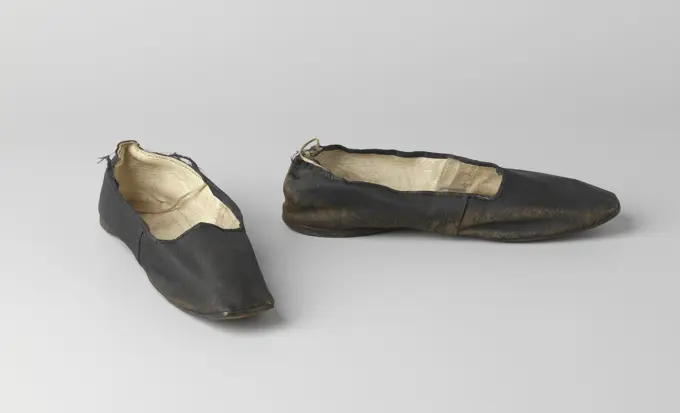
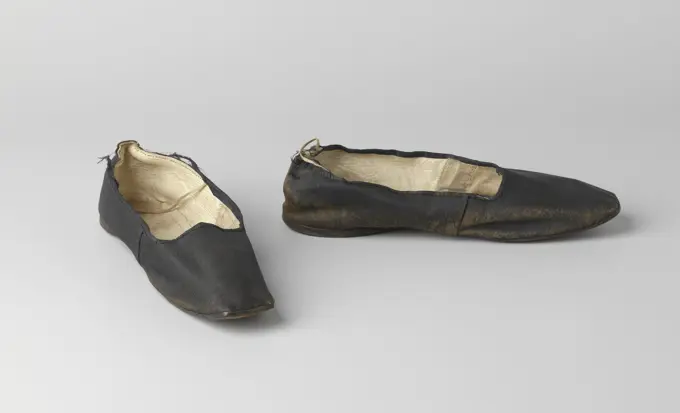
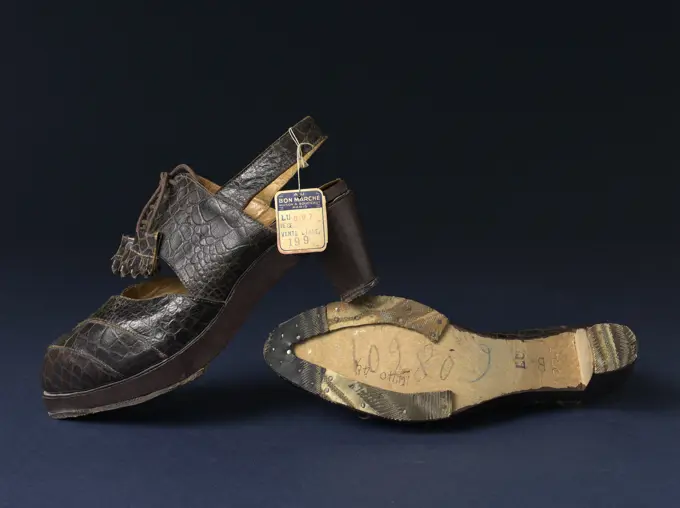
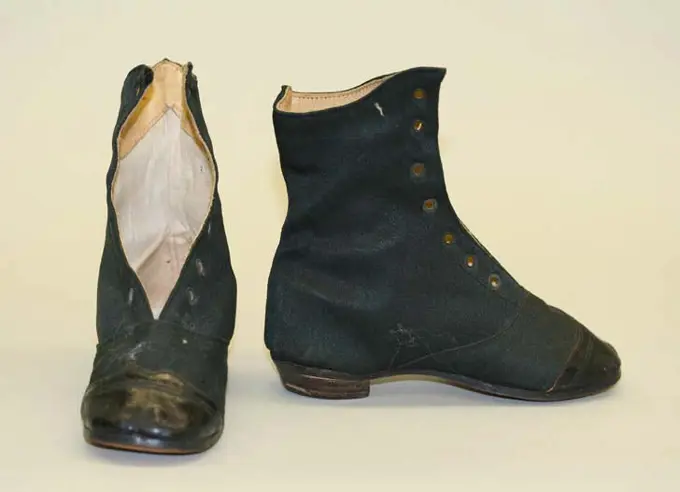
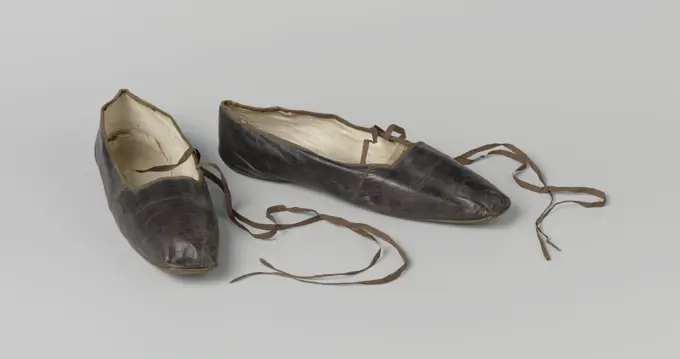
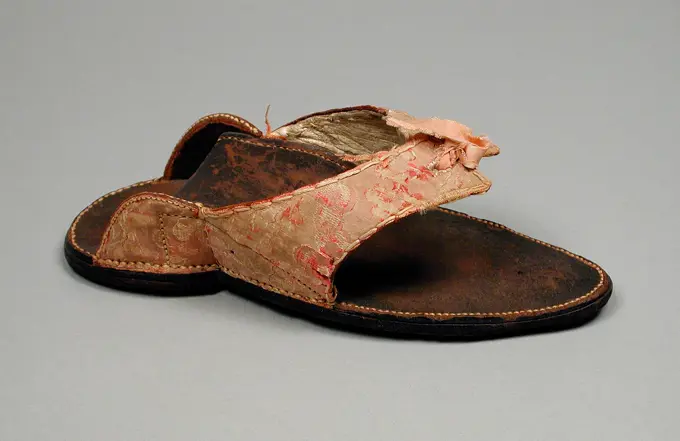
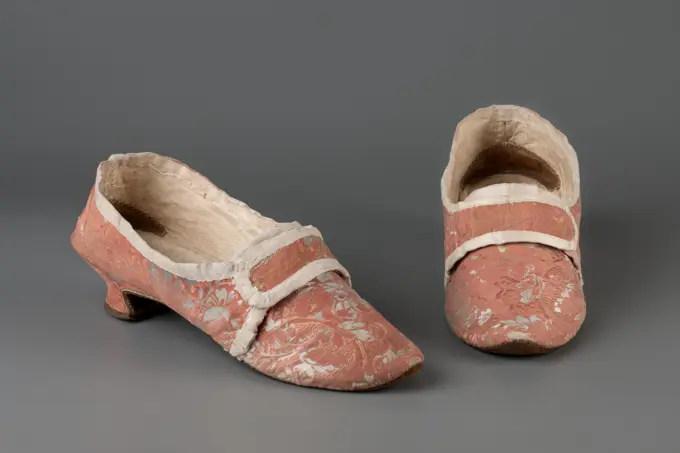
Shoe made of black cotton with small wedge heel, c. 1820 - c. 1840 Shoe made of black cotton. No right/left difference. Built -in heel of one layer of leather. Pointed forefoot. Square nose. Tire closure in a silk omboard. North Netherlands whole: Cotton (textile). Sole: Leather Shoe made of black cotton. No right/left difference. Built -in heel of one layer of leather. Pointed forefoot. Square nose. Tire closure in a silk omboard. North Netherlands whole: Cotton (textile). Sole: Leather
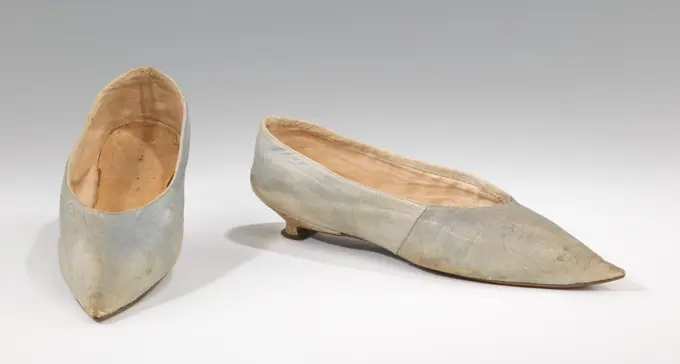
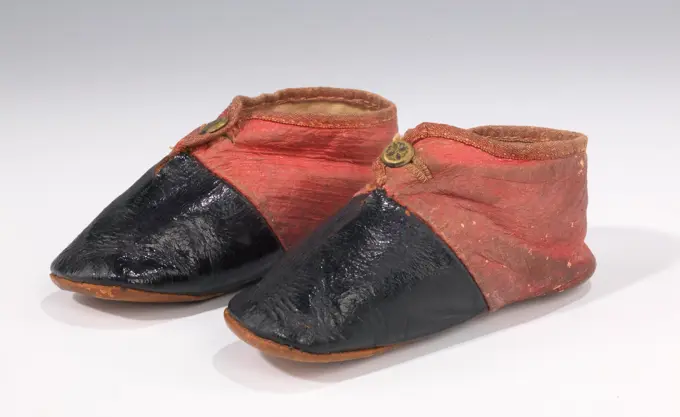
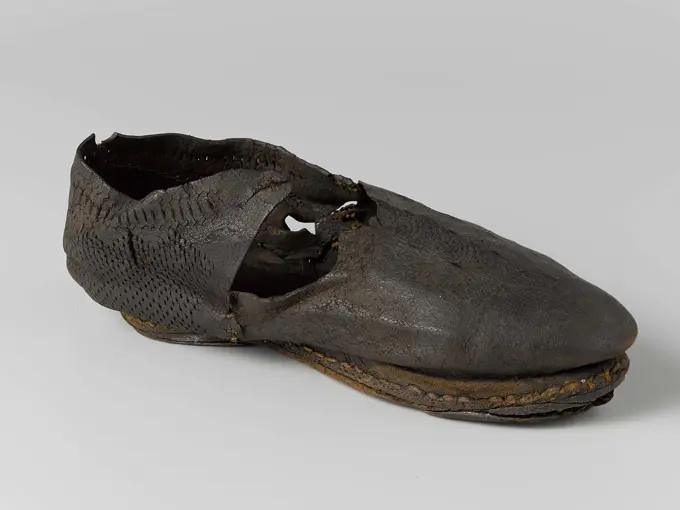
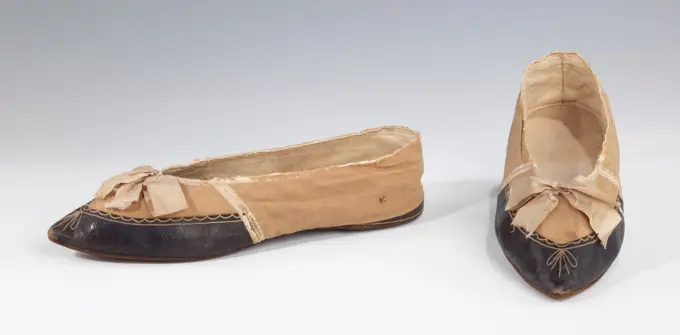
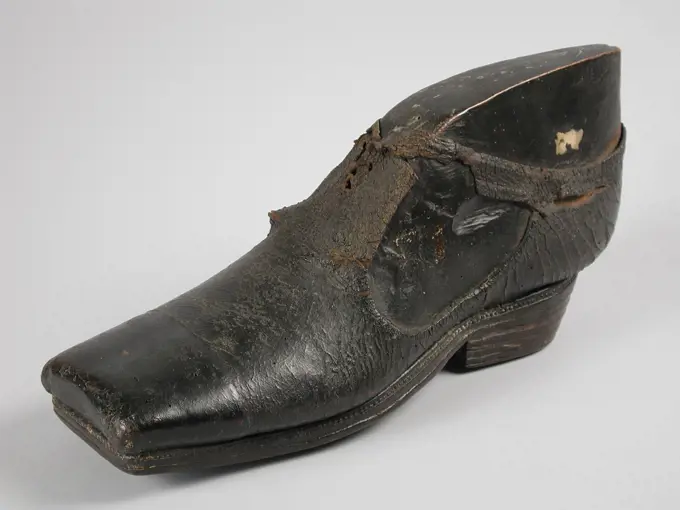
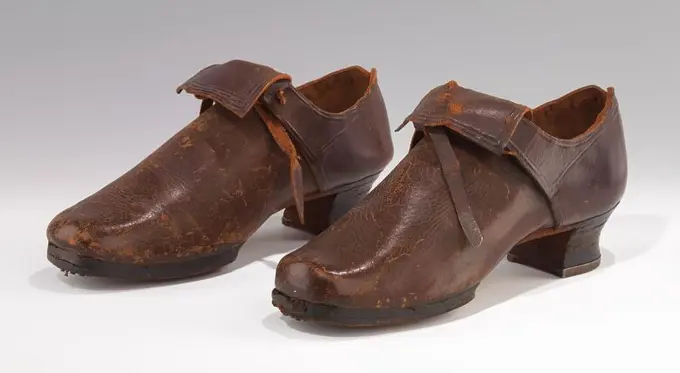
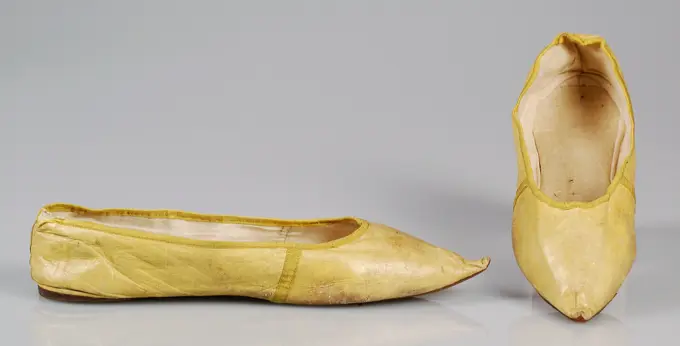
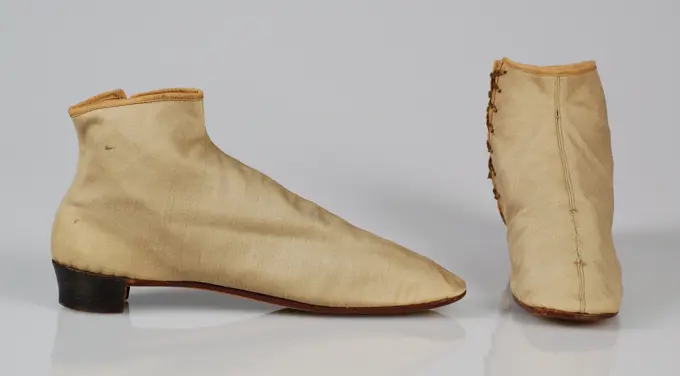
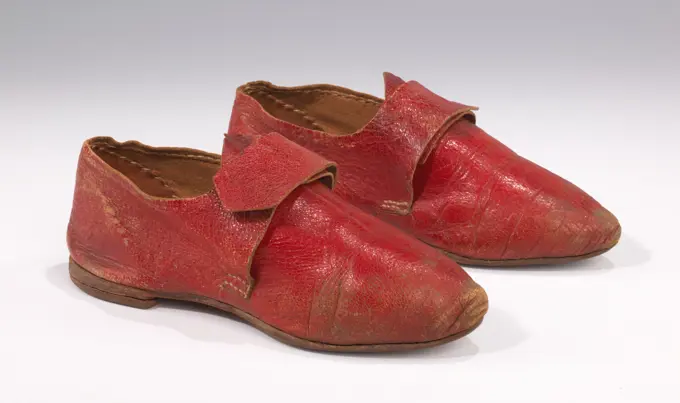
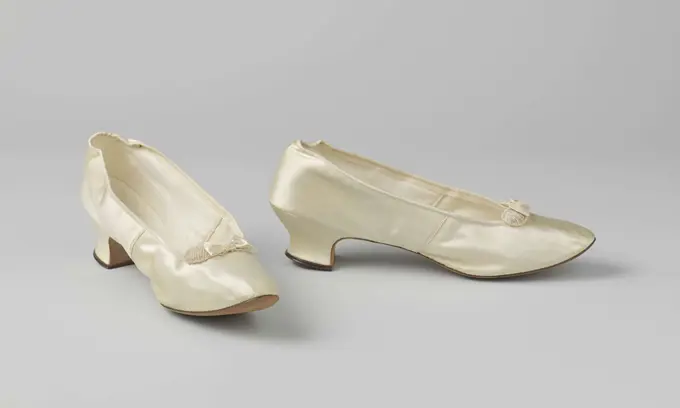
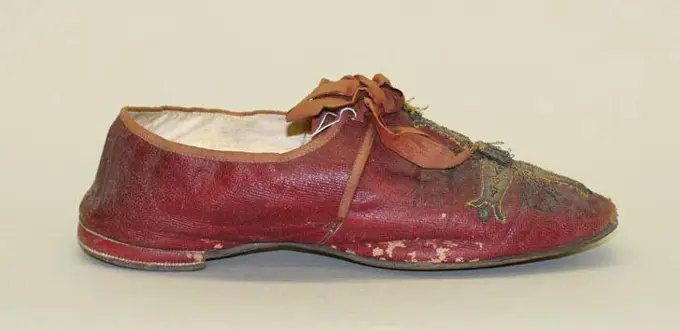
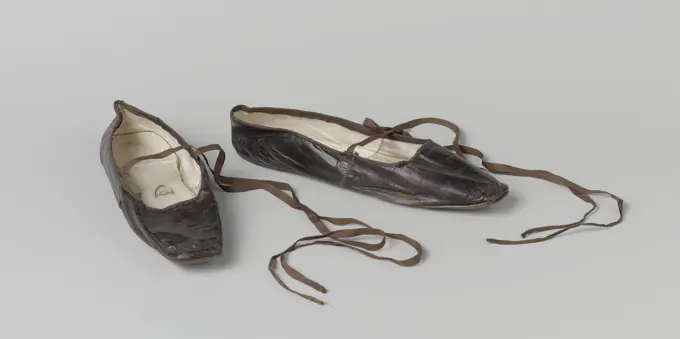
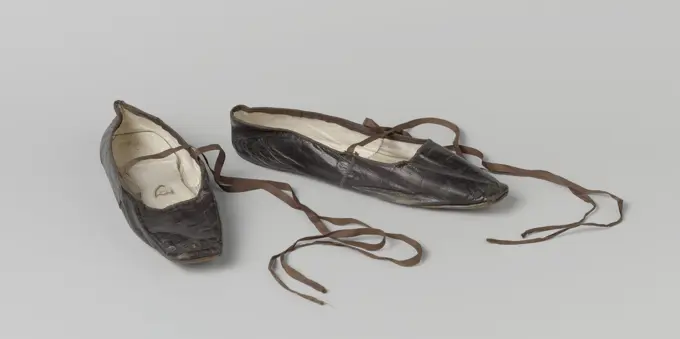
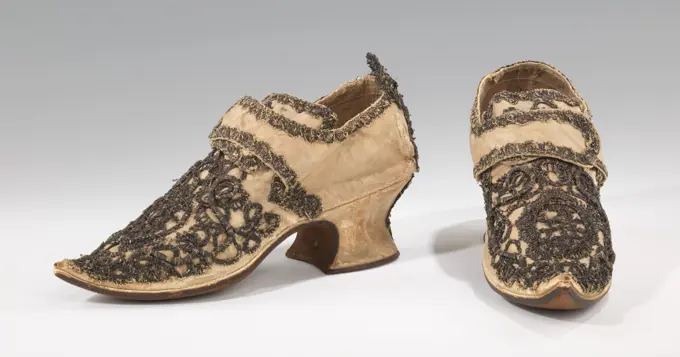
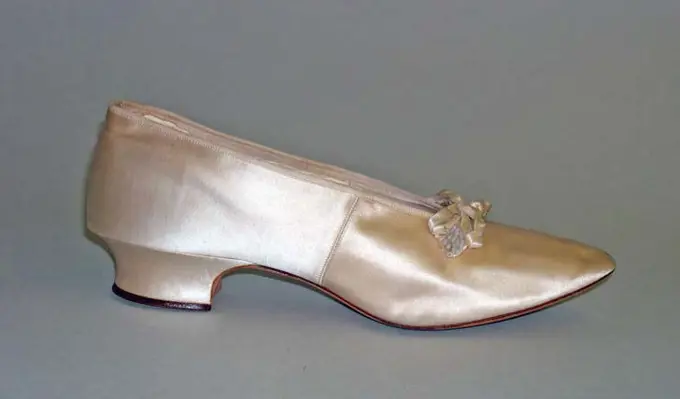
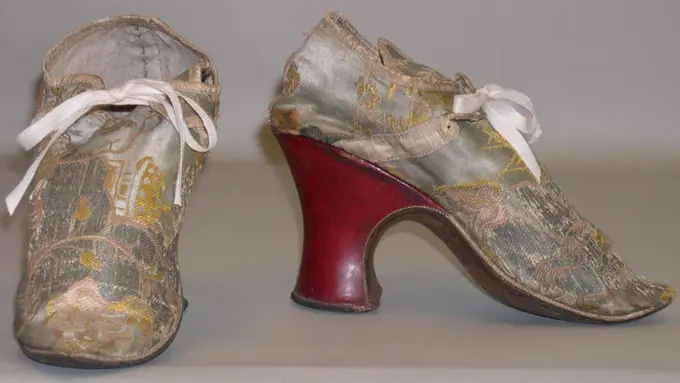
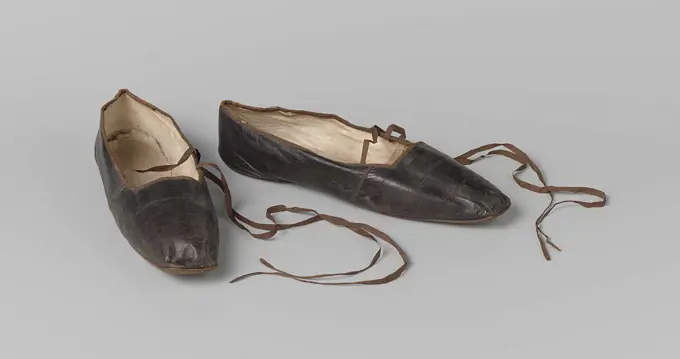
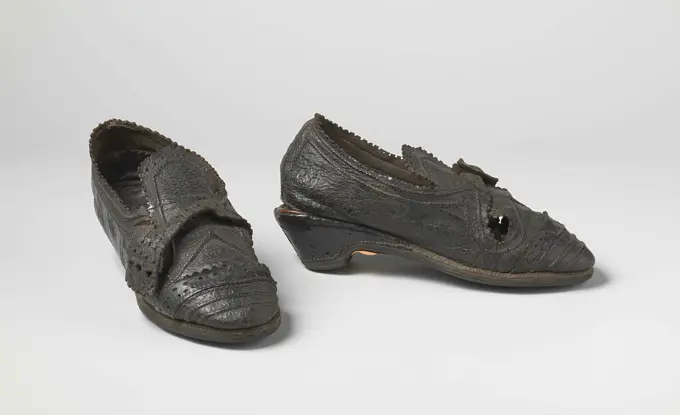
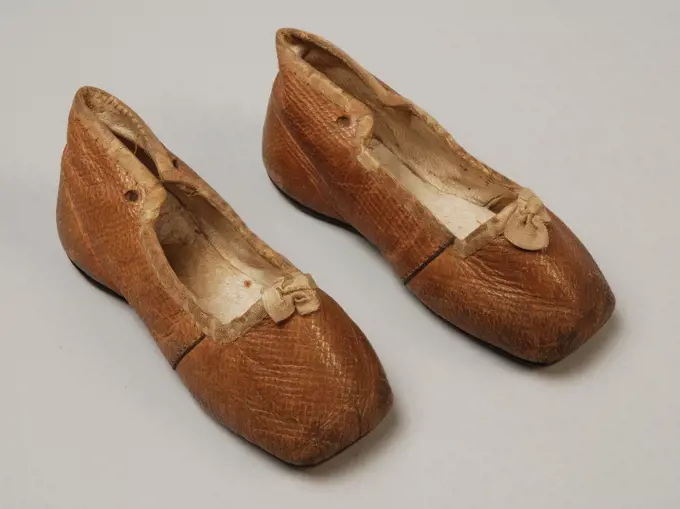
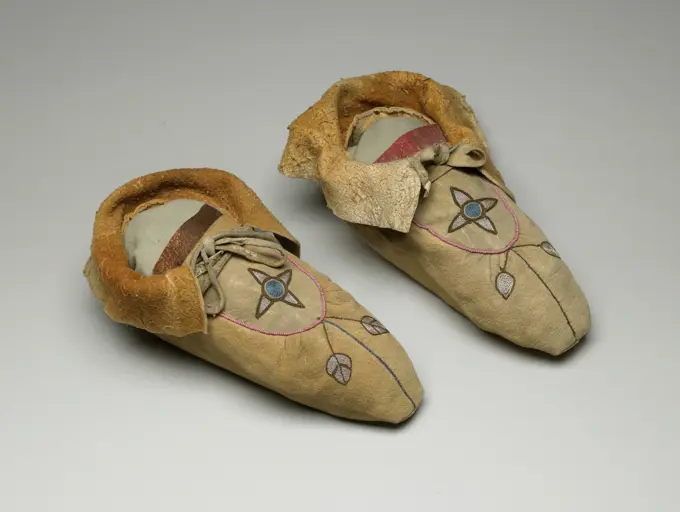
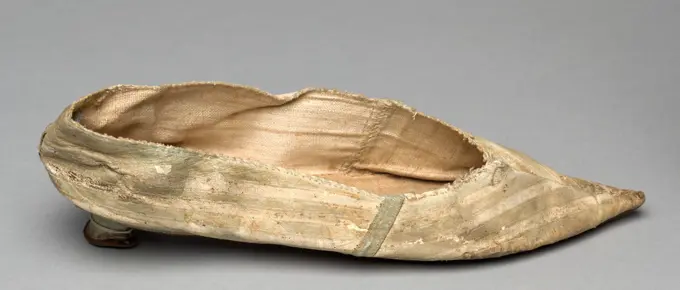
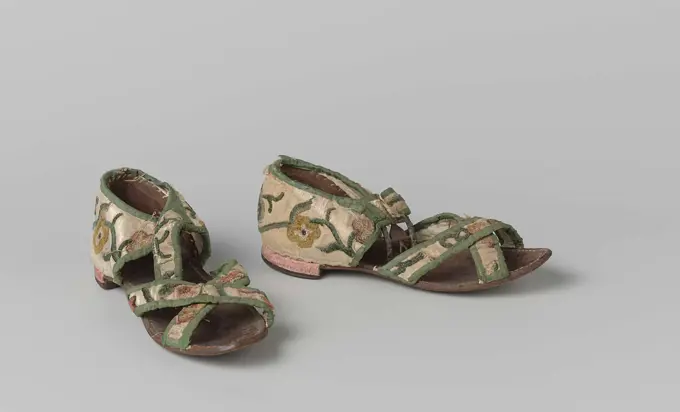
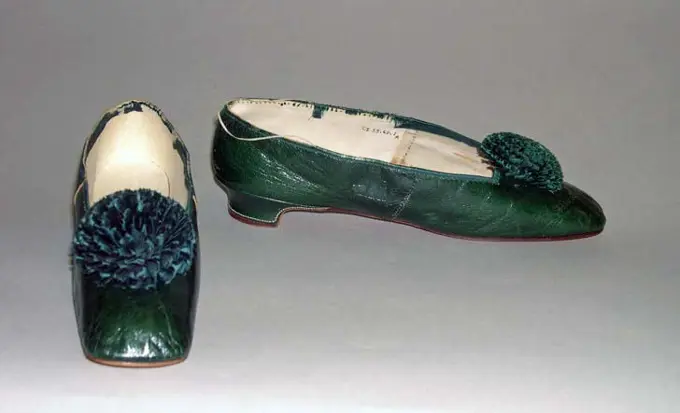
Black leather shoe, anonymous, c. 1775 - c. 1800 Shoe of black leather. Model: rounded nose, from three blades: a cover sheet high closed in a square tongue over the instep and two side sheets ended in two flaps, one with perforation to confirm a buckle. The front of the heel runs straight down in a rounded angle. The side and back of the heel are slightly tailored and covered with leather. The heel has a dark brown edge leather from the back shit. North Netherlands whole: Leather Shoe of black leather. Model: rounded nose, from three blades: a cover sheet high closed in a square tongue over the instep and two side sheets ended in two flaps, one with perforation to confirm a buckle. The front of the heel runs straight down in a rounded angle. The side and back of the heel are slightly tailored and covered with leather. The heel has a dark brown edge leather from the back shit. North Netherlands whole: LeatherA pair of slippers unknownShoe of gold -turret leather with a straight -cut nose and without heel and crotch tires of brown ribbon, anonymous, c. 1825 - c. 1850 Shoe of golden flood leather. Left/right right. Model: straight -cut nose. No heel. Crossbands made of brown ribbon. White leather lining, fed with linen for the toes. Slight damage to the nose Belgium whole:. Lining: Linen (Material) Shoe of golden flood leather. Left/right right. Model: straight -cut nose. No heel. Crossbands made of brown ribbon. White leather lining, fed with linen for the toes. Slight damage to the nose Belgium whole:. Lining: Linen (Material)Shoe of gold -turret leather with a straight -cut nose and without heel and crotch tires of brown ribbon, c. 1825 - c. 1850 Shoe of golden flood leather. Left/right right. Model: straight -cut nose. No heel. Crossbands made of brown ribbon. White leather lining, fed with linen for the toes. Slight damage to the nose Belgium whole:. Lining: Linen (Material) Shoe of golden flood leather. Left/right right. Model: straight -cut nose. No heel. Crossbands made of brown ribbon. White leather lining, fed with linen for the toes. Slight damage to the nose Belgium whole:. Lining: Linen (Material)Slippers 1795-1810 probably British The transition from the high-heeled shoes of 18th century to flat 19th century styles is exemplified by this pair of delicately colored slippers. The sharply pointed toe became fashionable in the later 1780s, and remained the preferred style for about twenty-five years as the heel diminished to nothingness. Seen here is a classic example of the "Italian heel; quite short with a deeply wedged seat, tapering sharply and flaring out to a tiny top piece. The shoes are neatly trimmed in white, and beautifully burnished on the soles.. Slippers 156190Shoes ca. 1860 American The combination of black and pink or brown and pink is frequently seen in infants' shoes of the early to mid 19th century. While most shoes of this simple type fasten with a tie, the button closure on this example is a less common feature, and here is highlighted by a nicely detailed engraved brass button.. Shoes 158269Slippers 1812 American. Slippers 111287Shoe made of black cotton with small wedge heel, anonymous, c. 1820 - c. 1840 Shoe made of black cotton. No right/left difference. Built -in heel of one layer of leather. Pointed forefoot. Square nose. Tire closure in a silk omboard. North Netherlands whole: Cotton (textile). Sole: Leather Shoe made of black cotton. No right/left difference. Built -in heel of one layer of leather. Pointed forefoot. Square nose. Tire closure in a silk omboard. North Netherlands whole: Cotton (textile). Sole: LeatherShoe made of black cotton with small wedge heel, c. 1820 - c. 1840 Shoe made of black cotton. No right/left difference. Built -in heel of one layer of leather. Pointed forefoot. Square nose. Tire closure in a silk omboard. North Netherlands whole: Cotton (textile). Sole: Leather Shoe made of black cotton. No right/left difference. Built -in heel of one layer of leather. Pointed forefoot. Square nose. Tire closure in a silk omboard. North Netherlands whole: Cotton (textile). Sole: LeatherLeren schoen van Perzisch maskeradekostuum.Right flat shoe made of red-brown leather with raised, pointed nose and pointed tongue on the instep. Leather sole and wedge heel. Natural and brunette leather lining.Left shoe size 35. Left shoe, size 35, envelope sewn with band closure and decorated with vertical intersections and diagonal eleshesis. Federation tires lie under the cover page when shoe's closure. The upper leather and the heel lining are made of goat leather and the envelope of calf leather. The fat glandes are ommered with yarn in a non-professional manner. Between the ointment insole and outsole, a 10 mm thick cork layer is placed under the forefoot and under the heel portion a non-rising wood filling.Pair of closed -end sandals in brown leather imitation crocodile; lacing at the front; Painted wooden sole, tray and high heel. Bon Marché "Bon Marché / Valent" sales label, 1940-1944. Galliera, fashion museum of the city of Paris. Accessory, accessory, in good walking, crocodile, false, feminine, haute couture, imitation, pair, sandal, sandal, crocodile, peerOxfords ca. 1890 A. Alexander American. Oxfords 169994Install shoe from to pink faded silk, babbling in lanes with green, flat, pink-red heel, c. 1750 - c. 1770 Install shoe from to pink faded silk, babbling with greenery in lanes. Flat, pink-red heel. Lined with white leather and paper. Netherlands (possibly) whole: Silk. Sole: Leather. lining: Leather. lining: Paper Install shoe from to pink faded silk, babbling with greenery in lanes. Flat, pink-red heel. Lined with white leather and paper. Netherlands (possibly) whole: Silk. Sole: Leather. lining: Leather. lining: PaperFor Pantofli unknownEvening slippers 1885-95 J. & J. Slater American. Evening slippers 168349A pair of male Opane unknownBoarding shoe from until pink faded silk, in jobs bunched with green with flat, pink-red heel.boarding shoe from Until Pink Faded Silk, Bundied With Greenery. Flat, Pink-Red Heel. Lined With White Leather and Paper.Slippers ca. 1812 probably British An attractive design employing a light colored cotton upper with a boldly contrasting leather tip detailed in white chain stitching highlights these demure slippers. This style remained fashionable for some time; although seen here with a rounded point toe and wedge heel, another example from the collection (2009.300.1473a, b) features the sharply pointed toe and tiny waisted heel of the previous two decades. The heel, nicely repeating the leather of the tip, shows the gradual transition to the completely flat styles which appeared by the end of the 1810s.. Slippers 156184Ladies's pussy with cover sheet of Blauwe Zijdendamast, insole and heel covered with white glacé leather, anonymous, c. 1750 - c. 1800 Ladies's pussy with cover sheet of Blauwe Zijdamast, insole and heel covered with white glacé leather. Netherlands Cover: Silk. insole:. heel: Ladies's pussy with cover sheet of Blauwe Zijdamast, insole and heel covered with white glacé leather. Netherlands Cover: Silk. insole:. heel:Boots 1800-1940 American. Boots 104012Muildje with cover of leather in which with white and blue silk flowers are embroidered, heel with white glacéle.mule with cover or leather on which with white and blue silk flowers are embroidered, very with white shabs leather.Very large black leather shoe, worn by the Giant of Lekkerkerk, shoe footwear men's clothing clothing leather, Very large black leather shoe with square nose and T-strap fastening worn by the Reus van Lekkerkerk Gerrit Bastiaansz de Hals (1620-1668) Rotterdam man Reus van Lekkerkerk Gerrit Bastiaensz de Hals shoe making Coming from the Anatomiekamer der Stad Rotterdam.A pair of men unknownShoes. Culture: probably European. Date: 1725-50.Men's shoes survive in lesser number than women's, and utilitarian clothing is particularly scarce, as it was usually worn out and thrown away. That scarcity makes this pair of men's latchet-tie shoes of particular interest. The general cut, fold-over tongue, and substantial heel are retained from fashionable shoes of a somewhat earlier date, while the heavy, pegged soles and heel irons indicate that the primary intent of these shoes was not for up-to-date style but for their capacity to stand up to the rigors of work in the pre-industrial society. Museum: Metropolitan Museum of Art, New York, USA.Women's shoe made of golden -yellow gene side with pleated cream -colored sides strip and silver lovers, c. 1760 - c. 1775 Women's shoes of golden -yellow gene silk. Model: pointed nose, wide forefoot, one cover sheet and two side sheets. The heel, covered with goat theory, is cut square and runs under the yellowl to the seam of the cover. The heel has a brown edge leather from the behind lap. Brown cattle leather sole with white stitching under the yellowl. The side sheets are fed with goat leather. Covered with beige linen. The insole is of goat's theory. Decoration: In the middle of the cover sheet, from the point to the cutting, there is an open vertical band of silver lovers and Canetille. The cut -out of the forefoot is decorated with a pleated cream -colored sides strip. No left/right difference. Netherlands (possibly) Shoe: Silk. Lovers: Silver (Metal). Canetille: Silver (Metal). Ruch: Silk. Lining side sheets: Goatskin. Fore tray: Linen (Material). insole: Goatskin. Hak: GoatsWomen's shoe of beef leather with upright tongue, decorated with perforations and cartels, with low heel, anonymous, c. 1600 - c. 1650 Shoe of black leather. Left-right symmetrical. The cover is in a valve, on which a belt is closed. The block heel is partly loose, where a trim of red leather is applied. Decoration of two ramps, perforations and lectures. (related to BK-NM-8430). North Netherlands whole: Leather. perforating Shoe of black leather. Left-right symmetrical. The cover is in a valve, on which a belt is closed. The block heel is partly loose, where a trim of red leather is applied. Decoration of two ramps, perforations and lectures. (related to BK-NM-8430). North Netherlands whole: Leather. perforatingWomans boot unknownDance slippers 1880s Turkish. Dance slippers 79402Slippers 1795-1805 possibly British. Slippers 168934Boots 1855-65 American. Boots 169122Overshoe -Ball shoe of white satin with bows on the front shoe, square nose and three -quarters heel, anonymous, c. 1850 - c. 1860 Ball shoe made of white satin with bows on the front shoe, square nose and three -quarters of heel. Netherlands satin. leather Ball shoe made of white satin with bows on the front shoe, square nose and three -quarters of heel. Netherlands satin. leatherWhite satin ball shoe with bows on the for shoe, square nose and three -quarters heel, c. 1850 - c. 1860 Ball shoe made of white satin with bows on the front shoe, square nose and three -quarters of heel. Netherlands satin. leather Ball shoe made of white satin with bows on the front shoe, square nose and three -quarters of heel. Netherlands satin. leatherShoes 1660-75 European. Shoes 82447Shoes 1720-40 European. Shoes 112648A pair of women's slippers unknownBoots early 19th century probably British. Boots 98235Shoes 1860s American. Shoes 104073A pair of women's homemade slippers unknownSlippers. Culture: probably British. Date: 1790-1805.The contemporary style and taste for simplicity are well exemplified by this pair of attractive slippers. Large and ornate shoe buckles had begun to go out of style in the 1780s, but their demise was radically accelerated by the anti-aristocratic sentiments of the French Revolution. The way was then clear for the slipper to supplant the latchet shoe as the primary style of fashionable womenswear. Strong or dark colorations were often seen around the turn of the18th century, and the attractive dark teal blue color seems to have been one of the favorite choices. The shoes are extremely well preserved, and the smooth, angular lines give us a sense of how they would have looked when new. Museum: Metropolitan Museum of Art, New York, USA.Shoes 1775-1850 American or European. Shoes 170491Shoes. Culture: probably British. Date: 1810-29.Delicate evening slippers from the first half of the 19th century survive in abundance in museum collections. It is refreshing then to find a well-preserved and attractive example of a laced shoe of the period. These shoes, which feature a much heavier sole than ordinary day shoes, were intended for street wear, although their silk fabric would not have afforded more that a very genteel promenade. The rounded toe indicates a date prior to 1830, by which time square toes were dominant. Strong colors like this appealing green were often chosen at the time to both compliment and contrast the main garment. Museum: Metropolitan Museum of Art, New York, USA.Leather shoe with ribbons, c. 1820 - c. 1840 Brown shoe (calfs) Leather. No right/left difference. No heel, very narrow forefoot, square nose. Brown ribbons can be closed crosses over the instep and ankle. Lined with white leather and linen. On the instep an old repair with Zwarty yarn. North Netherlands whole: Leather. Lining: Linen (Material) Brown shoe (calfs) Leather. No right/left difference. No heel, very narrow forefoot, square nose. Brown ribbons can be closed crosses over the instep and ankle. Lined with white leather and linen. On the instep an old repair with Zwarty yarn. North Netherlands whole: Leather. Lining: Linen (Material)Leather shoe with ribbons, anonymous, c. 1820 - c. 1840 Brown shoe (calfs) Leather. No right/left difference. No heel, very narrow forefoot, square nose. Brown ribbons can be closed crosses over the instep and ankle. Lined with white leather and linen. North Netherlands whole: Leather. Lining: Linen (Material) Brown shoe (calfs) Leather. No right/left difference. No heel, very narrow forefoot, square nose. Brown ribbons can be closed crosses over the instep and ankle. Lined with white leather and linen. North Netherlands whole: Leather. Lining: Linen (Material)Woman's Clog. England, circa 1750. Costumes; Accessories. Brocaded silk, leather, kid leatherSlippers 1800-1810 Ealand. Slippers 169468Women's slippers;  2. PO. 18th century (1751-00-00-1800-00-00);Footwear, floral ornamentsMules 19th century Middle Eastern. Mules 175872Shoes late 18th century European While the lovingly embroidered baby caps and christening gowns and adorably diminutive booties of infants are preserved in great quantity, garments for older children seldom survive in a good state or preservation. This scarce pair of 18th century childs shoes incorporates the pointed toe and tongue found in fashionable women's styles, combined with the flat heel suitable for a child. It is not clear from the cut whether these shoes would have been worn by a boy or a girl, but the bright color is more suggestive of feminine dress.. Shoes 158055Women's shoe made of ivory white satin. Model: rounded nose, one plates and a back cover. The front of the heel runs straight down in a rounded corner from the Geleng. The side and back of the heel are fitted and covered with ivory white satin. The heel has a dark brown edge leather of the rear flap. Leather rear flap with seven nails to the heel and leather sole. Rear sheet lined with ivory white leather, covered with ivory white linen. The insole is made of ivory white. Decoration: In the middle of the cut on the front shoe decorated with bow from ivory white plastic beads and a bow of ivory white satin on it. Shaft border trimmed with ivory white ripbands. No left / right difference, but by making a distinction.A pair of men's slippers unknownJackboots. Culture: British. Date: 18th century.The jack boot is a heavy, stiffened boot worn by postillion riders in the 17th and 18th centuries. While it would provide excellent protection to the rider's leg, the extreme weight, forward cant, and absolute rigidity of the boot makes it utterly unfit for walking. The boot gets its name from the jacked leather, horsehide treated with wax and pitch or tar to make it black and waterproof, from which it was traditionally made. This heavily worn example from the collection, although missing its mate, is fortunate to have the matching spur with original leather straps. Museum: Metropolitan Museum of Art, New York, USA.A pair of women's slippers unknown. Leather women's shoe, of which the upper portion and the row belt, together are discussed by a leather lace. Worn by Freule Johanna Magdalena Catharina Judith van Dorth to Holthuysen during her executionShoes 1860-79 American. Shoes 112823Shoes 1725-50 probably European Mens shoes survive in lesser number than women's, and utilitarian clothing is particularly scarce, as it was usually worn out and thrown away. That scarcity makes this pair of mens latchet-tie shoes of particular interest. The general cut, fold-over tongue, and substantial heel are retained from fashionable shoes of a somewhat earlier date, while the heavy, pegged soles and heel irons indicate that the primary intent of these shoes was not for up-to-date style but for their capacity to stand up to the rigors of work in the pre-industrial society.. Shoes 157858Shoes 19th century Italian. Shoes 98397Brown leather shoe with brown ribbons, anonymous, c. 1820 - c. 1840 Shoe of brown gold leather. No right/left difference. No heel, very narrow forefoot, square nose. Brown ribbons can be closed crosses over the instep and ankle. North Netherlands whole: Leather. Lining: Linen (Material) Shoe of brown gold leather. No right/left difference. No heel, very narrow forefoot, square nose. Brown ribbons can be closed crosses over the instep and ankle. North Netherlands whole: Leather. Lining: Linen (Material)Brown leather shoe with brown ribbons, c. 1820 - c. 1840 Shoe of brown gold leather. No right/left difference. No heel, very narrow forefoot, square nose. Brown ribbons can be closed crosses over the instep and ankle. North Netherlands whole: Leather. Lining: Linen (Material) Shoe of brown gold leather. No right/left difference. No heel, very narrow forefoot, square nose. Brown ribbons can be closed crosses over the instep and ankle. North Netherlands whole: Leather. Lining: Linen (Material)A pair of men's slippers unknownSlippers. Culture: American. Date: ca. 1872.An attractive and unusual design specific to its period distinguishes this pair of shoes worn by an infant girl between 1871 and 1874. The high peak at the back is a feature of fashionable contemporary women's shoes. Numerous attractive details - scalloped quarters, wave design of tab, embossed rosette trimmed with tiny buckle, double row of contrasting top stitching, and cheerful printed lining - create appeal in these inexpensive manufactured shoes. Museum: Metropolitan Museum of Art, New York, USA.Black leather shoe, anonymous, c. 1600 - c. 1650 Shoe of black leather. Model: valves with very low heels, toothed all around. The leather -covered wooden heels are partially loose, there decorated with Red leather trim. (related to BK-NM-10850). Mens model Netherlands whole: Leather. Hak: Wood (Plant Material) Shoe of black leather. Model: valves with very low heels, toothed all around. The leather -covered wooden heels are partially loose, there decorated with Red leather trim. (related to BK-NM-10850). Mens model Netherlands whole: Leather. Hak: Wood (Plant Material)Shoe of black leather, c. 1600 - c. 1650 Shoe of black leather. Model: valves with very low heels, toothed all around. The leather -covered wooden heels are partially loose, there decorated with Red leather trim. (Related to BK-NM-10850). Mens model Netherlands whole: Leather. Hak: Wood (Plant Material) Shoe of black leather. Model: valves with very low heels, toothed all around. The leather -covered wooden heels are partially loose, there decorated with Red leather trim. (Related to BK-NM-10850). Mens model Netherlands whole: Leather. Hak: Wood (Plant Material)Shoes, anonymous, c. 1590 - c. 1596  Left shoe size 38, edge, without closure. The cover sheet of the shoe is decorated with a row of short, diagonal incisions over the instep.  calf (leather). cork (bark) cutting / sewing  Nova Zembla. Saving HuysA pair of men's slippers unknownShoes 1690-1729 probably British Consistent with late Baroque taste, the embroidery on this pair of ladies' latchet shoes is extremely robust, three-dimensional and complex, utilizing numerous different forms of metallic cord and bullion lace. This would have been augmented by a large buckle, likely set with paste or real jewels. As the century progressed, the softer French Rococo style would superseed this taste as French styles in general increasingly influenced British fashion. The extreme point toe seen in this example is an element which persisted from the late 17th century, and is paired here with the lower, stockier heel typical of British shoes from the early 18th century.. Shoes. probably British. 1690-1729. silk, metalFor Pantofli unknownSlippers 1894 J. & J. Slater American. Slippers 102360Shoes 1700-1710 British. Shoes 112639Pattens 18th century European Fashionable ladies' shoes of the 18th century were commonly made with an upper of figured silk or brocade over a thin leather lining, and hardly suitable to any attempt to venture outdoors on dirty cobbled or unpaved streets. In order to provide some modicum of protection, two styles of overshoes were used: clogs and pattens. The clog was essentially a thick sole made to conform to the bottom of a heeled shoe, with straps securing it to the foot. The patten, represented here by a classic example of the period, featured a wooden sole elevated on an iron ring, and was seen as the distinctly more utilitarian and less fashionable choice. The shape of the wooden sole can be seen to mimic the sole of the type of shoe with which it was worn.. Pattens. European. 18th century. leather; metalIn 1820 an Englishman, Thomas Hancock, began manufacturing products made of rubber. As it is elastic andwaterproof, it was excellently suited for making galoshes. The shoes on display may originate from this earlyperiod, for the rubber is not yet vulcanized. This process, dating from 1839, hardens the rubber and improves its durability.Red leather shoe in miniature format, anonymous, c. 1640 - c. 1660 Shoe of red leather. Miniature format, guild test (). No left/right difference. Low -in -facing heel, which is not flat on the floor. Flat square nose. High cover with tongue, on which the belts close. Side opening between the front and back leaf. White cuts of a cupido in a laurel wreath and pomegrana. North Netherlands whole: Leather Shoe of red leather. Miniature format, guild test (). No left/right difference. Low -in -facing heel, which is not flat on the floor. Flat square nose. High cover with tongue, on which the belts close. Side opening between the front and back leaf. White cuts of a cupido in a laurel wreath and pomegrana. North Netherlands whole: LeatherRed leather shoe in miniature format, c. 1640 - c. 1660 Shoe of red leather. Miniature format, guild test (). No left/right difference. Low -in -facing heel, which is not flat on the floor. Flat square nose. High cover with tongue, on which the belts close. Side opening between the front and back leaf. White cuts of a cupido in a laurel wreath and pomegrana. North Netherlands whole: Leather Shoe of red leather. Miniature format, guild test (). No left/right difference. Low -in -facing heel, which is not flat on the floor. Flat square nose. High cover with tongue, on which the belts close. Side opening between the front and back leaf. White cuts of a cupido in a laurel wreath and pomegrana. North Netherlands whole: LeatherSandals ca. 1479-1425 B.C. New Kingdom These sandals were part of the funerary equipment belonging to one of three foreign wives of Thutmose III. They are made of thin gold sheet that would not have withstood normal wear; they were intended for funerary use only. The sandals are decorated with details intended to imitate the decoration on leather sandals. Listen to experts illuminate this artwork's story Listen Play or pause #3400. Jewelry of Three Wives of Thutmose III Play or pause #1154. Kids: Jewelry of Three Wives of Thutmose III, Part 1 Play or pause #1155. Kids: Jewelry of Three Wives of Thutmose III, Part 2 Supported by Bloomberg Philanthropies We're sorry, the transcript for this audio track is not available at this time. We are working to make it available as soon as possible.. Sandals. ca. 1479-1425 B.C.. Gold sheet. New Kingdom. From Egypt, Upper Egypt, Thebes, Wadi Gabbanat el-Qurud, Wadi D, Tomb of the Three Foreign Wives of Thutmose III. Dynasty 18Boots 1860-75 American. Boots 168362Schoen van leer met lintjes.Shoe of brown (veal) Leather. No right / left difference. No heel, very narrow forefoot, square nose. Brown ribbons can be closed crosslings about the instep and just. Lined with white leather and linen. On the instep an old repair with Zwarty yarn.Spanleest of wood. Left span reading, belonging to lace-colored esty-colored ostrich. Spanleest of wood with metal hinge and ring. Address: Van Goethem / Bottier / Bruxelles (on a metal picture).Doll boot -Black leather shoe. Left-right symmetrical. The cover page proceeds in a valve, over which a belt is closed. The block heel is partially loose, in which place a trim of red leather is applied. Decoration of two throws, perforations and outskirts. (relative to BK-NM-8430).Infant's Boots. probably United States, circa 1890. Costumes; Accessories. Leather with painted metal buttonsButton boot for a child of (gold -drench) leather in brown, anonymous, c. 1850 - c. 1860 Left button boot for a child of (goldor) leather in brown, model: with 7 knots, the knot edge is scooped. Short square nose. Furthermore unadorned. Lined with white cotton and the tongue with white leather. Low -heel Netherlands whole:. Lining: Cotton (textile) Left button boot for a child of (goldor) leather in brown, model: with 7 knots, the knot edge is scooped. Short square nose. Furthermore unadorned. Lined with white cotton and the tongue with white leather. Low -heel Netherlands whole:. Lining: Cotton (textile)Button boot for a child of (gold -drench) leather in brown, c. 1850 - c. 1860 Right knot boot for a child of (gold -drench) leather in brown, model: with 7 knots, the knot edge is scooped. Short square nose. Furthermore unadorned. Lined with white cotton and the tongue with white leather. Low -heel Netherlands whole:. Lining: Cotton (textile) Right knot boot for a child of (gold -drench) leather in brown, model: with 7 knots, the knot edge is scooped. Short square nose. Furthermore unadorned. Lined with white cotton and the tongue with white leather. Low -heel Netherlands whole:. Lining: Cotton (textile)Pair of Man's Shoes. Italy, circa 1730. Costumes; Accessories. Silk velvet with metallic braid, leatherWedding slippers ca. 1856 American. Wedding slippers 102340Pair of overshoes, anonymous, c. 1819 - c. 1840  Caoutchouc shoes or nature rubber, with bred decoration of flowers and leaves. Research by the ICN (written announcement Thea van Oostveen, 4-8-1998) shows that the shoes are made of nature rubber. There is a very small amount of sulfur in the rubber that indicates that Ubber is very little vulcanized. The rubber became harder, but because virtually nothing has been added, these shoes were very elastic. They have been affected by oxygen over the years. According to tradition one of the first pairs of overshoes and given the elasticity of the material this could very well. England (possibly) whole: rubber (material) scoringA pair of sabots unknownButton boot for a child of (gold orren) leather in brown. Left button boot for a child of (goldenorrs) leather in brown, model: with 7 knots, the button edge is scalloped. Short square nose. Furthermore. Lined with white cotton and the tongue with white leather. Low heelShoes 1800-1850 American or European. Shoes 112769Baby shoes in beige leather, low model with straight nose, edges with ribbon border, lacing, shoe footwear baby clothing children's clothing leather linen silk, Baby shoes of beige leather with beige silk ribbon drilled. Bow on the instep. Low model with slightly raised heel with before two fat holes. Chamois leather lining and insole with linen lined shoes child babySlippers ca. 1870 French. Slippers 102252Pair of Moccasins, c. 1850, Leather, cotton thread, beads, United States, 19th centurySlippers 1790s British. Slippers 112676A pair of slippers unknownSlipper, c. 1769. America, Massachusetts, 18th century. Kidskin; average: 24.8 x 9.6 cm (9 3/4 x 3 3/4 in.).Mould (France); copper, tinSandaal van witte ripszijde, met chenille borduursel van bloemen en ranken in vervloeiende kleuren, effengroen omboord.Sandal of white rips silk, with chenille embroidery of flowers and tendrils in flavoring colors, solid green. No left / right difference. Very flat heels with cerise leaving. The wide forefoot finishes faintly, and has crucifiers, buckle closing with metal buckle. Compare with BK-NM-1973.Wedding slippers 1860 American. Wedding slippers 112790Slippers 1850s French. Slippers 105044. Shoe of bovine leather with low heel, round nose and a plates decorated with double decorative stitching, a perforated tire and pointed in a narrow tongue. The cover page and the heel pieces are cut to the side of the foot around. The heel pieces end in a narrow band, which comes together on the instep from either side with the tongue and can be tied together with a cord or ribbon. The shoes are trimmed with a cartel edge and triple decorative stitches. The nose stands out over the sole.