Historical Footwear Collection

An assortment of vintage shoes including ballet flats, oxfords, and slippers from various eras, showcasing unique materials and designs, demonstrating the evolution of footwear.
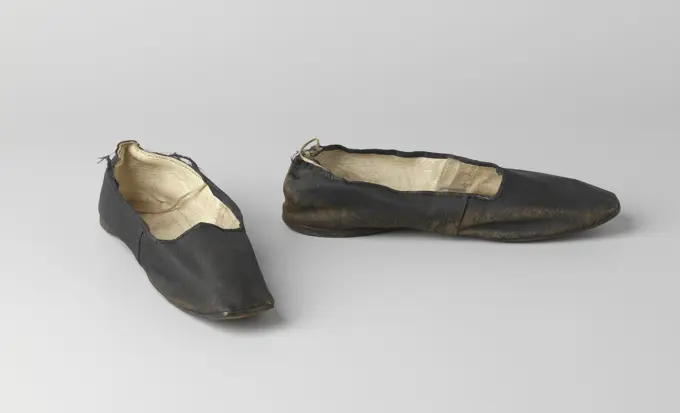
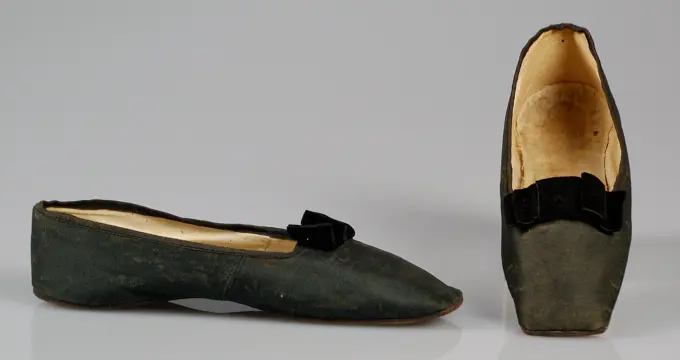
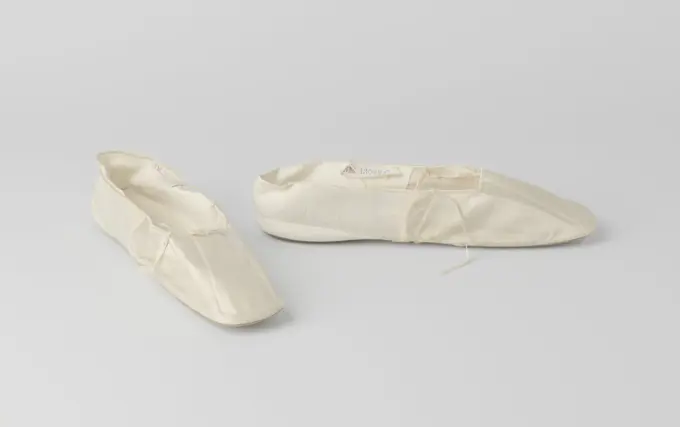
Shoe made of black cotton with small wedge heel, c. 1820 - c. 1840 Shoe made of black cotton. No right/left difference. Built -in heel of one layer of leather. Pointed forefoot. Square nose. Tire closure in a silk omboard. North Netherlands whole: Cotton (textile). Sole: Leather Shoe made of black cotton. No right/left difference. Built -in heel of one layer of leather. Pointed forefoot. Square nose. Tire closure in a silk omboard. North Netherlands whole: Cotton (textile). Sole: Leather
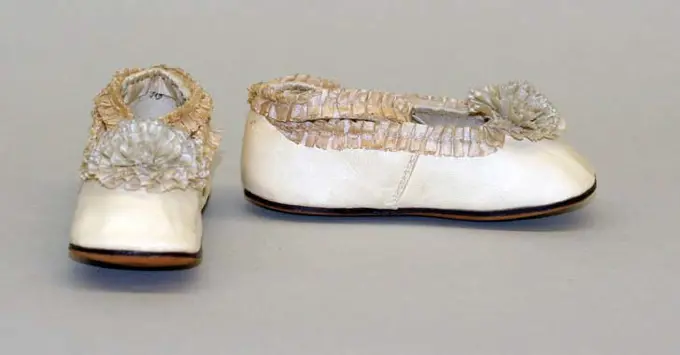
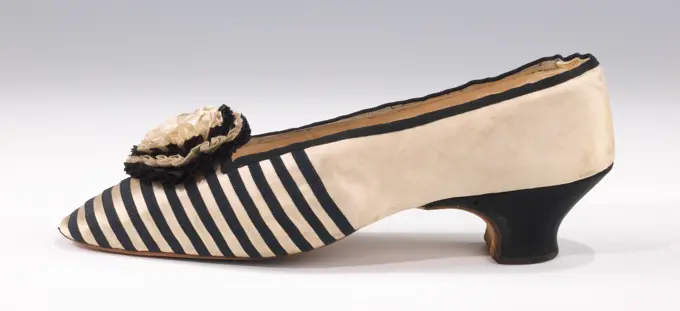
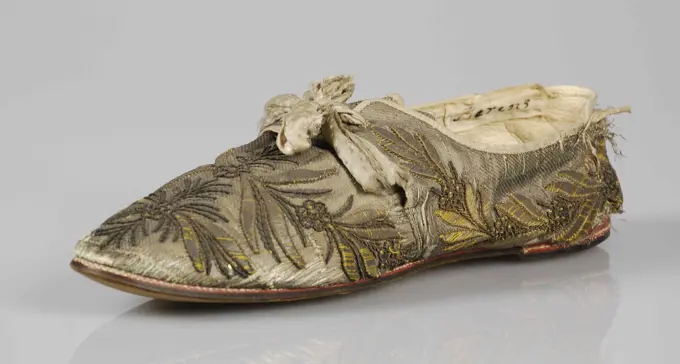
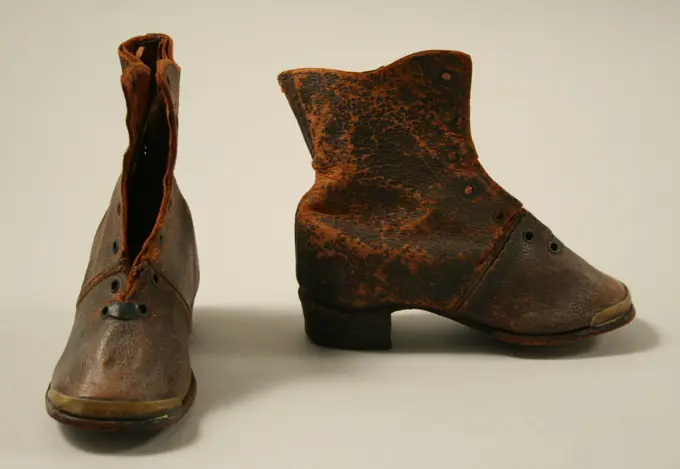
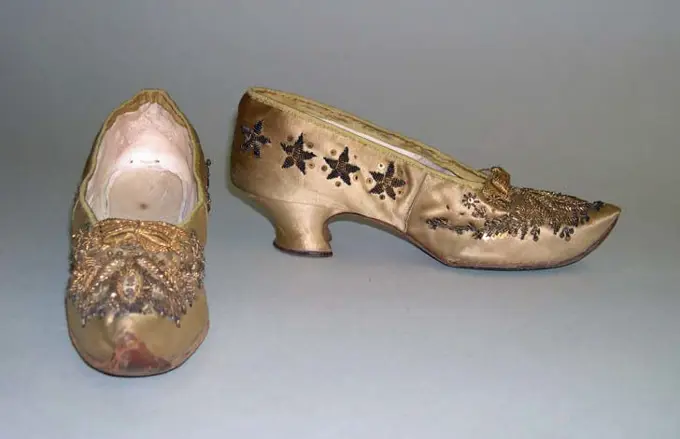
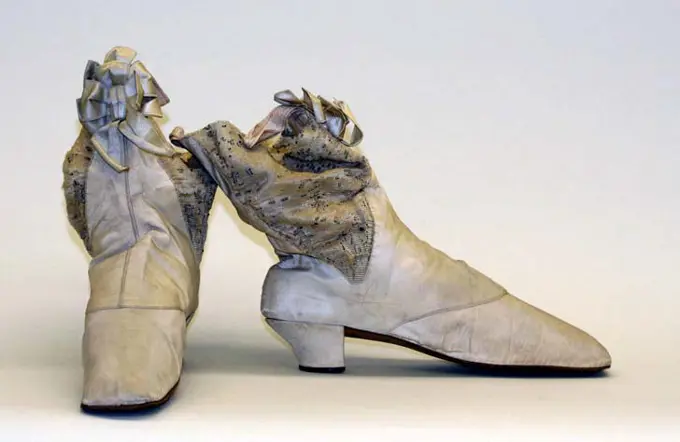
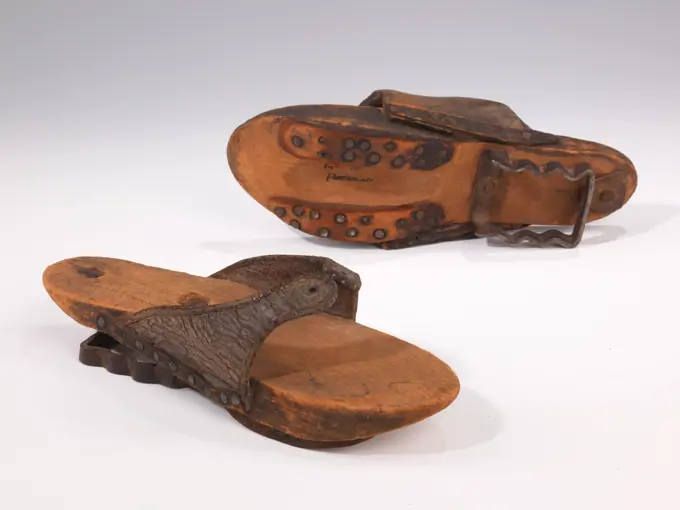
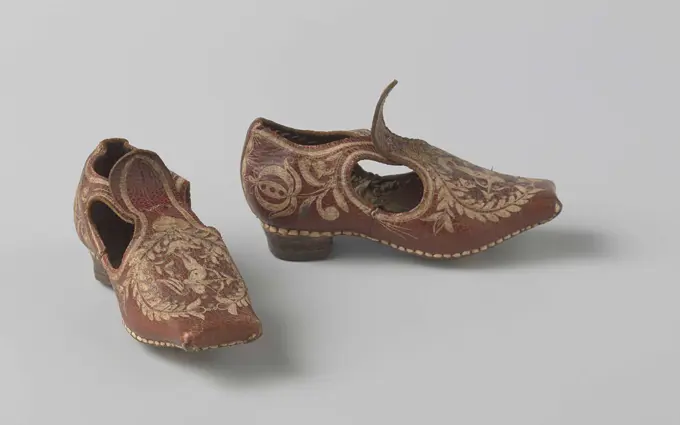
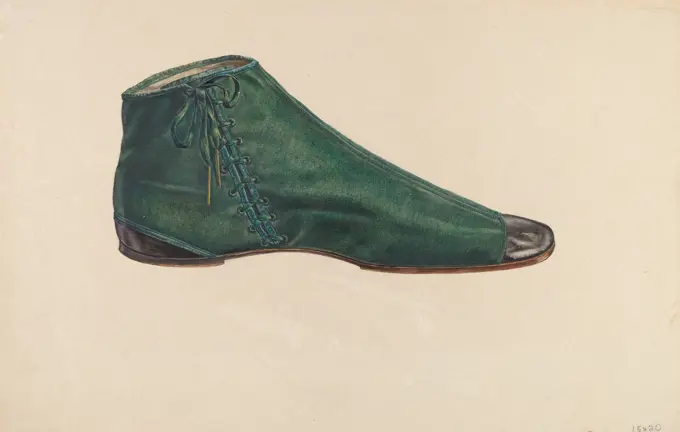
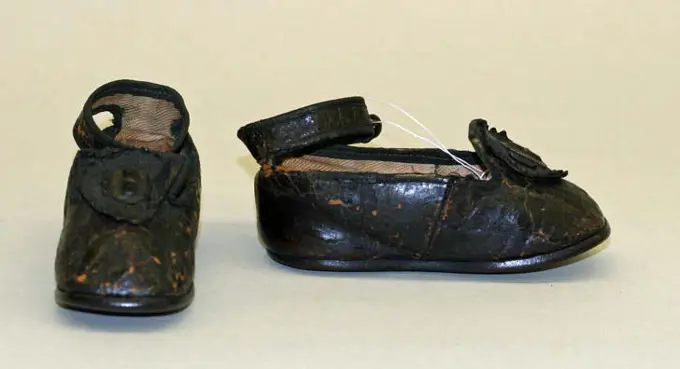
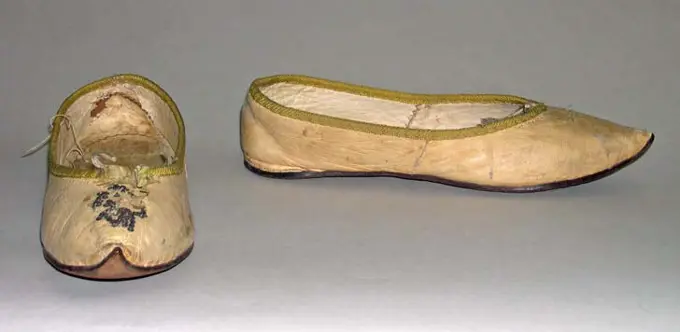
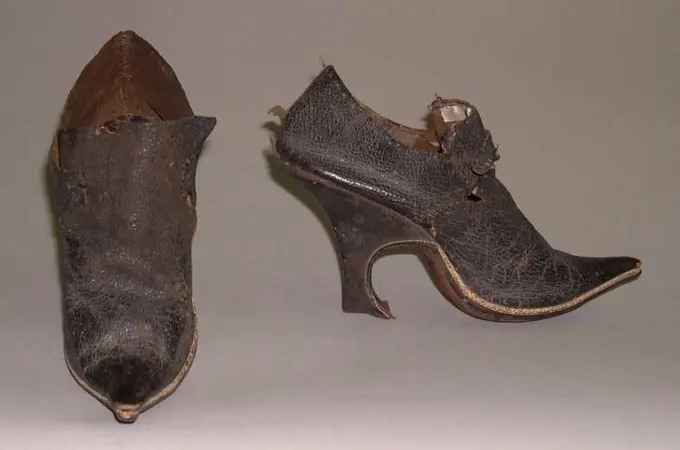
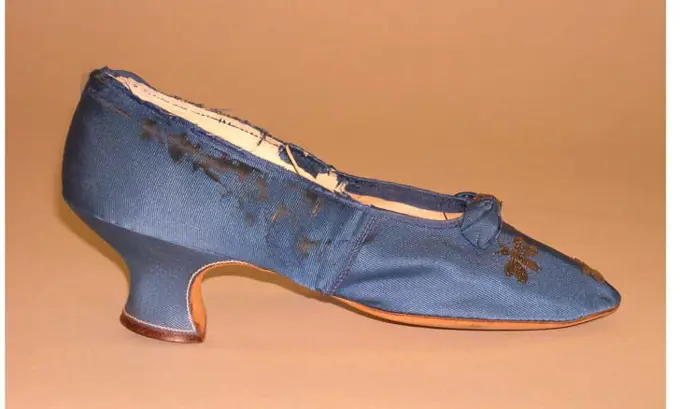
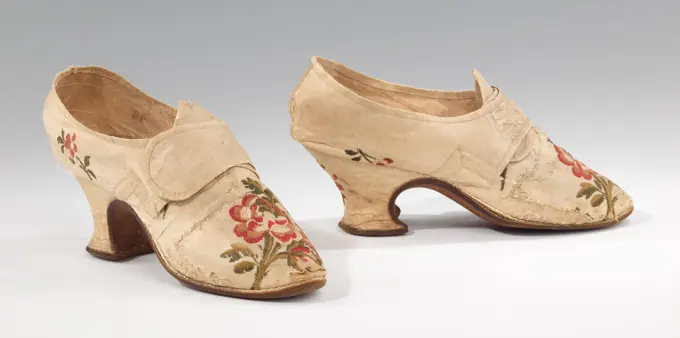
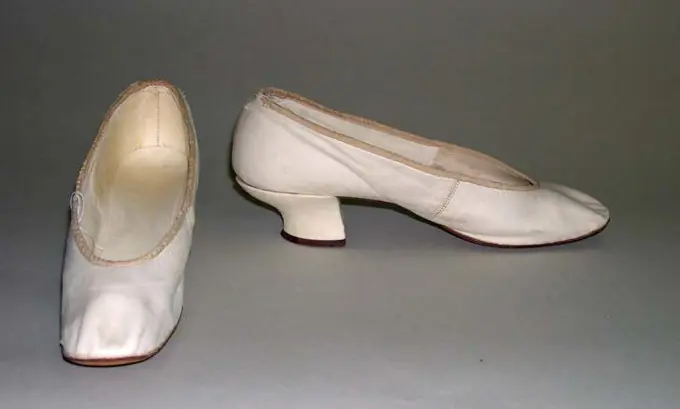
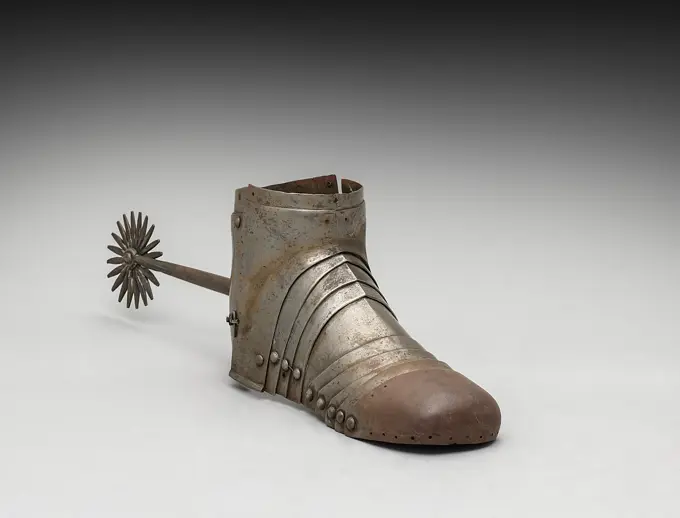
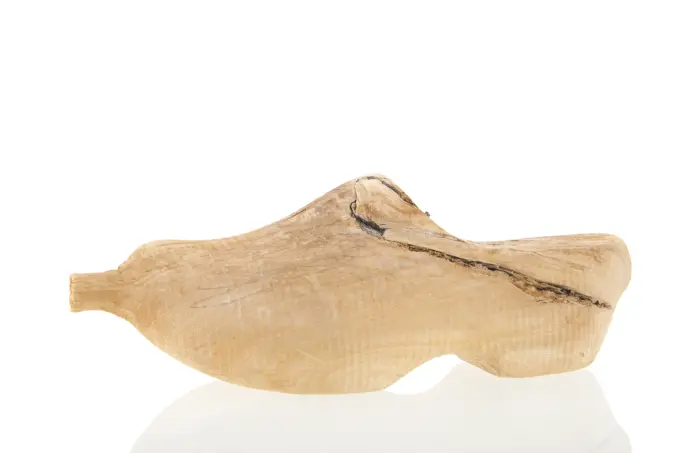
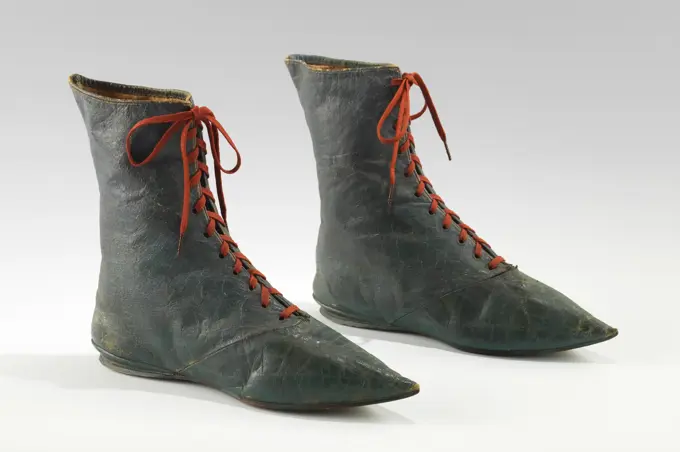
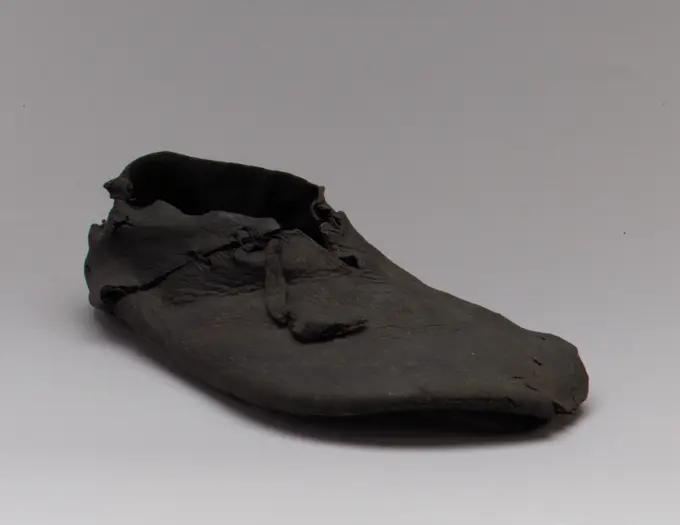
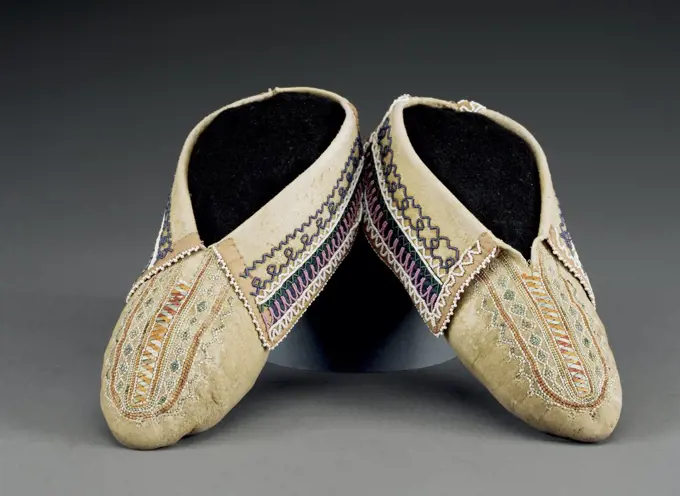
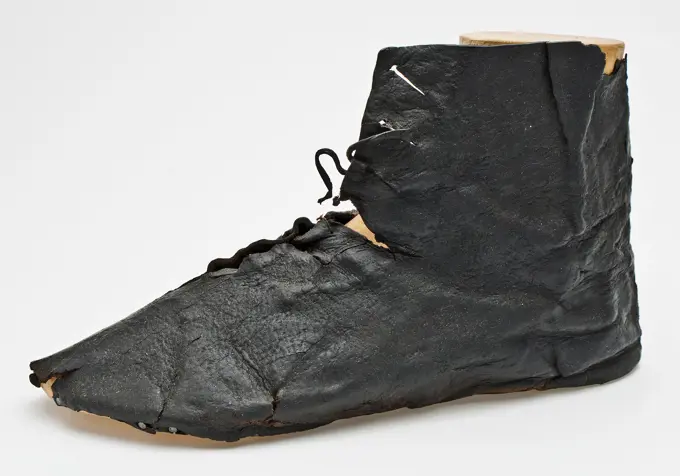
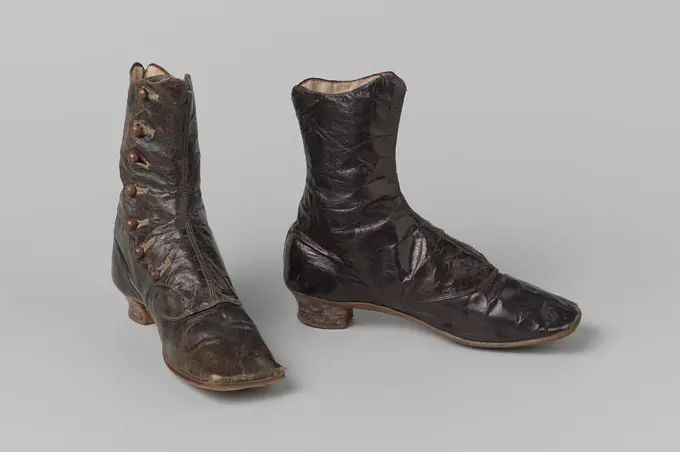
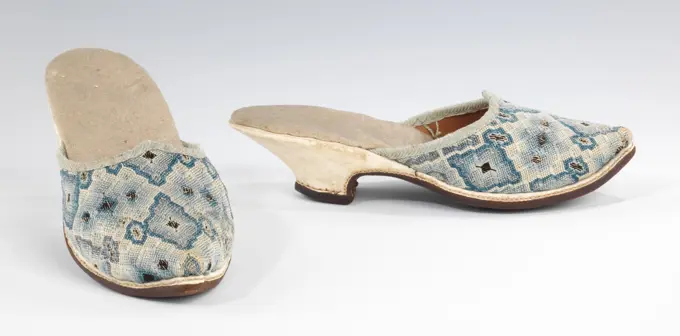
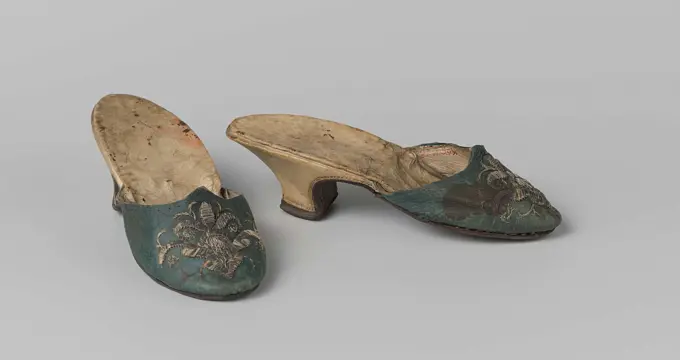
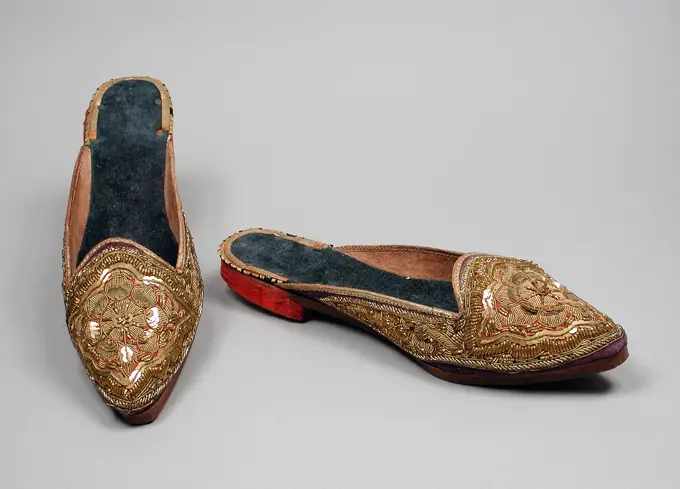
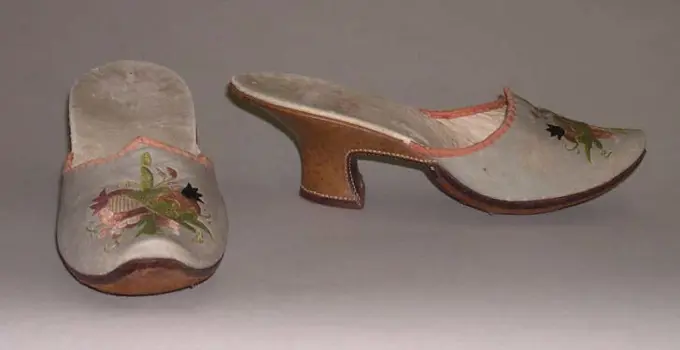
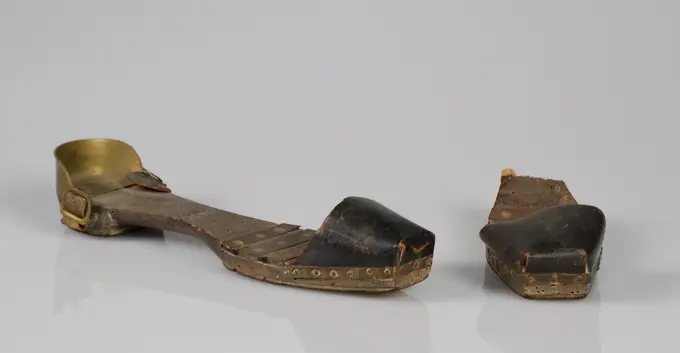
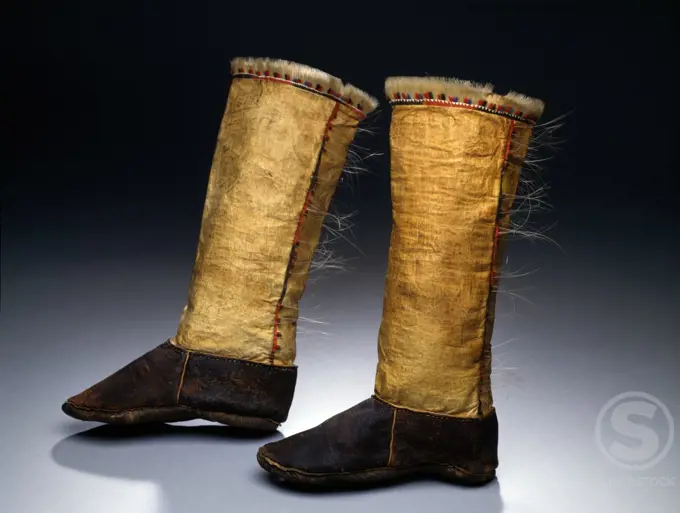
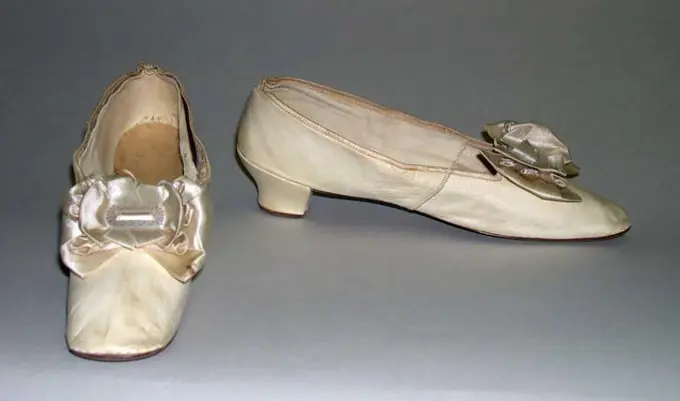
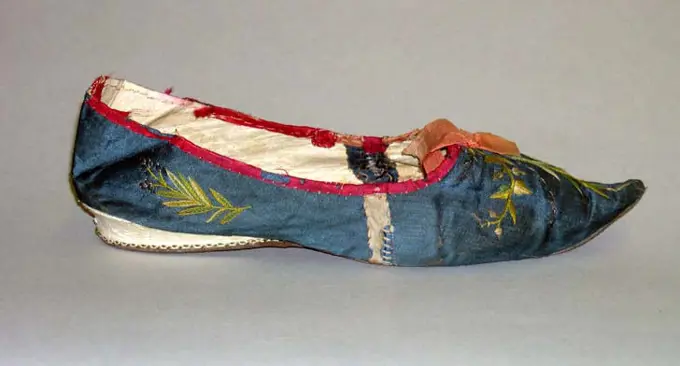
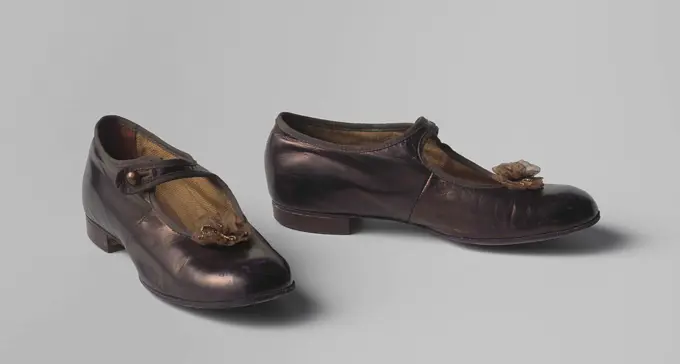
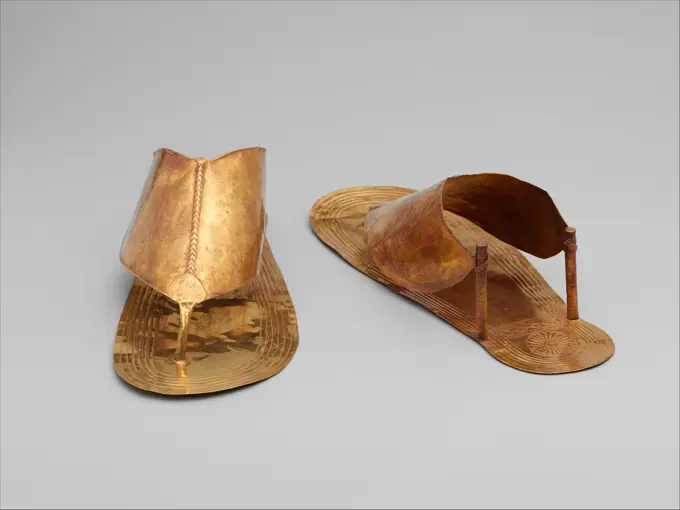
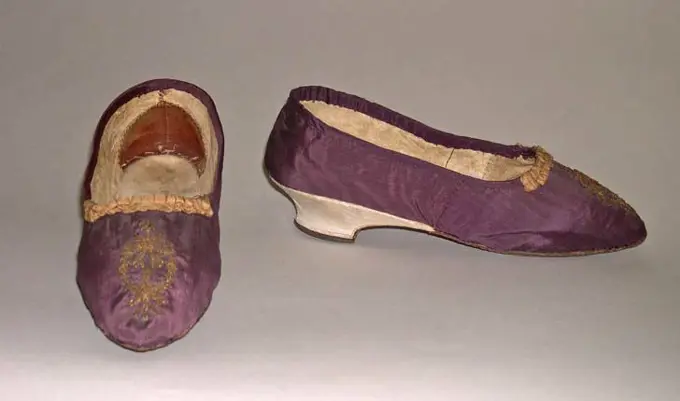
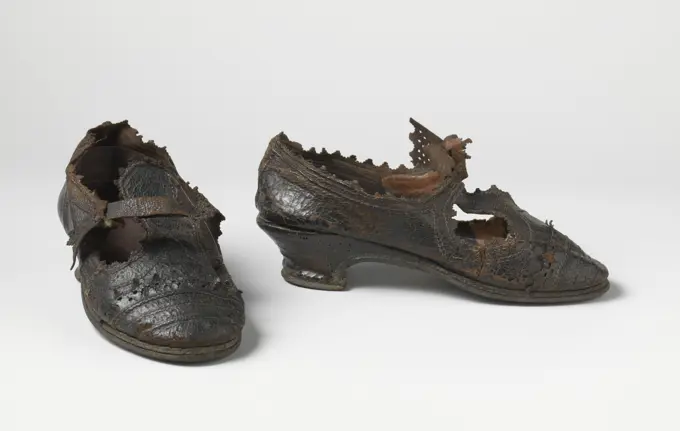
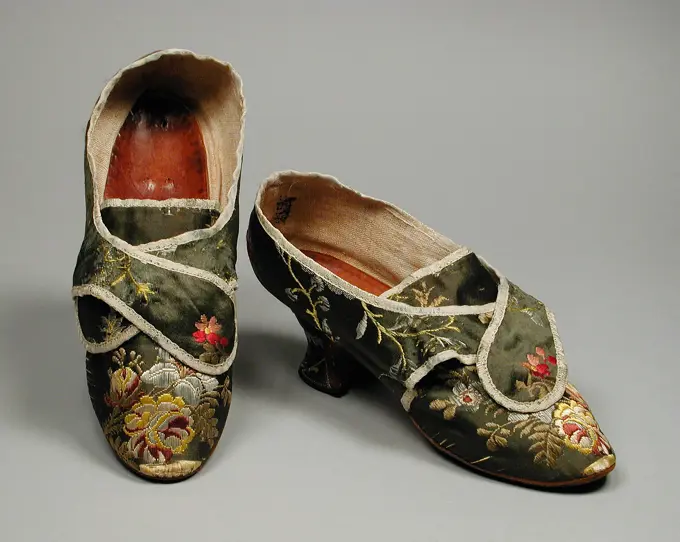
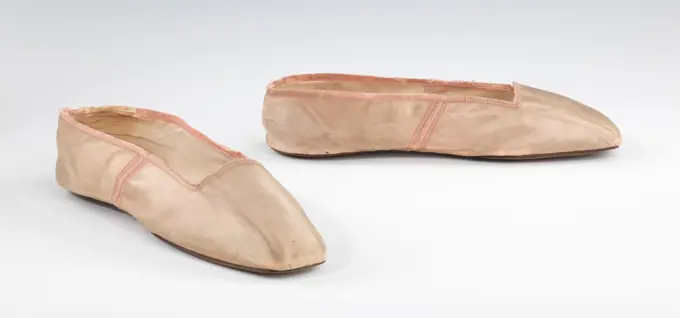
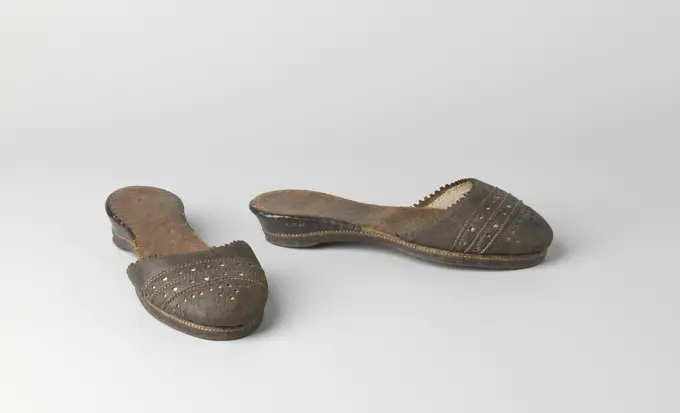
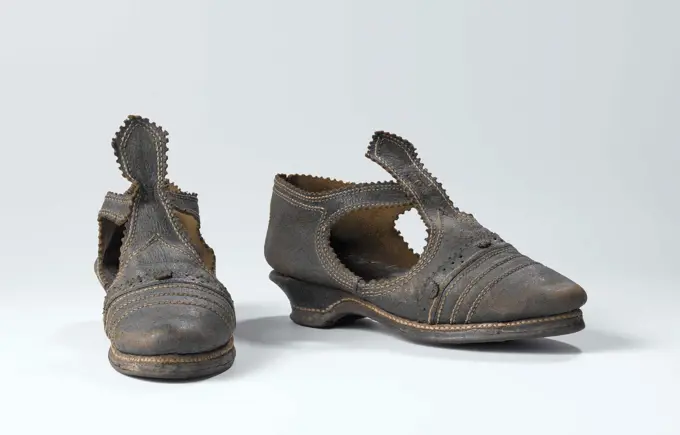
. Ladies shoe, black leather, decorated with white starts. Model: low, partially loose heel; High trailer ending in a valve and with a wide rounded back cover and with belt as hole closure. Round nose with decoration of gearing and outskirts. Probably Z.G. "clappers". Northern Netherlands, first half of the 17th century.Woman's Shoes. Austria, Vienna, circa 1840. Costumes; Accessories. Silk satin with silk embroidery and leatherShoes 1740-79 British. Shoes 112641Shoes early 19th century American or European. Shoes 112680Shoes 1876-77 French. Shoes 104087Shoes, anonymous, c. 1590 - c. 1596  Right shoe, size 38, envelope, with tire closure (lace is missing). The cover sheet, the quarters and heel lining are made of goat leather and the envelope of calf leather. The sole has been repaired in the toe by means of a tip (a sunken piece of leather).  goatskin. calf (leather) cutting / sewing  Nova Zembla. Saving HuysOvershoe -Evening slippers 1860-70 British With the feet secreted beneath the huge hooped skirts of the 1860s, detailed or intricate ornamentation was of little avail on conmemporary ladies' footwear. While simple bow trims were therefore the norm, one does occasionally see exceptions, as exemplified here by the bold and lively decoration of applied ribbon stripes. These eye-catching slippers could not help but to grab one's attention with even the slightest glimpse. A nearly identical pair The Victorian and Albert Museum in London possesses a nearly identical example in blue and white (cat# T.562&A-1913, published in Lucy Pratt, "Shoes"; London: V & A Publications, 1999, pl. 38.) with the blockier heel of the 1850s.. Evening slippers 156194Liturgical shoe 1800-1850 Italian. Liturgical shoe 175509Shoes ca. 1859 American. Shoes 104091Evening shoes 1890s probably American. Evening shoes 113199Slippers 1835-50 American. Slippers 169698Shoes 16th century British. Shoes 101798Evening slippers. Culture: probably American. Date: 1830-45.Simple flat satin slippers were the most popular evening and formal shoe for women throughout the first half of the 19th century. While the various forms of bows and rosettes used as trimming changed, the basic cut of the shoe varied only slightly, with gradual modifications in the toe shape, the shape depth of the throat, and the width of the sole. Plainness of cut, however, did not necessarily indicate cheapness or economy in construction, and many surviving shoes exhibit refined and exacting standards of manufacture. This pair of slippers features especially attractive finishing to sole, and indication of quality visible only to its user. Museum: Metropolitan Museum of Art, New York, USA.Shoes 1866 Jeffers French Shoes. Shoes 168730Overshoe -Wedding slippers 1873 American or European. Wedding slippers 112822Wedding slippers 1810-19 American. Wedding slippers 169139Shoe made of black leather with ribbons, c. 1830 - c. 1850 Shoe of black leather. No right/left difference. No heel. Pointed sole, square nose. Black ribbons can be closed crosses over the instep and ankle. North Netherlands geheel: leather. lint: cotton (textile) Shoe of black leather. No right/left difference. No heel. Pointed sole, square nose. Black ribbons can be closed crosses over the instep and ankle. North Netherlands geheel: leather. lint: cotton (textile)Boots 1874 European. Boots 90409Evening boots 1860-70 French. Evening boots 168940Slippers ca. 1872 American. Slippers 102331Pattens late 18th century American Walking on rough unpaved or cobbled streets was perilous business in the thin silk-covered shoes of the 18th and early 19th centuries. This pair of overshoes is a rare and interesting combination of the two styles worn at the time, the clog and the patten. The clog was essentially a thick sole made to conform to the bottom of a shoe, with straps securing it to the foot. The patten consisted of a wooden sole elevated on an iron ring. The hobnailed leather pads and serrated iron ring suggest that this pair was made for icy winter conditions.. Pattens 156377A pair of slippers unknownAshtray ZigmanSchoen van rood leer in miniatuurformaat.Shoe of red leather. Thumbnail format, guild test (). No left / right difference. Low inward-facing heel, which is not flat on the ground. Flat square nose. High tray with tongue, which the belts close. Side opening between front and back. White cutouts of a cupid in a laurel wreath and pomegranates.American 20th Century, Woman's Shoe, 1935 1942 Woman's ShoeShoes. Dated: 1935/1942. Dimensions: overall: 29 x 22.8 cm (11 7/16 x 9 in.). Medium: watercolor and graphite on paper. Museum: National Gallery of Art, Washington DC. Author: Nancy Crimi.Leather ladies shoe, worn by Freule Johanna Magdalena Catharina Judith from Dorth to Holthuysen during her execution, Anonymous, in or Before 1799  Leather ladies shoe, the upright part and the instepriem, tied together by a leather lace, are over. Worn by Freule Johanna Magdalena Catharina Judith van Dorth to Holthuysen during her execution Netherlands (possibly) leather. iron (metal) sewing  WinterswijkSlippers 1860-80 American. Slippers 104114Stockings. Dated: c. 1938. Dimensions: overall: 40.5 x 21.1 cm (15 15/16 x 8 5/16 in.). Medium: watercolor and graphite on paperboard. Museum: National Gallery of Art, Washington DC. Author: H. Langden Brown.Margery Parish, Child's Shoes, c 1937 Child's ShoesSlippers ca. 1800 American or European. Slippers 112677Shoes 1830-40 American or European. Shoes 112681Shoes. Culture: European. Date: 1730-59.The decorative motif of stripe-like allover braid application is well represented by this pair of shoes dating from the end of its fashionable period, which lasted for about 100 years beginning in the mid-1600s. While contrasting colors had been common in the 17th and early 18th centuries, later examples of this type of ornamentation are usually monochrome. The braid is worked in an attractive star design on tongue, despite the fact that this would have been covered by the buckled latchets when worn. Museum: Metropolitan Museum of Art, New York, USA.Shoe from white silk, in or after 1814 - c. 1825 Ball shoe of white satin, empire, without heels. Leather sole marked: H.W.B. The Hague whole: Satin. Sole: Leather Ball shoe of white satin, empire, without heels. Leather sole marked: H.W.B. The Hague whole: Satin. Sole: LeatherSlippers 1660-1760 French. Slippers 98261Slippers ca. 1900 Meier French. Slippers 102244Shoes 1750-70 Thomas Ridout British Prior to the late 18th century, shoemakers and vendors seldom marked the shoes they sold. It is fortunate then, to find this pair of latchet shoes from the third quarter of the 18th century which retains the adhered paper label of it London maker. The pointed tongue was fashionable from the 1770s; in this pair of shoes the original square tongue has been folded and stitched into a point in order to update the style. The increasing taste for simpler and lighter-feeling textile designs over the course of the 18th century can be seen in the silk uppers of these shoes, which has been carefully cut to make most effective use of the brocaded motifs. Shoes 156118Woman's Shoes. India, Kolkata (Calcutta), circa 1825. Costumes; Accessories. Silk satin with weft patterning and metallic-thread supplementary weft patterning, and silk satin ribbon and leatherSlippers late 1870s-80s American or European. Slippers 112827Shoes 1845-65 American The general style of these laced infant's shoes, with a lower cut than what is now associated with baby booties, reflects a contemporary utilitarian adult style. The simplified cut and construction, however, are typical of infant's footwear. The leather has an appealing cross grain texture which adds interest to the stark form.. Shoes 158265Boots 1870s American. Boots 90395Slippers 1860-79 American or European. Slippers 112833Shoes, 20th century, 8 x 4 5/8 x 10 1/2 in. (20.32 x 11.75 x 26.67 cm) (each), Leather, silk; embroidered, Morocco, 20th centuryShoes 1800-1939 American. Shoes 104064Left Sabatoun, 1801-1900. Germany, 19th century. Steel with black paint; overall: 27.3 x 33 cm (10 3/4 x 13 in.).Evening boots 1850-65 American. Evening boots 168361Black leather shoe, anonymous, c. 1775 - c. 1800 Shoe of black leather. Quite wide forefoot, pointed nose. Dreikwart Hak that is cut square. Only a seam in the heel. Pointed cover sheet, no belts or closure. North Netherlands whole: Leather Shoe of black leather. Quite wide forefoot, pointed nose. Dreikwart Hak that is cut square. Only a seam in the heel. Pointed cover sheet, no belts or closure. North Netherlands whole: LeatherProto type Dutch wooden shoe Proto type Dutch wooden clog isolated over white background Copyright: xZoonar.com/IvonnexWierinkx 8774020Boots 1795-1815 European Although still a minority in women's footwear at the beginning of the 19th century, ankle boots would become the dominant style of daytime footwear by the 1830s. This early pair of fashionable boots shoes shows the importance of angular lines, repeated throughout designs and evident from what ever position the boots are viewed. The museum also possesses a similar boot with a small "Italian" heel (2009.300.1487), demonstrating the overlap in styles. The original shoelaces, unlike those now in the boots, would have most likely matched the dark teal color of the leather.. Boots. European. 1795-1815. leatherShoes 16th century European. Shoes 81546Children's shoe made of gold -torry leather with rubber band and rosette of silk mesh with gold -colored metal beads, Bally, in or before 1923 Children's shoe made of gold -turret leather with rubber band and rosette of silk mesh with gold -colored metal beads. Model: rounded nose, a cover sheet, two side sheets. Evening band with button closure, brown convex plastic knot on lacquered metal eye. Lined with red -brown smooth leather insole and roughly leather in the heel. The sheets lined with beigebruin ribbed cotton. Flat leather heel, leather sole. Decoration: In the middle of the round cut -out on the forefoot decorated with small rosette of brown silk mesh with gold -colored metal beads. The shaft edge is pissed off with brown rip band. Under the heel two rows of rows to prevent the heel wearing out. Switzerland shoe:. Rosette: Silk. Bead: Metal. band:. button:. Button: Metal. lining: cotton (textile). insole: Leather. sole:. heel:. Klinknagel: Iron (Metal) painting / grinding / caAn Early Pair of Iroquois Quilled Hide Moccasins Native American Art Zapatos de seda labrada con hebillas de plata con piedras del Rin, siglo XVIII, MTIB88458. Museu Textil i d'Indumentaria de Barcelona.Shoe or half boot with rounded holes and part of leather lace, shoe footwear clothing soil find leather, Shoe prepared on wooden base archeology underground pit Rotterdam City Triangle Groenendaal dressing footwear Soil discovery in underground pit Groenendaal from 15th century cesspit 1975.09.11.Botines, siglo XIX. Museu del Disseny de Barcelona.Pair of mules, c. 1700 - c. 1715 Mil made of green floral with gold brocade with leather soles, flat square noses and long front pieces. Netherlands silk. leather. Mil made of green floral with gold brocade with leather soles, flat square noses and long front pieces. Netherlands silk. leather.Evening shoes 1885-90 G.L. & Company. Evening shoes 168444Slippers 1860-70 probably French. Slippers 168450A pair of slippers unknownSandaal met dikke zolen bekleed met rood leer.Sandal, men's model, with red leather covered soles. Three crossbands over the rubbed, decorated with gold thread and sequins. Very worn out.Button boot for a child of (gold orren) leather in brown. Right-knotting boots for a child of (gold-corn) leather in brown, model: with 7 knots, the button border is scalloped. Short square nose. Furthermore. Lined with white cotton and the tongue with white leather. Low heelMules early 18th century European Mules were a popular form of at-home footwear in the 17th and 18th centuries for both men and women. This fairly conservative example of ladies' mules features a low heel and good quality embroidery in tastefully subdued tones. This style of embroidery is known as Florentine work, a type of flame stitch canvas work with varied stitch lengths.. Mules 156202Wedding shoes 1865 American. Wedding shoes 90383Damesmuil van blauw leer, versierd met zilverdraad.Muil, blue leather, decorated with silver thread in flower pattern. Heel and lining of white leather. Model: Wide rounded forefoot and high malted heel, ending in trapezoidal sole. Some stupid stars on the sole.Pair of Man's SlippersSlippers ca. 1882 American. Slippers. American. ca. 1882. silkA pair of men's slippers without strains unknownMules ca. 1750 European. Mules 112646Pattens second quarter 19th century American. Pattens 168959Boots ca. 1830 British. Boots 104010Slippers 1830-50 American. Slippers 112732Pair of mens shoes nr 5 unknownBoots, Eskimo Art, USA, Washington DC, Smithsonian Institution (National Museum of Natural History)Slippers 1780 American or European. Slippers 112649Wedding socks. Culture: American. Date: 1851. Museum: Metropolitan Museum of Art, New York, USA.Shoes 1860-79 American. Shoes. American. 1860-79. leatherShoes, anonymous, c. 1590 - c. 1596 mule (shoe) Right -bowl, size 35.5, the hood of which is decorated with a row of diagonally placed, short inserts over the instep arch and the roof edge is trimmed with a sown leather scallop. The mouth has no reinforcement rope.  . cutting / sewing  Nova Zembla. Saving HuysShoe of dark green leather, anonymous, c. 1760 - c. 1780 Shoe of dark green leather. Three -quarters of heel, square cut out. Narrow pointed nose. High cover, on which two belts can be closed. North Netherlands whole: Leather Shoe of dark green leather. Three -quarters of heel, square cut out. Narrow pointed nose. High cover, on which two belts can be closed. North Netherlands whole: LeatherShoe from beige leather, c. 1600 - c. 1699 Shoe, possibly a doll shoe, made of beige leather. Continuous sole with built -in heel of layer of leather. Closure high on the instep with tongue and two lips. Held together by silk ribbon Netherlands whole: Leather Shoe, possibly a doll shoe, made of beige leather. Continuous sole with built -in heel of layer of leather. Closure high on the instep with tongue and two lips. Held together by silk ribbon Netherlands whole: LeatherSlippers 1830-49 European. Slippers 84590Shoes late 18th-early 19th century Italian. Shoes 98401Kinderschoen van goudtorrenleer met wreefbandje en rozet van zijden gaas met goudkleurige metalen kralen.Children's shoe of golden corner with rubbed band and rosette of silk mesh with gold-colored metal beads. Model: rounded nose, a cover page, two side sheets. Reference with button closure, brown convex plastic knot on lacquered metal eye. Lined with red-brown smooth leather insole and roughened leather in the heel. The sheets lined with beige brown ribbed cotton. Flat leather heel, leather sole. Decoration: Center for the round cut on the forefoot decorated with small rosette of brown silk mesh with gold-colored metal beads. The shaft border is trimmed with brown ripbands. Under the heel two rows of rivets to prevent abrasion from the heel.Mules. Culture: European. Date: early 18th century.Mules were a popular form of at-home footwear in the 17th and 18th centuries for both men and women. This fairly conservative example of ladies' mules features a low heel and good quality embroidery in tastefully subdued tones. This style of embroidery is known as Florentine work, a type of flame stitch canvas work with varied stitch lengths. Museum: Metropolitan Museum of Art, New York, USA.Shoes 1860-79 Italian. Shoes 98403. Shoe from dark green leather. Three-quarter heel, square cut out. Narrow pointed nose. High trail sheet, which two belts can be closed.Slippers ca. 1872 American. Slippers 102332Oxfords 1880 probably American. Oxfords 115789Wedding slippers 1855-65 American. Wedding slippers 168508Shoe of linen embroidered with flowers and branches, c. 1825 - c. 1850 Doll shoe made of linen embroidered with flower branches in blue cross stitch. A rose rose on the cover. No heel, square nose. Netherlands schoen: linen (material). zool: leather embroidering Doll shoe made of linen embroidered with flower branches in blue cross stitch. A rose rose on the cover. No heel, square nose. Netherlands schoen: linen (material). zool: leather embroideringSandals ca. 1479-1425 B.C. New Kingdom These gold sandals belonged to the funerary accoutrements of an Egyptian queen of Thutmose III in the middle of Dynasty 18. Similar gold sandals were found on the mummy of Tutankhamun, one of Thutmose's descendents who ruled at the end of the same dynasty.. Sandals 547765Pumps 1780s French. Pumps 112671Shoe of black cattle leather with low wedge heel, round nose and a cover leaf ending in a valve over which a belt, c. 1600 - c. 1650 Shoe made of black leather, probably so -called clapper. The sole goes from narrow, near the heel, to a wide forefoot, round nose. The low cover end ends in a valve, on which a belt is closed. No difference between left and right North Netherlands whole:. stitching: rope Shoe made of black leather, probably so -called clapper. The sole goes from narrow, near the heel, to a wide forefoot, round nose. The low cover end ends in a valve, on which a belt is closed. No difference between left and right North Netherlands whole:. stitching: ropePair of Woman's Shoes. England, circa 1760. Costumes; Accessories. Brocaded silk, leather, and linenShoes early 19th century probably American. Shoes 104074Evening slippers 1830-45 probably American Simple flat satin slippers were the most popular evening and formal shoe for women throughout the first half of the 19th century. While the various forms of bows and rosettes used as trimming changed, the basic cut of the shoe varied only slightly, with gradual modifications in the toe shape, the shape depth of the throat, and the width of the sole. Plainness of cut, however, did not necessarily indicate cheapness or economy in construction, and many surviving shoes exhibit refined and exacting standards of manufacture. This pair of slippers features especially attractive finishing to sole, and indication of quality visible only to its user.. Evening slippers 156180Black leather mouth with low wedge heel, anonymous, c. 1600 - c. 1650 Muiltje (left) of black leather. Built -in low heel, narrow heel, wide forefoot, round nose. Low -cut cover, with white stitching and perforations. North Netherlands whole: Leather Muiltje (left) of black leather. Built -in low heel, narrow heel, wide forefoot, round nose. Low -cut cover, with white stitching and perforations. North Netherlands whole: LeatherBlack leather mouth with low wedge heel, c. 1600 - c. 1650 Muiltje (right) of black leather. Built -in low heel, narrow heel, wide forefoot, round nose. Low -cut cover, with white stitching and perforations. North Netherlands whole: Leather perforating Muiltje (right) of black leather. Built -in low heel, narrow heel, wide forefoot, round nose. Low -cut cover, with white stitching and perforations. North Netherlands whole: Leather perforatingLid of tobacco box from the wreck of the East Indians Hollandia, Anonymous, 1700 - in Or Before 1743 lid Tobacco box; fragm, lid: rim, oval, grooved; fragm of top, eroded, engraved decoration of scrolling foliage pattern around central panel with biblical scene (bearing of the Cross) and text band, eroded (see also NG 1980-27H859b, 3.4.10 for imprint of sim. engraving). Netherlands copper (metal)   Second