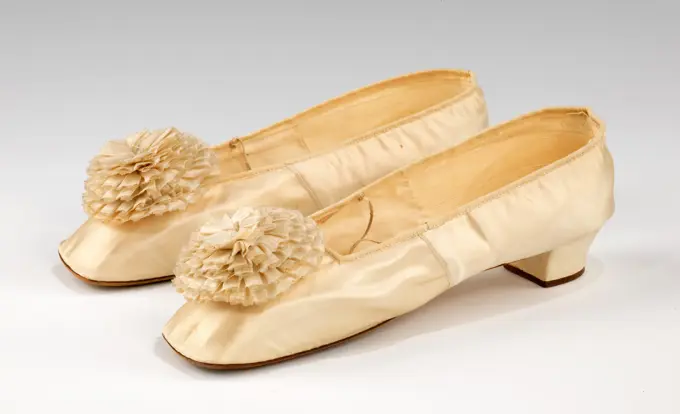
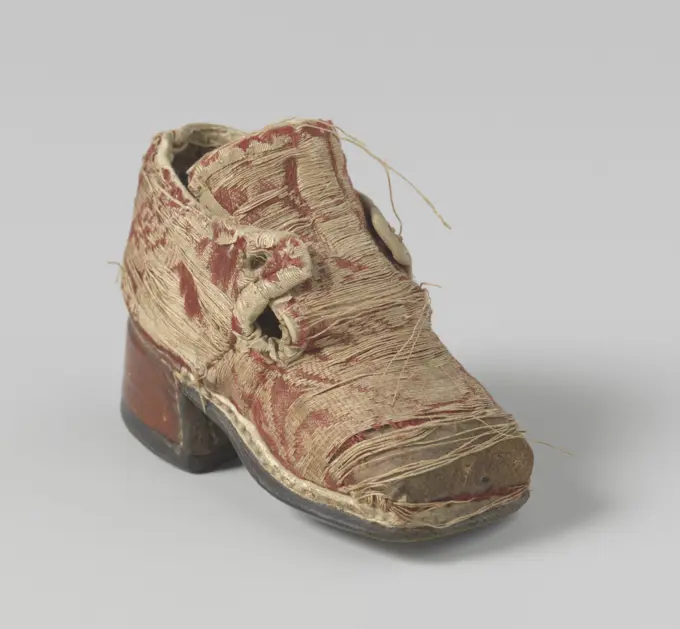
Historical Footwear Collection

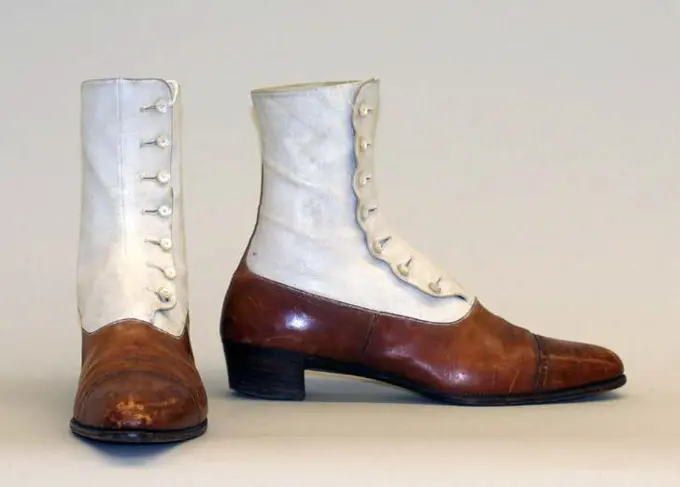
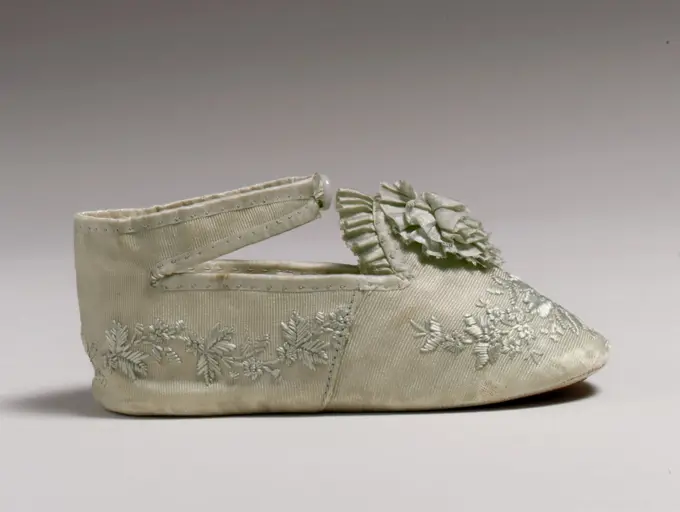
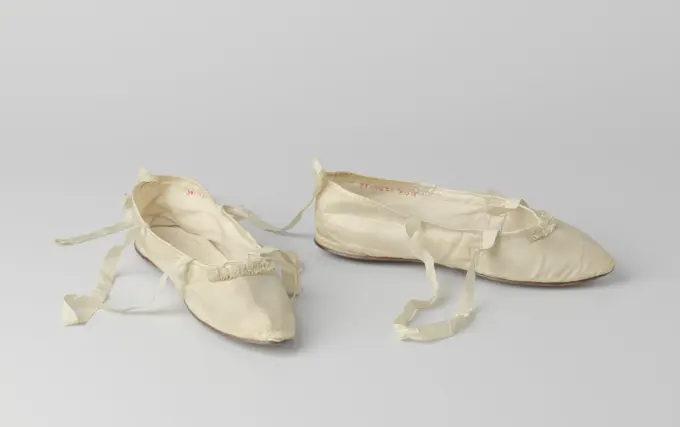
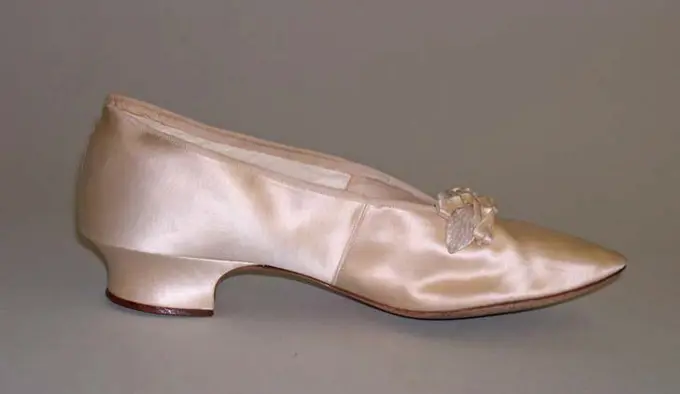
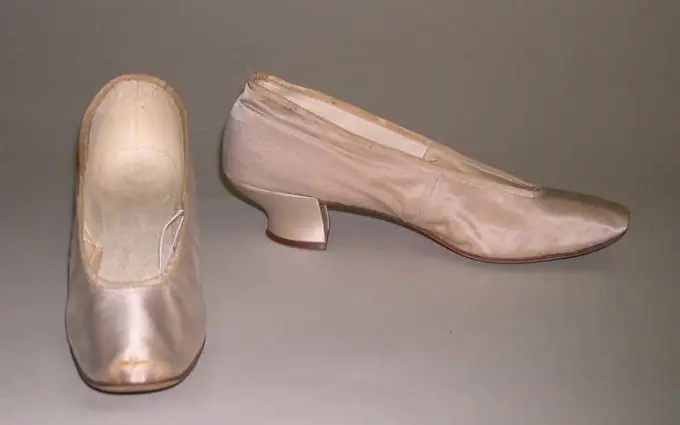
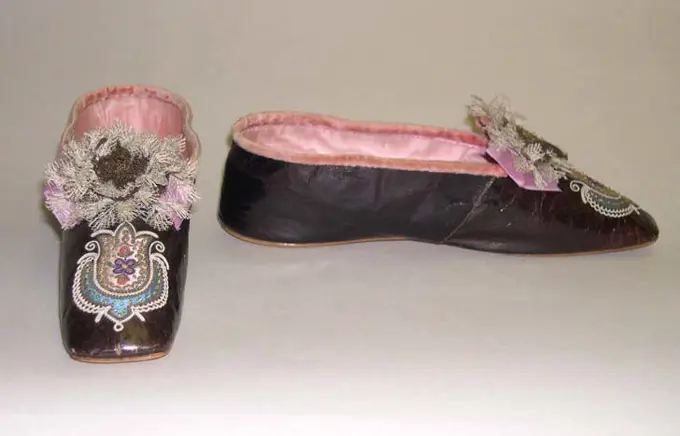
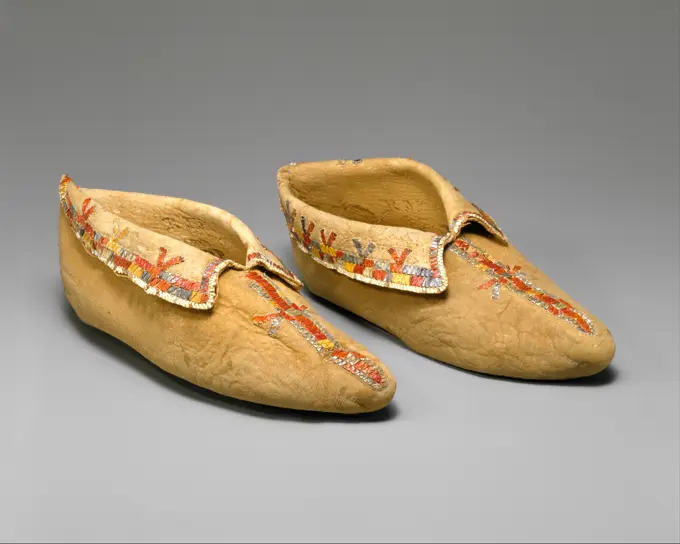
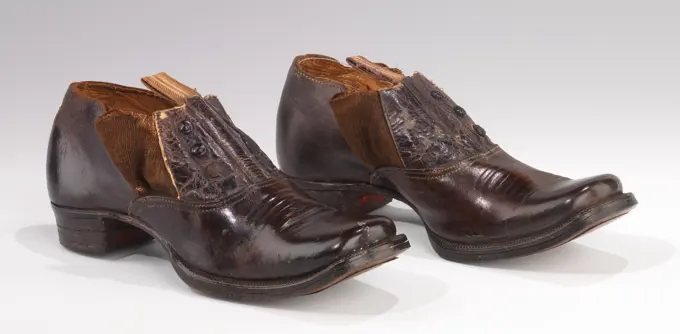
An assortment of vintage shoes including ballet flats, oxfords, and slippers from various eras, showcasing unique materials and designs, demonstrating the evolution of footwear.
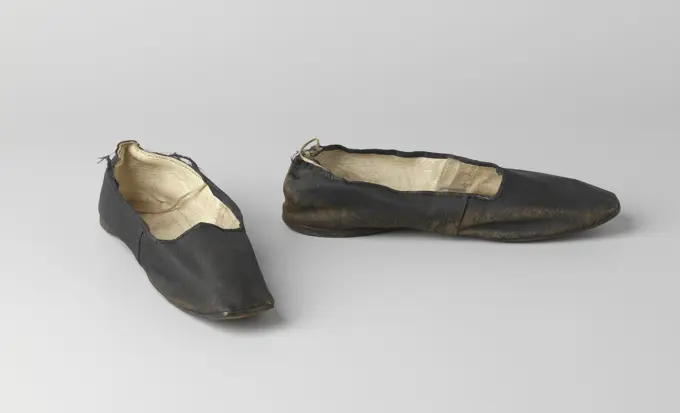
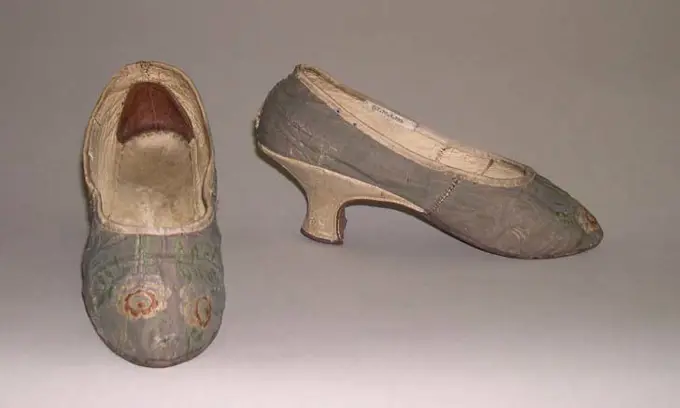
Shoe made of black cotton with small wedge heel, c. 1820 - c. 1840 Shoe made of black cotton. No right/left difference. Built -in heel of one layer of leather. Pointed forefoot. Square nose. Tire closure in a silk omboard. North Netherlands whole: Cotton (textile). Sole: Leather Shoe made of black cotton. No right/left difference. Built -in heel of one layer of leather. Pointed forefoot. Square nose. Tire closure in a silk omboard. North Netherlands whole: Cotton (textile). Sole: Leather
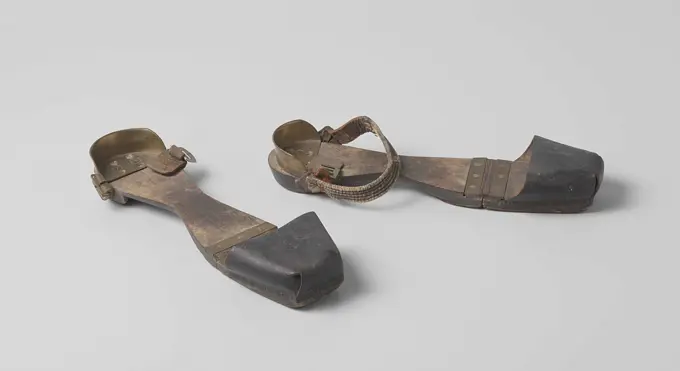
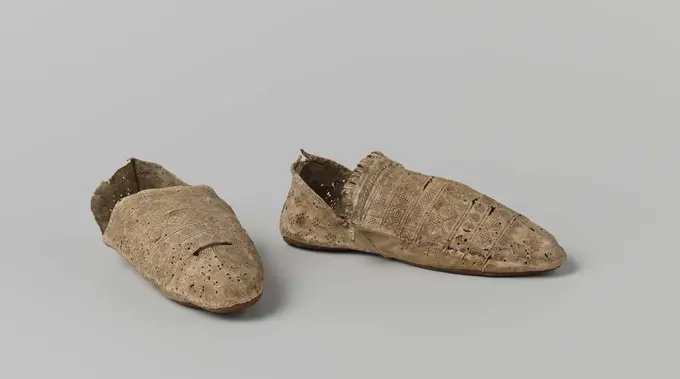
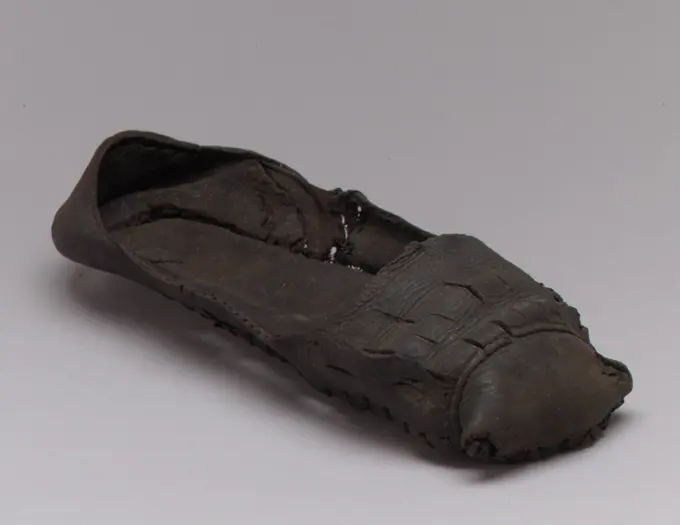
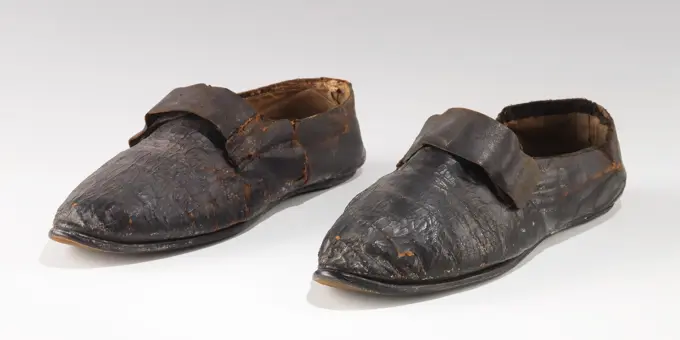
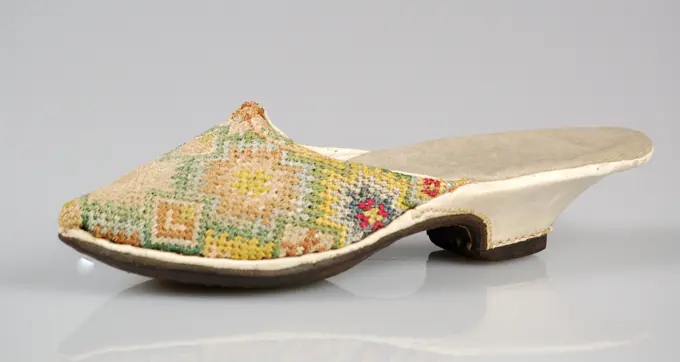
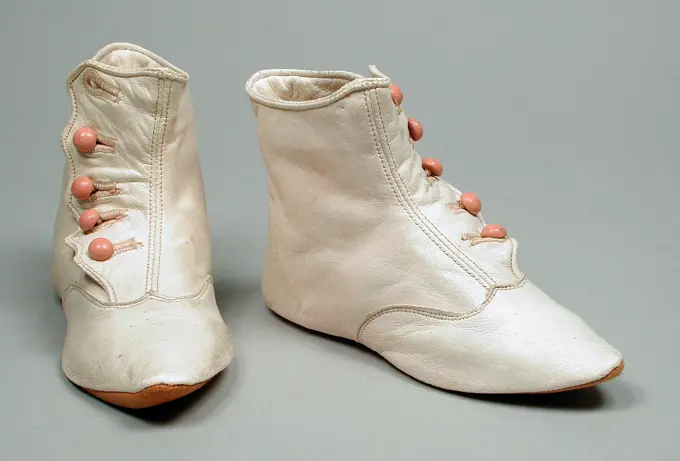
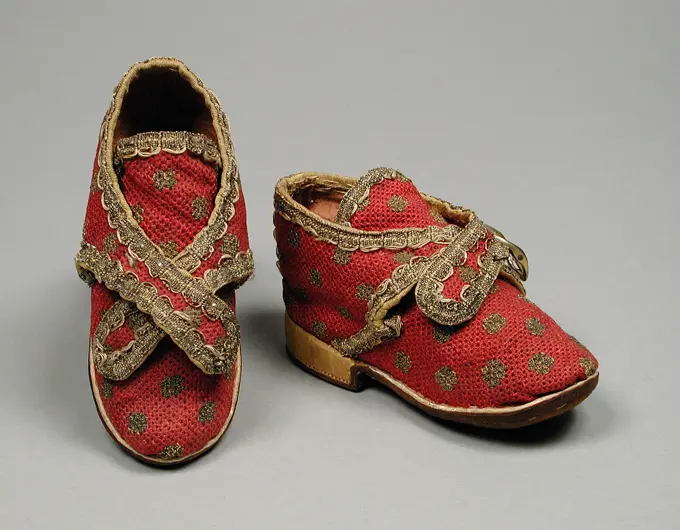
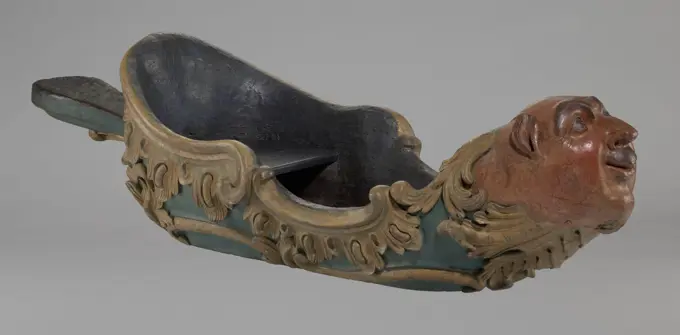
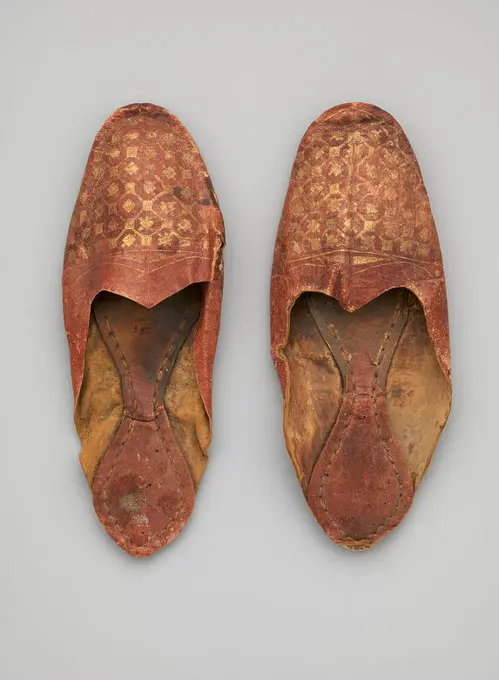
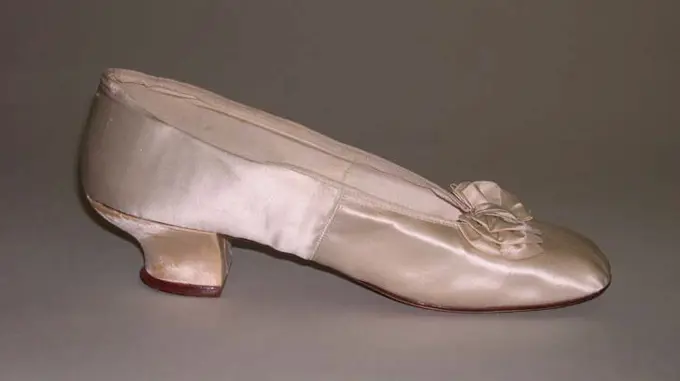
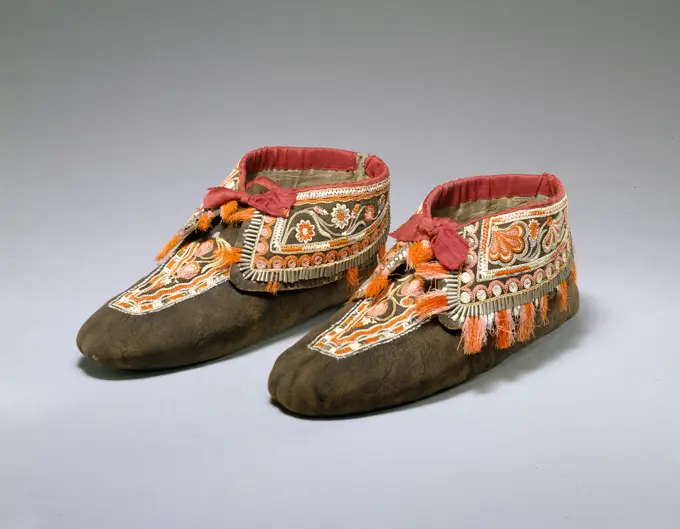
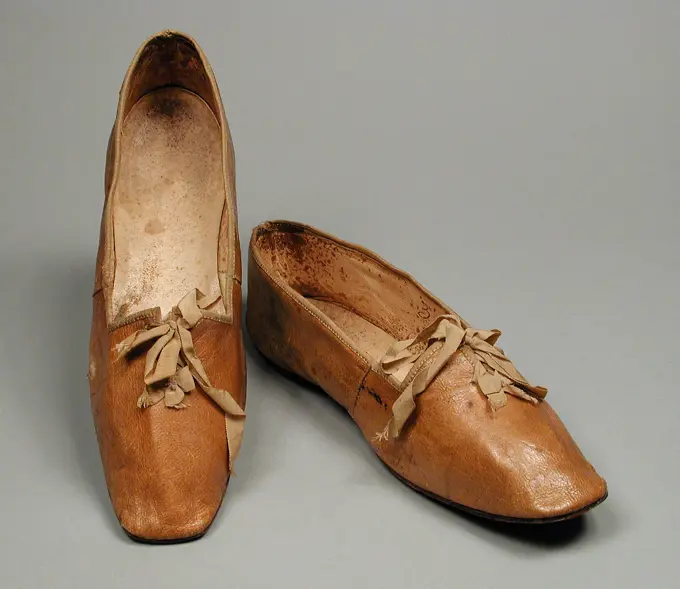
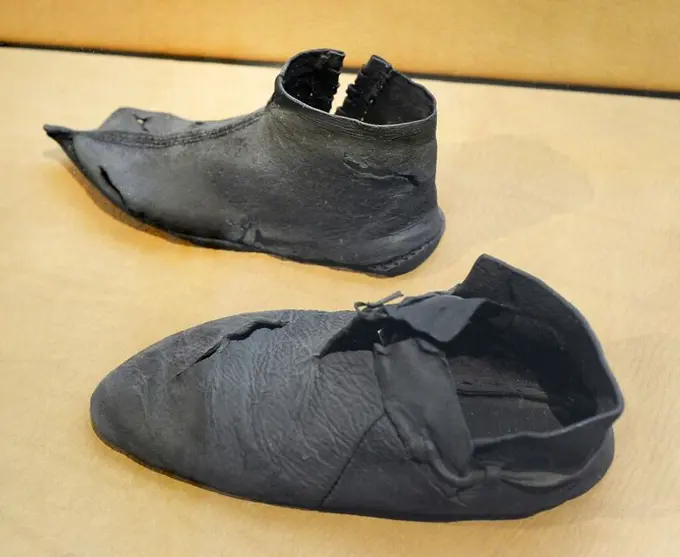
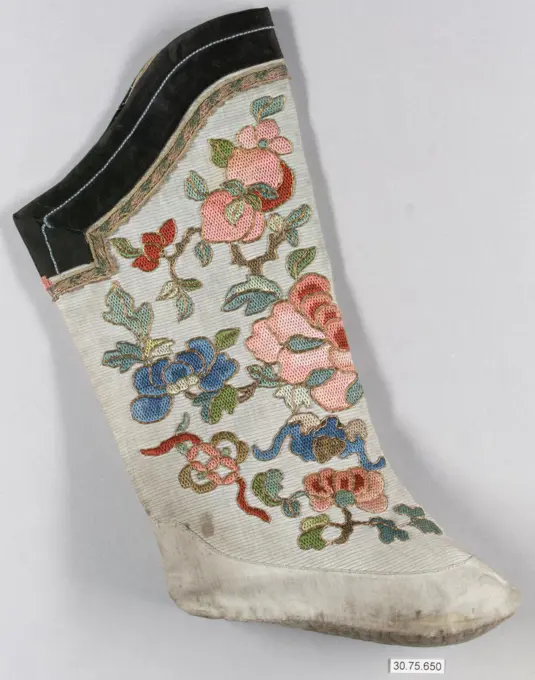
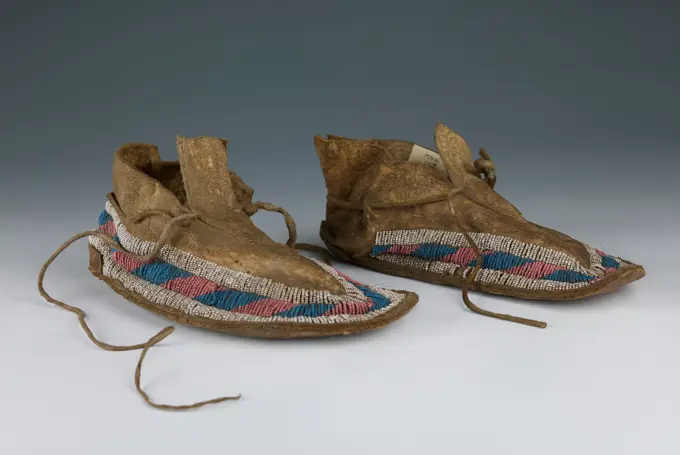
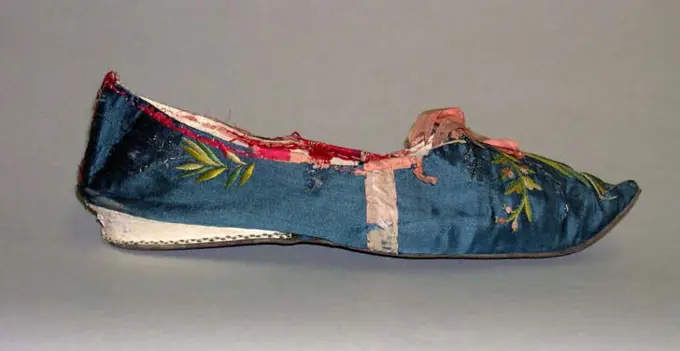
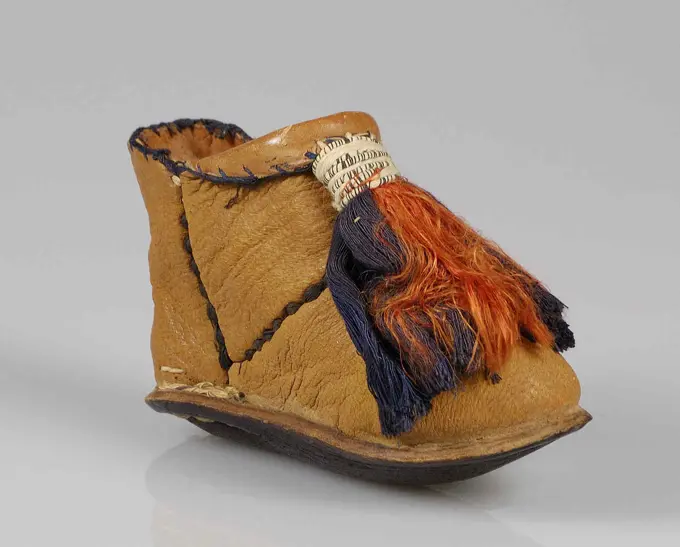
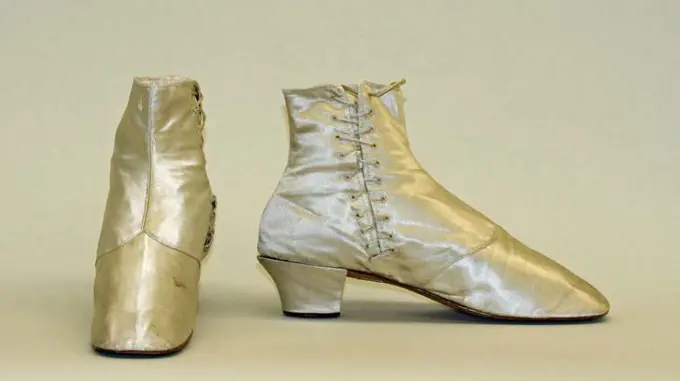
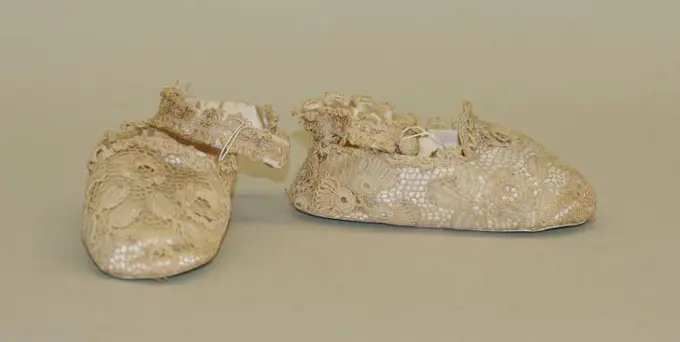
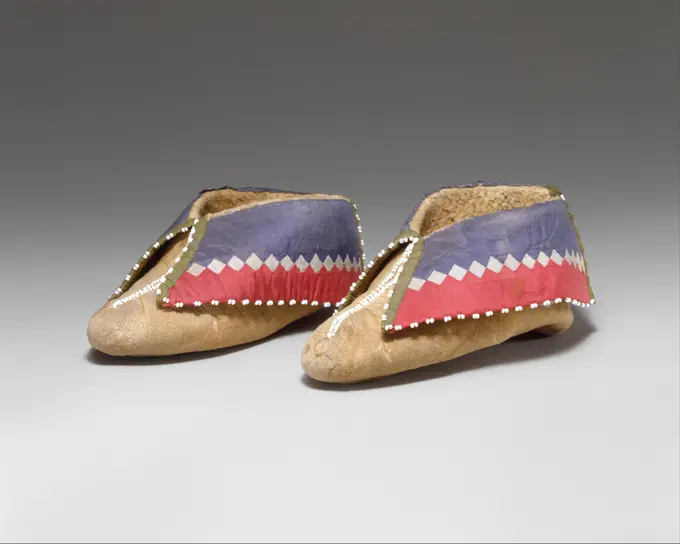
Shoes 1770-89 European. Shoes. European. 1770-89. silkShoe or Muil with soles of wood hinged in the bending of the foot. Shoe or Muil with Soles of Wood Hinges in the Bending of the Foot. Presoleole and Heel or Leather, Square Nose. Heel band and buckles or copper.Shoe made of black leather low model with double plug, anonymous, c. 1750 - c. 1780 Shoe of black leather. Model with lighter pointed nose, heirs and low heel. The shoe is made up of three blades: one front piece and a heel piece from two parts, with the buckle straps sewn on the heel with a angular spanner. The heel is entirely of leather. The shoe is partially lined with white chamois leather. The buckle is on the shoe and is small, oval decorated with a ripple edge North Netherlands whole: Leather. buckle: Metal Shoe of black leather. Model with lighter pointed nose, heirs and low heel. The shoe is made up of three blades: one front piece and a heel piece from two parts, with the buckle straps sewn on the heel with a angular spanner. The heel is entirely of leather. The shoe is partially lined with white chamois leather. The buckle is on the shoe and is small, oval decorated with a ripple edge North Netherlands whole: Leather. buckle: MetalShoes late 18th century European. Shoes 101797Alfred H Smith, Child's Rocking Chair, 1935 1942 Child's Rocking ChairPair of Split-Toe Boots (Jikatabi)Blue leather mouth, decorated with silver thread, anonymous, c. 1740 - c. 1760 Muil, made of blue leather, decorated with silver wire in flower pattern. Hak and lining of white leather. Model: wide rounded forefoot and high hold heel, ending in trapezoidal sole. Some poned stars on the sole. Netherlands whole: Leather. Decoration: Silver thread Muil, made of blue leather, decorated with silver wire in flower pattern. Hak and lining of white leather. Model: wide rounded forefoot and high hold heel, ending in trapezoidal sole. Some poned stars on the sole. Netherlands whole: Leather. Decoration: Silver threadShoe of white chrome leather with Viennese heel and rounded peak nose. Shoe of white chrome leather with Viennese heel. Completed peak nose. Originally did not belong to the wedding gown.Blue textile hat with two shaded white strips, anonymous, c. 1800 - c. 1900  Europe textile materials  Europe textile materialsEvening slippers 1875-85 French. Evening slippers 168346Platte schoen van geiten()leer met versierd voorblad waarin rozetten, ruiten en wafelpatronen zijn gestanst.Flat entry shoe. Model: consisting of three parts: the cover page, heel and a single sole. The cover page and heel are of goats () Learn that is tanned with alum white. The sole is tanned with Ocher 'on its sovers'. The sole is stitches and thick rope on the upper sewn. Decoration: The long cover page is divided into six horizontal tires, in which albning rosettes, windows and waffle patterns are die. The nose is unfromed and only has one narrow, incised vertical edge. The cover page ends on the instep with a broken, stolen double strip of leather, which forms a kind of loops. There is no one of the two shoes. The heel, which consists of two quarters, is decorated with an incised scatteredotive.Shoes 16th century British This shoe is part of a larger collection of objects excavated from an archaeological site on the Thames River in London, which provide an overview of fashionable shoe styles from the mid-fourteenth to the early sixteenth century. Intentional slashing and embossing of the leather were common decorative embellishments.. Shoes. British. 16th century. leatherSlippers 1870-80 probably American. Slippers 104112Shoes 1720s British. Shoes 98225Shoes 1790-1825 British Due to their scarcity, early men's everyday shoes are interesting to the costume historian, even when altered from their original state. The combination of features on this pair of shoes had confused previous collectors over the past two centuries, who had attributed various dates: "Cromwellian" (1649-1653), "Stuart (1603-1714), or “18th Century". Advances in scholarship and careful examination can shed some light on the mystery. The outstanding feature on these shoes is the long latchet which would have held a buckle in the late 17th or 18th century, however close examination reveals that the shoes are constructed as tie shoes, with the long latchet added. This laced closure is not generally seen before the end of the 18th century and furthermore, the latchets on these shoes do not show the same degree of wear as the rest of the shoes, both aspects which suggest the shoes may have been altered for historical fancy dress. The flat heel is also not a feature oneBoots 1840s American or European. Boots 112768Shoe, one of a pair, c. 1900, 7 1/4 x 2 3/4in. (18.4 x 7cm), Silk, leather, China, 19th-20th centuryShoe, one of a pair, c. 1900, 7 1/4 x 2 3/4in. (18.4 x 7cm), Silk, leather, China, 19th-20th centuryBoots 1900-1910 Peal & Co., Ltd. British. Boots 90410Shoes 1878 American or European. Shoes 104033A pair of slippers unknownPair of Childs Shoes. United States. Date: 1701-1725. Dimensions: Length: 4 1/2 in. Leather; pointed. Origin: United States. Museum: The Chicago Art Institute, Chicago, USA.Pair of mules.These floral silk mules were for indoor wear, since the expensive material would be spoiled outdoors. Leather was more suited for the street. Mules were a part of for the 18th-century gentlemans at home attire, along with a banyan (housecoat) and a house cap.Bridal shoe made of cream -white satin with bows, Manfield (Possibly), in or before 1890 Bridal shoe made of creamy white satin, with ditto bows. Pump with pointed nose. From one front sheet and one back leaf. On the sole an address in blind pressure (not easy to read): Manfield (). Lined with glacé leather. At the entry a bow of satin. With Manfield box (uncertain if it belongs to the shoes). maker: England (possibly)maker: Netherlands (possibly) whole: Satin Bridal shoe made of creamy white satin, with ditto bows. Pump with pointed nose. From one front sheet and one back leaf. On the sole an address in blind pressure (not easy to read): Manfield (). Lined with glacé leather. At the entry a bow of satin. With Manfield box (uncertain if it belongs to the shoes). maker: England (possibly)maker: Netherlands (possibly) whole: SatinShoes mid-19th century American Like that of their parents, children's footwear in the nineteenth century could be lavishly ornamented, as this elegant pair of booties attests. Throughout the century, wealthy children were dressed in smaller versions of the garments worn by adults, although practical clothing for play came into vogue at the beginning of the twentieth century. These leather-soled booties were intended for a slightly older child and most likely made by a professional, but knitted or hand-sewn booties were also a common part of an infant's layette in the nineteenth century.. Shoes. American. mid-19th century. silk, cotton, leatherShoe made of white taf side, c. 1800 - c. 1810 Shoe made of white taf side. No left/right difference. Continuous pointed sole, no heel, narrow rough along the cut cover. Crucench straps made of ribbon. Leather North Netherlands whole: Silk Shoe made of white taf side. No left/right difference. Continuous pointed sole, no heel, narrow rough along the cut cover. Crucench straps made of ribbon. Leather North Netherlands whole: SilkSlippers 1894 J. & J. Slater American. Slippers 102361Mules early 18th century European. Mules 168953Pumps 1880s Russian. Pumps 112821Slippers 1830s American or European. Slippers 112719Child's Boots. United States, 1890-1900. Costumes; Accessories. Leather with enameled metal buttonsChild's Shoes. probably France, 1730s. Costumes; Accessories. Sik plain weave (taffeta) with silk and metallic-thread embroidery (needlepoint) and silk and metallic-thread passementeriePair of womens shoes with pointed toe, anonymous, c. 1900 - c. 1910 Pump from golden -yellowed glacéle leather, decorated with gold/brown beads. Pump model. Very pointed nose and low 'Pompadour' heel. On the nose is decorated with a large triangle of flower branches. Belgium whole:. Beads: Steel (Alloy) Pump from golden -yellowed glacéle leather, decorated with gold/brown beads. Pump model. Very pointed nose and low 'Pompadour' heel. On the nose is decorated with a large triangle of flower branches. Belgium whole:. Beads: Steel (Alloy)Pair of Shoes Made 1760-1789 France. Leather, silk, satin weave .Ankle boot - Best & Co. Best & Co.Linen shoe embroidered with flowers and branches.Dolls of Linen Embroidered With Flower branches in Blue, Cross Stitch. A Pink Rose On The Cover. No whole, Square Nose.Slippers mid-19th century American. Slippers 112775Woman's Slipper. Dated: c. 1937. Dimensions: overall: 35.4 x 24.6 cm (13 15/16 x 9 11/16 in.). Medium: watercolor, pen and ink, and graphite on paper. Museum: National Gallery of Art, Washington DC. Author: Ann Gene Buckley.Salichtad sleigh;  3. W. 18th century (1750-00-00-1775-00-00);Leather Shoe with Gilded Decoration. Dimensions: 9.25 in. long (23.5 cm long). Date: 4th-7th century.Documentary and archaeological sources attest to the variety of footwear in Byzantine Egypt. Written evidence suggests that sandals were worn by government officials, slippers by monks and clergy, and boots by soldiers and laborers; the poorest members of society would have gone barefoot.The gold that creates the lattice pattern was stamped onto the red leather of this sumptuously decorated shoe. Museum: Metropolitan Museum of Art, New York, USA.Slippers ca. 1882 American. Slippers 98147Pair of Shoes, 2 1/2 x 9 x 3 in. (6.35 x 22.86 x 7.62 cm) (each), Cotton, paper (), ChinaLadies shoe of ivory white satin with tie with multiple loops and in the middle glass beads, anonymous, c. 1890 Ladies shoe from ivory white satin. Model: rounded nose, one cover sheet and one back leaf. The front of the heel runs straight down. The side and back of the heel are fitted and covered with ivory white satin. The heel has a dark brown edge leather from the behind lip. Learning behind with eight nails stuck to the heel and leather sole. Rear leaf lined with ivory white leather, cover page lined with beige linen. The insole is of ivory white leather. Decoration: in the middle for the cutting on the for shoe. Decorated with bow of ivory white satin. The bow has six loops of different sizes on both sides. Two rows of glass beads are attached in the middle of the bow. Schachtrand pissed off with ivory white rip band. England Shoe: Silk. Beads: Glass. Strik: Silk. band:. Hak: Silk. Rest lining: Leather. Fore tray: Linen (Material). insole: Leather. sole:. behind Lap:. Nail: MetalMile of embroidered silk, anonymous, anonymous, c. 1700 - c. 1800 Muiltje, part of a pair of embroidered pink silk. Model: Highly rising wide flattened nose and built -in flat heel; Double sole with linen lined midsole. Insole of fire red leather. Decoration: embroidered with flower vines, lovers and edge decoration. southeast Asia silk. linen (material). leather Muiltje, part of a pair of embroidered pink silk. Model: Highly rising wide flattened nose and built -in flat heel; Double sole with linen lined midsole. Insole of fire red leather. Decoration: embroidered with flower vines, lovers and edge decoration. southeast Asia silk. linen (material). leatherMile of embroidered silk, anonymous, anonymous, c. 1700 - c. 1800 Muiltje, part of a pair of embroidered pink silk. Model: Highly rising wide flattened nose and built -in flat heel; Double sole with linen lined midsole. Insole of fire red leather. Decoration: embroidered with flower vines, lovers and edge decoration. southeast Asia silk. linen (material). leather embroidering Muiltje, part of a pair of embroidered pink silk. Model: Highly rising wide flattened nose and built -in flat heel; Double sole with linen lined midsole. Insole of fire red leather. Decoration: embroidered with flower vines, lovers and edge decoration. southeast Asia silk. linen (material). leather embroideringWedding shoes 1840-49 Esté French. Wedding shoes 170488Woman's Shoes. probably United States, 1830s-1840s. Costumes; Accessories. Silk satin with silk plain weave ribbon and leatherPair of Moccasins 1790-1815 Huron. Pair of Moccasins. Huron. 1790-1815. Native-tanned and dyed skin, silk, quill, deer and moosehair, metal. Canada, Quebec. Hide-CostumesWoman's Shoes. United States, circa 1830. Costumes; Accessories. Leather with silk and cotton grosgrain ribbonLE PIED (EL PIE) - 1934-1936 - BRONCE - 22x27,5x8 cm. Author: Julio Gonzalez. Location: MUSEO REINA SOFIA-ESCULTURA. MADRID. SPAIN.Shoes 1870s probably American. Shoes 110139Wedding slippers 1883 American. Wedding slippers 112829Evening slippers 1830-39 East British. Evening slippers 168931Boots ca. 1900 American. Boots 94531Wedding shoes 1872 American. Wedding shoes 115818Slippers 1891 American. Slippers 102325Slippers ca. 1863 British. Slippers 83762Match Holder, 1850-1900. Pinto Collection - Purchased from Edward H Pinto, 1965.. The Tyrolean region of Switzerland and Austria specialised in producing small wooden trinkets which were mostly sold as souvenirs to tourists. The popularity of Cook's tours in the 1850s opened up the Alpine region of central Europe and had a powerful effect on local woodworking industries. The quality of woodworking varied greatly. This example of match holder carved in the shape of a child's boot shows a considerable degree of accuracy in its detail and, although it would not have belonged to the luxury end of the market, it demonstrates the carver's great pride in his work.Shoes 18th century British. Shoes 137472Socks fourth quarter 19th century Macedonian These socks display a skillful use of color, used in creating a multitude of floral, geometric and stylized goddess figure motifs. The use of embroidery creates an additional layer of visual interest and richness. Although identified as from the Macedonian town of Servia, which lies west of Mt. Olympus, as a result of the 1913 Partition, Servia in 2008 lies within the Kozani prefecture of Greece.. Socks 158354Zapatos de hombre, siglo XVII. Museu del Disseny de Barcelona.Pair of Moccasins ca. 1808 Seneca. Pair of Moccasins 319219Shoes early 19th century Italian. Shoes 98398Shoes 19th century American or European. Shoes 112736Left postillion boot. Left postillion boot with traces and a flat sole. Double shaft, secured with five buckles. Knee juice backed down low.Shoes early 18th century European. Shoes 162900A pair of slippers unknownYellow shoe with purple bow from Faïence, Anonymous, c. 1750 - c. 1775 Faïence shoe. Multicolored painted. Delft . Faïence shoe. Multicolored painted. Delft .Shoes ca. 1890 American It is commonly held by fashion historians that through most of history children were dressed as miniature adults once they had passed the age of infancy. While the cuts and favored trimmings frequently correlate, the more extreme adult styles were seldom applied unmodified to childrenswear. It is therefore particularly exciting to find in boyswear this faithful miniature of high-style men's shoes. The design is rendered exactly as seen in adult styles at the time, including the square upturned toe, incised lines on the vamp, and mock button closure with elastic side gores. These shoes were rescued from the ruins of an abandoned shop, so we can only image the little dandy up to the task of wearing such an advanced style.. Shoes 157879Schoen gedragen door Jhr. Mr. Dr. A.W.L. Tjarda van Starkenborch Stachouwer.Shoe worn by jhr. Mr. Dr. A.w.l. Tjarda van Starkenborch Stachouwer, received after the liberation from a Japanese camp in 1945 from an American soldier. Heavy brown leather semi-high shoe, closing to the ankle with leather and rubber on it, sole with nails. Inscription sole right and left: 'Wingfoot Goodyear'. Left: 'Beebe Bros'. Inside: 'E'. Brown laces.Shoes from the Joseon period, made from silk, leather, felt soles, hide and metal nails. Dated 19th CenturyAccessory set 1887 British. Accessory set 83765Slippers 1866 French Worn by a girl of five years in age, these decorative slippers are a miniature version of an extremely popular women's style of the 1850s and 1860s. Bronze kid slippers with an elaborate chain-stitched cutout medallion on the vamp backed in colored silk were sometimes known as "chameleon shoes", as on some models the silk backing was removable, and could be interchanged with another color to complement the wearer's dress. Despite the elaborate appearance, this type of shoe was worn for morning dress, not for formal occasions.. Slippers 157984Anonymous, pair of shoes (usual name), 1700. Silk   Blue and yellow green  , pink, brown and blue decor, white leather heel. Palais Galliera, fashion museum of the city of Paris. Bouquet of small roses.Evening slippers Esté French 1860-69Spanish of wood, anonymous, c. 1950 - c. 1970 Right span of wood with metal hinge and ring. Belonging to pumps of dark blue suede decorated with dark blue snake leather. West-Europa whole: Wood (plant material). whole: Metal Right span of wood with metal hinge and ring. Belonging to pumps of dark blue suede decorated with dark blue snake leather. West-Europa whole: Wood (plant material). whole: MetalPumps 1860s French. Pumps. French. 1860s. leatherA pair of shoes with uppers unknownScandinavian. Medieval Shoes from Oslo. C. 1200-1300. Historical Museum. Oslo. Norway.Child's Boot (one of a pair) 18th-19th century China. Child's Boot (one of a pair) 68781Slipper of red leather and red velvet with silver wire embroidered, anonymous, c. 1820 - c. 1850 Slip of red leather and red velvet with silver wire embroidered. No difference between left and right. Model: Round nose, a loose cover and a loose back leaf. Small straight heel of leather and leather sole. Fully lined with red leather. Decoration: The red velor is completely embroidered with silver wire and with palettes. In a pattern of flowers and branches. Turkey whole: Leather. whole: Silk. Decoration: Silver thread embroidering Slip of red leather and red velvet with silver wire embroidered. No difference between left and right. Model: Round nose, a loose cover and a loose back leaf. Small straight heel of leather and leather sole. Fully lined with red leather. Decoration: The red velor is completely embroidered with silver wire and with palettes. In a pattern of flowers and branches. Turkey whole: Leather. whole: Silk. Decoration: Silver thread embroideringKnee -high boot of yellow beef leather, with a covered cover at the top of the shaft, Anonymous, 1913 Knee -high boot of yellow cattle leather with a cover -off cover at the top of the shaft. The boot has a square nose and a low straight heel. The sole, heel and seam in the middle are red. Delft (possibly) whole:. Decoration:   Delft Knee -high boot of yellow cattle leather with a cover -off cover at the top of the shaft. The boot has a square nose and a low straight heel. The sole, heel and seam in the middle are red. Delft (possibly) whole:. Decoration:   DelftSlippers 1870-75 American. Slippers 168760For Pantofli unknownShoes late 18th-early 19th century Italian. Shoes 98400Boots 1850-99. Boots 175873Slippers mid-19th century British. Slippers 84623Wedding slippers 1856 American. Wedding slippers 168712Boots 1850-60 European. Boots 90414Shoes 19th century probably European. Shoes 168964Shoes 19th century American. Shoes 104066Left shoe of gold leather with belt over the rubbed and copper knot with decorated with rhinestone. Puntneus, a cover page with two side blades. Heavy high heel, slightly out.Shoe. Dated: 1935/1942. Dimensions: overall: 23.3 x 23.1 cm (9 3/16 x 9 1/8 in.). Medium: watercolor, graphite, and colored pencil on paperboard. Museum: National Gallery of Art, Washington DC. Author: Virginia Berge.Pair of Moccasins 1810-15 Wyandot or Shawnee. Pair of Moccasins 319105Eating spoon -Right postillery boots, c. 1775 - c. 1800  Right -to -house boots with traces and a flat sole. Double shaft, fixed with five buckles. Knee cutting backwards. This boot has a vertical band for reinforcement on the outside. Netherlands leather. iron (metal) forging / cuttingEvening shoes 1850s British. Evening shoes. British. 1850s. silk, leatherEvening slippers 1845-65 P. Rouillier. Evening slippers 168920Wedding slippers 1864 American Simple flat cream satin slippers were a common choice of brides throughout the 19th century. If the wearer preferred a more modern appearance, the style could be updated by adopting the current mode of trimming and, after 1850, by the addition of a heel. This pair of classic mid-nineteenth century wedding slippers has been made fashionable the inclusion of a large cockade-style rosette and small heel, which has been nailed onto a finished flat sole. They were worn by Brooklyn bride Mary Annie (Anna) Kimball for her marriage to De Witt Clinton Blair in 1864.. Wedding slippers 156329Shoe made of brOOCHED SIDE, Anonymous, c. 1680 - c. 1690 Doll shoe from red browned silk, red, fairly high heel. Square nose, high rising cover, on which two lips close. The heel is exaggerated with red leather, Netherlands (possibly) whole: Silk. whole: Leather Doll shoe from red browned silk, red, fairly high heel. Square nose, high rising cover, on which two lips close. The heel is exaggerated with red leather, Netherlands (possibly) whole: Silk. whole: Leather