Historical Fragments and Artifacts

A collection of ancient fragments and artifacts, including decorative pottery, scarabs, and inscriptions, reflecting diverse historical cultures.
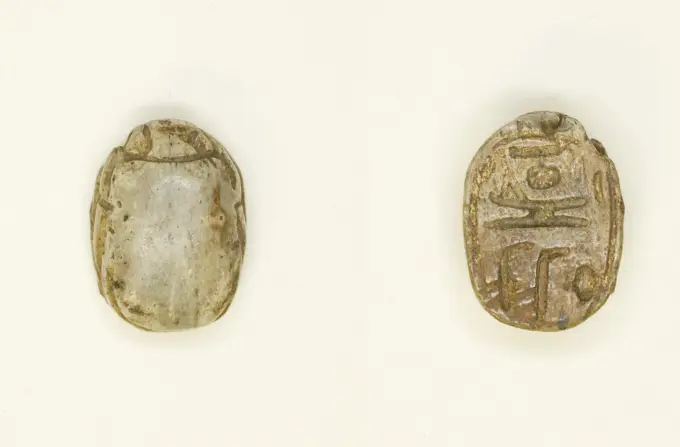
Scarab Amun-Re 1550 BCE-525 BCE Egypt. Steatite . Ancient Egyptian
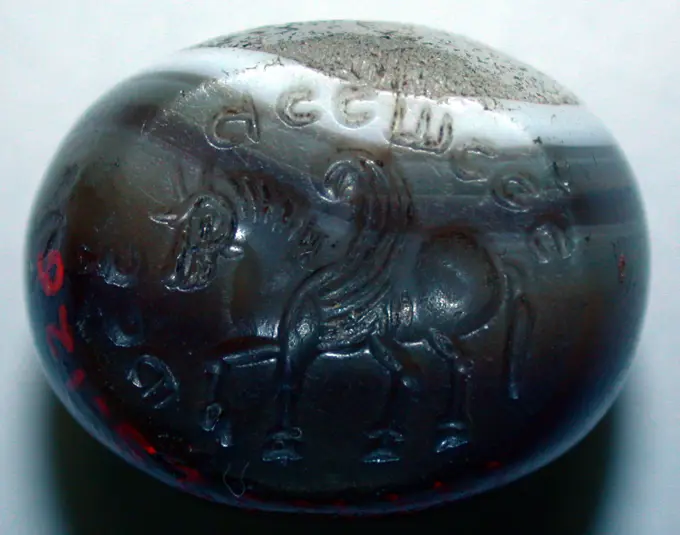
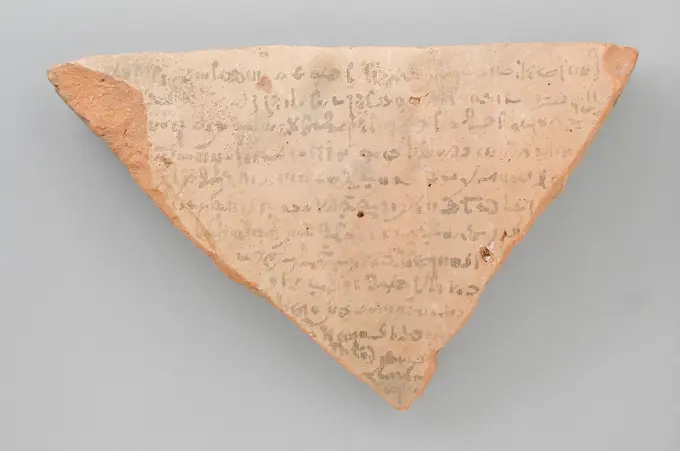
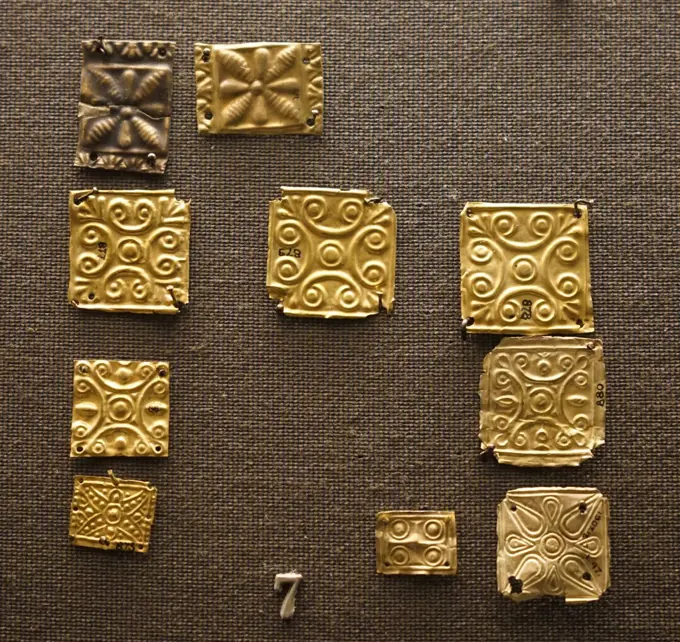
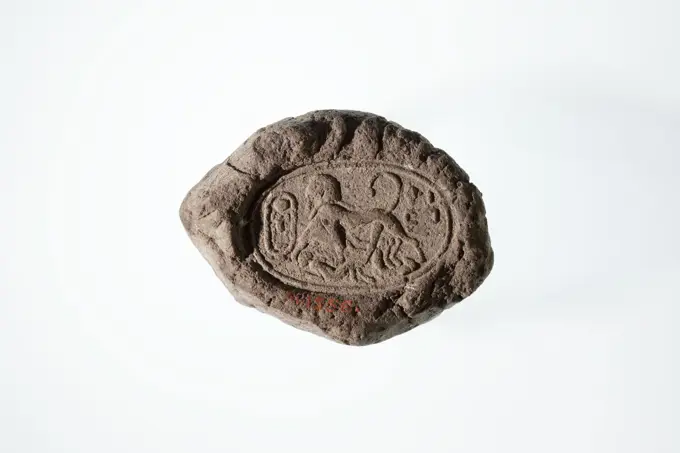
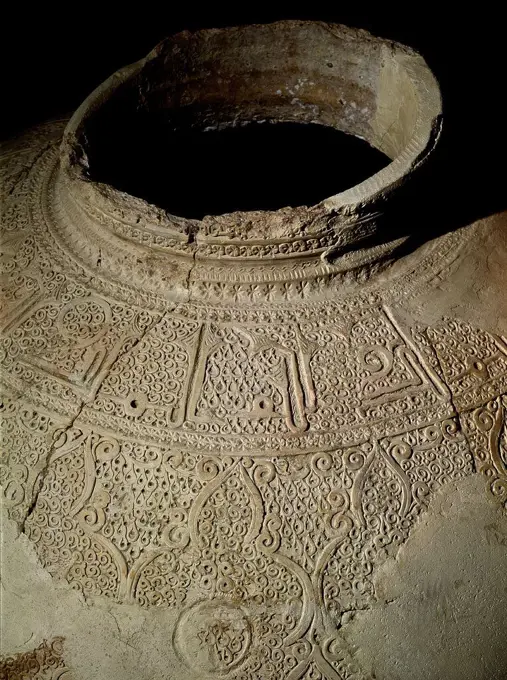
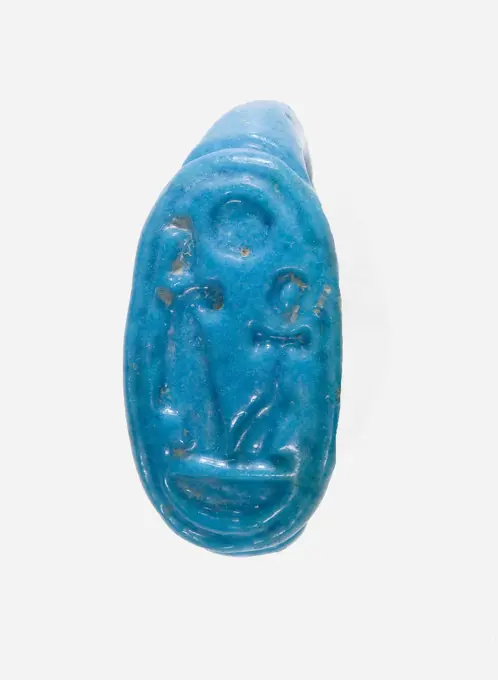
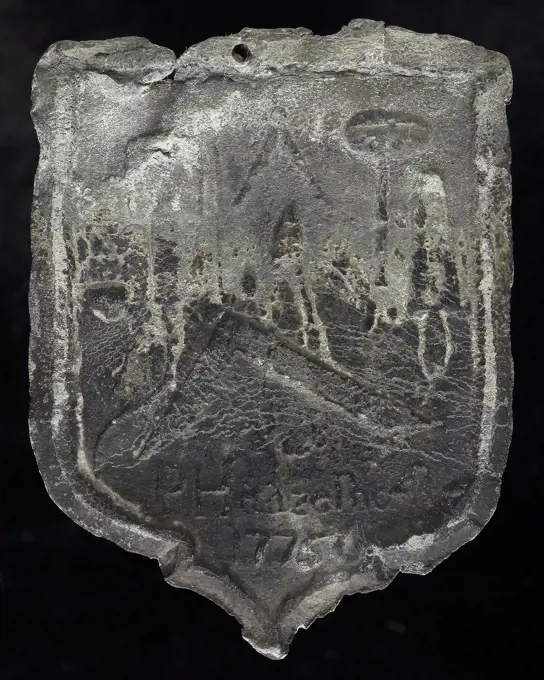
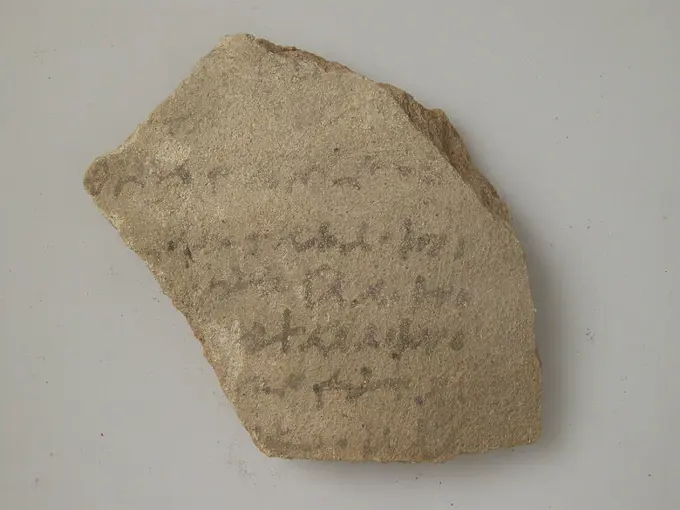
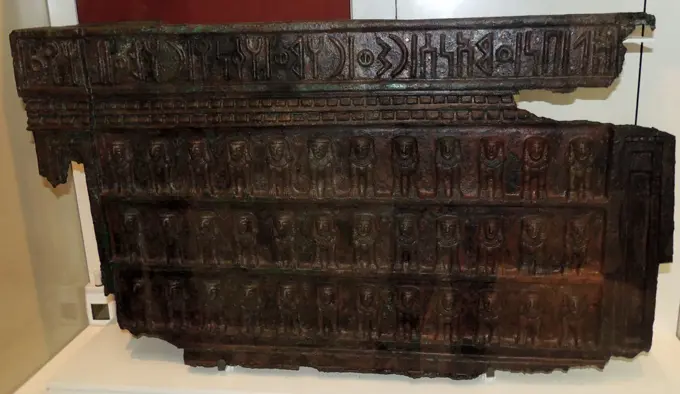
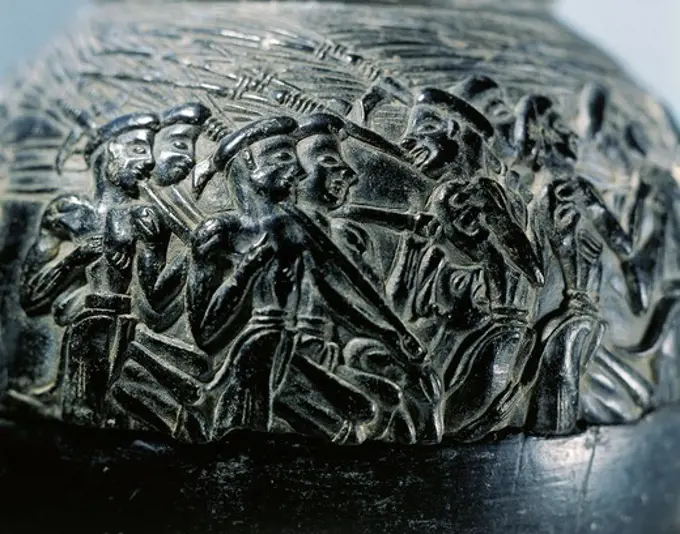
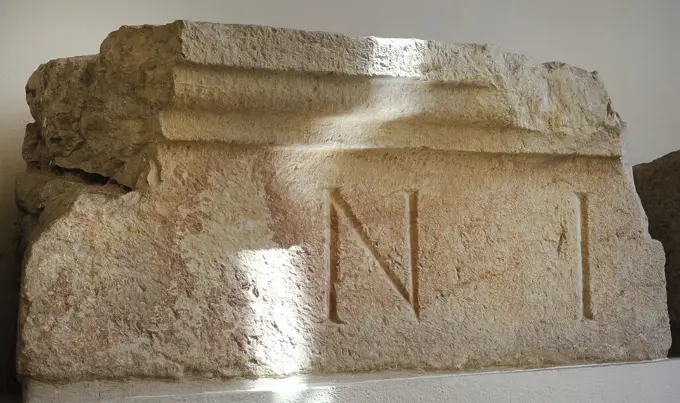
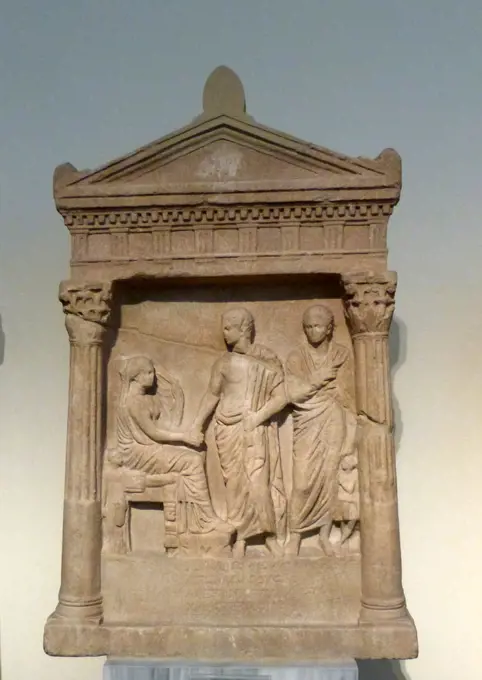
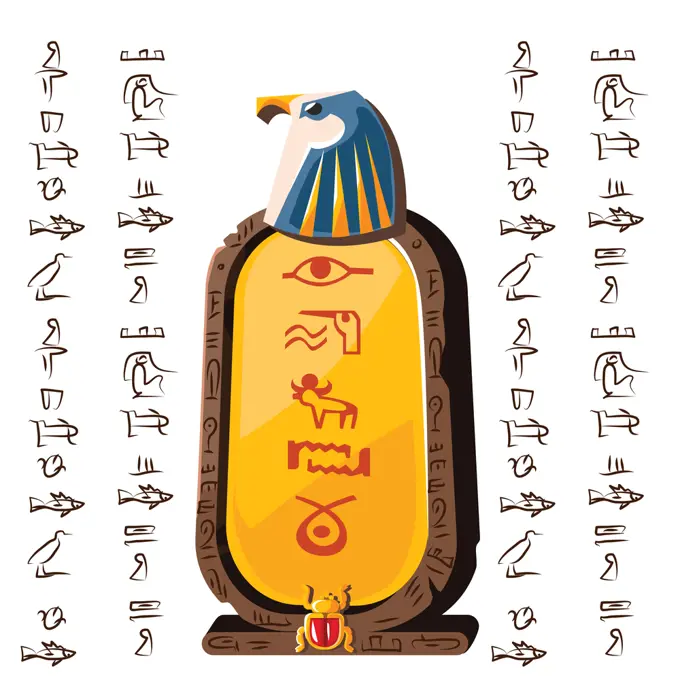
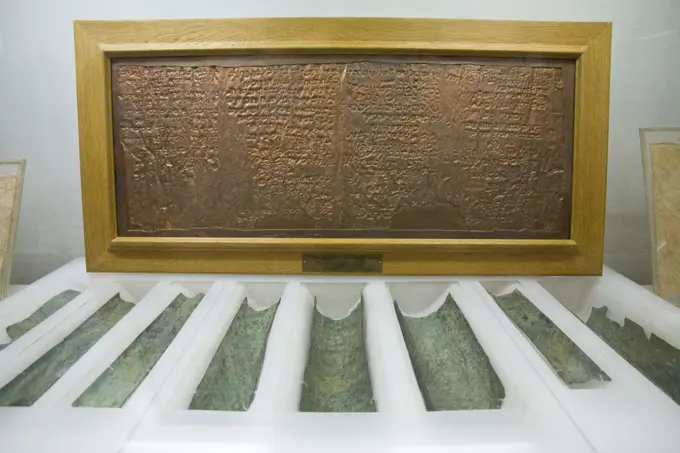
Jordan, Amman. Biblical Dead Sea Scrolls found in Jordan displayed in Jordan Archeological Museum.Stamp seal with Pahlavi inscription ca. 3rd-7th century A.D. Sasanian. Stamp seal with Pahlavi inscription 327722ok, baked; Chocz; XVII century (1601-00-00-1700-00-00);Chocz (coat of arms), Chocz (Greater Poland Voivodeship), Polish Sightseeing Society (Warsaw - 1906-1950), Dar (provenance), urban seals, official seals, seals with a coat of arms, seals with a monogramOstracon with Small Scale Demotic Inscription. Egypt, Ptolemaic Period - Roman Period (332 BCE - 300 CE). Tools and Equipment; ostraka. TerracottaEmbossed decorative gold tiles from ancient Greece.Garden Pot, 19th Century. Italy, 19th century. Stone; overall: 39.4 x 53.4 cm (15 1/2 x 21 in.).Seal impression ca. 1336-1327 B.C. New Kingdom, Amarna Period The Egyptians did not have locks and keys. Instead, they would secure a chest or other container with a piece of knotted cord. A lump of clay was put over the knot and a seal was pressed into the clay. The cord would have to be cut, or the seal broken in order to open the container and remove the contents.This clay sealing preserves a seal impression about the size of a ring that may have served as an official seal. The impression has the trone name of Tutankhamun, Nebkheperure, in the cartouche at the left. The king is represented as a sphinx trampelling an enemy.. Seal impression. ca. 1336-1327 B.C.. Clay (unfired). New Kingdom, Amarna Period. From Egypt. Dynasty 18DETALLE - TINAJA MURCIANA ESTILO ALMOHADE - SIGLO XIII - DECORACION ESTAMPILLA. Location: INSTITUTO VALENCIA DE DON JUAN-COLECCION. MADRID. SPAIN.Tombstones, Whitaker Museum, Phoenician island of Mozia, outpost for merchants and seafarers, 12th century BC, Sicily, Moiza, Sicily, Italy, EuropeFragment of the Greek dedication inscription;  End of the Ptolemean period or the beginning of the Roman period (-70-00-00-1-00-00);Terracotta fragment of a kylix (drinking cup) 470-460 B.C. Greek, Attic Interior, bearded man with a fillet, wearing a himation draped across his body and over his left shoulder, with his right arm extended. Terracotta fragment of a kylix (drinking cup). Greek, Attic. 470-460 B.C.. Terracotta; red-figure. Classical. VasesRing Inscribed with the Throne Name of Amenhotep III ca. 1390-1352 B.C. New Kingdom Many complete and fragmentary faience rings were excavated by the Museum at Malqata, which is located on the west bank of the Nile opposite the modern city of Luxor. Malqata was the site where Amenhotep III celebrated his three rejuvination festivals (called heb-sed in ancient Egyptian). This ring is inscribed with the king's throne name, Nebmaatre, which means "Re (the sun god) is the lord of truth." A clearer rendering of the name may be seen on another blue faience ring that was also excavated at Malqata.. Ring Inscribed with the Throne Name of Amenhotep III. ca. 1390-1352 B.C.. Faience. New Kingdom. From Egypt, Upper Egypt, Thebes, Malqata, Palace of Amenhotep III, MMA excavations, 1911-12. Dynasty 18P. Haazelhorst, Roof bonnet, shield-shaped cover plate with name HAAZELHORST, 1776 and guide tool, lead hallmark lead metal, Roof bonnet shield shaped cover of the nails with embossed various slate tools and the name of the plumber P. HAAZELHORST 1776 on plate: P HAAZELHORST 1776 slaterElement with cartouche of Akhenaten and of Aten on opposite sides ca. 1353-1336 B.C. New Kingdom, Amarna Period. Element with cartouche of Akhenaten and of Aten on opposite sides 567637Signet Matrix. - Seal Matrix, 1750-1800. Possibly made in Birmingham. Presented by Francis Buckley, 1934.. A 'signet' or 'seal matrix' is a small stamp used for impressing the mark of its owner in wax onto documents.This is one of a collection of twenty-seven acquired by the museum in 1934. The majority of examples are finely made of moulded translucent glass, in this case purple. The inscription, 'TOUJOURS FIDELE', (always faithful), suggests this example may have been intended as a love token.Artifacts, Copan Ruins, Maya Site of Copan, UNESCO World Heritage site, HondurasOstrakon. Culture: Coptic. Dimensions: H: 2 5/16 in. (5.9 cm); W: 2 1/2 in. (6.3 cm); Depth: 5/16 in. (0.8 cm). Date: 4th-7th century. Museum: Metropolitan Museum of Art, New York, USA.Bronze Tablet with Inscription 2nd Century B.C. Tablets such as these would have been nailed to walls of temples as dedications made to the gods. Yemen. Stamp Seal. Iran, 224-651. Tools and Equipment; seals. Chalcedony4 Momme 6 Fun fromAkita.  Mint: Akita Artist: UnknownFragment 9th century. Fragment 450131Letters on the big stone in Wadi Rum desert, Jordan            Vase of Reaper' in black steatite, from Aghia Triadha (Hagia Triada), Island of CreteRelief with conversation scene, from Chiusi, Siena province, ItalyCylinder seal ca. 5th century B.C. Achaemenid. Cylinder seal 325720Exhibits (Zapotec artifact) in the Museum of the Cultures of Oaxaca, which is located in a former monastery next to the Church of Santo Domingo de Guzman in the city of Oaxaca de Juarez, Oaxaca, Mexico.Fragments of the crowning of the podium of the amphitheater. 218-222 AD. With inscription dedicated to the emperor Elagabalus. Tarragona, Spain.National Archaeological Museum. Tarragona. Catalonia, Spain.Grave stele made of marble, found on Rheneia. The monument has two Corinthian half-columns supporting an epistyle and a frieze with triglypus and metopes. A standing man wearing a himation shakes hands with a seated woman. Next to her seat is a little girl. The scene is completed by a male figure at the right and in the corner is a young slave. 110-90 BC18th century Child token, given to the Foundling Hospital in London. Mothers left tokens with their babies, so that, if circumstances improved for them, the mothers could reclaim their children. The Foundling Hospital in London, England, was founded in 1739 by the philanthropic sea captain Thomas Coram. It was a children's home established for the "education and maintenance of exposed and deserted young children Stone board or clay tablet with falcon head and Egyptian hieroglyphs cartoon vector illustration Ancient object for recording storing information, graphical user interface for game design on white. Stone board, clay tablet and Egyptian hieroglyphs