Historical Headgear

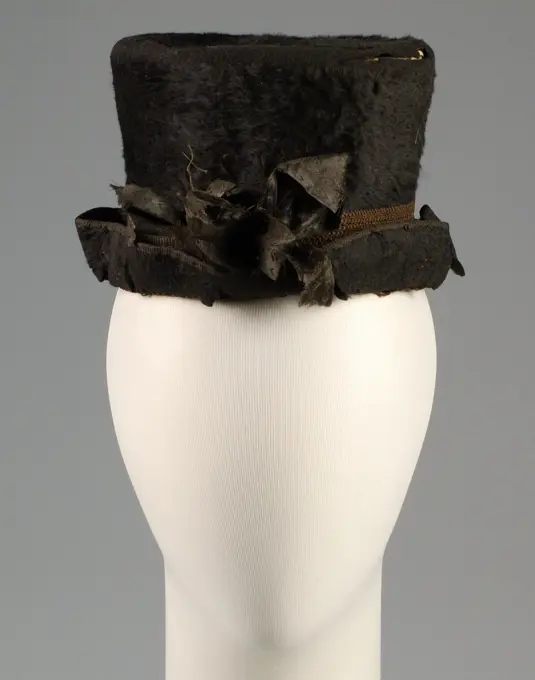
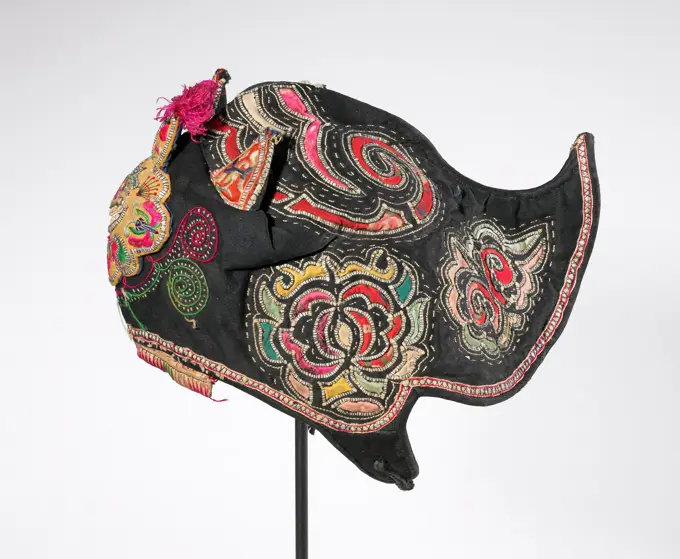
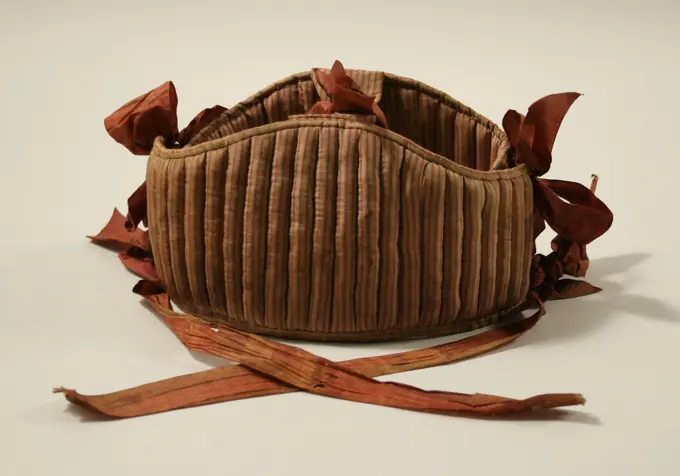
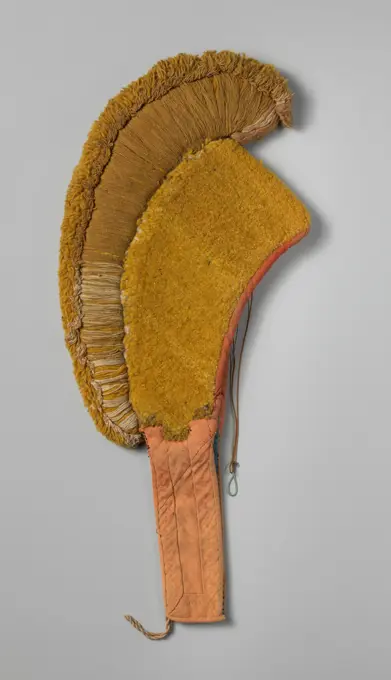
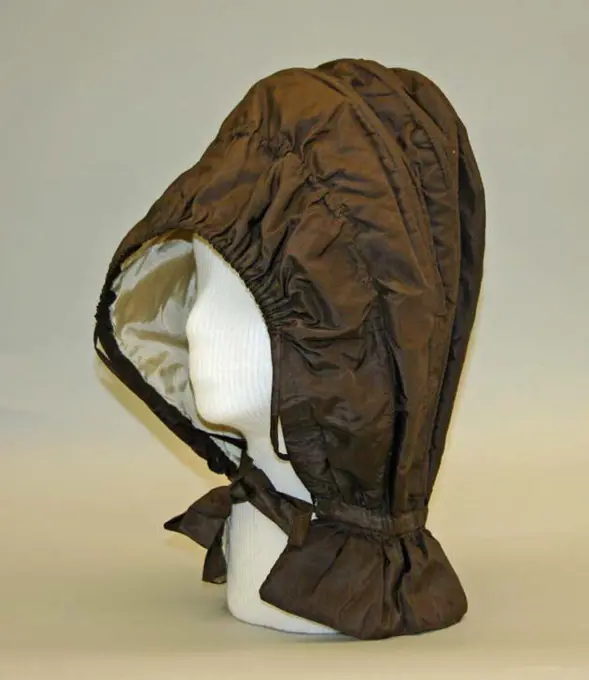
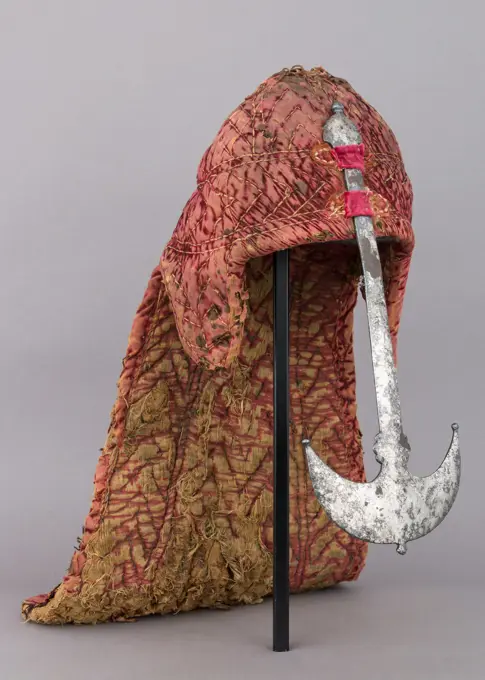
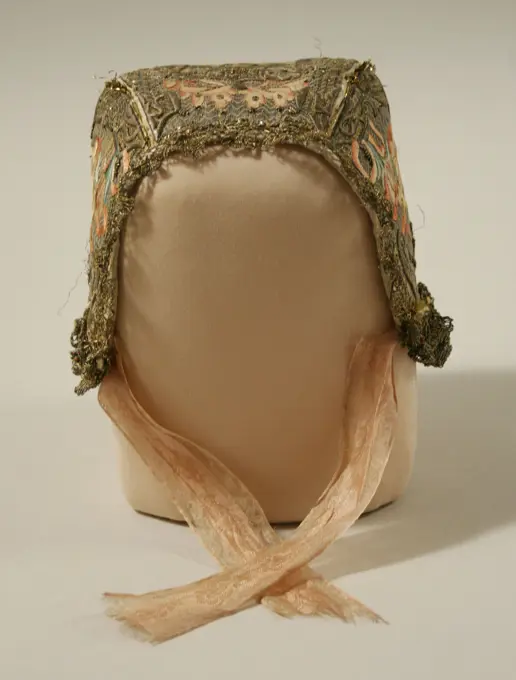
Variety of historical hats and caps, including ornate fabric headpieces and unique styles from different eras, displayed creatively.
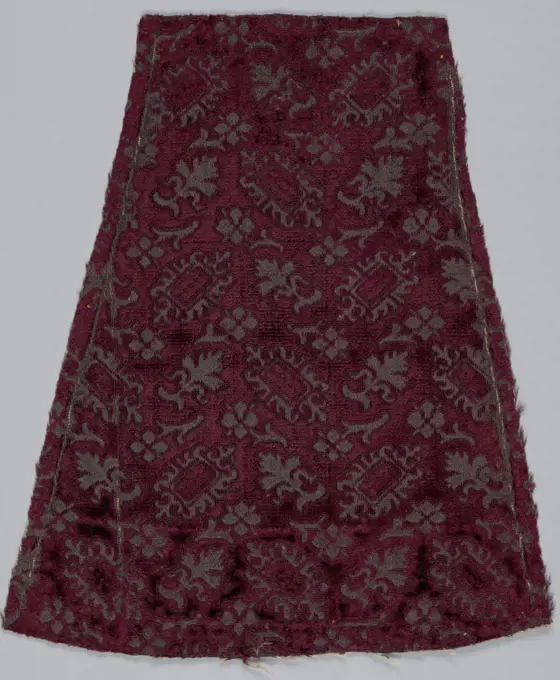
Fragment, Medium: silk Technique: cut and uncut supplementary warp pile in a five-harness satin foundation (ciselé voided velvet), Rows of diagonally placed motifs in maroon on a purple voided ground. One motif is a foliate rectangle, the other is a leaf. The diagonals are reversed from row to row. The interspaces are filled with tiny rosettes., Italy, 17th century, woven textiles, Fragment
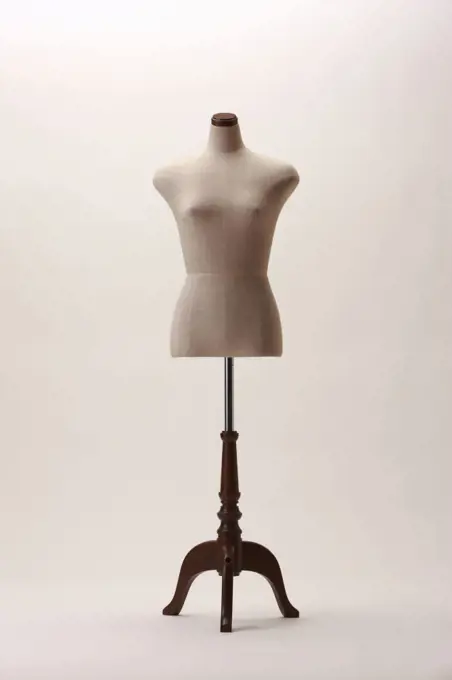
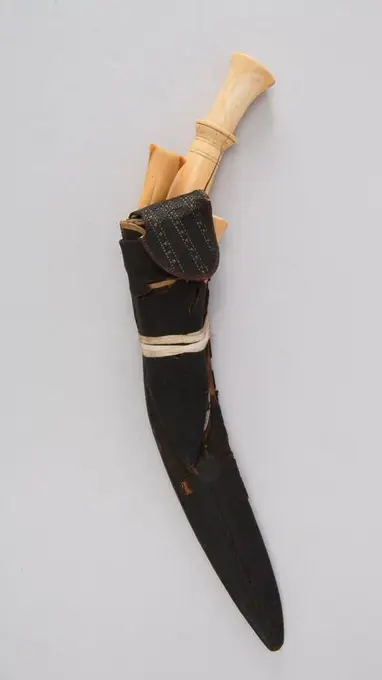
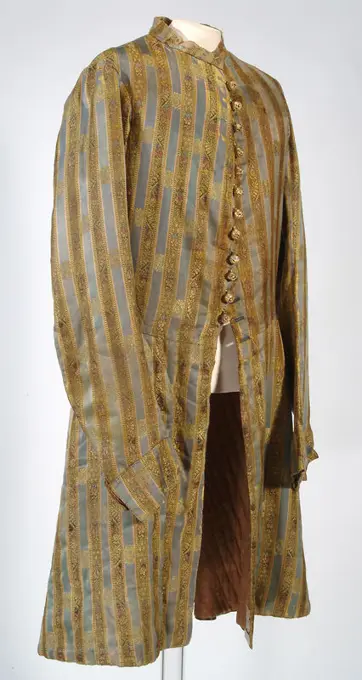
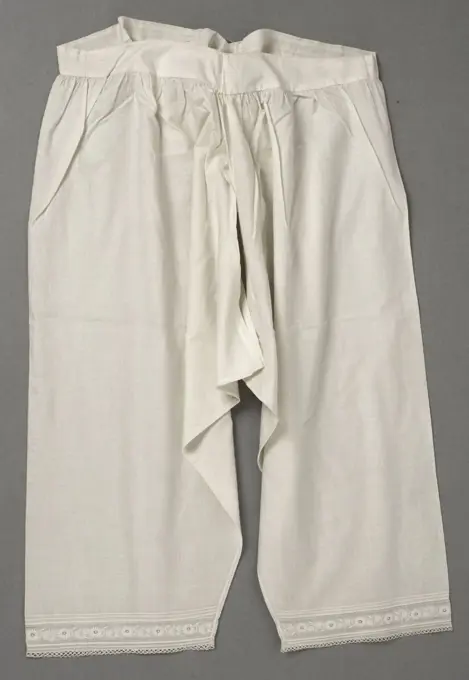
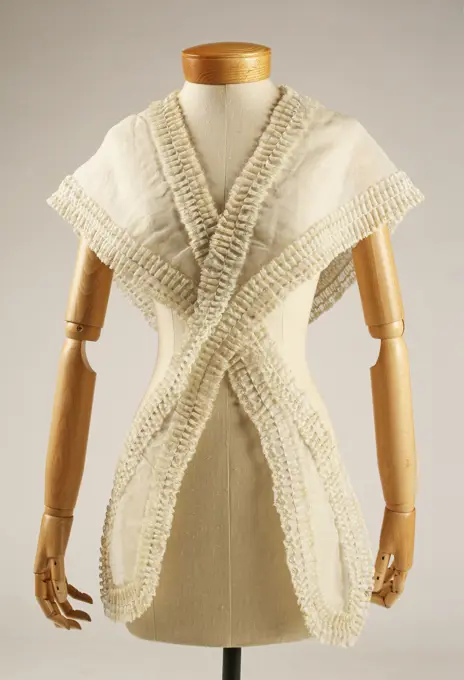
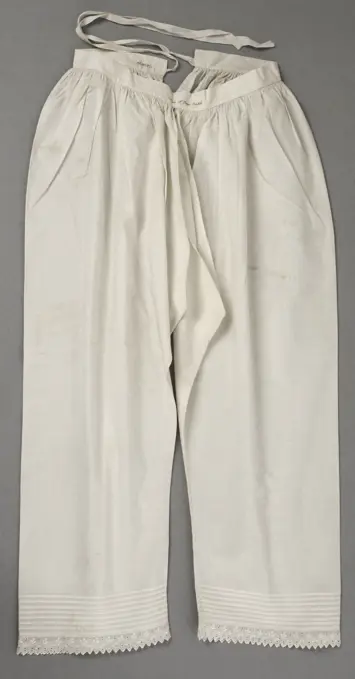
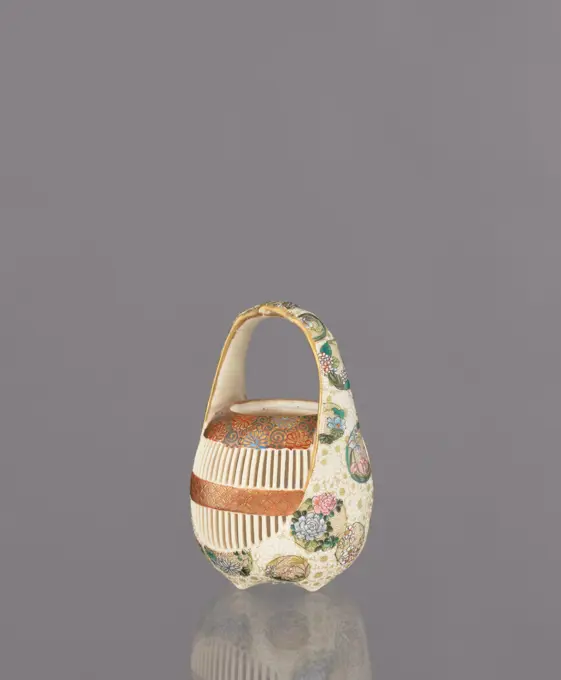
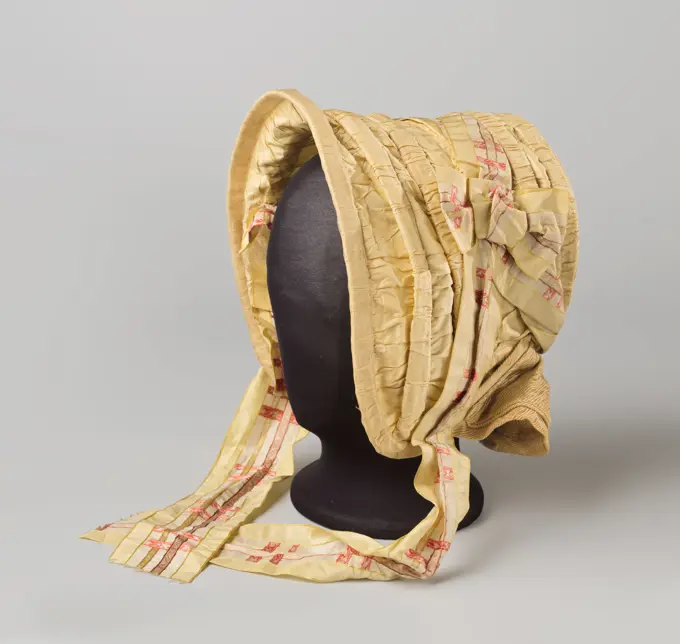
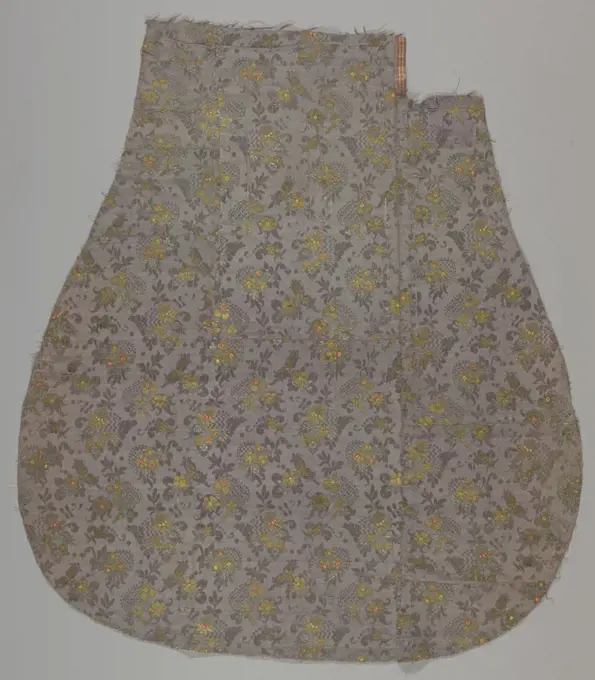
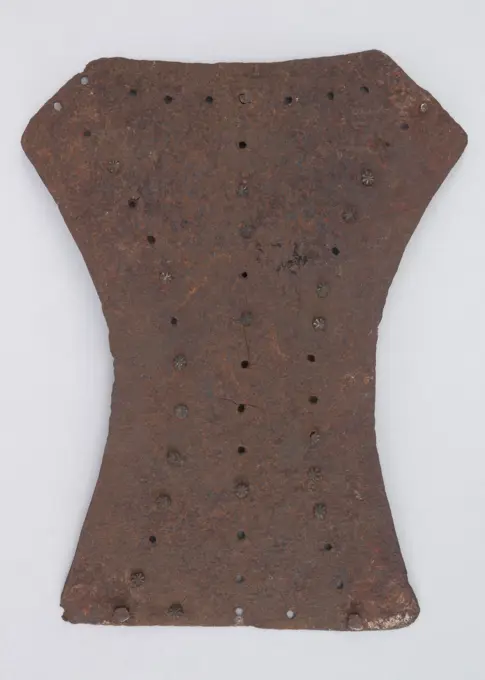
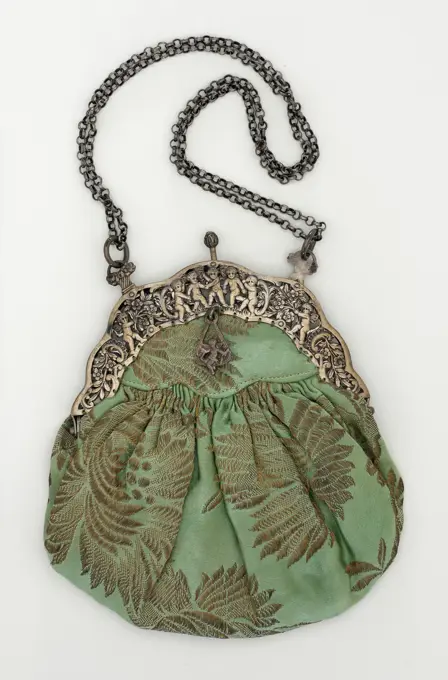
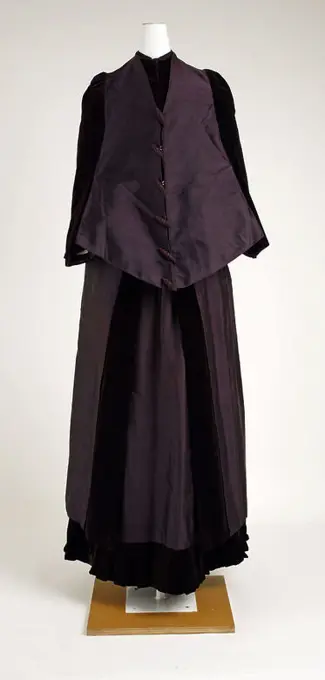
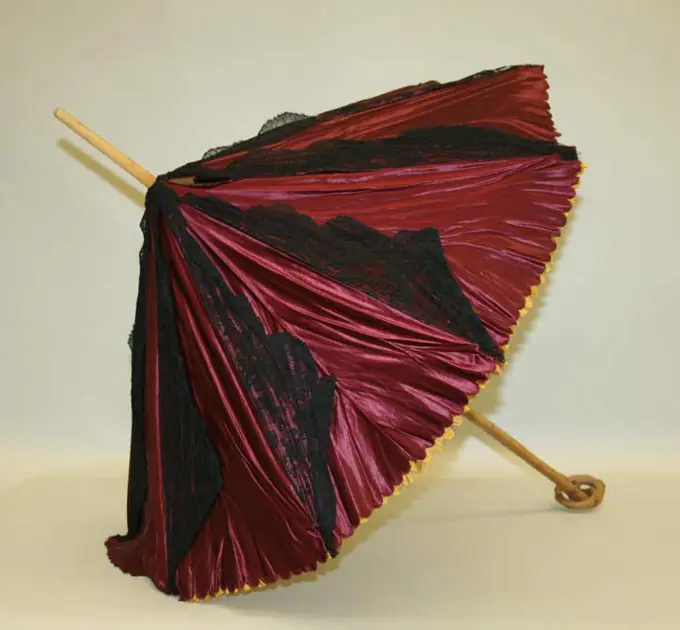
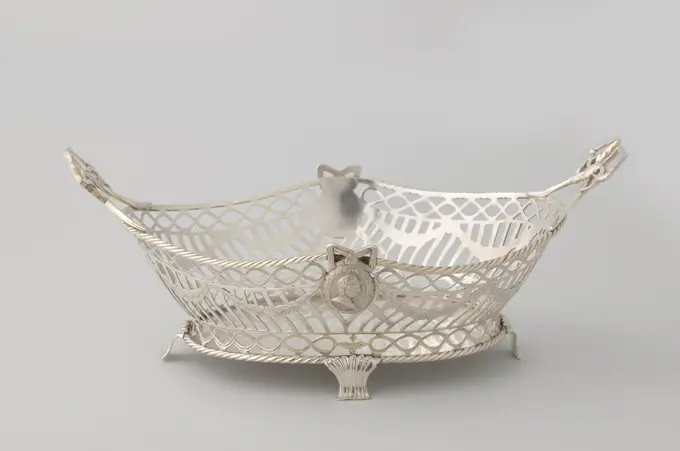
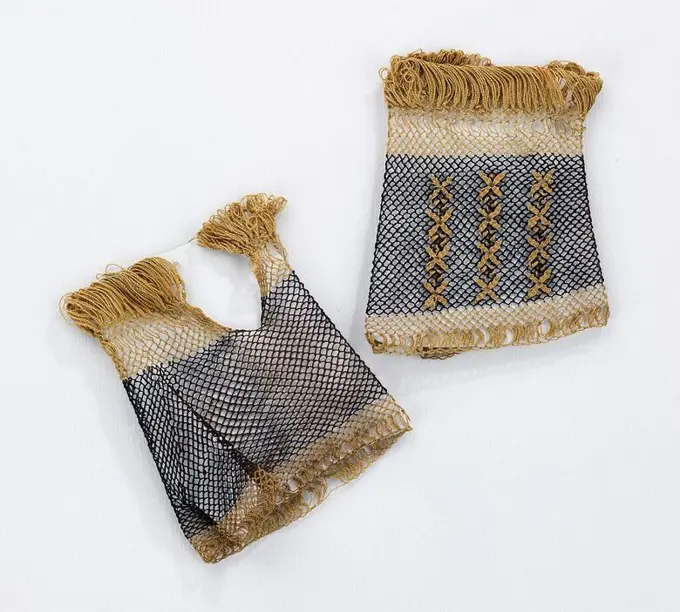
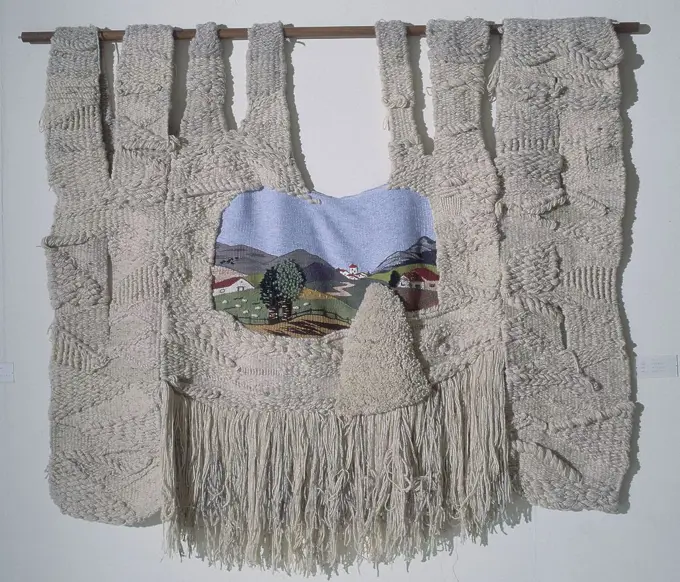
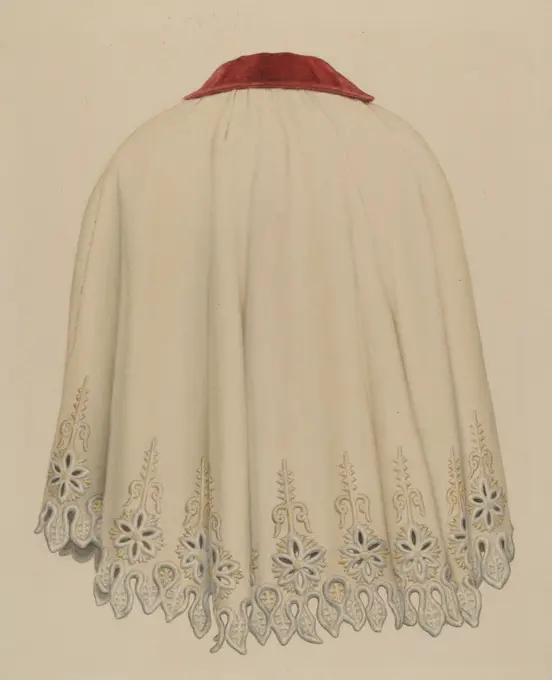
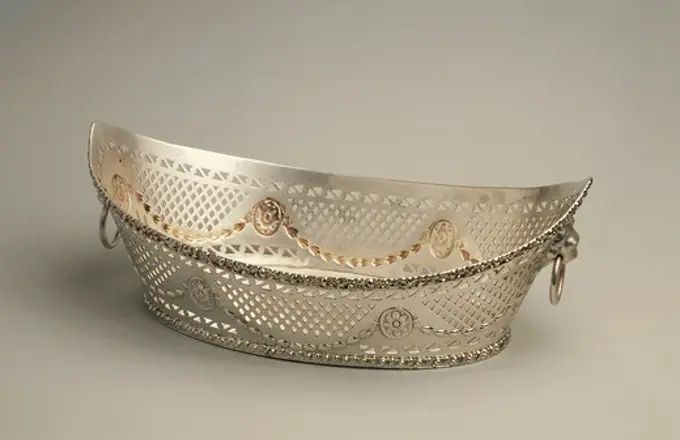
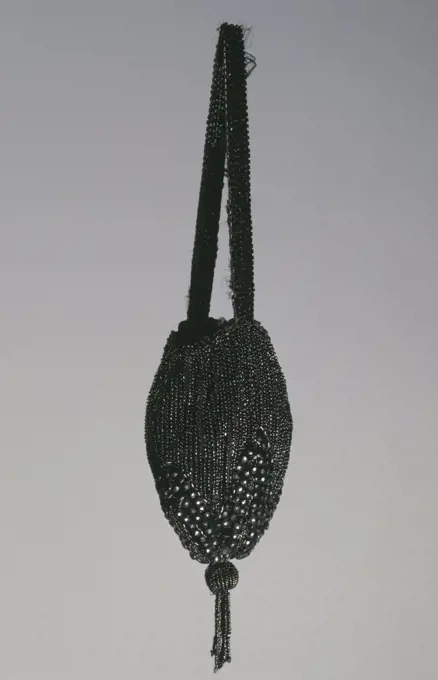
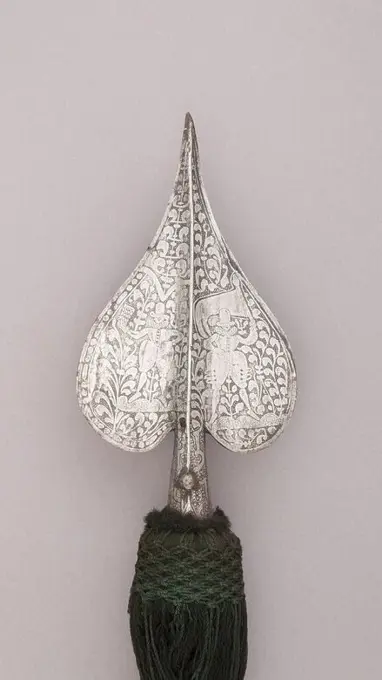
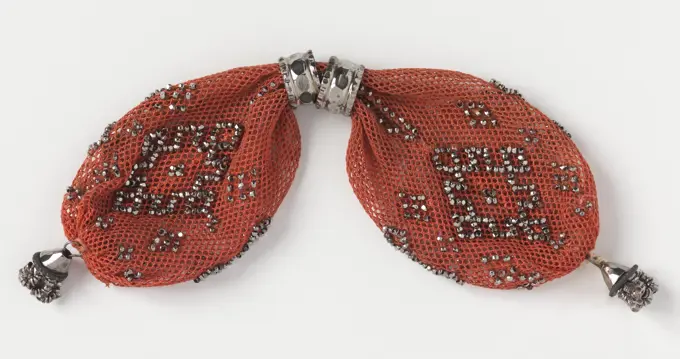
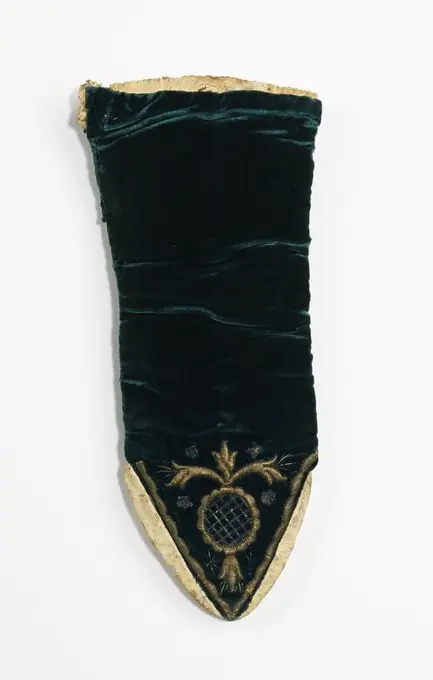
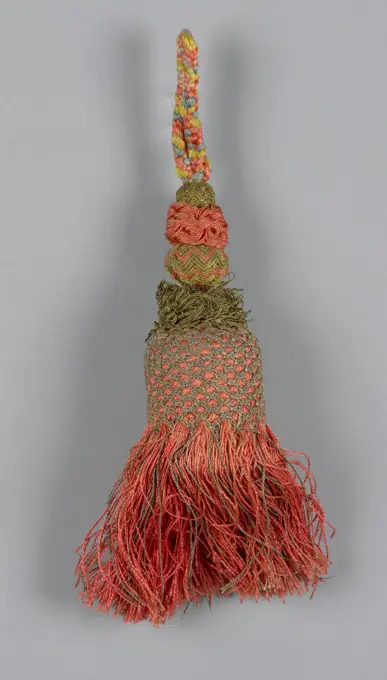
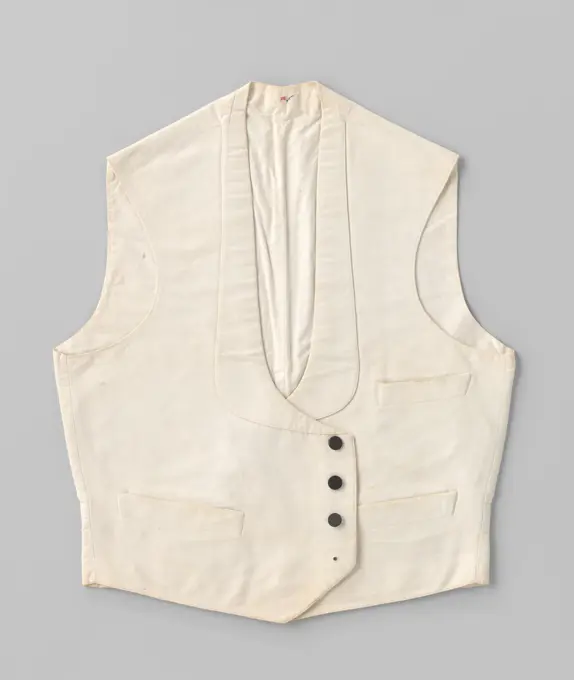
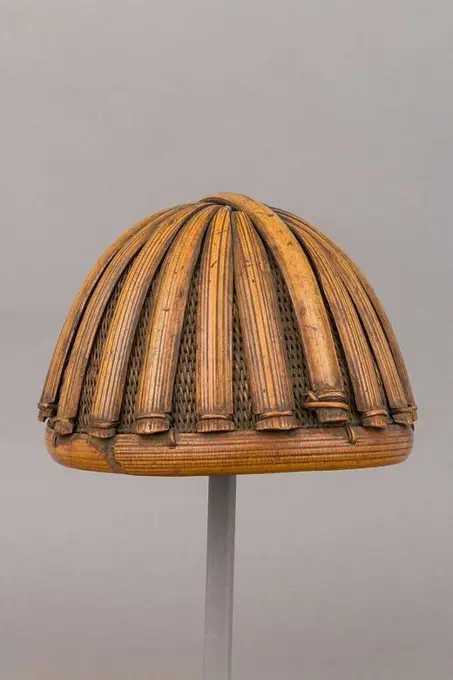
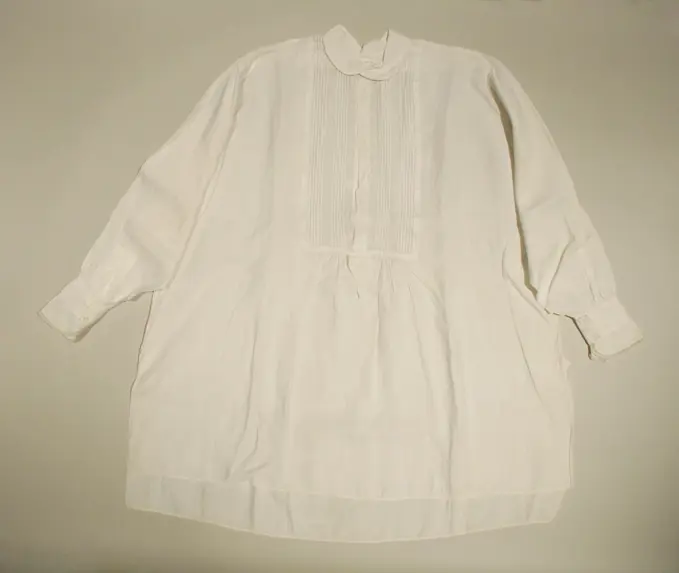
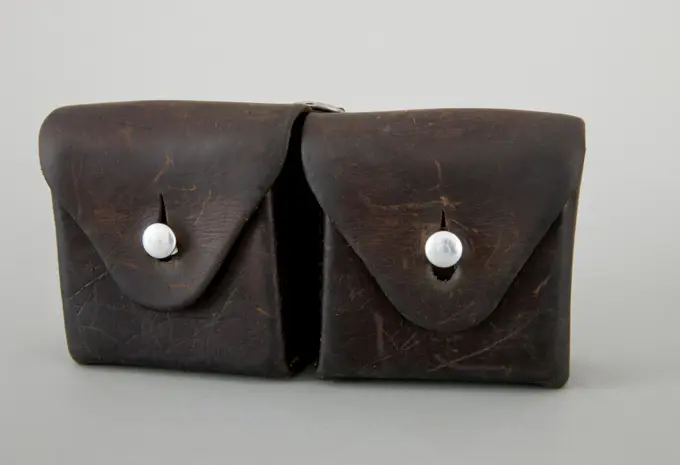
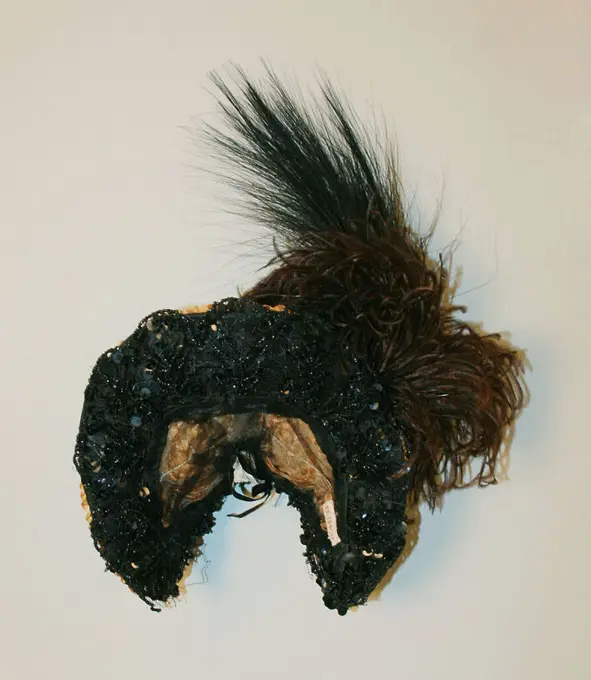
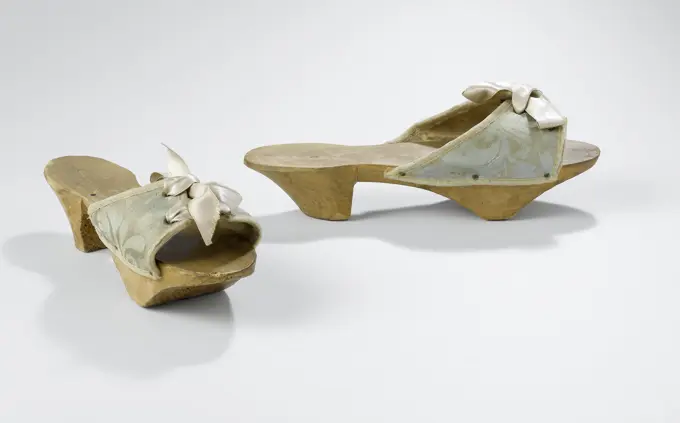
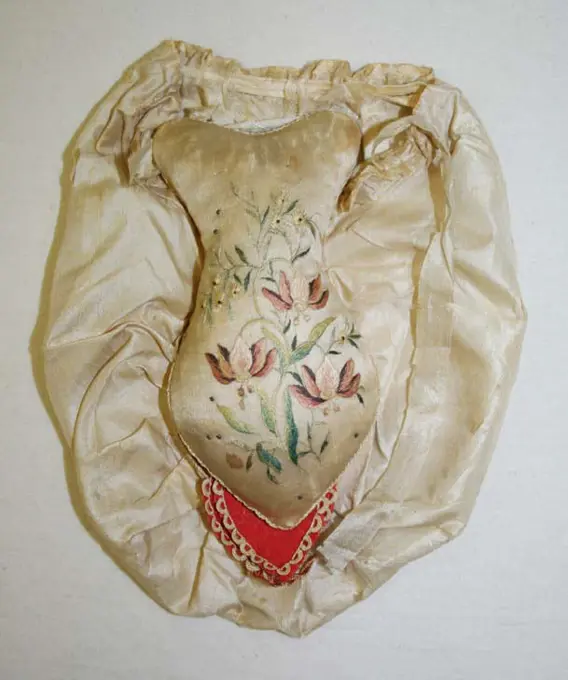
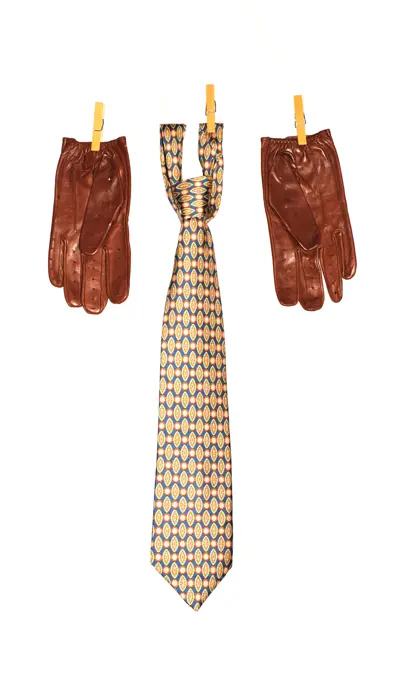
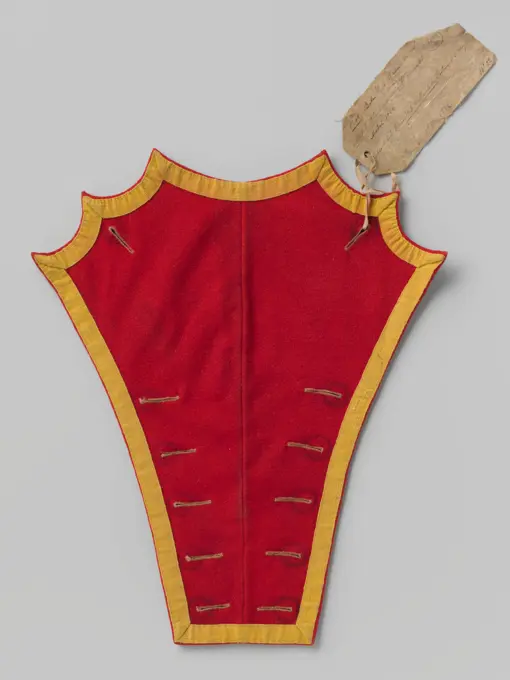
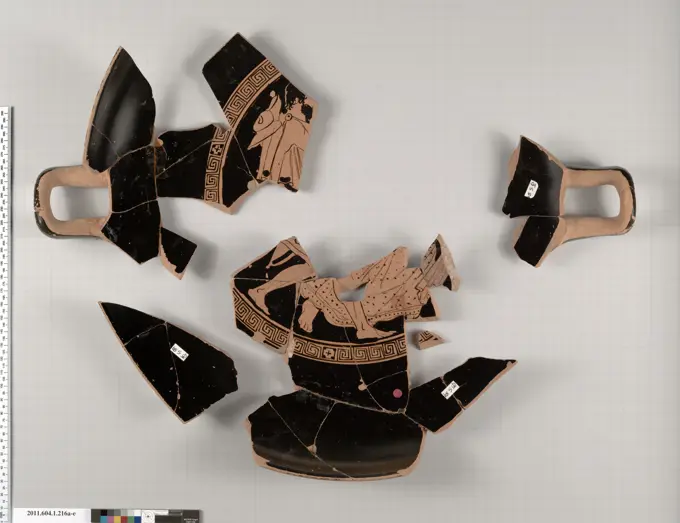
Cap 1643-1715 French. Cap 106035Hat ca. 1790 R. Townsend & Sons. Hat 169702Bergère hat 18th century British. Bergère hat. British. 18th century. strawTorsoKnife (Kukri) with Sheath, Two Small Knives and Pouch. Culture: Indian or Nepalese, Gurkha. Dimensions: Knife (a); H. with sheath 16 13/16 in. (42.7 cm); H. without sheath 16 13/16 in. (42.7 cm); W. 1 1/2 in. (3.8 cm); Wt. 14.2 oz. (402.6 g); sheath (b); Wt. 3.3 oz. (93.6 g); small knife (c); H. 6 5/16 in. (41.4 cm); W. 1 1/16 in. (2.7 cm); Wt. 2.3 oz. (65.2 g); small knife (d); H. 6 13/16 in. (17.3 cm); W. 1 3/16 in. (3 cm); Wt. 2 oz. (56.7 g). Date: 19th century. Museum: Metropolitan Museum of Art, New York, USA.Cape 1875-1900 American or European. Cape 93882Slippers 1830-49 American or European. Slippers. American or European. 1830-49. no medium availableFragment, Medium: silk Technique: cut and uncut supplementary warp pile in a five-harness satin foundation (ciselé voided velvet), Rows of diagonally placed motifs in maroon on a purple voided ground. One motif is a foliate rectangle, the other is a leaf. The diagonals are reversed from row to row. The interspaces are filled with tiny rosettes., Italy, 17th century, woven textiles, FragmentŻupan. unknown, author. Hat of silver gray straw. Sides wide, front with a notch, back pleated and lit on nothing. Small, standing, flattened cones-shaped globe. Decoration of dark purple gaze the soie, draped on the edge and in ruffles under the edge. Purple feathers prior to the edge. Address on the black silk lining, faded gold letters: C. van der Hand (or: HANT).Drawers 1860-68 American or European. Drawers 109149Fichu mid-19th century American or European. Fichu 108153Miser's Purse (France); silk, steel; L: 21 cm (8 1/4 in.)Drawers 1850s American. Drawers 82071Cage crinoline 1857 American. Cage crinoline 104434Censer. unknown, ceramistChild's Cap, 6 x 5 x 6 in. (15.24 x 12.7 x 15.24 cm), Cotton, metal, shells, ChinaCanopy hat from one whole, decorated from yellow tap side with a yellow/red/beige colored satin ribbon, which must be tied under the chin, anonymous, c. 1840 Lofel hat from one whole, decorated from yellow taf side with a yellow/red/beige colored satin ribbon, which must be tied under the chin. Model: No more loose ball and awning, but one whole. A core of coarse -meshed tulle on fine cotton and paper, a wide edge of breathed cotton in the sphere, which is not fed further. The canopy is fed with yellow taf side and decorated on either side of the face with four loops of the satin ribbon, between which loops of silk tulle. The sphere is flat. The entire hat is reinforced by means of six 'ribs' of 1.7 cm wide, made up of a paper strip with a laitan wire on either side, the whole wrapsed with natural cotton. The taf side is switched on under these wide tunnels. A satin ribbon (6.5 cm wide) is installed around the hat, which is laid in a flat bow left and right and from which the ribbon coKerchief 1840-50 American. Kerchief 168472Military Cap of the English cut after Major Edward Kleszczyński (1892  1984) Factory productFragment, Medium: silk, metal thread Technique: foundation fabric patterned by the contrast of 8-harness satin and warp faced plain weave - or damassé - and brocaded extra wefts bound by the foundation warp, Gray-violet damassé with small 'bizarre' floral clusters embellished with gold blossoms with orange and yellow accents and silver leaves., possibly France, late 17th century, woven textiles, FragmentSlippers early 1840s American. Slippers 112776Brigandine Plate 1400-1450 Italian This is part of a large find of medieval armor discovered in 1840 in the ruins of the fortress of Chalcis, on the Greek island of Euboea (then a Venetian colony called Negroponte). The fortress had been captured and destroyed by the Turks in 1470. Now divided largely between the Ethnological Museum, Athens, and The Metropolitan Museum of Art, the Chalcis hoard contains many rare and unusual elements of fourteenth- and fifteenth-century armor. Of particular importance are the variety of headpieces and the many fragments of brigandines (armor for the torso constructed of small plates riveted to layers of fabric), some of which retain portions of their original velvet covering. The Chalcis armor provides a unique picture of the armament used in the Aegean, one of the easternmost military outposts of the Venetian empire.. Brigandine Plate 34346Woman's Purse. United States, 19th century. Costumes; Accessories. Brocaded silk, silver, silk satin, metallic threadBonnet ca. 1850 American. Bonnet 168592Walking ensemble. Culture: American or European. Date: 1887-88. Museum: Metropolitan Museum of Art, New York, USA.Parasol 1880s American. Parasol 122305Fringe (Italy); silk, metallic thread (gold strips on silk core)Bread basket with open worked curved wall with oval medallions with strike decorations, anonymous, 1780 - 1810 Oval bread basket of silver, on four bent, incorporated, ribbed legs. The vaulted edge is open. In the middle of the front and back, an oval, a snap-lon, is imposed on a bow. Indonesia (possibly) silver (metal) Oval bread basket of silver, on four bent, incorporated, ribbed legs. The vaulted edge is open. In the middle of the front and back, an oval, a snap-lon, is imposed on a bow. Indonesia (possibly) silver (metal)Tassel late 16th-early 17th century French. Tassel 213586Mitts. Culture: American. Date: 1875. Museum: Metropolitan Museum of Art, New York, USA.Woman's Fanchon Bonnet. United States, circa 1879. Costumes; Accessories. Silk velvet, beadsBag  whipped cream and rust patter unknownTAPIZ - PAISATGE. Author: SIS GRUPO. Location: PREMIO NACIONAL DE TAPICES. Aranjuez. MADRID. SPAIN.Cloth cap -Edward Bashaw, Cape, c 1941 CapeBaret with pumpkin. Baret of yellow straw with pumpkin made of red wool and two slips of yellow ribbon.  wool Baret of yellow straw with pumpkin made of red wool and two slips of yellow ribbon.  woolHelmet 18th-19th century Caucasian. Helmet. Caucasian. 18th-19th century. Steel, silver, copper alloy. HelmetsStitch from J.R. Thorbecke, Anonymous, c. 1850 bicorne Two -striking stitch belonging to the office of J.R. Thorbecke as Minister of the Interior. Netherlands felt (textile). textile materialsPoke bonnet (capote), anonymous, c. 1805 - c. 1815 Laifel hat or Capote with protruding canopy and small wrinkled ball, quilted black silk and with black satin bow ribbons. Model: consisting of bulb and loose edge, which is sewn on the sphere. A tunnel of approx. 2 cm is applied above the neck above the neck, which means that a black silk ribbon is strung that can be attracted and tied. There are two narrow tunnels in the bol in which twisted rope, which can be attracted as you can. (Opening on the back of the inside of the ball!) The canopy is also padded with wool and with 14 diagonally running tunnels in which twisted white rope. The canopy is trimmed all around with 5 tunnels in which twisted white rope. A black satin ribbon is sewn over the seam between the ball and the canopy. Netherlands whole: Silk. Filling: Wool. Band: Satin. Filling: Rope Laifel hat or Capote with protruding canopy and small wrinkled ball, quilted black silk and with black satin bow ribbons. Model: consistingBag in black silk moire with silver clasp and chain, 1910, fashion accessories, Italy, 20th century.Silversmith's Art, England 20th century. Boat-shaped, pierced and embossed sheffield plate basket, approximately 1900's.Drawers 1888 American or European. Drawers 109130Laifel hat made of plain black rips side with rips side, silk and strips of bobbin; canopy model with four ribs, anonymous, c. 1840 - c. 1845 Laifel hat of plain black rips side, decoration of a composite ribbon of wudded rips side and silk, and trimmed with a strip of black bobbin side. League model with four ribs. Inside of the ball of hat -maker's mesh, no lining. Laifel lined with a black rips side. Closure with hook and eye on the ribbons. On the ribs and along the recommended edge at the bottom of the ball a strip of bobbin side. On the canopy and at the back of the ball bikes of brown/black ribbon. Netherlands silk. strook: bobbin lace Laifel hat of plain black rips side, decoration of a composite ribbon of wudded rips side and silk, and trimmed with a strip of black bobbin side. League model with four ribs. Inside of the ball of hat -maker's mesh, no lining. Laifel lined with a black rips side. Closure with hook and eye on the ribbons. On the ribs and along the recommended edgeCotton bucket bag beaded with black beads, little canes and cabochon, strap and tassel of the same type, 1915-1920, fashion accessories, Italy, 20th century.Key of tobacco box, 1645 - 1665 Key to ribbon. Northern Netherlands metal Key to ribbon. Northern Netherlands metalSunbonnet ca. 1840 American. Sunbonnet. American. ca. 1840. CottonMitaine of black and white striped silk, anonymous, c. 1750 - c. 1800 Mitaine of silk mitaines in width alternating black and white, the white lanes are decorated with blue sides of elongated squares and the underside is provided with black side. Zaanstreek whole: Silk knitting Mitaine of silk mitaines in width alternating black and white, the white lanes are decorated with blue sides of elongated squares and the underside is provided with black side. Zaanstreek whole: Silk knittingHoops 1870s American or European. Hoops 85422Sotck exchange. Around 1860. Gal1959.97.23Decorative cushi comb unknownLance. Culture: German. Dimensions: L. 81 1/2 in. (207 cm); L. of head 12 1/4 in. (31.1 cm); W. 6 1/4 in. (15.9 cm); Wt. 4 lbs. 8 oz. (2041.2 g). Date: 17th century. Museum: Metropolitan Museum of Art, New York, USA.Miser's Purse (France); silk, metalwomen bag isolatedVictor Hugo's Pair Bicorn from France ". Feltre () With golden embroidery and tricolor cockade. 1845. Paris, Maison de Victor Hugo. 123534-12Scent Flask And Cap (Ireland); glass; 13.5 x 5.4 x 1.3 cm (5 5/16 x 2 1/8 x 1/2 in.); Bequest of Walter Phelps Warren; 1986-61-191-a/cBoxVase with an Incised Decoration and Reflet Métallique Glaze, c. 1900 Vase of earthenware, cylindrical and decorated with ingrift decor from long upwards spit chair leaves. Covered with a glaze in green and yellow. Along the mouth edge a frieze with leaves. Delft earthenware. luster glaze vitrification Vase of earthenware, cylindrical and decorated with ingrift decor from long upwards spit chair leaves. Covered with a glaze in green and yellow. Along the mouth edge a frieze with leaves. Delft earthenware. luster glaze vitrificationMitts. Culture: British. Date: 1680-1720. Museum: Metropolitan Museum of Art, New York, USA.Ceremonial Object. Afghanistan, circa 2000-1500 B.C.. Sculpture. StoneBag of embroidered ivory -colored satin on which flowers embroidered, on the outside a raised compartment containing pink double pillows on ivory rip ribbon, anonymous, c. 1775 - c. 1780 Bag of ivory -colored satin, on which embroidered branches in silver wire, a blue lover of which forms the flour and the leaves with green vloszijde is filled. The bag can be closed on the top edge with a silk ribbon. On the back is embroidered: a pink bow on which a round medallion with a double edge, the inner circle, of which contiguous silver lovers, inside a bouquet of flowers. The reinforced raised box on the front of the bag is decorated in a similar way, with the difference that the outer circle is of contiguous lovers, within which the circle in green vloszijde and two flowers. The box is not sewn on the satin dust from the bag, but in between, creating a fold. The edges are trimmed with silver thread, a narrow lane of silver, which are woven into a lace strip. At the bottom of the box is an oBai Baby Hat, 20th century, 8 x 6 x 9 3/4in. (20.3 x 15.2 x 24.8cm), Cotton, silk, China, 20th centuryCloth cap - Brill BrillHat 1883 American. Hat 169740Head protector late 18th century Swiss. Head protector 124828Cap ca. 1869 British. Cap 116446Bag (USA); silk, birch bark, grass stemsMale winter jacket isolated on the whiteHat ca. 1825 American. Hat 113243Unknown, Reticule, early 19th century, Leather, silk.Helmet-Shaped Hat 19th century Tibet. Helmet-Shaped Hat. Tibet. 19th century. Wool and cotton. CostumesCalash ca. 1780 American or European. Calash 116165Laces, 17th-18th century. Burano stitch (Punto Burano) needle lace fichu with ribbon-shaped motif, interlaced in flowers-shoots, 1750.Helmet 17th century; nasal, possibly 16th century South Indian. Helmet 32062Hat 19th century Russian. Hat. Russian. 19th century. Silk, metal, cottonTassel (Spain)Bliżej Kultury unknownRokvest from white piqué, anonymous Rokvest of white piqué.  pique Rokvest of white piqué.  piqueEnsemble of Rosettes ca. 1479-1425 B.C. New Kingdom These rosettes from the funerary equipment of three foreign wives of Thutmose III have been diplayed in various ways, since they came to the Metropolitan Museum in 1926. Most familiar to previous viewers is their reconstruction as part of a wig cover with 26.8.117bb as the head piece. Such a cover was first suggested by Herbert E. Winlock in 1937 and later modified. According to present understanding, the joining of the rosettes to the gold disk 26.8.117bb, and the use of strands of rosettes as a wig cover are uncertain.. Ensemble of Rosettes 591131Hat, c. 1950, 6 1/2 x 6 1/4 x 4 1/2 in. (16.51 x 15.88 x 11.43 cm), Cotton; needlework, Uzbekistan, 20th centuryHelmet. Culture: Abor, Burmese. Dimensions: H. 5 1/2 in. (14 cm); W. 7 5/8 in. (19.4 cm); D. 9 1/2 in. (24.1 cm); Wt. 12.9 oz. (365.7 g). Date: probably 19th century. Museum: Metropolitan Museum of Art, New York, USA.Shirt ca. 1865 French. Shirt 80466Old brown leather shoes on a white background.Drawers -Double leather pouchMiniature apron with four pieces deployed .. miniature apron with four pieces used and four branched linen tires.Hat. Culture: probably American. Date: 1895-96. Museum: Metropolitan Museum of Art, New York, USA.Pair of pattens, or overshoes, anonymous, c. 1700 - c. 1760 Overshoe or "pattine" made of white wood with a dichotomy cover sheet of light blue silk damask. Model: Sole of white wood with rounded nose. From the nose the wood runs down in a rounded curve. After a plateau on the floor, the wood runs in a rounded curve towards the Geleng. The front of the heel runs straight down. The side and back of the heel run down in a rounded curve. The two parts of the cover sheet are stuck in the wood with three nails per side. The cover starts halfway through the forefoot and are connected in a straight line. The cover is running at the instep in a round bend towards the yellowl where it is secured in the wooden sole. The cover is lined with beige linen. Decoration: Floral shapes can be seen in the drawing of the damask. The two parts of the cover sheet both have two metal lace holes. Due to the lace holes, an ivory silk ribbon has been strung that holds the two parts of the cover leaf together. BReticule 1750-99 French, possibly. Reticule 19727ili tea (fan with wooden handle) fansMans hat unknownBonnet 1800-1875 American or European. Bonnet 113083Gloves. Tie And Kid Gloves Hanging On a Rope With Wooden Pegs. Copyright: xZoonar.com/gkunax 1284542A breast valve or plastron of red fabric with yellow piping, anonymous, 1840  A breast valve or plastron of red fabric with yellow piping. Probably for an ELEVE musician of the music chapel of the Grenadiers (the later Royal Military Chapel). Netherlands clothCloche van Beige or soft yellow felt and a leather strap that is painted, Katja Robinski, c. 1958 - c. 1965 Felt cloche in the color beige or soft yellow, with a strap of leather painted with a design of feathers. On the inside a label stating: Katja Robinski Amsterdam. Amsterdam felt (textile). leather painting Felt cloche in the color beige or soft yellow, with a strap of leather painted with a design of feathers. On the inside a label stating: Katja Robinski Amsterdam. Amsterdam felt (textile). leather paintingCDK Myochin MunehisaTerracotta fragments of a kylix (drinking cup) mid-5th century B.C. Greek, Attic Interior, man with petasos and chlamys, and woman moving to right; Obverse, handle palmette, legs of horse, lower legs of figure, woman with sakkos, chiton and himation, holding a patera in her left hand and oinochoe in her right, inscribed KALE KALOS, bearded frontal man, with himation, holding fillet, youth with chlamys, with scabbard and spear, woman wearing peplos and holding striped staff, drapery and hand of figure; volute; Reverse, woman with himation over head, wearing diadem, inscribed KORE, Hermes, draped female with stripped staff, draped male, handle palmettes; Handle with palmette ornament. Terracotta fragments of a kylix (drinking cup) 667654Slippers 1780-99 Italian. Slippers 101296Collar with a chemisette unknownBegging Bowl. Dimensions: Not including chainH. 5 1/2 in. (14 cm)W. 12 1/8 in. (30.8 cm)D. 6 9/16 in. (16.7 cm)Wt. 31.1 oz. (881.8 cm). Maker: Yar Muhammad. Date: dated A.H. 1130/ A.D. 1717-18. Museum: Metropolitan Museum of Art, New York, USA.