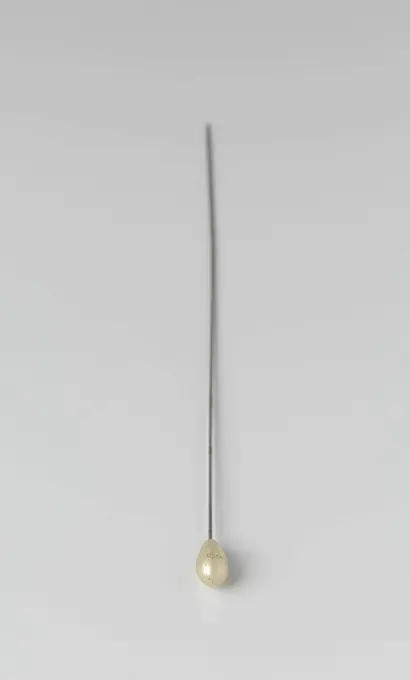
Historical Instruments and Tools

An assortment of historical items, featuring drumsticks, hunting swords, and decorative pins, showcasing craftsmanship and design evolution.
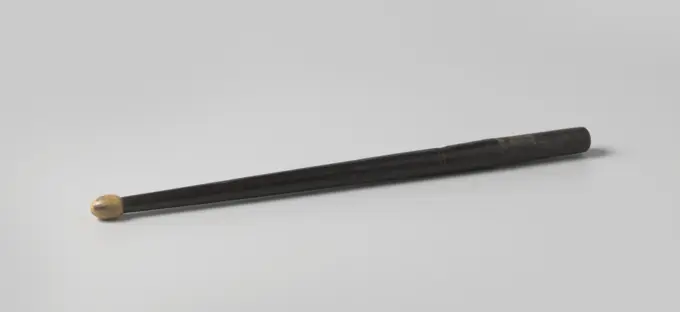
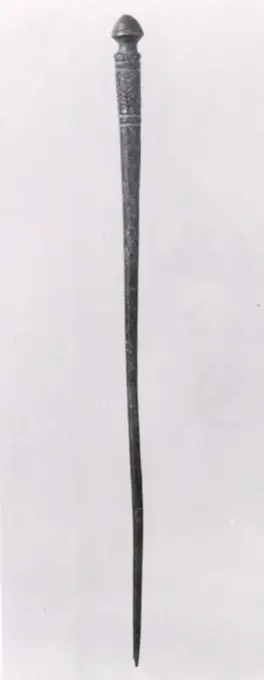
Drumstick, anonymous, c. 1830 - c. 1880 musical instrument. elements (of musical instruments). percussion instrument. beater Ebbenhouten stick with copper backside and point of Hoorn. Netherlands copper (metal). ebony (wood). horn (animal material)   Netherlands
Drumstick, anonymous, c. 1830 - c. 1880 musical instrument. elements (of musical instruments). percussion instrument. beater Ebbenhouten stick with copper backside and point of Hoorn. Netherlands copper (metal). ebony (wood). horn (animal material) Netherlands
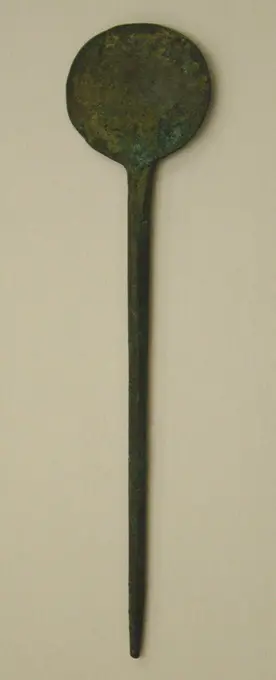
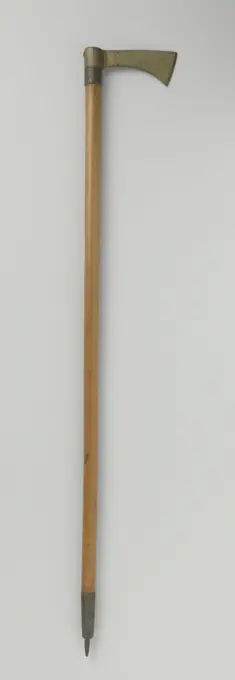
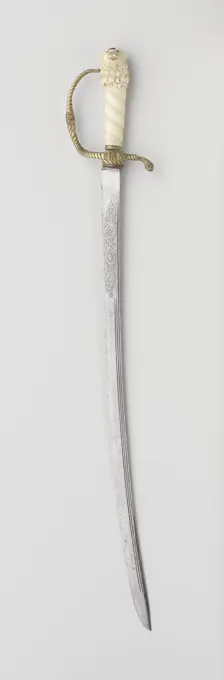
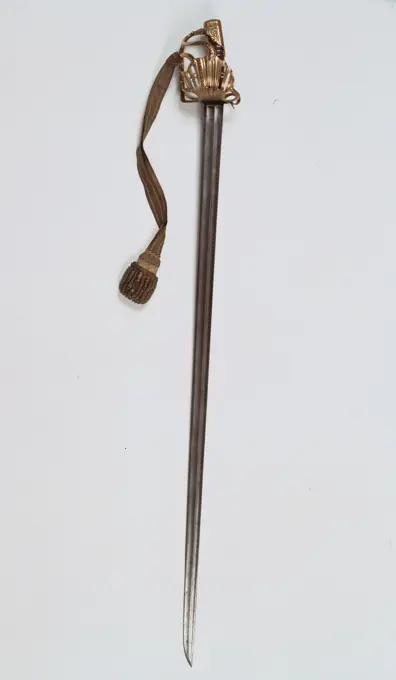
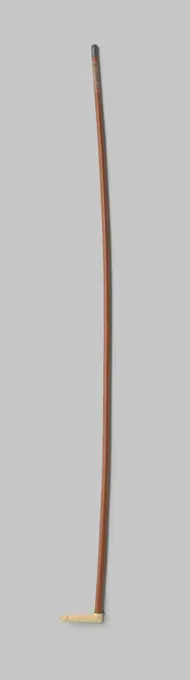
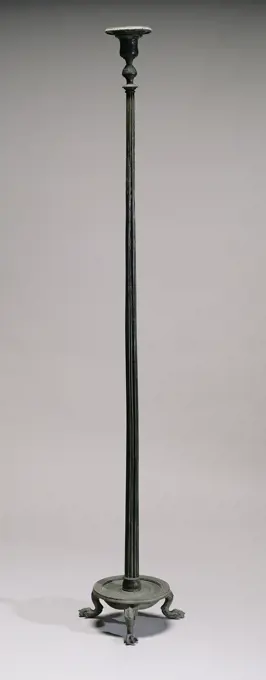
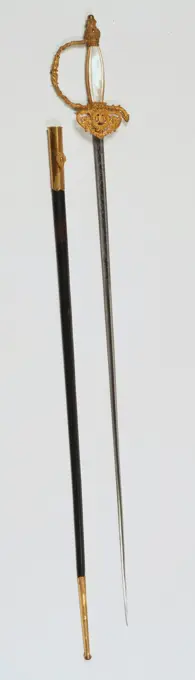
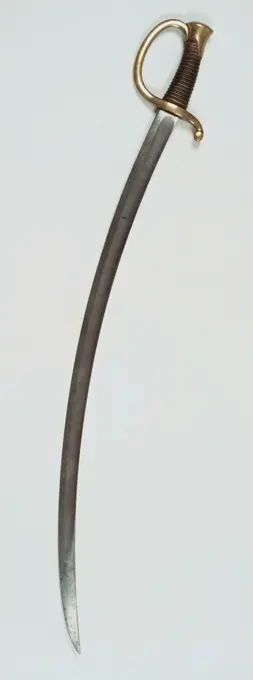
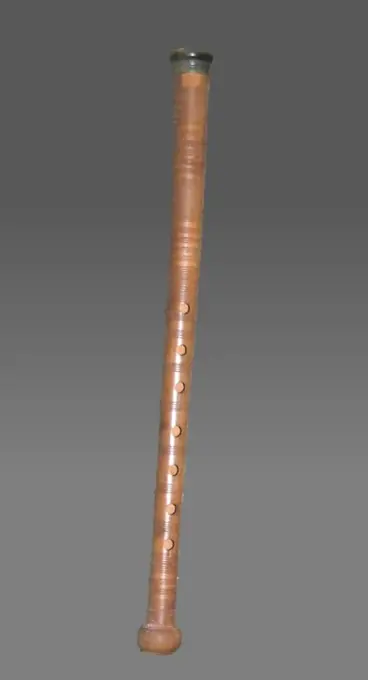
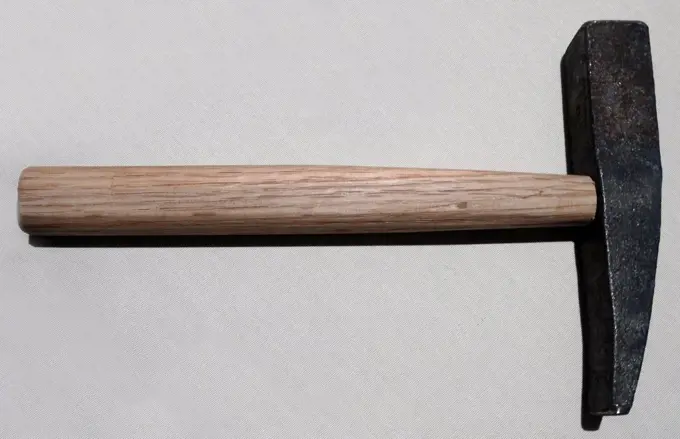
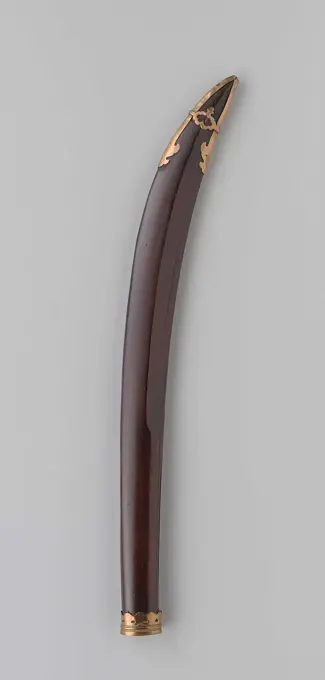
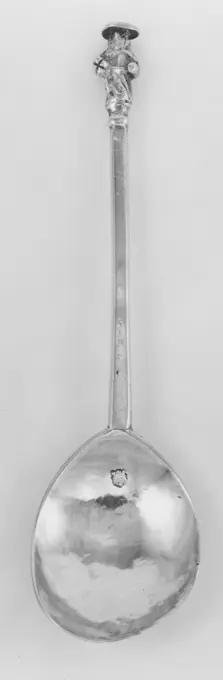
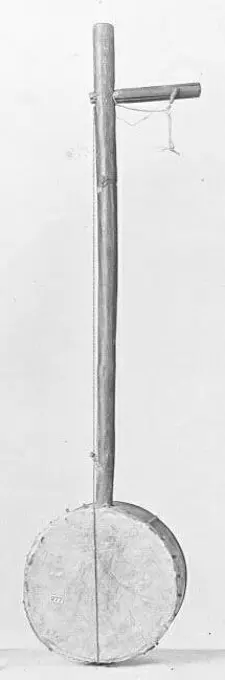
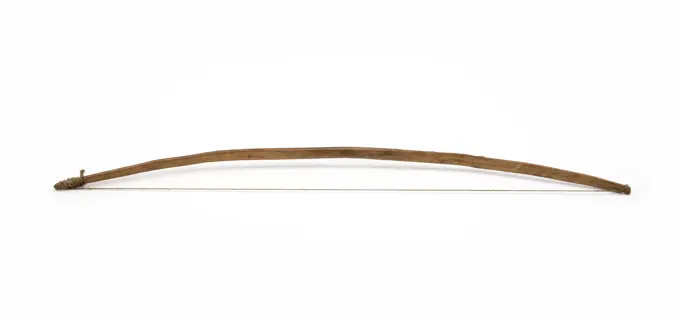
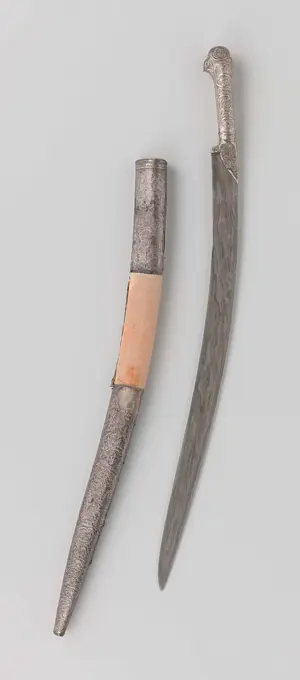
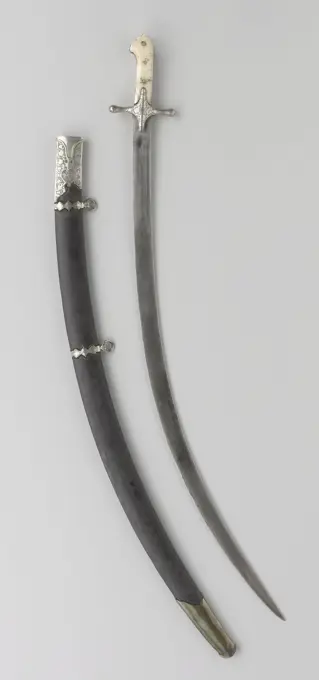
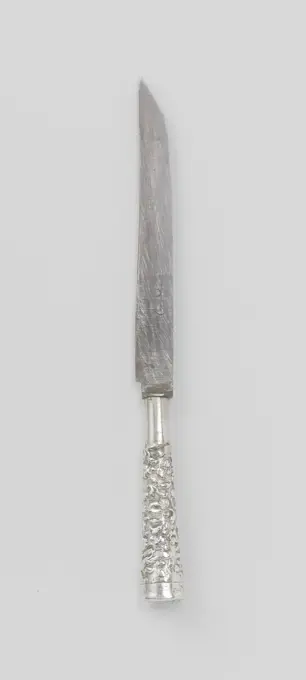
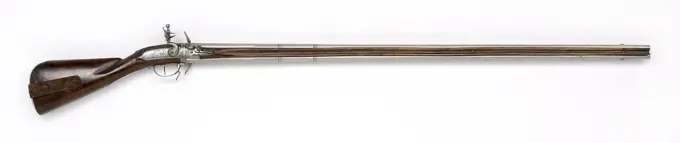
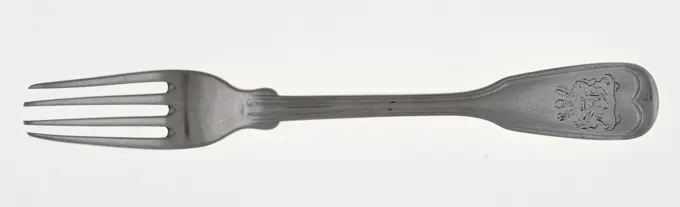
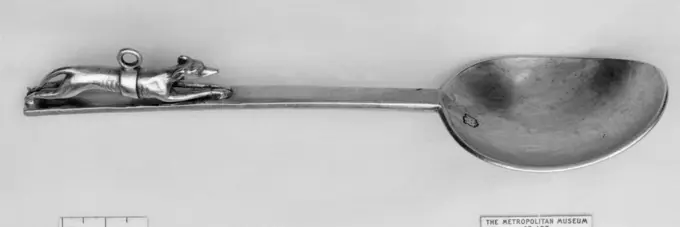
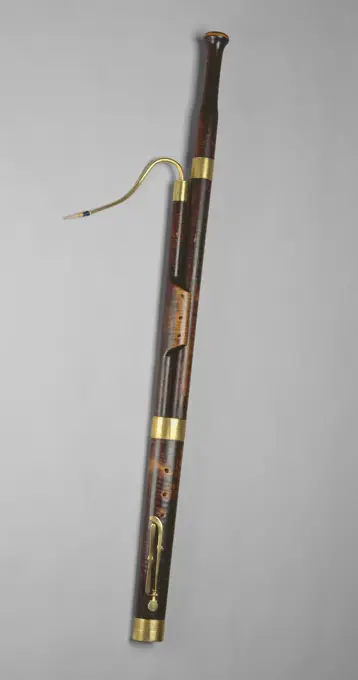
Drumstick, anonymous, c. 1830 - c. 1880 musical instrument. elements (of musical instruments). percussion instrument. beater Ebbenhouten stick with copper backside and point of Hoorn. Netherlands copper (metal). ebony (wood). horn (animal material)   NetherlandsHartsvanger, Juriaan Chorus, 1740 - 1778 hunting hanger. hunting sword The hilt of this hunting sword has an asymmetrical grip as of a knife, covered with white ray sheet and gilded yellow -leaking batter; The pare bar is finished with a cap with a button on it; There is a shot underneath. Two grooves à la Montmorency run over the curved blade; The blade is decorated with an arrow, a panel surrounded by braiding motifs with the address of the sword sweep in a slant, a running boar and a jumping deer buck. Rotterdam brass (alloy). gilding (material). iron (metal) striking (metalworking) / gilding / engraving / etchingSabel for Officer of the Karabinners respectively Kurassiers with hilt 'à Garde de Bataille' Royal Dutch Army (after 1825), Schimmelbusch & Sohn, c. 1830 - c. 1832 sabre Sabel with copper basket, front bracket with four egbows side brackets. Basket with a-jourchy. Half pare bar. Engraved handcap. Black leather, with copper wire grip, around which tied Dragon van Zilverdraad. Iron straight -etched blade on one side heel marked: fungelbusch & son, on the other side heel: a solingen. With silver tarragon. Solingen iron (metal). copper (metal). leather. silver (metal)Pin early 1st millennium B.C. Iran. Pin. Iran. early 1st millennium B.C.. Bronze. Iron Age II-III. Iran, probably from LuristanHammered Copper Pin (tupu) 8th-mid-16th century Chimú (). Hammered Copper Pin (tupu) 309108Bergwerkersstok, , 1754  Bamboo sock with a copper ax with inscription at the end, on the other ended in a wide iron batter and with a pin on the other side. Inscription: IHS. Dated: 1754. Europe bamboo. copper (metal). iron (metal) striking (metalworking) / forging / engravingWooden Spindle () before 16th century Peruvian. Wooden Spindle () 309275Spoon or Ladle Korea. Spoon or Ladle 57457War leg, 1476 - 1500  War leg from the Arsenal of St. PatroUlus church in Soest in Westphalia. Wooden shaft with wrought iron point. Two wooden feathers are placed in Sleuten in the shaft. A piece has been broken off from one of the feathers. Westphalia (possibly) iron (metal). wood (plant material) cutting / forging  Soest (Utrecht). WestphaliaWerner and S-ka (Warsaw; Wytwórnia Z Otnicz; 1864-1939); 1887 (1887-00-00-1887-00-00);Wooden Staff with Birds North or central coastA copy of the knightly swordSmall saber or Houwer, Anonymous, c. 1600 - c. 1699 sabre. cutlass Small saber (Houwer). Hilt: twisted, ivory grip with lion's head. Turned (gilded) front bracket and half pare bar. Kling: one -cutting. Three channels of different length. Etest floral motifs.  iron (metal). ivory. brass (alloy) forging / cutting / etchingModel of a Main Topmast, anonymous, c. 1780 - c. 1840 demonstration model Round steng made of one piece, with a thick square heel with two holes for discs and a final wood hole, an octagonal bummer and square top. Netherlands wood (plant material)Caucasian kamaStaff, 27 11/16 x 3 x 2 7/8 in. (70.3 x 7.6 x 7.3 cm), Wood, TanzaniaProbe, double. Probe, double 251914 Probe, double, Bronze, Other: 6 7/8 in. (17.5 cm). The Metropolitan Museum of Art, New York. Fletcher Fund, 1925 (25.78.134)Rod 4th millennium B.C.. Rod. 4th millennium B.C.. Bronze. Uruk. Mesopotamia, Nippura hundred;  19th century (1800-00-00-1810-00-00);Hat pin with bolron round white bud from bakelite ().Degen with Schede.Nederlandse officers General Model M 1820Kurassiersabel, Schimmelbusch & Sohn, 1830 - 1832 sabre Sabel for officer of the Karabinier, respectively Kurassiers with a garde de Bataille, ca. 1820. Copper, ornamented and engraved handcap. Houten, grip wrapped with copper wire. Copper front bracket, four side brackets, basket with ajour shell. White metal grenade is missing (see the two holes). Half bump. On the basket -knotted dragon of silver and gold thread. Iron blade, etched with trophies and floral motifs. On one side heel: Schimmelbusch & Son; Other side: à solingen. Schede is missing. Solingen iron (metal). copper (metal). silver (metal) forging / sawing / engraving / etching  NetherlandsDegen of J.A. Baron de Vos van Steenwijk, Cadet Kurassiers nr. 3, S. de Jager, c. 1826 - c. 1830 sword The officers of Karabiniers or Kurassiers, 1815-1830, with three-string. The hilt is made of cast brass. Pearl nut on the handle. A jumping grenade on the shot. Under the bump plate 'S. de Jager 'and the letters' i.v.e.'. Engraving. Partially blew and gilded. With black leather sheath. Brass mouth and ear band with hook. Worn by J.A. Baron de Vos van Steenwijk, former ritmeester of the 3rd Dragonders Regiment. As Cadet () At the Kurassiers department. Haarlem kling: iron (metal). gevest: brass (alloy). greep: mother of pearl. kling: gilding (material). schede: leather engraving / gilding  NetherlandsOnderst by parasol or umbrella of wood with leg button, c. 1920 - c. 1940 Umbrella or umbrella or umbrella of wood with leg button. Nijmegen knop: bone (material). stok: wood (plant material). punt: metal Umbrella or umbrella or umbrella of wood with leg button. Nijmegen knop: bone (material). stok: wood (plant material). punt: metalBliżej Kultury unknownCandelabrum with Lion's Paws; Italy; 1 - 79; Bronze with silver inlay; 162 × 22.9 × 22.9 cm (63 3,4 × 9 × 9 in.)Infant for Degen in Schede associated with Dr.'s Office Suit. A.H.J. Lovink.Foedral van Vilt for Degen in Schede belonging to Dr.'s Office Suit. A.H.J. Lovink.Sabel der Franse artillerie.Sable French artillery without sheath. Heavy brass hilt with one bracket. Pareer rod with curled curl. Brass head. Handle with leather and braided brass wire. On the hilt 'No 2983' and two tracked numbers. Three inspection brands. On the back of the blade is' Manufacture Impériale Chattelbert. Feb. 1854 '. Cavity up to 15 cm.Maatstok van palissanderhout met jaartal 1774.Counter stick of rosewood. The stick is square in cross-section and rejuvenates underneath. The button is baluster-shaped. On the stick, the year 1774 has been applied and a calibration sign (81JC) and size stripes.Arrow Point, 1700s. Japan, Edo period (1615-1868). Steel; overall: 22.2 cm (8 3/4 in.); head: 6.1 cm (2 3/8 in.).Spear 18th-19th century probably Saudi Arabian. Spear. probably Saudi Arabian. 18th-19th century. Steel, brass. Shafted WeaponsRitual Dagger (Phurpa). Western or Central Tibet, 15th century. Arms and Armor; daggers. Iron and brassDüdük late 19th century Turkish The duduk of Bulgaria, Yugoslavia and Turkey (düdük) are duct flutes but in Armenia and Georgia the term refers to a double-reed instrument. In Turkey, the düdük (sometimes called dilli kaval) has seven equidistant fingerholes and thumbhole and is used as solo instrument or to accompany dances with other instruments.. Düdük. Turkish. late 19th century. Wood. Turkey. Aerophone-Blow Hole-end-blown flute (vertical)Sergeantshellebaard, 1700 - 1800 Halberd Short blade with a strong tapered shape with a sharp middle bone. Hexagonal tapered house with two ring -shaped profiles above and below. The house has a right through gap through which the ax and hook, which are forged into one, are stabbed through. Both the ax and the hook are worked. Two springs, rivets invisible. Round (ash wood) stick (black -painted). Shoe is missing. Low Countries wood (plant material). iron (metal)Riding whip of brown leather on which a button of ivory in the form of a beetle, anonymous, c. 1890 Riding whip of brown leather with a tire of driven copper, on which a button of ivory in the form of a beetle. End of rotated green cord of cotton. Netherlands (possibly) Whip: Leather. Button: Copper (Metal). Button: Ivory. Cord: Cotton (textile) braiding / cutting Riding whip of brown leather with a tire of driven copper, on which a button of ivory in the form of a beetle. End of rotated green cord of cotton. Netherlands (possibly) Whip: Leather. Button: Copper (Metal). Button: Ivory. Cord: Cotton (textile) braiding / cuttingvintage gunsmith small hammer over white, clipping pathFurket.Furket or musket fork with vergroarily fork and iron point. Object served to support the musket when firing. Used in the state army.Example of tools used to make the Staffordshire Hoard. Dated 7th CenturySheath of Lans from Cornelis Tromp.red Sheath or Lans, Naginata Type.Arrow Point, 1700s. Japan, Edo period (1615-1868). Steel; overall: 13.6 cm (5 3/8 in.); head: 3.4 cm (1 5/16 in.).Maker's mark possibly I.I, Apostle Spoon: Saint Matthew, 1628/29, silver.Ibacarre late 19th century Mozambican. Ibacarre. Mozambican. late 19th century. Tin, wood. Mozambique. Chordophone-Lute-bowed-unfrettedBow -Spatula. Spatula 249030Yatagan met schede van Cornelis Tromp.Euro-Turkish Yatagan with wooden and silver lined hilt. Curve damask cling, very sharp. Round brand on blade, no inscriptions. This button in the form of a stylized eagle head. Yatagans were rarely used on land.Persian sabre of Cornelis Tromp, anonymous, c. 1600 - c. 1700 sabre Persian saber with hilt of silver and walrusivore. Curved blade. The simple cross -belt has decorated a pare bar of gilded silver with floral motifs. The handle is covered with two records of Walrusivoor. Type Shamshir. No brands or inscriptions. That this weapon was really possession of Cornelis Tromp is proven by a painting by Abraham van Westerveld (SK-A-1683). Persia Iron (Metal). Handle: Ivory. frame: Silver (Metal). Schede: Copper (Metal). Schede: Leather  ornament derived from plant formsBobbins For Lace Making (England); wood, glass, shell, metalHawn Needle With Miniature Range Of Silk With Photo Of Japanese Woman In Kimono With Flowers And Parasol ..Cane -Hatpin -Yeah dessert; Würtembergische metallwarefabrik - WMF (Germany; Wytwónia Z Otnarz; 1880-1914); after 1880 (1880-00-00-1905-00-00);Descant Recorder.Soprano clasp flute, marked v. Aardenberg.Cane, gold, Walking stick, possibly made of rhinoceros horn or tortoise-shell, ornamented with gold filigree in the special case which was made for it, with an inscription., 18th century, Decorative Arts, Canea hundred;  XIX-XX century (1800-00-00-1810-00-00);Cane -Shapes for skewers;  XXW. (1901-00-00-2000-00-00);Openwork PinBaton () before 16th century Peruvian. Baton () 309282Steel hook with button and section, Imra, c. 1900 - c. 1950 A steel hook with a button and section. Address: Imra / Geschützt. Germany (possibly) whole: Steel (Alloy) A steel hook with a button and section. Address: Imra / Geschützt. Germany (possibly) whole: Steel (Alloy)Patriotse Pijpen Porny with Keeshond in Hok, Anonymous, 1787  Patriotse Pijpenkeuter with keeshond in loft. Elongated pipes with herbal, consisting of rectangular dog booth with pointed roof, which is closed at the front with hinged fence with bars; In loft a standing keeshondje, which can come out by sliding the loft back; Below that long, rectangular pen, ending in point. Netherlands silver (metal) casting dogSpoon. UnknownKnife with Hang Knife with silver. The kneft is equipped with fine relief vines on granulated soil. Blade of the knife is marked, input with II T.H.  silver (metal) Knife with silver. The kneft is equipped with fine relief vines on granulated soil. Blade of the knife is marked, input with II T.H.  silver (metal)Knife (Netherlands); Manufactured by J.M. van Kempen and Son, Voorschoten (Netherlands); silver; cm: L: 16 x W: 2.2Pencil isolated on the white backgroundpencil  on white backgroundHairpin 1st-4th century Roman. Hairpin 465111 Roman, Hairpin, 1st4th century, Copper alloy, Overall: 5 9/16 x 3/16 in. (14.1 x 0.5 cm). The Metropolitan Museum of Art, New York. Gift of J. Pierpont Morgan, 1917 (17.191.62)Umbrella with a deck of plain black silk with steel stick on which a brown -liver curved wooden handle in cover, anonymous, c. 1910 - c. 1925 Umbrella with a deck of plain black silk. Unsurdedly with eight black metal ribs. Narrow steel stick with a browned wooden handle. Recommended in a black sides cover, on which a printer with lion in a coat of arms. Netherlands deck: Silk. Baleen: Metal. Stok: Metal. Handle: Wood (plant material). Hoes: Silk. printer: Metal casting / casting / cutting / lacquering / striking (metalworking) Umbrella with a deck of plain black silk. Unsurdedly with eight black metal ribs. Narrow steel stick with a browned wooden handle. Recommended in a black sides cover, on which a printer with lion in a coat of arms. Netherlands deck: Silk. Baleen: Metal. Stok: Metal. Handle: Wood (plant material). Hoes: Silk. printer: Metal casting / casting / cutting / lacquering / striking (metalworking)Club ca. 1479-1458 B.C. New Kingdom. Club. ca. 1479-1458 B.C.. Wood. New Kingdom. From Egypt, Upper Egypt, Thebes, Sheikh Abd el-Qurna, Tomb of Senenmut (TT 71), below, deposit of hunting weapons, MMA excavations, 1935-36. Dynasty 18jerk to jam; Adams, Stephen I (fl. Ca 1758-1802); 1800/01 (1800-00-00-1801-00-00), approx. PO. 19th century (1840-00-00-1863-00-00);Harpoon point ca. 1295-1070 B.C. New Kingdom, Ramesside. Harpoon point. ca. 1295-1070 B.C.. Bronze or copper alloy. New Kingdom, Ramesside. From Egypt, Memphite Region, Lisht North, Cemetery, MMA excavations, 1913-14. Dynasty 19-20Engraving depicting a reaping shovel. Dated 19th CenturyVanilla Bean.Pen Carl Kuhn & Co.Fork with two teeth and vase -shaped decoration at the end of stem, anonymous, c. 1600 - c. 1699 The cast fork has two teeth, a round handle with profiled attachment and a vase -shaped decoration at the end. West-Europa brass (alloy) casting The cast fork has two teeth, a round handle with profiled attachment and a vase -shaped decoration at the end. West-Europa brass (alloy) castingDubbelloops flint turn rifle, anonymous, 1670 - 1680 flintlock gun The lock consists of three parts: a rear slot plate and two pre -lock plates, one for each run. The final plate parts are decorated with flower and leaf vines, ending on the rear slot plate in a head and a dragon head; Engraved with Mastreck. The two runs are mounted above each other; equipped with two entered rings; On the back engraved with portraits and profil of a man and a woman; The tail of the loop is engraved with praise; Stamped on the bottom with an unclear brand, probably a D and an M. The flask consists of two parts: the handle, cut into relief with curls around the barrel and a flask box on the right side with a sliding lid decorated with leaf vines and a back plate of cowhorn ; and the frontade with grooved sides, one of which contains the wicker; Under the handle brand branded with a brand in the form of two curved fish above the stamped number 28. The iron batter consists of three loading stokkers, the tNarrow band, Medium: silk, metallic yarns Technique: warp twining (tablet woven), Long, narrow band with Arabic inscription amid geometric forms worked in silver and black; a small silver tassel at each end., Near East, 18th-19th century, woven textiles, Narrow bandArrow Point, 1700s. Japan, Edo period (1615-1868). Steel; overall: 22 cm (8 11/16 in.); head: 5.6 cm (2 3/16 in.).Fork;  19th century (1800-00-00-1810-00-00);Arghoul ca. 1825-89 Egyptian. Arghoul. Egyptian. ca. 1825-89. Bamboo. Egypt. Aerophone-Reed VibratedArrow tip ca. 2051-2000 B.C. Middle Kingdom. Arrow tip 561786Puritan spoon 1652-53 Stephen Venables. Puritan spoon 192086Iron spit late 4th or early 3rd century B.C. Etruscan Iron utensil used in the preparation of banqueting.. Iron spit. Etruscan. late 4th or early 3rd century B.C.. Iron. Late Classical or Hellenistic. Miscellaneous-IronBassoon in C ca. 1811 John Meacham American This bassoon is built in the typical four sections: bell, long or bass, butt, and wing. The instrument has four brass keys (one of which is missing), mounted in brass saddles, and four brass rings and a brass crook. This instrument is one of the earliest bassoons made in North America known to survive.John Meacham was one of the earliest musical instrument makers native to the United States, having been born in Enfield, Connecticut, in 1785. He began manufacturing instruments in about 1810 in Albany, New York. His brother Horace joined him in 1813. The Meachams also sold hardware and military goods. The company became Meacham and Pond in 1828 when the brothers partnered with Sylvanus Pond.. Bassoon in C. American. ca. 1811. Wood, brass. Albany, New York, United States. Aerophone-Reed Vibrated-double reedTweezers. Dimensions: L. 5.5 cm (2 3/16 in). Dynasty: Dynasty 18. Reign: reign of Amenhotep III. Date: ca. 1390-1353 B.C.. Museum: Metropolitan Museum of Art, New York, USA.Weaver's Shuttle New Kingdom, Ramesside ca. 1295-1070 B.C. View more. Weaver's Shuttle. ca. 1295-1070 B.C.. Wood. New Kingdom, Ramesside. From Egypt, Memphite Region, Saqqara, Teti Pyramid Cemetery, Egyptian Antiquities Service excavations, 1926Rattle Staff: Oba Akenzua I Standing on an Elephant (Ukhurhe) 1725-50 Edo peoples In the Benin kingdom of southern Nigeria, rattle staffs, or ukhurhe, are an essential feature of Benin ancestral altars, whether for kings, chiefs, or commoners. These staffs have a hollow rattle chamber near the summit, and they are shaken while uttering prayers at the altars to attract the attention of the ancestors. Ukhurhe may be made of wood or brass, although the brass examples are found only on royal altars.This staff was created to memorialize Akenzua I, an oba (king) who ruled the Benin kingdom in the early eighteenth century. A rebel chief called Iyase n'Ode challenged Akenzua's reign and civil war ensued. With the help of his military commander, or ezomo, Akenzua ultimately emerged victorious, and the iconography displayed on this ukhurhe refers to this military triumph. In Benin, elephants are a traditional symbol of chiefdom and, according to Benin oral literature, Iyase n'Ode had the abilityNeedle Cypriot. Needle 244377Fragment of frame interior piece: rule., Unknown, c. 1800 - c. 1999 Part (rule) of a frame of a paper tableau peels in grisailletones with the presentation of Psyche that shows her jewels to her sisters. This tableau (BK-16121) belongs to the Amor and Psyche series, consisting of ten panels, designed by J. Dufour, 1816.  wood (plant material). paint (coating) painting Part (rule) of a frame of a paper tableau peels in grisailletones with the presentation of Psyche that shows her jewels to her sisters. This tableau (BK-16121) belongs to the Amor and Psyche series, consisting of ten panels, designed by J. Dufour, 1816.  wood (plant material). paint (coating) paintingPen 30 B.C.-A.D. 364 Roman Period. Pen 568214Arrowheads, needles, hooks and harpoons. Culture: Japan. Dimensions: W. 1/4 in. (.6 cm); L. 3 in. (7.6 cm). Museum: Metropolitan Museum of Art, New York, USA.Whistle with Face 7th-2nd century B.C. Paracas. Whistle with Face 313090Tubular Stone Bead 5th century B.C.-A.D. 4th century Bahia. Tubular Stone Bead 314194Sitar late 19th century Indian Small sitar with a carved wooden body.. Sitar 500771Lluís Masriera / Bandeja de plata, 1906. Colección privada. Author: LLUÍS MASRIERA I ROSÉS.Hairpin with Terminal Knob 200-500 Roman. Hairpin with Terminal Knob 465104 Roman, Hairpin with Terminal Knob, 200500, Bone, Overall: 2 9/16 x 1/4 in. (6.5 x 0.6 cm). The Metropolitan Museum of Art, New York. Gift of J. Pierpont Morgan, 1917 (17.191.56)Lance 18th century German. Lance 32356War 1939-1945. Surgical instrument in the shape of a sickle. General Leclerc Museum of Hauteclocque and the Liberation of Paris, Jean Moulin Museum. 75311-16 Surgery, war 1939-1945, war 39-45, surgical instrument, object, health, Second World WarAnthropomorphic Lime Spatula ca. 500 B.C.-A.D. 300 Indonesia (Java, Lumajang, Pasiran). Anthropomorphic Lime Spatula. Indonesia (Java, Lumajang, Pasiran). ca. 500 B.C.-A.D. 300. Bronze. Bronze and Iron Age period. MetalworkSabel with Schede, Cavalerie Model No. 7, Dragonders, Anonymous, 1844 sabre Sabel Cavalerie Model No. 7 Dragonders with Schede. For carabiner. With just hilt. Delft. Delft Kling, basket, Schede: Iron (Metal). towing plate, rings, handle hood: Iron (metal). Handle: Leather   NetherlandsMedical Instrument with Spoon Finial. Unknown