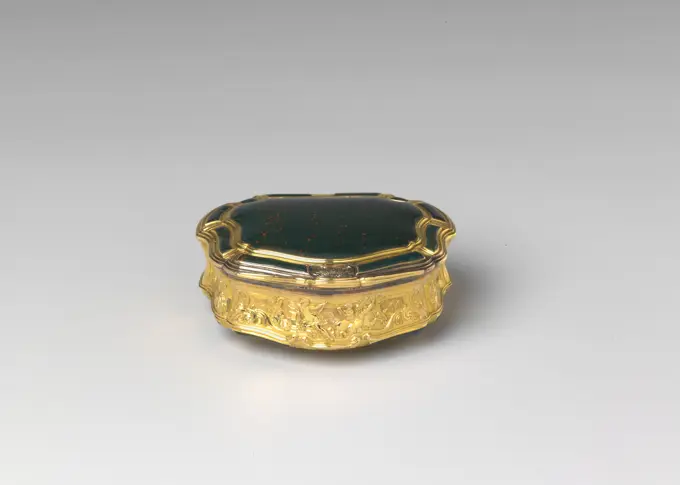
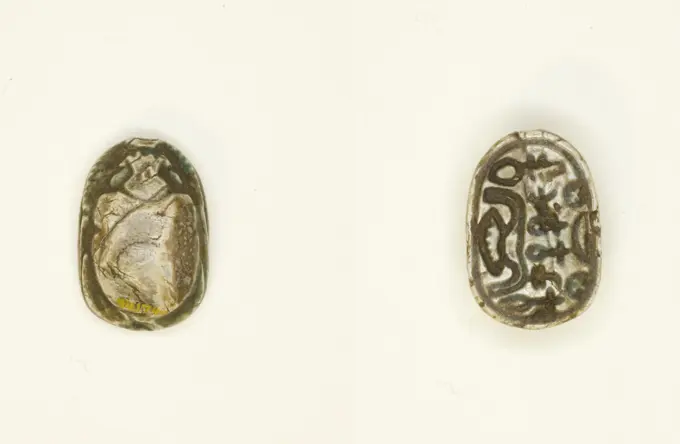
Historical Jewelry Artifacts

Intricately designed antique jewelry pieces, including belt buckles and decorative elements, showcasing craftsmanship and historical significance.
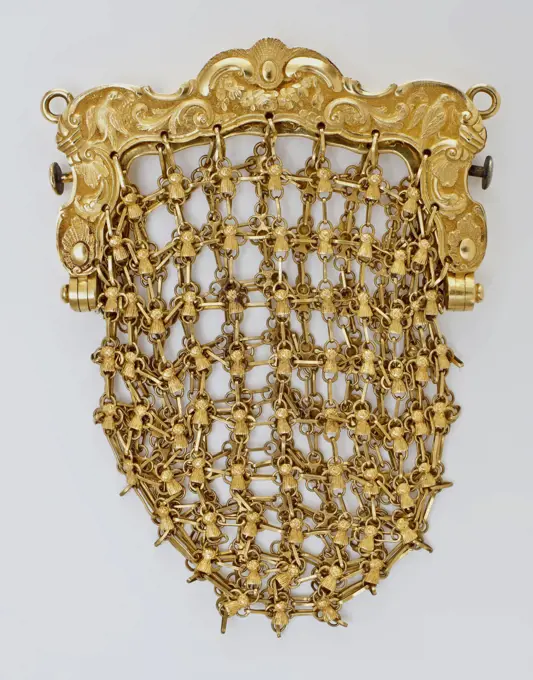
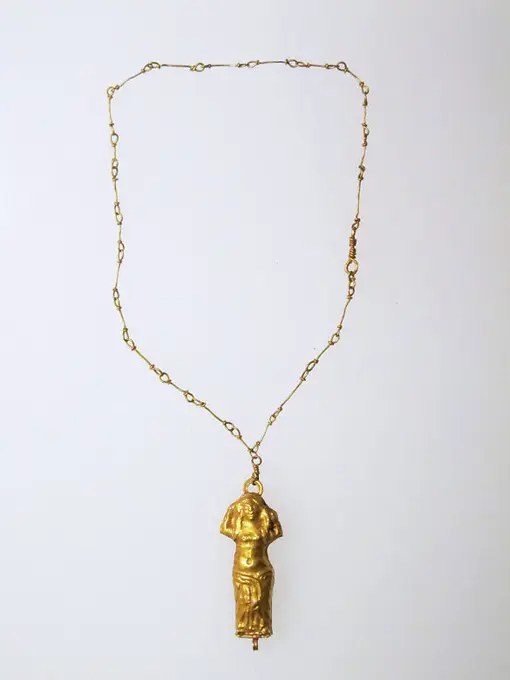
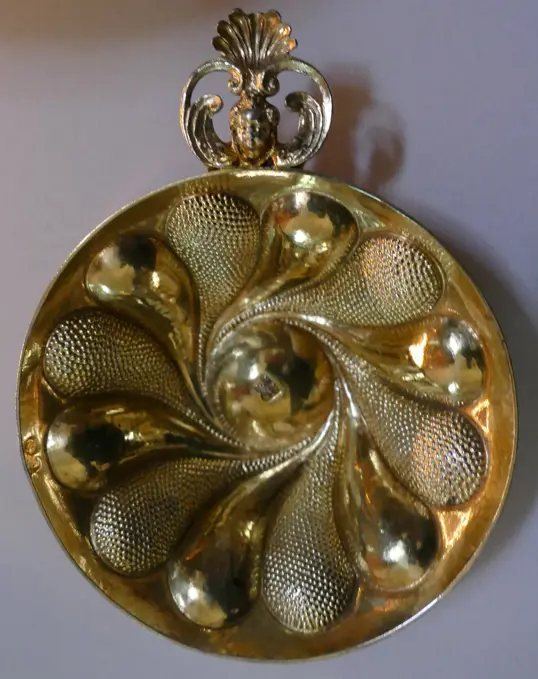
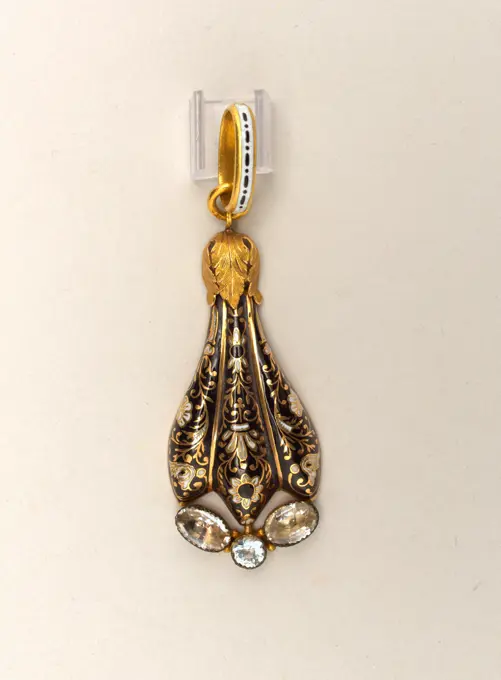
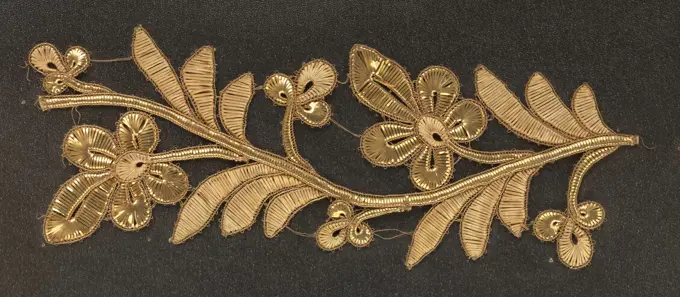
Golden braid bag, clamp bag bag clothing accessory clothing gold, d 1.0
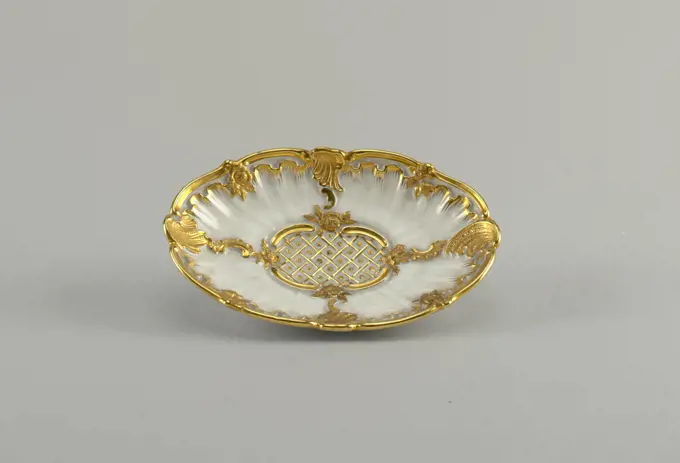
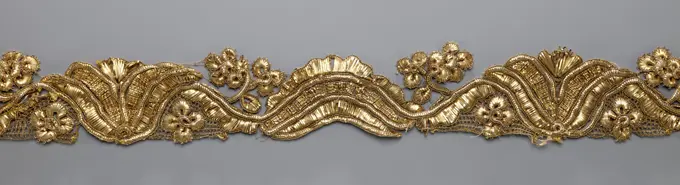
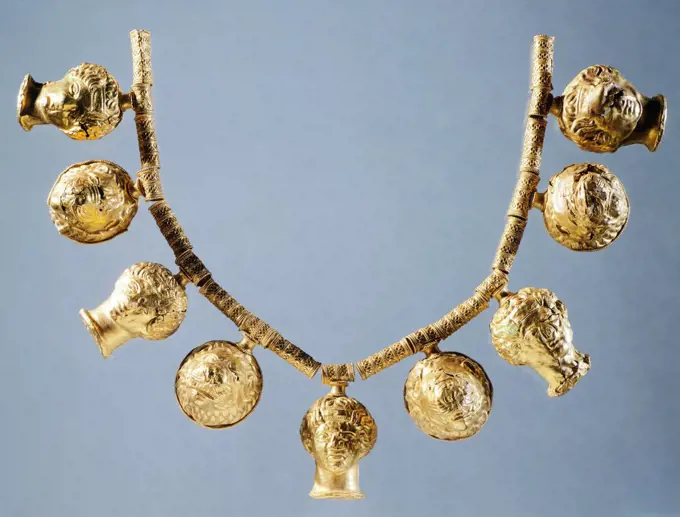
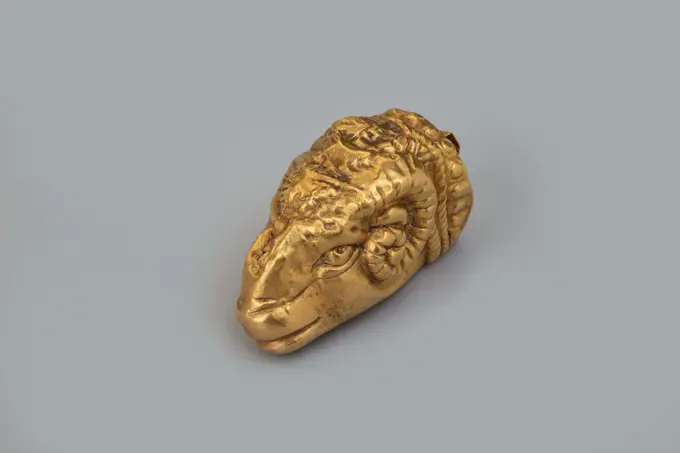
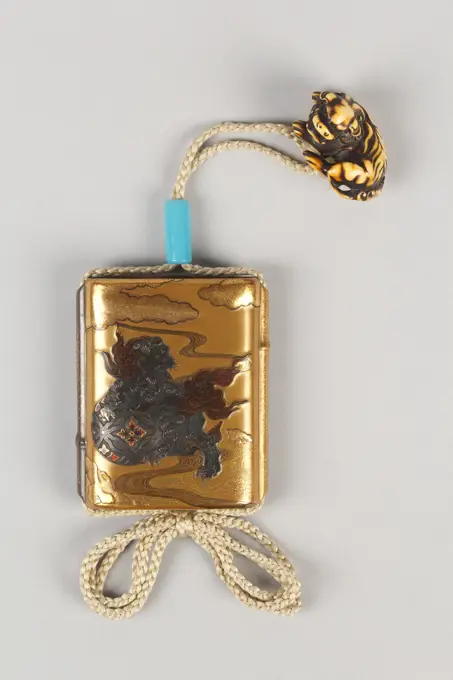
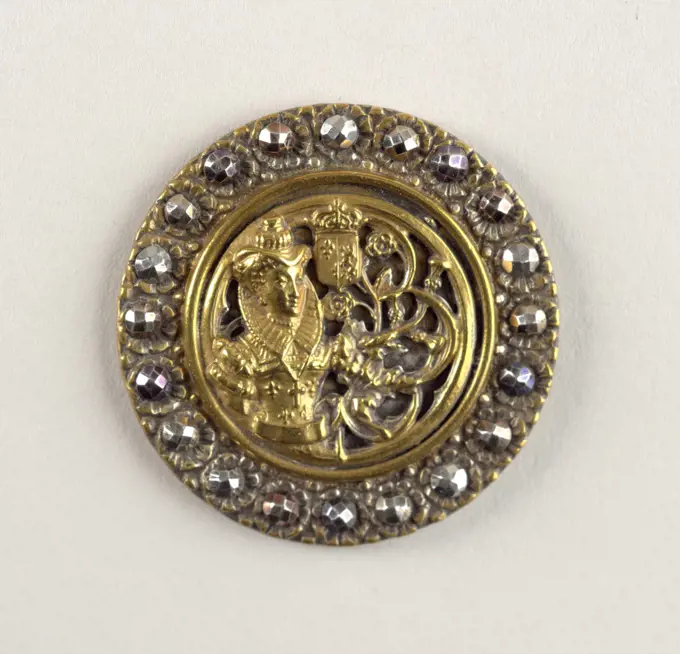
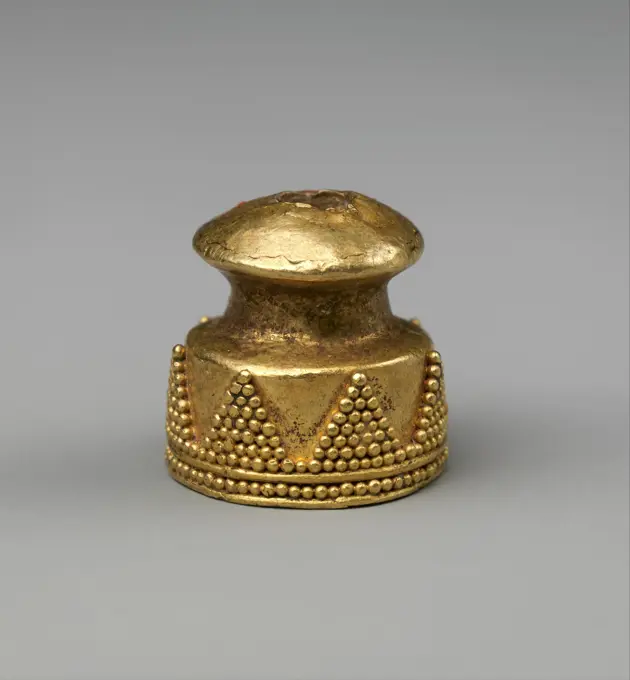
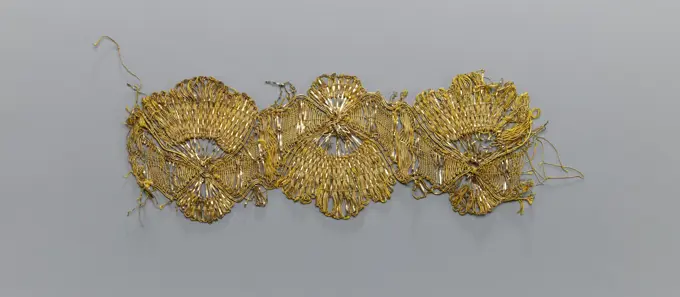
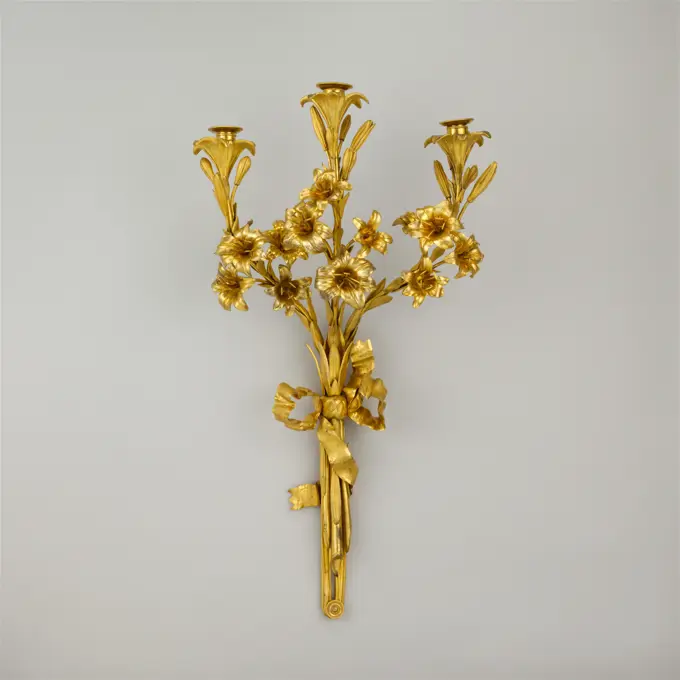
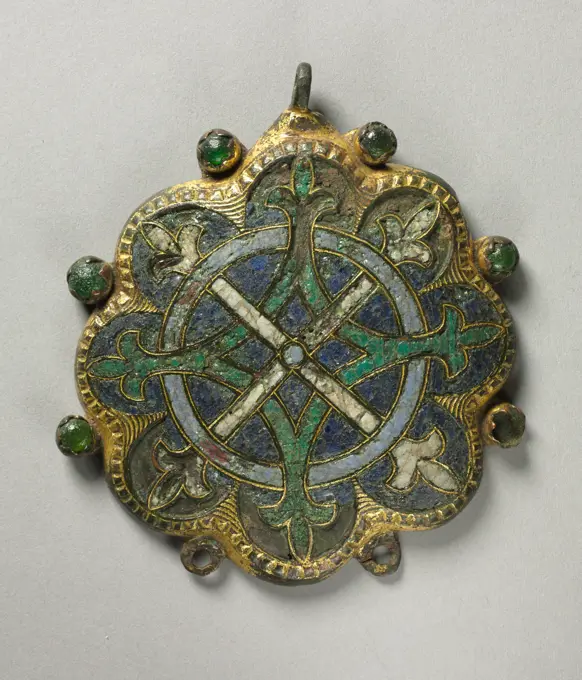
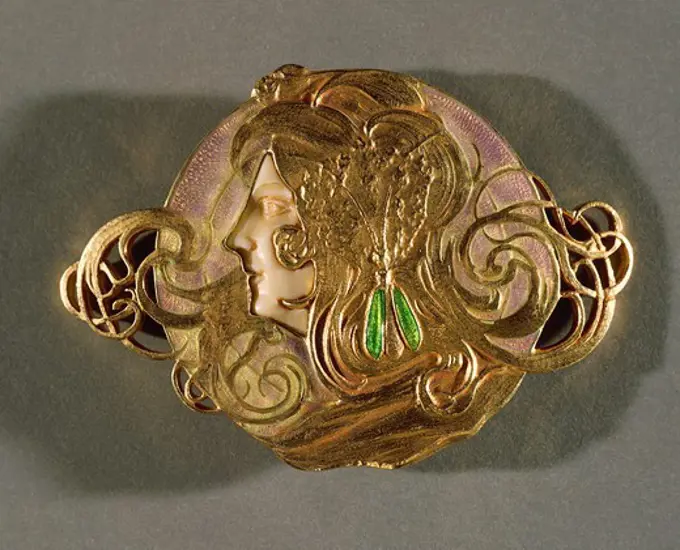
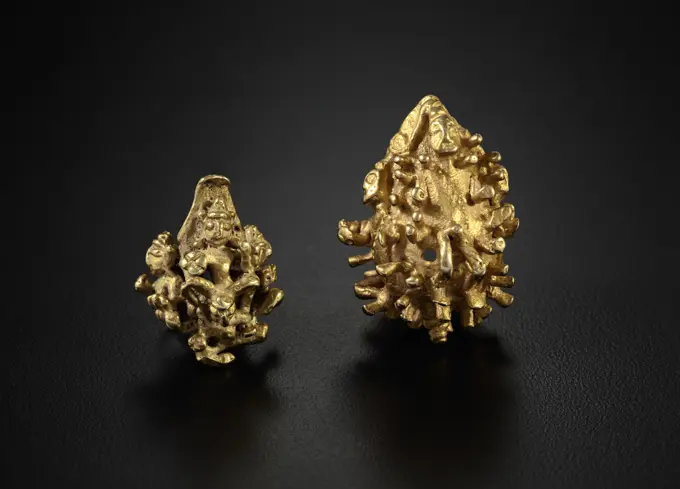
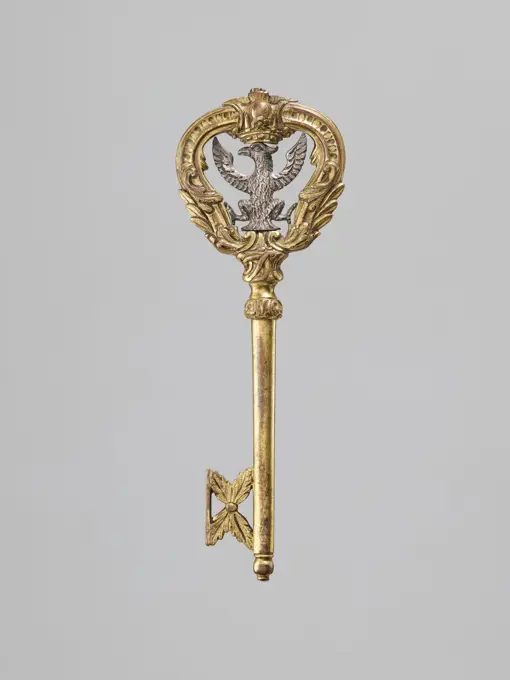
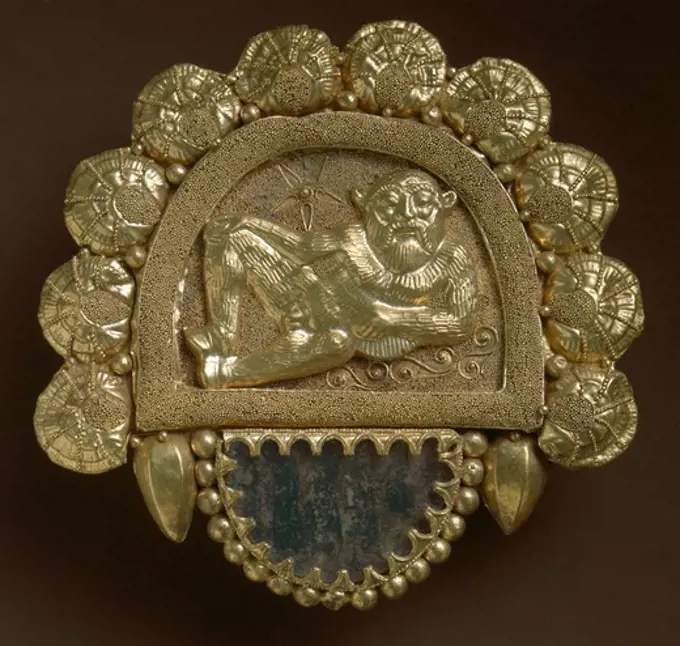
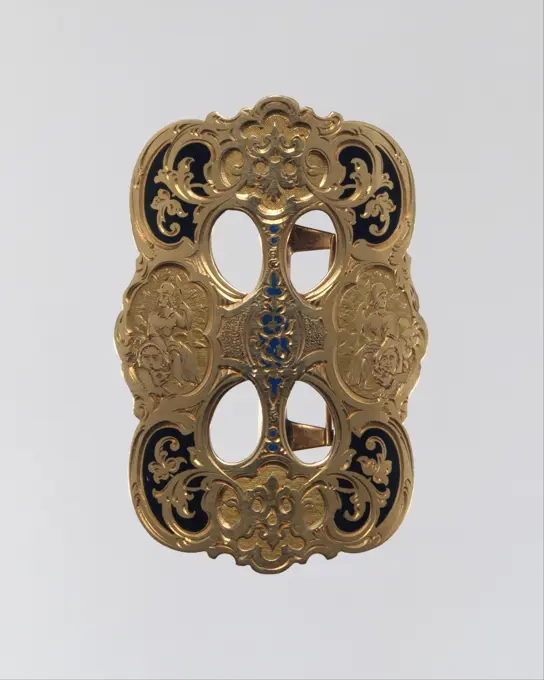
Belt Buckle ca. 1868 Manufactured by California Jewelry Co. A watershed for the history of jewelry in America occurred in 1849 when gold was discovered in California. By the early 1850s, "Gold Rush" rings, brooches, hair combs, and belt buckles were becoming popular jewelry items. Some, such as digger's brooches ornamented with shovels, picks, pans, and nuggets, were made especially for the tourist trade. This gold and enameled belt buckle is decorated with a figure of Minerva with a bear, taken from the state seal of California. The enamel is applied in a technique called champlevé, which involves cutting a design into the metal, then fusing enamel into the hollow reserves. Once polished, the enamel becomes flush with the metal surface. Manufactured by the California Jewelry Company around 1868, the buckle has a securing mechanism patented in 1868 by William Cummings. Cummings's invention involved three small rings soldered onto the back of the buckle, which kept the prongs from slippEscutcheonBuckle 1500-1520 German. Buckle. German. 1500-1520. Brass. Miscellaneous-Buckles & OrnamentSupport of Reader, Anonymous, 1750 - 1775 Messing support from reader BK-1979-20-A. Netherlands brass (alloy) casting Messing support from reader BK-1979-20-A. Netherlands brass (alloy) castingGolden braid bag, clamp bag bag clothing accessory clothing gold, d 1.0Badge or Harness Pendant 14th century Spanish Heraldry, or coat-of-arms, were vitally important in Europe throughout the Middle Ages and the Renaissance. Heraldic emblems were used to identify noble families, cities, regions, and even countries. In addition to being displayed on shields and flags, heraldry was incorporated into architectural decoration on the interior and the exterior of buildings, on furniture, works of art, clothing, and horse equipment. Harness pendants, like this example, would have been attached to a headstall, bridle, or other straps making up the tack of a horse ridden by a nobleman or noblewoman, or a member of their household. Many harness pendants also have decoration that is simply ornamental, or have symbols that are not specifically heraldic in nature.. Badge or Harness Pendant. Spanish. 14th century. Copper, gold, enamel. Miscellaneous-BadgesOrnament with bird among lotuses Korea Goryeo dynasty (918-1392) View more. Ornament with bird among lotuses. Korea. Gold. Goryeo dynasty (918-1392). JewelryPendant in the form of a centaur. Culture: possibly Spanish. Dimensions: Height: 3 1/2 in. (8.9 cm). Date: late 16th-early 17th century.Baroque pearls provided a special challenge to the imagination of the Renaissance goldsmith. The rather difficult shape of this irregular pearl has been used in an ingenious way to suggest the hybrid form of the centaur, the half-human, half-equine creature of classical myth. The base of the jewel incorporates an earlier piece of gold filigree work in a lobed pattern associated with Hispano-Moresque design. In addition, although reenameled, it displays traces of the dull enameled colors used by Hispano-Moresque goldsmiths. The jewel-decorated band on the side of the base, the chains, and the canopy from which the chains are suspended are later additions. Museum: Metropolitan Museum of Art, New York, USA.MountMount, Bronze (gilt), gold, satyr's head, France, ca. 1780, metalwork, Decorative Arts, MountMount, ca. 1700; brassMountTwo badges, anonymous, c. 1450 - c. 1499 Carrying sign of partially gilded silver. The round plate is decorated with an edge of open worker ornament in relief, between which animals and hunters. Two gilt consoles have been installed in the middle of the plate, one wears a statue of a bishop, the other statue is missing. On the right and left two smaller, also gilded figures, the H. Catharina and the H. Barbara. Nijmegen silver (metal). gilding  Mook Carrying sign of partially gilded silver. The round plate is decorated with an edge of open worker ornament in relief, between which animals and hunters. Two gilt consoles have been installed in the middle of the plate, one wears a statue of a bishop, the other statue is missing. On the right and left two smaller, also gilded figures, the H. Catharina and the H. Barbara. Nijmegen silver (metal). gilding  MookArmband, anonymous, c. 1845 - c. 1850 Gold bracelet, gilded silver, diamonds and hair. The central motif is an example of Neo-Rococo; While the brushes hanging on it are reminiscent of Arabian jewelry. Germany gold (metal). silver (metal). diamond (mineral). gilding Gold bracelet, gilded silver, diamonds and hair. The central motif is an example of Neo-Rococo; While the brushes hanging on it are reminiscent of Arabian jewelry. Germany gold (metal). silver (metal). diamond (mineral). gildingEarring in the form of a vase 4th-3rd century B.C.. Earring in the form of a vase. 4th-3rd century B.C.. Gold, carnelian. Late Classical or Hellenistic. Gold and SilverNecklace, chain. Dimensions: Other (Pendant): 1 9/16 × 9/16 × 3/16 in. (4 × 1.5 × 0.5 cm)Other (Length of chain): 9 15/16 in. (25.2 cm). Museum: Metropolitan Museum of Art, New York, USA.Gold pendant in the form of a bull's head. Culture: Cypriot. Dimensions: L. 1 3/16 in. (3.1 cm). Date: ca. 1400-1050 B.C..Most of the raw materials for Cypriot jewelry came from the East. Gold became plentiful in the Late Bronze Age, when Syria and Egypt were the primary sources. These earrings are a Cypriot creation, an ornament in the form of a bull's head. Museum: Metropolitan Museum of Art, New York, USA.Silver buckle, oval -shaped with two flowers in relief in the corners of the Spate, c. 1775 - c. 1800 Silver buckle, oval -shaped with two flowers in relief in the corners, other string of diamond -shaped. Hinged closure at the rear, in the form of a fish tail. France (possibly) whole: Silk forging Silver buckle, oval -shaped with two flowers in relief in the corners, other string of diamond -shaped. Hinged closure at the rear, in the form of a fish tail. France (possibly) whole: Silk forgingWall arm of polished copper, the parts of which are made up of leaf shapes and leaf volues, anonymous, 1740 - 1760 furniture. sconce Wall arm of polished copper. The trunk is made up of leaf voltuits, two of which cross each other at the top and walk through in the arms. The fat holders are leaf -shaped and the candle holders are also made up of leaf fillets. See also: BK-14301-B. France copper (metal)MountBracket, wood, gilded, Bracket fragment, portion of a console, with laurel and acanthus decoration., France, 1780, Decorative Arts, BracketGold pendant in the form of a bull's head ca. 1400-1050 B.C. Cypriot Most of the raw materials for Cypriot jewelry came from the East. Gold became plentiful in the Late Bronze Age, when Syria and Egypt were the primary sources. These earrings are a Cypriot creation, an ornament in the form of a bull's head.. Gold pendant in the form of a bull's head. Cypriot. ca. 1400-1050 B.C.. Gold. Late Bronze Age. Gold and SilverBracelet, 19th Century. Burma. Silver gilt; diameter: 3.3 cm (1 5/16 in.).Medallion with the booking Maria Magdalena in the cave, Anonymous, c. 1550 - c. 1600 Pendant of Gold and Email, with the booking Maria Magdalena in the cave. France gold (metal). Pendant of Gold and Email, with the booking Maria Magdalena in the cave. France gold (metal).Wall sconce (one of a pair) ca. 1755 British These sconces were formerly in the drawing room of Ecton Hall, Northamptonshire.. Wall sconce (one of a pair). British. ca. 1755. Gilded pine, brass. Woodwork-FurnitureFasteningOne of a Pair of Gold Earrings with Garnets second half 8th century Frankish Hoop earrings with polyhedral beads, derived from late Roman jewelry, remained fashionable among Frankish women from the 400s through the 700s. Many are delicate pieces, their beads decorated with garnets or precious stones. Others, often with the least imposing beads, impress by their large hoops and distinctive closures.. One of a Pair of Gold Earrings with Garnets 464786 Frankish, One of a Pair of Gold Earrings with Garnets, second half 8th century, Gold, garnets with foil backings, silver studs/rivets, Overall: 1 13/16 x 1 3/4 x 1/2 in. (4.6 x 4.5 x 1.3 cm) bead: 13/16 x 1/2 in. (2 x 1.3 cm). The Metropolitan Museum of Art, New York. Gift of J. Pierpont Morgan, 1917 (17.191.1)Goldsmith's art, Italy, 17th century.Gold, silver and diamonds aigrette, hair jewel.. Wall arm of gold-plated lion wood with three candle holders and decorated with asymmetrical sculpted acanthus leaf work with flowers.Badge or Harness Pendant 14th century Spanish Heraldry, or coat-of-arms, were vitally important in Europe throughout the Middle Ages and the Renaissance. Heraldic emblems were used to identify noble families, cities, regions, and even countries. In addition to being displayed on shields and flags, heraldry was incorporated into architectural decoration on the interior and the exterior of buildings, on furniture, works of art, clothing, and horse equipment. Harness pendants, like this example, would have been attached to a headstall, bridle, or other straps making up the tack of a horse ridden by a nobleman or noblewoman, or a member of their household. Many harness pendants also have decoration that is simply ornamental, or have symbols that are not specifically heraldic in nature.. Badge or Harness Pendant. Spanish. 14th century. Copper, gold, enamel. Miscellaneous-BadgesPlanets-manager. Cornalet Collection Sites 2013-2016. Numismatic.Collar with Medallion and Pendant, AD 200-300. Egypt, Alexandria, Roman, 3rd century. Gold; diameter of central pendant: 4.2 cm (1 5/8 in.); chain: 40.7 cm (16 in.).Keyhole Escutcheon; brass; Diam.: 5 cm (1 15/16 in.)Dessert Dish, Meissen Porcelain Manufactory, German, active from 1710 to the present, hard paste porcelain, vitreous enamel, gold, Oval dish divided into four parts with scrolls and c-curves. At center, an oval cartouche with relief molded diaper pattern., Germany, mid- 19th century, ceramics, Decorative Arts, dish, dishJewellery box isolated on the white backgroundFragment of the lace;  18th century (1701-00-00-1800-00-00);Gold necklace with pendants, Italy. Goldsmith art. Greek civilization, Magna Graecia.Wisiorek w kształcie głowy barana. unknown, authorLluís Masriera / Colgante en forma de ave, 1908. Colección privada. Author: LLUÍS MASRIERA I ROSÉS.Locket. Culture: probably French. Dimensions: Height: 1 9/16 in. (4 cm). Date: ca. 1620-40. Museum: Metropolitan Museum of Art, New York, USA.Case (Inr) with Design of Dog (Shishi) with Brocade Ball 19th century Japan. Case (Inr) with Design of Dog (Shishi) with Brocade Ball. Japan. 19th century. Lacquer, kinji, brown ishime, incised, takamakie, roiro and togidashi, metal inlay; Interior: nashiji and fundame. Edo (1615-1868) or Meiji period (1868-1912). InrWatch ca. 1640 Watchmaker: Jacob Wybrants Today Leeuwarden is a small, rather quiet city, but in the seventeenth century it was the capital of a wealthy Dutch province as well as the seat of the Prince Stadholder of Friesland. It is not entirely unlikely, therefore, that a relatively unimportant watchmaker found a patron for this elegant watch. In 1648 the estate of Leeuwarden goldsmith Minne Sikkes (recorded 1618, d. 1648) contained one large crystal watch case and four smaller ones.. Watch 193730Button, gilt-metal, marcasite, Centered by a pierced medallion with armorials and a Queen, possibly Marie de Medicis, surrounded by a border of marcasite., On card 43, France, 1830-40, costume & accessories, Decorative Arts, ButtonPectoral watch; Stacks, Israel (fl. 1 after XVII); 1 PO. XVII W (1600-00-00-1649-00-00);Devant-de-Gorge or triangular breastpiece of silver brocade between yellow silk ribbons covered with silver tuler Passement, both decorated with ornaments of (originally gilded) leaf-silver over parchment and trimmed with a scalloped edge of silver tulle, silk appliques, silk chenille, bows of sting of (originally gilded) leaf silver and silver thread, anonymous, c. 1740 - c. 1760 Devant-de-Gorge or triangular breastpiece consisting of a centerpiece of silver brocade surrounded by yellow sides ribbons covered with silver tulle, both decorated with ornaments of leaf-silver over parchment and trimmed with a scalloped edge of silver tulle, silk appliques, silk chenille, bows From silver and silver thread. Model: triangular center piece of brokaat with a silver necklace and a yellow sides, ending in a heart -shaped ornament. The brokaat had to give a golden impression, so the golden -yellow side was used. All around with, and attached to large string stitches on, a cream -colored rip sidesCylinder seal cap ca. 17th-16th century B.C. Babylonian or Kassite This gold cap is part of a group of gold jewelry elements and cylinder seals found buried together at the ancient city of Dilbat, a site south of Babylon (47.1a-h). The cap and two others like it from the so-called Dilbat hoard” (41.1j, 41.1k) are decorated with triangles of gold granulation. Originally, this cap would have been one of a pair that encased a cylinder seal. (The seals found in the hoard do not fit the caps.) A hole at the top of the cap suggests that the cap and its cylinder were meant to be strung and worn by the individual owner, but probably not as part of a composite ensemble represented by the hoard, which includes pendants and beads made in a range of styles and gold alloys, and executed with varying levels of craftsmanship.Although it is rare for a cylinder to be preserved with its caps, impressions of cylinder seals showing borders of triangles indicate that the use of caps like this one became pFragment of the lace;  XVIII/19th century (1751-00-00-1850-00-00);Vase;  around 1890-1900 (1801-00-00-1900-00-00);discoidal fibula, Museo de los Concilios y la Cultura Visigoda, Church of San Román, Toledo, Castilla-La Mancha, Spain.EscutcheonDisk Ear Stud. UnknownMountPair of clock ornaments 18th century French. Pair of clock ornaments 190181 French, Pair of clock ornaments, 18th century, Gilt bronze, Overall (confirmed): 2 1/8  4 3/8  3/8 in. (5.4  11.1  1 cm). The Metropolitan Museum of Art, New York. Gift of J. Pierpont Morgan, 1906 (07.225.510.443a, b)Snuffbox ca. 1740 German Heliotrope was known and valued during antiquity for its deep emerald green color and its purported magical qualities. The primary source of heliotrope, also known as bloodstone because of its red inclusions resembling blood, is India.. Snuffbox 236585Afghanistan, Necklace adornments, gold and inlay  artifacts from Tillya Tepe findPair of Earrings, 1800s. India. Silver;Scarab Hieroglyphs 1650 BCE-1550 BCE Egypt. Glazed steatite . Ancient EgyptianAngel plastic statue of an gold angel isolated on white background.Harness RingEar Ornament, Arrow Head 8th-12th century Indonesia (Central Java). Ear Ornament, Arrow Head 64210Watch ca. 1820-35 Watchmaker: Pierre Morel. Watch 195637Goldsmith's art, Italy, 17th century. Cosimo Merlini (1580-1641), cross reliquary, 1620. Detail.Small Heart Shaped Pendant, James Cromar Watt (Aberdeen, Scotland, 1862 - 1940)Cup from Germany, 1597. Made in Augsburg by Tobias Kramer. silver gilt wine cup was made for display rather than use. The central roundel is enamelled with the arms and name of the owner, H. Martin Scholl.Pendant (France); gold, black and white enamel, aquamarines.Pair of three-light sconces (bras de lumière) ca. 1775 French, Paris These wall lights are shaped with great naturalism to resemble lily stalks tied together with a large bow. They are not a proper pair, as their ribbons do not complement each other but flow in the same direction; therefore, they were most likely part of a larger set. The unknown chaser and gilder made clear contrasts between such highly burnished areas as the opened blooms and those given a matte finish, such as the buds. Lilies are strongly scented flowers that were very popular during the Neoclassical period, and a number of contemporary references to sconces in the shape of sprays of lilies are known. The successful bronze worker Pierre Gouthière, for instance, made a pair composed of three lily branches for Madame du Barry, mistress of Louis XV, for which he charged 2,500 livres. Horace Walpole reported in a letter of September 9, 1775, to Anne Liddell, that the Grand Cabinet of Madame de Mirepoixs Parisian hôtelHarness Pendant, 1200s. France, Gothic period, 13th century. Gilded copper, champlevé enamel; overall: 10.2 x 9 cm (4 x 3 9/16 in.). Probably a pendant (hanging ornament) because of the loop at the top, this plaque may have been hung from a horse's breast plate. It also could be a crusader's badge.Brise Fan: Gothic Revival Style, c. 1830. England (probably), 19th century. Gilt metal, enamel, horn, pigment, spangles, ribbon; radius: 18.8 cm (7 3/8 in.); spread: 35 cm (13 3/4 in.).Ear Ornament with Makara Motif Last quarter of the 10th-last quarter of the 15th century Indonesia (Java). Ear Ornament with Makara Motif. Indonesia (Java). Last quarter of the 10th-last quarter of the 15th century. Gold. Eastern Javanese period. JewelryFrance, Chatillon-sur-Seine, Golden diadem or neckbandOver -hanger of gold, c. 1045 - c. 1500 Over -hanger of gold, part of one pair. Java gold (metal) casting Over -hanger of gold, part of one pair. Java gold (metal) castingGoldsmith's art, 20th century. Liberty style enamelled gold and ivory brooch depicting a woman's profile, 1900.Galvanoplastic reproduction of the scale on three pomegranates from the Lüneburger Ratssilber, Fa. Vollgold & Sohn, Before 1535 Galvanoplastic reproduction of a scale on three legs in the form of pomegranates. In the middle of the scale two civilian weapons in email. Partially gilded. Berlinmaker: Lüneburg copper (metal). silver (metal). gilding Galvanoplastic reproduction of a scale on three legs in the form of pomegranates. In the middle of the scale two civilian weapons in email. Partially gilded. Berlinmaker: Lüneburg copper (metal). silver (metal). gildingPair of earrings 18th century probably Spanish. Pair of earrings 206850Ear Ornament. Culture: Zenú. Dimensions: H. 1 1/2 x W. 2 3/16 in. (3.8 x 5.6 cm). Date: A.D. 1-1000.Metalworkers made this ear ornament by lost-wax casting. (For more information on this process, please see Metropolitan Museum of Art 2008.569.13a, b.) The entire piece was designed in wax at one stage, whether created from a pre-existing mold or not (please see Metropolitan Museum of Art 1974.251.59 for further discussion). It has the appearance of filigree, that is, work in metal wire, but these wire-like elements in the design were built in wax and then cast as metal. The object is made of gold or more likely a gold alloy with copper. Coarse, or large, metal grains, in a dendritic or tree-like form, are visible on the surface on both sides, suggesting that the workers pre-heated the mold and the molten metal cooled slowly, facilitating the growth of large grains. This ear ornament is distinctive of the work of Zenú artists, who lived and live today in the Caribbean Lowlands of ColombRod Finial with ThreeFiguresSeptic tank;  1764 (1764-00-00-1764-00-00);Gold stud, from Vignanello (Lazio). Etruscan civilization, 5th Century BC.Przeszo Przyszoci unknownLoop.Signet ringCeltic civilization, Spain, 1st century b.C. Goldsmith's art. Gold fibula. From Palencia.gold colored traditional asian skullcap cap on a dark background. traditional asian skullcapEarring 2nd-3rd century Coptic. Earring 473125Romania, Apahida, Gold buckle and part of a gold necklace from the Omharus treasure, found in 1969Loop . Openwork strips forming scrolls and foliage.Bead and Pendant Necklace. UnknownPair of pendant fruit mounts, Gilt bronze, Swags of fruit, flowers, and foliage., France, ca. 1780, metalwork, Decorative Arts, Pair of pendant fruit mountsEarring, c. 1840. Germany, possibly, 19th century. Gold and jewels; average: 3.3 x 2.9 cm (1 5/16 x 1 1/8 in.).Pair of earrings 18th century Portuguese. Pair of earrings 206844Pair of Sword-Grip Ornaments (Menuki). Culture: Japanese. Dimensions: L. of each 1 1/4 in. (3.2 cm); Wt. of each 0.3 oz. (8.5 g). Date: 18th century. Museum: Metropolitan Museum of Art, New York, USA.Five Jewels ca. 1300 French. Five Jewels 469984Gold pendant in the form of a bull's head. Culture: Cypriot. Dimensions: L. 1. 1/8 in. (2.9 cm). Date: ca. 1400-1050 B.C..Most of the raw materials for Cypriot jewelry came from the East. Gold became plentiful in the Late Bronze Age, when Syria and Egypt were the primary sources. These earrings are a Cypriot creation, an ornament in the form of a bull's head. Museum: Metropolitan Museum of Art, New York, USA.Badge or Harness Pendant 14th century Spanish Heraldry, or coat-of-arms, were vitally important in Europe throughout the Middle Ages and the Renaissance. Heraldic emblems were used to identify noble families, cities, regions, and even countries. In addition to being displayed on shields and flags, heraldry was incorporated into architectural decoration on the interior and the exterior of buildings, on furniture, works of art, clothing, and horse equipment. Harness pendants, like this example, would have been attached to a headstall, bridle, or other straps making up the tack of a horse ridden by a nobleman or noblewoman, or a member of their household. Many harness pendants also have decoration that is simply ornamental, or have symbols that are not specifically heraldic in nature.. Badge or Harness Pendant. Spanish. 14th century. Copper, gold, enamel. Miscellaneous-BadgesPair of Ear Clips with Gold Bead in Prong Mount Second half of the 8th-second half of the 10th century Indonesia (Java). Pair of Ear Clips with Gold Bead in Prong Mount 50045Fragment goudgalon.Fragment gold galon, decorated with garlands with flowers and a branch with leaves and flowers.Anklet, One of a Pair probably 18th-19th century. Anklet, One of a Pair. probably 18th-19th century. Gold. Attributed to probably Central India. Jewelry. Earrings in the form of a ring where perpendicular is a trim on a lotus cushion.Mount; cast gilt and gilt bronzeFragment, floral, wood, gilded, late 18th century, Decorative Arts, Fragment, floral