Historical Jewelry Artifacts

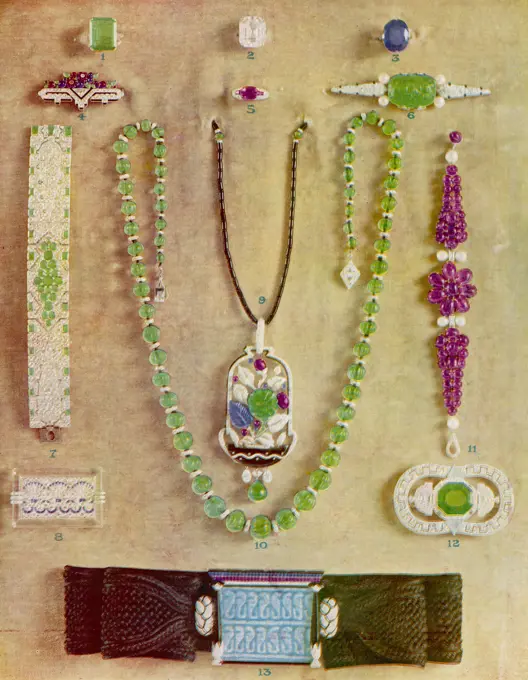
Intricately designed antique jewelry pieces, including belt buckles and decorative elements, showcasing craftsmanship and historical significance.
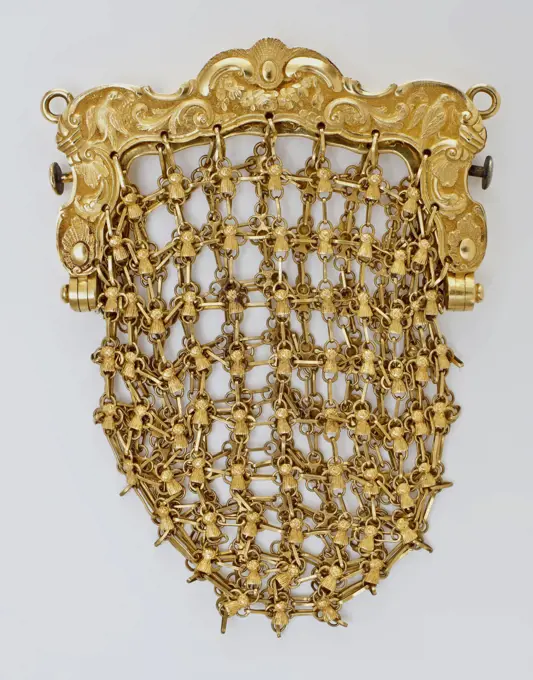
Golden braid bag, clamp bag bag clothing accessory clothing gold, d 1.0
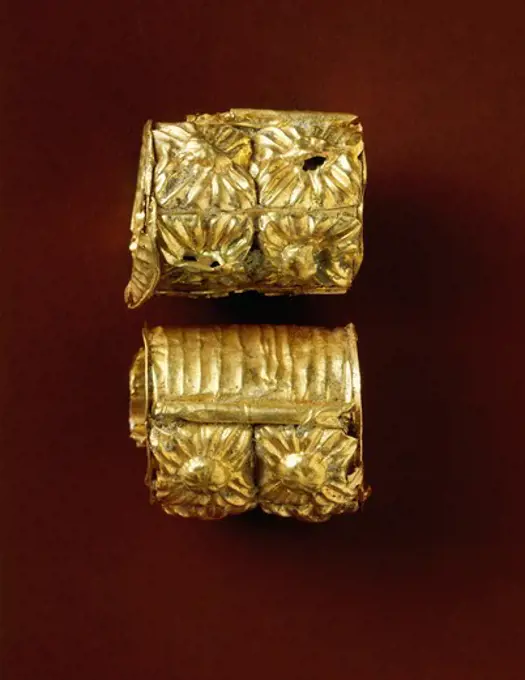
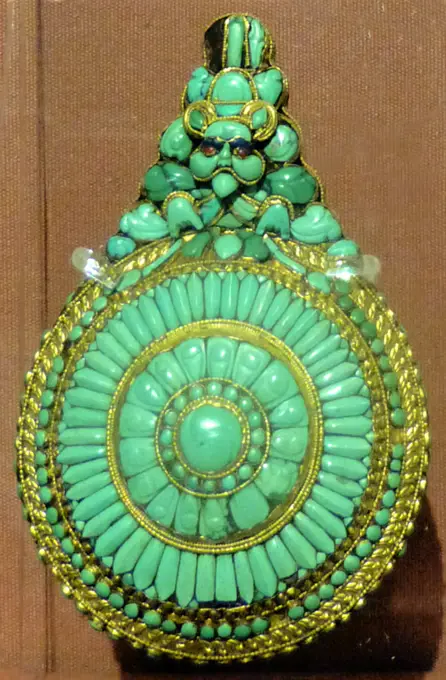
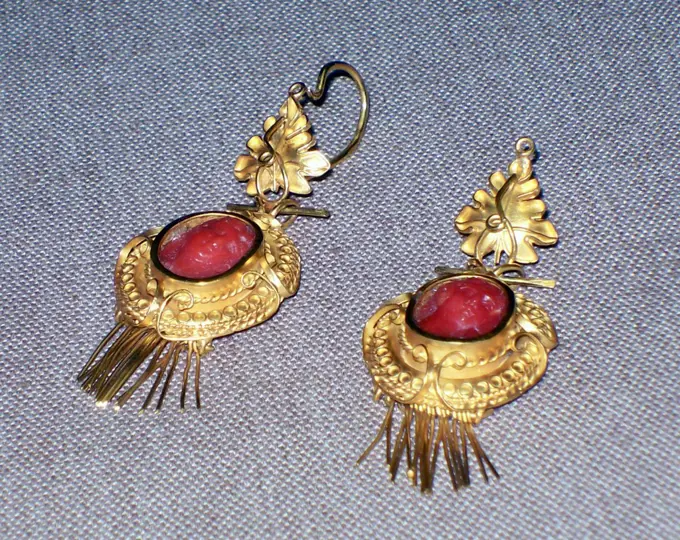
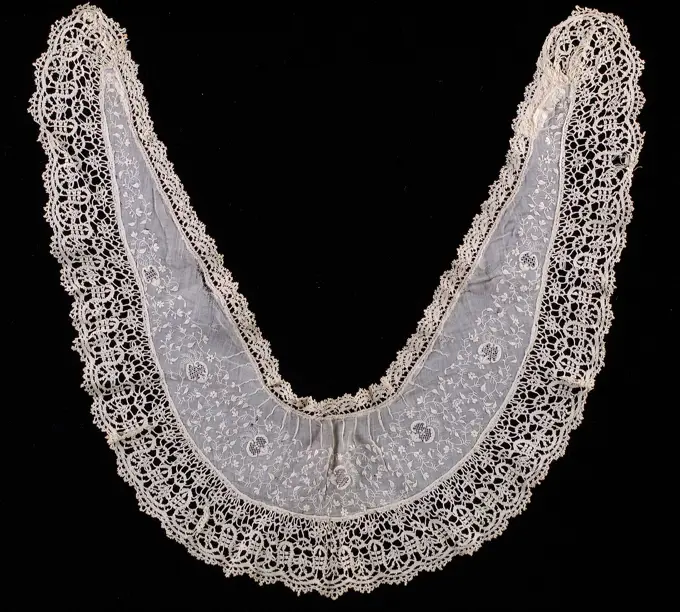
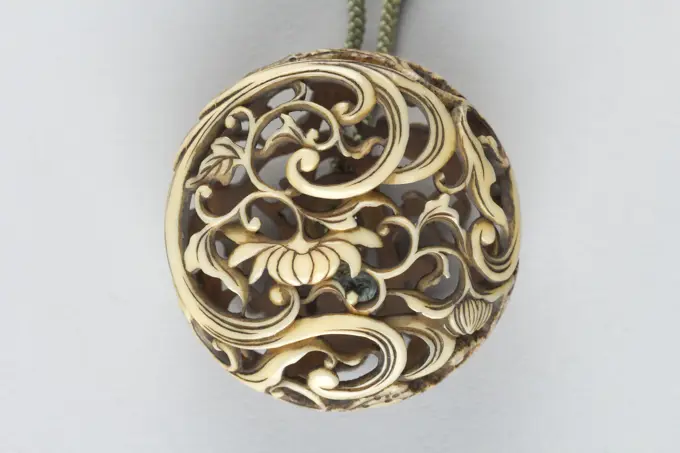
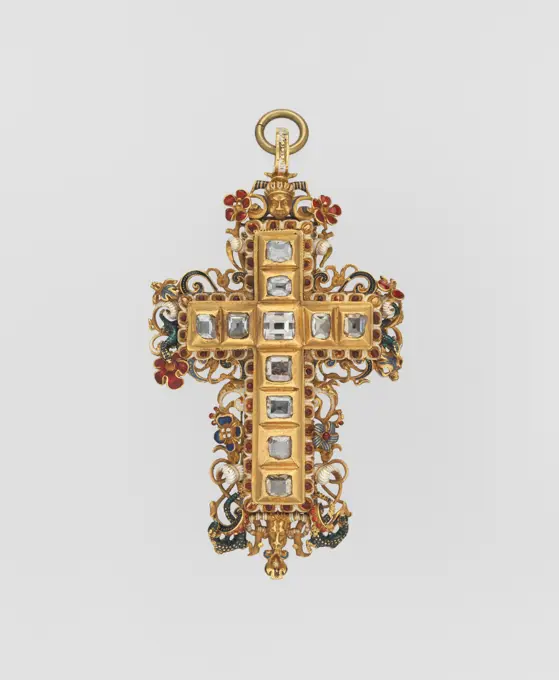
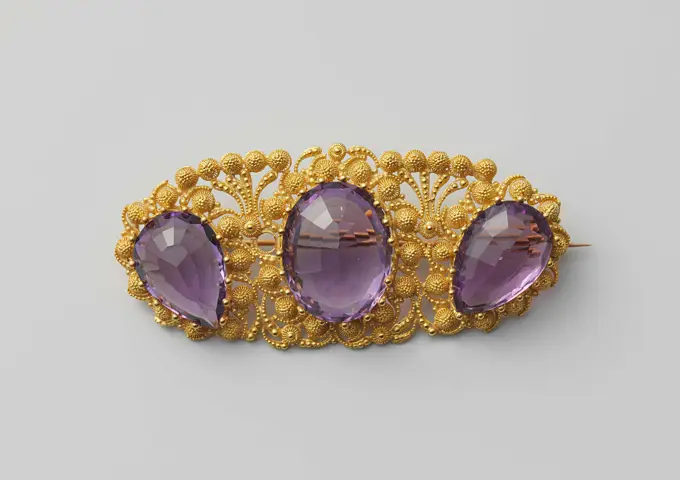
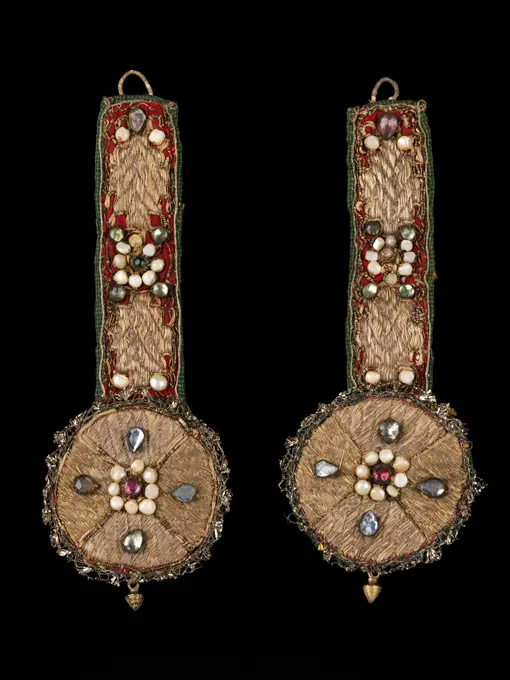
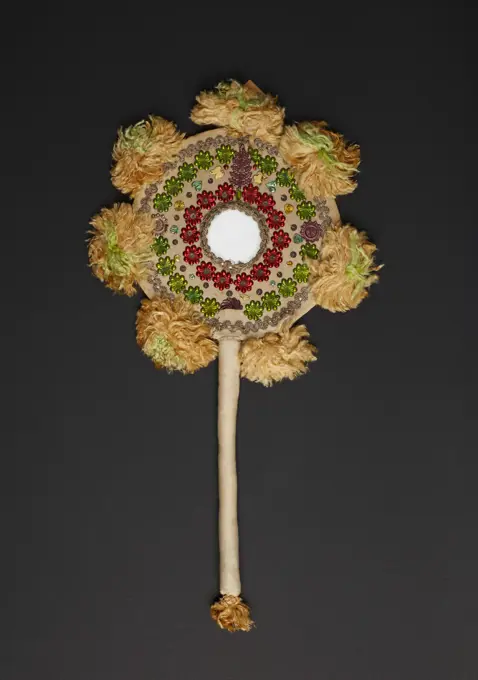
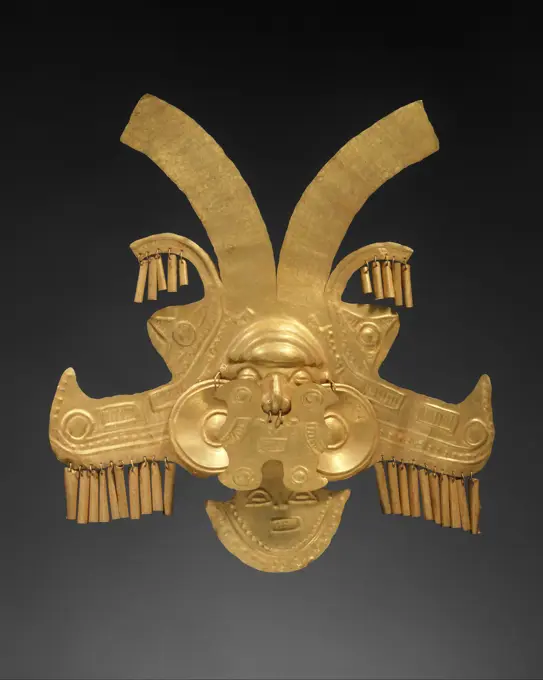
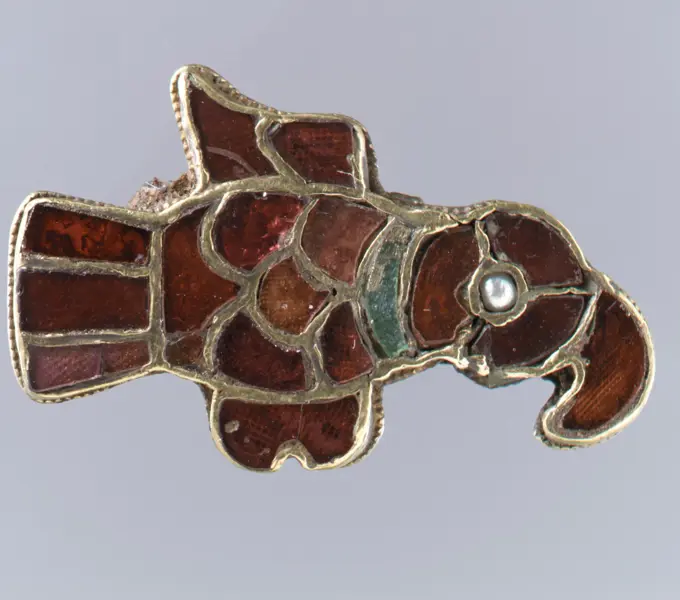
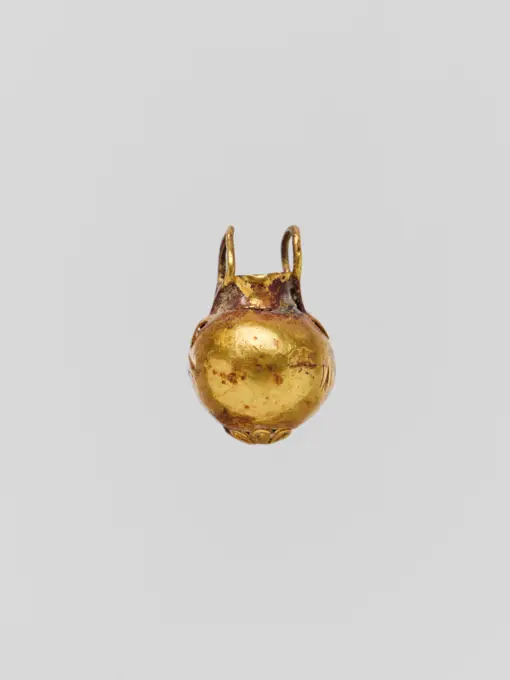
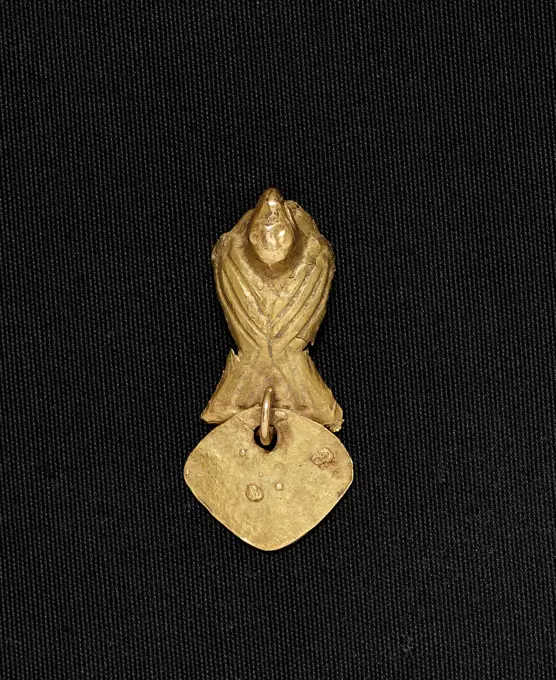
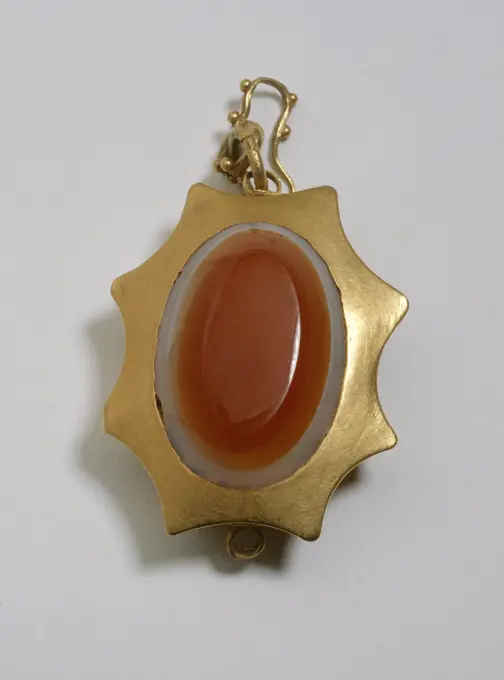
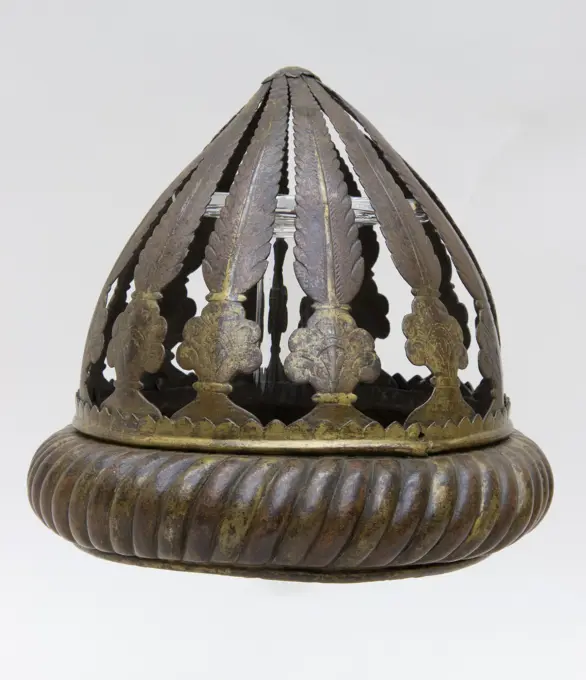
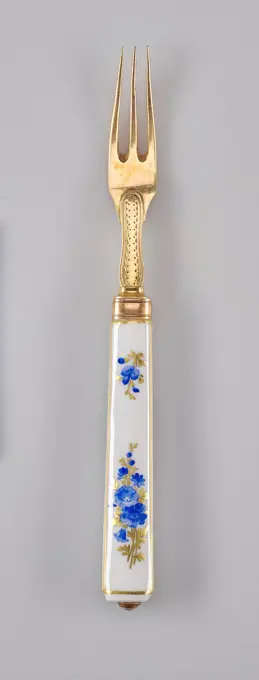
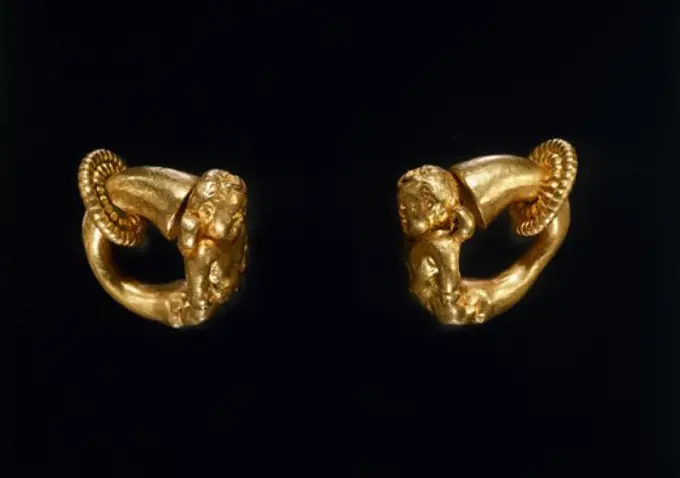
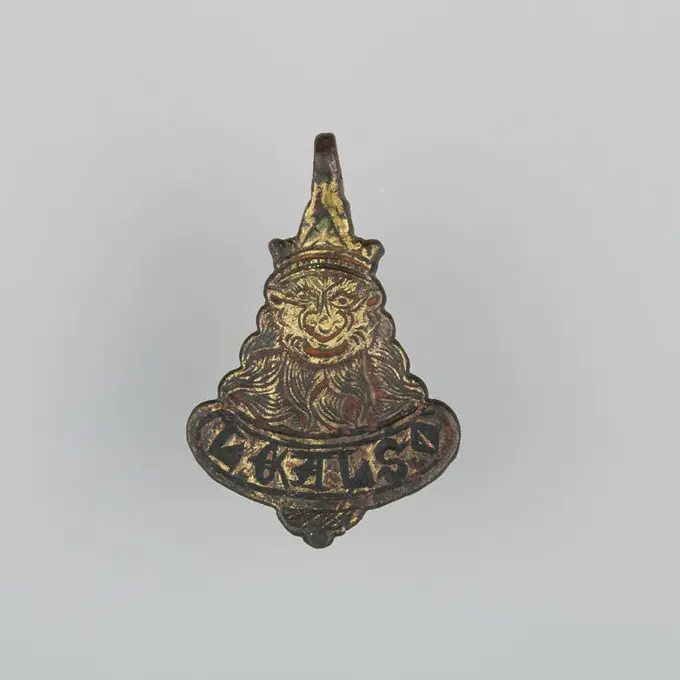
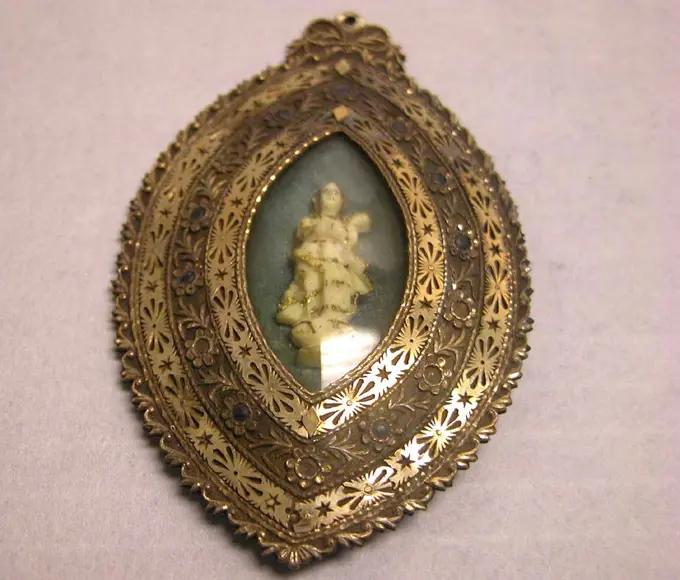
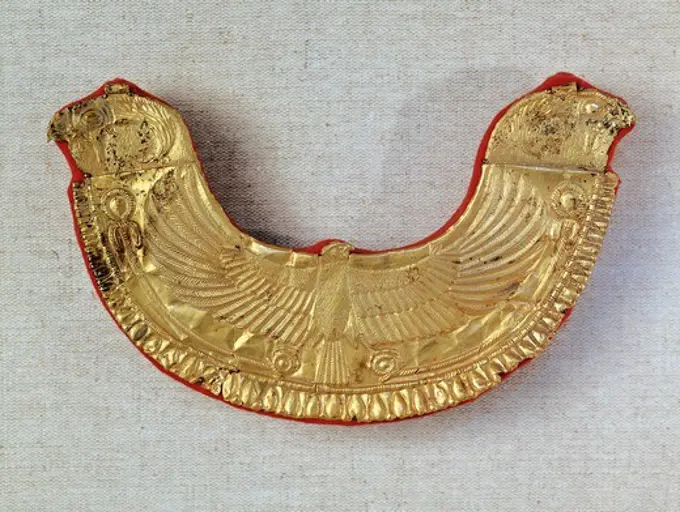
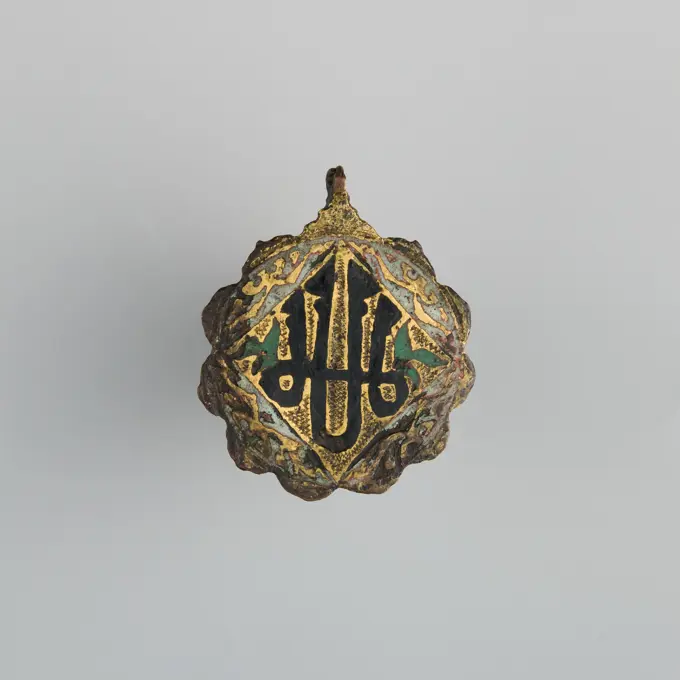
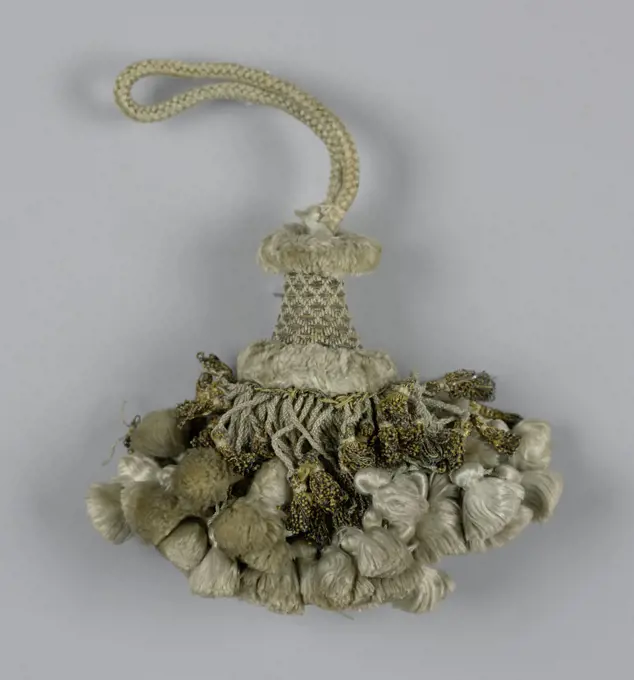
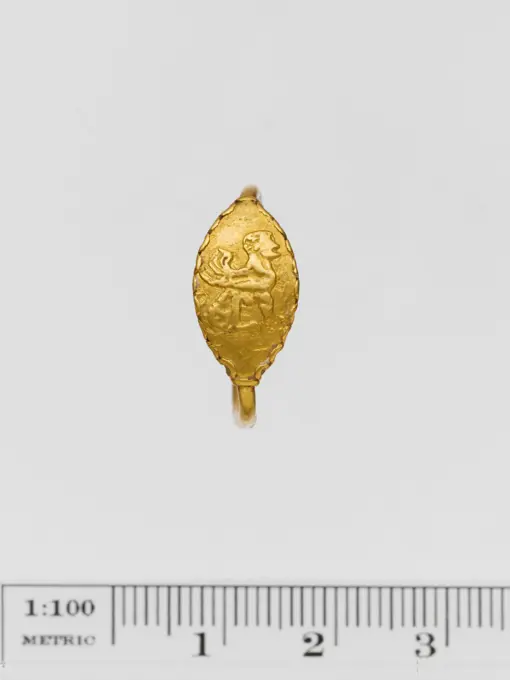
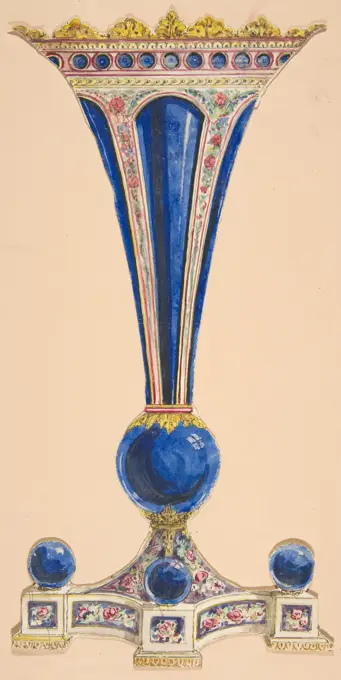
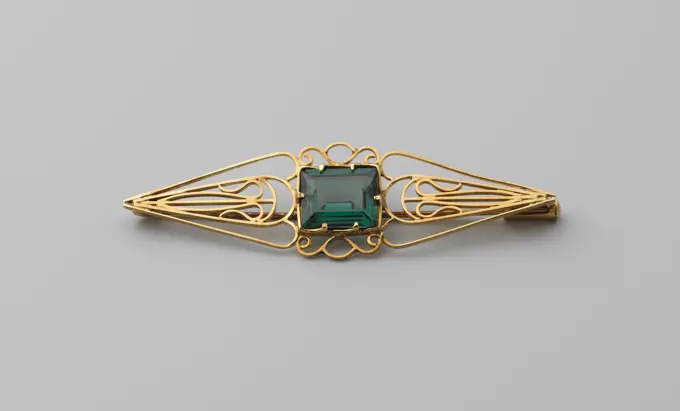
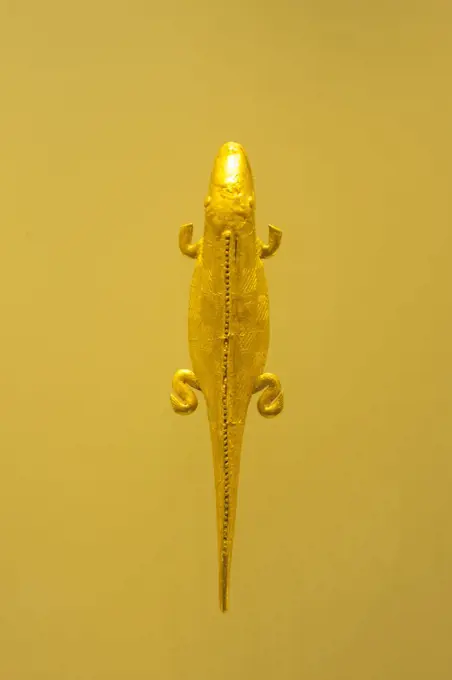
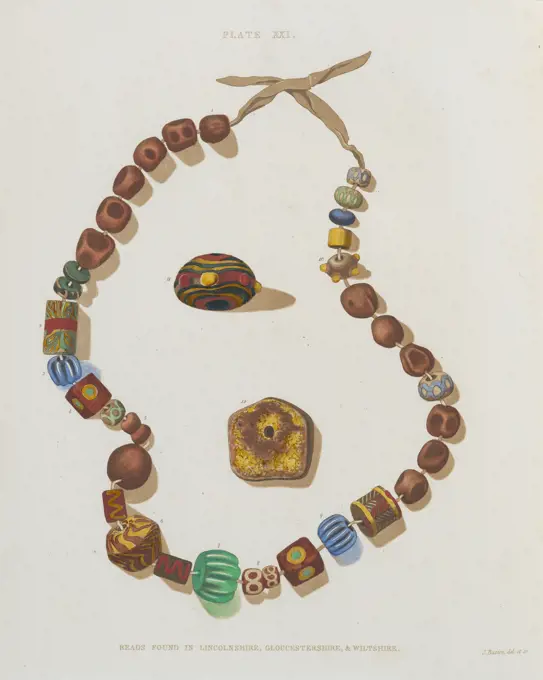
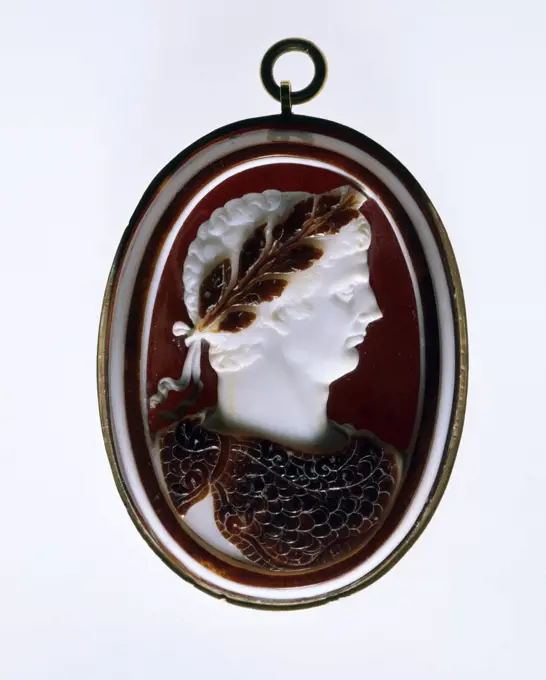
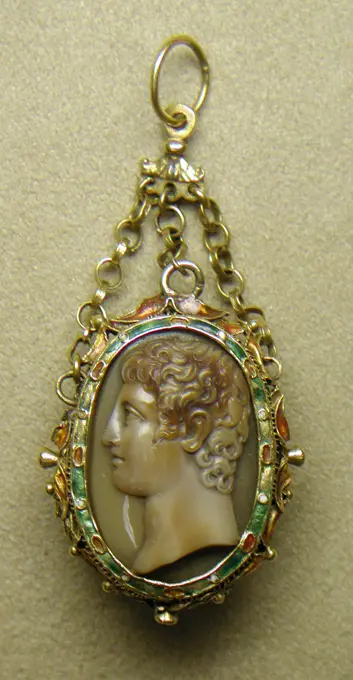
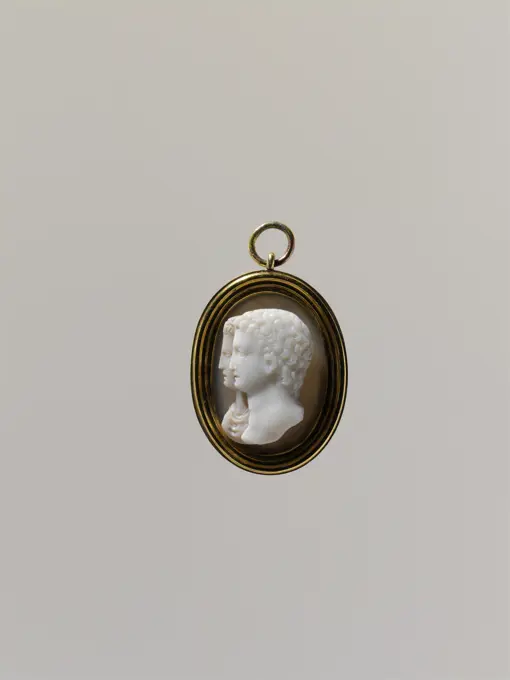
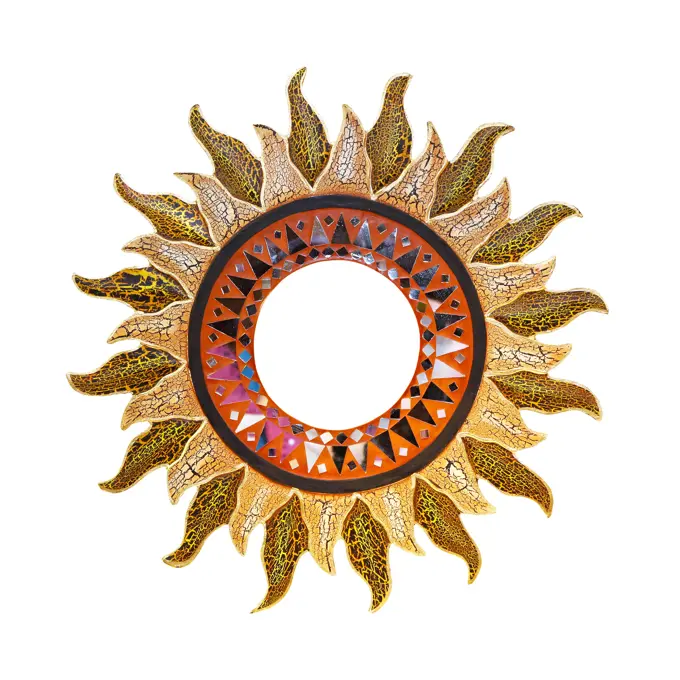
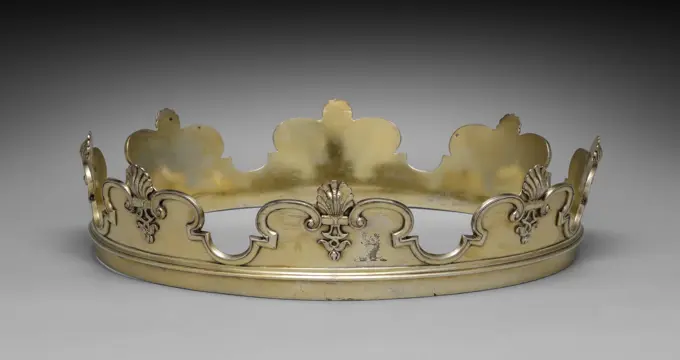
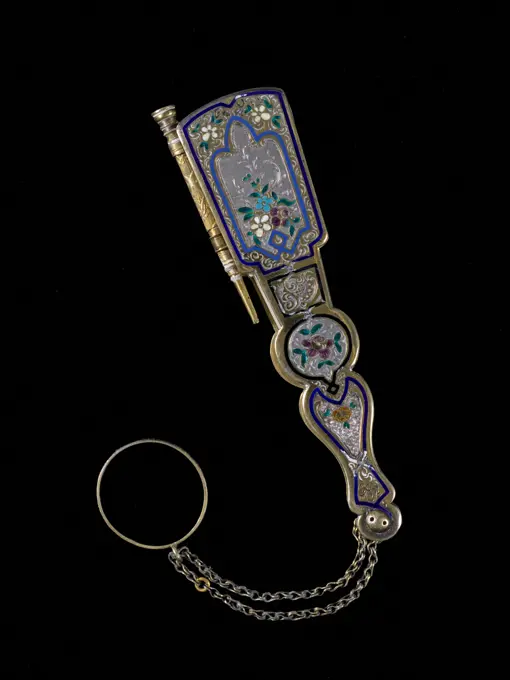
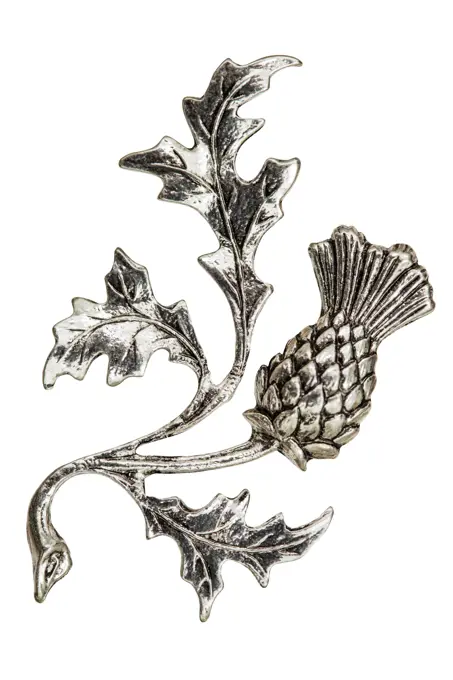
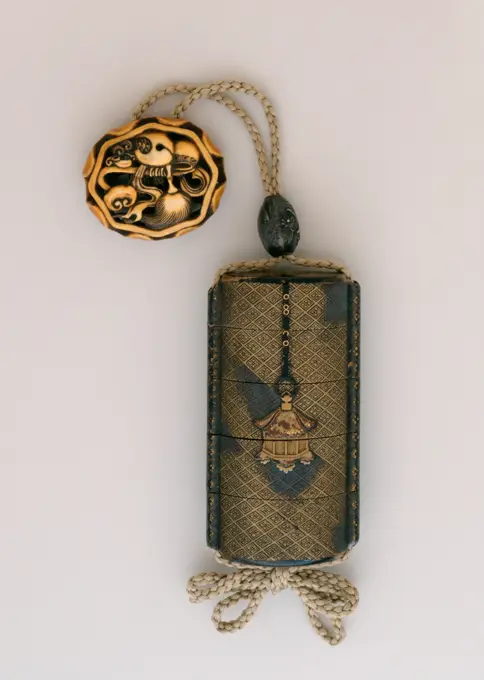
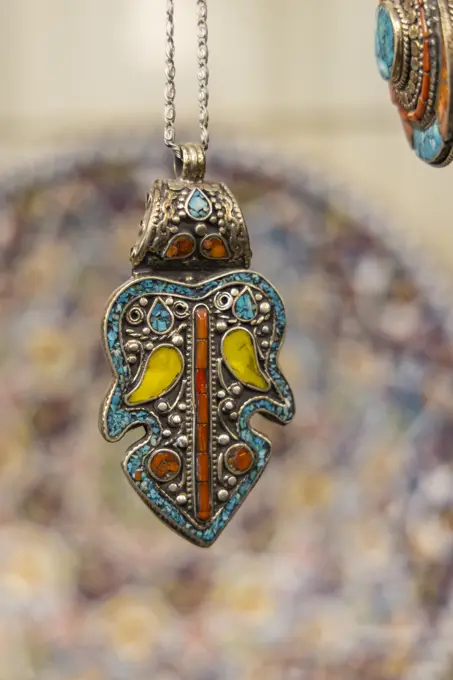
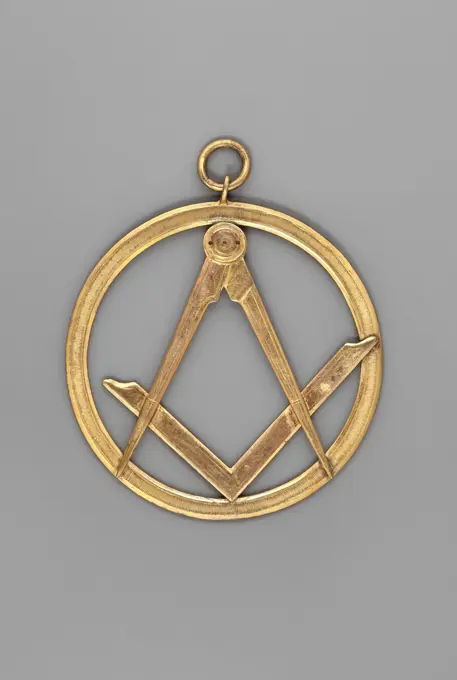
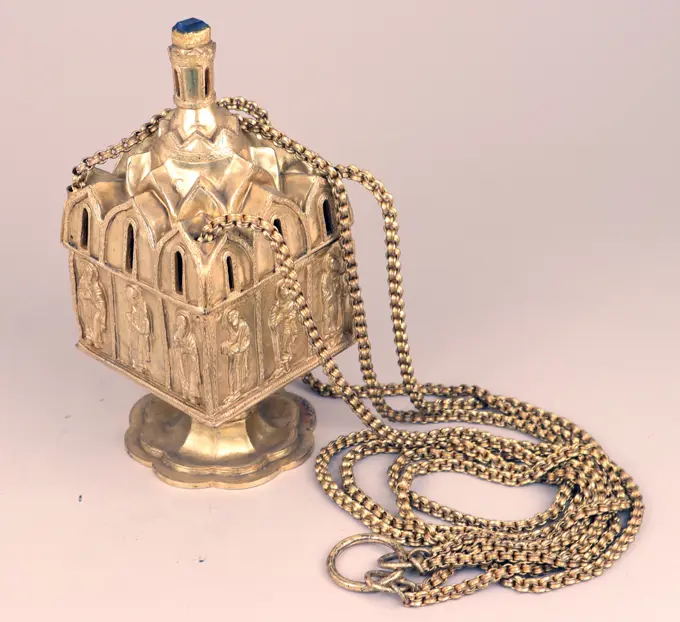
Censer with chain 19th century, after 16th century original British, after Russian original This electrotype is after a sixteenth-century original in a monastery, Troisata, at the time of reproduction.. Censer with chain. British, after Russian original. 19th century, after 16th century original. Silver on base metal. Metalwork-ElectrotypeGold 'bauletto' (bag) earrings from Volterra, Tuscany Region, Italy, Etruscan civilizationIron Crown of Lombardy. The crown was certainly in use for the coronation of the kings of Italy by the 14th century, and presumably since at least the 11th. The manufacture of the crown dates to the 8th or early 9th century.Three Amulet Cases 1800-79 Amulet cases were used to hold holy objects or written prayers, believed to protect the wearer from evil.Earrings: !8th century coral cameo tasselled earrings. 18 carat gold.Serving Spoon, Bird’s Nest” Pattern. Maker, attributed to: Whiting Manufacturing Company, American, 1866-1926Gold pectoral, from the Dnepropetrovsk Region, Ukraine. Scythian Civilization, 4th Century BC.Necklace or Rosary () 17th-19th century Philippines. Necklace or Rosary () 40573Mount from the Staffordshire Hoard. Dated 6th CenturyFichu ca. 1890 French. Fichu 168475Netsuke of Water and Chrysanthemum (Kikusui) 19th century Japan. Netsuke of Water and Chrysanthemum (Kikusui). Japan. 19th century. Ivory carved in openwork, (Rysa). Edo (1615-1868) or Meiji period (1868-1912). NetsukeCross 16th century Northern European The size of this jewel and related ones (see also 17.190.892; 17.190.893; 32.100.298; and 41.100.26) is such that only the closest viewer could appreciate their full beauty and dexterous execution; they represent the finest craftsmanship for the wealthiest patrons. Each combines gold with natural treasures, such as pearls and gemstones. Bulbous baroque pearls cleverly suggest the fluffy down of a swans underbelly or a cloudy mass supporting the Crucifixion. Tiny figures are enameled in the round. Melding the secular and the sacred, these jewels were made to be worn: pinned to garments or hanging close to their owners skin. The animals might be heraldic devices; the swan, for example, could symbolize the Society of the Virgin Mary, called the Order of the Swan, which was founded in mid-fifteenth-century Brandenburg in Germany.[Elizabeth Cleland, 2017. Cross. Northern European. 16th century. Gold, partly enameled, set with diamondsBrooch of gold and amethyst. Brooch of gold and amethyst.Ornament 19th century Russian This object is from the collection of Natalia de Shabelsky (1841-1905), a Russian noblewoman compelled to preserve what she perceived as the vanishing folk art traditions of her native country. Traveling extensively throughout Great Russia, she collected many fine examples of textile art of the wealthy peasant class. From the 1870s until moving to France in 1902, Shabelsky amassed a large collection of intricately embroidered hand-woven household textiles and opulent festival garments with rich decoration and elaborate motifs. The Brooklyn Museum holdings include many fine examples including the majority of the garments. Portions of Shabelsky's collection are also housed at the Museum of Fine Arts, Boston, the Cleveland Art Museum, and the Russian Museum of Ethnography in St. Petersburg.. Ornament. Russian. 19th century. silk, cotton, metal, pearls, glass, mother-of-pearlFanCrown, headdress of monarch, decorative element, isolated on white background Crown, headdress of monarch, decorative element, isolated on white background Copyright: xZoonar.com/OleksandrxKostiuchenkox 9749946Headdress Ornament 1st-7th century Calima (Yotoco) Elaborate ornaments like the present example expressed the wealth and status of the wearer. Worn attached to a turban, basketry headdress, or other form of textile construction, it would have offered a spectacular sight when in motion with its many free-swinging surfaces. Yotoco headdress frontals come from the Calima River Valley in southwest Colombia and are complex constructions of many individual pieces of cut sheet gold assembled with gold wire.This ornament has a central human face rendered in high relief. From the septum of the nose hangs an H-shaped ornament so large that it obscures the lower half of the face. It bears a stylized low-relief face. Big disks are suspended from each ear. Yet a third relief face appears on the bottom of the ornament. It would have rested on the wearer's forehead. The relief decoration was executed with blunt chisels and punches, while the gold sheet rested on a soft surface such as pitch, leather,Bird-Shaped Brooch 500-600 Frankish The dress of Frankish women generally consisted of a tunic, cinched by a belt from which hung an array of pendants. A wrap or cloak went over the tunic. Shoes and hosiery, fastened with buckles, covered the legs. Earrings, necklaces, and hairpins completed the ensemble.Aspects of this dress changed from the 300s to the 600s, and brooches in particular convey changes in taste. From the 300s to the 500s, pairs of small brooches, in an array of inventive shapes, held the wrap in place. By the 600s, a single large disc brooch, usually elaborately decorated, served the same function. No other piece of jewelry is more characteristic of Frankish dress than the brooch, and no other better demonstrates the virtuosity of Frankish metalworkers.. Bird-Shaped Brooch 464859Gold pendant in the form of a vase late 6th-5th century B.C. Greek or Cypriot Vase-shaped.. Gold pendant in the form of a vase. Greek or Cypriot. late 6th-5th century B.C.. Gold. Classical. Gold and SilverBird Bead, c. 900-1550. Colombia, Muisca style, 10th-16th century. Cast gold; Muisca metalwork divides into two categories: ornaments to be worn, such as these, and offering figurines, in the case to the right. The elaborate bird pendant features delicate herringbone moldings, openwork patterns, and wing details-all part of the wax model from which the pendant was cast (see nearby computer animation). The dangles were attached after casting.Party: Pendant in gold and agate, ancient Rome, 2nd or 3rd century ". Museum of Fine Arts of the city of Paris, Petit Palais. 26984-6 Accessory, agate, antiquity, jewelry, Roman empire, female fashion, gold, set, pendant, ancientConsole clock made of gilded and quoted bronze, Jean Joseph de Saint-Germain (attributed to), c. 1745 - c. 1749 Bottom part of the console clock of gilded and quoted bronze. The console in the form of an equilateral triangle shows openwork, asymmetrical rocaille motifs. The clock is decorated in such a way and rests on angle-placed C-shaped legs, which carry S-shaped leaf voltuties on the front, on which the round dial supports. For a crown, a crowing rooster and a sun shining through the clouds serves. The sides have openwork diamond -shaped fillings. At the console control brand of the crowned C. Paris bronze (metal). gilding (material). brass (alloy). gilding Bottom part of the console clock of gilded and quoted bronze. The console in the form of an equilateral triangle shows openwork, asymmetrical rocaille motifs. The clock is decorated in such a way and rests on angle-placed C-shaped legs, which carry S-shaped leaf voltuties on the front, on which the round dial supports. For a crThe Stafford Chasuble Made 1620-1640 England. Silk, broken warp chevron twill weave, cut solid velvet; appliquÈd with silk, satin weave; embroidered with gilt-metal strips and purl, gilt-metal-wire-wrapped linen, and gilt-metal-strip-wrapped silk in laid work and couching; edged with gilt-metal-strip-wrapped silk, bobbin straight lace .Helmet 17th century Indian, Maharashtran or Deccan. Helmet 32055Fork, from a flatware dessert service, 18th century, Meissen Porcelain Factory, Meissen, Germany, est. 1710, Hard paste porcelain, gilt metal, Germany, 18th centuryEarrings (France); gold, opaque enamel, rose diamondsSword Guard (Tsuba) late 18th-early 19th century Japanese A tsuba is a sword guard and part of a sword mounting. It is mounted between the swords blade and grip to protect the users hands.. Sword Guard (Tsuba) 26215Bactrian Gold: Cupid Earrings Artist Unknown Kabul Museum, Afghanistan Badge (probably from Horse Harness). Culture: Spanish. Dimensions: H. 2 13/16 in. (7.1 cm); W. 1 7/8 in. (4.7 cm); Wt. 1 oz. (28.3 g). Date: ca. 1400. Museum: Metropolitan Museum of Art, New York, USA.blue metal background with cogwheel gears blue metal background with cogwheel gears Copyright: xZoonar.com/OxanaxRishnyakx 6270380Gold metal comb from Italy. Dated 19th CenturyDetail of a viking neck-yoke for a pair of horses, 10th century. Artist: Unknownfeather maskWomens Formal Hat (Feng-Kuan), mid 19th century, 7 3/4 in. (19.7 cm) (depth at crown), Wicker, velvet, kingfisher feather, semi-precious stones, China, 19th centuryGrupo de piezas pequeñas decoradas con motivos geométricos, quizá botones.RELICARIO CON LAS LLAVES DE SAN PEDRO. Location: CONVENTO DE LAS CLARISAS / MUSEO DE ARTE SACRO. MONFORTE DE LEMOS. LUGO. SPANIEN.Earrings 18th century-19th century European, Eastern. Earrings 102402Ritual dagger-axe (ge), China. Chinese Civilisation, Shang Dynasty, 14th-11th century BC.Pendant 17th-19th century Philippines. Pendant 40577Golden ring isolated on the white backgroundVulture Headdress Inlay, 100-1 BC. Egypt, Ptolemaic Dynasty. Gold and semi-precious stones; overall: 3 x 2.8 cm (1 3/16 x 1 1/8 in.).Cameo with Head of a Man. Wedgwood Manufactory; England, founded 1759. Date: 1775-1799. Dimensions: 4.9 × 4.8 cm (1 15/16 × 1 7/8 in.). Stoneware (jasperware). Origin: Burslem. Museum: The Chicago Art Institute, Chicago, USA.necklace of discoidal beads, Goikolau cave, Berriatua, Arkeologi Museoa, aqueologico museum, Bilbao, Bizkaia, Pais Vasco, Spain.Brooch in Floral motif with drop -shaped pendant, anonymous, 1770 - 1790 Brooch made of silver and grenades in floral motif with drop -shaped pendant. The grenades are put on silver foil. There are probably two drop -shaped pendants that were attached from either side of the central pendant. Two eyes are visible at the rear of the brooch with which the brooch could be attached to clothing. The hook brochure is from a later date. England silver (metal). garnet (mineral) Brooch made of silver and grenades in floral motif with drop -shaped pendant. The grenades are put on silver foil. There are probably two drop -shaped pendants that were attached from either side of the central pendant. Two eyes are visible at the rear of the brooch with which the brooch could be attached to clothing. The hook brochure is from a later date. England silver (metal). garnet (mineral)Breastplate of King Abi-Shemu depicting a hawk holding two palm trees, goldEgyptians rings depicting birds. Gold. Neues Museum. Berlin. Germany.Badge or Harness Pendant 14th century Spanish Heraldry, or coat-of-arms, were vitally important in Europe throughout the Middle Ages and the Renaissance. Heraldic emblems were used to identify noble families, cities, regions, and even countries. In addition to being displayed on shields and flags, heraldry was incorporated into architectural decoration on the interior and the exterior of buildings, on furniture, works of art, clothing, and horse equipment. Harness pendants, like this example, would have been attached to a headstall, bridle, or other straps making up the tack of a horse ridden by a nobleman or noblewoman, or a member of their household. Many harness pendants also have decoration that is simply ornamental, or have symbols that are not specifically heraldic in nature.. Badge or Harness Pendant. Spanish. 14th century. Copper, gold, enamel. Miscellaneous-BadgesFlower of rose, decorative element, isolated on white background Flower of rose, decorative element, isolated on white background Copyright: xZoonar.com/OleksandrxKostiuchenkox 9757491Child hand holding a retro styled golden color decorative keyTassel, Medium: silk, metal thread, wooden core, Skirt of gray silk threads with gray silk tassels partly covered by gray silk threads with metal thread tassels. Head, cylindrical and broadening at the base, is covered with gray silk with metal threads in a lozenge pattern. Collars of cut threads at top and bottom. Cord of white silk., Spain, 18th century, trimmings, TasselPendant with an Intaglio of the Head of a Woman 1500-1599 Europe. Gold and hardstone .Gold and enamel ring 6th century B.C. Greek Seated sphinx.. Gold and enamel ring. Greek. 6th century B.C.. Gold. Early ArchaicDesign for a Vase 19th century Anonymous, French, 19th century French. Design for a Vase 356099Brochette of gold with green glass, c. 1931 - c. 1949 Brochette of gold with rectangular faceted green glass with a cannon closure Utrecht gold (metal). glass faceting Brochette of gold with rectangular faceted green glass with a cannon closure Utrecht gold (metal). glass facetingGolden Artifact From Tardio Tribe In The Gold Museum In La Candelaria, The Old Town Of Bogota, ColombiaGold spiral with double lion-griffin-head terminal 1st half of the 4th century B.C. Greek, Cypriot Gold spirals with double lion-griffin-head terminals, from Kourion.. Gold spiral with double lion-griffin-head terminal 242807Golden picture frame decorated golden picture frames - released on white background copyright: xzoonar.com/heikexbrauerx 575335RattlePendantGloucestershire, and Wiltshire, Beads Found in Lincolnshire, Gloucestershire, and Wiltshire, Remains of pagan Saxondom, Akerman, John Yonge, 1806-1873, Basire, James, 1796-1869, Color lithograph, 1855Cameo, jewelry, France, Paris, Bibliotheque NationaleEagle's head, Anonymous, c. 1500 - c. 1600 Eagle's head of bronze with remains of gilding. The head with feders of the neck is spread like a flat collar and attached to a horizontal plane. There was probably a ring in the mouth. Italy bronze (metal) Eagle's head of bronze with remains of gilding. The head with feders of the neck is spread like a flat collar and attached to a horizontal plane. There was probably a ring in the mouth. Italy bronze (metal)Golden luxary set of boho elements. Vector illustration with Dreamcatcher, feathers, arrow and ribbon. Ornamental bird feathers isolated. Astrology, spirituality, magic symbol. Ethnic tribal element.Head of a youth and Agnus Dei with arms of Paul V (Camillo Borghese, Pope 1605-21) probably early 17th century Italian Encased in rock crystal on the back is a papier-mché relief of the Lamb of God and the arms of Pope Paul V (r. 1605-21).. Head of a youth and Agnus Dei with arms of Paul V (Camillo Borghese, Pope 1605-21) 198340Golden Christmas bells with a holiday ornament. Isolated on white background. Golden christmas bells on whiteJugate heads of Germanicus (15 B.C.-19 A.D.) and Agrippina (d. 33 A.D.) probably 17th century Italian Subjects from Roman history preoccupied collectors in the Baroque era. The twinned countenances of these famous couples, mounted as pendants, were in the Arundel collection in the seventeenth century and the Marlborough collection in the eighteenth. As is often the case with portrait cameos, the stones were manipulated so that their warmer gradations further a suggestion of flesh.. Jugate heads of Germanicus (15 B.C.-19 A.D.) and Agrippina (d. 33 A.D.) 198342Silversmith's art, 20th century. Openwork silver brooch set with gemstones, signed by Dag, 1950s.Rhinestone brooch from around 1930, Sylvia Buechele jewelry and accessories, Nuremberg, Middle Franconia, Bavaria, Germany, EuropeEar Ornament with SeatedFigureFlat ended EarOrnamentFigure EarOrnamentCosta Rica, San Jose, Pre-Columbian Gold Museum. A Pre-Columbian gold ornament made by the loss wax process by the diquis people, ancient inhabitants of southwestern Costa Rica..Elk's Tooth Pendant (with buffalo carving), mid 19th century, 5 x 3/4 x 5/16 in. (12.7 x 1.9 x .7 cm), Elk's tooth, cord, United States, 19th centurySunshine frame isolated Wooden frame in a shape of sun isolated with clipping path included Copyright: xZoonar.com/Baloncicix 14195646Pair of Gold Ear Ornaments 13th-mid-16th century Sonso. Pair of Gold Ear Ornaments 318976Rim for a Monteith Bowl, 1715-16. Benjamin Pyne (English, active 1693-1727). Silver gilt; diameter: 32.9 cm (12 15/16 in.). This bowls notched rim allows for glasses to be suspended in water for cooling and cleansing between courses during a long dinner. The rim can be removed and the bowl used for punch as well. A year before Benjamin Pyne began this bowl, he was appointed Subordinate Goldsmith to the King in preparation for George Is coronation (r. 1714-1727). Like much of his work, this Monteith bowl is characterized by its scale and simplicity.Ball book. In the shape of a fan. Suspension ring and silver stylus; Vermeil enamelled with flower patterns; ivory sheets; Leather case. Illegible master's losanding peaks, title hallmark: Hure head. 1867. Silver, enamelled vermeil, ivory sheets; Leather case. Galliera, fashion museum of the city of Paris. Accessory, ball book, Second EmpireSign of the restaurant 'Kurpfaelzisches Museum', Heidelberg, Baden-Wuerttemberg, Germany, EuropeFiligree in the form of a thistle flower, decorative element for manual work, isolated on white, with clipping path Filigree in the form of a thistle flower, decorative element for manual work, isolated on white, with clipping path Copyright: xZoonar.com/OleksandrxKostiuchenkox 11632318Hanging Lantern (Inrō/Ojime/Netsuke Ensemble). Japan, 17th century. Costumes; Accessories. inrō lacquer; ojime mixed metals; netsuke ivoryMasonicjewelEarrings 18th century-19th century European, Eastern. Earrings. European, Eastern. 18th century-19th century. metalRoman Iron Age (c.1-c.400 CE). Rings, bracelet and gold beads found in a tomb of Tuna, Badelunda, Vastmanland. Historic Museum. Stockholm. Sweden.Locket by George Edward Hunt (1892-1960) notable Birmingham Arts and Crafts jeweller. Dated 1918Saudi Arabia, Riyadh, Al-Dirah. Colorful jewelry at the Souq Al-Zal.Beautiful jewellery designed and made by Messrs. Cartier, the famous jewellers, representing the finest modern craftmanship. These modern ornaments include an oriental vase pendant in black onyx, set with brilliants, emeralds, sapphires and rubies, mounted on platinum, and a Sautoir of fifty-nine carved emerald beads, with fifty-eight platinum and brilliant rondelles.  24th October 1925Gold funerary wreath 1st-2nd century A.D. Roman The wreath comprises oak leaves and acorns. Egyptian mummy portraits of the Roman period often show the deceased wearing such wreaths. This is true for both men and women, but the latter also wear elaborate jewelryearrings, necklaces, and hairpinssimilar to some of the examples displayed here.. Gold funerary wreath. Roman. 1st-2nd century A.D.. Gold. Imperial. Gold and SilverESTRIBOS ARGENTINOS DE ASTA - SIGLO XX. Location: MUSEO DE AMERICA-COLECCION. MADRID. SPANIEN.Pendant against colour gradient backgroundBadge - the jewel of Master of the Chair of the Freedom Regained lodge, Lublin. unknown, authorMitti mein Sona Copyright: xPxKxBhatia/DinodiaxPhotoxPainting on Glass , 19th century. Glass, paint, lead, 10 1/4 x 7 1/2 in. (26 x 19.1 cm).   Decorative Arts 19th centuryscrews isolated on a white backgroundAfghanistan, Gold artifact from Tillya Tepe find, six tombs of Bactrian nomadsGold abstract pomegranate illustration. Hand painted floral food on white background.. Gold abstract pomegranate illustration. Hand painted floral food element on white background.Spoon (USA (case)), ca. 1890; Made by Pavel Ovchinikov (Russian, 1830 - 1888); Retailed by Theodore B. Starr; enamel (cloisonne), silver-gilt; L x W x D: 13 x 2.7 x 1.3 cm (5 1/8 x 1 1/16 x 1/2 in.)