Historical Jewelry

A variety of ancient jewelry pieces, including beads, bracelets, and earrings, made from different materials highlighting cultural adornment practices.

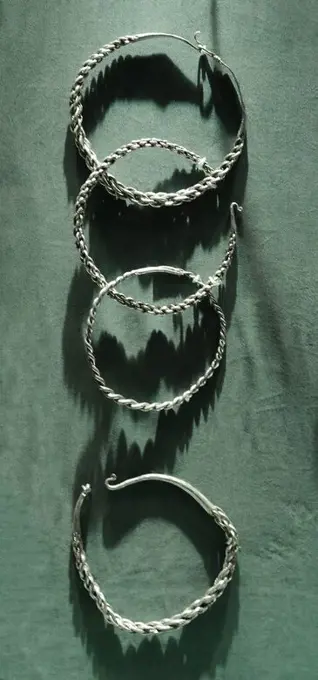
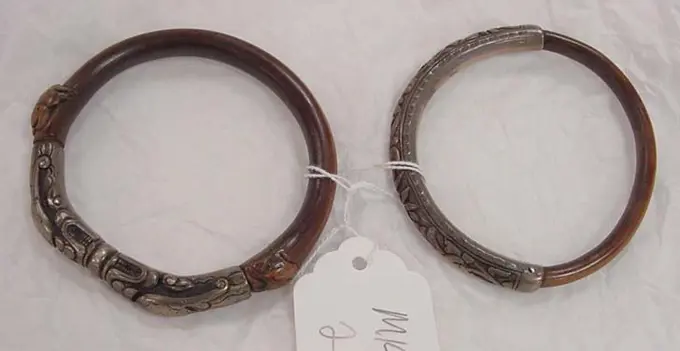
Bracelet, one of a four-piece set, 3 5/8 x 3 5/8 x 3/4 in. (9.21 x 9.21 x 1.91 cm), Silver, China
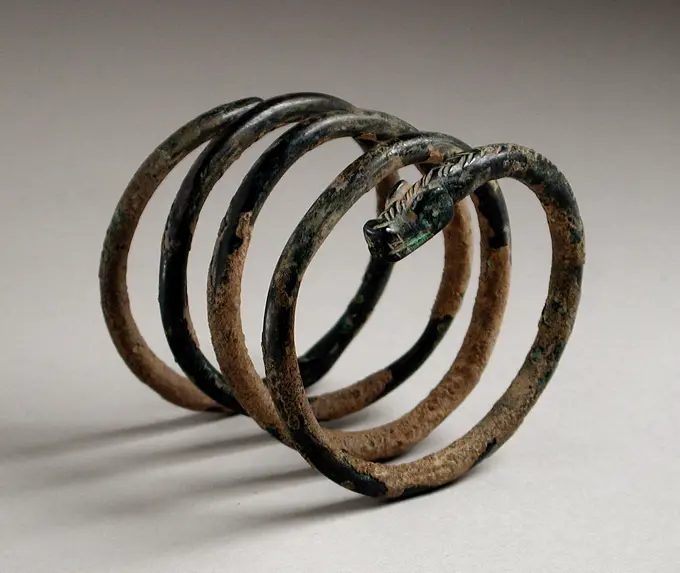
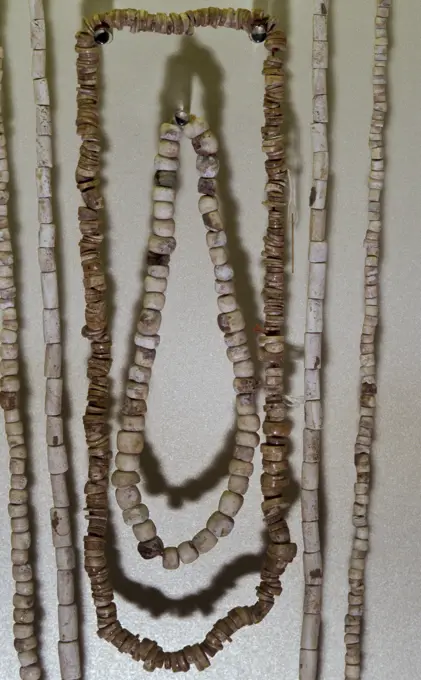
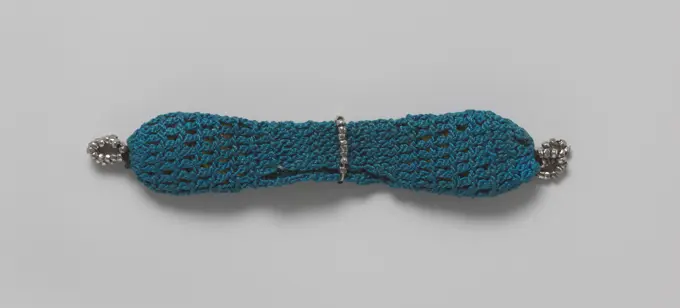
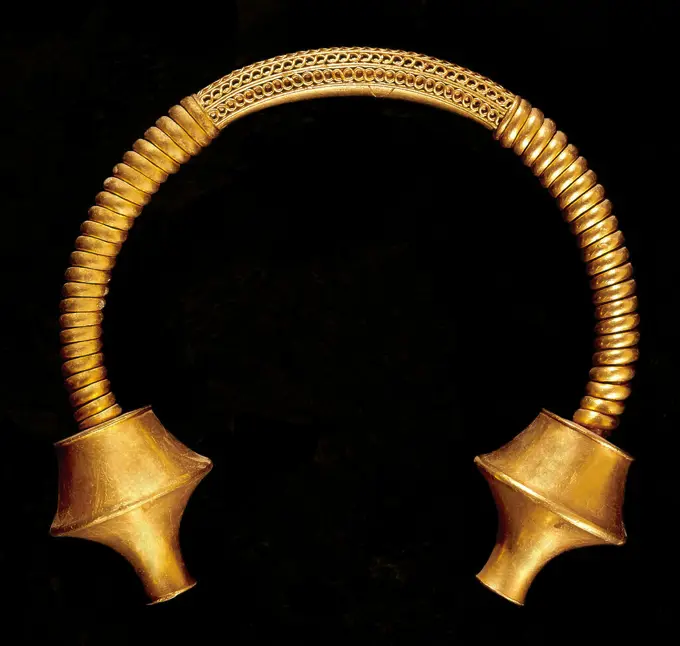
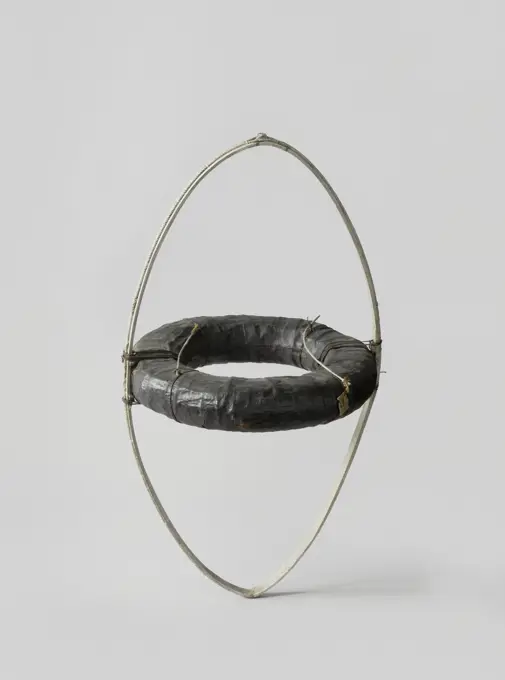
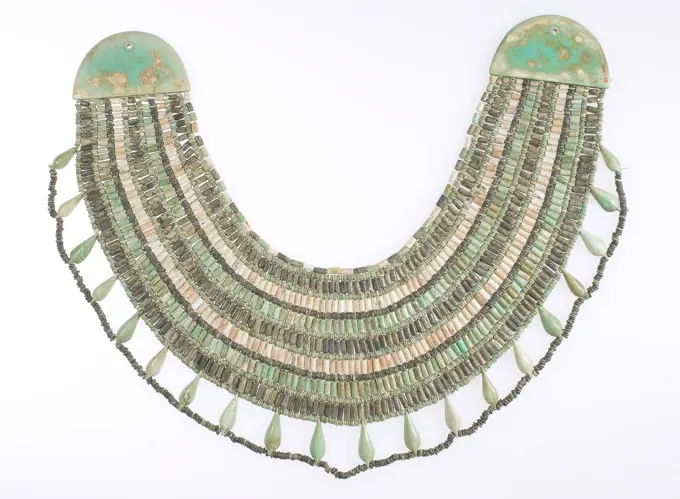
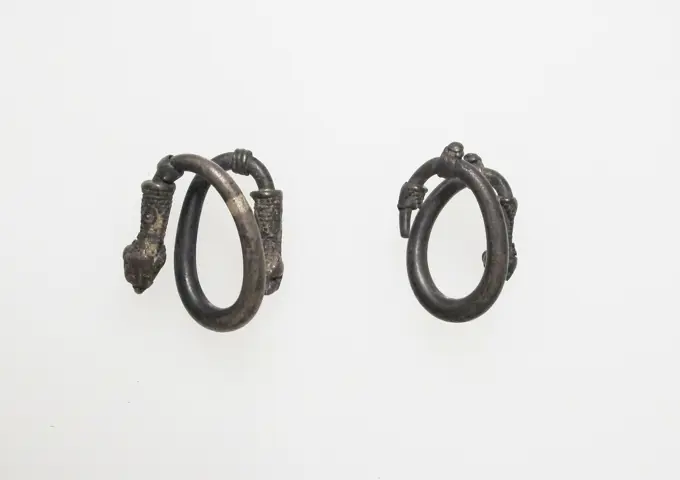
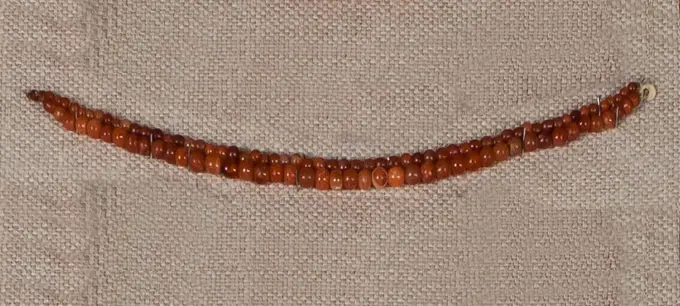
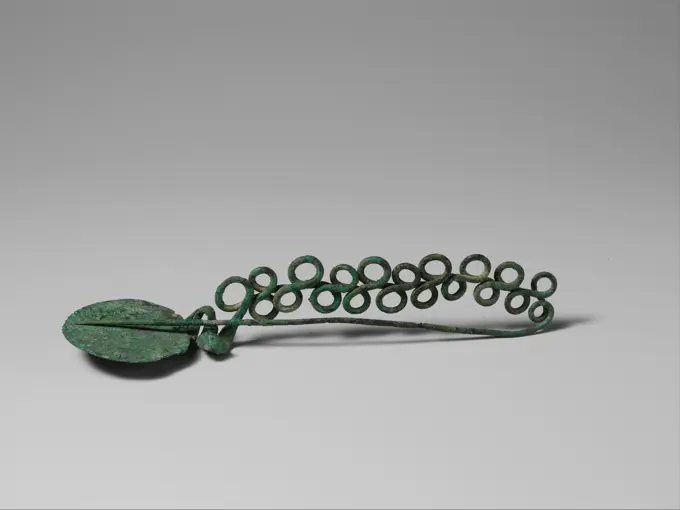
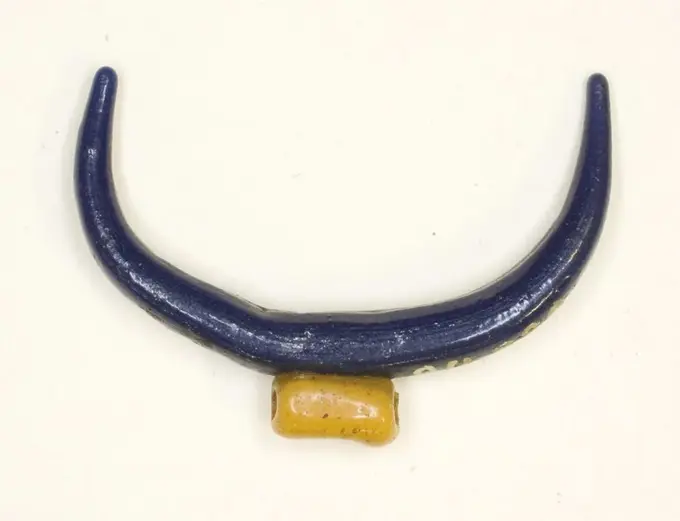
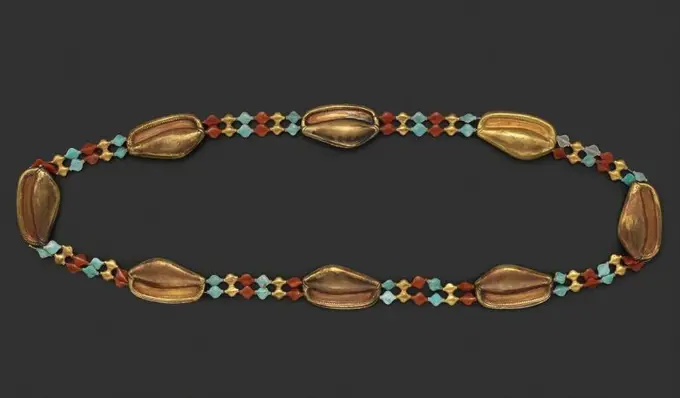
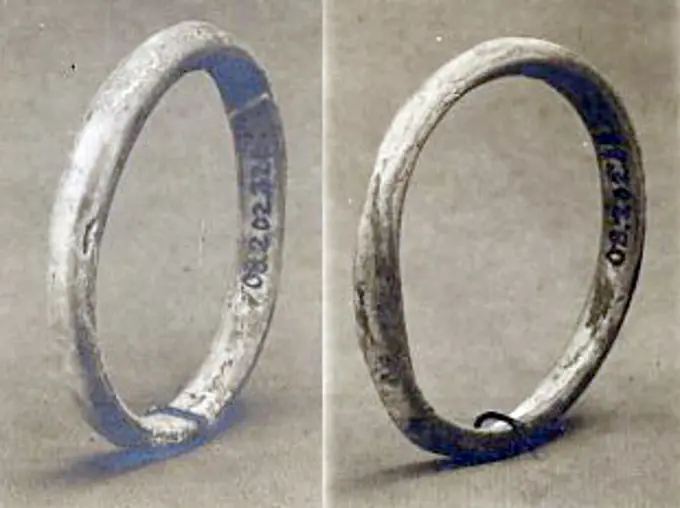
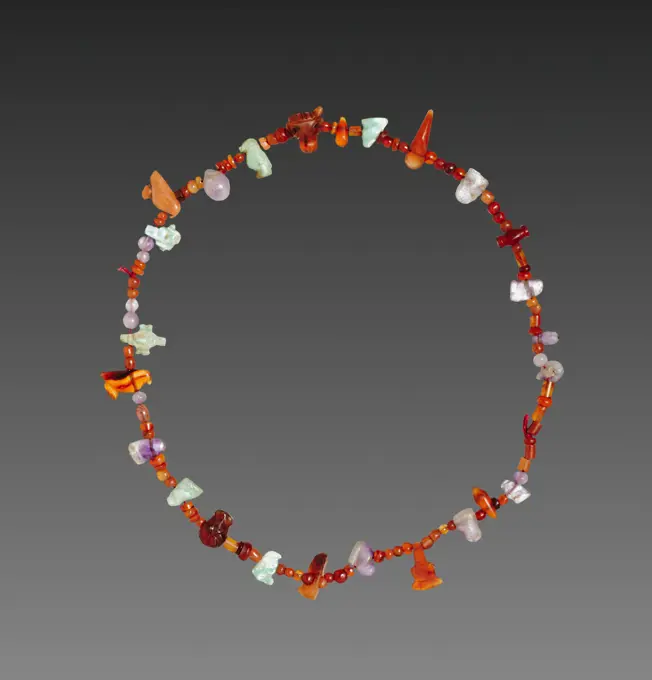
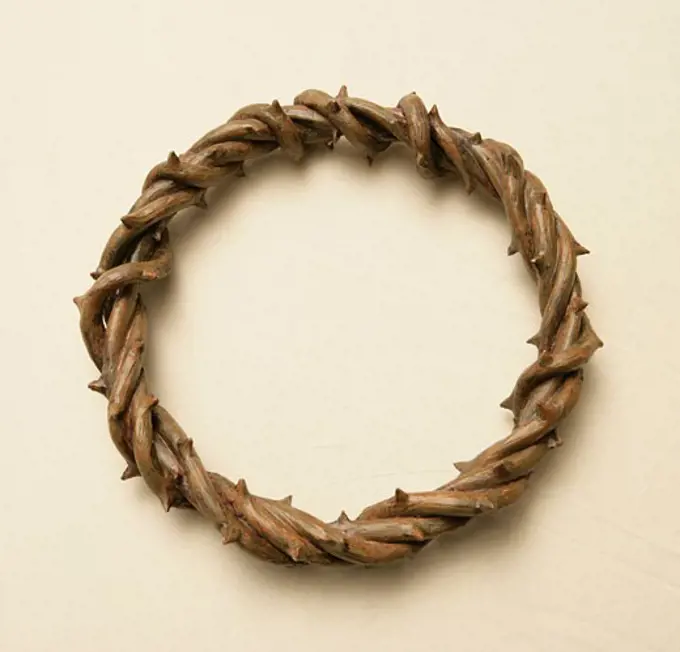
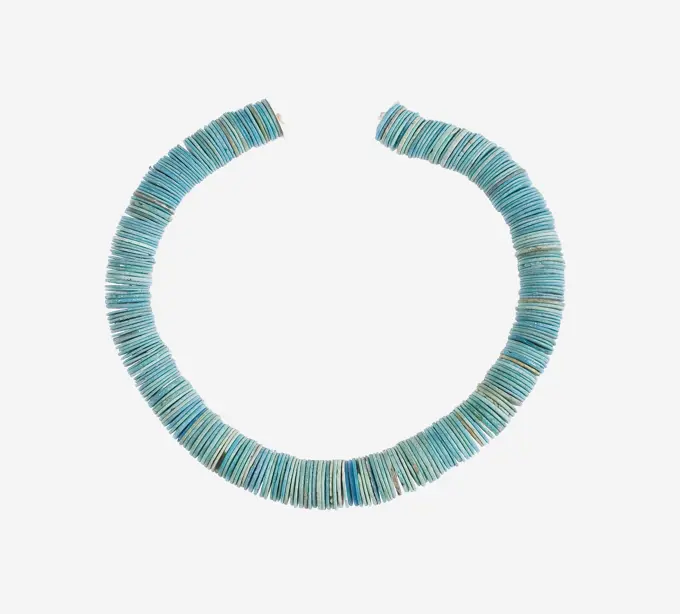
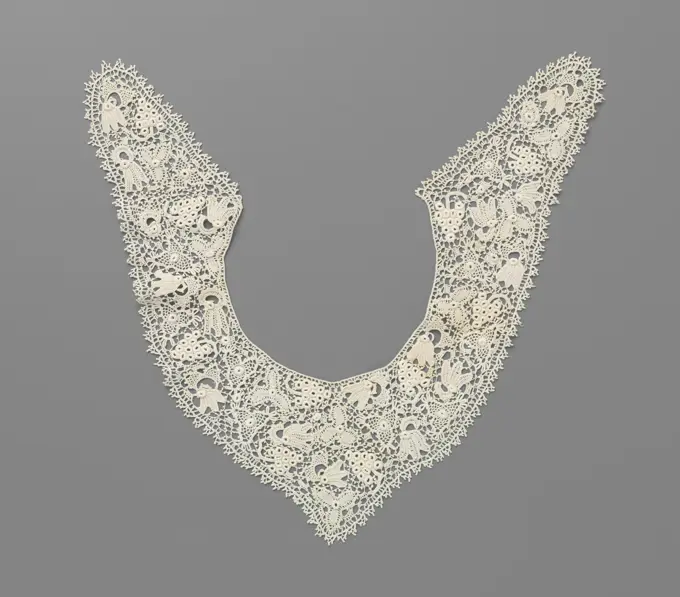
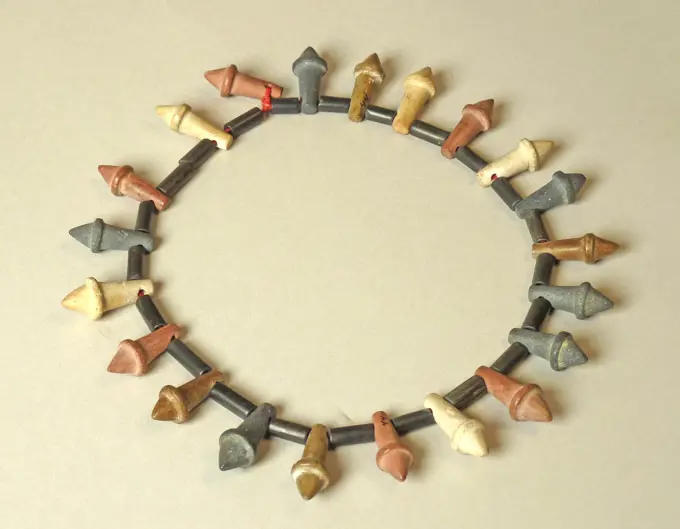
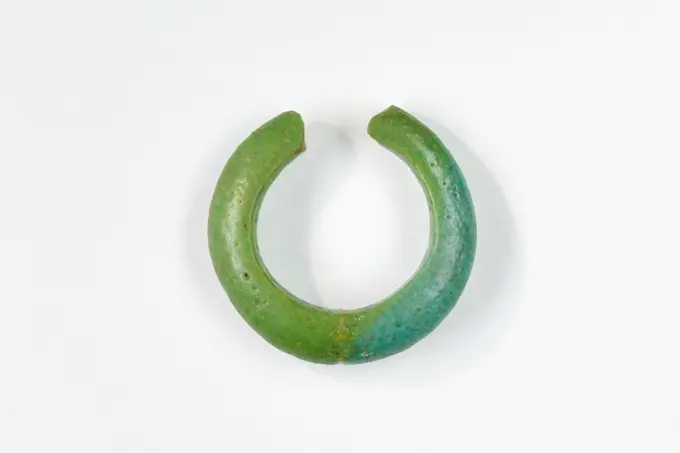
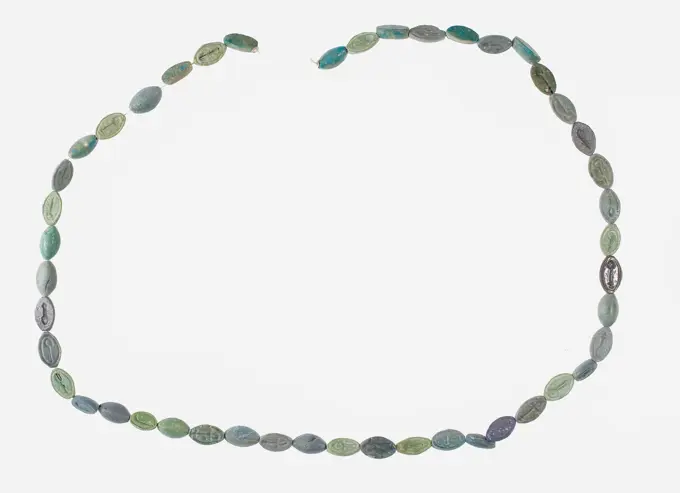
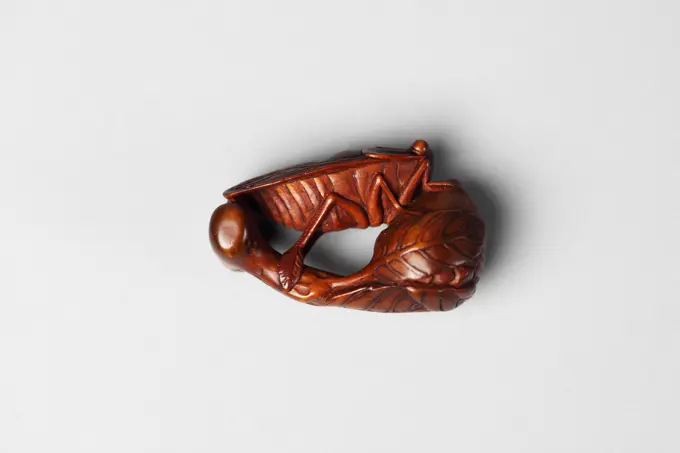
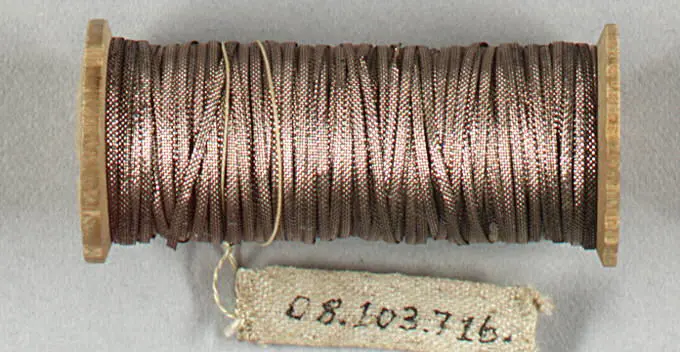
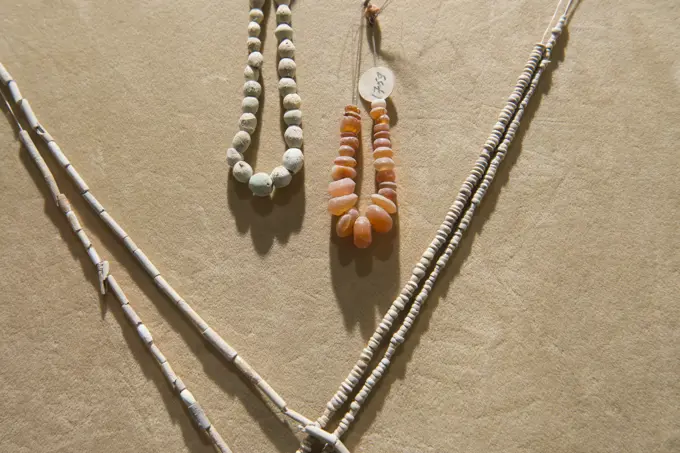
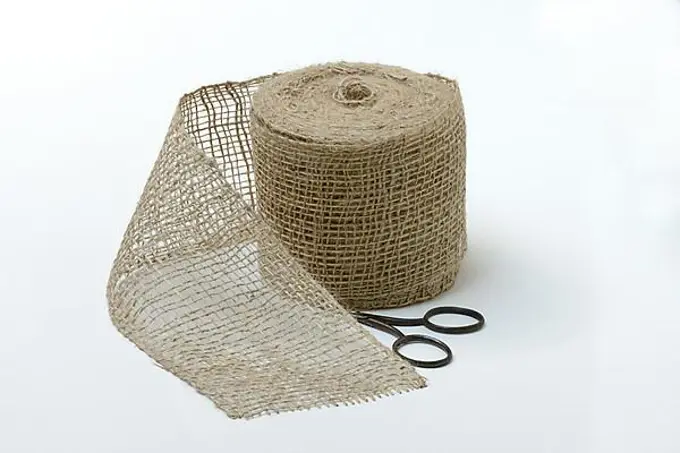
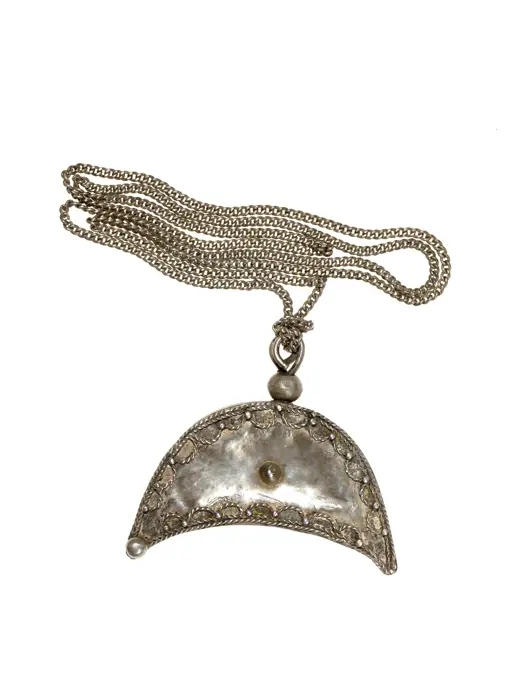
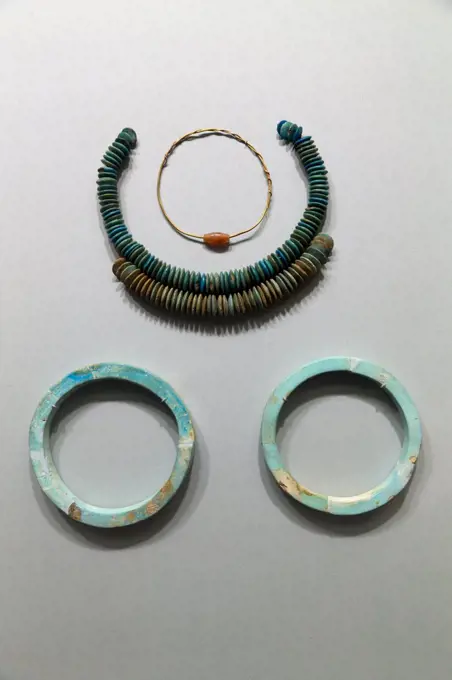
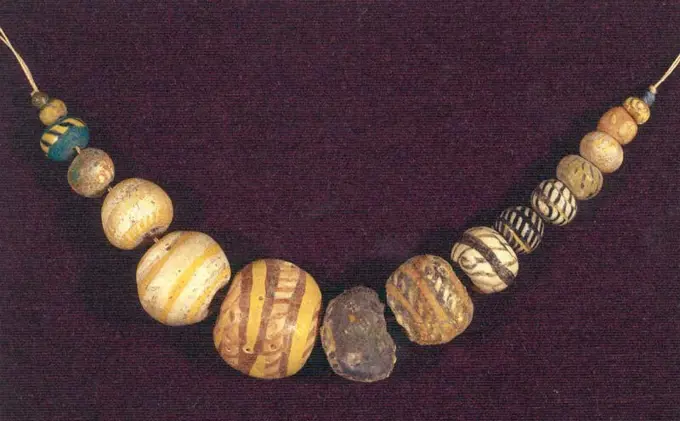
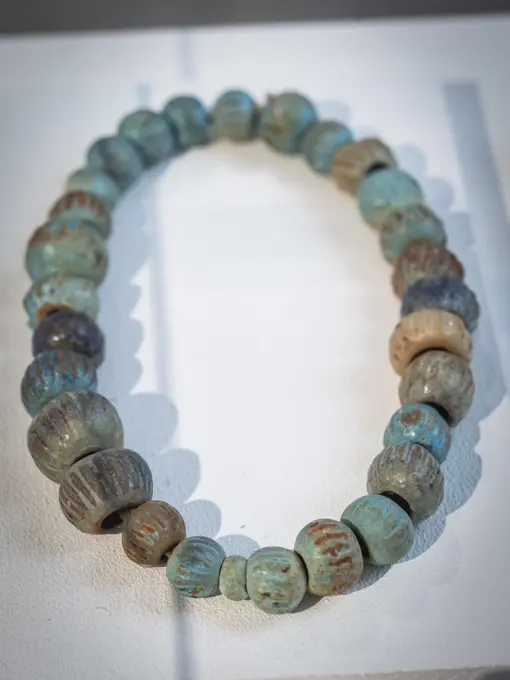
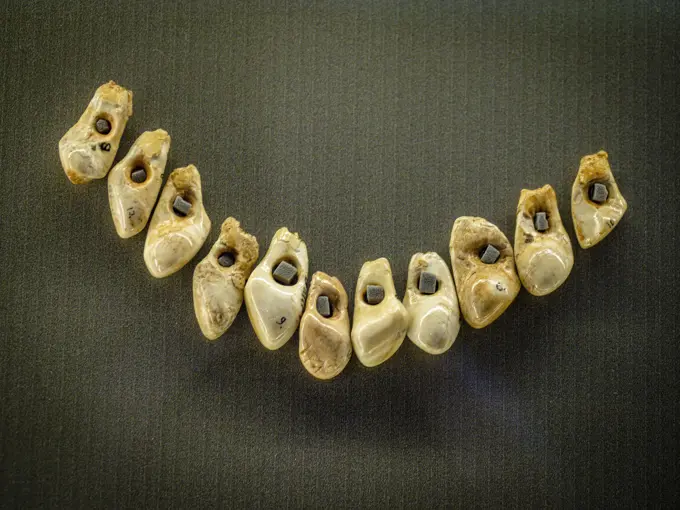
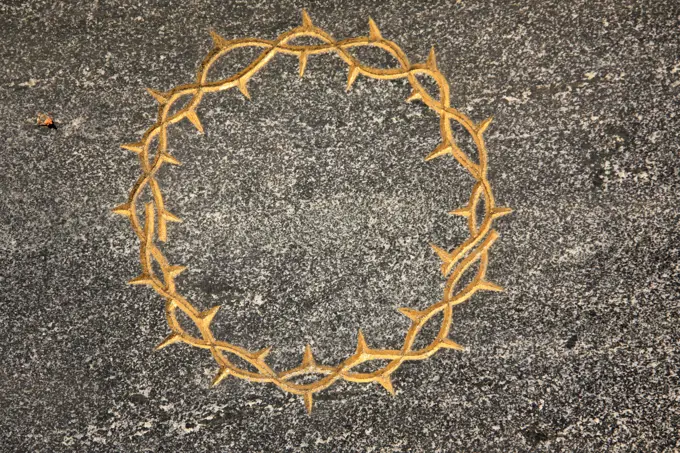
Lipstick plant (Aeschynanthus sp.), X-rayBracelet. Iran, Iron Age II-III, about 1000-650 B.C.. Jewelry and Adornments; bracelets. Bronze, castD - Colorful oil painted alphabet isolated over the white backgroundString of 6 beads 1st-4th century or later Roman Period or later. String of 6 beads 570539Collar 1850-70 American. Collar 169834Plumbing water supply hose isolated on whiteWings, hemisphere of green wool and blue cloth lining with shoulder strap, for hunter or voluntary hunter, c. 1830  Semi -round, green woolen shoulder covering with laces and blue cloth lining. The shoulder cover has a green epaulette, yellowed yellow, with buttonholes and four hooks (for confirmation to the skirt). White galon is attached to the underside of the epaulette. The epaulette lacks three laces. Netherlands wool. cloth. metal   NetherlandsGold earring with hollow disc and pendant 2nd century A.D. Roman. Gold earring with hollow disc and pendant 243193Before European contact the Shawnee Indians made their adornment such as necklaces from the vertebraes and bones of small animalsnautical blue white rope bow knotsRing. Ring. BoneBeurs, blue, crocheted. With sixteen playmarks (Spielmarken), J. Stork Beurs, blue, crocheted. With sixteen playmarks (Spielmarken). Mint leak.   crocheting Beurs, blue, crocheted. With sixteen playmarks (Spielmarken). Mint leak.   crochetingTORQUES CELTA DE ORO. Location: MUSEO PROVINCIAL. LUGO. SPAIN.Model of a Life Buoy, A. Scheerboom, c. 1826 demonstration model Model of a life buoy with hoop, incomplete. The buoy is a ring made of piping covered with bladder and tacked tarpaulin; A hoop is attached around the ring, in which a drowning person can stand standing. A number of strings or light sticks must be attached to the buoy with cork or other floating material at the end, spreading in the water so that the drowning person can pull the buoy towards itself faster; Only two sticks have been retained. At the top of the hoop, a flag must stand for maximum visibility of the buoy in the water. Scale 1: 2 (estimate). Netherlands wood (plant material). sailcloth.Broad collar ca. 1981-1640 B.C. Middle Kingdom This piece of jewelry is a broad collar, a type of multi-strand necklace that covers the wearers upper chest and shoulders. Broad collars were popular from the Old Kingdom on and the piece here represents a conventional type that is composed of beads and semicircular terminals (endpieces). It features seven alternately colored rows of vertically placed cylindrical beads, separated by rows of small disk beads. At the bottom are differently shaped elements, so called drop beads. When this collar was excavated, the ancient string had deteriorated, but for the most part the general pattern of the collar could be observed and the piece was reconstructed with modern string by the archaeologists. When worn in life, broad collars would have been fastened around the neck with strings that originally were looped through the small holes at the top of the terminals (for a broad collar with original string, see 40.3.2). However, not all of these collaEarring or spiral 7th century B.C. Greek. Earring or spiral. Greek. 7th century B.C.. Silver. Archaic. Gold and SilverNecklace 19th century Chinese minority (Laotian) This collection of largely ethnographic jewelry includes examples from cultures in South America, North America, Europe, Asia, and Africa and dates from the Pre-Columbian period to the twentieth century. Owned by renowned art collector and fashion enthusiast Muriel Kallis Newman, the collection represents her knowledge and appreciation of a wide range of jewelry design and making traditions. Numerous items in her collection are composite artifacts made from various cultures and time periods reappropriated as modern jewelry creations by or for Muriel. It is important to note that Newman wore many of the pieces in the collection, interpreting them to suit and express her own singular, often avant-garde style.. Necklace. Chinese minority (Laotian). 19th century. silvergold frame in the shape of a round sun over a white wallString of Carnelian Beads ca. 1981-1295 B.C. Middle Kingdom-Early New Kingdom Thousands of beads of carnelian, amethyst, quartz, gold faience, and shell discovered in the surface sand, or radim, of the North Pyramid at Lisht have been assembled into necklaces. This example is of spherical carnelian beads.. String of Carnelian Beads. ca. 1981-1295 B.C.. Carnelian. Middle Kingdom-Early New Kingdom. From Egypt, Memphite Region, Lisht North, Cemetery, debris, MMA excavations. Dynasty 12-18Stone font Letter Q 3D Stone font Letter Q 3D rendering illustration isolated on white background Copyright: xZoonar.com/MilicxDjurovicx 21521962Pair of Earrings, 3 1/8 x 2 x 1/4 in. (7.94 x 5.08 x 0.64 cm) (a)2 3/4 x 2 x 1/2 in. (6.99 x 5.08 x 1.27 cm) (b), Silver, ChinaWooden frame made of green bamboo sticks  with space for text or image. Vector mockup, clip art, border, template, photo frame isolated on white background.. Wooden frame  of green bamboo sticks  with space for textBronze disc-type fibula (safety pin) 10th century B.C. Italic Disc fibulae, in which the clasp is enlarged into an ovoid disc, have been found in both male and female burials throughout Central and Southern Italy.. Bronze disc-type fibula (safety pin) 252947 Italic, Bronze disc-type fibula (safety pin), 10th century B.C., Bronze, length 7 1/2in. (19cm). The Metropolitan Museum of Art, New York. Gift of Mrs. Grafton D. Dorsey, 1927 (27.142)Bridle on white backgroundBuckle 15th century Spanish. Buckle. Spanish. 15th century. Bronze, patina. Miscellaneous-Buckles & OrnamentTerracotta necklace with palmette and lotus pendants Etruscan 3rd century BCE Terracotta jewelry represents an inexpensive substitute for pieces in precious metals. The pendants would have been produced in large numbers through the use of molds, thus reducing the cost of both labor and material.Maker: John Ball, American, 1723-1781, Ring, ca.1765-80, Gold, 1/16 × 13/16 in. (0.24 × 2.06cm), Made in Concord, Massachusetts, American, 18thcentury, JewelryEmpty circle golden frames in medieval style for game ui design. Vector cartoon set of user interface elements with gold metal thin border, decorated with gems isolated on background. Empty circle golden frames medieval styleGold alloy torc (neck ring) found in Staffordshire. Dated 8th Century BCTape measureElegant round gold framePair of tassels 17th century Italian. Pair of tassels. Italian. 17th century. Linen. Textiles-TrimmingsAmulet of the Lunar Crescent. Egyptian. Date: 1300 BC. Dimensions: 1.9 × 2.5 × 0.3 cm (3/4 × 1 × 1/8 in.). Glass (). Origin: Egypt. Museum: The Chicago Art Institute, Chicago, USA. Author: Ancient Egyptian.Cowrie Shell Girdle of Sithathoryunet. Dimensions: L. 84.3 cm (33 3/16 in.)L. (cowrie) 4.7 cm (1 7/8 in.). Dynasty: Dynasty 12. Reign: reign of Senwosret II-Amenemhat III. Date: ca. 1887-1813 B.C..Beginning in prehistoric times, shells were used for adornment and seem to have been fertility symbols. Cowrie-shell girdles are often seen in Middle Kingdom and New Kingdom art around the hips of nude female figurines.Sithathoryunet's cowries are made of thin sheet gold. Seven are hollow and contain metal pellets that jingle; the eighth is cleverly constructed as a sliding clasp. The pellets would have made a soft sound when the wearer walked or, more likely, danced. The cowrie beads alternate with groups of small beads shaped like the seeds from an acacia tree; when strung together, they resemble the pods from these trees. Museum: Metropolitan Museum of Art, New York, USA.Berber jewellery. Silver bracelet, Algeria.COLLAR PROCEDENTE DE ESTADOS UNIDOS - 1945 - BISUTERIA - DISEÑO DE MIRIAM HASKELL. Location: PRIVATE COLLECTION.Golden chain isolated on the white backgroundLeather dog collar & lead Christmas tree wreath on orange brown wallBangle ca. 3850-2960 B.C. Predynastic Period. Bangle. ca. 3850-2960 B.C.. Shell (marine). Predynastic Period. From EgyptNecklace of Amulets, 1980-1801 BC. Egypt, Middle Kingdom, mostly Dynasty 12. Carnelian, feldspar, and amethyst; overall: 19.5 cm (7 11/16 in.).Thorns arranged in circular shapeString of Large Flat Disk Beads ca. 1390-1353 B.C. New Kingdom. String of Large Flat Disk Beads. ca. 1390-1353 B.C.. Faience. New Kingdom. From Egypt, Upper Egypt, Thebes, Malqata, Palace of Amenhotep III, S. magazines to W. (1910-11), MMA excavations, 1910-12. Dynasty 18Sjaalkraag van gehaakte kant met druiventrossen en driebladige bloemen.Scarf collar of natural-colored Irish crochet side. Model with long points of the front and a point in the middle back. The model is not quite symmetrical. The pattern consists of grape vegetables in relief, flowers with three flower leaves in closed sticks and flowers with three flower leaves in railing. The flower hearts are just like the grapes in the bunches made with open relief circles. The collar is finished along the outer edge with a bow edge of triple arcs with picots. The inner edge is straight finished.Some coffee capsules become a handcrafted necklaceStone Necklace with Mace Heads 1st-5th century Moche. Stone Necklace with Mace Heads 308729Old thread spool of golden threadVarious jewellery isolated on the white backgroundScarf collar made of crocheted side with grape bunches and three -leaf flowers, anonymous, c. 1910 Scarf collar of natural -colored Irish crocheted side. Model with long points from the front and a point in the middle. The model is not completely symmetrical. The pattern consists of grape bunches in relief, flowers with three petals in closed sticks and flowers with three petals in grater. Just like the grapes in the bunches, the flower hearts are made with open relief circles. The collar is finished along the outer edge with a bow edge of triple arcs with picots. The inner edge is finished straight. Ireland cotton (textile) Scarf collar of natural -colored Irish crocheted side. Model with long points from the front and a point in the middle. The model is not completely symmetrical. The pattern consists of grape bunches in relief, flowers with three petals in closed sticks and flowers with three petals in grater. Just like the grapes in the bunches, the flower hearts are made with openPenannular Earring ca. 1550-1295 B.C. New Kingdom. Penannular Earring. ca. 1550-1295 B.C.. Faience. New Kingdom. From Egypt; Probably from Northern Upper Egypt, Deir el-Ballas. Dynasty 18String of 46 Cowroids Inscribed with Various Hieroglyphs ca. 1390-1353 B.C. New Kingdom These cowrie-shaped beads are inscribed on the base with various hieroglyphs including the ankh (life), nefer (beautiful or good), and maat (truth). They were found together with other beads and pendants. The cowries were strung together for convenience, but it is possible they worn as a necklace.. String of 46 Cowroids Inscribed with Various Hieroglyphs. ca. 1390-1353 B.C.. Faience. New Kingdom. From Egypt, Upper Egypt, Thebes, Malqata, House 2 W, Room Y, Pit VIII, MMA excavations, 1911-12. Dynasty 18Copper and Ceramic Beads and Spindle Whorls A.D. 1200-1470 Peruvian. Copper and Ceramic Beads and Spindle Whorls 309223object on black - Golden chain and scorpion macroClose up of metal screws over white backgroundScandianvia. Treasure from the 10th century. Neck ring. Halsreif. Historical Museum. Oslo. Norway.Fourteen buttons of polished copper (). Fourteen buttons of polished copper (). Ajour is a ring made of small and a ring of larger diamond heads to a large brilliant button.Nose Ornament 6th-7th century Moche (Loma Negra). Nose Ornament 313498Netsuke of Fly and Acorn 19th century Japan. Netsuke of Fly and Acorn. Japan. 19th century. Wood. Edo (1615-1868) or Meiji period (1868-1912). NetsukeHammock to carry children, sent to Paris by Doctor Crevaux, French Guiana, South America. Drawing by P. Sellier. From Cayenne to the Andes (1878-1879) by Jules Crevaux (1847 - 1882) Le Tour du Monde 1880Tinsel and metal thread 17th-18th century French. Tinsel and metal thread 214204Bourse. GAL1978.43.14United Arab Emirates, Dubai. Dubai Museum located on the grounds of the Al Fahidi Fort, circa 1787. Display of ancient beads, circa third millennium BC. (Large format sizes available)A roll of jute tape with scissors, Germany, EuropePendant with chain, 1 7/8 x 2 1/4 x 7/16 in. (4.76 x 5.72 x 1.11 cm) (pendant only), Silver, Sierra LeoneFaience Armlets and Necklaces, Metropolitan Museum of Art, Manhattan, New York City, USA, North AmericaMiniature bow -Rope round spiral Coil Rope round spiral closeup Copyright: xZoonar.com/mrivsergx 10706110Cotton natural rope weaving circularTwo Bracelet on black background.Beads ca. 9th century B.C. Iran. Beads 325333Heart shaped placed cage on linen canvasGold drawing pinsBracelet probably 14th-15th century The earliest known examples of this type of seamless mosaic glass bracelet are from the late thirteenth century; it continued to be produced well into the nineteenth century at Hebron, in Palestine. This bracelet, together with thirty-three others in the collection, comes from UpperEgypt and was probably made during the Mamluk period.. Bracelet 446039The word luck spelled with marbles and a horse shoe on a green background for St. Patrick's daybead necklace with gallon decoration bead necklace with gallon decoration, Ibero-Roman era, Riotinto mines, Huelva Museum, Huelva, Andalusia, Spain Copyright: xZoonar.com/BartomeuxBalaguerxRotgerx 21720786Bolinkobas Höhle Bolinkobas Cave, Abadino, Arkeologi Museoa, Museo Aqueologico, Bilbao, Bizkaia, País Vasco, Spain Copyright: xZoonar.com/Tolox 22846593Jewelry set probably 19th century Chinese This collection of largely ethnographic jewelry includes examples from cultures in South America, North America, Europe, Asia, and Africa and dates from the Pre-Columbian period to the twentieth century. Owned by renowned art collector and fashion enthusiast Muriel Kallis Newman, the collection represents her knowledge and appreciation of a wide range of jewelry design and making traditions. Numerous items in her collection are composite artifacts made from various cultures and time periods reappropriated as modern jewelry creations by or for Muriel. It is important to note that Newman wore many of the pieces in the collection, interpreting them to suit and express her own singular, often avant-garde style.. Jewelry set 141711Crown of thorns sculpted on a grave, Milano monumental cemetery, Milan, Lombady, Italy, EuropeLeather sandals in a showcase of a shopRetro style gold color key on green sandItaly, Emilia Romagna, rope on boat, EuropeVoodoo Mask Photo of Voodoo Iron Mask on desert background Copyright: xZoonar.com/ArmanxZhenikeyevx 3337940Set Christmas wreath. Blue ornament for Christmas. Red wreath of pine branches. White decor for new year.