Historical Keys and Locks

A collection of ornate historical keys and locks from various periods, showcasing intricate designs and craftsmanship, highlighting medieval and Chimú influences.
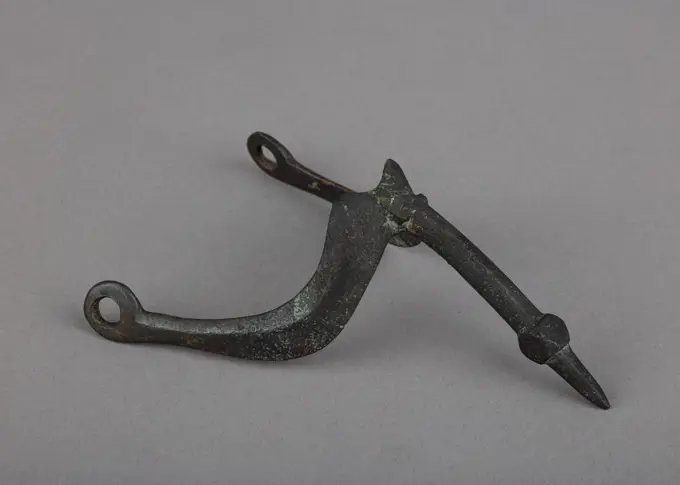
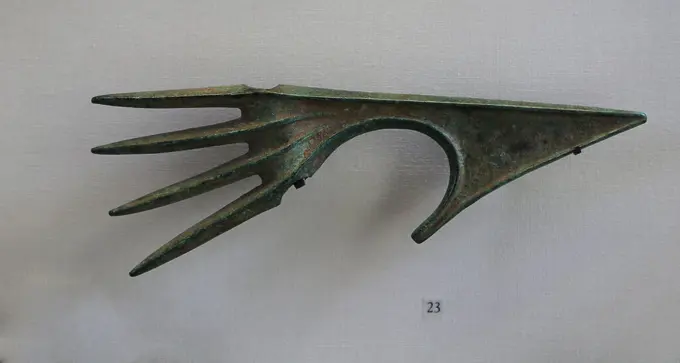
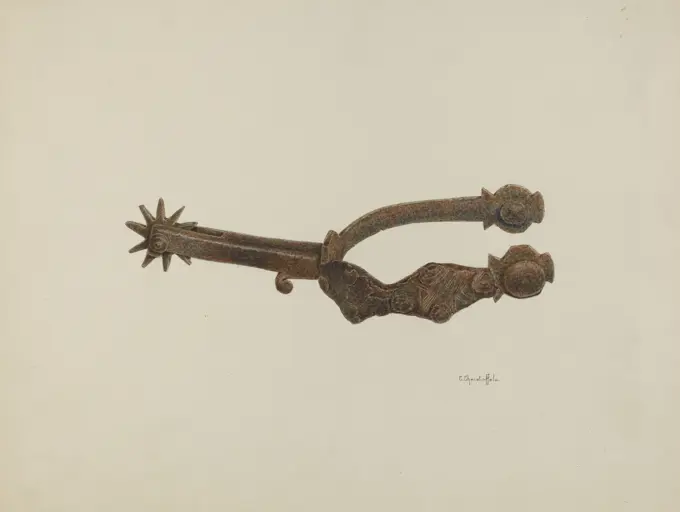
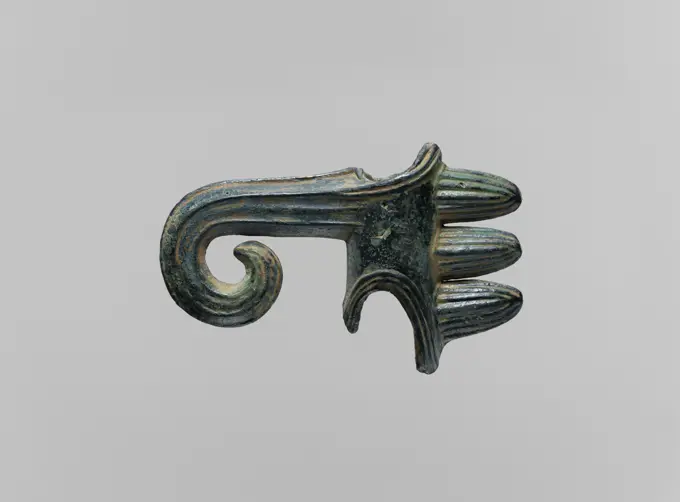
Prick Spur first half 14th century possibly Italian The prick spur was the first type of spur to be invented, and it consists of a goad or prick, more or less pointed, connected to side arms or a heel plate. The earliest spurs were probably simple thorns attached at the back of the heel, before they started to be made out of metal in antiquity. Prick spurs were the main type of spurs used in the Middle Ages until the mid-14th century, when they were supplanted by rowel spurs, which appeared in Europe a century before and with which they had cohabitated for a time. As a knights status was closely related to his horse, spurs became one of the symbols of chivalry, and one of the tokens given to him during his knighting.. Prick Spur. possibly Italian. first half 14th century. Copper alloy. Equestrian Equipment-Spurs
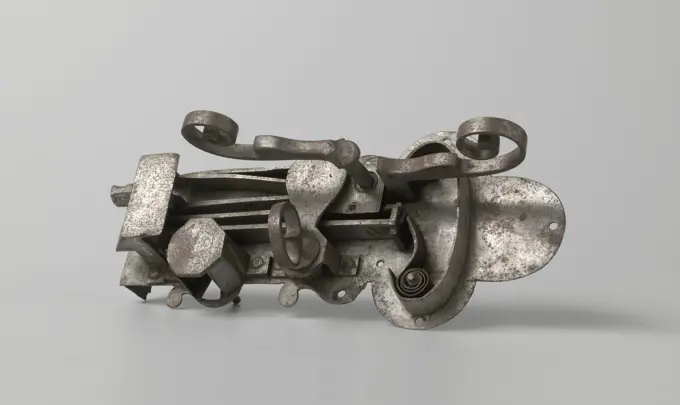
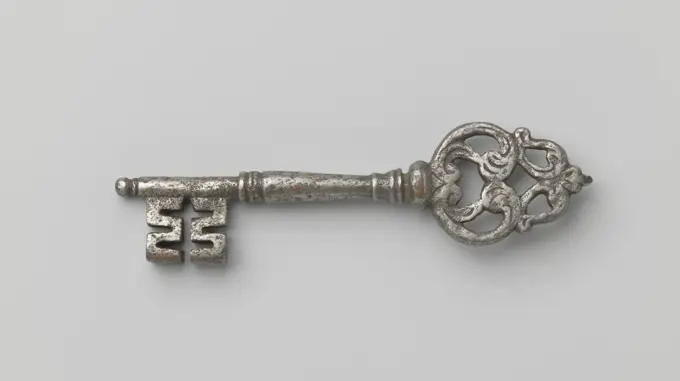
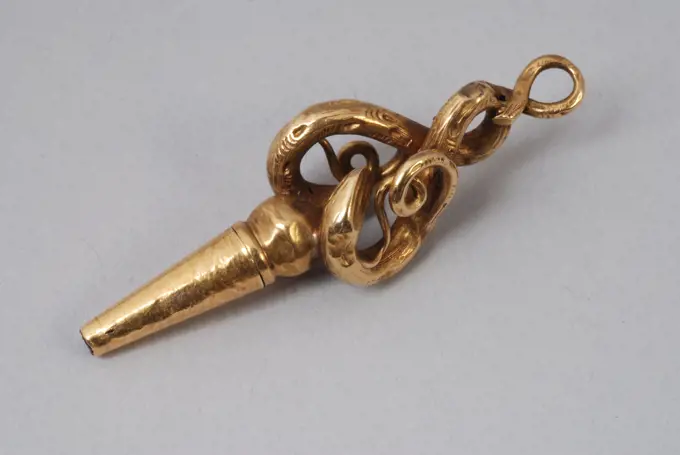
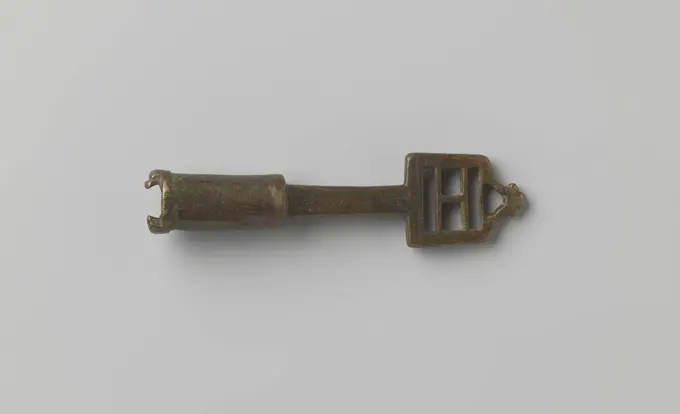
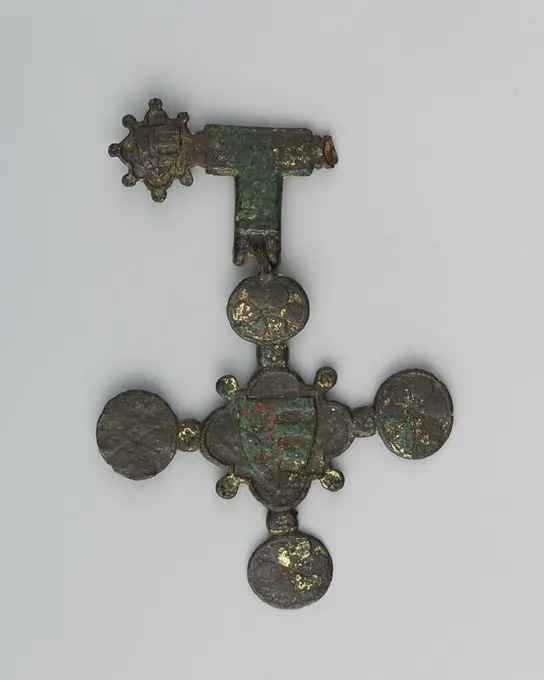
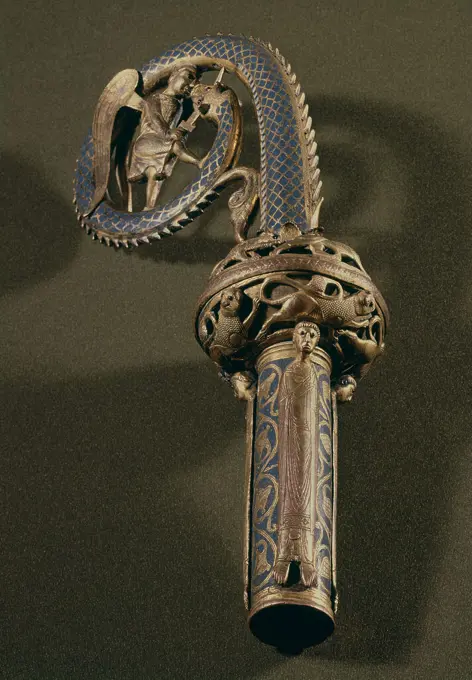
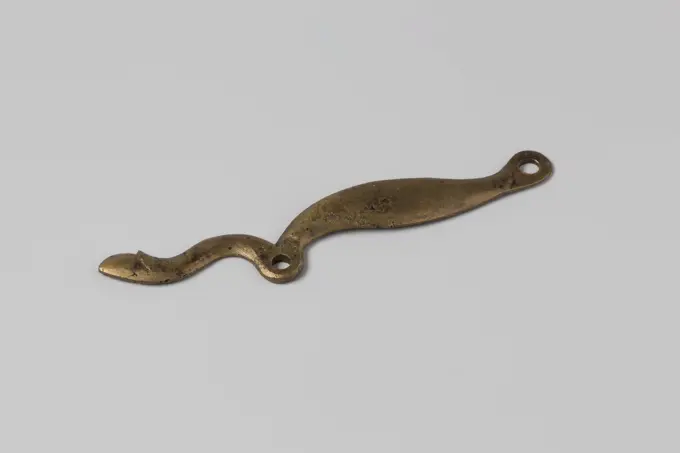
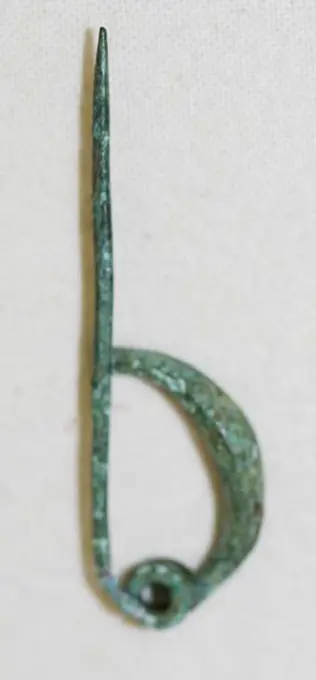
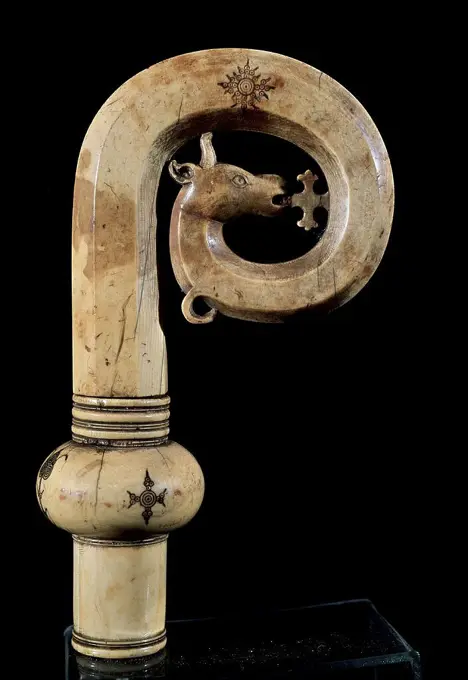
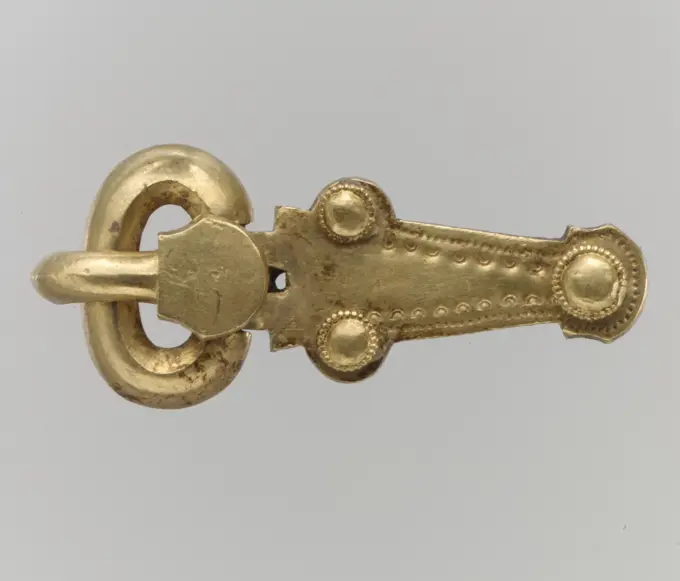
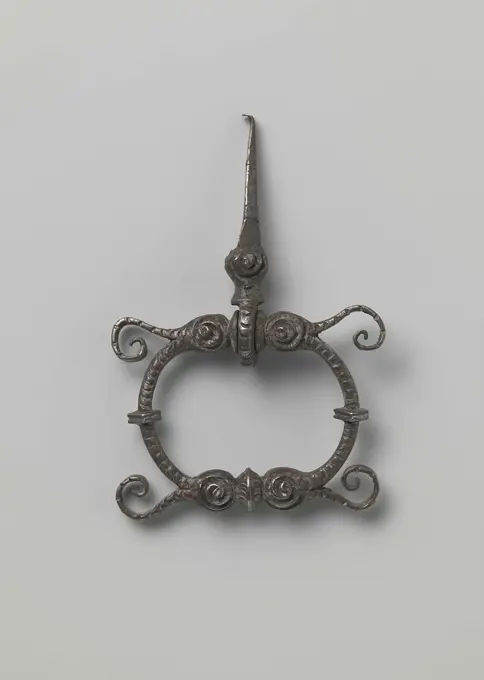
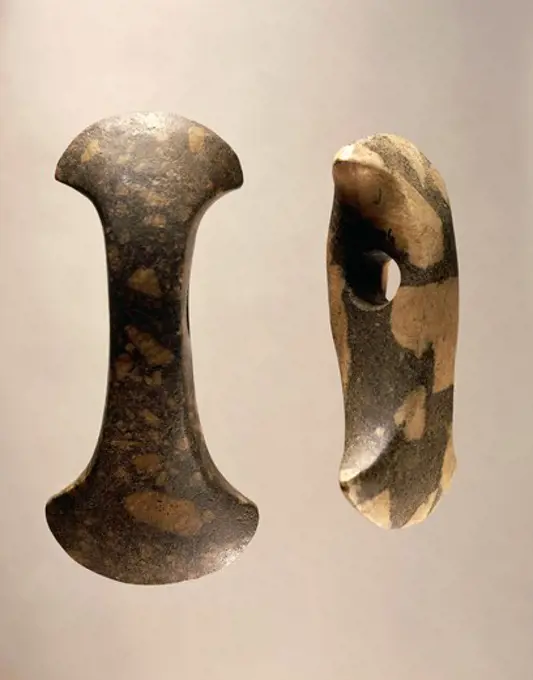
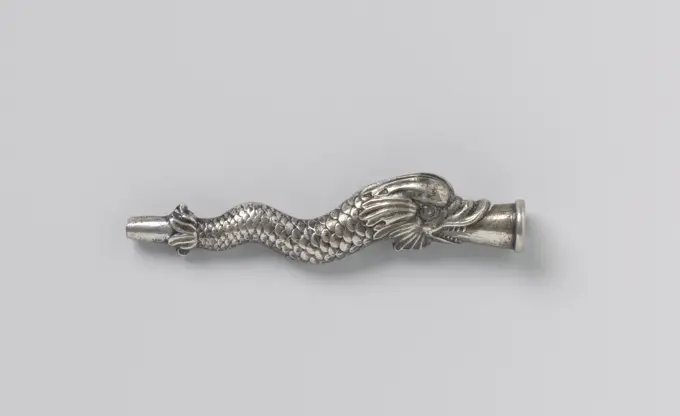
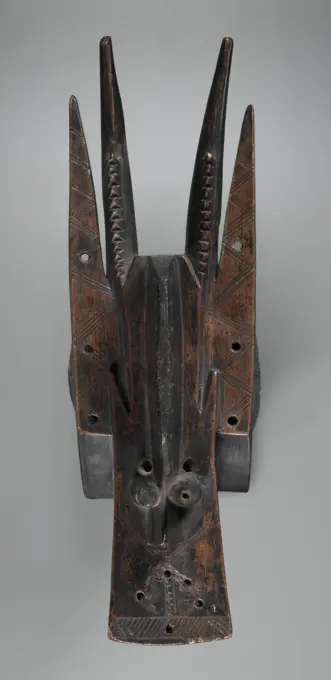
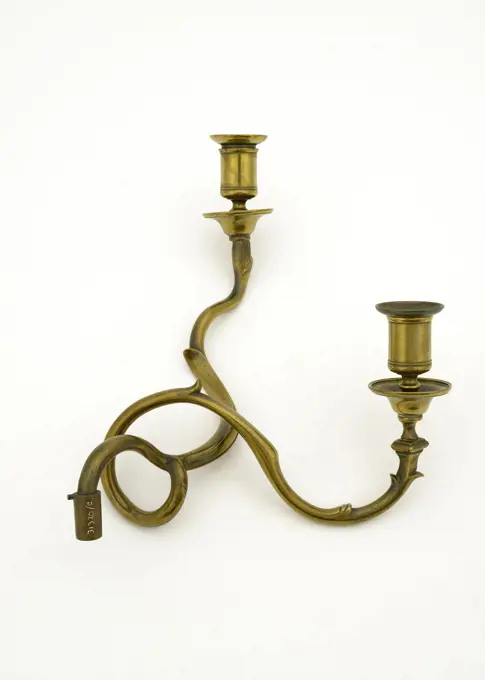
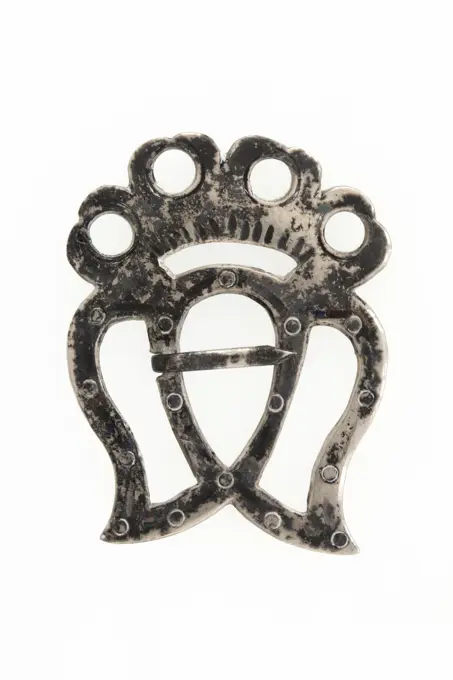
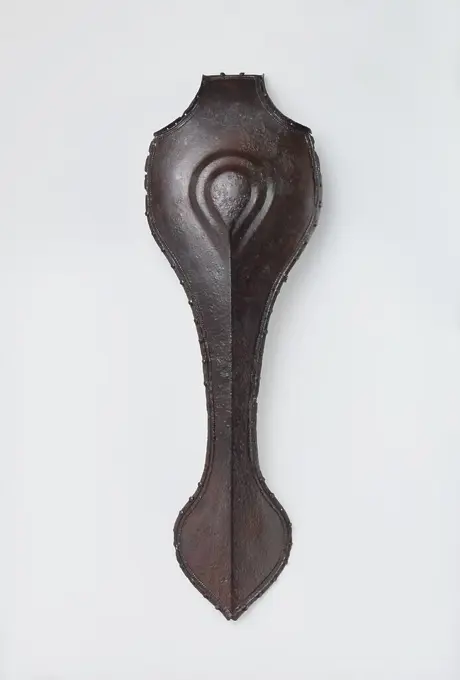
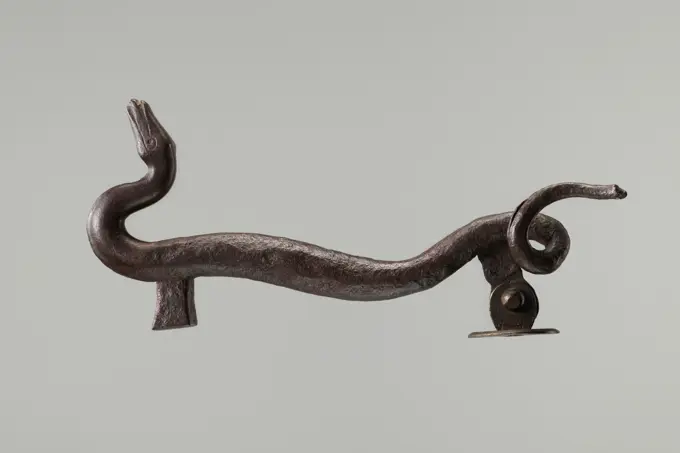
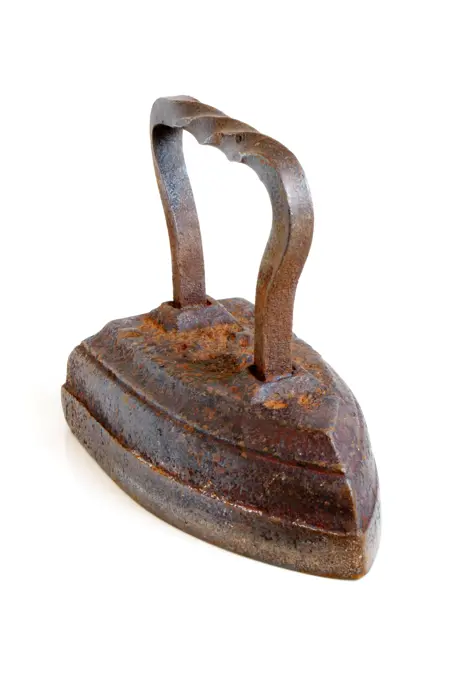
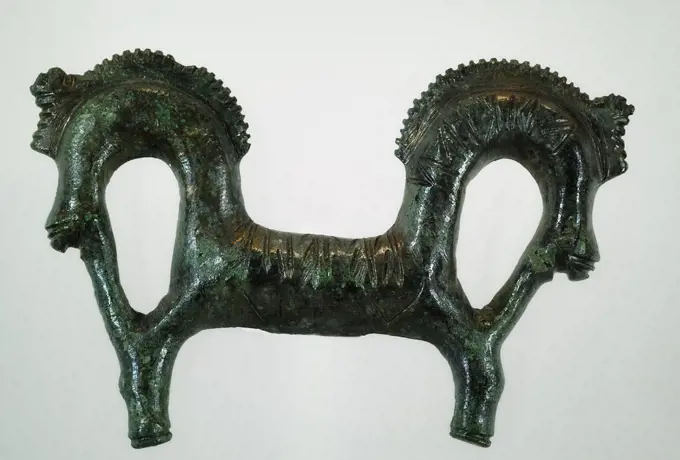
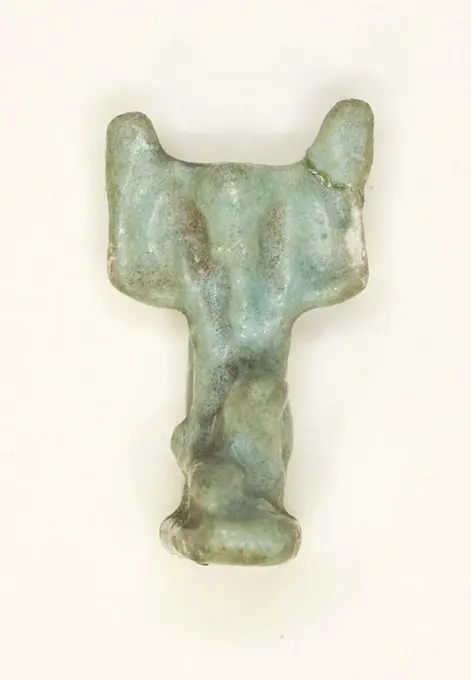
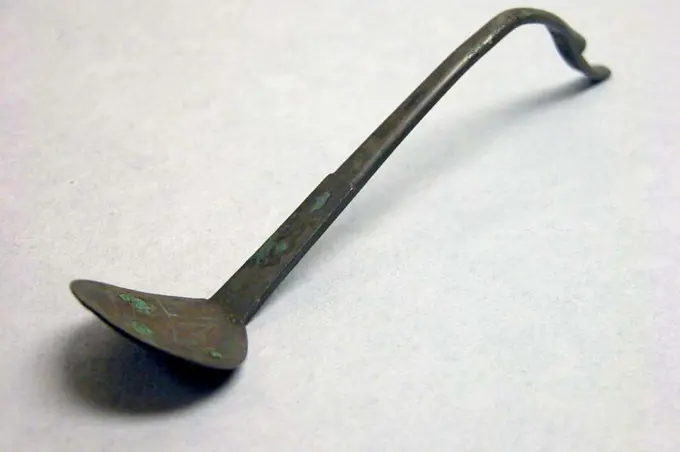
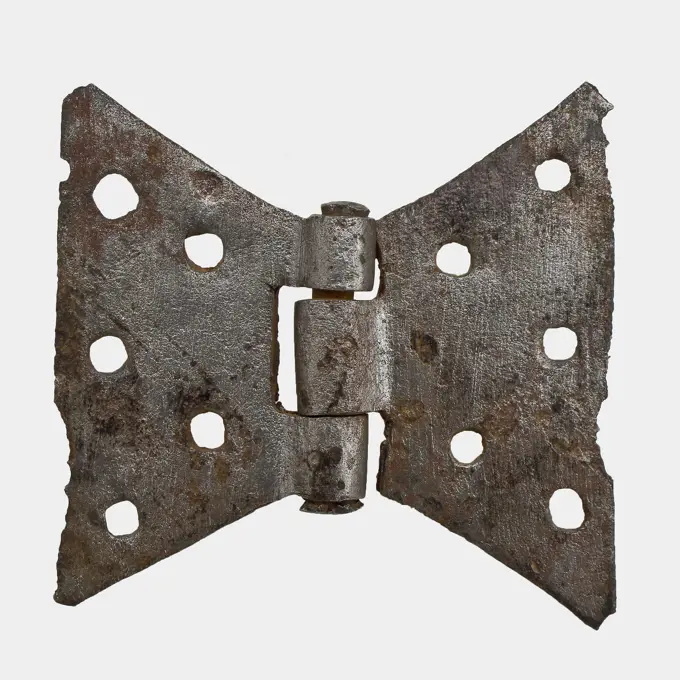
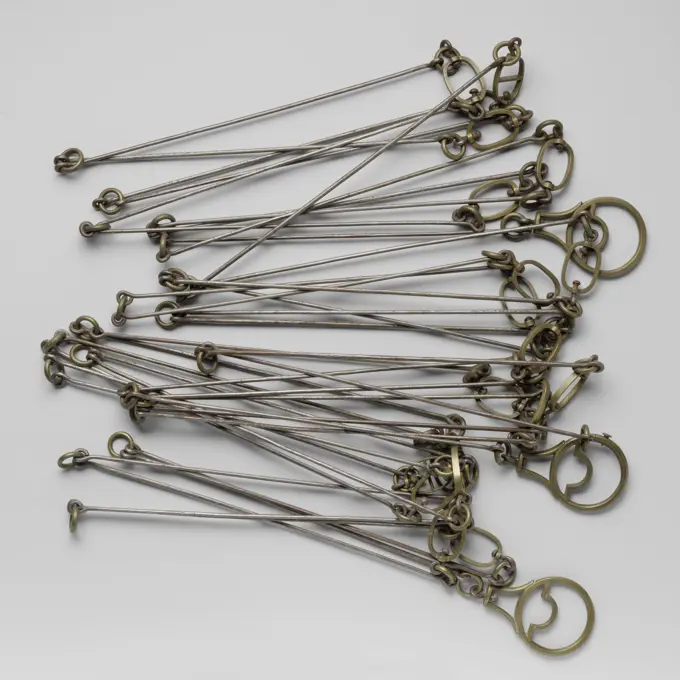
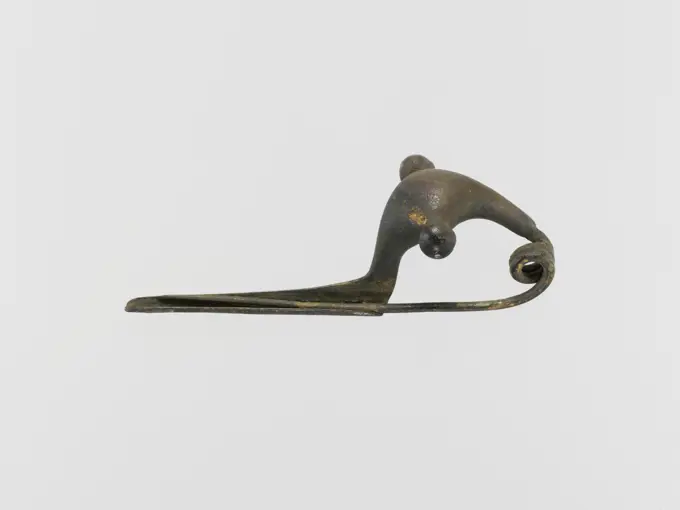
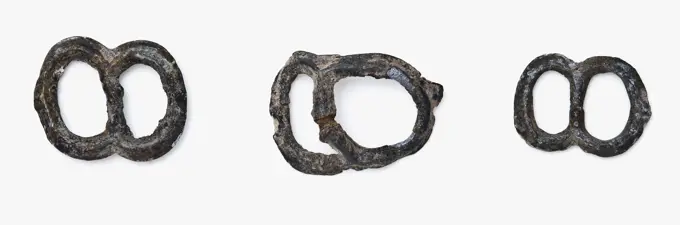
Key;  k. XVIII - early XIX W.W. (1791-00-00-1810-00-00);Rocked leg of a packaging from the wreck of the East Indians Hollandia, Anonymous, 1700 - in Or Before 1743  Container, leg, revited; (1) straight, slightly tapering, rectangular in section, three-lobed upper end (c.6l), 3 rivets (one missing). Netherlands copper (metal)   SecondLuckenbooth brooch -Brooch -Lock with shots and cut, c. 1400 - c. 1950   iron (metal)   iron (metal)Hengsel van vertind ijzer met bladmotieven.Handle handle handle. At the bottom of a large, round opening of a hinge with a round turn. From there, two symmetrical leaf motifs, which split to the end.Beslag versierd met bloemen.Batter of tinned iron. Central is a eight-leafed flower with a three-leaf on one side. On the other side, an onion-shaped approaches in four tendrils, two of which have a flower at the end.Planter 19th century China. Planter. China. 19th century. Stoneware with flambé glaze (Shiwan ware). Qing dynasty (1644-1911). CeramicsKey, c. 1400 - c. 1950 Key with handle consisting of leaf fillets. The capital looks like a flat ball and the shaft baluster -shaped, ending in a button at the bottom. France iron (metal) Key with handle consisting of leaf fillets. The capital looks like a flat ball and the shaft baluster -shaped, ending in a button at the bottom. France iron (metal)Watch wrench with golden pretzel handle for the better pocket watch, watch key wrench kit gold, Golden pretzel handle with golden winding pin watch winding drive good bourgeois jewelery statusFibula;Piątkowski Albert (Ca. 2004), Purchase (provenance)Steeksleutel.Spanner that can probably serve on both sides. The thick part of the handle ends in two hooks; On the thin section, a cut-away square beard is fined in a leaf motif.Pipe key, c. 1600 - c. 1699 Pipe key whose eye consists of two trumpet-shaped-ending C-Voluten. They close a bullet at the top and into a pyramid, which rests the latter on the disc above the bullet -shaped capital. The beard is S-shaped.  iron (metal) Pipe key whose eye consists of two trumpet-shaped-ending C-Voluten. They close a bullet at the top and into a pyramid, which rests the latter on the disc above the bullet -shaped capital. The beard is S-shaped.  iron (metal)Brooch -Harness Ornament 16th-17th century Irish. Harness Ornament. Irish. 16th-17th century. Bronze. MiscellaneousArcher's wrist guard. Dimensions: 6 x 5.5 cm (2 3/8 x 2 3/16 in.). Dynasty: Dynasty 12. Reign: Possibly Senwosret I. Date: ca. 1961-1917 B.C..The archer's wrist guard was found in a mass grave of at least fifty-nine soldiers. Buried with the individuals were small pieces of military equipment such as bows and arrows, and this wrist guard still tied around the wrist of one man. The bodies showed evidence of violence, and from their wounds it was apparent that they died on the battlefield. The excavator believed that these "slain soldiers" were connected with a specific historical event that lead to the reunification of Egypt under Mentuhotep II, but reevaluation of the evidence does not support this theory. On the corners of their linen wrapping sheets were inscriptions, some with names that were only popular later, in early Dynasty 12. Moreover, the paleography of the inscriptions and the type of wrist guard found with the soldiers also point to an early 12th dynasty date, which can pEarl Butlin, Hinge, c 1938 HingeKey; 1910-1-8Old iron dibber for planting bulbs, seedlings and seeds ,old rusty toolBadge (probably from Horse Harness). Culture: Spanish. Dimensions: L. 4 7/8 in. (12.4 cm); W. 3 7/16 in. (8.7 cm); Wt. 2 oz. (56.7 g). Date: ca. 1400. Museum: Metropolitan Museum of Art, New York, USA.Loop.Two Can Hooks. Two millers to unload empty barrels. This consists of a shaft with a ring at the top and arms running in the other, forked end. One of the arms has a hole to reduce its weight so that the poems are usually vertical; For example, it was lowered through a hole in a barrel, the arms were put horizontally and the vessel could be lifted.Key; 1909-2-271Thread waxing tool, 19th-20th century, 4 15/16 x 2 5/16 x 1/2 in. (12.54 x 5.87 x 1.27 cm), Wood, lacquer, Taiwan, 19th-20th centuryNose Ornament 13th-16th century Colombian. Nose Ornament 307485Belt buckle, type II. Bronze. Rectangular plate with mosaic of cells. From the Visigothic necropolis of El Carpio de Tajo. Grave 204. Province of Toledo, Spain. Museum of Visigoth Councils and Culture. Toledo, Castile-La Mancha, Spain.Copper's cloak hook. Copper's cloak hook.Cross 6th century or later Byzantine. Cross 472747Old iron for which a coal was used for warming BACULO DE LIMOGES S XII. Location: CATEDRAL-INTERIOR. Toledo. SPAIN. SAN MIGUEL.Side plate of a gun from the wreck of the East Indians Hollandia, Anonymous, 1700 - in Or Before 1743 pistol Id. 80H3472. Netherlands copper (metal)   SecondPin 4th century B.C. European. Pin 110752BACULO DE SAN ROSENDO TAMBIEN LLAMADO BACULO DE SAN MIGUEL DE CELANOVA - VOLUTA TERMINADA EN CABEZA DE LOBO QUE MUERDE UNA CRUZ - SIGLO XII - MARFIL. Location: CATEDRAL MUSEO DIOCESANO. Orense. SPAIN.Gold Shoe Buckle ca. 600 Langobardic This group of objects was found in the grave of a Langobardic horseman, who was buried in his warrior dress, with weapons, shield, helmet, and the fittings for his horse. What remains are the many gold pieces that would have ornamented his clothing and equipment, and they attest to the great wealth of the Langobardic aristocracy within a generation of settling in Italy.. Gold Shoe Buckle 469029Latch 1700-1800. Latch 4809Suspension Strap for Polycandelon early 5th century Byzantine. Suspension Strap for Polycandelon 468701Finger Ring 500-550 Frankish. Finger Ring 464982 Frankish, Finger Ring, 500550, Silver, silver foil, gold foil, glass paste or garnet inlay, Overall: 13/16 x 7/8 x 11/16 in. (2 x 2.3 x 1.7 cm) bezel: 11/16 x 1/8 in. (1.7 x 0.3 cm). The Metropolitan Museum of Art, New York. Gift of J. Pierpont Morgan, 1917 (17.191.275)Door ring of tinned iron with spiral nodi and a grooved tires. Door ring of tinned iron with pointed rod. On either side of the rod is cord-shaped bond with halfway a diamond-shaped nodus and at the top and bottom ending in a spiral nodus. There is an oval nodus between the two lower nodi, which connects both halves. An full extent exprceeds from the four spiral-shaped nodi.Amulet of a Forked Lance (Pesekh-kef). Egyptian. Date: 664 BC-332 BC. Dimensions: 2.5 × 1.3 × 0.6 cm (1 × 1/2 × 1/4 in.). Steatite. Origin: Egypt. Museum: The Chicago Art Institute, Chicago, USA. Author: Ancient Egyptian.Stone font Letter T 3D Stone font Letter T 3D rendering illustration isolated on white background Copyright: xZoonar.com/MilicxDjurovicx 21521850Nipper - matrix;  XVIII or XIX W (1690-00-00-1709-00-00);Prehistory, Sweden, Neolithic. Corded Ware or Battle Ax culture. Axes.Bracelet 3rd-5th century Roman. Bracelet 465331 Roman, Bracelet, 3rd5th century, Silver, garnet or glass paste eyes, Overall: 2 3/4 x 2 1/2 x 1/2 in., 1oz. (7 x 6.3 x 1.3 cm, 27g). The Metropolitan Museum of Art, New York. Gift of J. Pierpont Morgan, 1917 (17.192.260)Rooster 750 BCE-700 BCE Thessaly. These precious bronze objects are votives, or devotional gifts, which were offered to the gods. They come in many forms. Some are miniature sculptures of animals, primarily horses, deer, and birds. Others are items of personal adornment, including beads and brooches. Many seem once to have been attached to something else. This assemblage is characteristic of the thousands of votives that were hung from sacred trees or placed in sanctuaries around Greece. Once a shrine was full, the votives were ceremonially buried to make room for more offerings.. Bronze . Ancient GreekSilver belt buckle kidney-shaped. Length 38 mm Width 26 mm ( 6th-8th CE ) - Visigoth period, from the "Afflicted Necropolis " - Archaeological site of Complutum in Alcalá de Henares ( Madrid ). SPAIN.Screw closure of bottle, fragment. Screw fastening of a bottle, fragment with ring.Luristan bronze ax. 1500 to C. 500 BC., Iran. Near East. Museum of Louvre. Paris. France.Cornelius Christoffels, Spur, c 1940 SpurWhistle, anonymous, c. 1780 - c. 1800 musical instrument. whistle Monster with a large open mouth with teeth, a wavy scaly body and a small tail. The mouth turns into a smooth, somewhat flared, chalice. The tail turns into a short, giving, mouthpiece with a dented edge. Netherlands silver (metal)   NetherlandsCarraca de madera. Museu Català de les Arts i Tradicions Populars.Silver loop 1st title 950/1000th of 1838. United bombed strip, screed with openwork pattern, Ardillon with openwork base.Helmet Mask, mid-late 1800s. Africa, West Africa, Mali, Malinke-style blacksmith-carver. Wood and probably resin; overall: 47 cm (18 1/2 in.).Brooch -Cross. Culture: Byzantine. Dimensions: Overall: 9 1/2 x 6 x 11/16 in. (24.1 x 15.2 x 1.8 cm). Date: 6th century or later. Museum: Metropolitan Museum of Art, New York, USA.Openwork rattle bell ca. 9th-8th century B.C. Iran. Openwork rattle bell 326593CASCABELES. Location: MUSEO DE AMERICA-COLECCION. MADRID. SPANIEN.Luckenbooth brooch -Ball pien hammer still life.Two brass, double wall arms, candlesticks, cantilever candleholder lighting tool brass metal, cast Two strong twisted arms with small volutes one of which ends in snake head another in profiled rhombus shape grease collector candleholder and loose bobèche lighting evening night illuminate craft geelgieter Rotterdam City center Stadsdriehoek Hoogstraat Originating from chimney paneling in Regentenkamer of the Gasthuis on the north side of Hoogstraat Rotterdam.Openwork cage object ca. 9th century B.C.. Openwork cage object 326576Earring with leech and box pendant 7th-6th century B.C. Cypriot. Earring with leech and box pendant 242618broche de cinturon , bronce, siglo VII, necropolis de Carpio de Tajo, Museo de los Concilios y la Cultura Visigoda, Iglesia de San Román,Toledo, Castilla-La Mancha, Spain.Hinge. .Gold Weight: Amulet 18th-19th century Akan peoples Cast brass gold weights, known as abrammuo (sing. mrammuo), were developed by Akan merchants and rulers to standardize the trade in gold dust from mines in present-day Ghana in networks of exchange that extended beyond the Sahara Desert. Domestically, gold was valued by the Akan kings for its decorative and symbolic qualities. Aside from bringing enormous wealth to the Akan kingdoms through trade, gold was considered the earthly counterpart to the sun and an incarnation of kra, or life force, and was incorporated into a wide spectrum of courtly paraphernalia. While the earliest gold weights from the fifteenth century displayed abstract or geometric motifs inspired by North African Islamic traditions, later weights from the seventeenth century onward were figurative in design. Some take their imagery from royal accoutrements, likely in reference to the Akan kings' increasing involvement in the regulation of the trade at this time.This wCopper Axe Blade Ornament 2nd-7th century Moche. Copper Axe Blade Ornament. Moche. 2nd-7th century. Copper (cast). Peru. Metal-OrnamentsKey;  18th century (1601-00-00-1700-00-00);Shaft-hole axe head with voluted blade ca. late 3rd millennium B.C. Elamite. Shaft-hole axe head with voluted blade. Elamite. ca. late 3rd millennium B.C.. Bronze. Old Elamite. Southwestern IranLuckenbooth brooch -Shaffron (Horse's Head Defense). Culture: Indian, Deccan, Golconda. Dimensions: H. 23 7/8 in. (60.7 cm); W. 8 in. (19.6. cm); Wt. 1 lb. 13 oz. (820 g). Date: dated A.H. 1026/A.D. 1617-18.Horse armor was used widely in India. It was usually made from a combination of iron, textile, and leather, the centerpiece of which was an iron shaffron such as this one, which protected the front of a horse's head from the muzzle to the ears. In addition to the date, the Arabic inscription seen near the top edge of this shaffron includes the name of Sultan Muhammad Qutb Shah, ruler of the kingdom of Golconda in southern India from 1612 to 1626. Very few pieces of Indian horse armor can be dated so closely, or associated with a specific ruler, making this example extremely rare and important. Museum: Metropolitan Museum of Art, New York, USA.Three-Pronged Clasp and Buckle. Italy, Villanovan, 9th-8th century B.C.. Costumes; Accessories. BronzeOrnament () A.D. 1st millennium (). Ornament () 325107Door handle 1560-1600 German. Door handle. German. 1560-1600. Iron. Metalwork-IronFour fuse extractors. Two pair of buzzer tractors to remove wooden time tubes from round grenades. One pair is made of iron and works according to the same principle: they consist of a pliers that grabs the end of the tube and then pulled up by means of a nut. In the case that the tube breaks down, the second, bronze pair of buzz plugs in a different method: these are a kind of corkscrews, simple conical screws, which are turned into the broken tube and then pulled with tube and already pulled out of the grenade.The church in the shape;  XV-16th century (1450-00-00-1550-00-00);Strip of Goudkant.strip or Gold Side.Metal shackles isolated on the whiteOld flatiron Old flatiron on a white background Copyright: xZoonar.com/OlgaxPopovax 1634272Halberd Blade with Tubular Socket 2nd century B.C. China. Halberd Blade with Tubular Socket 59666Set of old keys, isolated on white background Set of old keys, isolated on white background Copyright: xZoonar.com/OleksandrxKostiuchenkox 9750058Two-headed horse, bronze archaeological find, Sanzeno, Non Valley, Trentino-Alto Adige, Italy.Amulet of the God Shu. Egyptian. Date: 664 BC-332 BC. Dimensions: 1.75 × 1 × 1 cm (5/8 × 3/8 × 3/8 in.). Faience. Origin: Egypt. Museum: The Chicago Art Institute, Chicago, USA. Author: Ancient Egyptian.cycling key on white backgroundBrooch -Rusty metal nail, illustrationSpoon China. Spoon 61118Handle, presumably of a pewter, from the wreck of the East Indies' t Vliegend Hart ,, 1700 - 1735 in 1735  Handle in the form of a seahouses 'and profile' of black -turned tin. There are ridges on the back of the handle. The handle was attached to the original piece of vascular work on two points. Middelburg copper (metal)Bird with Flat Tail 800 BCE-701 BCE Greece. This precious bronze object is a votive, or devotional gift, made as an offering to the gods. They come in many forms, such as animals, beads and brooches. Many seem once to have been attached to something else. Votives were hung from sacred trees or placed in sanctuaries around Greece. Once a shrine was full, the votives were ceremonially buried to make room for more offerings.. Bronze . Ancient Greekpliers on white backgroundNatural horn (fragment), 1732 musical instrument. wind instrument. horn. natural horn Round double tube; Part of a natural horn from the wreck of the East India Fielder. Leipzig brass (alloy)Hand-forged butterfly-shaped hinge, hinge soil found iron metal, forged riveted archeology Rotterdam City Triangle Groenendaal underground pit hinges closing close Soil discovery Rotterdam underground pit Groenendaal (direction Blaakstation) 23051977.Opened lock and key Torque, 9 3/8 x 9 3/4 x 5/16 in. (23.81 x 24.77 x 0.79 cm), Silver, ChinaChildren on Wip, Anonymous, c. 1750 - c. 1800 There is a seesaw on an elongated plate. There are two figures at the ends at the ends. On top in the middle is a bird. A diamond pattern is engraved in the plate. The image is marked with an illegible brand. Amsterdam silver (metal) There is a seesaw on an elongated plate. There are two figures at the ends at the ends. On top in the middle is a bird. A diamond pattern is engraved in the plate. The image is marked with an illegible brand. Amsterdam silver (metal)Poinc.trace of an envelope.Surveyor chain of 20 meters, J.M. Kleman & Son, 1800 - 1850  Share measurement chain with spring ring in two parts of 10 meters. 50 centimeters per link (from ring to ring). Per two links equipped with an oval ring with keep. At the beginning a round brass handle. Amsterdam stangen: iron (metal). ringen: brass (alloy)   NetherlandsGimble Candle Lamp. Dated: c. 1936. Dimensions: overall: 29.5 x 22.4 cm (11 5/8 x 8 13/16 in.) Original IAD Object: 11 1/2" high; 2" wide. Medium: watercolor, graphite, and goauche on paper. Museum: National Gallery of Art, Washington DC. Author: James M. Lawson and Gordon Saltar.Bronze bow-type fibula (safety pin) early 7th century B.C. Etruscan The bow is hollow. The head is formed by a spiral of two turns.. Bronze bow-type fibula (safety pin) 246366Metallic Cross Metallic CrossThree pewter ornamental buckles with two oval eyes, clasp fastener component soil find tin metal largest, cast Three pewter clasps with two oval eyes Ornamental buckles one of which had sting archeology Rotterdam railroad tunnel fasten cling close soil find: rail tunnel Rotterdam.FIBULA IBERICA. Location: MUSEO ARQUEOLOGICO-COLECCION. CORDOBA. SPAIN.