Historical Knives and Daggers

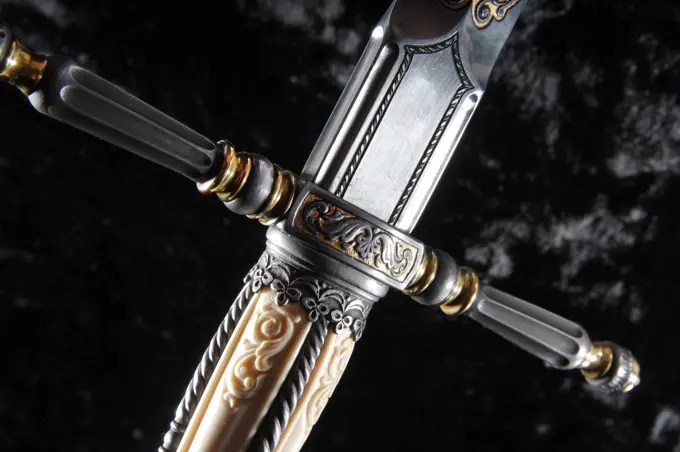
A collection of ornate knives and daggers from different cultures and centuries, highlighting craftsmanship and intricate designs.

Dagger (Chilanum) 17th century South India. Dagger (Chilanum) 31729
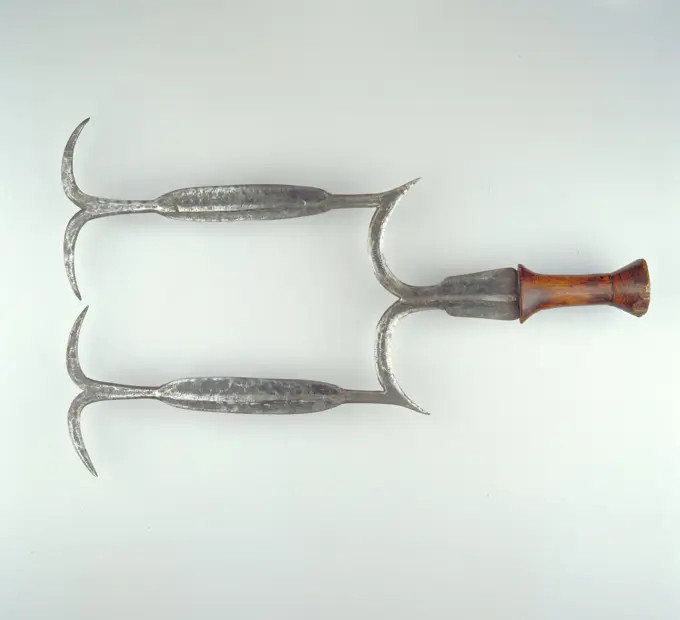
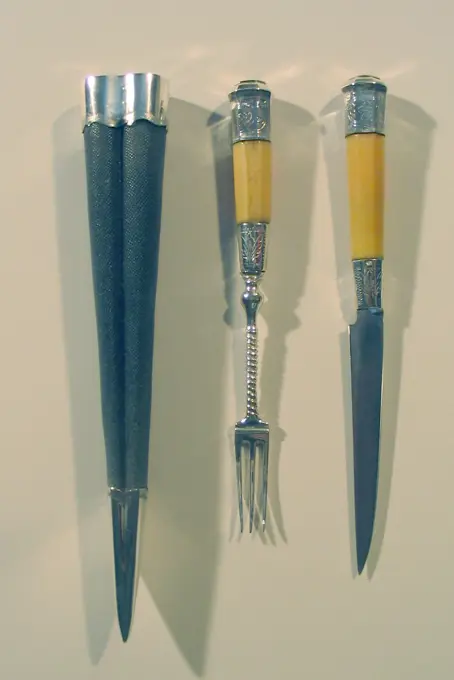
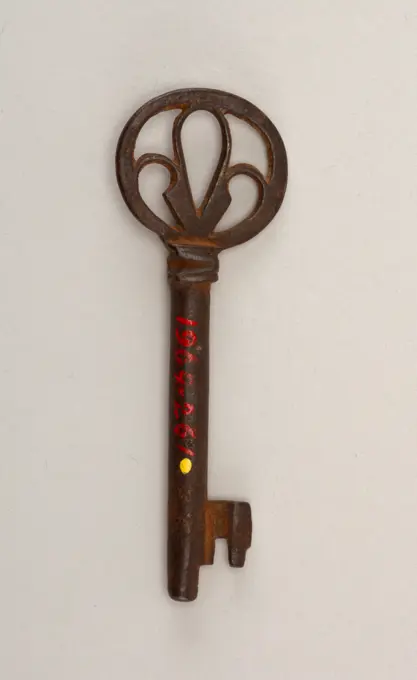
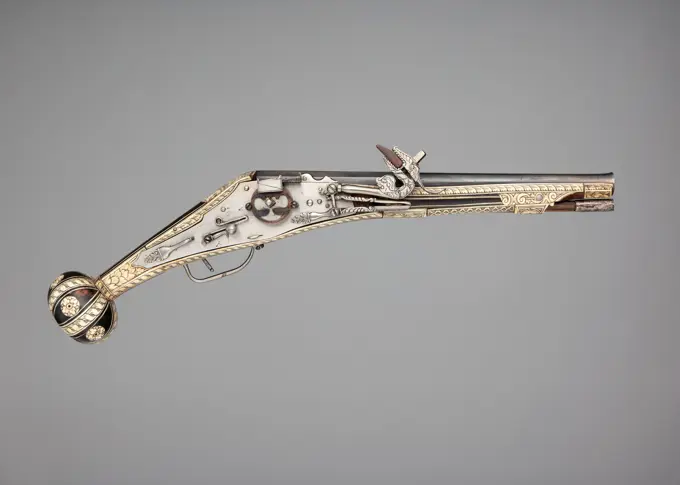
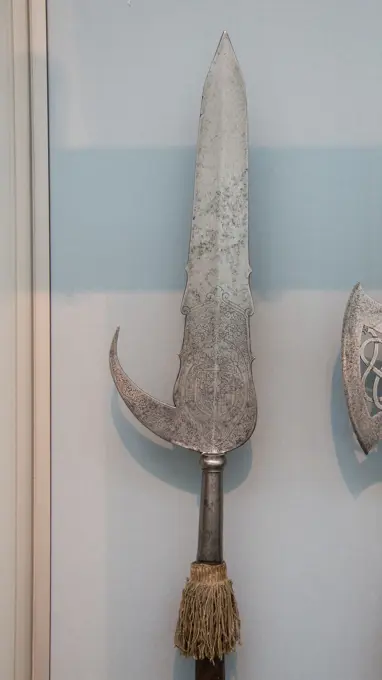
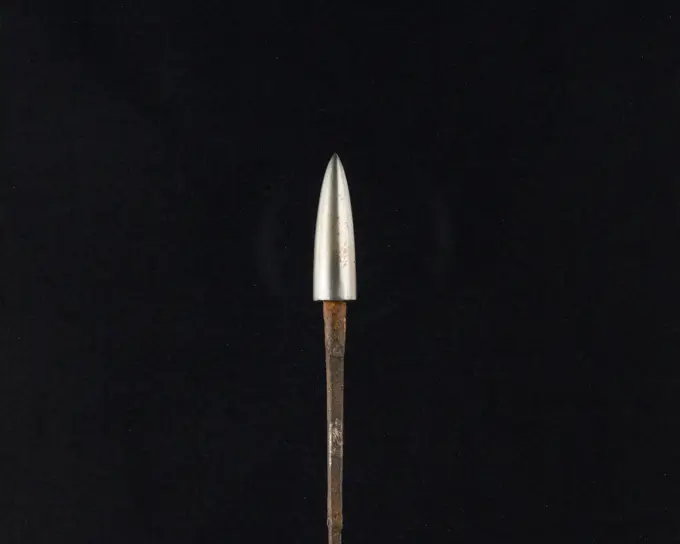
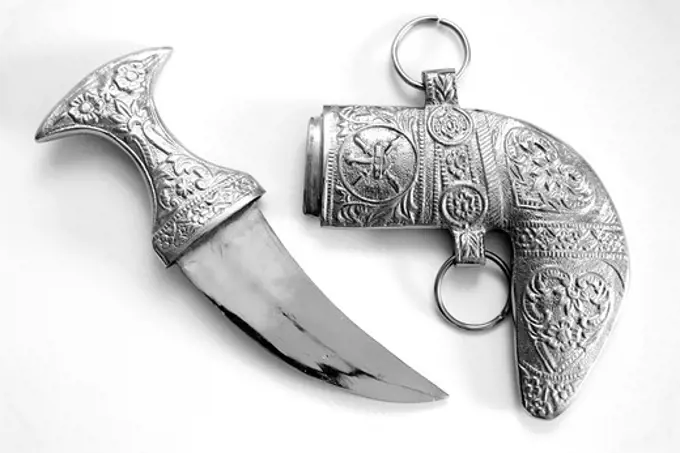
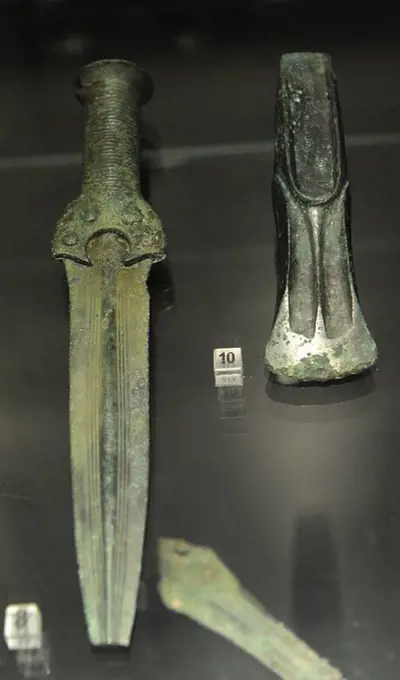
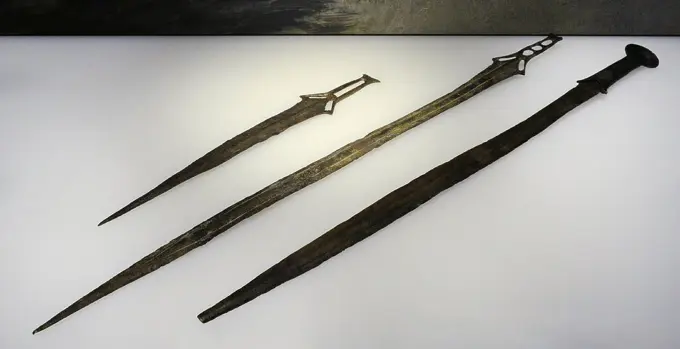
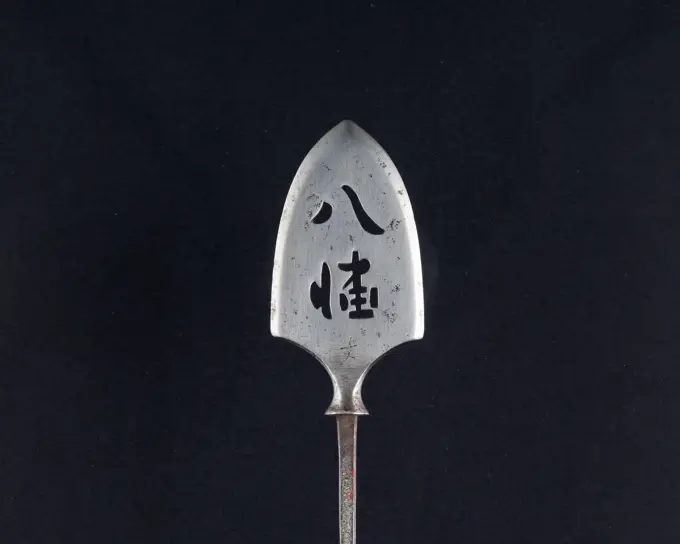
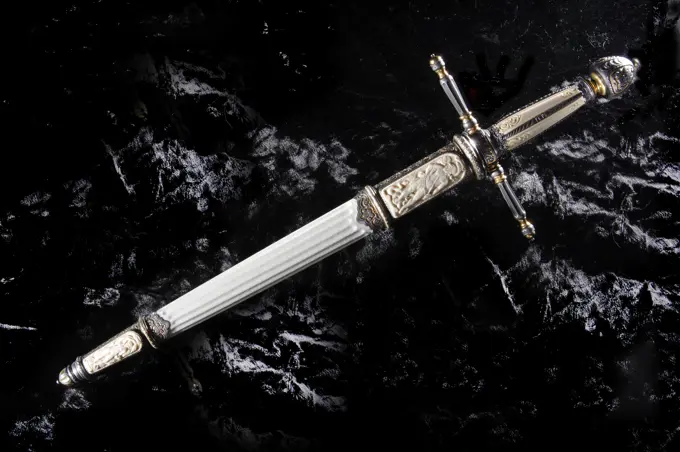
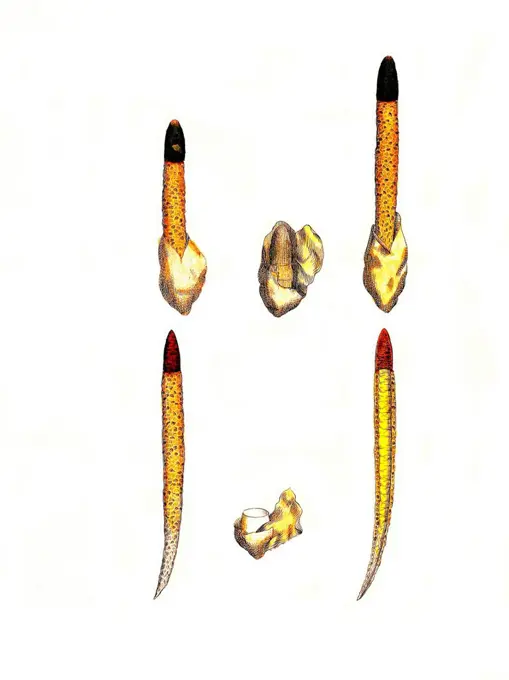
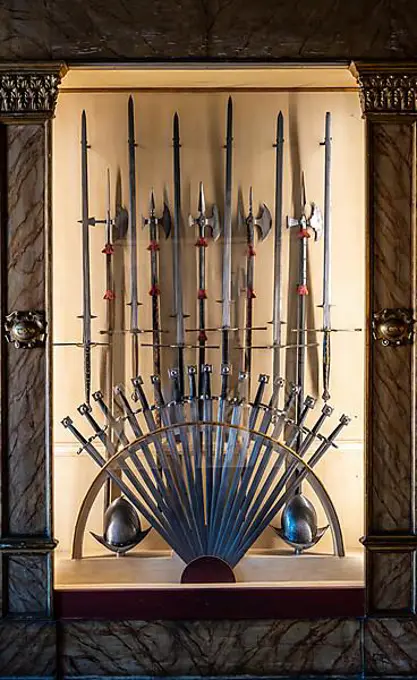
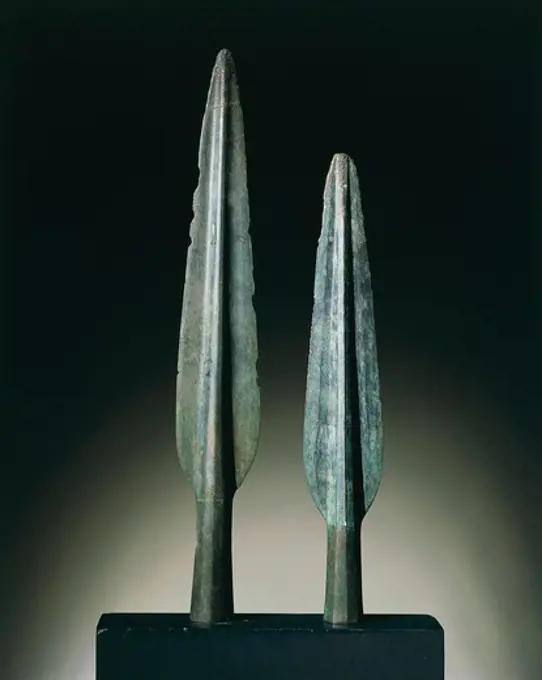
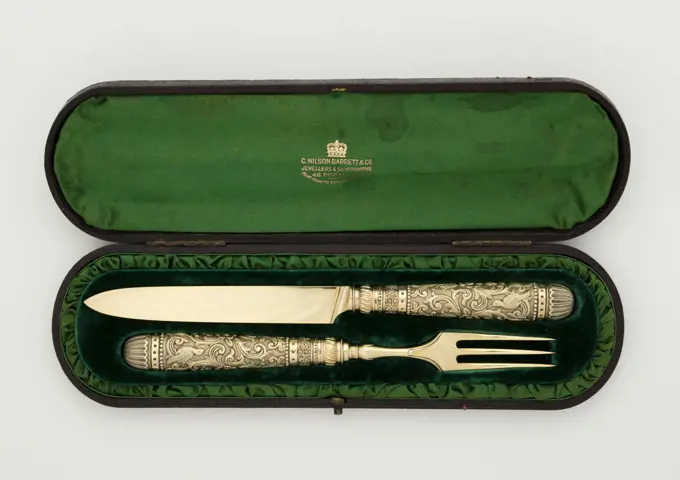
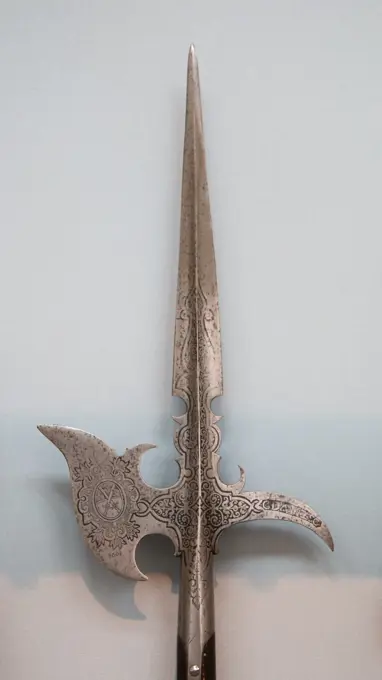
Halberd of Christian II of Saxony (reigned 1601-11) dated 1601 German This staff weapon was carried by the bodyguards of the Prince-Electors of Saxony.. Halberd of Christian II of Saxony (reigned 1601-11) 22192Short Sword, early to mid 20th century, 19 x 11 7/8 x 1 1/2 in. (48.26 x 30.16 x 3.81 cm), Wood, metal, Democratic Republic of the Congo, 20th centuryKnife (Netherlands), ca. 1700; steel, silver, ivory; L x W x D: 15 x 1.3 x 1 cm (5 7/8 x 1/2 x 3/8 in.); The Robert L. Metzenberg Collection, gift of Eleanor L. Metzenberg; 1985-103-137-bKey; 1909-2-261Wheellock Pistol ca. 1590 German, Augsburg The blued barrel is in two stages, round at the front with a flaring muzzle, octagonal at the breech, and it is ornamented with chiseled crescents and circles. It bears two marks: a hunting horn in a shield, and a pine cone (the control mark of the city of Augsburg). The wheellock has a spring-closed pan cover with release button, and safety catch. The cock is chiseled with a stylized dragon. The ebonized stock is inlaid with staghorn engraved with stylized foliage and geometric patterns, two crowned heads on the grip, and two creatures with human heads on the left side. The incisions were blackened to make the design stand out. After the wheellock ignition mechanism was devised around 1500, it was first applied to firearms used on horseback. In fact the appearance of pistols--weapons handled with one hand--was due to the invention of the wheellock, and by the middle of the sixteenth century they became part of the equipment of middle and lighSmart dagger of the medieval soldier. It was used for huntingSmart dagger Smart dagger of the medieval soldier. It was used for hunting Copyright: xZoonar.com/VALERY-SIBRIKOVx 20043136Partisan of the Bodyguard of Vittorio Amadeo II (1666-1732), Duke of Savoy ca. 1700 Italian. Partisan of the Bodyguard of Vittorio Amadeo II (1666-1732), Duke of Savoy 22897Kris. Culture: Balinese. Dimensions: L. 17 3/8 in. (44.1 cm); L. of blade 13 in. (33 cm); W. 4 1/4 in. (10.8 cm); Wt. 8.7 oz. (246.6 g). Date: 16th-19th century. Museum: Metropolitan Museum of Art, New York, USA.ax with flower engraving, middle east, 18th century, Álava Armory Museum, Vitoria, Basque Country, Spain.Arrowhead (Yanone) 18th century Japanese Although today Japanese warriors are renowned most for their swordsmanship, archery, especially from horseback, has been an essential part of samurai warfare and culture for centuries. Arrows were fitted with heads of varying shape according to their intended use in war, the hunt, or target practice. Arrowheads made for use on the battlefield incorporated different designs intended for specialized purposes such as the piercing of armor or to cause maximum damage to horses and unarmored personnel.Large arrowheads, pierced and elaborately chiseled with landscapes, birds, flowers, dragons, and Buddhist divinities, were created to be admired for the beauty of their metalwork and design rather than for use in archery. Such highly elaborate examples may have been made for presentation or as a votive offerings to a shrine.. Arrowhead (Yanone). Japanese. 18th century. Steel. Archery Equipment-ArrowheadsMetal Doorpull for Church second half 19th century Anonymous, British, 19th century British. Metal Doorpull for Church 386662A traditional knife, or khanjar, of the kind worn with national dress in southern Arabia, especially Oman, symbolising readiness to defend one's honour. Monochrome.Prehistoric. Bronze Age. Northern Europe. Dagger and sword. From Dragsfjard. The National Museum of Finland. Helsinki.Bronze swords topped in carp tongue. Late Bronze Age. 1000-850 BC. Ria of Huelva, province of Huelva, Andalusia. National Archaeological Museum. Madrid. Spain.Arrowhead (Yanone) 18th century Japanese Although today Japanese warriors are renowned most for their swordsmanship, archery, especially from horseback, has been an essential part of samurai warfare and culture for centuries. Arrows were fitted with heads of varying shape according to their intended use in war, the hunt, or target practice. Arrowheads made for use on the battlefield incorporated different designs intended for specialized purposes such as the piercing of armor or to cause maximum damage to horses and unarmored personnel.Large arrowheads, pierced and elaborately chiseled with landscapes, birds, flowers, dragons, and Buddhist divinities, were created to be admired for the beauty of their metalwork and design rather than for use in archery. Such highly elaborate examples may have been made for presentation or as a votive offerings to a shrine.. Arrowhead (Yanone). Japanese. 18th century. Steel. Archery Equipment-ArrowheadsSmart dagger Smart dagger of the medieval soldier. It was used for hunting Copyright: xZoonar.com/VALERY-SIBRIKOVx 20011104Phallus caninus, Gemeine Hundsrute (Mutinus caninus), Pilz, digital restaurierte Reproduktion einer Originalvorlage aus dem 19. Jahrhundert, genaues O...Medieval weapons, swords and lances, interior, Doge's Palace, Palazzo Ducale, Venice, Veneto, Italy, EuropeNuragic civilization. Spear heads. From Sardinia Region.Cutlass and Leather Scabbard. Dated: 1935/1942. Dimensions: overall: 10.7 x 17.2 cm (4 3/16 x 6 3/4 in.). Medium: watercolor, graphite, and gouache on paperboard. Museum: National Gallery of Art, Washington DC. Author: American 20th Century.Fork, knife and case, cast and stamped, rolled and cut silver-gilt; leather, velvet, silk, satin (case), the handles decorated with foliate scrolls. the ends with gadrooned knops, flat pointed knife blade and fork tines., set into a fitted silk and velvet-lined leather box with gilt lettering for retailer G. Wilson Barrett & Co, London, England, 1884, cutlery, Decorative Arts, Fork, knife and caseOld book with a long feather