Historical Lace Borders

Elegant lace borders made from linen and other materials, showcasing intricate designs typical of 18th and early 20th centuries.

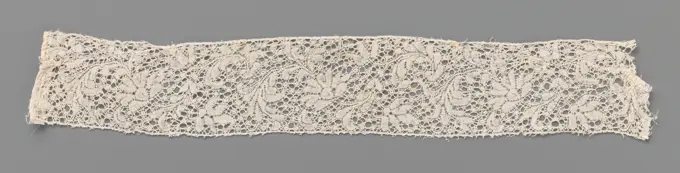
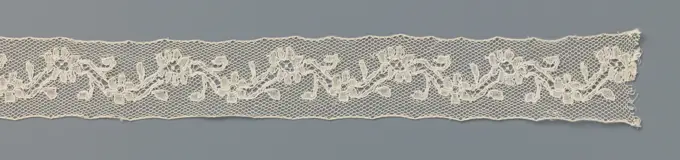
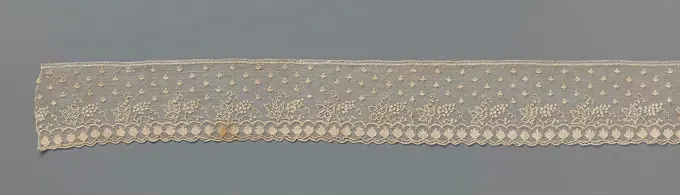
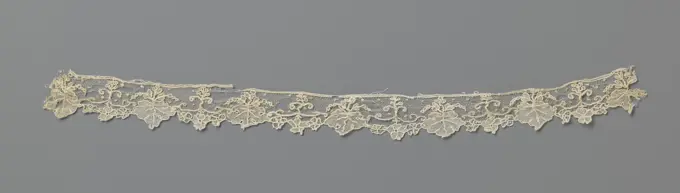
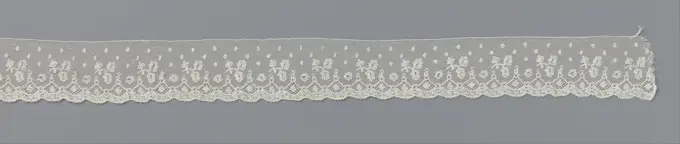
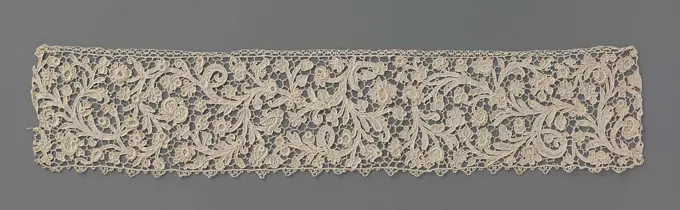
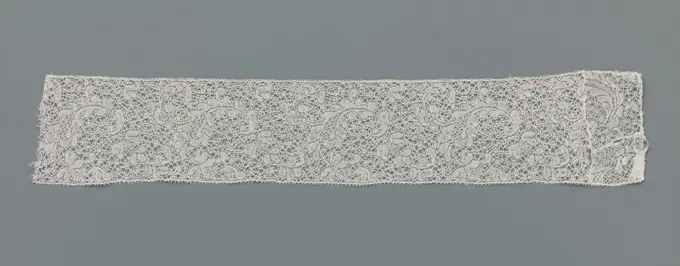
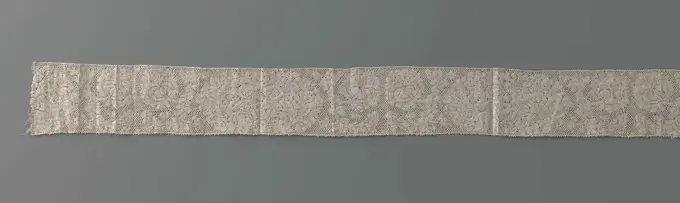
Border, Technique: bobbin lace, Bobbin lace double edge joined, symmetrical floral; mid-18th century Valenciennes Fond, mid-18th century, lace, Border
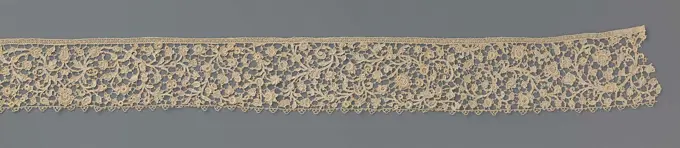
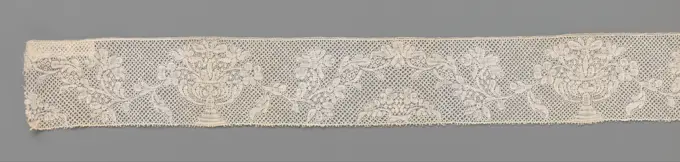
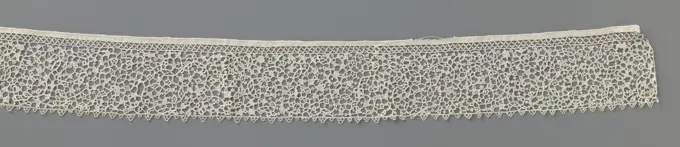
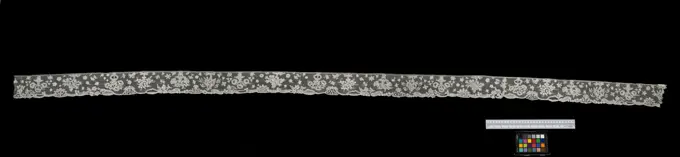
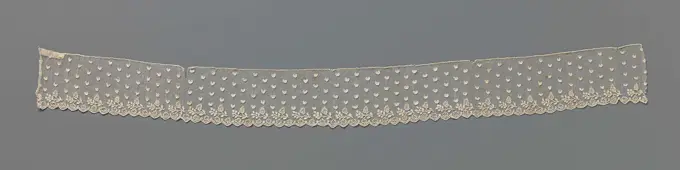
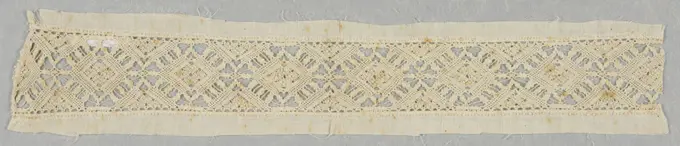
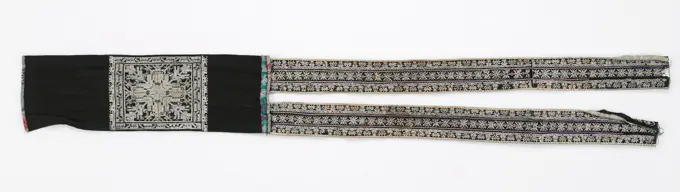
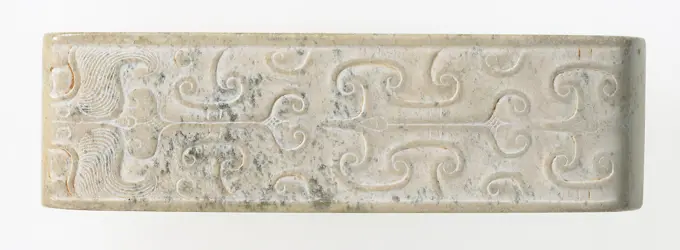
Border, Technique: bobbin lace, Bobbin lace double edge joined, symmetrical floral; mid-18th century Valenciennes Fond, mid-18th century, lace, BorderBorder; linen; 1933-1-159Edge (Belgium); linenPiece 18th century Flemish, Brussels. Piece 212516Needlepoint Lace Edging, 1715-1774. France, Argentan, 18th century (Louis XV Period, 1715-1774). Lace, needlepoint: linen; average: 6.4 x 91.5 cm (2 1/2 x 36 in.).Border (Belgium); linenBorder, Medium: linen Technique: needle lace with 6-sided reworked ground, Band with a design of floral sprays arranged and emerging from a cornucopia. Stylized pattern., France, 1700-1750, lace, BorderStrip bobbin with a wave of a fan -shaped flour and feathered leaf, anonymous, c. 1720 - c. 1750 Strip of natural-colored bobbin, binche side. The repeating pattern consists of a curved flower stem with a targeted fan -shaped flower, from which a large feathered leaf originates that bends to the underside. Between the successive loose waves that arise in this way, there is a tulip on a curved stem along the top. Below the underside there is a loose flower with five pointed petals on one side. The motifs are connected by a decorative land, a snowflake ground. The motifs are made in linen battle with openwork edges. At the top and bottom are straight finished, with the bottom with picots. Southern Netherlands linen (material) Bobbi Lace / Binche Lace Strip of natural-colored bobbin, binche side. The repeating pattern consists of a curved flower stem with a targeted fan -shaped flower, from which a large feathered leaf originates that bends to the underside. Between the successive loose wKloskant intermediate mate with zigzag line, anonymous, c. 1875 - c. 1949 Piles of Natural -colored bobbin side: Mechelse side. In the middle of the fine grid, a Mechelen soil (also known as ice soil), an openwork band runs in Zigzaglijn, cut over by two types of rosettes. Belgium linen (material) bobbin lace / Mechlin (lace) Piles of Natural -colored bobbin side: Mechelse side. In the middle of the fine grid, a Mechelen soil (also known as ice soil), an openwork band runs in Zigzaglijn, cut over by two types of rosettes. Belgium linen (material) bobbin lace / Mechlin (lace)Galloon European late 18th-early 19th centuryStrook naaldkant met veelsoortige bloemen en bladeren.Strip natural-colored coniferous lace, Venetian rosary. Pattern with tendrils to which varicose flowers and leaves can be seen without repetitive motif. Irregular open land with picoted bars. The top is trimmed with a border clamping side. The underside is finished with a straight picro edge with arcs.Border, Medium: linen Technique: bobbin lace (Valenciennes diamond ground), Detached flower form on diamond mesh; scalloped scalloped border., France, 19th century, lace, BorderStrip of needle side with flowers and medallions, anonymous, c. 1720 - c. 1740 Strip of natural-colored needle side: Alençon side. Pattern with alternating three flowers and a medallion with a more or less mirrored flower branch in between. The medallions are contained between two flowers and are filled with different ornamental grounds. On the fine hexagonal Maas soil also a spreading pattern of very small patterns in diamond pattern. The pattern on the underside of the strip consists of a few flowers along openwork fantasy forms, filled with different ornamental grounds. The scalloped bottom edge stems from this bottom pattern. The top is trimmed with a border bobbin. unknown linen (material) Alençon Lace Strip of natural-colored needle side: Alençon side. Pattern with alternating three flowers and a medallion with a more or less mirrored flower branch in between. The medallions are contained between two flowers and are filled with different ornamental grounds. On the fine hexagonal Edging (possibly France); cottonFragment, Medium: metallic-wrapped linen thread Technique: bobbin lace, Metallic lace fragment in two different thicknesses of silver-wrapped thread making a floral design., possibly Milan, Italy, 17th century, lace, FragmentBorder, Medium: linen Technique: bobbin lace appliqué on machine net, Floral sprays above border of scrolls separated by individual flowers and leaves., Belgium, mid-19th century, lace, BorderGalloon late 18th-early 19th century European. Galloon 225118Bobbin Lace Insertion, first half of 18th century. Belgium, Binche, first half of 18th century. Lace, bobbin; average: 5.8 x 207 cm (2 5/16 x 81 1/2 in.).Strip bobbin with arches between flower vases, anonymous, c. 1700 - c. 1709 Strip of natural-colored bobbin: binche side. The repeating and symmetrical pattern consists of an arc that forms between two flower vases from a long curved slender with flowers and leaves. Under each arch there is a bowl along the lower edge with a symmetrical settlement of two rosette flowers between two down -bending leaves. The motifs are connected by a grid, a five -part ground. The motifs are made in linen battle with openwork edges. Ornamental grounds are used among other things between the flowers and leaves, it concerns various snowflake grounds. Top and bottom of the strip are straight finished, with the bottom with picots. Southern Netherlands linen (material) Bobbi Lace / Binche Lace Strip of natural-colored bobbin: binche side. The repeating and symmetrical pattern consists of an arc that forms between two flower vases from a long curved slender with flowers and leaves. Under each arch there is a Hats strip Van Kloskant with Zigzag Rivière, Anonymous, c. 1750 - c. 1760 Strip of natural -colored Brussels bobbin. A rivière in Zigzaglijn is crossed by spiral ranks, which enclose fan -shaped medallions. The motives are connected by a drachel soil. A coarser hexagonal soil has been used in the Rivières. On the fields that are bordered by the Rivière, there are twigs on which flowers in the form of pomegranates, pears or winged insects. The strip was probably used or made for a hat. Brussels linen (material) bobbin lace / Brussels bobbin lace Strip of natural -colored Brussels bobbin. A rivière in Zigzaglijn is crossed by spiral ranks, which enclose fan -shaped medallions. The motives are connected by a drachel soil. A coarser hexagonal soil has been used in the Rivières. On the fields that are bordered by the Rivière, there are twigs on which flowers in the form of pomegranates, pears or winged insects. The strip was probably used or made for a hat. Brussels linen (material) bobbin Strook naaldkant met wijnbladeren en druiventrossen.Natural coniferous strip: Men-Alençon. Repetitive motif of a grape tray with wine leaf on a fine hexagonal maas soil with reflected bars. Above it has a spreamother of small twigs with around flower and two oval leaves. The grape food and the leaf steal from a horizontal spiral rank up and bend in opposite direction from each other, but always on the same direction. Under the spiral rank a very fine soil of some, strongly twisted meshes, with a repetitive motif of a narrow five-finger leaf. Full work without recesses in these five-fingered leaves and in the oval leaves and the grapes. One type of ornamental ground in the wine leaves. Slip edge with regular arcs along the bottom edge. The top is trimmed with a border clamping side.Border, Medium: linen Technique: needle lace, 6-sided reworked grounds, Border with floral spray edging on one side. Remaining area powdered with small three leaf branches., France, 1750-99, lace, BorderStrook kloskant met ovalen gevormd door contourdraad.Strip natural colosside: sloping. The repeating and symmetrical pattern exists along the underside of the strip from a concatenation of spindle releases that are formed by two winding contour wires that have been worked in a closed pin stroke ground. At regular distance, a larger oval is from the spindle releases that rises to the top of the strip, the wires on the top of the strip in a straight line along the top to the next large oval. The ground ground is opened in the center of each major oval. Upper and bottom of the strip are directly finished in which the underside is equipped with picots.Strip of needle side with serpentines, anonymous, c. 1690 - c. 1699 Strip of natural -colored needle side: flat Venetian side. Irregular open bars of short spikes occupied with cogs picots. Thin thin intersecting spiral bushes form a rolling pattern of serpentines. Straight outside list of equal triangles. Venice linen (material) flat Venetian (needle point) Strip of natural -colored needle side: flat Venetian side. Irregular open bars of short spikes occupied with cogs picots. Thin thin intersecting spiral bushes form a rolling pattern of serpentines. Straight outside list of equal triangles. Venice linen (material) flat Venetian (needle point)Band, Medium: Technique: bobbin lace, Continuous braid like, Fragment of provincial lace worked in a pattern of geometric rectangles., Italy, 19th century, lace, BandStrip of needle side with sprinkling leaves and tendrils, anonymous, c. 1790 - c. 1799 Strip of natural-colored needle side: Alençon side. Spread motif with two rows of twigs with four or five leaves, on a fine hexagonal mesh ground. The pattern on the underside of the strip consists of arcs filled with a finer mesh soil. In the arcs alternately a configuration of four times four mushes or a twig. A single and a double branch alternately spring from the arcs. The arcs are formed by small connected ovals, filled with a decorative soil with rader picots. All leaves filled with fullwork with hardly any recesses. Suffle edge with connected leaves and oval finished with delicate picots. The top is trimmed with a border bobbin. France linen (material) Alençon Lace Strip of natural-colored needle side: Alençon side. Spread motif with two rows of twigs with four or five leaves, on a fine hexagonal mesh ground. The pattern on the underside of the strip consists of arcs filled with a finer mesh Kloskant intermediate mate with zigzag line, anonymous, c. 1875 - c. 1949 Piles of Natural -colored bobbin side: Mechelse side. In the middle of the fine grid, a Mechelen soil (also known as ice soil), an openwork band runs in Zigzaglijn, cut over by two types of rosettes. Belgium linen (material) bobbin lace / Mechlin (lace) Piles of Natural -colored bobbin side: Mechelse side. In the middle of the fine grid, a Mechelen soil (also known as ice soil), an openwork band runs in Zigzaglijn, cut over by two types of rosettes. Belgium linen (material) bobbin lace / Mechlin (lace)Lambrequin;  early XIXW. (1800-00-00-1810-00-00);Box for a miser's purse, Medium: cardboard, paper, Carrying case of cardboard covered with small patterned paper, trimmed with gold paper., France, early 19th century, costume & accessories, Box for a miser's purseFragment early 18th century Flemish, Mechlin. Fragment. Flemish, Mechlin. early 18th century. Bobbin lace. Textiles-LacesBorder, Medium: linen Technique: bobbin lace, Bedford, England style, England, 19th century, lace, BorderStrook kloskant met hangend drieblad.Strip natural colosside: Valenciennes-side. At a square table ground, there is a hanging wingerded leaf with berry over a slippery shell.Strip ca. 1800 Flemish. Strip 212436Band (France); linenBobbin Lace (Point d'Angleterre) Edging, mid 18th century. Belgium, Brussels, mid 18th century. Lace, bobbin; average: 8.3 x 77.5 cm (3 1/4 x 30 1/2 in.).Strip of needle side with ivy leaves, anonymous, c. 1850 Large vine leaves of a standing straight twig are interspersed with ditto twig, three of which hang down. Point the Gaze de Bruxelles. Brussels linen (material) Large vine leaves of a standing straight twig are interspersed with ditto twig, three of which hang down. Point the Gaze de Bruxelles. Brussels linen (material)Galloon 17th-18th century Unknown. Galloon 213781Border, Medium: linen Technique: grid of withdrawn element work with needle lace, reticella style, Single band composed of geometric motifs in alternating repeat pattern bordered by small triangular pendants., Italy, 1500-50, lace, BorderEdge, Medium: linen Technique: bobbin made continuous tape with net added, 18th century, lace, EdgeStrip bobbin with 'earrings', anonymous, c. 1875 - c. 1899 The bastard of the bobbin (Mechelen soil or ice soil) is decorated with mulets, a row of one -sided targeted leaf branches and a series of 'earrings', which form the shells with campanes. Mechelen side. Belgium linen (material) bobbin lace / Mechlin (lace) The bastard of the bobbin (Mechelen soil or ice soil) is decorated with mulets, a row of one -sided targeted leaf branches and a series of 'earrings', which form the shells with campanes. Mechelen side. Belgium linen (material) bobbin lace / Mechlin (lace)Galloon 18th century French. Galloon 214096Border, Medium: linen Technique: needle lace with ground of loop & twist with twist return, Shaped border with repeated undulating forms connected by stylized garland., France, mid-18th century, lace, BorderEngageante van naaldkant.In a barred middle is a symmetrical three-part branch, from which a wavy branch with extensive scales exprists. Driangles penetrated from the sides by a wavy ribbon, rosettes and a fine and varied grid work rivier, deep in the ground. Alençon side.BorderPart of a Bobbin Lace Lappet, mid 18th century. Belgium, Mechelen, mid 18th century. Lace, bobbin; average: 9.3 x 95.9 cm (3 11/16 x 37 3/4 in.).Strook naaldkant met gerekte rank.Strip natural needle side: Flat Venetian side. Asymmetrical. Retured running rank with few flowers. Right edge of triangles. Two corners will be inlaid later.Trimming (Spain); silkTrimming (Italy); silk, silver metallic threadCeremonial Headwrap, 40 x 9 in. (101.6 x 22.86 cm) (a)52 x 9 3/4 in. (132.08 x 24.77 cm) (b), Cotton, silk, ChinaOrphrey fragment, Medium: silk Technique: compound weave, Blue and beige orphrey fragment with floral ogives and leafy sprigs., Italy or Spain, 15th-16th century, woven textiles, Orphrey fragmentStrook naaldkant met gepluimde ranken.Strip natural needle side: Venetian rosion side. On a bars soil with six-sided meshes there are rich branched, left and right swiveling tendrils, sometimes drew, sometimes walking. Veeloertige, carefully detailed knob-shaped flowers grow. Here and there the top of a rank has grown through an opening in the branch. Straight finish of alternation an eye and a triangle.Border Belgian, Brussels second half 19th centuryTrimming, Medium: silk Technique: woven, Light brown trimming fragment in a design of open flowers and diagonal leaves between borders in a twill pattern., France, ca. 1830, trimmings, TrimmingBand; linen; Bequest of Marian Hague; 1971-50-282Band (Italy); linenBobbin Lace (Point d'Angleterre) Edging, 18th century. Belgium, Brussels, 18th century. Lace, bobbin: linen; average: 7 x 71.2 cm (2 3/4 x 28 1/16 in.).Strook kloskant met hangend blad en grote spinnen.Strip natural colosside, binche side. On a ringed snowflakes ground is a row of one-sided facing hanging feathered leaves with a flower at the top. Upper and bottom of the strip are straight finished, the underside with picots. One short side has a soil. On this side of the strip, there is a width council here.Strook naaldkant met hartjes.Strip Ecru-colored needle side decorated with a regular pattern of heart-shaped moes on a fine hexagonal maase. The bottom edge consists of arcs with alternating one loose flour and the same flower connected to a landscape flower branch. The flour branches lying row forms the transition from the sauce pattern to the bottom edge. The top is finished with a straight edge. Alençon side.Needlepoint Lace Lappet, 1715-1774. France, Argentan, 18th century (Louis XV Period, 1715-1774). Lace, needlepoint: linen; overall: 279.4 x 12.1 cm (110 x 4 3/4 in.).Piece 18th-19th century Japan. Piece 67269Bobbin Lace Lappets and Edging for Cap, 18th century. Belgium, Mechelen, 18th century. Lace, bobbin: linen; overall: 179.5 x 7.7 cm (70 11/16 x 3 1/16 in.).Insertion 16th century Italian, Venice. Insertion 221035Length of Cotton, early 1900s. India, early 20th century. Cotton, metallic thread; overall: 365.8 x 86.4 cm (144 x 34 in.).Wampum belt -Border, Medium: linen Technique: needle lace with ground of loop & twist with loop & twist return, France, 19th century, lace, BorderStrip application side with spreading pattern and rosettes in ovals along the bottom, anonymous, c. 1790 - c. 1799  Strip of natural -colored Brussels Application side: Needle side Applicated on Drochelgrond. The repeating pattern consists of a stray pattern of twigs and various rosette flowers with or without a stalk and along the underside of the strip from ovals formed by a strongly curled branch with a rosette at the end. The motifs are mainly made of widely founded wire bundles. A coarse hexagonal Maas soil has been used in the ovals in the ovals. The top is finished with a separate strap. The very faintly scalloped underside is finished with very fine picots. Brussels linen (material) Brussels AppliedCapslip from Argentankant, Anonymous, c. 1770 - c. 1775 Cap from Argentankant. The pattern has garlands that run over the width and from which small leaves and flowers spring. France linen (material). Argentan Lace Cap from Argentankant. The pattern has garlands that run over the width and from which small leaves and flowers spring. France linen (material). Argentan LaceHalf lappet 17th century French. Half lappet 218079Strip bobbin with lobed scales formed by winding ribbon, anonymous, c. 1625 - c. 1649 Strip of natural -colored Genoese bobbin. The repeating and symmetrical pattern is formed by a swinging ribbon that forms lobed oval sculptures. In each shell, a swinging ribbon forms the outlines of a circle that turns into a three -lobe leaf at the bottom. The motifs are connected by, among other things, long horizontal braids, braids that form circles and by forms. In each circle, the shape strokes provide a four -pointed star. The top of the strip is straight finished. Knee linen (material) bobbin lace / Genoese pillow lace Strip of natural -colored Genoese bobbin. The repeating and symmetrical pattern is formed by a swinging ribbon that forms lobed oval sculptures. In each shell, a swinging ribbon forms the outlines of a circle that turns into a three -lobe leaf at the bottom. The motifs are connected by, among other things, long horizontal braids, braids that form circles and by forms. In each cStrook naaldkant met gespleten spiralen.Cuff of natural needle side: Venetian relief side. There are walking, wide spiral drinks on an open bars soil, which are split in many places. There are also large openwork centers in the flower leaves, which typifies the 19th century. Finish with a right list of over and around large and small triangles.Strip 18th century Flemish, Mechlin. Strip. Flemish, Mechlin. 18th century. Bobbin lace. Textiles-LacesNeedlepoint (Point Alençon) Lace Lappets, 1715-1774. France, Alençon, 18th century (Louis XV Period, 1715-1774). Lace, needlepoint: linen; overall: 66 x 10.5 cm (26 x 4 1/8 in.).Strip bobbin with windows and oval, anonymous, c. 1900 Strip of natural -colored bobbin: magic side. The repeating symmetrical pattern consists of a diamond -shaped motif on the center line, in which a decorative soil with a block pattern has been realized with form strokes. Always after each window on the center line in an oval frame is a flower with a diamond -shaped heart, cloated in netslag, and fourteen rectangular petals made in form. Up and below the diamond -shaped motif is a similar flower, but then halved. Upstairs and below the flour with the fourteen petals, an oval motif with a diamond -shaped decorative land is placed along the edges. The top of the strip is finished with a straight strap. The underside of the strip is finished under a narrow straight strap with a scrap edge with small shells. Belgium linen (material) bobbin lace / fairy point Strip of natural -colored bobbin: magic side. The repeating symmetrical pattern consists of a diamond -shaped motif on the center Strook kloskant met distel of korenbloem.Strip natural colosside: Old cravings. Semicircular slot with whimsical edges with a symmetrical pattern in each shell with a flour down, possibly a thistle or cornflower. The motifs are made in linen battle with openwork edges and recesses. In the length axis, leaf-shaped shape layers are used in recesses. The motifs are connected by a short crossing couples, a ground is missing. The top of the strip is straight finished. The sloping edge is finished with picots.Passementerie 17th century Italian. Passementerie 215000Silk Belt, 907-1125. China, Liao dynasty (907-1125). Compound twill weave, silk; overall: 24.3 x 197.5 cm (9 9/16 x 77 3/4 in.).Hats strip Van Kloskant with Zigzag Rivière, Anonymous, c. 1750 - c. 1760 Strip of natural -colored Brussels bobbin. A rivière in Zigzaglijn is crossed by spiral ranks, which enclose fan -shaped medallions. The motives are connected by a drachel soil. A coarser hexagonal soil has been used in the Rivières. On the fields that are bordered by the Rivière, there are twigs on which flowers in the form of pomegranates, pears or winged insects. The strip was probably used or made for a hat. Brussels linen (material) bobbin lace / Brussels bobbin lace Strip of natural -colored Brussels bobbin. A rivière in Zigzaglijn is crossed by spiral ranks, which enclose fan -shaped medallions. The motives are connected by a drachel soil. A coarser hexagonal soil has been used in the Rivières. On the fields that are bordered by the Rivière, there are twigs on which flowers in the form of pomegranates, pears or winged insects. The strip was probably used or made for a hat. Brussels linen (material) bobbin Strook kloskant met ovale cartouche tussen ronde pioenrozen.Natural culmine strip. The repetitive and symmetrical pattern consists of an oval cartouche that is flanked to the left and right by a stem that comes downwards full of thick curved leaves, with halfway an outwardly directed round peony. In the cartouche, a symmetrical drawing can be seen from interconnecting voluntary leaves, flowers and shapes. The oval cartouches with peonies are connected by a five-grade ground. The motifs are made in linen stroke with openwork edges. Upper and bottom of the strip are straight finished, the underside with picots.Fringe, Medium: silk Technique: woven, Green, pink and white fringe with a plain-woven heading and skirt threads arranged to form colored stripes., France, 17th century, trimmings, FringePiece 17th century Japan. Piece 71089Band, Medium: linen Technique: bobbin lace, Binche style with Binche ground, Binche-style border with swirling floral and foliated forms., Belgium, early 18th century, lace, BandFragment, Medium: silk Technique; supplementary wefts in satin foundation, Compactly placed angular leaves. Selvage at left., 17th century, woven textiles, FragmentEmbroidered Band, 1600s. Italy, 17th century. Embroidery; silk on linen; overall: 4.8 x 108.6 cm (1 7/8 x 42 3/4 in.).Lace, 1800s, maker unknown. Acquisition history unknown.Fragment, Medium: linen Technique: bobbin lace, continuous braid-like, Fragment of a band with diamond shapes between two pieces of linen., Italy, 16th century, lace, FragmentGalloon 18th century French. Galloon 213912Sash, 41 1/4 x 5 in. (104.78 x 12.7 cm), Cotton, ChinaTrimming, Medium: silk Technique: woven, Pink, yellow and white trimming fragment in a design of ornamented lozenges separated by spaces., France, 19th century, trimmings, TrimmingWooden coffin panel, owner unknown, floor, centersectionBorder, Technique: bobbin lace, Bobbin lace borders, floral scroll; 19th century Maline, 19th century, lace, BorderLace, 1800s, maker unknown. Gift of Mrs E O'Malley, 1990.Fragment, Medium: cotton Technique: printed on plain weave, Narrow fragment of black and white plaid., USA, 1870-80, woven textiles, FragmentWei Scabbard Buckle, 206 BCE - 220 CE, 3 7/16 x 1 x 1/2 in. (8.73 x 2.54 x 1.27 cm), Ivory jade with brown clouds, China, 3rd century BCE - 3rd century CEEdge, Medium: linen Technique: bobbin lace (Valenciennes ground), Border patterned with a garland intersected at intervals by floral sprays., Belgium, 18th century, lace, EdgeFragment of a Band with Vine Scroll and Leaves, 16th-17th century. Italy, 16th-17th century. Needle lace, filet/lacis (knotted ground and darned in two directions); bleached linen (est.); overall: 15 x 63.8 cm (5 7/8 x 25 1/8 in.). A scrolling vine with budding vegetation or a tendril motif is a recurring pattern in needle lace. The frequent use of the motif, adapted in lace from different centuries and regions, suggests that it was found in a pattern book.Sampler 19th century German. Sampler 228643Band, Medium: linen Technique: bobbin made continuous tape with net added, Milanese type of folk lace with scrolls, leaves and sprays. Pattern is made with continuous tape and added net., Italy, 19th century, lace, BandFragment (Band) Made 500 CE-1000 Peru. Slit tapestry weave . MocheBandGalloon 18th century French. Galloon 213828