Historical Lace Borders

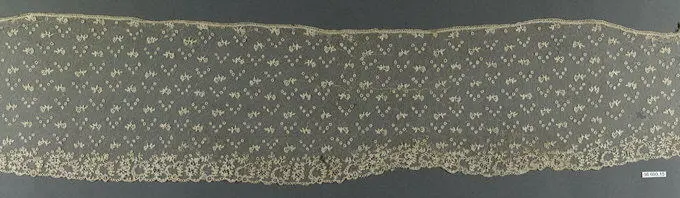
Elegant lace borders made from linen and other materials, showcasing intricate designs typical of 18th and early 20th centuries.

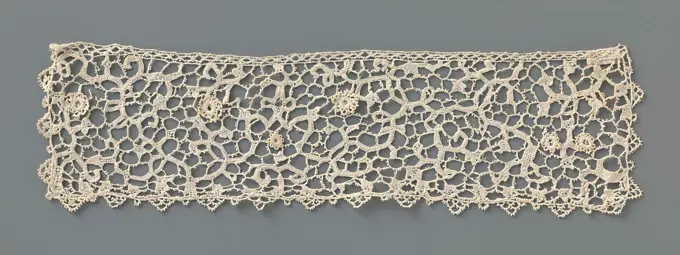
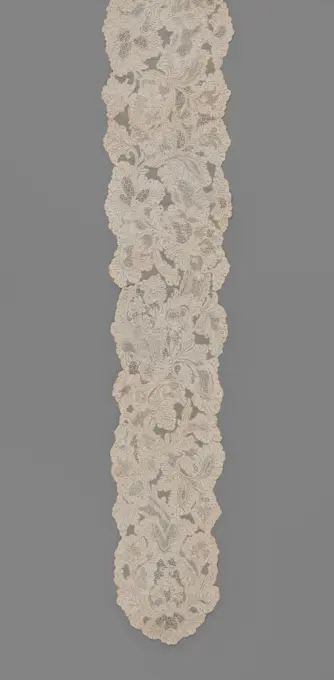
Border, Technique: bobbin lace, Bobbin lace double edge joined, symmetrical floral; mid-18th century Valenciennes Fond, mid-18th century, lace, Border
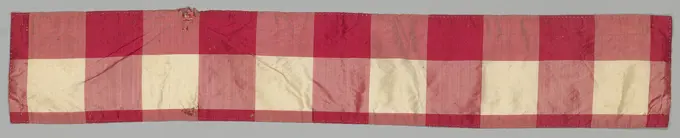
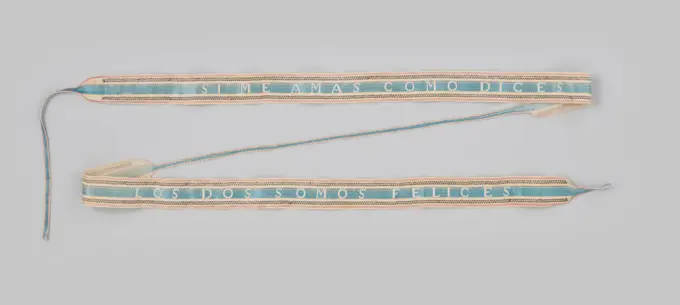
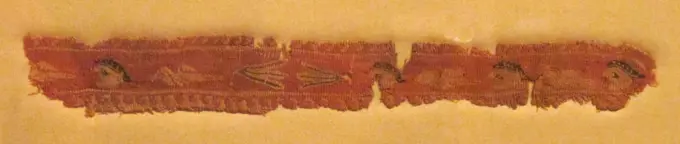
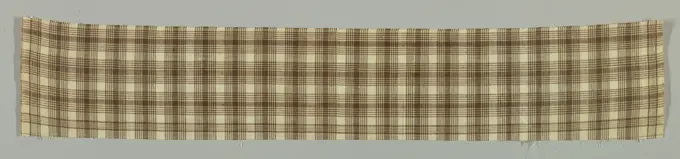
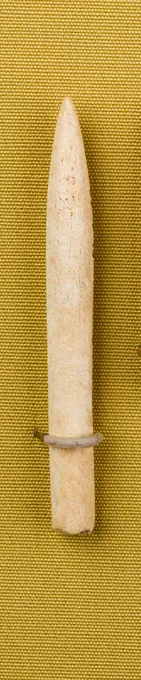
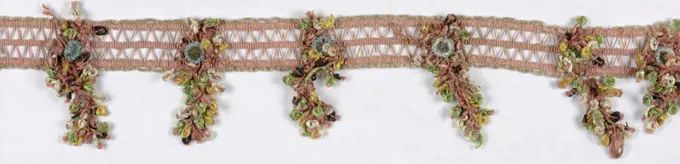
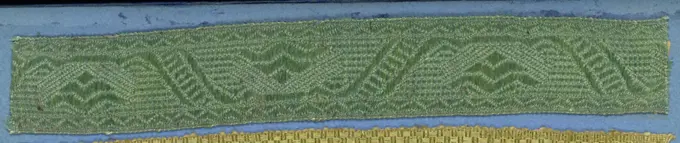
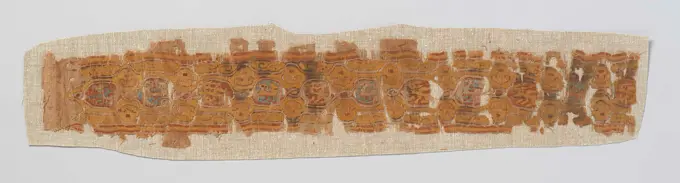
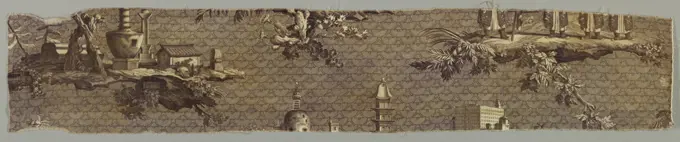
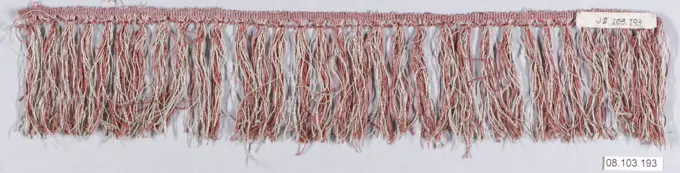
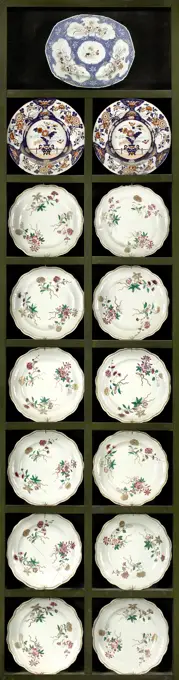
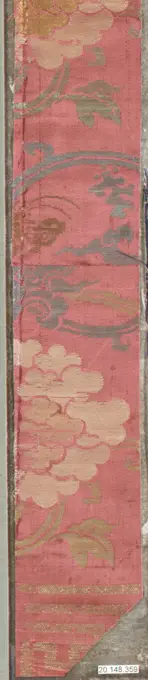
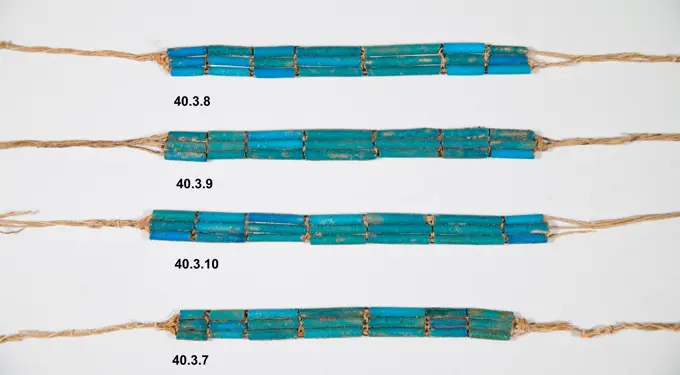
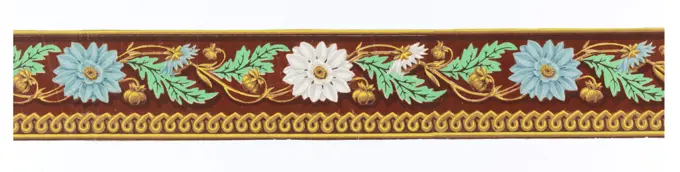
Ribbon or garter from Witte Ripszijde, with a repeated pattern of Orange apples with foliage in brochure work interspersed with a banderole on which the text: Vivat W.C.H. Friso (= Willem Karel Hendrik Friso, from 1747 until his death in 1751 the first inheritance holder of the United Netherlands), Anonymous, c. 1711 - c. 1751 Ribbon or garter from Witte Ripszijde, decorated with brochure work a retiring pattern of Orange apples with foliage interspersed with a banderole on which the text: Vivat W.C.H. Friso (= Willem Karel Hendrik Friso, from 1747 until his death in 1751 the first inheritance holder of the United Netherlands). The ribbon has a scalloped edge. Netherlands whole: Silk. whole: Ribbon or garter from Witte Ripszijde, decorated with brochure work a retiring pattern of Orange apples with foliage interspersed with a banderole on which the text: Vivat W.C.H. Friso (= Willem Karel Hendrik Friso, from 1747 until his death in 1751 the first inheritance holder of the United NetherEmbrasse.Embrasse of red-white checkered silk, lined with white linen and with two set of metal hooks and eyes.Textile, Medium: linen, wool Technique: plain weave with discontinuous wefts (slit tapestry) with eccentric wefts, Fragment of what may have been an all-ver pattern on a dark blue background in teh Sassanian style. A group of three plants or trees in green, yellow, ivory, and red alternating with a small pearl roundel containing a standing bird in green, red, ivory, and dark blue on a yellow background., Eastern Mediterranean, 5th-7th century, woven textiles, TextileStrook machinale kant.Strip natural-colored machining: machining lust. Under two rows of mashes and a row of rosette flowers or diamonds with a hole in the center is a succession of shaking ovals. Each oval is filled with an ornamental ground with three large oval meshes and surrounded by a contour wire, which makes many winds on the top, as flames or the hair a brush. The motifs are connected by a machining paris soil. Upper and bottom of the strip are straight finished, the underside with picots.Manchet van naaldkant met knopvormige bloempjes.Cuff from natural needle side: Venetian rosary. Ship soil that forms regular six-sided meshes, with thin ranks with knob-shaped flowers and a relief rose here and there.Ceremonial ge Dagger, 1766-1122 BCE, 6 5/16 x 1 1/16 x 1/4 in. (16.03 x 2.7 x 0.64 cm), Mottled ivory jade, calcified with black and brown spots, China, 18th-12th century BCEBorder, Medium: raffia Technique: plain weave embroidered with stem stitches, Long band composed of three shorter pieces stitched together. All-over embroidery in irregularly interlaced pattern of bands striped in three shades of brown. One selvage present, other long edge cut and overcast., Democratic Republic of the Congo, late 19th century, embroidery & stitching, BorderTrimming (France); 1909-2-188Border; 28.5 x 11.5 cm (11 1/4 x 4 1/2 in.)Band, Medium: linen Technique: narrow loom-woven tape bent and forlded to define pattern; tape edged with buttonhole stitch over a cord for raised outline; buttonhole stitch over a cord for connecting bars; needle-made fillings, Northern Europe, 1601-50, lace, BandPiece 18th century () European. Piece 225044Bobbin Lace Insertion with Selvage, late 16th century. Italy, Venice, late 16th century. Lace, bobbin; average: 2 x 22.3 cm (13/16 x 8 3/4 in.).Valance ca. 1765 American. Valance. American. ca. 1765. Linen embroidered with crewel wool. Made in Rhode Island, United StatesBorder Made 1650-1675 Italy. Linen, mixed lace of bobbin part lace and needle lace .Trimming, Medium: silk Technique: woven, Pink trimming fragment in a design of white stripes on a pink ground; picot edges., France, 19th century, trimmings, TrimmingNeedlepoint (Burano Point) Lace Edging, late 18th century. Italy, Burano, late 18th century. Lace, needlepoint: linen; average: 5.1 x 125.1 cm (2 x 49 1/4 in.).Trimming, Medium: silk Technique: cut and uncut supplementary warp pile (velvet), Yellow and blue trimming fragment in a design of alternating blue and yellow squares in cut and uncut velvet., France, 19th century, trimmings, TrimmingEdge, Medium: Technique: needle lace with ground of loop & twist with twist return, Edge lace with flowers and leaves., France, 19th century, lace, EdgeWhite linen garter woven with blue and red Vloszijde and metal wire, in which it is saved in the middle si me amas como dices - los dos somos felices, anonymous, c. 1785 - c. 1815 White linen strap woven with blue and red Vloszijde and metal wire, in which it is saved in the middle si me amas como dices - los dos somos felices. Model: tapered at the ends. Decoration: In a linen fabric with flat binding, narrow red lines are woven along the self -sides. In addition, on the right with metal wire and in the middle for is of gold thread and blue silk in satin binding a tire woven in white: si me amas como dices - los dos somos Felices (if you love me as you say, we are two happy) . Spain (possibly) whole: Linen (Material). Decoration: Silk. Decoration: Metal thread. striking (metalworking) White linen strap woven with blue and red Vloszijde and metal wire, in which it is saved in the middle si me amas como dices - los dos somos felices. Model: tapered at the ends. Decoration: In a linen faKloskant intermediate mate with halved cartouches, anonymous, c. 1740 - c. 1760 Piles of natural -colored bobbin: Flanders side. The repeating pattern consists of halved symmetrical cartouches in two variants that alternate. One cartouche has a lobed frame crowned by a flower between two curling leaves. There is half a Margriet in the center along the bottom. The list of the other cartouche is formed by flower stalks and flowers where a five -lobe flower hangs down from above. The motifs are largely made in linen battle with openwork edges and here and there fine recesses that form the veins in the petals. Some parts of motifs, including Bloemhartjes, are made in Netslag. The motifs are connected by a five -part ground. As a decorative land, a finer and a coarser snowflake land were used alternately in the cartouches. Top and bottom of the strip are straight finished and each attaches to a strip of linen: fragments of bedding. The side is probably made in the Southern Netherlands, the Trimming (Italy); silkBourse. 1850. GAL1994.218.XDesign for a sheath with a man's head with helmet. Design for a dull sheath, decorated with leaf raft. At the top is a wreath with the head of a man with a helmet.Piece 18th century Japan. Piece 71421Komun'Go 19th century Korean This zither, typically plucked with a short bamboo stick, is traditionally a scholars instrument. Geomungo means "black crane zither," and the instrument is said to have been invented around the fourth century by a government official whose playing enticed the bird to dance. Two strings produce the melody; the others are drones. This nineteenth-century example is smaller than its modern counterpart, and its thinner silk strings produce a more refined and softer sound. Komun'Go 500725Piece 18th-19th century Japan. Piece 67193Doggersbanklint, anonymous, in or after 1781 ribbon (material) Ribbon with the same performance with three times: a triton with a shell in the shape of a horn at his mouth and a red-white-blue flag in his left hand, to his right a ship with a red-white-blue flag at sea, at the top right the Inscription: Doggersbank (3 x repeated). On flag: Zoutman (3 times repeated). Netherlands silk printing  DoggersbankPiece 18th-19th century Japan. Piece. Japan. 18th-19th century. Silk. Edo (1615-1868). Textiles-WovenBand Fragment with Masks, Lotus Flowers, and Birds 400-700 Coptic Lotus blossoms, a decorative element frequently encountered on textiles found in Egypt, are combined with stylized heads reminiscent of theater masks-a motif known in Greco-Roman and Sasanian art. The polychrome examples seen here also incorporate flying birds. Each band is finished with a running wave border. Art of the early Byzantine period often marries busts or heads, sometimes personifying the seasons or the earth, with images of abundance, such as fruits, flowers, or animals. These images were intended to protect the wearer and to attract good fortune and prosperity.. Band Fragment with Masks, Lotus Flowers, and Birds 475270Trimming Made 1850-1900 China. White gauze, embroidered strips . Han-ChineseFragment of the lace;  18th century (1701-00-00-1800-00-00);Border, Block-printed, Against a field resembling weaving or basket work, horizontal groups of interlacings alternate with single rosettes. Running moldings at top and bottom. Pale green, dark green and black, on green ground., possibly France, 1835-50, Wallcoverings, BorderTwo pussy slips of needle side, anonymous, c. 1725 - c. 1735 Heat slips of natural -colored needle side: Brussels mesh side. It is made with a very fine flax wire. The relief -free side makes a heavy and rich impression through its affiliated ornament, which is almost overgrown while stacking and wavy Maas soil. On a delicate hexagonal bait soil, the opaque ornament is strong, which is only symmetrical in the ends and consists of bending curly leaves and a single flower branch, which have a closed picot edge and a dense filling of feston stitches with numerous recesses. Inside that filling there are again smaller leaves of more open decorative stitches in endless variations. Brussels linen (material) Brussels Gaze Point Heat slips of natural -colored needle side: Brussels mesh side. It is made with a very fine flax wire. The relief -free side makes a heavy and rich impression through its affiliated ornament, which is almost overgrown while stacking and wavy Maas soil. On a delicate hexFragment early 19th century French. Fragment 212950Textile (USA); cottonBobbin Lace Edging with Points, mid 16th century. Italy, Venice, mid 16th century. Lace, bobbin; average: 3.2 x 15.9 cm (1 1/4 x 6 1/4 in.).Shirt fabric, early 20th century, Cotton; woven fabric, Indonesia, 20th centuryHindu ornamentTrimming (France); silkColumn probably early 15th century. Column 447839Fragment; linenBusk 17th century probably French. Busk. probably French. 17th century. metalArrowhead ca. 3100-2900 B.C. Early Dynastic Period. Arrowhead. ca. 3100-2900 B.C.. Ivory. Early Dynastic Period. From Egypt, Northern Upper Egypt, Abydos, Umm el-Qaab, Tomb of Djer, Egypt Exploration Fund excavations. Dynasty 1Galloon Made 1701-1800 Italy. velvet .Fringe, Medium: silk Technique: woven, Red fringe with a plain-woven heading and a skirt of red loops., Italy, 17th century, trimmings, FringeMachine Lace Narrow Strip, 19th century (after 1810). Flanders, 19th century (after 1810). Lace ; overall: 3.5 x 85 cm (1 3/8 x 33 7/16 in.).Border 16th century French. Border 219833Pendents (For Bed Curtains) Made 1736-1795 China. Silk, gold-leaf-over-lacquered-paper strips, and gold-leaf-over-lacquered-paper-strip-wrapped silk, warp-float faced 7 1 satin weave with supplementary brocading wefts bound in weft-float faced 1 3 'S' twill interlacings . ManchuTrimming, Medium: linen, silk, metal, chenille, Woven openwork band of linen cord wound with pink silk and edged with pink chenille. Multicolored silk floss flower cluster stitched on at intervals, each topped with a rosette of broad membrane strips wound with pink silk, with blue silk and metal flower in the middle., France, 18th century, woven textiles, TrimmingTrimming, Medium: silk Technique: woven, Green trimming fragment in a design of triangular shapes within diagonal bands and chevron borders., France, 19th century, trimmings, TrimmingChain 14th century. Chain 453186Gimp mid-18th century French. Gimp. French. mid-18th century. Silk. Textiles-TrimmingsBorder, flocked, Renaissance Revival, medallions, flowers, possibly France, 1850-75, Wallcoverings, BorderFragment van een sierstrook in tapijtwerk.Linen tissue fragment with woven silk ornament. A brown winding band forms through braids a large and small oval cord. The large fields are turning blue and red, on which alternating birds or hares are depicted. The intermediate ovals are in red, yellow and blue. The job of medallions has a brown winding band on the left and right. A small red motif in between. Left and right tires in red yellow red.Gallon;  19th century (1801-00-00-1900-00-00);Trimming, Medium: silk Technique: supplementary warp pile on fancy ground (velvet), Red trimming fragment in a design of ovals separated by bars and with a picot edge., France, 19th century, trimmings, TrimmingSash 17th century Sashes like this one became popular in seventeenth-century Iran, where they were tied around the waist with the ends hanging down. The arrangement seen here is a common design, consisting of two end panels containing stylized and elaborate floral motifs, with a simple repeating motif in the central field. Persian sashes were exported and became particularly popular in Poland, one of Persias trading partners, where they were worn as accessories by the wealthy elite. The popularity of the sashes eventually prompted the founding of a number of textile workshops in Poland that produced local variations of the Safavid originals.. Sash. 17th century. Silk, metal thread. Attributed to Iran. Textiles-CostumesPiece of fabric. unknown, authorLes Chinois, Oberkampf & Cie., (Jouy-en-Josas, France, 1759-1815), Medium: cotton Technique: roller printed on plain weave, Fragments showing part of the harbor at Yangchow and other scenes. 'A' comes from the start of the and images of the lashing lines which attached this cloth to the header are visible. In purple/brown on white., Jouy, France, ca. 1810, printed, dyed & painted textiles, Fragments, FragmentsTwo Insertions Made 1601-1700 Italy. Linen, bobbin straight lace .Band, Medium: linen Technique: grid of withdrawn element with needle lace (reticella style), Central band of reticella in floral and geometric motifs. Edged on top and bottom with narrow bands of reticella., Italy, late 16th-early 17th century, lace, BandVertical Flute, late 17th century, 23 5/8 x 1 1/4 in. (60.01 x 3.18 cm), Te-hua ware Molded porcelain with clear glaze, China, 17th century, The Chinese have used bamboo flutes (xiao) since the second millennium BCE. Typically, they crafted vertical and transverse flutes from bamboo, but porcelain ones like this also existed and were made at the Dehua kilns in southeastern China. Molded to resemble bamboo, this flute epitomizes the technical virtuosity associated with the best Chinese porcelains.Fringe Spanish or Italian 18th-19th centuryPanel from a Mosaic Floor from Antioch, top left borderBusk 18th century Italian This busk is decorated with figures and a pair of male busts crowned with laurel, flowers, a falcon, and a shell.. Busk 85402Printed textile with lace pattern, c. 1725 - c. 1750 Printed textile with lace pattern. Alsace cotton (textile) printing Printed textile with lace pattern. Alsace cotton (textile) printingTrimming Made 1850-1900 China. White gauze, embroidered strips . Han-ChineseFringe early 19th century Italian. Fringe 224860Fringe, Medium: silk Technique: woven, Fringe with a red and blue checkerboard heading. Red and blue skirt threads arranged to form stripes., Italy, 18th century, trimmings, FringeStrip -Corner post 16th century French. Corner post. French. 16th century. Carved walnut. WoodworkLace lace, filet lacePiece 18th century possibly French. Piece 225089Necklace. Decorative item of jewellery, probably from Mexico and worn in ceremonies and important events.Greek OrnamentVictor Hugo (1802-1885). Chinese decor from Juliette Drouet's house in Guernsey, West Wall. Green wooden record containing plates and dishes, composed of fourteen compartments (left side of the fireplace). Painted wood. 1857-1864. Paris, house of Victor Hugo. 78171-21 Asian art, decorative arts, green wood, Chinese cabinet, chinoiserie, compartment, decor, earthenware, painted, storage, Chinese living room, dishes, 19th XIX 19th 19th 19th 19th century, plate, dishString of beads ca. 3850-2960 B.C. Predynastic Period. String of beads. ca. 3850-2960 B.C.. Faience. Predynastic Period. From Egypt, Northern Upper Egypt, Mahasna, Tomb H 115, EEF excavations 1908-1909Fringe, Medium: silk Technique: woven, Fringe in pink, white and tan with a plain-woven heading. Skirt threads in pink, white and tan stripes with small gaps in between each color., Italy, 17th century, trimmings, FringeRoll black satin ribbon with multi -colored embroidered wavy motif on cardboard, Gustav Schnitzler, c. 1900 - c. 1925 Roll black satin ribbon with multi -colored embroidered wavy motif on cardboard. Nijmegenfrance silk. satin. cardboard embroidering Roll black satin ribbon with multi -colored embroidered wavy motif on cardboard. Nijmegenfrance silk. satin. cardboard embroideringBlanket Strip, c. 1900. America, Native North American, Plains, Tsitsistas (Cheyenne) people, Post-Contact. Native-tanned hide, glass beads, metal beads, sinew thread ; overall: 163.8 x 11.4 cm (64 1/2 x 4 1/2 in.).Border late 16th century Italian. Border. Italian. late 16th century. Silk on linen. Textiles-EmbroideredPiece 17th century China. Piece 71350Trimming, Medium: silk Technique: uncut supplementary warp pile in a satin foundation (velvet), Green, white and yellow trimming fragment in a design of large and small leaves on a serpentine stem., France, 18th century, trimmings, TrimmingAnklet of Wah ca. 1981-1975 B.C. Middle Kingdom Wah's broad collar, anklets and bracelets were made as funerary ornaments for the burial and were found in the layers of linen wrapping that were closest to the body; the collar had been tied around the neck, and the bracelets and anklets had been laid over the lower arms and legs. They are all made of a ceramic material called Egyptian faience. Beaded jewelry sets of this type are illustrated in the object friezes that decorate many Middle Kingdom coffins, and fragmentary examples have been found in numerous tombs of the period.. Anklet of Wah. ca. 1981-1975 B.C.. Faience, linen thread. Middle Kingdom. From Egypt, Upper Egypt, Thebes, Southern Asasif, Tomb of Wah (MMA 1102), Mummy, MMA excavations, 1920. Dynasty 12Border, Block-printed paper, flocked, handmade paper, joined, Floral wreath of alternate blue and white daisies having two light green leaves between blooms, on red flocked ground. At top, looped strand in buff and yellow., France, 1820-40, Wallcoverings, Border