Historical Lace Fragments

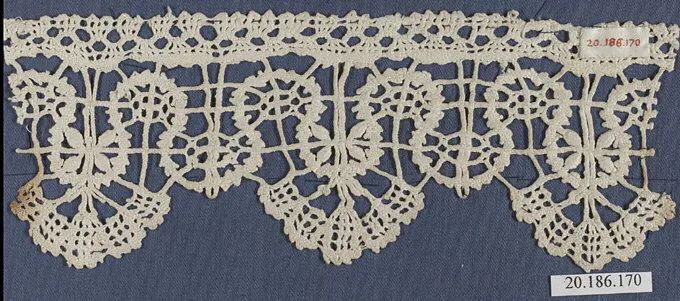
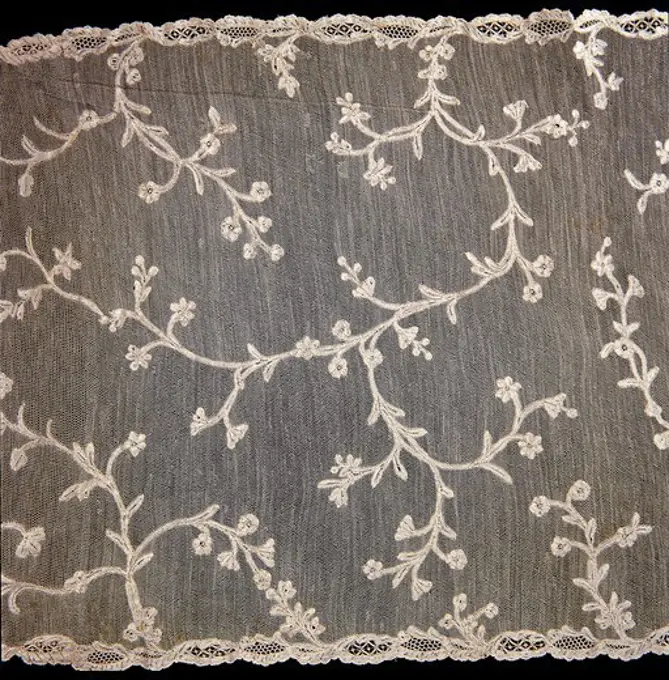
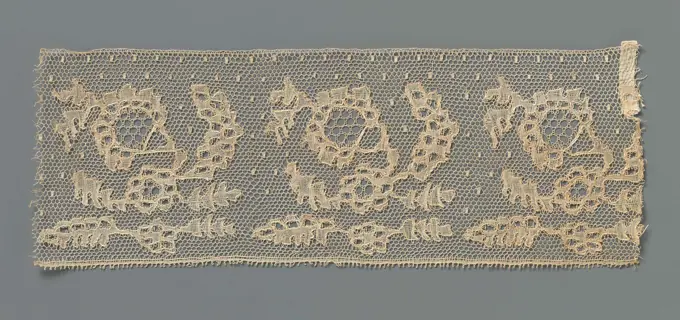
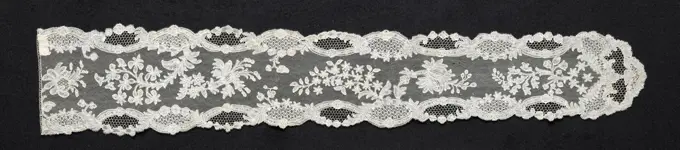
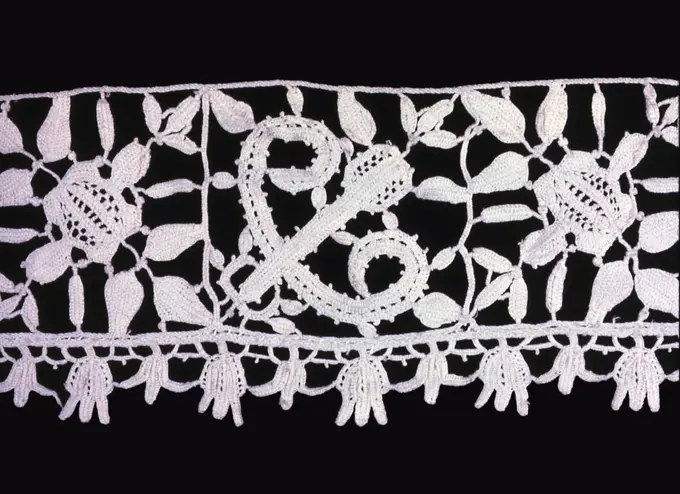
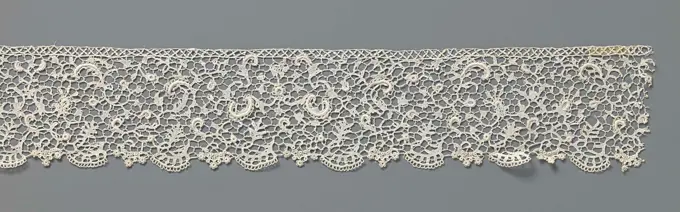
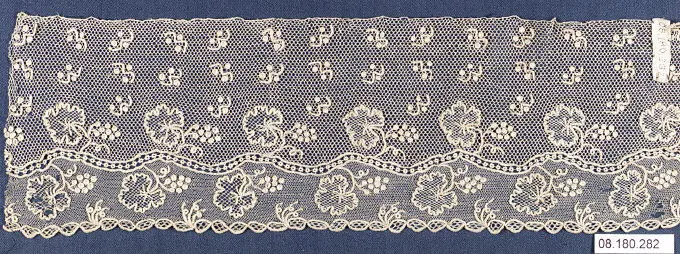
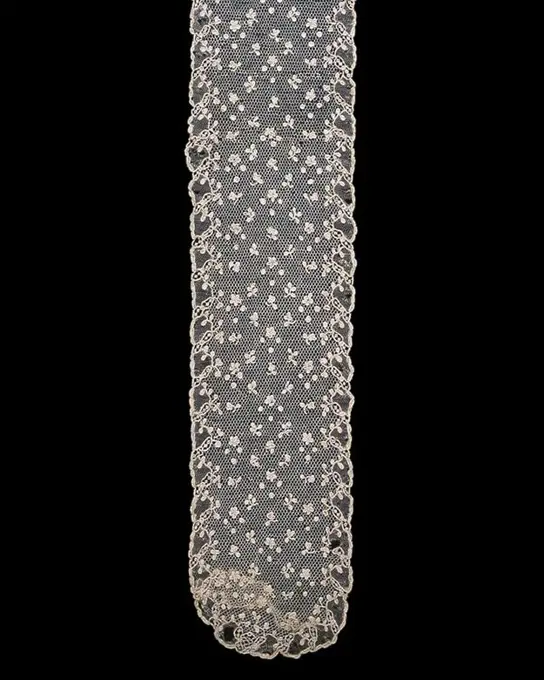
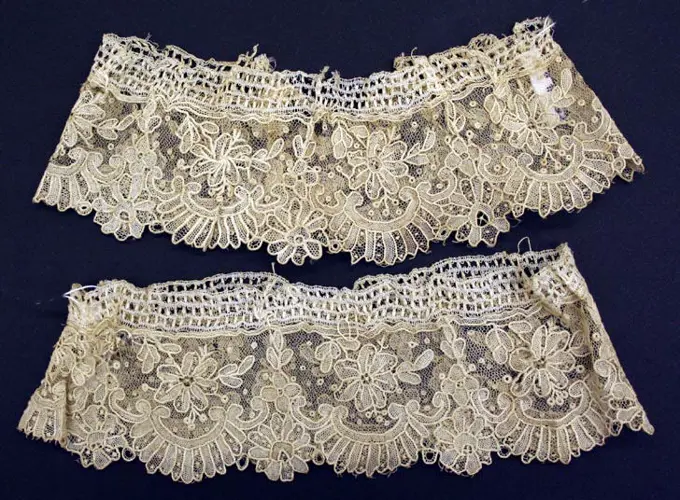
A collection of intricate bobbin lace fragments featuring floral and ribbon-like designs, showcasing craftsmanship from 17th to 19th century Europe. Delicate, detailed patterns on linen.

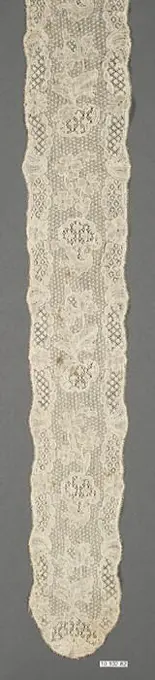
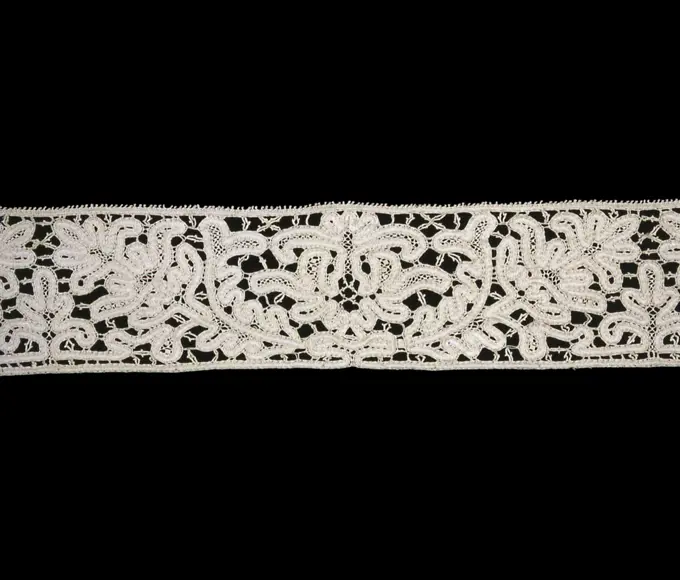
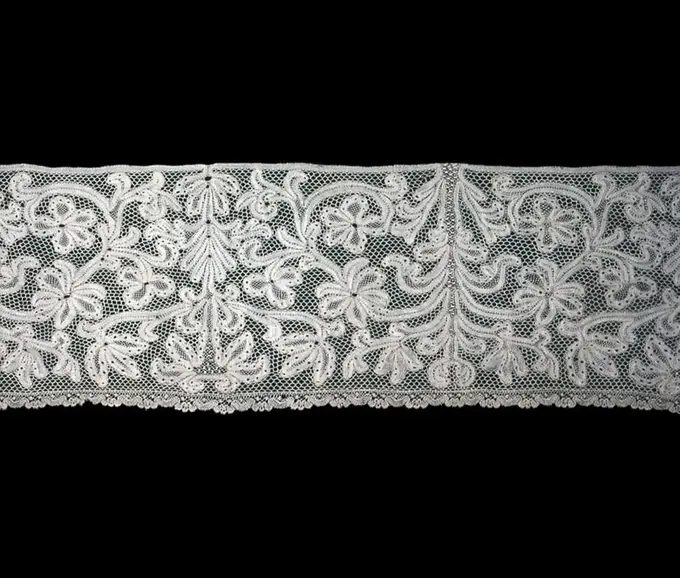
Strip bobbin with rocailles, anonymous, c. 1880 On the traly land, a Mechelen soil (also known as ice soil), is a running pattern of large rocailles with grid filling, which are connected to a double branch, which is decorated in the same way, connected to a double branch. Wingerd leaves grow on the standing side branch, roses and carnations grow on the horizontal. Mechelen side. Belgium linen (material) bobbin lace / Mechlin (lace) On the traly land, a Mechelen soil (also known as ice soil), is a running pattern of large rocailles with grid filling, which are connected to a double branch, which is decorated in the same way, connected to a double branch. Wingerd leaves grow on the standing side branch, roses and carnations grow on the horizontal. Mechelen side. Belgium linen (material) bobbin lace / Mechlin (lace)
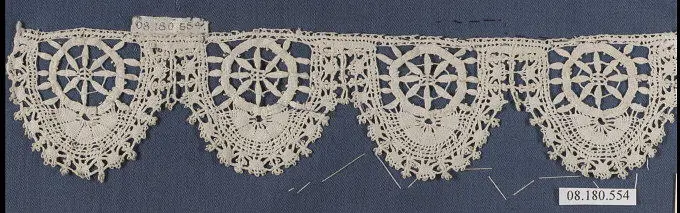
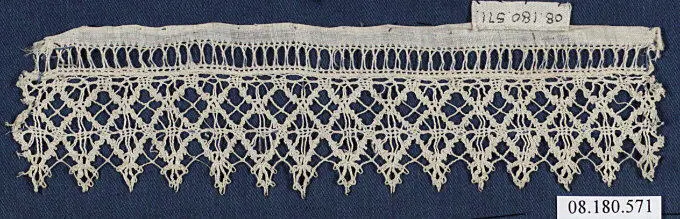
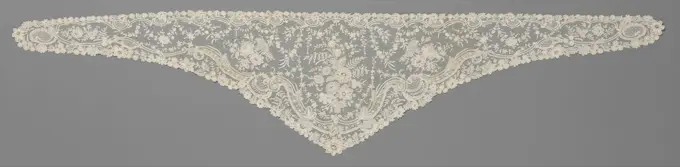
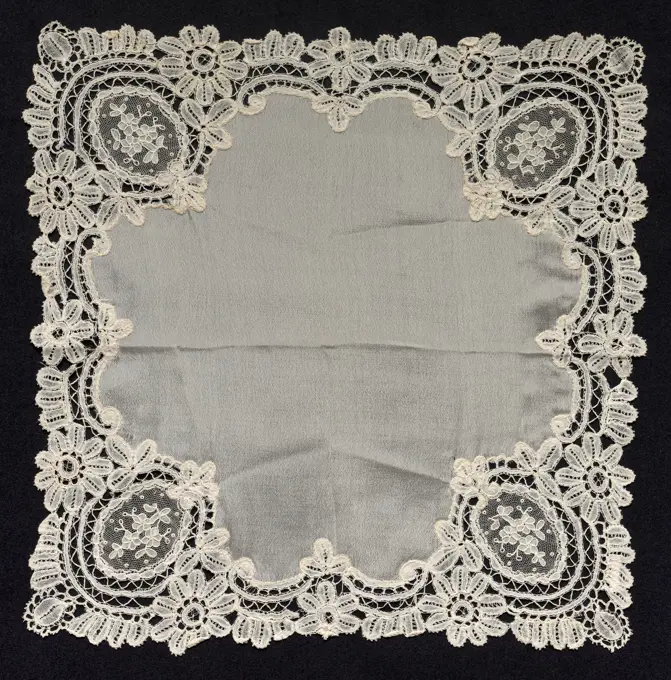
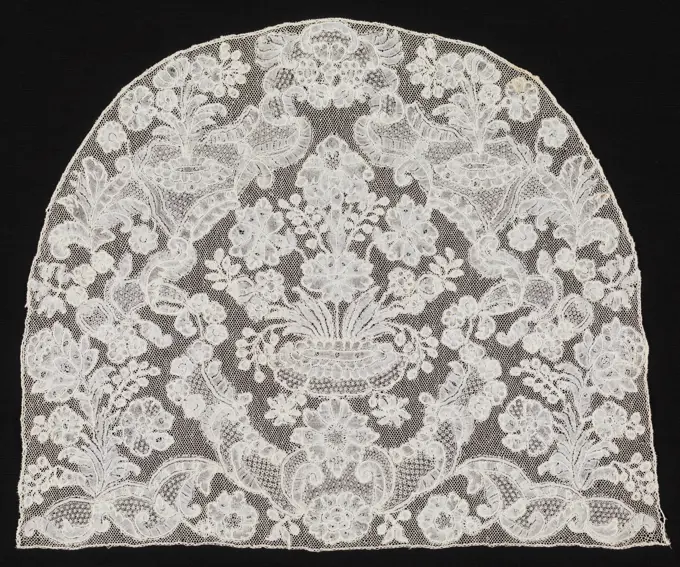
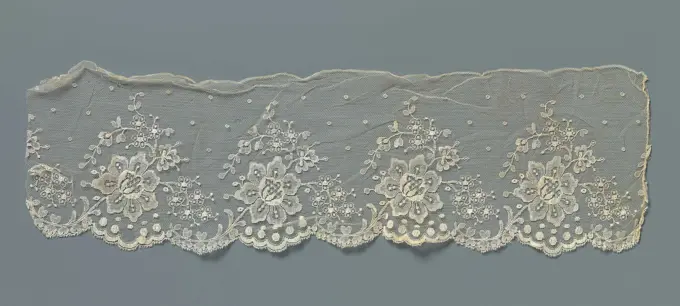
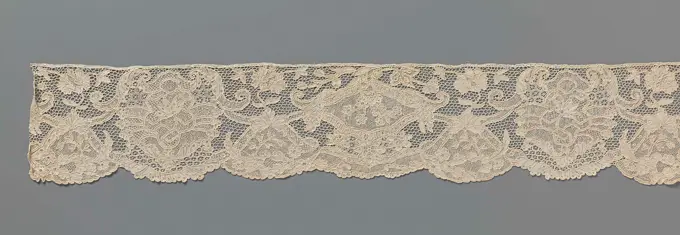
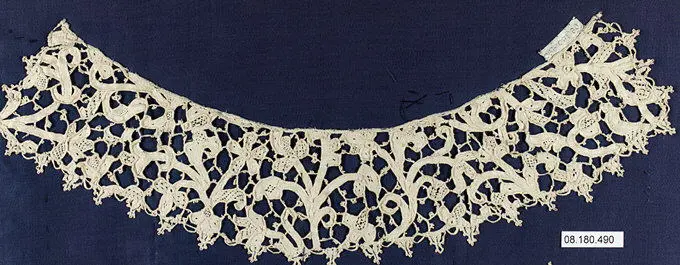
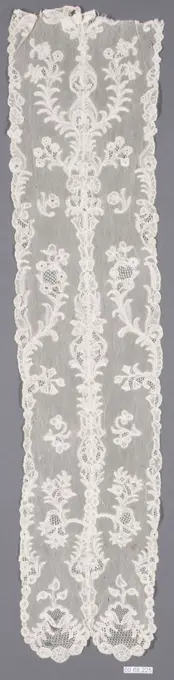
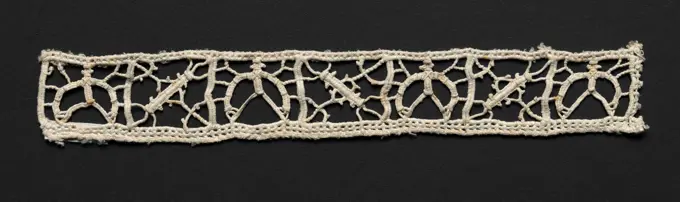
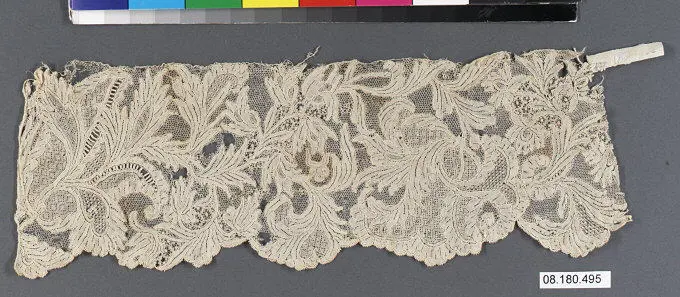
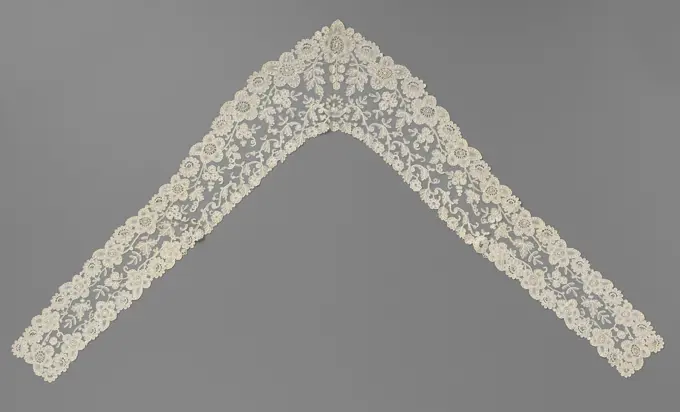
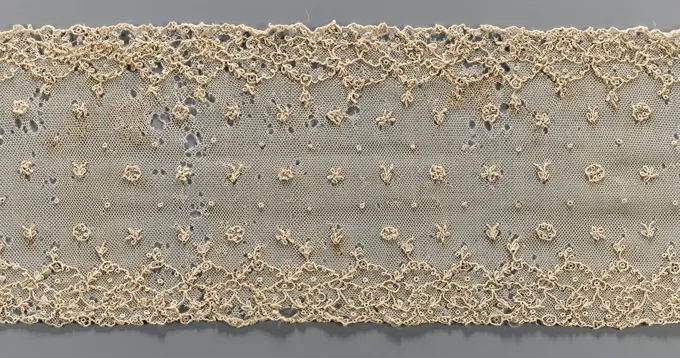
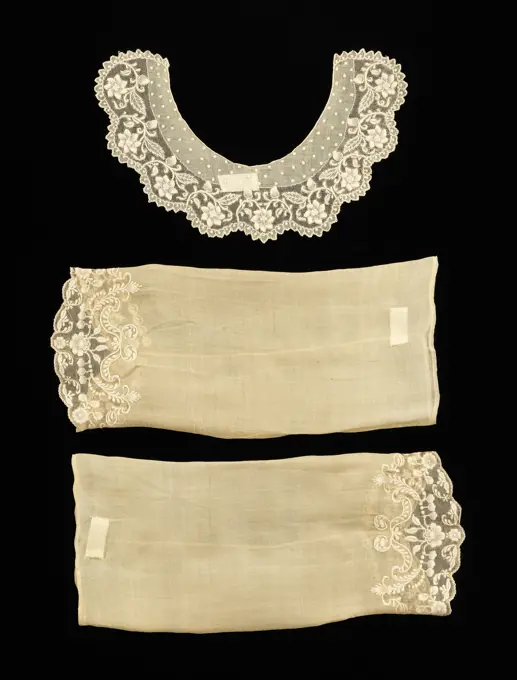
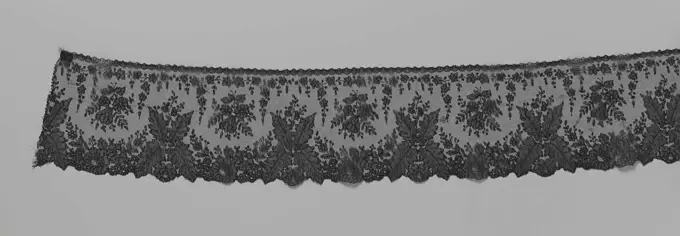
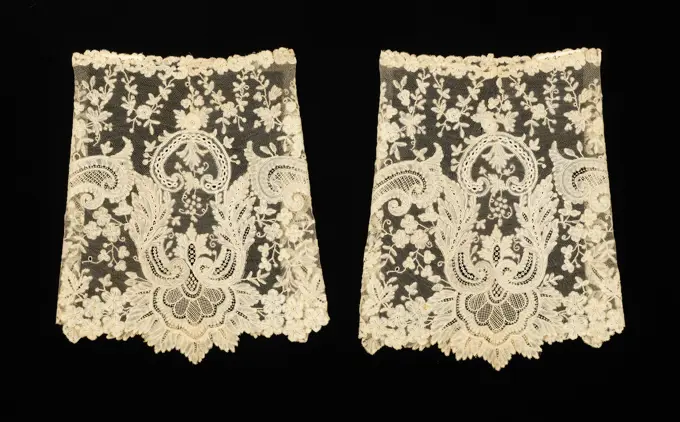
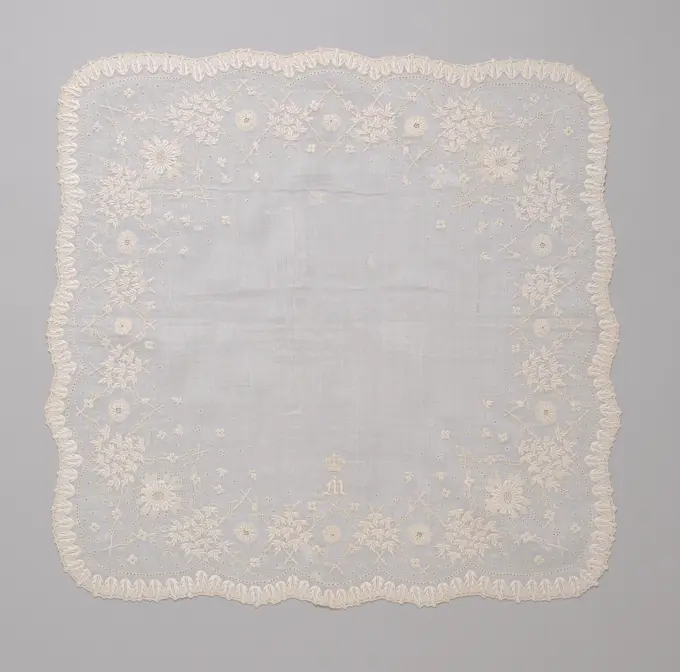
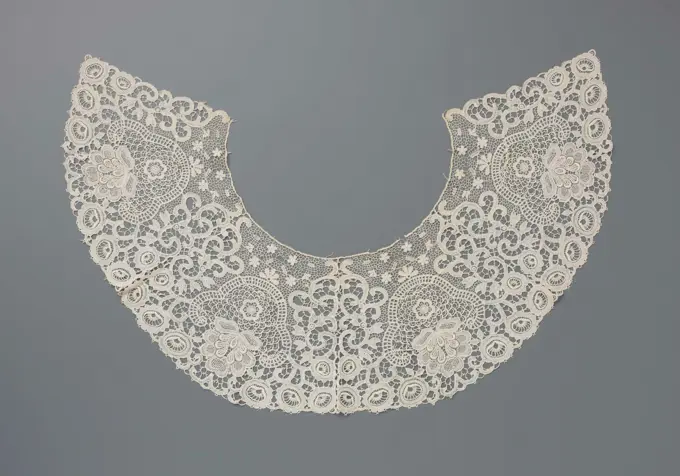
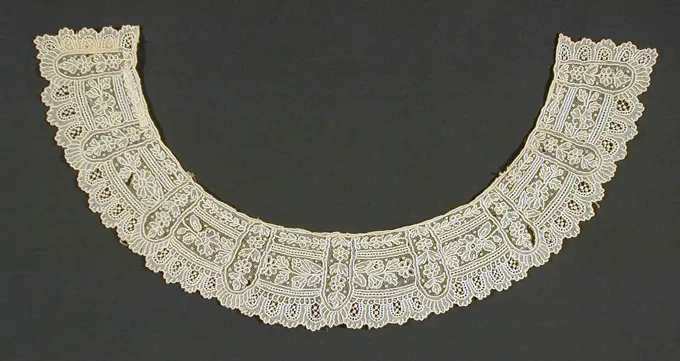
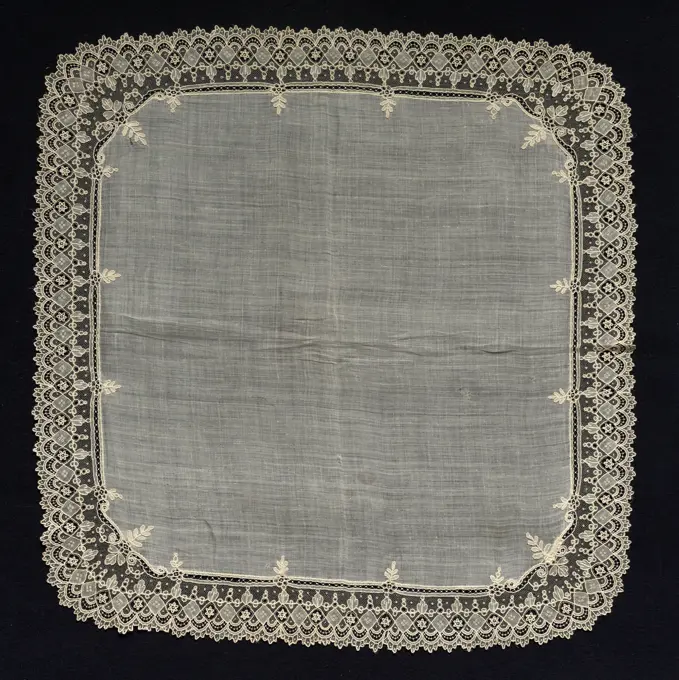
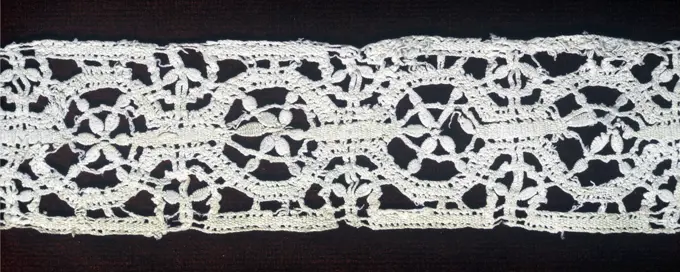
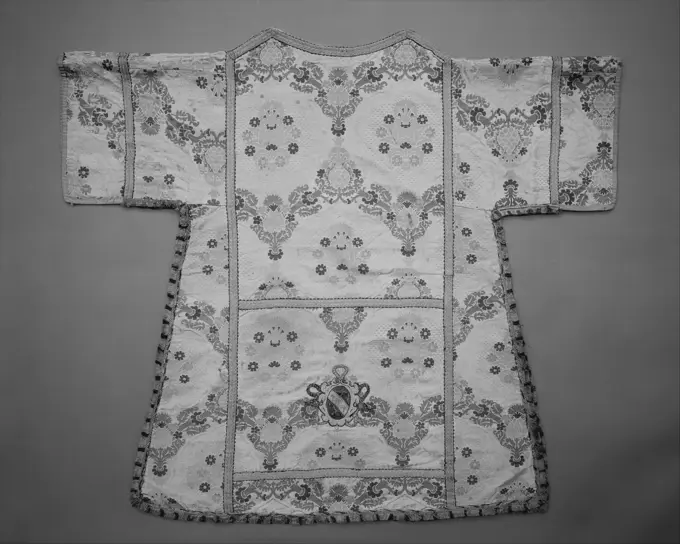
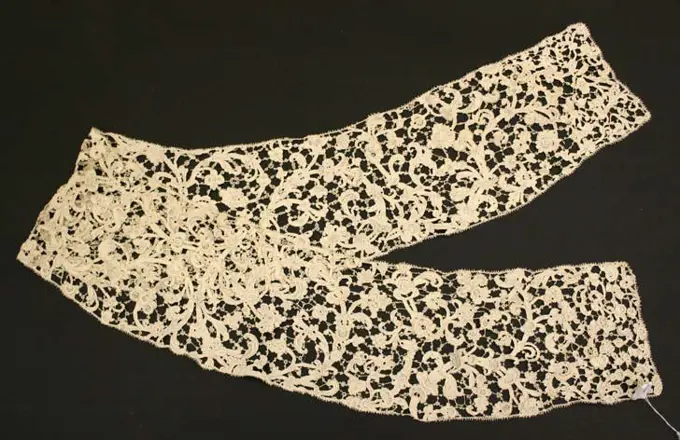
Bobbin Lace Edging, 18th century. France, Valenciennes, 18th century. Lace, bobbin: linen; average: 2.3 x 17.5 cm (7/8 x 6 7/8 in.).Border, Technique: bobbin lace appliqué on machine net, Applique of bobbin lace, free-standing floral border. Early 19th century Honiton on machine net edge., England, early 19th century, lace, BorderStrip of needle side with cornflowers, anonymous, c. 1800 - c. 1820 Two -thirds of the width is filled with a spreading pattern of falling cornflowers on a coarse soil (of flooded bars). A third of the width forms a right-winged outer edge (with a single alençon soil), lined with two pearl lists, and decorated with a horizontal flank of stretched stalks, each with three cornflowers, which are always in the same direction. Alençon side. France linen (material) Alençon Lace Two -thirds of the width is filled with a spreading pattern of falling cornflowers on a coarse soil (of flooded bars). A third of the width forms a right-winged outer edge (with a single alençon soil), lined with two pearl lists, and decorated with a horizontal flank of stretched stalks, each with three cornflowers, which are always in the same direction. Alençon side. France linen (material) Alençon LaceInsertions and edging 17th century Italian. Insertions and edging 228775Edging 17th century Italian, Genoa. Edging. Italian, Genoa. 17th century. Bobbin lace. Textiles-LacesLaces, 18th century. Milk net scarf with Burano stitch (Punto Burano) lace peach blossoms-shoots.Strip 18th century Italian, Burano. Strip. Italian, Burano. 18th century. Needle lace. Textiles-LacesStrook kloskant met schuin geplaatste grillige bloem.Strip natural colosside, Lille side. The repeating pattern consists of a whimsical branch with a rosette flower between two horizontal leaves, from which a larger sloped flour or fruit springs and a curved leaf. Law under the branch is a comparable rosette flower between two horizontal leaves, but without the larger flower and the leaf. A narrow straight band runs along the underside. The motifs are connected by a maas land, a tulet, strewn with square moes. The motifs are made in linseed with large recesses and with thicker and shiny contour wires. A rose soil has been applied as ornamental ground. The Moeses are made in shape stroke. The top and bottom of the strip are straight finished, the underside with picots.Cape. Culture: French. Dimensions: L. 62 1/2 x W. 41 inches (158.8 x 104.1 cm). Date: mid-18th century. Museum: Metropolitan Museum of Art, New York, USA.Bobbin Lace (Point d'Angleterre) Lappet, 18th century. Belgium, Brussels, 18th century. Lace, bobbin: linen; average: 59.1 x 10.2 cm (23 1/4 x 4 in.).Fragment of lace. unknown, authorBobbin Lace (Appliqué) Collar, early 19th century. Flanders, early 19th century. Lace, bobbin; overall: 51 x 52 cm (20 1/16 x 20 1/2 in.).Fragment 17th century Italian. Fragment 214904Fragment of crocheted side with sprig and star-shaped flower. Fragment natural colored Irish crochet side. Pattern where a source of flour with a rosette flower and several elongated leaves are interspersed by a hanging star-shaped flower on a short stem without leaf. Crochet diamond-shaped Maas soil with picots. The top is finished with a straight edge. The wavy lower edge is deposited with picoted three-part arcs.Strip of needle side with spindly flowers, anonymous, c. 1875 - c. 1909 Strip of natural -colored Venetian needle side "Gros Point". On an open bar of land there is a running slender with multifaceted small flowers, which are set with spindly, strongly curved petals. The richly varied leaf voltues are also strongly curved. BURANO linen (material) Venetian gros point (heavy raised Venetian lace) Strip of natural -colored Venetian needle side "Gros Point". On an open bar of land there is a running slender with multifaceted small flowers, which are set with spindly, strongly curved petals. The richly varied leaf voltues are also strongly curved. BURANO linen (material) Venetian gros point (heavy raised Venetian lace)Fragment 17th century Italian. Fragment 214921Bed curtain border second quarter 19th century Russian. Bed curtain border. Russian. second quarter 19th century. Linen, silk. Textiles-LacesFichu of mixed side with bouquet with blue-bells, anonymous, c. 1850 - c. 1870 Fichu of natural -colored mixed side: Brussels bobbin side with a needle -seal, a fine mesh side. This type of lace is also known under the name: Point d'Angleterre. A triangular widened back piece runs in narrow, rounded points. A wavy ribbon filled with slices runs around, which is wide in the tip and narrow in the upper edge. The ribbon is composed of rocailles and C-Voluten. The butien edge consists of florets with paved hearts. The back piece has a mazennet (needle side) littered with mosjes, on which a large bouquet of three large rosette flowers and in the top two branches of Blue-Bells or Boshyacinthen. Fine garlands hang off from the top edge. Brussels linen (material) mixed lace / Brussels bobbin lace Fichu of natural -colored mixed side: Brussels bobbin side with a needle -seal, a fine mesh side. This type of lace is also known under the name: Point d'Angleterre. A triangular widened back piece ruCap crown. Date/Period: 18th century. Cap crown. Medium: linen. Technique: bobbin lace. Author: UNKNOWN.Bobbin (Duchesse) and Needlepoint Lace Handkerchief, 20th century. Belgium, Brussels, 20th century. Crêpe de chine with border of bobbin and needlepoint lace; average: 30.5 x 30.5 cm (12 x 12 in.).Cap Crown (Belgium); linenFragment of the lace;  XVII century (1601-00-00-1700-00-00);Strook machinale kant met grote roos en stippen in schulpenrand.Strip natural-colored machining. Between a spreading pattern of moes, it consists of a large rose along the underside. Out of the rose rises on one side and a fine branch with forget-me-staples and heart-shaped leaves at the top. The stem of the rose is oblique and bends to a six-flat lobes shell, formed by the leaves. The successive tubes that are formed in this way by the rose gel are connected to each other by a five-flat lobes. There is a dot in every lob. The top of the strip is straight finished.BorderKloskant handkerchief with the hanging lilies, anonymous, c. 1890 - c. 1910 A lace edge with a stock of ice ground runs around a cross -shaped batist. Two profile tires filled with gridwork, in rights and round parts, frame a fine mesh stock on which Overshoekse Schulpen are located. In the corners there is a rosette branch between three hanging lilies and a fine pendulum. Mechelen side. Belgium linen (material). batiste. bobbin lace A lace edge with a stock of ice ground runs around a cross -shaped batist. Two profile tires filled with gridwork, in rights and round parts, frame a fine mesh stock on which Overshoekse Schulpen are located. In the corners there is a rosette branch between three hanging lilies and a fine pendulum. Mechelen side. Belgium linen (material). batiste. bobbin laceStrip bobbin with star and crescent, anonymous, c. 1900 - c. 1929 Strip of black bobbin, cluny side. Symmetrical design with deep scoops and a braid ground. Each shell is filled with an eight -pointed star that is comprised by a lying half moon at the bottom. The scrap edge is finished with arcs and fine dots of potented braids. The top of the strip is straight finished. France (possibly) silk bobbin lace / Cluny lace Strip of black bobbin, cluny side. Symmetrical design with deep scoops and a braid ground. Each shell is filled with an eight -pointed star that is comprised by a lying half moon at the bottom. The scrap edge is finished with arcs and fine dots of potented braids. The top of the strip is straight finished. France (possibly) silk bobbin lace / Cluny laceFragment, Medium: linen Technique: bobbin lace (Valenciennes ground), Band of Milanese-style lace in a scroll pattern., Italy, 18th century, lace, FragmentStrook naaldkant met hangende rozentak in ruit.Strip natural needle side: Argertella side. Pattern with a variety of two large, composite main motifs on a soil with picoted hexagonal meshes, which are close naid with buttonhole stitches. One of the main motifs is a diamond shape with a hanging rosary branch. Under the window, where three deeply incised leaf volutes hang over, three star-shaped flowers. Full work with recesses and many different ornamental grounds, including the double hexagonal diamond floor with the patch eyes typing for the Argertella side. The top is trimmed with a border clamping side. Bottom edge with scalloped arches.Collar late 17th century Italian. Collar 214840Border Made 1575-1625 Italy. Linen, needle lace worked on a laid and plaited thread grid with detached points .Strip clamp side with a three-leaf. On a fine mesh network there is a stiff row of three-part leaves in the outer half, which are unilaterally directed. A straight edge shows smaller, oppositely directed flower branches. Valenciennes side.Insertion 16th-17th century Italian, Venice. Insertion 221037Strook naaldkant met gekordoneerde c-vormen.Strip natural needle side, point de france. Repetitive motif with whimsical thin tanks to which different croeded C-shapes and some Corned circles. Hexagonal soil with picoted bars. Full work with recesses and largely without relief, on the cordon. Slip edge on the underside with alternating a bowed arc and a triangle that is made up of small crooked circles. The top is trimmed with a straight edge needle side with crosses.Strook kloskant met vierlobbig rozet boven en onder een zigzag-band.Strip natural colosside, blonde. The repetitive and continuous pattern consists of a zigzag band, which divided the strip into triangular fields. There is a quadruped rosette in the center of each field. Along the top and bottom of the strip a sculpture runs, which consists of a concatenation of circles. The crafts are finished with picots. The motifs are connected by a coarse mesh soil, strewn with square moes. The zigzag band, rosettes and circles edges are made in linen stroke, whereby the rosettes are equipped with a contour wire.Band (Italy); linenFragment 18th century French. Fragment. French. 18th century. Needle lace, point dAlençon. Textiles-LacesCollar ca. 1861 probably European. Collar 110134Batist handkerchief with three flower branches in each corner made in shade work and around a border female side, anonymous, c. 1840 - c. 1860 Natural Batist handkerchief with embroidery and a border bobbin: Flanders side. The embroidery is located in the corners and along the edges. There are three flower branches in each corner, flanked by two smaller ones. In two corners a large chalice flower between branches with forget-me-nots. In the other corners a large rosette flower between finer branches with carnations. The diagonally opposite corners are the same. Along the entire side, a regularly wavy slinger of openwork forget-me-nots and vulner leaves runs. The bobbin bobbin is smooth along the sides and sewn on the handkerchief in the corners. It has a repeating pattern with two broad symmetrical compositions. One composition consists of a rosette flower under an arc on the bottom. The other composition consists of a cloud along the bottom from which a heart -shaped flower originatesFragment 17th century Italian, Genoa. Fragment 220931Border Italian, Genoa 19th centuryTowel border 1800-1850 Russian. Towel border 173384Lace, 1800s , Italy, maker unknown. Gift of Mrs G. Acland Allen, 1955.Trimming; linenBorder; linenDress of linen with edges Needle side with suns, Anonymous, 1930 - 1935  Dress of linen with natural needle side: nanduti work. Square model with a square centerpiece of linen two edges/frames work with extended threads with needle side motifs. In the inside list there are small motifs, bows or butterflies in the corners, in the needle side. In the outside list, three suns are in the needle side per side and a slightly larger sun in a needle side in each corner. The linen rug is finished all around with seams. West India  sun laceLappet. France. Date: 1780-1789. Dimensions: 77.0 × 11.4 cm (30 1/4 × 4 1/2 in.)Height repeat: 3.8 cm (1 1/2 in.). Linen, needle lace of a type known as "Point d'Argentan" with whipped mesh ground. Origin: France. Museum: The Chicago Art Institute, Chicago, USA.Lappets (2) 18th century Flemish, Brussels. Lappets (2) 218163Hat-slip (barbe) from Valenciennes side, anonymous, c. 1700 - c. 1750 Barbe van Valenciennes side. The pattern has flowers and tendrils on a ground of diamond -shaped meshes. The Schulprand is trimmed with picots. France linen (material). Valenciennes lace Barbe van Valenciennes side. The pattern has flowers and tendrils on a ground of diamond -shaped meshes. The Schulprand is trimmed with picots. France linen (material). Valenciennes laceFragment of lace. unknown, authorNeedlepoint (Reticella) Lace Insertion, 17th century. Italy, 17th century. Lace, needlepoint: linen; overall: 3.2 x 22.2 cm (1 1/4 x 8 3/4 in.).Bridal veil made of lace pledger on tulle with edge pattern with flower branches and feathers, anonymous, c. 1825 - c. 1835 A bridal veil made of lace border border, tuledoor stop work. Rectangular model with a one -sided focused pattern of a curved spring along all edges, which encloses a flower branch. The scoops are filled with Margrites and leaves. Netherlands linen (material) embroidering A bridal veil made of lace border border, tuledoor stop work. Rectangular model with a one -sided focused pattern of a curved spring along all edges, which encloses a flower branch. The scoops are filled with Margrites and leaves. Netherlands linen (material) embroideringYoke (For Child's Dress) Made 1890 United States. Linen, plain weave; embroidered in padded satin, straight overcast, buttonhole, back and seed stitches; punched work in curved lines resembling hemstitching; overcast eyelets .Fragment 18th century Italian. Fragment. Italian. 18th century. Needle lace. Textiles-LacesCape of applicationant with switchband. Cape of natural application side, dick edge and single needle side applicated on machine tulle. A circular model shows a whimsical scalloped circumference of a large chestnut leaf, alternated with a dahlia. Within this edge, a switching belt of stretch six-sided links (needle side) runs connected by a diamond shape of braid. Midfield, which is littered with large meadows in the form of sequins, shows three large bouquets, including with a tulip whose numerous leaf garlands depend. These garlands form the connections with four intermediate smaller bouquets. Many windows cross each other along the neckline and the front edges.Edging French, Mirecourt 19th centuryHandkerchief with a rim of needle side with amorettes, anonymous, c. 1830 - c. 1840 Handkerchief with a border of natural -colored needle side: Brussels mesh side. A wide edge lace runs around a round batist with an almost symmetrical pattern. In a circle there are sixteen open worked peaks on an extremely fine, with mosjes covered stock. A wide, accolade -shaped branch runs along the sides, based on a motif formed as a French lily, that cuts the circle of the batist. The branches turn into a circular shell prand of palmflowers. In the corners there are large pointed and two lobe ornaments decided in the corners. In one of the corners there is an oval shield with a t, enclosed by a roller work cartouche and gedekt by a crown. On the left is a winged amoret with an arrow in the raised hand, the point of which is directed down and that continues up in a slender and a torch. In the other corners there is an amoret climbing in an asymmetrical spiral rank. Germany (possibly) linen (materialCollar of mixed side with the closed floral edge for a décolleté. Collar of natural mixed side: Brussels climbing side in combination with a needle lace ground, a fine mesh side ground. This type of side is also known as the name: Point d'Angleterre. A pointed backpiece gradually in square ends. The closed edge is formed by a wavy branch, to which alternating a five-breeding rosette (spool and needle side) with one extended petal and an anemone (clamping side). On the fine Maas soil is an airy row of winger leaves and flower rats.Border, Technique: bobbin lace, Bobbin lace joined, scrolling brackets and leaves; mid-18th century Valenciennes Fond, mid-18th century, lace, BorderTextile, Medium: cotton on piña cloth (pineapple fiber) Technique: embroidered, Square piece of fabric possibly a shawl end or sleeve panel embroidered in a design of a plant in a basket alternating with a leaf and scroll motif. Narrow bobbin lace border on three sides., Philippines, 19th century, embroidery & stitching, TextileInsertion 17th century Italian, Genoa. Insertion. Italian, Genoa. 17th century. Bobbin lace. Textiles-LacesFragment of lace. unknown, authorBarbe early 18th century Flemish. Barbe 218830Fragment of the lace;  1. PO. 19th century (1801-00-00-1850-00-00);Accessory set ca. 1850 Philippine The production of pineapple cloth is specific to the Philippines and West Indies. Woven by hand from the leaf fiber of the pineapple plant, and embellished with intricate embroidery, this highly valued fabric was fashioned into clothing and accessories that were a part of the traditional Filipino cultural heritage for centuries. Exportation to Europe and America started early, but became widespread during the 19th century, when it was promoted by Christian missionaries. The exported items, fashioned for both men and women, were highly prized for their beauty and novelty.. Accessory set 156931Japonstrook van kloskant met varens.Japon strip from black climbing side: Chantilly side. On a blank mesh stock is a closed edge with slot, filled with a garland of flowers and leaves. On the intersections there is a small shell with a hanging rose, above which a striker bouquet rises from four large fern leaves and a flower branch, which reaches the top edge. Here a horizontal ivy drink with hanging twigs runs, while a large bouquet depends on the large scallop of this ivy drink, among other things with a tulip.Cuffs mid-19th century Flemish The lace is an exceptionally fine example of mid-19th century lace-making. The lyrical design of curling beautiful overall appearance of these cuffs is from the curling feather plume pattern and scrollwork is graceful and lyrical; varied detailed motifs and fillings; beautiful overall appearanceCuffs were conceived and fashioned as three-dimensional unit, no seamAccession record date is mid 18th century, but lack of nuance and construction suggests later date.. Cuffs 156601Border Made 1650-1700 Italy. Linen, bobbin part lace .Strip Machine side with a row of hanging daisies along the underside, anonymous, c. 1880 - c. 1899 Strip of natural -colored machine side: Machinal Mechelen side. Under a spreading pattern of three rows of leaves, the repeating pattern consists of stalking of a row of bent stalks along the bottom of the strip that always hangs one daisy down. Two smaller flowers or leaves on the stem are upset. The motifs are equipped with thicker and shiny contour threads and are connected by a fine mechanical Mechelen soil. A decorative land has been used in the Bloemharten, a machine rose ground. The top of the strip is straight finished. The scrap edge along the bottom is finished with picots. Europe cotton (textile) Strip of natural -colored machine side: Machinal Mechelen side. Under a spreading pattern of three rows of leaves, the repeating pattern consists of stalking of a row of bent stalks along the bottom of the strip that always hangs one daisy down. Two smaller flowers or leaves on the steBorder (Italy); silkBorder Made 1750-1775 Italy. Linen, bobbin part lace; continuous clothwork tapes .Lace laceHandkerchief 1840-80 French or Swiss. Handkerchief 236963Oval dress of edge embroidery on machine tulle with rosette flowers. Oval dress of natural-colored edge embroidery on machining tulle, tulle embroidery. Symmetrical pattern with rosette flowers and feathered leaves. Finish with a braided edge with picots.Piece 18th century Flemish. Piece 214478Collar of machining with four inverted flower pots with fan flower. Collar of natural machine side: Etkant, imitation of needle side. The wide collar forms almost two-thirds of a circle. Symmetrical pattern with four inverted flower pots with a large range-shaped flower on two leaves. A pattern of curly tendrils has been placed between the consecutive flower pots, which ends along the outer edge with a row of a total of six oval flowers. The tendrils are interconnected by a picoted bars soil. On the inside of the collar, the motifs are connected by a finer maas soil, with a scattering pattern of rosette flowers. In the flower pots an ornamental soil has been applied with a scented structure. The contours of the flower pots have a railroad pattern. All motifs are equipped with contour wires. The largest flowers are equipped with relief contours in the flower hearts.Pair of cuffs Unknown, Nidecka studioBorder Fragment (Italy); linenWoman's Collar. Belgium, Brussels, mid-19th century. Costumes; Accessories. Cotton point de gaze needle laceNeedlepoint (Point de France) Lace Edging, 20th century. France, 20th century. Lace, needlepoint: linen; average: 11.5 x 55.3 cm (4 1/2 x 21 3/4 in.).Fragment, Medium: linen Technique: bobbin lace, Fragment of Valenciennes lace has a branch with leaves and flowers., France, late 18th century, lace, FragmentTrimming (possibly Spain); metal strip, metal strip wrapped around silk coreCap Streamers (France); linenFlounce. Probably Northern Italy or Hungary. Date: 1701-1750. Dimensions: 25 x 354.5 cm (9 7/8 x 139 1/2 in.)Width repeat: 43.8 cm (17 1/4 in.). Linen, bobbin part lace. Origin: Italy. Museum: The Chicago Art Institute, Chicago, USA.Strip bobbin with Parisian soil, anonymous, c. 1800 - c. 1899 Strip of natural-colored bobbin, Buckingham side. The strip consists of a Maas soil, a Parisian soil, with a single one at the top and a double strap in linen battle at the bottom. The straps are very narrow and finished with picots on the underside of the strip. Buckingham cotton (textile) bobbin lace / Bucks point (lace) Strip of natural-colored bobbin, Buckingham side. The strip consists of a Maas soil, a Parisian soil, with a single one at the top and a double strap in linen battle at the bottom. The straps are very narrow and finished with picots on the underside of the strip. Buckingham cotton (textile) bobbin lace / Bucks point (lace)Batisten zakdoek met borduurwerk en een strook machinale kant.Natural batist handkerchief with a machine side intermediate side by machine: machine tote stitch on machine tulle. The handkerchief is dropped off with a narrow edge machine side. In the corner along the intermedies, the handkerchief is decorated with (machine) Embroidery - whiteware with plethus - and with tulle inserts in openwork parts. The embroidery pattern in the corner is symmetrical and consists of two openwork leaves that form a V shapes and between which some skellar flowers rise up. At the top of each cutter blade releases a branch with three openwork rosette flowers and plumes. The handkerchief is marked with a cotton label, on which the figure 77 is embroidered with red wire (machine).Flounce or Border Made 1850-1900 Germany. Linen, bobbin part lace .Cap, Medium: linen Technique: bobbin lace applique on needle lace ground (applied lace), Lace ground with applied motifs in the design of cupids and floral sprays., Belgium, late 18th century, lace, CapNeedlepoint (Point de Gaze) Lace Handkerchief, 19th century. Belgium, Brussels, 19th century. Linen center with narrow edging of needlepoint lace edging; average: 36.9 x 36.9 cm (14 1/2 x 14 1/2 in.).Band; linen; Bequest of Marian Hague; 1971-50-356Batist rug or handkerchief with embroidery and open sewing with square meshes in flame -shaped flowers, anonymous, c. 1750 - c. 1799 Dress or handkerchief made of natural (ramie) Batist with embroidery - whitework and lace plunge: work with pulled threads together. Square model. Threads have been pulled out along the edges and fixed with thicker threads, creating a straight list of square meshes around the rug. Within the frame, the edges are embroidered: a symmetrical pattern with wavy tendrils with leaves and some large and smaller flowers in the shape of a flame. The same open sewing work is used in these flowers as in the list around the rug. In each corner there is one large flame flower that is placed overhoeks and there are three embroidered ribbons underneath. The midfield is round. Europe batiste embroidering Dress or handkerchief made of natural (ramie) Batist with embroidery - whitework and lace plunge: work with pulled threads together. Square model. Threads have been pulleLappet (one of a pair) mid-18th century Flemish, Brussels. Lappet (one of a pair) 222789Edging 19th century British, Buckinghamshire. Edging. British, Buckinghamshire. 19th century. Bobbin lace. Textiles-LacesDalmatic late 15th-early 16th century Italian. Dalmatic 221828Scarf of black dick side with rose bouquets and a meandering line in the lower point. Scarf of black climbing side: Chantilly side. Triangular model. Along the top edge of the scarf, the continuous and repeating pattern consists of four chali flowers between five rounded triangular motifs on a straight line, interspersed by five leaves on the same continuous line that forms an arc here. Parallel under this line with arcs, a list of consecutive rings runs, below followed by a flower garland with the bouquets with roses. The two sloping sides of the scarf have a similar edge pattern, but with larger motifs, which are increasingly increasing to the point. There is a large A-symmetrical bouquet in midfield. This bouquet is flanked towards both scarves by three bouquets. Under the central bouquet, a rose bouquet with ascending branches, which includes the central bouquet at the bottom with roses and forget-me-staples. Along these side branches a double meandering list of straight corners, wCollar ca. 1890 Belgian. Collar. Belgian. ca. 1890. cottonCollar 17th century probably Italian. Collar 119063Cuffs 19th century Belgian. Cuffs 119779Crocheted side with flowers and grape bunches, anonymous, c. 1890 - c. 1909 Strip or support piece with two sharp corners of natural -colored Irish crocheted side. Pattern with flowers and grape bunches and a crocheted irregular mesh soil with picots. On the outside, the semi -circular scallops are trimmed with picoted arches. The inside is finished with a straight edge. Ierland (possibly) cotton (textile) Strip or support piece with two sharp corners of natural -colored Irish crocheted side. Pattern with flowers and grape bunches and a crocheted irregular mesh soil with picots. On the outside, the semi -circular scallops are trimmed with picoted arches. The inside is finished with a straight edge. Ierland (possibly) cotton (textile)Fragment 18th century German, Saxony. Fragment 215243Border (Belgium); linen