Historical Lace Fragments

A variety of intricate lace fragments from different centuries, showcasing detailed patterns and craftsmanship in cotton and silk.

Strip bobbin with triangular fields and stylized chalice, anonymous, c. 1600 - in or before 1879 Strip of natural -colored bobbin. The repeating pattern consists of two varied triangular fields. One field is formed by a straight down, stylized chalice of chalice between two leaves. The other triangular field is formed by the space between two consecutive fields with chalices. There is a more or less Christmas tree -shaped motif in this field. The motifs are connected to each other by a coarse diamond-shaped Maas soil, a lace-hole stroke-grid, strewn with square mosies. The motifs are made with thick contour threads and regularly winding braided straps. The Mosjes are made in form. Top and bottom of the strip are straight finished, with the bottom with picots. Karlberg Palace (possibly) linen (material) bobbin lace Strip of natural -colored bobbin. The repeating pattern consists of two varied triangular fields. One field is formed by a straight down, stylized chalice of chalice between
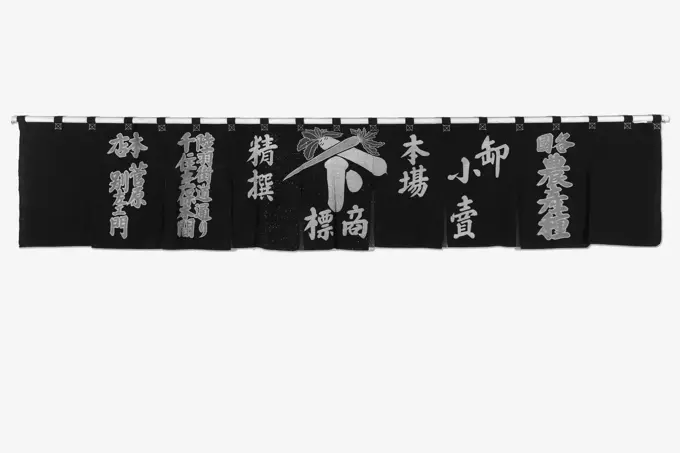
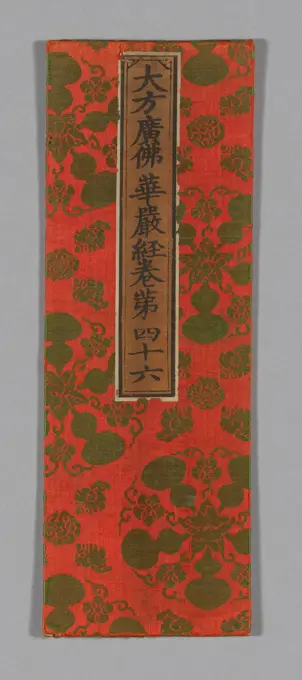
Border Made 1875-1900 Belgium. Cotton, mixed lace of a type known as Application d'Angleterre ; bobbin lace motifs on a needle lace mesh ground .Noren (Shop Curtain) , 19th century. Indigo-dyed cotton cloth, 24 x 116 in. (61 x 294.6 cm).   Asian Art 19th centuryFan Case early 19th century China. Fan Case 70247Border, Flocked, Yellow rose bunch on green ribbon or rod, with gray stripes. Printed two across., France, ca. 1850, Wallcoverings, BorderBorder (France); block-printed on handmade paperTrimming, Medium: silk Technique: woven, Yellow trimming fragment in a design of lozenges, placed horizontally and vertically between borders; picot edges., France, 19th century, trimmings, TrimmingBracelet ca. 1981-1640 B.C. Middle Kingdom. Bracelet. ca. 1981-1640 B.C.. Faience, Paste. Middle Kingdom. From Egypt, Memphite Region, Lisht North, Tomb 954, Burial 954i, MMA excavations, 1921-22. Dynasty 12-13Fanière brothers, six flagship bracelet (main title). Graphite and gouache on gray cardboard. Petit Palais, Museum of Fine Arts of the City of Paris.Trimming, Medium: silk Technique: cut supplementary warp pile (velvet), Trimming fragment in a design of a scrolling stem with leaves in red cut velvet on a yellow ground., France, 19th century, trimmings, TrimmingSash, Medium: silk, No catalogue card exists., Italy, 19th century, woven textiles, SashLivery Trimming (Italy); silkIntroduction;  19th century (1800-00-00-1899-00-00);print on fabric, ribbonsSutra Cover Made 1590-1599 China. Silk, warp-float faced 4 1 satin weave with supplementary patterning wefts bound in 1 4 weft-float faced satin interlacings; label silk, plain weave; painted with ink; over board .