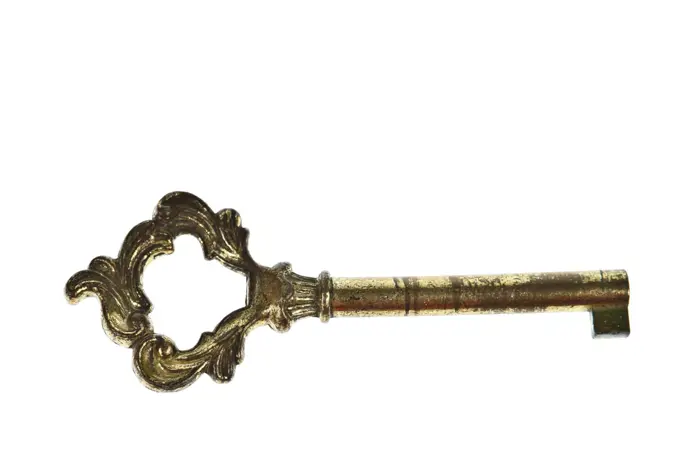
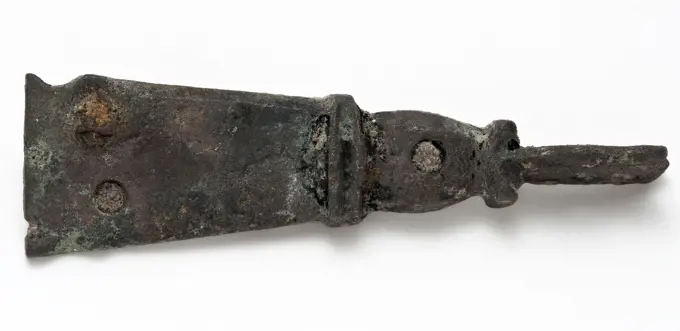
Historical Metal Artifacts

A selection of ancient metal objects, including keys and fibulae, featuring unique shapes and aged patinas, reflecting historical craftsmanship.

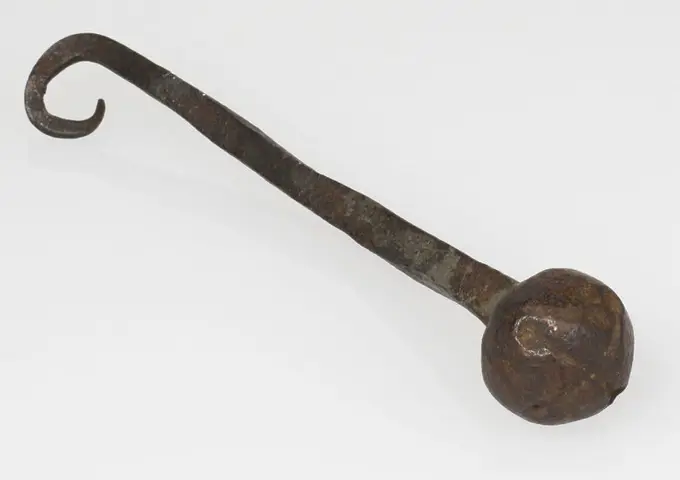
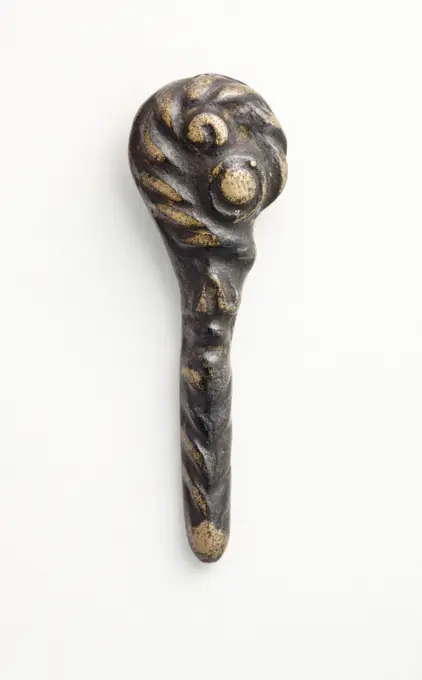
Pipe key, c. 1600 - c. 1699 Pipe slut with a handle formed by a small three -pass, on which a "basket", wrapped with a pearl necklace, rest. Grip and capital of silver -plated copper; Shaft and beard of iron. France iron (metal). copper (metal) Pipe slut with a handle formed by a small three -pass, on which a "basket", wrapped with a pearl necklace, rest. Grip and capital of silver -plated copper; Shaft and beard of iron. France iron (metal). copper (metal)
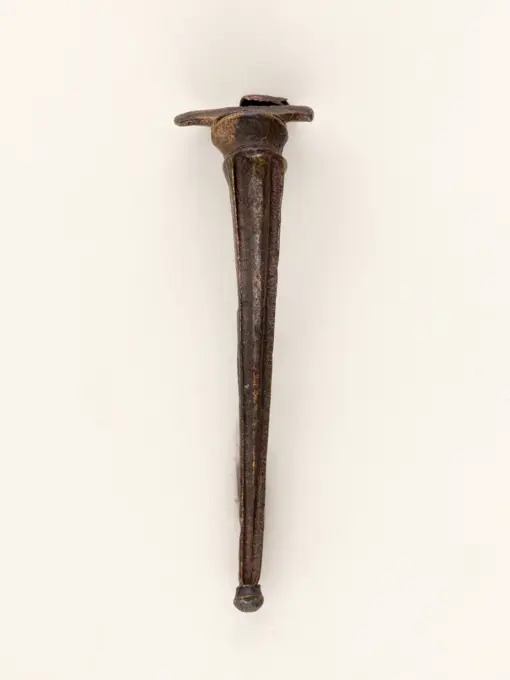
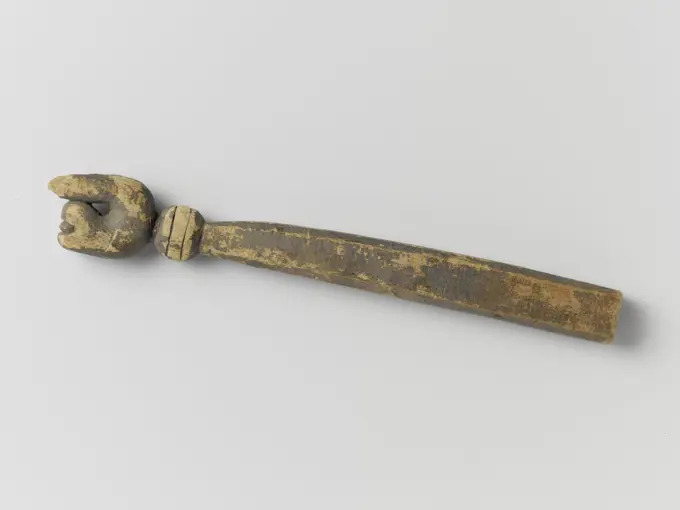
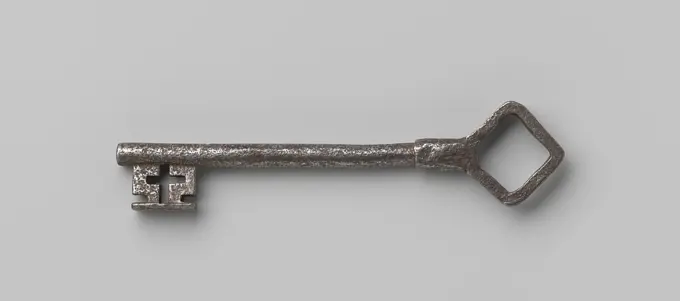
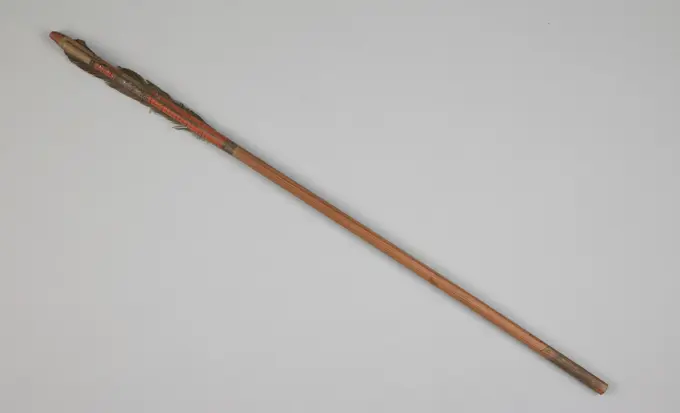
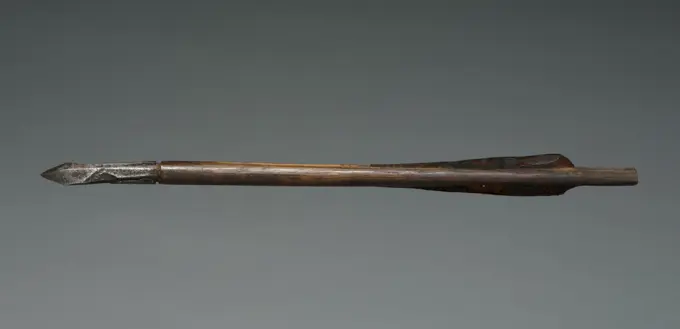
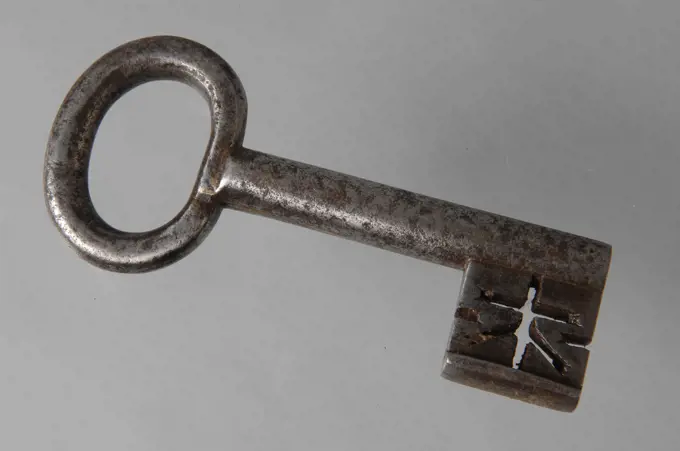
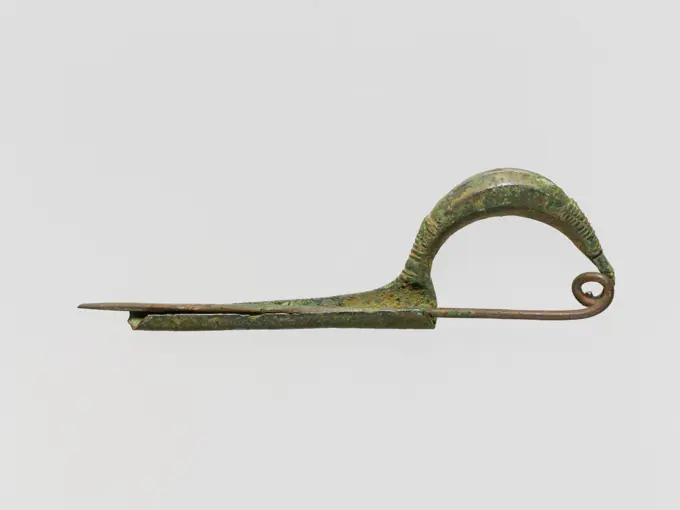
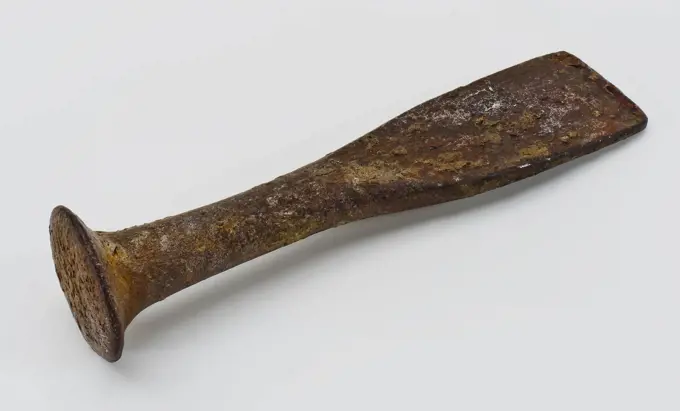
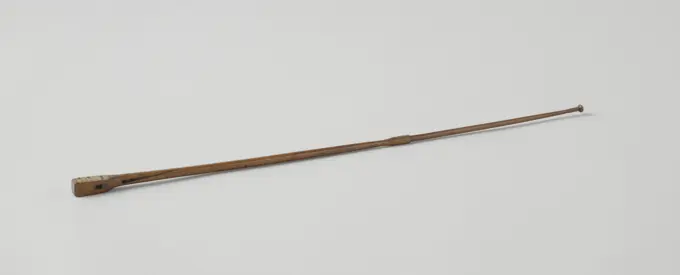
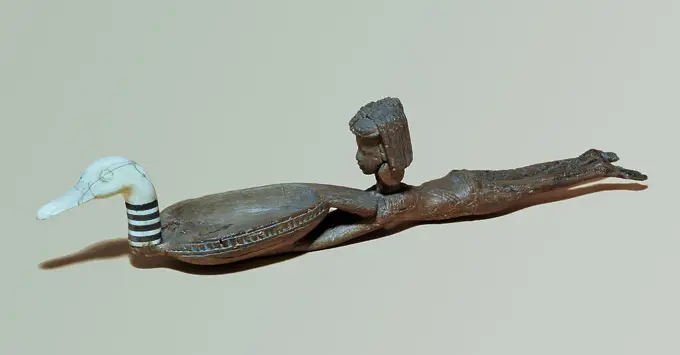
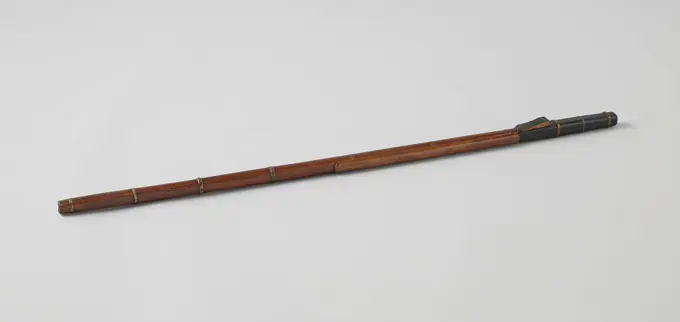
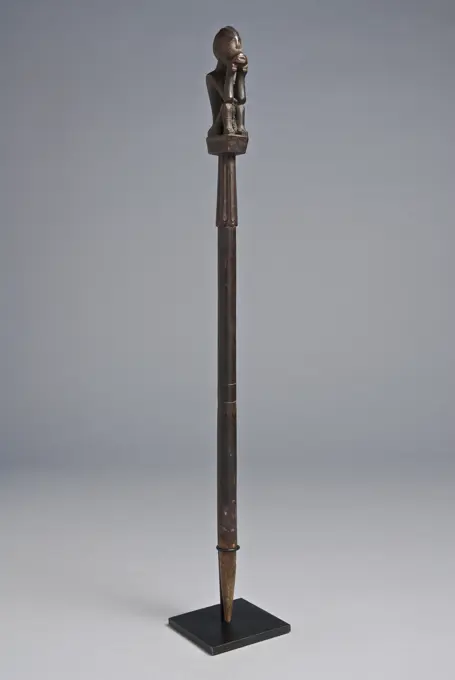
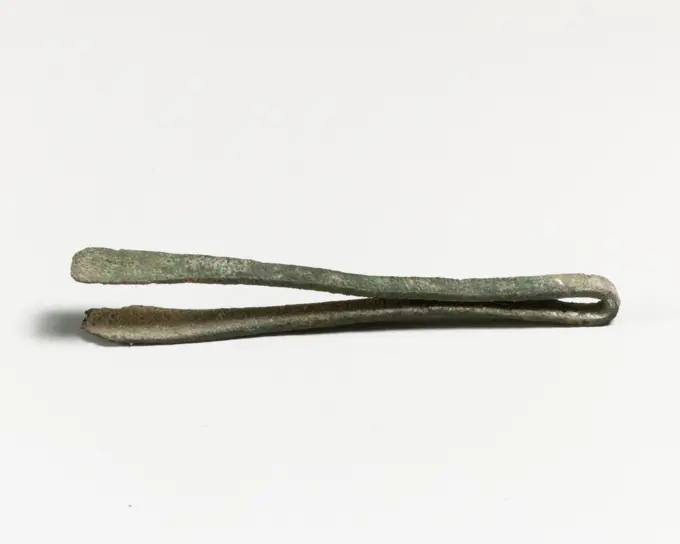
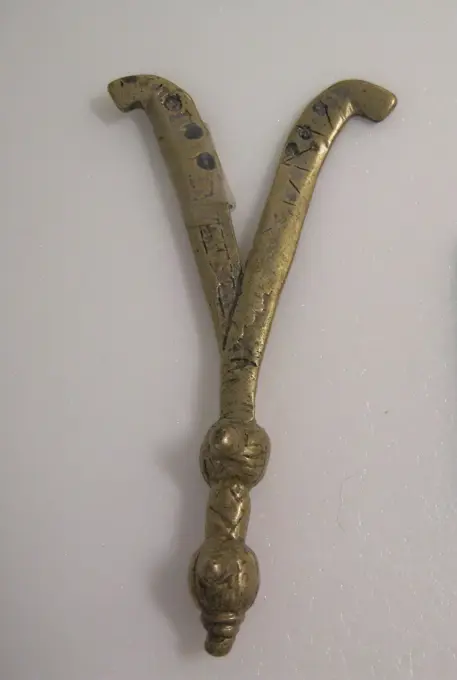
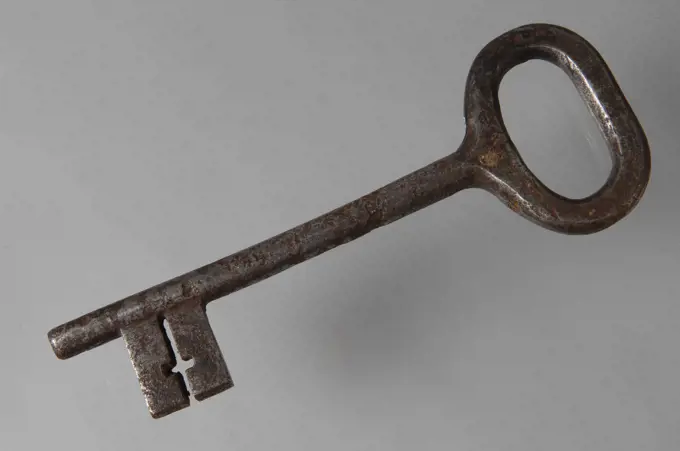
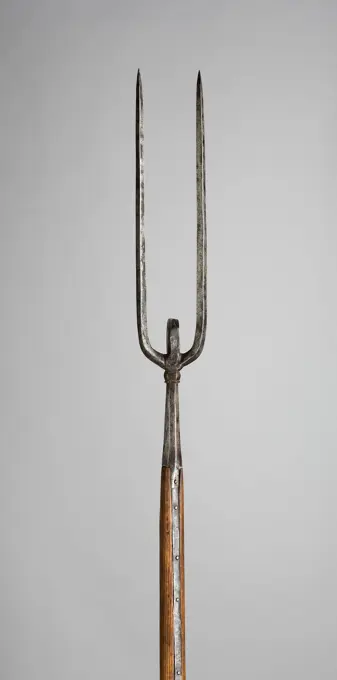
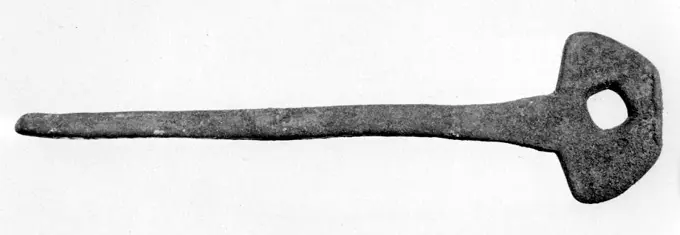
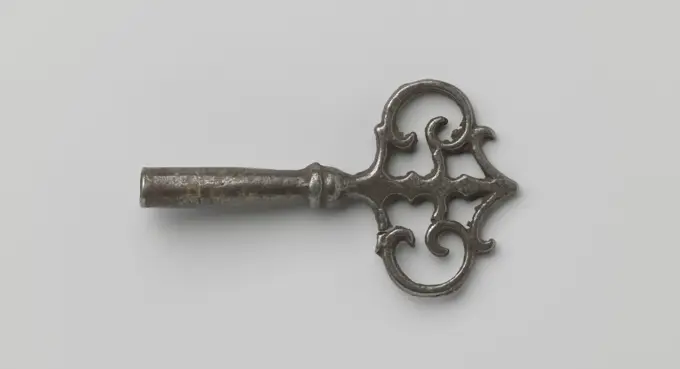
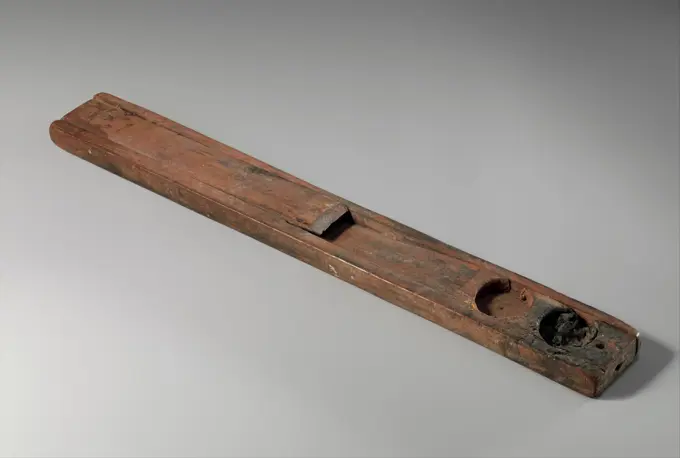
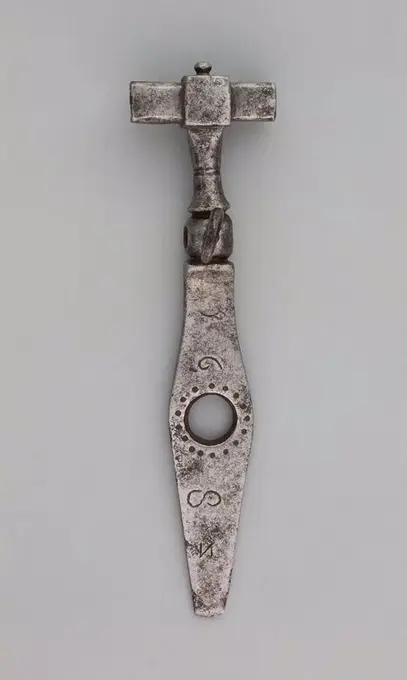
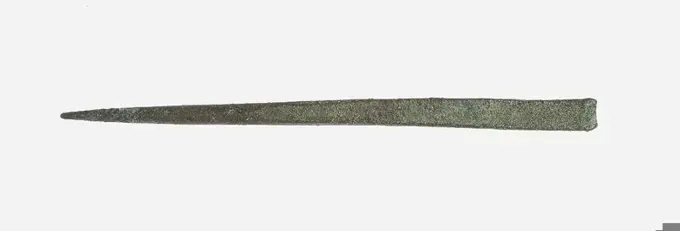
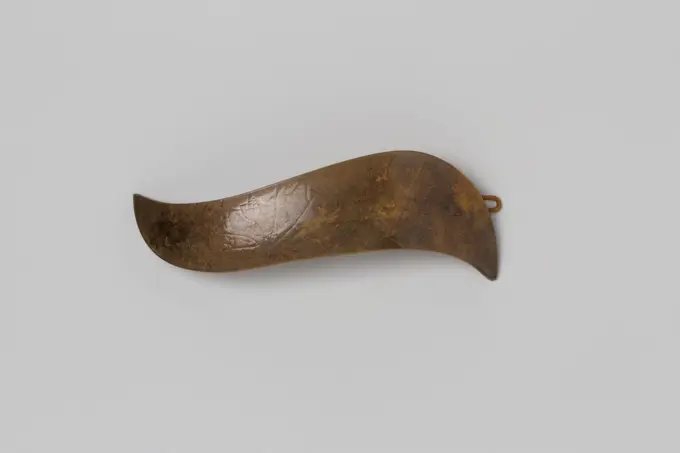
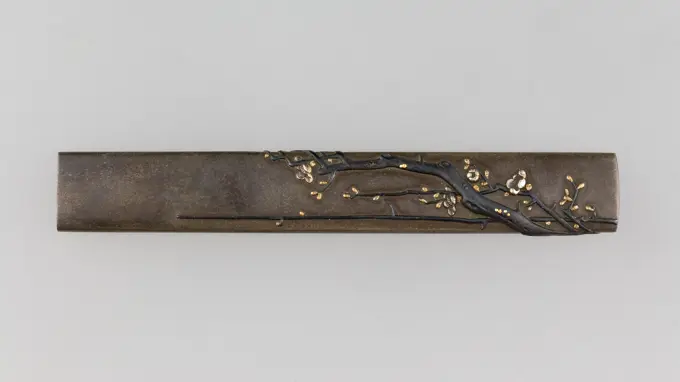
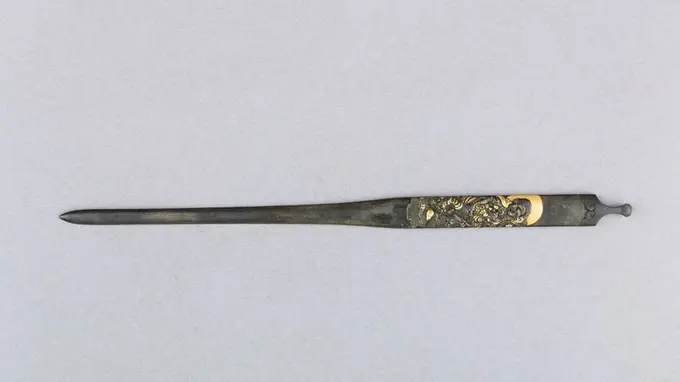
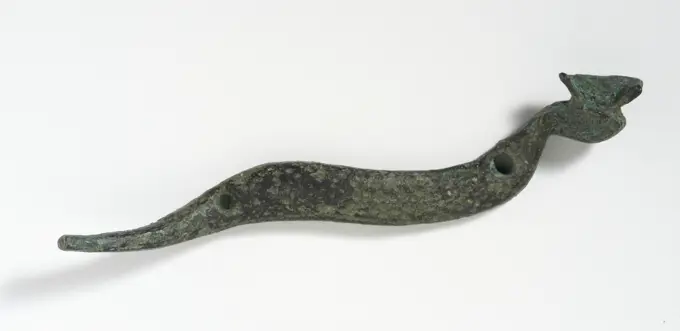
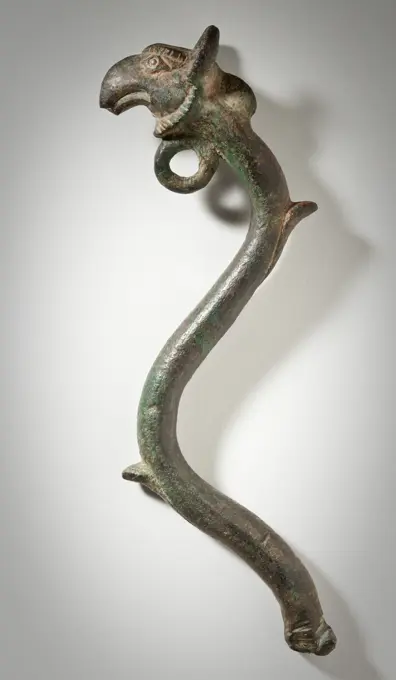
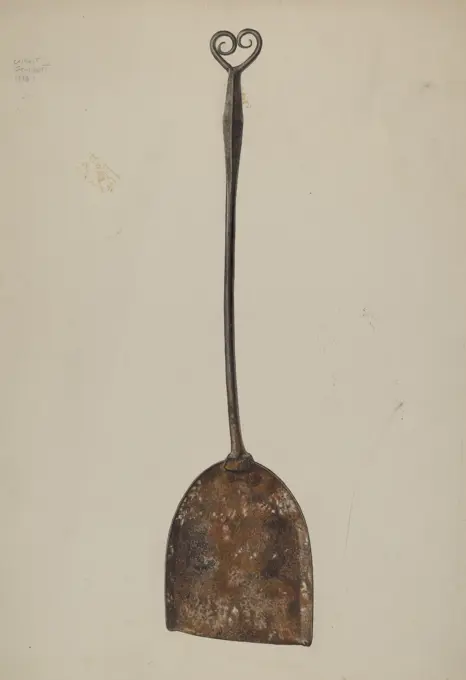
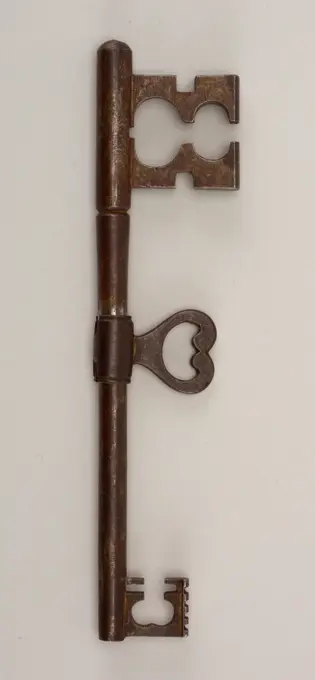
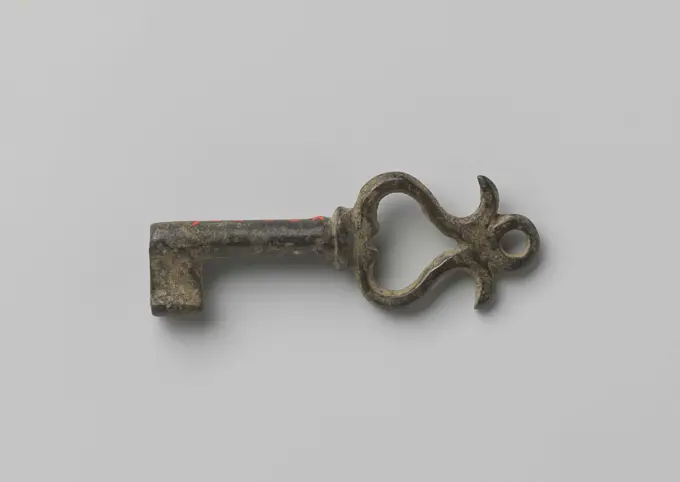
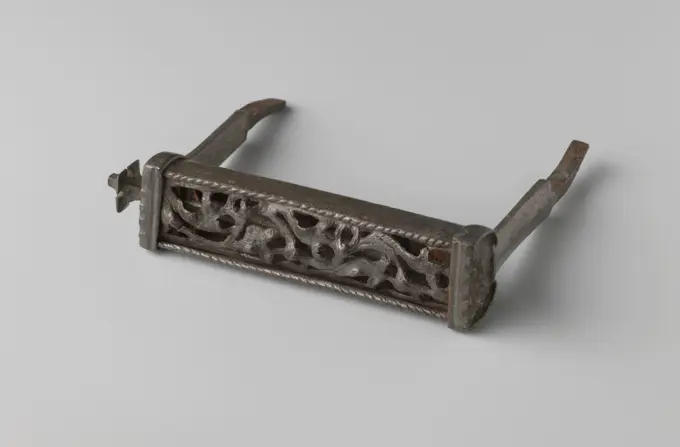
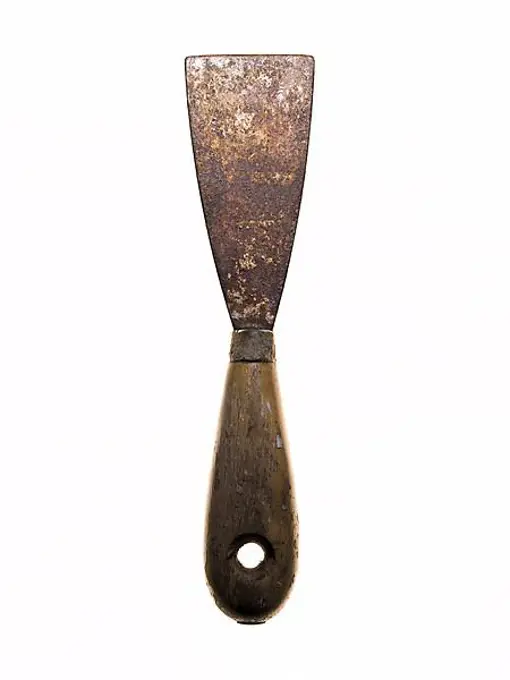
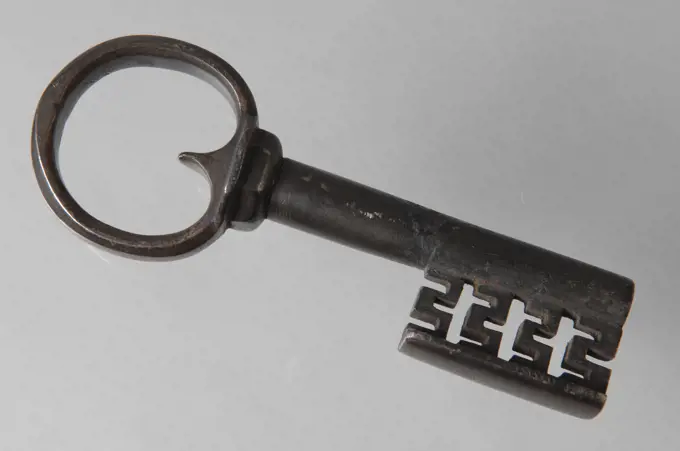
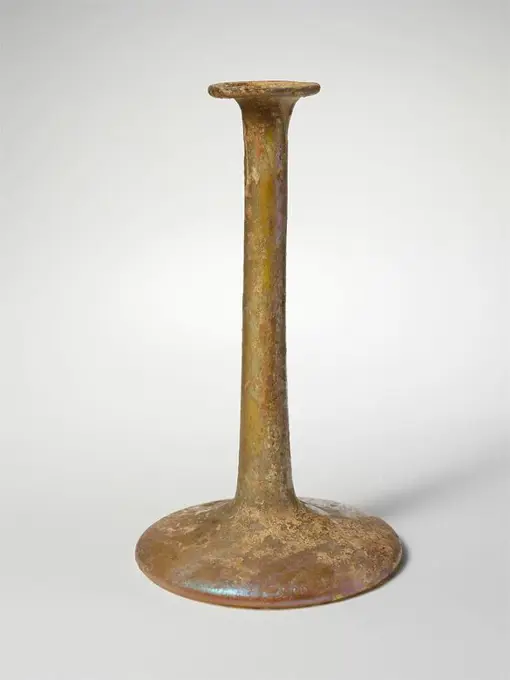
Nail. Culture: European. Dimensions: Overall: 5 in. (12.7 cm). Date: 15th-16th century. Museum: Metropolitan Museum of Art, New York, USA.Fibula. Copper alloy. Gallo-Roman. Paris, Carnavalet museum. 51463-14 Staple, copper alloy, attachment, Gallo-Roman time, fibula, Gallo-RomanFragment of wood, elongated with round ring and button, anonymous, c. 1590 - c. 1596 fragment Fragment consisting of a decorated piece of wood, elongated in shape with a round ring and button at the end. North Europe wood (plant material) cutting  Nova Zembla. Saving HuysKey. Key with on an angle Square eye, which passes into a thickening of the shaft. This walks past the beard. A cross motif has been carved in the beard.Model of a Made mast. Round mast with square top, ears, longitudinal expansion and sideshows. The mast base is quite square and consists of eight parts: the square mast king is placed diagonally, other than with other masts, so with the corners to the sides of the mast, so that the cheeks are triangular in diameter, rounded their outside. From the mast hole, three cheeks have been added at the rear that runs completely upwards, while the front three parts stop just above the longitudinal seals; From this point, the mast consists of eight parts again and becomes square again. The parts are held together with a large number of tub tires. Two side scales strengthen the whole; They also support the longitudinal seals together with the ears that are not against the sides, but are attached to the front of the mast with irons and bolts. A bribe has been installed between the ears. With the mast hole, two notches are for the ears and two for the longitudinal extension, if the mast is turned arFragment stem from fork or spoon from the wreck of the East Indiesman Hollandia. Cutlery, fragment: voice or fork or spoon; Fragm, Heavily Corroded, ID. NG 1980-27H67.Pipe key, c. 1600 - c. 1699 Pipe slut with a handle formed by a small three -pass, on which a "basket", wrapped with a pearl necklace, rest. Grip and capital of silver -plated copper; Shaft and beard of iron. France iron (metal). copper (metal) Pipe slut with a handle formed by a small three -pass, on which a "basket", wrapped with a pearl necklace, rest. Grip and capital of silver -plated copper; Shaft and beard of iron. France iron (metal). copper (metal)Przeszo Przysoci unknownGuts or hollow stab chisel with sloping cut, anonymous, c. 1590 - c. 1596  Guts or hollow stab chisel with sloping cut. The corresponding handle of wood is missing.  iron (metal) forging  Nova Zembla. Saving HuysModel of a Mainyard.Model of a large RA, consisting of two pieces that are connected to a long tilt and a number of connected welding inside and that are held together by tub tires.Kistsleutel, c. 1600 - c. 1699 Case key with an eye consisting of three bubbled C-Voluten. The eye rests on an elongated key breast that is profiled at the bottom and goes into a square handle. The beard has a circular opening at the end.  iron (metal) Case key with an eye consisting of three bubbled C-Voluten. The eye rests on an elongated key breast that is profiled at the bottom and goes into a square handle. The beard has a circular opening at the end.  iron (metal)Crossbow Bolt, 1500s-1600s. Germany, 16th-17th century. Wood, leather, steel; average: 37.2 cm (14 5/8 in.).Przeszo Przysoci unknownWheellock Spanner 1600-1633 Germany. Iron .Fork with winged putto handle 17th century probably Italian The figural style of the carved handles is somewhat similar to that of a carved ivory handle on a dirk (26.145.152a, b) in the Department of Arms and Armor.. Fork with winged putto handle. probably Italian. 17th century. Steel, ivory. Metalwork-SteelModel of a Topgallant Mast, anonymous, c. 1780 - c. 1840 demonstration model Round bramsteng made of one piece, with a square heel with slot wood hole, a hole for a disk, an octagonal bummer and ending in a flagpan. Netherlands wood (plant material)Key. UnknownKnife, steel, brass, Small knife, pointed narrow blade of steel. Brass handle rectangular and flat, terminating in pierced fleur-de-lis. Handle originally lettered, inlaid () with gothic letters (now illegible)., possibly France, possibly Italy, early 16th century, cutlery, Decorative Arts, KnifeThis mangled, broken rifle is believed to have come from gunboat no. 2 of Van Speijk. Several months after the explosion, it was presented to King William i, who had the weapon added to his collections in the Koninklijk Kabinet van Zeldzaamheden (Royal Cabinet of Rarities).Iron key with oval eye, hollow key handle and cruciform beards in beard, key iron iron, hand forged Key with oval eye (handle) hollow key handle cross-shaped notches (horizontal vertical and diagonal) in key beard and symmetrical keyhole cross-section hingesBronze sanguisuga-type fibula (safety pin) 7th century B.C. Etruscan Sanguisuga ("leech") fibulae have arched bows with closed undersides.. Bronze sanguisuga-type fibula (safety pin) 246333Steel chisel with blunt, wide cut, caulk tool equipment ground find iron metal, forged caulk with blasting face and blunt cutting edge archeology Rotterdam rail tunnel carpenter shipyard caulking shipping Soil discovery Rotterdam rail tunnel.Knife Coin China. Knife Coin 61139Model of a Topgallant Mast, anonymous, c. 1780 - c. 1840 demonstration model Round bramsteng made of a piece, with a square heel with slot hole, a disk, an octagonal Hommer and ending in a flag stok. Netherlands wood (plant material). brass (alloy)Ice strainer -Hairpin ca. 2030-1640 B.C. Middle Kingdom. Hairpin 545607Knife used by a "Leclerc column" soldier. Metal, synthetic original material, 1939-1945. General Leclerc Museum of Hauteclocque and the Liberation of Paris, Jean Moulin Museum.CUCHARA DE ACEITE LLAMADA LA NADADORA- ARTE EGIPCIO- AÑO 104. Location: MUSEO DEL LOUVRE-ESCULTURAS. France.Strigil, 324-476. Italy, Roman, 4th-5th Century. Bronze; overall: 27.4 cm (10 13/16 in.).Model of a Made Mast.Round mast with square top, homer with ears and rhombuside. The mast itself consists of six parts: two heavy, a front and a rear, form the mast king, inside with welding; A wide cheek on either side is also connected to the mast king welding, and two narrow cheeks completely round off. The parts are held together by tub tires. The homer is a broadening of the wide cheeks. The mast becomes square at the homer. In front of the mast is a rotation scale.Sheath for a Kris 18th-19th century Philippine. Sheath for a Kris. Philippine. 18th-19th century. Wood, cord. KrissesPig Trap Charm(Tuntun)DaggerTweezers ca. 3200-2000 B.C. Cypriot. Tweezers 244312Goldweight Crossed Swords, 19th-20th century, 3 1/8 x 1 5/8 x 7/16 in. (7.94 x 4.13 x 1.11 cm), Brass, Ghana, 19th-20th centuryFist bracket from the wreck of the East Indians' t Vliegend Hart ,, 1700 - 1735  Fist bracket, brass or copper -swing -bent rod, decorated with oval portraits, thickening in the middle halfway, demolished at both ends. Knuckle-Guard. Middelburg copper (metal). brass (alloy)SpurIron key with oval eye, elongated solid key handle and simple cruciform barrels in beard, key iron value iron, hand forged Key with oval key ring (handle) to which elongated solid key handle (with key tip end) In fluid-transversal connection simple cruciform key-shaped cogs (horizontal and vertical) and symmetrical keyhole cross-section hingesMilitary Fork 1600-1700 France. Steel, wood (oak), and brass .Boarding ax.enterbijl with long, white stem. The leaf has a curved interface and on the other hand a four-laying peak, lightly curved down. There are two springs to the leaf, which grab the stem. The handle has a round button at the end with an iron butt.Nail 306-30 B.C. Ptolemaic Period. Nail. 306-30 B.C.. Iron. Ptolemaic Period. From Egypt, Upper Egypt, Thebes, Asasif, MMA excavationsSpanner, c. 1800 - c. 1900 Sight key belonging to a clock. The handle consists of two C-Voluten, a six-armed tribe, a six-army trunk.  iron (metal) Sight key belonging to a clock. The handle consists of two C-Voluten, a six-armed tribe, a six-army trunk.  iron (metal)Spoon probably 1699 Theodorus Huigen. Spoon 188101 Maker: Theodorus Huigen, Dutch, 16521710, Spoon, probably 1699, Silver, Overall: 6 1/2  2 3/16 in. (16.5  5.6 cm). The Metropolitan Museum of Art, New York. Gift of Mrs. Samuel P. Avery, 1897 (97.2.66)This baton (cane) is thought to have belonged to naval hero Maerten Harpertsz Tromp, who died in 1653 during a battle against the English. The silver knob bears his family coat of arms. In 1795 this simple commanders baton was proclaimed one of the five ‘patriotic memorials, which together would commemorate the Netherlands great past. The baton was prominently displayed in the building of the States-General.Scribe's Palette ca. 2030-1550 BC Middle Kingdom-Second Intermediate Period Ancient Egyptian scribes used wooden palettes, like this one, to hold their ink and brushes. There are still substantial remnants of the black ink on this palette, but the red is almost gone. The brushes are reeds with one end frayed to hold the ink. The design of scribal palettes changed little over time as may be seen by comparing this one, from the Middle Kingdom to another, 47.123a-g, which dates to the New Kingdom.Link to a blog about scribes in Ancient EgyptShowing Signs: Hieroglyphs and Palettes in the Stela of Irtisen. Scribe's Palette 560805Krzyż ręczny. nieznany warsztat etiopski (1400-1970), authorPendant. Western Inner Mongolia, 5th-3rd century B.C.. Jewelry and Adornments; pendants. Bronze, castTable knife 18th century possibly Southern German. Table knife. possibly Southern German. 18th century. Steel, gilt bronze. Metalwork-SteelFire tongs, 18th century, 2 1/4 x 16 x 4in. (5.7 x 40.6 x 10.2cm), Brass, Netherlands, 18th centuryFolding Spoon (Germany); carved, heated and shaped horn, silver (hinge); leather, paper (case); L x W x D (Spoon open): 18.2 x 4.5 x 2.4 cm (7 3/16 x 1 3/4 x 15/16 in.) L x W x D (Spoon closed): 105 x 4.5 x 2.1 cm (41 5/16 x 1 3/4 x 13/16 in.) L x W x D (Case top): 6.3 x 5.2 x 2.7 cm (2 1/2 x 2 1/16 x 1 1/16 in.) L x W x D (Case bottom): 8.5 x 5 x 2.4 cm (3 3/8 x 1 15/16 x 15/16 in.)Corner part of a stove (fragment), 1660 Cast iron corner part of a stove. Decorated with a lion's head and other motives. Germany iron (metal) casting Cast iron corner part of a stove. Decorated with a lion's head and other motives. Germany iron (metal) castingUpper Portion of Hairpin 1st-4th century Roman. Upper Portion of Hairpin 465122 Roman, Upper Portion of Hairpin, 1st4th century, Bone, Overall: 1 15/16 x 1/4 in. (5 x 0.7 cm). The Metropolitan Museum of Art, New York. Gift of J. Pierpont Morgan, 1917 (17.191.72)Key, c. 1800 - c. 1900 Key whose handle consists of a double crucifix, placed on a globe.  copper (metal) Key whose handle consists of a double crucifix, placed on a globe.  copper (metal)Javelin tip; Unknown Middle Eastern workshop; IX - VI century BC ; period of Iron (-900-00-00--501-00-00);Weapons, Luristan browns, spear caves, iron period (approx. 1300-ok. 600 BC), purchase (provenance)Wheellock Spanner and Turnscrew. German. Date: 1682. Dimensions: L. 14.5 cm (5 3/4 in.). Iron. Origin: Germany. Museum: The Chicago Art Institute, Chicago, USA.Leatherworker's Awl Point. Dimensions: L. 5.3 cm (2 1/16 in). Dynasty: Dynasty 18. Reign: reign of Amenhotep III. Date: ca. 1390-1353 B.C.. Museum: Metropolitan Museum of Art, New York, USA.Hair comb made of turtle; narrow swing model with S-shaped cover of transparent gray plastic, anonymous, c. 1910 - c. 1920 A decorative hair pin from turtle. A narrow, swing, s-shaped cover of transparent gray plastic; With copper pin. Netherlands copper (metal). A decorative hair pin from turtle. A narrow, swing, s-shaped cover of transparent gray plastic; With copper pin. Netherlands copper (metal).Key 13th century German. Key 468868Cranequin, 1600s. Germany, 17th century. Steel, etched; flax cord; rack: 36 cm (14 3/16 in.); gear housing: 14.5 cm (5 11/16 in.).Kastsleutel, c. 1600 - c. 1699 Cabinet key with bean -shaped eye and long, partially drilled shaft, which is damaged at the bottom.  iron (metal) Cabinet key with bean -shaped eye and long, partially drilled shaft, which is damaged at the bottom.  iron (metal)Hand and forearm Buddha image, Anonymous, 1400 - 1500 Right hand and forearm of a Buddha; broken down at the elbow joint. Ayuthia bronze (metal) Right hand and forearm of a Buddha; broken down at the elbow joint. Ayuthia bronze (metal)Knife Handle (Kozuka) ca. 1800 Japanese A kozuka is a handle of a by-knife that is part of a sword mounting. It is kept in a slot on the reverse of a katana scabbard, often with a matching kōgai (hairdressing tool).. Knife Handle (Kozuka) 29747Key. Culture: French (). Dimensions: Overall: 1 3/4 x 1 1/16 x 1/4 in. (4.5 x 2.7 x 0.6 cm). Date: 13th or 14th century ().The decoration of Gothic locks and keys was often elaborate and of the highest standard of workmanship. These examples offer a glimpse of the creativity and inventiveness of medieval ironsmiths who forged such objects. Some scholars have suggested that the greatly expanded use of locks was the result of the increasing urbanization of life and the new emphasis on material wealth and private ownership that characterized the later Middle Ages. Museum: Metropolitan Museum of Art, New York, USA.Hair Dressing Tool (Kogai). Culture: Japanese. Dimensions: L. 8 3/8 in. (21.3 cm); W. 1/2 in. (1.3 cm); thickness 3/16 in. (0.5 cm); Wt. 1.4 oz. (39.7 g). Date: ca. 1615-1868. Museum: Metropolitan Museum of Art, New York, USA.Small curved tool (serpet) (Title allocated). Copper alloy. Carnavalet museum, history of Paris.Figurine of the Horned Viper Hieroglyph. Egypt, Ptolemaic Period (332 - 30 BCE) or earlier. Sculpture. BronzeLacquer Hairpin with Flowers second half of the 19th century Japan. Lacquer Hairpin with Flowers 58439Rod, dipping, or pin. Rod, dipping, or pin 249027Cosmetic spoon ca. 1550-1295 B.C. New Kingdom. Cosmetic spoon 546048Needle. UnknownGriffin-Headed Handle. Italy, Roman, 2nd-3rd century A.D.. Tools and Equipment; handles. Bronze. An staggered single cut.Sier wrench. Sier wrench whose handle consists of two adjacent circles on which two backlings placed half mane are awarded by an eye. The handle is profiled. The beard is formed from two vertical, parallel running lines, above and below sealed by two inward half circles. Handle and beard filled with filigree.Albert Geuppert, Fireplace Shovel, c 1942 Fireplace ShovelFire broom with twisted Steel, Anonymous, c. 1700 - c. 1725 The object consists of a brush and of the next cast and parts made of plate: the brush hood, the stem and the eye. The hood is unadorned, the stem is torn and has a handle at the top, in the form of two balusters placed against each other. The hair of the broom may have been made from Heide. Netherlands brass (alloy) casting The object consists of a brush and of the next cast and parts made of plate: the brush hood, the stem and the eye. The hood is unadorned, the stem is torn and has a handle at the top, in the form of two balusters placed against each other. The hair of the broom may have been made from Heide. Netherlands brass (alloy) castingBronzeKnifeGilded wood cubit, gift of the pharaoh Amenhotep III, and wooden folding cubit with leather case from the tomb of Kha at Deir el Medina, New Kingdom, Dynasty XVIII, Egyptian civilizationSpoon, 918-1392. Korea, Goryeo period (918-1392). Bronze; overall: 15.8 cm (6 1/4 in.).Ferrule from a Stave of Neferkhawet ca. 1504-1447 B.C. New Kingdom. Ferrule from a Stave of Neferkhawet. ca. 1504-1447 B.C.. Bronze or copper alloy. New Kingdom. From Egypt, Upper Egypt, Thebes, Asasif, Tomb of Neferkhawet (MMA 729), west chamber A, Burial of Neferkhawt (I), MMA excavations, 1934-35. Dynasty 18, earlyGoldweight Key, 19th-20th century, 3 11/16 x 1 1/16 in. (9.37 x 2.7 cm), Brass, Ghana, 19th-20th centurySnubber for Bull. Dated: c. 1942. Dimensions: overall: 35.5 x 28.2 cm (14 x 11 1/8 in.) Original IAD Object: 12 1/2" high; 4 1/2" wide. Medium: watercolor and graphite on paperboard. Museum: National Gallery of Art, Washington DC. Author: William Frank.Musket size. Musketmaat, complete. The teaching of the musketmaat is torn here and there.Denmark, Kopenhagen, Nationalmuseet, Oar from Ulkestrup LyngSlide Scale, 1700s. Europe, 18th century. overall: 23.9 x 2 cm (9 7/16 x 13/16 in.).Tools.Each ship was fitted with carpentry tools for making repairs. On Nova Zembla, these tools came in handy for building the Safe House’. It is striking how little the tools have changed over the centuries; many of them can still be found in modern toolboxes.Key; 1909-2-244Pipe key. Pipe key whose handle is formed by two opposite S-and above closed by an eye.Tractor, c. 1400 - c. 1950   iron (metal)   iron (metal)ScraperSpoon (France); Made by Massat Freres; silver; L x W x D: 18.5 x 3.4 x 1.7 cm (7 5/16 x 1 5/16 x 11/16 in.)Key, 1775 - 1800 Key with three -pass -shaped handle whose three inner corners are provided with balls. The profiled capital is hexagonal; The shaft ends in a profiled button.  silver (metal) Key with three -pass -shaped handle whose three inner corners are provided with balls. The profiled capital is hexagonal; The shaft ends in a profiled button.  silver (metal)Spoon (France); Made by Phillipe Berthier; silver; L x W x D: 19 x 2.9 x 2.1 cm (7 1/2 x 1 1/8 x 13/16 in.)Iron key with heart-shaped eye, hollow key handle, collar and cruciform key-shaped key, key iron value iron, hand forged Key with heart-shaped eyelet (handle) and two notches on top hollow keysteel octagonal collar cruciform beaters in key beard (horizontal and vertical) and symmetrical keyhole cross-section hangings closingOld golden key isolated on white backgroundFighting Axe Made 1700-1800 Switzerland. Steel and wood (oak) .Bishop Hill: Flail. Dated: c. 1939. Dimensions: overall: 35.5 x 26.9 cm (14 x 10 9/16 in.) Original IAD Object: handle: 50" long; flail: 40" long; 2" wide tapering to 1 1/2". Medium: watercolor and graphite on paperboard. Museum: National Gallery of Art, Washington DC. Author: Archie Thompson.Human rib from the wreck of the East Indians' t Vliegend Hart, 1700 - 1735  Human rib whose ends have been broken down or weathered.  bone (material)Spear Thrower 12th-15th century Chimú. Spear Thrower 315305Single attachment plate, narrowly extending and ending in part with hole, herd soil found copper metal, Single horseshoe flared and ending in plate with hole perpendicularly attached to the entire object archeology Rotterdam rail tunnel attachment Soil discovery: section rail tunnel Rotterdam.Glass perfume bottle. Culture: Roman. Dimensions: Overall: 5 3/4 x 3 1/4 x 1 1/4 in. (14.6 x 8.3 x 3.2 cm). Date: 2nd-3rd century A.D..Candlestick unguentarium.Colorless.Rounded rim, pressed into sides of flaring mouth; tall cylindrical neck, flaring slightly downward; sides of wide, flat body expanding sharply outward; broad, pushed-in bottom with central circular pontil mark. Intact; pinprick bubbles; deep pitting, dulling, and brilliant iridescence with patches of creamy brown weathering. Museum: Metropolitan Museum of Art, New York, USA.