Historical Metal Artifacts

A collection of historical metal objects including sword guards, buckles, and escutcheons, depicting various intricate designs and styles from different cultures and eras.
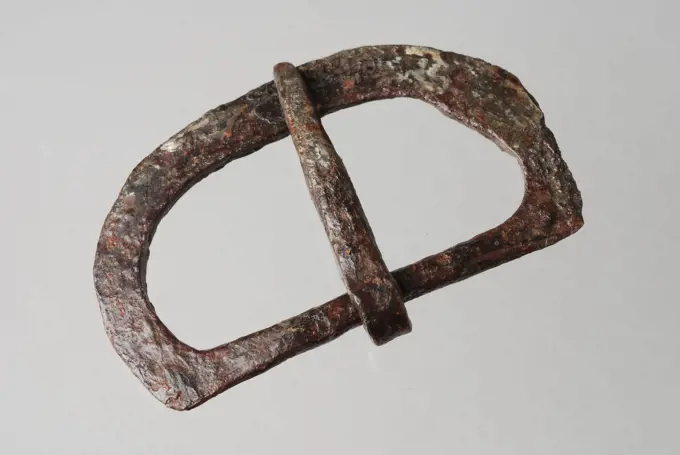
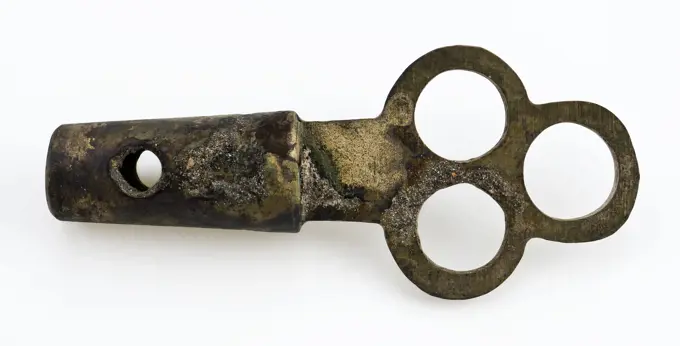
D-shaped buckle of iron, the sting runs over the entire bracket, buckle fastener strand soil finding iron w 6.5 lb angel 4.2 forged Iron clasp in the shape of letter D. Curled angel archeology Capelle aan den IJssel House at Capelle castle belt cavalry track kneepants footwear exhibition bag armor harness horse harness horse fastening Soil discovery: under residential tower oldest housing layer House at Capelle Capelle aan den IJssel 1965.
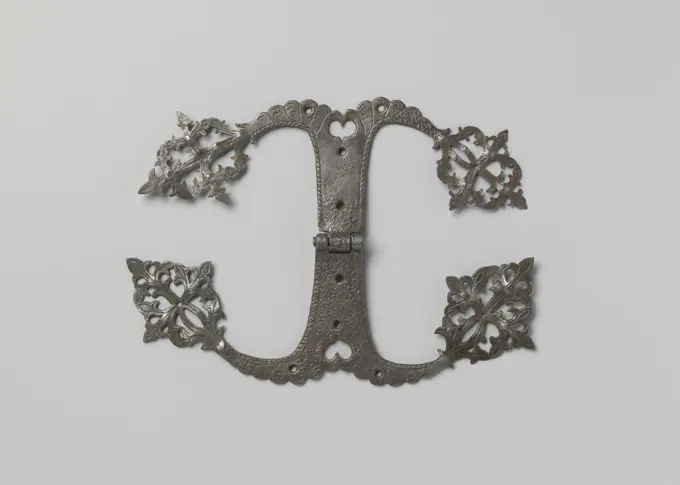
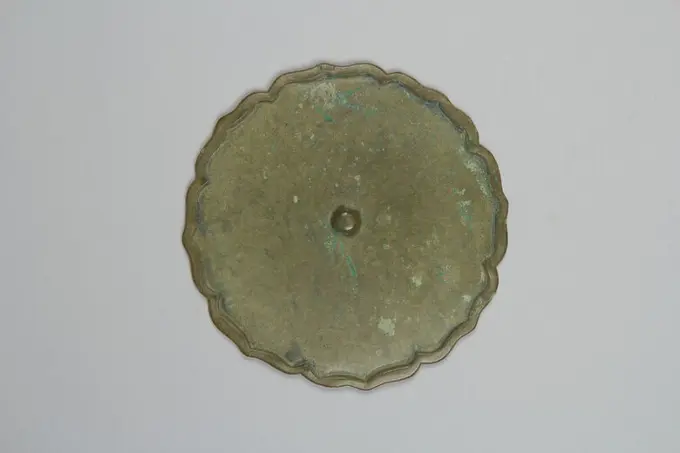
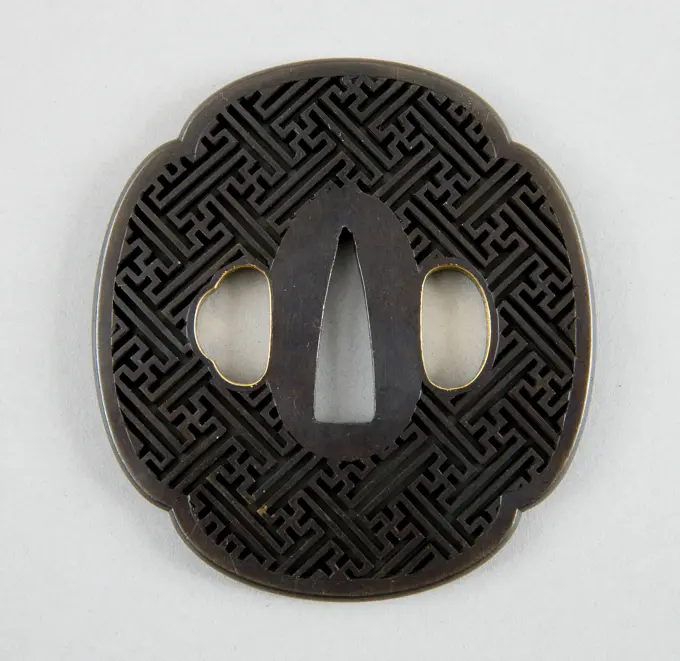
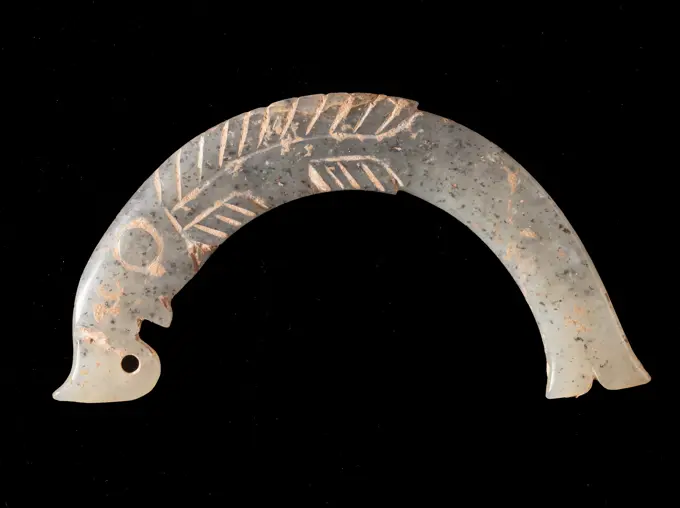
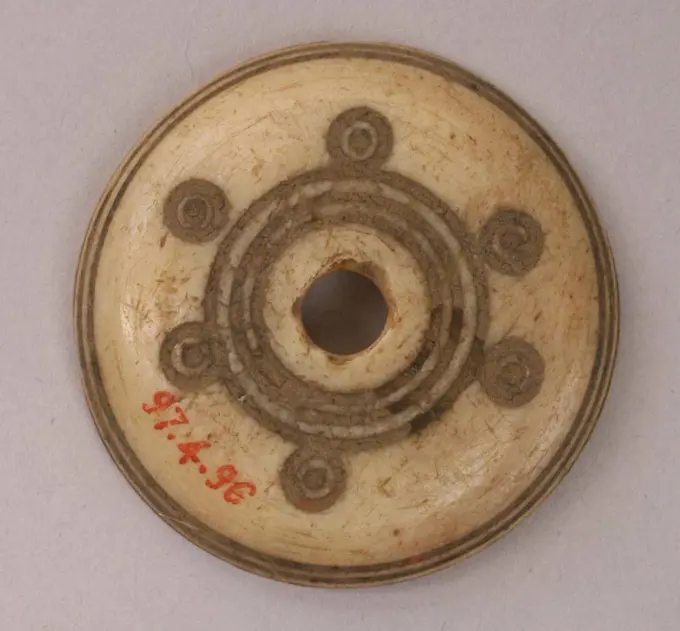
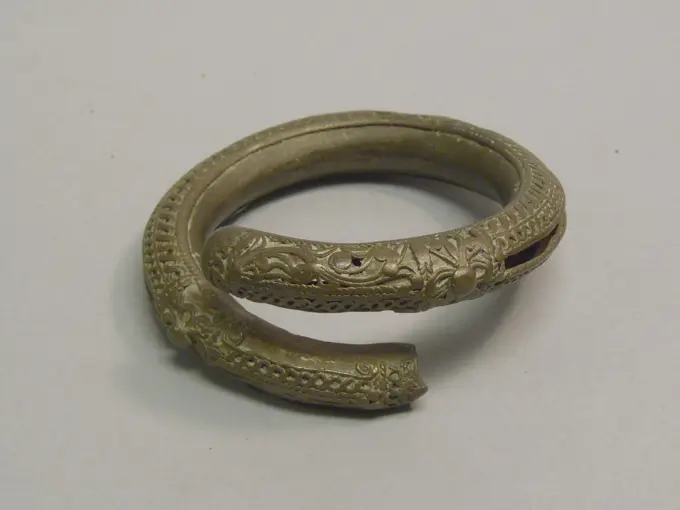
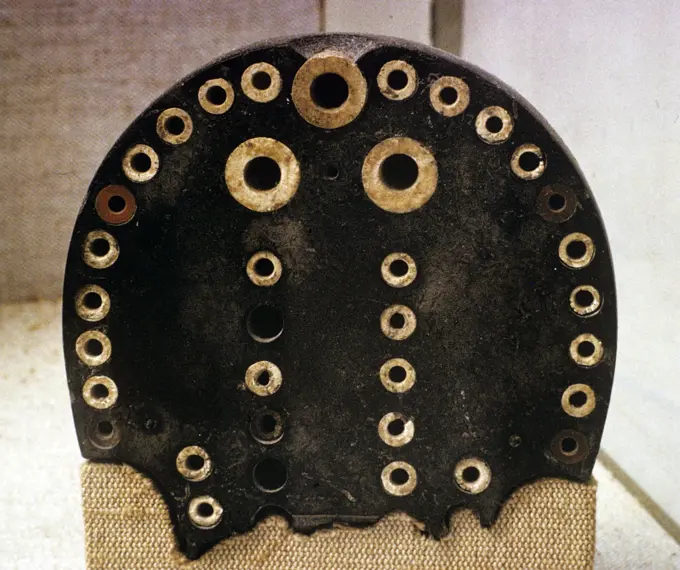
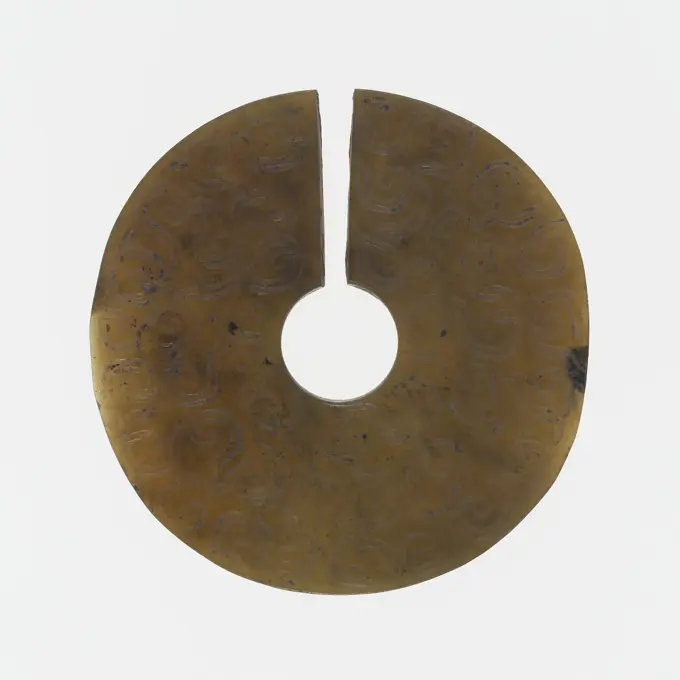
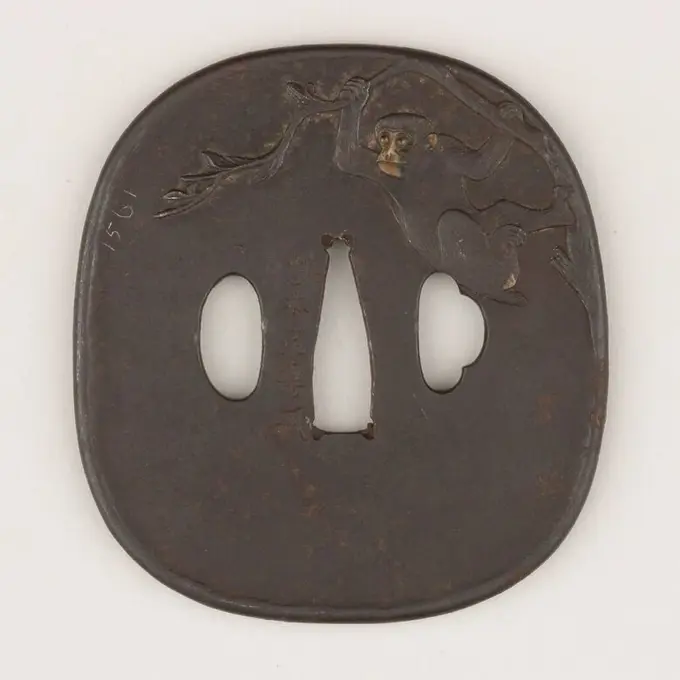
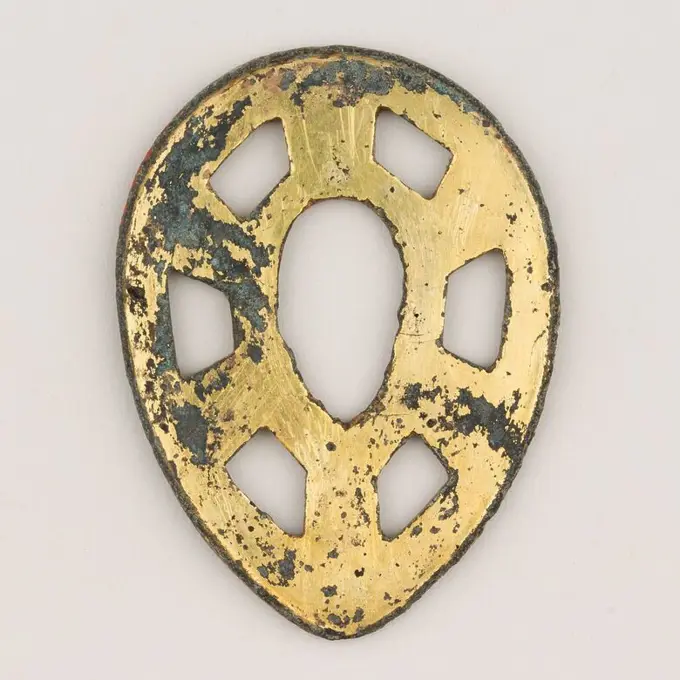
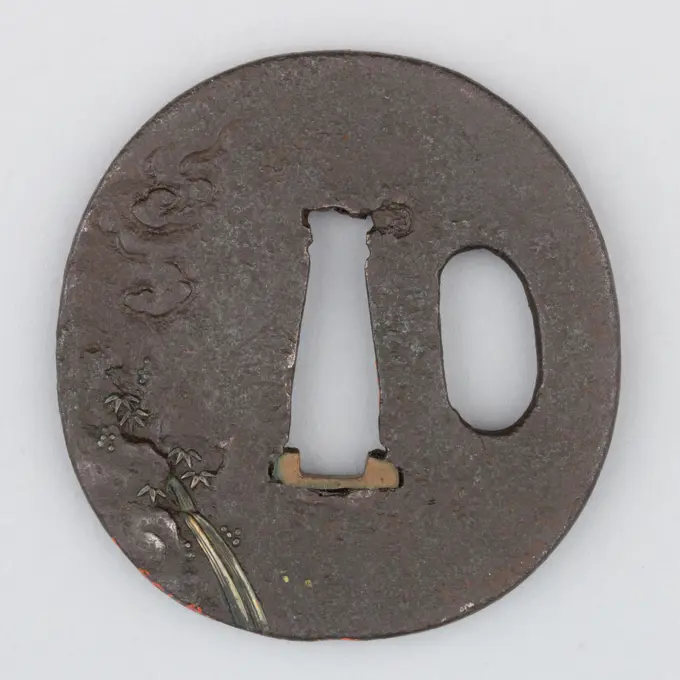
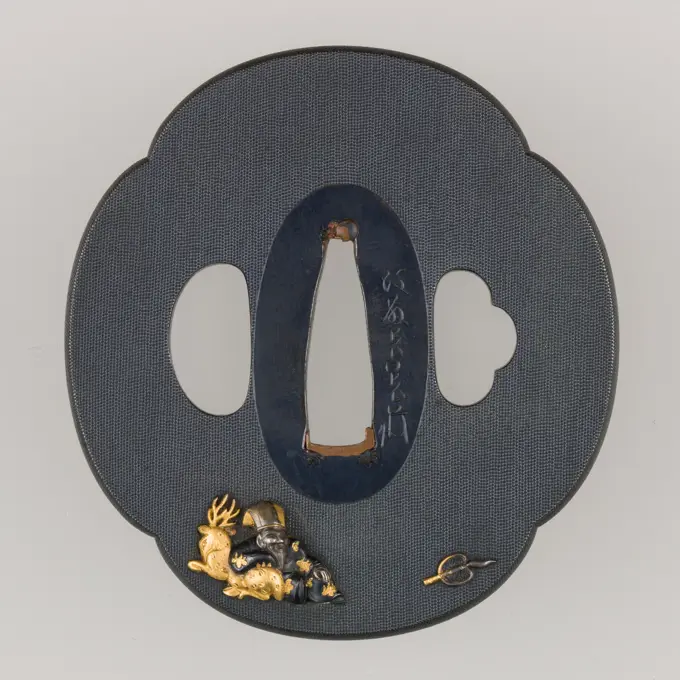
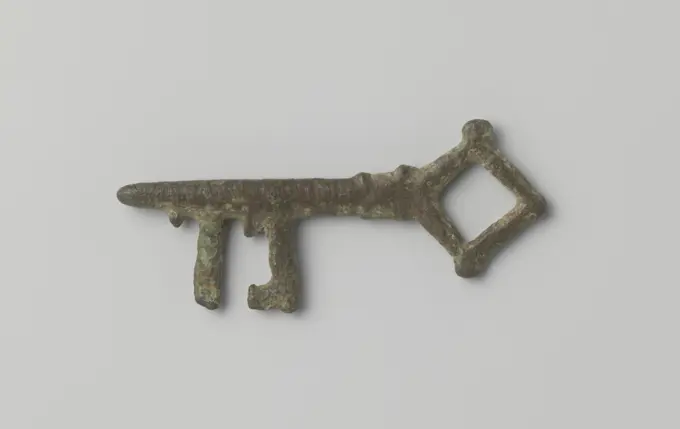
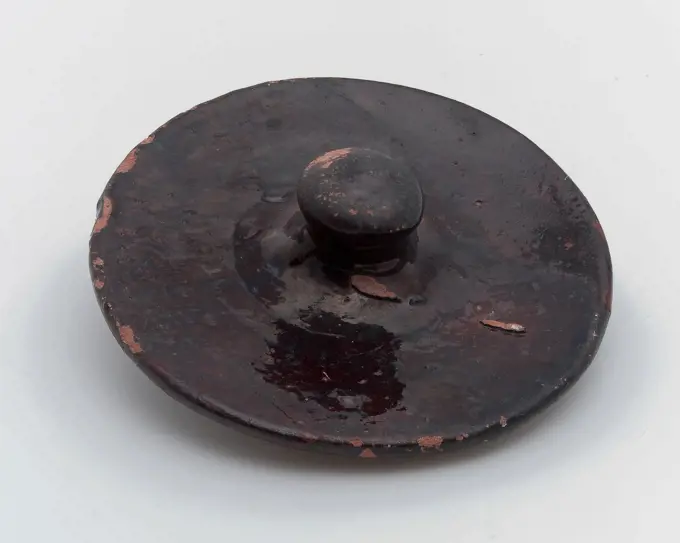
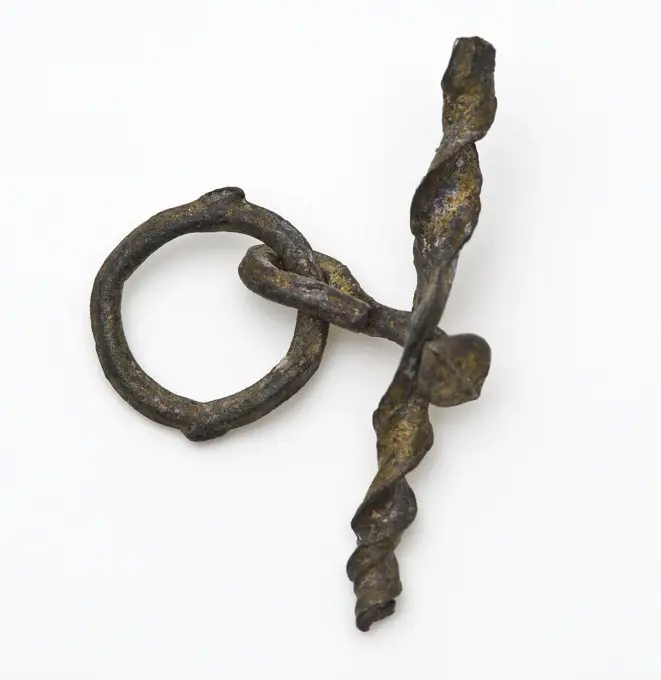
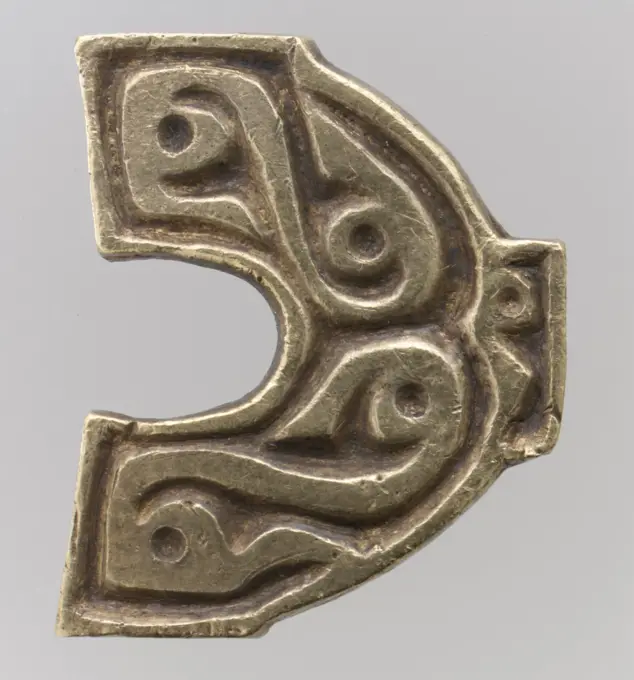
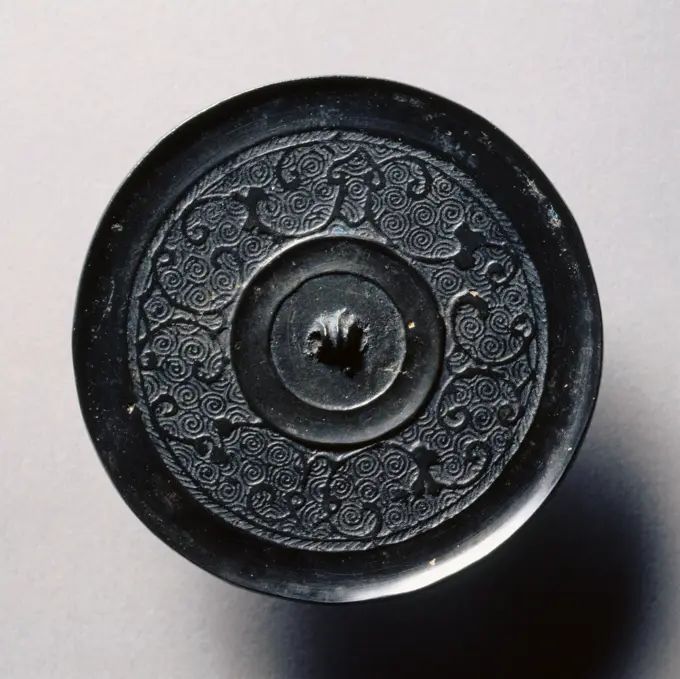
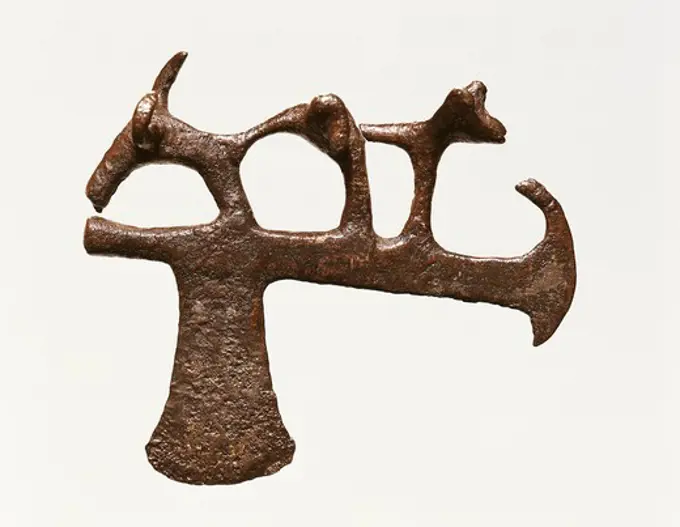
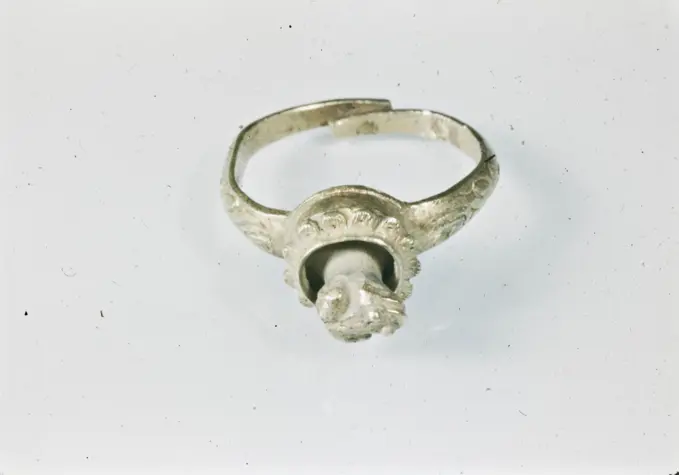
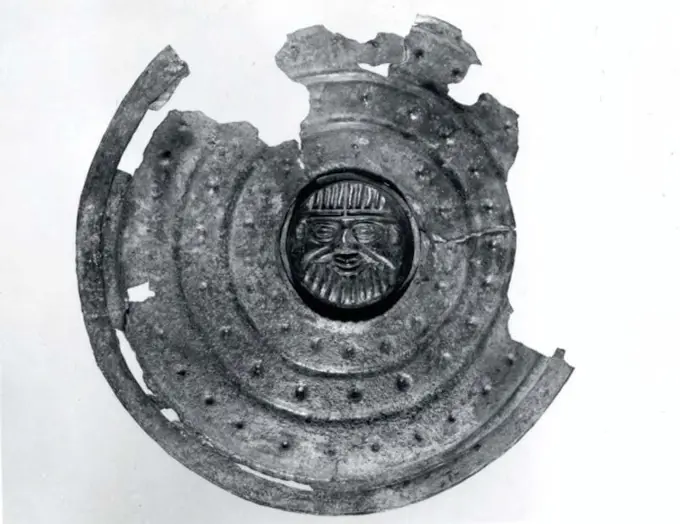
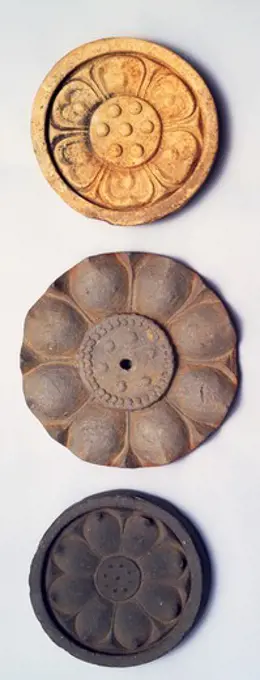
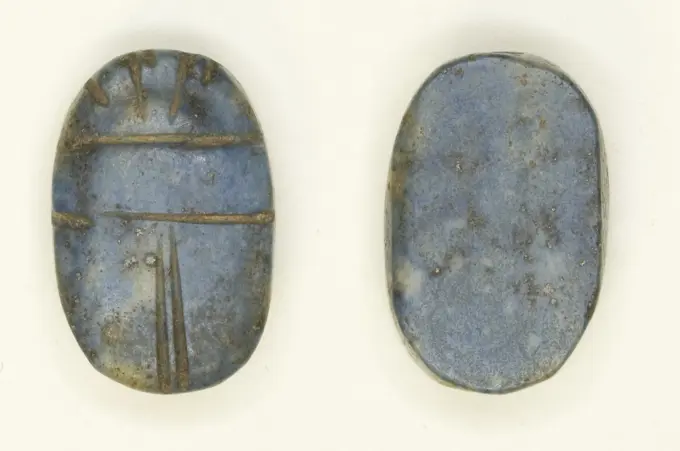
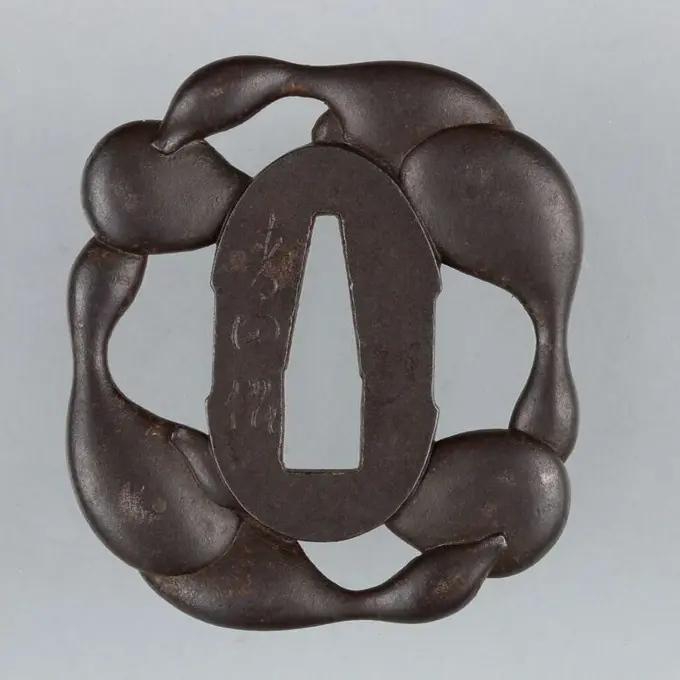
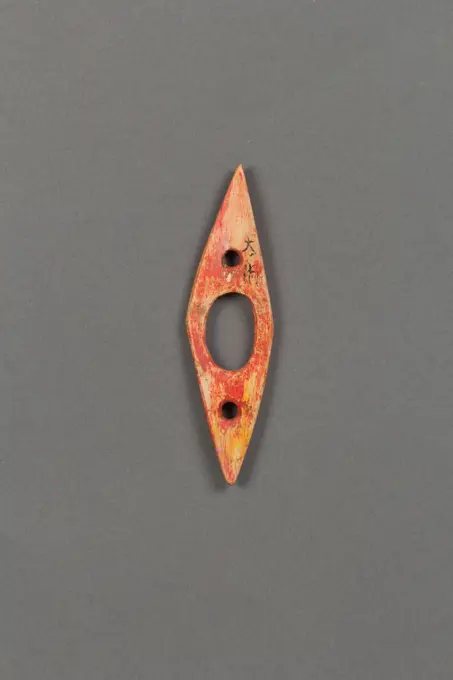
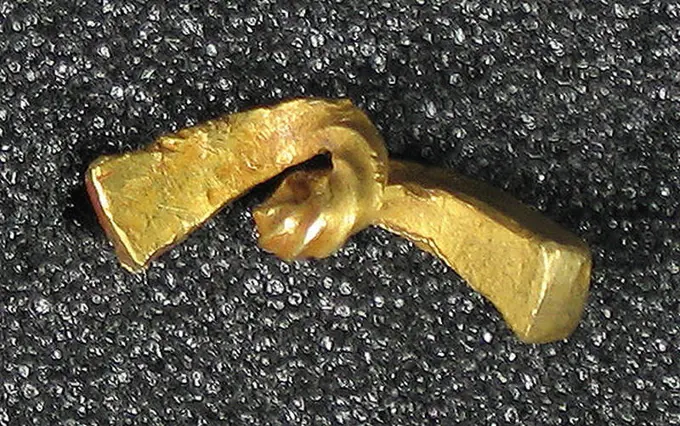
Sword Guard (Tsuba) with Cranes, c. 1615-1868. Japan, possibly Edo period (1615-1868). Iron; diameter: 7.4 cm (2 15/16 in.).Disk Brooch 6th or 7th century () Frankish. Disk Brooch 465194 Frankish, Disk Brooch, 6th or 7th century (), Gold on copper alloy, glass paste, Overall: 1 1/8 x 5/16 in. (2.8 x 0.8 cm). The Metropolitan Museum of Art, New York. Gift of J. Pierpont Morgan, 1917 (17.192.137)Necklace or neck ring 6th century B.C-2nd century A.D. Italic or Roman Open ring with five ornamental collars and open, out-curving ends, terminating in knobs.. Necklace or neck ring 246439Chlorite spindle whorl ca. 1200-1050 B.C. Cypriot Around the central hole are circles in low relief against a background of punctured dots.. Chlorite spindle whorl. Cypriot. ca. 1200-1050 B.C.. Chlorite. Late Cypriot III. Miscellaneous-StoneHinge, driven and engraved., 1400 - 1500 An iron hinge, driven and engraved.  iron (metal) engraving An iron hinge, driven and engraved.  iron (metal) engravingMirror. Culture: Korea. Dimensions: Diam. 7 1/4 in. (18.4 cm). Museum: Metropolitan Museum of Art, New York, USA.Earplug, one of 15, 15th century, 3/8 x 1 1/4 in. (0.95 x 3.18 cm), Jade, Mexico, 15th centuryDistrict of Pontoise, 1790 District of Pontoise, 1790 ". Brass. After 1790, Revers.Tsuba  the theme of the swastika and the meander unknownHandle 7th-6th century B.C. Cypriot. Handle. Cypriot. 7th-6th century B.C.. Bronze. BronzesBow Fibula 850 BCE Greece. This precious bronze object is a votive, or devotional gift, made as an offering to the gods. They come in many forms, such as animals, beads and brooches. Many seem once to have been attached to something else. Votives were hung from sacred trees or placed in sanctuaries around Greece. Once a shrine was full, the votives were ceremonially buried to make room for more offerings.. Bronze . Ancient GreekJewellery ring isolated on the whitePlate. Jade. Shang dynasty (1765-1122 BC), China. Paris, Cernuschi museum. 101270-9 Asian art, Chinese art, art of extreme orient, Shang dynasty, Yin dynasty, Shang time, iieme II 2nd 2 millennial, jade, fishOne from a Pair of Solid Undecorated Bangles 4000 B.C.-A.D. 400 Thailand. One from a Pair of Solid Undecorated Bangles. Thailand. 4000 B.C.-A.D. 400. Bronze. Early- Late period. JewelrySpindle Whorl 10th-early 16th century Mexican. Spindle Whorl 307673Silver loop, between 1774-1780. 2 intertwined ribbons with drawings of small squares and hatched borderButton or Spindle Whorl 30 B.C.-A.D. 364 The dot-in-circle motif recalls designs presumed to be of magical significance, most likely an abstract eye to ward off the evil-eye, which serves an apotropaic function. Easily reproduced with a tool and visible in many cultures and times, this symbol may have lost its meaning, and become simply a decorative pattern, or may have one that we have not yet discovered. Button or Spindle Whorl 444849Axe Head 12th-15th century Ecuador. Axe Head 315298Copper buckle with two oval eyes and decorated braces, buckle fastener part soil find copper brass metal, cast Copper buckle with iron stern double oval copper bracket with middle post Decorated with horizontal notches over the profiled sides archeology Rotterdam rail tunnel fasten fasten footwear soil find: track rail tunnel Rotterdam.Sword Guard (Tsuba) ca. 1615-1868 Japanese A tsuba is a sword guard and part of a sword mounting. It is mounted between the swords blade and grip to protect the users hands.. Sword Guard (Tsuba) 33471Figure of a Crowing RoosterBuckle Shank 5th-7th century Visigothic. Buckle Shank. Visigothic. 5th-7th century. Bronzze. Miscellaneous-Buckles & OrnamentFive small pewter clasps without sting, ornamental buckles, buckle fastener component soil find tin metal largest, cast Five buckles: double oval ring with middle post At the four (imaginary) corners of the bracket tip Pewter ornamental buckles without angel archeology Confirm Rotterdam rail tunnel adornment Soil discovery Rotterdam rail tunnel route.Sword Guard (Tsuba) 18th century Japanese A tsuba is a sword guard and part of a sword mounting. It is mounted between the swords blade and grip to protect the users hands.. Sword Guard (Tsuba) 35145essential oil diffuser ceramic pendant with yin and yang symbol on a slate stoneLoop.Anklet 500 B.C.-A.D. 300 Thailand. Anklet 53881Historic, Babylon. Pegboard game, Susa, 12th c. BC, Babylonian.Button or Bead 9th-10th century The dot-in-circle motif recalls designs presumed to be of magical significance, most likely an abstract eye to ward off the evil-eye, which serves an apotropaic function. Easily reproduced with a tool and visible in many cultures and times, this symbol may have lost its meaning, and become simply a decorative pattern, or may have one that we have not yet discovered.. Button or Bead 449283Slit Disc (jue) 700 BCE-600 BCE China. Jade .Hollow Bangle with Small Circular Patterns 4000 B.C.-A.D. 400 Thailand. Hollow Bangle with Small Circular Patterns 53332Marked, copper stopper with handle in the form of tripod, stop closure part ground find bronze copper metal, cast sawn Mottled gray and yellow copper stop Conical pin with passhole Handle consisting of three-pass. Marked between the three eyes brand: crescent moon with face and profil archeology tap faucet holder barrel beer wineSword Guard (Tsuba). Culture: Japanese. Dimensions: H. 3 1/4 in. (8.3 cm); W. 3 in. (7.6 cm); thickness 3/16 in. (0.5 cm); Wt. 5.2 oz. (147.4 g). Date: ca. 1615-1868. Museum: Metropolitan Museum of Art, New York, USA.ADORNOS TIPO INDUSTRIAL - EDAD DE HIERRO PROCEDEN DE POST HALLSTATT (AUSTRIA) - ARTE CELTA. Location: ARCHAEOLOGICAL MUSEUM. Pontevedra. SPAIN.Brass oval, wire-shaped with ornaments, artifact soil found brass metal, cast Copper oval Side edged ornaments with hole for spindle or other frame. Possible part of tool or ornament archeology Rotterdam Kralingen-Crooswijk Kralingche Bos Kralingse Plas Soil discovery: collected in 1972 at the Kralingse Plas from sprayed dredge: metal detector finds and sight finds.Spindle Whorl 10th-early 16th century Mexican. Spindle Whorl 307707Sword Guard (Tsuba) 18th century Japanese A tsuba is a sword guard and part of a sword mounting. It is mounted between the swords blade and grip to protect the users hands.. Sword Guard (Tsuba) 26239Support fitting 10th century This object was excavated at Nishapur.Nishapur was a vital city in the early and middle Islamic periods, located along one of the main trajectories that connected Iran and West Asia Islamic lands with Central Asia and China. These itineraries are often referred to by the term Silk routes’ but were in fact crucial to the movement of constellations of materials and objects, as well as people and ideas. The diverse population of Nishapur and its surroundings, from the better-researched elite groups of merchants, land-owning aristocracy, and literates, to the less-known artisans, farmers, miners, and servants, were instrumental in adapting global cultural trends to create their own distinctive visual languages. This is seen in the material remains of everyday life in medieval Nishapur - from pots and pans to lighting devices, inkwells, textiles and trimmings, jewelry, games and toys, talismanic devices, weapons, coins, and architectural fragments.Nishapur lostThe French eagle, Anonymous, c. 1800  Iron carrying sign with a crowned eagle from a Sjako.  iron (metal)   FranceSword Guard (Tsuba). Culture: Japanese. Dimensions: H. 3 1/8 in. (7.9 cm); W. 2 5/16 (5.8 cm); thickness 1/8 in. (.3 cm); Wt. 1.3 oz. (36.9 g). Date: ca. 3rd-7th century.This tsuba comes from a burial mound (kofun) in Shioda, in the Japanese province of Bizen, and is one of the earliest sword guards to survive from Japan. It was part of the exchange of objects between the Imperial Museum (later the Tokyo National Museum) and The Metropolitan Museum of Art, which was arranged by Bashford Dean in 1905-6. Museum: Metropolitan Museum of Art, New York, USA.Sword Guard (Tsuba) possibly 17th century Japanese A tsuba is a sword guard and part of a sword mounting. It is mounted between the swords blade and grip to protect the users hands.. Sword Guard (Tsuba) 33389Sword Guard (Tsuba) 19th century Inscribed by Gotō Mitsuakira Japanese Gotō Mitsuakira (1816-1856) was the sixteenth generation master of the main line of the renowned Gotō School of sword fitting makers. The decoration of this tsuba features Fukurokuju, the Shinto god of happiness, wealth, and longevity, with a stag. The fineness of the engraving distinguishes it as one of Mitsuakiras masterpieces.. Sword Guard (Tsuba) 35913Silver bracket. Silver bracket.Incense burner with eight lobes, from Iran. Dated 11th CenturyCounter Plate of a Belt Buckle 4th-7th century Frankish or Burgundian. Counter Plate of a Belt Buckle. Frankish or Burgundian. 4th-7th century. Iron, silver inlay and copper alloy rivets with incised borders. Made in Burgundy. Metalwork-IronBronze socket, c. 1300 - c. 1400 Bronze socket wrench, diamond -shaped ring, pen -spreading in pointed point, beard from the front to the pen incised. France bronze (metal) Bronze socket wrench, diamond -shaped ring, pen -spreading in pointed point, beard from the front to the pen incised. France bronze (metal)Rosette ca. 1540 French. Rosette. French. ca. 1540. Brass. Miscellaneous-Buckles & OrnamentKey plate, c. 1400 - c. 1950 A key plate.  iron (metal) A key plate.  iron (metal)Brass Sugar Skimmer. Dated: c. 1938. Dimensions: overall: 34.7 x 24.8 cm (13 11/16 x 9 3/4 in.) Original IAD Object: 13 1/2" in diameter. Medium: watercolor and graphite on paper. Museum: National Gallery of Art, Washington DC. Author: Annie B. Johnston.Plate - grille;  XVII/18th century (1690-00-00-1710-00-00);Sword Guard (Tsuba) early 17th century Japanese A tsuba is a sword guard and part of a sword mounting. It is mounted between the swords blade and grip to protect the users hands.. Sword Guard (Tsuba) 26297Lid 9th-14th century The dot-in-circle motif recalls designs presumed to be of magical significance, most likely an abstract eye to ward off the evil-eye, which serve an apotropaic function. Easily reproduced with a tool and visible in many cultures and times, this symbol may have lost its meaning, and become simply a decorative pattern, or may have one that we have not yet discovered.. Lid 446061Earthenware lid, entirely dark brown glazed, lid closure soil find ceramic earthenware glaze lead glaze, hand turned glazed baked earthenware lid entirely dark brown glazed with in the middle knob Flat low model Restored fragments are repainted archeology Rotterdam City center Stadsdriehoek Newhaven indigenous pottery kitchen serving cooking food prepare food Soil discovery: second cesspool Nieuwe Haven Rotterdam.Lamp 3nd-7th century Small earthenware lamps, made from double molds, were used for lighting Egyptian homes in the Coptic period. A wick produced from plant fiber or linen fabric was placed in a reservoir filled with oil, generally castor or sesame oil, and illuminated. The disc of this lamp is decorated with the chi-rho monogram, consisting of the superimposed capital Greek letters chi (X) and rho (P), the first two letters of Christ in Greek. Christian symbols such as this monogram were thought to offer protection for the lamps owner.. Lamp 447036Cash of the Keizerrijk China of Emperor Jen Tsung under the government name Huang -Sung, 1038 -1039 ,, 1038 -1039 coin Copper mint. Front: Inside wide raised edge around square recess in the middle four cross -way Chinese signs, two of which with the meaning: Huang Sung. Reverse: smooth inside wide raised edge.  copper (metal) castingTwisted bar, anchoring chain, watch chain, chain lock sealant soil find tin copper metal, cast drawn Twisted rod with recess in the center in which rod with head on one side and loop on the reverse side through the loop ring Probably anchoring part of watch chain archeology Rotterdam rail tunnel confirmation Soil discovery: route rail tunnel Rotterdam.Sword Guard (Tsuba) early 19th century Japanese A tsuba is a sword guard and part of a sword mounting. It is mounted between the swords blade and grip to protect the users hands.. Sword Guard (Tsuba) 34970Terracotta lamp Roman. Terracotta lamp. Roman. Terracotta. TerracottasPlaque 16th century. Plaque 452830Sword Guard (Tsuba) Japanese ca. 1615-1868 A tsuba is a sword guard and part of a sword mounting. It is mounted between the swords blade and grip to protect the users hands.Willem Frederik, Prince of Oranje-Nassau, Souverein Vorst, Anonymous, 1813  One -sided silver open -up carrier, with pearl edge to surrogate eye. Front: breastpiece man. Reverse: Blanco Netherlands silver (metal) striking (metalworking)Copper book fittings with linear decoration, decorative fittings soil find copper metal, whipped riveted engraved Red copper double batter with hook at the end Other end flares into two lobes and two protruding parts. Three holes for pins for archeology Rotterdam rail tunnel for book close up Soil discovery: trajectory of the Rotterdam tunnel.Panel 13th-14th century. Panel 445108Fitting ring from the wreck of the East Indians Hollandia, Anonymous, 1700 - in or before 1743  Fittings, bands and bracing, circular: riveted; fragm, squashed, eroded, both ends broken, one longitudinal rim angularly curved, fragm of band fitted to inside with 2 rivets. Netherlands copper (metal)   SecondGold Belt-Hole Guard 700s Avar The treasure contains an array of belt fittings, some elaborately decorated, some unfinished or defectively cast. Some show no signs of use, while others are quite worn.The AvarsThe Avars were a nomadic tribe of mounted warriors from the Eurasian steppe. The Byzantine emperor Justinian negotiated with them in the sixth century to protect the Empires northern border along the Black Sea. Emboldened by their subjugation of numerous tribes, they unsuccessfully attempted to seize the Empires capital, Constantinople. They remained a scourge of both Byzantium and the Western kingdoms until Charlemagne defeated them through a series of campaigns in the 790s and early 800s.All the money and treasure that the Avars had been years amassing was seized, and no war in which the Franks have ever engaged.. brought them such riches and such booty. Up to that time the Avars had passed for a poor people, but so much gold and silver was found.. that one may well think thatPurse Mount in the Form of a Cross 600-700 Frankish Belts were important features of early medieval dress. Not only did they serve the practical function of holding weapons and tools, but their fittings, which could vary in terms of material, decoration, and size, were also highly visible indicators of rank and status. Iron buckles, many imposing in size, were worn by both men and women. Their intricate decoration was achieved by squeezing narrow twisted strips of silver into patterns engraved on the surface of the prefabricated iron pieces. A complete belt would have consisted of a buckle, a counter plate that was placed opposite the buckle, and sometimes a rectangular plate placed in the middle of the belt at the back for decoration.. Purse Mount in the Form of a Cross 464972Round rosette architectural detail at intersections or as a border - path includedMirror with Serpentine Interlaces, early 5th-late 3rd century BC. China, Eastern Zhou dynasty (771-256 BC), Warring States period (475-221 BC). Bronze; diameter: 8.1 cm (3 3/16 in.); overall: 0.5 cm (3/16 in.); rim: 0.3 cm (1/8 in.).Non -closed bracelet. Copper alloy. Iron Age Magne collection. Coming from: rue des Carmes, n ° 11bis, 1894. Paris, Carnavalet Museum. Plastic decor on the external part of ribs surmounted by raised nets and grouped by three. Fashion accessory, iron age, jewelry, non -firm bracelet, bronze, protohistory, protohistoricRing 600 BCE-400 BCE China. Jade .Bulgaria, Sofia, Natsionalen Istoritcheski Muzej, Bronze votive axe from Stara ZagoraFrog Ring, 618-906, 1 1/8 in. (2.86 cm) (diameter), Gold, China, 7th-10th centuryDecorated gold necklace. C. 800 BC. Bronze Age. Jewelry. FRANCE. ëLE-DE-FRANCE. YVELINES. Saint-Germain-en-Laye. Museum of National Antiquities. Proc: PORTUGAL. ƒVORA. Evora.Plate () ca. 7th century B.C.. Plate () 324574Roofing tile stops, from Miruska, Puyo and Kumkang-sa, Korea. Korean Civilisation, Kingdom of Baekje, Three Kingdoms period, 7th century.Fibula, 600s BC. Persia (Iran or Iraq). Bronze; overall: 5 x 10.7 x 1.4 cm (1 15/16 x 4 3/16 x 9/16 in.).Lampka oliwna. unknown, authorSword Guard (Tsuba) ca. 1615-1868 Japanese A tsuba is a sword guard and part of a sword mounting. It is mounted between the swords blade and grip to protect the users hands.. Sword Guard (Tsuba) 33419Belt Buckle (Two Rams). Iran, circa 150 B.C. - A.D. 225. Costumes; Accessories. BronzeScarab Uninscribed 2055 BCE-1773 BCE Egypt. Lapis lazuli . Ancient EgyptianSword Guard (Tsuba). Culture: Japanese. Dimensions: H. 2 1/4 in. (5.7 cm); W. 2 in. (5.1 cm); thickness 1/4 in. (0.6 cm); Wt. 2.6 oz. (73.7 g). Date: 18th century. Museum: Metropolitan Museum of Art, New York, USA.Spindle Whorl 10th-early 16th century Mexican. Spindle Whorl 307575Badge or Harness Pendant late 14th century possibly Spanish Heraldry, or coat-of-arms, were vitally important in Europe throughout the Middle Ages and the Renaissance. Heraldic emblems were used to identify noble families, cities, regions, and even countries. In addition to being displayed on shields and flags, heraldry was incorporated into architectural decoration on the interior and the exterior of buildings, on furniture, works of art, clothing, and horse equipment. Harness pendants, like this example, would have been attached to a headstall, bridle, or other straps making up the tack of a horse ridden by a nobleman or noblewoman, or a member of their household. Many harness pendants also have decoration that is simply ornamental, or have symbols that are not specifically heraldic in nature.. Badge or Harness Pendant. possibly Spanish. late 14th century. Copper, gold, emanel. Miscellaneous-BadgesRound Plaque 3rd century B.C.-A.D. 2nd century Vicús. Round Plaque 315584Body Ornament Japan. Body Ornament. Japan. Bone. Final Jmon period (ca. 1000-300 B.C.). BonePlaque. Iran, A.D. 10th-12th century. Sculpture; plaques. Bronze, castBuckle, anonymous, -206 - 220 Two splashes. China bronze (metal). gilding (material) gilding Two splashes. China bronze (metal). gilding (material) gildingBracelet with Animal Heads. UnknownFragment of an Ornament 8th-12th century Indonesia (Central Java). Fragment of an Ornament 65103Headdress Ornament 6th-7th century Moche (Loma Negra). Headdress Ornament 315128Stamnos Handle. UnknownBracelet, 2nd-3rd century AD. Egypt, Roman Empire. Iron; diameter: 6.4 cm (2 1/2 in.).Hammered Silver Bead 8th-mid-16th century Peru; north coast (). Hammered Silver Bead 308977Silver ring with carnelian scarab 6th-5th century B.C. Greek Ring with scarab.. Silver ring with carnelian scarab. Greek. 6th-5th century B.C.. Silver, sard. Archaic. Gold and SilverRing, 700s - 900s. Iran, early Islamic period, 8th - 10th century. Bone; overall: 1.3 x 2.2 x 1.9 cm (1/2 x 7/8 x 3/4 in.).Roman jewellery detail Horse, Alesia, c1st century. Artist: Unknown.Panel 14th-15th century. Panel 445114Rosette from the Temple of Ramesses III 1186 BCE-1069 BCE Egypt. Faience . Ancient EgyptianRound Plaque 3rd century B.C.-A.D. 2nd century Vicús. Round Plaque 315590Clock on a wall