Historical Metal Artifacts

A collection of historical metal objects including sword guards, buckles, and escutcheons, depicting various intricate designs and styles from different cultures and eras.
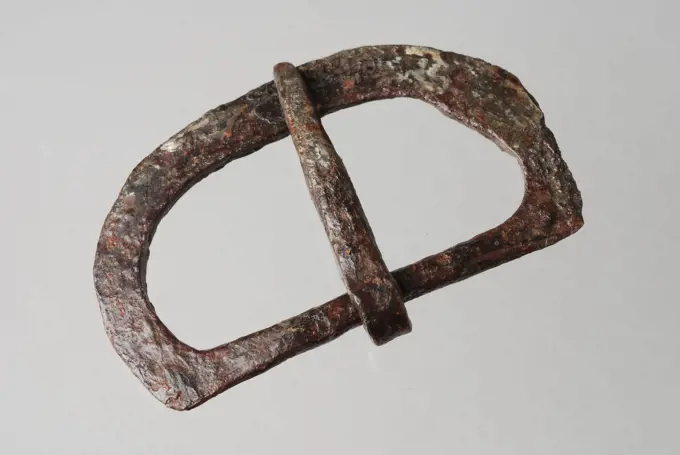
D-shaped buckle of iron, the sting runs over the entire bracket, buckle fastener strand soil finding iron w 6.5 lb angel 4.2 forged Iron clasp in the shape of letter D. Curled angel archeology Capelle aan den IJssel House at Capelle castle belt cavalry track kneepants footwear exhibition bag armor harness horse harness horse fastening Soil discovery: under residential tower oldest housing layer House at Capelle Capelle aan den IJssel 1965.
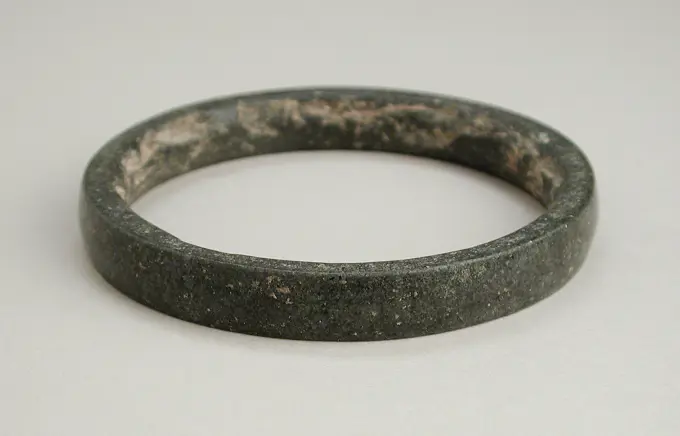
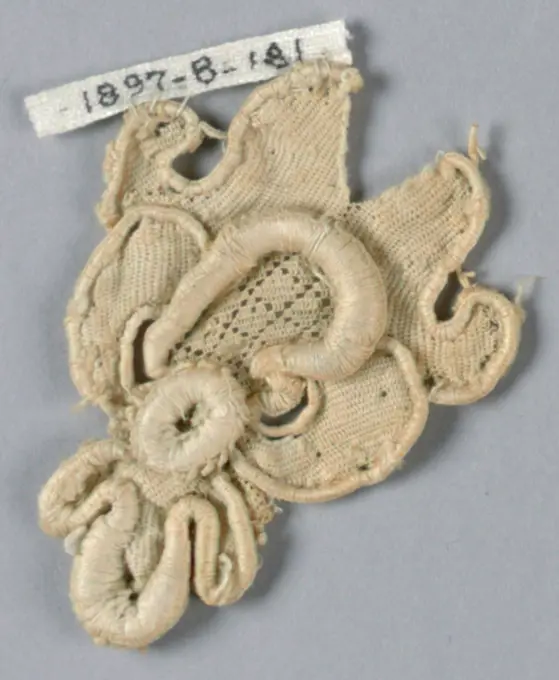
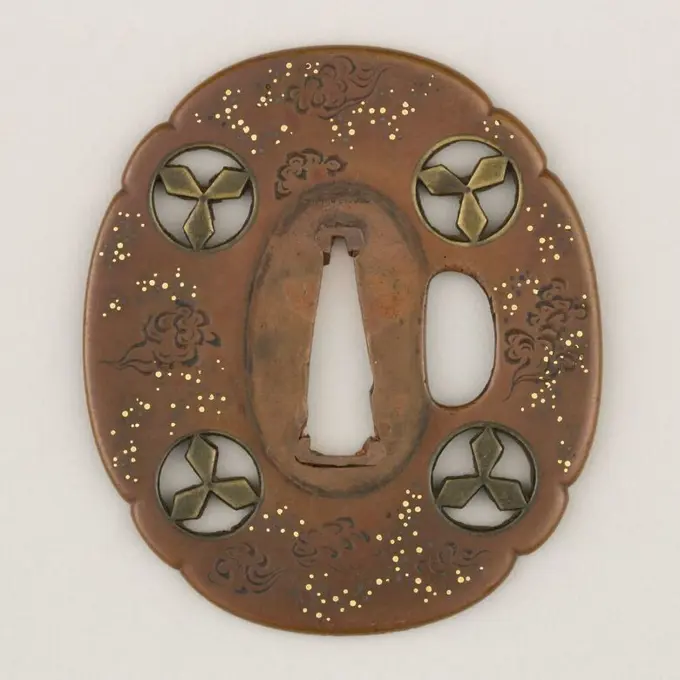
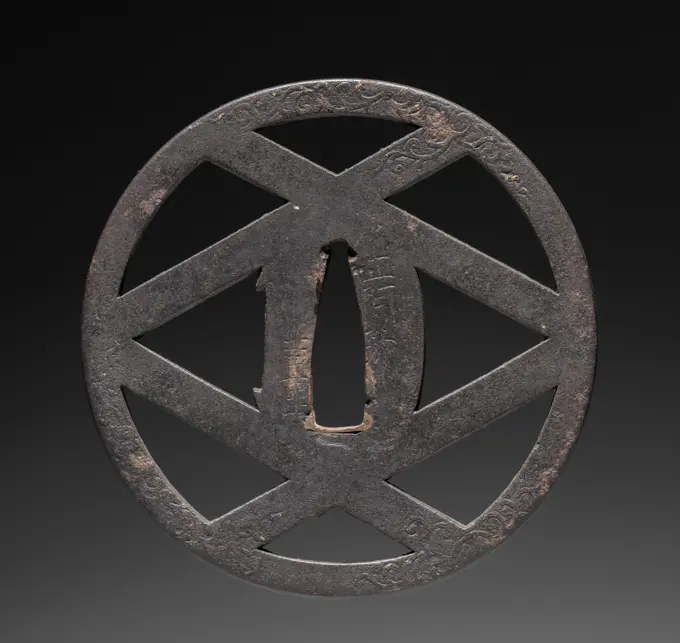
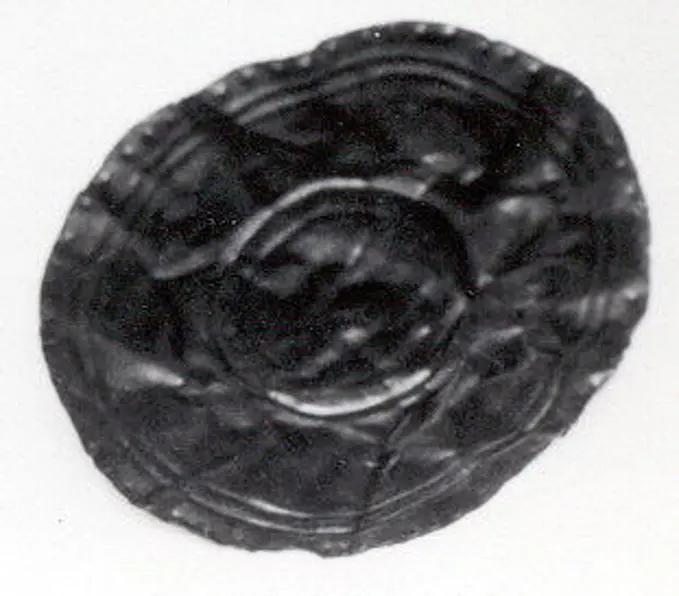
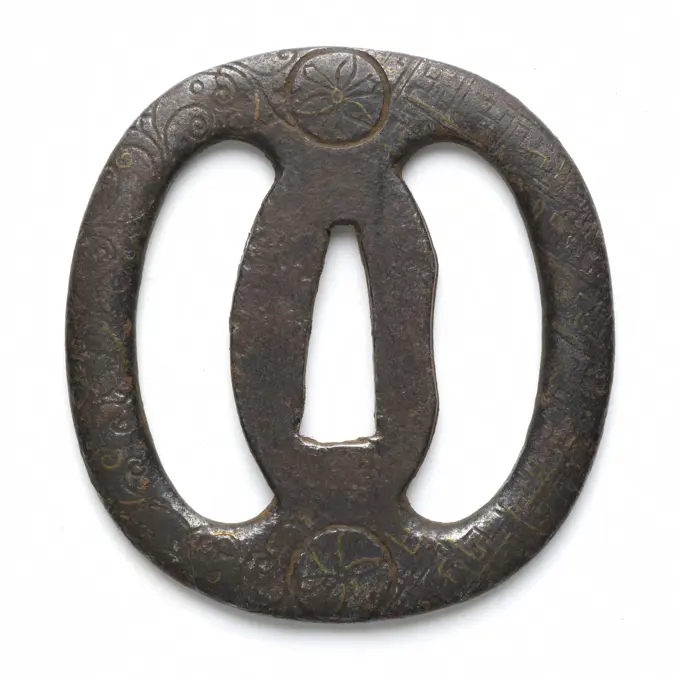
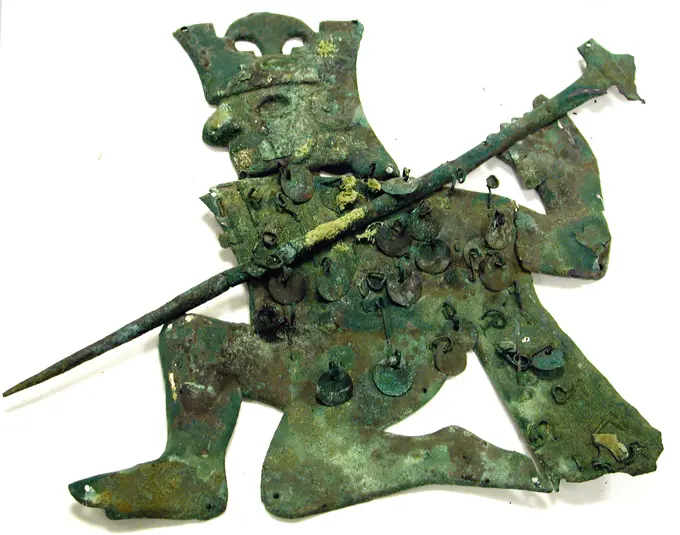
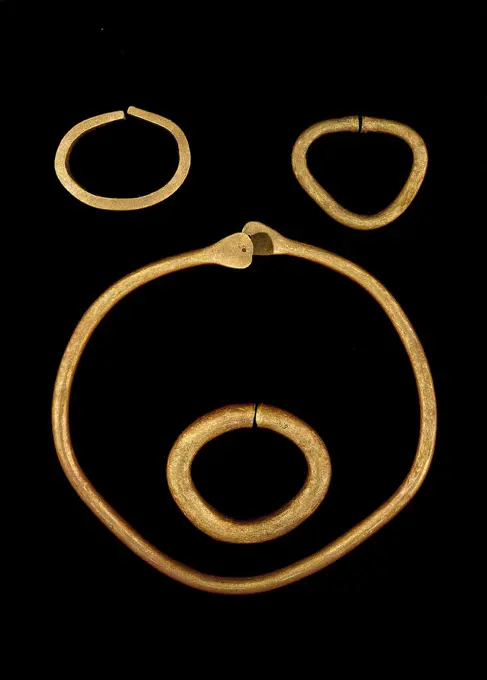
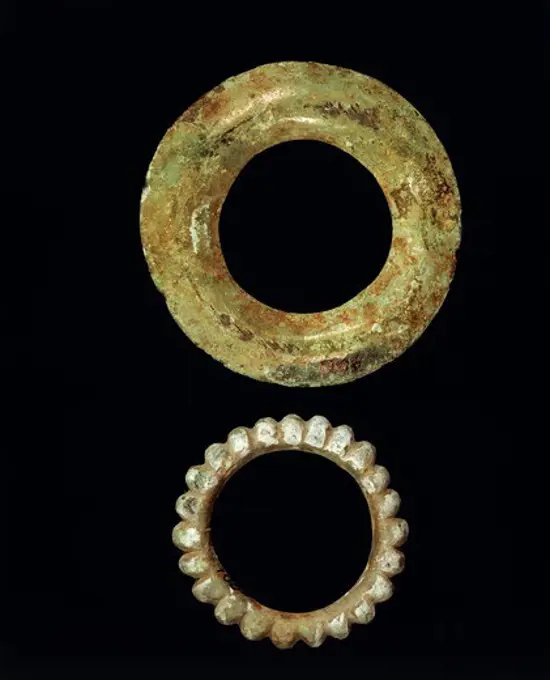
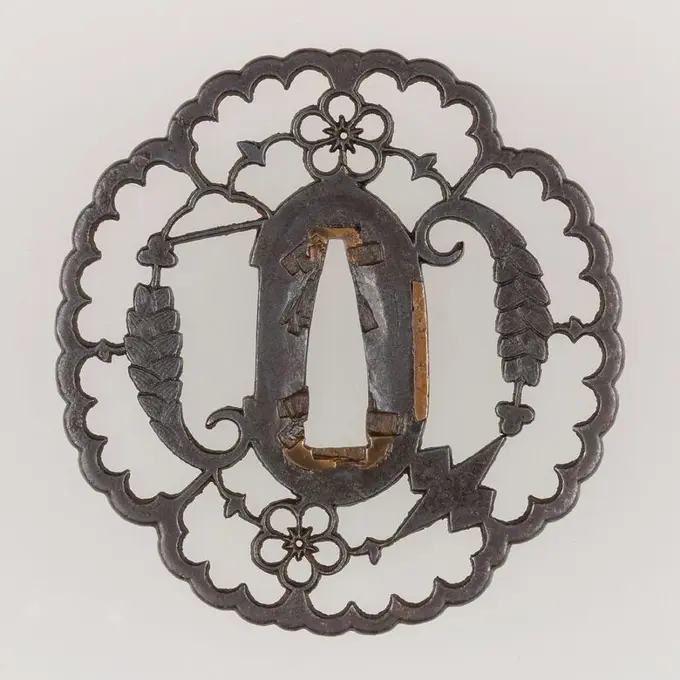
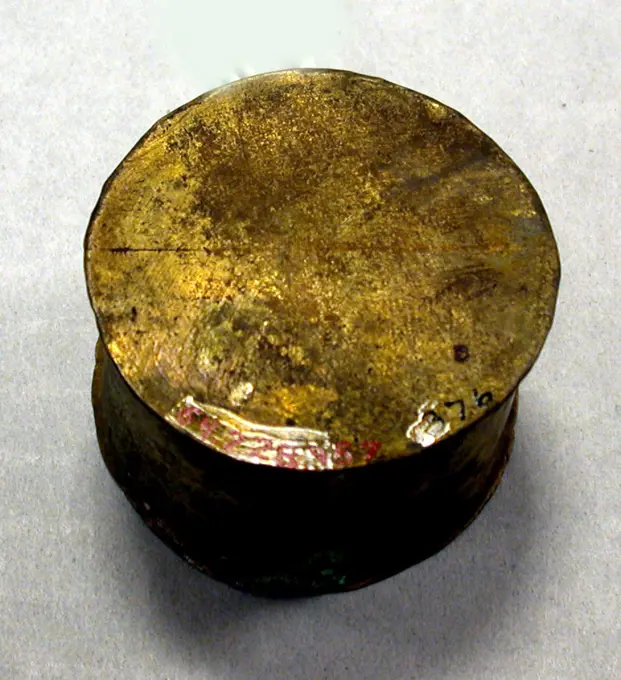
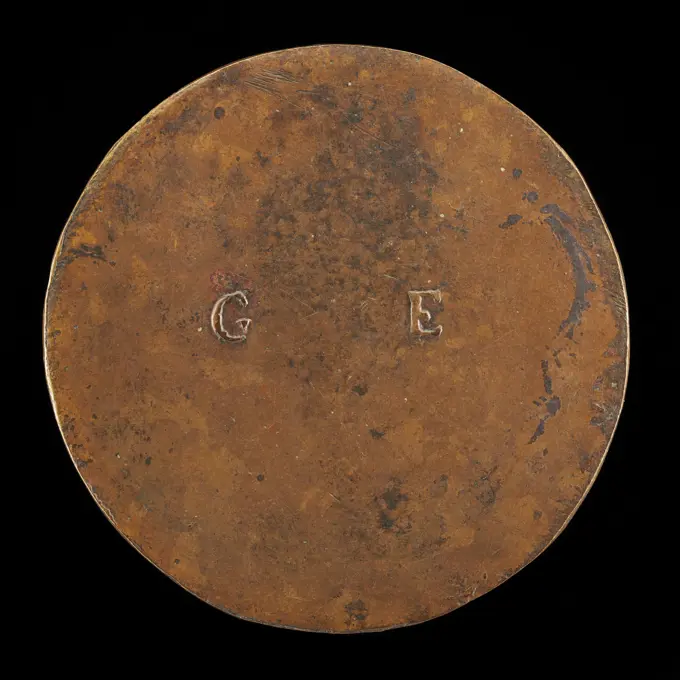
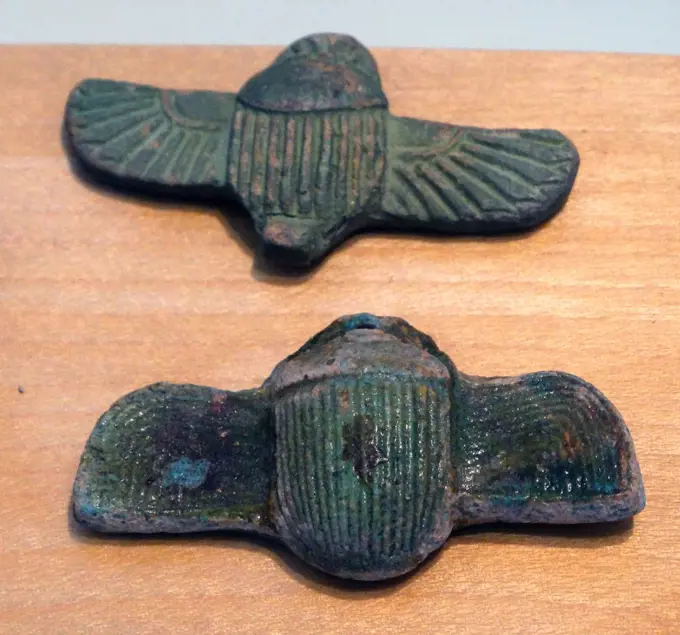
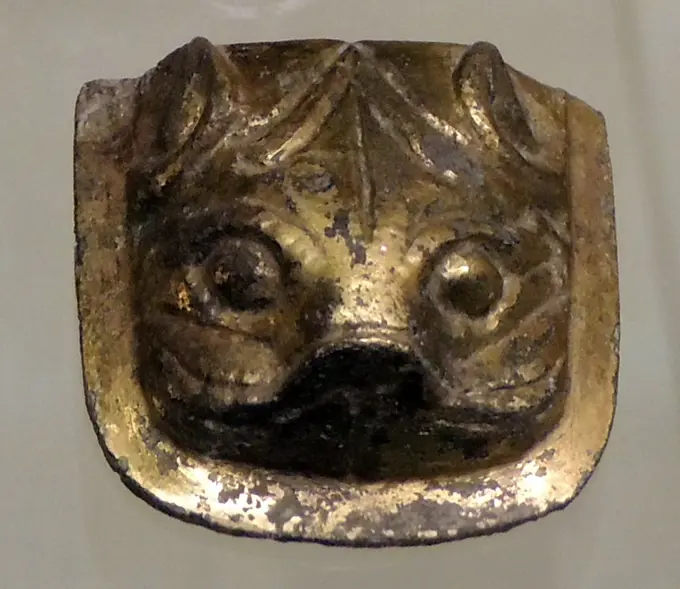
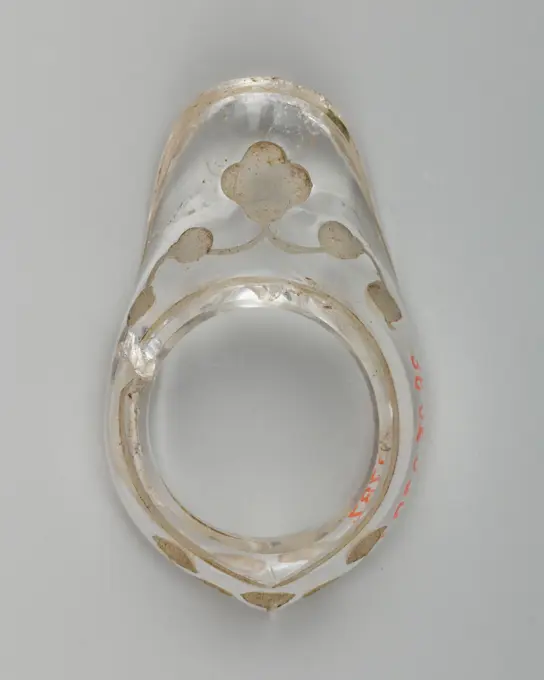
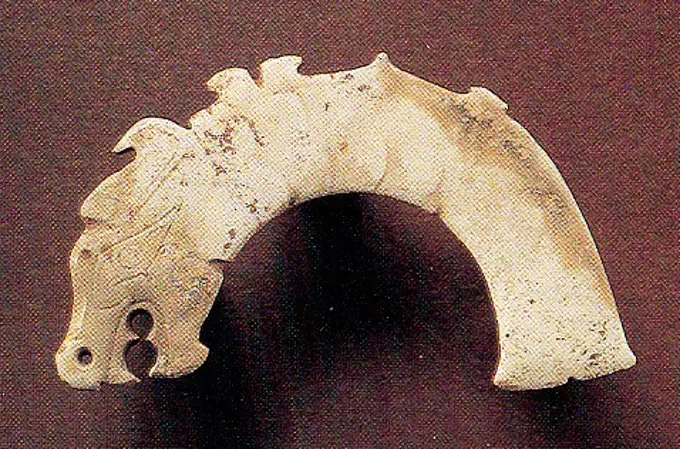
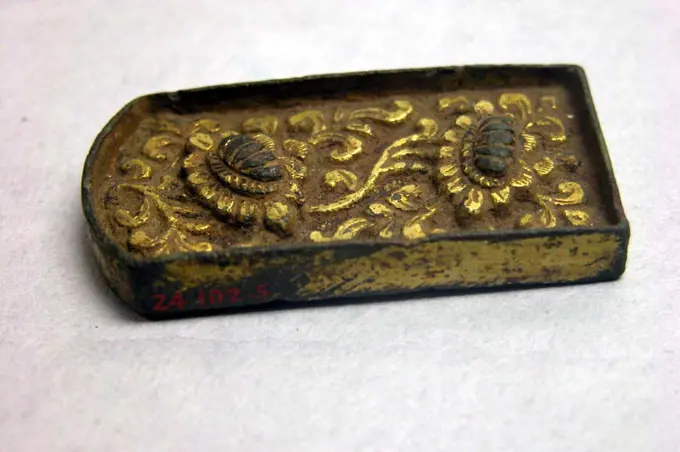
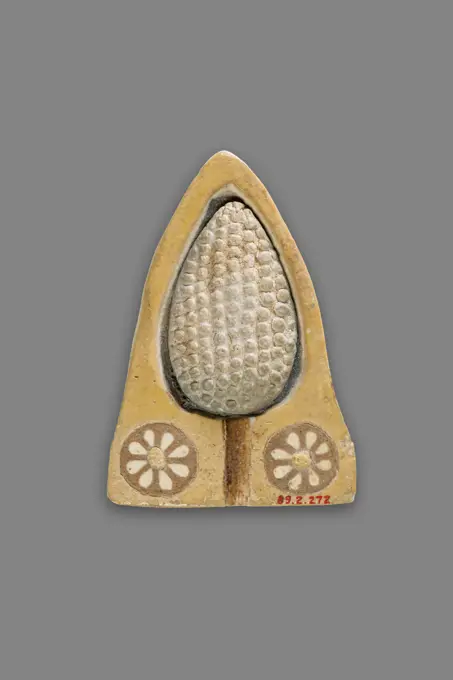
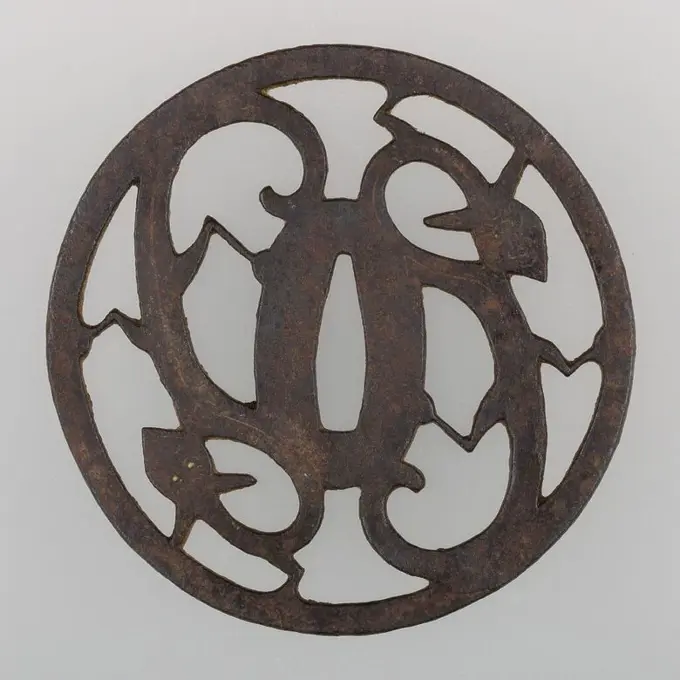
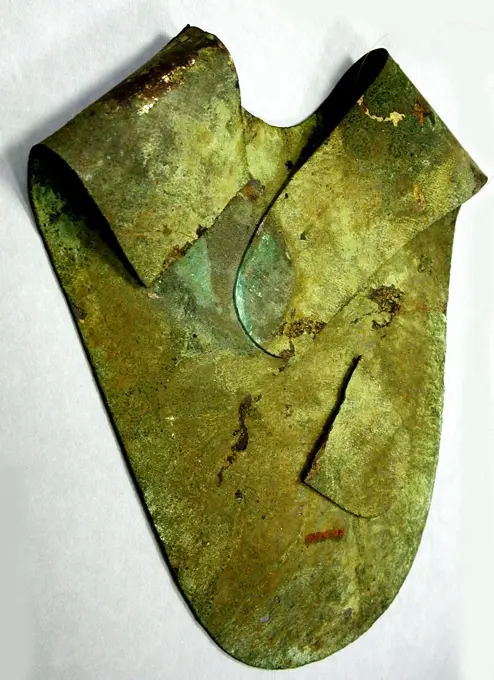
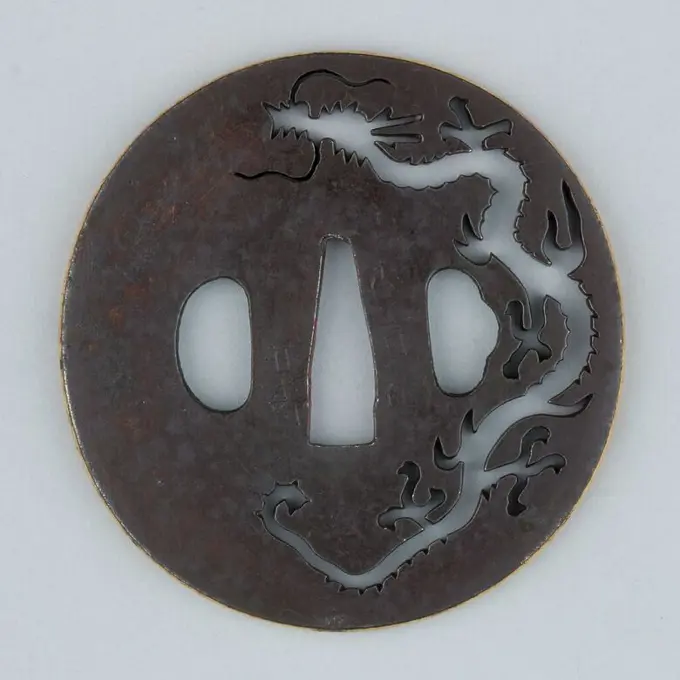
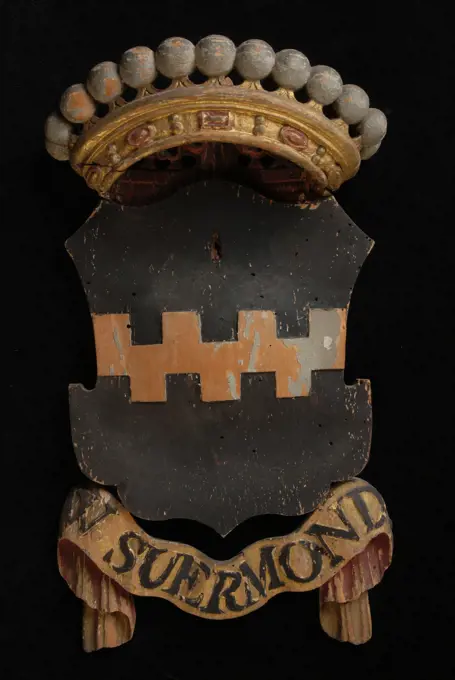
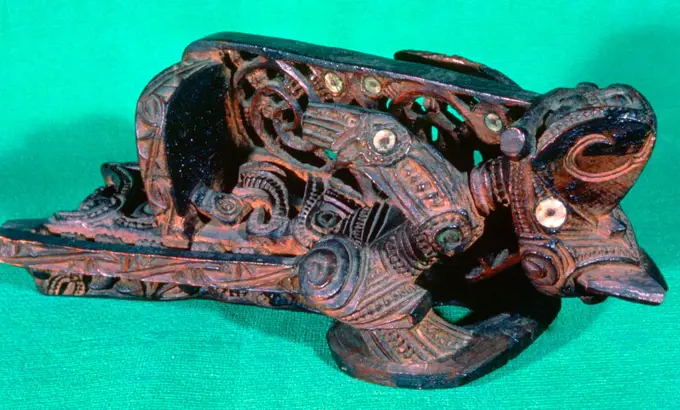
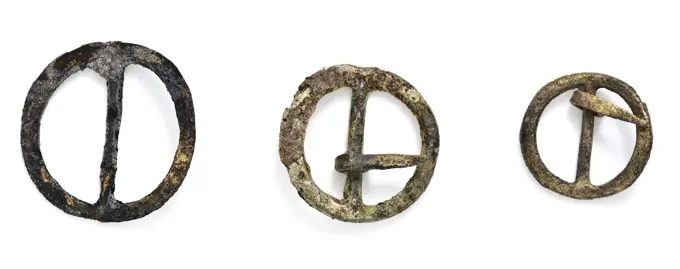
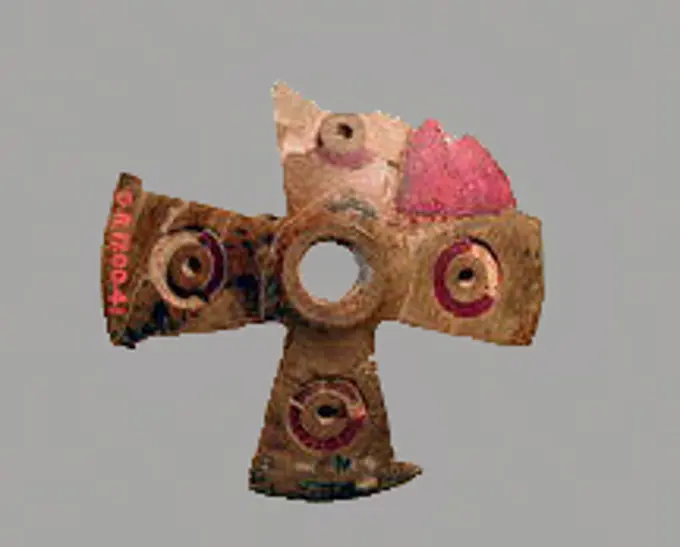
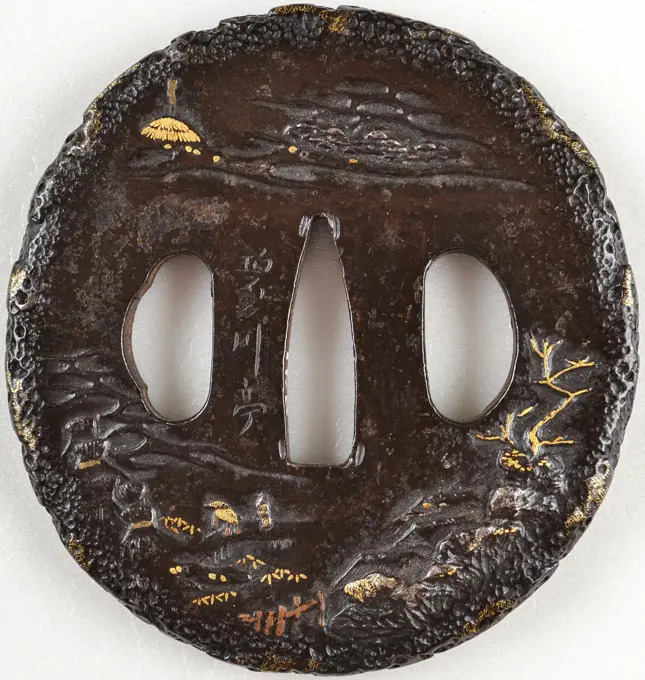
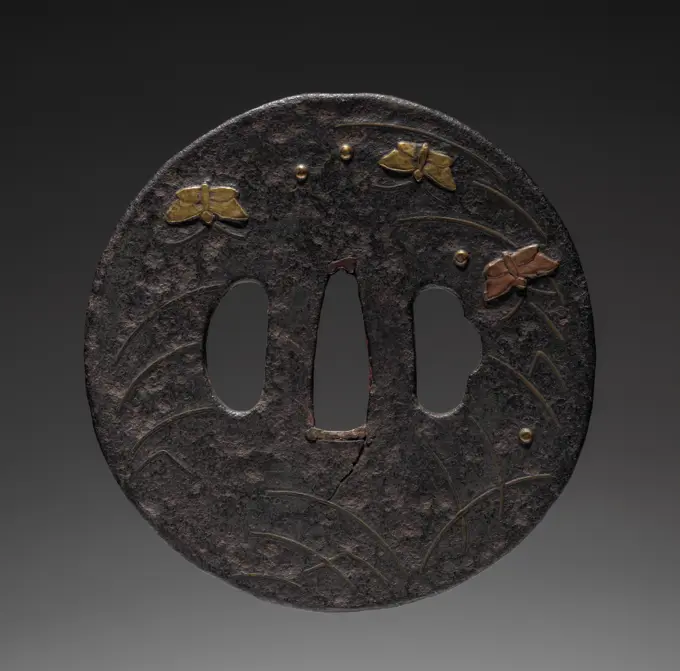
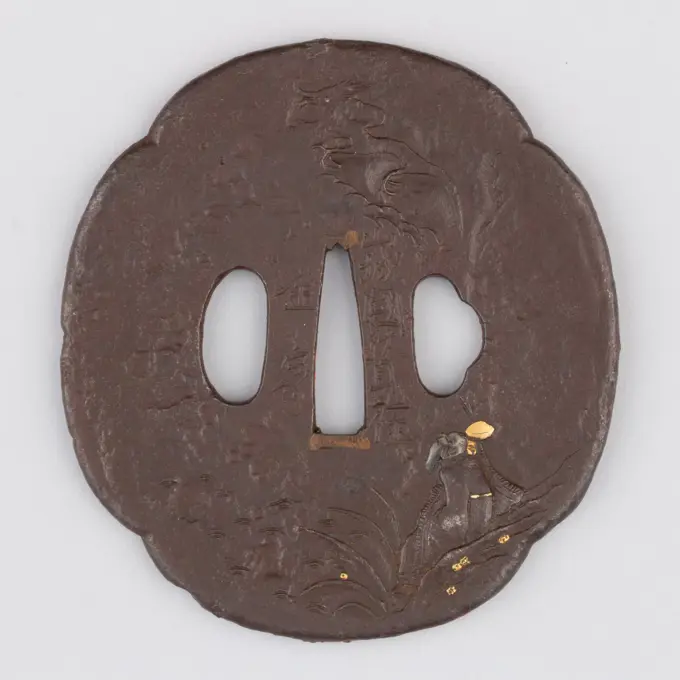
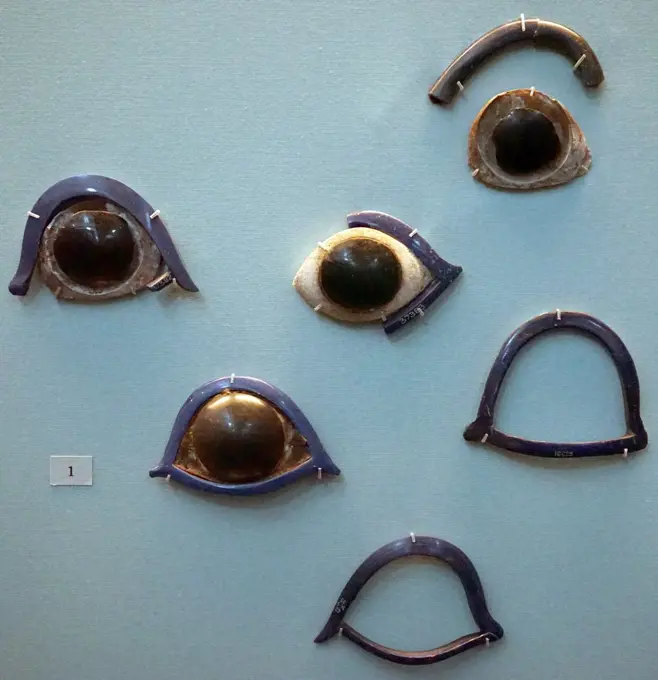
Bronze bracelet with four rings 9th-8th century B.C. Italic The bracelet is a flat undecorated spiral band that terminates in sharp points. The four rings are in graduated sizes.. Bronze bracelet with four rings 256039Bracelet. Northeastern Thailand, Ban Chiang culture, 300 B.C.-A.D. 150. Jewelry and Adornments; bracelets. HardstoneBrooch. Copper alloy between 2,600-2,900 years ago. Hungary, Europe.Fragment (Italy); linenSword Guard (Tsuba). Culture: Japanese. Dimensions: H. 2 7/8 in. (7.3 cm); W. 2 9/16 in. (6.5 cm); thickness 3/16 in. (0.5 cm); Wt. 3.8 oz. (107.7 g). Date: 17th century. Museum: Metropolitan Museum of Art, New York, USA.Decorative door boss and nail, Steel-plated iron, Square type, pierced and embossed with wrought lines. Quadrant leaf design based on old examples. Five notched mushroom-head nail with square shank., Spain, ca. 1550-1700, metalwork, Decorative Arts, Decorative door boss and nailRound Plaque 3rd century B.C.-A.D. 2nd century Vicús. Round Plaque. Vicús. 3rd century B.C.-A.D. 2nd century. Copper (hammered), gilt. Peru. Metal-OrnamentsSword Guard (Tsuba), c. 1615-1868. Japan, possibly Edo period (1615-1868). Iron; diameter: 8.4 cm (3 5/16 in.).Disk ornament 13th-16th century Colombia. Disk ornament 307514Tsuba. Japan. Fer. Paris, Muse Cernuschi. Assessment, armaments, Asian art, Japanese art, weapon custody, art object, metallic object, armament piece, tsubaProfile Warrior Ornament 6th-7th century Moche (Loma Negra). Profile Warrior Ornament 315125Gold diadem, from the Royals Tombs at Vergina, GreecePIEZAS DE ORO BATIDO PROCEDENTE DEL TESORO DE CALDAS DE REYES. Location: ARCHAEOLOGICAL MUSEUM. Pontevedra. SPAIN.Sidewall, Leather, wood, silvered, painted and varnished, Vining floral design. Painted in color on background embossed with basket-weave pattern. Diapered field, varnished silver. Foliage in green, flowers in green and blue. Each of the pieces is directly mounted to a wood panel., Holland, 1750, Wallcoverings, SidewallPrehistory, Italy, Iron Age. Bracelets. From Serra di Nusco, province of Avellino.Sword Guard (Tsuba). Culture: Japanese. Dimensions: H. 3 1/8 in. (7.9 cm); W. 3 in (7.6 cm); thickness 3/16 in. (0.5 cm); Wt. 2.5 oz. (71 g). Fittings maker: Attributed to the Kyosukashi School (Japanese). Date: late 16th century.This tsuba feautres an openwork design of plum blossoms, myoga sprouts, and clover. Museum: Metropolitan Museum of Art, New York, USA.Sword Guard (Tsuba) ca. 1615-1868 Japanese A tsuba is a sword guard and part of a sword mounting. It is mounted between the swords blade and grip to protect the users hands.. Sword Guard (Tsuba) 33425Necklace ca. 1920 China (Miao). Necklace 155177Bracelet with duck-headed terminals ca. 8th-7th century B.C. Iran. Bracelet with duck-headed terminals 322565Hammered Silver Miniature Drum 11th-mid-15th century Chimú or Chancay. Hammered Silver Miniature Drum 308968Bank bank vole (Myodes glareolus) ate hazelnutsCamillo Mariani, Inscription (reverse) Inscription reverseOrnament Chimú or Chancay 12th-15th century View more. Ornament. Chimú or Chancay. 12th-15th century. Silver (hammered). Peru. Metal-OrnamentsGold Weight: Geometric 18th-19th century Akan peoples. Gold Weight: Geometric 317677Spindle whorl New Kingdom, Ramesside ca. 1295-1070 B.C. View more. Spindle whorl. ca. 1295-1070 B.C.. Limestone. New Kingdom, Ramesside. From Egypt, Memphite Region, Lisht North, Cemetery, MMA excavations, 1913-14. Dynasty 19-20Ancient Egyptian Heart scarabs from the reigns of Thutmose III and Ramesses II. The dung beetle was one of the creatures with the greatest symbolic weight in ancient Egyptian culture.Gilt bronze fittingsshaped as tiger heads;Chinese, Han Dynasty. 1st century BCLoop.Ax Blade (Celt) 1500-500 B.C. India. Ax Blade (Celt). India. 1500-500 B.C.. Copper. MetalworkArcher's Ring 17th-18th century Indian. Archer's Ring. Indian. 17th-18th century. Crystal, gold. Archery Equipment-Archer's RingPendant in the shape of an animal with fish tail 11th-10th century B.C. China. Pendant in the shape of an animal with fish tail 44780Decorative belt plaque China. Decorative belt plaque 61171Urn, c. 1815. Flight, Barr and Barr (British). Artificial porcelain; overall: 18.6 x 11.4 cm (7 5/16 x 4 1/2 in.).Faience Inlay ca. 1184-1153 B.C. New Kingdom, Ramesside This decorative tile may be associated with the ceramic art of the reign of Ramesses III. It was probably used to form a horizontal pattern of alternating lily buds like this one, leaves, and open blossoms.. Faience Inlay. ca. 1184-1153 B.C.. Faience. New Kingdom, Ramesside. From Egypt. Dynasty 20Sword Guard (Tsuba). Culture: Japanese. Dimensions: Diam. 3 7/16 in. (8.7 cm); thickness 3/16 in. (0.5 cm); Wt. 3 oz. (85 g). Date: 15th century. Museum: Metropolitan Museum of Art, New York, USA.Pectoral 3rd century B.C.-A.D. 2nd century Vicús. Pectoral 315498Ring Figure of Serpent Uto ( ) 1390 BCE Egypt. Faience . Ancient EgyptianSword Guard (Tsuba). Culture: Japanese. Dimensions: H. 3 in. (7.6 cm); W. 2 7/8 in. (7.3 cm); thickness 3/16 in. (0.5 cm); Wt. 4.4 oz. (124.7 g). Date: 17th century. Museum: Metropolitan Museum of Art, New York, USA.Carved wooden crowned coat of arms including the name W. Suermond, coat of arms information form woodcarving sculpture footage wood paint gold, Family coat of arms of W. Suermondt with the shield in black crenellated and counter-tilted crossbar with above it crown with eleven pearls name under coat of arms: W. Suermond Suermondt heraldry regent Rotterdam City Center Stadsdriehoek Hoogstraat Gasthuis Rotterdam.Plate and Nail 15th-16th century European. Plate and Nail. European. 15th-16th century. Iron. Metalwork-IronDouble Handle from a Pail with Appliques. UnknownMaori tribal wooden canoe prow, with haliotis shell inlays. Circa 1900. New ZealandSword Guard (Tsuba). Culture: Japanese. Dimensions: H. 3 in. (7.6 cm); W. 2 3/4 in. (7 cm); thickness 3/16 in. (0.5 cm); Wt. 3.9 oz. (110.6 g). Date: ca. 1615-1868. Museum: Metropolitan Museum of Art, New York, USA.Three small buckles, round with middle post, clasp fastener component soil find brass copper metal largest, cast sawn 3 buckles: round bracket with middle post to which the angel archeology Rotterdam railway tunnel fastening fastening Soil discovery: railway tunnel Rotterdam.Hammered Silver Collar Ornament () 8th-mid-16th century Peru; north coast (). Hammered Silver Collar Ornament () 309059Cross 3rd-12th century. Cross 446055Ivory and amber ornament on bronze surface 7th-6th century B.C. Etruscan Bronze disk with ivory cross inlaid with amber circles and amber between arms of cross.. Ivory and amber ornament on bronze surface. Etruscan. 7th-6th century B.C.. Bronze, amber, ivory. Archaic. Miscellaneous-AmberStamp. Culture: Atlantic Watershed. Dimensions: H. 2 1/16 x W. 2 in. (5.3 x 5.1 cm). Date: 5th-6th century. Museum: Metropolitan Museum of Art, New York, USA.Sword Guard (Tsuba) with Maple Leaves on River, c. 1615-1868. Japan, possibly Edo period (1615-1868). Iron; diameter: 7 cm (2 3/4 in.).Pierre-Jules Cavelier (1814-1894). Medal. Madame Eugénie C. Laverne. Metal, Bronze, 1839. Museum of Fine Arts of the city of Paris, Petit Palais. 58754-14 Avers, bronze, medal, metal, numero inventory, numismaticsVarious wood buttonsSword Guard (Tsuba) with Sansui Nanga (Mountain and Seascape) Design 18th century Japanese This sword guard is similar in design and interpretation to works by sword fittings makers who were based in Hizen province (present-day Nagasaki Prefecture). Its signature is extremely rare and provides a valuable reference for the study of Hizen Nagasaki-based sword fittings makers, some of which immigrated to Japan from places such as Ming and Qing China and Joseon Korea.. Sword Guard (Tsuba) with Sansui Nanga (Mountain and Seascape) Design. Japanese. 18th century. Iron, gold. Sword Furniture-TsubaSpindle whorl ca. 1295-1070 B.C. New Kingdom, Ramesside. Spindle whorl. ca. 1295-1070 B.C.. Limestone. New Kingdom, Ramesside. From Egypt, Memphite Region, Lisht North, Cemetery, MMA excavations, 1913-14. Dynasty 19-20Bronze ring with inscriptions EN. Diameter 2 cm Width 0, 6 cm ( 1st - 4 th CE ) - Roman period, from the " Villa del Val" - Archaeological site of Complutum in Alcalá de Henares ( Madrid ). SPAIN.String of 9 Eyed Beads 9th-15th century Islamic Period. String of 9 Eyed Beads. 9th-15th century. Glass. Islamic Period. From EgyptBracelet 6th-8th century. Bracelet 446226Game piece ca. 1981-1640 B.C. Middle Kingdom. Game piece. ca. 1981-1640 B.C.. Blue faience. Middle Kingdom. From Egypt, Memphite Region, Lisht North, Cemetery, MMA excavations, 1920-22. Dynasty 12-13Sword Guard, 1615-1868. Japan, Edo period (1615-1868). Iron; diameter: 8.4 cm (3 5/16 in.).Sword Guard (Tsuba) ca. 1615-1868 Japanese A tsuba is a sword guard and part of a sword mounting. It is mounted between the swords blade and grip to protect the users hands.. Sword Guard (Tsuba) 33486Swan group (Swan Group). Set of miniature vases: "Lékanè with lid". Ceramics with black figures, without incisions, purplish red highlights, 550-540 BC. AD Museum of Fine Arts of the City of Paris, Petit Palais. 99932-3 Antiquity, ceramic with black figures, rehabilitated red purplish, vieme life VI 6th 6th 6th century before av. JC, ancientNecklace ca. 9th century B.C. Iran. Necklace 325304Eyes for the insertion into bull mummy-masks from the Ptolemaic period. Dated 350 BC