Historical Metal Objects

Ancient metal artifacts including fibula, handles, and a key, showcasing intricate designs and historical significance, with various materials like bronze and iron.

Oval buckle with wavy frame, shoe buckle, buckle fastener component soil find tin metal, cast Oval buckle with wavy frame shoe buckle On the middle post an angel and remnant of bounce. Triangular accents on the height of the middle post archeology Rotterdam rail tunnel attaching dressing shoes fastening shoe Soil discovery: trajectory rail tunnel Rotterdam.
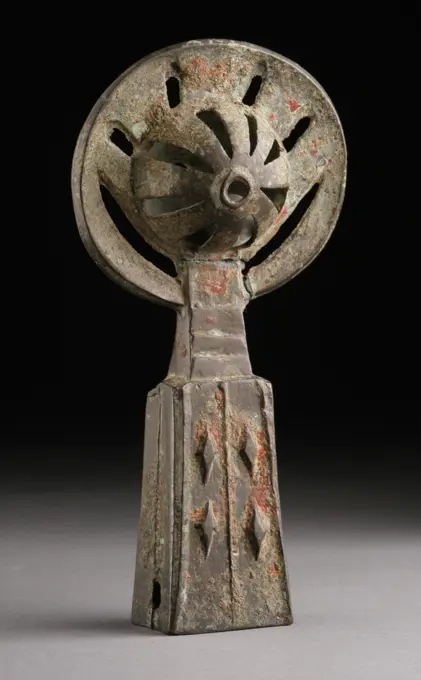
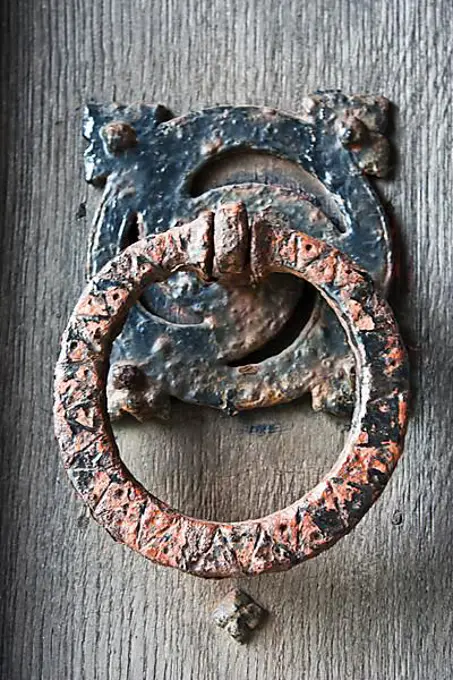
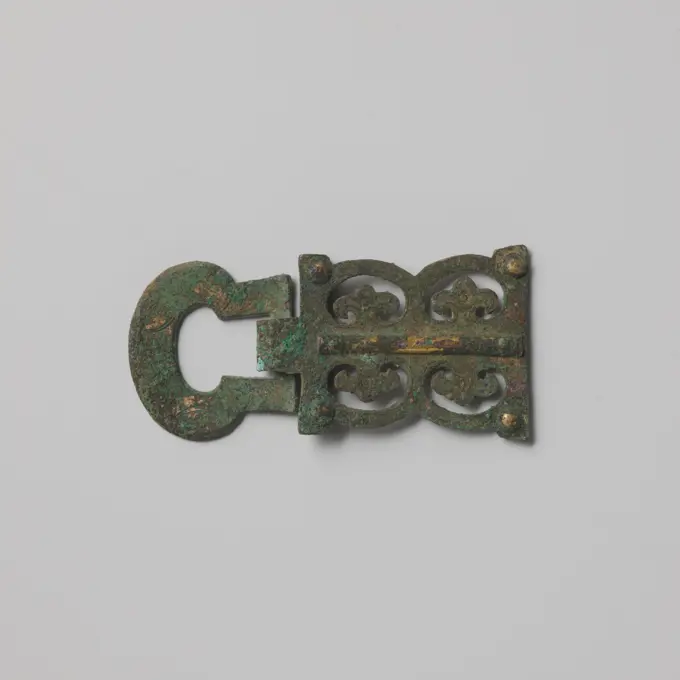
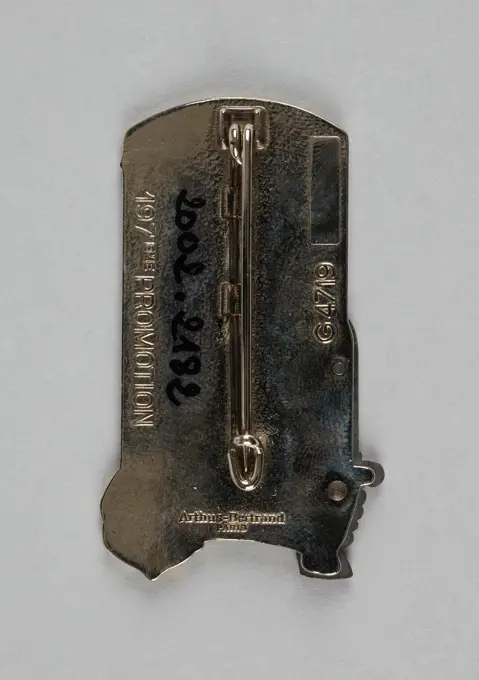
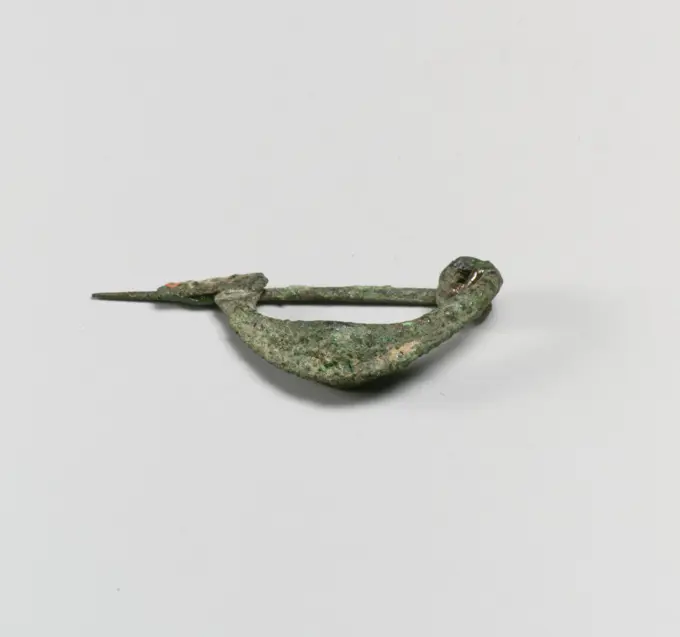
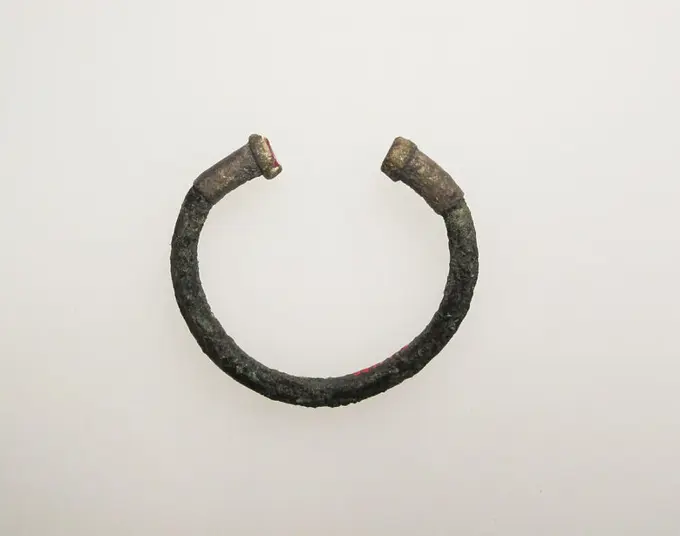
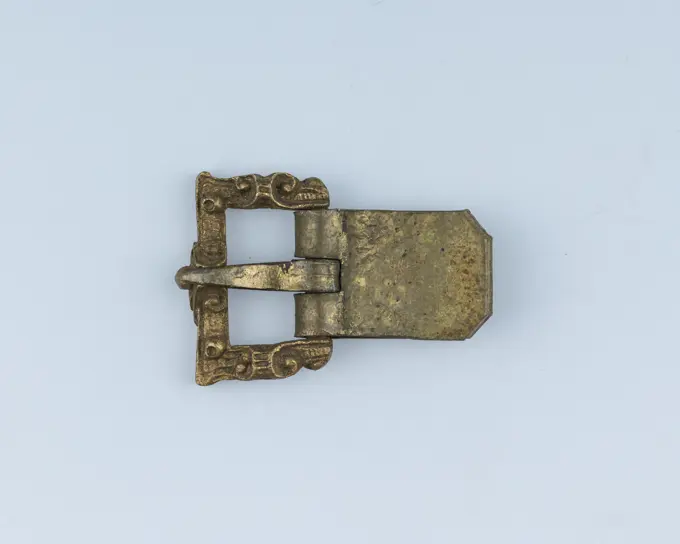
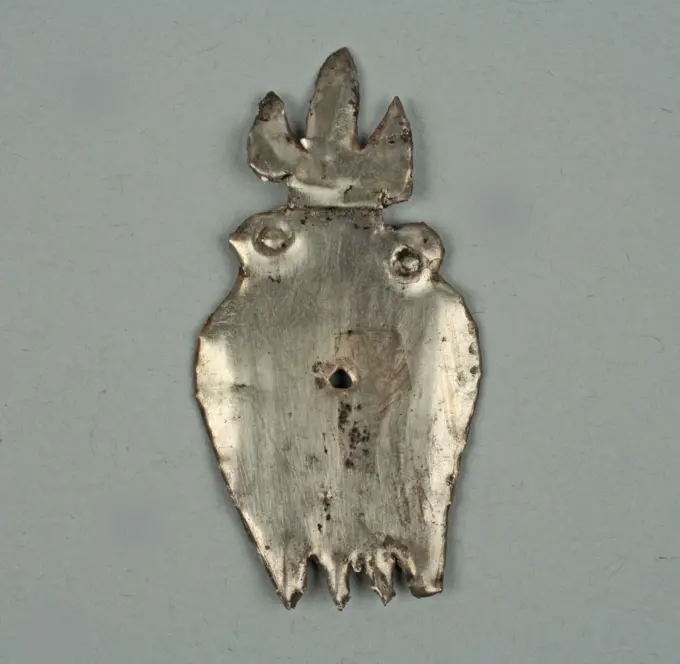
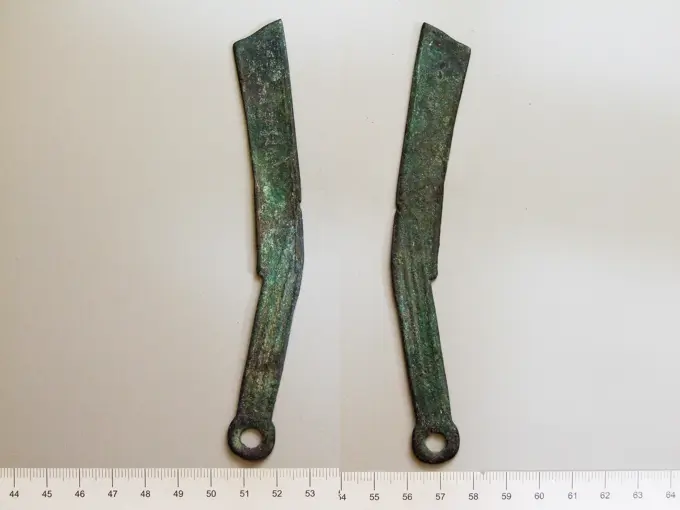
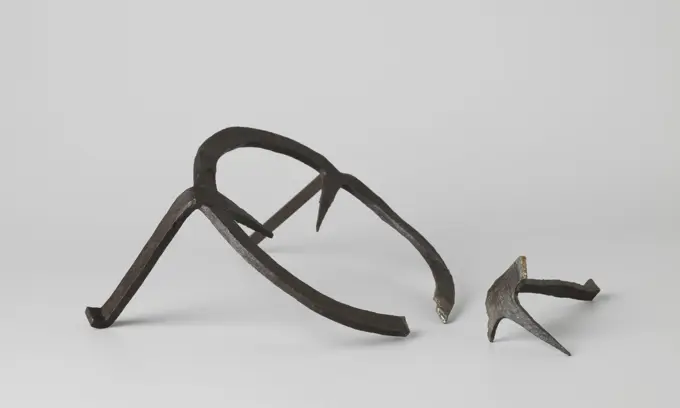
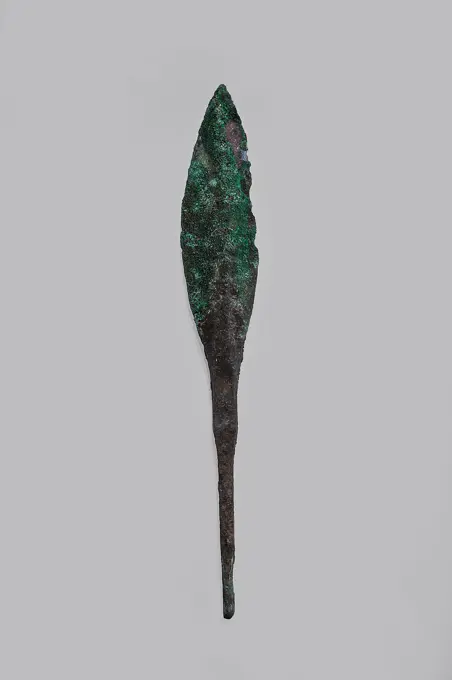
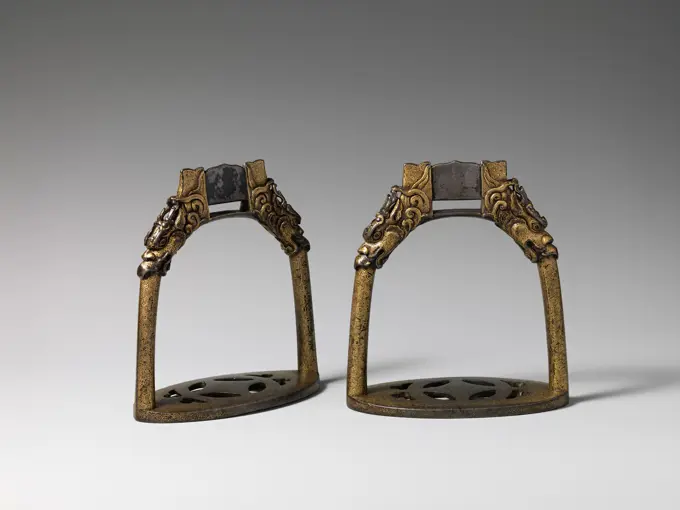
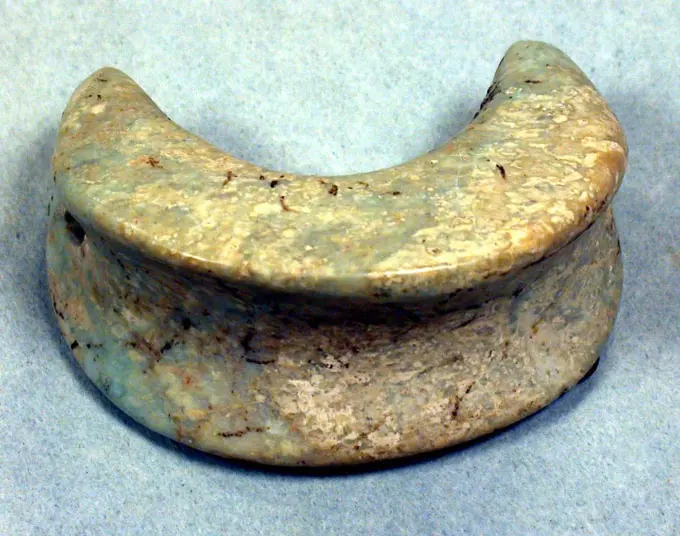
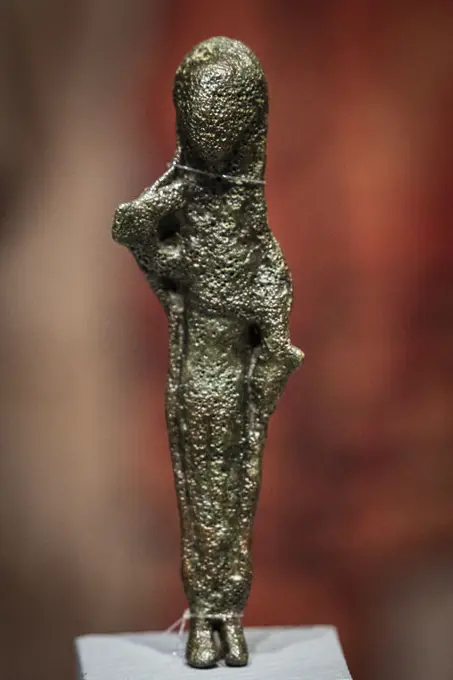
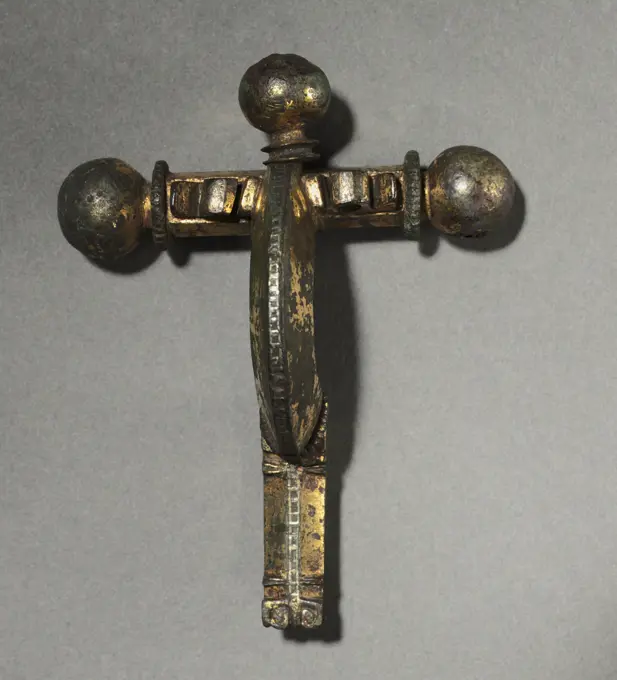
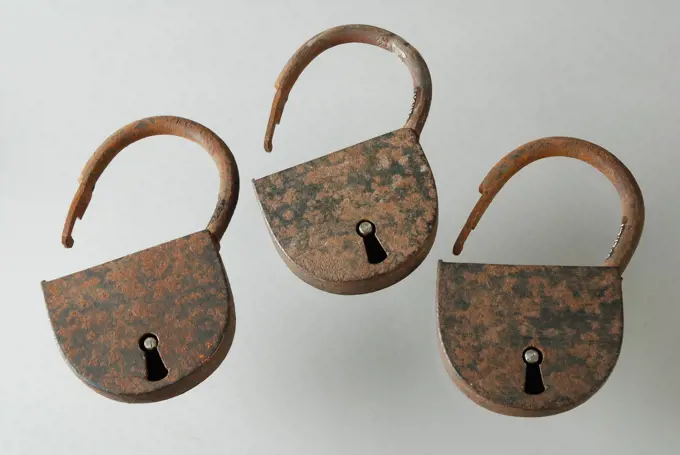
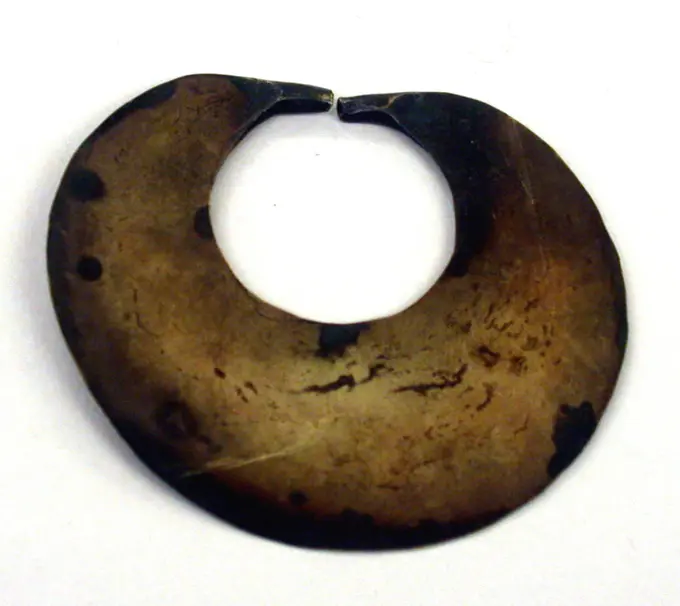
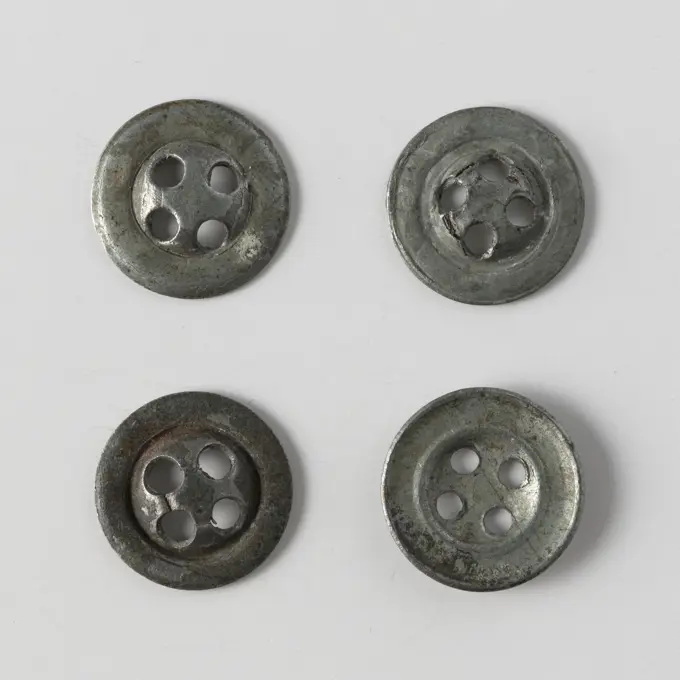
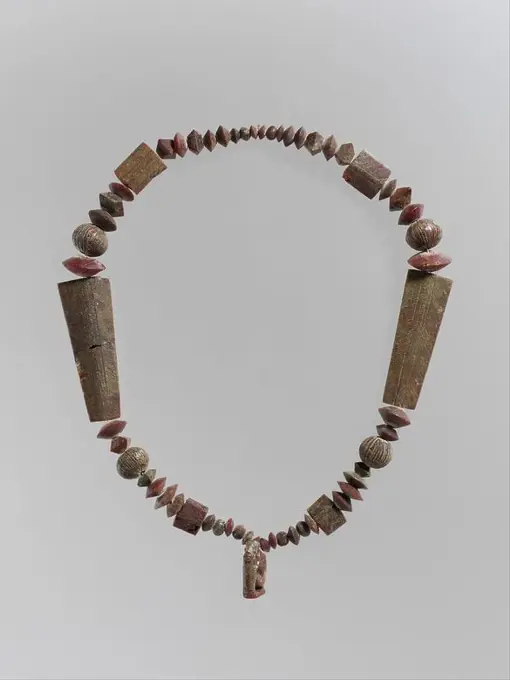
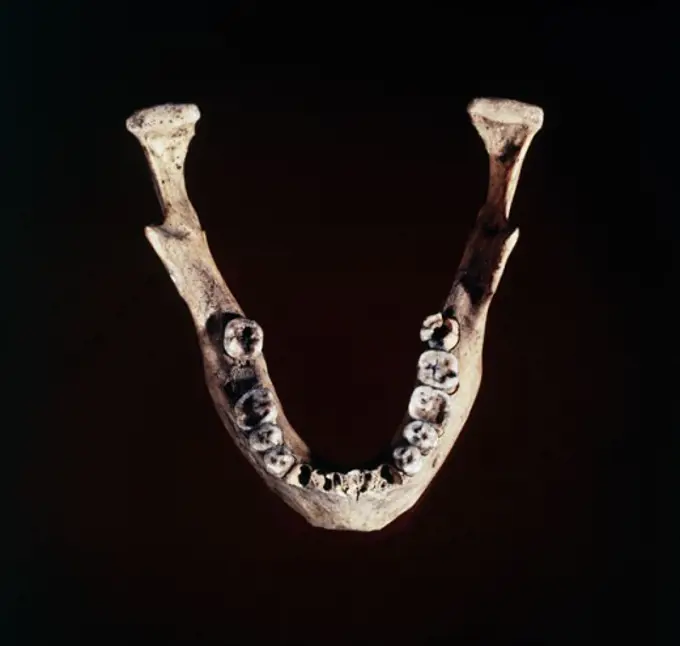
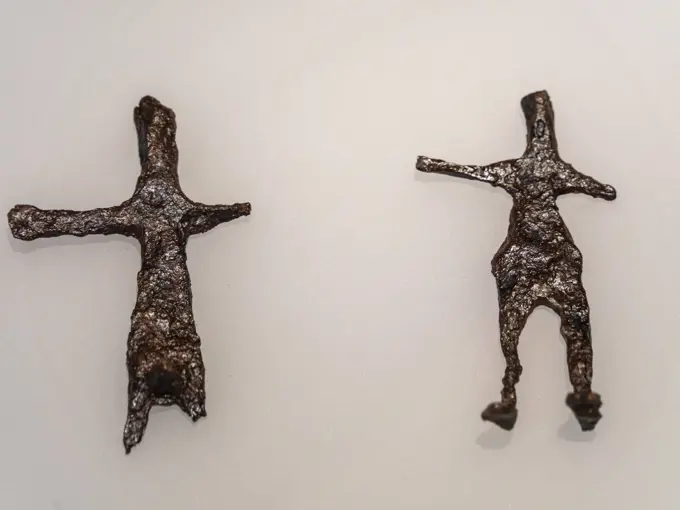
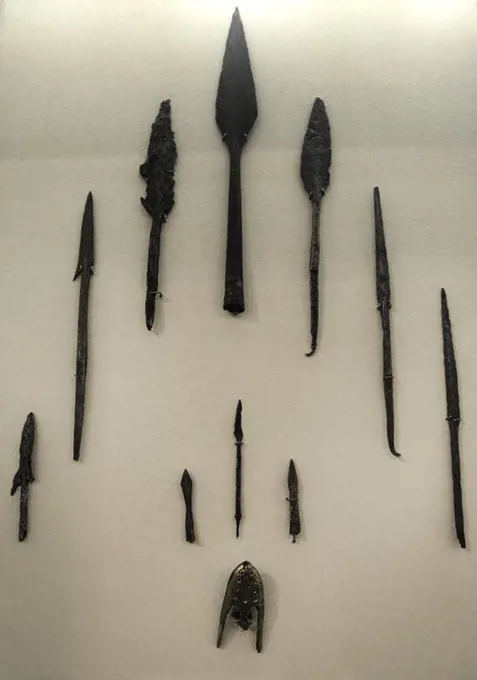
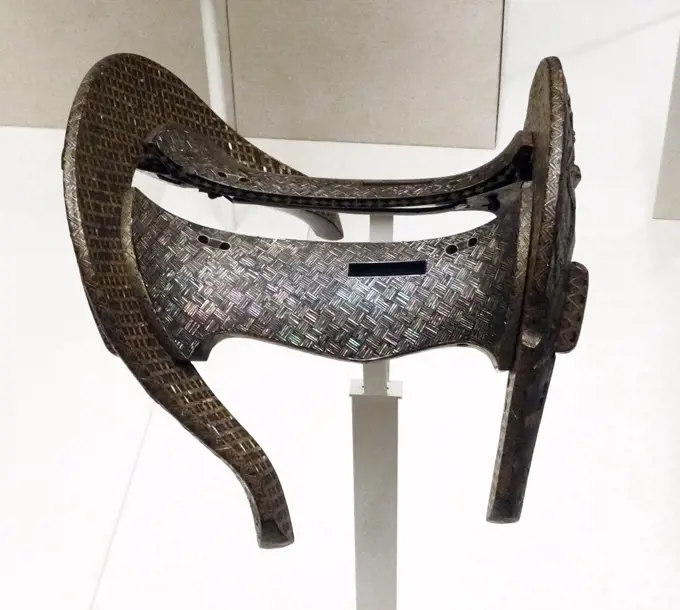
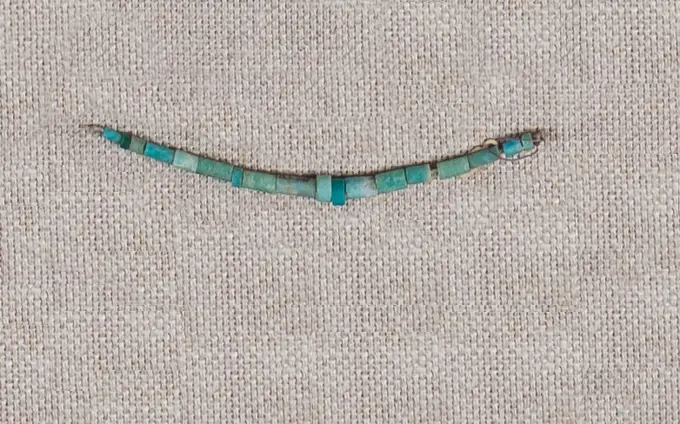
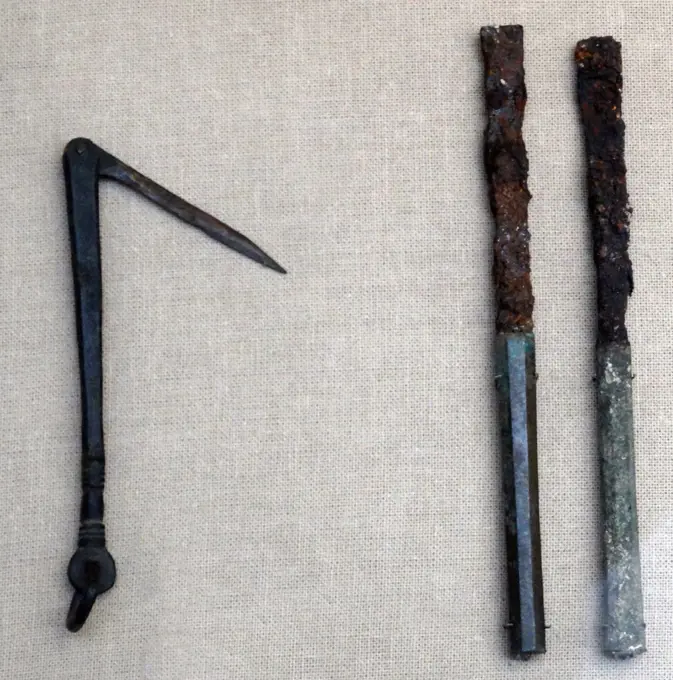
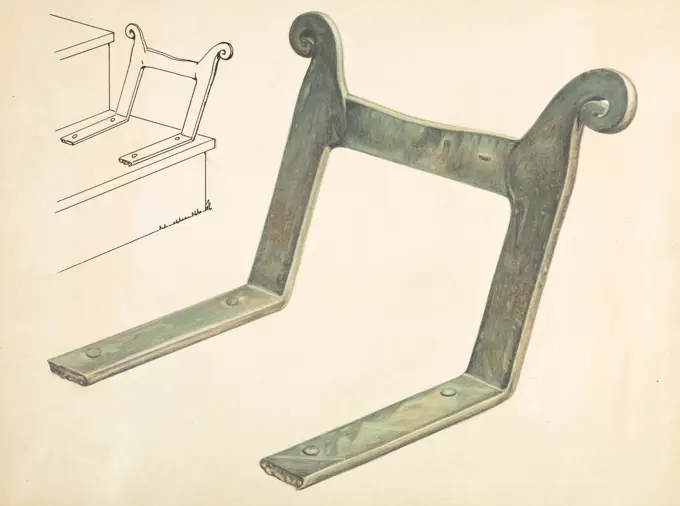
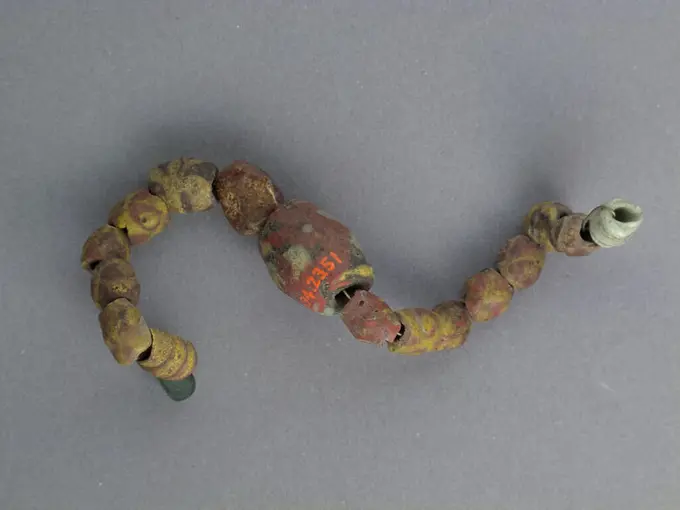
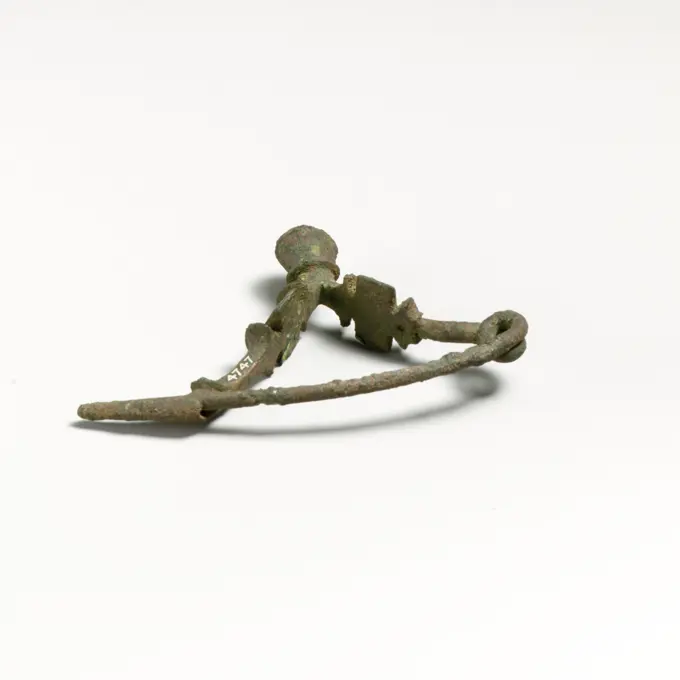
Six arms -shaped harness ornament. Surmounted by a horny human head between two animal heads. Bronze. LURISTAN. The 1st-Dri millennia av. Paris, Cernuschi museum. 35388-4 Bronze, harness ornament, six -arms wheel, cornued human head, animalHorse Fitting with Jingle. China, Early Western Zhou dynasty, about 1050-950 B.C.. Tools and Equipment; horse trappings. Cast bronzeOld knocker of the Glasgow Cathedral, side doorFragment tobacco pipe. Fragment tobacco pipe with a crown and the letters C V D and N shown on the head. Of the excavations at the Hofstede Arentsburg 1827-1831 under the supervision of professor Reuvens.Pair of silver bracelets ending in snake's heads late 6th-5th century B.C. Greek Bracelet with snakes' heads.. Pair of silver bracelets ending in snake's heads. Greek. late 6th-5th century B.C.. Silver. Classical. Gold and SilverBuckle, anonymous, -206 - 220 Spoken. China bronze (metal). gilding (material) gilding Spoken. China bronze (metal). gilding (material) gildingArthus-Bertrand (Company), Insigne of the 197th Ensoa Sergent-Chief Guillaud, former RMT (attributed title), 1986. Metal, Metal of synthetic origin. General Leclerc Museum of the Liberation of Paris - Jean Moulin Museum.Ring. China. Date: 600 BC-400 BC. Dimensions: 2 1/4 × 1 9/16 × 1/8 in. Jade. Origin: China. Museum: The Chicago Art Institute, Chicago, USA.Fibula, boat-shaped type 8th-6th century B.C. Italic The bow is solid and decorated on its upper surface with a ridge.. Fibula, boat-shaped type. Italic. 8th-6th century B.C.. Bronze. BronzesBracelet with red glass paste. Culture: Roman. Dimensions: Other: 2 1/16 × 2 3/16 × 3/16 in. (5.2 × 5.5 × 0.6 cm)Diameter (diameter of posts): 5/16 in. (0.8 cm). Date: 3rd century A.D. . Museum: Metropolitan Museum of Art, New York, USA.Ring with Horns 300 B.C.-A.D. 400 Thailand. Ring with Horns. Thailand. 300 B.C.-A.D. 400. Bronze. Late period. JewelryBuckle 16th century German. Buckle. German. 16th century. Brass. Miscellaneous-Buckles & OrnamentArrow head. nieznany warsztat bliskowschodni, workshopBuckle 3rd century B.C. China. Buckle 61227Metal buckle, rectangular and curved, processed frame, buckle fastener component soil find brass copper tin metal, cast Buckle with rectangular bracket and center post Halved curved model. Edited list on the sides with chessboard decor embossed archaeology Rotterdam railroad tunnel attaching fasten garments Soil discovery: trajectory rail tunnel Rotterdam.Textile Ornament 14th-15th century Chimú. Textile Ornament 307623Eagle Pendant 11th-16th century Veraguas. Eagle Pendant 312922Brooch -Knife from Board ofRevenue.  Mint: Board of Revenue Artist: UnknownStrives, ring -shaped with three pointed bent feet, anonymous, c. 1590 - c. 1596  Strives, ring -shaped with three pointed bent feet. A strike is a coaster for a pan but can also mean a roasting grid. Trefts or affects Etymological Three Foot.  iron (metal) forging  Nova Zembla. Saving Huys21 javelin caves;  500-400 BC (-500-00-00--400-00-00);Guttmann's deposit, armyFibula Cypriot. Fibula 242635Karte von Pennsylvania auf rostigem Metall - Map of Pennsylvania on rusty metal Karte von Pennsylvania auf rostigem Metall - Map of Pennsylvania on rusty metal Copyright: xZoonar.com/lantapixx 14976614Pair of Stirrups ( ) probably 17th century Chinese In addition to the sculptural chiseling of the dragon heads on each stirrup, the upright posts are damascened in gold with a hexagonal design representing stylized armor, a pattern that is seen frequently on luxury objects in China and Tibet. The treads of the stirrups are pierced with the design of a symbolic jewel, representing prosperity.. Pair of Stirrups ( ). Chinese. probably 17th century. Iron, gold. Equestrian Equipment-StirrupsFinger Grip before 16th century Colima (). Finger Grip 317420Light, anonymous, 1590 - 1610 The object consists of the following five parts: the attachment section on the wall, two pieces, which form the arm, the part under the fat catcher, which is riveted with a copper pin on the arm, the fat catcher with the candle pin. The round wall area is decorated with grunts. The first part of the arm consists of a start -deceased start to which the piece connects, which on the one hand consists of a curl decorated with acanthus leaves, on the other of a nodus decorated with acanthus leaves. Then it comes up, bending up, with cannelures decorated with a cure between the Holronde profiles at the end. The fat catcher was placed with the pin. This is provided with grunts at the bottom and has a start in the form of a vase. Mechelen (Possible) brass (alloy) casting The object consists of the following five parts: the attachment section on the wall, two pieces, which form the arm, the part under the fat catcher, which is riveted with a copper pin on the arm, bronze votive offering, 4th-3rd centuries BC, archaeological museum of Seville, Andalusia, Spain.Loop. A row of stones.Pair of Slit Disc Earrings, c. 4th century BCE - 1st century CE, a: 1-3/16 x 1-3/16 x 3-1/16 in.; b: 1-1/4 x 1-1/4 x 3/16 in., Serpentine, Vietnam, 5th century BCE - 1st century CErestos de vaina y espada, Carratiermes, siglo IV-III a.C. museo del Yacimiento arqueológico de Tiermes, Soria, comunidad autónoma de Castilla y León, Spain, Europe.Earring Cypriot. Earring 242772Crossbow Fibula, c. 350-400. Gallo-Roman or Romano-British, Migration period, 4th century. Bronze, gilt-bronze, silver, and niello; overall: 8.6 x 7 cm (3 3/8 x 2 3/4 in.).Sweden, Blekinge, Blekinge, Karlskrona, Karlskrona, external marina (depicted, town).Sweden, Blekinge, Blekinge, Karlskrona, Karlskrona, External War Gogs (depicted, City)Three similar padlocks with matching keys, which belong to the storage handles of the oak coffin, padlock lock closing device key iron value iron, Three padlocks with half oval disc shaped lock case with closing bracket which can be hung on the staples of 8021.. The three keys (.2 c.2 and d.2) associated with this have heart-shaped eyes, collars, hollow key stems and symmetrical key-bit cross sections. They are connected by simple metal ring (clearly from later date). Pad numbers have been punched both in the padlocks and in the corresponding keys.Nose Ornament 6th-7th century Moche (Loma Negra). Nose Ornament 313497Escutcheon of lock 18th century German. Escutcheon of lock 186916 German, Escutcheon of lock, 18th century, Iron, 8 1/4  1 7/8 in. (21  4.8 cm). The Metropolitan Museum of Art, New York. Gift of Henry G. Marquand, 1887 (87.11.358)Key of archive box of iron, c. 1700 - c. 1800   iron (metal) forging   iron (metal) forgingButton. Four British uniform panties buttons. Zinc stamped, 1939-1945. General Leclerc Museum of Hauteclocque and the Liberation of Paris, Jean Moulin Museum. 78980-28 English army, British army, button, military equipment, 1939-1945 war, war 39-45, Second World War, Military UniformModern reconstruction of ancient beads and monkey pendant. Culture: Etruscan. Dimensions: Overall length of necklace, 49 1/2" monkey pendant; H 1 1/4" x D. 7/8" x W. 3/8". Date: primarily 7th century B.C..Amber pendants and beads reconstructed. The isolated monkey pendant may have been part of a necklace or worn as a amulet. Museum: Metropolitan Museum of Art, New York, USA.Clasp knife -Bronze mirror. Culture: Praenestine. Dimensions: Other: 6 3/8 x 12 1/2 in. (16.2 x 31.8 cm). Date: late 4th century B.C..Apollo playing the kithara and holding a laurel wreath with an unidentified nude female. Museum: Metropolitan Museum of Art, New York, USA.Model of a Jury Rudder, anonymous, 1820 - 1870 demonstration model Model of an emergency rudder. The model is made of shelves, has a drop shape and is probably based on the design of Bassiere. Netherlands (possibly) wood (plant material). ropeLeft-Hand Duelling Gauntlet. Culture: Italian. Dimensions: Wt. 1 lbs. 9 oz. (708.7 g). Date: ca. 1550-75. Museum: Metropolitan Museum of Art, New York, USA.Frame Drum 19th century Native American (Nushagagmuit). Frame Drum 501203Key. Key whose round eye is formed by two horn-shaped volutes covered with acanthus sheet, at the top of a disc. The eye is resting on a large, profiled square drive, including the round cap. The scale is triangular drilled.Old metal plate. Old metal plate. Technical bas relief fire service. City of Kiev, Ukraine. Copyright: xZoonar.com/STRANNIK9211x 4475654Mandible of a Mummy Anthropological Museum Turin Italyiron votive offerings representing a man and a woman iron votive offerings representing a man and a woman, sanctuary of the Atalayuelas of Fuerte del Rey, 2nd century BC, Iberian Museum of Jaén, Andalusia, Spain Copyright: xZoonar.com/Tolox 21720659Shackles or Leg Irons. Dated: c. 1937. Dimensions: overall: 35.7 x 25.1 cm (14 1/16 x 9 7/8 in.). Medium: watercolor and graphite on paper. Museum: National Gallery of Art, Washington DC. Author: Gladys C. Parker.Anonymous. "Epingle of reverse or patriotic tie with swastika". Metal. 1933-1945. General Leclerc Museum of Hauteclocque and the Liberation of Paris, Jean Moulin Museum. 158812-26Latvia. 12th-13th centuries. Iron Spearheads and Damascus steel, iron arrowheads, bronze tips and iron ax. Museum of History and Navigation. Riga. Latvia.Wood, lacquer and shell inlay saddle with dragons and clouds. Dated 17th CenturyString of beads ca. 1981-1295 B.C. Middle Kingdom-Early New Kingdom. String of beads. ca. 1981-1295 B.C.. Green feldspar and beryl. Middle Kingdom-Early New Kingdom. From Egypt, Memphite Region, Lisht North, Cemetery, debris, MMA excavations. Dynasty 12-18Roman surgical instrument 1st century AD. Folding knife and two bone chiselsArthur Stewart, Amana Shoe Scraper, c 1937 Amana Shoe ScraperBeads, 17. Dimensions: Diameter (largest bead): 9/16 in. (1.4 cm)Diameter (smallest bead): 1/4 in. (0.6 cm). Museum: Metropolitan Museum of Art, New York, USA.Shaving set: mirror, razor, tweezers, whetstone from Birabi, 1525-1504 BC. EGYPT.Bronze fibula (safety pin) Cypriot ca. 8th century BCE Bow bent up at an angle, knob on top slightly flattened with a small collar; head formed by a spiral of one turn. Fibulas of this type are purely Cypriot. They were exported to the Aegean, Palestine, and the western Mediterranean.A loop to moor the boat to, Stockholm archipelago, Sweden.