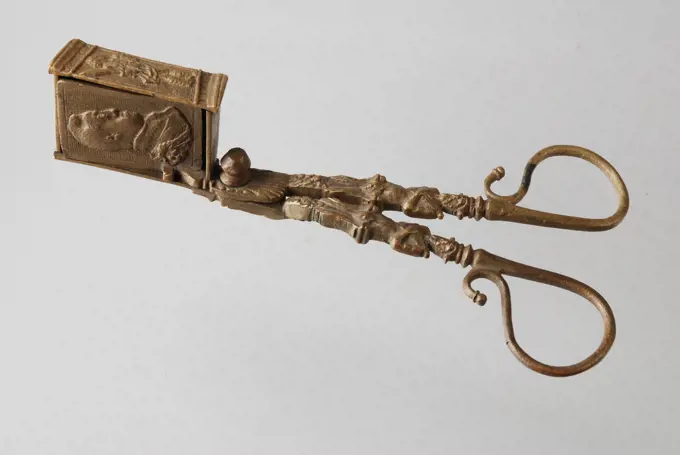
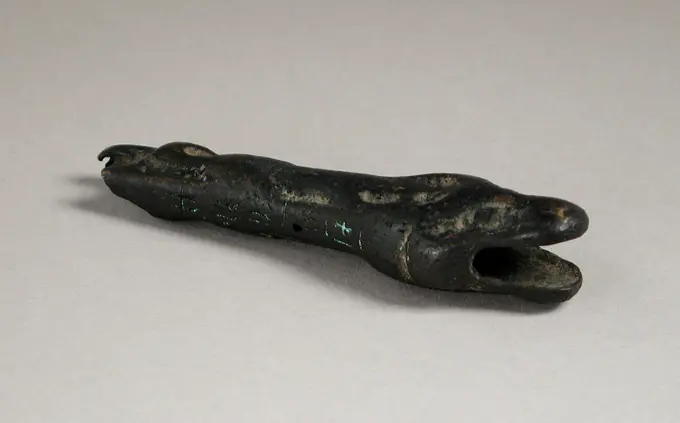
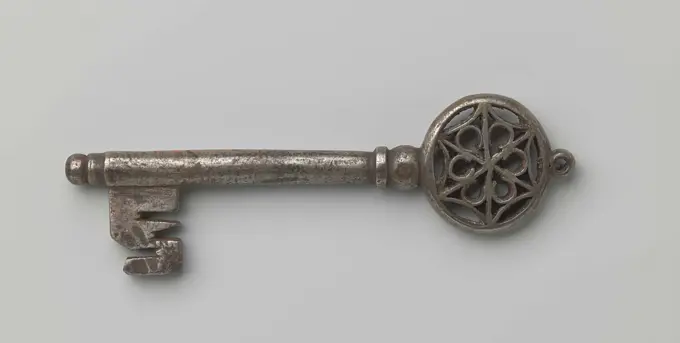
Historical Metal Tools

A series of ancient metal tools and spurs, showcasing craftsmanship and design from different historical periods for practical use.
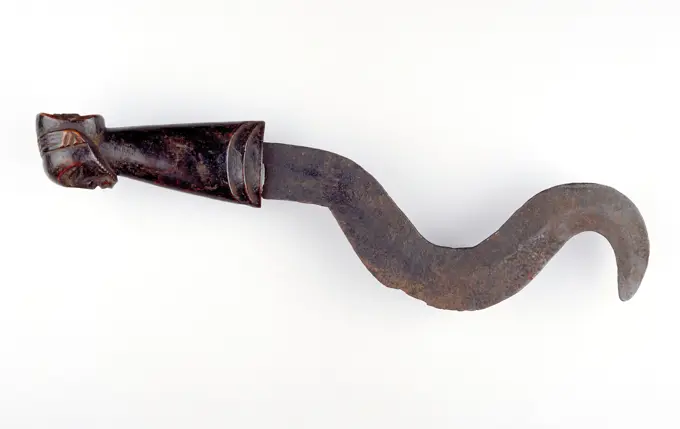
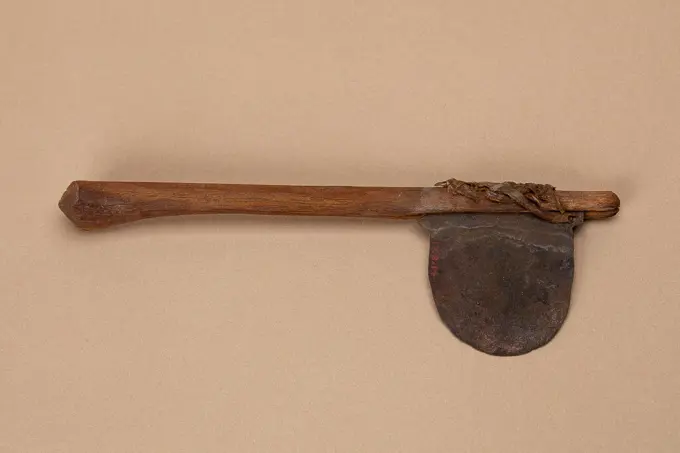
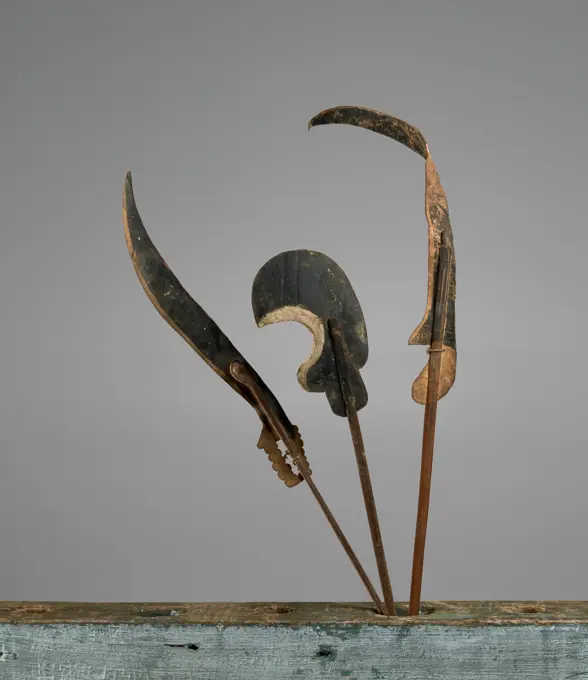
Sickle Weapon, 13th-20th century, 15 3/8 x 1 7/8 x 2 1/4 in. (39.05 x 4.76 x 5.72 cm), Wood and metal, Democratic Republic of Congo, 13th-20th century
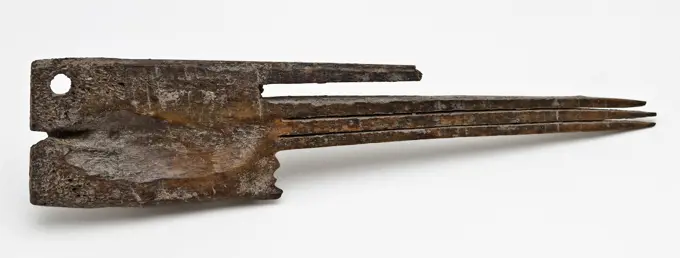
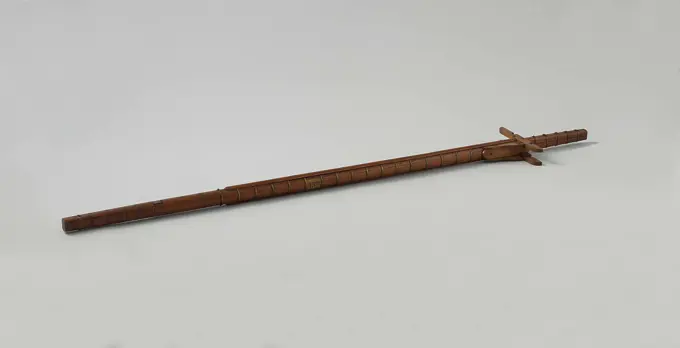
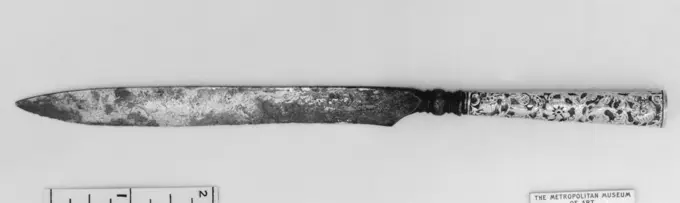
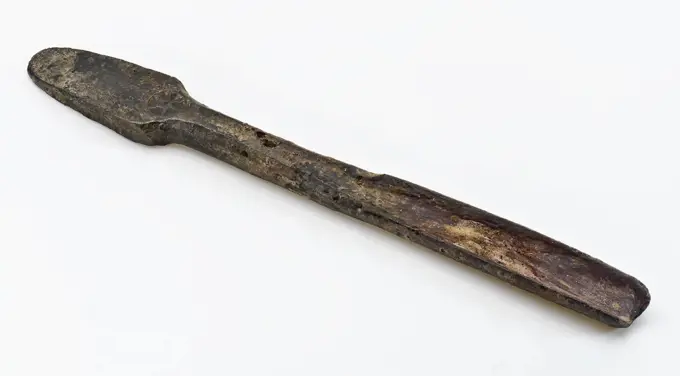
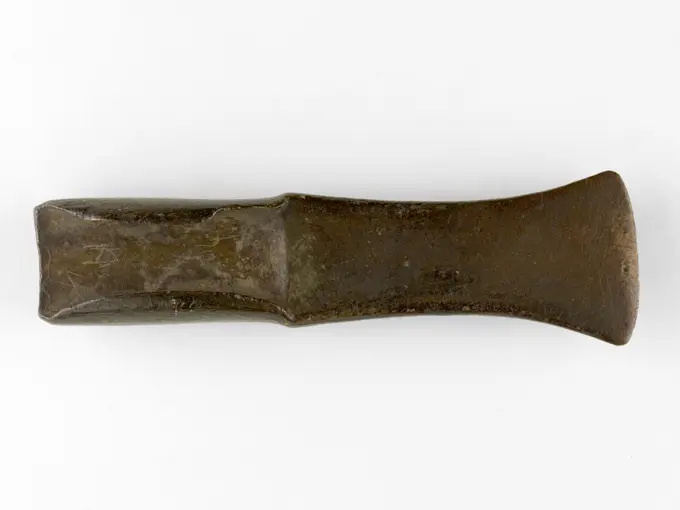
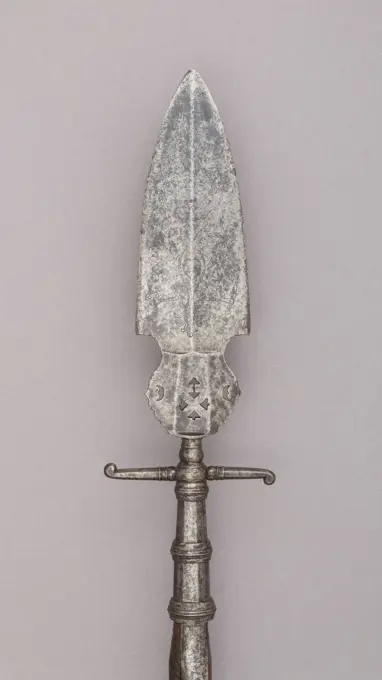
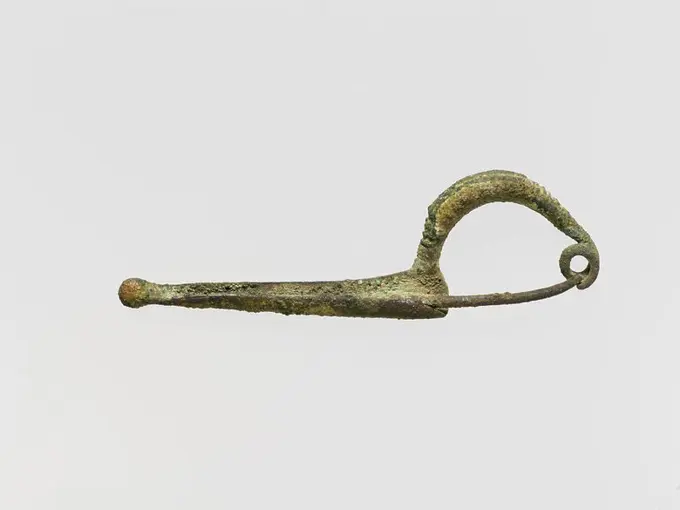
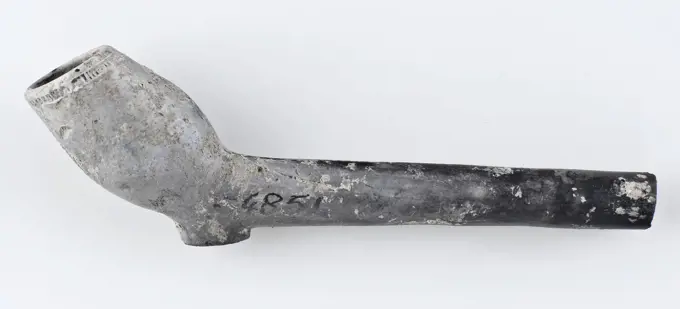
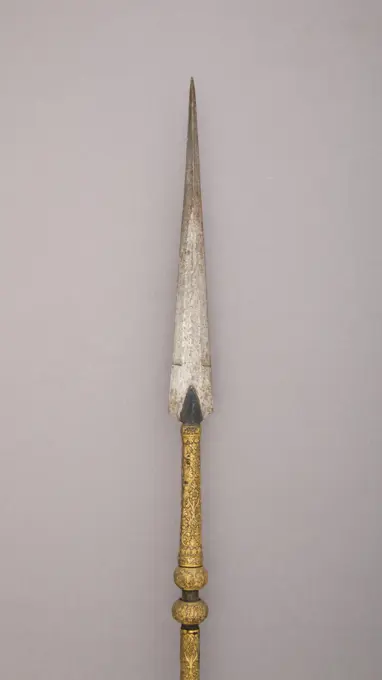
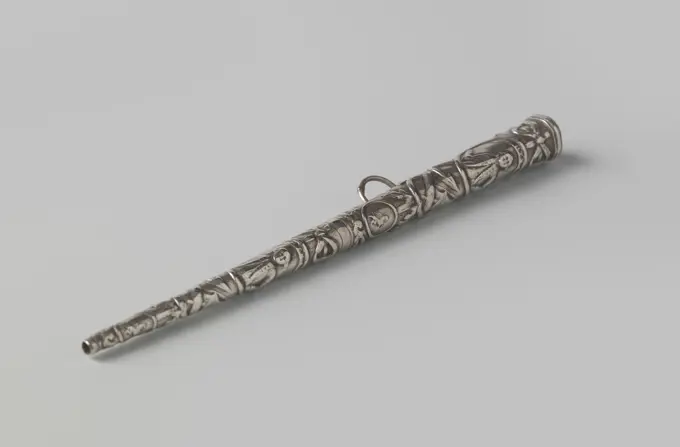
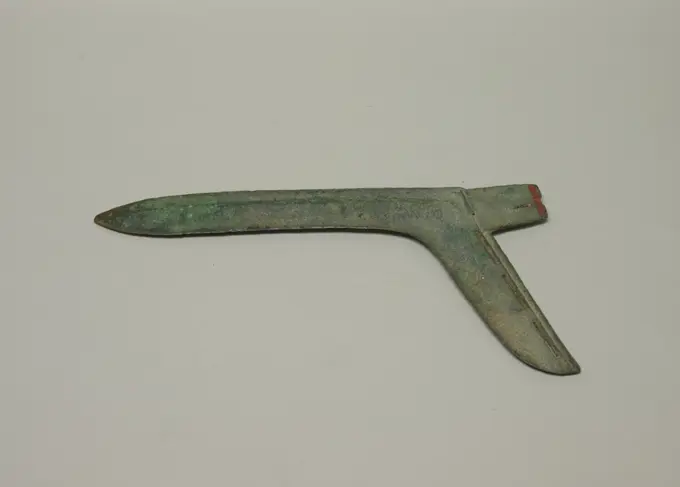
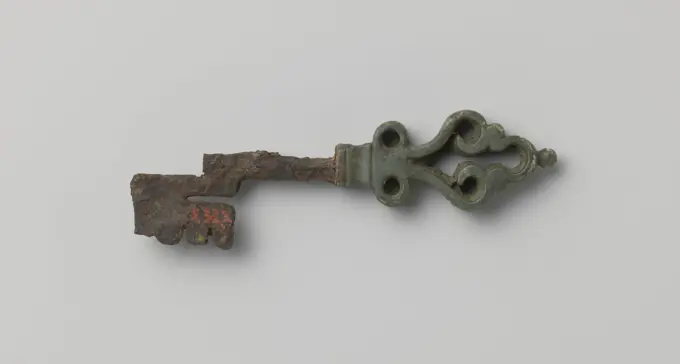
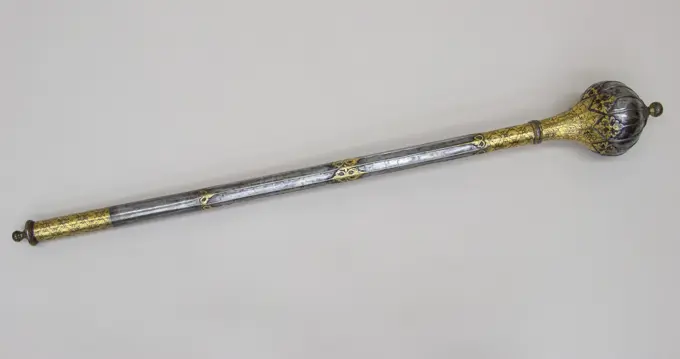
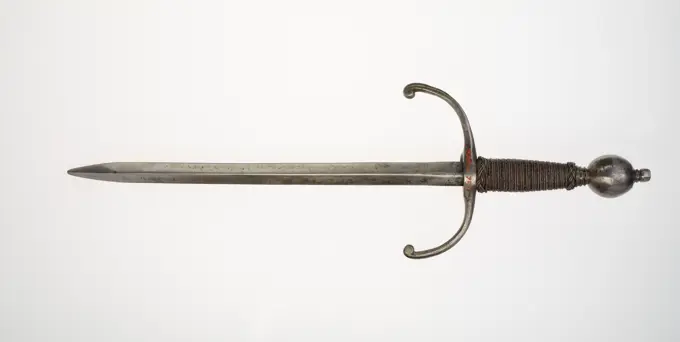
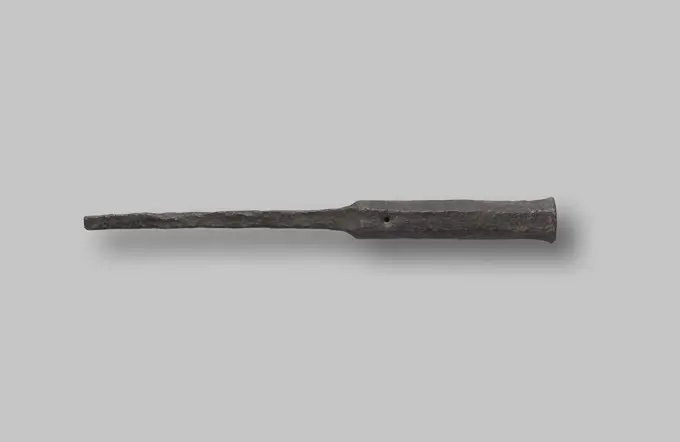
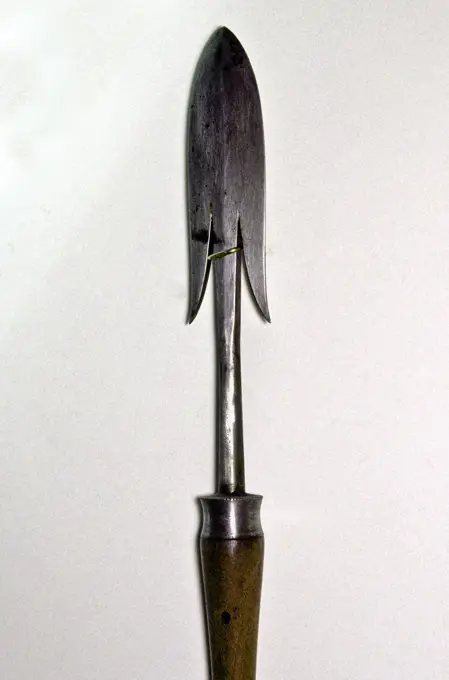
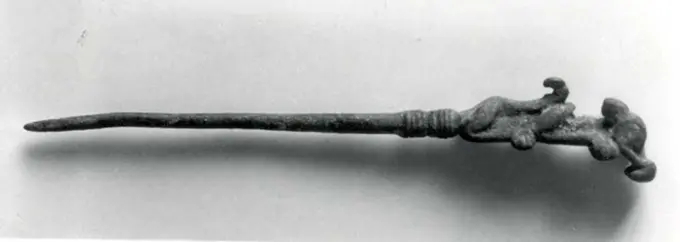
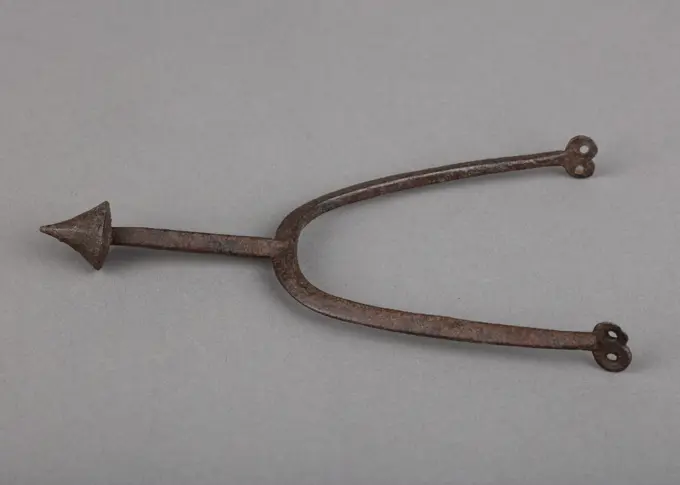
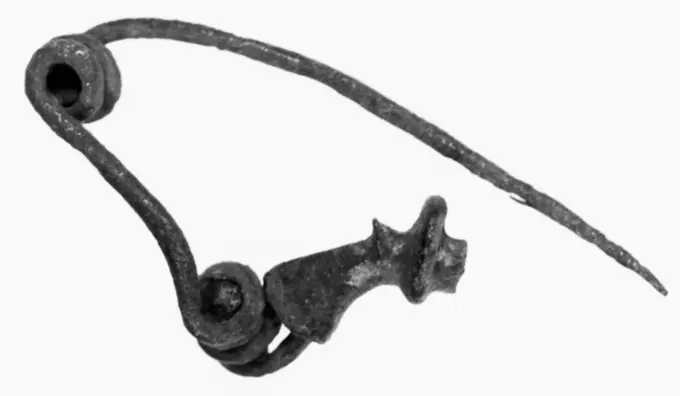
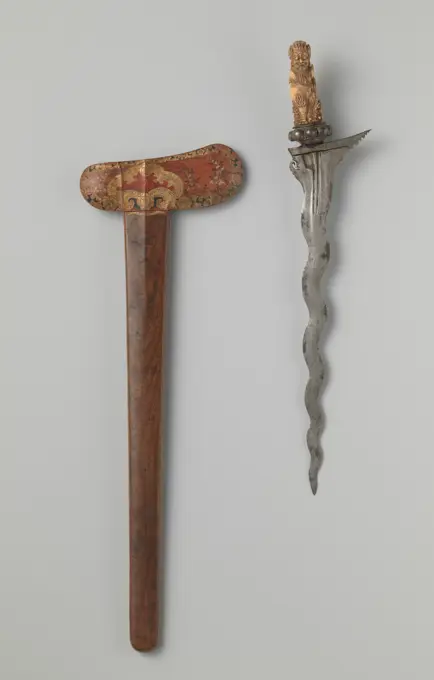
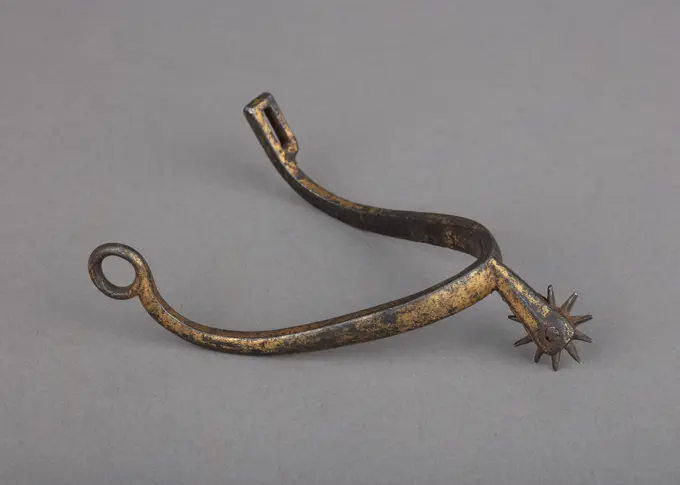
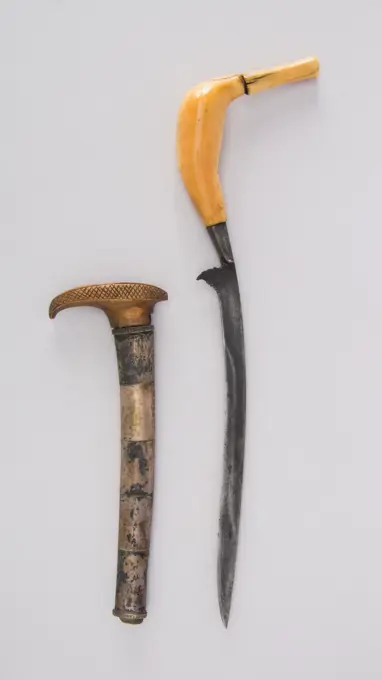
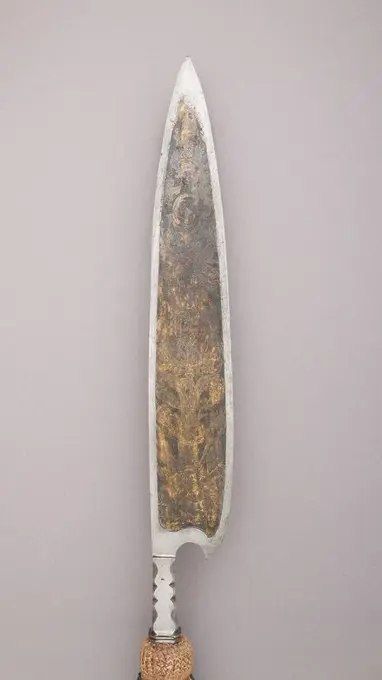
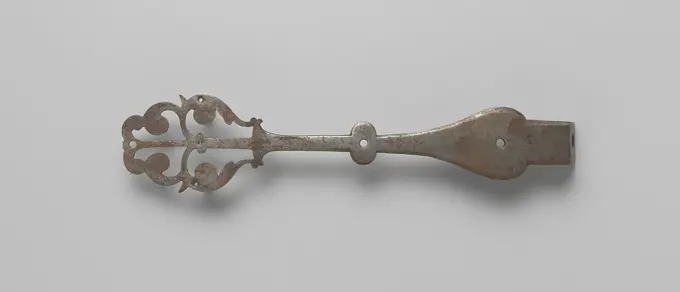
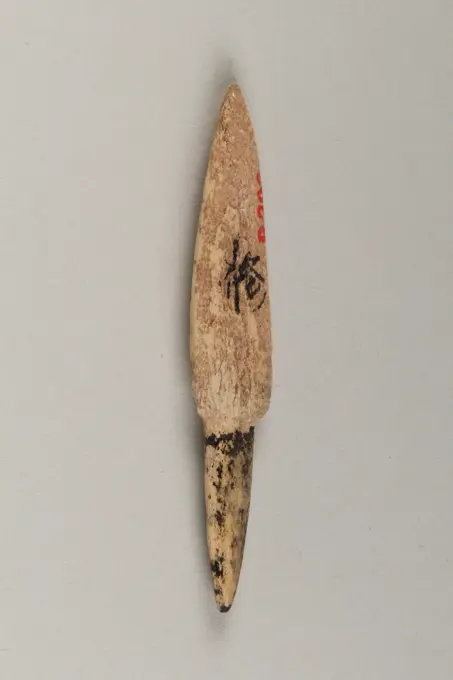
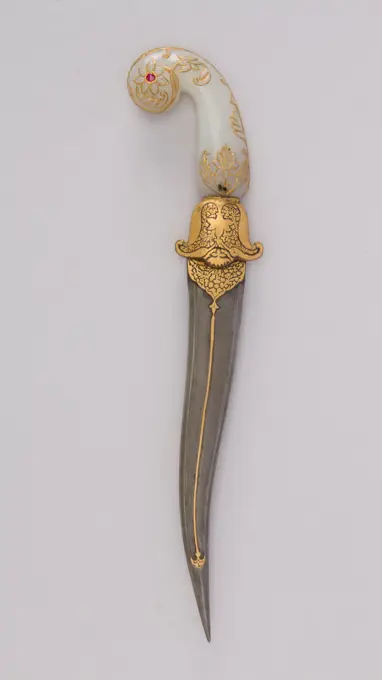
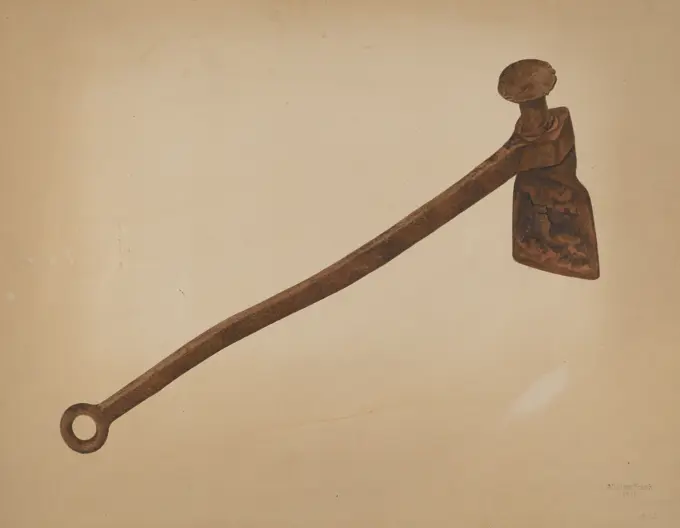
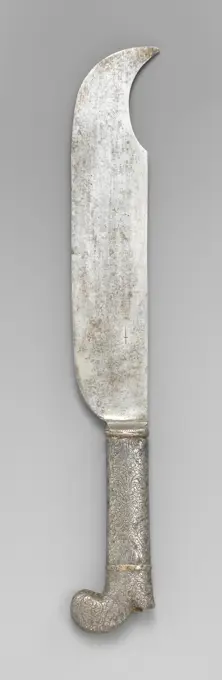
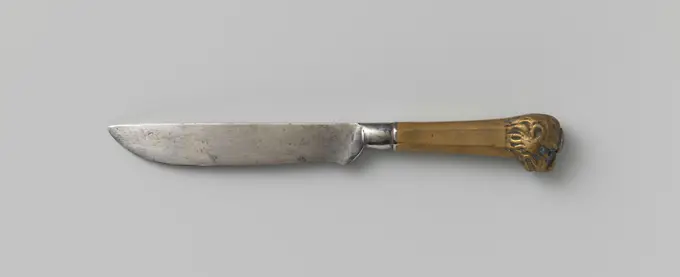
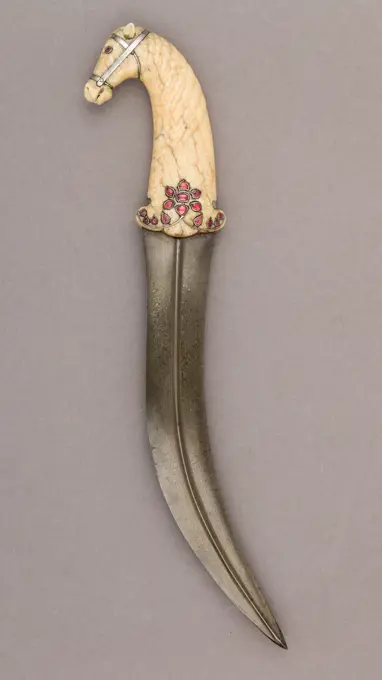
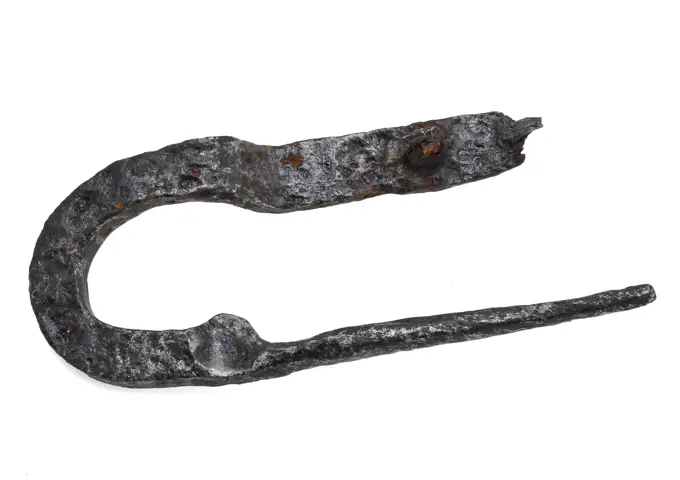
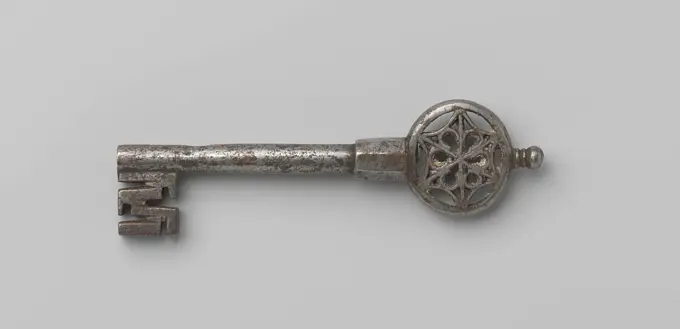
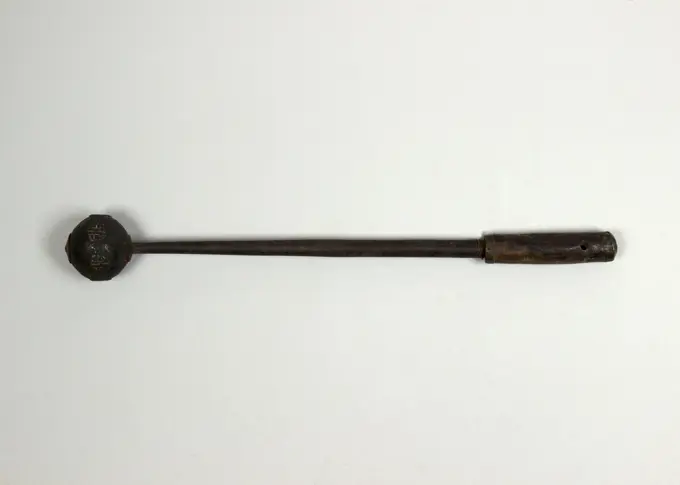
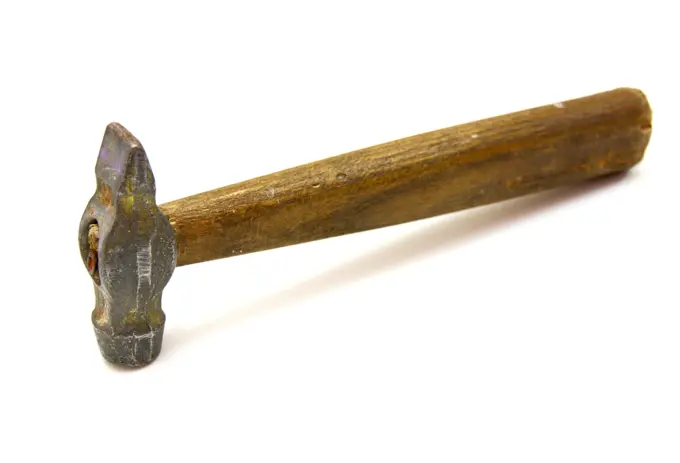
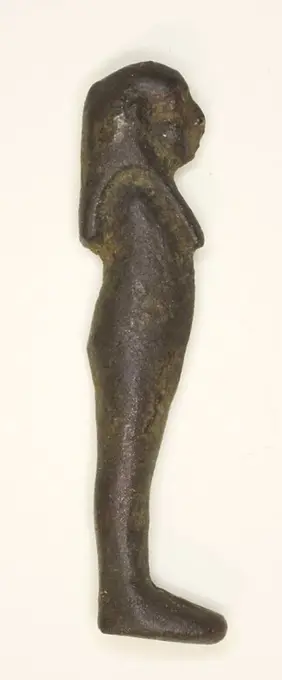
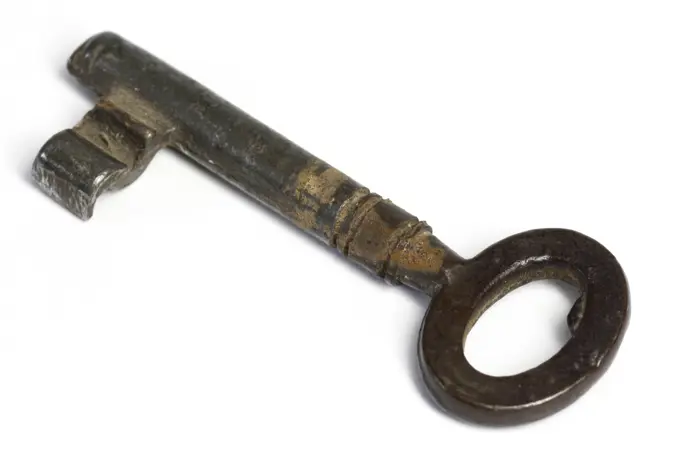
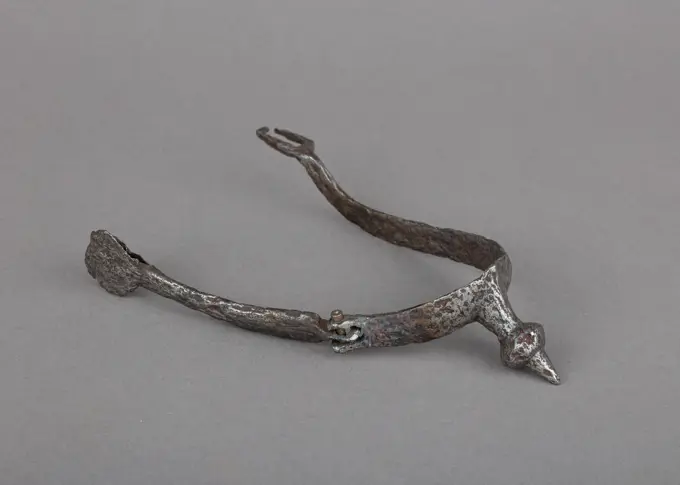
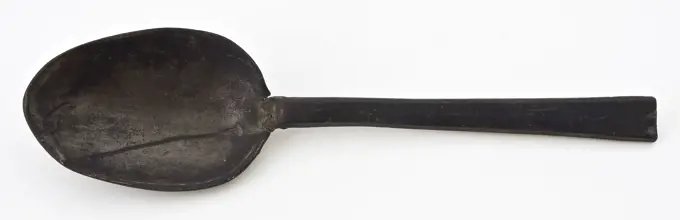
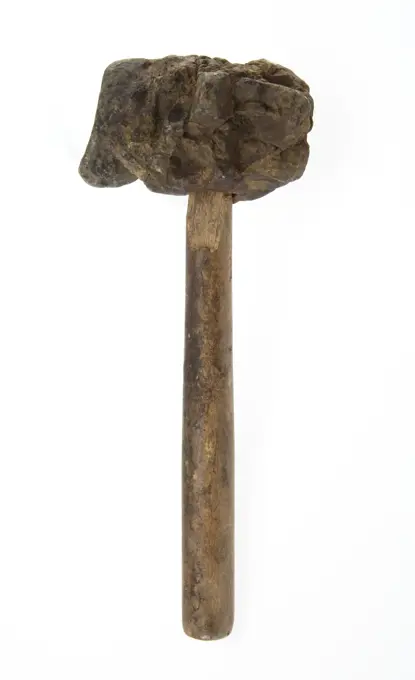
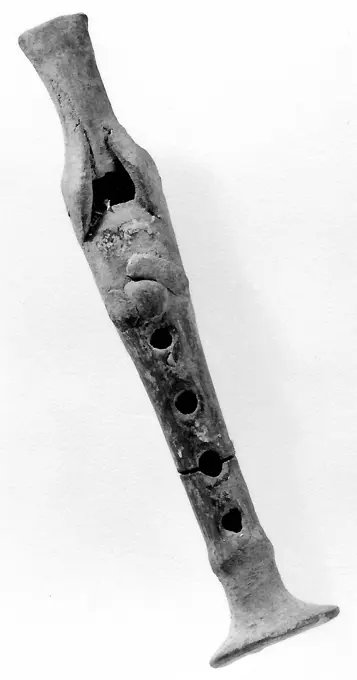
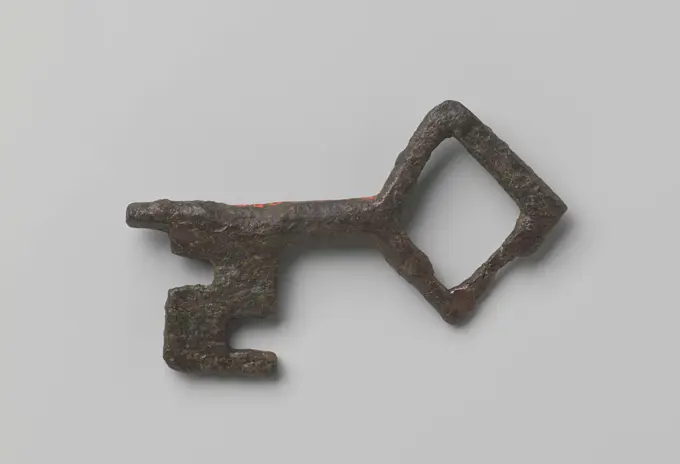
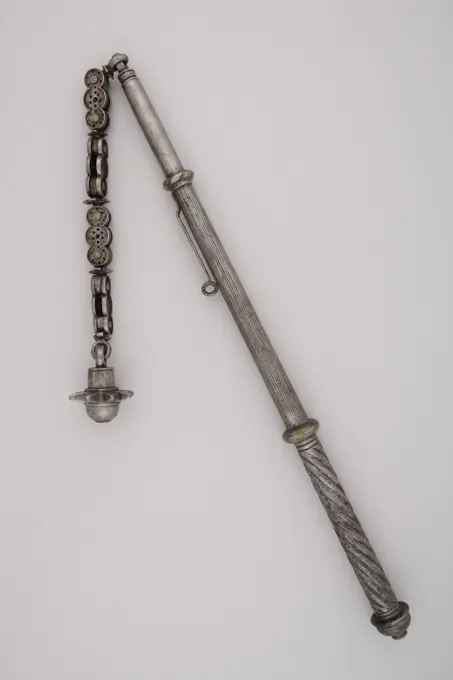
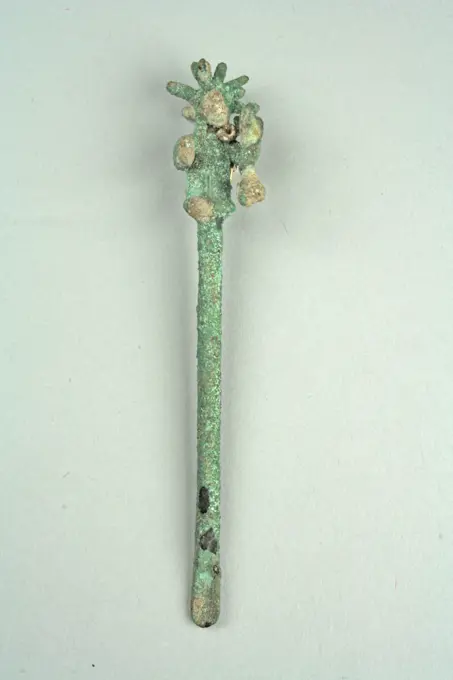
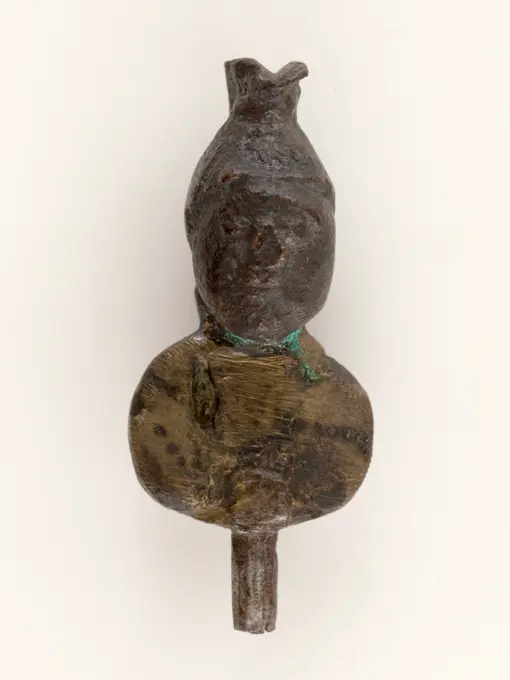
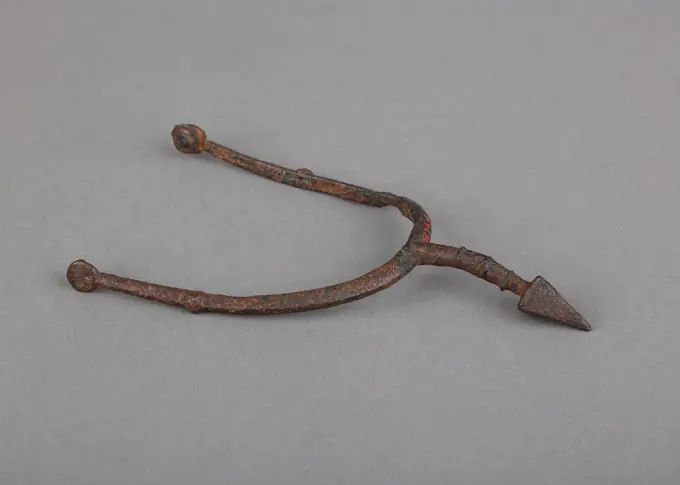
Prick Spur mid-12th - mid-13th century Austrian The prick spur was the first type of spur to be invented, and it consists of a goad or prick, more or less pointed, connected to side arms or a heel plate. The earliest spurs were probably simple thorns attached at the back of the heel, before they started to be made out of metal in antiquity. Prick spurs were the main type of spurs used in the Middle Ages until the mid-14th century, when they were supplanted by rowel spurs, which appeared in Europe a century before and with which they had cohabitated for a time. As a knights status was closely related to his horse, spurs became one of the symbols of chivalry, and one of the tokens given to him during his knighting.. Prick Spur. Austrian. mid-12th - mid-13th century. Iron alloy. Equestrian Equipment-Spursherramienta de cantero, villa romana de Saucedo, Museo de los Concilios y la Cultura Visigoda, Iglesia de San Román,Toledo, Castilla-La Mancha, Spain.Eared Dagger ca. 1100 B.C. Iranian, Lorestan. Eared Dagger 27623Dissel whose stem is missing, anonymous, c. 1590 - c. 1596  Dissel, tool with which one can chop and whose leaves stand across the stem. The leaf is slightly bent, the house is rectangular and runs slightly tapered, the hammer -shaped head is octogonal and runs up a bit wider. The stem is missing.  iron (metal) forging  Nova Zembla. Saving HuysCard comb with long teeth, in round handle bore, comb tool equipment soil find leg, sawn Cardamom for processing sheep wool Sawn from piece of bone bone structure can still be clearly seen on the handle archeology Poortugaal Albrandswaard combs wool wool working home crafts textile Soil discovery, Poortugaal Hofterrein.Dagger with Sheath. Culture: Philippine, Mindanao. Dimensions: H. with sheath 9 1/8 in. (23.2 cm); H. without sheath 8 7/8 in. (22.5 cm); H. of blade 5 3/4 in. (14.6 cm); W. 2 5/8 in. (6.7 cm); Wt. 3.7 oz. (104.9 g); Wt. of sheath 1.5 oz. (42.5 g). Date: 18th-19th century. Museum: Metropolitan Museum of Art, New York, USA.Sickle Weapon, 13th-20th century, 15 3/8 x 1 7/8 x 2 1/4 in. (39.05 x 4.76 x 5.72 cm), Wood and metal, Democratic Republic of Congo, 13th-20th centuryModel of a Main TopGallant mast. Model of a large Bramsteng. Round Bramsteng made from a piece, ending in a flagpole, with a square heel with lockwood hole, a disk at the heel, one in the octagonal homer and one in the top.Knife 16th-17th century possibly Dutch. Knife 192231Spoon drill, drill with spatula shape at the other end, drill tools equipment ground find iron metal, forged spoon drill with spatula shape on the reverse side. Marked on the spatula Smashed: star in circle archeology Rotterdam rail tunnel drilling wood working carpenter craft Soil discovery: trajectory rail tunnel Rotterdam.Ailer ax. Bronze Age. Copper alloy, cast iron. Coming from: Lit de la Seine. Paris, Carnavalet museum. Bronze Age, Aileron, Copper Alloy, Weapon, Fonte, Hache, Tool, Protohistory, ProtohistoricSpontoon 1745 Austrian. Spontoon 29611Bent Raider or Pike. Dated: 1939. Dimensions: overall: 35.7 x 24.4 cm (14 1/16 x 9 5/8 in.). Medium: watercolor, graphite, and pen and ink on paper. Museum: National Gallery of Art, Washington DC. Author: Orison Daeda.Bronze sanguisuga-type fibula (safety pin). Culture: Etruscan. Dimensions: Other: 4 1/16 in. (10.3 cm). Date: 7th century B.C..The bow is solid and decorated on its upper surface with a series of ridges. The head is formed by a spiral of two turns. Museum: Metropolitan Museum of Art, New York, USA.Clay pipe, marked, with smooth handle, clay pipe smoking equipment smoke floor earthenware ceramics pottery, pressed finished baked Clay pipe marked with smooth handle. Radiator ring under lip top edge along the entire circumference boiler. Heel mark. heel mark: NT in bead-edge archeology Rotterdam City Center Cool Schiedamse Vest Mainland City Triangle Runway indigenous pottery smoking tobacco craft Soil discovery: Vasteland-Baan Schiedamse Vest Rotterdam complex of materials from pastry shop and pipe making and house waste from the 17th century.Spoon or ligula Roman. Spoon or ligula 250635 Roman, Spoon or ligula, Bronze, Other: 2 1/2 in. (6.4 cm). The Metropolitan Museum of Art, New York. Rogers Fund, 1917 (17.230.108)Spear 18th-19th century Indian, Cutch. Spear 30760Spindle with whorl ca. 1295-1070 B.C. New Kingdom, Ramesside. Spindle with whorl. ca. 1295-1070 B.C.. Wood. New Kingdom, Ramesside. From Egypt, Memphite Region, Lisht North, Cemetery, MMA excavations. Dynasty 19-20Breinaaldenschede as a reminder of the Battle of the Doggersbank, Isaac Lingenaar (attributed to), c. 1781 The round, tapered sheath has a profiled top edge and a closed top with a small round opening in front of the knitting needle. It is completely decorated in stamping technology with two equal, astrik-crowned medallions with the bust of Schout-by-Night Arnold Zoutman, above which the name Zoutman. Under each medallion is a trophy of an anchor, an arrow and a hella pardon, anchor and flag on a ran ground above a riding each other. Below is a garland with a medallion with the Dutch lion with the sword and the seven arrows. Below that is an edge of C-Voluten, closed on the bottom by a smooth strap. The entire decoration is repeated below. An eye with a ring is attached to one third of the height. Amsterdam silver (metal)   Doggersbank The round, tapered sheath has a profiled top edge and a closed top with a small round opening in front of the knitting needle. It is completely decoratePipe key, c. 1500 - c. 1600 Pipe key with flat ovale grip, caught in a bullet that turns into the slippery shaft after some profiling. France iron (metal) Pipe key with flat ovale grip, caught in a bullet that turns into the slippery shaft after some profiling. France iron (metal)Eccentric Ax Blade 500 B.C.-A.D. 300 Vietnam (North). Eccentric Ax Blade. Vietnam (North). 500 B.C.-A.D. 300. Bronze. Bronze and Iron Age period. Metalwork39 keys from the collection of Emmanuel Vita Israël, , c. 1400 - c. 1950 Key with palm -shaped handle, crowned by button. The beard runs a little past the shaft. Handle of bronze, shaft and beard of iron. Rome bronze (metal). iron (metal) Key with palm -shaped handle, crowned by button. The beard runs a little past the shaft. Handle of bronze, shaft and beard of iron. Rome bronze (metal). iron (metal)Mace (Gada) 17th century Indo-Persian This mace, or gada, is extremely top-heavy, so much that it would be impossible to use effectively as a weapon. It is perfectly weighted, however, for gada-yuddha, or mace training, a form of exercise and a martial art known in India for centuries and still practiced there today. Its beautiful workmanship and lavish decoration would have made it a fine training implement for a Hindu prince. Compare this mace, weighing just over 7 pounds, with another mace in the collection (36.25.1874), which is very similar in form, decoration, and size, but is evenly balanced and weighs less than 3 pounds.. Mace (Gada) 29617Parrying daggerHookbus. Hookbus with a square rod and flat back. The rod wise to the octagonal loop. At the bottom of the course, immediately after the widening is the hook. The hook has the shape of a rectangular triangle. Small Zundgat on top of the course. The mouth walks out anything and is more or less round. The hookbus is very rough. There are many unevenness on the surface and irregularities in the form.The Shawnee Indians traded for valuable European metal goods such as this metal spear pointPin Iran ca. 8th-7th century BCEPrick Spur 11th century European The prick spur was the first type of spur to be invented, and it consists of a goad or prick, more or less pointed, connected to side arms or a heel plate. The earliest spurs were probably simple thorns attached at the back of the heel, before they started to be made out of metal in antiquity. Prick spurs were the main type of spurs used in the Middle Ages until the mid-14th century, when they were supplanted by rowel spurs, which appeared in Europe a century before and with which they had cohabitated for a time. As a knights status was closely related to his horse, spurs became one of the symbols of chivalry, and one of the tokens given to him during his knighting.. Prick Spur. European. 11th century. Iron alloy. Equestrian Equipment-SpursNail. Nail 244244Fibula. UnknownBelt Hook, 5th-4th century BCE, 3 × 1 1/4 × 7/16 in. (7.62 × 3.18 × 1.11 cm), Bronze, China, 5th-4th century BCEBalische kris.Kris, blade steel, wooden sheath and house, handle ivory. Cross item is painted. One side with flowers and arabesque, other side with figures.Rowel Spur (Left) in 13th-century Style 19th century European This prick spur, probably made in the 19th century, was made to imitate a 13th-century example.. Rowel Spur (Left) in 13th-century Style. European. 19th century. Iron alloy, gold. Equestrian Equipment-Spurs. Most of the implements found on Nova Zembla are carpentry and shipbuilding tools. The (surgeons) saw is the exception and was probably used to perform amputations.Key with diamond -shaped handle, c. 1200 - c. 1400 Key with diamond -shaped handle, in which a large hole has been saved. The pointed shaft ends under the deeply incised beard.  iron (metal) Key with diamond -shaped handle, in which a large hole has been saved. The pointed shaft ends under the deeply incised beard.  iron (metal)Dagger and Sheath ca. 3rd century B.C. China. Dagger and Sheath 61300Knife (Bade-bade) with Sheath 16th-19th century Sumatran, Acheen. Knife (Bade-bade) with Sheath 31672Glaive of Maximilian III Joseph, Prince-Elector of Bavaria (reigned 1745-77). Culture: German. Decorator: Inscribed: Jungwierth (German, ca. 1770). Dimensions: L. 8 ft. 5 3/4 in. (258.4 cm); L. of head 27 1/2 in. (69.9 cm); W. 3 3/4 in. (9.5 cm); Wt. 7 lb. 0.9 oz. (3200.7 g). Date: dated 1771. Museum: Metropolitan Museum of Art, New York, USA.Onderdeel van een deurhengsel.Door batter of tinned iron, part of a door mixture, decorated with engravings. The batter is as follows from the hinge: a baluster-shaped start, delegating in a narrow, straight piece from which to the end steal some leaf motifs that curl as volutes. The whole ends in a pointed leaf.Arrowhead Japan The Jōmon period is the earliest period in Japanese history, lasting from roughly 14,000 to 300 BCE. The Jōmon people were primarily hunter-gatherers, using arrowheads such as this one to hunt a variety of land animals. Archaeological evidence indicates that the Jōmon hunted over 60 species of mammal throughout the Japanese archipelago, including tanuki (Japanese raccoon dogs) and monkeys, both of which would likely be considered unpalatable in contemporary Japanese society.. Arrowhead 62273Dagger (Khanjar) 18th-19th century Indian, Mughal or Deccan. Dagger (Khanjar) 31685Key 15th century German The decoration of Gothic iron locks and keys was often elaborate and of the highest standard of workmanship. The motifs were frequently drawn from Gothic architecture, reproducing on a miniature scale complicated tracery patterns and even tiny statuettes. A number of these tiny locks were compound, with some of the mechanisms concealed from view, and required two or even three keys used in sequence to open them. It has been suggested that the greatly expanded use of locks on doors, or coffrets and other types of storage chests was a result of the increasing urbanization of life and the new emphasis on material wealth and private ownership which developed in the late Middle Ages.. Key 468817William Frank, Hawsing Iron, 1939 Hawsing IronKey; 1909-2-258Glaive for the Bodyguard of Markus Sittikus von Hohenems, Prince-Archbishop of Salzburg Made 1580-1600 Austria. Pole arms (staff weapons) were used not only in warfare and hunting, but also in sporting combat and ceremonies. The term refers to a family of edged weapons attached to wooden staffs. With the exception of the lance, which remained the weapon of the mounted knight, all other staff weapons were wielded by men on foot by 1600. With the development of firearms and their introduction as infantry weapons, pole arms lost their importance on the field, and from the mid-16th century, they were reserved for use in sporting contests and by princely bodyguards for ceremony and parade. The blades lent themselves to embellishmentóengraving, etching, or other forms of decorationóand provided a perfect surface for the coats of arms of noble or princely families. The ceremonial use of staff weapons continues to this day with the Swiss Guards at the Vatican and Britainís Yeomen of the Royal Fragment of wood, elongated with round ring and button. Fragment consisting of a decorated piece of wood, elongated shape with a round ring and button at the end.Iron spoon drill, drill tools equipment soil find iron metal, forged spoon drill. Iron rod with screwdriver-like head at the top. At the bottom straight spoon shape with drill head archeology Rotterdam drilling wood working carpenter craft Soil discovery Rotterdam.Carving knife 17th century possibly Flemish. Carving knife. possibly Flemish. 17th century. Steel. Metalwork-SteelMes waarvan het hecht eindigt in een leeuwenkop.The object has been compiled from a molded tangled lemmer, which is clocked at the end of the bond. It is tight in cross-section square and ends in a lion's head with two black stones as eyes.Model ax. Dimensions: L. 4.5 cm (1 3/4 in). Dynasty: Dynasty 12. Date: ca. 1981-1802 B.C.. Museum: Metropolitan Museum of Art, New York, USA.Dagger (Jambiya) 18th century Indian, Mughal. Dagger (Jambiya). Indian, Mughal. 18th century. Steel, ivory (walrus), silver, ruby, rose quartz. DaggersPin ca. 8th-7th century B.C. Iran. Pin 322883Red copper elongated piece of batter from the wreck of the East Indians' t Vliegend Hart ,, 1725 - 1735  Red copper elongated piece of fittings with square holes that indicate a half -round mounting point. Sheet fragments. Middelburg copper (metal)Pewter spoon with Engelmerk in steel backside above, spoon cutlery soil find tin metal, Steel top behind: angel in oval archeology Stadscentrum Stadsdriehoek Rotterdam Laurenskerk war Second World War Soil discovery: during World War II in ruins at St. Laurenskerk Rotterdam.Key 15th-16th century German The decoration of Gothic iron locks and keys was often elaborate and of the highest standard of workmanship. The motifs were frequently drawn from Gothic architecture, reproducing on a miniature scale complicated tracery patterns and even tiny statuettes. A number of these tiny locks were compound, with some of the mechanisms concealed from view, and required two or even three keys used in sequence to open them. It has been suggested that the greatly expanded use of locks on doors, or coffrets and other types of storage chests was a result of the increasing urbanization of life and the new emphasis on material wealth and private ownership which developed in the late Middle Ages.. Key 468847U-Shaped bracket, part of supporting lock, lock, spare part lock lock closing device soil found iron metal, forged bracket in U-shape of flat iron on one side to round pin forged other side thinner forged with lock-nok principle: latch-lock - padlock with removable crampon archeology Valckensteyn Poortugaal Albrandswaard close theft prevention Soil discovery: castle Valckensteyn in Poortugaal now Albrandswaard 1961-1962.Pijpsleutel.Venetian key "with rose in the round handle under which an octagonal capital is located. The handle is crowned by a profiled button.Axe with Concealed Spear 17th-18th century Indian, Travancore. Axe with Concealed Spear. Indian, Travancore. 17th-18th century. Steel, brass silver, lead wood. Travancore. Shafted WeaponsRoy Weber, Pa German Fork, c 1938 Pa. German ForkGold dagger with scabbard, from tomb 689 at Hallstatt, Austria. Hallstatt culture, 13th-6th Century BC.The old metal hammer with the wooden handle lies on a white backgroundBronze shovel. Culture: Etruscan. Dimensions: Other: 9 15/16 in. (25.2 cm). Date: 5th century B.C..Simple shovel with handle ending in an animal hoof. Museum: Metropolitan Museum of Art, New York, USA.Kris with Sheath 16th-19th century Javanese. Kris with Sheath 31326Kohl stick ca. 1295-1070 B.C. New Kingdom, Ramesside. Kohl stick 568373Caucasian kamaSpatula or kohl stick n.d.a.. Spatula or kohl stick. n.d.a.. Bronze. Mesopotamia, NippurKey; 1904-13-1Key Roman. Key 244241Cosmetic Container. Ancient Mediterranean. Date: 301 AD-400 AD. Dimensions: 19.1 × 6.4 × 2.5 cm (71/2 × 3 1/2 × 1 in.). Glass, blown technique. Origin: Mediterranean Region. Museum: The Chicago Art Institute, Chicago, USA.Amulet of the God Imsety (one of the four Sons of Horus). Egyptian. Date: 780 BC-343 BC. Dimensions: 4.5 × 1 × .5 cm (1 1/4 × 3/8 × 3/16 in.). Glass. Origin: Egypt. Museum: The Chicago Art Institute, Chicago, USA. Author: Ancient Egyptian.Cloak or cloche, copper strip with hooks bent in at the ends, closure clothing accessory clothes ground find copper metal, archeology Rotterdam City triangle Meent Markt Binnenrotte dress close Soil discovery pit corner Meent Markt (Binnenrotte).Rusted key old rusty keys on white background copyright: xzoonar.com/heikexbrauerx 783053Prick Spur (Left) 13th century German or Slavic Medieval spurs with articulated branches are very rare, and usually found in Central and Eastern Europe. The articulated branch was meant to adjust the spur better to the foot. The rest of the spur is identical to more regular 13th-century European examples. On this example the joint has been restored in the 20th century, so it is now difficult to know if the branch was originally articulated or not.The prick spur was the first type of spur to be invented, and it consists of a goad or prick, more or less pointed, connected to side arms or a heel plate. Prick spurs were the main type of spurs used in the Middle Ages until the mid-14th century, when they were supplanted by rowel spurs, which appeared in Europe a century before and with which they had cohabitated for a time. As a knights status was closely related to his horse, spurs became one of the symbols of chivalry, and one of the tokens given to him during his knighting.. Prick Spur Key of the main gate of the citadel of Antwerp. Black iron key with kidney-shaped handle, solid stem and simple beard with two notches. Marked; On the handle: vi.Knife with a bone hiltSpoon with oval bowl and straight handle, spoon cutlery soil find tin metal, cast Oval bowl hexagonal straight handle straight end with two notches Rat tail Reverse side unclear mark: weapon of Rotterdam archeology Rotterdam rail tunnel food Soil discovery: route rail tunnel Rotterdam.Club -39 keys from the collection of Emmanuel Vita Israël, anonymous Key whose round eye turns down into a flat long quadruple. This includes the four -sided stem that runs into a thin in two changing inner corners, equipped with four teeth.  bronze (metal) Key whose round eye turns down into a flat long quadruple. This includes the four -sided stem that runs into a thin in two changing inner corners, equipped with four teeth.  bronze (metal)Betel-nut cutter, anonymous, c. 1690 - c. 1720 Pinang scissors made of iron, with golden handle. The scissors has the shape of a dragon. Probably from the possession of the G.G.'d Willem van Outhoorn (1690-1704) or Joan van Hoorn (1704-1709). Thailand iron (metal). gold (metal) Pinang scissors made of iron, with golden handle. The scissors has the shape of a dragon. Probably from the possession of the G.G.'d Willem van Outhoorn (1690-1704) or Joan van Hoorn (1704-1709). Thailand iron (metal). gold (metal)Dagger (Pesh-kabz) with Sheath 18th-19th century South Indian. Dagger (Pesh-kabz) with Sheath. South Indian. 18th-19th century. Steel, silver, wood, ivory (elephant), gold. DaggersRuya - Berr  18th century (1701-00-00-1800-00-00);Paderewski, Ignacy Jan (1860-1941), Paderewski, Ignacy Jan (1860-1941)-collection, qianlong (style), qing (style), Rogon of Ruya's prosperity (iconogr.), Peaches (iconogr.), Chinese (culture) , gift (provenance), lingzhi (iconogr.), Bats (iconogr.), Plant (ornament)SpoonSleutel.Key with annular eye. The shaft runs past the beard in a long point. Associated with a padlock.Musketmaat, fragment consisting of brass huls with soil, anonymous, c. 1590 - c. 1596  Musketmaat, fragment consisting of brass huls with soil.  brass (alloy) striking (metalworking)  Nova Zembla. Saving HuysPottery Flute 1400-1500 Aztec. Pottery Flute 502795Key. Key with diamond-shaped eye. The short shaft ends under the beard in a blunt point.D.v.S., Decorated copper candlestick with portrait Louis Philippe and coat of arms, candle nippers muzzle scissors tool kit ground find brass copper metal, cast riveted brass muzzle scissors Richly decorated Two male man's legs standing on the legs (Atlanten) the left arm in front of the chest held an apple in the right hand the back. Two eyes with outwardly curled ends. Rectangular box with portrait the coat of arms of the Bourbons with three fleurs-de-lis On top of soldier with sword and cut head Marked at the bottom. Rivet with high knob master brand coat of arms with vertical bars and D.V.S. archeology Rotterdam City Triangle Oudehaven France Louis Philippe Atlant lighting evening night illuminating snuiten archaeological find in the soil Oude Haven Rotterdam 1921.Knife (Barong) with Sheath. Culture: Philippine, Jolo Island or Zamboanga Peninsula. Dimensions: L. with sheath 28 in. (71.1 cm); L. without sheath 24 in. (61 cm); L. of blade 15 in. (38.1 cm); W. 3 5/8 in. (9.2 cm); Wt. 1 lb. 10.8 oz. (759.8 g); Wt. of sheath 7.9 oz. (224 g). Date: 19th century.The barong is a knife distinct to the Muslim people of the southern Philippines. On both sides of this barong's blade is an image of Dhu'l Fiqar with the word "Allah" inscribed in Arabic within its contours. The legendary sword is surrounded by Arabic letters and numbers, which are the result of esoteric talismanic calculations tailored to the weapon's owner. Each letter and number most likely signifies Qur'anic passages or other pious phrases that were intended to protect from harm and danger. Museum: Metropolitan Museum of Art, New York, USA.Snake Head Figurine. Egypt, probably Greco-Roman (332 BCE - 300 CE). Sculpture. BronzeBrass instrument fragment from the wreck of the East Indiaman Hollandiaship, anonymous, 1700 - in or before 1743 wind instrument Wind instrument; fragment, trumpet mouthpiece, everted cicular upper end with baluster-moulded tube, tapering, broken off. Netherlands copper (metal)   SecondKris with Sheath. Culture: Madurese. Dimensions: L. with sheath 23 3/4 in. (60.3 cm); L. without sheath 23 in. (58.4 cm); L. of blade 18 3/4 in. (47.6 cm); W. 3 3/4 in. (9.5 cm); D. 2 1/4 in. (5.7 cm); Wt. 18.6 oz. (527.3 g); Wt. of sheath 6.5 oz. (184.3 g). Date: 16th-19th century. Museum: Metropolitan Museum of Art, New York, USA.Puppet (Wayang Klitik) of a Sickle(Arit)Sleutel.Venetian key "with rose in the round grip., Awarded by an eye. The shaft beyond the beard ends in a simple profiling.Arrow Head 16th century Spanish. Arrow Head. Spanish. 16th century. Iron. Archery Equipment-ArrowheadsShaman's drum hammer. Myklebostad, Nesna k., Nordland. Norway. Historical Museum. Oslo. Norway.Military Flail possibly 16th century possibly German. Military Flail 25072Arm Guard 18th-19th century Indian. Arm Guard 31941orgelbouwer: Andries Wolfferts, Copper trumpet of angel organ Laurenskerk, trumpet musical instrument sound medium copper, rolled hammered soldered Long cylindrical tube opening in trumpet-shaped end. Lead or tad droplets on the outer mouth Part of organ music Second World War war bombardment May 1940 May days Rotterdam City Triangle Laurens Church From rubble bombardment 1940.Figure Lime Spoon 15th-16th century Inca. Figure Lime Spoon 315634Minerva bust. Copper alloy. Gallo-Roman. Paris, Carnavalet museum. 51468-10 Copper alloy, bust, Roman deesse, divinity, Gallo-Roman, Gallo-Roman time, statuette