Historical Metal Tools and Utensils

Collection of ornate metal tools including hair needles, scoops, and spearheads, showcasing craftsmanship from different historical periods.
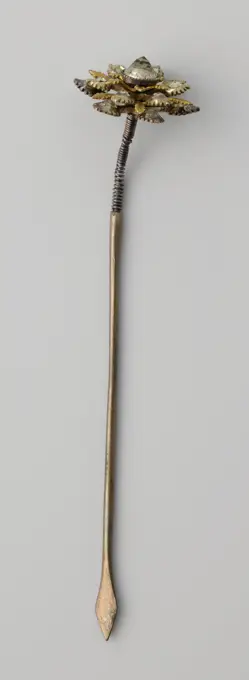
Hair needle of (gilded) silver with thirteen imitation diamonds, anonymous, c. 1700 - c. 1800 Hair needle of partially gilded silver with one large and different smaller imitation gems. The stones are made of glass and equipped with a roars to imitate diamond. The glassstones are set in three, depending on each other, parts. The three parts are decorated with palm motifs.  Silver (Metal). Gilding (Material). precious stones: gilding Hair needle of partially gilded silver with one large and different smaller imitation gems. The stones are made of glass and equipped with a roars to imitate diamond. The glassstones are set in three, depending on each other, parts. The three parts are decorated with palm motifs.  Silver (Metal). Gilding (Material). precious stones: gilding
Hair needle of (gilded) silver with thirteen imitation diamonds, anonymous, c. 1700 - c. 1800 Hair needle of partially gilded silver with one large and different smaller imitation gems. The stones are made of glass and equipped with a roars to imitate diamond. The glassstones are set in three, depending on each other, parts. The three parts are decorated with palm motifs. Silver (Metal). Gilding (Material). precious stones: gilding Hair needle of partially gilded silver with one large and different smaller imitation gems. The stones are made of glass and equipped with a roars to imitate diamond. The glassstones are set in three, depending on each other, parts. The three parts are decorated with palm motifs. Silver (Metal). Gilding (Material). precious stones: gilding
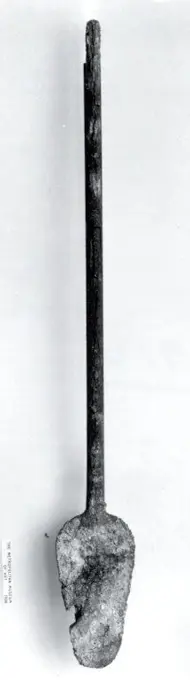
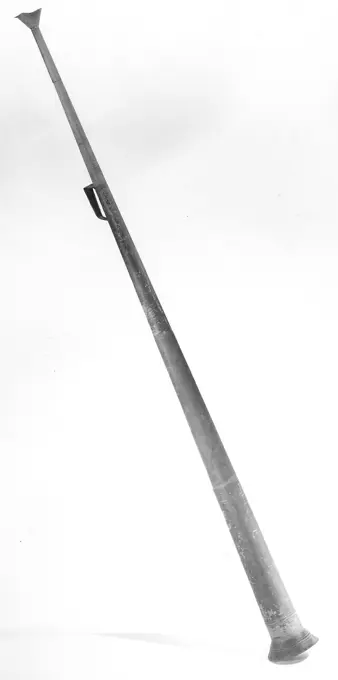
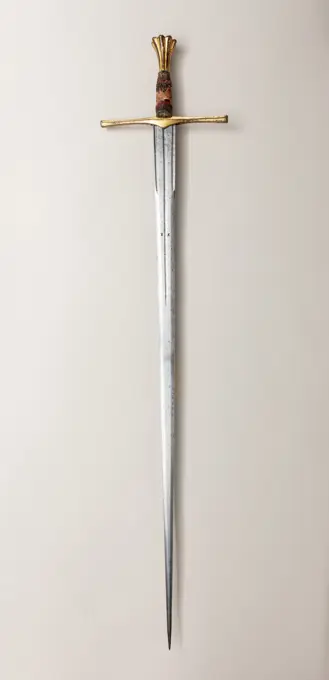
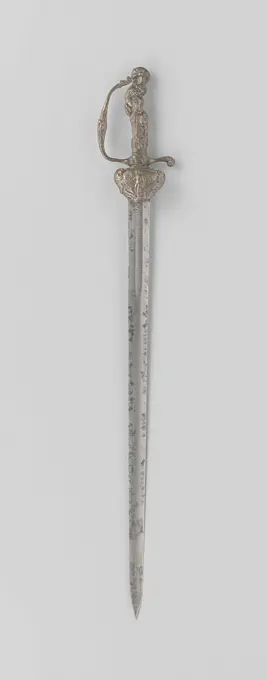
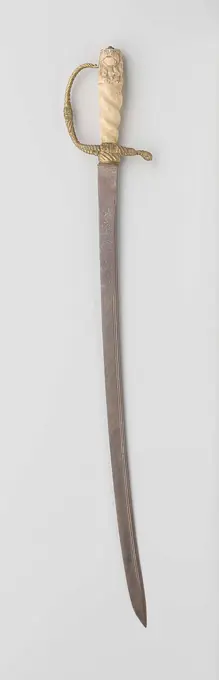
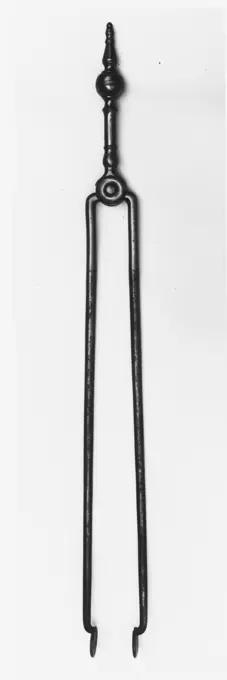
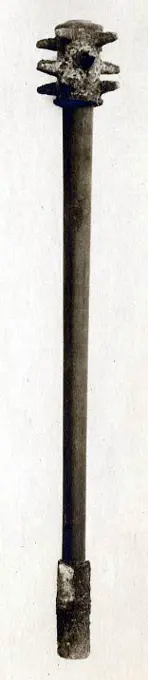
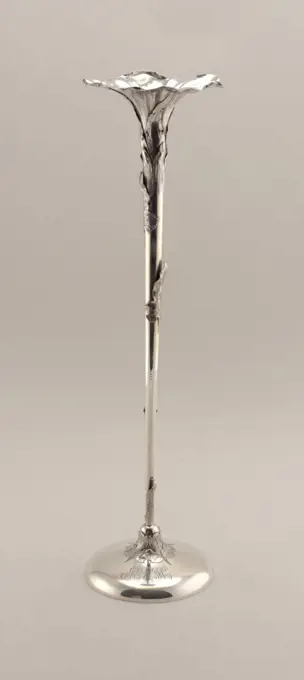
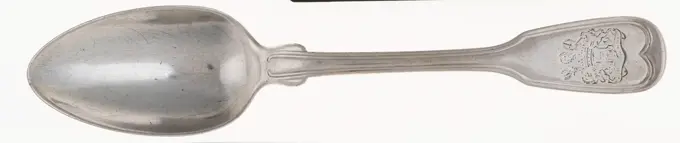
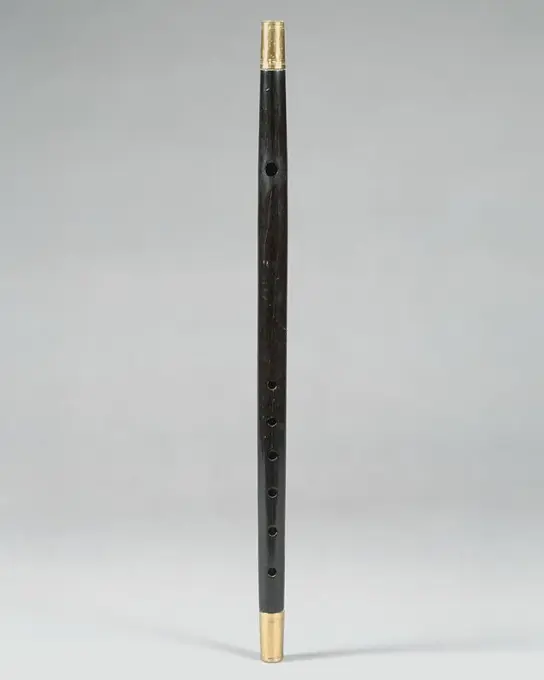
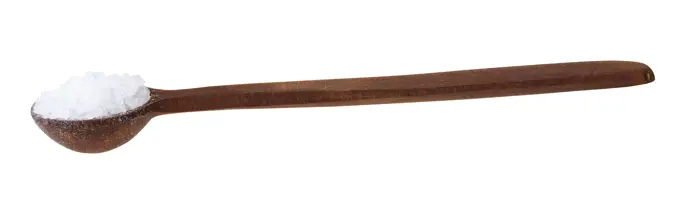
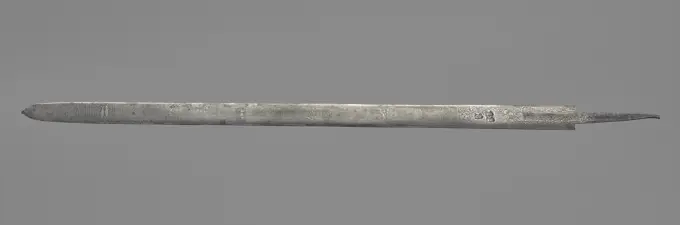
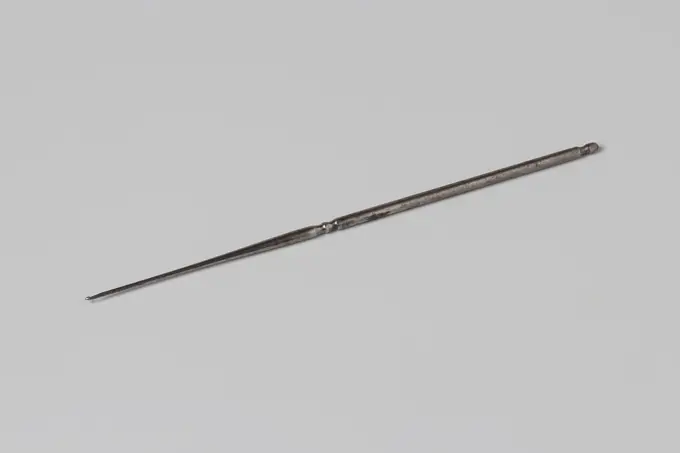
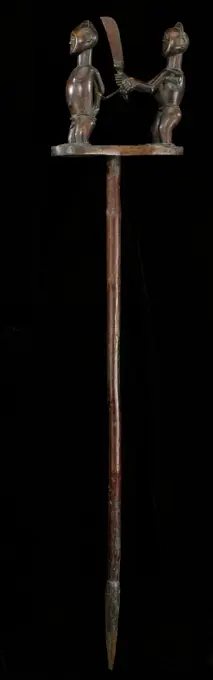
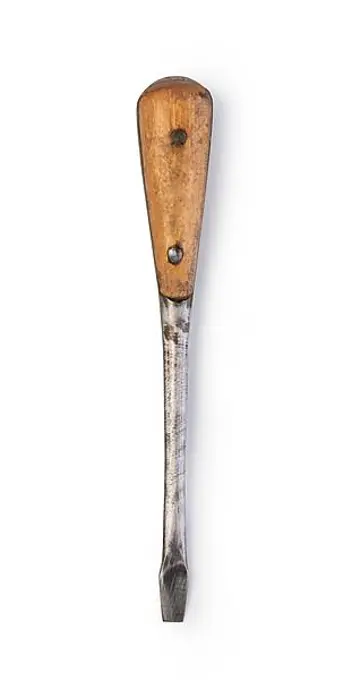
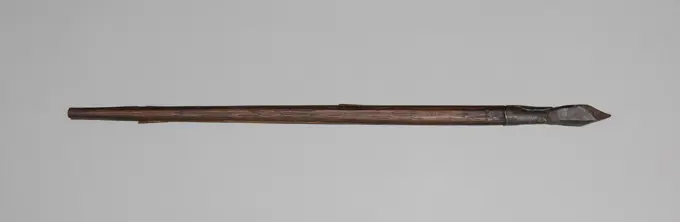
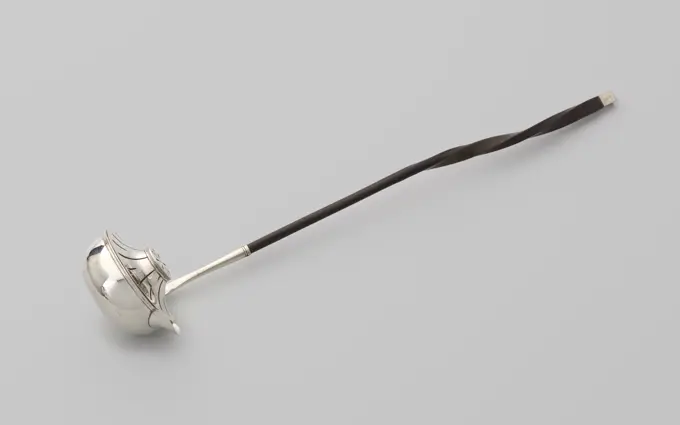
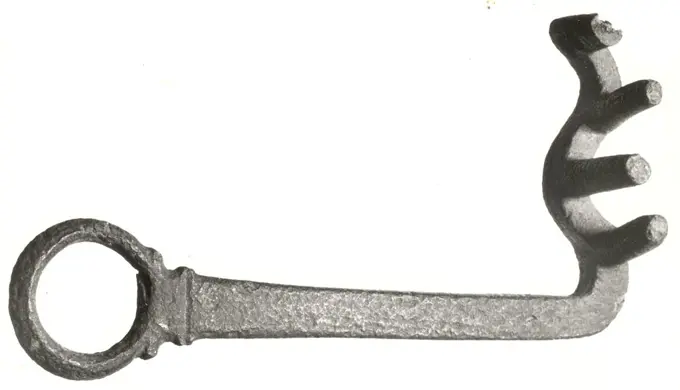
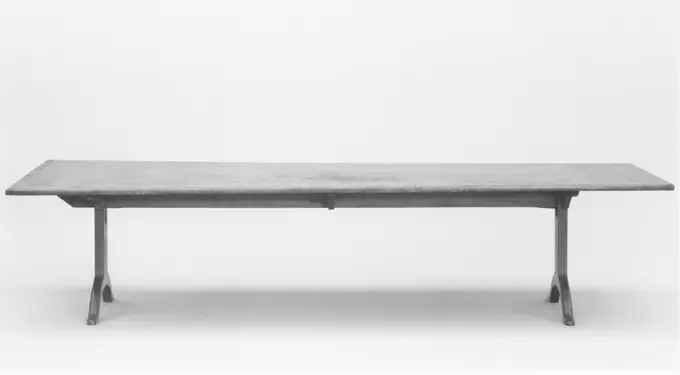
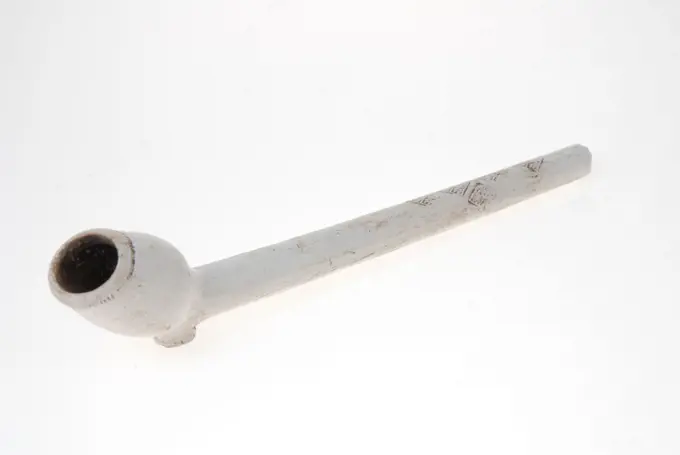
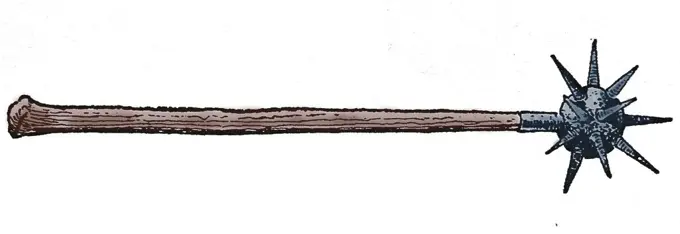
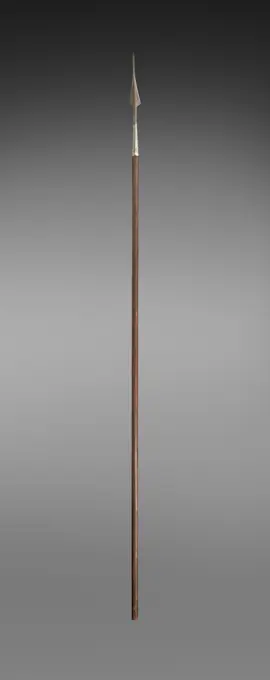
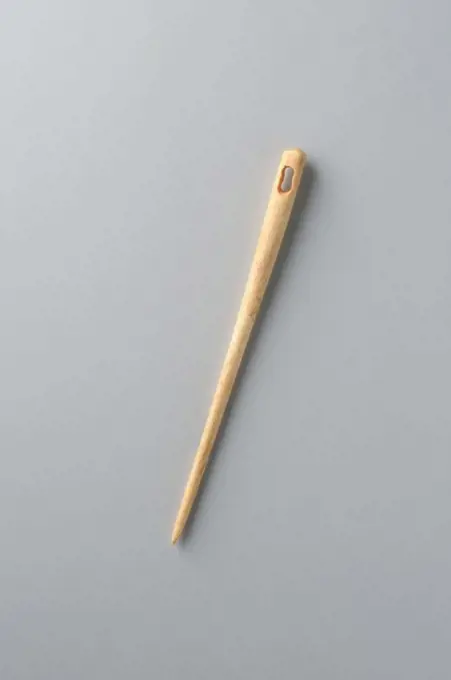
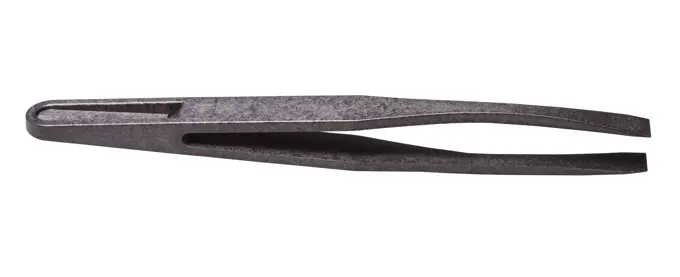
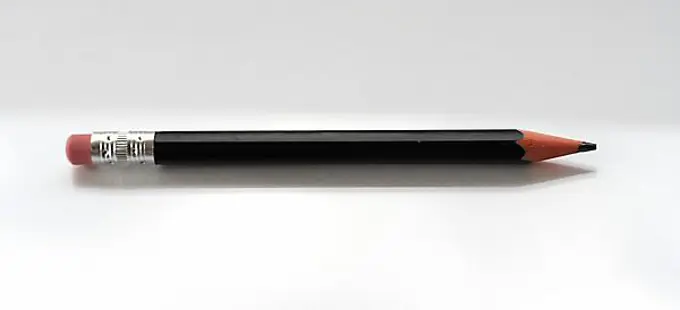
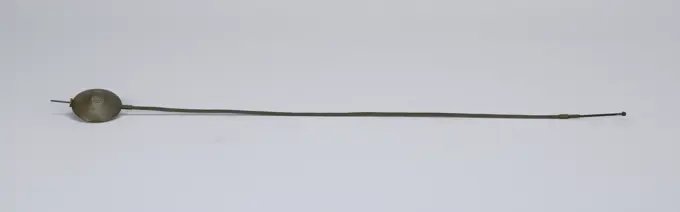
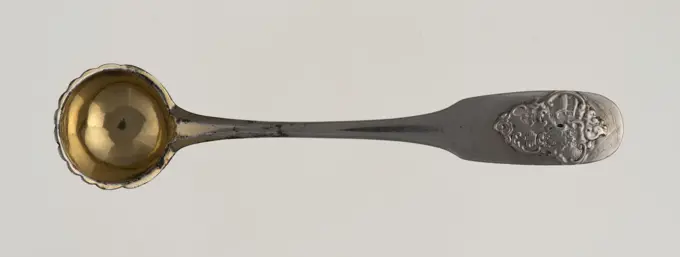
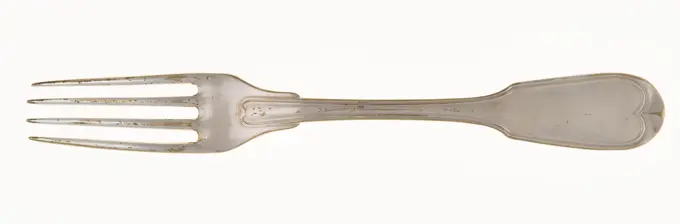
Hair needle of (gilded) silver with thirteen imitation diamonds, anonymous, c. 1700 - c. 1800 Hair needle of partially gilded silver with one large and different smaller imitation gems. The stones are made of glass and equipped with a roars to imitate diamond. The glassstones are set in three, depending on each other, parts. The three parts are decorated with palm motifs.  Silver (Metal). Gilding (Material). precious stones: gilding Hair needle of partially gilded silver with one large and different smaller imitation gems. The stones are made of glass and equipped with a roars to imitate diamond. The glassstones are set in three, depending on each other, parts. The three parts are decorated with palm motifs.  Silver (Metal). Gilding (Material). precious stones: gildingFurket, defect, , c. 1499 - c. 1799  Furket or musket fork from which the left work is broken off. The shaft is made of wood that is painted black with an iron point at the end. Low Countries Fork, shoe: Iron (metal). Shaft: Wood (Plant Material)Marrow Scoop. England, London, 1736. Tools and Equipment; scoops. SilverSpearhead ca. 3rd-7th century A.D. Sasanian. Spearhead 323262Regiment nation for officer, Jacobus Coenraads (senior), c. 1772 sword Regiment thigh for officer. The hilt of cast yellow buyer has been complained in relief with martial trophies and rococo curl work against a granular surface; The wooden handle is wrapped with twisted copper wire and has grip rings of finer material on the top and bottom. The two -time blade has a hexagonal cross -section and is etched with the coat of arms of the house of Orange inside a panel with top and bottom braid, and a panel with Vivat P: V: O under a fruit garland and above a stylized festen; Under the weapon is the address of the sword sweep. Amsterdam brass (alloy). wood (plant material). iron (metal) casting / granulation / etchingMegaphone early 19th century American. Megaphone 504747Spoon with long stem, anonymous, c. 1725 - c. 1775 Oval spoon with long, flat stem. The spoon is not marked. Netherlands silver (metal) Oval spoon with long, flat stem. The spoon is not marked. Netherlands silver (metal)Thrusting Sword (Spada da Stocco) ca. 1500 probably Italian or Spanish This early sword is one of the few to retain fragments of its original grip bindings, here consisting of red and green silk. The stiff acutely pointed blade is designed to pierce the gaps between the plates of an opponent's armor.. Thrusting Sword (Spada da Stocco). probably Italian or Spanish. ca. 1500. Steel, bronze, gold, wood, textile. SwordsSmall-sword with Auricular motifs. The hilt of this small-sword is decorated with Auricular-style motifs. This flowing organic style (named for its earlobe shapes) was introduced in silverwork in the early 17th century by the silversmiths Paulus and Adam van Vianen. Arms like this dress sword were essential accessories for men wishing to conform to the latest fashion.Skewer (Italy); silver; L x W x D: 17 x 3.8 x 0.4 cm (6 11/16 x 1 1/2 x 3/16 in.)Procession chickHartsvanger.Hearts catcher or yacht sword. The hilt of cast Geelchoper is silver-plated and fully facilitated in relief decoration as a classical warrior on a rising horse, whereby the clarified head of the warrior with a tulband-like helmet forest forms the anti-hob; The fist bracket has a thickening in the midst on which a feminine nude is shown on one side and on the other hand a beard male nude; There is a GetTrophee on the pearl block; The dependent baffle plate is decorated with a classic warrior on a warfrophy flanked by curly acanthus leaves. The double-sided claling has an oval section and is equipped with a short groove, etched with the name and address of the swordsger.Lans, anonymous, c. 1894 pike Lans with small two -edged flat blade in ogief shape. The neck of the blade is attached to shaft which has been reinforced with a conically open -worked shell two profile tires. The end of the shaft is somewhat widened compared to the lower part of the stick. Indonesia kling: iron (metal). stok: wood (plant material). kop: copper (metal)   LombokSabel.Sable with hilt from ivory. Button in the form of lion head and gold-plated pearl rod.Fire Tongs 1770-1830. Fire Tongs 3651Mace head and ferrule 30 B.C.-A.D. 364 Roman Period. Mace head and ferrule. 30 B.C.-A.D. 364. Copper alloy. Roman Period. From EgyptHuobusi 19th century Chinese (Naxi people). Huobusi 500628Batel van Roserkerhout with year 1774, Anonymous, 1774 Batel of Rosherman wood. The stick is square in diameter and rejuvenates down. The button is baluster -shaped. The year 1774 was applied to the stick and a tie sign (81jc) and measuring stripes. Northern NetherlandsNetherlands wood (plant material). rosewood (wood) Batel of Rosherman wood. The stick is square in diameter and rejuvenates down. The button is baluster -shaped. The year 1774 was applied to the stick and a tie sign (81jc) and measuring stripes. Northern NetherlandsNetherlands wood (plant material). rosewood (wood)Souvenir spoon with finial in form of Prince of Wales feathers Saunders & Shepherd British 1895-96Two walking sticks of Van Oldenbarnevelt, anonymous, 1600 - 1625  Wooden walking stick with unprocessed, spherical ivory button and an iron point. North Netherlands wood (plant material). iron (metal). ivory cuttingElement of Piano, P. Fabritius, the Hague, P. Fabritius, 1808 Lat with pedals is part of the piano BK-NM-8192 The Hague wood (plant material). copper (metal) Lat with pedals is part of the piano BK-NM-8192 The Hague wood (plant material). copper (metal)Bore Measuring Rod, Rijkswerf Fijenoord, 1843 measuring rod. artillery accessories Measure with a brass yardstick on one side. The yardstick is classified in 100 cm at the other end. Rotterdam wood (plant material). brass (alloy)Tabakspijp, anonymous, c. 1400 - c. 1950 Tobacco pipe.  earthenware. pipe clay Tobacco pipe.  earthenware. pipe clayRod, presumably belonging to a crown, c. 1400 - c. 1950 Rod with crochet -shaped ends, probably belonging to a crown.  iron (metal) Rod with crochet -shaped ends, probably belonging to a crown.  iron (metal)Sword Cane with Two Blades and Sheath. Culture: Burmese. Dimensions: L. overall with scabbard 42 in. (106.7 cm); large blade (a); L. 26 15/16 in. (68.4 cm); W. 1 15/16 in. (4.9 cm); D. 1 1/16 in. (2.7 cm); Wt. 11.8 oz. (334.5 g); small blade (b); L. 29 5/8 in. (75.2 cm); W. 1 in. (2.5 cm); D. 1 in. (2.5 cm); Wt. 10.5 oz. (297.7 g); Wt. of scabbard (c) 3.2 oz. (90.7 g). Date: 19th century. Museum: Metropolitan Museum of Art, New York, USA.Thin hollow stick, meat stew, meat spike soil finds iron metal, Meat picker Probably iron. Conical pin with sharp tip and cross-cut tip through which parts are created to clamp decoration material in archeology Valckensteyn Poortugaal Albrandswaard serving feasting decoration archaeological find in the soil Poortugaal Castle Valckensteyn.Garter or cingulum, green with gold brochure; With the text Sara Maria Hattevier Jerusalem, Anonymous, c. 1677 - c. 1700 Garter or cingulum, green with gold brochure. The text Sara Maria Hattevier Jerusalem can be read in golden letters against a green background. Two red/ pink stripes run along the edges. One end of the band has a loop, the other a braided cord on which a brush. Jerusalem whole: Silk. braiding Garter or cingulum, green with gold brochure. The text Sara Maria Hattevier Jerusalem can be read in golden letters against a green background. Two red/ pink stripes run along the edges. One end of the band has a loop, the other a braided cord on which a brush. Jerusalem whole: Silk. braidingVase, Silver, Tall thin stem with applied foliage, opening as a flowerhead, on circular base, New York, New York, USA, ca. 1900, metalwork, Decorative Arts, VaseLipbrush holder cosmeticsPitcherSpoon.   Maker: Franklin Porter, American, 1869-1935Banner with Medallions of Christ's Passion (pole), 1700s. Spain, 18th century. Wood;Goose feathers, anonymous, c. 1590 - c. 1596    . cutting  Nova Zembla. Saving HuysSinclair Planasza hundred;  XIX-XX century (1800-00-00-1810-00-00);Fue 19th century Japanese. Fue 500663Fife. Culture: American. Dimensions: Total length: 39.9 cm (15-3/4 in.)Embouchure: 9.2 x 8.7mmCenter embouchure to end: 306mmBore diameter: 10.8mmHole diameter: 5.7mmDistance from embouchure center to centerB: 134mmA: 156mmG: 177mmF: 201mmE: 224mmD: 249mm. Maker: Edward or Frederick Riley. Date: 1819-43. Museum: Metropolitan Museum of Art, New York, USA.side view of wood salt spoon with coarse Sea Salt side view of wooden salt spoon with coarse grained Sea Salt isolated on white background Copyright: xZoonar.com/ValeryxVoennyyx 13599992Walking stick. unknown, contractorKama kanjarSaber-Halberd probably 19th century German, Munich. Saber-Halberd 32775Candelabrum with hoof feet and nude female late 6th century B.C. Cypriot. Candelabrum with hoof feet and nude female 244755Pochette 18th century French. Pochette 501585Whip whose wicked frame wound with green sides ribbon, each time interrupted by a silver nodus and at the bottom of a ring, on top of a conical button with engraved crown. Groomweep. Wicker Framed Wound With Green Silk Ribbon, Each Time Interrupted by a Silver-upon-Called Nodus. The Conical Knob is Engraved with a Crown Edge. From Under A Silver Ring. Silver Brands on the button.Calendar sword blade Wundes, Johannes (fl. 1580 1600)Cooking stones with button and degeneration. A covers of steel with button and degeneration. Address: Imra / Schützt.Tea spoon laying isolated on the white backgroundFive Flintlock Wall Pieces, anonymous, c. 1825 - c. 1840 musketoon. flintlock gun Flint fortress (Walbuks) with battery lock; Profile band at room; elongated half oval iron visor grain; No visorkeep; Brand broke up at the bottom; flat lock plate and rooster with beveled sides; Bottom lock plate concave; Nutenhouten French flask; brass band around drawer; Four brass loading stickers whose front trumpet -shaped; wide round tractor bracket; brass flask; Iron cheststick with thicker front part; Brass counter -lock plate accolade shaped. In use in 1830. unknown Drawer, Kolf: Wood (Plant Material). Laadstok, lock, run: Iron (Metal). Batter: Brass (Alloy)Staff, 19th-20th century, 53 1/8 x 10 7/8 x 3 3/4 in. (134.9 x 27.6 x 9.5 cm), Wood, cotton cord, metal, Côte d'Ivoire, 19th-20th centuryPlastic hook, John Vicars, c. 1900 - c. 1950 Hooking of ivory plastic. England (possibly) whole: Hooking of ivory plastic. England (possibly) whole:Przeszo Przyszoci unknownShim -screwdriver isolated on a white backgroundKnife (England); Made by William Boswell; agate, silver, steel; L x W x D: 20.4 x 1.5 x 1.5 cm (8 1/16 x 9/16 x 9/16 in.)Crossbow Bolt, 1500s-1600s. Germany, 16th-17th century. Wood, leather, steel; average: 37.2 cm (14 5/8 in.).Walking stick of rosewood, with sections and with traces of polychromy, anonymous, c. 1685 - c. 1700 Walking stick or staff of rosewood. Round to the bottom of a tutoring stick, at the top of three and at the bottom one section. Traces of polychromy. Netherlands whole: Wood (plant material) cutting Walking stick or staff of rosewood. Round to the bottom of a tutoring stick, at the top of three and at the bottom one section. Traces of polychromy. Netherlands whole: Wood (plant material) cuttingHerb wine spoon with twisted steel, Jan Frederik Everts, 1803 Herbal wine spoon of silver. A lid rising to the middle fits in the container. There is a silver tube on the bowl in which a long twisted stem from Balein fits. Amsterdam silver (metal). steel: baleen Herbal wine spoon of silver. A lid rising to the middle fits in the container. There is a silver tube on the bowl in which a long twisted stem from Balein fits. Amsterdam silver (metal). steel: baleenStok of a banner of the Fifth Infanterie department, Jan Willem Pieneman, 1846 - 1893  Black lacquered wood, on which a gilded bronze wreath of oak branches, and at the top a lying lion with arrow bundle and sword on a ditto block, on which the text: King and Fatherland, surrounded by a snake, and on the long sides Short sides and crowned W. Netherlands wood (plant material). bronze (metal). galloon   NetherlandsIron point of a hella beard with batter tires, with a brand, anonymous, c. 1580 - c. 1590 Halberd Leaf -shaped blade with wide middle bone that extends to the house. The blade, hook and ax are forged from one whole. Bijl has commoned cuts. Stick without shoe, 2 ramped feathers, partly broken off, the stick is from a later period. On hook Smidsmerk. Low Countries Kling, house: Iron (metal). Shaft: Wood (Plant Material)   Low CountriesKlucz. nieznany warsztat egipski, authorWooden Spindle Made 1000-1476 Peru. Wood .Oyster fork; Fraget, Józef (Warsaw; Silver and Plated Products Factory; 1824-1945); before 1868 (1830-00-00-1868-00-00);Dining Table 1825-50 American. Dining Table. American. 1825-50. Pine, birch. Made in United StatesMedical instrument, Stethoscope, 1750-1850. The single-ear wooden stethoscope was developed from René Laënnec's paper roll of 1819. These were vase- or trumpet-shaped, turned in one piece from cedar, boxwood, ebony, or lignum vitae. They were superseded by two-ear stethoscopes from around 1886... Purchased from Edward H Pinto, 1965.. .TobaccoPipeClay pipe with decorated stem, double conical model, marked with Tudor rose, clay pipe smoking equipment smoke floor pottery ceramics pottery h 2,9, pressed in shape finished baked Clay pipe. Double conical model Finely finished Heel Decoration on the stem consists of diamond-shaped stamps with alternately two tudor roses and two fleur de lis. Radius ring under the lip of the top edge over the entire circumference. mark on the heel: Tudorroos crowned archeology Rotterdam Hillegersberg-Schiebroek Terwegge Stoopweg rail tunnel earthenware smoking tobacco Soil discovery Rotterdam found on the Stoopweg in the dump from the route of the rail tunnel.Weapon. Morning star mace. 15th century.Engraving.Lans belonging to Cornelis Tromp, Anonymous, c. 1650 - c. 1679 pike The wood of the lance is painted. Shoe of yellow and fittings at Kling van Roodkoper. Corresponding sheath. The blade of the lance has a Japanese shape, but misses a hole in the sting for the attachment of the blade to the stick. The Angel has a rough surface that was rubbed with resin and so fixed in the hole of the stick. This way of assembling is characteristic of stick weapons and white weapons from Southeast Asia. North Vietnam Japan brass (alloy). cypress (wood). lacquer (coating). steel (alloy)Tweezers. UnknownHorn first half 19th century British, Bristol. Horn. British, Bristol. first half 19th century. Blue glass. GlassHat pin by Heinrich VogelerBone ligula (ear pick) ca. 1st-3rd century A.D. Roman Ear pick with small bowl.. Bone ligula (ear pick) 244079Banner with Royal Coat of Arms of Great Britian (pole), 1700s. Great Britian, probably England, 18th century. Wood;Sewing needle (Acus Anis) with a perforation of bone Long 93 mm Thickness 5 to 2 mm (1 st - 3 rd CE ) - Roman period, from " House of Griffins "- Archaeological site of Complutum in Alcalá de Henares ( Madrid ). SPAIN.black plastic anti-static tweezers with flat tips black plastic anti-static tweezers with flat tips isolated on white background Copyright: xZoonar.com/ValeryxVoennyyx 11055724Pencil with eraser on the endClock case, John Scott, Carved wood, Rectangular base resting on moulding and slight feet. On front, moulding in shaoe of rectangle with concave corners. Slender case with arched door. Clock house projecting, with cut, fluted corners, arched glass windows on side, and arched door. Above, cut-out scrollwork below concave arched top, and three brass urn-and-flame- finials. Brass face partly engraved, deocrated with applied scrolls. Four white enamel ring dials and name plate., London, England, 1770-75, timepieces & measuring devices, Decorative Arts, Clock caseBobbin Lace Edging, 20th century. Flanders, 20th century. Lace, bobbin: cotton; average: 182.9 x 4.8 cm (72 x 1 7/8 in.).Silver Products Factory K.F. Malcza (Warsaw; Sreber label; 1828-1864), Malcz, Karol (1797-1867); 1852 (1852-00-00-1852-00-00);Textile (China); silk, metalWhite clay pipe, marked, with decorated handle, clay pipe smoking equipment smoking floor found ceramic earthenware, hand molded baked White clay pipe marked with decorated stem Steel decorated with rings of points and teeth radial stamping technique. Heel brand heel mark: IZ archeology smoking tobaccoMedical Instrument: () Spatula. UnknownBroom vector imageChainBattle sword, anonymous, 1575 - 1600 two-handed sword Twohander with a later wooden handle and an earlier octagonal hilt button that seems to come from a battle sword. The straight, double -edged blade has pare hooks on either side and is decorated with grooves, golf patterns and small circles. Northern Germany wood (plant material). metalFork; Fraget, Józef (Warsaw; Silver and Plated Products Factory; 1824-1945); Years of the 19th century (1850-00-00-1859-00-00);Brown plastic toothbrush on isolated background, top viewRobert Jygges, Apostle Spoon: Saint Mathias, 1628/29, silver.Souvenir spoon with finial in form of the Crystal Palace, Hyde Park, London 1896-97 British, Birmingham. Souvenir spoon with finial in form of the Crystal Palace, Hyde Park, London 211419John Jenkins, Tea Spoon, c. 1770, silver.Marrow Scoop, c. 1750-1760. John Coburn (American, 1725-1803). Silver; overall: 23.9 cm (9 7/16 in.). Used to extract the marrow from the bones of cooked meat.Throwstick. Egypt, 18th Dynasty (circa 1550 - 1307 BCE). Tools and Equipment. IvoryKey isolated on whiteStylish ballpoint pen of white gold on a greyBottle. Culture: Japan. Dimensions: H. 12 3/4 in. (32.4 cm). Date: ca. 1830. Museum: Metropolitan Museum of Art, New York, USA.Caudle spoon ca. 1720-34 Dutch, Amsterdam. Caudle spoon 192223Medical Instrument with Paddle Finial. UnknownSouvenir spoon with arms of Lyon European late 19th centuryCandlestick 15th century French or Northern Spain. Candlestick 460477Walking stick of varnished wood decorated with flat copper button and metal edge, with rolled floor plan. Model: Law and tapered. Divided into three parts that D.M.v. A slider connection and head nails are connected to each other. In the middle section of a 26 cm long vertical slot 5 mm wide, in which the substances has been rolled up floor plan. The metal point is missing at the bottom of the stick. Decoration: in the slot, a feather is rolled up a printed and glazed piece of cotton that is printed on both sides. On one side of the map is printed "Exposition Universelle de 1889" and on the other side of the city of Paris. Down the cards address: G. Dreyfus, 32 Rue de Paradis, Paris. Brand: Déposée Canne Plan. G.D.Duct flute, anonymous, c. 1800 - c. 1890 Wicker flute with seven holes. Horend with two flutes (BK-NM-11430-67-A to BK-NM-11430-67-C).  . Wicker flute with seven holes. Horend with two flutes (BK-NM-11430-67-A to BK-NM-11430-67-C).  .