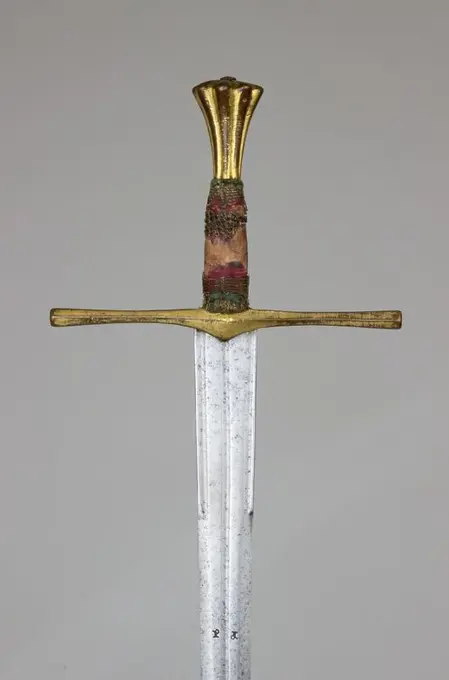
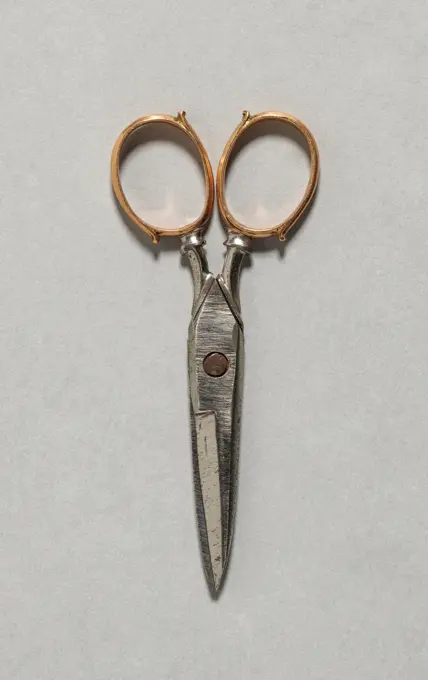
Historical Metal Tools

A series of ancient metal tools and spurs, showcasing craftsmanship and design from different historical periods for practical use.
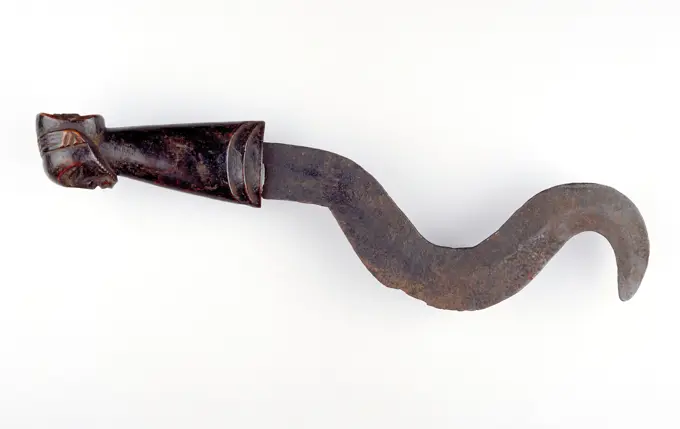
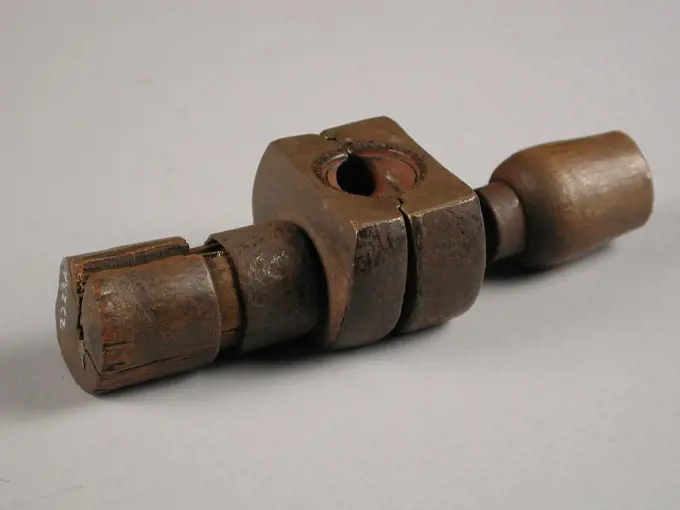
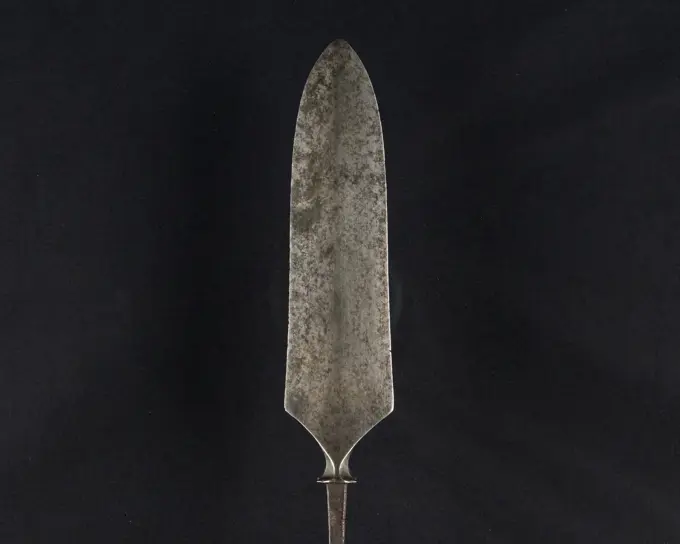
Sickle Weapon, 13th-20th century, 15 3/8 x 1 7/8 x 2 1/4 in. (39.05 x 4.76 x 5.72 cm), Wood and metal, Democratic Republic of Congo, 13th-20th century
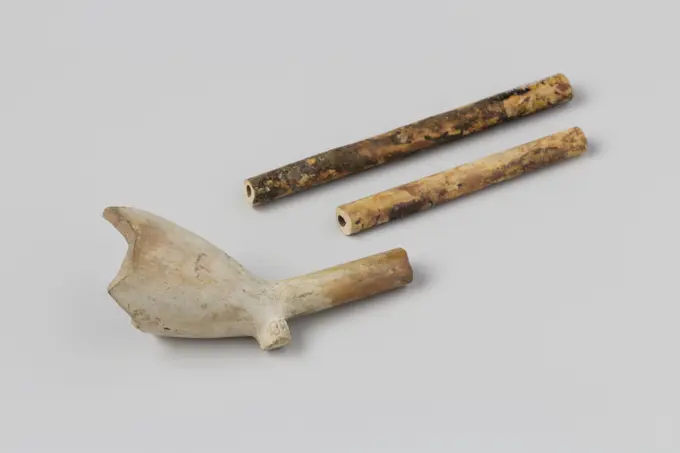
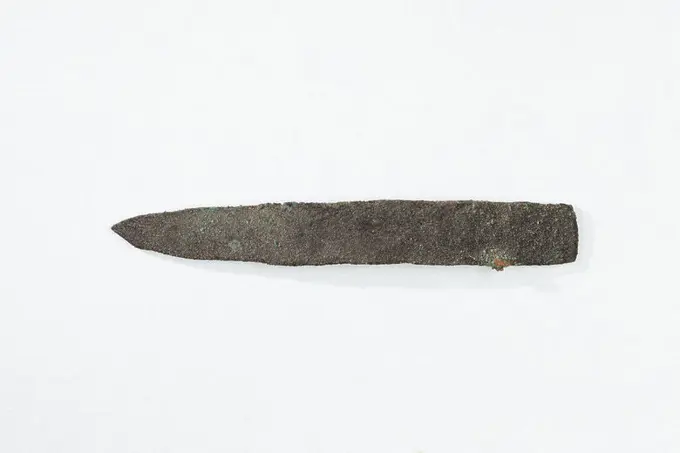
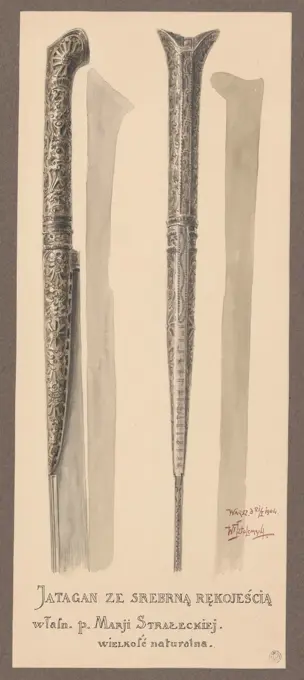
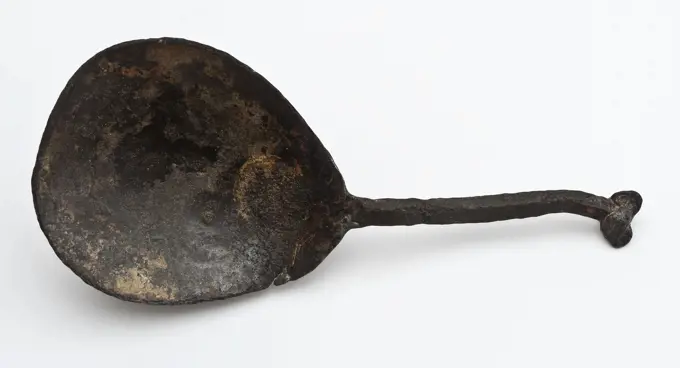
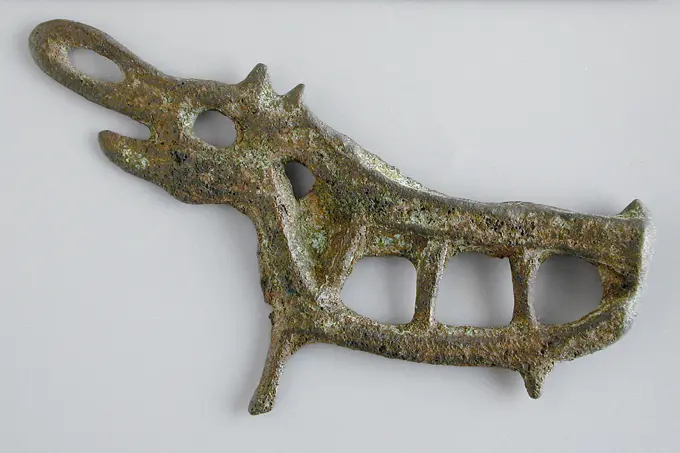
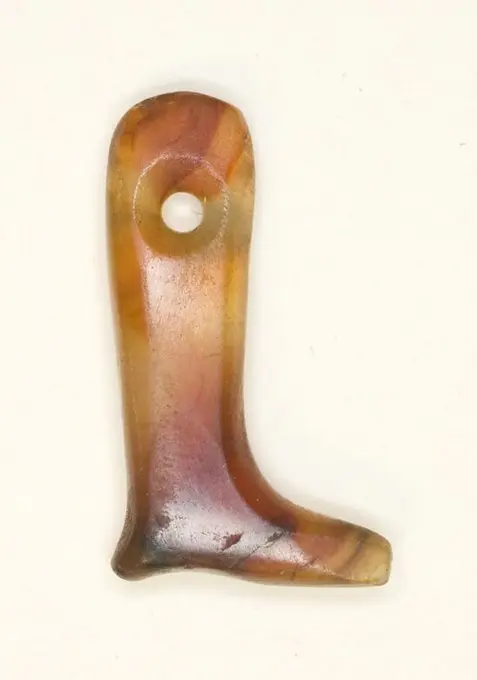
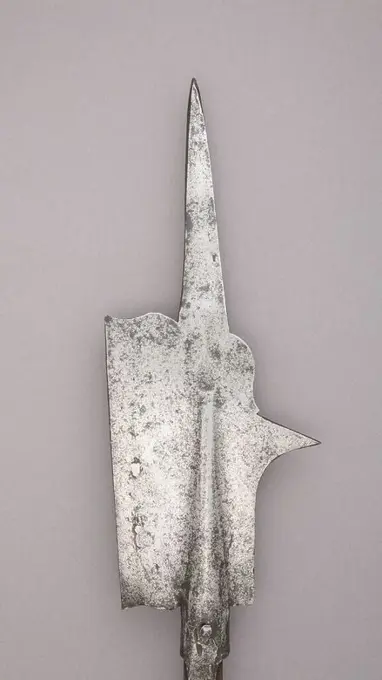
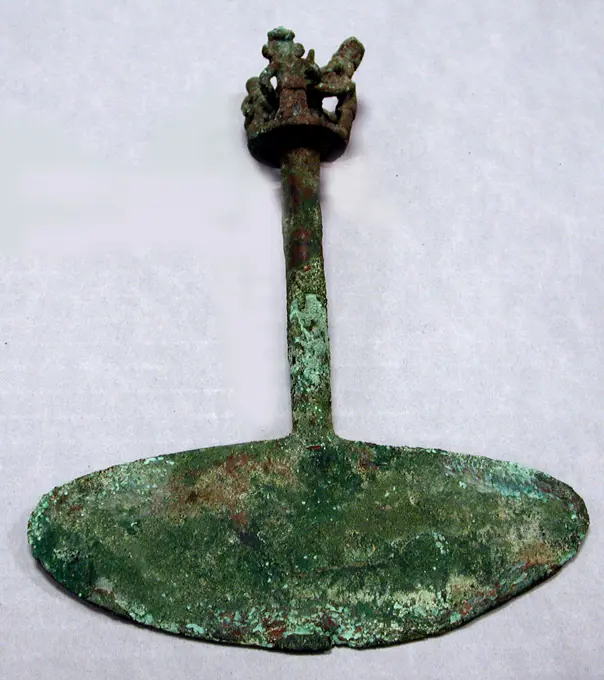
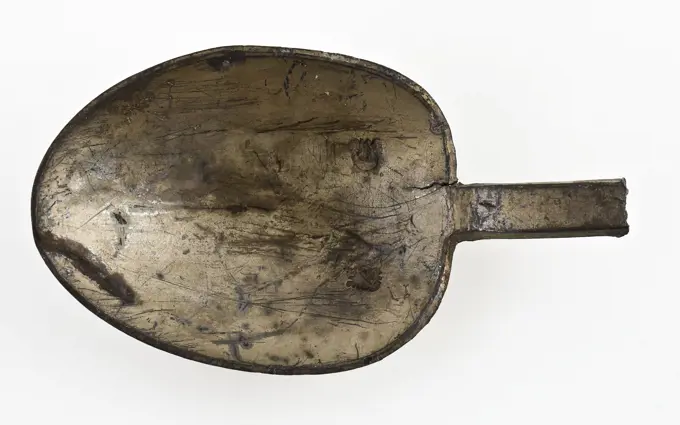
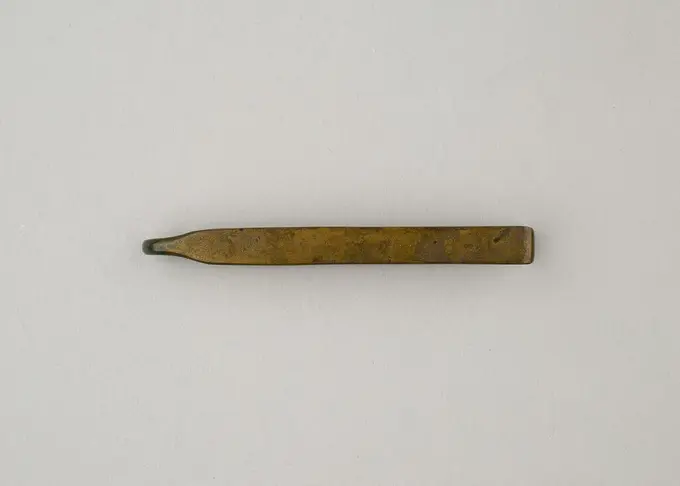
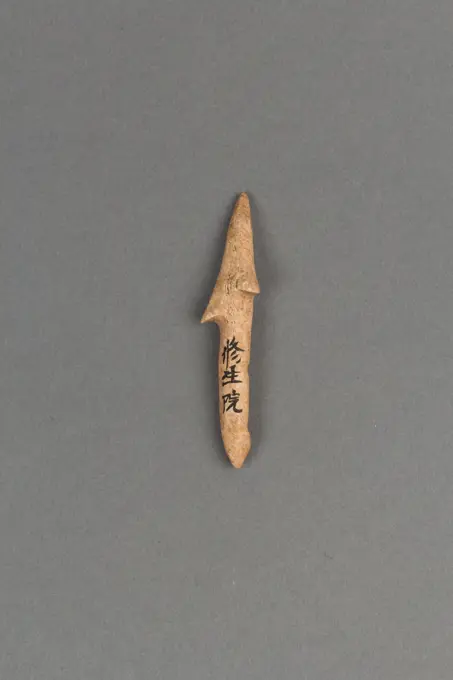
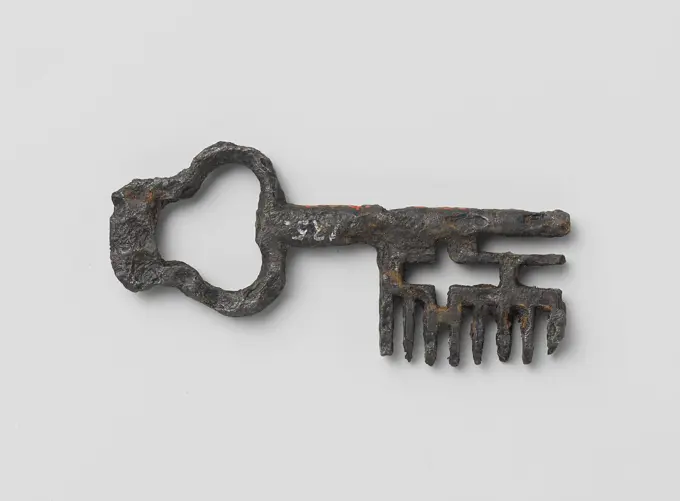
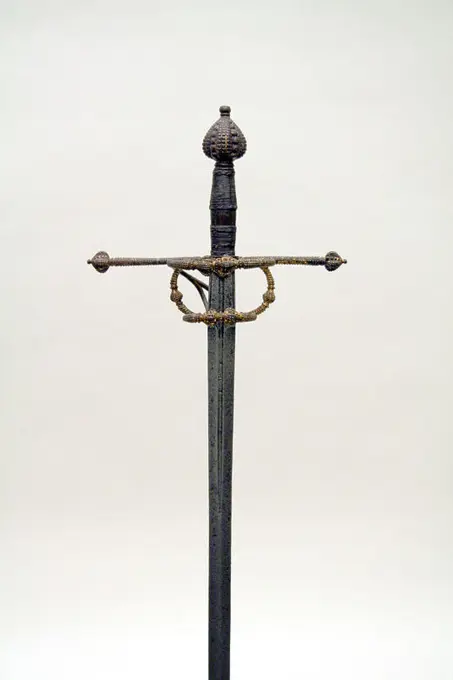
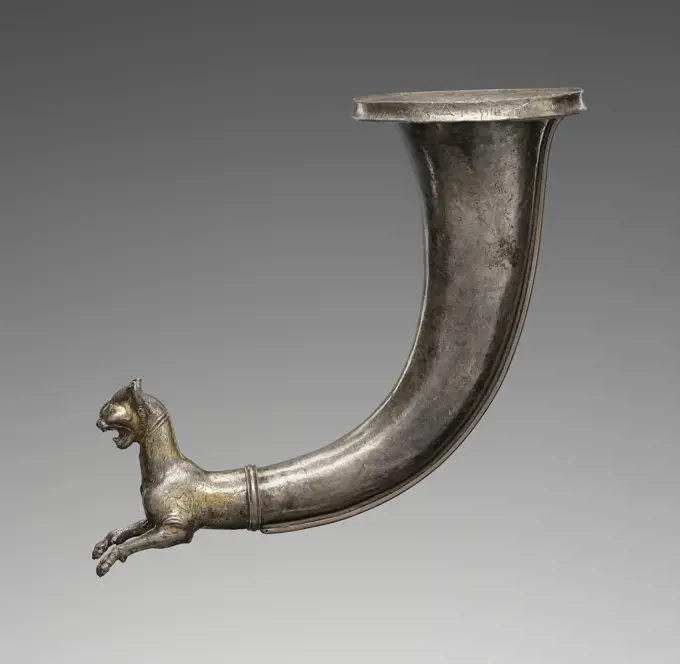
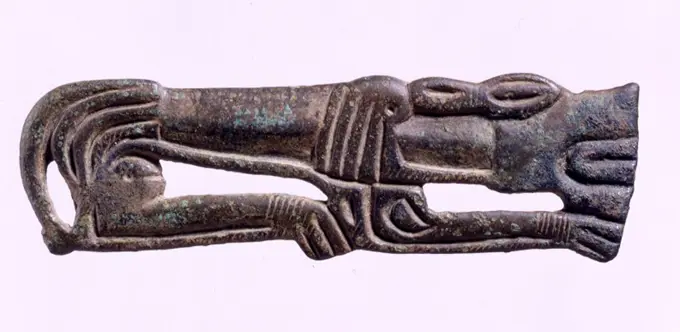
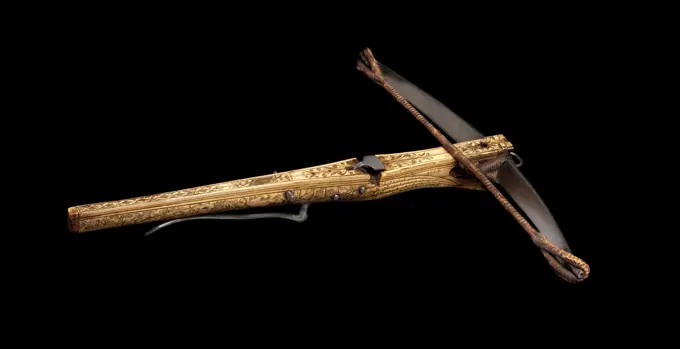
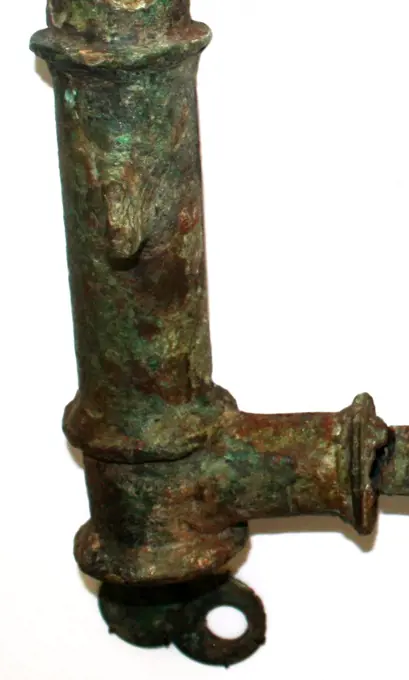
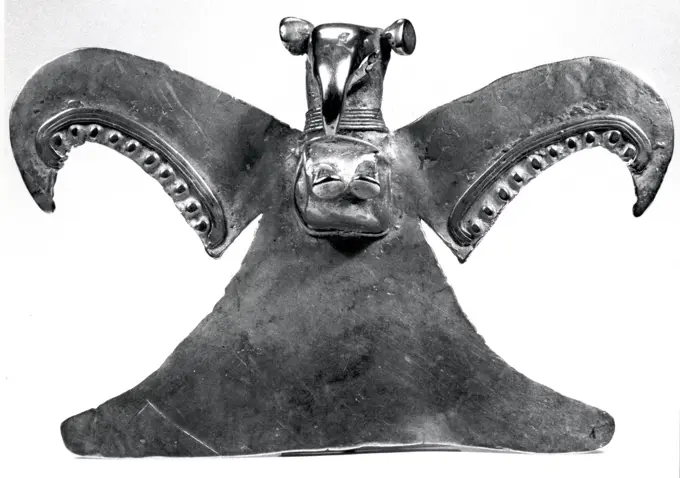
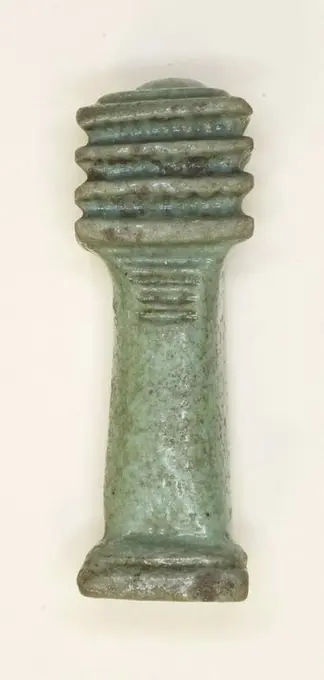
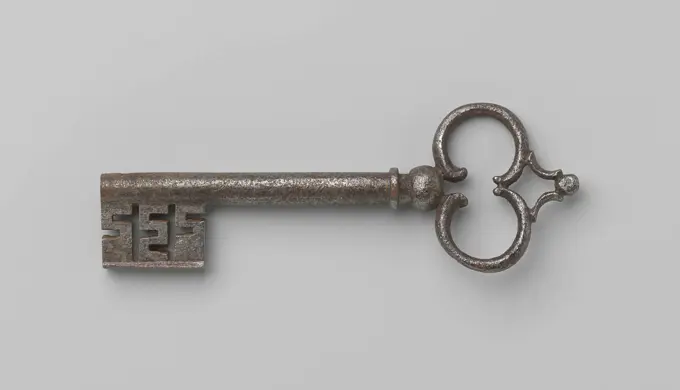
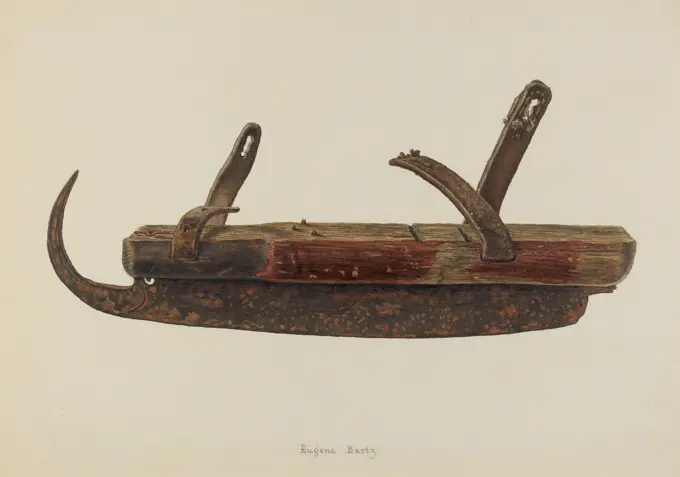
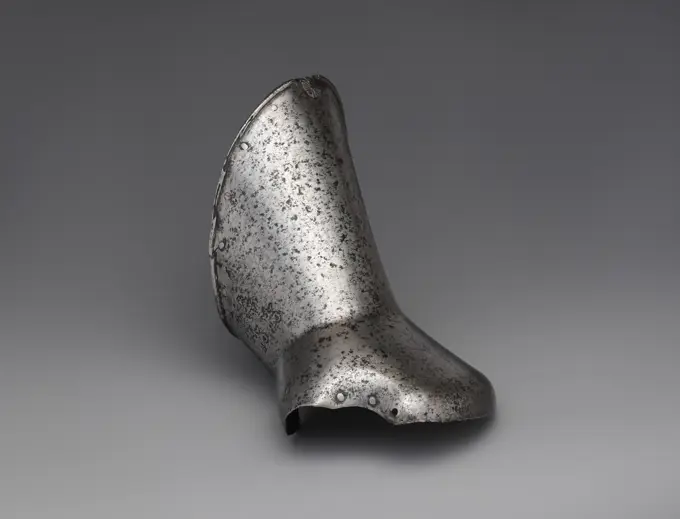
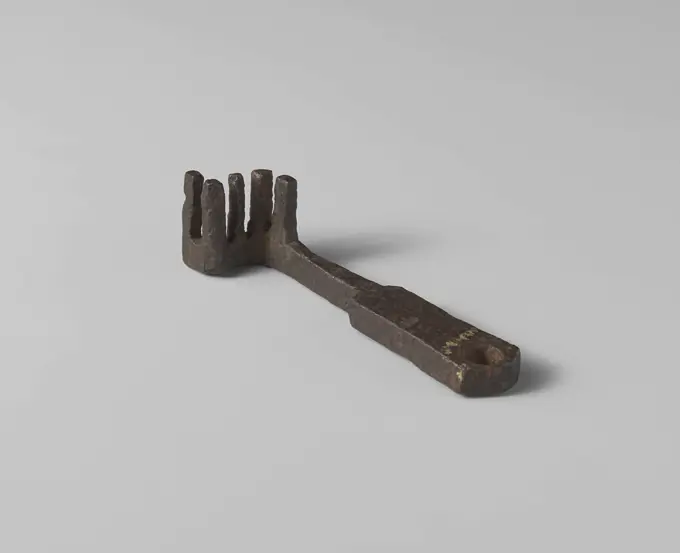
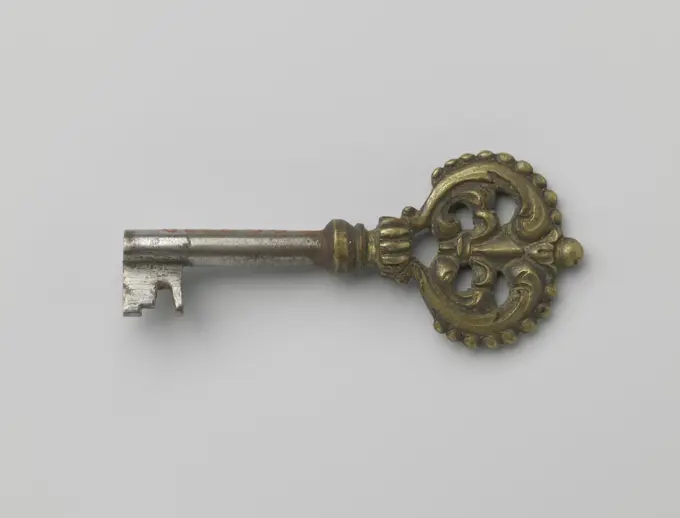
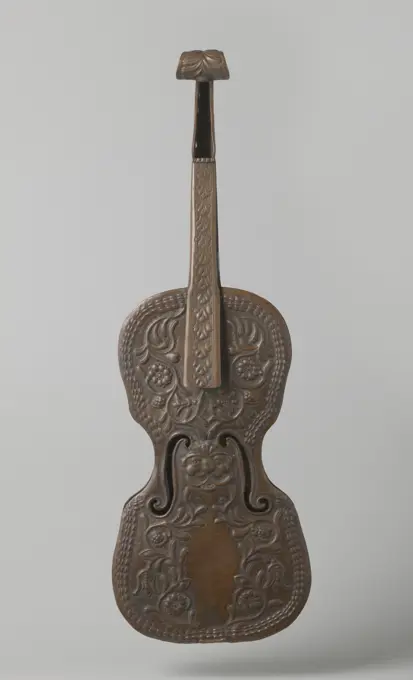
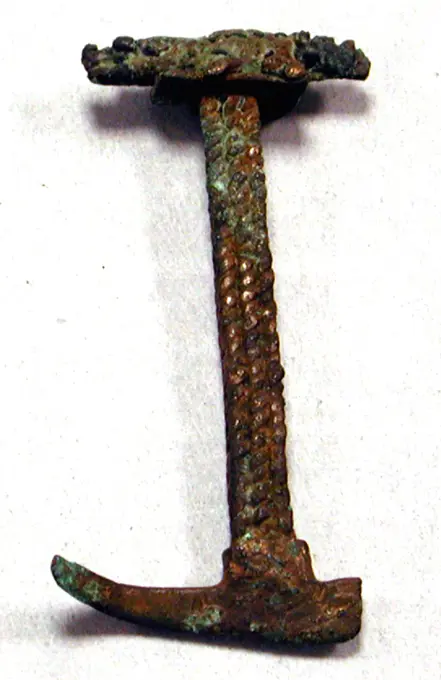
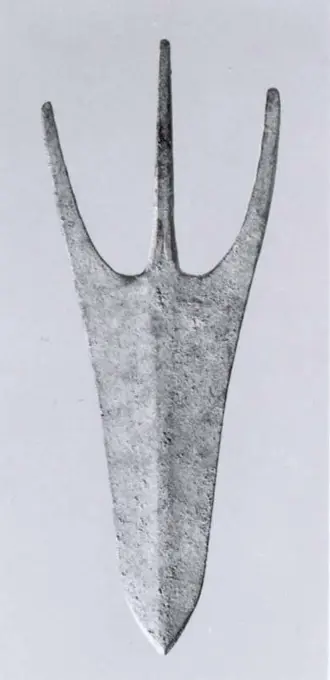
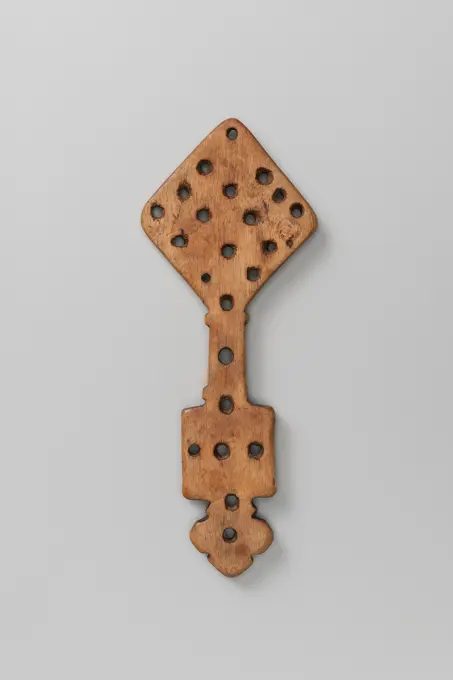
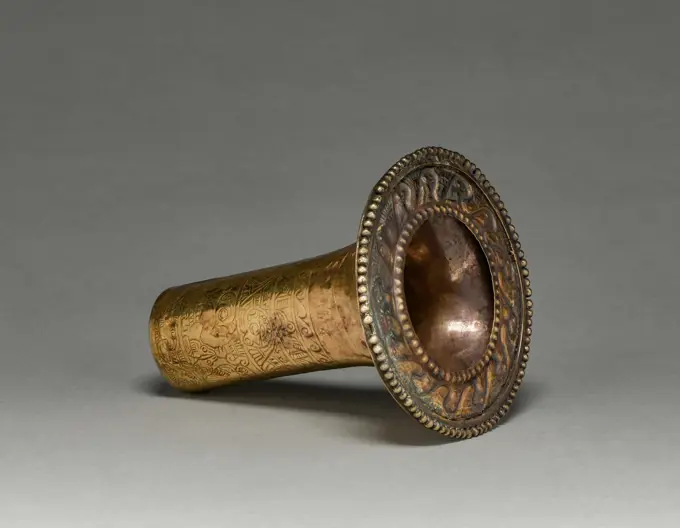
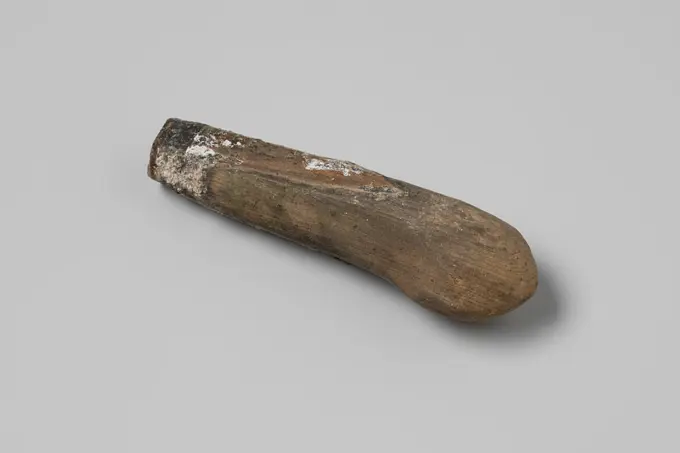
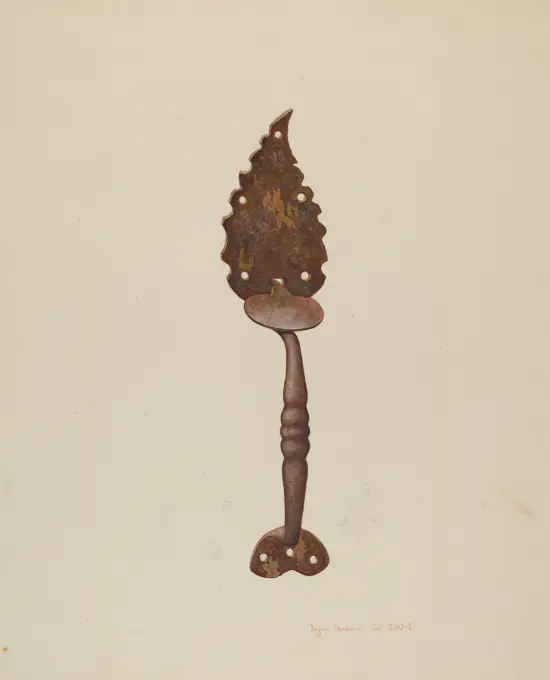
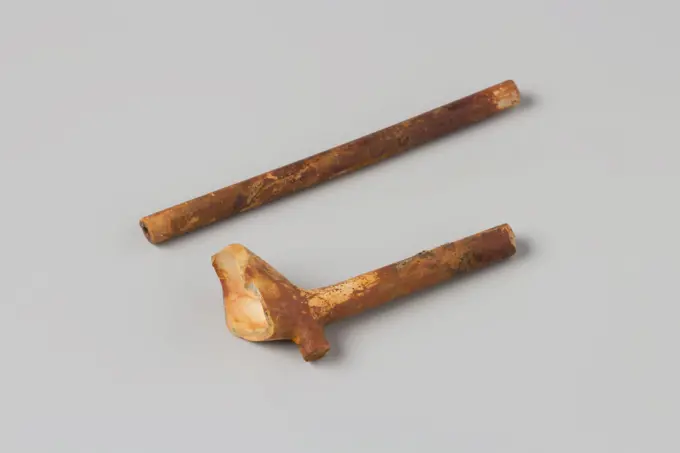
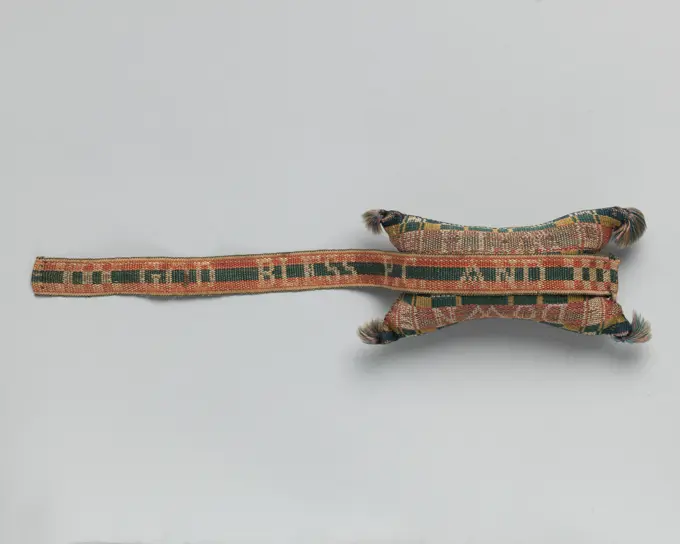
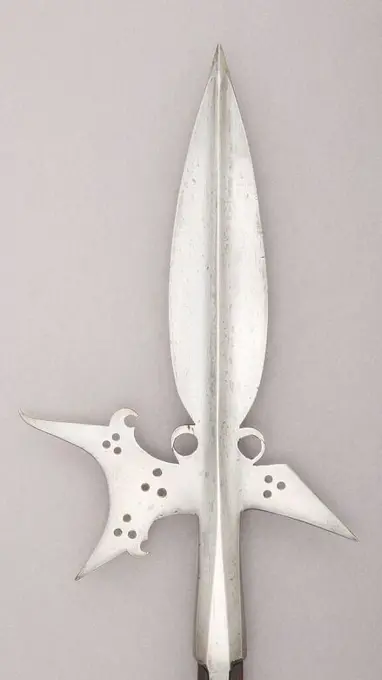
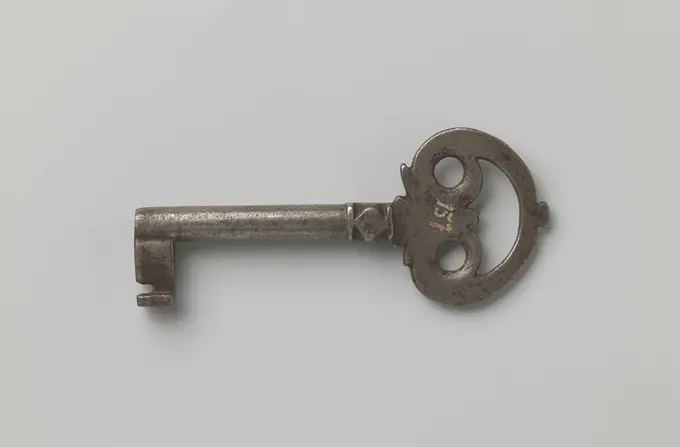
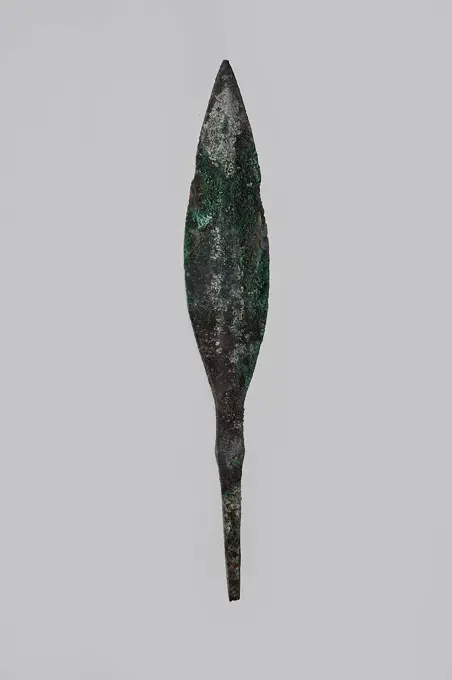
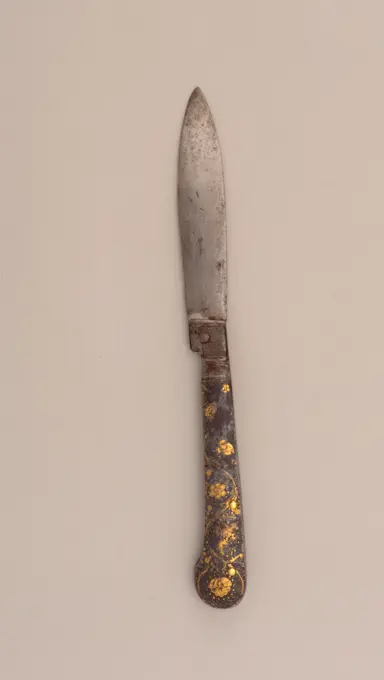
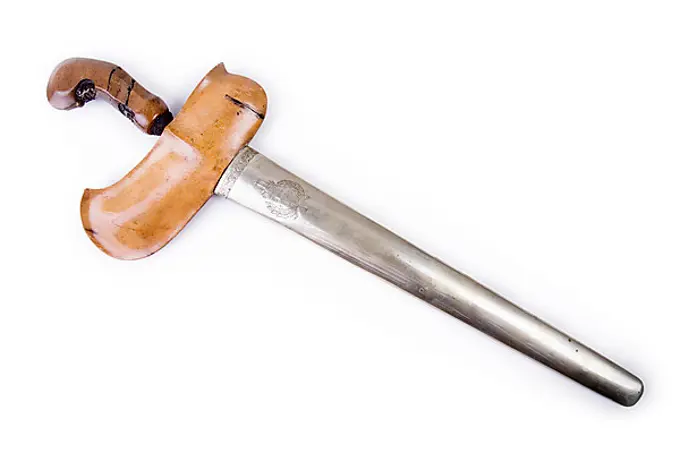
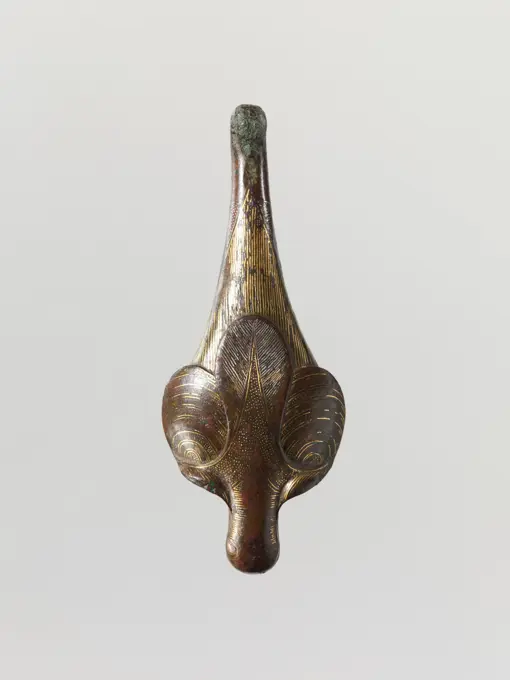
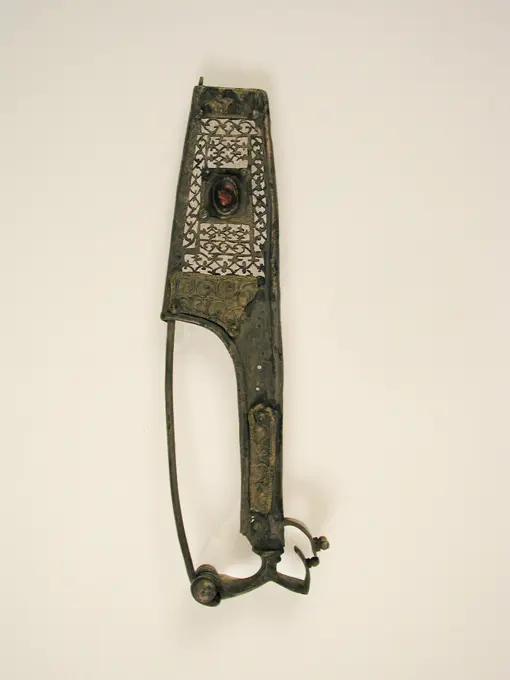
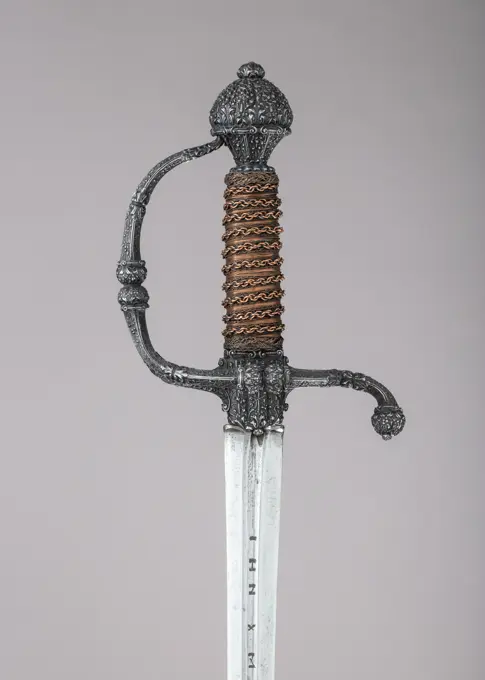
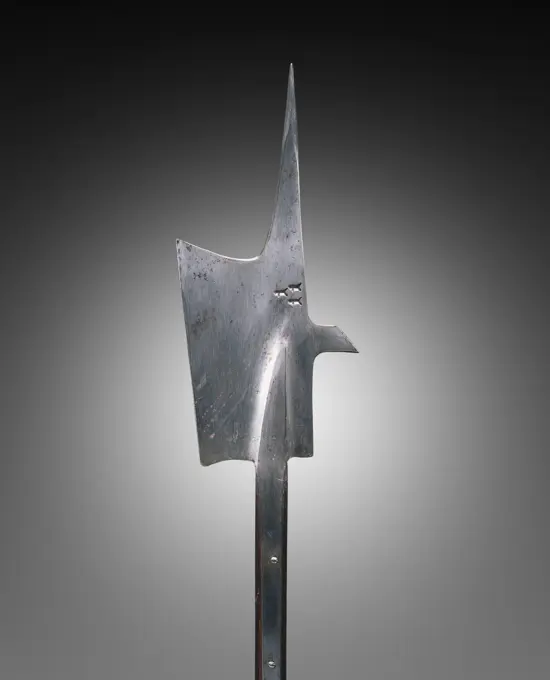
Two-piece bronze mold for eye of screw cap, mold casting tool tools base metal bronze, cast Two-piece bronze mold for casting an eye of screw cap through which the ring must pass; probably for jug Rotterdam tingieterij tinnegieter tin Meeuws Druy craft Forms come from the originally 18th century Rotterdam tinnegieter J Druy. The large molds that were not signed or dated were the property of the tinker guild and were rented to the small tin caster.Wooden object from v.O.C.-ship the 'white lion'. Wooden object. Possible button of curtain rod. Consisting of a tapered part and a sphere with a button on it, connected by a ring, carved everything from one piece. On the bottom a hole and in the sphere a hole.Table knife and fork 17th century Spanish. Table knife and fork. Spanish. 17th century. Steel, silver, wood, glass or stone. Metalwork-SteelKnife -Copper tip of knife-edge with linear decoration, leather fitting, sheath sheath batter found of the ground copper metal, die-cast engraved Copper tip of knife sheath or sheath Simple decorated with few engraved lines. Leather fittings archeology Rotterdam City center Stadsdriehoek Meent Market Keeping the inner raft stowage Soil discovery pit corner Meent Markt (Binnenrotte).Hinge, driven and engraved .. an iron hinge, driven and engraved.Fragment Pijpenkop and Fragments Pipe stems from the wreck of the East Indians Hollandia, Anonymous, 1700 - in or Before 1743  Pipe, stem; fragment. Netherlands pipe clay   SecondPullBlade for a Model Chisel from a Foundation Deposit. Dimensions: L. 3.3 × W. 0.4 cm (1 5/16 × 3/16 in.). Dynasty: Dynasty 18. Reign: Joint reign of Hatshepsut and Thutmose III. Date: ca. 1479-1458 B.C.. Museum: Metropolitan Museum of Art, New York, USA.Yatagan with silver grip, owned by Maria Strzałecka from the Godeccy family. Sztolcman, Władysław Roman (1873-1950), painterJatagan with the vaginaTable knife and fork 18th century Southern German. Table knife and fork. Southern German. 18th century. Steel, mother-of-pearl, paste. Metalwork-SteelMetal spoon with drop-shaped leaves, bud on stem, spoon cutlery soil find tin metal, Spoon with drop-shaped leaves Rectangular stem ending in node or bud archeology Rotterdam Kralingen-Crooswijk Kralingche Bos Kralingse Plas Soil discovery: in 1972 at the Kralingse Plas from dumped dredge collected metal detector finds and sight finds.Silversmith's art, 16th century. Silver cutlery set for game.Pipe key. Pipe key with decorated handle, short shaft and block-shaped beard.Fantastic Beast or Bear. Western Siberia or Volga/Kama region, 4th-11th century A.D.. Jewelry and Adornments; plaques. Bronze, castAmulet of a Leg and Foot. Egyptian. Date: 2494 BC-2055 BC. Dimensions: 2 × 1 × .25 cm ( 3/4 × 3/8 × 1/8 in.). Carnelian. Origin: Egypt. Museum: The Chicago Art Institute, Chicago, USA. Author: Ancient Egyptian.Halberd. Culture: Swiss. Dimensions: L. 72 3/4 in. (184.8 cm); L. of head 19 1/4 in. (48.9 cm); W. 7 1/2 in. (19 cm); Wt. 5 lbs. 11 oz. (2580 g). Date: 1450-60. Museum: Metropolitan Museum of Art, New York, USA.Fragment van een tabakspijp..Fragment of a tobacco pipe with pressed decoration around the handle.Part of a Harness 16th century British. Part of a Harness 35644Copper Tumi with Figure 15th-16th century Inca. Copper Tumi with Figure. Inca. 15th-16th century. Copper. Peru. Metal-ImplementsShovel of tin spoon, marked, stamped initials, spoon cutlery soil find metal tin w 5,2, cast Scoop of pewter spoon with flat handle The handle has short rat tail on the underside of the scoop blade. Marked on the underside of the scoop blade next to the rat tail and at the top with two stamped initials in an worked rectangular stamping area master mark: * K Rotterdam Archeology Rotterdam City center Stadsdriehoek Oudehaven eating table cutlery Soil discovery: Oude Haven Rotterdam.Tweezers. Dimensions: L. 7.2 cm (2 13/16 in); W. 1.2 cm (1/2 in); H. 0.7 cm (1/4 in). Dynasty: Dynasty 18, early. Reign: reign of Ahmose-Joint reign. Date: ca. 1550-1458 B.C..This set of tweezers is a set of toiletry equipment (26.7.837a-d) that included a razor, a mirror and a whetstone, and a kohl tube (26.7.1447), all found in a rush basket. Museum: Metropolitan Museum of Art, New York, USA.Harpoon head Japan The Jmon period is the earliest period in Japanese history, lasting from roughly 14,000 to 300 BCE. The Jmon people were primarily hunter-gatherers, hunting land animals and gathering vegetables and nuts on the land as well as hunting and fishing at sea. Harpoon heads such as this one testify to the importance of seafood in the diets of some Jmon communities, especially those close to the sea. Fish bones found at Jmon archaeological sites indicate that the Jmon hunted fish not only close to the shore but also farther out in the open sea, where larger fish could be caught. There is even evidence that the Jmon ate pufferfish, a poisonous fish considered a delicacy in modern Japan.. Harpoon head. Japan. Bone. Final Jmon period (ca. 1000-300 B.C.). BonePistoolholster of leather decorated with Roman and Germanic warriors in relief, anonymous, c. 1575 - c. 1600  Pistoolholster of leather. At the front in relief, two fighting warriors in Roman costume. Below that a Germanic warrior.  leatherPatriotse Pijpen Porner with Dutch Virgin, Anonymous, 1787  Elongated legs nurser, consisting of oval, open -up medallion, awarded with a bow; In medallion: woman, representing Dutch virgin, standing in fenced garden, with in the right hand on spear and in the left hand shield; Below that: opened heart and long pen, the upper part of which has a four sides and in which a bullet is located, the middle part is turned and the lower part ends in point. Netherlands silver (metal) casting. The Amsterdam apothecary and art collector Emmanuel Vita Israël. He donated his collection, comprising keys dating from Roman antiquity to the 19th century, to the Koninklijk Oudheidkundig Genootschap (Royal Antiquarian Society) in 1937. Vita Israël claimed that his key collection had grown more or less by accident: being one of the few collectors of keys, dealers automatically made their way to him.Clavos de fragua, siglo XVII/XVIII. Museu Etnogràfic de Ripoll.Kanjar with a scabbardRapier. Culture: Italian. Dimensions: L. 47 5/8 in. (121 cm); W. 10 in. (25.4 cm); D. 5 in. (12.7 cm); Wt. 2 lb. 8 oz. (1133.98 g). Date: ca. 1570. Museum: Metropolitan Museum of Art, New York, USA.Lynx-Shaped Drinking Horn; Eastern Seleucid Empire; 100 - 1 B.C; Gilt silver; 24.5 × 41.9 × 12.2 cm (9 5,8 × 16 1,2 × 4 13,16 in.)Belt Buckle in the Shape of a Wolf 6th-4th century B.C. Bulgaria. Belt Buckle in the Shape of a Wolf. Bulgaria. 6th-4th century B.C.. Bronze. Thracian period. MetalworkCrossbow late 15th or early 16th century, and later; date 1584 engraved probably during the 19th century Central European, possibly southern Germany. Crossbow. Central European, possibly southern Germany. late 15th or early 16th century, and later; date 1584 engraved probably during the 19th century. Steel, wood, staghorn, hemp. Archery Equipment-CrossbowsComb. Culture: Byzantine. Dimensions: Overall: 8 7/8 x 5 1/2 x 7/16 in. (22.5 x 13.9 x 1.1 cm). Date: 3rd-8th century. Museum: Metropolitan Museum of Art, New York, USA.Dżambja dagger with vaginaBronze double-action water-pump. Roman Probably 3rd century AD. From Bolsena, Italy. This pump had two pistons which were raised and lowered by a rocking-beam. The pistons were housed in two cylinders. At the bottom of each cylinder was a non-return valve. When one of the pistons was raised, the valve was pushed open and the water rose inside the cylinder. When the piston reached its highest point the valve closed, trapping the water inside the cylinder. On its downward stroke, the piston forced the water out through a side pipe. It then passed through a second valve into the central discharge pipe where it drained away.Human ribs from the wreck of the East Indians' t Vliegend Hart, 1700 - 1735  Two pieces of human rib. Human Remains (Ribs).  bone (material)Eagle Pendant 11th-16th century Veraguas. Eagle Pendant. Veraguas. 11th-16th century. Gold (cast). Panama. Metal-Ornamentsold hammer and a rusty nail on a blackboardBelted tongue with round decorated disk, ending in hook, frieze with text on the disk, belt clothing accessory clothing soil find copper tin metal, Belt or belt hanger Consisting of circular decorated disc through the middle frieze with text Decoration consists of tree figure on ground of rasterized lines At the bottom raised hook. Possibly used as fastening or hanging on the belt as belt hanger Tekst in fries archeologieAmulet of a Djed Pillar. Egyptian. Date: 1100 BC-601 BC. Dimensions: 3.6 × 1.2 × 1 cm (1 3/8 × 1/2 × 3/8 in.). Faience. Origin: Egypt. Museum: The Chicago Art Institute, Chicago, USA. Author: Ancient Egyptian.Stole. unknown, authorGoldweight Scorpion, 19th-20th century, 3/4 x 1 3/4 x 3 1/8 in. (1.91 x 4.45 x 7.94 cm), Brass, Ghana, 19th-20th centuryPijpsleutel.Pipe key whose handle consists of two donated C-volutes, awarded by a ball that rests on two shouting and facing rods. Capital ball. Pipe downhilled.Eugene Bartz, Ice Skate, c 1938 Ice SkateGauntlet for the Left Hand ca. 1450-60 Italian This is part of a large find of medieval armor discovered in 1840 in the ruins of the fortress of Chalcis, on the Greek island of Euboea (then a Venetian colony called Negroponte). The fortress had been captured and destroyed by the Turks in 1470. Now divided largely between the Ethnological Museum, Athens, and The Metropolitan Museum of Art, the Chalcis hoard contains many rare and unusual elements of fourteenth- and fifteenth-century armor. Of particular importance are the variety of headpieces and the many fragments of brigandines (armor for the torso constructed of small plates riveted to layers of fabric), some of which retain portions of their original velvet covering. The Chalcis armor provides a unique picture of the armament used in the Aegean, one of the easternmost military outposts of the Venetian empire.. Gauntlet for the Left Hand. Italian. ca. 1450-60. Steel. Armor Parts-GauntletsLifting wrench. Lifting key with handle consisting of a widening of the stem with an eye at the top. On the four-sided stem is the beard with five teeth formed by changing inner corners.Club -Pipe key, c. 1700 - c. 1800 Pipe key whose round grip is composed of two acanthus leaves a French lily. The circumference is bordered by a pearl necklace and is crowned by a bullet. Handle and key breast of copper, shaft and beard of iron.  copper (metal). iron (metal) Pipe key whose round grip is composed of two acanthus leaves a French lily. The circumference is bordered by a pearl necklace and is crowned by a bullet. Handle and key breast of copper, shaft and beard of iron.  copper (metal). iron (metal)Viool.Copper violin driven to all sides.Halberd Head with Two Nagas Supporting Blades ca. second half of the 13th century Indonesia (Java). Halberd Head with Two Nagas Supporting Blades 65659Iron knife and Iron knife with a bronze handle from the 1st CenturyCopper Tumi with Alligator Figure before 15th century Peruvian. Copper Tumi with Alligator Figure 315628Key, c. 1700 Key whose hold of two volutes desired downwards, between which there are two eyes placed one above the other. The capital is elongated and consists of various thick and thin discs and ends in a button at the bottom. The beard is Z-shaped.  copper (metal) Key whose hold of two volutes desired downwards, between which there are two eyes placed one above the other. The capital is elongated and consists of various thick and thin discs and ends in a button at the bottom. The beard is Z-shaped.  copper (metal)Arrowhead 2nd-1st millennium B.C. Iran. Arrowhead 325222Cross thorough; Unknown Ethiopian workshop (1400-1970); XX W (1900-00-00-1960-00-00);deposit of Wacław Korabiewicz, crosses, Ethiopian crosses, hand crossesFob 18th century French. Fob 102461Arrowheads, needles, hooks and harpoons. Culture: Japan. Dimensions: W. 2 1/4 in. (5.7 cm); L. 5 in. (12.7 cm). Museum: Metropolitan Museum of Art, New York, USA.Club -Knife lift from the wreck of the East Indiesman Hollandia.knife, Handle, Cylindrical: tapering; ID. NG 1979-403H.Ear Flare, 900-1470. Peru, North Coast, Chimú style (900-1470). Hammered gold alloy; diameter: 8 cm (3 1/8 in.); overall: 9.9 cm (3 7/8 in.). North Coast ear ornaments typically have a long shaft that balanced the weight of the glorious frontal. This pair illustrates Chimú interest in the sea, which had great economic and religious importance. On the shafts are bands of seabirds and waves, and a similar pattern edges the frontals, which were altered in modern times. Originally solid disks, the frontals' centers were cut out and a dotted band was added to the rim.Gold keyCup and ball toy -Knife lift from the wreck of the East India Hollandia. Knive, pistol-grip-shaped hexagonal faceted, tapering, slightly pointed upper end, ferrule.Regina Henderer, Suffolk Latch, c 1939 Suffolk LatchSpoon with Fish-Tail Design, 918-1392. Korea, Goryeo period (918-1392). Bronze; overall: 28.4 cm (11 3/16 in.).Palette. Egypt, Pre-Dynastic Period (circa 5500 - 3050 BCE). Tools and Equipment; palettes. SlateSword with Scabbard. Culture: Italian, Venice. Dimensions: L. 55 1/8 in. (140 cm); L. of blade 44 5/8 in. (113.3 cm); W. 11 3/4 in. (29.9 cm); Wt. 4 lb. 7 oz. (2013 g); Wt. of scabbard 8.5 oz. (241 g). Date: ca. 1575. Museum: Metropolitan Museum of Art, New York, USA.Max Fernekes, Log Load Tightener, 1939 Log Load TightenerFragment Sampler from the wreck of the East Indieschief Hollandia. Divider; Fragment: Lay ID. NG 1980-27H1171: Circular Pivot End.EMPUÑADURA DE UNA ESPADA ESPAÑOLA DEL SIGLO XVII. Location: Museo Stibbert. Florenz. ITALIA.Tupu (pin) Before 17th century Wari or Inca () This object is a tupu, a Quechua term for pin ("pithu" in Aymara and "alfiler" in Spanish), and it is made of silver. Women in the Andes have used these pins to fasten textile garments. The basic tupu form consists of a head and a stem. This particular example is nearly identical in size, shape, and fabrication technique to Metropolitan Museum of Art 64.228.702. While there is no documentation available to suggest that they were from the same archaeological context, it is possible that one person may have worn them as a pair. Typically, women wear two tupus, their heads pointed downward, in order to fasten the acsu or anacu (sometimes referred to in Spanish as saya). This garment is a rectangular textile made of camelid wool that wraps around the body. The tupus may be worn threaded along a cord that passes through their perforations. Indeed, the head of this tupu is undecorated except for a single perforation along its central lengthwisePinhead. Iran, Luristan, circa 1350-800 B.C.. Jewelry and Adornments; pins. Bronze, castHammered Silver Spoon 8th-mid-16th century Peru; north coast (). Hammered Silver Spoon. Peru; north coast (). 8th-mid-16th century. Silver (hammered), gilt. Peru. Metal-ImplementsRussian dragons saber with vaginaFragment Pijp and Fragment Pijpensteel from the wreck of the East Indians Hollandia, Anonymous, 1700 - in Or Before 1743 pipe Pipe, bowl, heelmark: coat of arms of the province of Gelderland; fragm, no hsm. Netherlands pipe clay   SecondTumpline -Pincushion and ribbon ca. 1745-50 British, probably Manchester PC refers to Prince Charles, the young pretender, and "Down with the Rump" as a Jacobite slogan is frequently found at the time of the 1745 invasions.. Pincushion and ribbon. British, probably Manchester. ca. 1745-50. Silk. Textiles-WovenBurin -Halberd. Culture: German. Dimensions: L. 80 in. (203.2 cm); L. of head 17 5/16 in. (44 cm); W. 9 13/16 in. (25 cm); Wt. 5 lbs. 5.7 oz. (2429.6 g). Date: ca. 1650. Museum: Metropolitan Museum of Art, New York, USA.Messenheft with flowers in email, anonymous, 1600 - 1700 Kneft of copper decorated with flower and rank motifs of colored email. West-Europa copper (metal). Kneft of copper decorated with flower and rank motifs of colored email. West-Europa copper (metal).Arrowhead (Yanone) 18th century Japanese Although today Japanese warriors are renowned most for their swordsmanship, archery, especially from horseback, has been an essential part of samurai warfare and culture for centuries. Arrows were fitted with heads of varying shape according to their intended use in war, the hunt, or target practice. Arrowheads made for use on the battlefield incorporated different designs intended for specialized purposes such as the piercing of armor or to cause maximum damage to horses and unarmored personnel.Large arrowheads, pierced and elaborately chiseled with landscapes, birds, flowers, dragons, and Buddhist divinities, were created to be admired for the beauty of their metalwork and design rather than for use in archery. Such highly elaborate examples may have been made for presentation or as a votive offerings to a shrine.. Arrowhead (Yanone). Japanese. 18th century. Steel. Archery Equipment-ArrowheadsCircumcision tool around 1900, Franconian Switzerland Museum, Tuechersfeld, Middle Franconia, Bavaria, Germany, EuropeEscutcheon; 1904-21-45Pipe key. Pipe key whose flat, three openings are palm-shaped hold rests on a dice-like cap. The small beard has a notch.Grot oszczepu. unknown, authorFolding Knife (Germany); Made by FGS; steel, silver, gold, brass; L x W: 17.1 x 1.7 cm (6 3/4 x 11/16 in.); The Robert L. Metzenberg Collection, gift of Eleanor L. Metzenberg; 1985-103-249India dagger, (Khanjali) 18. centuryBronze Lilla, Anonymous, c. 1650 - c. 1750 lilla Bronze Lilla decorated with rings, a small square rosette and two tapes with stilled dolphins on the loop. Netherlands bronze (metal)   MoluccasBelt hook 4th-3rd century B.C. China. Belt hook 49508Spoon ca. 1618 Norwegian. Spoon 188526 Norwegian, Spoon, ca. 1618, Silver, Length: 5 7/8 in. (14.9 cm). The Metropolitan Museum of Art, New York. Gift of Henry Victor Burgy, 1901 (01.23.141)Brooch early 20th century (original dated 5th century) Hungarian. Brooch 463219Rapier ca. 1650-60 probably French By the early seventeenth century, the rapier, a long slender thrusting sword, began to dominate as the gentlemans weapon of choice. During the course of the century, however, as civilian fencing techniques became more specialized and refined, the rapier developed into a lighter, trimmed-down weapon known by about 1700 as the smallsword. Smallswords, often richly decorated, remained an integral part of a gentlemans wardrobe until the wearing of swords in civilian settings went out of fashion at the end of the eighteenth century, at which time pistols were replacing swords as arms most frequently used in personal duels. The majority of smallsword hilts are made of silver or steel, but many also employ a wide variety of luxurious materials, such as gold, porcelain, and enamel. At their best, smallswords combine the crafts of swordsmith, cutler, and jeweler to create an elegant weapon that was also a wearable work of art.. Rapier. probably French. ca. 1. .Halberd, c. 1480-1500. Switzerland, late 15th Century. Steel; wood haft (rectangular with planed corners); overall: 205.7 cm (81 in.); blade: 20.3 cm (8 in.). The halberd was a staff weapon favored by European infantries (foot soldiers) of the 1400s and 1500s for its versatility and deadly effect. The word halberd comes from the German words Halm (staff) and Barte (axe). The halberd is, in fact, an axe that served multiple functions: the axe blade was used for hacking, the spike for thrusting, and the beak for piercing plate armor or for pulling a knight from his saddle. The halberd was used by shock troops (those who lead an attack) and by Swiss and German mercenaries. After about 1550, the halberd gradually became less functional. Its large blade provided space for coats of arms and insignia. By the late 1500s, the parade halberd had become a ceremonial weapon for palace guards.Sword. Culture: possibly Italian. Dimensions: L. 44 1/2 in. (113 cm); L. of blade 37 3/4 in. (95.8 cm); W. 9 1/2 in. (24.1 cm); Wt. 2 lb. 15 oz. (1332.4 g). Date: early 16th century.This early sword is one of the few to retain fragments of its original grip bindings, here consisting of red and green silk. The stiff acutely pointed blade is designed to pierce the gaps between the plates of an opponent's armor. Museum: Metropolitan Museum of Art, New York, USA.Eye of Horus (Wedjat) Amulet 1390 BCE-1352 BCE Egypt. Faience . Ancient EgyptianScissors from a Sewing Box (Nécessaire), c. 1765. Austria, Vienna(), 18th century. Gold and mother-of-pearl;Fragments fork or spoon from the wreck of the East Indians Hollandia, Anonymous, 1700 - in or before 1743 spoon Cutlery, fragment: stem of fork or spoon; fragm, sim. NG 1980-27H536a. Netherlands copper (metal)   Second