Historical Metalwork Keys and Tools

A collection of historic metal keys and tools, showcasing intricate designs and craftsmanship from various centuries, emphasizing decorative features and functionality.
Hector Guimard (1867-1942). "Key". Bronze. 1909-1911. Museum of Fine Arts of the City of Paris, Petit Palais. 76499-10 Art Nouveau, Bronze, Key, Key
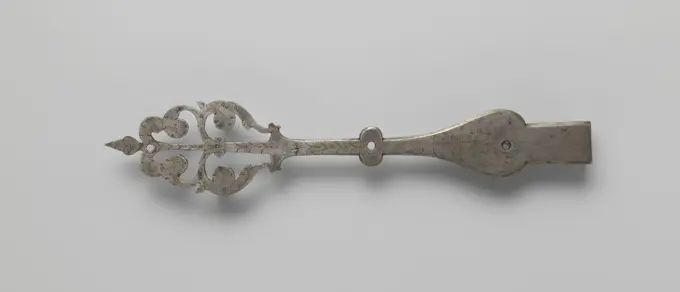
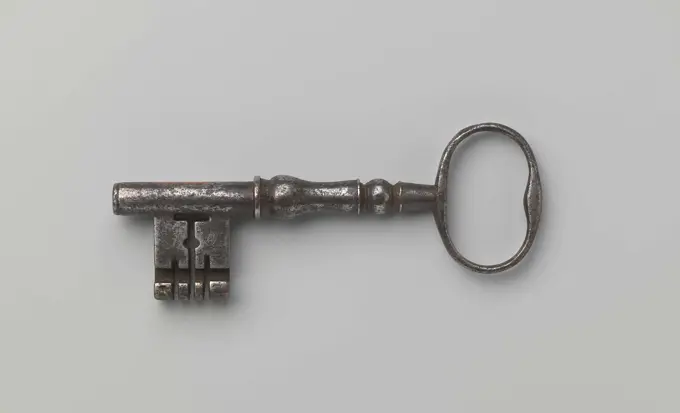
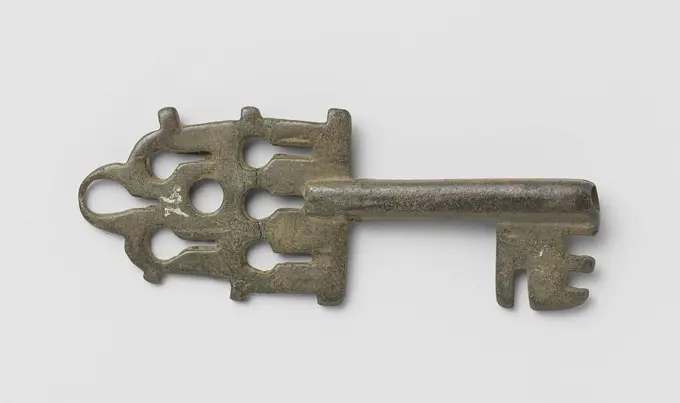
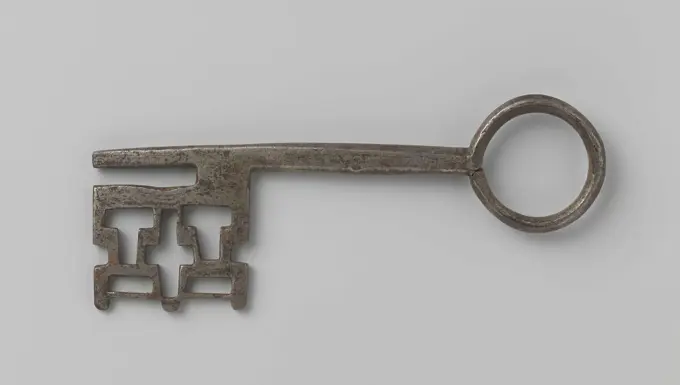
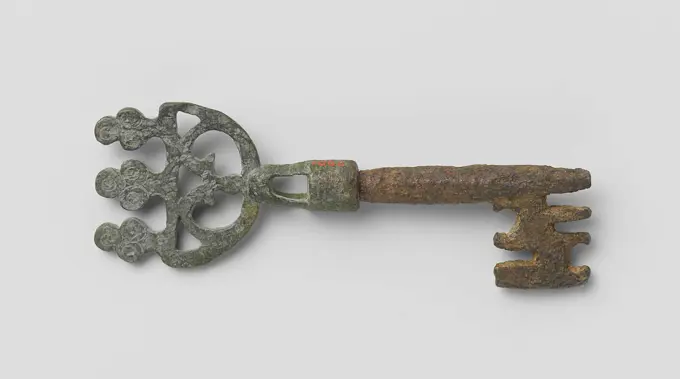
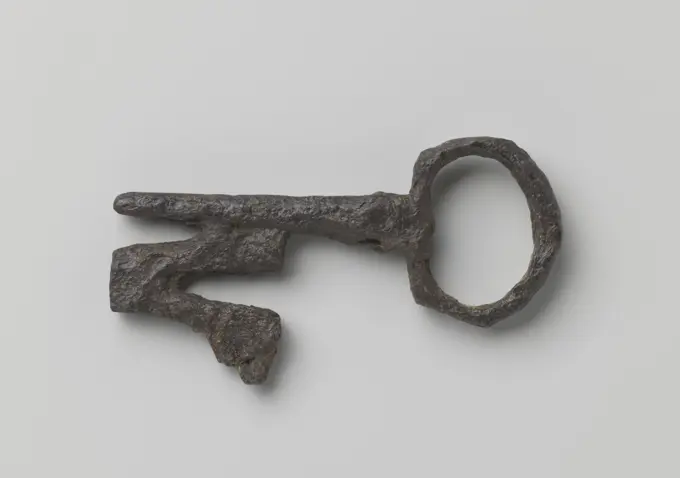
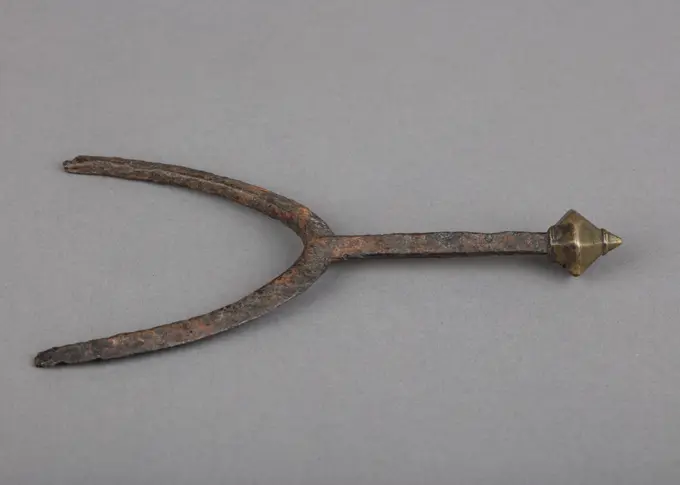
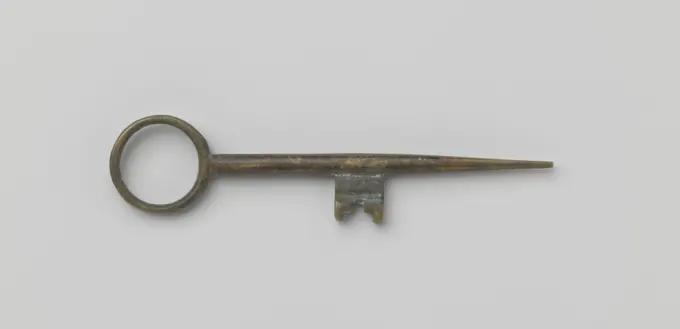
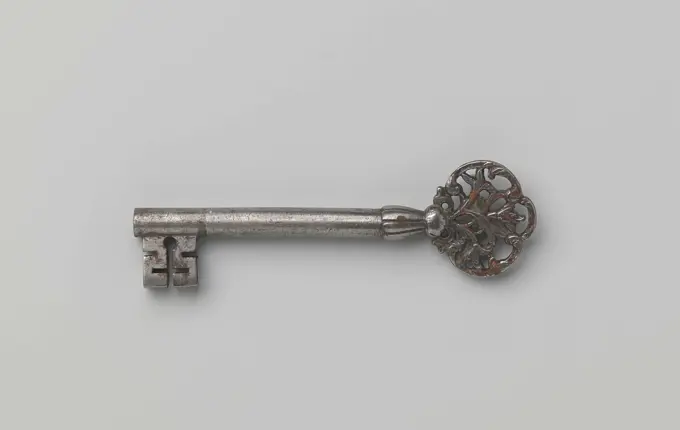
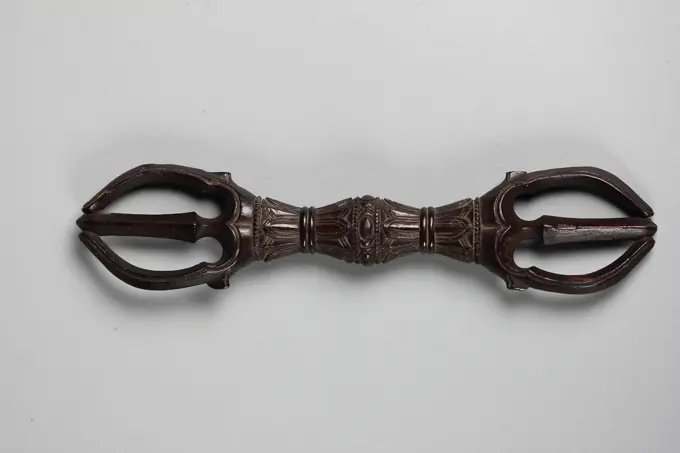
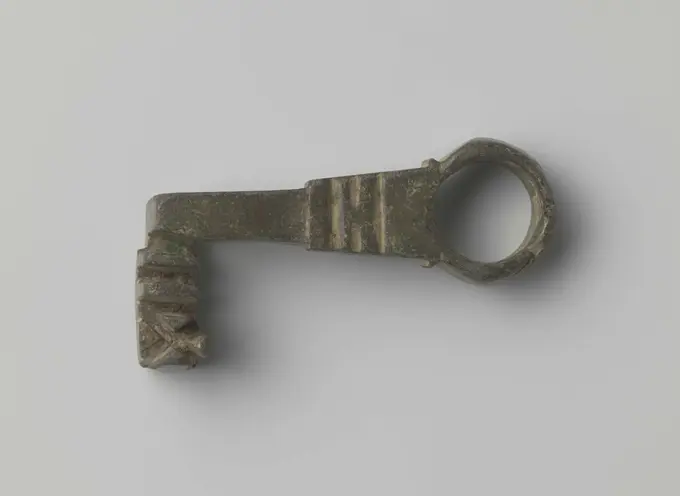
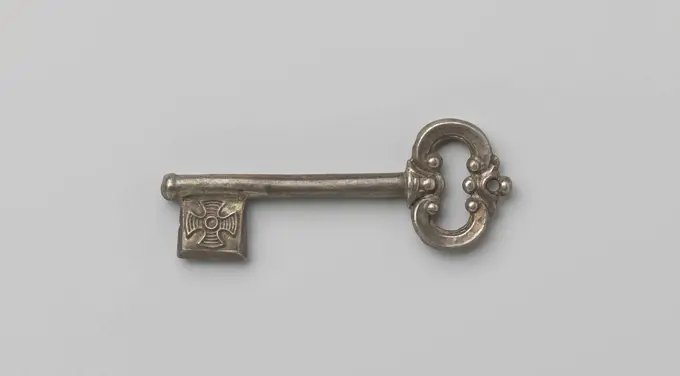
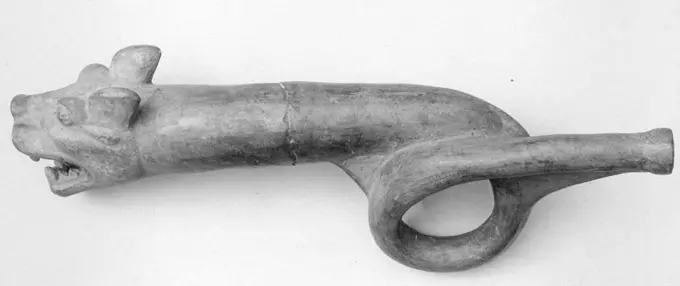
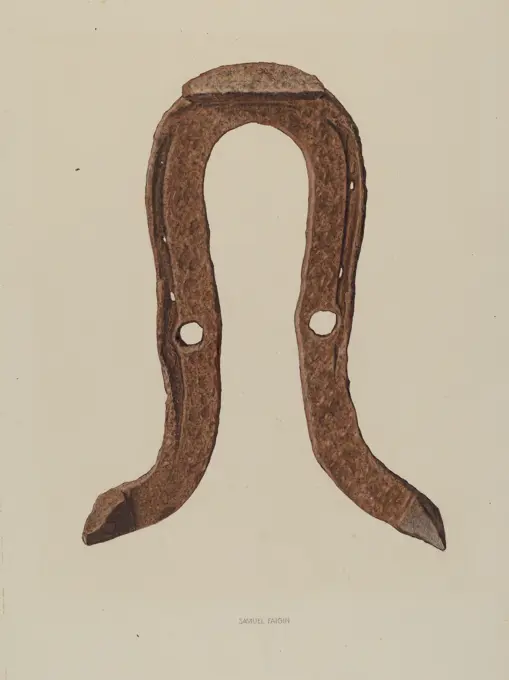
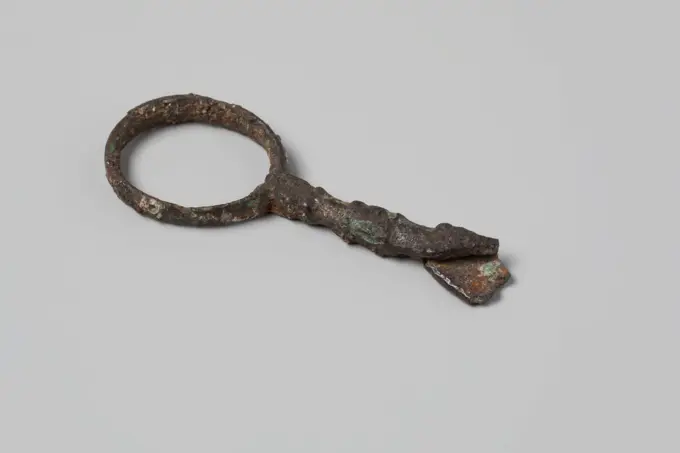
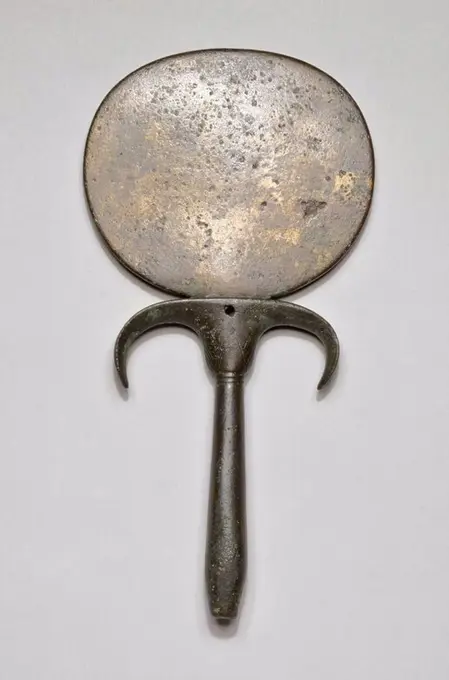
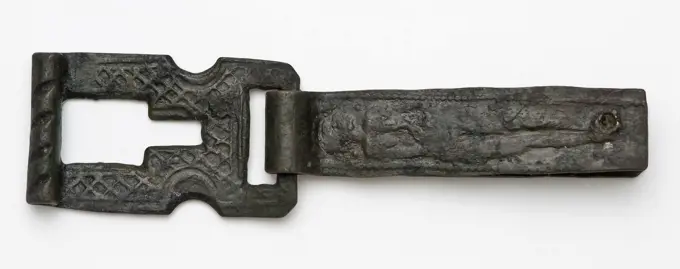
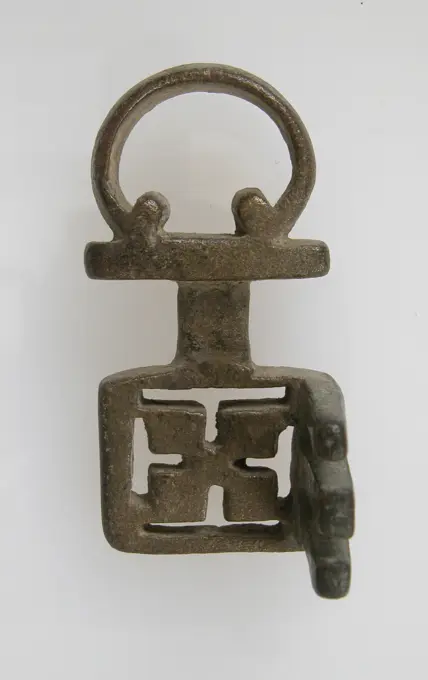
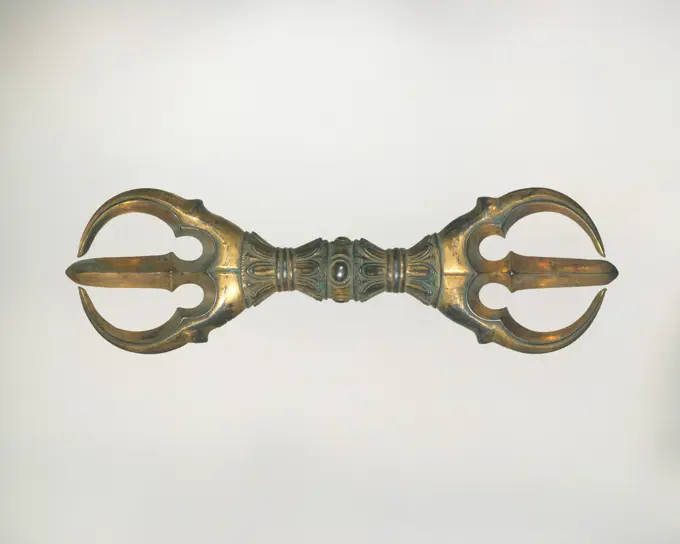
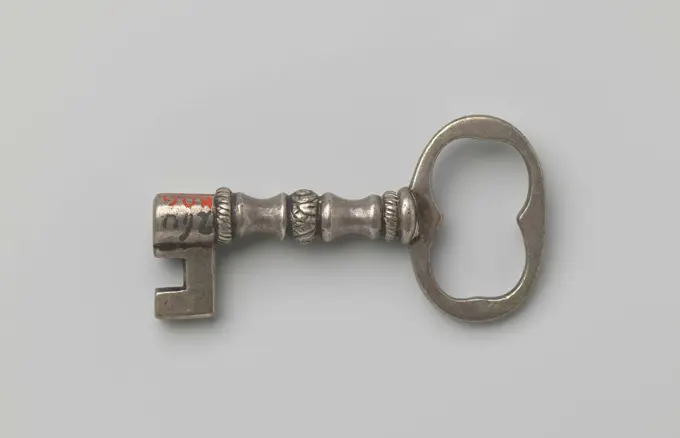
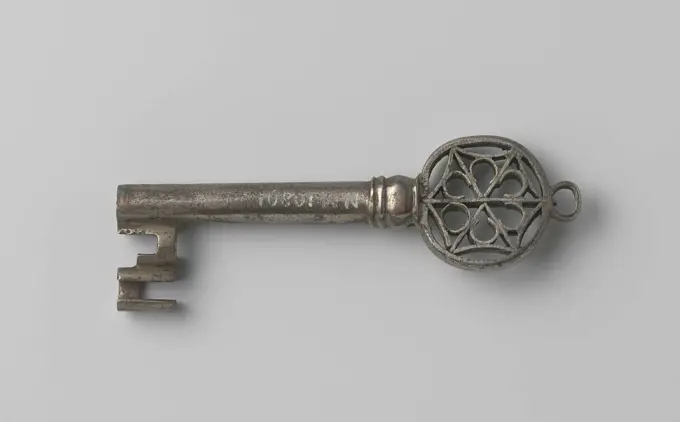
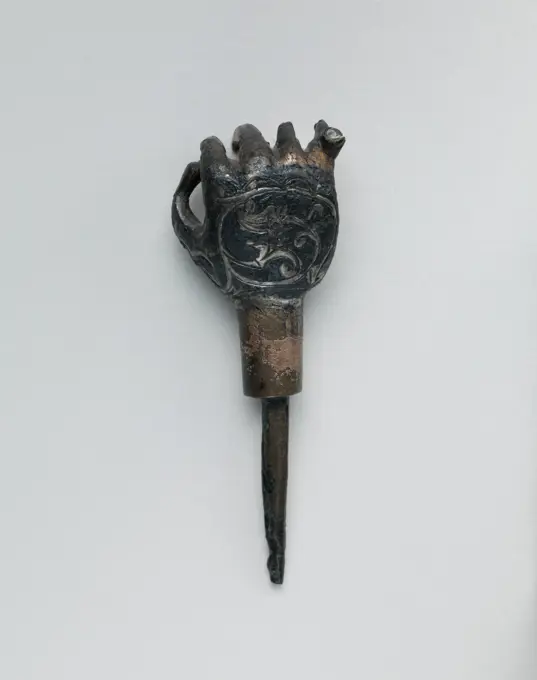
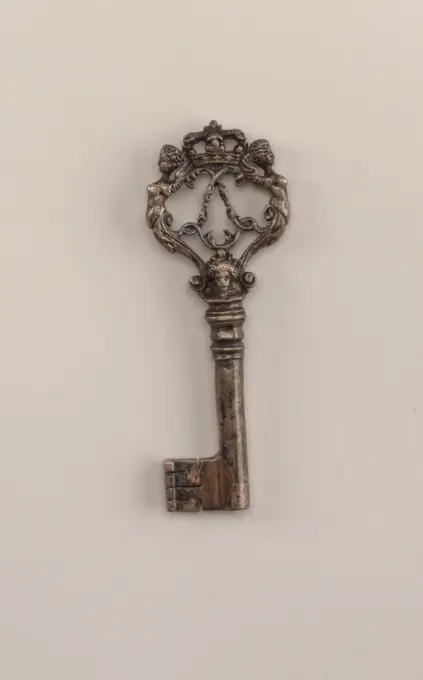
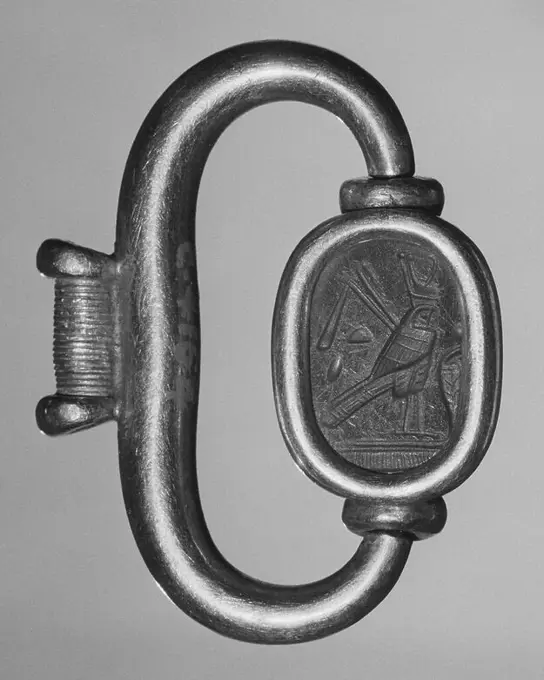
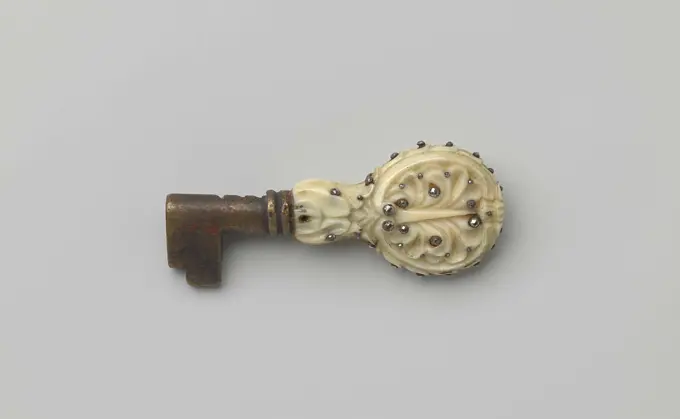
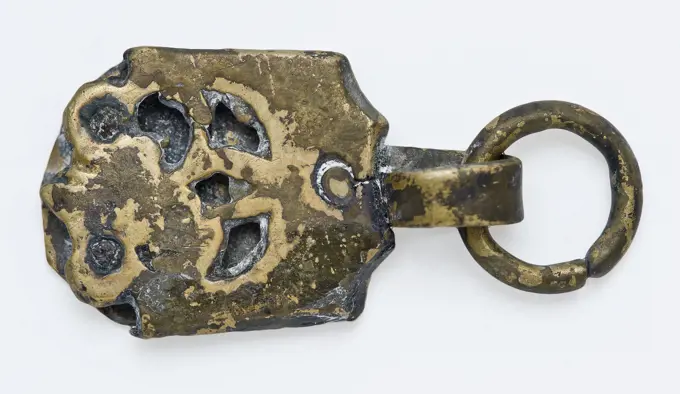
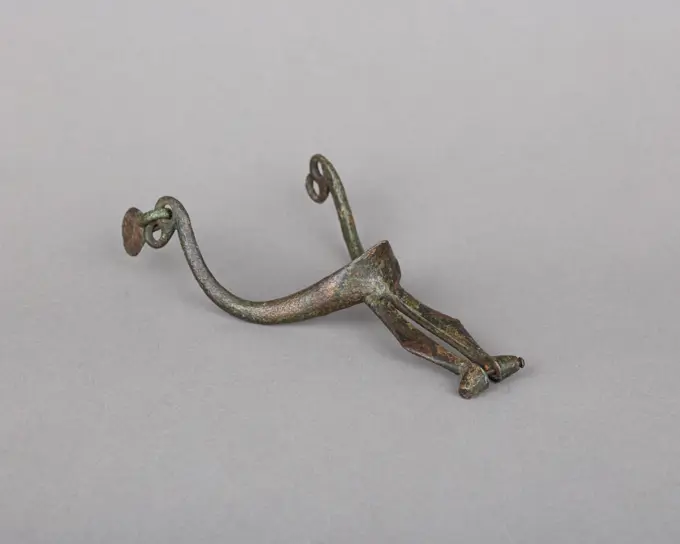
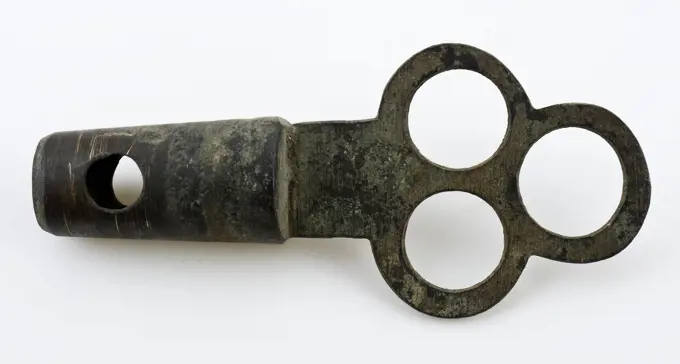
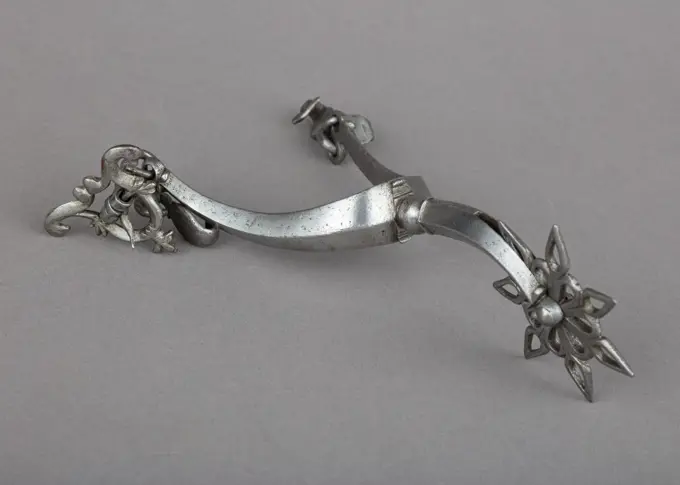
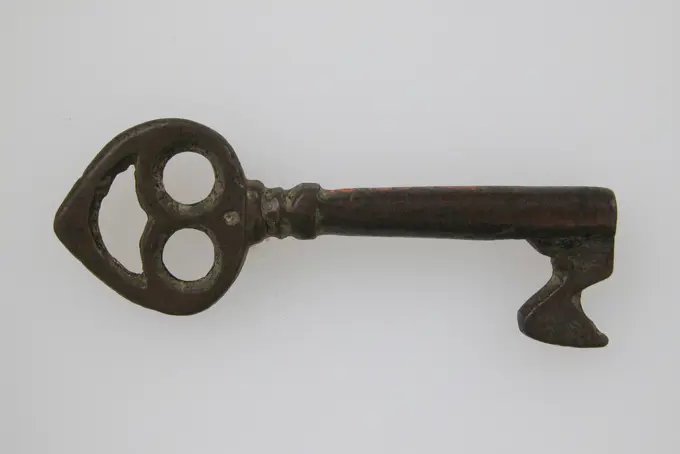
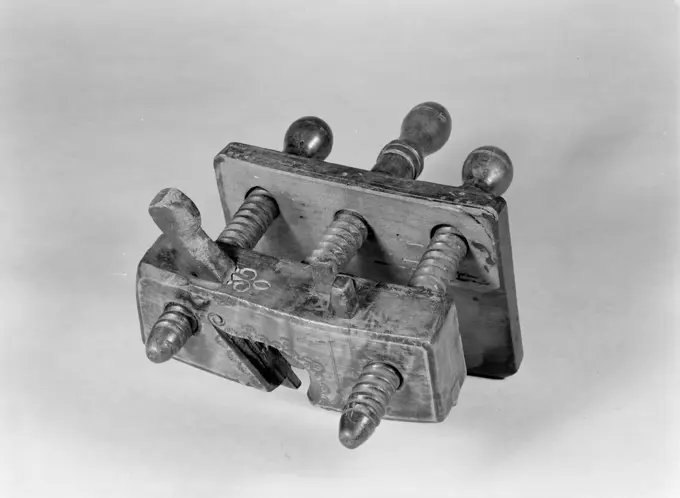
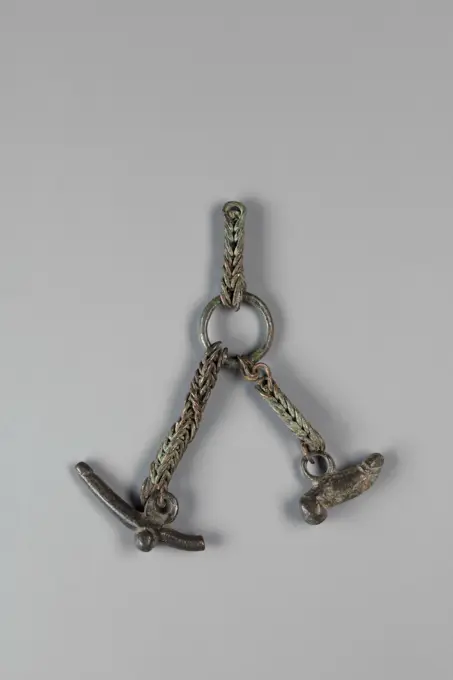
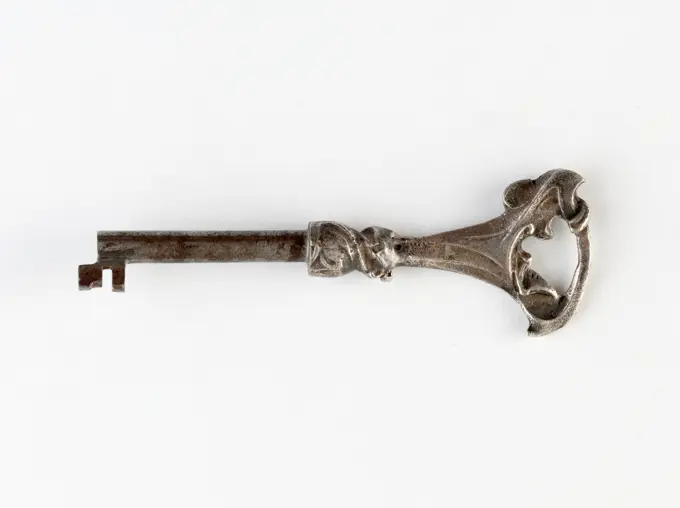
Key 15th century German or South Netherlandish The decoration of Gothic iron locks and keys was often elaborate and of the highest standard of workmanship. The motifs were frequently drawn from Gothic architecture, reproducing on a miniature scale complicated tracery patterns and even tiny statuettes. A number of these tiny locks were compound, with some of the mechanisms concealed from view, and required two or even three keys used in sequence to open them. It has been suggested that the greatly expanded use of locks on doors, or coffrets and other types of storage chests was a result of the increasing urbanization of life and the new emphasis on material wealth and private ownership which developed in the late Middle Ages.. Key. German or South Netherlandish. 15th century. Copper alloy. Metalwork-IronPipeline, 1600 - 1699 A small pipeline of iron, which can also serve as a ax and hammer. Coming from collection E. Vita Israels.  iron (metal) A small pipeline of iron, which can also serve as a ax and hammer. Coming from collection E. Vita Israels.  iron (metal)Part of a door rod, anonymous, 1600 - 1800 Door fittings of Vertind IJzer, part of a door strap, decorated with engraving. The batter is from the hinge as follows: a baluster -shaped start, transfersing into a narrow, straight from which some leaf motifs spring from the end, which curls like volutes. The whole ends in a pointed leaf.  iron (metal). tin (metal) forging / engraving Door fittings of Vertind IJzer, part of a door strap, decorated with engraving. The batter is from the hinge as follows: a baluster -shaped start, transfersing into a narrow, straight from which some leaf motifs spring from the end, which curls like volutes. The whole ends in a pointed leaf.  iron (metal). tin (metal) forging / engravingHector Guimard (1867-1942). "Key". Bronze. 1909-1911. Museum of Fine Arts of the City of Paris, Petit Palais. 76499-10 Art Nouveau, Bronze, Key, KeyKnip, anonymous A sorner single cut. A sorner single cut.Key, c. 1800 - c. 1900 Key with folding handle. This is formed by two C-Voluten, half a cylinder, which fits in a thickening of the shaft. The shaft, which is wider at the beard, ends in a flat button.  iron (metal) Key with folding handle. This is formed by two C-Voluten, half a cylinder, which fits in a thickening of the shaft. The shaft, which is wider at the beard, ends in a flat button.  iron (metal)Iron padlock, c. 1400 - c. 1950   iron (metal)   iron (metal)Sleutel.Key whose shaft is up to the baluster-shaped key and continue past the beard. The eye is oval with a thickening at the top.Key 15th century German The decoration of Gothic iron locks and keys was often elaborate and of the highest standard of workmanship. The motifs were frequently drawn from Gothic architecture, reproducing on a miniature scale complicated tracery patterns and even tiny statuettes. A number of these tiny locks were compound, with some of the mechanisms concealed from view, and required two or even three keys used in sequence to open them. It has been suggested that the greatly expanded use of locks on doors, or coffrets and other types of storage chests was a result of the increasing urbanization of life and the new emphasis on material wealth and private ownership which developed in the late Middle Ages.. Key 468851The Amsterdam apothecary and art collector Emmanuel Vita Israël. He donated his collection, comprising keys dating from Roman antiquity to the 19th century, to the Koninklijk Oudheidkundig Genootschap (Royal Antiquarian Society) in 1937. Vita Israël claimed that his key collection had grown more or less by accident: being one of the few collectors of keys, dealers automatically made their way to him.Key, c. 1400 - c. 1950 Key with reversed peer -shaped handle, crowned by a cross -eye eye. Rome bronze (metal) Key with reversed peer -shaped handle, crowned by a cross -eye eye. Rome bronze (metal)Sleutel.Key with annular eye and a beard that has been opened, O.A. With a horizontal cros relief.Double key with two beards. Double key with two beards attached to either side of the two ends of the baluster-shaped shaft.The Amsterdam apothecary and art collector Emmanuel Vita Israël. He donated his collection, comprising keys dating from Roman antiquity to the 19th century, to the Koninklijk Oudheidkundig Genootschap (Royal Antiquarian Society) in 1937. Vita Israël claimed that his key collection had grown more or less by accident: being one of the few collectors of keys, dealers automatically made their way to him.Key, c. 1400 - c. 1600 Key with rushing, short handle, V-shaped carved beard and an oval eye. Strongly rusted.  iron (metal) Key with rushing, short handle, V-shaped carved beard and an oval eye. Strongly rusted.  iron (metal)Key 15th-16th century Spanish The decoration of Gothic iron locks and keys was often elaborate and of the highest standard of workmanship. The motifs were frequently drawn from Gothic architecture, reproducing on a miniature scale complicated tracery patterns and even tiny statuettes. A number of these tiny locks were compound, with some of the mechanisms concealed from view, and required two or even three keys used in sequence to open them. It has been suggested that the greatly expanded use of locks on doors, or coffrets and other types of storage chests was a result of the increasing urbanization of life and the new emphasis on material wealth and private ownership which developed in the late Middle Ages.. Key. Spanish. 15th-16th century. Iron. Metalwork-IronPrick Spur 11th century French or German The prick spur was the first type of spur to be invented, and it consists of a goad or prick, more or less pointed, connected to side arms or a heel plate. The earliest spurs were probably simple thorns attached at the back of the heel, before they started to be made out of metal in antiquity. Prick spurs were the main type of spurs used in the Middle Ages until the mid-14th century, when they were supplanted by rowel spurs, which appeared in Europe a century before and with which they had cohabitated for a time. As a knights status was closely related to his horse, spurs became one of the symbols of chivalry, and one of the tokens given to him during his knighting.. Prick Spur. French or German. 11th century. Iron alloy, copper alloy. Equestrian Equipment-SpursSleutel.Key with bean-shaped eye and small hook-shaped beard. The shaft goes past the beard.Door Rasp 15th-16th century German. Door Rasp 468896Key, Steel, France, 18th century, metalwork, Decorative Arts, KeyKey, c. 1600 - c. 1699 Key with ring -shaped eye. The shaft runs past the beard in a long point. Belonging to a padlock. Spain (possibly) bronze (metal) Key with ring -shaped eye. The shaft runs past the beard in a long point. Belonging to a padlock. Spain (possibly) bronze (metal)Sleutel.Key with beautifully edited ring.Horse bit ..Copper stopper with handle in the form of tripod, stop closure part ground find bronze copper metal, cast sawn Black with yellow-metal stop Conical pin with passhole Handle in the form of tripod The metal between the bottom two circles of the three-pass is broken. The top is slightly damaged archeology tap faucet holder barrel beer wineNetsuke of Vajra (Sanko) 18th century Japan. Netsuke of Vajra (Sanko). Japan. 18th century. Wood. Edo period (1615-1868). NetsukeBullet Mold 17th-19th century Himalayan, possibly Tibetan, Nepalese, or Bhutanese. Bullet Mold 35662Key from bronze. Bronze key with cross beard, round ring.Siersleutel.Sier wrench whose handle consists of two closed C-volutes, forming above an eye, which is closed by a ball.Pipe key, c. 1500 - c. 1600 Pipe key with circular handle, filled with tracing remains. It is awarded by a cross -looking eye. Damaged.  iron (metal) Pipe key with circular handle, filled with tracing remains. It is awarded by a cross -looking eye. Damaged.  iron (metal)Pipe key, c. 1500 - c. 1600 Venetian key "with rose in the round handle under which there is an octagonal capital. The handle is crowned by a profiled button.  iron (metal) Venetian key "with rose in the round handle under which there is an octagonal capital. The handle is crowned by a profiled button.  iron (metal)Key. Key whose handle is formed by two c-volutes dawned towards each other, the upper and lower ends merge with a hole recess. The whole is traversed by a crossbar and awarded by a knob with a knob. The grip rests on an abacus including a simple profiled capital. The beard has above one and under two notches.Key, c. 1400 - c. 1950 Drilled key with cloverleaf -shaped shaft. The round eye consists of two winding snakes, which keep a ball in the mouth in the heads. They clamp at the bottom of a tonic increase in the round, pearl necklace decorated. Added disc -shaped key breast below. Eye and capital of bronze, key breast, shaft and iron beard.  iron (metal). bronze (metal) Drilled key with cloverleaf -shaped shaft. The round eye consists of two winding snakes, which keep a ball in the mouth in the heads. They clamp at the bottom of a tonic increase in the round, pearl necklace decorated. Added disc -shaped key breast below. Eye and capital of bronze, key breast, shaft and iron beard.  iron (metal). bronze (metal)Trumpet 200 B.C.-600 A.D. Moche Trumpet terminating in a jaguar's head.Although numerous pottery instruments survive from pre-Conquest South and Central America, little is known of how they were used before Spanish invaders ravaged the native cultures. Whistles, trumpets and rattles in animal or human form probably had ceremonial functions or served as playthings. The "whistling jar" is a 1- or 2-chambered vessel in which a whistle, often concealed by a bird's head, is sounded by blowing into the spout, or by pouring liquid from one chamber to the other to create a bird-like twittering sound. Smaller whistles in animal shapes, perhaps worn suspended from the neck, sometimes have fingerholes that allow variation of pitch.. Trumpet 505009Dagger (Katar) 18th-19th century Indian. Dagger (Katar) 31733Bracelet 304 B.C.-A.D. 364 Ptolemaic or Roman Period. Bracelet. 304 B.C.-A.D. 364. Silver. Ptolemaic or Roman Period. From Egypt, Central Delta, Tell el-Balamun (Diospolis Inferior), Carnarvon/Carter excavations, 1913Key of iron, c. 1600 - c. 1699 Forged iron key, decorated with cutting and engraved. Ring: Lying oval from above with rings decorated, coming together in two volutes. Shoot ring: just above the beard. Pipe: closed, baluster -shaped with rings and cannelures decorated. Beard: with two crosses., Ground roughly made, the beard runs out wider. England iron (metal) Forged iron key, decorated with cutting and engraved. Ring: Lying oval from above with rings decorated, coming together in two volutes. Shoot ring: just above the beard. Pipe: closed, baluster -shaped with rings and cannelures decorated. Beard: with two crosses., Ground roughly made, the beard runs out wider. England iron (metal)Samples from the wreck of the East India Hollandia. Divider; Fragment, Lay: Exterior Three-Faceted, Bifid End With Knob-Shaped Hinge, Double Bladed End or Opposite Place in situ, broken off.Steekpasser met los fragment uit het wrak van de Oost-Indiëvaarder Hollandia. Divider; eroded: consisting of 2 legs, id. NG 1980-27H1171, each with a single semicircular ring, flat in section, with a circular pivot eye at end, interlocking with 2 id. rings, each slotted into one of the legs, hinged.Samuel Faigin, Skid Shoe for Horse, c 1938 Skid Shoe for HorseIron key, on which a gilded crown, 1675 - 1699   iron (metal)   iron (metal)Bronze distaff ca. 1st century A.D. Roman The distaff was used for spinning wool into thread.. Bronze distaff. Roman. ca. 1st century A.D.. Bronze. Early Imperial. BronzesBuckle dated 1500 French. Buckle. French. dated 1500. Bronze. Miscellaneous-Buckles & OrnamentPin from the wreck of the East Indies Hollandia, Anonymous, 1700 - in Or Before 1743  Tools and instruments, sewing and sailmaking, pin; fragm of shaft with bow, id. NG 1980-27H3265. Netherlands copper (metal)   SecondFragment, bras de lumiere, wood, Drokeb arn abd drippan, Italy, late 17th-mid-18th century, Decorative Arts, Fragment, bras de lumiereHand Mirror. Egyptian. Date: 1550 BC-1070 BC. Dimensions: 20 × 10.3 × 2.2 cm (7 7/8 × 4 1/16 × 7/8 in.). Copper alloy. Origin: Egypt. Museum: The Chicago Art Institute, Chicago, USA. Author: Ancient Egyptian.Drawer Pulls; ironHerd of book lock, book fittings with embossed relief decorations, devoted woman, decorative fittings soil found copper metal, hinged Hinged book fitting with cut-out for bracket and lock. On the long strip slim devoted woman depicted with folded hands Surrounded by pearl ring On the lock plate rastering archaeology Rotterdam City Triangle Meent Binnenrotte close protect adorn book devotion Soil discovery Inner rotte corner Meent (next to café small well).Pipe key, c. 1400 - c. 1950 Iron pipe key with sleeve. The pipe from cloverleaf -shaped and filled with a cross. The heavy beard is V-shaped and shows a notch below and above. The bump ring is profiled at the top.  iron (metal) Iron pipe key with sleeve. The pipe from cloverleaf -shaped and filled with a cross. The heavy beard is V-shaped and shows a notch below and above. The bump ring is profiled at the top.  iron (metal)Pipe key, c. 1400 - c. 1500 Pipe key whose three -pass -shaped grip with split inner cakes rests on a mortar capital.  iron (metal) Pipe key whose three -pass -shaped grip with split inner cakes rests on a mortar capital.  iron (metal)Buckle Shank 5th-7th century Visigothic. Buckle Shank. Visigothic. 5th-7th century. Bronze. Miscellaneous-Buckles & OrnamentDeurhengsel of Slotplaat, Anonymous, 1600 - 1800 Handen of Vertind iron. At the bottom a large, round opening of a hinge. From there, two symmetrical leaf motifs spring, which split towards the end. On both sides, a leaf motif curls in a volute.  iron (metal). tin (metal) Handen of Vertind iron. At the bottom a large, round opening of a hinge. From there, two symmetrical leaf motifs spring, which split towards the end. On both sides, a leaf motif curls in a volute.  iron (metal). tin (metal)Key 1st-7th century Roman. Key 462945Three-Pronged Vajra Ritual Implement (Sankosho) 12th century Japan For Esoteric Buddhist ritual prayer and incantations, a set of vajra pestles (kongōsho) and a bell (kongōrei) would be placed upon a bronze stand.. Three-Pronged Vajra Ritual Implement (Sankosho). Japan. 12th century. Gilt bronze. Heian period (794-1185). MetalworkBuckle dated 1550 German. Buckle. German. dated 1550. Steel. Miscellaneous-Buckles & OrnamentOrison Daeda, Bent Raider or Pike, 1939 Bent Raider or Pikeanonymous. Sword of Frédérick Lemaître in Ruy Blas. Bleui steel blade. Handle, guard and pommel in golden brass. Brown velvet scabbard on a wooden soul, end in golden brass. 1838. Paris, house of Victor Hugo. Theater accessory, Epee, Piece de Theater, Ruy BlasKey, 1800 - 1900 Key of which the handle consists of a shield with three lilies, weapon of the Bourbons, flanked by two leaf fillets on which women's heads are located. The whole is closed by a crown. Grabbed and upper part of the shaft of gilded red and yellow copper; Shaft and beard of iron.  iron (metal). copper (metal) gilding Key of which the handle consists of a shield with three lilies, weapon of the Bourbons, flanked by two leaf fillets on which women's heads are located. The whole is closed by a crown. Grabbed and upper part of the shaft of gilded red and yellow copper; Shaft and beard of iron.  iron (metal). copper (metal) gildingStatuette of an Ibis Head 664 BCE-332 BCE Egypt. Bronze . Ancient EgyptianKey. Key with oval eye and heavy profiled shaft decorated with cord and leaf motif.Brooch 6th century B.C. Late Halstatt Period. Brooch 466237Key, c. 1400 - c. 1950 Key.  iron (metal) Key.  iron (metal)Sleutel van ijzer.Iron key with cut-away eye and S-shaped crowned beard, completely forged.Hand with Niello Decoration 11th-12th century This hand, with a long pin for attachment, was initially identified as being from a figurine, but it was later suggested it might be a talisman, meant to protect the bearer.. Hand with Niello Decoration. 11th-12th century. Bronze, silver, niello; gilded, inlaid. Excavated in Iran, Nishapur. MetalKey, c. 1600 - c. 1699 Key with oval eye, simply profiled shaft that runs beyond the beard and ends in a button.  silver (metal) Key with oval eye, simply profiled shaft that runs beyond the beard and ends in a button.  silver (metal)Spoon 12th-13th century. Spoon 452857Loop .Top for standard ca. 8th-7th century B.C. Iran. Top for standard 324076Key (France); silver; 7x2.5 x7 cmBuckle dated 1750 German. Buckle. German. dated 1750. Bronze. Miscellaneous-Buckles & OrnamentPin from the wreck of the East Indies Hollandia, Anonymous, 1700 - in Or Before 1743  Tools and instruments, sewing and sailmaking, pin; fragm, handle: oval bow, square shaft with flat central diamond-shaped face on each side, ending in a flat blade-mount with 3 rivet-holes. Netherlands copper (metal)   SecondBuckle 6th-7th century Frankish. Buckle. Frankish. 6th-7th century. Copper alloy. Metalwork-Copper alloyBattle axe New Caledonia. Battle axe. New Caledonia. Nephrite. JadeKey 1st-3rd century Roman. Key 463357Copper crane with a handle composed of three 'rings', anonymous, c. 1590 - c. 1596  Copper crane with a handle composed of three 'rings'. A piece of two 'rings' has been broken down. The crane is identical to NM-7675.  copper (metal) casting  Nova Zembla. Saving Huysan old anchorBuckle 5th-8th century. Buckle 449197Faucet; bronze,formerly giltForm bus. Form bus with byroach key.Key, c. 1800 - c. 1900 Key with ring -shaped eye on octagon capital and short shaft. The two -part beard is perpendicular to the eye.  iron (metal) Key with ring -shaped eye on octagon capital and short shaft. The two -part beard is perpendicular to the eye.  iron (metal)Gold pendant ring with carnelian scaraboid. Culture: Cypriot. Dimensions: 3/8 × 13/16 × 5/8 in. (1 × 2.1 × 1.6 cm)Diameter: 1 11/16 in. (4.3 cm). Date: ca. 5th-4th century B.C..Pendant ring with sard scaraboid finely modeled, Horus hawk with symbols of Osiris; uraeus-snake in front; Egyptian style. Museum: Metropolitan Museum of Art, New York, USA.Handled Door Latch. Dated: 1940. Dimensions: overall: 36.1 x 28.1 cm (14 3/16 x 11 1/16 in.). Medium: watercolor, graphite, and colored pencil on paperboard. Museum: National Gallery of Art, Washington DC. Author: Alexander Anderson.Pijpsleutel.Pipe key whose ivory handle consists of two acanthus leaves, on which a circular widening is a leaf motif. On the ivory brought his steel buttons that are facetically ground. Shaft and beard from bronze, grasp from ivory; Biedermeier.Double belt tongue to eye, part of belt buckle, belt attachment accessory ground finding copper metal, Double fitting plate with closely curved eye attached to ring archeology Rotterdam rail tunnel attachment Soil discovery: trajectory rail tunnel Rotterdam.Dipper. Dated: c. 1938. Dimensions: overall: 36 x 28 cm (14 3/16 x 11 in.). Medium: watercolor, graphite, colored pencil, and heightening on paperboard. Museum: National Gallery of Art, Washington DC. Author: Jacob Gielens.Pin from the wreck of the East Indiesman Hollandia. Tools and Instruments, Sewing and Sailmaking, PIN; Fragm, Bow, ID. NG 1980-27H3265.Crosier of bishop Arnau de Gurb. Bronze, 13th century. Barcelona Cathedral. Museum: CATEDRAL DE BARCELONA.Serial discs. Copper alloy. Gallo-Roman. Paris, Carnavalet museum. 51550-17 Copper alloy, disc, Gallo-Roman, Gallo-Roman, SerieLamp, Asia Minor; 1st century B.C. - 1st century A.D; Terracotta; 3.6 × 7.5 × 12 cm (1 7,16 × 2 15,16 × 4 3,4 in.)Rowel Spur (Right) second half 14th century possibly French The large rowel of this spur is now missing. The first rowel spurs, featuring a revolving disc or star at the end of the neck, appeared in Western Europe around the mid-13th century. They cohabitated with the earlier form, the prick spur, for about a century, before replacing it almost completely in Europe by the mid-14th century. The advantage of the rowel spur over the prick was it allowed the rider to reach the flanks of its horse with one of the points whatever the angle of its foot, which was very convenient regarding the riding position of the time, with long stirrups-leathers and extended legs. The fact that the rowel rolled against the horse instead of hitting it directly reduced also the probability of injuring it too seriously.. Rowel Spur (Right). possibly French. second half 14th century. Copper alloy, gold, iron. Equestrian Equipment-SpursVintage golden skeleton key isolated on white backgroundSeal or Stamp. UnknownMarked, copper stopper with handle in the form of tri-pass, stop closure part soil find copper bronze metal, Yellow-gray metal stopper from tap. Handle in the form of tripod. Marked in the intersection of the handle mark: not readable archeology tap tap holder component barrel of beer wineIron, Anonymous, 1606 Noticed 1606.  iron (metal) Noticed 1606.  iron (metal)Open-Ring Brooch 7th century Irish The ring-shaped brooch was a favored type of garment fastener in the British Isles, particularly in Ireland.. Open-Ring Brooch 468438Rowel Spur early 17th century European In the early 17th century spurs became true fashion accessories often worn outside the equestrian context, and some of them were real pieces of jewelry. Even if this spur is simpler and more practical than some of its luxurious contemporaries, the lines of its body, the curves of its buckle and its floral pierced rowel give it enough elegance to align it with this idea.. Rowel Spur. European. early 17th century. Iron alloy. Equestrian Equipment-SpursKey 15th century German The decoration of Gothic iron locks and keys was often elaborate and of the highest standard of workmanship. The motifs were frequently drawn from Gothic architecture, reproducing on a miniature scale complicated tracery patterns and even tiny statuettes. A number of these tiny locks were compound, with some of the mechanisms concealed from view, and required two or even three keys used in sequence to open them. It has been suggested that the greatly expanded use of locks on doors, or coffrets and other types of storage chests was a result of the increasing urbanization of life and the new emphasis on material wealth and private ownership which developed in the late Middle Ages.. Key 463344Gothic atka from the fourteenth century with the equipment of the church - general view;  around 1920-1922 (not after 16.05.1922) (1918-00-00-1922-00-00);Adjustable spontage. Adjustable using AAV two screws. The picture is taken for article in Daedalus in 1966.Key 15th century German The decoration of Gothic iron locks and keys was often elaborate and of the highest standard of workmanship. The motifs were frequently drawn from Gothic architecture, reproducing on a miniature scale complicated tracery patterns and even tiny statuettes. A number of these tiny locks were compound, with some of the mechanisms concealed from view, and required two or even three keys used in sequence to open them. It has been suggested that the greatly expanded use of locks on doors, or coffrets and other types of storage chests was a result of the increasing urbanization of life and the new emphasis on material wealth and private ownership which developed in the late Middle Ages.. Key 463342Zawieszka z fallusami. unknown, author