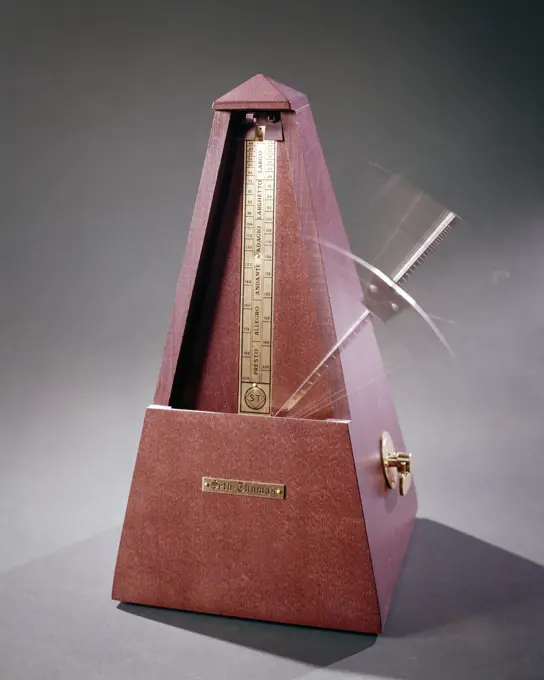
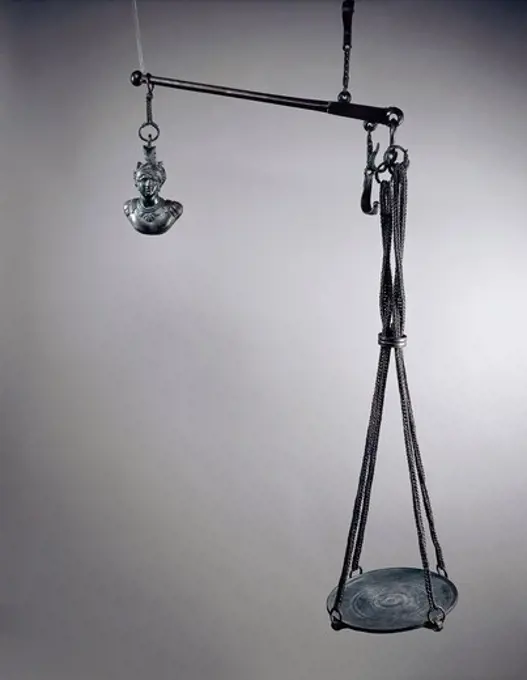
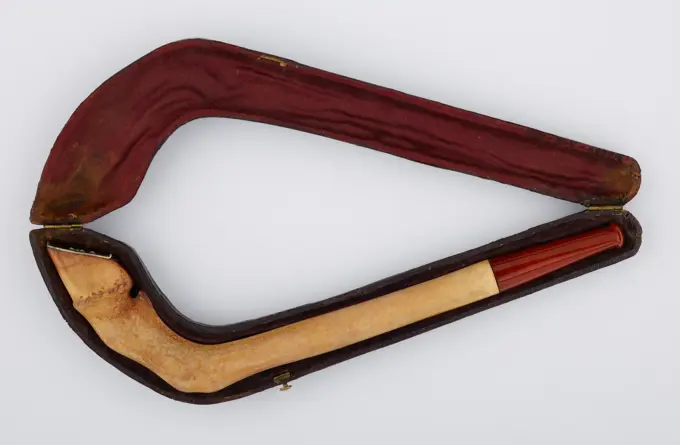
Historical Models and Instruments

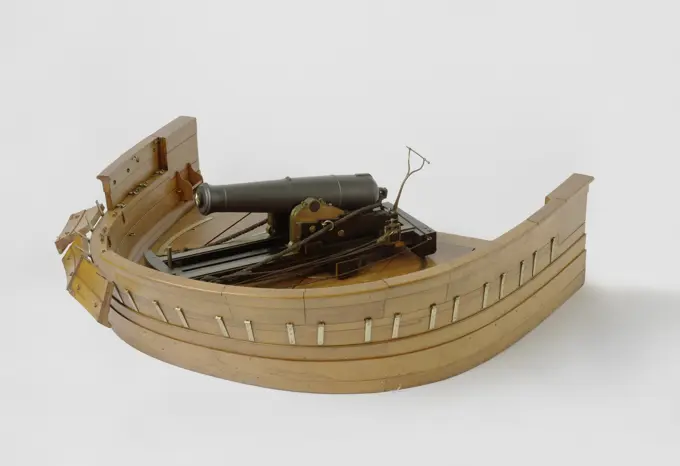
Collection of intricate historical models including a fan mechanism and a 30-pounder carronade slide, showcasing craftsmanship and engineering innovation.

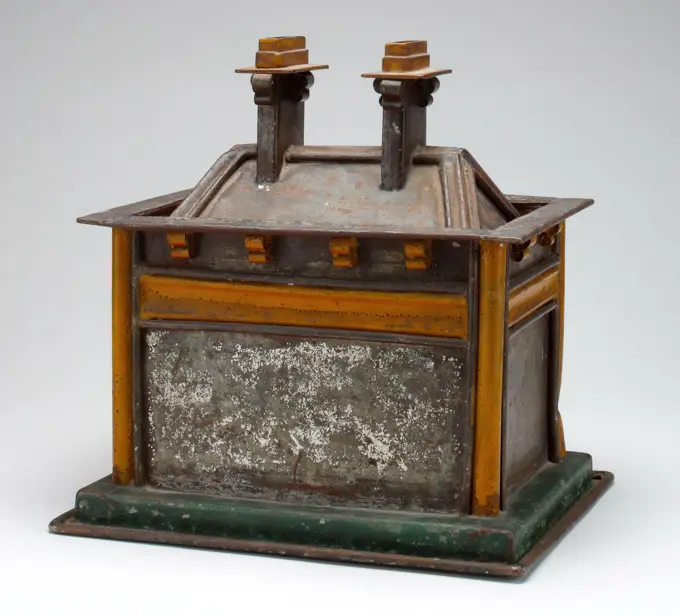
Chest of drawers still bank, c. 1820, 9 1/4 x 6 1/8 x 2 1/2 in. (23.5 x 15.56 x 6.35 cm), Wood, pigment, United States (probably), 19th century
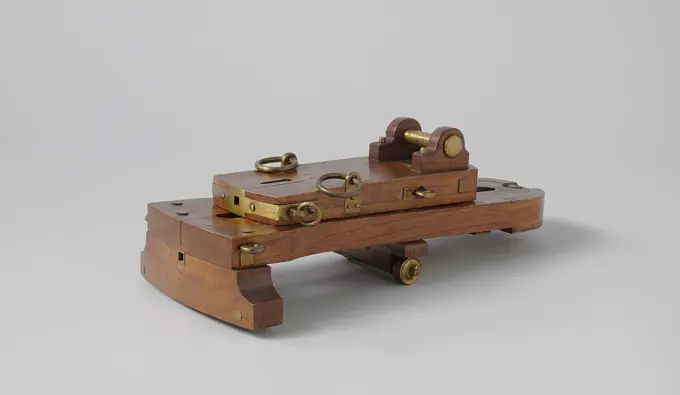
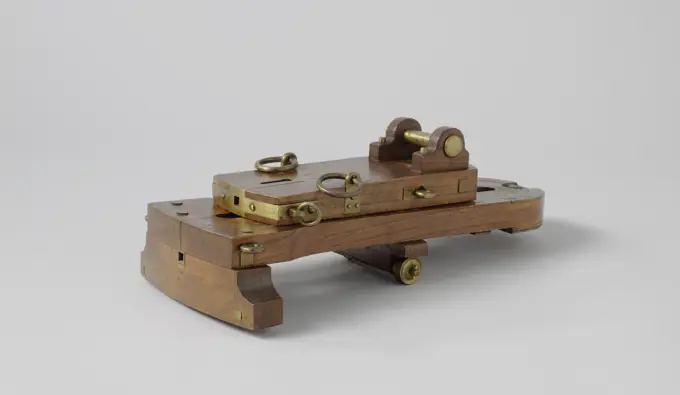
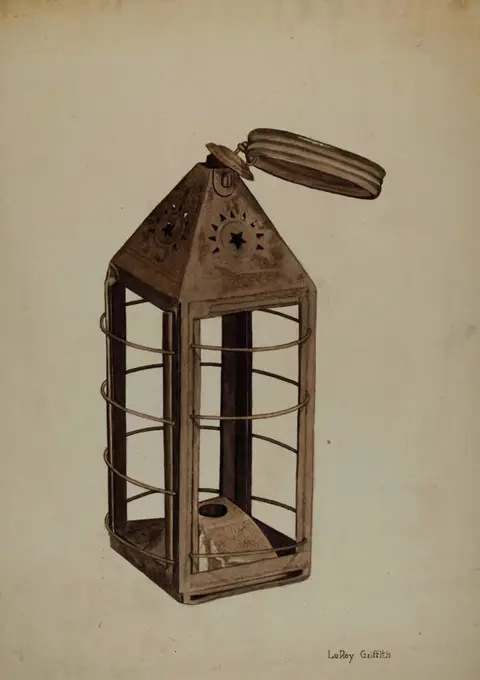
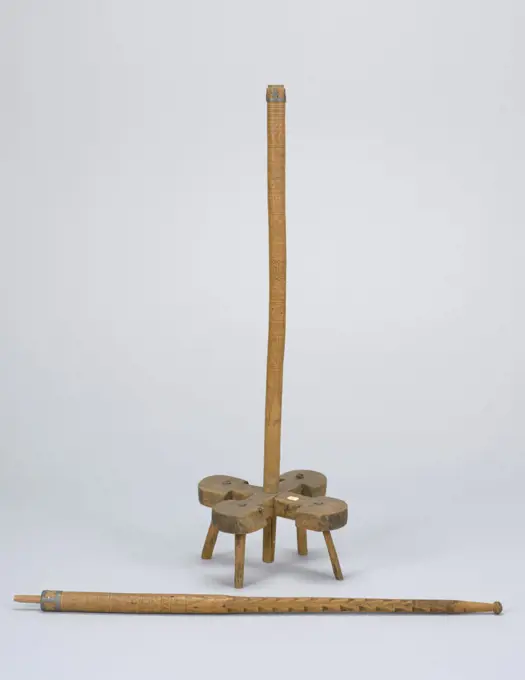
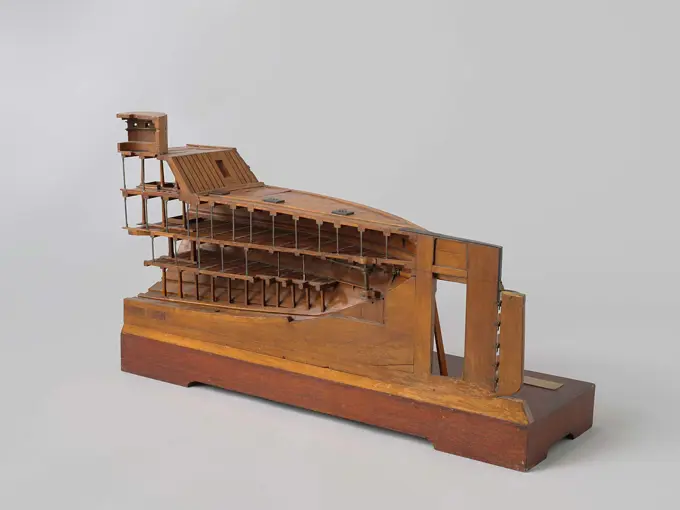
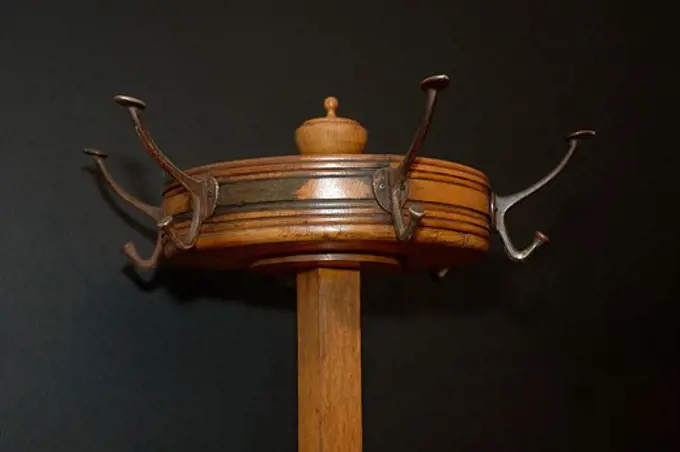
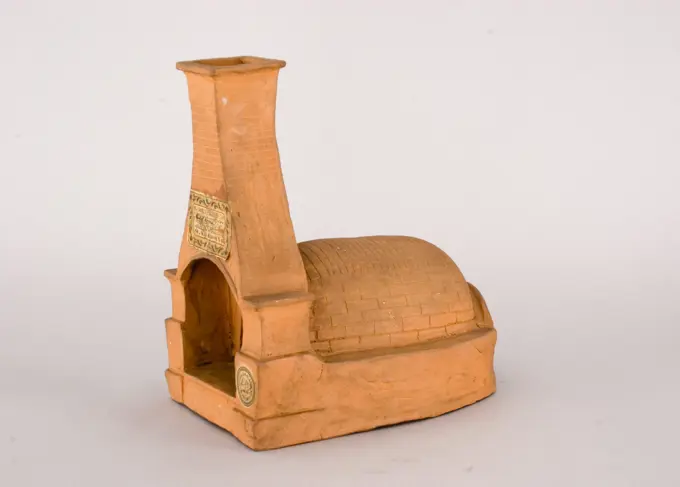
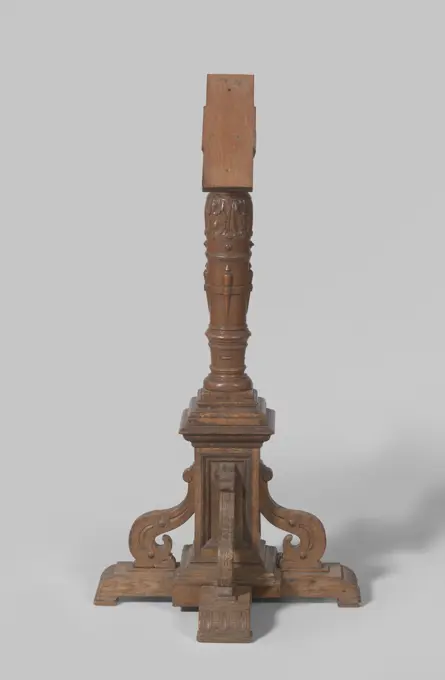
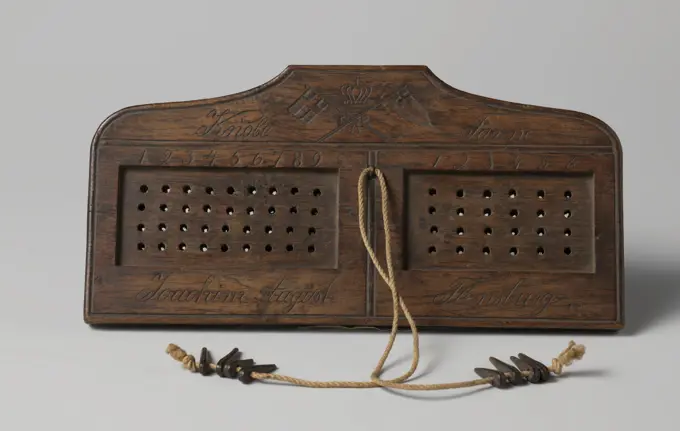
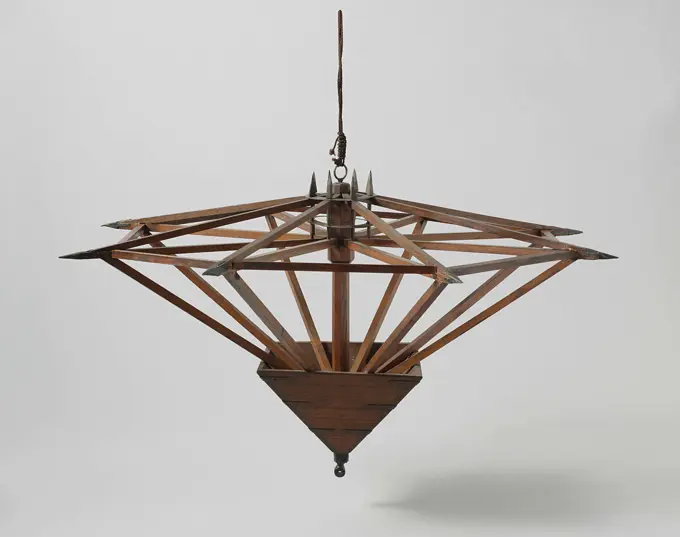
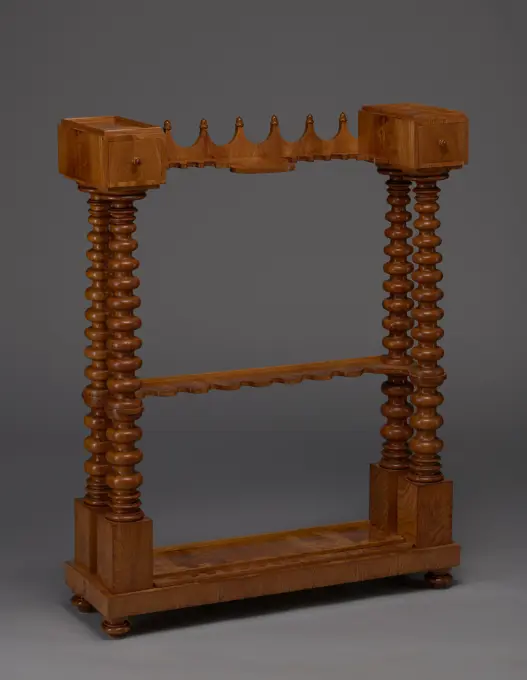
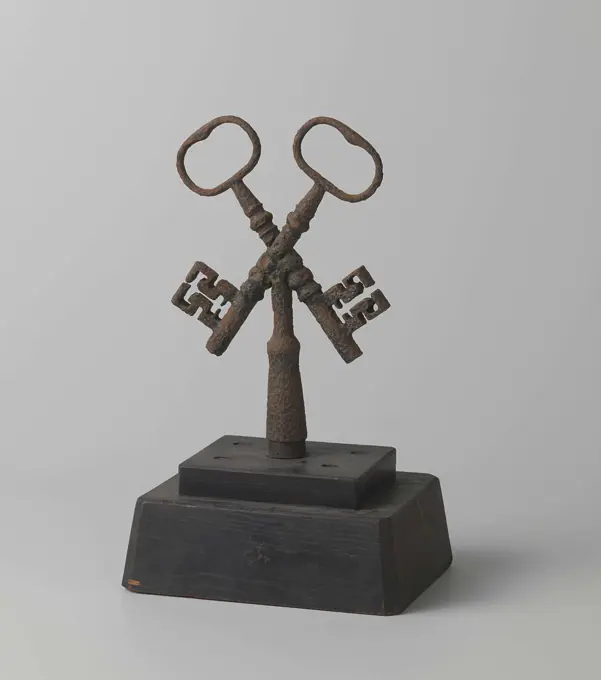
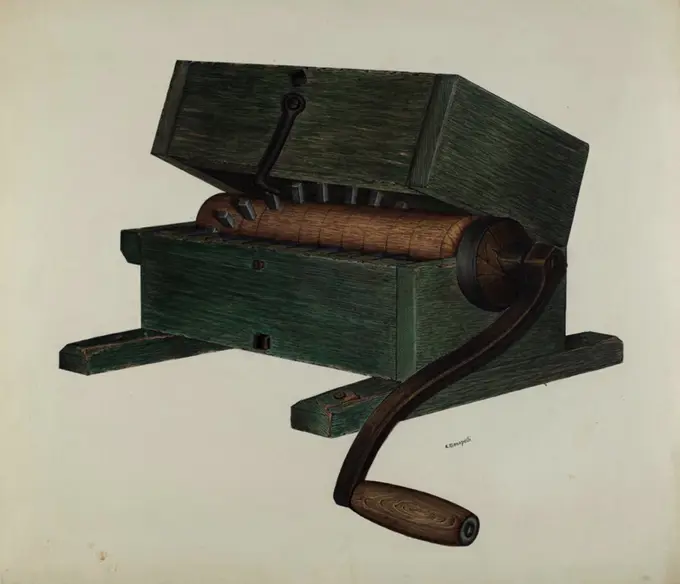
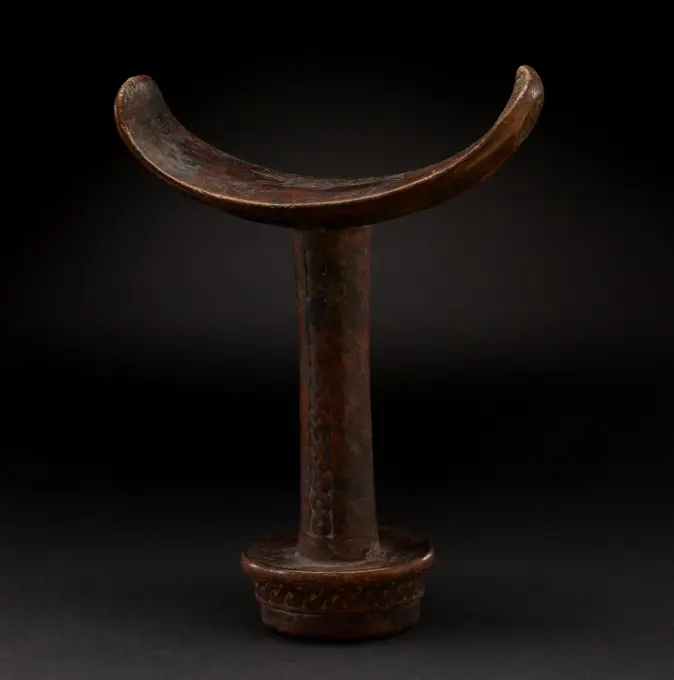
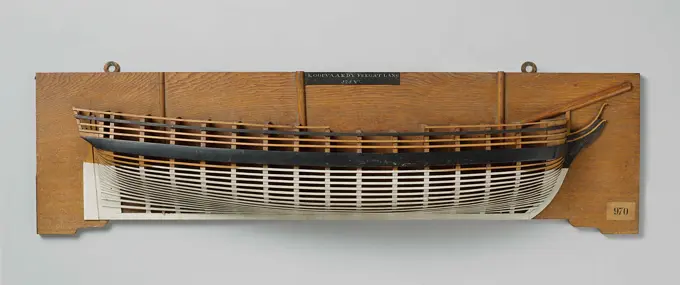
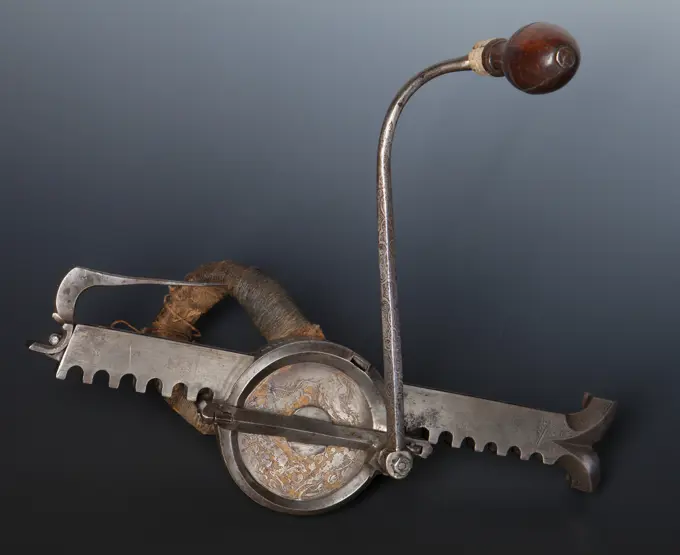
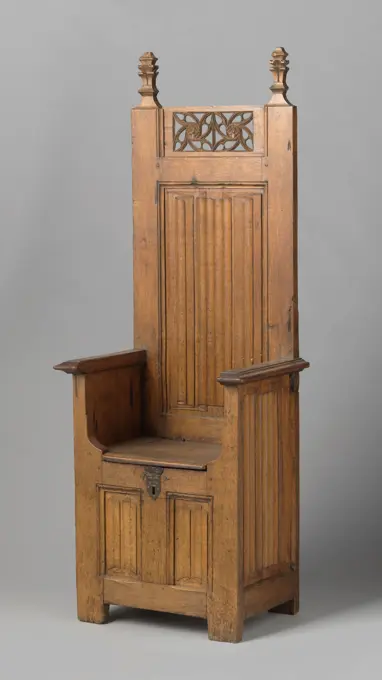
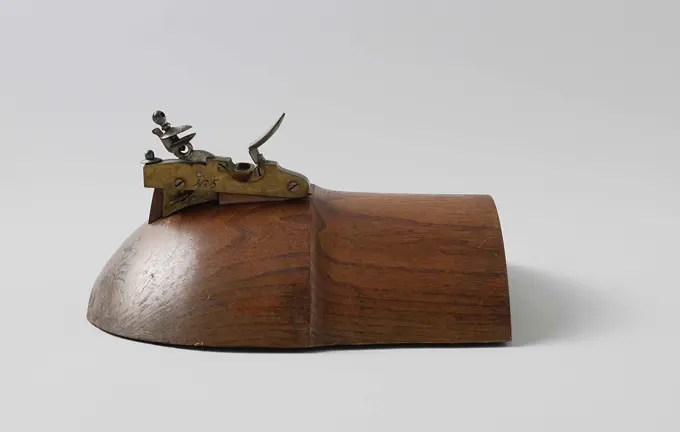
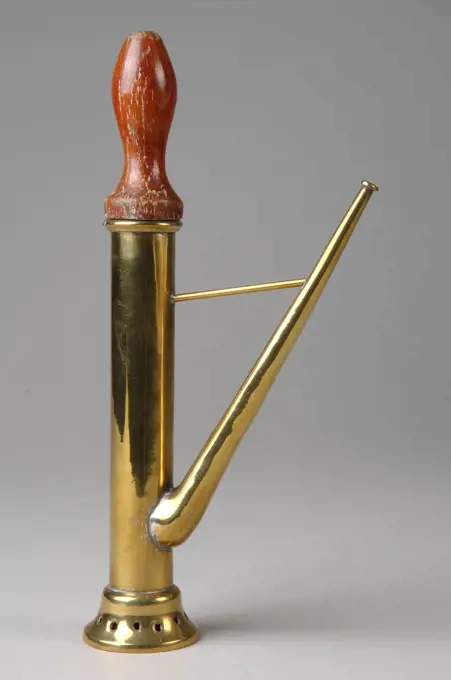
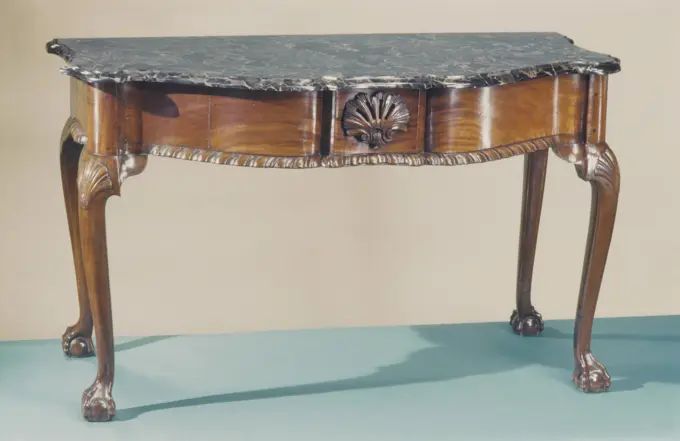
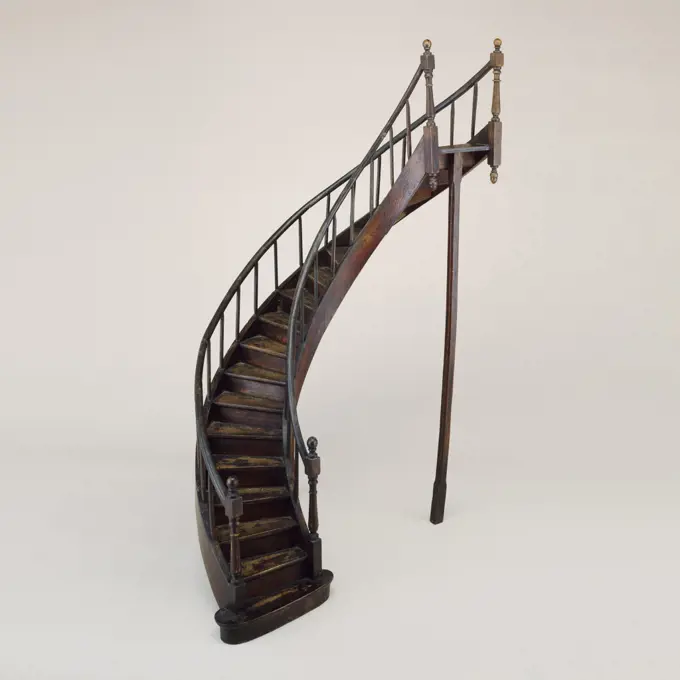
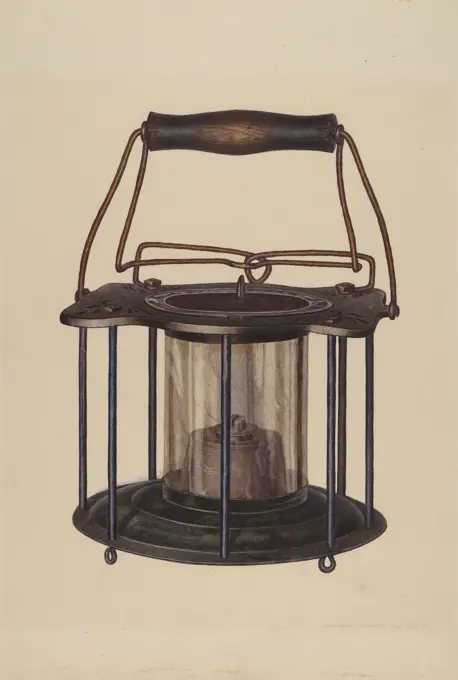
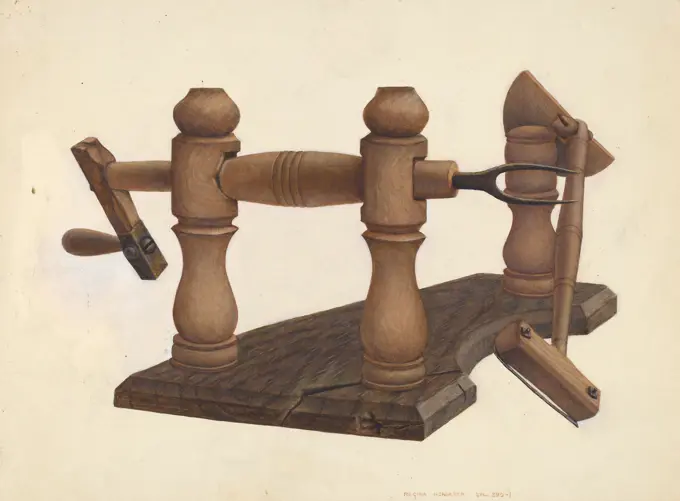
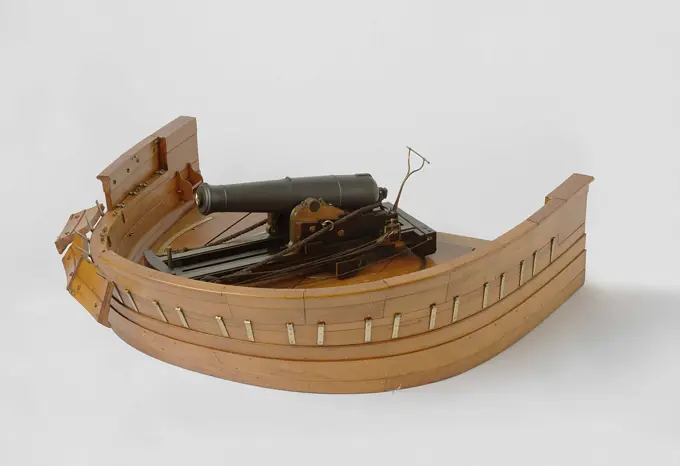
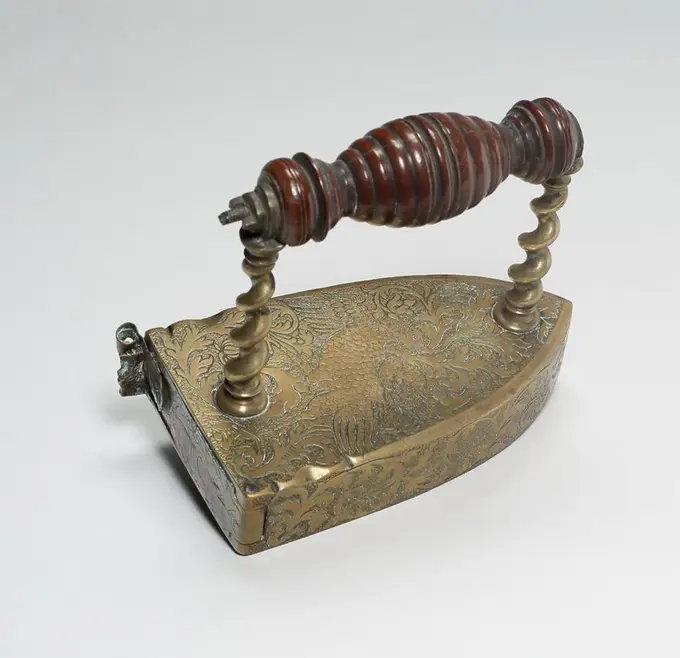
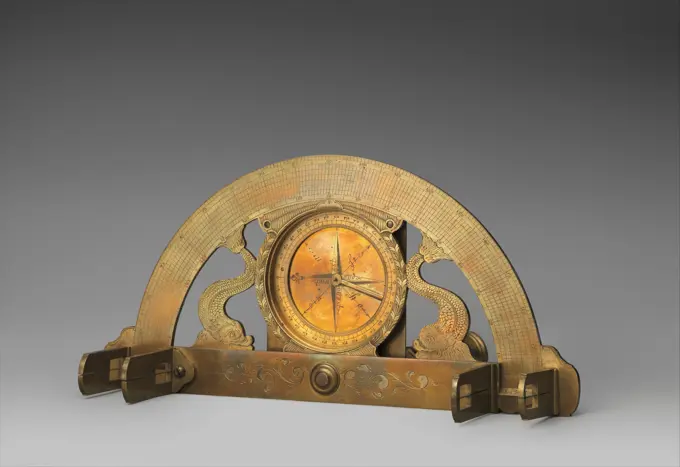
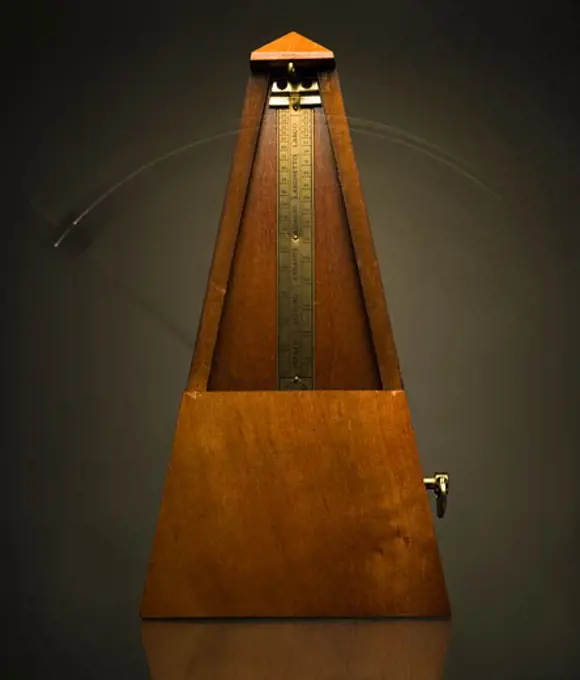
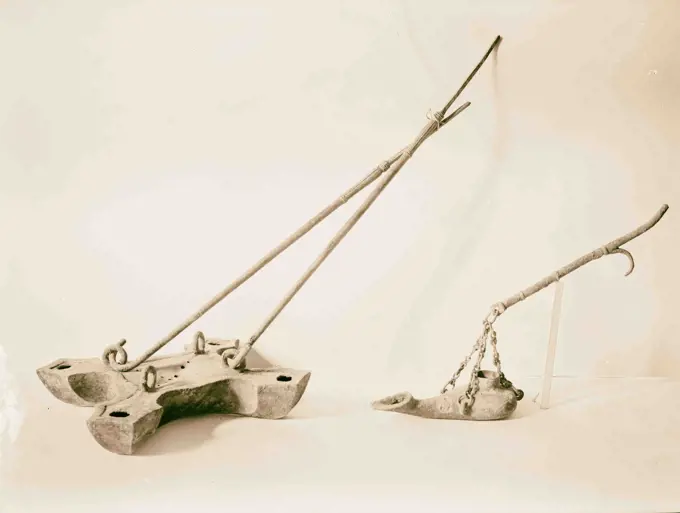
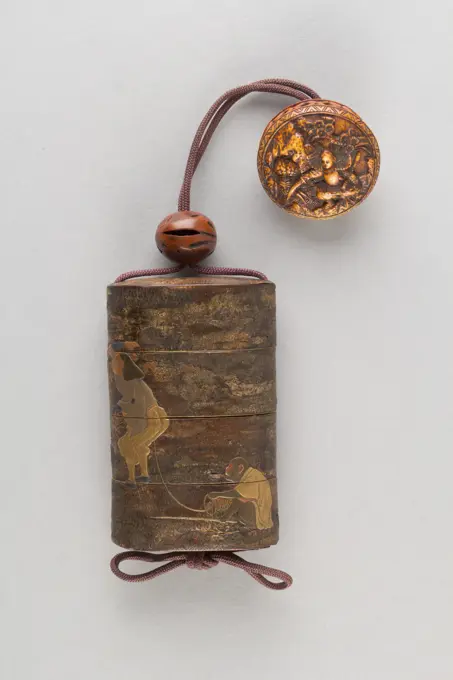
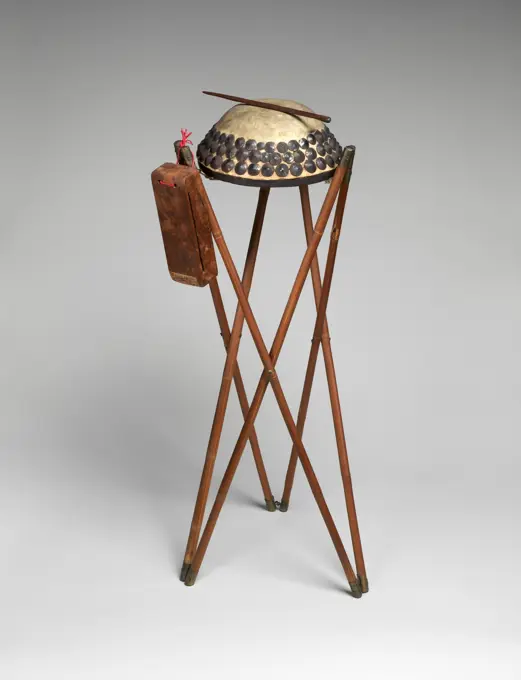
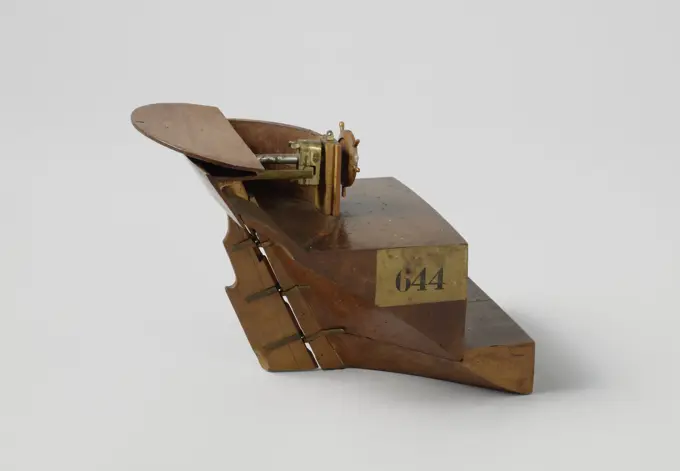
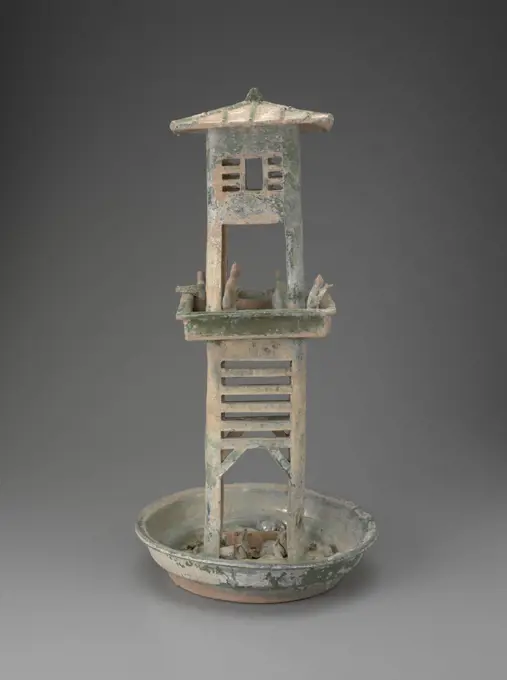
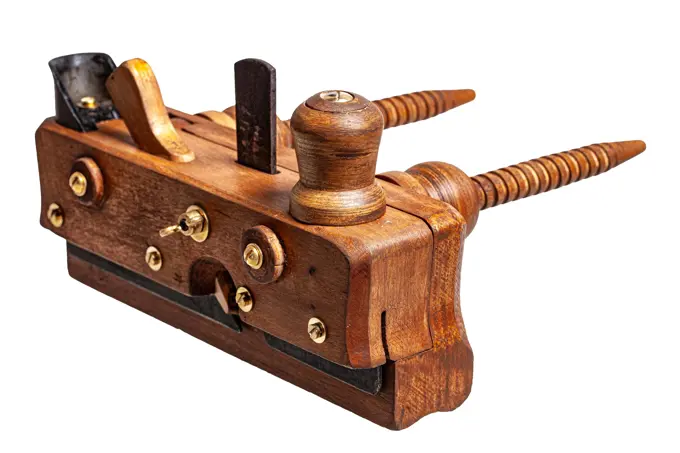
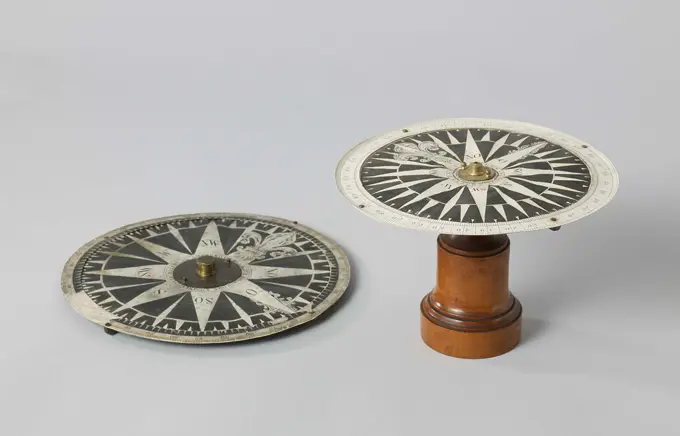
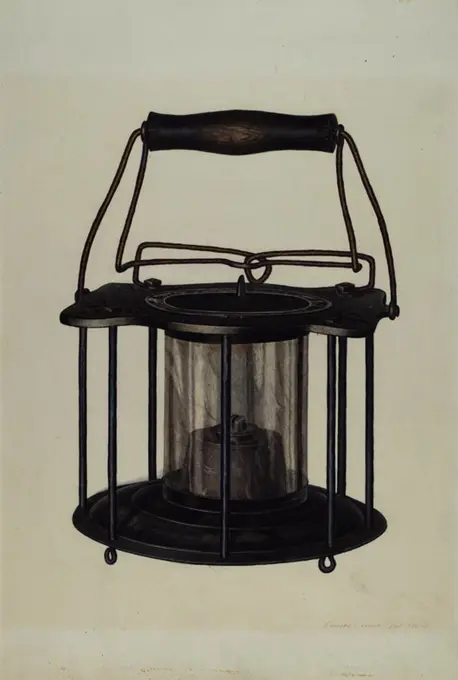
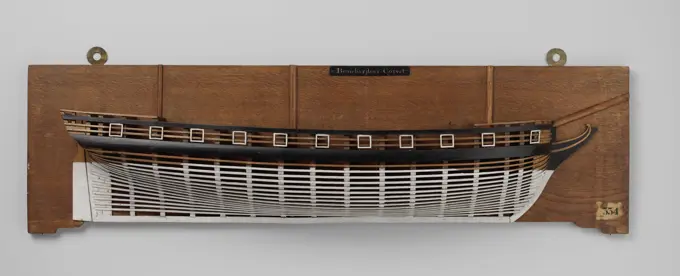
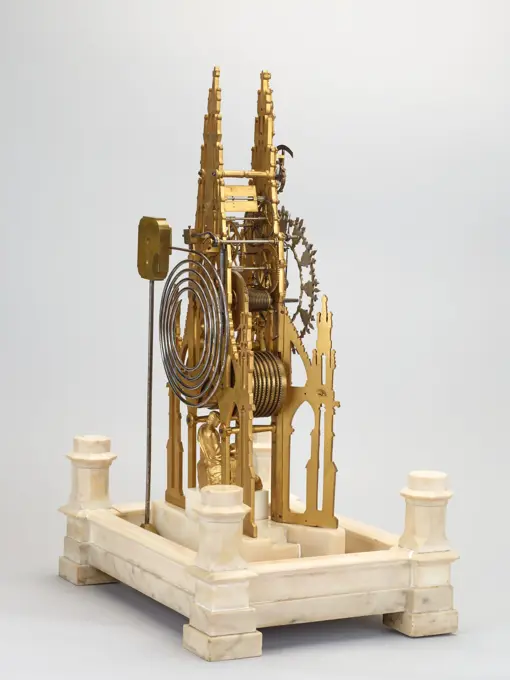
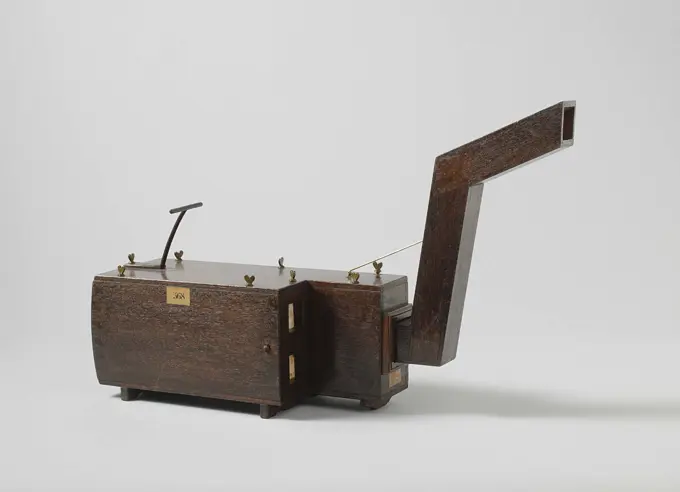
Model or a fan. Model of a fan, working as a double bellows. In the large rectangular compartment, a shelf, which is attached to the short front with hinges at a half-front, is moved to a lever up and down; The two halves in which the compartment are distributed by the shelf are hereby reduced and enlarged. Air is launched by two square valves on the front, consisting of simple valves with sea leather coated, an upstairs and a downstairs hinges of the shelf. Due to similar valves, the air is drained to a small compartment before, where the air flow is directed to a single outlet in a square ventilation pad, which leads upwards; This tube can be released.Model of a Slide and Carriage for a 30-pounder carronade. Model of an upper and lower cover for a 30-pound carronade, incomplete. The top piece has a slightly trapez-shaped body with brass attachment and rings, the front and back are rounded. Against the back the baking koker in brass batter and on top of the rail for the elevation screw, on the front the ears with tapas and the eddy bolt at the bottom. With a flat rectangular head, the swirl bolt runs through the slot of the underled. The underled is a wooden window rounded at the front, partly with brass caps and equipped with a spindle bolt; Slightly backwards a locking plate is applied to the underside, with which the slide in the longitudinal direction was guaranteed against the shipboard. On the back the underled widens and a little has been completed. In the middle and rear, the window is supported by bobbins with wheels: the wheels in the middle run in the longitudinal direction; The wheels are behind with their axes radially cBed (bier) ca. 2960-2770 B.C. Early Dynastic Period. Bed (bier) 551048Model of a Slide and Carriage for a 30-Pounder Carronade, W.H. Sesseler (possibly), 1820 demonstration model Model of an upper and submerged for a carronade of 30 pounds, incomplete. The upper slide has a light trape-shaped body with brass batter and rings, the front and back are completed. Against the back the baking tub in brass batter and on top of the track in front of the Eleveers screw, at the front the ears with tapas and the vertebral bolt at the bottom. With a flat rectangular head, the vertebral leg runs through the slot of the submerged. The submerged is a wooden window, rounded at the front, partially fitted with brass and equipped with a pivot bolt; A little backwards, a locking plate has been applied to the bottom, with which the sledge was guaranteed in the longitudinal direction against the ship's board. At the back the deducted and a little has been completed. In the middle and rear the window is supported by bobbins with wheels: the wheels in the middle walk in the loPioneer Lantern. Dated: c. 1941. Dimensions: overall: 35.4 x 24.6 cm (13 15/16 x 9 11/16 in.). Medium: watercolor and graphite on paperboard. Museum: National Gallery of Art, Washington DC. Author: LeRoy Griffith.Chest of drawers still bank, c. 1820, 9 1/4 x 6 1/8 x 2 1/2 in. (23.5 x 15.56 x 6.35 cm), Wood, pigment, United States (probably), 19th centuryDistaff, wood, metal, Carved and incised wooden pole composed of two sections, the lower section on X-form foot., Switzerland, 1778, woodwork, Decorative Arts, DistaffModel of a figurehead, Rijkswerf Vlissingen, 1844 - 1845Model of the Stern of A Steam Battery. Semi-model of the stern of a steam battery on a stack, on a base board. The skin of the model has been omitted, inside and outside the construction can be seen. It proposes a converted linen ship: the number of decks has been reduced to the lower three, on the upper deck an superstructure with a dome is set, the skin above the water line is made vertically, with the result that the elliptical stern has changed in a peak hole . The stern has been replaced by a vertical stern, with a screw window behind it and a stirring. The rudder is kept entirely below the waterline and has a roaring wall: the chain of the quadrant is attached to a rod, which ranks the trunk through the skin and is linked to a steering quadrant. The dome is fourteen-sided, each side with a shooting hole, and has a flat top with a square hole; Inside, it is circular and equipped with rails for armored plates with which the shooting holes can be closed. Scale 1:25 (Scale by model).Close-up of antique wooden hat-stand with brass hooksModel of a pottery stove Słowicki, Karol (1824 1911), National Pottery School in KołomyjaA carved reader on a sculpted foot, Anonymous, 1600 - 1699  Northern NetherlandsNetherlands wood (plant material)  Northern NetherlandsNetherlands wood (plant material)Staircase Model; mahoganyModel of a Vessel with Paddle Wheels Amidships, anonymous, 1700 - 1820 demonstration model Sketch model of a ship with radish wheels midscheep. On starboard the model is a nest model, only two grand trusses have been applied to port. The ship has two decks. In the length, the ship is divided into two halves with under a trench from front to stern, in which two radiators placed one after the other and the Raderwork are placed. The mechanism is powered by a crankshaft, which is applied to port between the trusses. The needle wheels, which are adjustable in height, have spoon -shaped scoop wheels and a flat gear on both sides; The crankshaft drives two parallel gears, which in turn drive the gears of the radish wheels. The rudder is forked and has two parallel rudder leaves, which leaves an opening between the water flow to the rear. A ironable mast with lead counterweight has been installed against the advance of the radio cabinet intermediate deck. Netherlands (possibly) wood (plant matSilversmith's Art, Italy 20th century. Silver cheese bowl. Alessi manufacturing, 1925.Rekenbord, anonymous, c. 1400 - c. 1950 Calculation board.  wood (plant material). rope. iron (metal) Calculation board.  wood (plant material). rope. iron (metal)Model of An Artificial Reef. Model of an art cliff. Seen from above it is a star-shaped framework with eight sharp points. On a metal disc in the middle, eight points are mounted up pointed points. In side view it looks like a turned pyramid with an eye for anchors at the top; The lower part is an inverted pyramid with a square base, closed with shelves. A standard in the middle connects all structural elements. Scale 1:12 (derived).Model of the stern of a 44-gun frigate, anonymous, c. 1822 demonstration model Construction model of a stern in the pile blocks on a ground board. Around stern in which the skin has been omitted under the barkwood, completely filled with vertical filling sticks. The fence, decorated with trophies, has one floor and a semicircular gallery in the middle, including a triangular hennegat, decorated with leaf motifs; Narrow straight with thick square Roerkop, two holes on the inside can be seen in front of the stir pins. Against the regulation of the upper deck. Within three decks with brass knees, the head deck with diagonal warp in the web. Volhouten Spant construction with Seppings Cross band with brass connecting pieces on the seed wood. The seizures are applied outside. Netherlands wood (plant material). brass (alloy).Sword Rack (Katana-Kake) ca. 1615-1868 Japanese A katana is a sword with a curved blade longer than 60 cm fitted with an uchigatana-style mounting and worn in a waist sash with the cutting edge facing up.. Sword Rack (Katana-Kake). Japanese. ca. 1615-1868. Wood, lacquer. Swords-AccessoriesModel of a Caisson, anonymous, anonymous, after Antoine Groignard, c. 1800 demonstration model Tension model of a ship door with double keel, incomplete. The ship door is completely finished on one side, the other side is open. Three decks, and divided into two compartments in the length. Two small spots at the bottom of the closed side, the valves are missing. There are recesses for only one pump on each side. The model looks a lot like NG-MC-991 and fits in with its places. model maker: Netherlandsafter design by: France wood (plant material). brass (alloy)Model of the Fore Part of A 32-Gun Floating Battery. Cross section of the fore ship from a floating battery of the defense over the length of five ports, demanding the construction of the plane. Two parts of the bottom surface can be removed, so that the floor beams and the connections with the trusses becomes visible. Scale 1:50 (Scale by model).Pipe and pool cue stand. unknown, authorTwo keys. Two keys, pressed together and connected to a cap to attach to a stick. The keys are mounted on a trapezoidal wooden base.Meat Chopper. Dated: c. 1940. Dimensions: overall: 36.8 x 43 cm (14 1/2 x 16 15/16 in.). Medium: watercolor, graphite, and pen and ink on paperboard. Museum: National Gallery of Art, Washington DC. Author: Raymond Manupelli.Gunlock (Flintlock) for a Carronade with a Double Flint. Right cannon lock (flint lock) with brass house and iron lock mechanism, rooster and pandeschel. The rooster has two couple lips, which can rotate to a bolt with a wing nut: it has two flints, in case one became unusable. The slot is mounted with a pin in the lock support and a bolt through it. The pan has a hole that led the spark to the zundhole. The retraction rope runs through a ring. The fastening spider has been adjusted.Headrest, mid 20th century, Unknown, 8-1/4 x 6-1/4 x 2-1/2 in. (21.0 x 15.9 x 6.4 cm), Wood, Somalia, 20th centuryHalf model or a merchantman. Polychromed mold model (starboard) of a three-master. No decks or gunposes are indicated. Wrinkled mirror, hollow wulf, no details of fence or side gallery; Stir straight with square roofing. Side forward and backwards, two bark wood and one Reehout. Peaked round trip. Scale approx. 1:44 (derived).Model or aaintop. Model of a large march, rounded at the front, with two longitudinal and two wary springs. The Marsrand is reinforced with copper and the mars floor is closed and reinforced with snaphs, nozzles around the soldier hole.Crossbow spanning lever (Cranequin) Unknown ManufakturaRattle. Dated: 1935/1942. Dimensions: overall: 26.9 x 36.8 cm (10 9/16 x 14 1/2 in.). Medium: watercolor and graphite on paper. Museum: National Gallery of Art, Washington DC. Author: William Kieckhofel.Seat of oak with closed box -shaped frame., Anonymous, 1500 Oak armchair on a closed box -shaped frame, which serves as a storage place. The corner styles on the front narrow from the seat to the flat profiled armrests; At the back they walk into the high backstyles, on which stabbed pinnacles. The front board has two panels inside framework; The sides and back each one high panel, all filled with letter fillings. Above the high back panel, a removable openly opened panel with fish bladder motifs around two rosettes. Southern Netherlands wood (plant material). oak (wood). iron (metal) Oak armchair on a closed box -shaped frame, which serves as a storage place. The corner styles on the front narrow from the seat to the flat profiled armrests; At the back they walk into the high backstyles, on which stabbed pinnacles. The front board has two panels inside framework; The sides and back each one high panel, all filled with letter fillings. Above the high back panel, a removable openly openModel of an Optical Telegraph, anonymous, c. 1794 toy. scale model Model of an optical telegraph on a foot. It consists of two poles upstairs connected by an axis why an arm runs; The two ends of that arm are two narrow arms attached, one with a counterweight, the other without. The main arm is moved by a rope walking over two discs on one side of the posts; The outer arms are moved with hoists walking over a drum between the posts and invested on clamps against the posts. In the rectangular positions compared to the main arm, the outer arms can be secured with a spring. Scale 1:22 (scale on model). model maker: Netherlandsafter design by: France wood (plant material). brass (alloy). ivoryGunlock (Flintlock) on a Dummy Breech of a 36-Pounder Carronade.Flint slot on wooden model of a carronade of a 36 pound carronade. The lock has a brass house with iron lock mechanism, rooster and Pandekel. The lock is mounted on the right side of the zund hole with a pin in the lock support and a bolt through it. Pan and Pandekel are short; The pan has a hole that led the flame to the zundhole.metal worker: Gresnich, Yellow copper miniature glass syringe, spray miniature toy relaxant model wood brass, filed soldered twisted Cylinder ending in wide round perforated pedestal just above pedestal is mounted at angle of 45 degrees narrow nozzle Pipe piston with brown turned handle 1868 Sibilla van Embden playing cleaning kitchenMarble-slab table 1760-70 American This table was made for the Philadelphia merchant Benjamin Marshall (1737-1778) at the time of his marriage, in 1761, to Sarah Lynn (1739-1797). Marble-slab tables were used for serving beverages and hot foods. The skirt of this example is finished on only three sides, since the back of the table faced the wall.. Marble-slab table 5628CottonGinStaircase model, mahogany, oak, Semi-circular staircase model., mid-late 19th century, models and prototypes, Decorative Arts, Staircase modelEdward L Loper, Combination Lantern Stove, c 1939 Combination Lantern/StoveRegina Henderer, Apple Parer, c 1939 Apple ParerChess game, part of funerary equipment of Tomb of Kha, from Deir el-Medina, EgyptModel of An 80-pounder Shell Pivot Gun on a Ship Deck. Model of a £ 80 pound bomb gun, dyed black, on a base shelf that represents the aft deck of a rader ship. The wooden loop is 55 cm long, has a 44 mm caliber and fittings for a visor at the trumpery and at the tap band; Zundgat with lock hardening, grape as a pairing ring. The upper carriage, slightly narrower, has two cheeks with three stages, the tops of which are with the tapping of solid brass. The cheeks are connected by a sloping calf, a crossbar in the middle and the axis; The sole plate is on the crossbar and the rear asx. The aneslives have no wheels, but slide over the brass-coated pencils of the underled. However, small wheels are applied to the front of the cheeks, but the upper carriage only supports when the jacket with wheels is brought up. The ends of the rear axle are brackets are applied to grabbing an outstanding edge of the layers of the underlay: these brackets guaranteed tops to underled, but can also be tighteBell Tower Model, Carved and turned pearwood, Bell tower model with spiral staircase, ca. 1880, models and prototypes, Decorative Arts, Bell Tower ModelChandelierCither (Nordic beam), P. H. Hos, c. 1847 Nordic beam made of wood, on two spools with sixteen strings of metal, ten of which are missing. Friesland wood (plant material). metal Nordic beam made of wood, on two spools with sixteen strings of metal, ten of which are missing. Friesland wood (plant material). metalSad Iron. Netherlands. Date: 1744. Dimensions: 13.3 x 15.2 x 8.6 cm (5 1/4 x 6 x 3 3/8 in.). Brass and wood. Origin: Netherlands. Museum: The Chicago Art Institute, Chicago, USA.Wooden wheelbarrow Classic wooden wheelbarrow isolated over white background Copyright: xZoonar.com/IvonnexWierinkx 7836795Graphometer or semicircle late 17th-early 18th century Michael Butterfield. Graphometer or semicircle 188838 Maker: Michael Butterfield, ca. 16351724, worked 1678, Graphometer or semicircle, late 17thearly 18th century, Brass, Overall: 7 1/8  10 7/8  5 1/4 in. (18.1  27.6  13.3 cm). The Metropolitan Museum of Art, New York. Gift of Mrs. Stephen D. Tucker, 1903 (03.21.12)Quadrant, Jan Marten Kleman, 1793 - 1808  Two almost identical clinometers to measure the maximum slope of a winding ship. Both are made of brass, mounted on a wooden back plate with the center of the arch at the top. The dish on the arch runs from 0 ° to 45 ° to each side. The outer edge of the bow is toy, every side in the opposite direction. The two hands have piles against the back, which grab in the teeth: this allows them to only move outside along the arch. The piles can be detached by hand to bring the hands back to 0 °. Due to a small interruption of the Palrand, the hands cannot end up in each other's eighth bow. The teeth of one quadrant (A) divide the bow into a quarter of degrees, which on the second (b) into half degrees. The hands on the first quadrant (A) run with small rolls over the degree arch. When the ship hurled, every hand hit the side where the ship held and indicated the maximum slope. Combined description Amsterdam wood (plant material). brass (alloy)Model of Steering Gear, Adriaan Rosel, 1867 - 1868 demonstration model Spans model of the port half of a stern above the waterline, which demonstrates the steering. The stern has an elliptical fence and three decks, all indicated with their web; The upper deck is open. It has a large cross -shaped screw cooker between stern and screw stitches. Just before the screw cooker, the drum of the steering wheel is on the upper deck. The steering device, which runs just below the upper deck, is a mixture of Rapson-Slide and Luizragen. The lower stirpen, which is moved by the handlebar, is bent to be able to move in the room on port of the screw cooker; It is not directly connected to the Roerkoning, but revolves around his own axis and the movement is transferred with two hinges on the Roerkoning. Between rails, which are applied between the screw cooker and the ship's wall, a plate goes back and forth with a bracket loosely around the stem, driven through the steering bar that passes over two Building still bank, 20th century, 9 3/8 x 7 1/8 x 8 7/8 in. (23.81 x 18.1 x 22.54 cm), Metal, pigment, 20th centuryHalf Model of a Poon.Polychromed mold model (starboard) of a single master. The skin above the bark wood is closed. Round stern; Broad stir with decorated stirring head and tiller over the deck. The seam runs to both ends, one bark wood. Running.metronomeGothic cylinder still bank, early 20th century, 7 1/16 x 6 13/16 x 5 in. (17.94 x 17.3 x 12.7 cm), Brass, England (probably), 20th centuryModel of a Buoy. Copper model of an iron buoy or Zeeton, made from unknown plates. It has a conical end and a spherical side. On one side is an open pipe facing up. Around the spherical portion, a bracket has been applied to which a handle with a ring for the anchor chain is attached. There is also an eye in the middle of the spherical plane.Virgin lamps full view. 1898, Middle EastLetter casket, Matthijs Horrix (attributed to), c. 1808 - c. 1810 Mailbox of Mahoniehout. Netherlands mahogany (wood). gilding (material). brass (alloy). oak (wood) gilding Mailbox of Mahoniehout. Netherlands mahogany (wood). gilding (material). brass (alloy). oak (wood) gildingModel of A 30 -Pounder Gun on deck, Rijkswerf Vlissingen, 1837 - 1838 demonstration model Model of a cannon of 30 pounds on a role horse on ship's part. The wooden loop, 55 cm long and with a caliber of 32 mm, is painted black; It has a visor on the tap band, the grape is flat from behind and has a brush ring. The roller horse, narrower at the front, consists of two cheeks with four stairs, connected by a slanted calf, a breastpiece with breast valve and the axle stations, which are lengthwise connected by the sole plate; The Stelwig is missing. The wooden wheels are double and all of the same diameter. The ship's part represents a piece of deck with guns; The ship's wall has diagonal connection and brass knees. A beam with a ring can be pulled backwards from the ground board, on which the recover talie can be attached. Five bullets and four cardets belong to the individual parts. Scale 1: 5 (according to Obreen). Flushing wood (plant material). brass (alloy). iron (metal). rope. paintCase (Inr) with Design of Monkey Trainer and Seated Monkey on Leash (obverse); Bundle, Hat, Sticks and Staff (reverse) 19th century Japan. Case (Inr) with Design of Monkey Trainer and Seated Monkey on Leash (obverse); Bundle, Hat, Sticks and Staff (reverse). Japan. 19th century. Lacquer, cherry bark, gold and colored hiramakie, takamakie; Interior: plain and fundame. Edo (1615-1868) or Meiji period (1868-1912). InrManTou Gu ( ) 19th century Golden Tone Workshop Supported on a bamboo stand and similar in use and construction to the bangu, the smaller man tougu is used more in the South. It has a convex shape in contrast to the flat surface of the bangu.. ManTou Gu ( ). Chinese. 19th century. Wood, leather, various materials. China. Membranophone-single-headed / kettle drumModel of a Storm Cover, anonymous, 1860 demonstration model Model of an supplement cover for ships, reconstructed. Two parts have been found separately: a wooden ground board, representing the deck of a ship in cross -whale, and a roof part consisting of corrugated plate with brass struts. Four struts wear the curved roof part on the outside of the board, a strut is in the middle of the deck. Netherlands wood (plant material). brass (alloy). zincRoom door with carving in frame, door frame building part wood oak, sawn planed cut Oak room door in frame The door consists of three planks attached to each other with two clamps. The lower clamp is straight decorated with planed profile; the upper runs in semicircular arch and is equipped with cut band decoration and acanthus branches From the arch to the lower clamp two narrow planks with frames and panels are installed: these form the 'pilasters'. The arch and vertical cleats are decorated with twisted and laid wood with fine grain. In the (smooth) back, tapered hole has been cut out for the lock. The parts of the frame are connected to each other with pin-and-hole connectionModel of an 80-Pounder Shell Pivot Gun on a Ship Deck, Rijkswerf Vlissingen, 1839 demonstration model Model of a bomb cannon of 80 pounds on Riislede, painted black, on a ground board that represents the back deck of a wheel ship. The wooden loop is 55 cm long, has a caliber of 44 mm and fittings for a visor at the tromp and at the tap tire; Zundgat with locking, grape as a brush ring. The upper slide, a bit narrower forward, has two cheeks with three stairs, the tops of which are with the plans of solid brass. The cheeks are connected by a slanted calf, a crossbar in the middle and the axle bodies; The sole is on the crossbar and the rear ash. The axle fives do not have wheels, but slide over the sheds covered with brass. Small wheels have been applied to the front of the cheeks, on which the upper slide only supports when the jack with wheels is brought up behind. Around the ends of the rear axle shift are applied brackets that grab an outstanding edge of the shelves of the sub -sledModel of Steering Gear, anonymous, 1820 - 1858 demonstration model Block model of a stern with won -up mirror, cave wulf and small dense gate. The handlebar is built in a semicircular cupboard against the fence. The rudder has a round -curved stirring king, with a toothed quadrant. The axis of the steering wheel runs backwards and ends in a gasket on the Roerkoning; This gasket rotates so that the rudder can turn without moving the axle. A small gear on the shaft transfers the movement of the steering wheel to the quadrant; This transmission is contained in a bracket that hangs on the ashes and in which the quadrant also hangs. Netherlands (possibly) wood (plant material). brass (alloy)Two-Story Tower with aMoat, 2nd centuryc.e., Earthenware with light green lead-fluxed glaze, 29 15/16 × 15 in. (76 × 38.1cm), Produced in large numbers during the Han dynasty, clay models of towers and other buildings were created for inclusion in tombs. They belong to a category known as spirit goods (mingqi), which were made specifically for burials and intended to serve the deceased in the afterlife. Tall towers and moats such as this example replicated structures found on wealthy estates, which defined property borders and helped provide protection tolandowners. , China, Chinese, Eastern Han dynasty (25-220 C.E.), SculptureModel of a Mainmast with Metal Futtock Chains, Rijkswerf Amsterdam, 1846 - 1847 rigging model. demonstration model Model of a crazy large mast with mars, donkeyhood and and the middle part of the Fokkera, on a round foot. The mast is composed according to the Sepping method. The rake consists of chains that run up discs on the sides of the mast upwards, where they are operated with hoists hanging on the donkey head. The lock chain of the RA has been beaten over a clamp to the mast. Scale 1:20 (scale on model). Amsterdam wood (plant material). brass (alloy). ropeOld Wooden Plane Old plane on an isolated studio background Copyright: xZoonar.com/AndreyxSkatx 21790204HighChairPivot and two Compass cards. Compasps with rubies point on a wooden pedestal, with rose. The rose has a brass cap in the middle with hole for the pin at the bottom: turning the rose was improved by the materials used, while fluctuating was reduced by the increase of the rubbing surface of the ruby. The rose, which is heavily damaged, can be rotated within an outer edge, on which a scale is arranged in degrees by quadrant; This was to compensate the magnetic variation (the angle between the actual north and the magnetic north). The second rose is of the same type, but the cap is equipped with a gem, presumably agate. With two compass roses.. Coffee filter, rectangular with slightly basic front and back and vaulted basis. To narrow sides a lion mask with bracket-shaped handle with wooden handle in the mush. The faceted tap has a barrel-shaped portion with rotatable closing piece, decorated with a ribbed and a pearl edge, crowned by a mushroom-shaped handle. The can be opened at the bottom with a pattern of bars between which stylized leaves in cross shape and arches. The extendable back side of the opened part is screwed to a copper line with a glans-shaped button that acts as a komfoor. The upper part of the can be removable and contains two loose filters resting on cams; The bottom is equipped with small, upper of large holes. Multiple vaulted lid with light bulb top with ribbed, spherical knob, crowned by a small silver cap. Along the lower and top of the opened portion, under the underside of the attachment and along the upper edge of the lid, palm trees. NECIAL: Stadskeur Amsterdam; Koningskroon with monogram et; Mt.Knife and Fork Holder. Dated: c. 1937. Dimensions: overall: 32.7 x 42.5 cm (12 7/8 x 16 3/4 in.) Original IAD Object: 14 6/16" long; 5 3/4" wide; 9 1/4" high. Medium: watercolor, colored pencil, pen and ink, and graphite on paperboard. Museum: National Gallery of Art, Washington DC. Author: Wellington Blewett.Lamp, anonymous, 1300 - 1600 Simple hanging lamp with four spouts. Cast. Oliebak is square. Equipped with chain and hook. Indonesia bronze (metal) Simple hanging lamp with four spouts. Cast. Oliebak is square. Equipped with chain and hook. Indonesia bronze (metal)Lluis Ventós / "Guitarra. Homenaje a Juan Gris" (Guitar, Homage to Juan Gris), 2005, Sculpture (wood), 60 x 15.5 x 109 cm.Combination Lantern/Stove. Dated: c. 1939. Dimensions: overall: 35.4 x 24.4 cm (13 15/16 x 9 5/8 in.). Medium: watercolor, pen and ink, and graphite on paper. Museum: National Gallery of Art, Washington DC. Author: Edward L. Loper.Castagnets from brown wood. Castagnets, a pair of brown wood.Model of a Capstan, anonymous, 1771 demonstration model Model of a capstan in a wooden frame that represents two decks. The Cape Storge has a double head, each for twelve wind trees, and has two pages in the heel against the decline. The metal king continues into a track on the lower deck. This capstan has two speeds, which obtained through the use of one or the other head; The upper head must be turned in the opposite direction to achieve the lower speed. The Raderwerk with Palls is applied to the heel of the Cape Storer. Scale 1:10 (estimate). Netherlands wood (plant material). brass (alloy). iron (metal)   EnglandFuneralia Jan Klemens BranickiHalf Model of a 30-Gun Frigate.Polychromed mold model (starboard) of a three-master. Ten gunpaints on gun cover; semi-deck and baking deck indicated by gillings. Wrinkled mirror, hollow wulf, no details of fence or side gallery; Stir straight with square roofing. Scroll a little ascending, two mountain wooden and one Reehout at both ends. Peaked round trip.Arm with candle holder, part of a candle wreath. Arm with candle holders of brass. Originally, the parts of a candle crown have been.Secretary contractors Vereeniging Eendracht, Pierre Joseph Hubert Cuypers, 1897 Secretary with subjects and drawers. The Fries at the top mentions: May 16, 1827-1897. On the inside of the upper doors: Contractors Association Eendracht. Roermond walnut (hardwood) Secretary with subjects and drawers. The Fries at the top mentions: May 16, 1827-1897. On the inside of the upper doors: Contractors Association Eendracht. Roermond walnut (hardwood)Half Model of a 22-Gun Bomb Sloop of War, anonymous, c. 1800 - c. 1820 ship model. half model. builder's model Polychromed mold model (starboard) of a three -mast. Eleven guns; campaign deck and baking deck indicated by Gillingen. Get mirror, Hol Wulf, no details of the fence, no side gallery; Straight with square stirring king. Seeping a little rising and behind, one bark wood and one reehout. Peaked around. Netherlands wood (plant material)Sudbury Hall, Stained pine, Model in the form of Sudbury Hall, Derbyshire, an English country house of c. 1665-early 1690s, a rectangle with protruding central entrances and end wings, a central domed cupola and rectangular chimneys on the main block and two at each end, with small dormer windows above the two floors, delineated by a line of moulding., England, ca. 1660-90, models and prototypes, Decorative Arts, Architectural model, Architectural modelSkeleton Clock in the Form of the Scott Memorial, Edinburgh. 1851. Made by W F Evans. The Scott Memorial in Edinburgh is a tribute to Scottish author Sir Walter Scott.Model of a Gun and Carriage, anonymous, 1865 - 1870 gunmodel. demonstration model Model of a cannon on a canal on a ground board with guns. The wooden loop, 37.5 cm long and black painted, is from the mantle type with five coats that are getting thinner and thinner; The soul is not drilled. The grape consists of two ears between which a ring runs around an axle, causing a vertical rod to protrude: this is probably a schematic representation of the Eleveerstrol. With the highest jewelry band, the piece has a second set of thin taps, the canal is fixed on the ground board. It consists of two cheeks, which are far above the cannon and are connected by cross -bleaches under and brass cross -slats above. In the cheeks, slots for the taps are cut out, in which they can move up and down vertically. A second set of movable cheeks is placed on the outside of the first cheeks and has horizontal tap slots; As a result, the taps will be located in the intersection of the two tap slots, which can vBlack metal hole punchLira cranksha1970s SETH THOMAS MECHANICAL WIND-UP METRONOME WITH SWINGING PENDULUM THAT MAKES A REGULAR TICK USED BY MUSICIANS TO MARK TIMEWooden ship toy model on white table against white backgroundThrom, as shown on the night watch. Wooden drum with front decoration of copper nails.MandolinWoodworking plane isolated on white backgroundLeonardo da Vinci's fighting vehicle re-construction from a drawing in the Codex Arundel, (British Library, Arundel, 263), a bound collection of pages of notes, written by Leonardo da Vinci and dating mostly from between 1480 and 1518. Sometimes described as a prototype of modern Tanks, Leonardo's armoured vehicle represented a conical cover inspired by a turtle's shell. The covering was to be made of wood and reinforced with metal plates that add to the thickness. Slanting angles would deflect enemy fire. The machine was powered by two large inside cranks operated by four strong men. The vehicle was equipped with an array of light cannons, placed around the perimeter.Ivory miniature bench, very fine filigree, Biedermeier, part of set, sofa upholstery furniture dolls toys toy miniature model ivory, Filigree sofa with round backrest four columnar legs running in armrests running around outside BiedermeierAlbum of the Gearspectors of the Kingdom of SaxonyIce skates. Culture: American. Date: 1840-59.Ice skating, a well established winter pastime in northern Europe for centuries, became a craze in the United States in the 1850s and 1860s. This pair of ice skates from early in that period is as visually delightful as they are functional. The wooden foot bed is carved in an attractively slender and deeply waisted shape, and the whimsical blade is terminated by an amusing acorn tip. Basic skate design changed little in the 400-some years since the Dutch had introduced sharpened metal blades, which allowed the skater to push off with the foot instead of using long poles, as in skiing. The long curling blade is a detail which is seen since at least 1700. This is a later example of the style, as the long hooked shape proved to be an impediment for figure skating and other ice sports that were developing at the time, and had disappeared by 1900. The wooden foot bed was also being superseded, as more durable all-metal skates had been introducedModel of A Boyer. Witted pantry model of a one-mast flat bottom, a booer. The model has a deck and a cabin, of which parts can be removed. The cabin is fully shot at inside and has a roitch on top; De Kuip has benches in the sides, small behind. The bow is round and decorated with sunbathing and curled motifs, the vent has coped. Round stern decorated with praise and floral motifs, falling stern; Wide triangular stir with decorated stirring head and wooden helm. The seam runs to both ends, a barque, swords. Three-part trusses, abnormal construction in the fore ship. Skin over the water above the waterline, glad underneath. The rig consists of an ironed mast with curved top, a gaffel and long boom, a bow mad; Landing for the large shot on the rear.JAULA DE PAJAROS REALIZADA EN CAÑA TIPICA DE LAS PALMAS.Bronze steelyard with weight shaped as head of Mercury wearing petasus, from PompeiModel of a Double Swing Bridge.Model of a double swing bridge with parts of the quay wall. Both halves turn around a vertical axis and rolls in a corporable recess in the quay wall. Scale approx. 1:21 (derived).Cigar holder in caseStand 1825-50 United Society of Believers in Christs Second Appearing (“Shakers”), Mount Lebanon, New York. Stand 3134