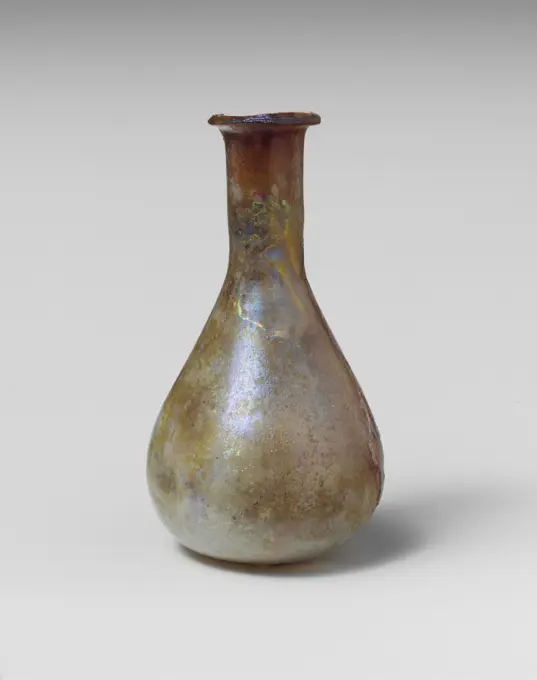
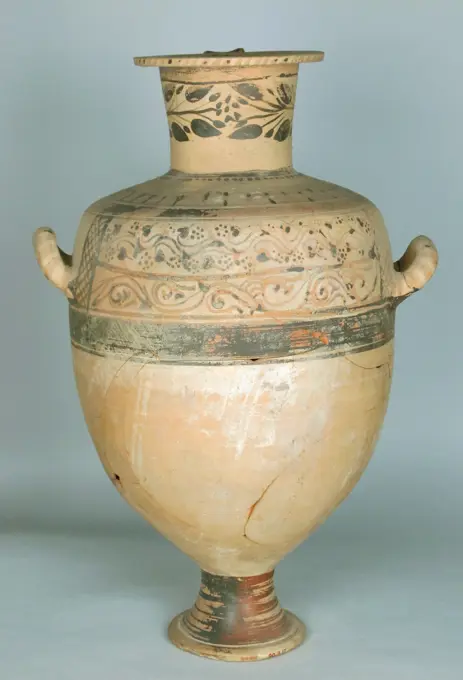
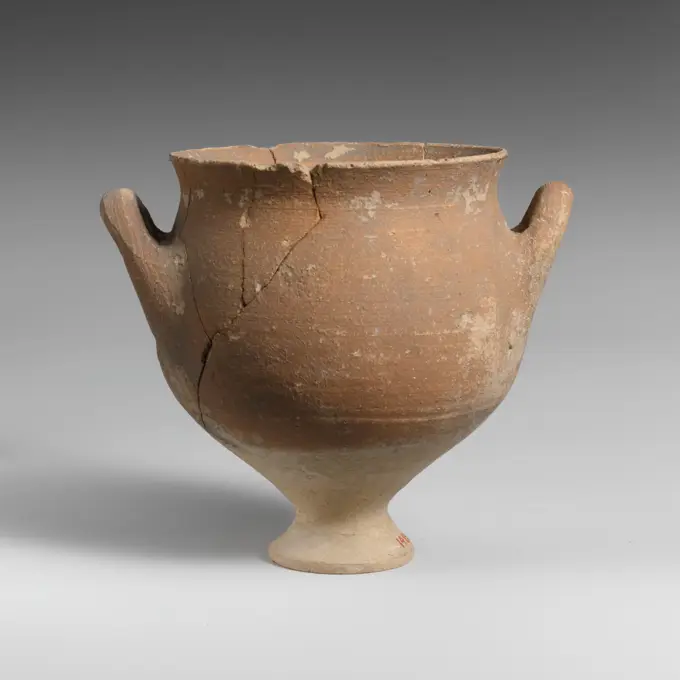
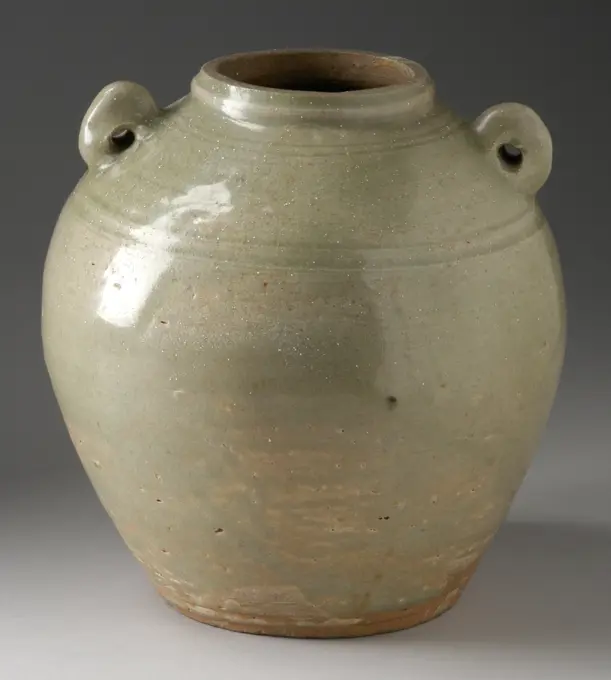
Historical Pottery Vessels

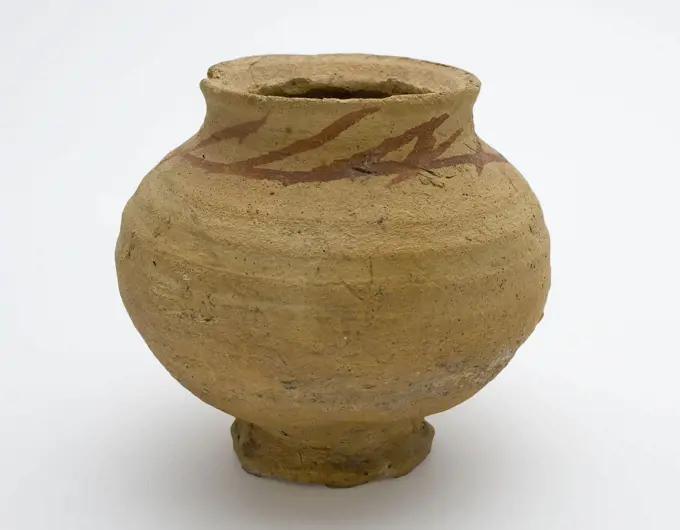
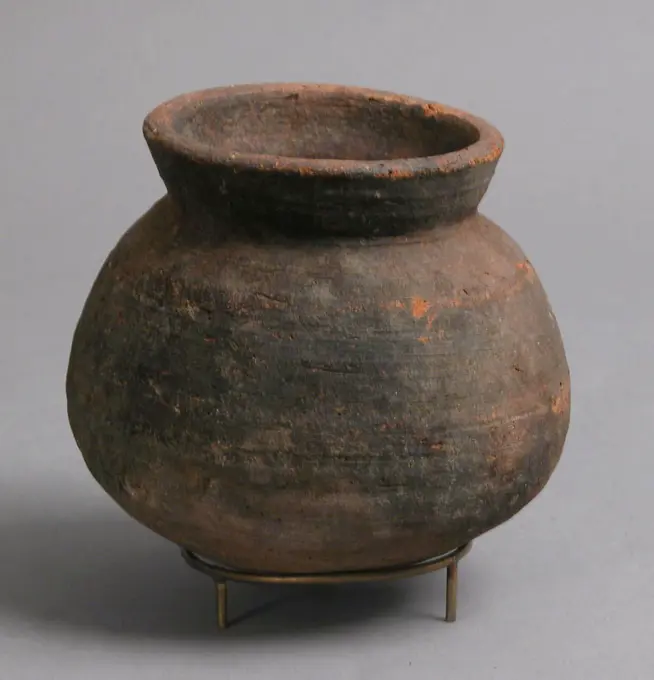
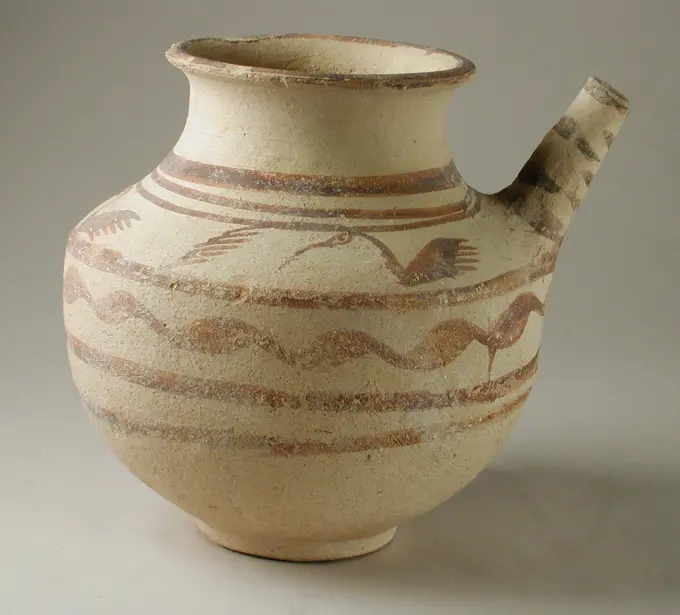
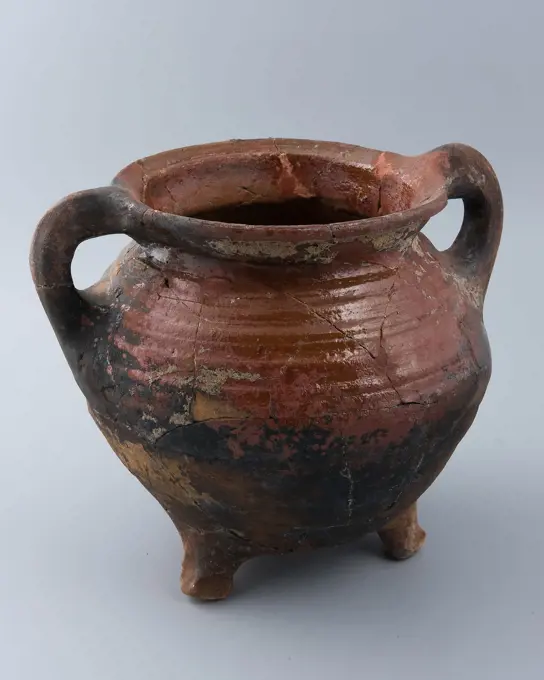
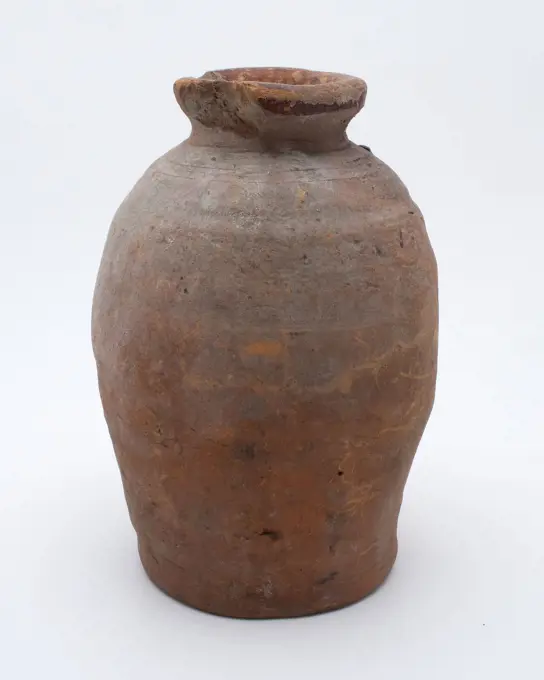
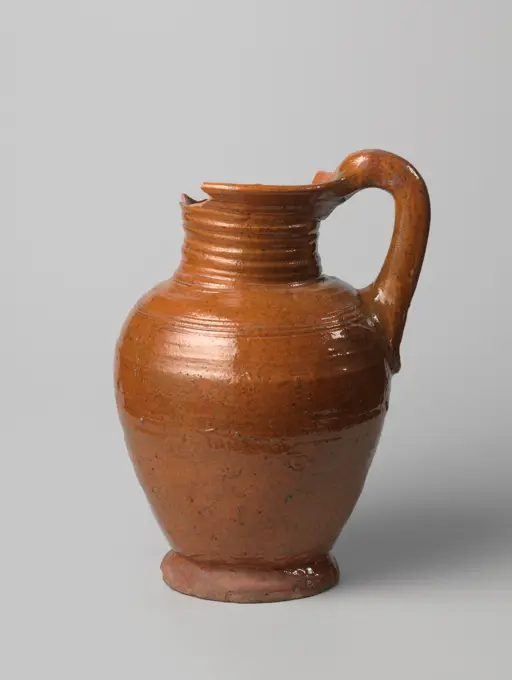
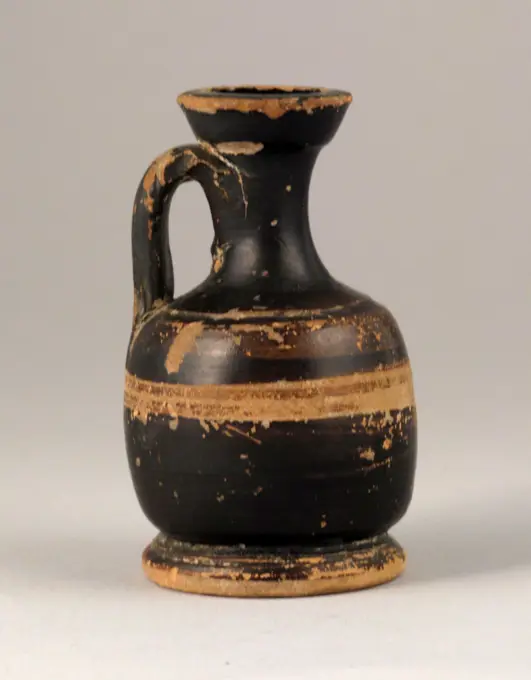
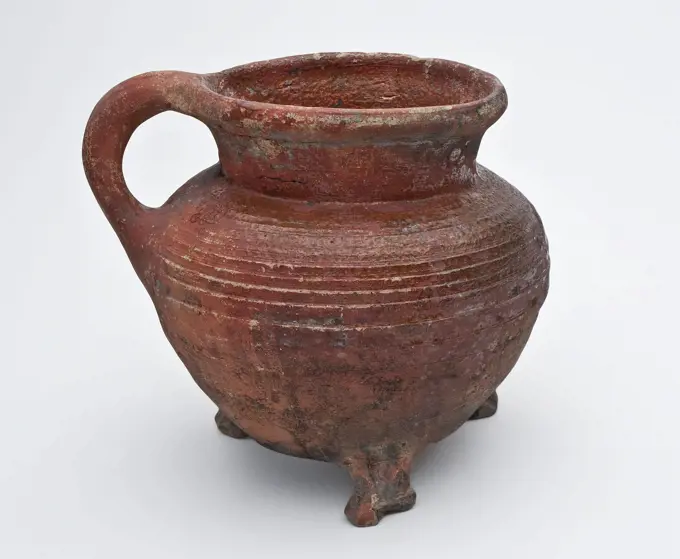
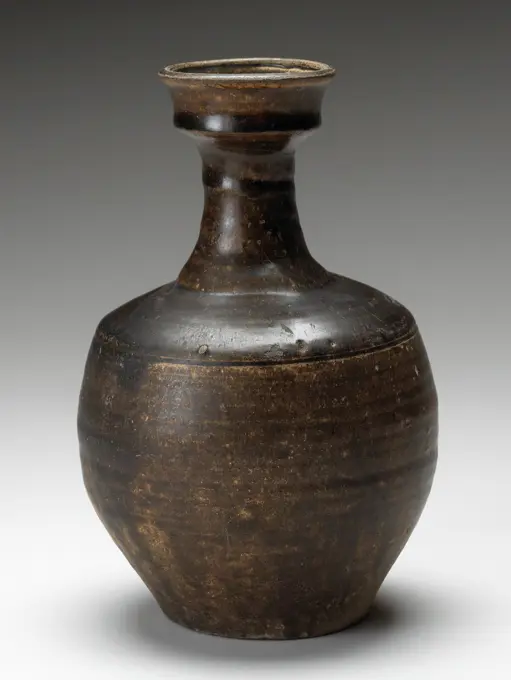
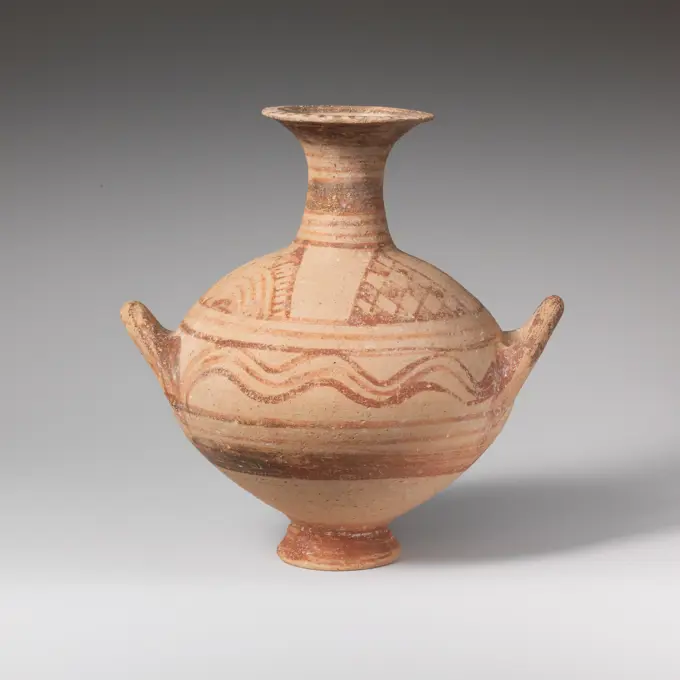
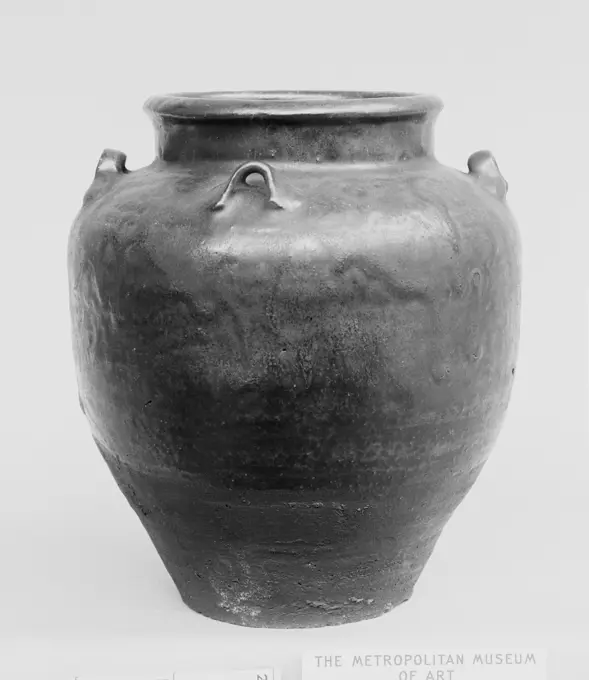
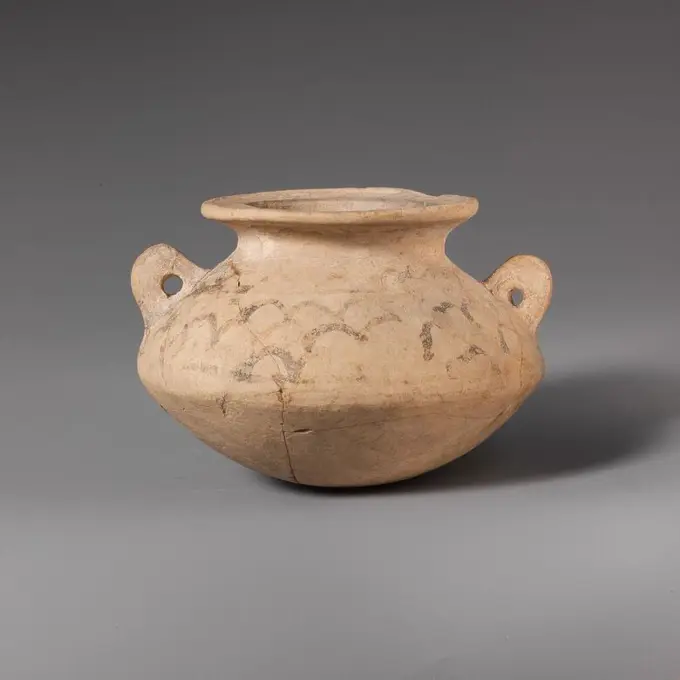
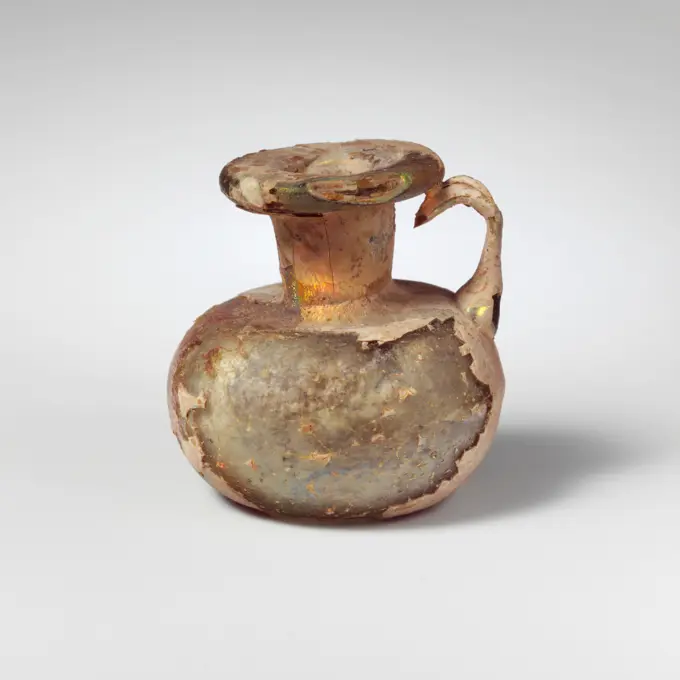
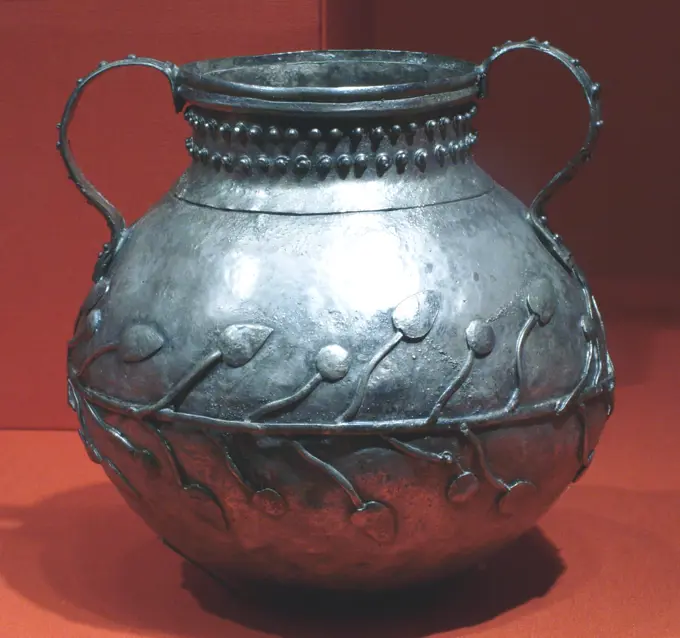
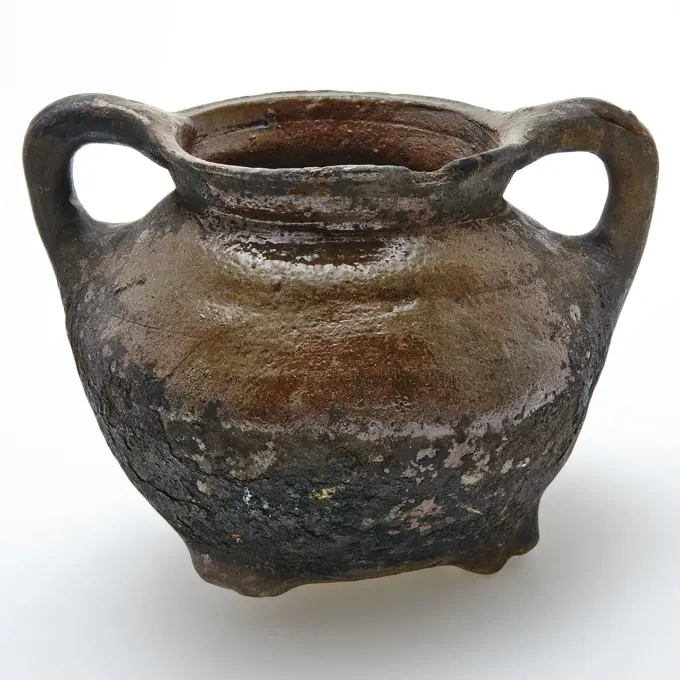
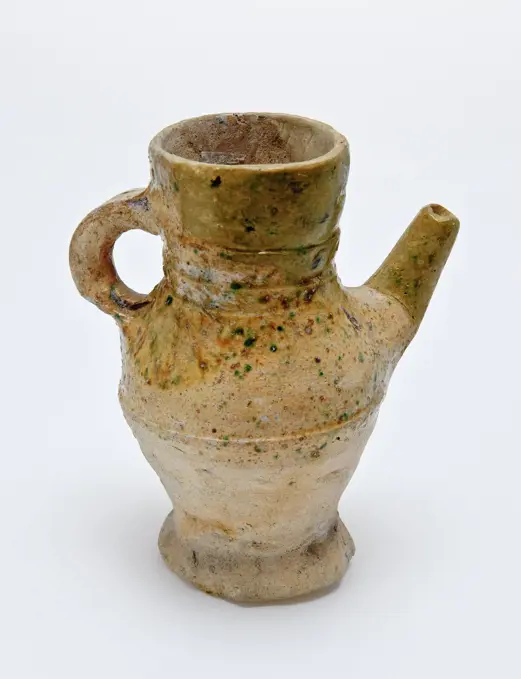
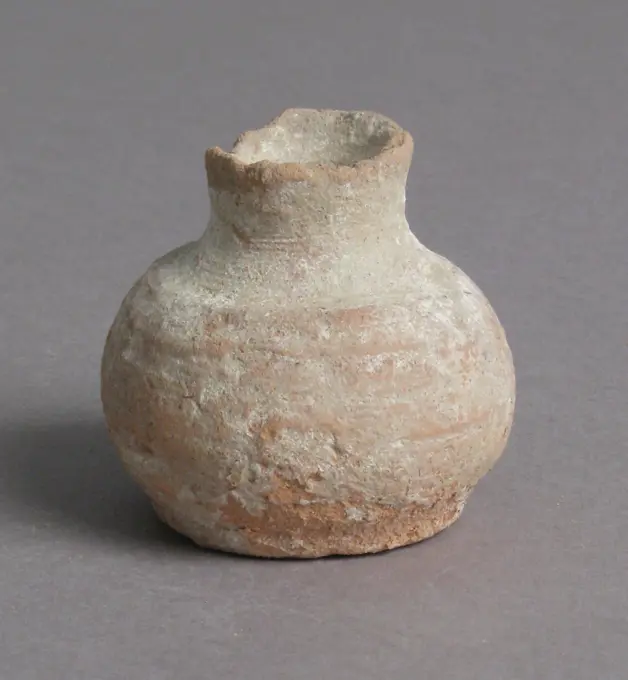
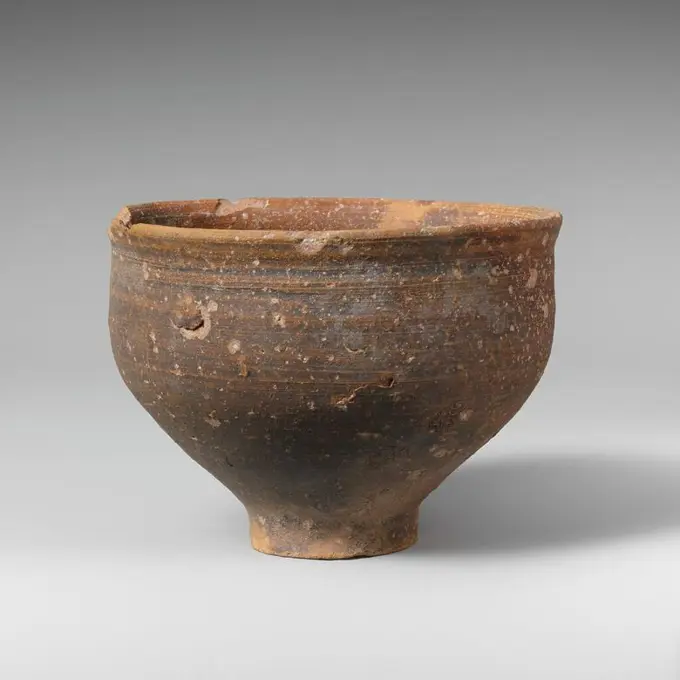
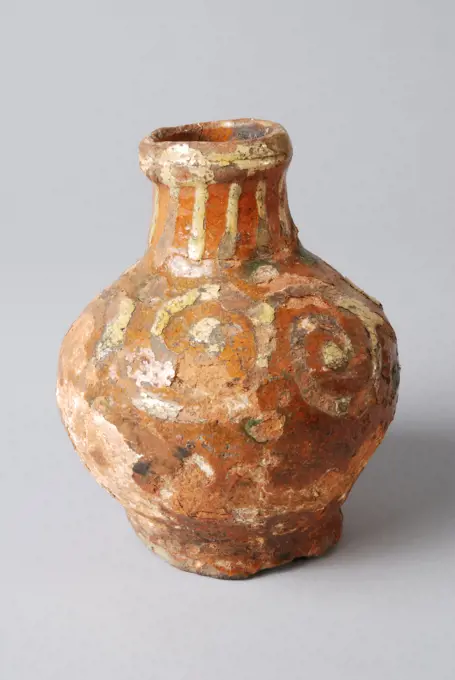
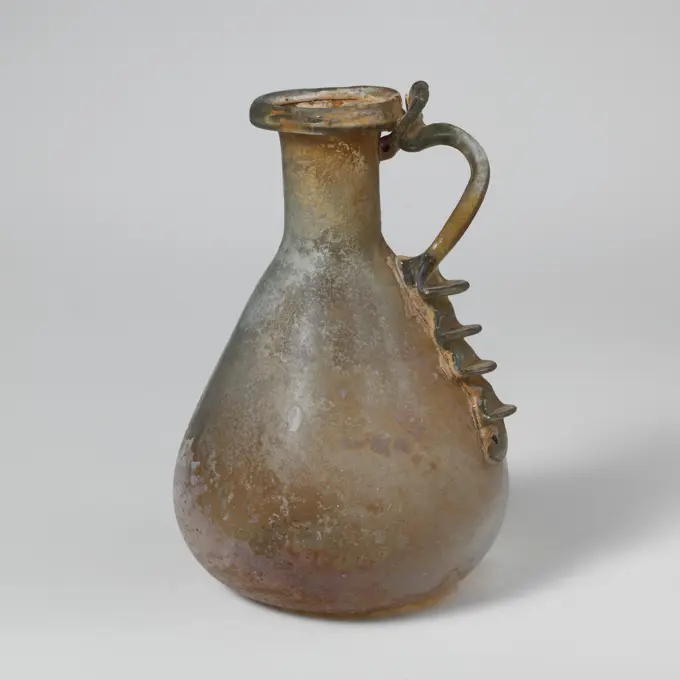
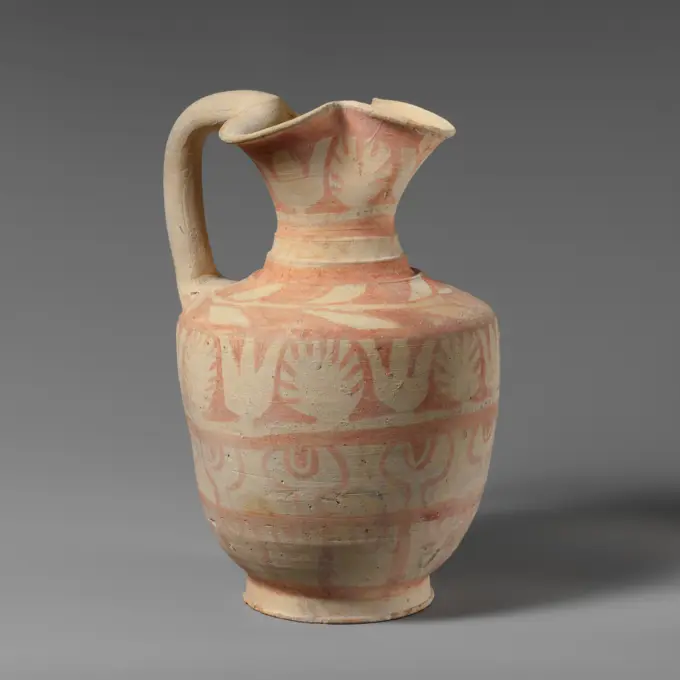
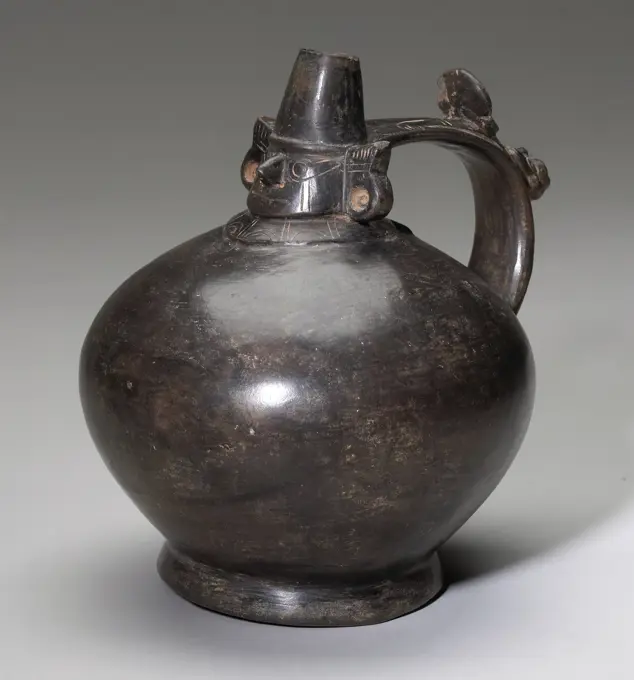
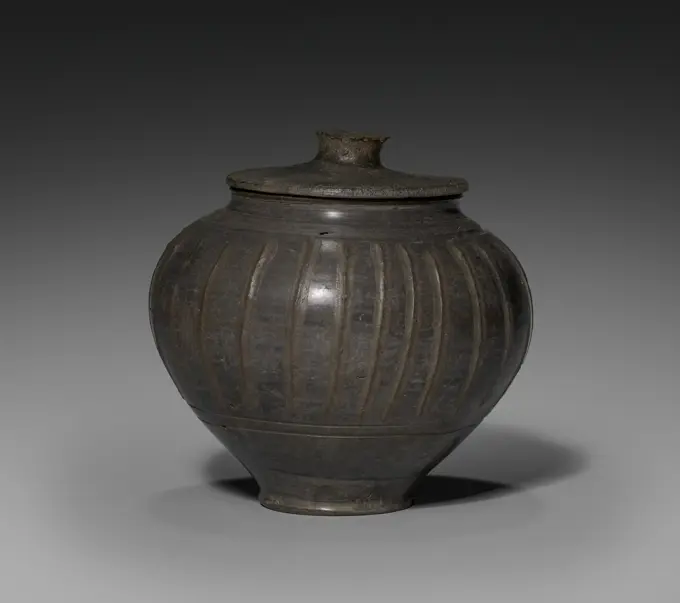
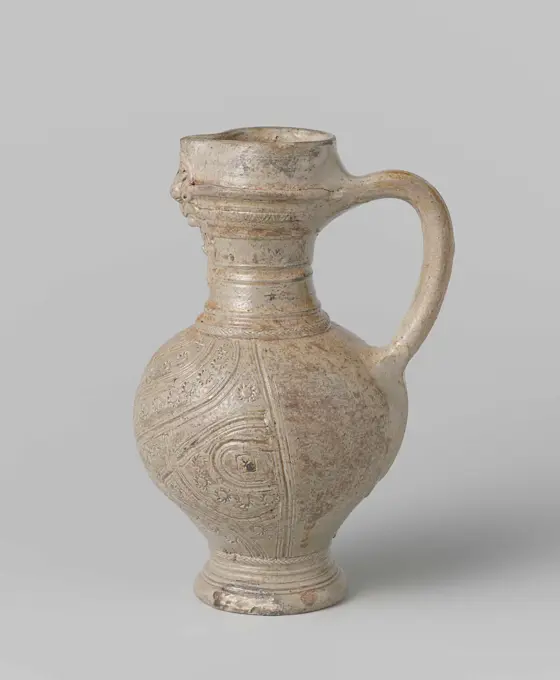
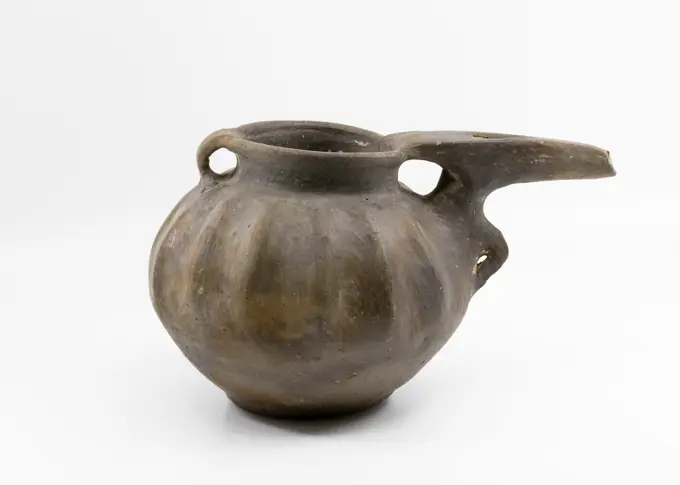
Assortment of ancient pottery jugs and vases, showcasing diverse designs and functions from different cultures.
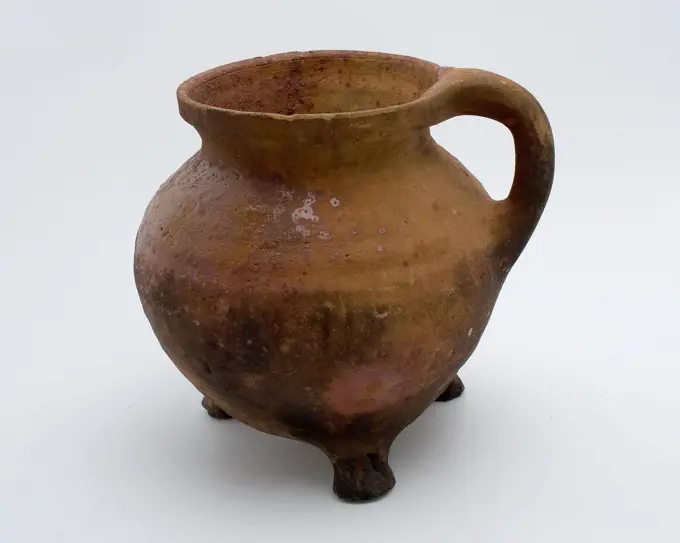
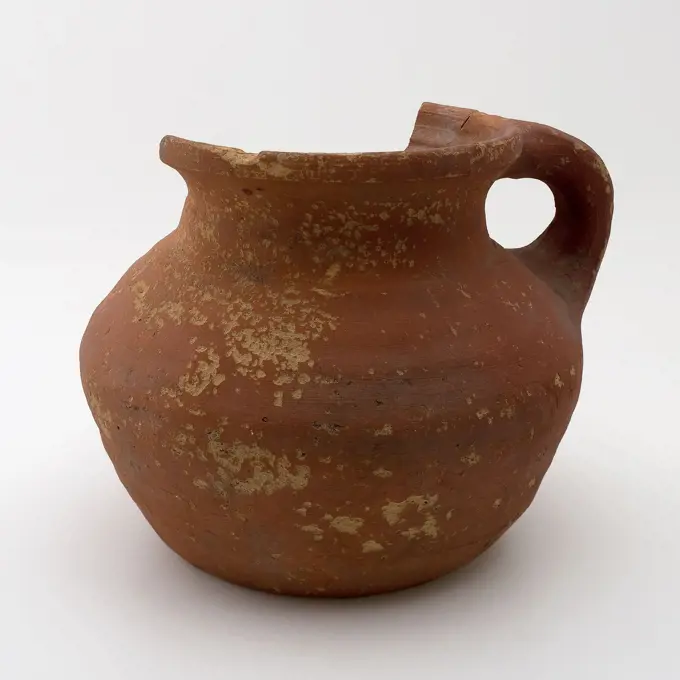
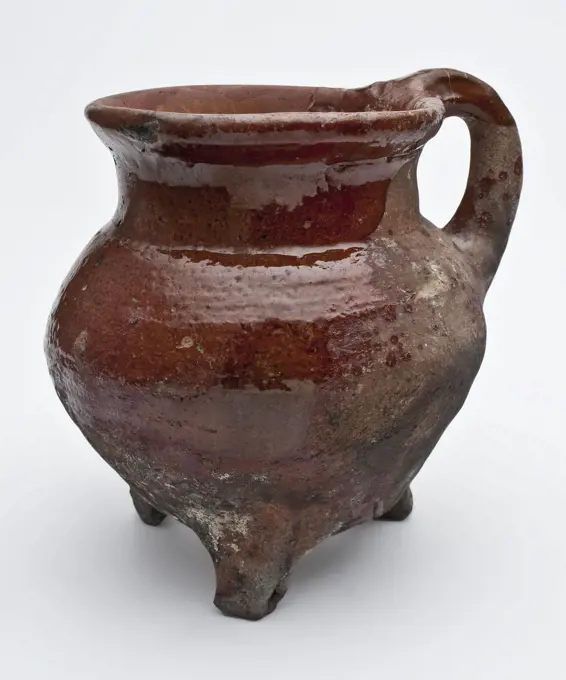
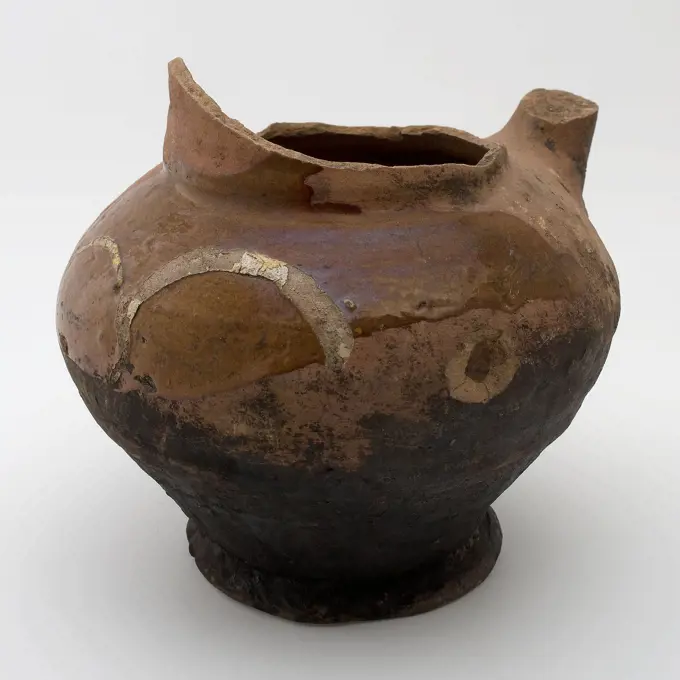
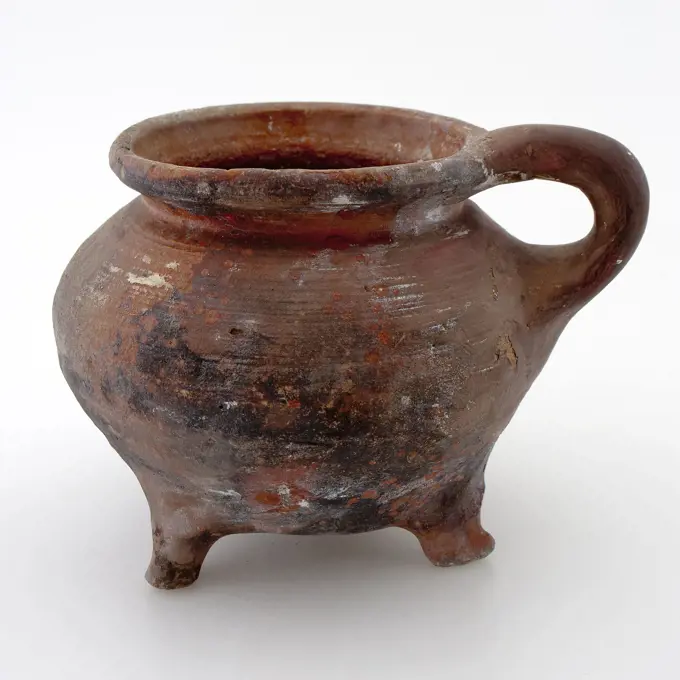
Pottery cooking jug, grape-model, red shard, sparing lead glaze, vertical sausage ear, three legs, cooking pot crockery holder kitchenware earthenware ceramics earthenware glaze lead glaze, hand-turned baked glazed earthenware cooking jug grape-model red shard sparing lead glaze vertical set sausage ear three-legged spurs archeology Rotterdam indigenous pottery food preparation cooking food kitchen fire Soil discovery: brand Rotterdam.
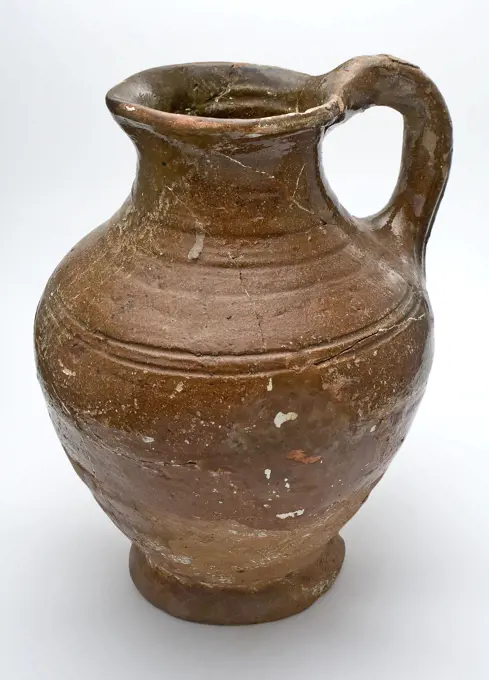
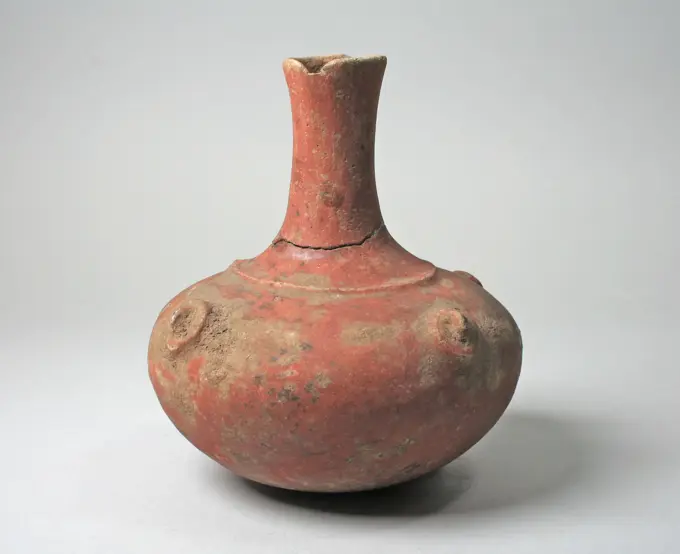
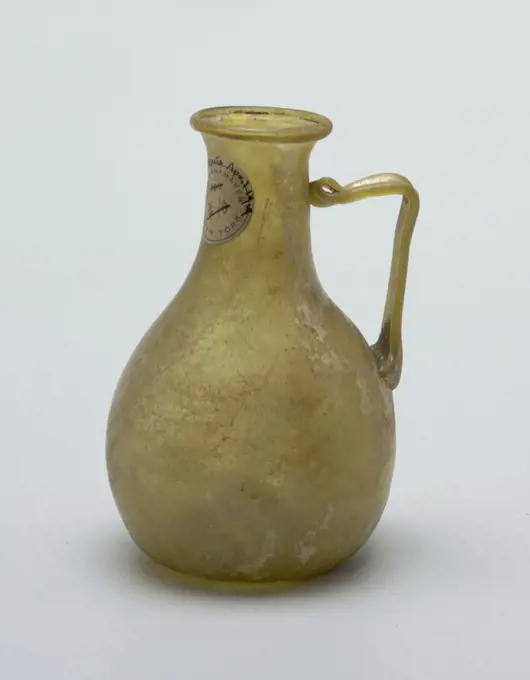
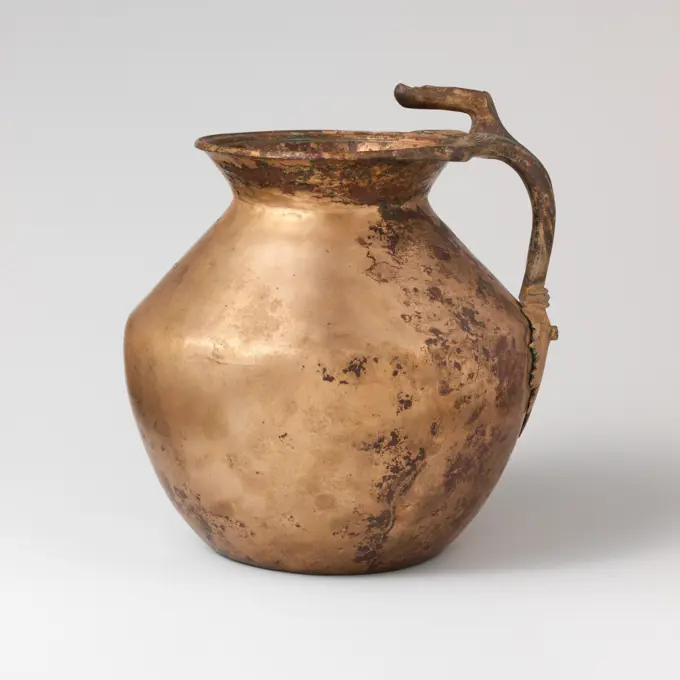
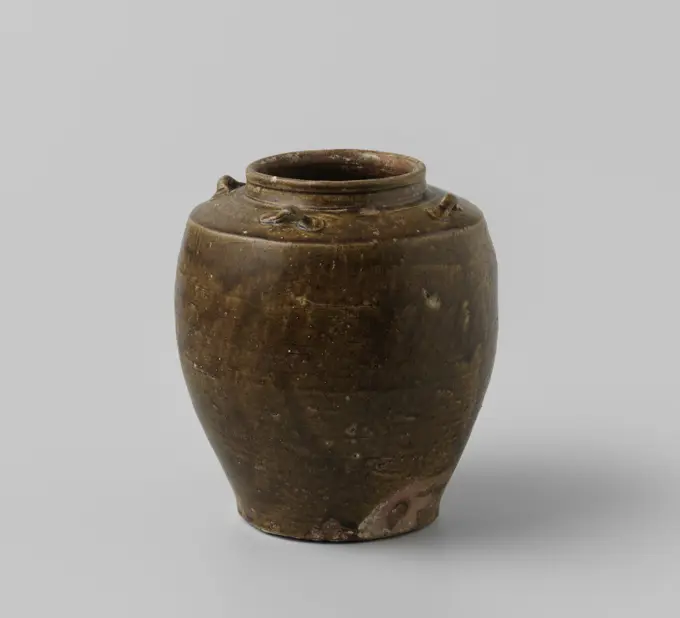
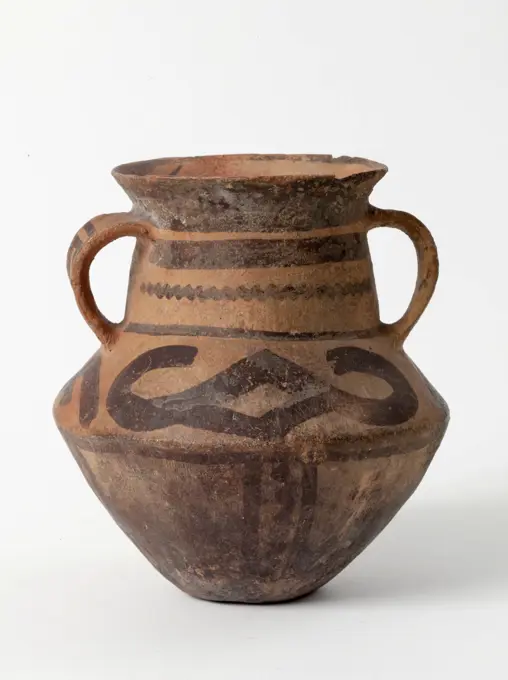
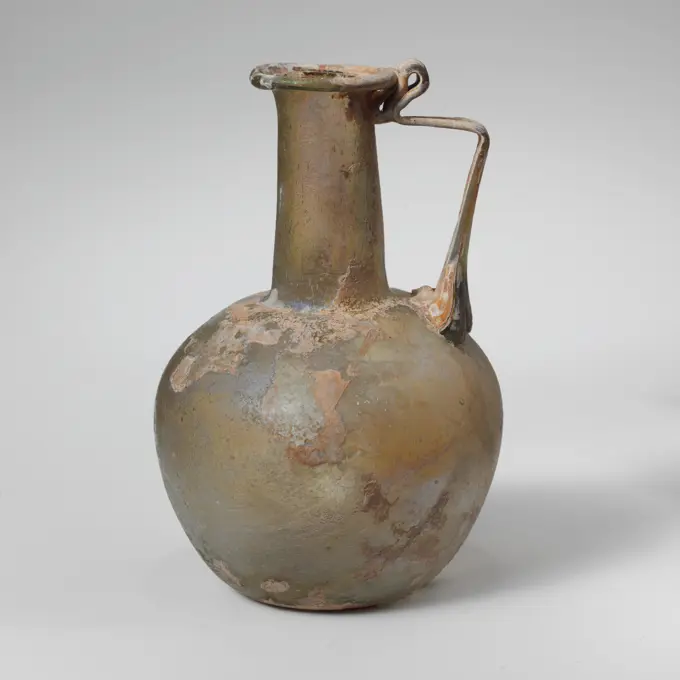
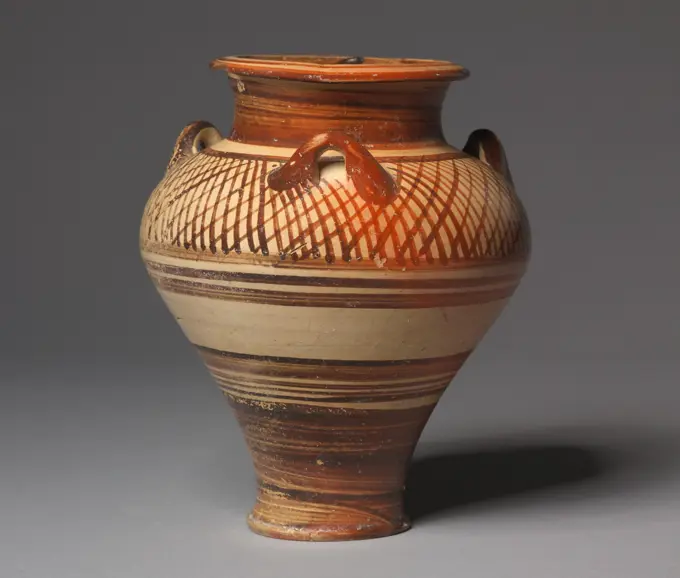
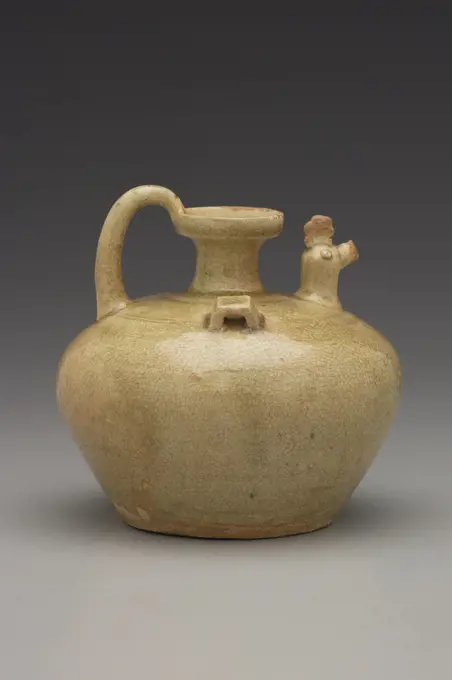
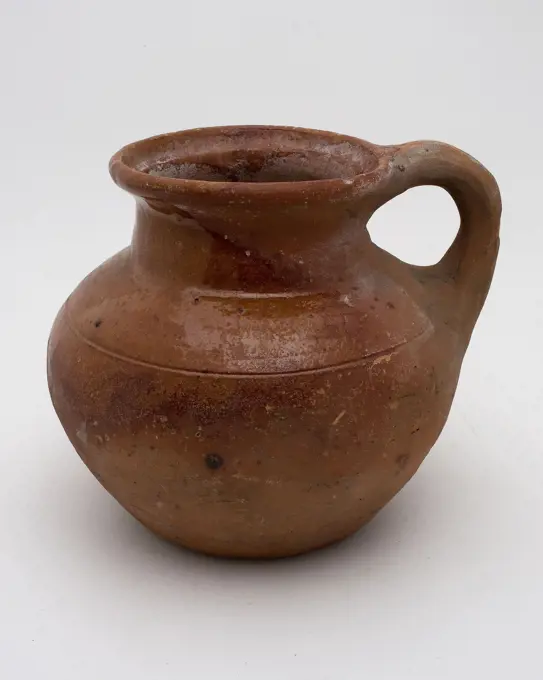
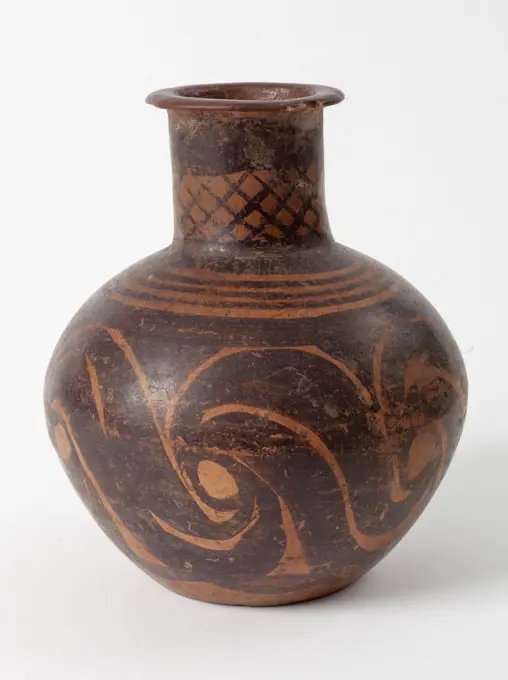
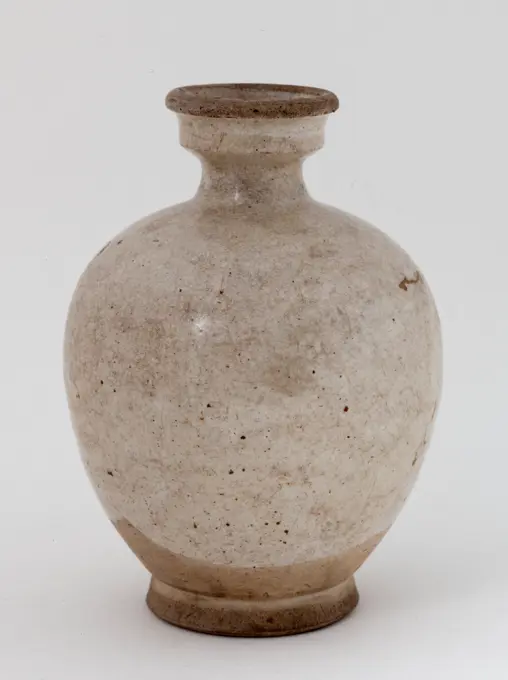
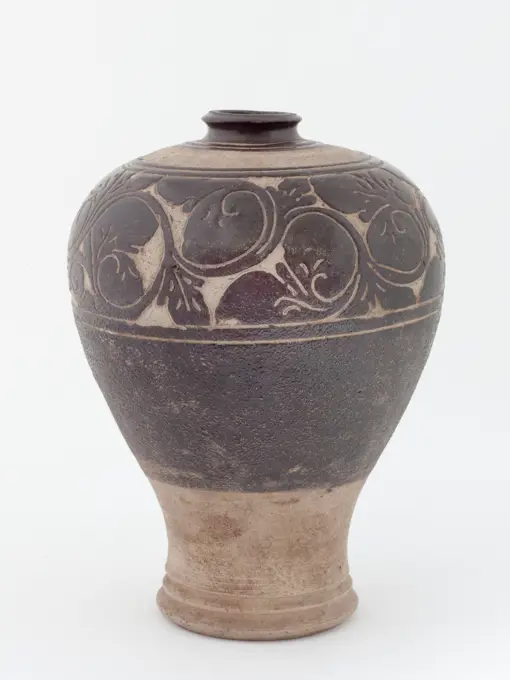
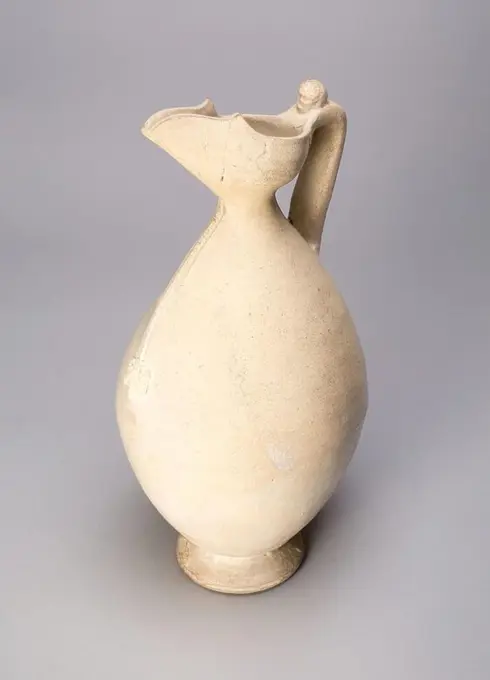
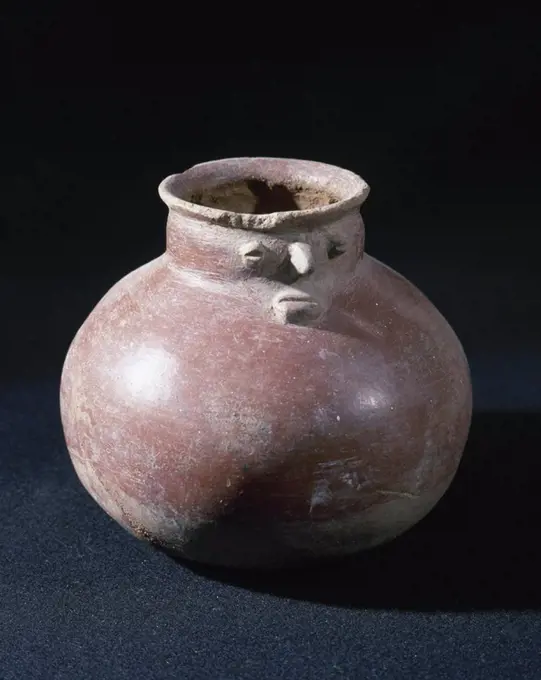
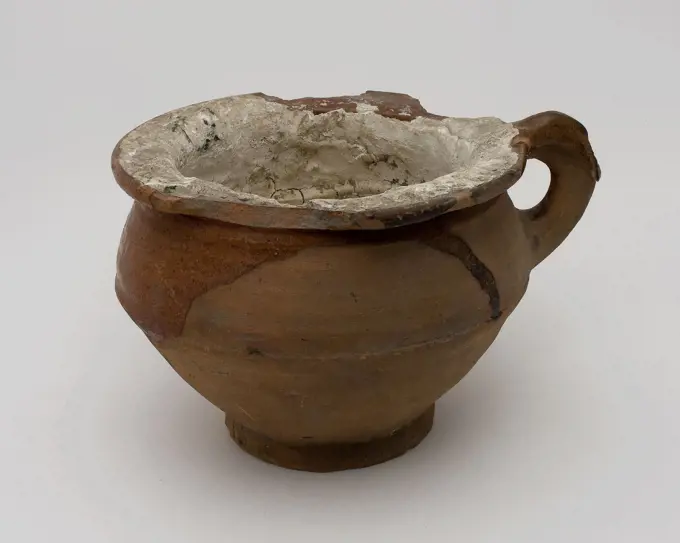
Vase, anonymous, c. -206 - c. 220 Vase of earthenware with a printed egg -shaped body and spreading, high neck, covered with a green glaze. On the abdomen a few entry, horizontal lines. On the wall twice a modeled 'Taotie' mask with a ring. China earthenware. glaze engraving / vitrification Vase of earthenware with a printed egg -shaped body and spreading, high neck, covered with a green glaze. On the abdomen a few entry, horizontal lines. On the wall twice a modeled 'Taotie' mask with a ring. China earthenware. glaze engraving / vitrificationPottery jug with ear, spout, double incised ring at the bottom of the shoulder, water jug crockery holder soil find ceramic earthenware glaze lead glaze, hand turned set glazed baked jug of red earthenware partly glazed - uppersed spout restoration in plaster heavy stand ring rotations one ear. Sphere model gradually narrowing to the stand ring. Wide neck and protruding neck edge Ear protrudes above the edge of archeology Valckensteyn Poortugaal Albrandswaard indigenous pottery water washing food preparation donate kitchen Soil discovery: canal at kitchen castle Valckensteyn at Poortugaal now Albrandswaard 1961.Wine Jar (Hu) Artist's working dates 299 BCE-100 BCE China. Bronze .Vase ". Terracotta, brown painting. Han dynasty (206 BC-220 AD). Paris, Cernuschi museum.Pottery cooking jug, grape-model, red shard, sparing lead glaze, vertical sausage ear, three legs, cooking pot crockery holder kitchenware earthenware ceramics earthenware glaze lead glaze, hand-turned baked glazed earthenware cooking jug grape-model red shard sparing lead glaze vertical set sausage ear three-legged spurs archeology Rotterdam indigenous pottery food preparation cooking food kitchen fire Soil discovery: brand Rotterdam.Bottle, Raised Faces on Body 11th-14th century Mississippian. Bottle, Raised Faces on Body 318597Decorated Jug of Neferkhawet ca. 1504-1447 B.C. New Kingdom. Decorated Jug of Neferkhawet 548878Jug with ribbed neck, medallions and chip carving, anonymous, c. 1550 - c. 1599 Jug of stoneware on high foot with an egg -shaped body and wide neck. The C-shaped ear is attached to the neck and shoulder. Ribbed neck and profiles closely. On the abdomen light, vertical ridges and three triangles of Kersnede with a printed and imposed medallion in relief with a rosette at each point. The triangles depend on an entry line on the shoulder. Above that a bond with the same medallions. Raeren. Rae stoneware. glaze. engobe vitrification Jug of stoneware on high foot with an egg -shaped body and wide neck. The C-shaped ear is attached to the neck and shoulder. Ribbed neck and profiles closely. On the abdomen light, vertical ridges and three triangles of Kersnede with a printed and imposed medallion in relief with a rosette at each point. The triangles depend on an entry line on the shoulder. Above that a bond with the same medallions. Raeren. Rae stoneware. glaze. engobe vitrificationAmpulla, Glass, Olive green, iridescent, pear-shaped body with slightly flaring mouth, moulded lip; ridged strap handle from center of body to center of neck., Roman Empire, probably Syria, 2nd century, glasswares, Decorative Arts, AmpullaBronze jug ca. 1st century B.C.-1st century A.D. Roman The handle ends in a palmette below and two birds' heads above between which is a finger.. Bronze jug. Roman. ca. 1st century B.C.-1st century A.D.. Bronze. Late Republican or Imperial. BronzesPingsdorf ball pot on small foot, brown-yellow with streaks of denim paint, ball pot kitchenware earthenware ceramics pottery clay engobe, hand turned decorated baked Pottery ball pot on small foot Yellow brown earthenware with reddish paint marks on the shoulder archeology indigenous pottery import cooking store storeJuglet. Culture: Cypriot. Dimensions: 5 1/8in. (13cm). Date: 750-600 B.C.."Bird-Jug" type with conventional ornament and imitated hieroglyphs. Museum: Metropolitan Museum of Art, New York, USA.Pot 4th-7th century Coptic. Pot 476286Spouted Jar. Western Iran, circa 1000-800 B.C.. Furnishings; Serviceware. Buff warePottery grape on three legs, with two slightly pinched sausage ears, grape cooking pot crockery holder kitchenware soil find ceramics earthenware glaze lead glaze, twisted glazed fried Red sheaf Two ears one higher than the other above the edge excellent. Neck with oblique top edge Coarse irregular turnbuckles on shoulder on which some lead glaze Internal only lead glaze underneath the neck opening on the bottom Three legs triangularly sculpted hollow stand surface. Clogging cement-like material Restoration is color-repainted archeology underground pit Rotterdam City Triangle Groenendaal indigenous pottery food preparation cooking kitchen Soil discovery: underground pit Groenendaal first 50 meters from the well. Found 1975-09-11.Stock jar from Wrrak of the East Indians 'De Witte Leeuw', Anonymous, Before 1613  Stock jar from the Wrak of the East Indian fellow player 'De Witte Leeuw', 100  present. Dark brown glazed pottery with four ears for the attachment of the lid. The pot is decorated under the neck with an engraved band, just above the ears. The glaze has disappeared on various parts of the body. The pot is structured by means of a clay hose. On the inside of shells and coral. China (possibly) earthenware. stoneware. glaze   Sita-Houpna. KantonEarthenware oil jug, slender neck, bandoor, decorated in sludge technology, oil jug jar holder soil find ceramic earthenware glaze lead glaze clay, hand-turned glazed fried lemonade Pottery oilcan with sludge decoration. Jug with slender neck. Bandage attached to cuff on necks Schenklip Decoration consists of yellow wavy line with large yellow leaf fields with dots. Vertical stripes on the neck top ear and cuff also yellow Stand ring traces on the underside archeology indigenous pottery oil enlightenment storeJar ". Terracotta with painted decor in black. Neolithic period (around 8000 BC). Paris, Cernuschi museum. Anse, Chinese art, Chinese Ceramic, container, jar, decorative motif, Neolithic period, container, terracottaGlass jug 2nd-3rd century A.D. Roman Translucent pale yellow green; handle in same color.Rim folded unevenly out, round, and in; slightly funnel-shaped cylindrical neck, with tooling marks at base; globular body; concave bottom; strap handle applied to shoulder in three thick claw pads, drawn up and out, turned in horizontally, with a double vertical fold as thumb rest above rim, and then trailed on to top of neck and outer edge of rim.Intact; many bubbles; dulling, pitting, and iridescent weathering.. Glass jug. Roman. 2nd-3rd century A.D.. Glass; blown. Mid Imperial. GlassPiriform (Pear-Shaped) Jar, c. 1400-1300 BC. Greece, Mycenaea, late Helladic III A1-2b. Ceramic; diameter: 9.8 cm (3 7/8 in.); overall: 17.8 cm (7 in.); diameter of base: 6.3 cm (2 1/2 in.). This shape was popular in its time as the amphora was several hundred years later, and probably served a similar function as a storage vessel. It was exported and imitated all over the Mediterranean world during the late Bronze Age.Vase (USA); Manufactured by Fulper Pottery Company; ceramicGlass perfume bottle 1st century A.D. Roman Colorless with pale blue green tinge.Rim folded out, over, and in; cylindrical neck, tapering downwards; piriform body, rounded at base with small flat bottom.One large chip in rim and neck; many pinprick bubbles; deep pitting and iridescent weathering.. Glass perfume bottle 244588Yellowish-Green Oinochoe with blue trails. UnknownTerracotta Hadra hydria (water jar) 215 B.C. Greek, Egypt, Alexandria-Hadra On body, ivy band, vine ornament, broad band, and network; on shoulder, arches; on neck, laurel sprays.. Terracotta Hadra hydria (water jar). Greek, Egypt, Alexandria-Hadra. 215 B.C.. Terracotta. Hellenistic. VasesVase. Terracotta. China, Neolithic, Mashang. Paris, Cernuschi museum. 72782-3 Anse, Asian art, decorative, neolithic, pottery, terracotta motif, Chinese vaseJug with rilling, anonymous, c. 1540 - c. 1580 Jug of stoneware on corrugated foot with an egg -shaped body and short neck. The C-shaped ear is attached to the neck and shoulder. Decorated with turning, where the shoulder is smoothed out. Two tires of printed vertical lines. Raeren. Rae stoneware. glaze vitrification Jug of stoneware on corrugated foot with an egg -shaped body and short neck. The C-shaped ear is attached to the neck and shoulder. Decorated with turning, where the shoulder is smoothed out. Two tires of printed vertical lines. Raeren. Rae stoneware. glaze vitrificationJar with Tiger-Headed Spout: Yue Ware, late 3rd-4th Century. China, Western Jin dynasty (265-316). Glazed stoneware; overall: 20.5 cm (8 1/16 in.).Terracotta deep skyphos (drinking cup) 11th-9th century B.C. Greek, Cretan The deep skyphos (drinking cup), which is essentially in the shape of a miniature bell-krater, is one of the most notable shapes, together with the stirrup jar and kalathos, to survive on Crete from the Late Bronze Age. Examples occur at many Cretan Iron Age sites, including Vrokastro, Knossos, Kavousi, Erganos, and Tylissos.. Terracotta deep skyphos (drinking cup). Greek, Cretan. 11th-9th century B.C.. Terracotta; Fine dark slipped ware. Iron Age. VasesRing Handled Jar. Burma (Myanmar), circa 1470-1510. Furnishings; Serviceware. Stoneware with celadon glazePottery room comfort with curved bottom, sausage ear, straight neck, red annealed earthenware, pot holder sanitary earthenware ceramic pottery, hand-turned baked Pottery chamber pot on vaulted bottom. Red shard entirely red annealed hard baked earthenware Slightly constricted neck with protruding neck edge with lid slot. Double conical belly. Turning laths on the entire height and on the inside of the neck Glaze stain on the underside during baking on the object leaked archeology Geervliet Bernisse indigenous pottery drains toilet night sleeping room hygiene Soil discovery: Geervliet pit 25 of 15 Gruttersslob ZZ demolition Trouw.Chicken-HeadedEwer, 4th-5thcentury, Stoneware with green glaze, 5 1/2 × 3 1/4 in. (14 × 8.3cm), China, Chinese, Eastern Jin dynasty (317-420 C.E.), Containers -CeramicsPottery pot on stand, baluster shape, was used in the sugar industry, sugar bowl pot holder soil find ceramic earthenware glaze lead glaze, hand-turned glazed earthenware pot on stand. Baluster shape with round shoulder and narrow neck opening. Thick neck edge with slanting cuff. Turning ribs over the shoulder Red shard internally glazed This is where sugar cones were made archeology indigenous earthenware sugar confectionery sugar industryPottery room comfort, chamber pot with curved bottom, small neck opening and standing ear, pot holder sanitary soil find ceramic earthenware glaze lead glaze, hand turned glazed baked Pottery chamber pot red shard inside and outside partially glazed External only on the edge and half of the shoulder internally only on the bottom under the neck opening Narrow neck opening. Belly model with deep groove over the shoulder. Standing sausage above the rim excellent potting edge with shallow lid slot. Vaulted soil with soul archeology indigenous pottery draining night sleeping room hygienePottery pot on stand, baluster shape with short neck, used in sugar production, sugar pot pot holder soil find ceramic earthenware glaze lead glaze, hand-turned glazed earthenware pot on stand. Baluster shape with small neck opening. Thick and round neck edge Red shard internal glazed No constriction above the stand ring archeology indigenous pottery sugar sugar industry confectionery craftPottery cooking pot, grape, decorated in sludge technology, on three legs, grape cooking pot tableware holder kitchenware earthenware ceramics earthenware glaze lead glaze clay, hand turned decorated glazed fried lemonade Pottery cooking pot or grape red shard decorated in sludge technology on three legs. Vertical sausage ears. Rotations on the shoulder. Sparely glazed neck and shoulder and the bottom only under the neck opening. Decoration consists of line of yellow bows or sickles on the shoulder. Short worn legs Upright top edge with rudimentary lid slot Flat bottom at the bottom Grit traces at the bottom and inside archeology Rotterdam indigenous pottery cooking food preparation kitchen Soil discovery Rotterdam.Kohl pot ca. 2030-1640 B.C. Middle Kingdom. Kohl pot. ca. 2030-1640 B.C.. Brown ware pottery. Middle Kingdom. From Egypt, Upper Egypt, Thebes, Asasif, Tomb CC 41, MMA excavations, 1915-16. Dynasty 13Bottle late 6th-7th century China. Bottle. China. late 6th-7th century. Stoneware with clear glaze. Sui dynasty (581-618). CeramicsHu vase;  19th century (1801-00-00-1900-00-00);Pottery cooking jug, grape on three legs, sparing lead glaze, one ear, misbaksel, grape cooking pot tableware holder kitchenware soil find soil find ceramic earthenware glaze lead glaze, hand turned set pinched glazed baked Pottery cooking jug on three legs One standing sausage ear. Double conical body Fine turns around the shoulder. Very economical glazed. Rubbing neck edge with thickened round top edge Misbaksel next to the ear sits on the transition from shoulder to neck tear archeology Capelle aan den IJssel House in Capelle castle indigenous pottery food preparation kitchen cooking craft pottery Soil discovery: House in Capelle Capelle aan den IJssel.Bottle. Eastern Mediterranean, 8th-9th century. Glass. Glass, free-blown and tooled, with applied and trailed decorationVessel, 20th century, 15 13/16 x 13 1/4 x 13 1/4 in. (40.16 x 33.66 x 33.66 cm), Ceramic, pigment, Nigeria, 20th centuryVase Roman Brownish vase with stamp repeated fourteen times.. Vase. Roman. Terracotta. VasesGlass flask 3rd century A.D. Roman Colorless with pale green tinge, with same color trail.Plain, rounded rim; broad, flaring mouth; concave neck, expanding downward to join bulbous body; integral, tubular base ring; pushed-in bottom with central kick surrounded by prominent pontil scar.Fine, single trail around neck.Intact, except for large part of trail; many pinprick bubbles; dulling and pitting; patches of brown, enamel-like weathering and iridescence.. Glass flask 239658Pot ". Terracotta. Vietnam-Xe-Xive s. Paris, Cernuschi museum. 72187-1 Vietnamese object, pot, terracottaJar ca. 19th-16th century B.C. Iran. Jar 325934Pottery room comfort with curved bottom, sausage ear, straight neck and double conical belly, pot holder sanitary soil find ceramics earthenware glaze lead glaze, hand-turned glazed baked earthenware chamber pot on vaulted bottom. Red shard sparsely glazed. Lead glazing Straight neck with protruding neck edge with lid slot. Double conical belly bottom bottom roughly shaped. Prolonged lime deposits on the inside archeology Geervliet Bernisse indigenous pottery drains toilet night sleeping room hygiene Soil discovery: Geervliet pit 25 Gruttersslob ZZ demolition Trouw.Footed pot 13th century South Netherlandish The feet of this pot were, almost whimsically, pressed into the clay with a thumb. The extended glazed lip suggests that the vessel was intended to be stoppered.. Footed pot 466229Can with ear, with lead glaze on reddish -brown -baking clay, anonymous, 1644 - 1660 Can with ear, with lead glaze on red -brown -baking clay, with concentric grooves on the shoulder and a ribbed neck. Netherlands earthenware. glaze Can with ear, with lead glaze on red -brown -baking clay, with concentric grooves on the shoulder and a ribbed neck. Netherlands earthenware. glazeSquat lekythos 5th century B.C. Greek, Attic Black with offset band around belly.. Squat lekythos. Greek, Attic. 5th century B.C.. Terracotta; black-glaze. Classical. VasesPottery cooking jug on three claw feet, rotations on shoulder and one ear, sparingly glazed, grape cooking pot crockery holder kitchen utensils earthenware ceramics earthenware glaze lead glaze, belly 15.0 bottom 9.5 hand turned set glazed baked One ear grape or cooking jug red-brown earthenware sparingly glazed funnel-shaped neck with thickened edge rotations on shoulder and part belly three claw feet. Pouch-shaped model with flattened underside archeology Capelle aan den IJssel House in Capelle castle indigenous pottery kitchen food preparation tableware tableware cooking Soil discovery: moat south-side house in Capelle ± 1395-1500 Capelle aan den IJssel 1963.Vase, 19th century, Unknown Korean, 14 x 9 3/8 x 1 in. (35.56 x 23.81 x 2.54 cm), Ceramic, pottery, Korea, 19th centuryJar ". Terracotta with painted decor in black. Neolithic period (around 8000 BC). Paris, Cernuschi museum. Chinese art, Chinese ceramic, container, oval shape, bottleneck, jar, decorative motif, neolithic period, container, terracottaVase ". Porcelain sandstone, transparent covered. China, Song dynasty (960-1279) / Yuan (1279-1368). Paris, Cernuschi museum. Chinese art, Chinese ceramic, container, Song dynasty, Yuan dynasty, Song time, Yuan time, oval form, porcelain gres, container, terracottaGarlic Head Vase, 2nd century BCE, 12 x 8 in. (30.48 x 20.32 cm) (estimated), Earthenware with red pigments, China, 2nd century BCE, Han potters often relied on bronze prototypes as can be seen in this vase, the exact equivalent of which exists in bronze. The globular body supports a tall neck terminating in a bulbous, so-called 'garlic head' mouth. The design of painted red triangles can also be seen on painted, lacquer wares of the period. The combination of a bronze shape with lacquer decoration in a clay object designates the vessel's use as a ming qi or burial object. It is essentially a ceramic replica of a more expensive bronze vessel, like the one shown to the left.Conical ointmentOSARIO DE GOLASECA DE LA EDAD DEL HIERRO II PERIODO. Location: MUSEO PIGORINI. Rome. ITALIA.Pottery cooking jug on stand ring, ball model with silt decoration on the shoulder, cooking jug, kitchenware, earthenware, ceramics, earthenware, glaze, lead glaze, clay, h, 15.6, 10.0 hand-turned, decorated, glazed, fried, loin-plated Pottery jug on stand. Belly model on narrow foot and with straight cylindrical neck. Red shard sparingly glazed Decorated with three yellow arches in sludge technology, one of which is not covered with lead glaze. Hard baked pottery Intensively used; heavy on the bottom and limescale on the inside archeology Geervliet Bernisse indigenous pottery drains toilet night sleeping room hygiene Soil discovery: Geervliet pit 15 Gruttersslob ZZ demolition Trouw.Stoneware jug with sausage ear, brown glazed, marked on the shoulder 3, jug holder kitchen utensils earthenware ceramic stoneware icing salt glaze, hand-turned baked glazed stoneware jug gray shard with brown brindled salt-glaze profile rings below the mouth rim sausage ear with pointed tails traces on the bottom Misbaksel: The jug is during baking or drying cracked On the shoulder: 3 (size of the jug) archeology import pottery transport store store cellar warehouseMeiping ". Terracotta coated with brown slip under transparent cover, Champlevé decor. Paris, Cernuschi museum. Chinese art, Chinese Ceramic, Decor Champleve, Brown Engobe, Toult, Meiping, Decorative motif, Terracotta, VaseJar ". Terracotta. Vietnam-Xe-Xive s. Paris, Cernuschi museum. 72185-26 Jar, Vietnamese object, terracottaPottery cooking jug, grape model, internally glazed, on three legs, cooking jug be found in the earthenware ceramic earthenware glaze lead glaze, hand-turned baked Pottery cooking jug red shard grape model on three legs. Vertical sausage ear. Slightly rotating springs on the shoulder. Internal fully glazed Restoration is repainted largely over existing pottery archeology Rotterdam Spangen castle indigenous pottery cooking food prepare store kitchen Soil discovery: Spangen Spanisch Spaanse Polder Rotterdam.Bottle, 400-1000. Peru, Pachacamac, Tiwanaku style, 400-1000. Pottery; overall: 19.6 x 16.1 cm (7 11/16 x 6 5/16 in.).Jar ca. 3850-2960 B.C. Predynastic Period. Jar 573276Ovoid Ewer with Flaring, Beak Shaped Spout, and Handle with Human Head. China. Date: 700 AD-799 AD. Dimensions: 29.0 × 14.8 × 14.0 cm (11 7/16 × 5 13/16 × 5 1/2 in.). Stoneware with yellowish-white glaze. Origin: China. Museum: The Chicago Art Institute, Chicago, USA.Terracotta globular bottle with two handles ca. 1200-1050 B.C. Cypriot This is a native imitation of a Mycenaean ware.. Terracotta globular bottle with two handles 240653Glass amphoriskos (perfume bottle). Culture: Greek, Eastern Mediterranean. Dimensions: H.: 3 in. (7.5 cm). Date: late 6th-5th century B.C..Translucent cobalt blue, with handles in same color; trails in opaque yellow and opaque turquoise blue.Deeply inward-sloping rim-disk; cylindrical neck; broad sloping shoulder; top-shaped body; circular base-knob with flat bottom; two vertical strap handles applied to shoulder, drawn up and in, and pressed onto neck.A thick yellow trail attached at edge of rim-disk; another thick yellow trail applied on shoulder, wound in a spiral, then tooled into an uneven zigzag pattern on upper half of body, where a turquoise blue trail is added, mingling with the yellow, forming vertical ridges in sides; below, a yellow and a turquoise blue trail wound horizontally once around body; and a yellow trail wound around base-knob, covering most of bottom.Intact; dulling, pitting, and iridescence. Museum: Metropolitan Museum of Art, New York, USA.. Vase of stoneware with a spherical body and a wide, spreading neck, covered with a white sludge and partly with an ocher yellow glaze. The belly is closed at the top and bottom by a modeled belt. The foot is unglazed.Ewer. Syria, 10th-12th century. Ceramics. Earthenware, moldedPot 4th-7th century Coptic. Pot 476281Prehistory, Albania, Iron Age. Pitcher with biforated handle and geometric decorations. From Korce.Tea Jar 17th century Japan. Tea Jar. Japan. 17th century. Clay covered with glaze over dark red (Satsuma ware). Momoyama (1573-1615) or Edo period (1615-1868). CeramicsSlightly glazed terracotta bottle, Kofun periodTerracotta alabastron (jar). Culture: Mycenaean. Dimensions: H. 2 1/2 in. (6.3 cm.). Date: ca. 1600-1050 B.C..Low body and two small handles. Museum: Metropolitan Museum of Art, New York, USA.Jar with Lid ca. 1479-1458 B.C. New Kingdom. Jar with Lid. ca. 1479-1458 B.C.. Pottery. New Kingdom. From Egypt, Upper Egypt, Thebes, Deir el-Bahri, Temple of Hatshepsut, Foundation Deposit 3, 4, 5, 6 (C, D, E, F), MMA excavations, 1923-24. Dynasty 18John Matulis, Creamer, c 1938 CreamerGlass one-handled miniature bottle 2nd-3rd century A.D. Roman Colorless with blue green tinge; handle in same color glass.Rim folded out, round, and in, flattened on top; short, slightly funnel-shaped neck, with tooling marks around base; horizontal shoulder; squat, bulbous body; bottom concave at center; rod handle applied in a pad on outer edge of shoulder, drawn up and bent in, attached to lower edge of rim and trailed off below.Intact except for weathered chip in rim; pinprick bubbles; dulling, pitting, brilliant iridescence, and creamy weathering.. Glass one-handled miniature bottle 239807Vase with vine, leaves and berries on the body 30 B.C.-A.D. 30 or later Roman Period or later Many artworks of the Roman Period in Egypt represent the taste of wealthy urban merchant and rich farming classes of Roman Egypt. Wide trade of luxury works is evident, and Greco-Roman style dominates. Since Egyptian pharaohs had first authorized Greek trading colonies and employed Greek mercenaries in the seventh century BC., there was a considerable Greek presence in Egypt. With Alexander's conquest, Macedonian Greek Ptolemies ruled as successors to the pharaohs, and Ptolemaic Greek and eastern Mediterranean soldiery was heavily settled in parts of Egypt. Although the Ptolemaic kings maintained traditional Egyptian religious and political forms, elite society, of mixed Greek and Egyptian descent, aspired to Greek culture in many respects. With the replacement of a Ptolemaic pharaoh in Memphis and Alexandria by a Roman emperor in Rome, the status of Greek culture and art, if anything, increasVase with a grey brown glaze, anonymous, anonymous, c. 1675 - c. 1699 Vase of stoneware with a narrow, straight neck and convex edge, covered with a cracked gray -brown glaze. A few chips from the glaze on the edge and the shoulder. Two old labels on the bottom with 'Ki-Seto/ Vente Hayashi 637' and 'W762'. Ki-Seto. Japan stoneware. glaze vitrification Vase of stoneware with a narrow, straight neck and convex edge, covered with a cracked gray -brown glaze. A few chips from the glaze on the edge and the shoulder. Two old labels on the bottom with 'Ki-Seto/ Vente Hayashi 637' and 'W762'. Ki-Seto. Japan stoneware. glaze vitrificationEarthenware grape on three broken off legs, two ears, heavily raked, grape cooking pot tableware holder kitchenware earthenware ceramics earthenware glaze lead glaze, hand turned glazed baked Pottery grape on three broken legs. Red shard sparsely glazed internally only under the neck opening on the bottom Sphere with slanting neck edge Two sausage ears. traces of use: underside is heavily retted on the inside seem to be caked food remains archeology inn The Heart Geervliet Bernisse indigenous pottery cooking kitchen nutrition food preparation Soil discovery: Geervliet Dorpsplein 1 demolition Trouw put 5 city inn 't Hart 1985.Small earthenware jug be glazed with foot and long spout, partially glazed, jug bottle bottle holder soil find pottery ceramic stoneware glaze lead glaze, hand-turned glazed baked Small jug with long spout. Stand base belly and cylindrical neck. Small standing ear Wittige shard speckled greenish brown lead glaze Three rings around the neck and one around the abdomen archeology Rotterdam Spangen castle indigenous pottery import child milk suckling suckling infant drink Soil discovery: Castle Spangen 1941 from the castle moat along the east wing.Ovoid jar with two handles, anonymous, anonymous, c. 1200 - c. 1399 Egg -shaped pot of stoneware, partially covered with a green brown glaze. The lower part of the pot in unglazed. Two semicircular ears from the shoulder attached to the neck. Old label on the bottom with 'W023'. A chip in the edge. Thailand stoneware. glaze vitrification Egg -shaped pot of stoneware, partially covered with a green brown glaze. The lower part of the pot in unglazed. Two semicircular ears from the shoulder attached to the neck. Old label on the bottom with 'W023'. A chip in the edge. Thailand stoneware. glaze vitrificationRed brown round cooking pot or grape with two ears, on three legs, grape cooking pot tableware holder kitchen utensils earthenware ceramics earthenware glaze lead glaze, hand turned glazed baked Pottery cooking pot grape-model red shard with lead glaze two sausages three claw feet bottom unglazed with traces of indigenous archeology indigenous food prepare cooking kitchenVessel. Culture: Coptic. Dimensions: Overall: 5 7/16 x 4 3/4 in. (13.8 x 12 cm). Date: 4th-7th century. Museum: Metropolitan Museum of Art, New York, USA.Pot 4th-7th century Coptic. Pot. Coptic. 4th-7th century. Earthenware. Made in Kharga Oasis, Byzantine Egypt. CeramicsTerracotta bowl. Culture: Minoan. Dimensions: H. 2 7/8 in. (7.3 cm); diameter 4 1/16 in. (10.4 cm). Date: ca. 1500-1450 B.C..Monochrome fine dark-slipped ware bowl with narrow foot and no decoration. Museum: Metropolitan Museum of Art, New York, USA.Earthenware oil jug on stand ring with silt decoration on neck and belly, without ear, oil jug crockery holder soil find ceramics earthenware glaze lead glaze clay, ring 7.1 hand twisted petite glazed baked Pottery jug cover red shards both inside and outside covered with lead glaze thickened top edge with pouring lip stand ring. Sludge decoration around the top edge vertical stripes around the neck spiral motifs and dots archeology Schiedam indigenous pottery oil tear lighting lamp serving serving Soil discovery: Schiedam.Glass jug 1st-2nd century A.D. Roman Small, one-handled jugTranslucent pale blue green; handle in same color.Rim folded out, down, and up, with vertical rounded lip above mouth; short cylindrical neck; conical body curving in to flat base; handle attached as a long vertical pad to body, drawn out and round, and trailed onto top of neck and outer edge of rim with vertical tooled thumb rest above.Decoration of four horizontal projecting pressed fins on pad below handle.Intact; some pinprick bubbles; dulling, some pitting, and iridescent weathering.. Glass jug 239690Mug 4th century B.C. Etruscan. Mug 255766Terracotta jug 310-30 B.C. Cypriot Oinochoe of yellowish clay and bands of polychrome ornament.The painted floral decoration continues the tradition of Cypriot pottery of the Classical period.. Terracotta jug. Cypriot. 310-30 B.C.. Terracotta. Hellenistic. VasesGlobular vessel with face of a warrior king on spout, 8th-15th century, 6 x 6 1/2 x 8 1/2 in. (15.2 x 16.51 x 21.59 cm), Earthenware, Peru, 8th-15th centuryPot with Cover, 100s. Rhenish (Cologne), Gallo-Roman, 2nd century. Tan ware with gray and some brown burnished slip; diameter: 15.6 cm (6 1/8 in.); overall: 13.1 cm (5 3/16 in.); lid: 2.2 x 9.8 cm (7/8 x 3 7/8 in.). The work of Roman potters is very different from that of their Greek predecessors. Greek clay had allowed potters to throw thin-walled ceramics. Slips (paint) made from this clay had permitted painters to draw complicated scenes and figures with infinite care. As the Roman empire grew to include Germany and Britain, local clays found there were better for producing heavier pottery with three-dimensional decoration like the vases shown here. These jars--decorated with a human face (1992.125), animals (1992.126), a feather pattern (1992.183), a wheat pattern (1992.124), and vertical ribs (1992.127,a) were probably filled with foods or liquids and given either as gifts to an elaborate burial or as offerings to a god's shrine.Wide-mouthed Jar, 3rd century, Unknown Japanese, 16 7/8 × 12 3/4 × 12 3/4 in. (42.86 × 32.39 × 32.39 cm), Earthenware, Japan, 3rd century, The bulbous body of this jar, probably used to store liquids or grains, swells from a small base and narrows at the neck, which supports a wide, flaring rim decorated with groups of vertical strips. The decoration and proportions of this jar are characteristic of pots from the Yayoi period (300 BCE-250 CE). Objects like this were first discovered in the 1880s at excavation sites near Yayoi-chō, the area of central Tokyo from which the Yayoi period takes its name. Terracotta trefoil oinochoe (jug). Culture: Etruscan. Dimensions: H. 15 15/16 in. (40.4 cm). Date: ca. 550 B.C..Trefoil lip, perforated circles and rope-pattern in relief. Museum: Metropolitan Museum of Art, New York, USA.Squat Juglet, AD 300-500. Italy, Roman, 2nd-3rd century. Green glass; overall: 9.6 x 6.4 cm (3 3/4 x 2 1/2 in.).Jug of stoneware. Conversely inglic jug of stoneware. The jug has a profiled foot and a C-shaped ear. The neck is concave cylindrical and has a high top edge with a squeezed spout. The neck is in relief decorated with a beard man. The belly is decorated with stamped corrugated tires, between which rolling rosettes and in the middle above the twinkling edge of the foot a palm.Ewer. Syria, 12th century. Ceramics. Fritware, overglaze luster-paintedSpouted vessel ca. 1050-800 B.C. Iran This pitcher has a squat, globular body, a ring base, and a slightly flaring rim. A small handle connects the rim and neck on one side; on the other a spout rises vertically from the body of the pitcher before extending outward horizontally. The spout is attached to the rim by a small bridge. The pitcher is made of burnished grey clay and decorated with oblique fluting spaced at wide intervals. It was made on a potters wheel, perhaps in two halves, with the spout and handle added later.This pitcher was excavated from a grave at Hasanlu, a large settlement site in northwestern Iran. During the Iron Age Hasanlu was one of the largest and most powerful towns in Iran, and probably controlled much of the Ushnu-Solduz valley until its destruction ca. 800 B.C. by the Urartians. Like many in western Iran in this period, the people of Hasanlu made ceramic pitchers like this one with globular bodies and long spouts.It is not clear what this pitcher was usedSouth America. Chorrera culture. Late Formtive indigenous culture (1300 BC-300 BC in Ecuador). Ceramic vessel. 14 x 13 cm. From Ecuador. Private collection.(diameter). From Ecuador. Private collection.Pottery chamber pot, ease of use on stand, internal glazed, wide neck opening, pot holder sanitary soil find ceramic earthenware glaze lead glaze, hand-turned glazed baked Pottery chamber pot on stand ring. Red shard only internally glazed. Double conical in shape with wide pot edge and narrower foot. Faint spinning eyewear on the outside. Almost flat outstanding top edge Pinched and standing bandoor above the edge excellent archeology indigenous pottery drains night sleeping room hygiene reuseVessel. Afghanistan, Northeastern, 10th-12th century. Ceramics. Ceramic