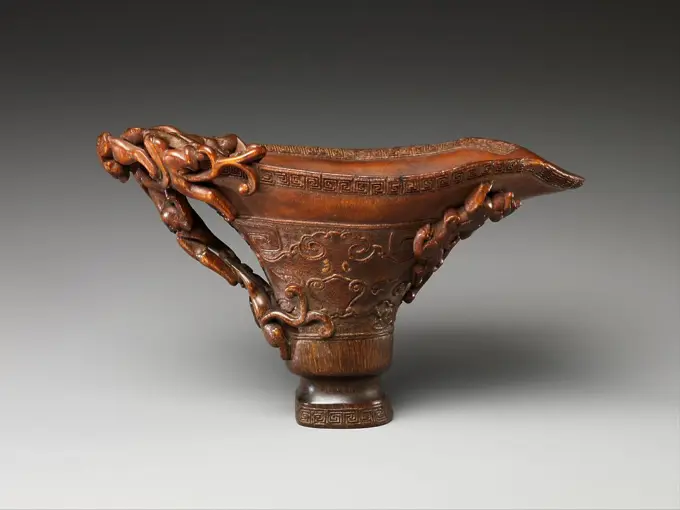
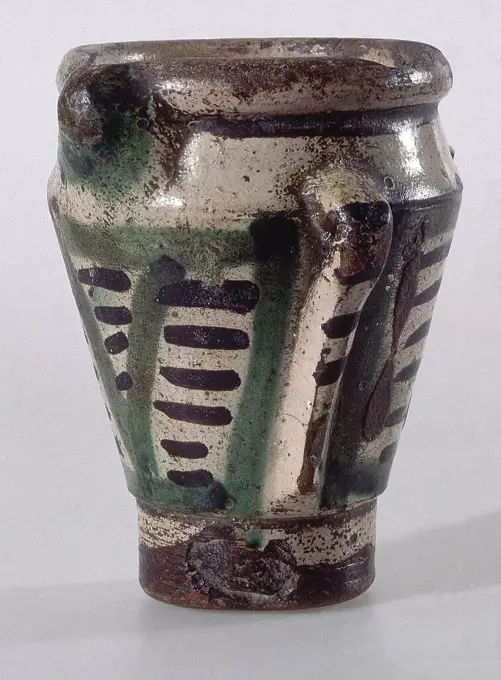
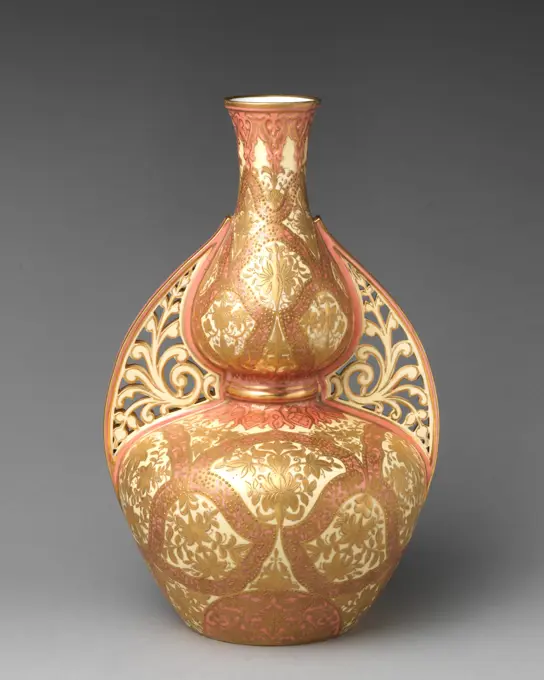
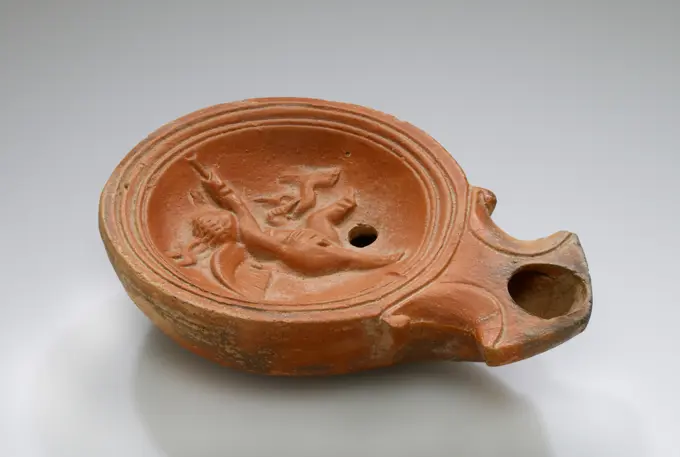
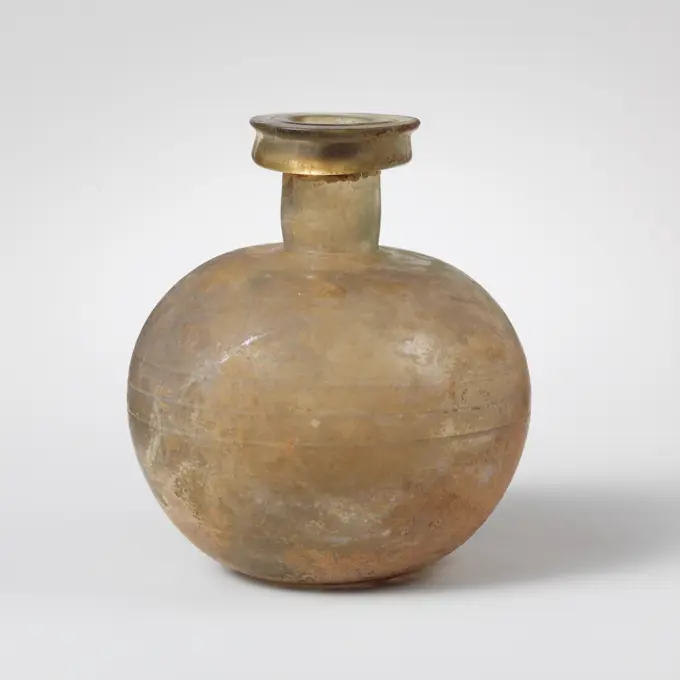
Historical Pottery Vessels

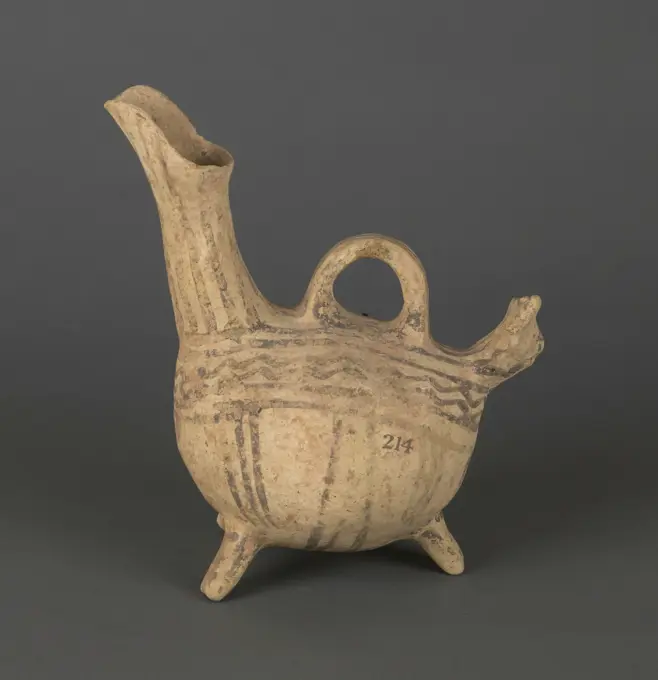
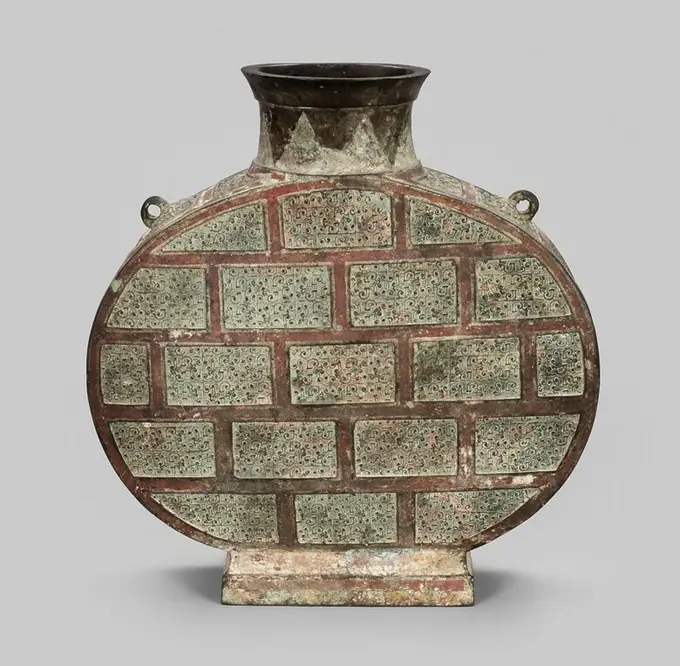
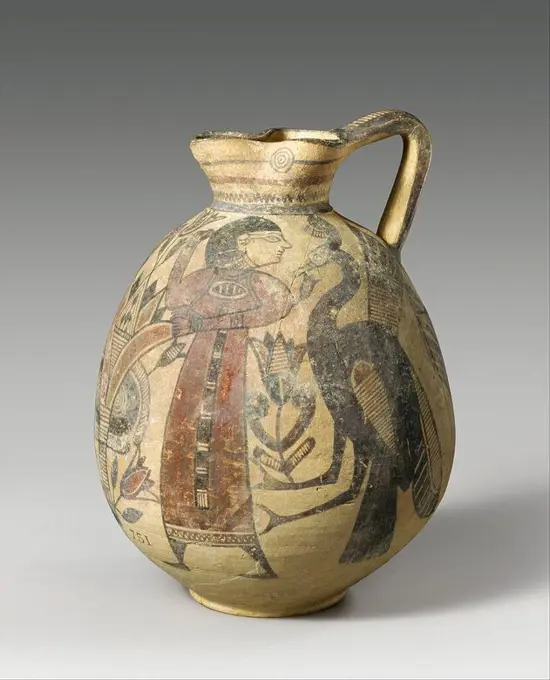
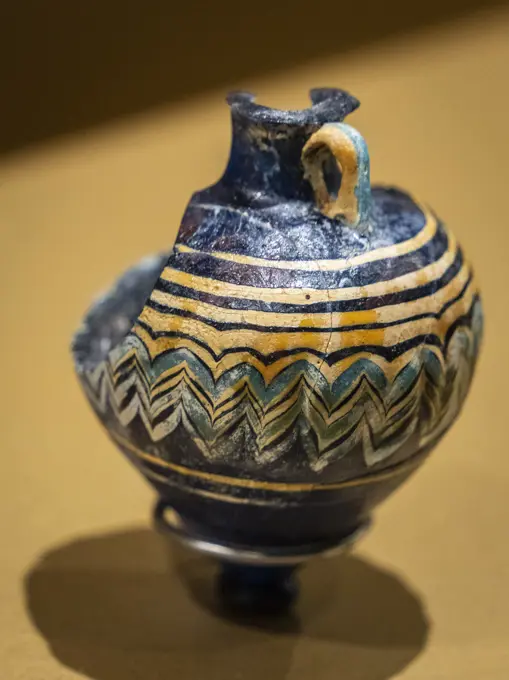
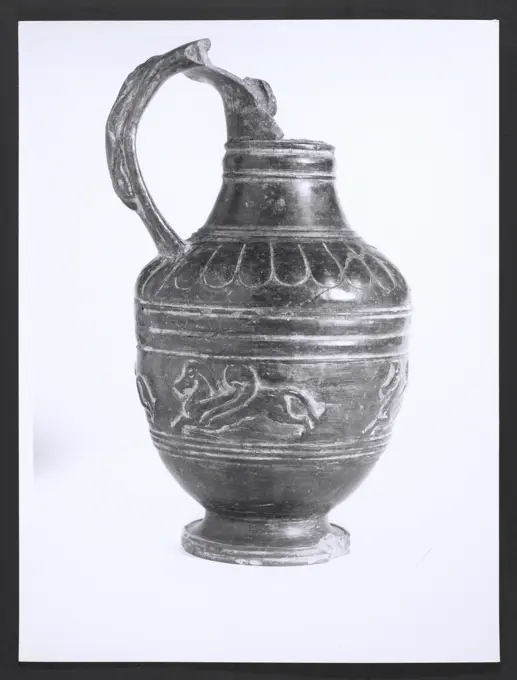
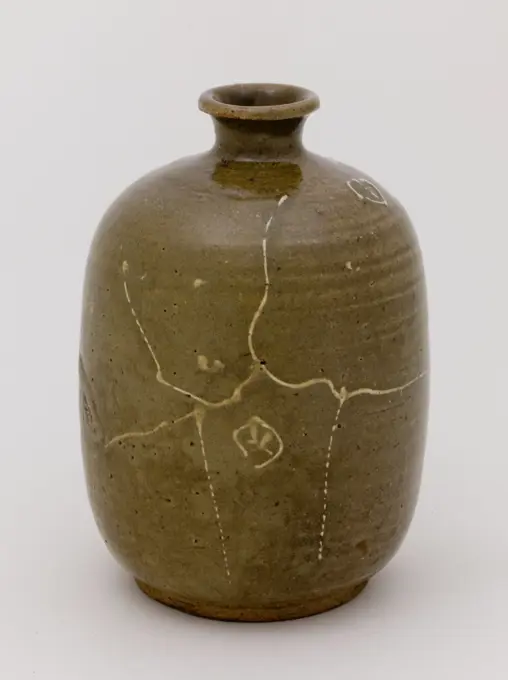
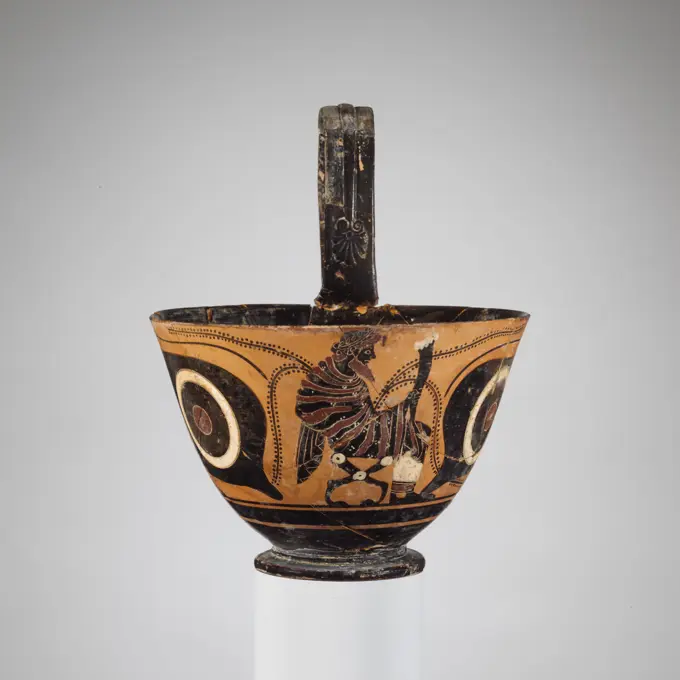
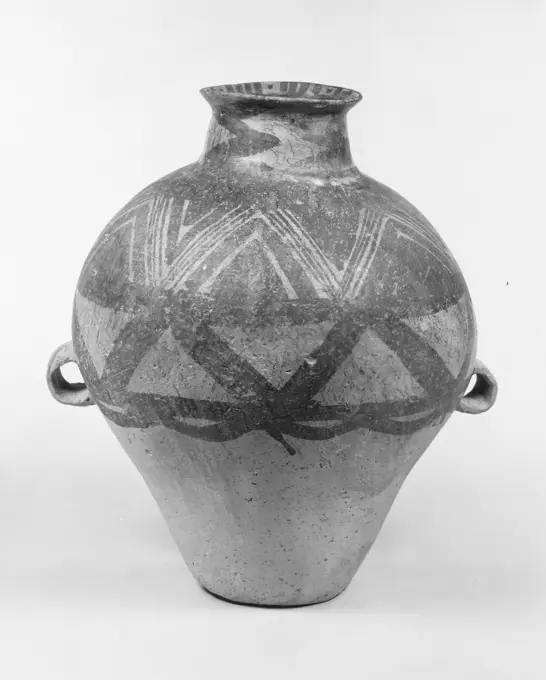
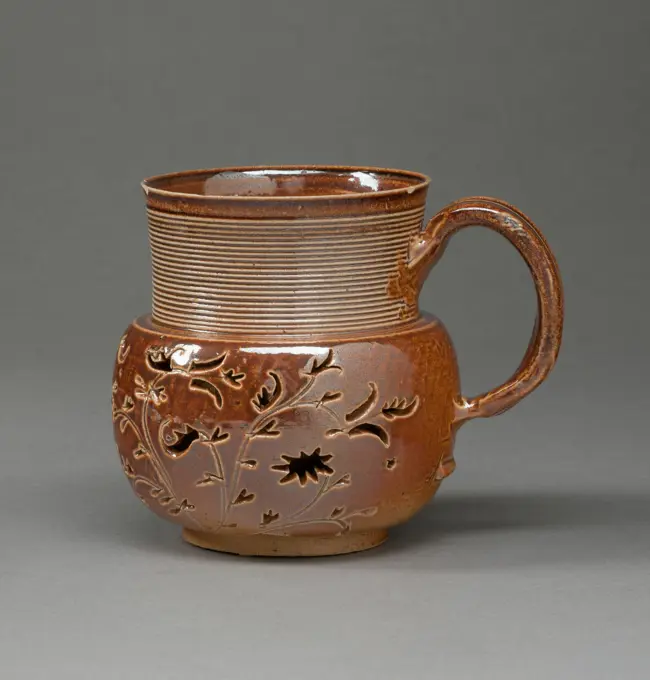
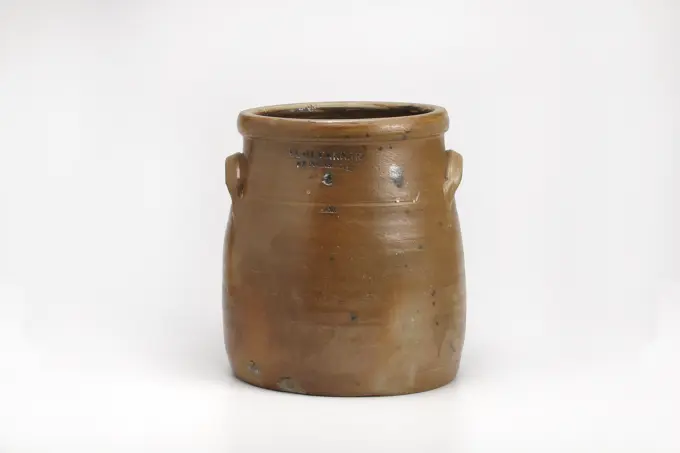
A collection of ancient pottery vessels including amphorae and jugs, illustrating Cypriot and Etruscan designs from various historical periods.
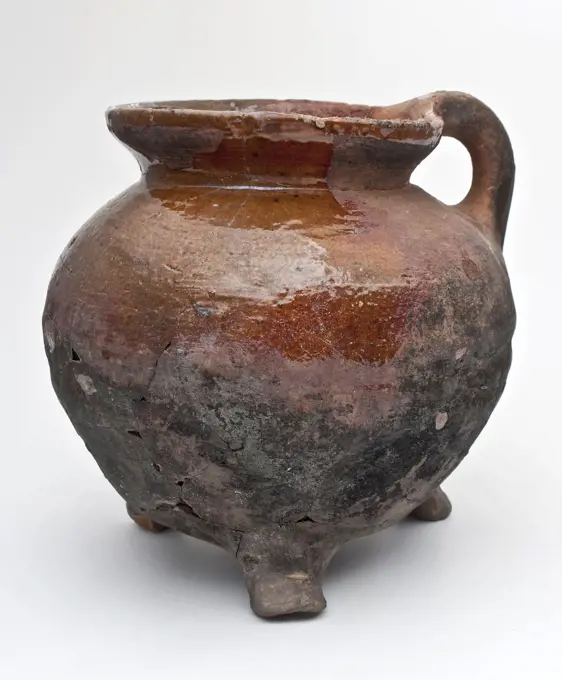
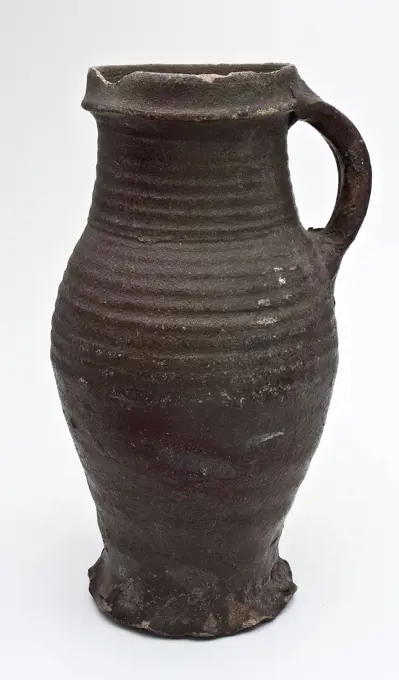
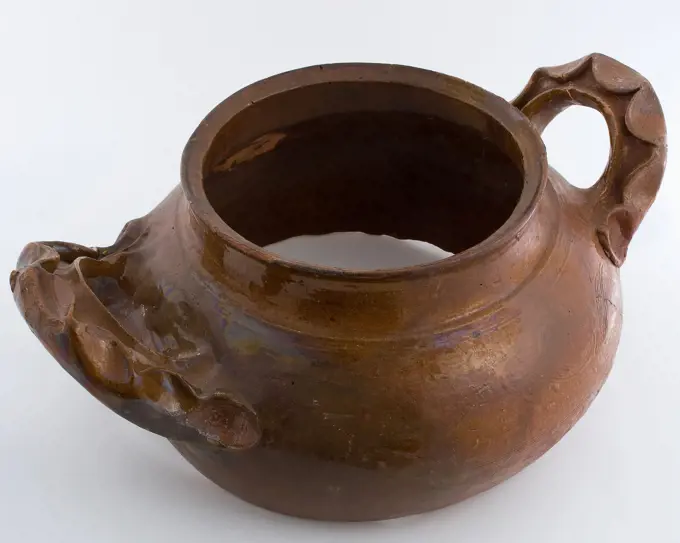
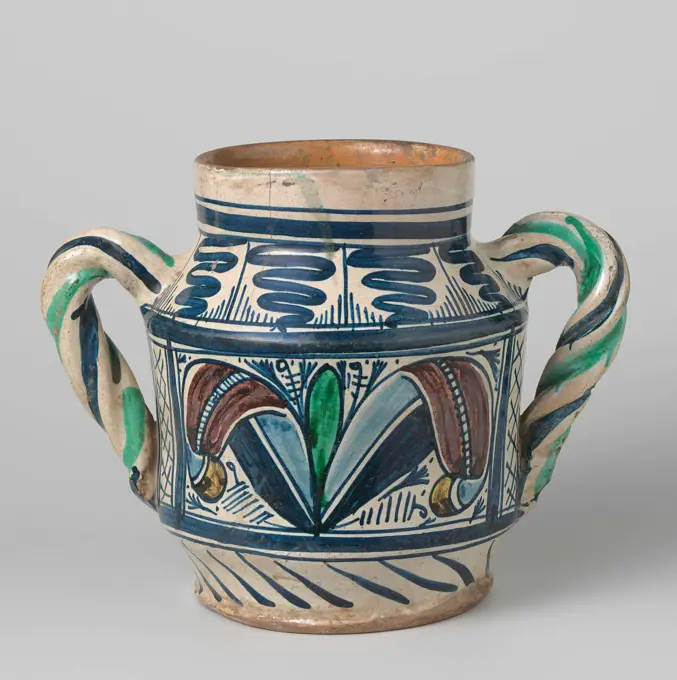
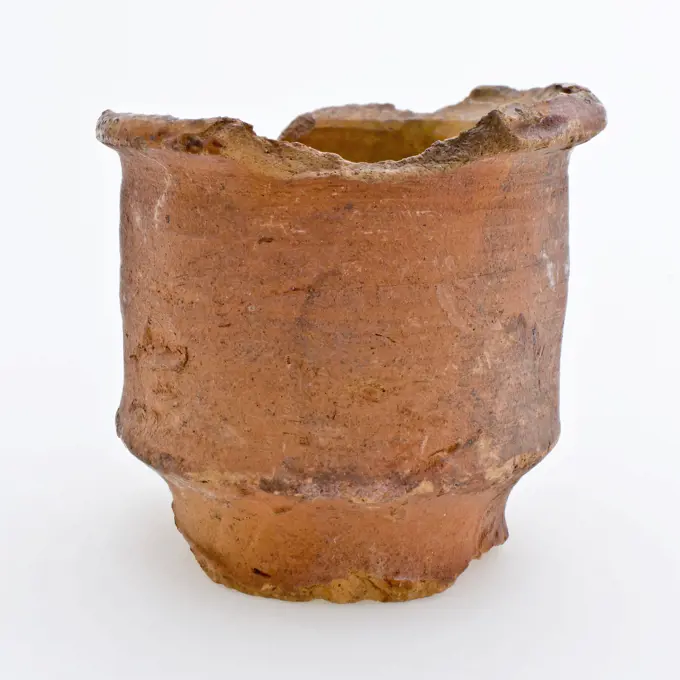
Pottery cooker on three legs, grape model and sparingly glazed, one standing ear, grape cooking pot tableware holder kitchen utensils earthenware ceramic earthenware glaze lead glaze, belly 19.5 bottom 11.0 hand turned set glazed baked One ear grape or cooking pot red earthenware round ear funnel-shaped neck edge slightly thickened edge sparing lead three legs. Ball-shaped model with single groove or draping over the belly Gratings at the bottom archeology Capelle aan den IJssel House at Capelle castle indigenous pottery cooking kitchen food preparation tableware tableware Soil discovery: house in Capelle Capelle aan den IJssel.
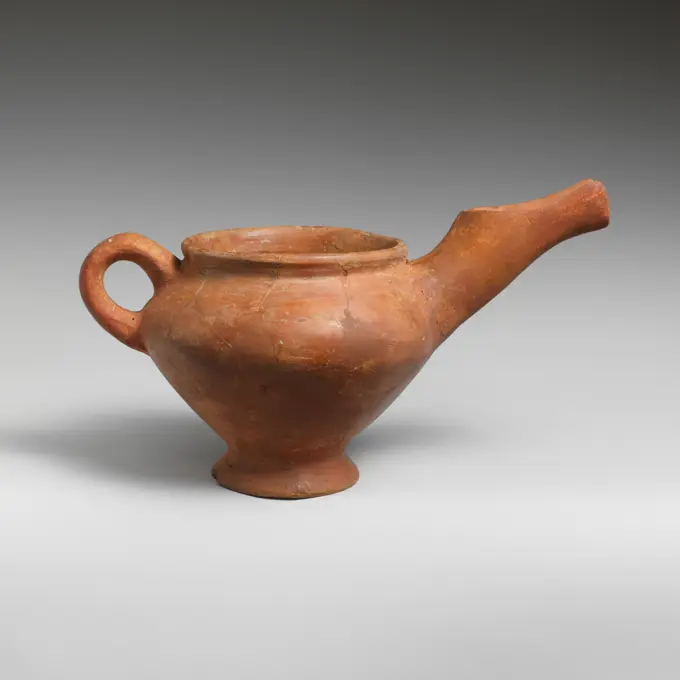
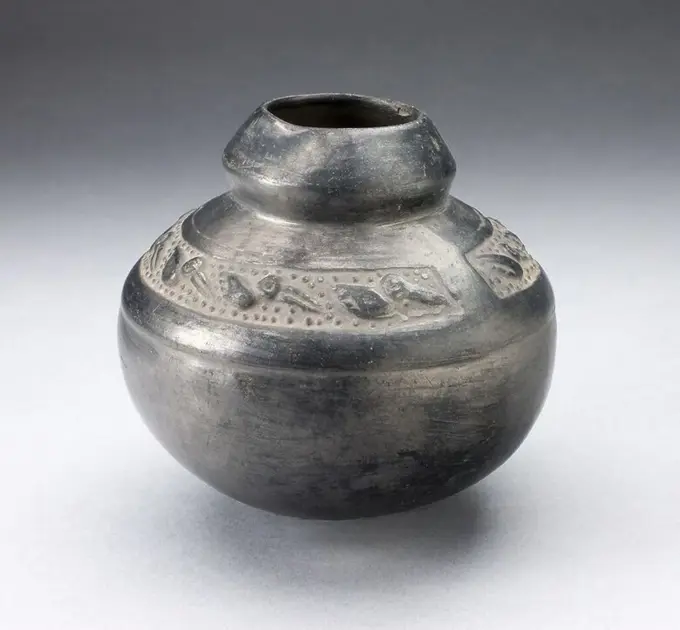
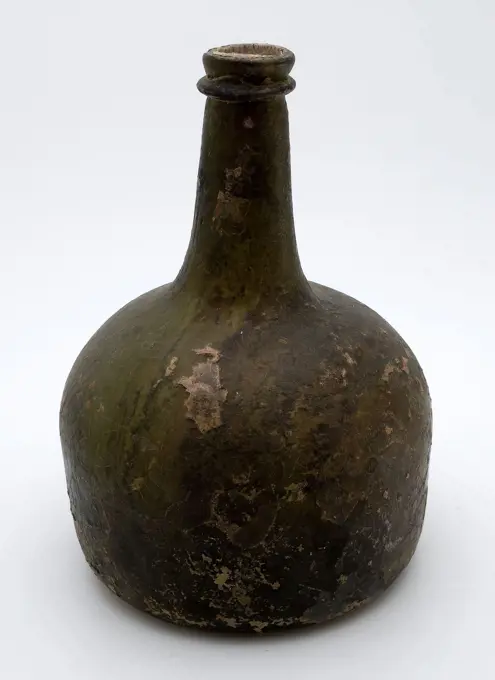
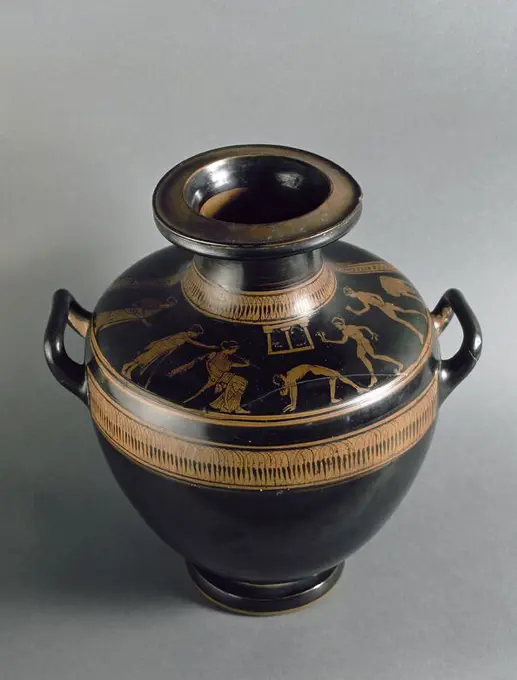
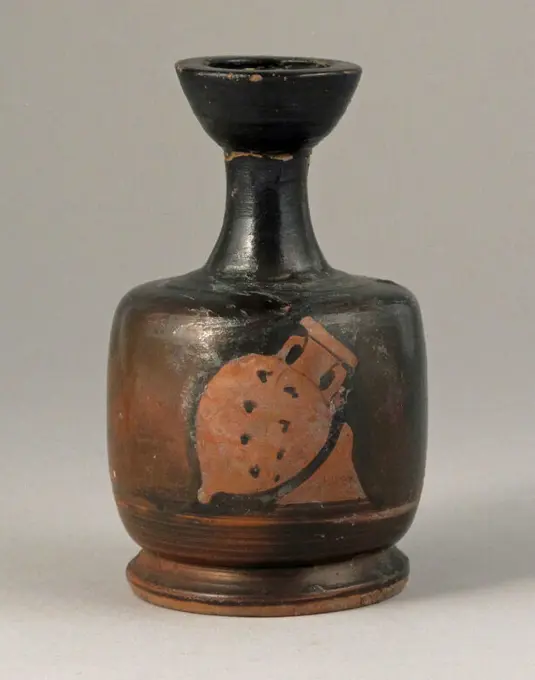
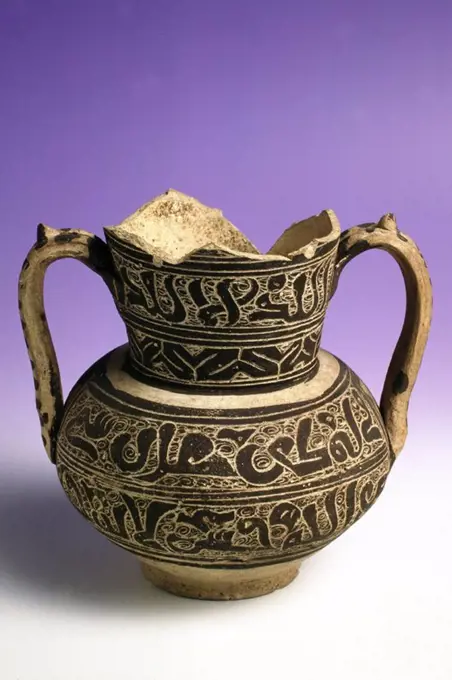
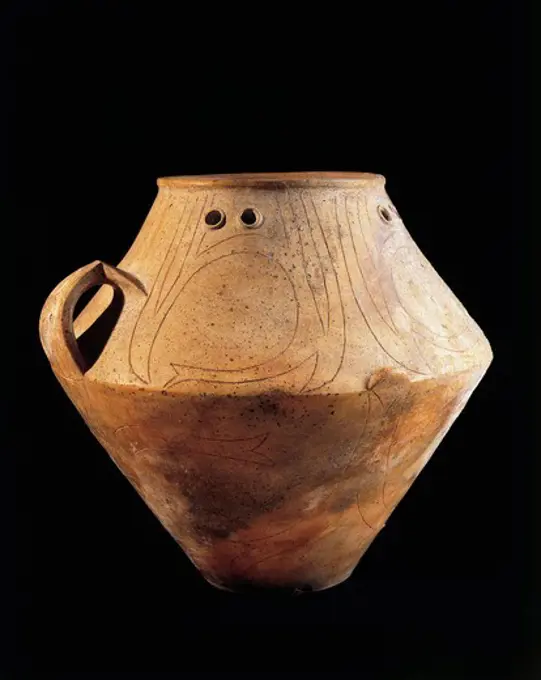
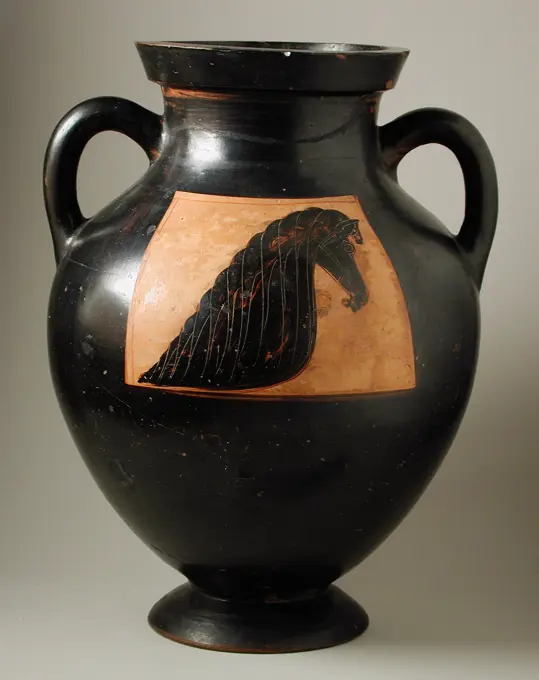
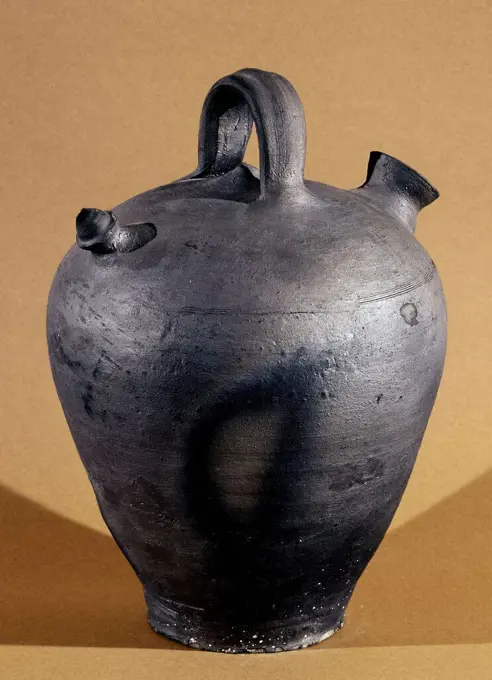
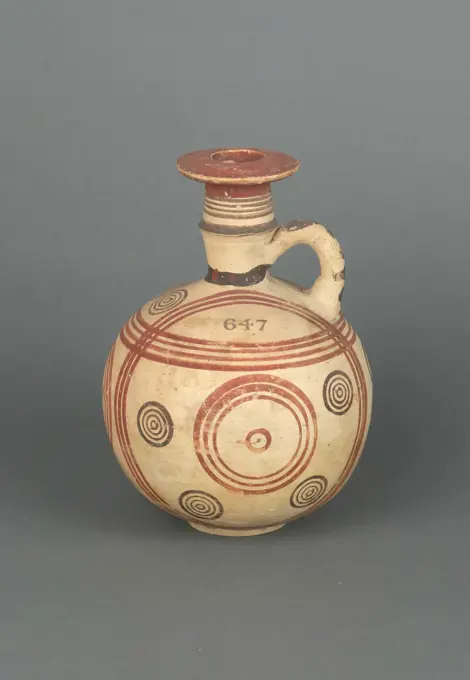
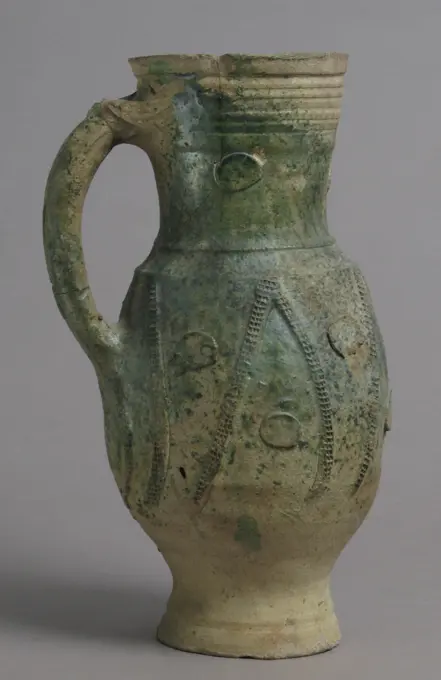
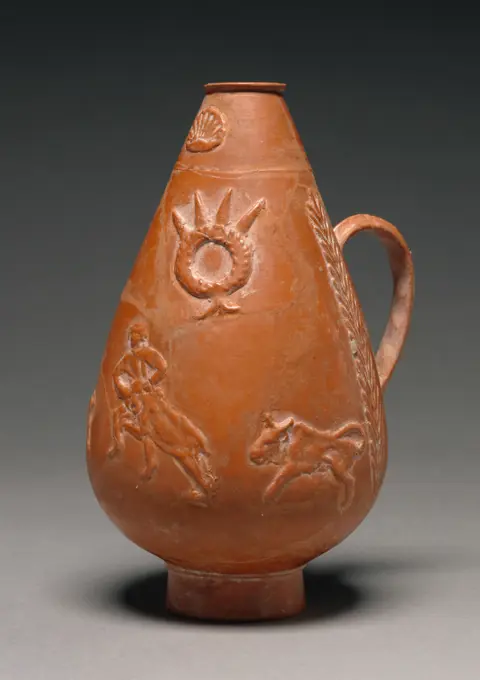
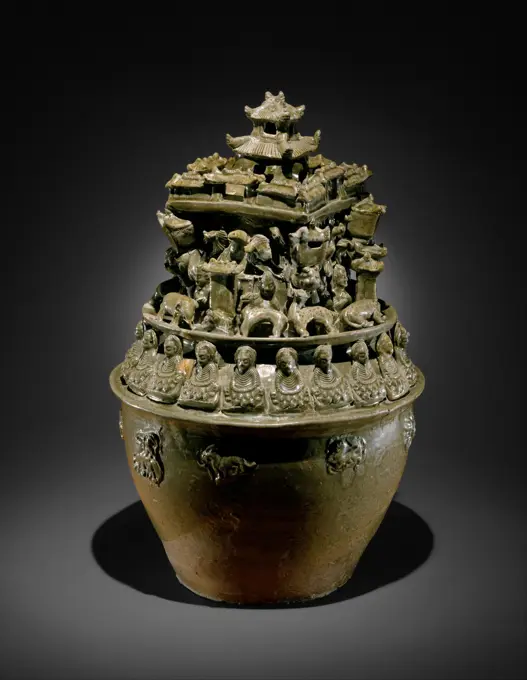
Glass jug 4th century A.D. Roman Translucent light yellow green; handle and trail in same color.Everted rim with thick, rounded lip; short, flaring mouth; tall, elongated piriform body; outsplayed, tubular foot ring, made by folding; concave bottom with central kick and pontil scar; broad rod handle attached to upper body, with tail extending down side, drawn up in a arched curve and applied to trail around top of body, and trailed off back along itself.A thick trail wound one and a half times horizontally around top of body; the tail to the handle is decorated with seven tooled notches.Intact; pinprick and a few larger bubbles; dulling, limy encrustation, weathering, and iridescence on exterior, most of interior covered with soil encrustation.Greenish, on low foot with elaborate attachment below handle and thread around neck.. Glass jug 249316Prehistory. Metal Age. Iron Age. Pot. Gray terracota. 7th-6th century BC. From Turo de les Mentides, near Manlleu, Catalonia. Episcopal Museum of Vic. Catalonia, Spain.CANTARO CON UNA ASA. Location: ALFARERIA. ARROYO DE LA LUZ. CACERES. SPAIN.Terracotta side-spouted jug ca. 2600-2400 B.C. Minoan This shape, sometimes referred to as a teapot with an exaggerated spout, was one of the most characteristic of the Early Minoan II period on Crete.. Terracotta side-spouted jug. Minoan. ca. 2600-2400 B.C.. Terracotta; Burnished red ware. Early Minoan IIB. VasesBlackware Narrow Neck Jar with Shoulder Impressed with Birds. Chimú; North coast, Peru. Date: 1000-1400. Dimensions: 10.5 × 11.4 cm (4 1/8 × 4 1/2 in.). Ceramic and pigment. Origin: North Coast. Museum: The Chicago Art Institute, Chicago, USA.Commemorative jug from the military shooting competition in GenevaBelly bottle, clock model, bottle holder bottomfound glass, free blown and shaped glass application Bulky bottle bell model in clear green glass. Raw blowpipe-pontilemark under high raised bottom Body with almost straight upward wall to convex shoulders and slightly rejuvenated neck with imposed all-round sharp glass thread and dilated lip archeology packagingCovered Food Container. China. Date: 999 BC-900 BC. Dimensions: H. 24.1 cm (8 1/2 in.); diam. 21.6 cm (8 1/2 in.). Bronze. Origin: China. Museum: The Chicago Art Institute, Chicago, USA.A vase in the shape of an archaic vessel lei unknownPolychrome Pitcher. Cholula; Cholula, Mexico. Date: 1400-1520. Dimensions: H. 28.6 cm (11 1/4 in.). Earthenware. Origin: Cholula. Museum: The Chicago Art Institute, Chicago, USA.Naczynie. unknown, authorJar ca. 3850-2960 B.C. Predynastic Period. Jar 558362Greek pottery with red figures. Hydria depicting an auletris, two dancers playing zills and other doing acrobatics in a house of heteras. After auletris, a man leaning on his staff, raising his hand. Attica. 440 BC. National Archaeological Museum. Madrid. Spain.Squat lekythos, miniature. Culture: Greek, Attic. Dimensions: Diameter: 1 3/4 × 1 × 1 9/16 in. (4.5 × 2.6 × 4 cm)Height: 2 7/8 in. (7.4 cm). Date: ca. 425-400 B.C..Pointed amphora on belly. Museum: Metropolitan Museum of Art, New York, USA.Bulbous Vase with Makara Spout. Culture: Indonesia (Java). Dimensions: H. 11 13/16 in. (30 cm). Date: 10th-11th century(). Museum: Metropolitan Museum of Art, New York, USA.utiles de cocina, Museo arqueologico Son Fornes, sala de época talayótica (1300-123 a. C.), Montuiri, Comarca de Es Pla, Mallorca, Spain.Jug on pinched foot, adorned with engobe, proto-stoneware, pot jug tableware holder soil find ceramic stoneware clay engobe, hand turned fired jug brown engobe rings thickened edge standing ribbon ear pinched foot Slim jug with wide neck. Made of stoneware with coarse structure; proto-stoneware archeology Capelle aan den IJssel House in Capelle castle indigenous pottery import drinking pouring tableware kitchenware tableware Soil discovery: house in Capelle ± 1395-1500 Capelle aan den IJssel.JARRA PARA AGUA VIDRIADA EN AMARILLO-CERAMICA DE COIN (MALAGA).Water jug late 19th century Tō Kai Ko Japanese. Water jug 60138Storage jar ca. 1500 Japan. Storage jar 49274Covered Tripod Caldron (Ding) with Geometric Designs 25 CE-220 CE China. Earthenware with lead green glaze .Cup. Culture: Mesa Verde. Dimensions: Overall: 3 7/8 x 4 3/16 in. (9.91 x 10.69 cm)Other: 4 3/16 in. (10.69 cm). Date: 12th-14th century. Museum: Metropolitan Museum of Art, New York, USA.Vessel, 20th century, 8 3/4 x 10 7/16 x 12 1/16 in. (22.23 x 26.51 x 30.64 cm), Ceramic, Cameroon, 20th centuryFunerary from Pla de Santa Brbara. Iron Age. Ceramics. SPAIN. CATALONIA. TARRAGONA. Montblanc. Conca de Barberˆ Regional Museum. Proc: SPAIN. CATALONIA. TARRAGONA. Montblanc.JARRITA. Nº INV. 1000. ALTURA 14 CM. MUSULMAN. (EXPOSICION :ARTE ISLAMICO ESPAÑOL)(DEPOSITO: S.P.A.VALENCIA).Tarxien Phase, Painted and engraved large vase, from the Tarxien TemplesBARBON O CANTARO DE CERAMICA NEGRA CON 3 ASAS - ARTE POPULAR S XX. Location: ALFARERIA. SPAIN.Pottery cooking jug made of red earthenware, belly on three legs, one ear and pouring lip, casserole can be found in the earthenware ceramic earthenware glaze lead glaze, hand-turned baked glazed earthenware cooking jug grape-model red shard glazed shank chicken sausage three legs scouring on the underside. few rotating arms around the shoulder archeology Rotterdam indigenous pottery food preparation cooking food kitchen fire Soil discovery: brand Rotterdam.Fragment earthenware storage jar with comb decoration on the shoulder and ruffled ears, storage jar pot holder soil find ceramics earthenware glaze lead glaze, hand turned decorated glazed baked Fragment Top of earthenware storage jar. Combing on the shoulder Drop shaped round neck opening. Short upstanding neck edge. Lead glaze fully glazed. Heavy up bent sausage ears lying and decorated with rippled edges. Restoration is repainted archeology underground pit Rotterdam City Triangle Groenendaal indigenous pottery store store cellar kitchen Soil discovery: underground pit Groenendaal.Lagynos z przedstawieniem instrumentów muzycznych - liry i syryngi. warsztat wschodniogrecki, workshopJar in the Form of an Abstract Human Figure. Tiwanaku-Wari; Bolivia or Peru. Date: 700 AD-1000. Dimensions: H. 28.6 cm (11 1/4 in.). Ceramic and pigment. Origin: Bolivia. Museum: The Chicago Art Institute, Chicago, USA.Lamp, Cologne, Germany; 2nd century; Terracotta; 4.5 x 10 x 14 cm (1 3,4 x 3 15,16 x 5 1,2 in.)Pot, cylindrical, painted multi-colored with a compartment on both sides on the abdomen in which a stylized flower or plant. Cylindrical pot of multi-colored painted majolica. The foot runs diagonally as well as the shoulder. The two ears are taught. On the belly of the pot a box is painted on either side in which a stylized flower or plant painted. Sections are painted on the shoulder within which a winding line.Two vases. Craftsmen in Korea produced both refined porcelain objects and utilitarian ware in a more rustic style. The attraction of the latter lay in their artless decoration with playful motifs and their somewhat irregular forms. Here the decoration has been applied in red beneath the glaze. It was difficult to obtain a bright red colour.Vessel: Zoomorphic 12th-15th century Inland Niger Delta Region. Vessel: Zoomorphic 314859Attic Black-figure Amphora with a Horse's Head on Both Sides. Painter of the Syracuse Horse-Head (attributed to the). Greece, Athens, circa mid-6th century B.C.. Furnishings; Serviceware. CeramicOwl Warrior Bottle. Culture: Moche. Dimensions: Overall: 10 3/8 x 5 3/4 in. (26.35 x 14.61 cm)Other: 5 1/2 x 5 3/4 in. (13.97 x 14.61 cm). Date: 5th-7th century. Museum: Metropolitan Museum of Art, New York, USA.Pitcher. Dated: c. 1938. Dimensions: overall: 30.4 x 22.8 cm (11 15/16 x 9 in.) Original IAD Object: 6 3/4 High. Medium: watercolor, colored pencil, and graphite on paperboard. Museum: National Gallery of Art, Washington DC. Author: Alvin Shiren.Bell-Shaped Cup. UnknownOinochoe in the Gnathia style;  Horse. 4th century BC (-320-00-00-00--300-00-00);BOTIJO EN CERAMICA NEGRA - PROCEDE DE QUINTANA REDONDA (SORIA). Location: MUSEO DEL PUEBLO ESPAÑOL. MADRID. SPAIN.Globular bowl, 3rd-7th century, 3 1/2 x 4 x 4 in. (8.9 x 10.16 x 10.16 cm), Earthenware, Mexico, 3rd-7th centuryJar. Culture: China. Dimensions: H. 5 in. (12.7 cm); Diam. 5 1/2 in. (14 cm). Museum: Metropolitan Museum of Art, New York, USA.Vase (Hu). Culture: China. Dimensions: H. 12 in. (30.5 cm); Diam. 6 1/2 in. (16.5 cm); Diam. of rim: 1 7/8 in. (4.8 cm); Diam. of foot: 4 1/2 in. (11.4 cm). Date: ca. 1st century B.C.-1st century A.D.. Museum: Metropolitan Museum of Art, New York, USA.Juglet 750-600 B.C. Cypriot Handle-ridge jug with vertical and horizontal circles.. Juglet. Cypriot. 750-600 B.C.. Terracotta. Cypro-Archaic I. VasesJug late 1200s-early 1300s French French potters typically decorated jugs of this type with applied ornament in the form of discs and strips impressed with loosely woven textiles.. Jug 468381Askos in the form of an animal 1900-1600 B.C. Cypriot. Askos in the form of an animal. Cypriot. 1900-1600 B.C.. Terracotta. Middle Cypriot. VasesFlask (bianhu). China. Date: 475 BC-221 BC. Dimensions: 36.3 × 34.0 × 11.0 cm (14 5/16 × 13 3/8 × 4 5/16 in.). Bronze inlaid with copper. Origin: China. Museum: The Chicago Art Institute, Chicago, USA.Black Amphora with Double Handles, 3rd-2nd century BCE, 12 3/4 x 12 5/16 x 10 9/16 in. (32.4 x 31.3 x 26.8 cm), Black earthenware with incised and burnished decor, China, 3rd-2nd century BCE, This type of black earthenware is known as Lifan after the area of Sichuan province where such jars have been found. The vessel's waisted profile, two low handles, and raised spiral motifs are rather distinctive features for Han period ceramics. The closest aesthetic parallels occur in much older ceramics of Neolithic cultures like Mazhang (c. 3000-2000 BCE) and Xintian (c. 1500 BCE). This unglazed, hand built black earthenware seems to have remained a regional variant that did not survive the Eastern Han period.Fragmentary terracotta oinochoe (jug). Culture: Greek, Attic. Dimensions: H. as preserved 3 1/4 in. (8.3 cm). Date: late 8th century B.C..From the Hymettos deposit (see 30.118.1). Museum: Metropolitan Museum of Art, New York, USA.Terracotta jug. Culture: Cypriot. Dimensions: H. 9 1/2 in. (24.1 cm)diameter 2 9/16 in. (6.5 cm). Date: ca. 750-600 B.C..Two figures and two birds flanking a lotus compositionClosely related to 74.51.510, this vase depicts two human figures and two birds flanking a central lotus composition that is the equivalent of a sacred tree. The figures wear long garments, trousers, and shoes; their sex is not readily identifiable. Each looks toward the bird behind him, one bending forward, the other upright. The representation may pertain to an Oriental deity that has power over animals. Museum: Metropolitan Museum of Art, New York, USA.Covered Box with Design of Four Birds 14th-ca. mid-16th century Thailand (Si Satchanalai). Covered Box with Design of Four Birds 37463Clay pot Clay pot of manual work. It is possible to store milk or other liquid Copyright: xZoonar.com/ValeryxxSibrikovx 2418747Terracotta hydria (water jar). Culture: Greek, Attic. Dimensions: H. 18 3/16 in. (46.2 cm). Date: ca. 520-510 B.C..On the body, Herakles and TritonOn the shoulder, Dionysos in a chariot and three maenadsA number of details indicate that this vase was probably made after the introduction of the red-figure technique about 530 B.C. The incision, especially of human musculature, reflects the fluency made possible by red-figure. The composition is bursting its frame, and much of the mouth of the vase is unglazed --with the result that the work appears lighter. Museum: Metropolitan Museum of Art, New York, USA.Hydria ca. 350-320 B.C. Attributed to the Perth Group. Hydria 244865Beaker. probably Syria, 13th century. Glass. Glass, enameledGold cup, from Circle A, a 16th-century BC royal cemetery, of the Bronze Age citadel of Mycenae in southern Greece. Characteristic of the early phase of the Mycenaean civilizationIron-glazed Prunus Vase with Inlaid Floral Design, 1100s-1200s. Korea, Goryeo period (918-1392). Iron-black ware; overall: 29.7 cm (11 11/16 in.).Stoneware jug be made with round ribbed cable tape, on shoulder carved edge and stamp decoration, jug crockery holder soil find ceramic stoneware glaze salt glaze, hand turned stamped glazed glazed baked carved Stoneware (jug) gray shard with salt glaze curled tail archeology import pottery serve serve drinking beer wineDeep bowl ca. 4500-4000 B.C. Predynastic Period. Deep bowl. ca. 4500-4000 B.C.. Pottery. Predynastic Period. From Egypt, Northern Upper Egypt, Matmar, Cemetery 3100, Thrown out of grave, BSAE/Brunton excavations, 1931Ewer 1825-50 American. Ewer. American. 1825-50. Free-blown green glass. Possibly made in Connecticut, United StatesJuglet 480-310 B.C. Cypriot Miniature vase with pointed bottom and loop-handle, of unpainted clay.. Juglet. Cypriot. 480-310 B.C.. Terracotta. Cypro-Classical I or II. VasesURNA FUNERARIA DE CALIZA POLICROMADA PROCEDENTE DE LA NECROPOLIS DE GALERA (GRANADA) - S IV Y III AC. Location: MUSEO ARQUEOLOGICO NACIONAL-COLECCION. MADRID. SPAIN.Pitcher with Waterbirds, Dogs, and Ruminants; Ionia (present-day western Turkey); about 625 B.C; Terracotta; 35.7 × 26.5 cm (14 1,16 × 10 7,16 in.)Cup in the shape of an archaic vessel with feline dragons. Culture: China. Dimensions: H. 4 in. (10.2 cm). Date: 17th century.The jutting lip of this cup derives from the shape of a jue, a bronze cup found in China's Bronze Age. Some of the linear interlocked decoration on the middle section of the cup is also loosely based on the decorative imagery of that period, which was widely known through illustrations in antiquarian catalogues and collector's manuals. Museum: Metropolitan Museum of Art, New York, USA.. Jar with ear of stoneware. The bullet-shaped belly is over in the wide cylindrical neck. The neck is decorated with 2 times a naked angels held around medallion, in which a Christ child is tothering a large cross, and the year 1574.MORTERO PINTADO Y VIDRIADO AL MODO ARABE DEL S XV- ARTE POPULAR. Location: ALFARERIA. TERUEL. SPAIN.1st century Greek or Roman bronze bleeding-cup, used by physicians as cupping vessels for bleeding their patients. burning lint was placed inside the vessel, which was then applied over an incised vein, often in the patientís arm.PUCHERO CON UN ASA Y CUERPO REDONDO - ARTE POPULAR S XX. Location: ALFARERIA. NARVAJA. NAVARRA. SPAIN.Double Spout and Bridge Bottle with Feline and Bird 7th-5th century B.C. Paracas. Double Spout and Bridge Bottle with Feline and Bird 308619Terracotta tankard late 8th century B.C. Greek, Attic From the Hymettos deposit (see 30.118.1). Terracotta tankard. Greek, Attic. late 8th century B.C.. Terracotta. Geometric. VasesSquare Bottle. UnknownIslamic-style jar with pierced handles 1884 Crown Derby The history of the Derby porcelain manufactory can generally be divided into two periods. The old Derby porcelain was produced from 1750 to 1848, and was foremost distinguished by the ownership of William Duesbury I and II. When the original factory closed in 1848, a number of former workers established a separate smaller factory at King Street, Derby, using Crown Derbys original molds and patterns and oftentimes incorporating the factory marks on its wares. Around 1876, a separate company established a factory at Osmaston Road under the name Derby Crown Porcelain Company (and eventually bought the King Street factory in 1935), although the firm did not being producing commercial pieces until two years later. In 1890, the factory was granted the privilege of using the title "Royal Crown Derby Porcelain Company." Although the new Crown Derby continued to produce the firms old eighteenth-century Japan patterns, it became known forGlass modiolus (one-handled cup). Culture: Roman. Dimensions: H.: 5 3/16 in. (13.2 cm)Diam.: 5 11/16 in. (14.4 cm). Date: 1st-2nd century A.D..Translucent blue green; handle in same color.Rim folded out, down, and up, with upright, slightly flaring, rounded lip, forming collar to outsplayed, rounded mouth; body tapers downwards; low splayed tubular foot ring, made by folding; uneven, concave bottom; two-ribbed handle applied to upper side of body, drawn out and up, forming a semicircle, and pressed on to top of side with downward pad.Intact; few bubbles; dulling, pitting, creamy brown weathering, and iridescence. Museum: Metropolitan Museum of Art, New York, USA.Bowl. Culture: Taino. Dimensions: H. 4 3/4 x W. 9 in.. Date: 13th-15th century. Museum: Metropolitan Museum of Art, New York, USA.Shawabty Jar with Lid, 1295-1069 BC. Egypt, New Kingdom, Dynasty 19 (1295-1186 BC) - Dynasty 20 (1186-1069 BC). Nile silt ware; diameter: 22.2 cm (8 3/4 in.); diameter of mouth: 11.6 cm (4 9/16 in.); overall: 29.4 cm (11 9/16 in.).Lamp. UnknownTerracotta juglet. Culture: Cypriot. Dimensions: H. 4 1/16 in. (10.3 cm). Date: ca. 1900-1600 B.C..Globular jug with small handle and beaked spout, a lattice zigzag band on shoulder. Museum: Metropolitan Museum of Art, New York, USA.glass unguentary glass unguentary, 5th to 3rd century BC, Carada necropolis, Espelyu .Iberian Museum of Jaén, Andalusia, Spain Copyright: xZoonar.com/BartomeuxBalaguerxRotgerx 21714887Lazio Viterbo Viterbo Museo Civico74. Hutzel, Max 1960-1990 Views of paintings (Middle Ages through 18th c.), frescoes, a tabernacle, coffin, sculpture reliefs, portal fragments, busts, sculpture, tapestry found in the Pinacoteca, Second floor gallery and Second floor cloister sequences. Antiquities: Many views of Etruscan and Roman fragments, sculpture, sarcophagi, pottery, masks, jewelry and other objects found in the Storeroom sequence (inventory numbers on back of prints), and the Cloister, Second floor Cloister, Valle Giulia, Sala Romana and Sala Etrusca sequences. General Notes: There are eight separate numerical sequences for this location. The cloister as an architectural structure, rather than museum site, is documented in the record and file for S. Maria della Verita, Cloister, all views of which are stored in Medieval core collection. Five views from the Museo Civico Second floor cloister sequence are stored in Medieval. German-born photographer and scholar Max Hutzel (1911-Pot (Tsubo). Grove-commo level by and decor to Engobe blanc in Felet (ichcin) survede verted Céladon. VERS 1830-1870. Par musée musée malée. Japanese art, Japanese ceramic, white slip, net, Cealadon green background, gres, icchin, pot, tsubo, 19th XIX 19th 19th 19th centuryVASO DE CERAMICA DEL POBLADO IBERICO DE AZAILA EN TERUEL. Location: MUSEUM OF FINE ARTS. SARAGOSSA. Saragossa Zaragoza. SPAIN.Pottery ointment jar, cup model, red shard, internally glazed, ointment jar holder soil found ceramic earthenware glaze lead glaze, hand-turned glazed baked Pottery ointment cup model red shard internal glazed Slanted inwardly directed wide top edge. At the widest of the kettle thin, pronounced edge. Narrowing of the boiler above the stand archaeology health care indigenous pottery store pharmacy sell craft medicine drug packagingRed-Slip Pyriform Jug. UnknownBottle 7th-3rd century B.C. Paracas. Bottle 310547Teapot Made 1815-1825 Staffordshire. Earthenware with copper lustre and blue relief decoration .Phytomorphic Jar. Colombia, Nariño, Capuli, Nariño or Carchi, 750-1600 CE. Ceramics. CeramicBowl early 10th-late 14th century Korea. Bowl. Korea. early 10th-late 14th century. Pottery. Goryeo dynasty (918-1392). CeramicsFunerary Urn (Hunping) China One modern theory about the use of this elaborately modeled urn is that it may have been intended to serve as an eternal dwelling place for the soul of the deceased. It is topped with a heavenly palatial structure held aloft by a flock of birds. Auspicious animals, including an elephant and a deer, surround the palace. To ensure its efficacy, this Daoist vision of paradise is ringed with a row of Buddhas seated in meditation on lion thrones with lotus petals. These are among the earliest Buddhist images known in China, and their presence on this vessel indicates how Buddhism was gradually integrated into indigenous belief systems.. Funerary Urn (Hunping). China. Stoneware with olive green glaze (Yue ware). Western Jin dynasty (265-316). CeramicsPuzzle jug, Fopkan on stand ring with worked neck and C-shaped ear. Undecorated, Anonymous, c. 1660 - c. 1690Jug with pewter lid. Belly decorated with farmers in eight images with caption: 'GERHET DEI MVS ... ". Lid marked with weapon Amsterdam .. spherical jug of stoneware with a pewter lid. The middle piece of the abdomen is cylindrical and is in relief decorated with a farmers In eight images with caption "Gerhet DEI MVS ..." and the year 1597. The cylindrical neck is in reliefs decorated with a tire within which three medallions. The ear is C-shaped and the jug is on a foot. The lid is marked With a ty: the weapon of Amsterdam.Terracotta kyathos (cup-shaped ladle) ca. 530-500 B.C. Attributed to the Group of Berlin 2095 Between eyes, seated DionysosAt the handle, maenads with krotala (castanets)In its shape and function, the kyathos originated in Etruria. During the second half of the sixth century B.C., it was reinterpreted in Attic ceramics workshops and exported to Etruscan clients. The decoration appears to be typically Attic.. Terracotta kyathos (cup-shaped ladle). Greek, Attic. ca. 530-500 B.C.. Terracotta; black-figure. Archaic. VasesJar (Guan) ca. 2300-2000 B.C. China. Jar (Guan) 44731Mug Made 1695-1705 Nottinghamshire. Salt-glazed stoneware .Jar -"White-on-Red" Ware Pithos with Lid. Workshop of the Calabresi Urn (Etruscan, active 650 - 625 B.C.)Glass globular bottle 1st-2nd century A.D. Roman Colorless with light green tinge.Collared rim, folded out, down, up, and out, and flattened upper surface; cylindrical, slightly convex neck, tooled in at base; horizontal shoulder; globular body; slightly concave bottom.On body, three bands of wheel-cut horizontal lines: above, two shallow lines; at center, three deeper lines; below, two more shallow lines.Intact; some bubbles; dulling, iridescent weathering, and some brown, limy encrustation around lower body.Globular bottle with short neck: the body is decorated with horizontal cut bands.. Glass globular bottle 245224Vase, 20th century, 10 3/4 x 6 7/8 in. (27.3 x 17.46 cm), Earthenware, Democratic Republic of Congo, 20th centuryPot with Slightly Flaring Rim. Thailand, Northeast Khorat Plateau, Middle Ban Chiang period, circa 1100-700 B.C.. Furnishings; Cookware. Low-fired ceramic with incised and painted decorationTea Jar 18th century Japan. Tea Jar. Japan. 18th century. Clay stained dark, covered with a glaze mottled with black (Seto ware). Edo period (1615-1868). Ceramics