Historical Pottery Vessels

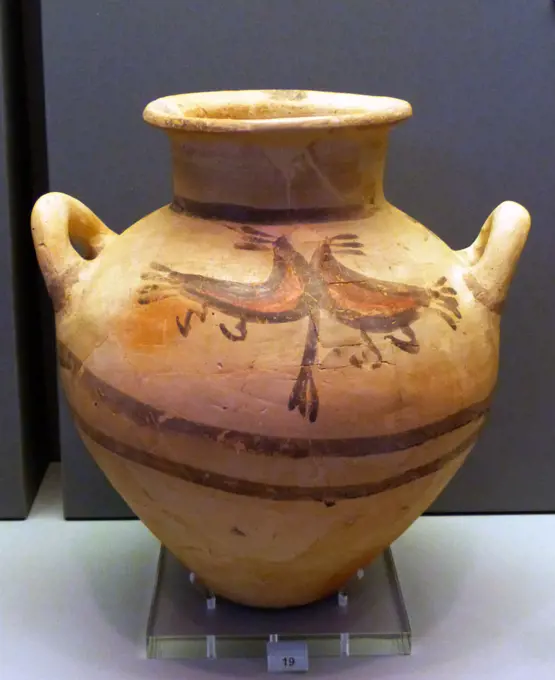
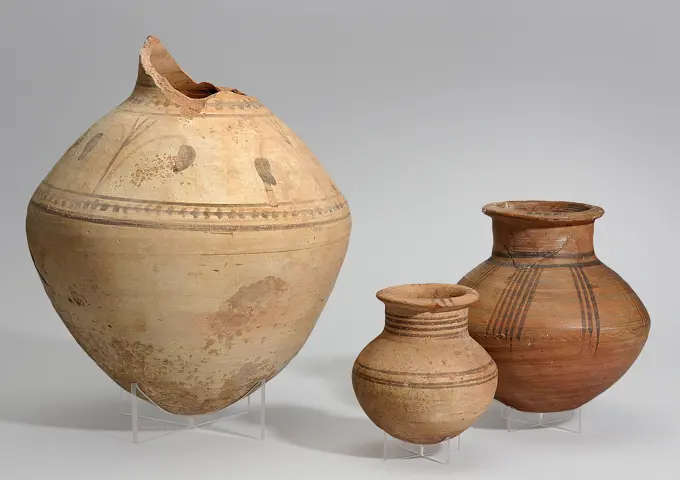
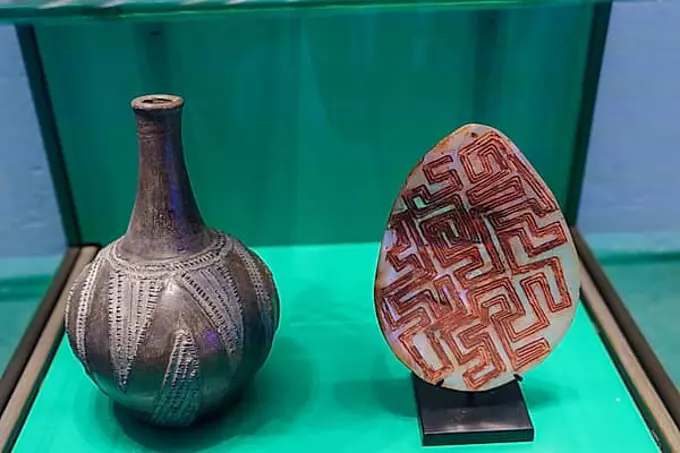
A collection of ancient pottery vessels including amphorae and jugs, illustrating Cypriot and Etruscan designs from various historical periods.
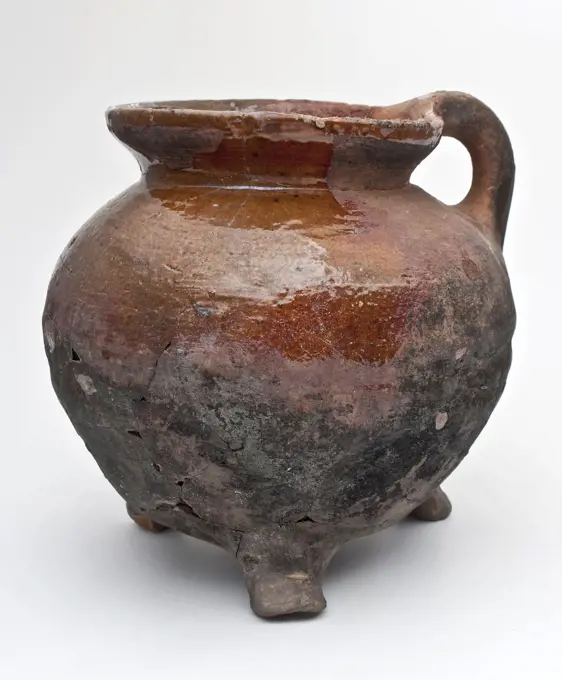
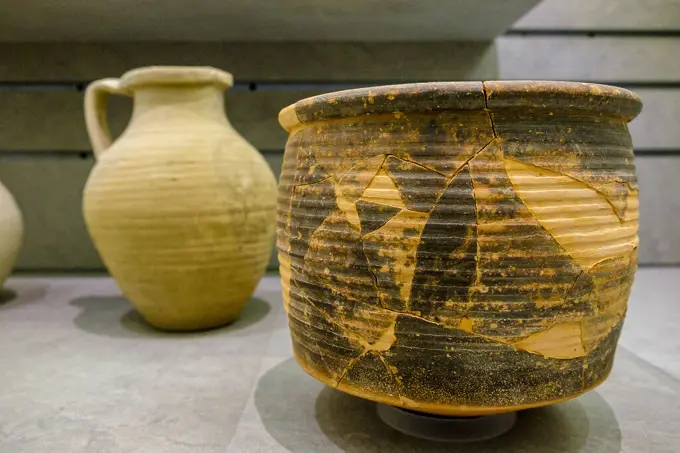
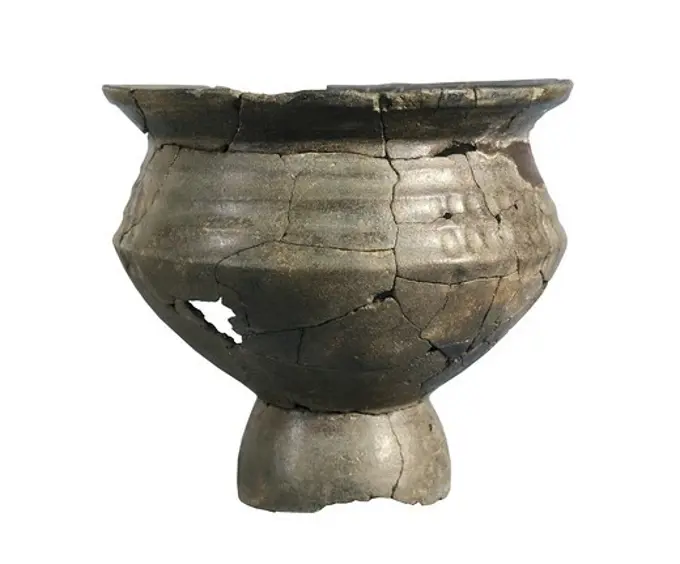
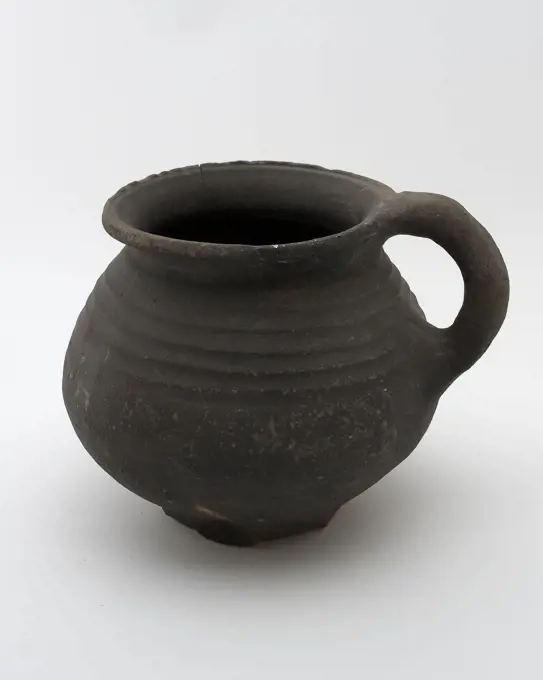
Pottery cooker on three legs, grape model and sparingly glazed, one standing ear, grape cooking pot tableware holder kitchen utensils earthenware ceramic earthenware glaze lead glaze, belly 19.5 bottom 11.0 hand turned set glazed baked One ear grape or cooking pot red earthenware round ear funnel-shaped neck edge slightly thickened edge sparing lead three legs. Ball-shaped model with single groove or draping over the belly Gratings at the bottom archeology Capelle aan den IJssel House at Capelle castle indigenous pottery cooking kitchen food preparation tableware tableware Soil discovery: house in Capelle Capelle aan den IJssel.
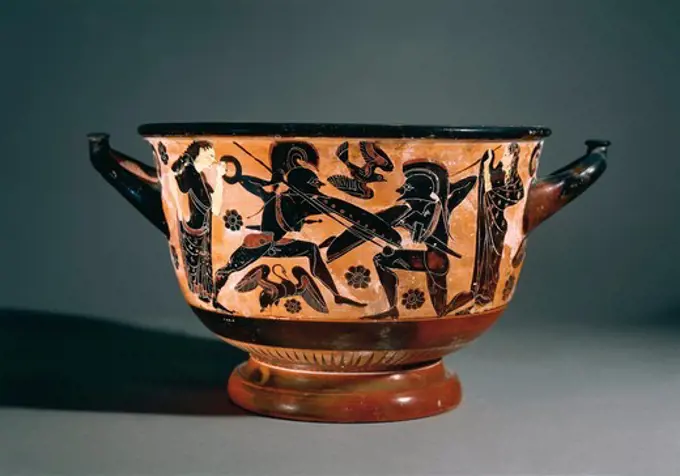
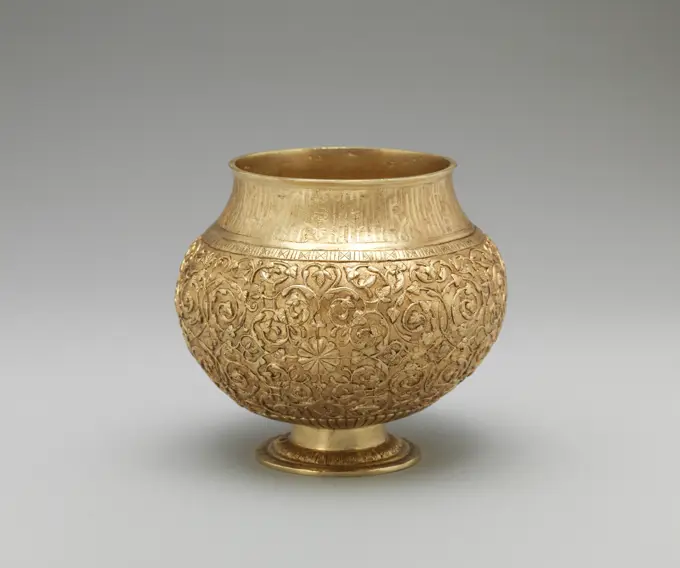
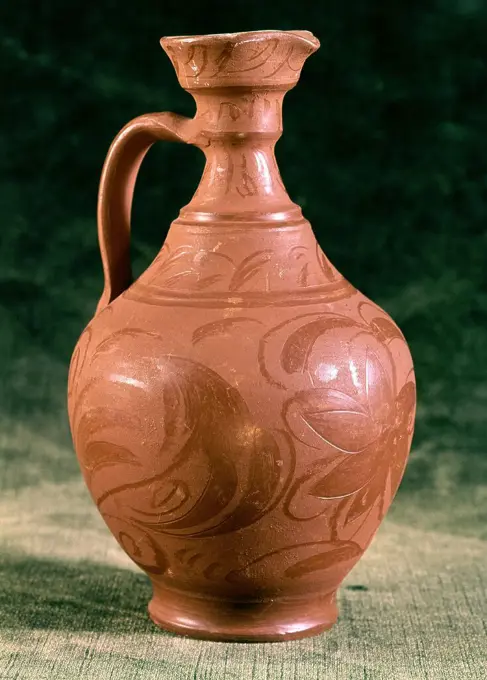
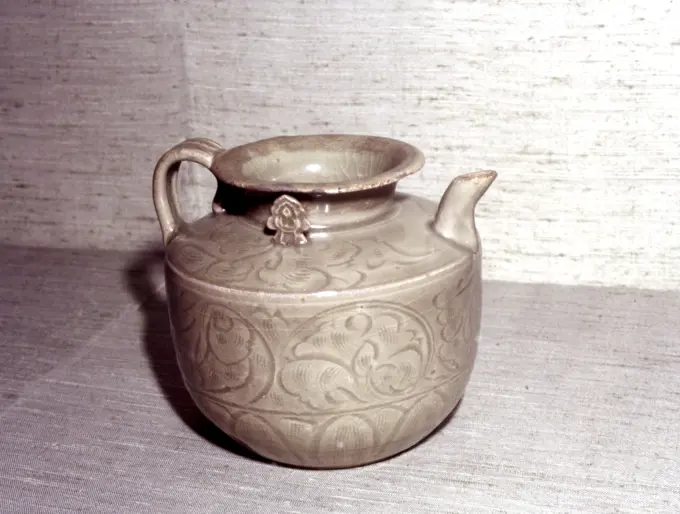
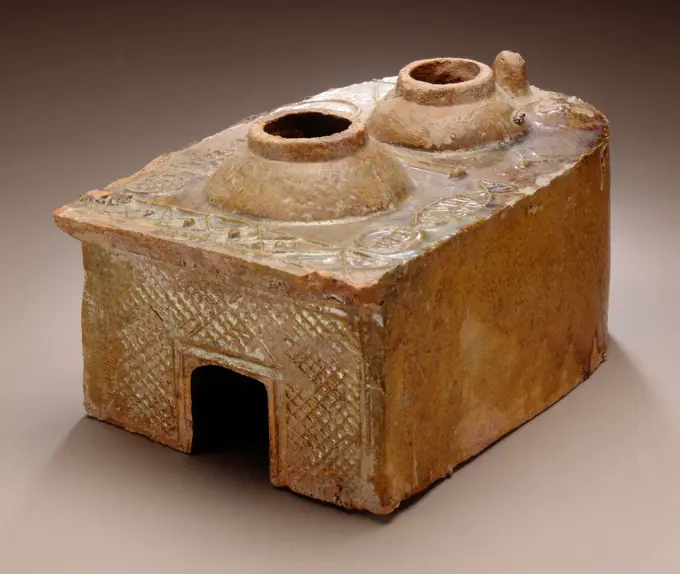
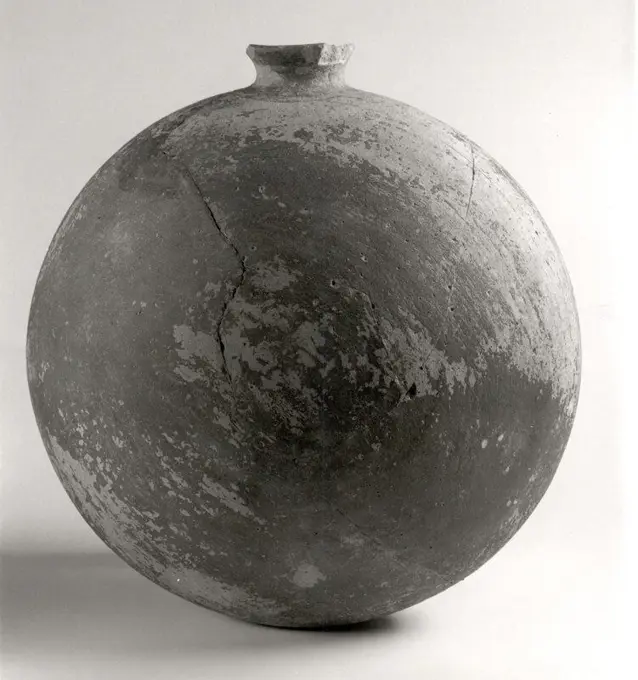
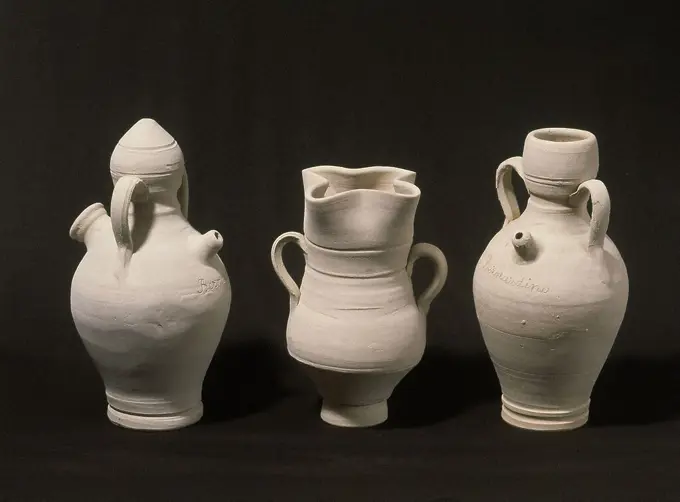
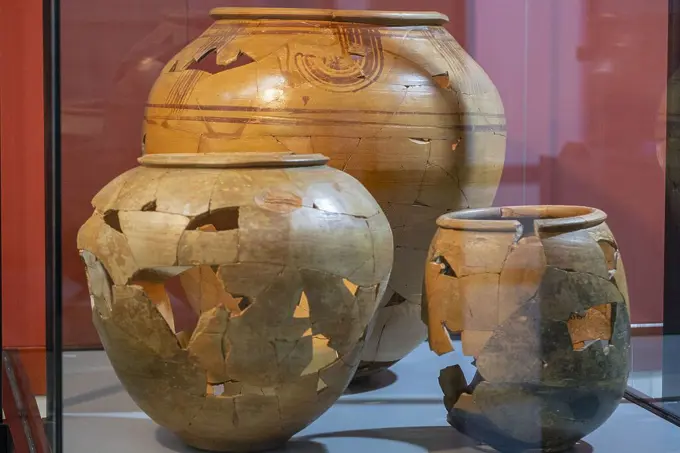
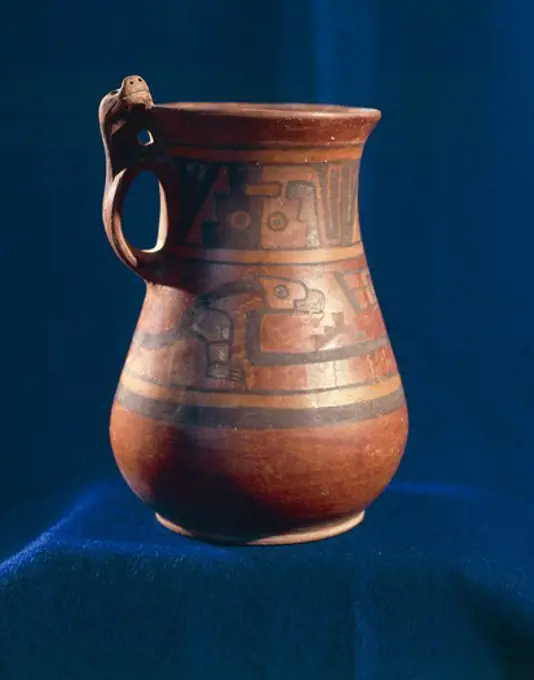
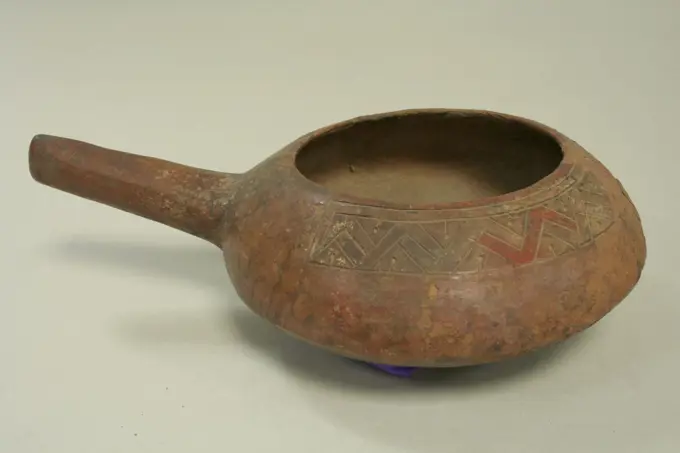
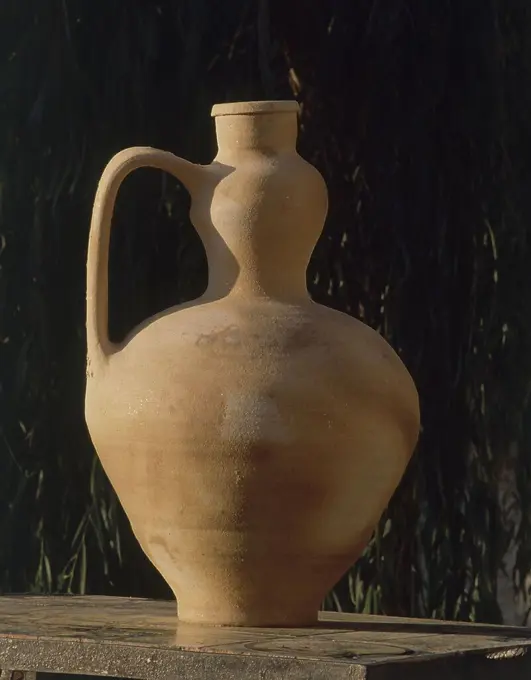
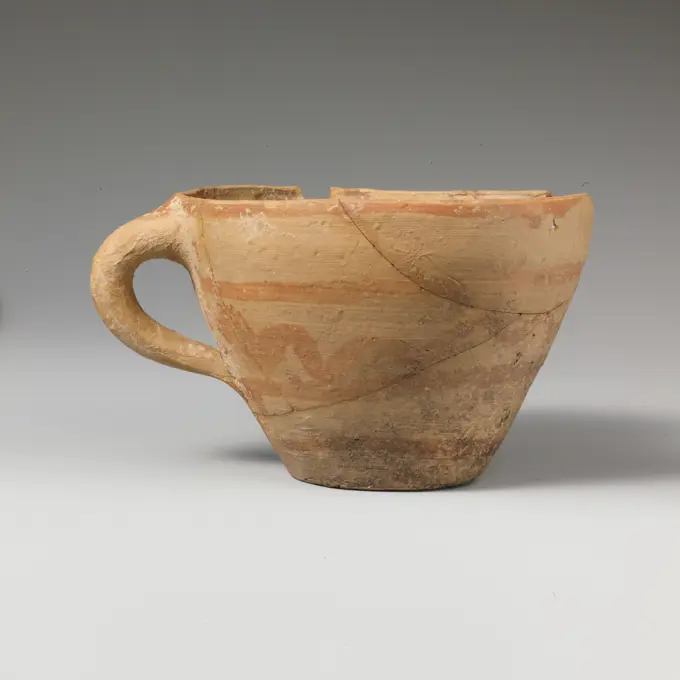
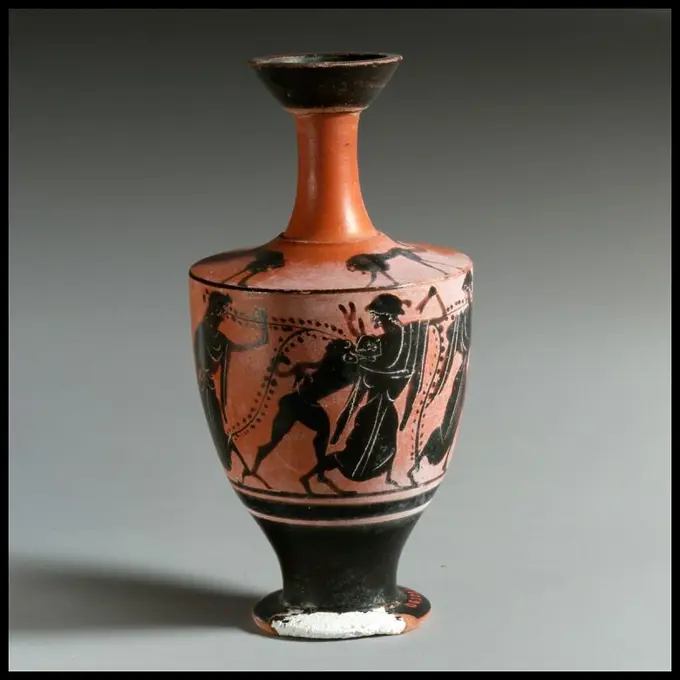
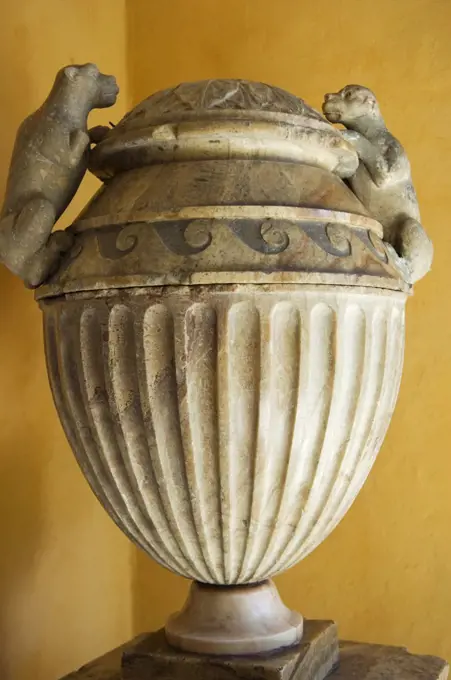
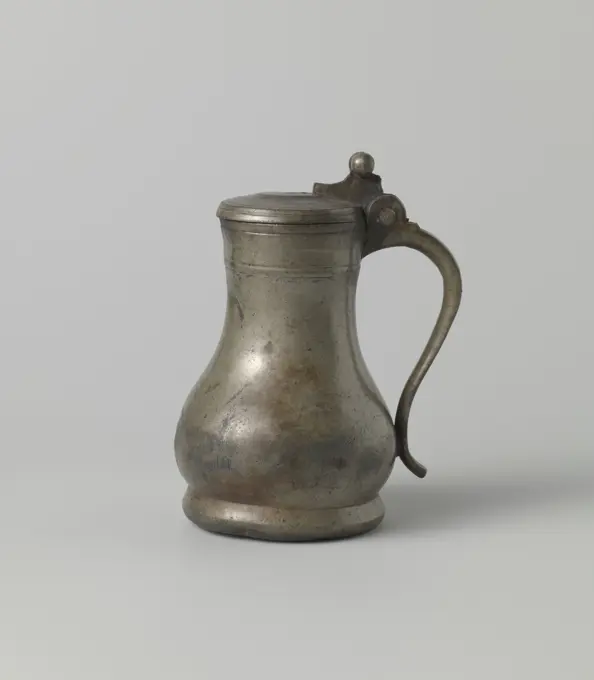
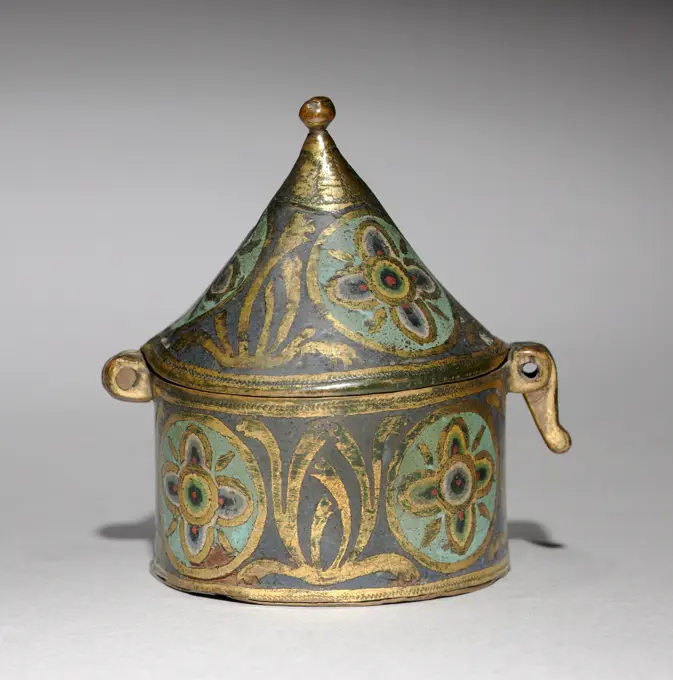
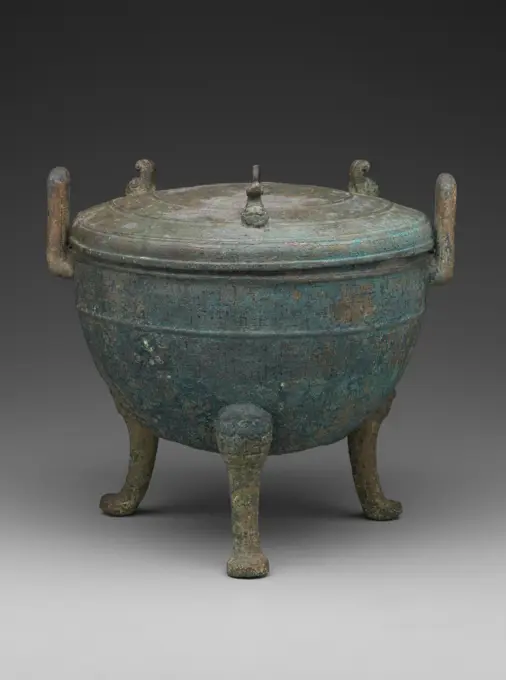
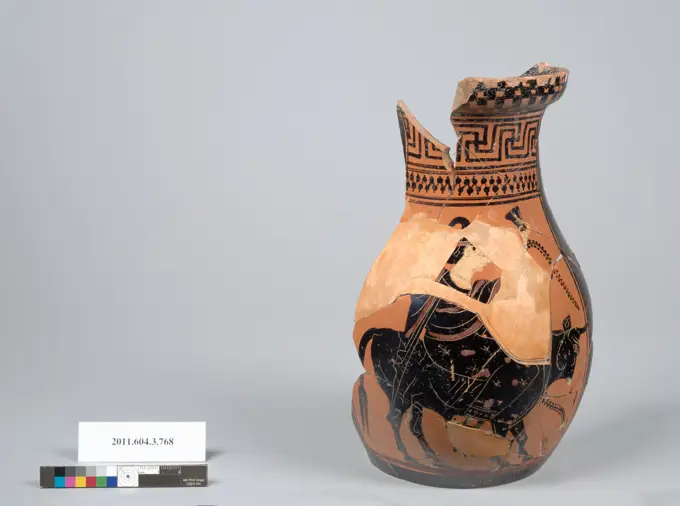
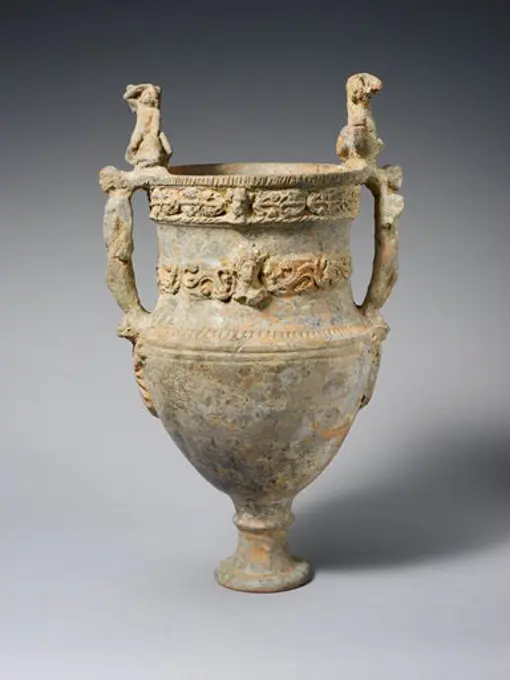
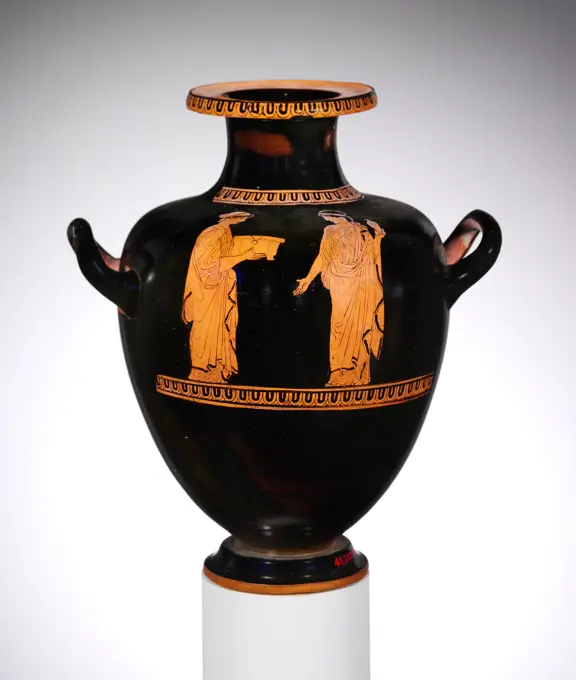
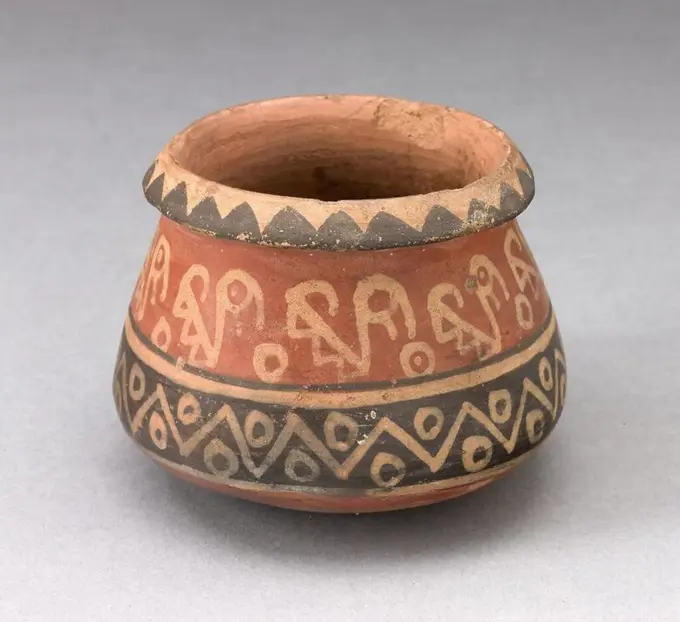
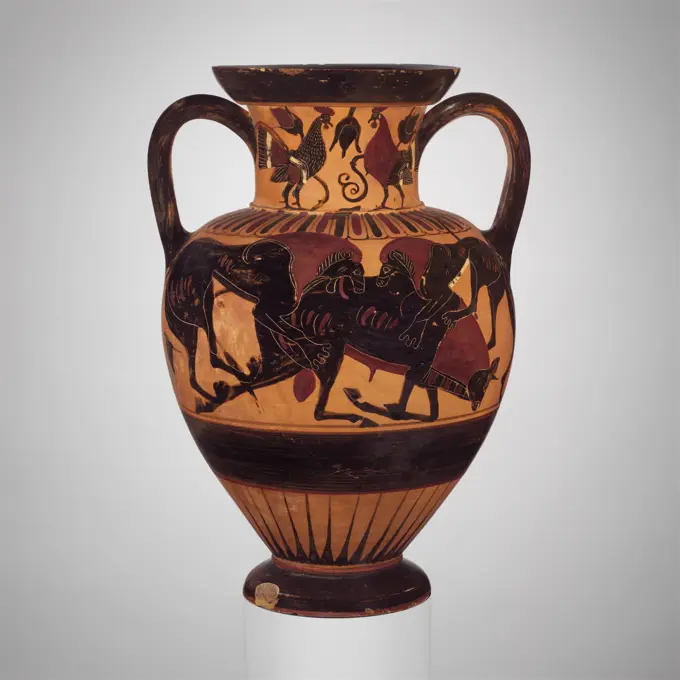
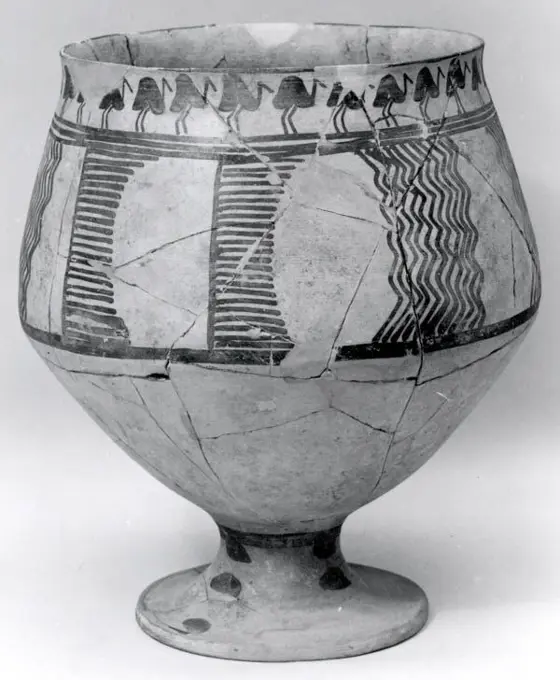
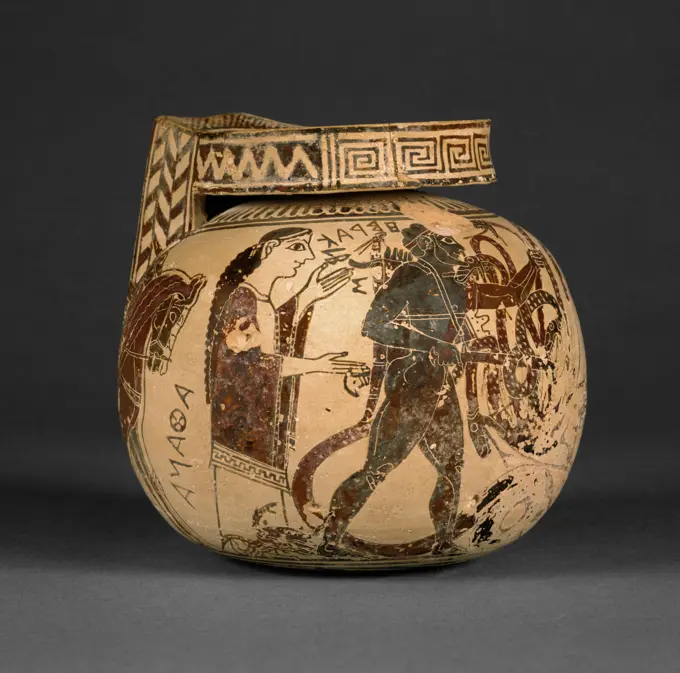
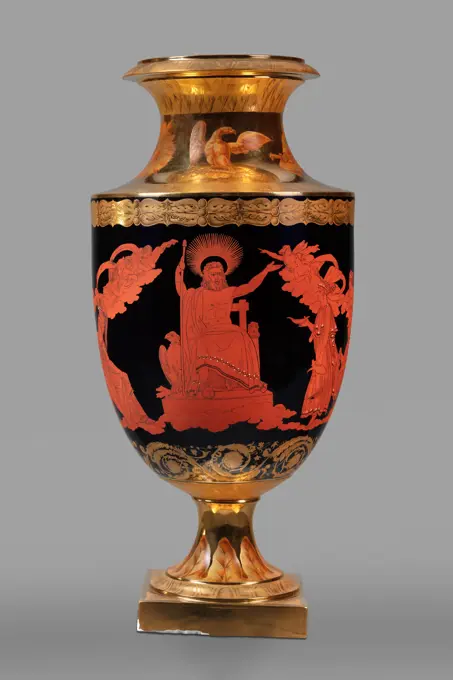
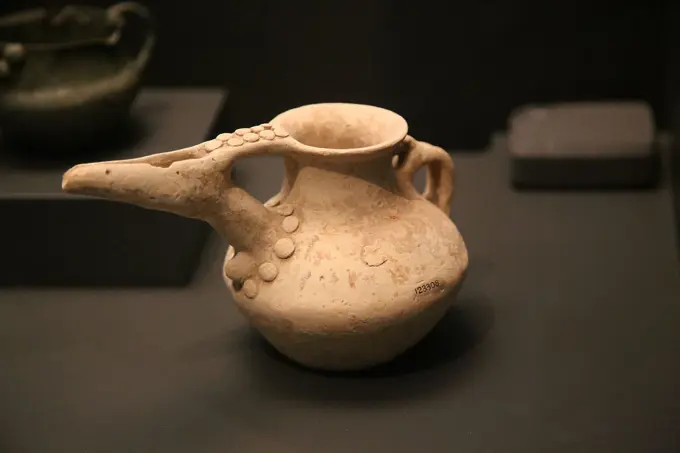
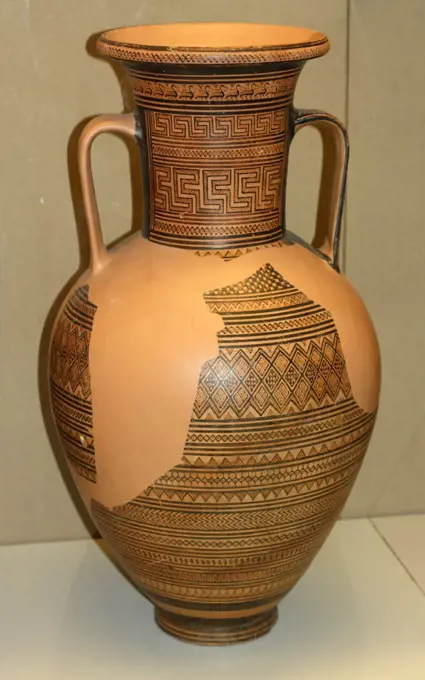
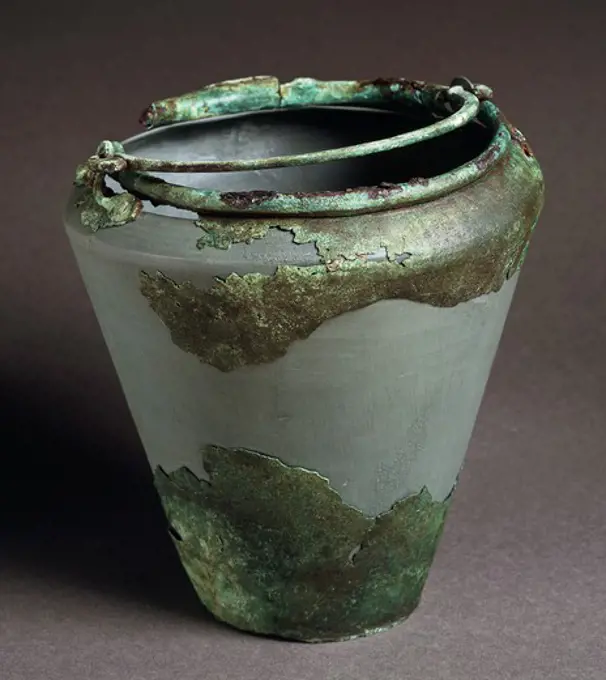
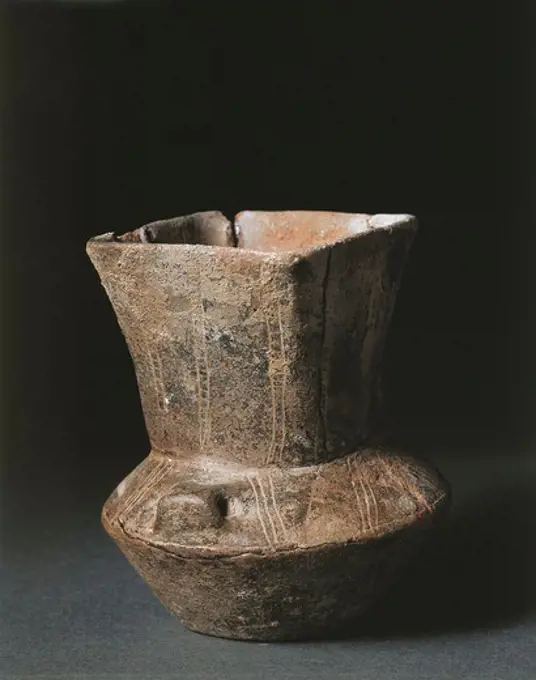
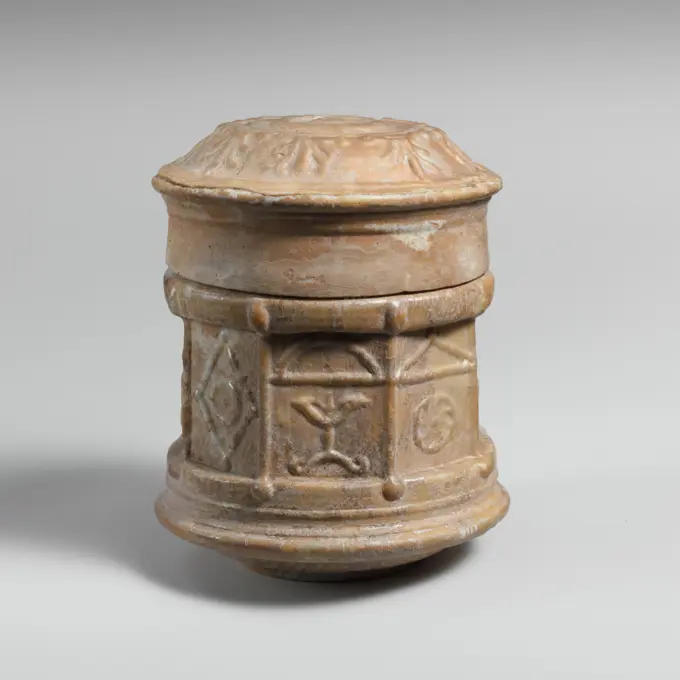
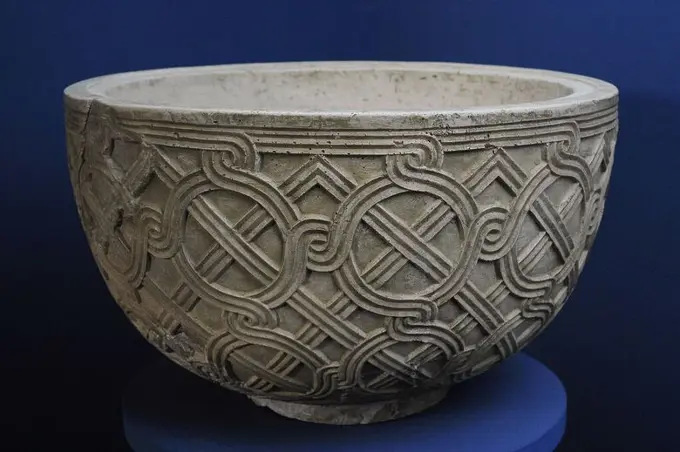
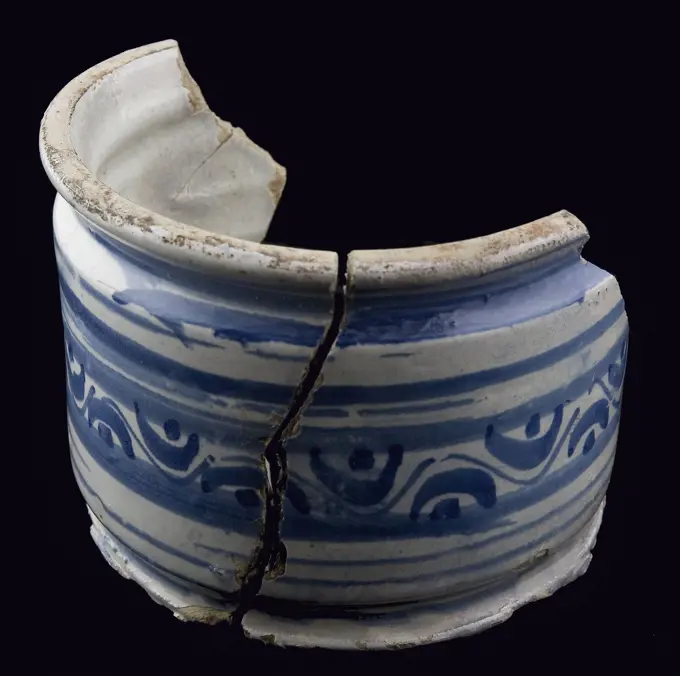
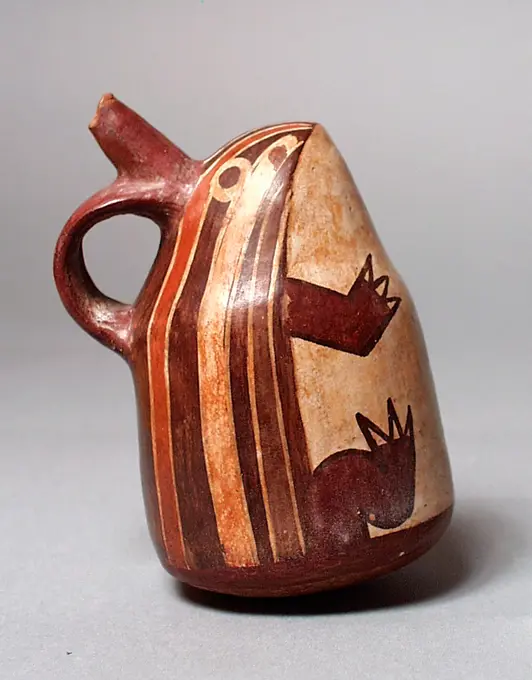
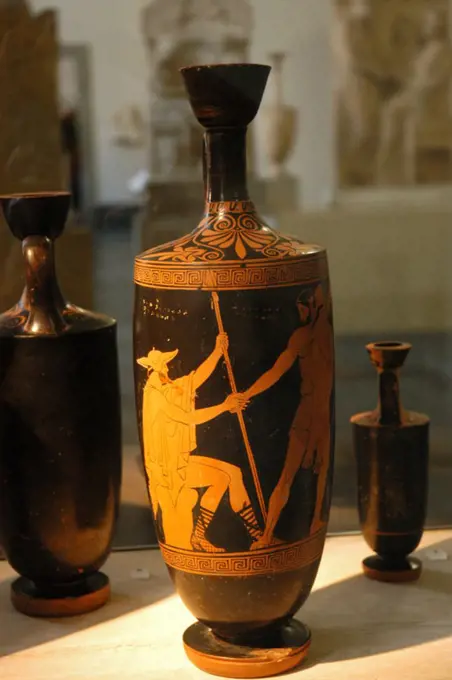
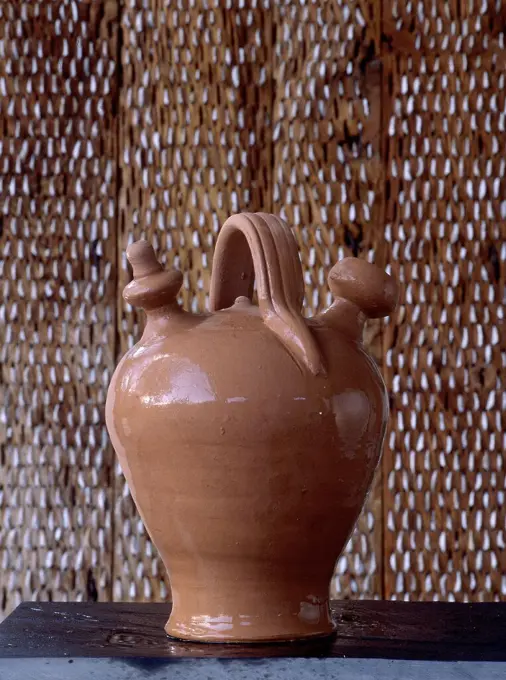
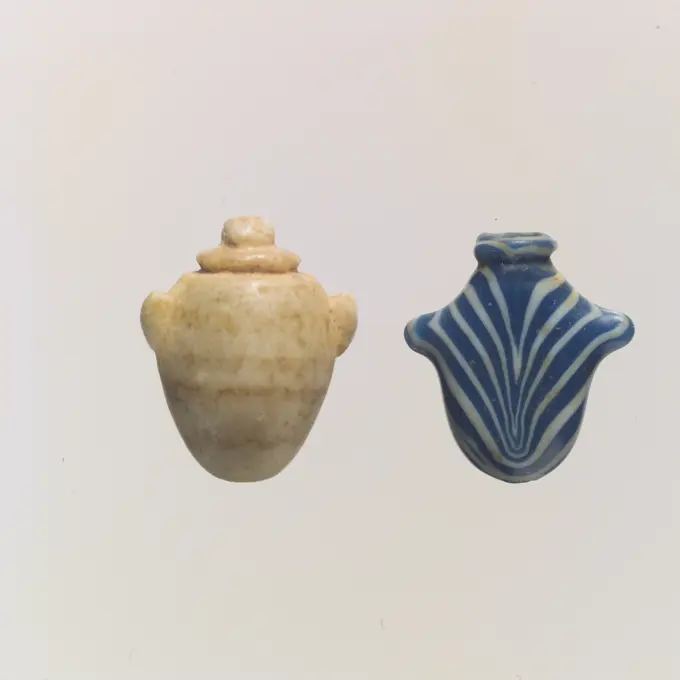
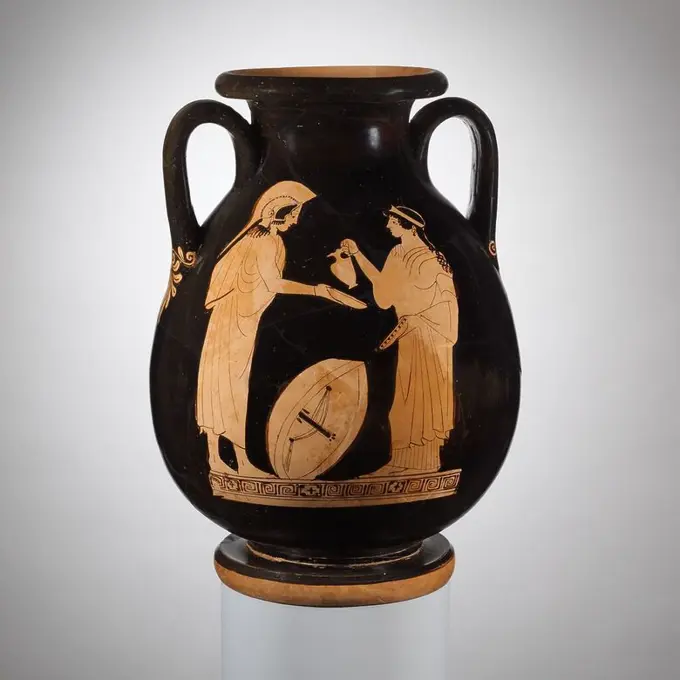
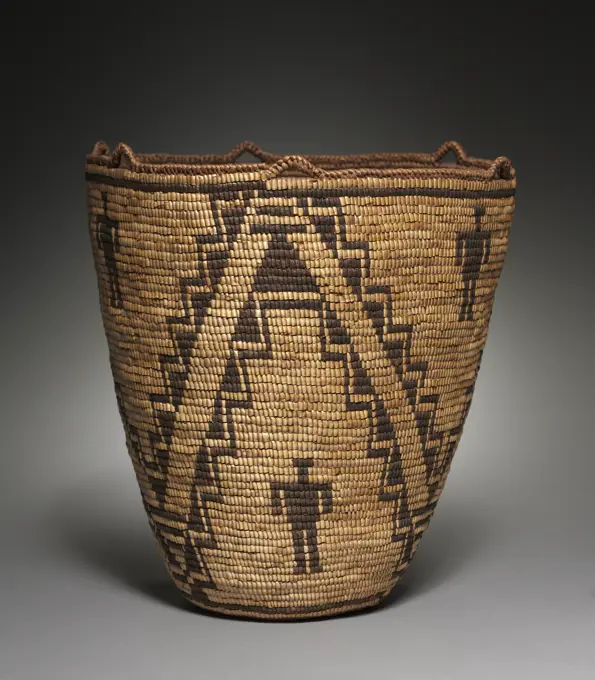
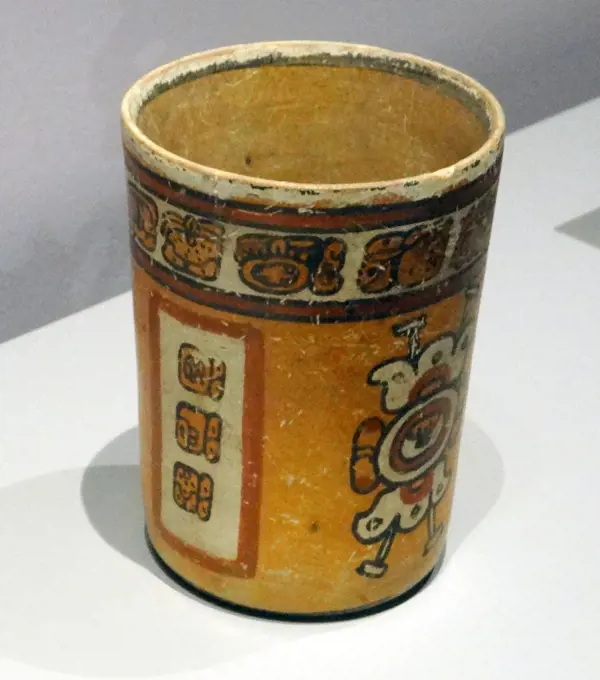
Ceramic jug with polychromed concentric circles decoration, Cyprus. Cypriot Civilization, 15th Century BC.Calcidian skyphos (two-handled wine-cup) depicting Achilles and MemnonStirrup Spout Vessel Incised with Anthropomorphic Fish Made 100 BCE-500 CE Peru. Ceramic and pigment . Mochecinerària urn, 30 BC-150 AD, Archaeological Museum of Ibiza and Formentera, Spain.Bratina 19th century, after 17th century original Elkington & Co. British This electrotype is after a seventeenth-century original a treasure of the Patriarch, Moscow, at the time of reproduction.. Bratina 186617VASIJA DE ARCILLA ROJA Y DIBUJOS BRUÑIDOS CON CANTOS DE RIO. Location: ALFARERIA. SALVATIERRA DE LOS BARROS. Badajoz. SPAIN.Decorated bottle Decorated bottle, Equatorial Guinea, 1900-1950, pumpkin bark and pigment, Anthropology National Museum, Madrid, Spain Copyright: xZoonar.com/BartomeuxBalaguerxRotgerx 21997690Small clay jar and clay jug of Cycladic type with bichrome decoration of birds and circles respectively.Flask Italian, Venice (Murano) 19th centuryFunerary urns. Iron Age. Ceramics. SPAIN. CASTILE AND LEON. Burgos. Burgos Museum. Proc: SPAIN. CASTILE AND LEON. BURGOS. Merindad del ro Ubierna. Ubierna.Sung period urn, 11th cent. Zhejiang Celadon. CHINA.Cup Korea. Cup 57465Small handless jar. Unknownphial from the Muslim era, Zafranales site, Fraga, Huesca museum, Aragon community, Spain.Kan van steengoed.Cylindrical can of stoneware, with an ear. The can be decorated with a medallion in which a warrior with a lance in his left hand and in his right hand. Around the medallion is a caption "Geldrios ben ich ... Zander Gel" and the year 1585.CANTARO - CERAMICA ROJA PARA AGUA SIN VIDRIAR CON UN ASA CUELLO ALTO Y ANCHO. Location: ALFARERIA. OLIVENZA. Badajoz. SPAIN.Can be from stoneware. The bullet-shaped belly is strewn with heraldic lilies placed in articulated relief, in rows, partly colored with manganese purple.SOBRE PINTADA SURITALICA. GRIEGO CERAMICA. (DEPOSITO: MUSEO ARQUEOLOGICO NACIONAL).Painted vessel, a vessel decorated with painted lines;  around 1550 1295 BC ; New PADeposit of the University of Warsaw from 1937-1939, scenes.gal.eg., Egyptian ceramics, painted ceramics, floral decorations, dishes, Polish-French excavations in Edfu (Egypt)Jug with Medallions 6th-8th century Byzantine The medallions wrapping around the neck of this jug, which was probably used to store liquids, are decorated with images of mounted riders. Such images were associated with the Holy Rider, who warded away evil, as well as with hunters who were identified with abundance and prosperity.. Jug with Medallions 468725Funerary Sculpture of a Stove. China, Eastern Han dynasty, 25-220. Sculpture. Molded earthenware with green glazeJar late 17th century Japan. Jar 49272Pilgrim flask ca. 1st century B.C.-1st century A.D. Parthian This lentoid (i.e., lens-shaped) ceramic vessel is made of grey-brown clay and decorated with a plum slip. It has a narrow mouth, and is complete except for part of the rim. It was excavated at Shahr-i Qumis in northern Iran, which has been identified as the ancient city of Hecatompylos, established by the Parthians as the capital of their empire by about 200 B.C. In Greek Hecatompylos means a hundred gates,’ suggesting that the city was quite large. Indeed, the modern archaeological site includes several mounds, only a few of which have been excavated, and a vast area covered with potsherds. This vessel comes from Site VII, a building which may have originally been an elite residence but which was subsequently reused as a funerary structure.Vessels of this shape are often called pilgrim flasks’ because of their resemblance to the souvenir vessels sold at Christian pilgrimage sites around the Mediterranean, beginning in theJARRA MORA-CANTARO Y BOTIJO-BARRO BLANCO. Location: ALFARERIA. Vera. Almería. SPAIN.vasijas de provisiones, ceramica celtiberica, museo Numantino de Soria, Soria, Comunidad Autónoma de Castilla, Spain, Europe.Polychrome ceramic vessel with handle in shape of snake, Bolivia, Tiwanaku cultureVessel with Handle 5th-2nd century B.C. Paracas This vessel with a handle is from the Paracas culture of the south coast of Peru (5th - 2nd centuries B.C.) has a round body with long handle. It contains decorative elements created using two different techniques. The first is a band of geometric design along part of the mouth of the vessel, defined by making incisions prior to firing, then applying colored paint after firing. This technique is called post-fire resin painting. The paint was made by mixing mineral pigments with plant resin to adhere to the surface of the ceramic. The bright colors often used with this technique are red, yellow, brown, black, and white. Scholars have suggested that the usage of certain pigments may indicate access to, and circulation of, the various resources needed in paint production which came from areas outside the Paracas region, which may be indicative of trade networks. Post-fired painting is a technique noted early in Paracas society. The second suFinial Support. Iran, Luristan, Luristan bronzes, circa 1350-650 B.C.. Architecture; Architectural Elements. Bronze, castBowl ca. 7th century B.C. Iran This conical bowl has a flat base and a horizontal loop handle on one side. It is made of a buff clay, using a potters wheel. It was excavated at Tepe Nush-i Jan, an Iron Age hilltop site about 60 km sound of Hamadan in western Iran. Nush-i Jan was occupied in the 7th and 6th centuries B.C., and its occupants are generally thought to be the Medes, an Iranian people known from Assyrian, Achaemenid and Biblical sources. Though the textual sources portray them as a powerful empire, archaeological evidence for the Medes has yet to sustain this impression. Rather, they seem to have lived in scattered fortified sites in western and central Iran, without any clear capital. Nush-i Jan, one of the best known of these sites, features two temples, a columned hall, and a fort. This jar was found in the Central Temple, a tower-like structure in the middle of the site. Thus it may have been used in a ritual performed there.. Bowl 326153Canthare Style BeotienCANTARO DE CUELLO ALTO CON UN ASA. Location: ALFARERIA. MOVEROS. Zamora. SPAIN.Terracotta one-handled cup ca. 1600-1450 B.C. Minoan Exterior decorated with four bands and a wavy line.. Terracotta one-handled cup 247649Lekythos. Culture: Greek, Attic. Dimensions: Overall: 4 3/8in. (11.1cm)Diameter: 2 3/16 × 1 3/16 × 1 3/8 in. (5.5 × 3 × 3.5 cm). Date: ca. 500-490 B.C.. Museum: Metropolitan Museum of Art, New York, USA.CERAMICA IBERICA - SIGLO III AC PROCEDENTE DE LA NECROPOLIS DE CABECICO DEL TESORO EN VERDOLAY (MURCIA). Location: MUSEO ARQUEOLOGICO-COLECCION. MURCIA. SPAIN.Aribalo (typical jar). Piece of Peruvian ceramic with geometrical designs. Inca culture. 15th-16th centuries A.D.. Madrid, Museum of America. Location: MUSEO DE AMERICA-COLECCION. MADRID. SPAIN.An ornate stone urn in the Real Alcazar Palace in Seville, SpainTin drinking jug with lid and an agnus dei on the bottom, anonymous, 1500 - 1550 Tin drinking jug. On the position ring is a pear -shaped body, the lip edge of which is profiled. It is closed with a slightly arched lid. The thumb rest is formed by two bullets and passes into the handle through a one -a -cash hinge, which curls out at the bottom. On the inside you can see a cone on the top of the jug. The inside of the lid is decorated with a medallion. The bottom is decorated with an Agnus dei. Mechelen tin (metal) casting Tin drinking jug. On the position ring is a pear -shaped body, the lip edge of which is profiled. It is closed with a slightly arched lid. The thumb rest is formed by two bullets and passes into the handle through a one -a -cash hinge, which curls out at the bottom. On the inside you can see a cone on the top of the jug. The inside of the lid is decorated with a medallion. The bottom is decorated with an Agnus dei. Mechelen tin (metal) castingCELEMIN EN BRONCE-25X29 CM-S XIII-XIV- ARTE HISPANOMUSULMAN. Location: MUSEO ARQUEOLOGICO-COLECCION. Sevilla. Seville. SPAIN.Pyx, c. 1250. France, Limousin, Limoges, Gothic period, mid 13th century. Gilded copper, champlevé enamel; overall: 9 x 6.7 cm (3 9/16 x 2 5/8 in.).Serving vessel(ding)Terracotta fragment of an oinochoe: olpe (jug) third quarter of the sixth century B.C. Greek, Attic On the rim, a checkerboard pattern; below, on the neck, labyrinth meander; two black glazed lines, a chain of pomegranates, and two black lines; on the body of the olpe, a draped maenad, riding a bull, holding krotala in her raised left hand; the maenad's hair is up in a fillet, she has a necklace and earrings, wears a patterned chiton, and black and red striped himation; in the background, vines. Terracotta fragment of an oinochoe: olpe (jug). Greek, Attic. third quarter of the sixth century B.C.. Terracotta; black-figure. Archaic. VasesStone vases from Mochlos, Crete, 3rd millennium B.C.Terracotta volute-krater (bowl for mixing wine and water) ca. 350-300 B.C. Attributed to the Bolsena Group Of particular interest on this volute-krater is the treatment of the handles. The handles themselves are in the form of youths while above them, circumnavigating the lip, are erotes riding dolphins.. Terracotta volute-krater (bowl for mixing wine and water) 256619Terracotta hydria: kalpis (water jar) late 5th century B.C. Greek, Attic Two womenOne woman holds a casket, the other a lekythos (oil flask). Such a scene probably has nuptial connotations, but the same figures appear during the late fifth and four centuries B.C. on marble grave reliefs.. Terracotta hydria: kalpis (water jar) 254259 Greek, Attic, Terracotta hydria: kalpis (water jar), late 5th century B.C., Terracotta, H. 10 3/8 in. (26.4 cm); diameter 7 1/8 in. (18.1 cm); width with handles 9 1/4 in. (23.5 cm). The Metropolitan Museum of Art, New York. Rogers Fund, 1941 (41.162.87)MIiniature Jar with Geometric Motifs and Abstract Birds. Inca; South coast or southern highlands, Peru. Date: 1450-1532. Dimensions: 5.7 x 7.5 cm (2 1/4 x 2 15/16 in.). Ceramic and pigment. Origin: Peru, southern. Museum: The Chicago Art Institute, Chicago, USA.Terracotta neck-amphora (jar) ca. 540-530 B.C. Attributed to the Polyphemos Group Obverse, on the body, lions attacking a bull; on the neck, two roostersReverse, on the body, lions attacking a boar; on the neck, two roostersIn earlier scholarship on Chalcidian vases, those attributed to the Polyphemos Group were considered "pseudo-Chalcidian" due to details of style and technique. More recent studies have minimized the distinction.. Terracotta neck-amphora (jar) 254545 : Attributed to the Polyphemos Group, Terracotta neck-amphora (jar), ca. 540530 B.C., Terracotta, H. 14 1/16 in. (35.7 cm). The Metropolitan Museum of Art, New York. Rogers Fund, 1946 (46.11.5)Goblet decorated with a frieze of birds ca. early 4th millennium B.C. Iran This goblet comes from a site near Kashan called Tepe Sialk. Excavations conducted at the site in 1933, 1934, and 1937 uncovered large amounts of prehistoric pottery which have provided important evidence for the early chronology of the central Iranian plateau. Like much of the pottery from Iran in the Chalcolithic Period (ca. 5500-3000 B.C.), this piece is very skillfully made, with thin walls and a crisply formed, symmetrical profile. It was likely created or finished using a tournette, the precursor to the potters wheel, which is a flat disc balanced on a central pivot that can be spun with one hand while the other hand is used to smooth and shape a pot in the center of the wheel. The designs painted in dark brown against the buff-colored ceramic work in harmony with the shape of the goblet. Large, widely spaced dotted lines fan out vertically across the foot, below a horizontal band. Another thick band enciCeramic pots of culture Lima 200 AD-700 AD.Huaca Pucllana. Miraflores district. Lima city. Peru.Archaeological site.Pilgrim's Flask with Saint Menas, 400-600. Egypt, Coptic, 400s-500s. Terracotta; overall: 10 x 6.4 cm (3 15/16 x 2 1/2 in.).small Iberian pot, V-II BC, Ategua, Cordoba, Iberian Museum of Jaén, Andalusia, Spain.Corinthian Aryballos. UnknownDark gray earthenware cooking jug with sausage ear, on six fins, rotating on shoulder, cooking jug be found in the earthenware ceramic earthenware, hand turned (reducing) baked Pottery cooking jug or room ease blue-gray shard sausage ear rotating round shoulder six pinched stand fins Slightly conical shape with wide neck opening and wide neck edge. Standing sausage ear attached to the upper edge and the middle of the abdomen archeology Rotterdam native pottery food prepare cooking kitchen drain hygieneAmphora vase - with the Greek gods' procession. Koenigliche Porzellan Manufaktur - KPM (Berlin ; 1763-1918)vasija con caño . Lorestan, iran. 800-700 ac. arcilla.Ewer late 8th-9th century. Ewer 449756Red -support peliquea; Unknown attic workshop; 2. PO. 4th century BC (-350-00-00--301-00-00);Alabastron; Eastern Mediterranean; 6th - 3rd century B.C; Glass; 6.7 cm (2 5,8 in.)The Elgin Amphora. Greek, made in Athens circa 760-750 BC. Late Geometric period. Attributed to artist Dipylon Painter.Bucket with Swing Handle 1000 BCE-950 BCE China. The handled bucket is described in ancient texts as a vessel for carrying wine. This vesselís gently sagging profile is sparsely decoratedódragons with detached, hooked trunks are confined to narrow bands around the neck and lid. Contrasting with these abstract designs are more naturalistic ramsí heads at the neck and on the handles, which are sculpted in the round. Such realistic animals appeared as secondary motifs on Shang bronzes but became more prominent during the Western Zhou.Identical inscriptions are cast inside the bucket and lid Zi Fu Geng made for Father Geng of the Zi family. Bronze .Polychrome Jar. Zuñi; Zuñi Pueblo, New Mexico, United States. Date: 1880-1900. Dimensions: 22.4 × 28 cm (9 1/4 × 11 in.). Ceramic and pigment. Origin: New Mexico. Museum: The Chicago Art Institute, Chicago, USA.Alabaster unguentarium late 4th-3rd century B.C. Cypriot Long neck and small base.. Alabaster unguentarium 244014Prehistory, Italy, Iron Age. Golasecca culture. Situla.CANTARO DE BARRO ROJO CON DOS ASAS Y CUELLO ALTO. Location: ALFARERIA. CACERES. SPAIN.Italy, Savona province, Square mouthed vase from Arene Candide CaveGlass pyxis with lid 1st half of 1st century A.D. Roman Opaque white. Box: vertical rim with inward sloping edge; slightly convex cylindrical neck; octagonal sides with pronounced moldings above and below (the upper edge of the former acts as a ledge on which the lid sits); undercurve to base and slightly concave bottom.Lid: uneven vertical rim; plain cylindrical collar above, curving out to molding; sloping shoulder; flat top.On box, eight panels around sides decorated with four repeated designs: 1, a spoked circle below a triangular pediment; 2, a palmette below a rounded arch; 3, a circle with central dot within a lozenge; and 4, a lotus flower on a stem below a rounded arch; panels separated by vertical raised lines, decorated on the moldings above and below with raised knobs, perhaps representing thyrsi; on undercurve of base, a circular frieze of overlapping leaves; on bottom, four concentric raised circles with a dot at the center. On lid, eight outward-facing palmettes on shoulHoly-water font. Stupovi in Biskupija near Knin. Medieval art. Croatia. Museum of Croatian Archaeological Monuments. Split. Croatia.Anonymous, vase you (usual name), between -1300 and -1050. Bronze, cast iron. Cernuschi Museum, Asia Museum of Asia in the city of Paris. Dragons confronted, type KUI, decorate each registers for this powerful piece intended to contain fermented drinks. Those of the paunch, with curved jaws, with a tail rolled out outside and the legs provided with claws, draw a mask of taotie with large particularly impressive globular eyes. Cernuschi. Another copy, kept in the Arthur M. Sackler collection, is only distinguished by some details, including the reasons for the fallout from the cover. In other very close vases, cited by R. Bagley and reputed to come from the provinces of the Anhui or Zhejiang, had been garnished with small objects in jade when they are buried. It is likely, however, that this type of you, chanted by brightly protruding edges, with a pansu profile, with an oval section and provided with a transverse handle, disappeared on the container of the Cernuschi museum, was manufacTwo small elegant jugs isolatedRed -andener lease;  1 PO. 4th century p. E. (-400-00-00--350-00-00);Handmade clay jugs isolated on white background.. Cup with 12 loops, in which rings hang. Three loops and three rings are missing.CANTARO CON GRAN ASA Y BOCA ANCHA - ARTE POPULAR S XX. Location: ALFARERIA. CARBELLINO DE SAYAGO. Zamora. SPAIN.Native American pottery Heard Museum Phoenix, ArizonaFragments of majolica ointment jar, blue zigzag decor on white ground, wide model, ointment jar holder soil find ceramic earthenware glaze tin glaze lead glaze, hand turned fried glazed decorated fried Wide pot with straight side wall. Yellow shard glazed except the bottom of the bottom. Two constrictions Band with arches and zigzag line in the middle and further blue bands Very sloppy piece of earthenware from mass production. Stand surface with soul archeology health care indigenous pottery packing store ointment medicine drug pharmacy craftLamp from a Hindu temple in Nepal, XVII centuryFooted Cup ca. 500 Japan This early vessel, with its cut-out design in the tall foot, closely resembles contemporary examples from the Korean peninsula. It would once have had a lid.. Footed Cup 49263Vase with palm leaf decorations, from Knossos, Crete, GreeceMastoid (Drinking Cup) 500 BCE-480 BCE Athens. This cup was shaped to fit easily in the dirnkers hand, and was likely used as part of the Greek symposium. Much like modern academic symposiums, in which people discuss a topic of common interest, debunking old theories and putting forth new hypotheses; the men of ancient Athens regularly got together in private homes to exchange ideas. Afterward the participants might continue the conversation, discussing their impressions in greater detail or simply socializing over a drink. As the evening progressed, participants engaged in other pleasures, including games, performances, and sex. Wine played a major role in fueling these evenings, and as such the myriad vessels used in the symposium often paid homage to drink.Here, in a continous scene that could be read much like todayís comic strips, the god of wine Dionysos (seated) is accompanied by his half man half goat followers called satyrs, identifiable by their thick beards and long tails, aZoomorphic Spouted VesselLekythos of red figures. Narrow-necked vessel used for storing oils or perfumes for religious ceremonies. Pergamon Museum. Berlin. Germany.Terracotta kantharos (drinking cup with high handles) Etruscan ca. 700-675 BCE Reddish-brown two-handled cup with narrow bands of incised lines and knobs on shoulder.Bowl with Anthropomorphic VulturesExsaleiptron;  2. PO. VI century BC (-550-00-00--501-00-00);Thin -walled ceramics, archaic period, late -Correctional period, transmission (provenance)Jar decorated with partial dry rope, early medieval Muslim period, Zafranales site, Fraga, Huesca museum, Aragon community, Spain.Baby Carrier, 19th century, 14 x 12 1/2in. (35.6 x 31.8cm), Wood, cotton, glass beads, cowrie shells, chains, Indonesia, 19th centurybell-shaped container of marine type, Tres Montes, Bardenas Reales, bronze age, Navarra,Spain.BOTIJO DE VERANO DE BARRO SIN VIDRIAR - S XX ARTE POPULAR -. Location: ALFARERIA. LA ADRADA. SPAIN.Lid from a pyxis (cosmetic box) with animals and a cuirass. Made in Corinth about 650-630 BC. From the temple of Artemis at EphesusHeart amulet ca. 1550-1186 B.C. New Kingdom, Ramesside For the ancient Egyptians, the heart (ib) was the source of intelligence, feelings, and actions. A person's memory was also housed in the heart and so at the judgment ceremony (Weighing of the Heart) in the afterlife, the heart was able to speak on behalf of the deceased, accounting to Osiris for a lifetime of deeds. Therefore, heart amulets were only used on the mummy to protect the owner's organ and to ensure that his heart gave a positive response at judgment.. Heart amulet. ca. 1550-1186 B.C.. White Agate. New Kingdom, Ramesside. From Egypt. Dynasty 18-20Drinking Vessel Depicting the Maize God. Guatemala, Central Highlands, possibly Kaminaljuyu, Maya, 200-400 CE. Ceramics. Slip-painted ceramicAnimal-shaped jug. 8th-7th c. BC. Archaic Greek art. Ceramics. UNITED KINGDOM. ENGLAND. London. The British Museum.CRATERA DE FIGURAS TRICOLORES - COMBATE DE HERCULES Y ANTEO. Author: EUPHONIOS. Location: MUSEO DEL LOUVRE-CERAMICA. France.CAZUELA TEMPRANA CON INCISIONES BAJO CUBIERTA (MEDINAT ILBIRA) Nº INV. MAG 655. (ALTURA 11 CM. DIAMETRO 23 CM. PROCEDENCIA MEDINAT ILBIRA) MUSULMAN. (EXPOSICION :ARTE ISLAMICO ESPAÑOL)(DEPOSITO: MUSEO ARQUEOLOGICO DE GRANADA ).Terracotta pelike (jar). Culture: Greek, Attic. Dimensions: H. 16 3/4 in. (42.6 cm); diameter of mouth 7 1/2 in. (19 cm); diameter of foot 8 3/16 in. (20.8 cm). Date: ca. 470 B.C..Obverse and reverse, libation at the departure of a young warriorVases are invaluable sources of evidence for Athenian practices. Here, for instance, it is noteworthy that both the woman and the warrior are holding a phiale from which to pour a libation. Artistically, it is also apparent that the Altamura Painter used the shield to experiment with effects of perspective and foreshortening. Museum: Metropolitan Museum of Art, New York, USA.Burden, c.1900. Plateau, Klikitat, Unassigned. Horsetail fragments on cedar rool; coiled, imbricated ; overall: 34.3 x 30 cm (13 1/2 x 11 13/16 in.).Mayan polychrome Vase, decorated with flowers. Tenosique, Tabasco, Mexico. (600-900 AD). Ceramic. white flowers adorn the vase. The vase is related to the supernatural world. The band of glyphs contained on the edge testifies to the use of the recipient;Djenne vase, Mali, 19th century, polychrome ceramic, Sa Bassa Blanca Museum (msbb) Yannick Vu and Ben Jakober, Alcudia, Majorca, Spain, EuropeGreek amphora isolated on white background. Archeology. Vector illustration