Historical Shipwreck Artifacts

Fragments and tools recovered from the East Indies Hollandia wreck, showcasing aged metalwork and items like keys and daggers, evoking a sense of maritime history.

Fragment of part of body, part of shoulder, neck and lip of bottle, bottle holder soil find glass, cm - 2.0 cm) with flattened widened lip (dm 3.6 cm) archeology Rotterdam railroad tunnel medicine drug Soil discovery: rail tunnel Rotterdam.
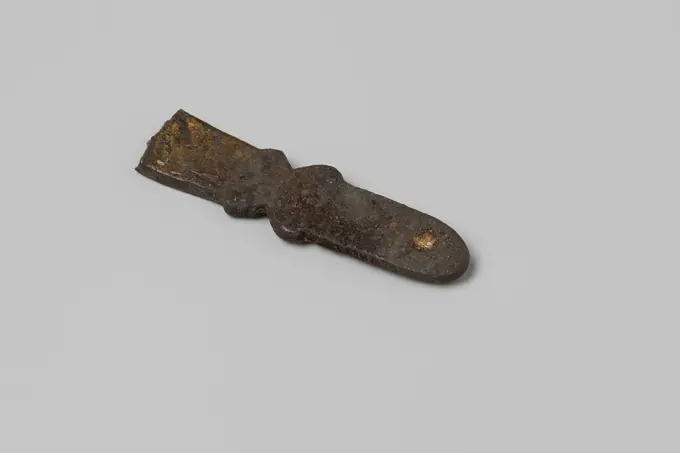
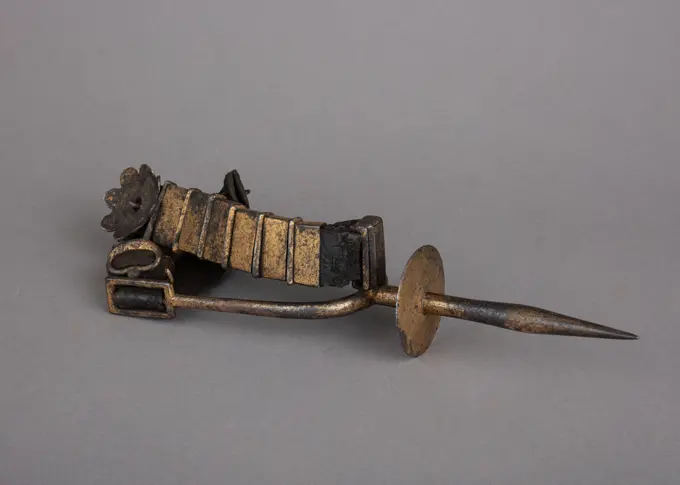
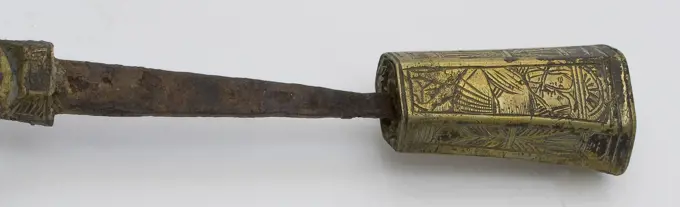
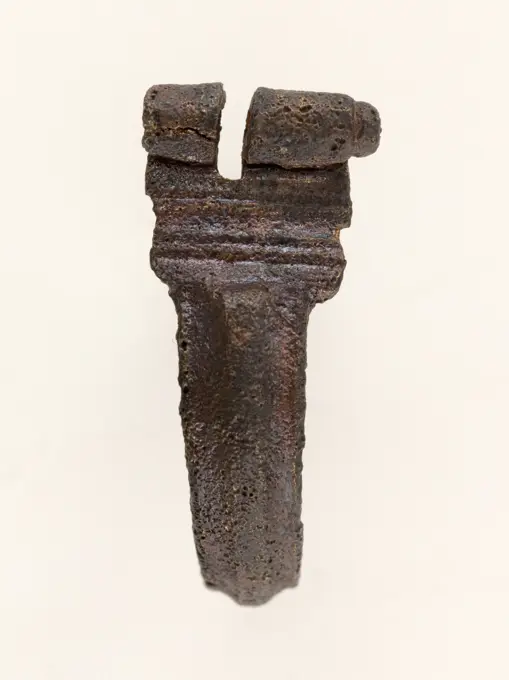
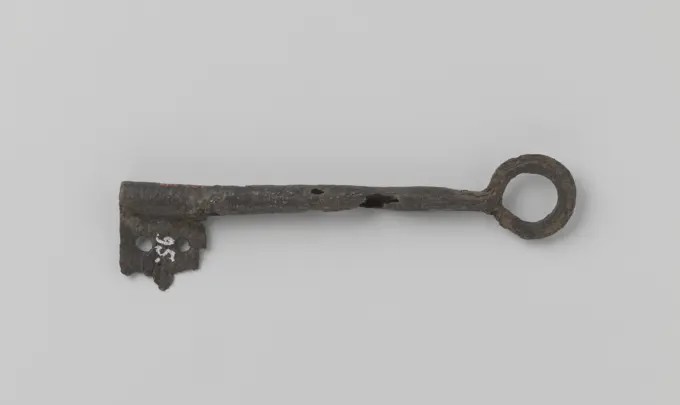
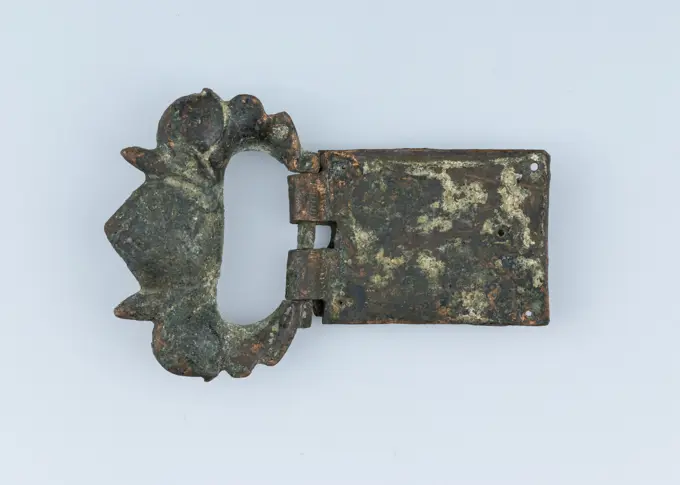
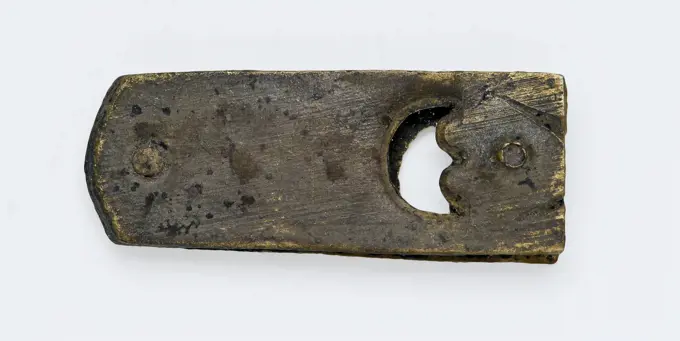
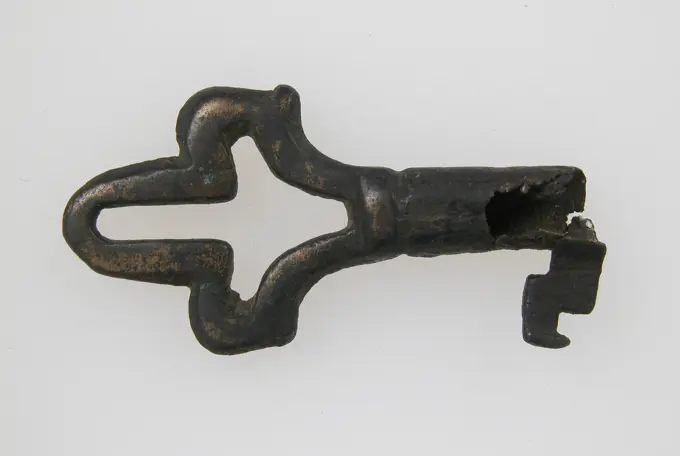
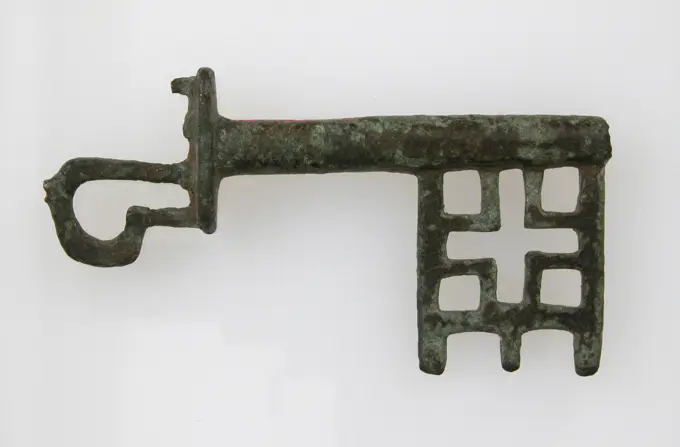
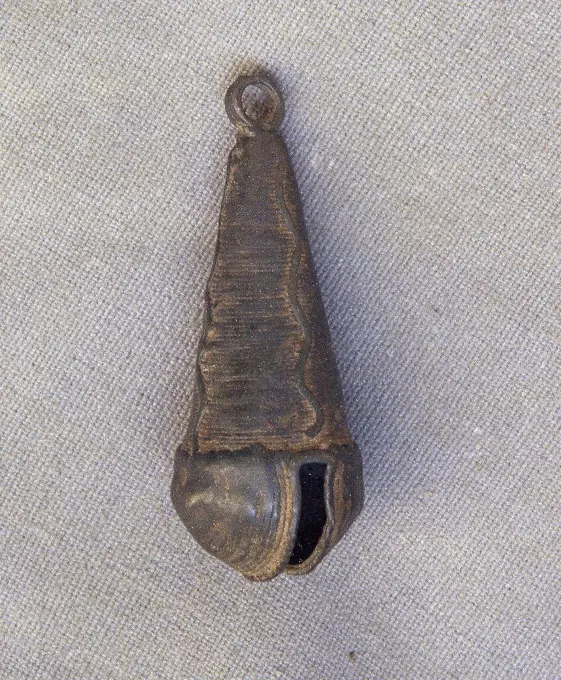
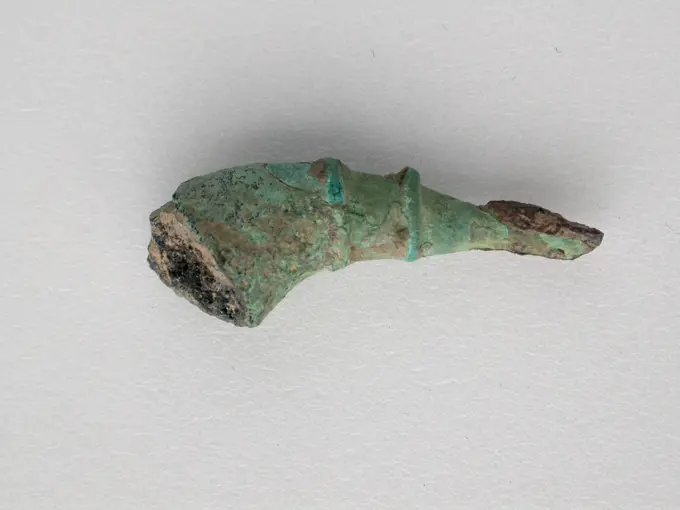
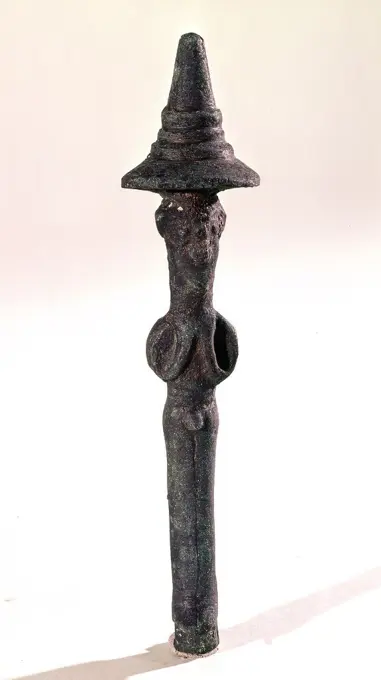
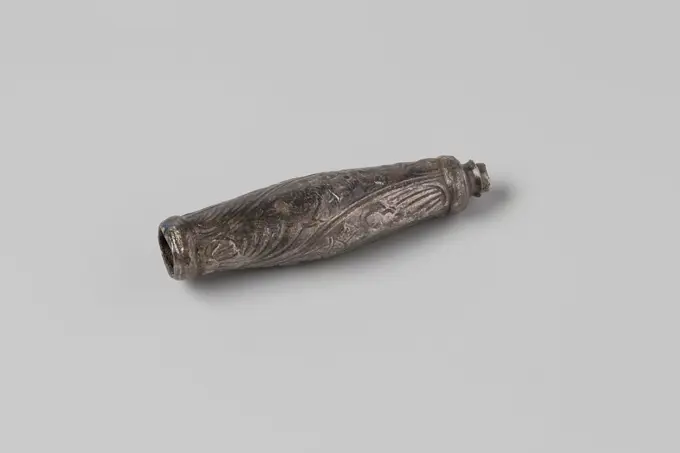
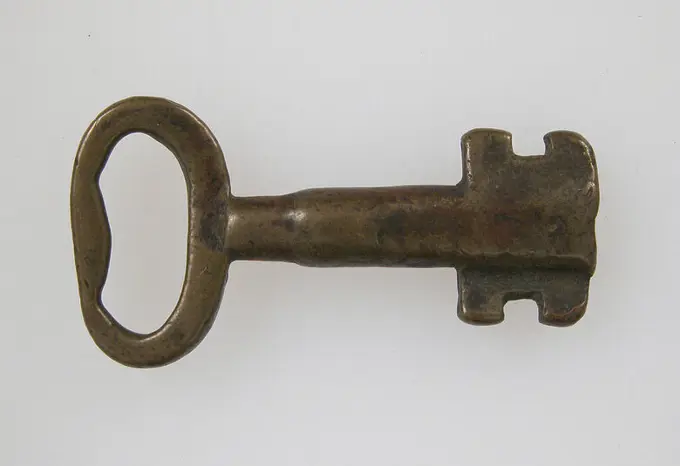
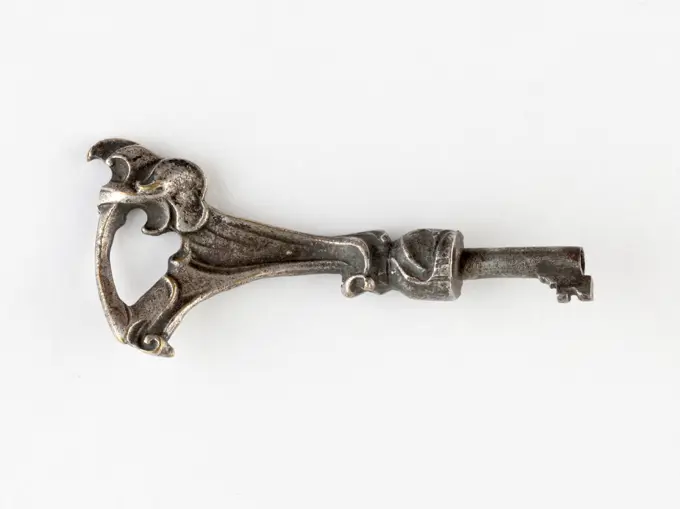
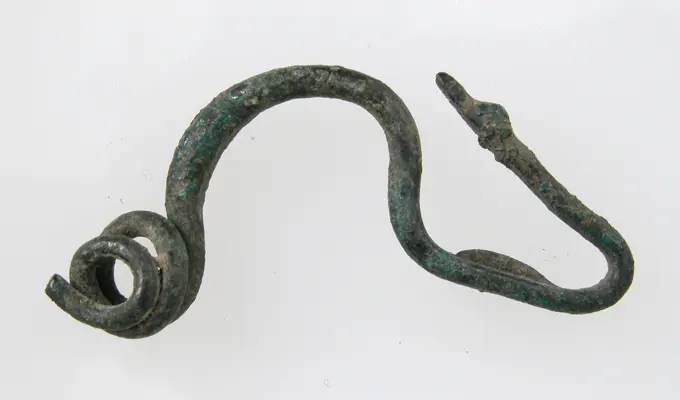
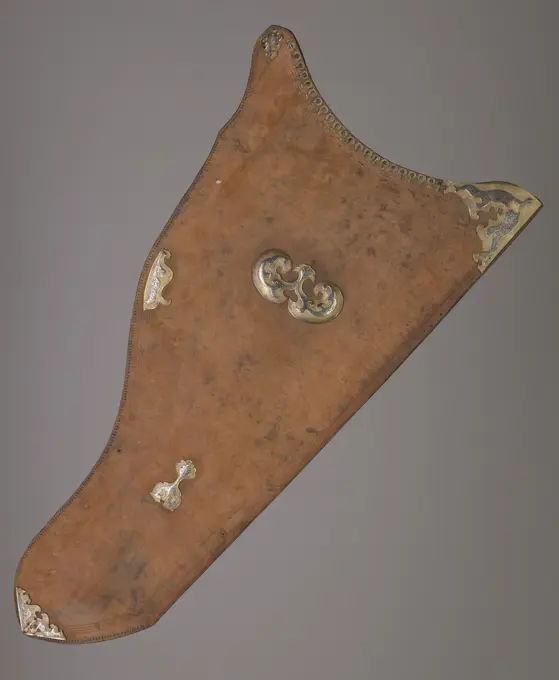
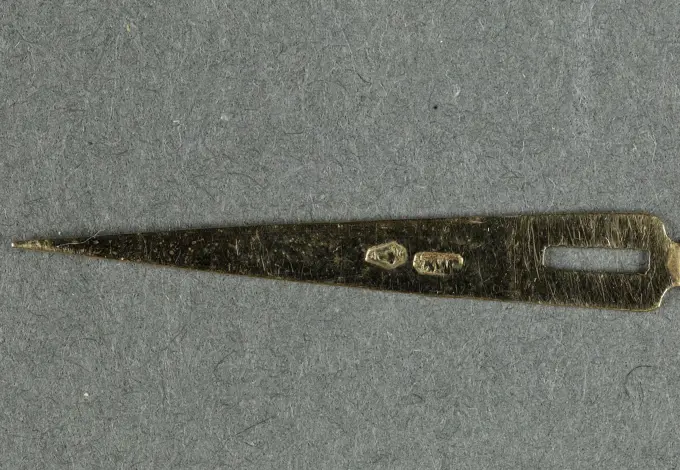
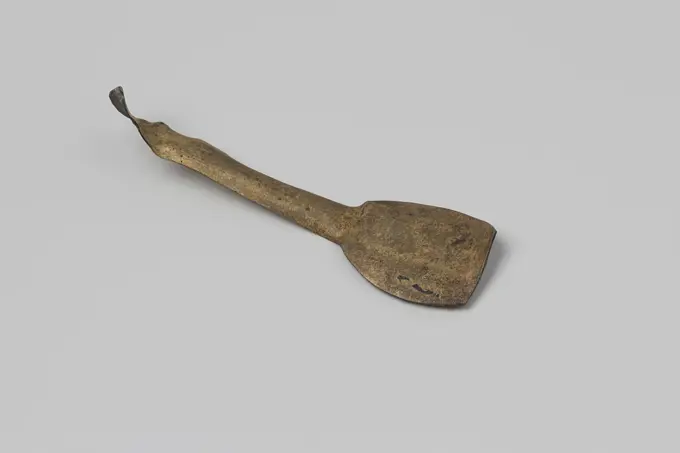
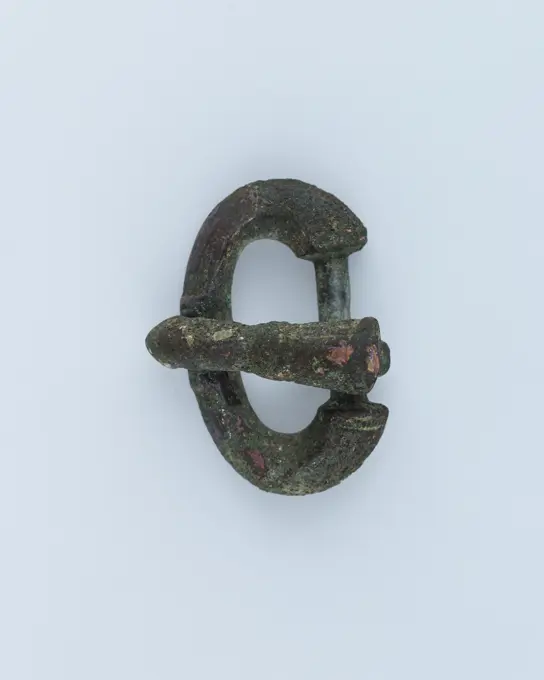
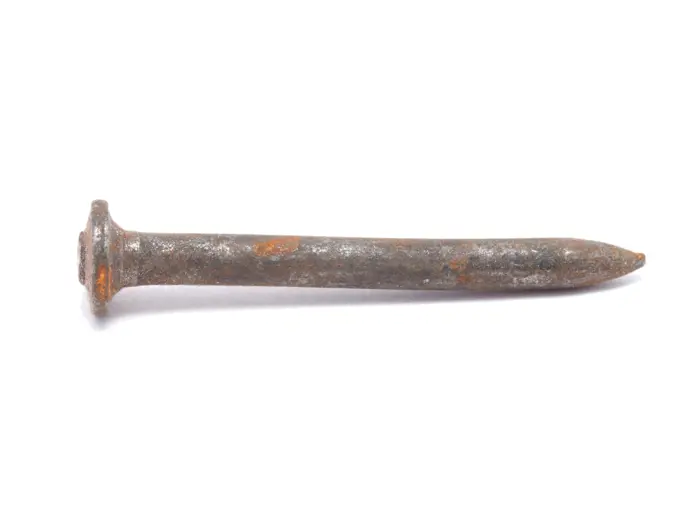
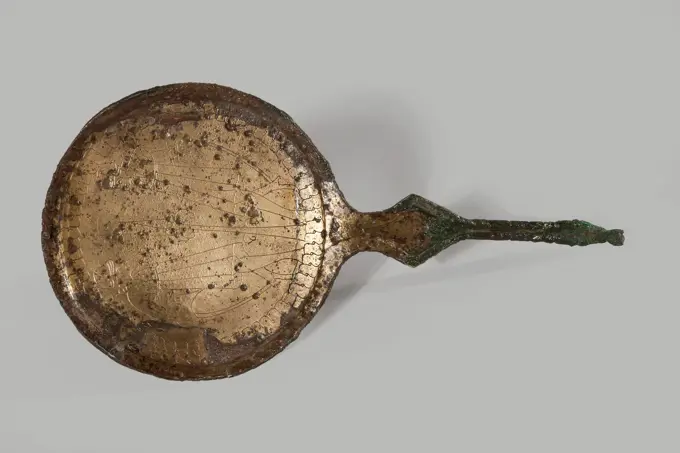
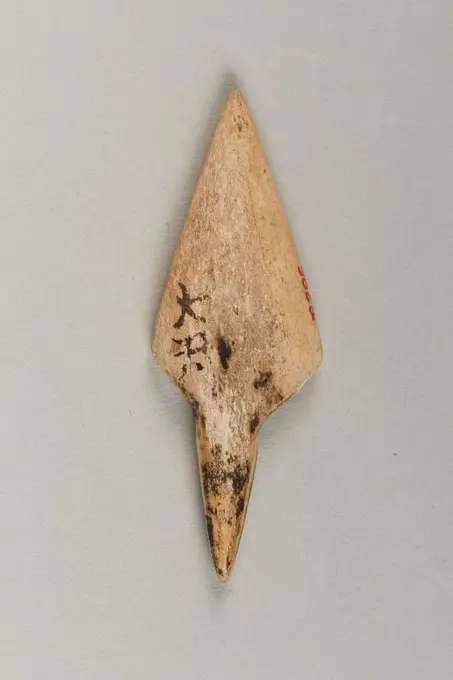
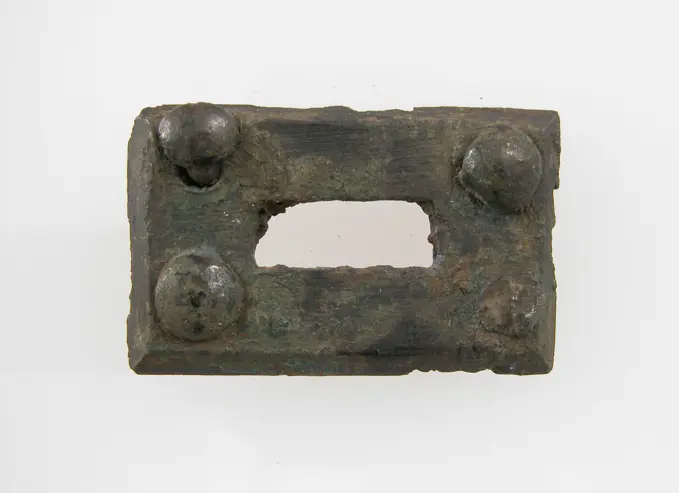
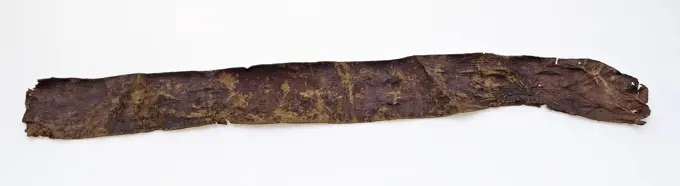
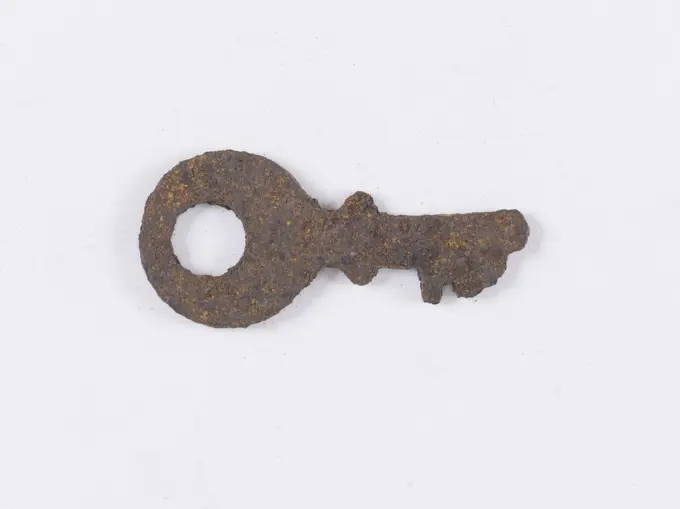
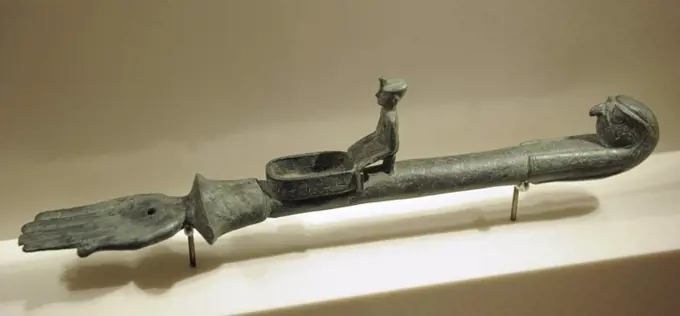
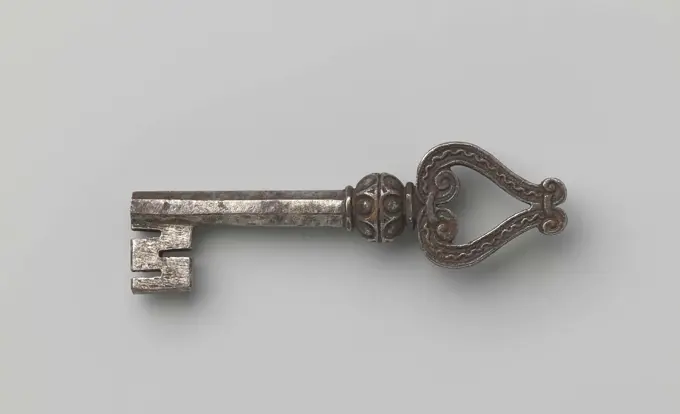
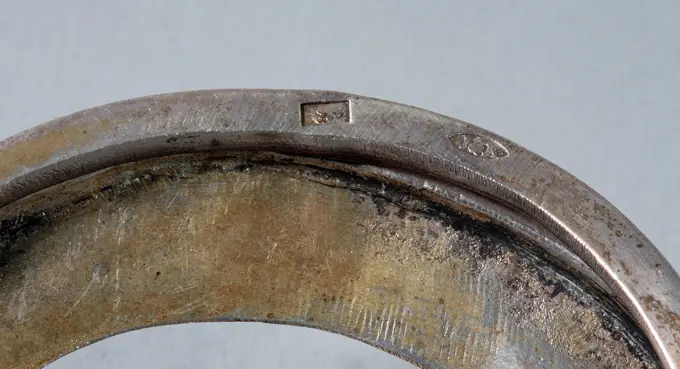
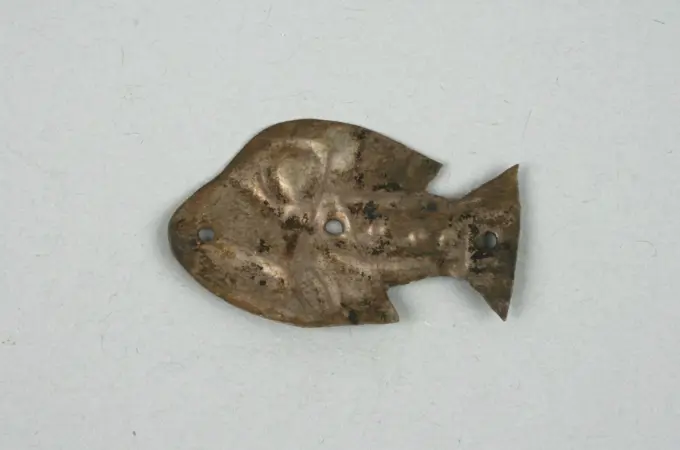
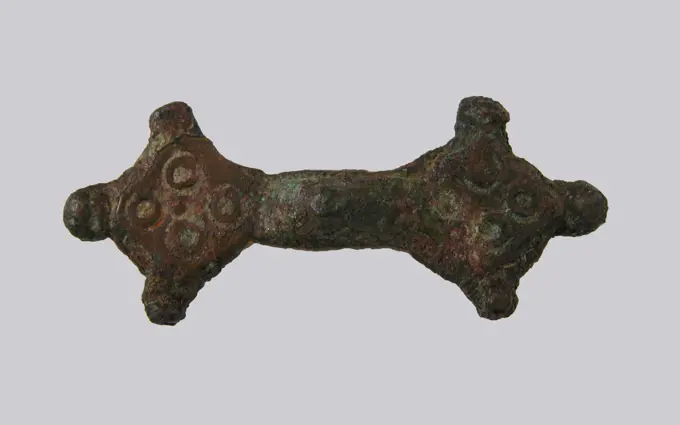
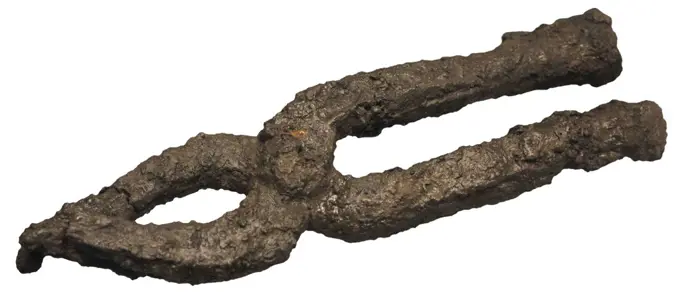
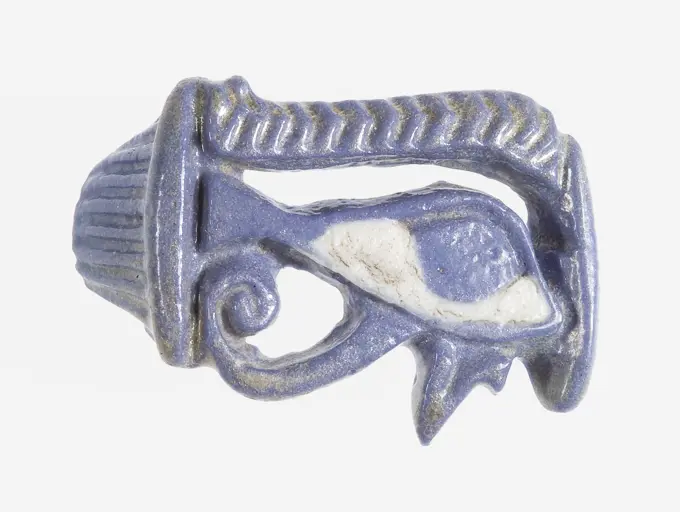
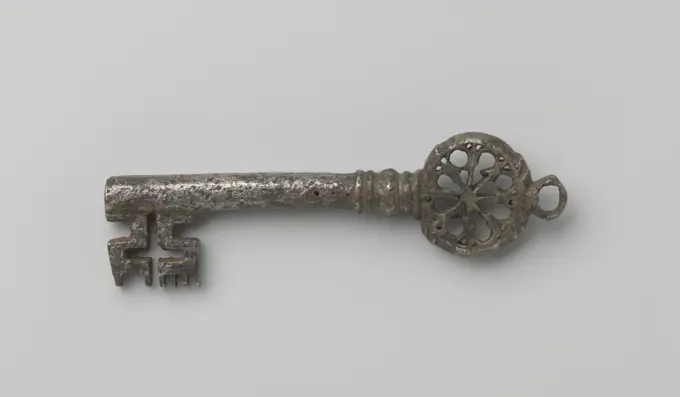
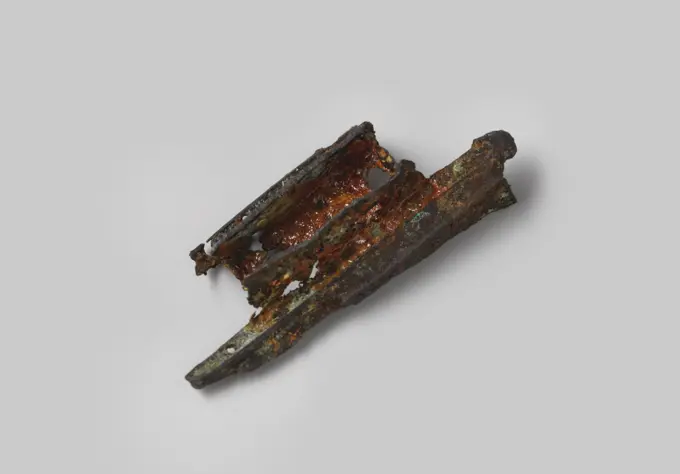
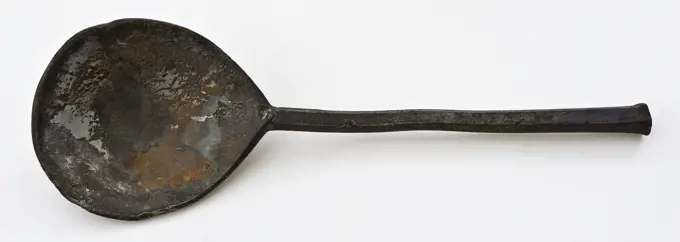
Fragment of Koperen Steel from the wreck of the East Indians Hollandia, 1700 - in Or Before 1743 fragment Varied parts or fragments; unidentified and miscellaneous parts or fragments; fragm. Netherlands copper (metal)   SecondFragment handle from a lamp from the wreck of the East India Hollandiah. Suspension lamp, gimbal ring handle; Fragm, Semicircular End, ID. NG 1980-27H900.Key. Key with spire tapered, short handle, V-shaped chopped beard and an oval eye. Strong rusted.Copper Steel from the wreck of the East Indians Hollandia, Anonymous, 1700 - in Or Before 1743  Varied parts or fragments, shafts; bent; flat strip, widened trifid end, tapering, lower end straight with rolled rim forming a cylindrical lug. Netherlands copper (metal)   SecondMilitary gothic double-edged dagger with curved crossbar and sharp back, dagger stab weapon arm founding iron metal total, forged Blade, sharp double-edged from the parer to the point. Sharp back and flat stomach. Angel forged from one piece with blade Baffle paratrade bent downwards to ends with depression to cover the stop of blade archeology militaria knight military knife gothicPrick Spur 18th-19th century Moroccan The prick spurs traditionally used in most of the Islamic world evolved directly from late Antique examples. They consist of straight U-shaped branches bearing a very long prick with a disc at its base. Here the original strap, partially preserved but reattached the wrong way, is adorned with gilded iron plaques. Traditionally, Moroccan riders take great pride in their horses and still frequently adorn them with shiny and colorful tack for parades and festivals. Wealthy riders would increase their prestige by covering their mount with luxurious material and equipping themselves with as luxurious matching accessories.. Prick Spur. Moroccan. 18th-19th century. Iron alloy, gold, leather, iron. Equestrian Equipment-SpursFragment of an iron knife with an edged handle, on which two caressing pair are engraved, knife cutlery soil find iron bronze brass metal, w 2.2 forged cast engraved Iron knife. Crafted or handle of brass completely decorated and divided into six planes. Two planes are wider in which mini-pair is engraved The other four planes show different decors archeology cutting table food love erotica marriageFibula. Copper alloy. Gallo-Roman. Paris, Carnavalet museum. 51463-8 Staple, copper alloy, attachment, Gallo-Roman time, fibula, Gallo-RomanPipe key, c. 1300 - c. 1500 Pipe key made of a piece forged with a flat eye around. The violated beard shows two holes.  iron (metal) Pipe key made of a piece forged with a flat eye around. The violated beard shows two holes.  iron (metal)Fragment of part of body, part of shoulder, neck and lip of bottle, bottle holder soil find glass, cm - 2.0 cm) with flattened widened lip (dm 3.6 cm) archeology Rotterdam railroad tunnel medicine drug Soil discovery: rail tunnel Rotterdam.Buckle 15th century French. Buckle. French. 15th century. Bronze, copper. Miscellaneous-Buckles & OrnamentNarrow brass tongue, belt tongue fitting clothing accessory clothing soil found brass metal, whipped riveted Belt tongue with half round cutouts. Decorated with slanted notches on either side of the place of the rivet archeology Rotterdam railway tunnel attaching fastening carrying carrying belt belt Soil discovery: trajectory rail tunnel Rotterdam.Buckle Tongue 500-700 Frankish. Buckle Tongue 465026 Frankish, Buckle Tongue, 500700, Copper alloy, Overall: 1 x 9/16 x 7/16 in. (2.5 x 1.4 x 1.1 cm). The Metropolitan Museum of Art, New York. Gift of J. Pierpont Morgan, 1917 (17.191.313b)Key 16th century () French (). Key 462985Fragment (from a altar cabinet); (possibly) belonging to the Retable of Soest. .Tinnis funnel from V.O.C.-ship De 'Witte Leeuw', Before 1613 funnel Tinn funnel from V.O.C. ship De 'Witte Leeuw'. A single and a double line are engraved on the inside. Both the inside and outside are partially covered with lumps. The outside is gray, the inside is sand -colored over gray.  tin (metal)   Sint-HelenaHandle attachment for a bowl 8th-7th century B.C. Cypriot. Handle attachment for a bowl 244323Hendrick Jongelingh, Spoon with round handle and egg-shaped container, spoon cutlery soil find tin metal, w container 6.0 molded Pewter spoon with oval shovel and round handle. Short rat tail under the spoon tray. Marked in the ladle for the attachment of the stalk Tinmerk on the starting tray: crowned Tudor rose with initials: HI archeology Valckensteyn Poortugaal Albrandswaard Soil discovery Poortugaal castle ValckensteynSteel knife with machined copper handle, on which JHESUS and MARIA, knife cutlery soil find iron steel bronze metal, forged whipped cut engraved riveted Steel knife with carved copper handle Pennant with text wrapped around staff with lottery On the pennant JHESUS and MARIA mark on reverse side blade: III archeology cutting food marriage marry wedding gift bible religion Jesus Christ Maria RotterdamKnife with bobbin button, anonymous, c. 1590 - c. 1596 knife (tool) Messenhft with spool -shaped button under which a sphere in the form of braided rope has been applied.  wood (plant material) cutting  Nova Zembla. Saving HuysDark brown leather, with scratching lid and with punched decoration of thistle vines and part of a year: 14 .. On the lid a ship, anonymous, 1400 - 1500 Dark brown leather, with sliding lid and with punched decoration of thistle vines and part of a year: 14 .. and a ship on the lid. In the lid twice two, four times two notches in the fedal to confirm one ( now lost) belt. Italy (possibly) leather Dark brown leather, with sliding lid and with punched decoration of thistle vines and part of a year: 14 .. and a ship on the lid. In the lid twice two, four times two notches in the fedal to confirm one ( now lost) belt. Italy (possibly) leatherFragment, added to the retable group in the 19th century with the meeting of the three kings of Adriaen van Wesel and removed during restoration in 1978., Anonymous, c. 1800 - c. 1900  Netherlands oak (wood) cutting  the Bosch  Netherlands oak (wood) cutting  the BoschWooden Vessel in the Shape of a Hand before 16th century Peruvian. Wooden Vessel in the Shape of a Hand 309271Key 3rd-5th century Late Roman or Frankish. Key. Late Roman or Frankish. 3rd-5th century. Copper alloy. Made in Gaul. Metalwork-Copper alloyCASCABELES DEL SIGLO XVI. Location: MUSEO DE AMERICA-COLECCION. MADRID. SPANIEN.Palstave, Middle Bronze Age. A palstave is a type of early bronze axe. It was common in the middle Bronze Age in northern, western and south-western Europe.Pulley 580-640 Coptic. Pulley 474913Attachment. UnknownFibula Fragment 800 BCE-600 BCE Thessaly. This precious bronze object is a votive, or devotional gift, made as an offering to the gods. They come in many forms, such as animals, beads and brooches. Many seem once to have been attached to something else. Votives were hung from sacred trees or placed in sanctuaries around Greece. Once a shrine was full, the votives were ceremonially buried to make room for more offerings.. Bronze . Ancient Greek39 keys from the collection of Emmanuel Vita Israël. The Amsterdam apothecary and art collector Emmanuel Vita Israël. He donated his collection, comprising keys dating from Roman antiquity to the 19th century, to the Koninklijk Oudheidkundig Genootschap (Royal Antiquarian Society) in 1937. Vita Israël claimed that his key collection had grown more or less by accident: being one of the few collectors of keys, dealers automatically made their way to him.ARTE IRANI-FIGURA FEMENINA DE BRONCE. Location: MUSEO ARQUEOLOGICO NACIONAL-COLECCION. MADRID. SPANIEN.Belt Buckle 7th century Frankish or Burgundian. Belt Buckle 465059 Frankish or Burgundian, Belt Buckle, 7th century, Iron, silver inlay, bronze, Overall: 6 3/4 x 3 1/4 x 1 1/16 in. (17.2 x 8.2 x 2.7 cm). The Metropolitan Museum of Art, New York. Gift of J. Pierpont Morgan, 1917 (17.191.342)Key Fragment. UnknownKnife lift from the wreck of the East Indiescher's Flying Heart. The knife lift is made of wood, presumably lindenhout (Tilia spec.div.) And from metal. It has eight silks and runs pointed towards the end. On the side where normally the blade is a metal ring is arranged, which was originally part of the blade construction. The color is grayish-dark brown.Navigation. To determine the ships position and chart its course, the captain had an entire arsenal of instruments at his disposal. Among the items found on Nova Zembla are an astrolabium catholicum (universal astrolabe), a fragment of a copper sounding line, a cross staff, a sextant and a chart compass.Excerpt copper sheet metal with rivets from the wreck of the East Indians Hollandia, Anonymous, 1700 - in Or Before 1743 fragment Varied parts or fragments, sheet metal fragments: worked, with rivets; fragm, eroded, 3 rivets. Netherlands copper (metal)   SecondBuckle 6th-7th century Frankish. Buckle 465447 Frankish, Buckle, 6th7th century, Copper alloy, Overall: 13/16 x 11/16 x 1/8 in. (2 x 1.7 x 0.3 cm). The Metropolitan Museum of Art, New York. Gift of J. Pierpont Morgan, 1917 (17.193.137b)Buckle 7th century Frankish. Buckle. Frankish. 7th century. Copper alloy. Made in Niederbreisig, Germany. Metalwork-Copper alloyLoop and Plate of a Belt Buckle 7th century Frankish. Loop and Plate of a Belt Buckle. Frankish. 7th century. Iron, silver and brass inlay. Metalwork-IronLizard Figurine. Egypt, Ptolemaic Period (332 - 30 BCE) or later. Sculpture. BronzeA rusty axel stands prominently against a simple backdrop, showcasing its worn texture and distinctive features. The sunlight enhances its patina, revealing years of use and historyGreep van een gevest uit het wrak van de Oost-Indiëvaarder Hollandia. Hilt, grip; eroded, squashed; circular in section, bulbous centre part, relieved decoration of shell and scroll motifs and a central scene with a human figure on two sides between twisted bands of lines, spool-shaped moulding on one end, pommel or tang button broken off, rectangular tang bore.Key. Culture: German. Dimensions: Overall: 2 1/16 x 1 x 1/4 in. (5.2 x 2.6 x 0.7 cm). Date: 14th century.The decoration of Gothic iron locks and keys was often elaborate and of the highest standard of workmanship. The motifs were frequently drawn from Gothic architecture, reproducing on a miniature scale complicated tracery patterns and even tiny statuettes. A number of these tiny locks were compound, with some of the mechanisms concealed from view, and required two or even three keys used in sequence to open them. It has been suggested that the greatly expanded use of locks on doors, or coffrets and other types of storage chests was a result of the increasing urbanization of life and the new emphasis on material wealth and private ownership which developed in the late Middle Ages. Museum: Metropolitan Museum of Art, New York, USA.Snow knife -Excavated horseshoeIron squeeze scissors, small size, pinch cutter scissor cutting tool soil finds iron metal, forged sharpened Iron scissors. Pinch cutter without fixed middle piece. Oval upper with springy legs and curved cutting blades with straight cutting edges archeology cut wire clothing textile personal careHector Guimard (1867-1942). "Key". Bronze. 1909-1911. Museum of Fine Arts of the City of Paris, Petit Palais. 74618-18 Art Nouveau, bronze, key, key, decoration, metalSleutel.Iron key with forged worked eye.Arrowheads, needles, hooks and harpoons. Culture: Japan. Dimensions: W. 1 1/8 in. (2.9 cm); L. 2 1/2 in. (6.4 cm). Museum: Metropolitan Museum of Art, New York, USA.Brooch second half 5th century B.C. Celtic. Brooch 465012 Celtic, Brooch, second half 5th century B.C., Copper alloy, Overall: 1 9/16 x 1/4 x 11/16 in. (4 x 0.6 x 1.8 cm). The Metropolitan Museum of Art, New York. Gift of J. Pierpont Morgan, 1917 (17.191.301)Knife Handle (Kozuka) 19th century Iwama Nobuyoshi Japanese A kozuka is a handle of a by-knife that is part of a sword mounting. It is kept in a slot on the reverse of a katana scabbard, often with a matching kōgai (hairdressing tool).. Knife Handle (Kozuka) 25286Brass stopper of tap with harp-shaped handle, stop closure part soil find brass bronze metal, cast drilled Black brass stopper of tap Harp-shaped handle Conical pin with round passage hole. Small pen on the axis of the hole so that the turn of the tap is limited archaeological Rotterdam Hillegersberg-Schiebroek Terwegge Stoopweg rail tunnel tap tap holder component barrel of beer archaeological find in the soil Rotterdam found on the Stoopweg in the dump from the route of the rail tunnel.Key, c. 1400 - c. 1950 Key whose handle consists of a four-leaf open worked floral motif and a large beard that shows four cross-shaped exhibitions and ends comb-shaped.  bronze (metal) Key whose handle consists of a four-leaf open worked floral motif and a large beard that shows four cross-shaped exhibitions and ends comb-shaped.  bronze (metal)Key 1st-7th century Roman. Key 46297239 keys from the collection of Emmanuel Vita Israël. The Amsterdam apothecary and art collector Emmanuel Vita Israël. He donated his collection, comprising keys dating from Roman antiquity to the 19th century, to the Koninklijk Oudheidkundig Genootschap (Royal Antiquarian Society) in 1937. Vita Israël claimed that his key collection had grown more or less by accident: being one of the few collectors of keys, dealers automatically made their way to him.Excerpt of copper from the wreck of the East Indians Hollandia, 1700 - in or before 1743  Parts of artefacts; eroded fragments: materials; copper. Netherlands copper (metal)   SecondBrigandine Plate. Culture: Italian. Dimensions: H. 11 in. (27.9 cm); W. 7 5/8 in. (19.4 cm); Wt. 1 lb. 10.2 oz. (742.8 g). Date: 1400-1450. Museum: Metropolitan Museum of Art, New York, USA.Przeszo Przyszoci unknownAxe Head 12th-15th century Ecuador. Axe Head 315295Chisel Roman. Chisel. Roman. Bronze, bone. BronzesOracle bone fragment China. Oracle bone fragment. China. Inscribed bone. Shang dynasty (ca. 1600-1046 B.C.). BoneSmall necessary in the shape of a golden egg and enamel punch. Nineteenth century. Paris, Cognacq-Jay museum. 56642-7 Email, egg, gold, small requirement, stretchOlive lamp; Unknown attic workshop; 360-300 BC (-360-00-00--300-00-00);Swirl. Swirl in the form of a rotatable elongated wooden bobbin with a square hole in the middle of a square hole that serves to secure a door or hatch.Old rusty hammer, toolButton from the wreck of the East Indiesman 't flying heart. Brass key, light bent, in the form of a stem with a round shovel. Key.Buckle ca. 3rd-2nd century B.C. Xiongnu. Buckle 326691Buckle ca. 409-711 Ibero-Roman or Visigothic. Buckle. Ibero-Roman or Visigothic. ca. 409-711. Bronze, patina. Miscellaneous-Buckles & OrnamentTop for standard ca. 8th-7th century B.C. Iran. Top for standard 322856Nail. Culture: European. Dimensions: Overall: 6 in. (15.2 cm). Date: 15th-16th century. Museum: Metropolitan Museum of Art, New York, USA.metallic nail on white backgroundLustro ręczne z przedstawieniem Dioskurów. unknown, authorKey. Key whose handle consists of a long bowed neck, sitting on an ionic capital.Fitting. Southern Siberia, 5th-3rd century B.C.. Tools and Equipment; horse trappings. Bronze, castNails. Culture: European. Dimensions: Overall: 4 5/8 in. (11.7 cm). Date: 15th-16th century. Museum: Metropolitan Museum of Art, New York, USA.Arrowheads, needles, hooks and harpoons. Culture: Japan. Dimensions: W. 5/8 in. (1.6 cm); L. 1 3/4 in. (4.4 cm). Museum: Metropolitan Museum of Art, New York, USA.Keyword. Keyword consisting of a quadrangle on its short side. At the top, the eye is applied and three buttons are on the sides (stem and beard are missing).Rectangular Plaque 500-700 Frankish. Rectangular Plaque 465520 Frankish, Rectangular Plaque, 500700, Copper alloy, Overall: 1 1/4 x 3/4 x 1/4 in. (3.1 x 1.9 x 0.7 cm). The Metropolitan Museum of Art, New York. Gift of J. Pierpont Morgan, 1917 (17.193.201)Fragment leather belt, belt, belt belt bottomfound leather, tanned cut sewn Narrow strip of belt or belt with two narrow and one long lace sewing thread without thread impression. Probably half of the original whole archeology Rotterdam City Center Stadsdriehoek indigenous leatherwork leather processing craft Schielandshuis Soil discovery: Schielandshuis under the Pappegay during restoration 1982.Fragment of a silver comb, possibly made in Pictish Scotland AD 8OOs-early AD 900s.Gorget Plate for Bevor 1490-1510 Spain. Steel .Anonymous, key key (common name), 1943, metal, Paris Liberation Museum - General Leclerc Museum - Jean Moulin Museum.. The Amsterdam apothecary and art collector Emmanuel Vita Israël. He donated his collection, comprising keys dating from Roman antiquity to the 19th century, to the Koninklijk Oudheidkundig Genootschap (Royal Antiquarian Society) in 1937. Vita Israël claimed that his key collection had grown more or less by accident: being one of the few collectors of keys, dealers automatically made their way to him.SpoonKey. Key with bean-shaped eye. The V-shaped cut-out beard passes past the shaft.Cash. Copper alloy, China, Xin dynasty. Paris, Cernuschi museum. Asian civilization, Chinese civilization, Xin dynasty, currencyEgyptian censer for burning incense grains in front of a divine shrine. Bronze. 25th Dynasty. Third Intermediate Period. 700 BC. Neues Museum. Berlin. Germany.Pijpsleutel.Pipe wrench whose handle consists of a winch; The capital is spherical and decorated by an egg list. The shaft is octagonal. Empire.Fragment from the wreck of the East Indies Hollandia, Anonymous, 1700 - in or Before 1743 fragment Varied parts or fragments, sheet metal fragments: worked, moulded or shaped; fragm, eroded; rim partly fold-over, originally circular, flat, shallow circular boss in centre. Netherlands copper (metal)   SecondDisabilities in diamond: JK+swan: masterpiece in a mandorle. Punch: Charançon, import hallway. Strip, row of large faceted pearls between 2 harsh binders, 2 large floral patterns beaded at the top and bottom.Key, c. 1400 - c. 1950 Key with diamond-shaped eye, long, thinning shaft and T-shaped beard. Oosters (possibly) bronze (metal) Key with diamond-shaped eye, long, thinning shaft and T-shaped beard. Oosters (possibly) bronze (metal)Fish Ornament 11th-12th century Peru; central coast (). Fish Ornament 308802Bow Brooch ca. 650-750 Frankish. Bow Brooch 465003 Frankish, Bow Brooch, ca. 650750, Copper alloy, Overall: 1 5/8 x 11/16 x 1/2 in. (4.1 x 1.7 x 1.3 cm). The Metropolitan Museum of Art, New York. Gift of J. Pierpont Morgan, 1917 (17.191.294)Inlay, hieroglyph 664-610 B.C. Late Period, Saite A quantity of faience hieroglyphs and border elements was found in the tomb or courtyard of Nespekashuty. These are displayed in galleries 127 and 130. They are of similar size and manufacture, so seem to have belonged to a single object, likely of wood. Some of the signs belong to the standard offering formula, others mention Osiris and Anubis, so they certainly suggest an item of funerary furniture - a box, a screen, or a coffin although coffins are not usually inlaid in faience and remnants of Nespekashuty's were painted.Unfortunately, there are no signs indisputably pointing to Nespekashuty's names or titles. Although it seems likely that the fairly elaborate piece of equipment to which they testify belonged to the main burial of this tomb, and not to the Third Intermediate Period burials found in the courtyard or to the material apparently cleared from the Hathor Shrine at Deir el Bahri or to the other sets of late shabtis found inBlacksmith's pincers. Iron. Iron Age. Galicia, Spain. Archaeological and History Museum (San Anton Castle). A Coruna, Galicia, Spain.Fragment of a Wedjat Eye Ring ca. 1390-1352 B.C. New Kingdom The wedjat eye represents the healed eye of the god Horus. It depicts a combination of a human and a falcon eye, since Horus was often associated with a falcon. Its ancient Egyptian name, wedjat, means "the one that is sound (again)." In Egyptian mythology Horus eye was injured or stolen by the god Seth and then restored by Thoth. The wedjat eye embodies healing power and symbolizes rebirth. An amulet or ring in this shape was thought to protect its wearer and to transfer the power of regeneration onto him or her.. Fragment of a Wedjat Eye Ring. ca. 1390-1352 B.C.. Faience. New Kingdom. From Egypt, Upper Egypt, Thebes, Malqata, Palace of Amenhotep III, MMA excavations, 1910-11. Dynasty 18Venetian key or pipe key, c. 1500 - c. 1600 Venetian key "with rose in the round grip, crowned by an oval eye. Heavily rusted; shaft violated.  iron (metal) Venetian key "with rose in the round grip, crowned by an oval eye. Heavily rusted; shaft violated.  iron (metal)Earl Butlin, Oxen Yoke, c 1937 Oxen YokeExcerpt of copper from the wreck of the East Indians Hollandia, 1700 - in or before 1743 fragment Varied parts or fragments; unidentified and miscellaneous parts or fragments; fragm of fitting. Netherlands copper (metal)   SecondPewter spoon with hexagonal stem, marked, spoon cutlery soil find tin metal, cast Pewter spoon with drip-shaped bowl. Hexagonal handle, small widening at the end Marked in the spoon tray for the attachment of the stem. Short rat tail under the tray brand: crowned Tudor rose in the crown the letters: G I archeology Rotterdam City center Stadsdriehoek Hofplein food feeding table serving Soil discovery: Shellgebouw Hofplein 20 Rotterdam.