Historical Silk Fabric Fragments

A collection of intricate silk fabric fragments featuring floral motifs and rich colors from 17th to 18th century Italy and China. The fabrics vary in texture and design.
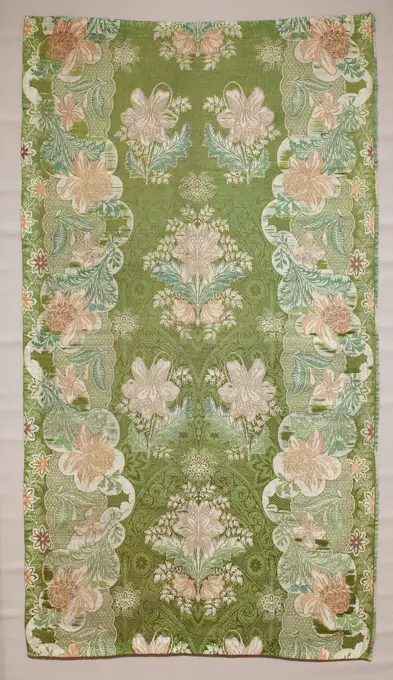
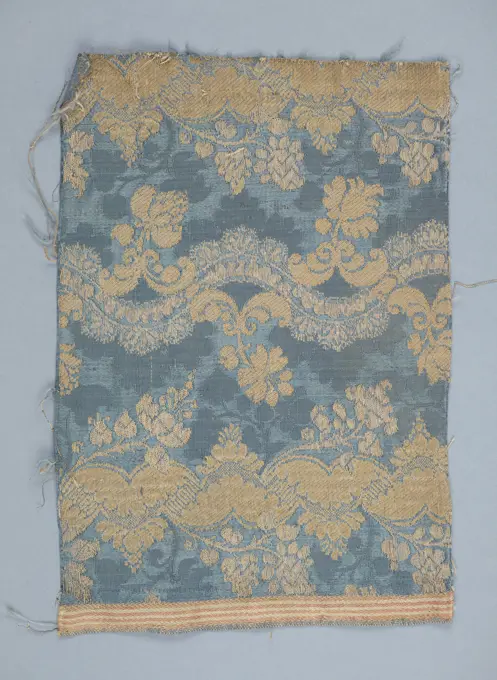
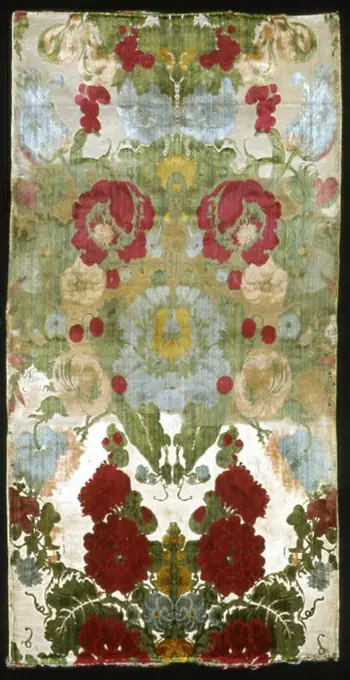
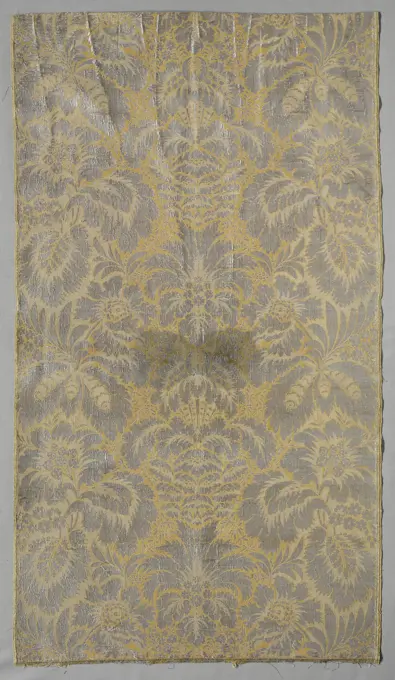
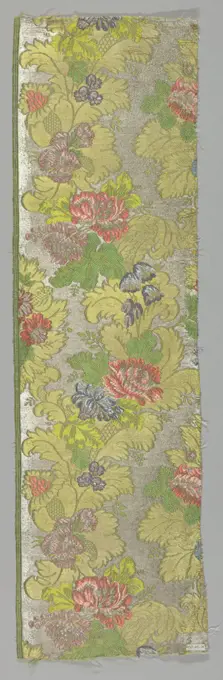
Panel, c. 1720, 41 x 21 in. (104.14 x 53.3 cm), Silk, metallic threads; lampas weave, France, 18th century, Elaborate silk fabric such as this was very costly to produce. It would have taken at least two highly skilled weavers, using the most sophisticated weaving technology of the period, several days to produce one yard of fabric. It undoubtedly was made as a special order and could have been used for any number of things, ranging from wall covering to men's or women's clothing. It was not until the middle of the 19th century that textiles were designed for specialty markets such as home furnishings or fashion.
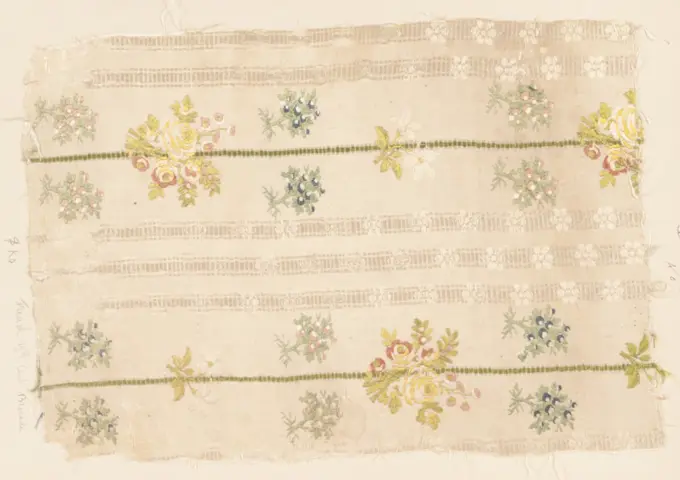
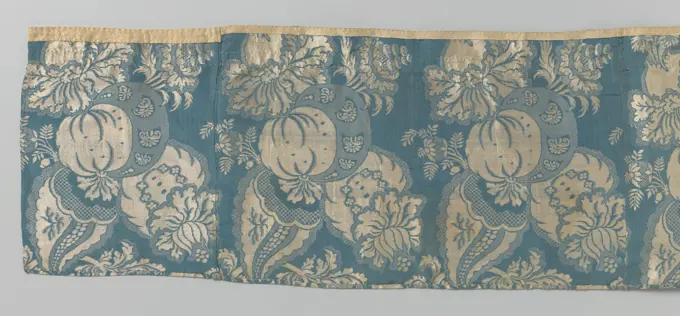
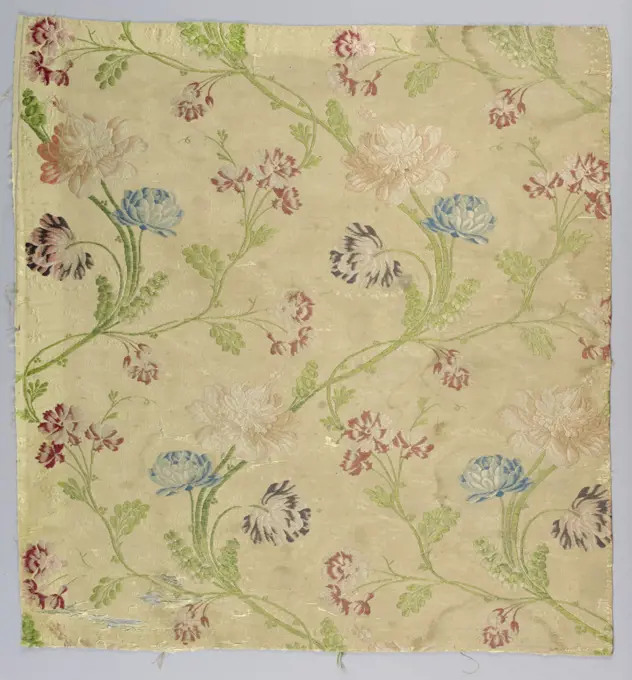
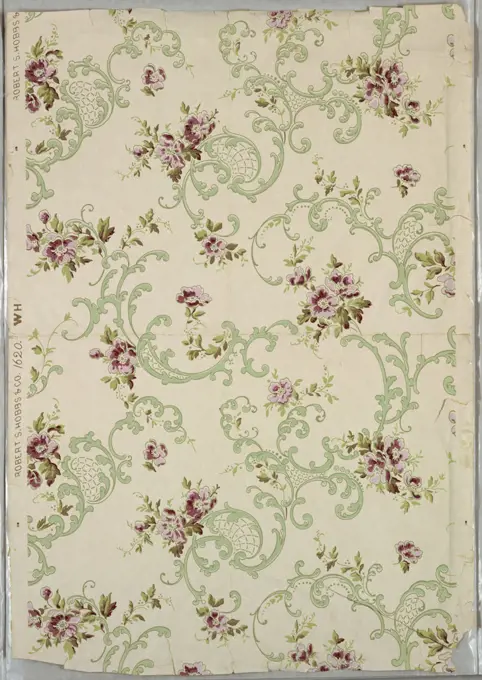
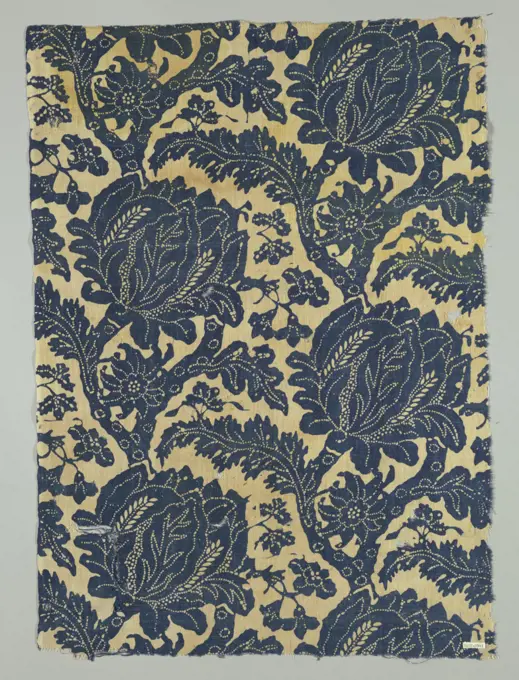
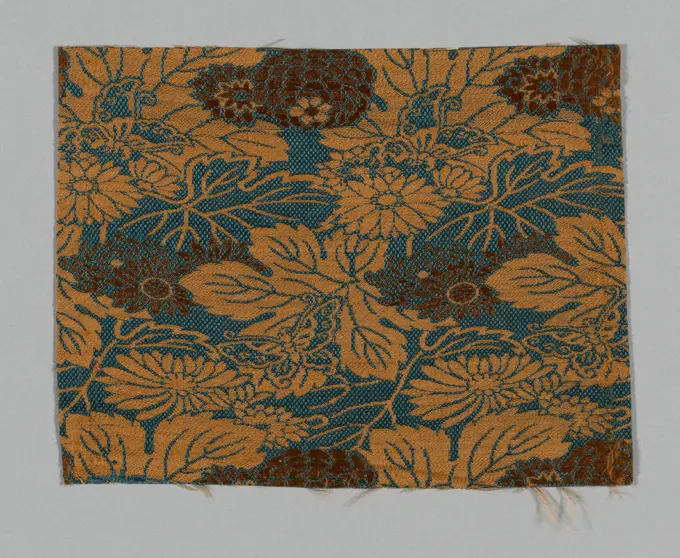
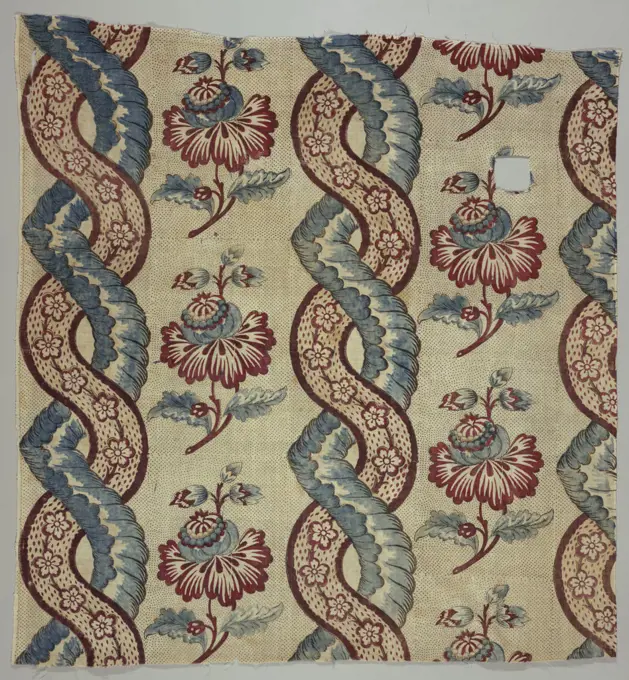
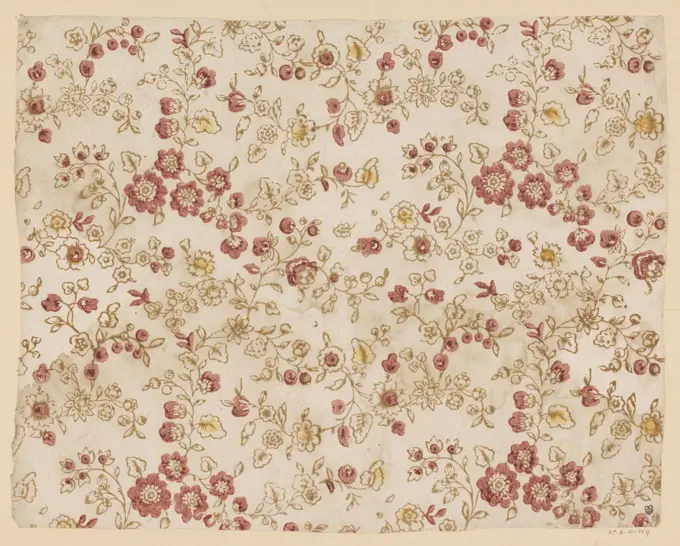
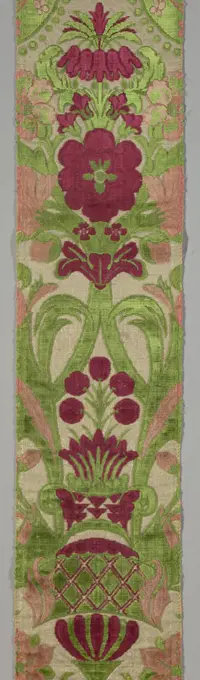
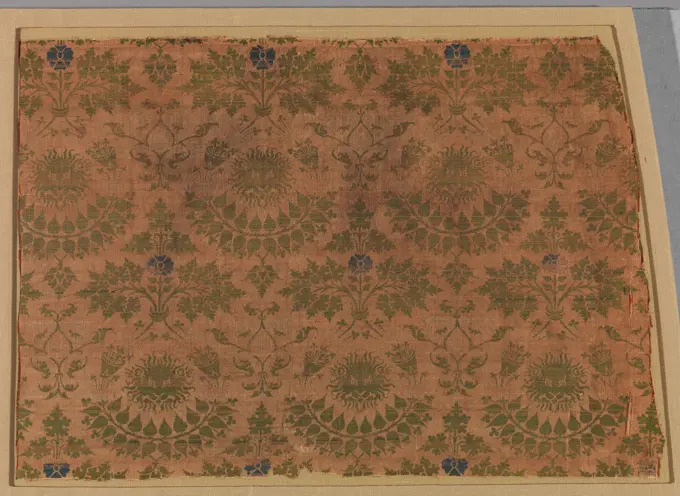
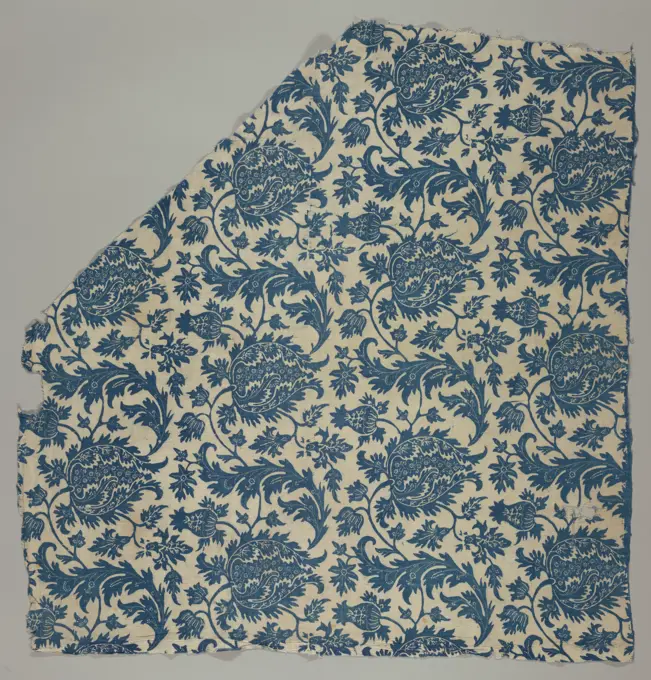
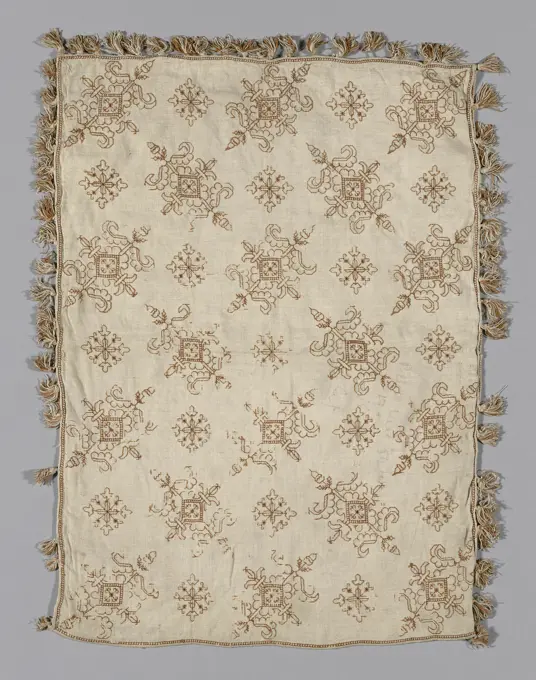
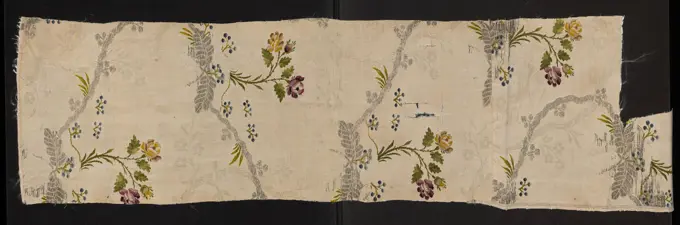
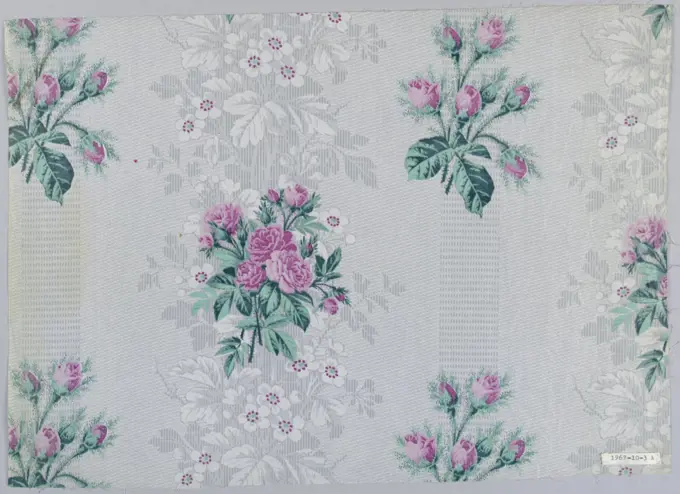
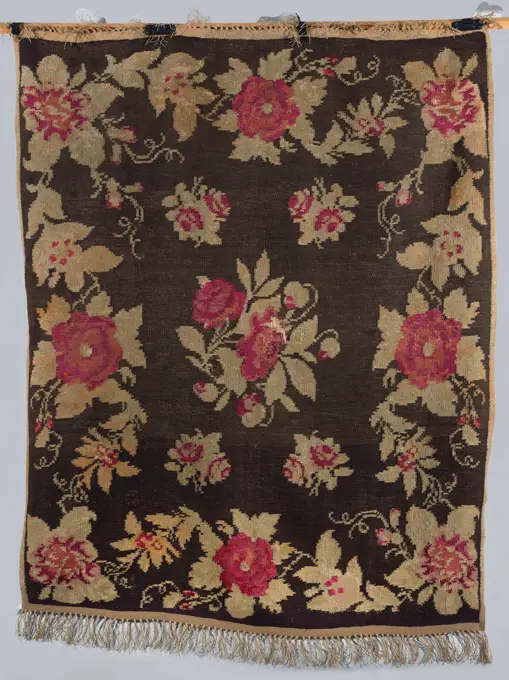
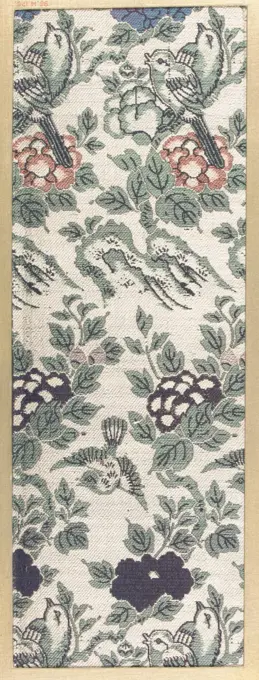
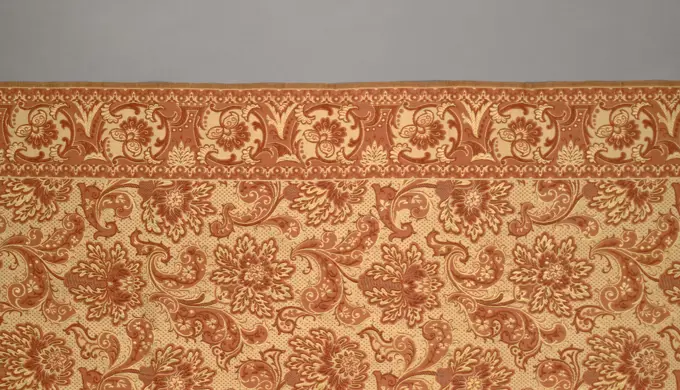
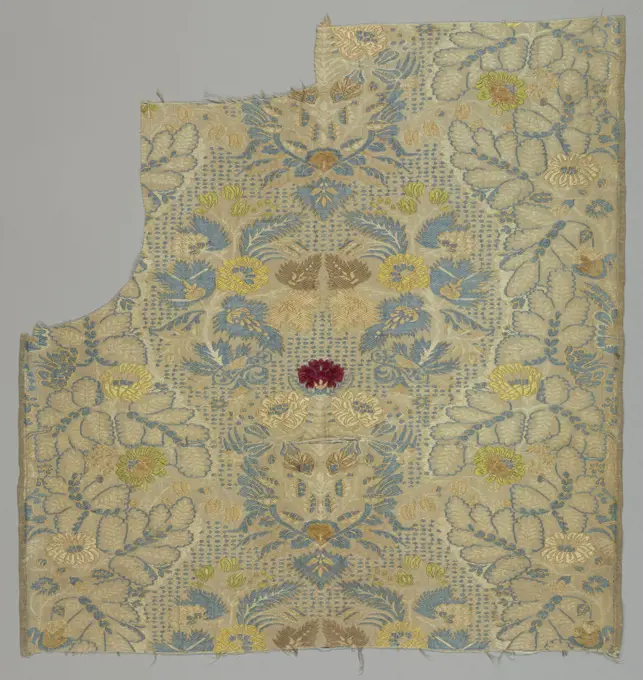
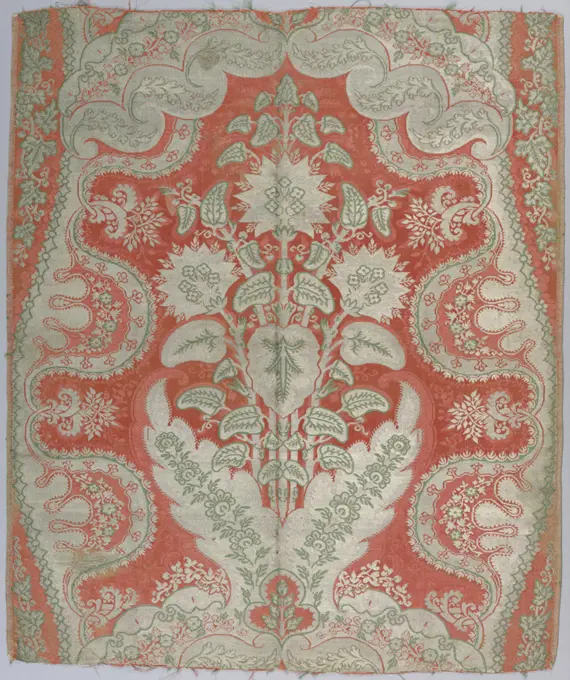
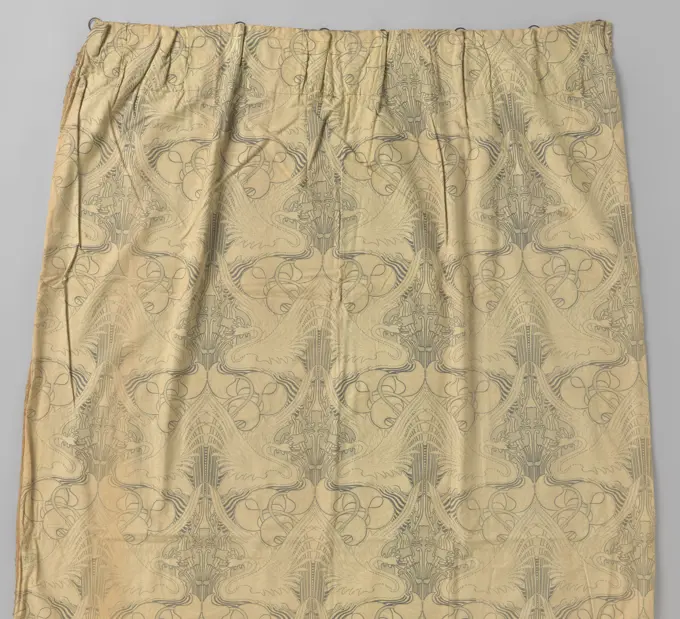
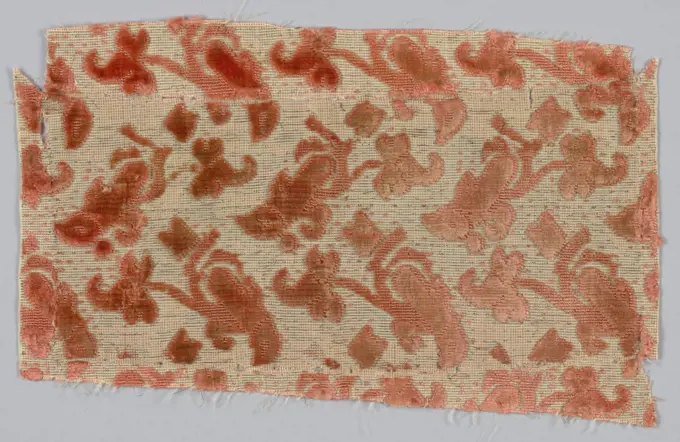
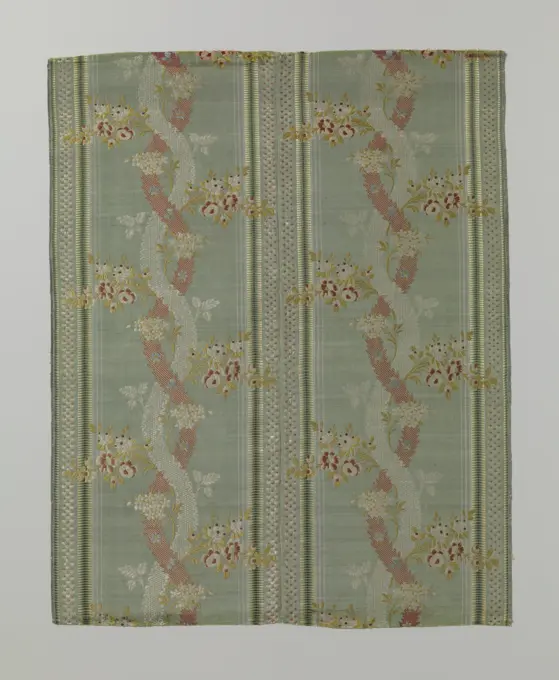
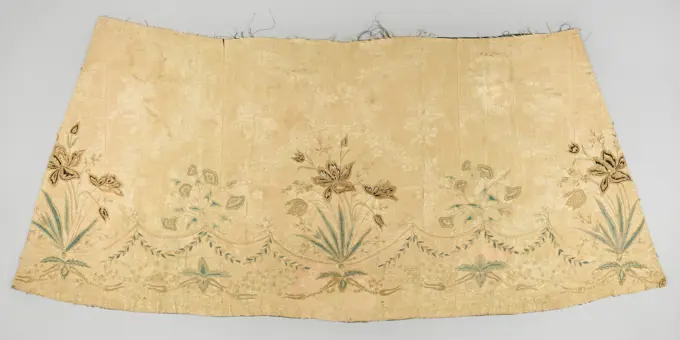
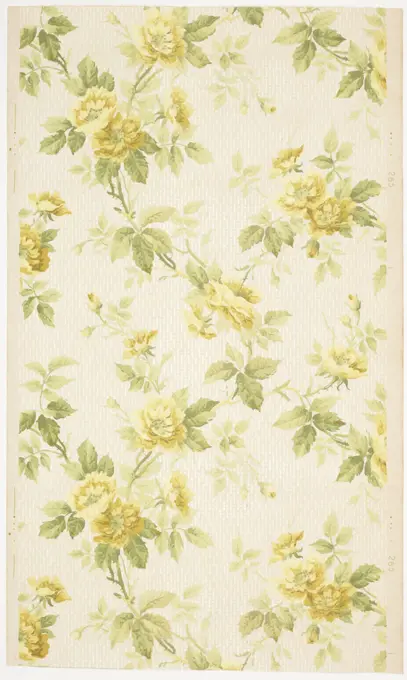
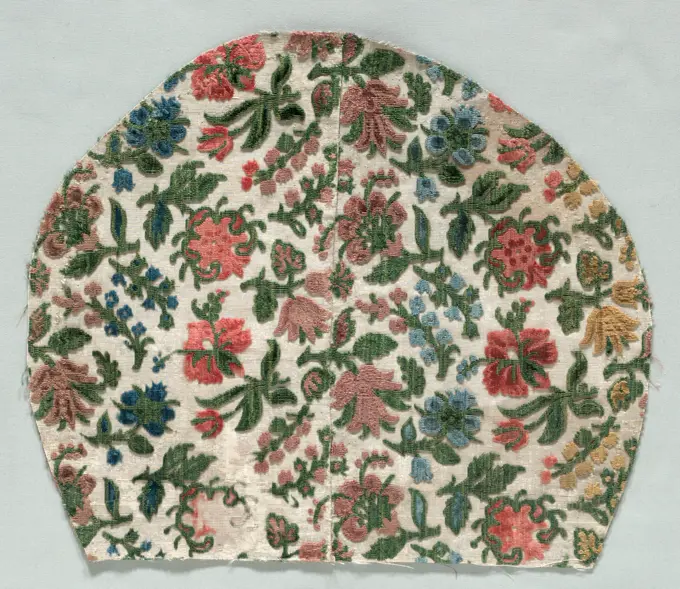
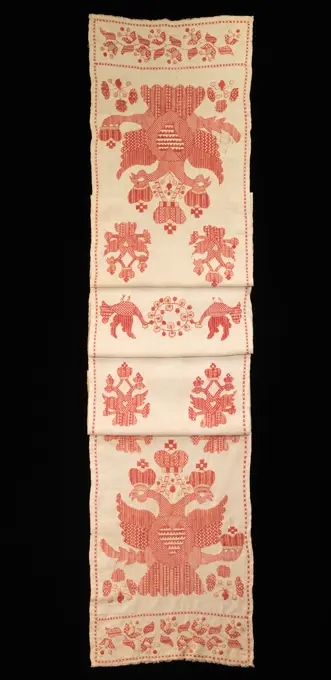
Fragment 17th century Italian. Fragment 230067Fragment (China); silk; temperaPiece early 18th century China. Piece 69956Fragment of silk fabric  two types of wavy stripes made of band and leaf motifs unknownFragment, Medium: silk Technique: woven, Floral sprays on white ground., 18th century, woven textiles, FragmentLength of Textile, 1723-1774. France, 18th century, Period of Louis XV (1723-1774). Brocade, silk; overall: 88.3 x 53.3 cm (34 3/4 x 21 in.).Panel, c. 1720, 41 x 21 in. (104.14 x 53.3 cm), Silk, metallic threads; lampas weave, France, 18th century, Elaborate silk fabric such as this was very costly to produce. It would have taken at least two highly skilled weavers, using the most sophisticated weaving technology of the period, several days to produce one yard of fabric. It undoubtedly was made as a special order and could have been used for any number of things, ranging from wall covering to men's or women's clothing. It was not until the middle of the 19th century that textiles were designed for specialty markets such as home furnishings or fashion.Fragment 18th century French. Fragment 230231Fragment of a silk tissue with a pattern of a large bouquet and pomegranate in white on blue, a so -called mosaic decor, anonymous, 1700 - 1725 Fragment of a silk tissue with a running pattern of very large flowers and a fruit. A bouquet is arranged for a hanging pomegranate. Bottom left a pear -shaped leaf with lobed contours and mosaic edges and grain. At the bottom right a loose flower, top left a poppy with a large seed ball as a heart and three extinguishing flowers. Under the leaf a curved flower branch on a sloped widened base. Note: Fragment upholstery () Of a "cheese chair". France (possibly) silk. Fragment of a silk tissue with a running pattern of very large flowers and a fruit. A bouquet is arranged for a hanging pomegranate. Bottom left a pear -shaped leaf with lobed contours and mosaic edges and grain. At the bottom right a loose flower, top left a poppy with a large seed ball as a heart and three extinguishing flowers. Under the leaf a curved flower branch on a sloped wiTextile, Medium: cotton Technique: block printed (two purples, two reds) with yellow and blue applied by brush on plain weave, Vertically symmetrical pattern of scrolls and clusters of flowers on a deep purple background., Netherlands, 1750-75, printed, dyed & painted textiles, TextileTextile, silk plain compound cloth, brocaded, strip of cream colored ribbed silk fancy plain cloth brocaded in blue, rose, green and purple silk - design of swinging slender branches and flowers - made up of five fragments and trimmed with gold ribbon and fringe., France, ca. 1750, TextileSidewall, Robert S. Hobbs & Co., Brooklyn, New York, Machine-printed, On off-white ground, green scrolling foliage frames nosegays of lavendar and purple flowers with green leaves., Brooklyn, New York, USA, 1890-1920, Wallcoverings, SidewallTextile, Medium: cotton Technique: resist printed on plain weave, Coarse cream-colored cotton printed in one shade of blue. Design shows heavy flower heads, a serrated pointed leaf; and other smaller flowers springing on short stems from branches. Design is much enhanced by lines of white dots, particularly in outlining leaves on larger flower head., probably England, 1750-1800, printed, dyed & painted textiles, TextileTextile, Medium: cotton Technique: woodblock-printed, Dense, allover floral design with roses, tulips and other flowers in shades of red, green, blue and yellow on a white ground fabric., England, mid-19th century, printed, dyed & painted textiles, TextileFragments, Medium: silk Technique: plain weave patterned by supplementary warp floats and discontinuous supplementary weft floats, Delicate floral sprays festooned with pearl and leafy garlands on ribbed red ground., France, 18th century, woven textiles, FragmentsFragment silk brocade. Fragment silk brocade. On a white ground is a gold-colored pattern in which the contours of vines are saved. Between the tendrils, medallions have been saved within which bouquets with multicolored flowers.Fragment; silk, metallics wovenFragment (Spain); silkFragment Made 1875-1900 Japan. Silk, plain weave with supplementary patterning warps and supplementary patterning wefts bound by secondary binding warps in plain interlacings .Uncut Yardage (Dress Fabric) Made 1700-1725 China. brocaded silk . ManchuTextile, Medium: cotton Technique: block printed on plain weave, France, 1770-90, printed, dyed & painted textiles, TextileTextile; cottonFragment Made 1701-1800 Italy. Silk, cut, uncut, and voided velvet against satin weave foundation .Silk and Gold Brocade Fragments, 1600-1650. Turkey, Bursa, first half of 17th century. Silk and gold: brocade; average: 134.6 x 41.3 cm (53 x 16 1/4 in.).Fragment of silk fabric in small flower pattern unknownFragment, early 1600s. Iran, early 17th century (period of Shah Abbas). Compound tabby ground with diasper pattern, brocaded; silk; overall: 28 x 46 cm (11 x 18 1/8 in.).Fragment of fabric unknownTextile, Medium: cotton Technique: relief printed on plain weave, Staggered repeat of a bouquet of flowers on a tan ground., England, mid- 19th century, printed, dyed & painted textiles, TextileSits with a pattern of flowering twigs, c. 1750 - c. 1775 Sits with a pattern of flowering twigs. General cargo. Eastern textile. With note: 'This seat costs 6 GLS the El van /W w de Vries 1776'. India cotton (textile) chintz Sits with a pattern of flowering twigs. General cargo. Eastern textile. With note: 'This seat costs 6 GLS the El van /W w de Vries 1776'. India cotton (textile) chintzDress or blowded silk cloth. Dress or cloth from bordered silk in satin binding with Liseré effect, trimmed with beige silk tape tissue and lined with épricular cotton. Dessin: Two opposite tights consisting of large-scale leaves and two ditto flowers between which a large dependent flower and two smaller flowers in green, two colors pink, salmon, yellow (brochation), white (liseré), blue, green (ground tissue). The Dessin belongs to the group of so-called naturalistic designs. The tissue consists of four fragments, probably entertained in the twentieth century to dress or cloth. Stamped at the rear with the number 23048; In the corner a linen () Label with inscription: 390348; Brocade mat 2 - 7 x 2 - 5. Potted paper with the letter S. Condition: good, exhibition table.Fragment. England or France. Date: 1715-1729. Dimensions: 51 × 53.6 cm (20 × 21 1/8 in.)Weft repeat: point repeat. Silk, silvered-metal-strip-wrapped silk, warp-float faced 7:1 satin weave with supplementary brocading wefts and self-patterned by ground wefts. Origin: England. Museum: The Chicago Art Institute, Chicago, USA.Leaf with branches with flowers, anonymous, 1700 - 1800  Leaf with tibaries with flowers.  paper. block printing (relief printing process) ornament derived from plant formsIrene Schaefer, Patchwork Quilt, c 1936 Patchwork QuiltFragment, Medium: silk Technique: plain weave patterned by supplementary warp floats and complementary weft floats, Serpentine white lace ribbons and polychrome bouquets on orange ground., mid-18th century, woven textiles, FragmentTextile, medium: silk Technique: 4&1 satin damask, Twining vines and leaves with crowns and bouquests., 16th-17th century, woven textiles, TextileLength of Textile, c. 1700. France, Lyon, early 18th century (Late Baroque). Lampas weave; silk and silver thread; overall: 94.4 x 53 cm (37 3/16 x 20 7/8 in.).Fragment 16th century Italian. Fragment 230519Fragment multicolored silk mexicaine ,, c. 1740 - c. 1760 Two fragments of multi -colored silk tissue. A purple soil has a pattern of purple stripes on which white side garlands and between which multi -colored flower garlands and flower branches. France silk Two fragments of multi -colored silk tissue. A purple soil has a pattern of purple stripes on which white side garlands and between which multi -colored flower garlands and flower branches. France silkTextile (Italy); silkFragment, Medium: silk, metallic thread Technique: cut and uncut supplementary warp pile (velvet) in a woven foundation, Narrow velvet panel in dark green, red, tan, and white has a symmetrical and highly stylized pattern of scrolling leaves, urns and flowers., Genoa, Italy, 17th century, woven textiles, FragmentFragment fabric, anonymous, 1625 - 1650 Fragment with red -brown stock decoration of stylized seed bulbs and flowers. Netherlands Necklace and impact: Linen (Material). Necklace and impact: Wool Fragment with red -brown stock decoration of stylized seed bulbs and flowers. Netherlands Necklace and impact: Linen (Material). Necklace and impact: WoolTextile with Lions' Heads, Foliate Ornament and Kufic Letter L 14th century Italian. Textile with Lions' Heads, Foliate Ornament and Kufic Letter L 468126Fragment, Medium: silk Technique: damask, Short length of red damask in a symmetrical arrangement of large flowers and scrolling leaves., China, 17th-18th century, woven textiles, FragmentSidewall (USA); Manufactured by Robert Graves Co. (United States); machine-printed; 47 x 49.5 cm (18 1/2 x 19 1/2 in.); Anonymous Gift; 1948-14-1-a/dTextile (possibly France); cotton; 1962-74-2Fragment, Medium: silk Technique: 5-harness satin damask, White damask with vertically symmetrical pattern of peonies on a vine crossed by a lace-like ribbon., China, 18th century, woven textiles, FragmentPiece 17th century Japan. Piece 71467Piece ca. 1830-40 British or American. Piece. British or American. ca. 1830-40. Cotton. Textiles-PrintedTextile; cottonFragment Made 1775-1825 Japan. Fancy compound satin, silk. .Textile; cotton ()Piece 18th-19th century Japan. Piece 67019Piece 18th-19th century Japan. Piece 66246Fragment (England); silkPanel Made 1700-1725 France. Silk and gilt- and silvered-metal-strip-wrapped silk, 4 1 satin damask weave with supplementary brocading wefts bound in weft-float faced 4 1 twill interlacings .Pillowcase Made 1601-1700 Italy. Linen, plain weave; embroidered with linen in Algerian eye, back, hem and Italian hem stitches; with attached linen tassels, wrapped and embroidered in buttonhole stitch .Fragment of the fabric;  18th century (1701-00-00-1800-00-00);fragments of silk fabrics, fabrics, patterned fabricsCeiling Paper (USA); Manufactured by York Card & Paper Co.; machine-printed paper, liquid mica; 83 x 49 cm (32 11/16 x 19 5/16 in.)Fragment 18th century Italian, Venice. Fragment 230229Textile, Schwartz-Huguenin, Medium: cotton Technique: printed by engraved roller and/or block printed on plain weave; highly glazed, Three samples, same design, different colors. A) Grey ground, probably printed by 'Molette,' in minute geometric patterns with areas of foliage in grey, with white flowers; floral pattern of rose clusters printed over ground, probably by block. B) Green ground, roses red-violet. C) Grey ground, flowers blue with grey foliage. Highly glazed, Mulhouse, Alsace, France, 1851-63, printed, dyed & painted textiles, TextileFragment multicolored brochure, anonymous, 1740 - 1760 Fragment white silk tissue with white side garlands between which multi -colored flower vessels.  silk Fragment white silk tissue with white side garlands between which multi -colored flower vessels.  silkCover (Italy); silk on linen, metallic laceLength of Textile, 1774-1793. France, 18th century, Period of Louis XVI (1774-1793). Brocade, silk; overall: 70.5 x 54.9 cm (27 3/4 x 21 5/8 in.).Dworski Kilim;  Ok. PO. 19th century (1845-00-00-1855-00-00);Krystall, Bronisław (1887-1983) - collection, flowers, roses, decorative fabrics, testamental record (provenance)Piece 18th-19th century Japan. Piece. Japan. 18th-19th century. Silk. Edo period (1615-1868). Textiles-WovenTextile; silk, metallic threadFragment (Japan)Textile, Medium: silk, metallic thread Technique: plain compound satin with supplementary weft, Flowers and acanthus leaves in gold on silver background. Flowers shaded red, blue, violet and green. Fragment has trimming of silk stripes., Russia, late 18th century, woven textiles, TextileTextile (Russia); silk, metallic threadScarf Made 1865-1900 Belgium. Cotton, mixed lace of needle lace and bobbin part lace of a type known as Duchesse de Bruxelles .Fragment (England); woolTextile (India); plain weave cotton; Warp x Weft: 104.9 x 49.1 cm (41 5/16 x 19 5/16 in.)Fragment, Medium: linen Technique: needle lace, Fragment of a band with a variety of leafy fronds and flowers., probably France, early 18th century, lace, FragmentFragments; silkWoven portiere ca. 1890 American. Woven portiere. American. ca. 1890. Cotton, woven. Probably made in United StatesExcerpt multicolour silk dam mast ,, 1690 A fragment of pink and greenish striped silk tissue with darker pink and green flowers. NOTE: GLATED OFFERS. France silk damask A fragment of pink and greenish striped silk tissue with darker pink and green flowers. NOTE: GLATED OFFERS. France silk damaskSample, Orinoka Mills, (Philadelphia, Pennsylvania, USA), brown/red warp with white and gold color wefts making pattern of flowers and swags, USA, ca. 1910, woven textiles, SamplePiece 18th-19th century Japan. Piece 67206Textile (Russia); silk, linen, metallic threadFragment, Medium: silk Technique: plain weave with discontinuous supplementary weft petterning (brocade), Fragment with large scale symmetrical floral pattern in cream and blue with details brocaded in yellow and brown, on a bone colored ribbed ground. Bright red flower in chenille at center., possibly Spain, possibly Portugal, 18th century, woven textiles, FragmentSample, Séguin et Cie, Medium: silk, metallic thread Technique: fancy satin brocaded with gold, Bright blue satin with ground figures of stiffly symmetrical acanthus leaves. Wreaths, rosettes, and acanthus leaves brocaded in plain and frisé gold thread., Lyon, France, ca. 1805, woven textiles, SampleTextile, Medium: silk, metallic yarns Technique: compound satin weave with discontinuous supplementary weft patterning (brocade), Brocaded silk damask fragment showing symmetrical design with large-scale floral motif derived from the pomegranate, on either side a lace-like serpentine. Rose ground, brocaded with silver and green silks. Both selvages present., France, ca. 1720, woven textiles, TextileFragments; silkTextile; silkDoor curtain of printed cretonne with swans and Lissen, Michiel Duco Crop, c. 1900 Door curtain of printed cretonne with swans and llissen and on three sides with a passement and with metal rings. Netherlandsmaker: Helmond linen (material). metal printing Door curtain of printed cretonne with swans and llissen and on three sides with a passement and with metal rings. Netherlandsmaker: Helmond linen (material). metal printingLength of Silk Textile, 1600s. Italy, 17th century. Damask, silk; average: 108.6 x 57.2 cm (42 3/4 x 22 1/2 in.).Fragment, Medium: silk, metallic thread Technique: cut and uncut supplementary warp pile (velvet) in a woven foundation, Small fragment of cut and uncut orange velvet in a white ground shot with metallic threads. Pattern has small leafy sprigs., Italy, 16th-17th century, woven textiles, FragmentTwo pieces of multi -colored silk tissue, Anonymous, 1750 - 1799 Two fragments of a silk tissue. Two winding tires in red and white on a green ribbed soil. Branches with yellow-green leaves and red flowers. Three edges on either side, one of which is a wide and a narrow in various shades of green. Note: Self -sides; 0.3 cm Effenbinding (2 lace threads). France silk Two fragments of a silk tissue. Two winding tires in red and white on a green ribbed soil. Branches with yellow-green leaves and red flowers. Three edges on either side, one of which is a wide and a narrow in various shades of green. Note: Self -sides; 0.3 cm Effenbinding (2 lace threads). France silkFragment of embroidery unknownSilk Fragment, 1725-1774. France or Spain, 18th century. Plain cloth, brocaded; silk and metal; average: 119.4 x 55.6 cm (47 x 21 7/8 in.).Sidewall, Machine-printed paper, liquid mica, Overall large yellow rose vining with a background of vertical white mica bead and reel stripes. Printed in greens, yellows white mica, and green browns on off-white ground., USA, 1905-1915, Wallcoverings, SidewallVelvet Fragment, late 1600s. Italy, Genoa, late 17th century. Velvet (cut, uncut, voided); silk and metallic threads; overall: 35.6 x 30.5 cm (14 x 12 in.).Fragment 18th century Italian. Fragment 230243Fragments Of Skirt; silk, cottonTowel 1780-1820 Russian This object is from the collection of Natalia de Shabelsky (1841-1905), a Russian noblewoman compelled to preserve what she perceived as the vanishing folk art traditions of her native country. Traveling extensively throughout Great Russia, she collected many fine examples of textile art of the wealthy peasant class. From the 1870s until moving to France in 1902, Shabelsky amassed a large collection of intricately embroidered hand-woven household textiles and opulent festival garments with rich decoration and elaborate motifs. The Brooklyn Museum holdings include many fine examples including the majority of the garments. Portions of Shabelsky's collection are also housed at the Museum of Fine Arts, Boston, the Cleveland Art Museum, and the Russian Museum of Ethnography in St. Petersburg.Towels such as these were used for ceremonial as well as decorative purposes. In wedding ceremonies the length of the towel was used to bind the couple together, both literally aPiece 18th century Japan (Ryūkyū Islands). Piece 70735Fragment (France); silk; Bequest of Richard Cranch Greenleaf in memory of his mother, Adeline Emma Greenleaf; 1962-56-190-aTextile, Medium: silk Technique: woven, Three lengths of a brilliant red silk taffeta brocaded in gold showing framework surrounded by naturalistic floral clusters., France or Morocco, early 19th century, woven textiles, TextileFragment (Italy); silk; a) Warp x Weft: 54.5 x 46.2 cm (21 7/16 x 18 3/16 in.) b) Warp x Weft: 55 x 48 cm (21 5/8 x 18 7/8 in.)Excerpt multicolour, anonymous, 1600 - 1699 A silk tissue, on a gold poker-colored soil in white, blue and green, a pattern of flower branches with birds (twill on satin).  silk A silk tissue, on a gold poker-colored soil in white, blue and green, a pattern of flower branches with birds (twill on satin).  silk