Historical Silk Fabric Fragments

A collection of intricate silk fabric fragments featuring floral motifs and rich colors from 17th to 18th century Italy and China. The fabrics vary in texture and design.
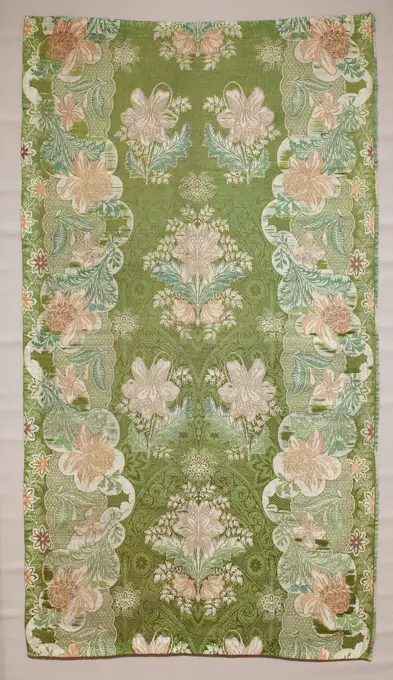
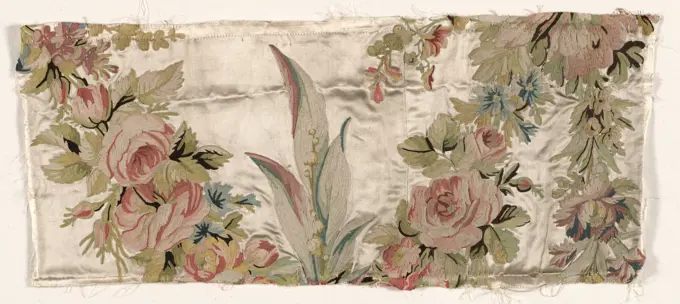
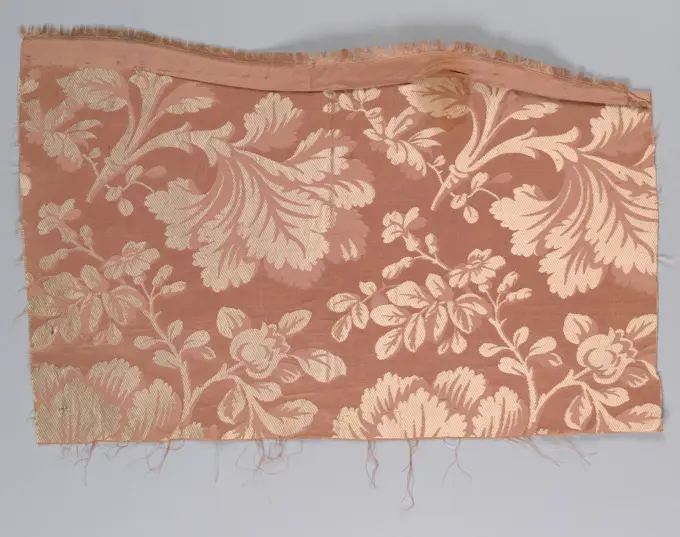
Panel, c. 1720, 41 x 21 in. (104.14 x 53.3 cm), Silk, metallic threads; lampas weave, France, 18th century, Elaborate silk fabric such as this was very costly to produce. It would have taken at least two highly skilled weavers, using the most sophisticated weaving technology of the period, several days to produce one yard of fabric. It undoubtedly was made as a special order and could have been used for any number of things, ranging from wall covering to men's or women's clothing. It was not until the middle of the 19th century that textiles were designed for specialty markets such as home furnishings or fashion.
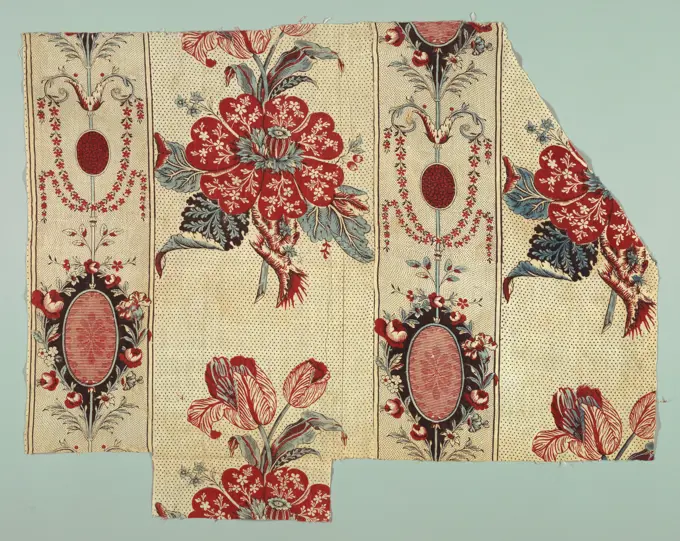
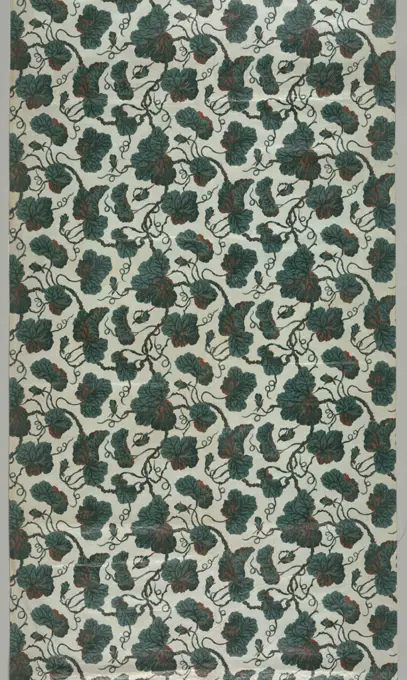
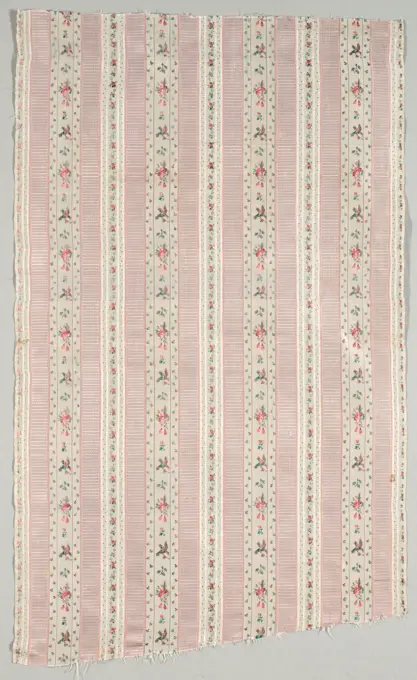
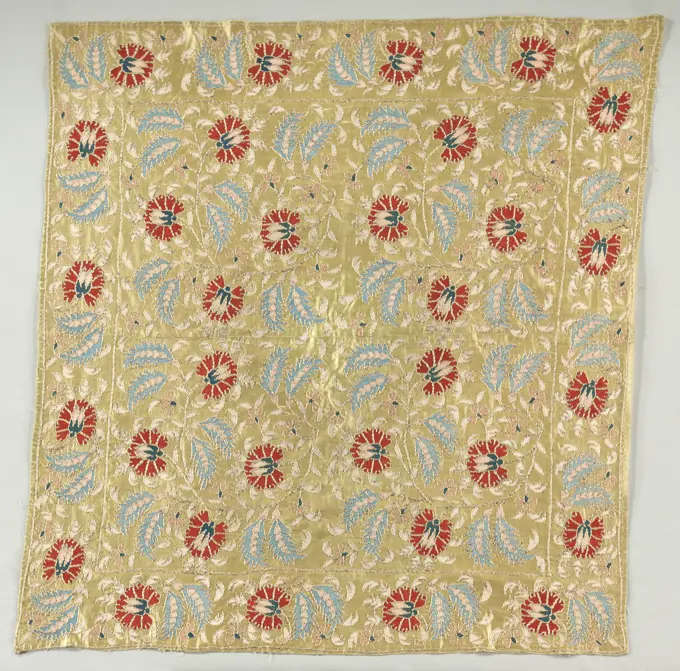
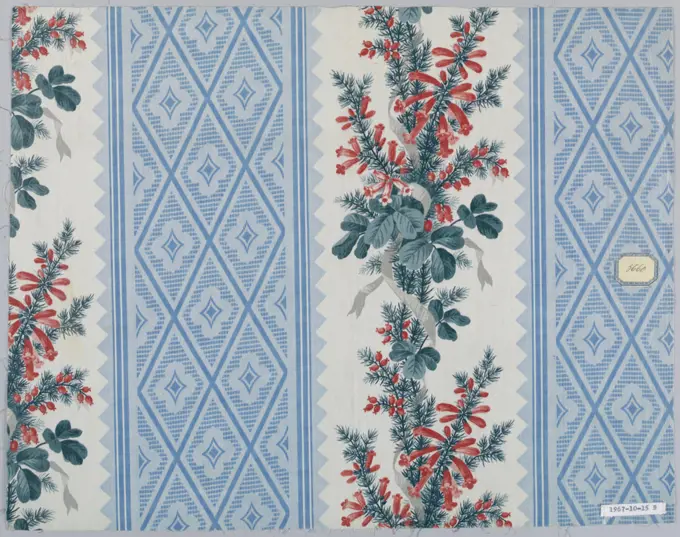
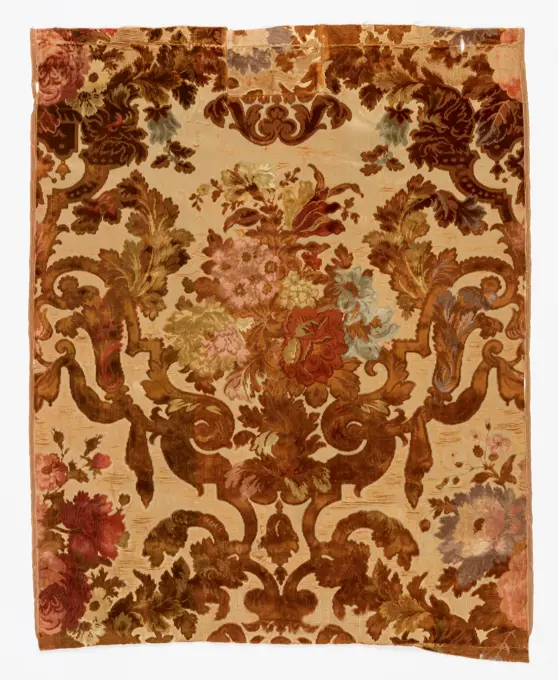
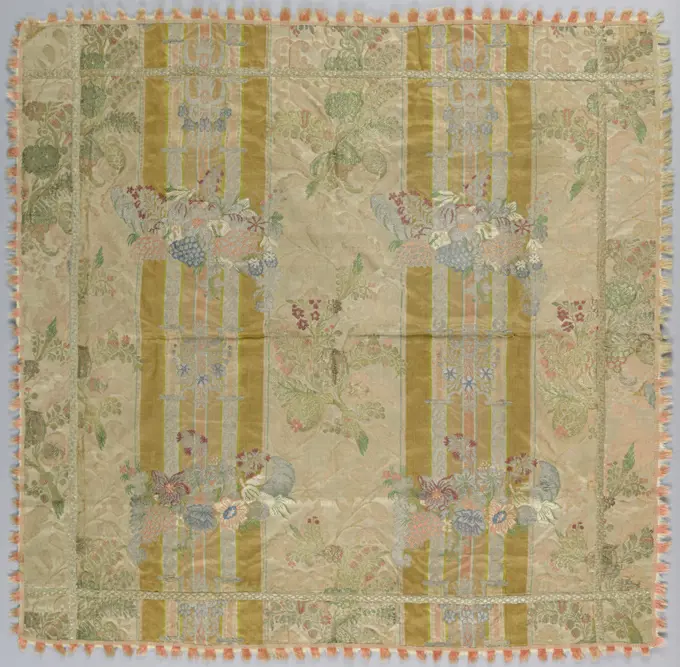
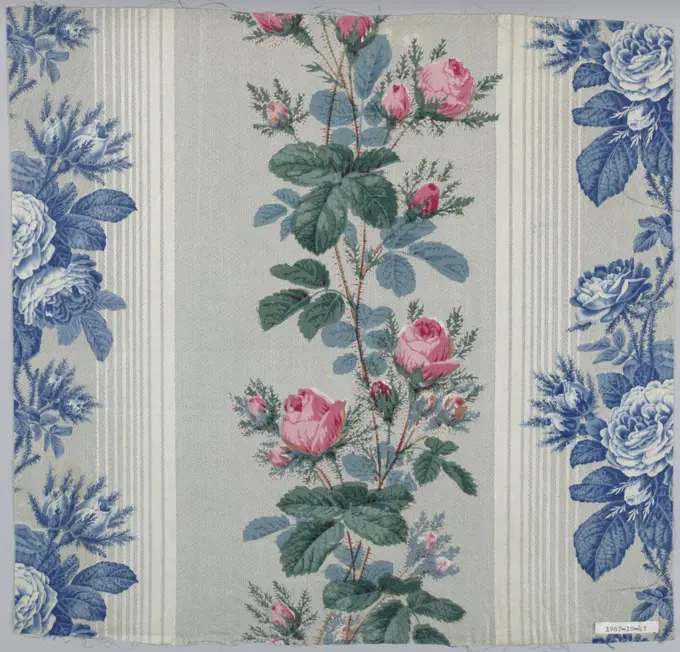
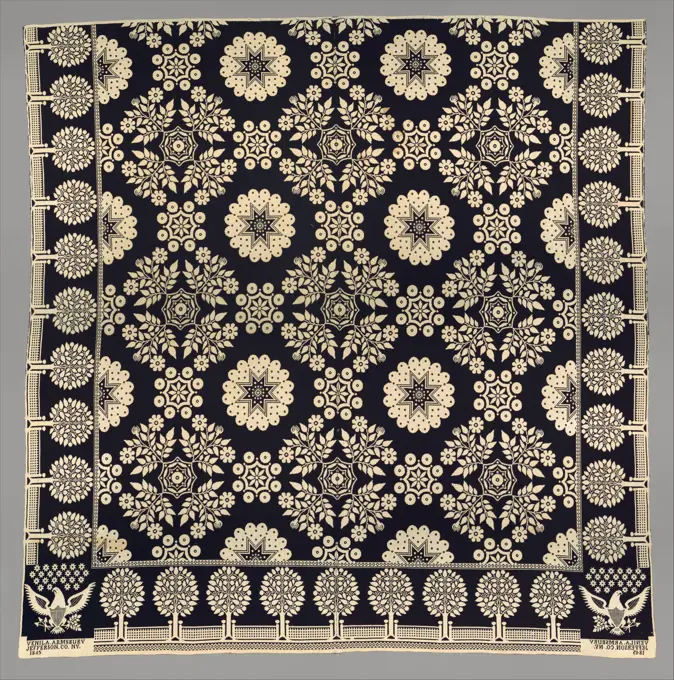
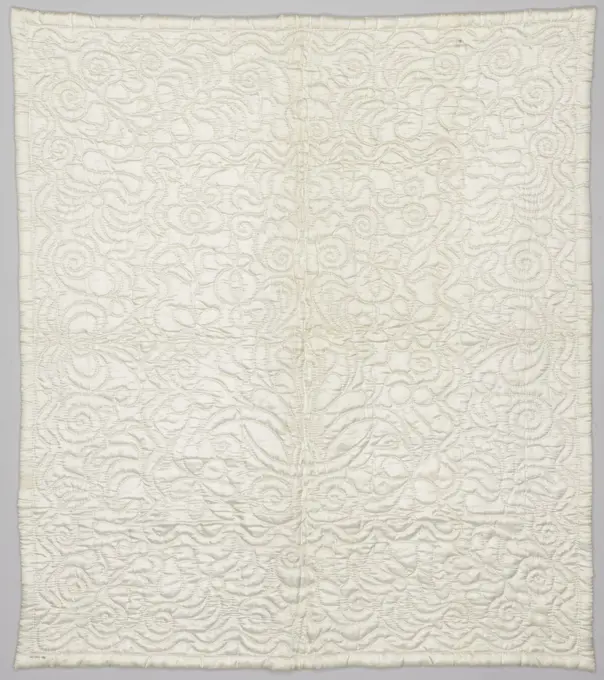
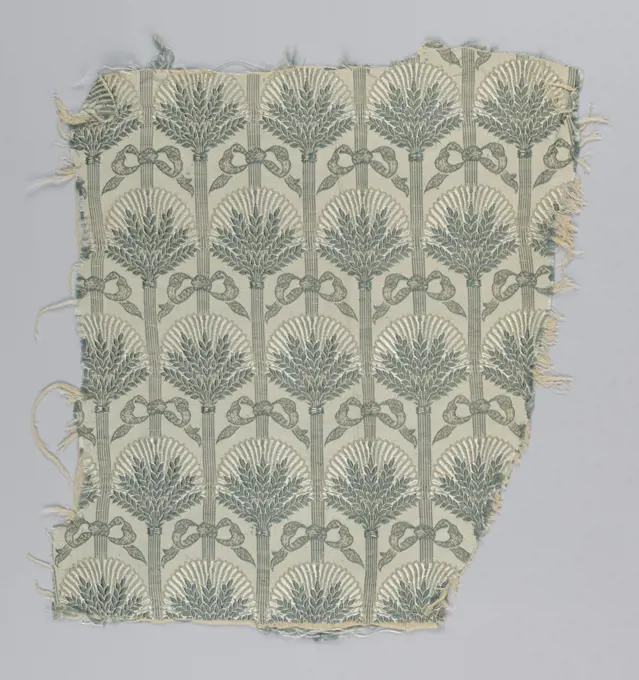
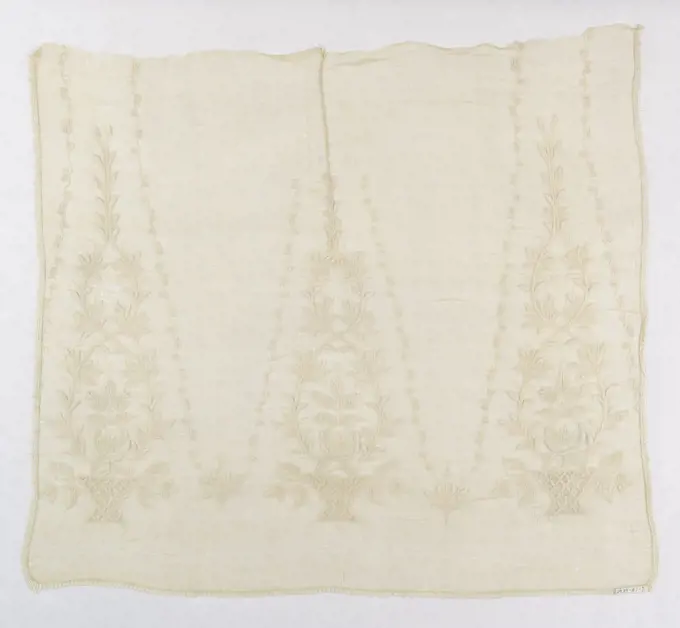
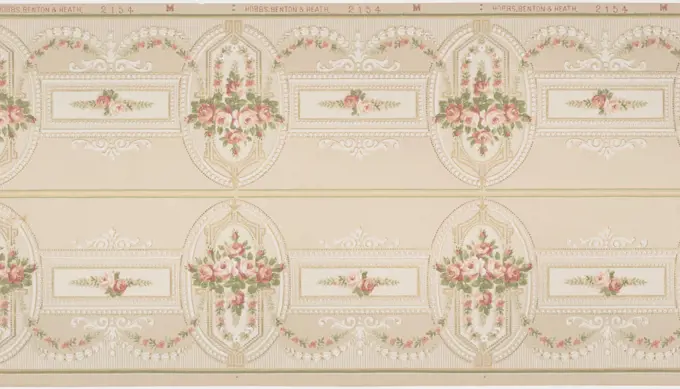
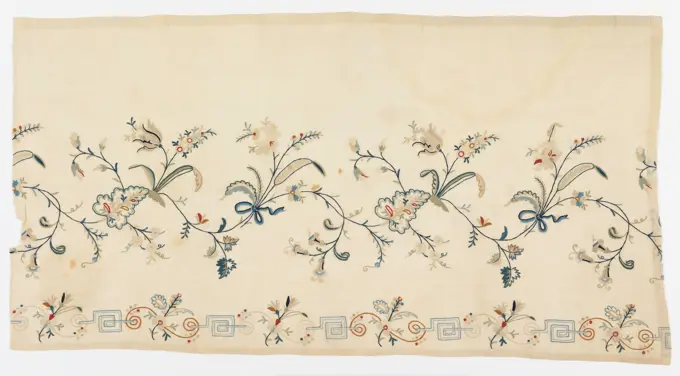
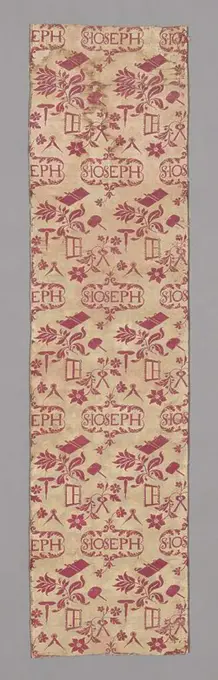
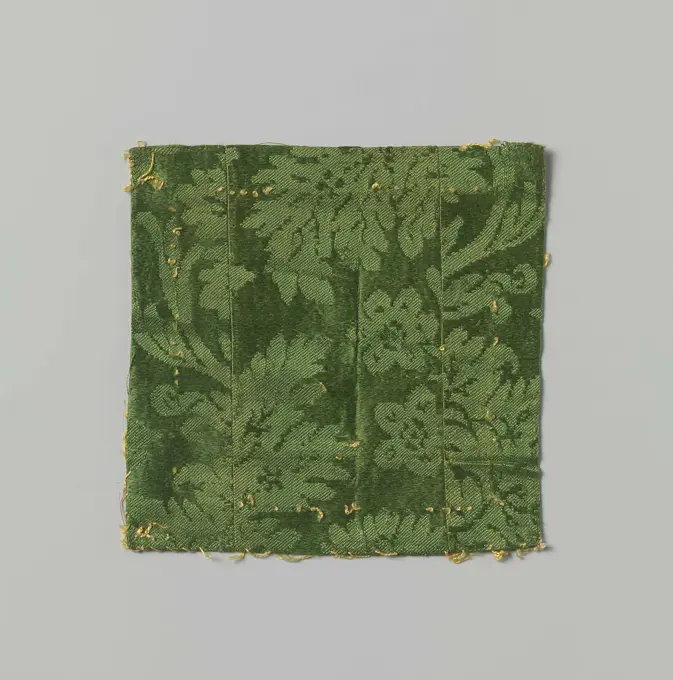
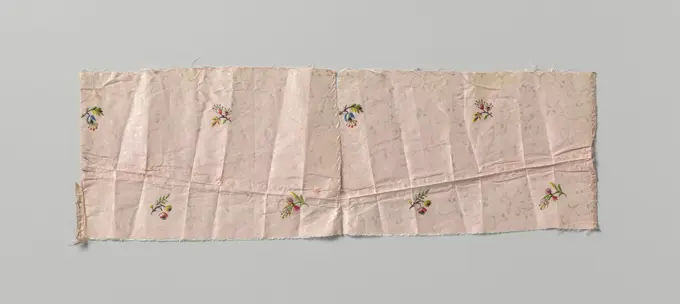
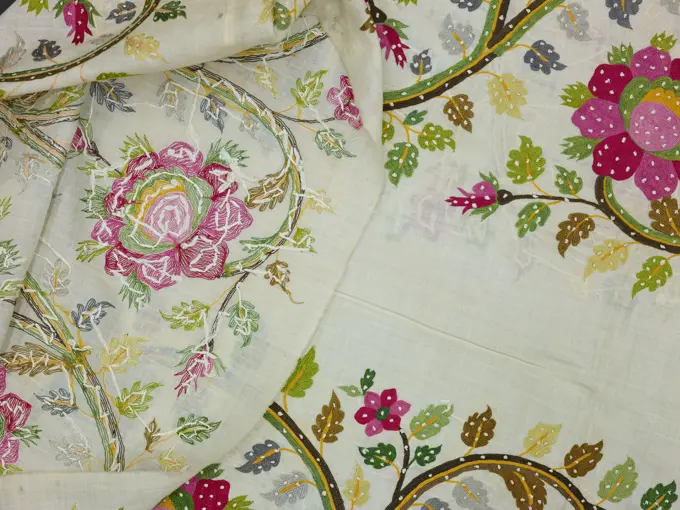
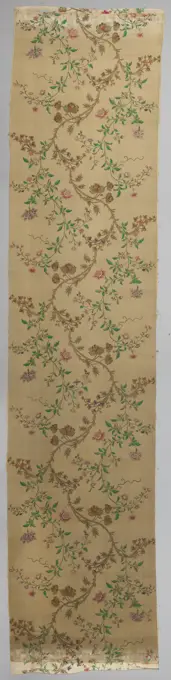
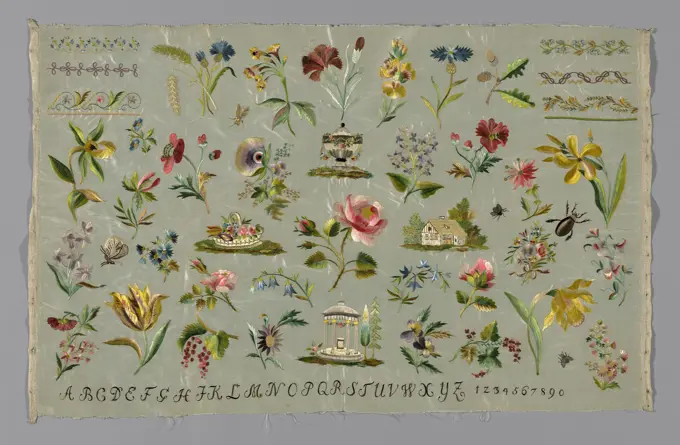
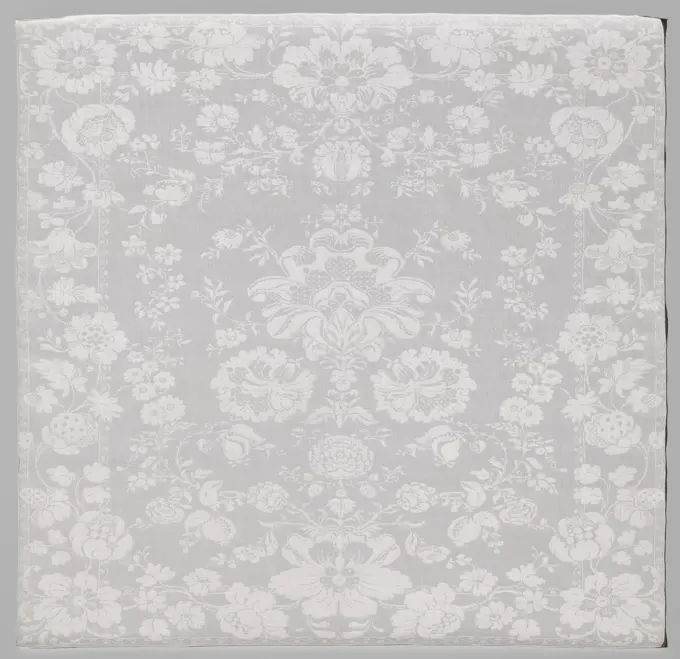
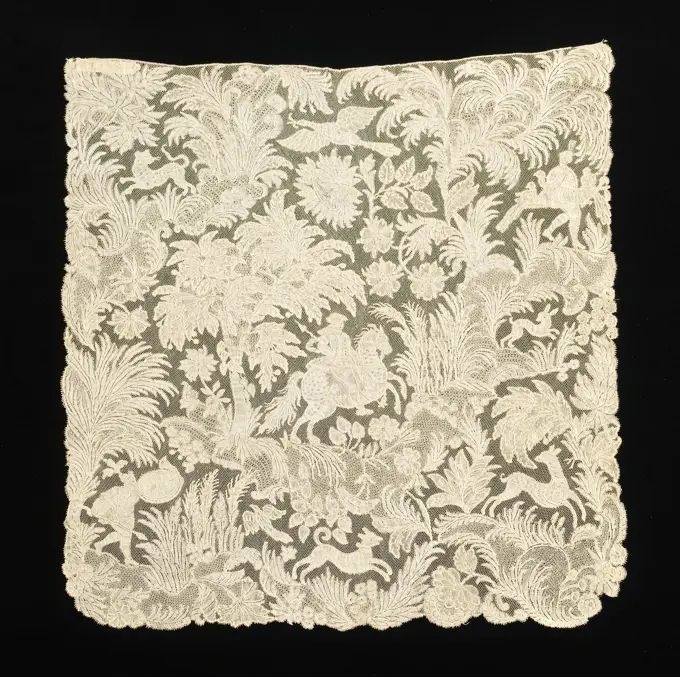
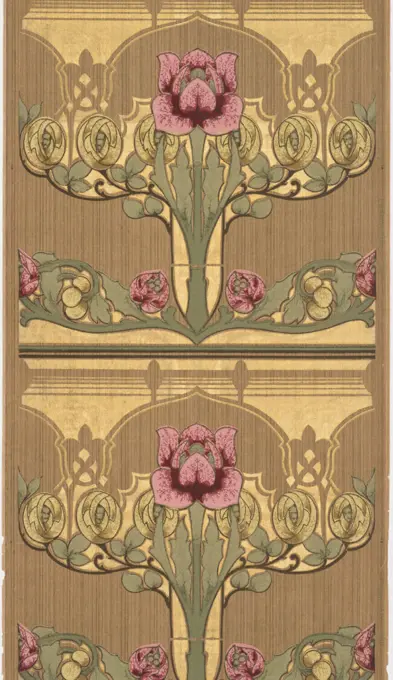
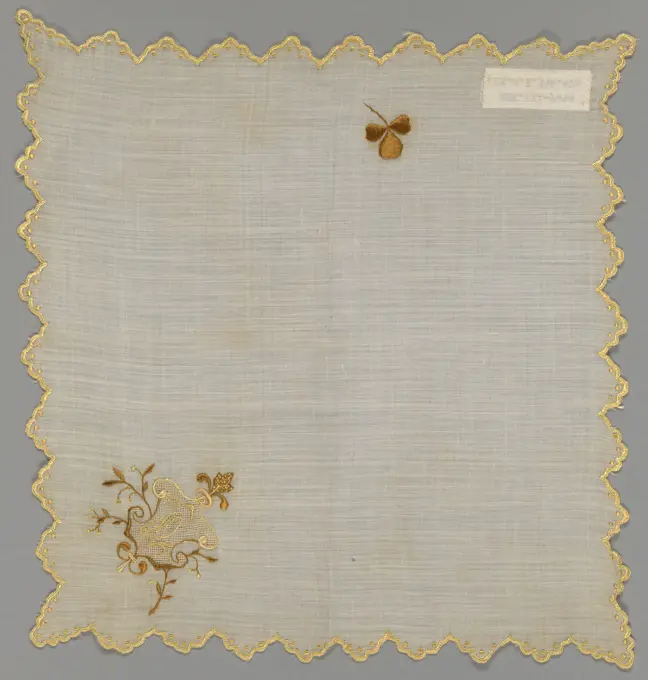
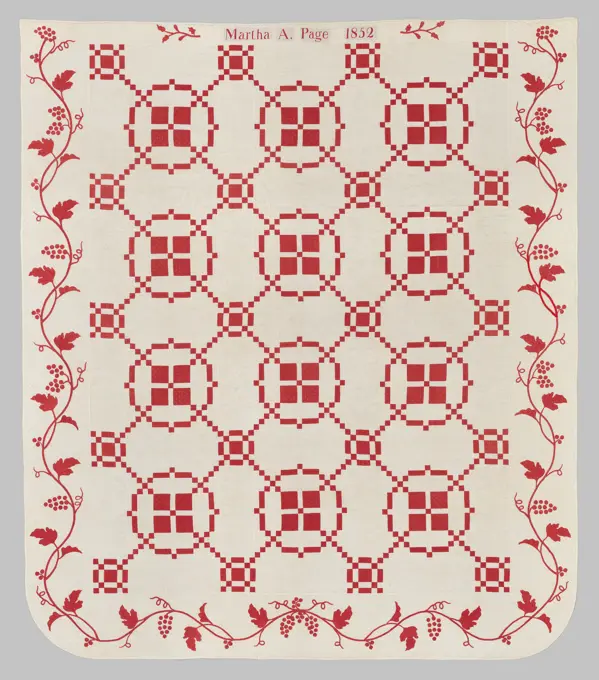
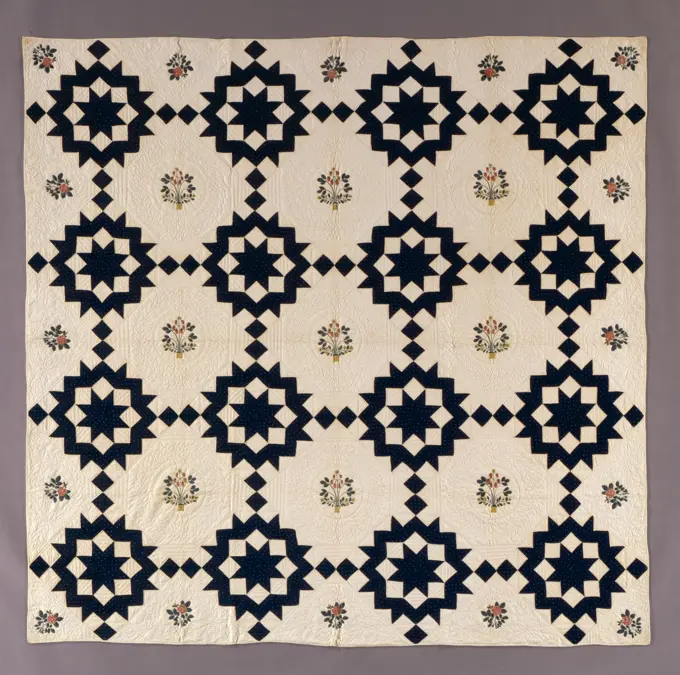
Fragment 16th-17th century Italian. Fragment 230595Textile, Medium: cotton Technique: printed by engraved roller on plain weave., Flower buds and grape-like leaves in dark greens and brown on a background of enlarging crosses., England, 1850-1900, printed, dyed & painted textiles, TextileTextile; silk, metallic yarns; 1975-79-24Sidewall (France); painted, stencilled , canvasChair Seat ca. 1740 Sarah Tyler. Chair Seat 13587Coverlet Fragment, c. 1760-1770. Philippe de Lasalle (French, 1723-1805). Embroidered satin and silk; overall: 21.6 x 50.8 cm (8 1/2 x 20 in.).Textile (England); cottonLength of Cloth, 1774-1793. France, 18th century, period of Louis XVI (1774-1793). Plain cloth, warp brocade; overall: 92 x 54.3 cm (36 1/4 x 21 3/8 in.).Textile, Medium: wool, silk Technique: embroidered on twill foundation; satin lining, Table cover of olive-drab woolen cloth embroidered in color silks in design of scrolling stems with flowers; lined with pink silk satin., England or USA, 1880-1890, embroidery & stitching, TextileRug Made 1801-1900 United States. Linen and cotton plain weave with wool yarns forming hooked pile .Embroidered Cover, 18th century. Turkey, 18th century. Embroidery; silk and gold filé on silk ground; average: 107.3 x 109.9 cm (42 1/4 x 43 1/4 in.).Panel Made 1725-1750 France. Silk, plain weave with plain interlacings of secondary binding warps and supplementary patterning wefts .Textile, Schwartz-Huguenin, Medium: cotton Technique: printed by engraved roller on plain weave, A) Ground divided into broad stripes, one fancy ground of gray with small rosebuds in darker gray; broad white stripe with stiff green foliage bearing pink bell-shaped blossoms., B) Similar ground plan but with broad blue stripe made of diamond shapes., 1851-63, printed, dyed & painted textiles, TextilePiece 18th-19th century Japan. Piece 65920Fragments of embroidery unknownFragment Made 1601-1650 Italy. silk damask .Piece 18th century Japan. Piece 71355Fragments (France); silkFragment; cotton; Warp x Weft (selvedge on one side): 45 x 31 cm (17 11/16 x 12 3/16 in.) Repeat H (straight): 22.5 x 17.8 cm (8 7/8 x 7 in.)Textile (France); Anonymous bequest in memory of Albert and Rebecca Elsberg; 1938-82-1-dTextile, Medium: silk, metal foil wrapped silk Technique: 4&1 satin damask brocaded with silks and various foil-wrapped silks., Cornucopia supported by pillars and bracket plus branch of flowers in multi-color silks, silver, and gold on striped damask with related floral pattern. Seams covered by narrow woven tape that also creates a border effect. Salmon and white woven tape with weft fringe at one edge, sewn to four sides., Europe, late 17th century, woven textiles, TextilePiece 18th-19th century Japan. Piece 66053Piece 18th-19th century Japan. Piece 67762Sampler; silk embroidery on wool foundationMulticolored silk tissue, 1740 - 1760 Four fragments of a silk tissue. Loose asymmetrical bouquets on a slightly beige stock. With saumon, blue, yellow and red colored flowers. Two jobs sewed four half jobs together. Somewhat damaged. Note: Self -sides; 0.6 cm, plain binding. France (possibly) silk Four fragments of a silk tissue. Loose asymmetrical bouquets on a slightly beige stock. With saumon, blue, yellow and red colored flowers. Two jobs sewed four half jobs together. Somewhat damaged. Note: Self -sides; 0.6 cm, plain binding. France (possibly) silkBliżej Kultury unknownTextile Fragment with Design of Rosettes in Ogival FrameworkTextile, Schwartz-Huguenin, Medium: cotton Technique: printed by engraved roller and block printed; glazed, Ground broad fancy grey stripe, composed of minute dots. Flower design printed over ground; spray of pink moss roses with bright green foliage alternating with sprays of roses in shades of blue-glazed., Mulhouse, Alsace, France, 1851-63, printed, dyed & painted textiles, TextileSample (USA); Manufactured by Orinoka Mills (United States); Warp x Weft: 32 x 48 cm (12 5/8 x 18 7/8 in.)Sample books 19th century British. Sample books 222095Fragment, Medium: silk Technique: supplementary warp in cut and uncut pile on a satin foundation (velvet), Swinging branches with pomegranates and tulips in red on yellow. Red cut and uncut velvet design of swinging branches with tulips and foliage, on yellow satin ground. Ciselè voided satin velvet., Spain, 17th century, woven textiles, FragmentFragment multicolored silk tampas, anonymous, 1680 - 1750 Fragment multicolored silk tissue, with a white soil on which a pattern of flower branches around a flower bouquet. France (possibly) silk lampas (textile material) Fragment multicolored silk tissue, with a white soil on which a pattern of flower branches around a flower bouquet. France (possibly) silk lampas (textile material)Piece 18th-19th century Japan. Piece 67018Textile, Medium: silk, metallic thread Technique: plain satin, brocaded, All-over pattern of stylized floral forms brocaded in tan and tinsel threads on a red satin ground., Italy, 17th century, woven textiles, TextileFragments (France); cotton; metal threadsPiece 19th century Japan. Piece 71710Textile (France); Company: J.I. Meiller et Cie; cotton; Warp x Weft: 66.5 x 83.5 cm (26 3/16 x 32 7/8 in.)Fragment satin on which a blue embroidered branch, c. 1400 - c. 1950 Fragment cream -colored satin on which a branch is embroidered in different shades of light blue. Eastern textile. China (possibly) satin embroidering Fragment cream -colored satin on which a branch is embroidered in different shades of light blue. Eastern textile. China (possibly) satin embroideringTextile (France); silk, cottonPiece 18th-19th century Japan. Piece 66420Chiné piece, late 19th-early 20th century, 30 1/2 x 20 in. (77.47 x 50.8 cm), Silk; printed fabric, France, 19th-20th centurySidewall, stamped leather, silvered, varnished, and painted, Diapered field, varnished silver; foliage in green, flowers in green and blue (Louis XV painted leather), Holland, ca. 1750, Wallcoverings, SidewallGenopte and sliced velvet with stylized flower tuils, in light green-blue. Coating or scanning fabric of gene and sliced velvet with stylized flower tuils, in light green-blue.Strip of Brocade, late 1700s. England, Spitalfields, late 18th century. Silk; overall: 57.2 x 50.8 cm (22 1/2 x 20 in.).Drawing, Design for Textile or Wallpaper; France; brush and watercolor, gouache, pen and blue ink on paper mounted on cream wove paper; 7.8 x 8.7cm (3 1/16 x 3 7/16in.)Coverlet 1845 Harry Tyler. Coverlet. American. 1845. Wool and cotton, woven. Made in New York, United StatesSprei with pattern of volutes ,, c. 1690 - c. 1750 Children's spread of stitched ecru sides. Pattern with volutes. Northern Netherlands silk Children's spread of stitched ecru sides. Pattern with volutes. Northern Netherlands silkHandkerchief with a border of bobbin with Drieblad, Anonymous, c. 1925 - c. 1935 Handkerchief with a border of natural -colored bobbin: fine bridge flower arrangements. Around a four -lobbish linen cloth is set up, which cuts the lobes with a flower and a leaf in the middle of the sides. The side has a two -sided symmetrical pattern on a braid ground. In the corners there is an oval, from which four curved stems sprout, including with a three -sheet and blossoms. Netherlands (possibly) linen (material) bobbin lace Handkerchief with a border of natural -colored bobbin: fine bridge flower arrangements. Around a four -lobbish linen cloth is set up, which cuts the lobes with a flower and a leaf in the middle of the sides. The side has a two -sided symmetrical pattern on a braid ground. In the corners there is an oval, from which four curved stems sprout, including with a three -sheet and blossoms. Netherlands (possibly) linen (material) bobbin lacePiece 18th-19th century Japan. Piece. Japan. 18th-19th century. Silk. Textiles-WovenFragment silk tissue with multi -colored embroidery., C. 1750 - c. 1899 Fragment silk tissue with embroidery. The tissue has a pink soil on which a white scalloped tire with branches and brushes along the edge. Bloemlingers and ribbons with bows are embroidered on the white tire.  satin. silk embroidering Fragment silk tissue with embroidery. The tissue has a pink soil on which a white scalloped tire with branches and brushes along the edge. Bloemlingers and ribbons with bows are embroidered on the white tire.  satin. silk embroideringTextile; silk; Warp x Weft: 248 x 195 cm (8 ft. 1 5/8 in. x 6 ft. 4 3/4 in.); dimensions reflect size before separation of componentsFragment (Italy); silkPanel Made 1725-1775 England. Silk, satin weave with supplementary brocading wefts and self-patterning ground weft floats .Textile, Material: cotton, silk Technique: woven, All-over pattern of vertical stripes or pillar supporting offset rows of a fan shaped group of leaves topped by a ribbon bow. Pattern in green and ivory on a light grey background., late 19th-early 20th century, woven textiles, TextileSidewall And Border (USA); machine-printed, glazed; 37 x 48 cm (14 9/16 x 18 7/8 in.)Fragment, Medium: silk, Flowering sprays with bird and butterflies on green satin., 18th century, woven textiles, FragmentRobert Stewart, Ingrain Carpet, c 1936 Ingrain CarpetTextile (France); Warp x Weft (selvedge on left): 51 x 23 cm (20 1/16 x 9 1/16 in.) Repeat H (half-drop): 18.1 cm (7 1/8 in.)Ribbon fragment, Medium: silk Technique: woven, Olive satin ground with chrysanthemums facing in two different directions., France, late 19th century, trimmings, Ribbon fragmentWaistcoat fragments, Medium: silk Technique: satin stitch embroidery on taffeta, Three waistcoat fragments include the lower central parts and one pocket flap. All embroidered in a design of flowers and leaves on a white ground., France, ca. 1770, costume & accessories, Waistcoat fragmentsTextile; silkTextile, Medium: cotton on piña cloth (pineapple fiber) Technique: embroidered, Square piece of fabric possibly a shawl end or sleeve panel for a blouse embroidered in the design of a plant in a basket alternating with a leaf and scroll motif. Narrow bobbin lace on two sides., Philippines, 19th century, embroidery & stitching, TextileFleurs Tropicales et Palmiers (Tropical Flowers and Palms), Medium: cotton Technique: block printed, yellow and blue applied by brush, on plain weave foundation Label: block printed cotton, yellow and blue applied by brush, Block printed cotton with exotic plants including an aloe and a diminutive palm tree with a butterfly, in bright colors on a white background., Jouy, France, ca. 1787, printed, dyed & painted textiles, Textile, TextileTextile (France); silkBorder, Hobbs, Benton & Heath, Hoboken, New Jersey, Machine-printed paper, On pink-taupe ground, alternating rectangular and oval frames containing clusters of pink and white roses with foliage. Frames are bordered by beaded border and decorated with scroll motifs., Hoboken, New Jersey, USA, 1905-1915, Wallcoverings, BorderFragments (England); wool on cottonTextile, Medium: silk Technique: damask weave, Woven silk damask showing yellow and white pattern of flowering plants., England, early 18th century, woven textiles, TextileMosquée cathédrale de Qous : ornementation du mimbar - assemblage arbitraire (XIIe. siècle) : 2. Prisse d'Avennes, 1807-1879. Prisse d'Avennes, 1807-1879. Prints, Drawings. 1877. The Miriam and Ira D. Wallach Division of Art, Prints and Photographs: Art & Architecture Collection. Architecture, Islamic, Architecture , Egypt , Cairo, Art , Egypt , Cairo, Art, Islamic, Islamic decoration and ornament, Minbars, Decoration and ornament, Islamic, Arabesques, Woodwork , Egypt , QûsTextile; linen embroidery on cotton foundationPiece 18th century possibly Southern Italian. Piece. possibly Southern Italian. 18th century. Silk and metal thread. Textiles-WovenLength late 18th-early 19th century French. Length 229989Fragment 18th century French. Fragment 230299Border (England); block-printed paper; 111 x 29 cm (43 11/16 x 11 7/16 in.)Fragment, silk woven, serpentine slender rose stem on self patterned white ground, 1750-1800, woven textiles, FragmentSidewall, Carey Bros. W.P. Mfg. Co., Philadelphia, Pennsylvania, founded 1882, Machine-printed paper, Larger bouquets of brightly colored flowers on stems alternate with petite bouquets. Printed on a gray moire ground., Philadelphia, Pennsylvania, USA, 1905-1915, Wallcoverings, SidewallSantarem, Portugal.Shawl;  19th century (1801-00-00-1900-00-00);Panel. England or France. Date: 1715-1725. Dimensions: 223.3 × 57.1 cm (87 7/8 × 22 1/2 in.)Repeat: 43.2 × 28 cm (17 × 11 in.). Silk, satin weave with supplementary patterning wefts and self-patterned by areas of weft-float faced twill weave; two selvages present. Central cartouche with inscription surrounded by regularly placed carpenter's tools; say, compass, drill, plane, and mallet, in red on off-white ground. Origin: England. Museum: The Chicago Art Institute, Chicago, USA.Fragment of green silk damest. Fragment green silk tissue, consisting of three consecutive fragments. The pattern has curled, stylized leaves.Cover Made 1601-1625 Italy. Linen, plain weave; embroidered with silk and gilt-metal-strip-wrapped silk in back, hem, overcast, satin, and single satin stitches; edged with linen, needle lace worked on a plain weave cut and drawn thread work grid; and linen and silk, bobbin straight lace .Steel brower silk, pink, with white treks and colored flowers, c. 1750 - c. 1800 Steel silk. Pattern: Fond of pink with white tendrils with buds. Browned sprinkling flowers, in four species: a. Of red and yellow leaf; b. pink/red ray flower of blue with yellow/green leaves; c. Red and yellow button.  silk Steel silk. Pattern: Fond of pink with white tendrils with buds. Browned sprinkling flowers, in four species: a. Of red and yellow leaf; b. pink/red ray flower of blue with yellow/green leaves; c. Red and yellow button.  silkTurkish Pillow cover, 19th Century, embroidered in coloured threads. silks on cotton. Chain stitch and french knots, tambour work. Scrolling floral design, peonies in shades of pink, yellow and green... From the collection of William Morris, Bequeathed by May Morris, 1939.Spanning fabric with backdrop of branches, leaves, flowers and fruits, anonymous, c. 1750 - c. 1790 A lane multicolored painted cream spancing material from silk. Description See A. China silk printing / painting A lane multicolored painted cream spancing material from silk. Description See A. China silk printing / paintingGobelin covers;  1. PO. 20th century (1901-00-00-1950-00-00);Sampler Made 1701-1800 Germany. Silk, plain weave; embroidered with silk floss and yarns, chenille yarns, and silk, plain weave ribbons; embroidered in chain, individual running, satin, padded satin, single satin, split, and stem stitches; French knots, laidwork, couching .Linnamast napkin with a flower pattern, anonymous, c. 1735 - c. 1745 White Linnamasten Napkin with a late lace pattern, brand W 18 Wh. Netherlands (possibly) linen (material) damask White Linnamasten Napkin with a late lace pattern, brand W 18 Wh. Netherlands (possibly) linen (material) damaskFragment. Italy. Date: 1450-1500. Dimensions: 24.5 x 24.1 cm (9 5/8 x 9 1/2 in.). Silk, warp-float faced 3:1 twill weave with weft-float faced 1:3 twill interlacings of secondary binding warps and gilt-metal-strip-wrapped silk supplementary facing wefts and supplementary brocading wefts forming weft loops in areas and with supplementary pile warps forming pile-on-pile cut voided velvet. Origin: Italy. Museum: The Chicago Art Institute, Chicago, USA.Lace early 18th century Flemish This is an exquisitely crafted bobbin lace cravat end. Lace was often utilized as neckwear in the 17th and 18th centuries for aesthetic purposes and to emphasize the fine quality the wearer could afford. This particular example exemplifies the lace maker's craft. It is refined in every way with animated imagery and fine details, such as buttons on the clothing and spots on the horse. The hunting theme would have been particularly appropriate for a man's wardrobe and emphasizes that lace was important to both men and women. The second cravat end, an exact mirror image of this one, is at the Cooper-Hewitt Museum of Design.. Lace 158408Frieze, Machine-printed paper, liquid mica, Printed two borders across the width. Foliate rinceau with a stylized flower at the center of each scroll. Printed in pink, light and midium green, and metallic gold on tan ground., USA, 1905-1915, Wallcoverings, FriezeCHAICE VEIL unknownFragment (Austria); silk, glass beadsCoverlet 18th century French. Coverlet. French. 18th century. Cotton. Textiles-PrintedBorder, Maxwell & Co., S.A., Chicago, Illinois, USA, Machine-printed paper, On wood-like ground, tall stemmed pink flower, gold buds; additional green stems bearing pink buds below; against gold silhouette with tulips and arabesques., USA, 1905-1915, Wallcoverings, BorderBliżej Kultury unknownBurgoyne Surrenders or Burgoyne Surrounded Quilt 1852 Martha A. Page The geometric pattern of this quilt--commonly known as Burgoyne Surrenders or Burgoyne Surrounded--is said to refer to one of the most pivotal events in the American Revolution. In 1777, the British failed in their attempt to take control of the strategic Hudson River, and in the end British General Burgoyne with nearly six thousand of his men were surrounded by American troops and forced to surrender near Albany, New York. In this quilt, Burgoynes army is represented by the squares at the center of the blocks, encircled by the American troops. Yet, this design could have also been inspired by the simple, grid-like patterns seen in handwoven linens and woolen coverlets of the first half of the nineteenth century. Burgoyne Surrenders or Burgoyne Surrounded Quilt. American. 1852. Cotton. Possibly made in New England, United StatesTextile (France); silkTextile (France); cottonAumonière. End XIXth. GAL1966.65.9Fragment of silk fabric  naturaIIstic flower pattern unknownQuilt, 'Carpenter's Wheel'. Emeline P. Becker (United States, New York, Chatham, active mid-19th century). United States, 1846. Textiles; quilts. Pieced, stenciled and quilted cotton