Historical Silk Fabric Fragments

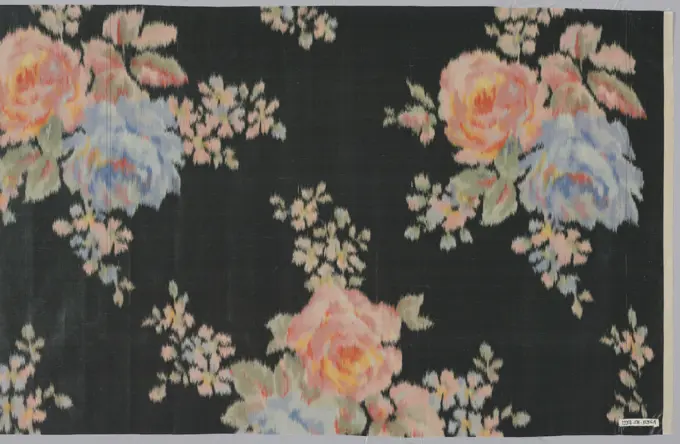
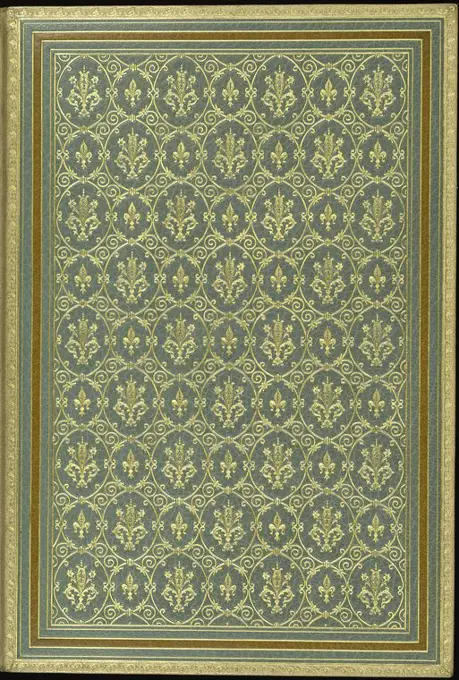
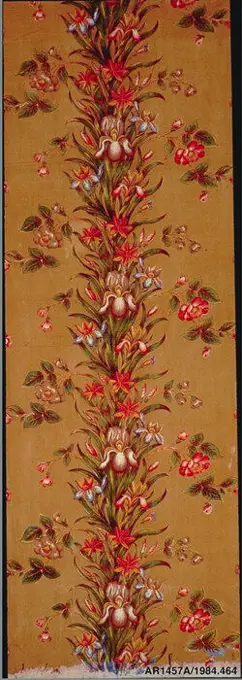
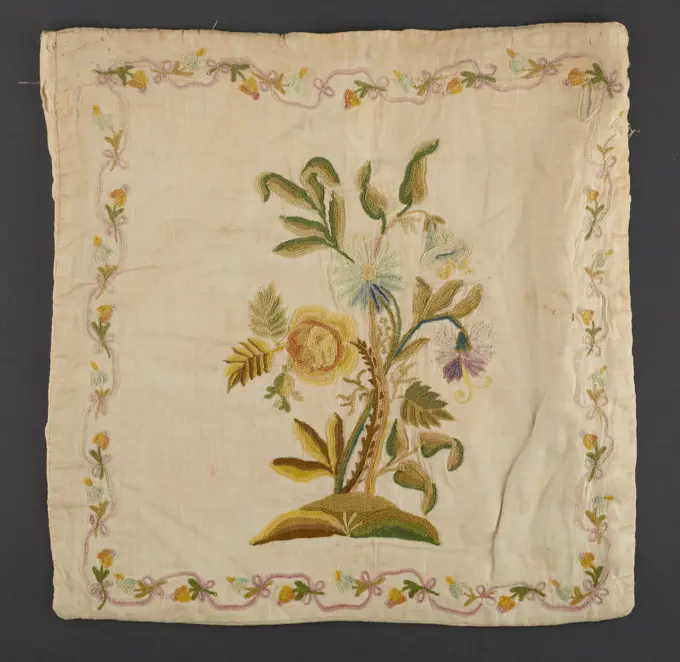
A collection of intricate silk fabric fragments featuring floral motifs and rich colors from 17th to 18th century Italy and China. The fabrics vary in texture and design.
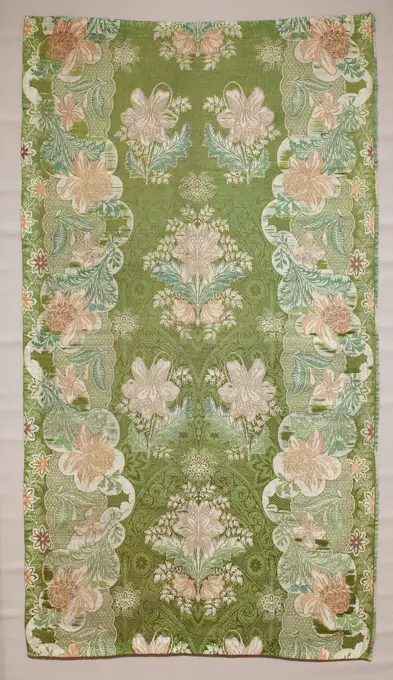
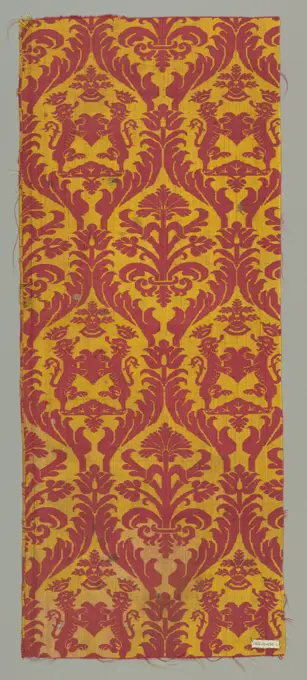
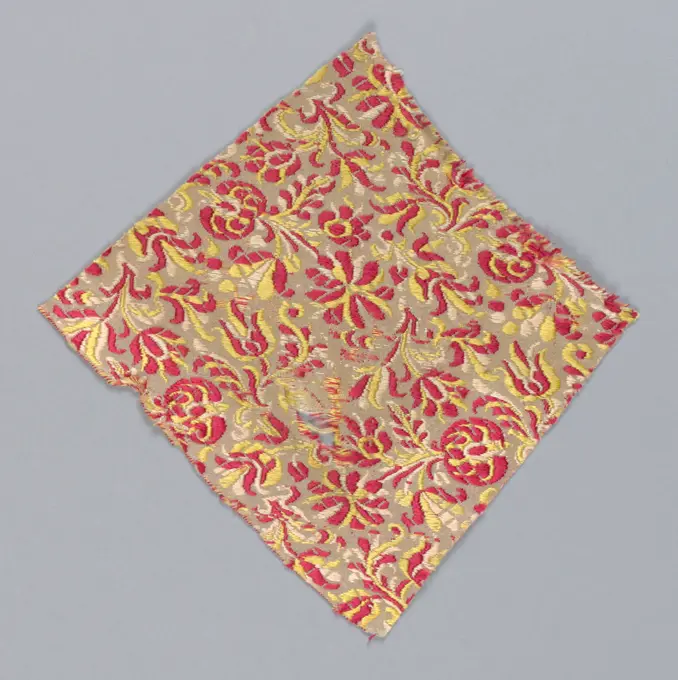
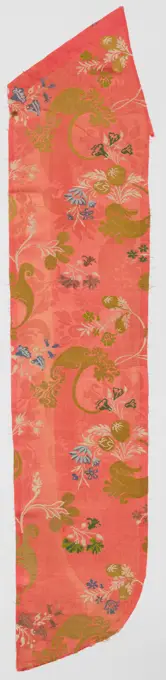
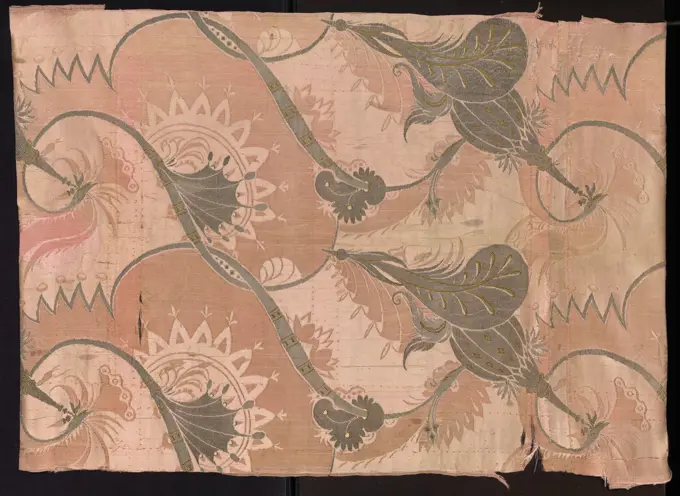
Panel, c. 1720, 41 x 21 in. (104.14 x 53.3 cm), Silk, metallic threads; lampas weave, France, 18th century, Elaborate silk fabric such as this was very costly to produce. It would have taken at least two highly skilled weavers, using the most sophisticated weaving technology of the period, several days to produce one yard of fabric. It undoubtedly was made as a special order and could have been used for any number of things, ranging from wall covering to men's or women's clothing. It was not until the middle of the 19th century that textiles were designed for specialty markets such as home furnishings or fashion.
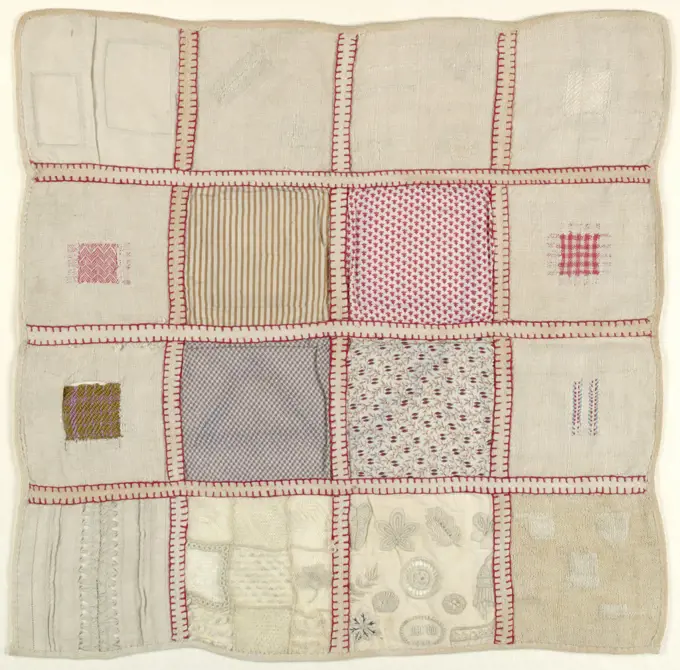
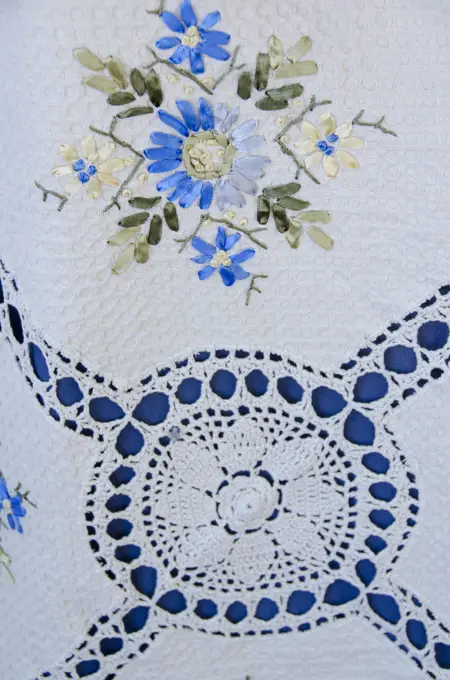
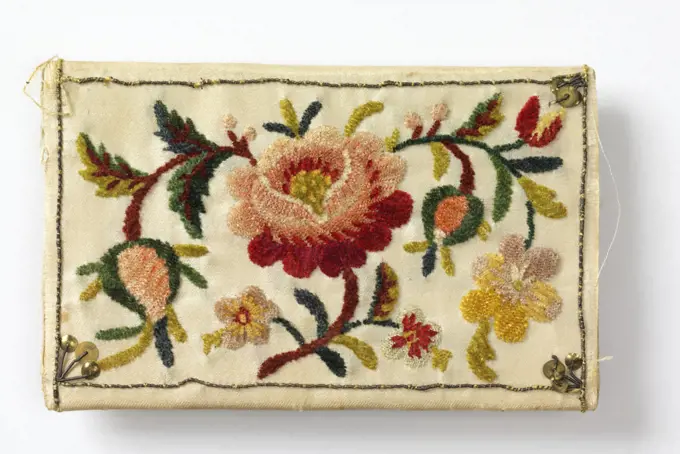
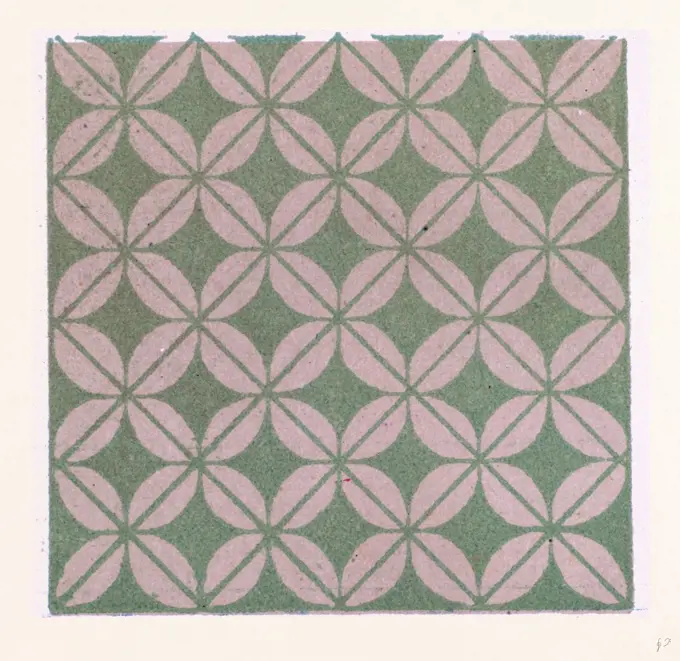
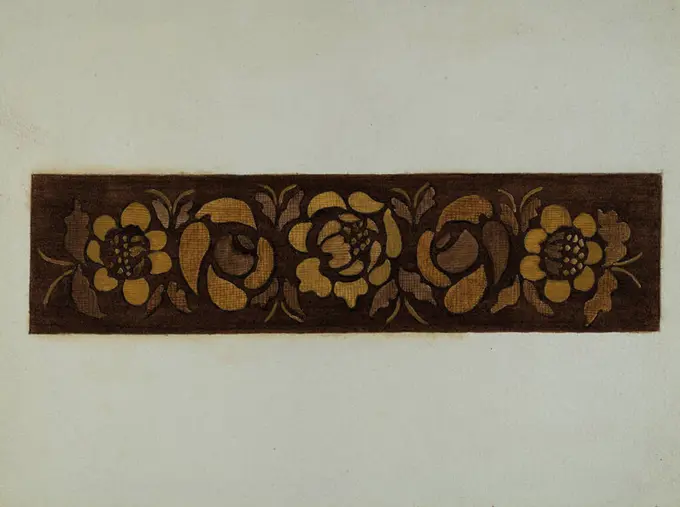
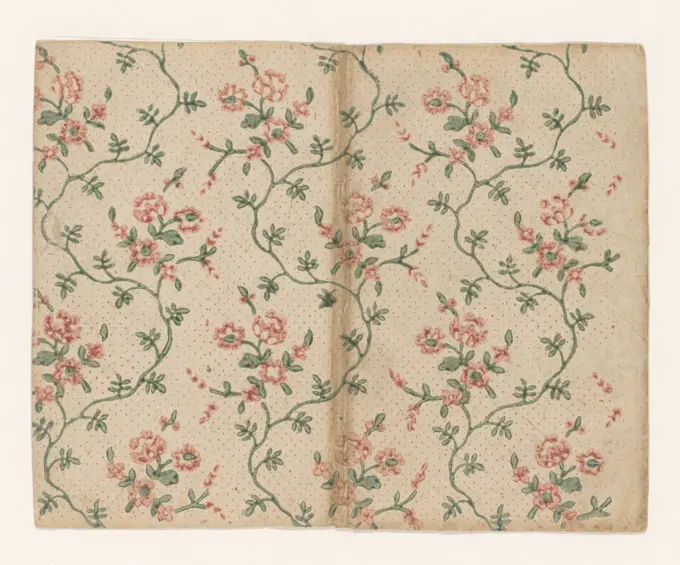
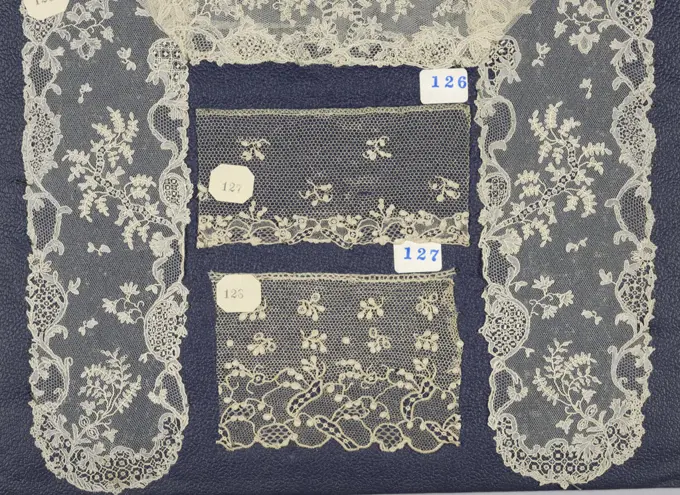
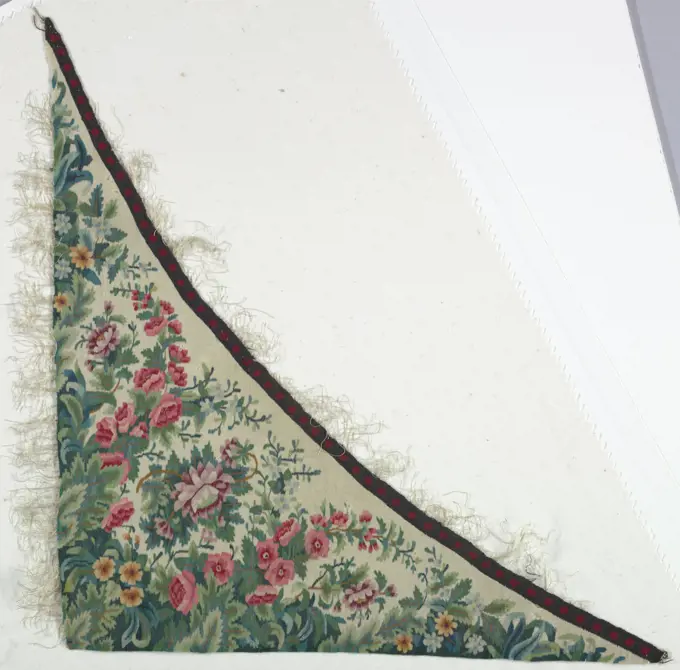
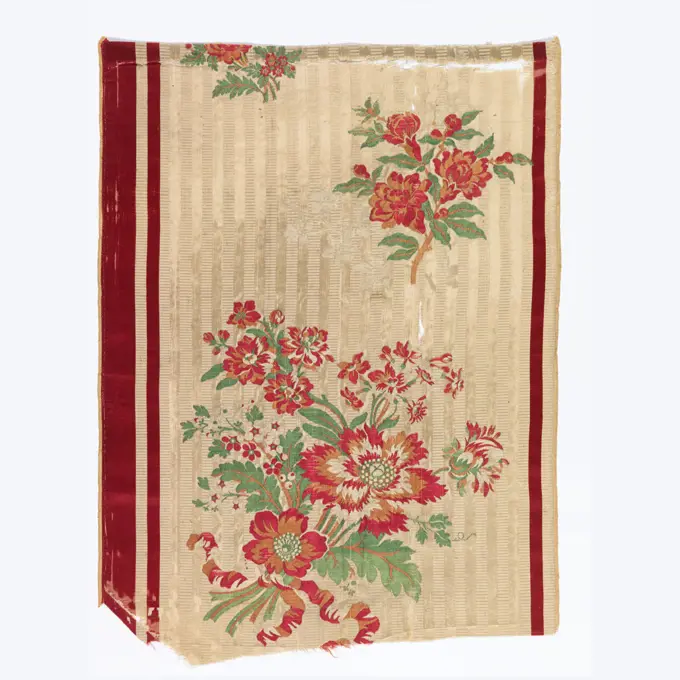
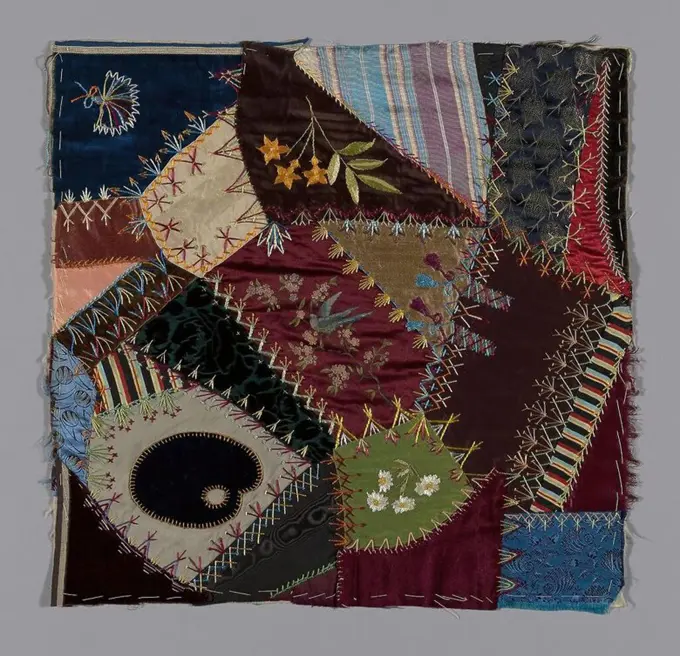
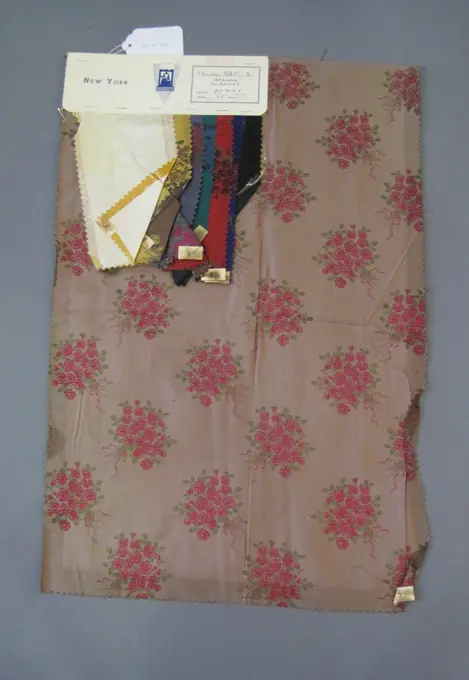
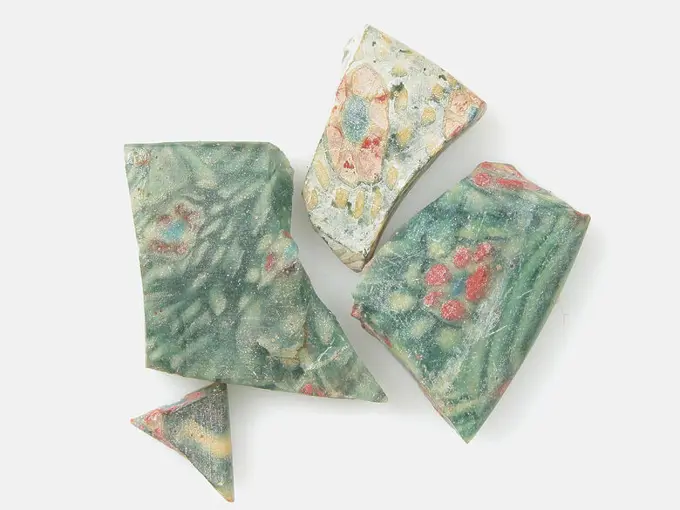
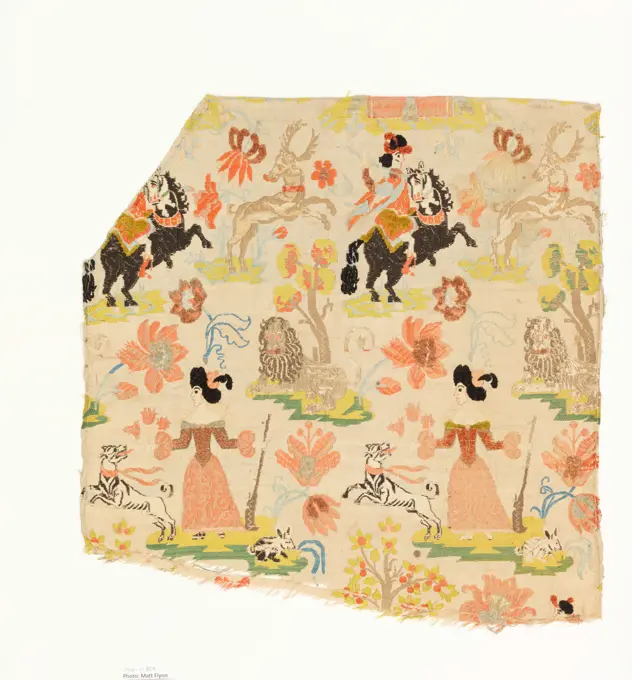
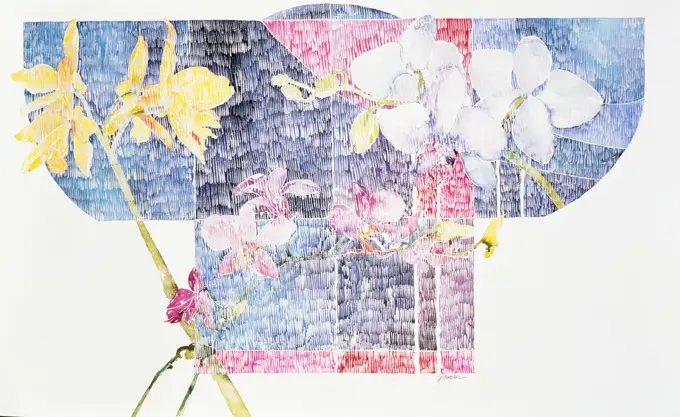
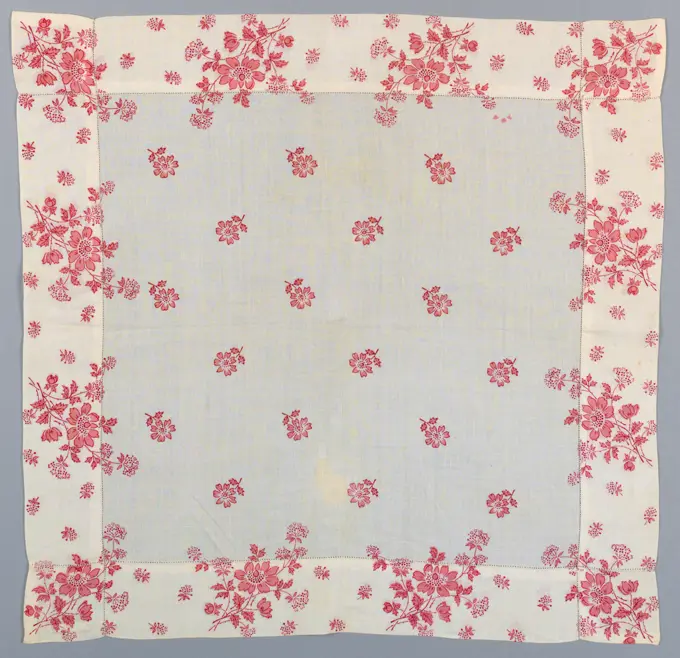
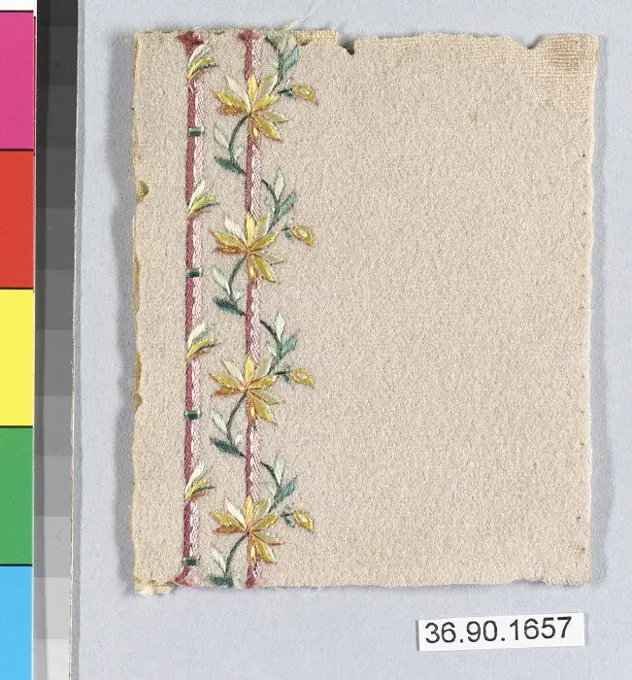
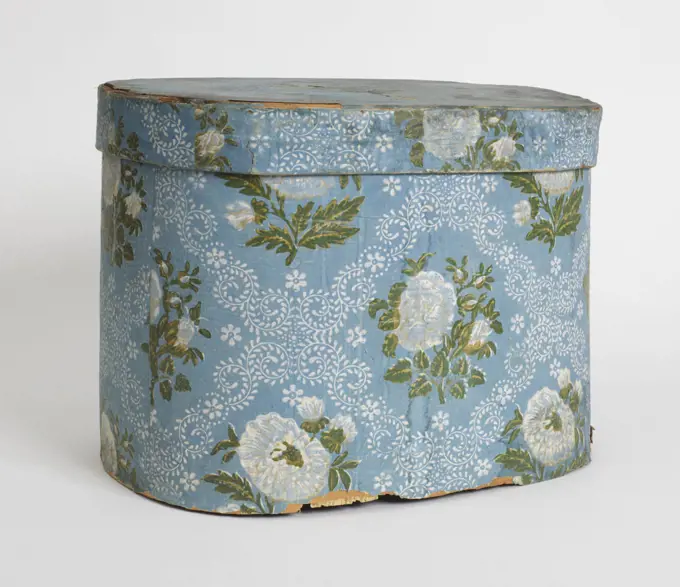
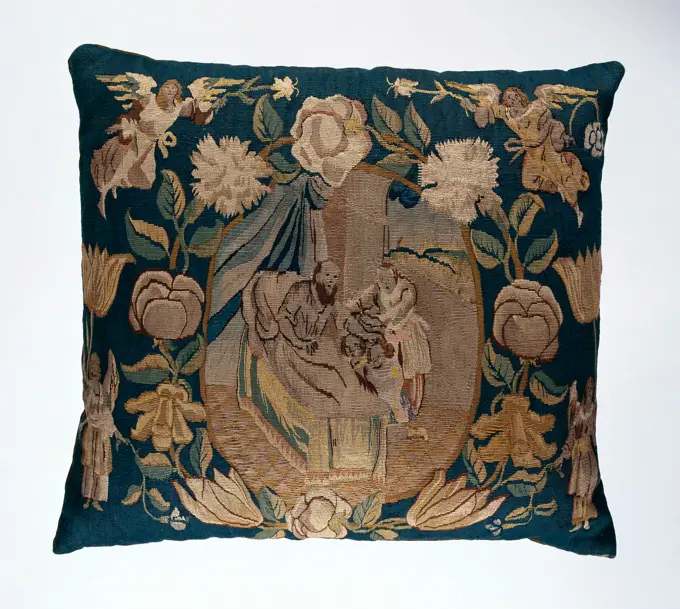
Fragment (France); silkTablecloth, embroidered unknownSidewall (USA); Manufactured by Carey Bros. W.P. Mfg. Co.; machine-printed paper; 92 x 47 cm (36 1/4 x 18 1/2 in.)Fragment. Italy. Date: 1575-1600. Dimensions: 47.9 x 29.2 cm (18 7/8 x 11 1/2 in.)Repeat: 20.6 x 14.3 cm (8 1/8 x 5 5/8 in.). Silk, 4:1 satin damask weave. Origin: Italy. Museum: The Chicago Art Institute, Chicago, USA.Ukraine, Odessa. Typical Ukrainian textile souvenir handicrafts, handmade tablecloth.Card case, Medium: silk embroidery on silk and linen foundation Technique: embroidered in stem and knot stitches on plain weave linen faced with plain weave silk, Card case of pale yellow silk embroidered in pink, blue and green silk in a floral design; lined with pale blue silk., Spain, 18th century, embroidery & stitching, Card caseEmbroidery sample, Medium: silk embroidery on silk foundation Technique: embroidered on a voided supplementary warp pile (velvet), Embroidered sample for men's silk waistcoats, with design of loose sprigs of wildflowers on a vertically ribbed dark brown ground., France, late 18th-early 19th century, embroidery & stitching, Embroidery sampleCard case, Medium: silk, metal, paillettes Technique: embroidered, Design of birds and floral forms in chenille and metal threads. Initials V.A. Lined with light blue silk., Spain, 19th century, costume & accessories, Card caseRibbons (France); silk, metal strips wrapped around cotton coreChinese ornamentSampler (Hungary); Embroidered by Ludmilla Herzog; wool embroidery on cotton foundationFrieze (USA); machine-printed paper; 91.5 x 49 cm (36 x 19 5/16 in.)Hitchcock Chair. Dated: c. 1940. Dimensions: overall: 22.9 x 30.5 cm (9 x 12 in.) Original IAD Object: Rendering is actual size. Medium: watercolor, colored pencil and graphite on paper. Museum: National Gallery of Art, Washington DC. Author: Genevieve Sherlock.Fragments (Spain); silkLeaf with tibaries with flowers and point stock, anonymous, 1700 - 1850  Leaf with tibaries with flowers and point stock. Used as a cover.  paper. block printing (relief printing process) ornament derived from plant formsTextile, Medium: cotton Technique: printed by engraved roller on plain weave, Unevenly shaped fragment, roller printed; background minutely striped in grey; cluster of pink flowers with blue-grey foliage, and white foliage in background., England, 19th century, printed, dyed & painted textiles, TextileFragment; silkFragment Made 1700-1725 Japan. Fancy compound satin silk and silvered paper; 2 strips to m.m. .Border, Medium: Technique: needle lace, Needle lace pattern on bobbin net ground, floral vine; mid-18th century Alencon Barbe, mid-18th century, lace, BorderFragment, Medium: silk Technique: supplementary warp forming pile (velvet); then stamped with pattern then stamped (embossed), Deep red velvet stamped with a motif of diagonal floral forms , rosettes and fleur-de-lys., 17th century, woven textiles, FragmentShawl fragment, Medium: wool and silk Technique: tapestry weave, Triangular-shaped fragment with a white ground and a multi-colored design of roses and foliate. Along the upper edge is a border of dark blue with red dots. White silk threads, part of the construction, extend on two sides., Russia, early 19th century, woven textiles, Shawl fragmentSewing sample, France, late 19th century, Sewing sampleTextile, Medium: silk Technique: compound cloth, brocaded, Ground striped vertically with extra warp, white satin and white horizontal ribbing. Red satin border stripes on either side. Large floral sprays brocaded in red, green, and brown silks. Component A has both selvages present. Component B has right selvage present., Italy, late 18th-early 19th century, woven textiles, TextileCushion; silk, metallic threadFragments, Medium: silk, Floral sprigs facing in alternate directions in rows on a deep blue background., 17th century, woven textiles, FragmentsBorder, Block-printed paper, Arabesque of flowers and foliage, with wheat, in yellow, green, blue, violet, red and red orange, on a pale yellow field, Vertical rectangle., England, 1825-35, Wallcoverings, BorderScarf Sample (France); silkBonnet veil, Medium: silk Technique: machine embroidery on machine-made net, Repeat of floral, fruit and vine motif along lower section of piece. Bottom edge scalloped with elements of this motif set into each curve. Sides and top edges also scalloped but on a smaller scale with smaller motif inset. Field dotted with smaller floral sprigs. Brown silk embroidered on black silk net. Top edge has a drawstring running through it for gathering and wear., Europe, late 19th century, lace, Bonnet veilFragment from Bedcover (Crazy Quilt Block). United States. Date: 1884. Dimensions: 17 1/2 in. square. Pieced SquareSilk: Tabby, warp-faced tabby, damask, satin, velvet, voided velvet, satin weave with extra pattern wefts, and hand painted ornament, & moiré treatment. Backed with cotton after piecing. Embroidered thru 2 layers.Embroidered in 2-ply silk twist, silk floss, silk chenilleStitches: Herringbone, feather, knot, buttonhole, stem, line, cross, variations of these, raised basket stitch. Origin: United States. Museum: The Chicago Art Institute, Chicago, USA.Textile with Peonies and Lattice 18th century China. Textile with Peonies and Lattice. China. 18th century. Silk lampas. Qing dynasty (1644-1911). Textiles-WovenTextile Swatches Onondaga Silk Company, Inc. (1925-1981). , 1948-1959. Silk, 23 1/4 x 15 1/4 in. (59.1 x 38.7 cm).    1948-1959Kerchief, Medium: cotton on piña cloth (pineapple fiber) Technique: embroidered, Square kerchief with embroidery on two sides. Design shows a plant in a basket alternating with a leaf and scroll motif. Scalloped edge., Philippines, 19th century, embroidery & stitching, KerchiefFragment (India); cottonFragment (China); silk; Warp x Weft: 43 x 38 cm (16 15/16 x 14 15/16 in.); 1968-13-4-gSilk tissue made of bordered silk, composed of two-sewn fragments. Silk tissue made of bordered silk, composed of two-sewn fragments. Along the edges of pink silk lining. Dessin: in horizontal rows placed bulbs with roses in two colors pink / red, lilac, green and two colors blue (brochation) and in gold (liseré), interspersed by branches with blue flowers in two colors blue (brochation) and in gold Liseré). Possible cape for a Maria image. At the back label on which printed: French and Co. Inc. And written: 21927, Price 275. On top A linen label with inscription # 21927, fragment antique brocade selling price # 150, with a fracture number and stamped again the number 21927. Pinned note with the letter R.Fragment, Medium: Technique: printed, 19th century, printed, dyed & painted textiles, FragmentDarning sampler, Medium: silk embroidery on linen foundation, cotton tapes Technique: embroidered on plain weave, Sixteen squares of darning, patches, and white work embroidery held together with woven tape., Germany, 1869, embroidery & stitching, Darning samplerFragment; silk; Warp x Weft: 15.3 x 15.3 cm (6 x 6 in.)Indian ornamentTextile (Germany)Sample, Daffodil; Made by Morris & Co. (United Kingdom); England; cottonChintz Fragment (India); cotton; Warp x Weft: 18 x 25 cm (7 1/16 x 9 13/16 in.)Chasuble with embroidered column unknownFragment; silkBorder (France); block-printed on handmade paper; 53 x 10.5 cm (20 7/8 x 4 1/8 in.)Calendario modernista de la fábrica Chocolates Amatller. Año 1900.Piece 18th century possibly French. Piece 223952Sampler (Mexico); silk, metallic threadPiece 18th-19th century Japan. Piece 67148Fragments; silkBack doubleur. 1908 - 1897. Coppée, François (1842-1908). bindings (gathered matter components), Book covers. Spencer Collection. BookbindingPearl bag, back. End Louis XV. GAL1991.298.1_2Suzani (large embroidered hanging or cover) Made 1825-1875 Uzbekistan. Linen with design of leaf squares enclosing flower sprays. .Length 1835 John Lowe & Co.. Length 229864Sachet for handkerchiefs unknownPiece 18th century Japan. Piece 72176Cushion cover mid-19th century British. Cushion cover 227441vintage cardFragment of silk fabric  straight stripes and colourful flower twig unknownBorder (France); block-printed and flocked; 55 x 15 cm (21 5/8 x 5 7/8 in.)Vestment; silk and metal thread on linen; lined with linenTextile (France); silk; Warp x Weft: 170 x 58.9 cm (5 ft. 6 15/16 in. x 23 3/16 in.)Fragment, Medium: silk Technique: embroidered in chain stitch on satin weave, Fragment of man's waistcoat in pale green satin embroidered in multicolored silks in a design of flowering vines, floral sprays, baskets of flowers, and ribbons., France, ca. 1770, embroidery & stitching, FragmentElizabeth Valentine, Hooked Rug, c 1936 Hooked RugGlass Fragments from a Vessel. Culture: Coptic. Dimensions: Storage (petri dish diam.): 1 11/16 in. (4.3 cm). Date: 4th-early 5th century. Museum: Metropolitan Museum of Art, New York, USA.Length of Brocaded Silk, 1723-1774. France, 18th century, Period of Louis XV (1723-1774). Taffeta, warp-patterned and brocaded; silk; overall: 88 x 54.3 cm (34 5/8 x 21 3/8 in.).Fragment ; silk, metallicTuch mit Blumendekor - Cloth with flowers Tuch mit Blumendekor - Cloth with flowers Copyright: xZoonar.com/lantapixx 6718393Elegant orange frame. Ornamental art background. Floral vector ornament.. Orange ornament on white background.Textile (France); cotton; Warp x Weft: 92.5 x 89.5 cm (36 7/16 x 35 1/4 in.); Bequest of Elinor Merrell; 1995-50-282Fragments of shaded embroidery unknownMexico, Pozos. Detail of tapestry inside church.Close-up of intricately gold embroidered traditional Rajastani cushionTextile; silk; Warp x Weft: 119.4 x 31.1 cm (47 in. x 12 1/4 in.)Scarf Sample (France); silkCover (Italy); silk on linen; Bequest of Marian Hague; 1971-50-106Fragment of the fabric;  beginning of the 18th century (1712-00-00-1720-00-00);Fragments of silk fabrics, subpraport, patterned fabrics, bizarre patternsBorder (USA); machine-printed paper; 1940-90-14-a,bArras cover. unknown, authorSquare; cottonField of nine tiles with fruit scales. Field of nine tiles (3 x 3) each with a multicolored (blue, green, yellow and orange) fruit bowl on foot with a lily in the corners.Purse, Medium: silk, wire; silk lining Technique: needle knotting (bebilla or oya), silk satin lining Label: silk needle knotting (bebilla or oya), silk satin lining, Flat purse with a drawstring top; one face has a bouquet of flowers, the other a basket of flowers. The sides and top are decorated with a deep edging of fruit, flowers, and animals, including a camel. In polychrome silks over white satin. An example of a type of needle knotting called oya, practiced in the Eastern Mediterranean., Turkey, early 19th century, knotted, knitted and crocheted textiles, PurseForget-Me-Not (Myosotis palustris), from the Flowers series for Old Judge Cigarettes. Dimensions: Sheet: 2 3/4 x 1 1/2 in. (7 x 3.8 cm). Printer: George S. Harris & Sons (American, Philadelphia). Publisher: Issued by Goodwin & Company. Date: 1890.The "Flowers" series of trading cards (N164) was issued by Goodwin & Company in 1890 to promote Old Judge Cigarettes. The Metropolitan Museum of Art owns all 50 cards in the series. Museum: Metropolitan Museum of Art, New York, USA.Vintage invitation card with ornate elegant abstract floral design, black on gray with red ribbon. Vector illustration.Sleeve Band 19th century China. Sleeve Band 68663Textile, Medium: cotton Technique: woodblock printed on plain weave, glazed, Long, narrow fragment with an allover design of large scale naturalistically drawn flowers: roses, poppies, etc. Block printed in reds, blues, drab green and faded yellow against against a plum-colored background. Considerable over-printing with yellow and blue producing green, but yellow is much faded. Repeat incomplete., England, late 18th-early 19th century, printed, dyed & painted textiles, TextileHandkerchief, Medium: cotton Technique: printed on plain weave, Red background with tan printed scene of a handball game in the center. Figures at all four corners with a border of balls and scoop. Shields surround the scene at the left, top, and right, where the bottom has a leaf branch with florals on either side. Shield at top has a banner reading 'ZAZPIK BAT' meaning a handball game., possibly Spain, late 19th century, printed, dyed & painted textiles, HandkerchiefHorizontal Kimono with Orchids by John Bunker, mixed media, 1987, 20th CenturyTextile (France); silk, metallic thread; Anonymous bequest in memory of Albert and Rebecca Elsberg; 1938-82-43-cHandkerchief; linenHandkerchief, circa 1930, maker unknown. Anonymous gift, 1983.Border, Block-printed on handmade paper, a,b) Incomplete repeat showing pink roses with green leaves and part of a vase form; c) white flowery forms (part of the above paper) with grisaille and brown flock border attached;d,e) grisaille and brown flock border like one in 'c'., England or France, ca. 1790, Wallcoverings, BorderSample early 19th century French. Sample 224745Purse late 18th century French. Purse. French. late 18th century. silk, metalBag, Medium: silk, metal Technique: stem, running and knot stitches using attached coils of gilt wire and gilt spangles. Trimmed with floral vine made of dyed silks bound to wire., Woman's bag of white taffeta, embroidered in colored silks, metal thread and sequins. On one side, children playing game of 'la main chaude;' on the other, woman offering grapes to a child. Faces painted. Edged with elaborate trimming of silk flowers., France, 1750-1800, costume & accessories, BagBandbox, Hannah Davis, 1784 - 1863, Block-printed paper, wood support, Covered with wallpaper of a blue field, with diagonal framework of scrolls in white enclosing squares decorated with roses in pink, white and green., Jaffrey, New Hampshire, USA, 1843, Wallcoverings, BandboxFragment (Bottom of Skirt) Made 1810 France. Cotton, plain weave; embroidered with cotton .Pillow. Isolated. Cushion of carpet tissue with Isaac Zegent Jacob (Gen. 27: 27-29). The pillow is part of a series of pillows with the history of Jacob, two of whom are located in the Rijksmuseum.Swatches (France); Manufactured by Maison Worth; silk; 1896-27-10-1/20