Historical Silk Fabric Fragments

A collection of intricate silk fabric fragments featuring floral motifs and rich colors from 17th to 18th century Italy and China. The fabrics vary in texture and design.
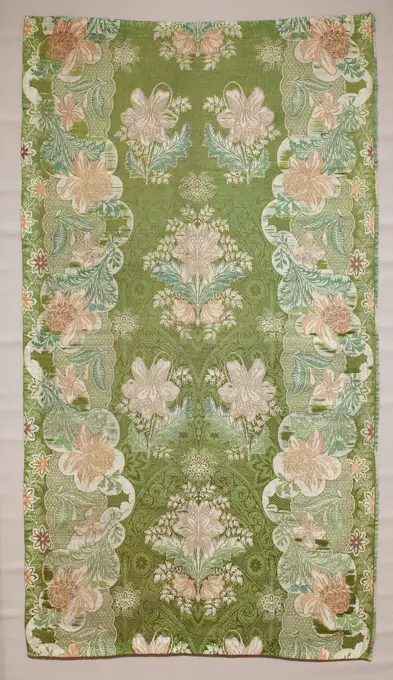
Panel, c. 1720, 41 x 21 in. (104.14 x 53.3 cm), Silk, metallic threads; lampas weave, France, 18th century, Elaborate silk fabric such as this was very costly to produce. It would have taken at least two highly skilled weavers, using the most sophisticated weaving technology of the period, several days to produce one yard of fabric. It undoubtedly was made as a special order and could have been used for any number of things, ranging from wall covering to men's or women's clothing. It was not until the middle of the 19th century that textiles were designed for specialty markets such as home furnishings or fashion.
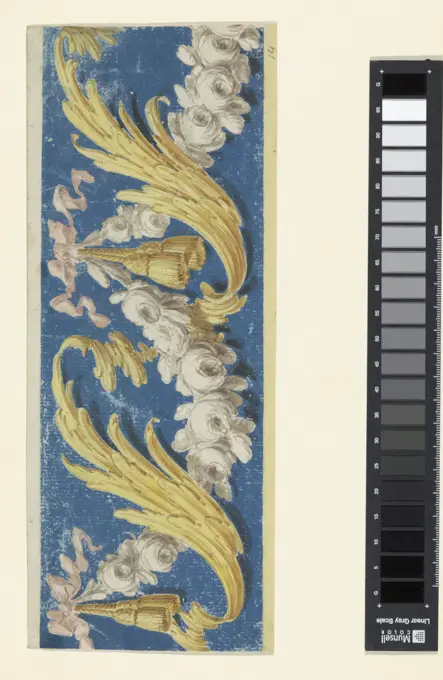
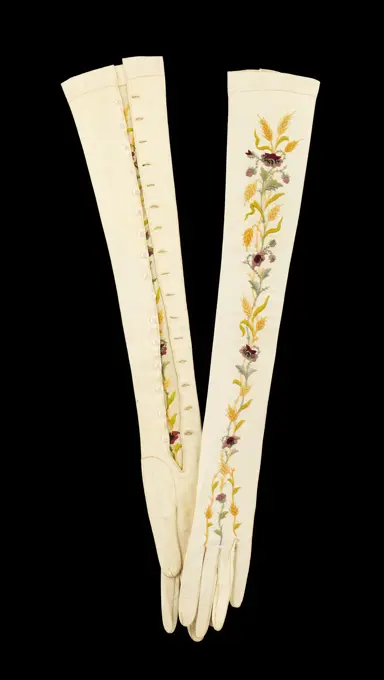
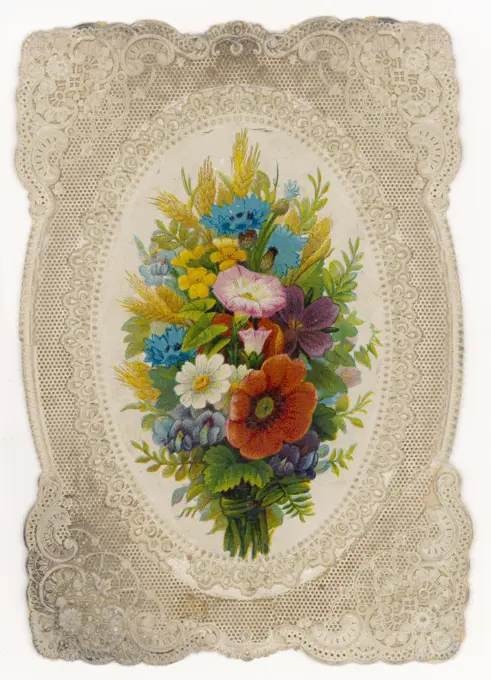
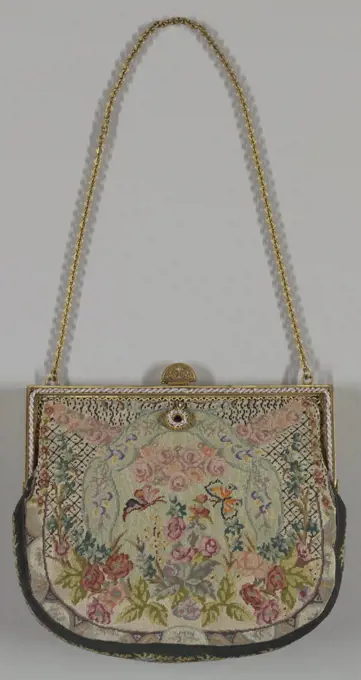
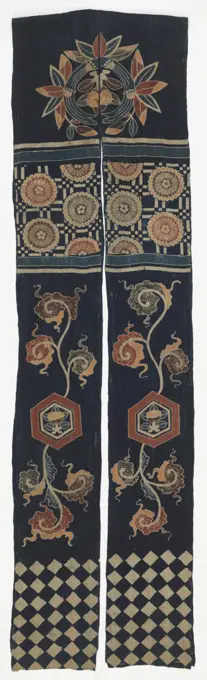
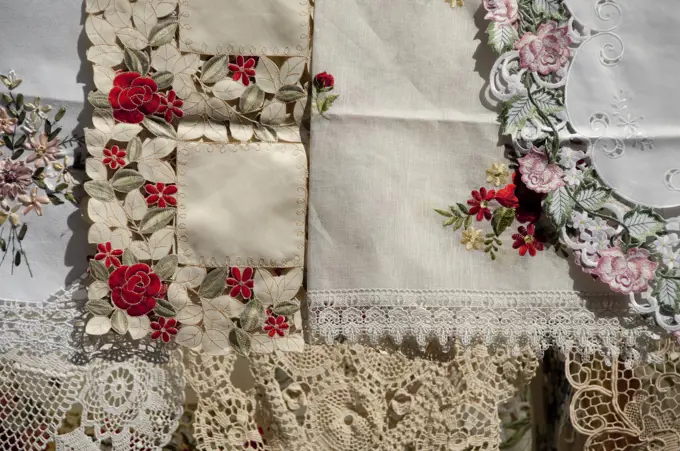
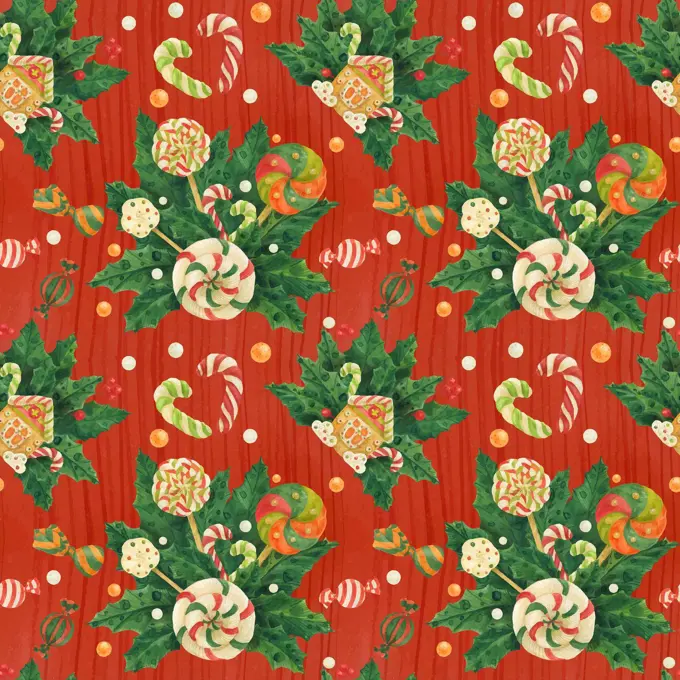
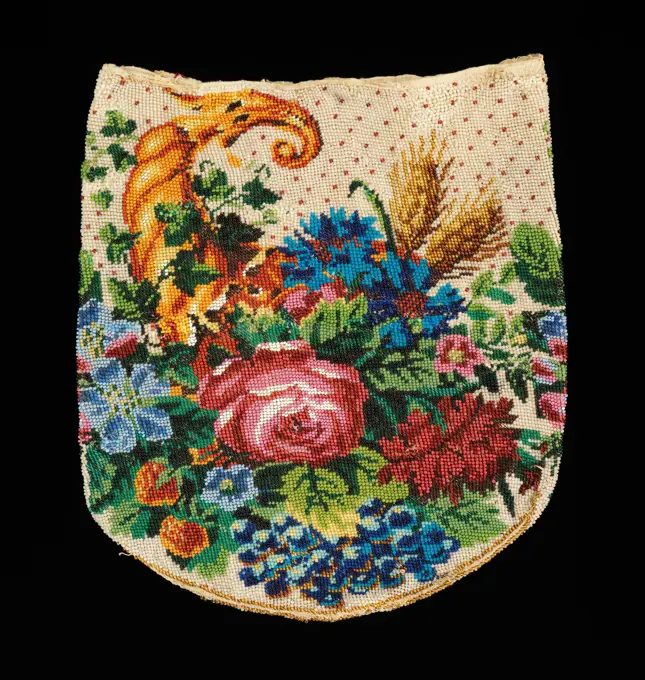
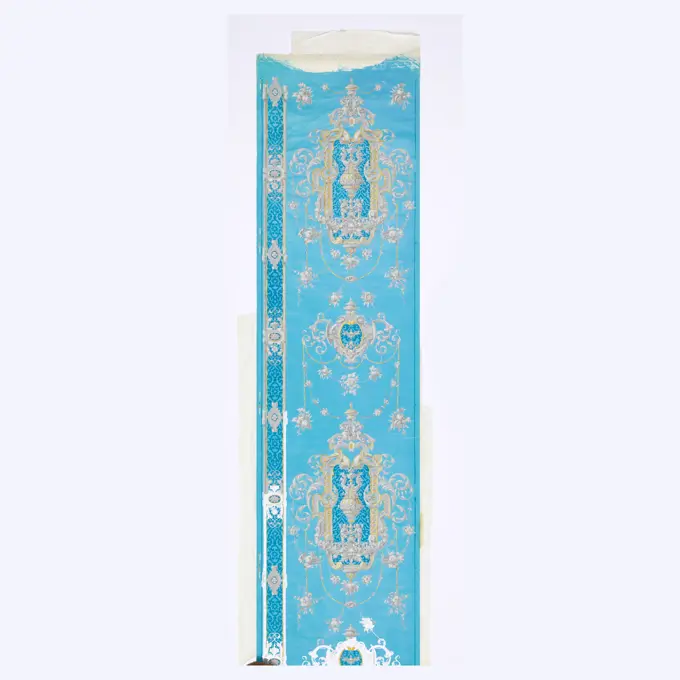
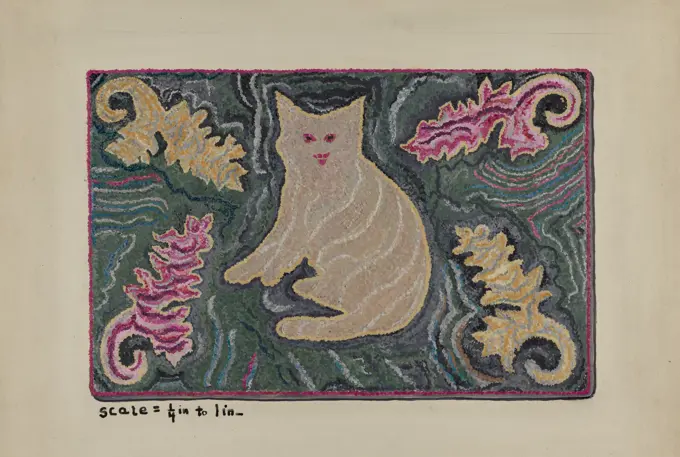
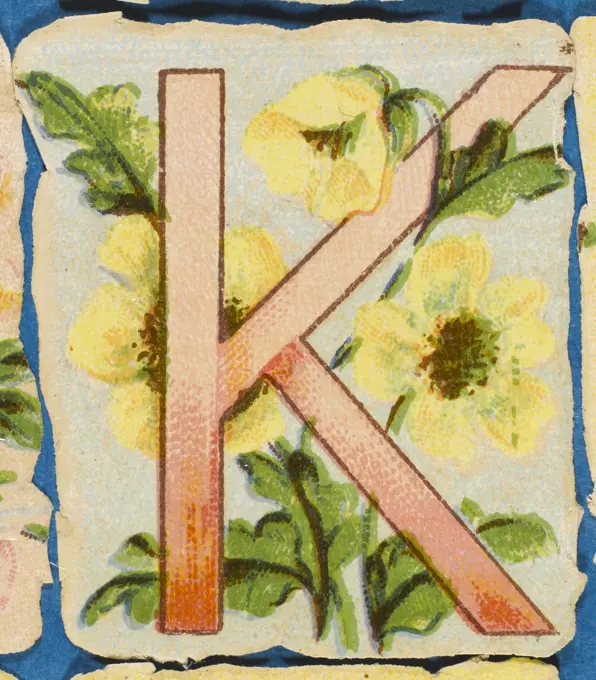
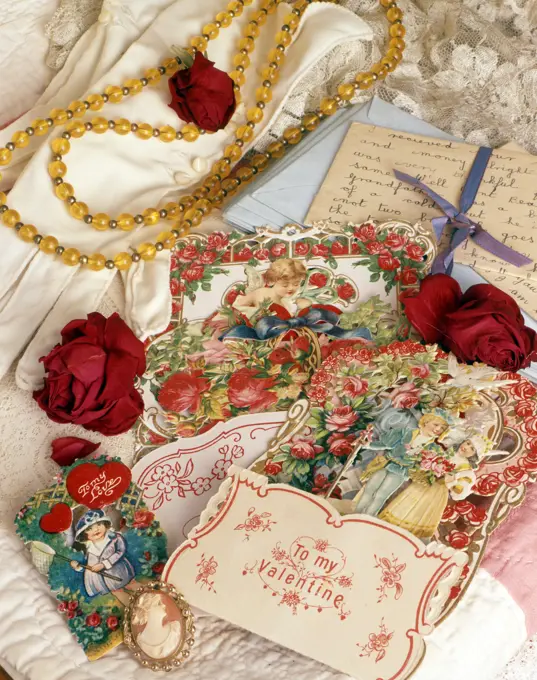
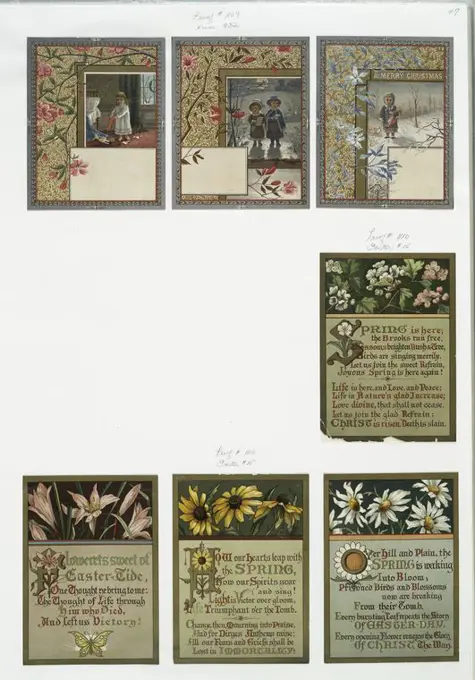
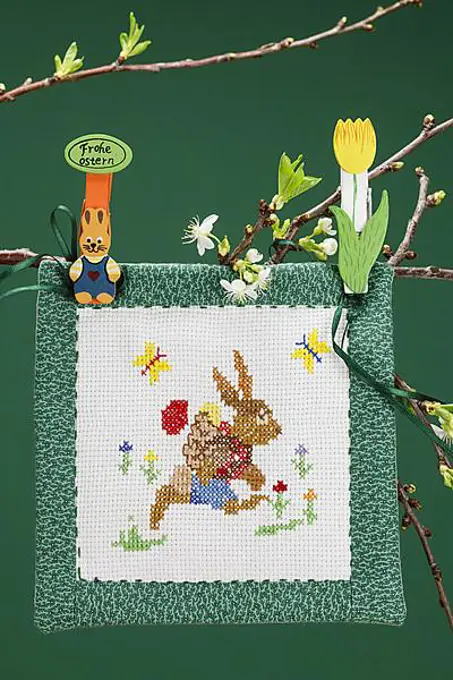
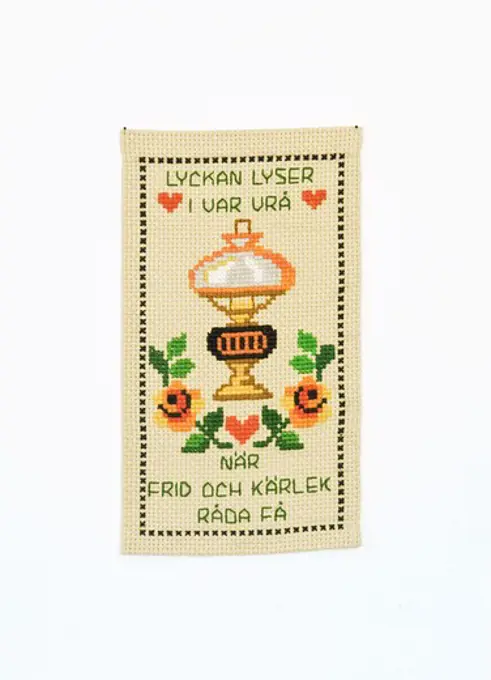
Textile Swatches Onondaga Silk Company, Inc. (1925-1981). Textile Swatches, 1948-1959. Silk and metallic threads, (a) - (f): 13 1/2 x 8 in. (34.3 x 20.3 cm).    1948-1959Leaves and Garlandes, Lambertus Hardenberg (1744), 1754 - 1819 drawing An edge of leaf vines and garlands. Design for a carriage decoration.  paper. watercolor (paint). deck paint. pencil brush foliage, tendrils, branches ~ ornament. ornament ~ festoon, garlandTextiles in Patchwork Quilt. Dated: c. 1937. Dimensions: overall: 36.8 x 45.1 cm (14 1/2 x 17 3/4 in.). Medium: watercolor, pen and ink, graphite, and heighteningon paper. Museum: National Gallery of Art, Washington DC. Author: Charlotte Winter.Jacob takes away his father's blessing, Anonymous, c. 1660 - c. 1675 Cushion of carpet tissue with Isaac blessing Jacob (Gen. 27: 27-29). The pillow is part of a series of pillows with the history of Jacob, two of which are in the Rijksmuseum. Northern Netherlands Ketting: Wool. Entry: Wool. Entry: Silk tapestry Cushion of carpet tissue with Isaac blessing Jacob (Gen. 27: 27-29). The pillow is part of a series of pillows with the history of Jacob, two of which are in the Rijksmuseum. Northern Netherlands Ketting: Wool. Entry: Wool. Entry: Silk tapestryEvening gloves fourth quarter 19th century French The attractive embroidery on these elegant kidskin gloves illustrate subtle nuances of color in the greens, purples and grays, which make them very engaging. Needlework on leather is difficult and would require great skill and the use of special techniques to execute in this caliber. The wheatear motif was particularly popular towards the end of the 19th century.. Evening gloves 158049Light-blue fragment decorated with plum blossoms and open fans, 19th century, Unknown Ryukyuan, 15 7/8 × 15 7/8 in. (40.32 × 40.32 cm) (overall), Cloth: cotton; bingata (stencil resist with applied pigments), Japan, 19th centuryPiece (one of twelve) Greek 19th century View more. Piece (one of twelve). Greek. 19th century. Silk, needle lace. Textiles-LacesJust flowers - in a frilly lacy surround         Date: circa 1870Fragment 18th century Italian or French. Fragment 230372Border (France); block-printed and flocked on paper; 77.5 x 25 cm (30 1/2 x 9 13/16 in.)Christmas, New Year, and birthday cards depicting flower garlands, and flower arrangements, with cross and fan.. Proofs, Greeting cards. 1865 - 1899. The Miriam and Ira D. Wallach Division of Art, Prints and Photographs: Print Collection. FlowersBag, Medium: cotton Technique: embroidered, Small handbag of fine petit point , squared at top and rounded at base, on a silver gilt frame with imitaition pearls. Symmetrical floral design with butterflies., Austria, 19th century, costume & accessories, BagHorse wrapping cloth, Medium: bast fiber, probably hemp Technique: resist printed/painted; colored dyes added by stencil and by hand techniques., Two long and narrow selvage -to-selvage widths sewn together at center (for approximately 36 inches) to form a long and narrow panel with four free-flying ends that measures more than 15 feet. The panel was to decorate a horse used in a ceremonial parade. The decoration on the panel is the same on both sides with the design reversing at the center., In the center, the part that wrapped around the horse's belly, there is a Japanese family crest, a bud surrounded by five leaves within a circle and more leaves. The next part, the area that crossed over the back of the horse and was anchored by the saddle, are polychrome frontal flowers on a blue and white linear background. The four flying streamers have a repetition of the same family crest decorated with floral flourishes. Each streamer ends with a blue and white diagonal checkerboard pattern.Embroidery, 19th century. Tea tablecloth, embroidered in cross-stitch on linen, with a bunch of poppies.Piece 19th century Japan. Piece 72074Handkerchief second half 19th century French The level of embroidery detail on this handkerchief is extraordinary. The workmanship is of a type commonly done by convent nuns. Each scene has a common theme of love and romance from mythology, including Narcissus gazing at his reflection in the water, and Cupid holding his arrow. The imagery is particularly charming for a man's accessory and reflects on the aristocratic status of the owner.. Handkerchief 155773Romania, Wallachia, Sinaia. Traditional hand made Romanian embroidered textiles.Chromolithograph Print, Young woman holding a basket of roses; GERMANY & U.S.A.; ink on paperBorder (England); machine-printed paper; 75 x 12.5 cm (29 1/2 x 4 15/16 in.)Tuch mit Blumendekor - Cloth with flowers Tuch mit Blumendekor - Cloth with flowers Copyright: xZoonar.com/lantapixx 6618261Textile Swatches Onondaga Silk Company, Inc. (1925-1981). , 1948-1959. Silk, a: 40 3/4 x 21 1/2 in. (103.5 x 54.6 cm).    1948-1959Christmas Holly red pattern with candy cane and lollipop bouquet, traced watercolorPouch 1830-60 Mexican A cornucopia is the traditional symbol of abundance. The complex beadwork on this pouch bag features a horn of plenty teeming with grapes, strawberries, roses, carnations, daisies, ivy and wheatears. The bag is part of the Mexican beadwork collection of over 600 pieces assembled by Elizabeth Morrow (1873-1955), mother of writer Anne Morrow Lindbergh, the wife of renowned aviator Charles Lindbergh. Morrow collected the objects between 1927 and 1930, when her husband, Dwight Morrow, Sr., served as U.S. ambassador to Mexico. She lent the collection to the Brooklyn Museum in 1938 and upon her death, her children donated it. A collection of 155 pieces of Mexican ceramics and other decorative arts were given to Amherst College, her husband's alma mater. Mrs. Morrow collected Mexican beadwork, along with other examples of colonial and native arts, to decorate their country home in Cuernavaca in order to promote a more peaceful image of that country through its works. TheSidewall (France); block-printed; 259.5 x 50 cm (102 3/16 x 19 11/16 in.)Dorothy Kiernan, Rug, c 1940 RugOrnate vintage labels set of 10 (vector)Flowery K          Date: 1890s1890s 1900s TURN OF THE CENTURY VALENTINE CARDS ROSE PETALS LOVE LETTERS LACE CAMEO KEEPSAKESChristmas and Easter cards depicting children and flowers.. Proofs, Greeting cards. 1865 - 1899. The Miriam and Ira D. Wallach Division of Art, Prints and Photographs: Print Collection. ChildrenEmbroidery, Easter motifEmbroidered message on a wall hanging, Sweden.