Historical Textile and Artifacts

Black and white images of ancient textile fragments and artifacts, providing a glimpse into historical craftsmanship from various centuries.
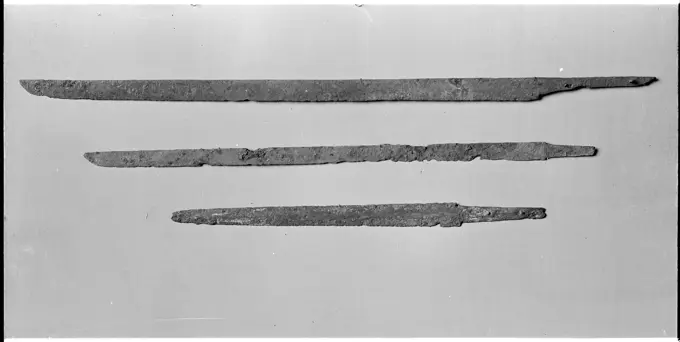
Blade for a Straight Single-Edged Sword (Chokut) ca. 7th century Japanese. Blade for a Straight Single-Edged Sword (Chokut). Japanese. ca. 7th century. Iron. Kdzuke province. Sword Blades
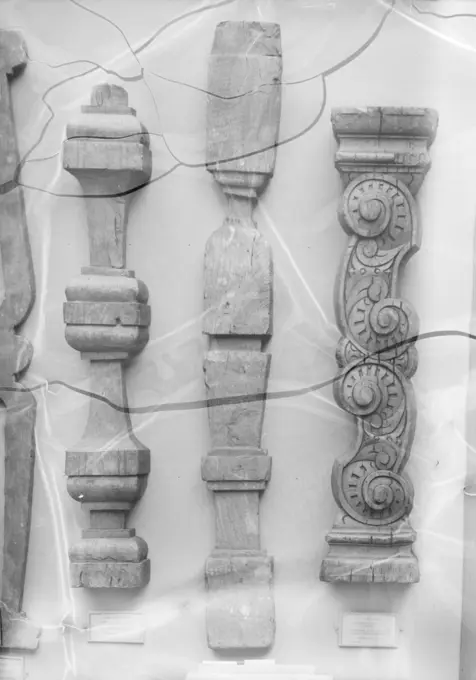
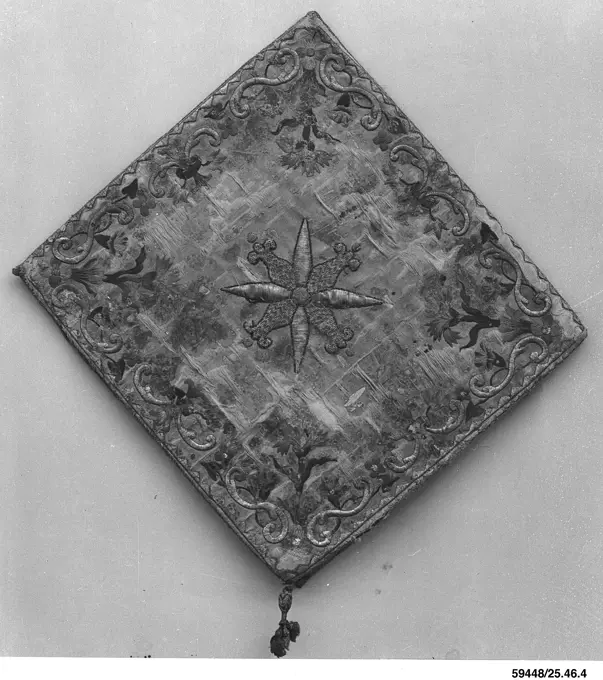
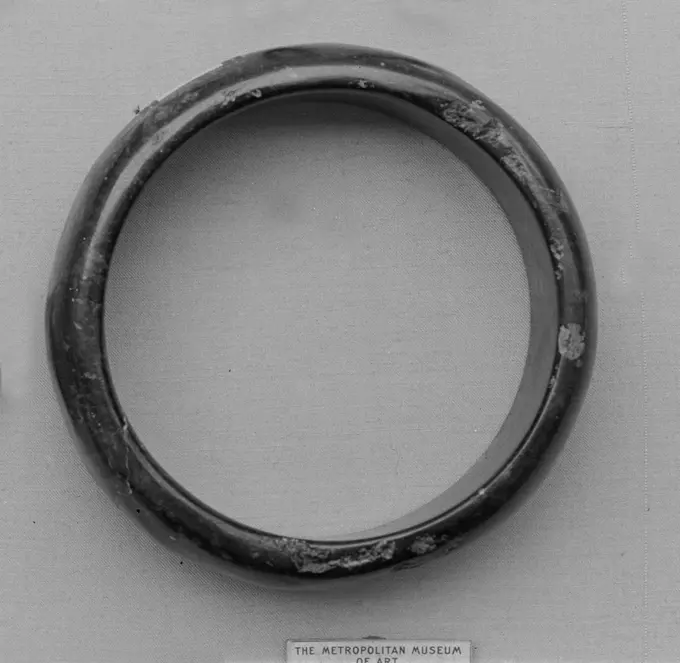
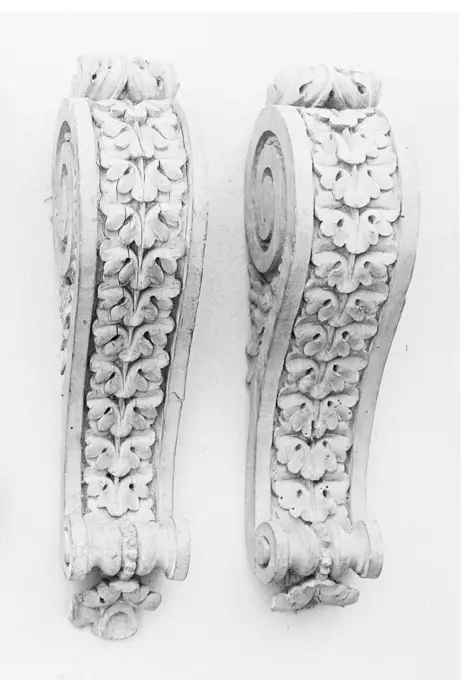
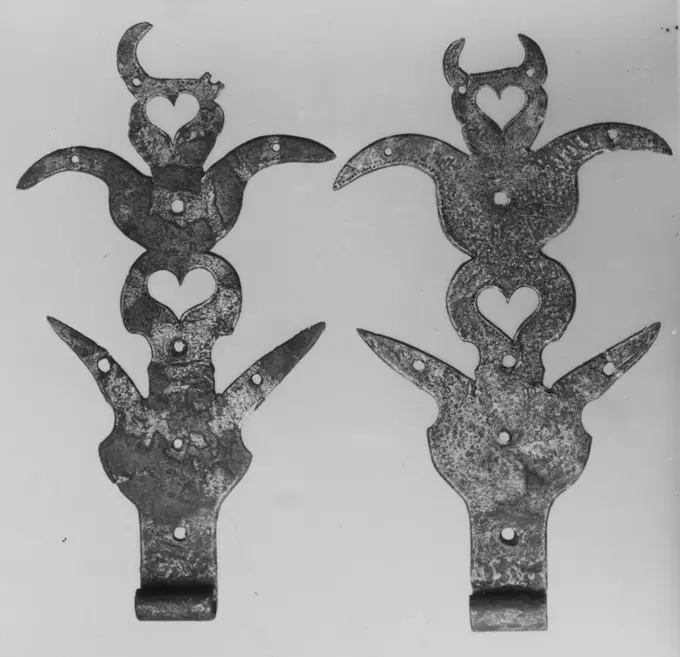
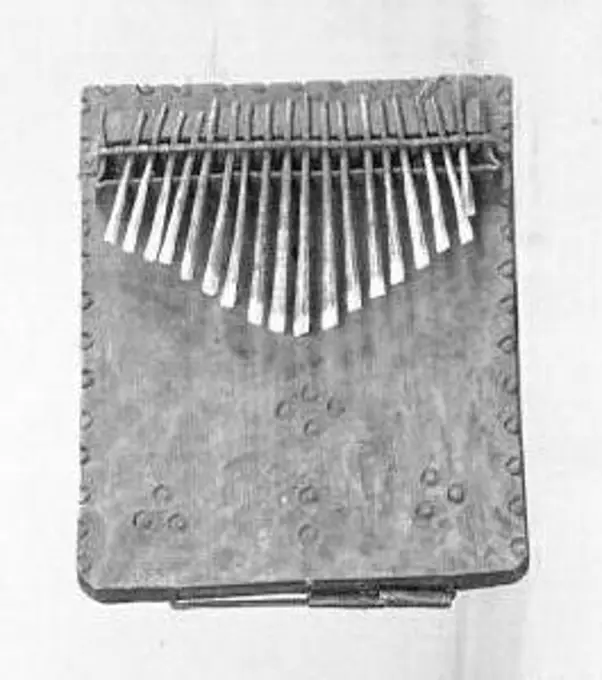
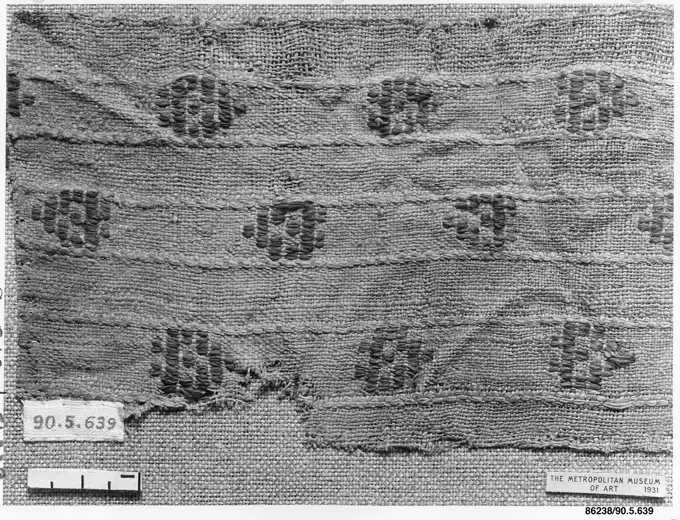
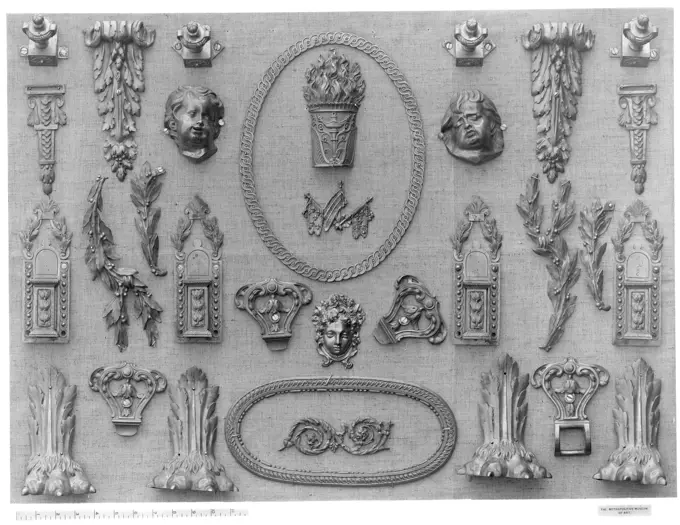
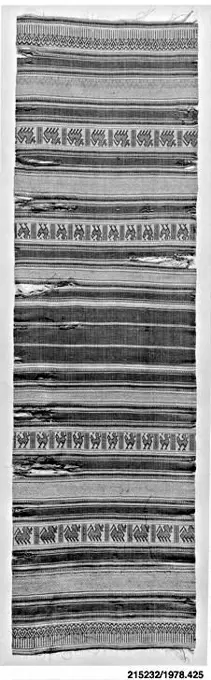
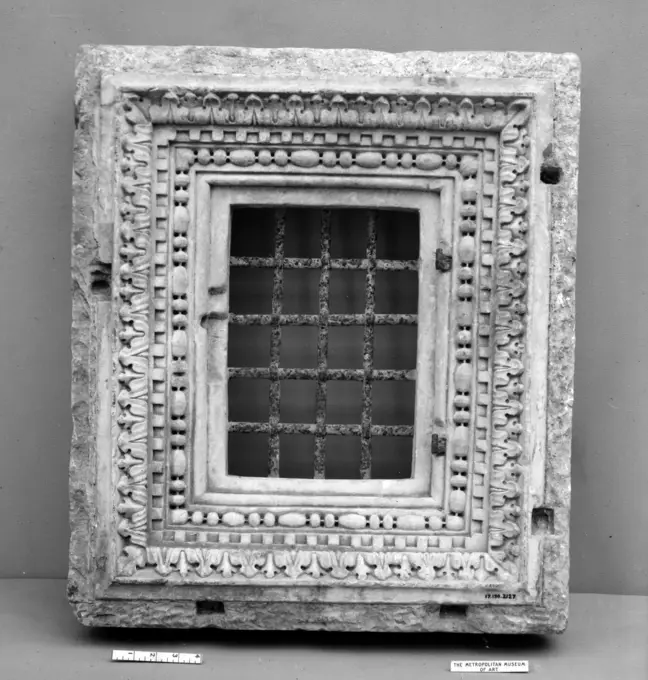
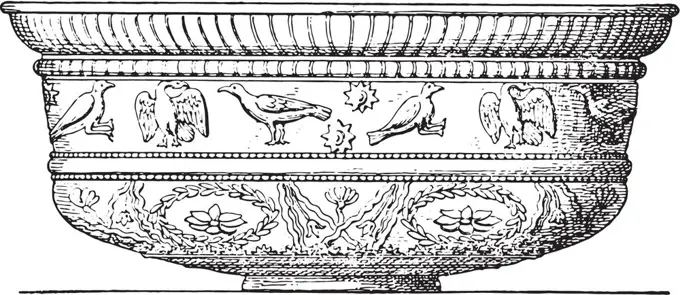
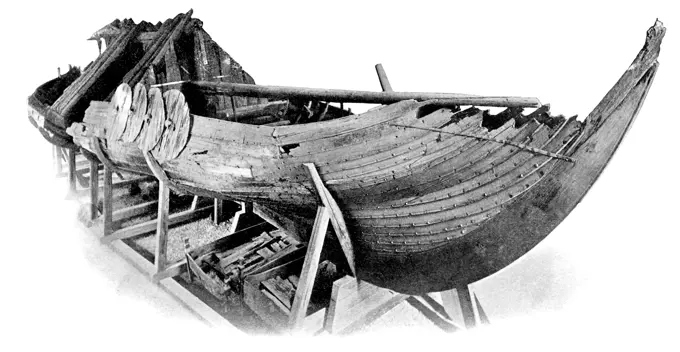
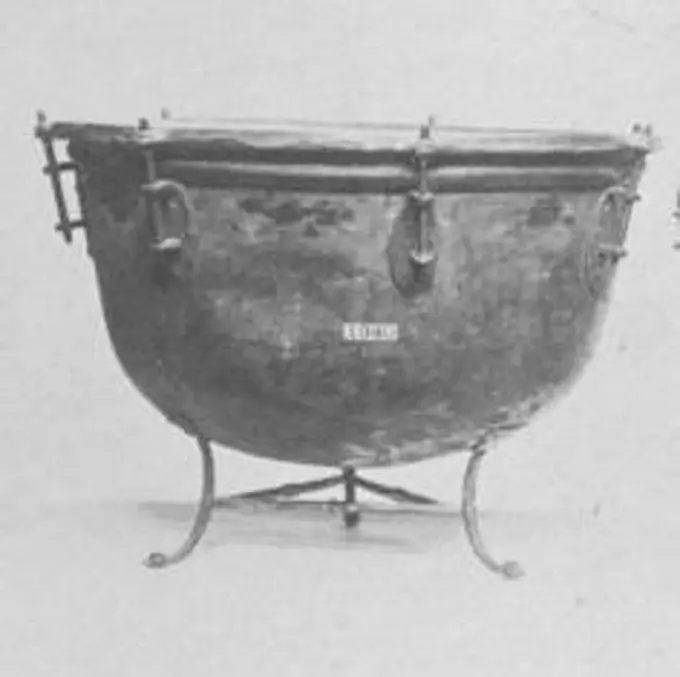
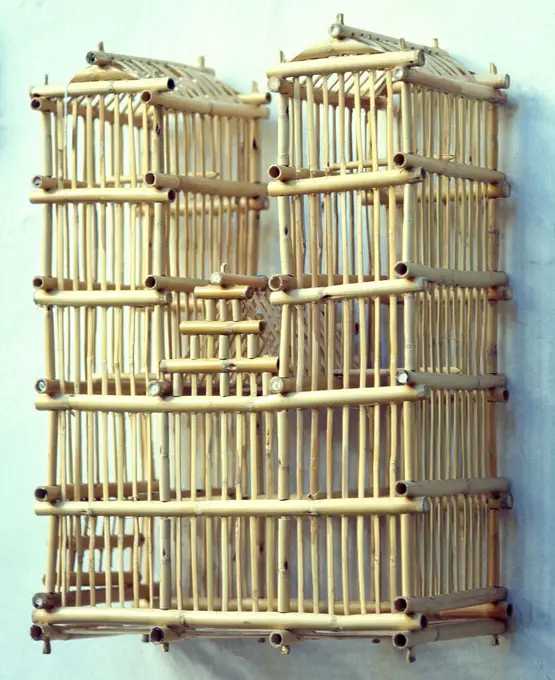
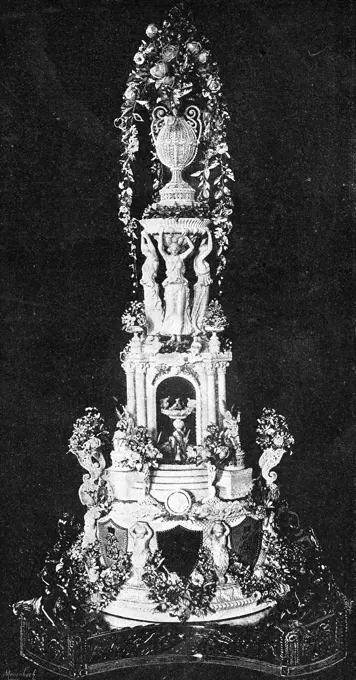
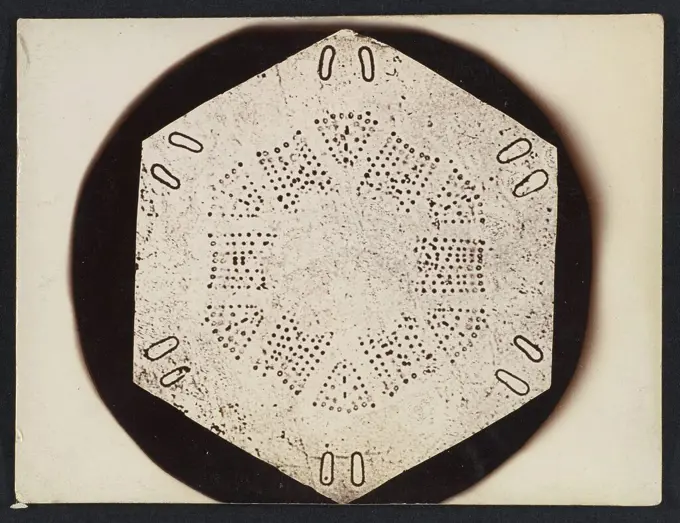
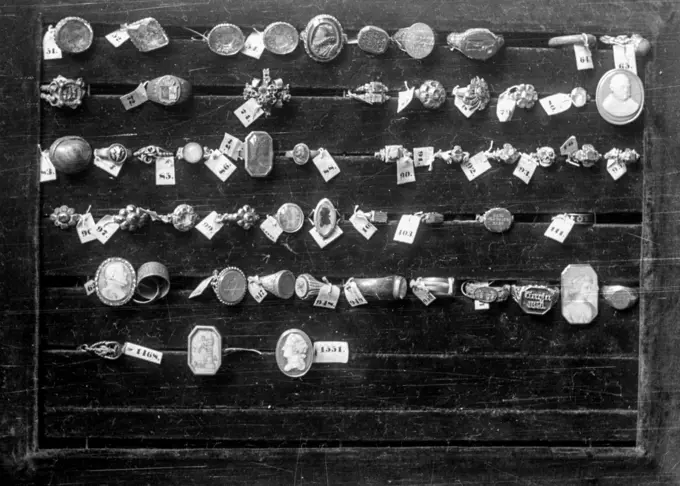
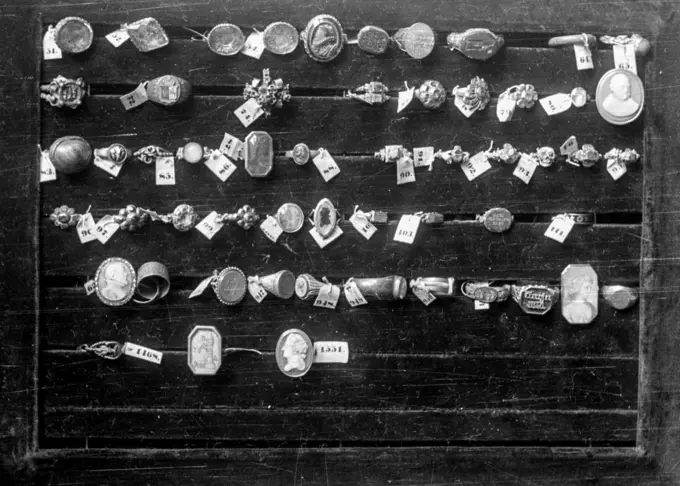
Presentation Wrappings for a Pair of Sword Grips ca. 1615-1868 Japanese. Presentation Wrappings for a Pair of Sword Grips 24402Baluster 16th century British. Baluster. British. 16th century. Oak. WoodworkMangle-board. Culture: Dutch. Dimensions: 34 1/2 × 4 3/4 in. (87.6 × 12.1 cm). Date: 18th century. Museum: Metropolitan Museum of Art, New York, USA.Shell ca. 6th-8th century A.D. Sasanian or Islamic. Shell 322952Fragment. Dimensions: 9 13/16 in. high 3 9/16 in. wide (25 cm high 9 cm wide). Date: 5th-6th century. Museum: Metropolitan Museum of Art, New York, USA.Attic Black-Figure Cup Fragment. UnknownLantern 18th century Italian. Lantern. Italian. 18th century. Painted and gilded tôle. Metalwork-Base MetalFragment of a Border 5th-6th century. Fragment of a Border 443769Pochette ca. 1700 French. Pochette 501583Strip of black bobbin side with curls of chalice from which three leaves protrude, anonymous, c. 1890 - c. 1910  Strip black bobbin: chantilly. The repeating pattern covers two -thirds of the strip. It consists of a curled leaf along the underside of the strip that ends in a chalice -oriented chalice, from which three drop -shaped leaves are sting. In the oval field, which is formed by the curling leaf, there is a branch with leaves and a flower with three petals. At the top, a few leaf branches and a rosette flower rise from the side of the chalice. The scrap edge along the underside of the strip is formed by the successive curling leaves, which are connected to each other by four connected U-shaped motifs. The motives are made in netslag and provided with contour threads. The motifs are connected by a hexagonal grid, a tuler floor. The top of the strip is straight finished. The scrap edge is finished with picots. France (possibly) silk bobbin laceSeal 1725-50 American. Seal 7360Piece 18th century () European. Piece 225163Burse ca. 1700 Spanish or French. Burse 221632Three tires with leaf motifs. .Basket 19th century Japan. Basket 62171Property Sale Document: Bagazust and Ubil Sell a House to Ananiah Aramaic. Property Sale Document: Bagazust and Ubil Sell a House to Ananiah, September 14, 437 B.C.E. (date written). Papyrus, ink, mud, a: Small Box of Fragments: 1 3/4 x 4 1/16 x 4 1/16 in. (4.5 x 10.3 x 10.3 cm).   Egyptian, Classical, Ancient Near Eastern Art September 14, 437 B.C.E. (date written)Vase 1830-70 American. Vase. American. 1830-70. Parian porcelain. Probably made in Bennington, Vermont, United StatesBracelet China. Bracelet 42856Pair of consoles 18th century French. Pair of consoles 189518 French, Pair of consoles, 18th century, Wood, stripped, Overall (each): 14 1/4  4 in. (36.2  10.2 cm). The Metropolitan Museum of Art, New York. Gift of J. Pierpont Morgan, 1906 (07.225.247a, b)Hinge 1700-1800 American. Hinge. American. 1700-1800. Wrought iron. Made in Pennsylvania, United StatesKisaanji late 19th century Chokwe Kisanji (Cisaji), a lamellaphone with 18 tongues tuned with wax, and rattling metal rings. Lamellaphone is a term to designate instruments consisting of thin tongues of metal or split cane, mounted on a resonating board or box. Depressing the free ends of the tongues with the thumbs produces a gentle ringing sound, sometimes augmented by jingling objects attached to the board, and amplified by holding the instrument in a hollow gourd. Tuning is accomplished by sliding the tongues in or out in order to change their vibrating length. Lamellaphones are distributed across sub-Sahara Africa and were brought by slaves to Latin America. They are known by many names that may also be shared with xylophones. Most names have word stems which include: -mbila; -mira; -limba; or -rima. Westerners, not recognizing differences in construction, have simplified the name to two regional terms calling them either mbira or sanza.. Kisaanji. Chokwe. late 19th century. Wood,Plate Possibly New England Glass Company American ca. 1835Fragment of a Sleeve 5th-6th century. Fragment of a Sleeve 443716Textile Fragment 4th-5th century. Textile Fragment 444118Mantle Fragment 12th-15th century Chimú. Mantle Fragment. Chimú. 12th-15th century. Cotton, camelid hair. Peru. Textiles-WovenSet of four chutes French 18th century View more. Set of four chutes. French. 18th century. Gilt bronze. Metalwork-Gilt BronzeTextile Fragment 5th-6th century. Textile Fragment 444230Tangka Curtain 17th-18th century China. Tangka Curtain 70373Tunic China. Tunic. China. Silk. Ming dynasty (1368-1644). Textiles-WovenPilaster panel (part of a set of eight) 18th century French. Pilaster panel (part of a set of eight). French. 18th century. Oak. WoodworkHarpoon 1500-500 B.C. India. Harpoon 39404Engraved Gem. UnknownScarf 19th century Laos. Scarf 70633Golden drinking horns found in Schleswig, the lower one with runic inscriptions around the rim, Germany, digitally restored reproduction of an original from the 19th century, exact original date unknown, EuropeCollar 17th century Italian. Collar 222106Vase 19th century Munemitsu. Vase 60046Russian Amulet, 1854. One of the amulets worn by 'Muscovite soldiers...who fell at the Battle of the Alma...It consists of a small pewter locket, the workmanship very rude. The most prominent figure on the outside is a cress, surrounded with Russian characters. A small piece of wood attached by a string shows the remains of a Greek Cross, in the centre of which a metallic Roman cross appears to have been inlaid. On one leaf of the inside a rude figure of the Virgin and Child has been stamped, with two devout figures praying to her. On the other side the artist appears to have represented a CGirdle ornament China. Girdle ornament. China. Jade. Han dynasty (206 B.C.-A.D. 220). JadeNoh Costume (Karaori) with Pattern of Fans Floating on Water. Culture: Japan. Dimensions: 60 x 50 in. (152.4 x 127 cm). Date: 18th century.The layering of patterns and techniques is particularly complex in this Noh costume. The water pattern woven in gold, known as Kanze mizu ("Kanze water") because of its association with the Kanze school of Noh performers, flows gently over background blocks of red, brown, and light blue. On the water float various fans-open, closed, and half-open-that overlap intriguingly and, in their turn, are covered with flowers. Yogao (literally, "evening faces") flowers partially cover the half-open fans, and the fully open fans are nearly concealed by auspiciously wrapped peonies and bush clover (hagi). The fan pattern repeats along the length of the costume but does not seem at all repetitive thanks to the skillful use of color in the textile. Museum: Metropolitan Museum of Art, New York, USA.Window 15th century Italian. Window. Italian. 15th century. Marble, iron. Sculpture-ArchitecturalVase China. Vase. China. Porcelain painted in beige and turquoise enamels on aubergine ground. Ming dynasty (1368-1644), Wanli period (1573-1620). CeramicsTextile Fragment 3rd-4th century. Textile Fragment 444279Bead-like Ornament. UnknownPiece 18th century French. Piece 216732Ngombi (ombi) 19th century possibly Fang Unlike the triangular European harp, the arched harp, like this Ngombi, consists of two elements, a soundbox and a curved neck rising from it. Strings made of gut or plant fiber attach diagonally from the soundtable.. Ngombi (ombi) 501160Piece 18th century French. Piece 230867Beads ca. 9th century B.C. Iran. Beads 325323Germanic utensils from cultural life, glass beaker, glass drinking horn, leg comb, ca 200 AD digitally restored reproduction of a 19th century original, exact date unknownKrap Puang Thai late 19th centuryClove Boiler 1760 Japan. Clove Boiler. Japan. 1760. White porcelain with relief pattern and blue under the glaze decoration, which gives the appearance of blue enamel (Hirado ware). Edo period (1615-1868). CeramicsRoundel ca. 1500-1100 B.C. Elamite. Roundel 325679Parapet Block. Culture: French. Date: ca. 1130-40. Museum: Metropolitan Museum of Art, New York, USA.Winter Hat Icon, Hat Vector Art IllustrationReverse frame style early 17th century, made 19th century Italian, Bologna. Reverse frame 460410Terracotta vase, vintage engraved illustration.Textile Fragment 3rd-4th century. Textile Fragment 443371Panel 13th-14th century This panel is one of five of identical design (07.236.26, 07.236.28, 07.236.29, 07.236.30, 07.236.46); a carved ivory plaque, inlaid into wood and framed by thin strips of ivory and wood. The carving on the plaque consists of an intertwined floral scroll overlaid by a beaded cartouche terminating in a bud. Originally, there would have been more panels, arranged around a central plaque in the shape of a star or a half-star.. Panel. 13th-14th century. Wood; carved, inlaid with ivory. Attributed to Egypt, Cairo. WoodSilver cup of the sixteenth century, vintage engraving. Silver cup of the sixteenth century, vintage engraved illustration. Magasin Pittoresque 1876. Copyright: xZoonar.com/PatrickxGuenettex 10679864Pedestal for a Statuette; Asia Minor (); 2nd century A.D; Bronze; 26 × 20.3 × 20.3 cm (10 1,4 × 8 × 8 in.)One Bronze fragment. UnknownIn 1880, a farmer in Gokstad, Norway, was looking for treasure and dug into what was known then as 'King's Mound.' He found the remains of a complete Viking ship (pictured here). Within were the bones of a manperhaps a Viking kingalong with tools, weapons, food, clothing, furniture, a gaming board, silk from China, and the remains of horses, dogs, and a peacock. This photograph of the Gokstad ship dates to the early 1900s.Kettle Drum 18th century German Pairs of kettledrums were traditionally paired with sets of evenly numbered trumpets and used in military and ceremonial functions. The drums were played with wooden mallets by players who were members of the musicians guild who carefully guarded the techniques, repertoire, and traditions associated with these instruments. Accordingly, guild kettledrummers and trumpeters were paid more than the typical soldiers. When used in ceremonial processions, the drums were typically draped in colorful banners and mounted and played on horseback. Often, kettledrummers in European courts and military units were black African men. Technical description: Copper shells, larger timpano paired with 89.4.1339. Kettle measures 433 mm (17 inches) in height (with a stand of 4 inches) by 588 mm (23 inches) in diamter. Eight iron screws requiring a key to tune. Each screw is received by an iron mount, decorated like a downward pointing leaf with eight lobes, riveted to the sheIt is a curved metal attachment usually fixed with the rim and has three holes through which long metal nuts passes in, vintage engraved line art illustration. Bicycle Accessories 1900.Casket ca. 1570-1600 German. Casket. German. ca. 1570-1600. Iron. Metalwork-IronPapyrus Fragment. Unknown 1st - 2nd centuryEgyptian bracelet, vintage engraved illustration. Private life of Ancient-Antique family-1881.Bowl 9th-10th century. Bowl 449805Campania Caserta Capua Museo Campano85. Hutzel, Max 1960-1990 Medieval: Byzantine architectural fragments; parchment fragments with miniatures (12th century) from Montecassino; painted wooden crucifix (13th century); Carolingian crucifixes; Bishop's miter (11th century) of gold and silver damask; fresco (13th century). Post-medieval: Architecture (15th century). Formerly the Palazzo Antignano. Unusual Catalan/Moorish-style portal; Paintings on panel and canvas (15th-18th centuries); marble intarsia (16th century); marble sculpture: busts of Christ and Mary (17th century); sculpture of saints in marble and in wood (15th century); painted and gilded sculpture in wood; marble grave sculpture (16th century); sarcophagus with allegorical carvings; gold reliquary "Rosa d'Oro"; crucifix made of elephant tusk Specific Location: Pianterreno Antiquities: Italic sculpture (seated women holding babies); inscription. Photo campaign #1: 533 photos. Roman relief and sculpture; cinerary urns; Greek anBag 18th-19th century China. Bag 68802JAULA DE CAÑA PARA CANARIOS. Location: EXTERIOR. LA OROTAVA. TENERIFFA. SPAIN.French crown, Paris, Chéreau, Jacques-François, Lalonde, Richard de, Le Meunnié, C., C Cahier de Pieds de Meubles à divers usages, Two furniture legs, verso - stamped, Two ornamented furniture legs, left with leaf motifs, right with a spiral shape., print, ornamental print, title print, prints, ornamental prints, height 374 mm, width 194 mm, print maker, printmaker, 1784 - 1785, paper, papier, etching, etchings, engraving, engraving (printing process), intermediary draughtsman, after a drawing by, Publication (Event), Publication, French, 1742-10-14 - 1794-05-16, publisher, granter of privilegeCrown belonging to Theodelinda, queen of the Lombard's, (c. 570-628) was the daughter of duke Garibald I of BavaThe wedding cake made by Queen Victoria's baker at Windsor Castle for the marriage of George Duke of York(later King George V)(1865-1936) to Princess Mary of Teck(later the Duchess of York, then Queen Mary)(1867-1953).  6th July 1893Painted image on the glass for SkiopTikon / Laterna Magica.Bliżej Kultury unknownFan Japan 20th centurySnow Crystal. Artist: Wilson Alwyn Bentley (American, 1865-1931). Dimensions: Image: 2 15/16 × 3 1/4 in. (7.5 × 8.3 cm)Sheet: 3 × 4 in. (7.6 × 10.1 cm). Date: 1890s-1920s. Museum: Metropolitan Museum of Art, New York, USA.STRATY WOJENNE MNKSTRATY WOJENNE MNKWoodcut engraving depicting a paper reed used to make papyrus.It is a curved metal attachment usually fixed with the other main parts of the frame and has no grooves at the top surface. It is relatively smaller part and heavy, vintage engraved line art illustration. Bicycle Accessories 1900.Helmet model 1872, vintage engraved illustration. Industrial encyclopedia E.-O. Lami - 1875.Earring 7th century or earlier Japan. Earring. Japan. 7th century or earlier. Gold plated. Kofun period (ca. 300-710). JewelryMaterial sample -Seal with seahorse-shaped handle made of copper, Korea, Goryeo Dynasty(918-1392)Medieval Teutonic drinking goblet;comb and drinking hornSnuff Bottle 18th-19th century China. Snuff Bottle 41173Disk ornament 13th-16th century Colombia. Disk ornament. Colombia. 13th-16th century. Gold. Colombia. Metal-OrnamentsTassels Made 1000-1476 Peru. .Embroidery Punch 1800-1830 American. Embroidery Punch 6810Wood chips for gear operation. Matching box as size comparison.Collection of the Dutch Heidematschappij. Paintings, mauve a .. undatedFacsimile of a woodcut from the 1564 edition, vintage engraved illustration. Magasin Pittoresque 1841.GRABADO - MOCAJETE DE PATZCUARO - MUSEO DE MICHOACAN. Location: INSTITUTO DE COOPERACION IBEROAMERICANA. MADRID. SPAIN.